Словари

Словарь английского языка | Значения слов, определения и примеры

noun
/ˈeɪ.kər.ɪdʒ/
акр (akr)

An area of land measured in acres.

"The farmer owns a large acreage of fertile land."

"Фермер владеет большим участком плодородной земли." (Fermer vladeyet bol'shim uchastkom plodorodnoy zemli.)
adjective
/ˈæk.rɪd/
едкий (akrid)

Having a strong, unpleasantly sharp taste or smell.

"The acrid smoke from the fire made it hard to breathe."

"Едкий дым от пожара затруднял дыхание." (Yedkiy dym ot pozhara zatrudnyal dykhaniye.)
adjective
/ˌæk.rɪˈmoʊ.ni.əs/
горький и злой (gorkiy i zloy)

Bitter and angry, often involving harsh words.

"The debate turned acrimonious after the controversial remark."

"Дебаты стали акримониозными после спорного замечания." (Debaty stali akrimoniyoznymi posle spornogo zamechaniya.)
noun
/ˈæk.rɪ.moʊ.ni/
горечь (akrimoni)

Bitterness and anger, especially in speech or behavior.

"The divorce was filled with acrimony and disputes."

"Развод сопровождался горечью и спорами." (Razvod soprovozhdalsya gorechyu i sporami.)
noun
/ˌæk.rəˈfoʊ.bi.ə/
страх высоты (strakh vysoty)

An extreme or irrational fear of heights.

"Her acrophobia prevented her from climbing the tall building."

"Её акрофобия помешала ей подняться на высокое здание." (Yeyo akrofobiya pomeshchala yey podnyat'sya na vysokoye zdanije.)
preposition/adverb
/əˈkrɒs/
через (cherez)

From one side to the other side of something.

"He ran across the street to catch the bus."
"Он пробежал через улицу, чтобы поймать автобус." (On probegil cherez ulitsu, chtoby poymat' avtobus.)
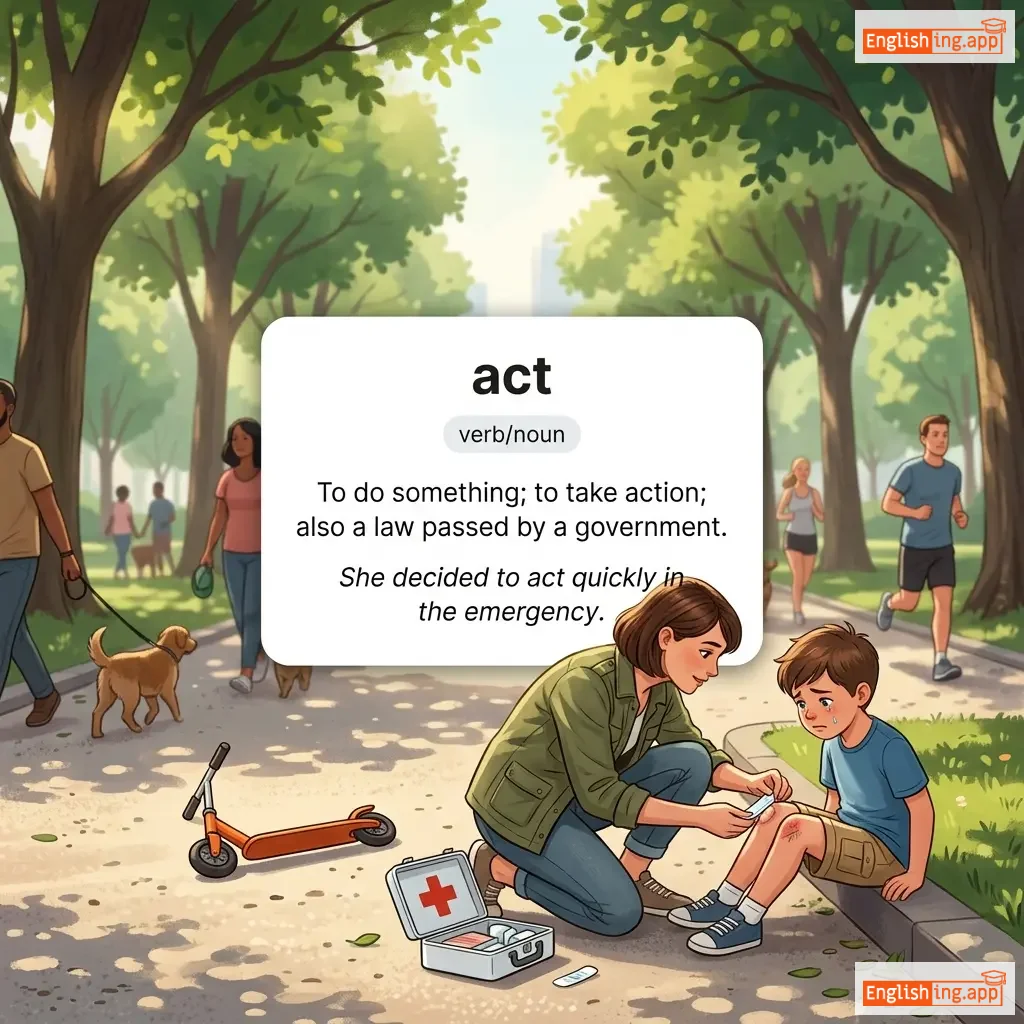
act definition card — visual illustration of the meaning
verb/noun
/ækt/
действие / закон (deystvie / zakon)

To do something; to take action; also a law passed by a government.

"She decided to act quickly in the emergency."

"Она решила действовать быстро в экстренной ситуации." (Ona reshilа deystvovat' bystro v ekstrennoy situatsii.)
noun, adjective, gerund
/ˈæk.tɪŋ/
актёрская игра (akterskaya igra)

the art or profession of performing in plays, films, or television; temporary performance of duties; the process of performing an action

"She is studying acting to become a professional actress."

"Она изучает актёрское мастерство, чтобы стать профессиональной актрисой." (ona izuchaet akterskoye masterstvo chtoby stat professionalnoy aktrisoy)
noun
/ˈækʃən/
действие (deystvie)

The process of doing something, typically to achieve a goal.

"The government took immediate action to control inflation."

"Правительство приняло незамедлительные меры для контроля над инфляцией." (Pravitel'stvo prinyalo nezamedlitel'nye mery dlya kontrolya nad inflyatsiey.)
adjective
/ˈækʃənəbl̩/
действенный (deystvennyy)

Able to be acted on or giving sufficient reason for legal action.

"The lawyer confirmed that the evidence was actionable in court."
"Адвокат подтвердил, что доказательства были действенными в суде." (Advokat podtverdil, chto dokazatel'stva byli deystvennymi v sude.)
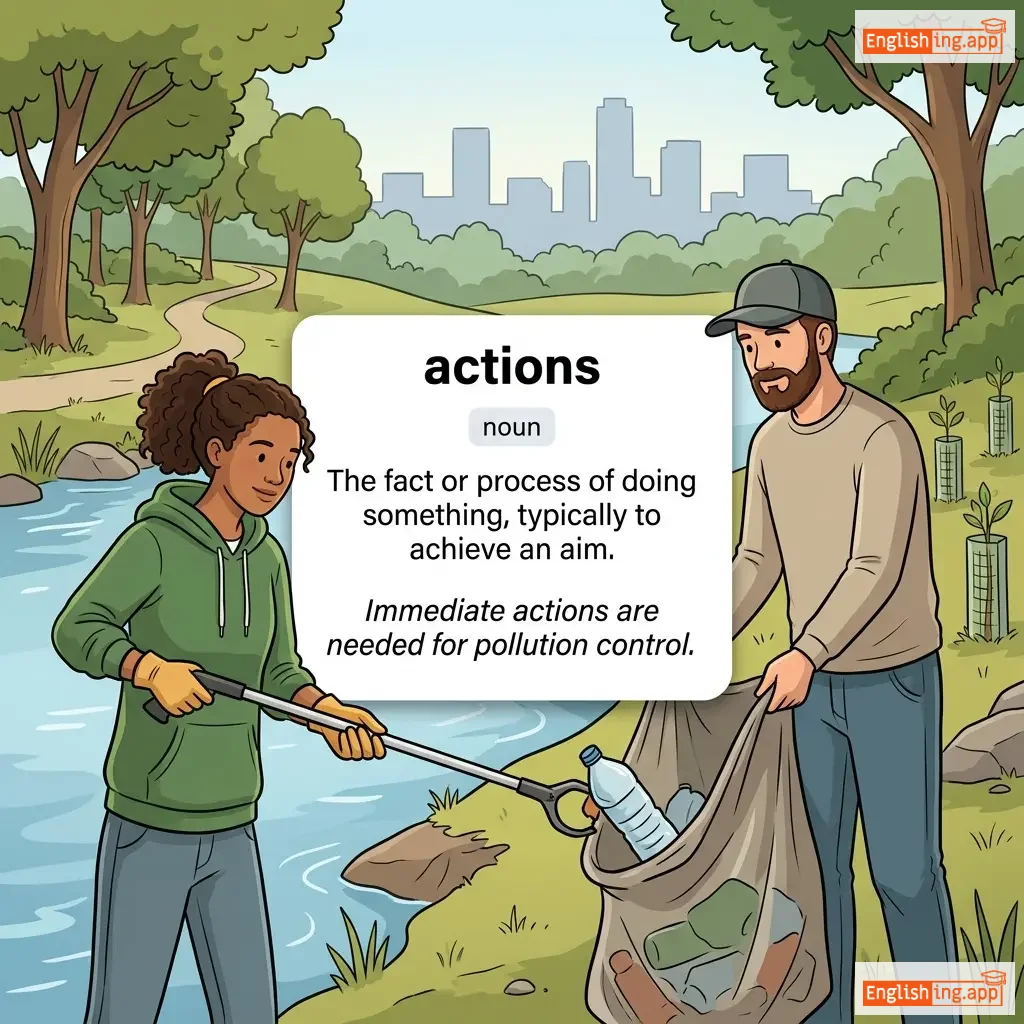
actions definition card — visual illustration of the meaning
noun
/ˈæk.ʃənz/
действия (deystviya)

The fact or process of doing something, typically to achieve an aim.

"Immediate actions are needed for pollution control."

"Необходимы немедленные действия для контроля загрязнения." (Neobkhodimy nemedlennyye deystviya dlya kontrolya zagrjazneniya.)
verb
/ˈæktɪveɪt/
активировать (aktivirovat)

to make something start or function

"She pressed the button to activate the machine."

"Она нажала на кнопку, чтобы активировать машину." (Ona nazhala na knopku, chtoby aktivirovat' mashinu.)
noun
/ˌæktɪˈveɪʃən/
активация (aktivatsiya)

the act of making something start functioning

"The activation of the system took longer than expected."
"Активация системы заняла больше времени, чем ожидалось." (Aktivatsiya sistemy zanyala bolshe vremeni, chem ozhidalos'.)
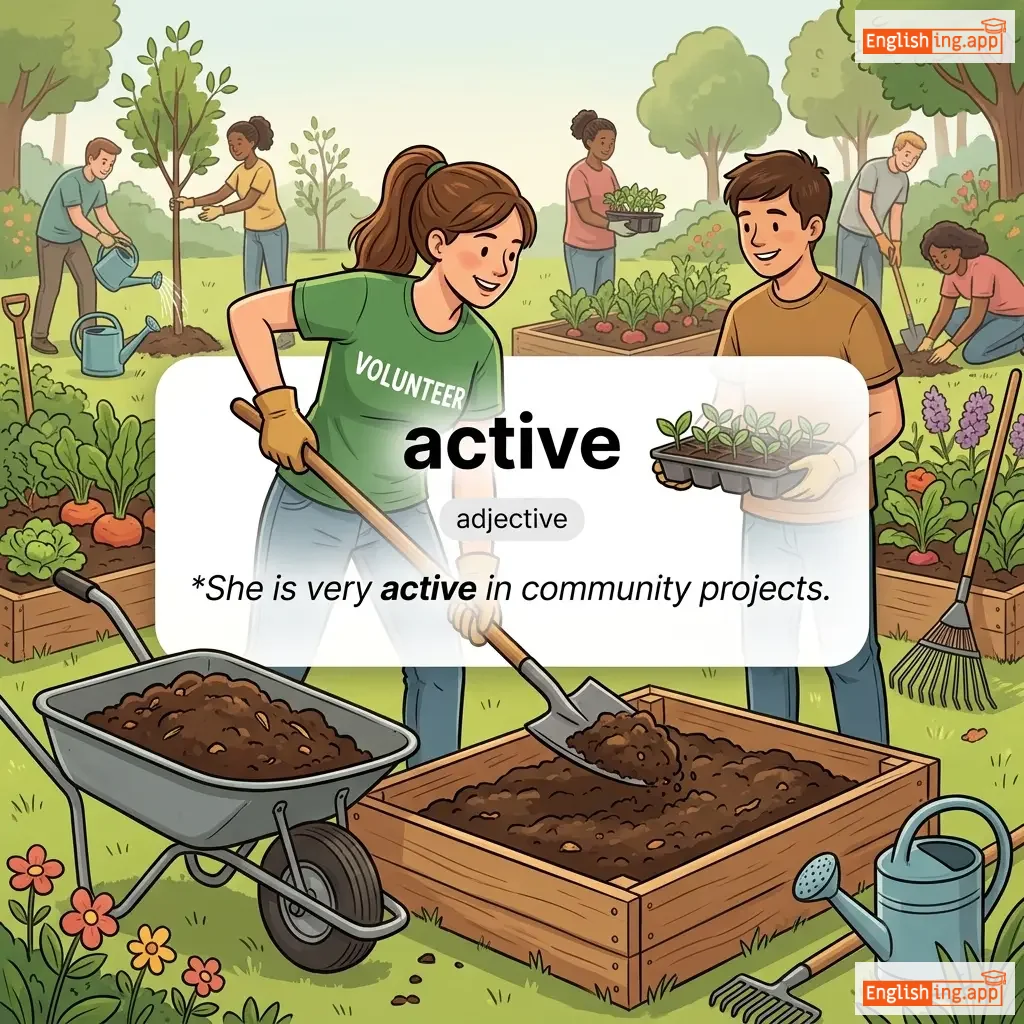
active definition card — visual illustration of the meaning
adjective
/ˈæktɪv/
активный (aktivny)

Engaging or ready to engage in physically energetic pursuits; taking action rather than being passive.

"She is very active in community projects."
"Она очень активна в общественных проектах." (Ona ochen' aktivna v obshchestvennykh proyektakh.)
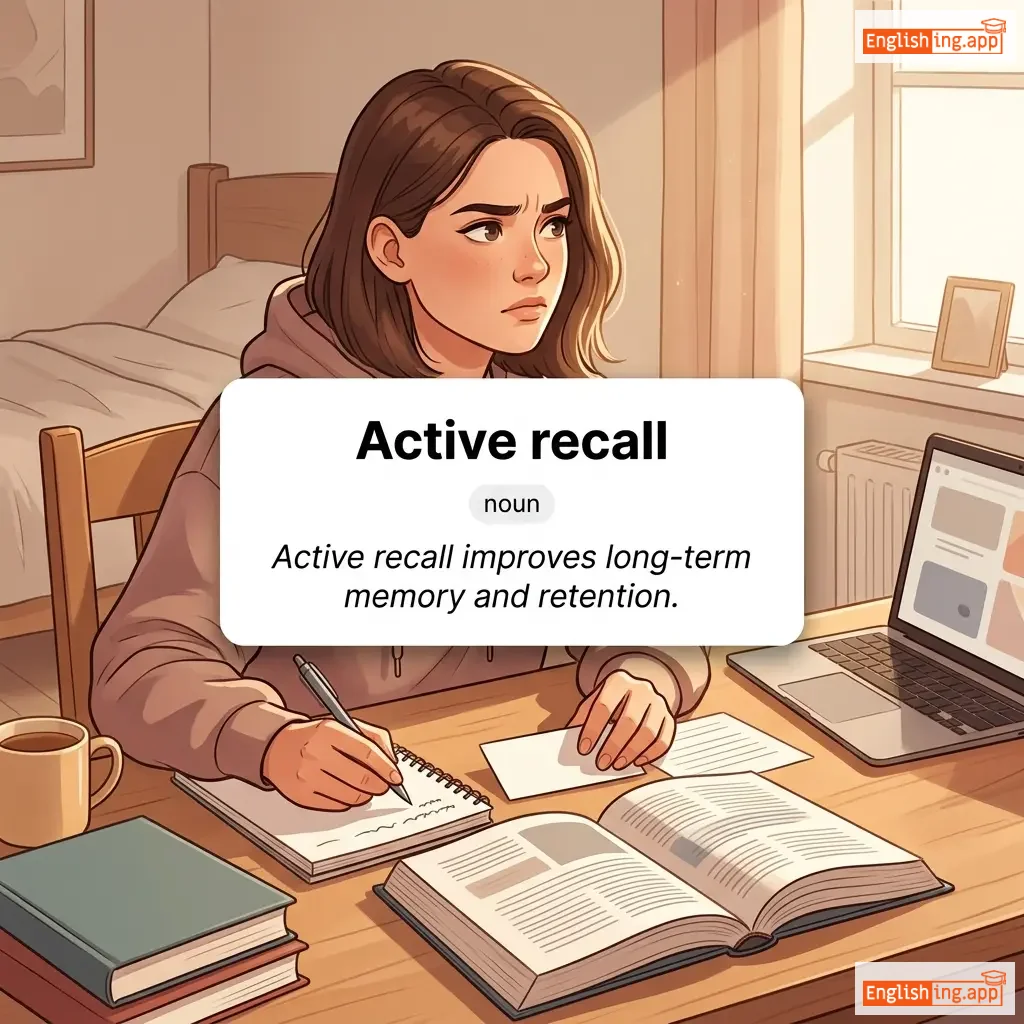
Active recall definition card — visual illustration of the meaning
noun
ˈæk.tɪv rɪˈkɔːl
активное воспоминание (aktivnoe vospominanie)

A learning technique that involves actively trying to retrieve information from memory rather than passively reviewing material.

"Active recall improves long-term memory and retention."

"Активное воспоминание улучшает долгосрочную память и удержание информации." (Aktivnoe vospominanie uluchshaet dolgocrochnuyu pamyat' i uderzhanie informatsii.)
adverb
/ˈæktɪvli/
активно (aktivno)

in a manner that involves action or energy

"She is actively participating in the community service."

"Она активно участвует в общественной работе." (Ona aktivno uchastvuet v obshchestvennoy rabote.)
noun
/ˈæktɪˌvɪzəm/
активизм (aktivizm)

The policy or action of using vigorous campaigning to bring about political or social change.

"Her environmental activism inspired many young people to take action."

"Ее экологический активизм вдохновил многих молодых людей на действия." (Yeyo ekologicheskiy aktivizm vdokhnovil mnogikh molodykh lyudey na deystviya.)
noun
/ˈæktɪvɪst/
активист (aktivist)

A person who works to bring about social or political change.

"The activist organized a protest against pollution."
"Активист организовал протест против загрязнения." (Aktivist organizoval protest protiv zagryazneniya.)
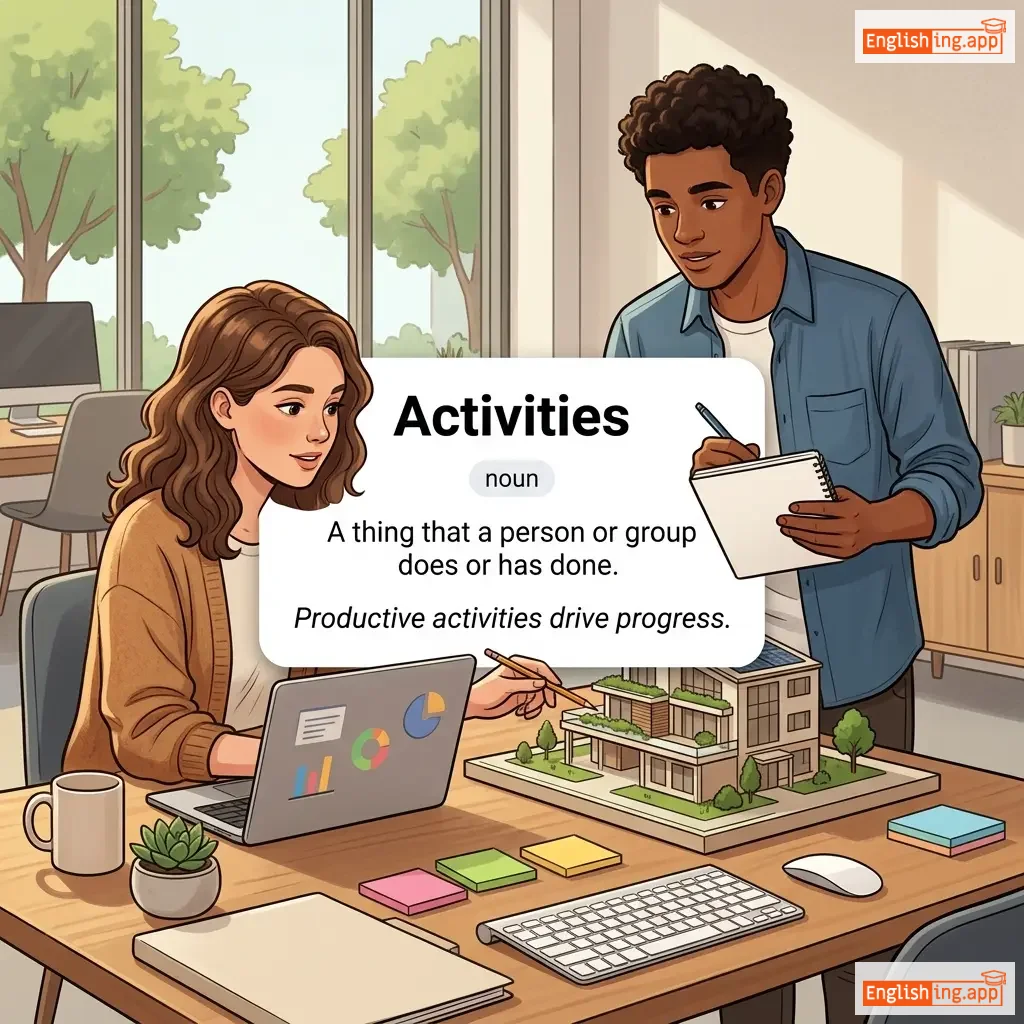
Activities definition card — visual illustration of the meaning
noun
ækˈtɪv.ɪ.ti
активности (aktivnosti)

A thing that a person or group does or has done.

"Productive activities drive progress."

"Продуктивные активности способствуют прогрессу." (Produktivnye aktivnosti sposobstvuyut progressu.)
noun
/ækˈtɪvɪti/
деятельность (deyatel'nost)

something that people do for enjoyment, work, or a particular purpose

"The children were engaged in outdoor activity."

"Дети были заняты на улице активностью." (Deti byli zanyaty na ulitse aktivnosti.)
noun
/ˈæktər/
актер (aktyor)

a person who performs in plays, movies, or television

"The actor received an award for his performance."

"Актер получил награду за свою игру." (Aktor poluchil nagradu za svoyu igru.)
noun
/ˈæktrəs/
актриса (aktrisa)

a female performer in plays, movies, or television

"The actress looked stunning on the red carpet."

"Актриса выглядела потрясающе на красной дорожке." (Aktrisa vyglyadela potryasayushche na krasnoy dorozhke.)
adjective
/ˈæktʃuəl/
реальный (real'nyy)

real and existing, not just imagined or supposed

"The actual cost was higher than expected."

"Реальная стоимость была выше, чем ожидалось." (Real'naya stoimost' byla vyshe, chem ozhidalos'.)
noun
/ˌæktʃuˈæləti/
реальность (real'nost')

The state of existing in reality rather than in appearance or imagination.

"The movie was based on historical actuality."

"Фильм был основан на исторической реальности." (Film byl osnovan na istoricheskoy real'nosti.)
adverb
/ˈæktʃuəli/
на самом деле (na samom dele)

used to emphasize that something is true, especially when surprising

"She actually completed the project ahead of schedule."

"Она на самом деле завершила проект раньше срока." (Ona na samom dele zavershila proyekt ran'she sroka.)
adjective
/ˌæktʃuˈɛəriəl/
актуарийный (aktuarijnyj)

Relating to actuaries or their work of analyzing financial risk and uncertainty, especially in insurance and pensions.

"The company relied on actuarial reports to set insurance premiums."

"Компания полагалась на актуарные отчеты для установления страховых взносов." (Kompaniya polagalas na aktuarniye otchety dlya ustanovleniya strakhovykh vznosov.)
noun
/ˈæktʃuˌɛri/
актуарий (aktyariy)

A professional who analyzes financial risk using mathematics, statistics, and financial theory, especially in insurance and pensions.

"The actuary calculated the risk before finalizing the insurance policy."

"Актуарий рассчитал риск перед финализацией страхового полиса." (Aktuary rasschital risk pered finalizatsiyey strakhovogo polisa.)
verb
/ˈæktʃueɪt/
активировать (aktivirovat)

to put into action or motion; to motivate or activate

"The engineer actuated the machine with a simple switch."
"Инженер активировал машину с помощью простого переключателя." (Inzhener aktiviroval mashinu s pomoshch'yu prostogo pereklyuchatelya.)
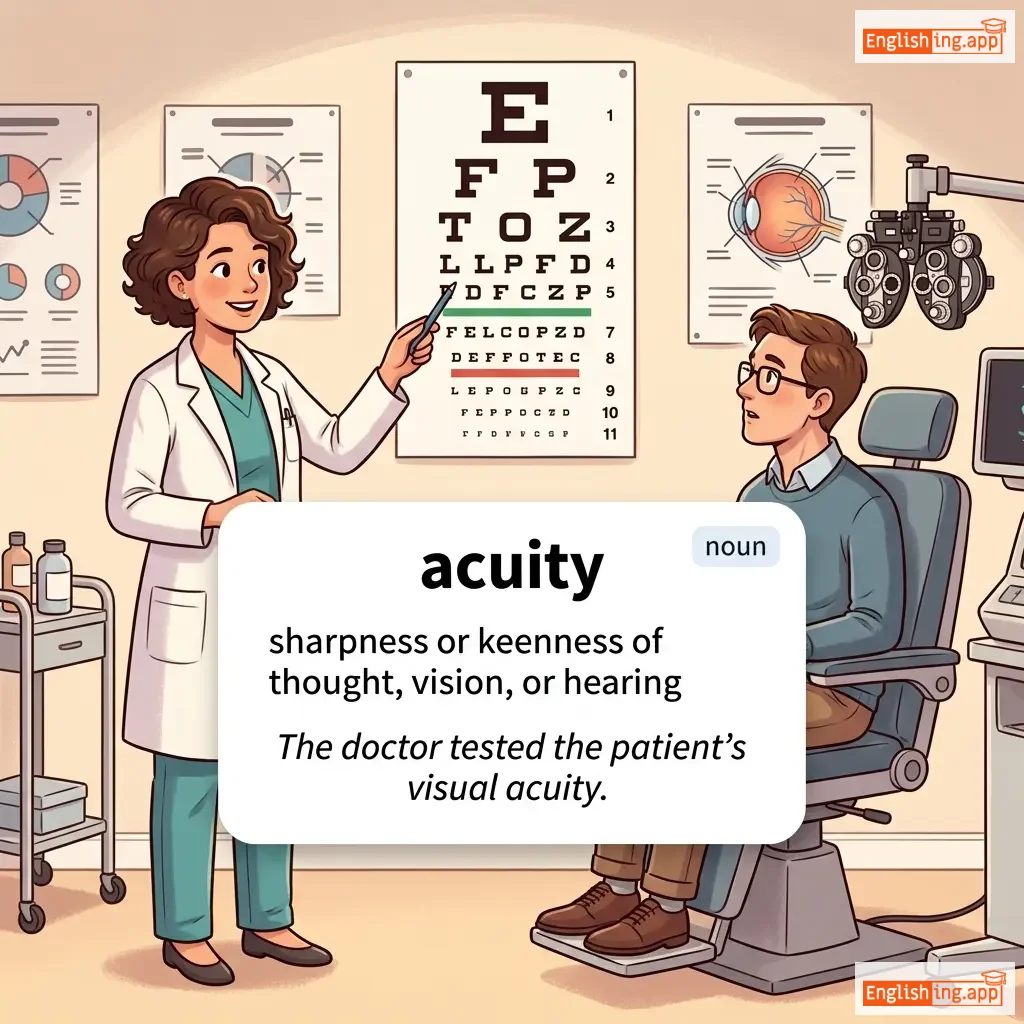
acuity definition card — visual illustration of the meaning
noun
/əˈkjuːɪti/
острота (ostrota)

sharpness or keenness of thought, vision, or hearing

"The doctor tested the patient’s visual acuity."

"Доктор проверил зрительную остроту пациента." (Doktor proveren zritel'nuyu ostrotu patsiyenta.)
acumen definition card — visual illustration of the meaning
noun
/ˈækjʊmən/
проницательность (pronitsatelnost)

the ability to make good judgments and quick decisions, typically in a particular domain

"She has strong business acumen that helped grow the company."

"У нее сильная деловая проницательность, которая помогла развить компанию." (U nee sil'naya delovaya pronitsatel'nost', kotoraya pomogla razvit' kompaniyu.)
adjective
/əˈkjuːt/
острый (ostry)

present or experienced to a severe or intense degree; having sharp perception

"The patient suffered from acute pain after the surgery."

"Пациент страдал от острой боли после операции." (Patsiyent stradal ot ostroy boli posle operatsii.)
adverb
/əˈkjuːtli/
остро (ostro)

in a sharp, intense, or severe way; with keen awareness

"She was acutely aware of the risks involved."

"Она остро осознавала связанные риски." (Ona ostro osoznavala svyazannye riski)
noun
/əˈkjuːtnəs/
острота; интенсивность (ostrota; intensivnost)

sharpness of mind or senses; severity or intensity of a condition

"Her acuteness allowed her to notice details others missed."

"Её острота позволила заметить детали, которые другие упустили." (eyo ostrota pozvolila zametit detali, kotorye drugie upustili)
noun
/æd/
объявление (ob'yavlenie)

a notice or announcement in a public medium promoting a product, service, or event

"The company released a new ad for their smartphone."

"Компания выпустила новое объявление для своего смартфона." (Kompaniya vypustila novoye ob'yavlenie dlya svoego smartfona.)
verb
/ˌæd ˈlɪb/
импровизировать (improvizirovat)

to speak or perform without preparation; to improvise

"The comedian ad-libbed a joke when the microphone failed."

"Комик импровизировал шутку, когда микрофон не сработал." (Komik improviziroval shutku, kogda mikrofon ne srabotal.)
noun
/ˈædɪdʒ/
поговорка (pogovorka)

a short, well-known saying that expresses a general truth or piece of advice

"The old adage says that honesty is the best policy."
"Старая поговорка говорит, что честность — лучшая политика." (Staraя pogovorka govorit, chto chestnost' — luchshaya politika.)
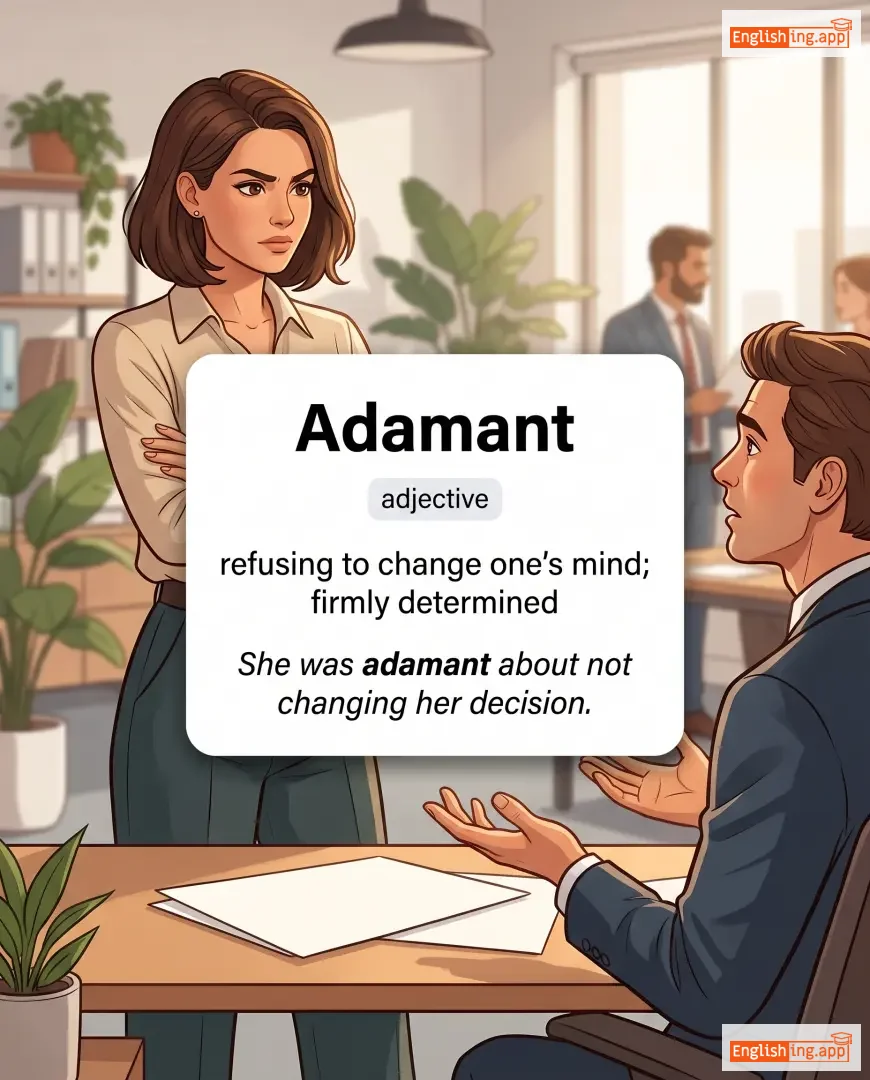
Adamant definition card — visual illustration of the meaning
adjective
/ˈædəmənt/
непреклонный (nepreklonny)

refusing to change one's mind; firmly determined

"She was adamant about not changing her decision."

"Она была непреклонна в своем решении не менять мнение." (Ona byla nepreklonna v svoem reshenii ne menyat' mnenie.)
verb
/əˈdæpt/
адаптировать (adaptirivat)

to adjust or change something to suit new conditions or situations

"He quickly adapted to the new environment."
"Он быстро адаптировался к новой среде." (On bystro adaptivirovalsya k novoy srede.)
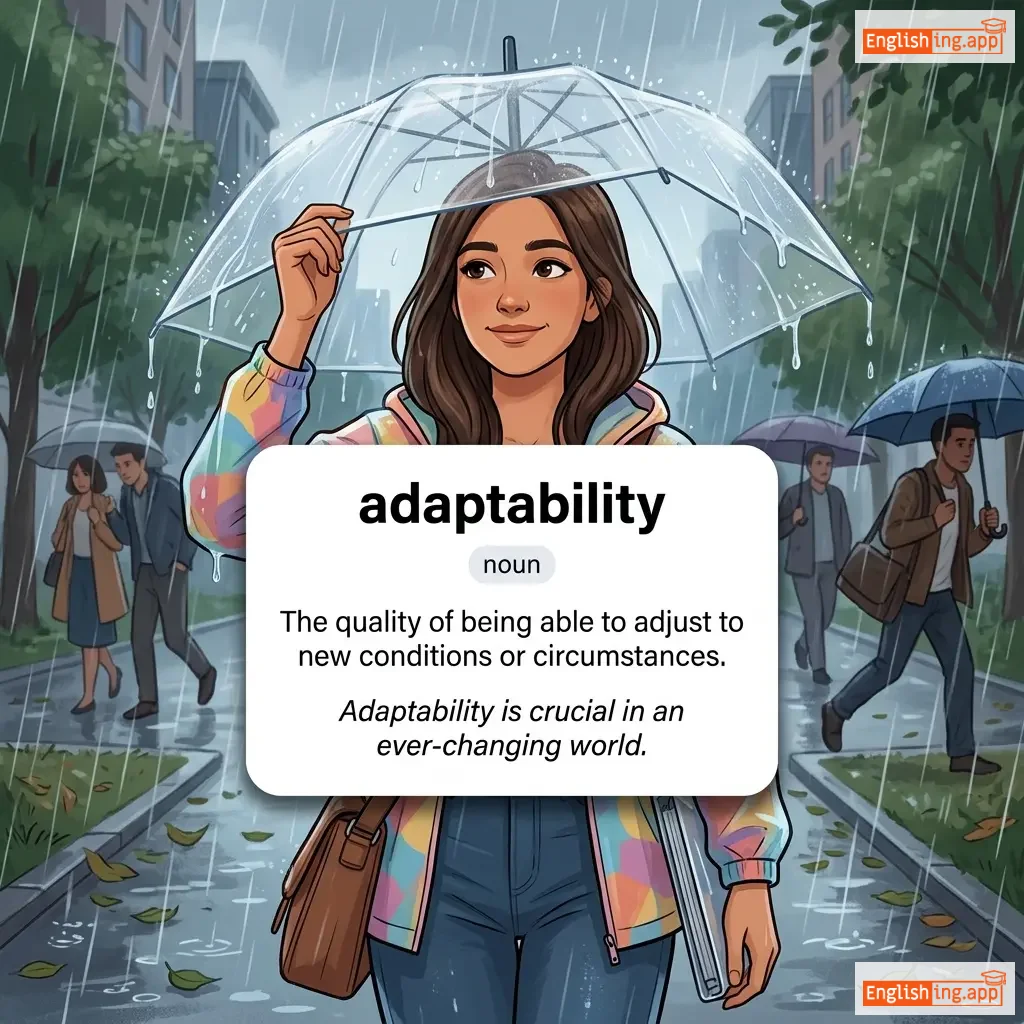
adaptability definition card — visual illustration of the meaning
noun
əˌdæp.təˈbɪl.ə.ti
адаптивность (adaptivnost)

The quality of being able to adjust to new conditions or circumstances.

"Adaptability is crucial in an ever-changing world."
"Адаптивность является ключевым качеством в постоянно меняющемся мире." (Adaptivnost' yavyayetsya klyuchevym kachestvom v postoyanno menyayushchemsya mire.)
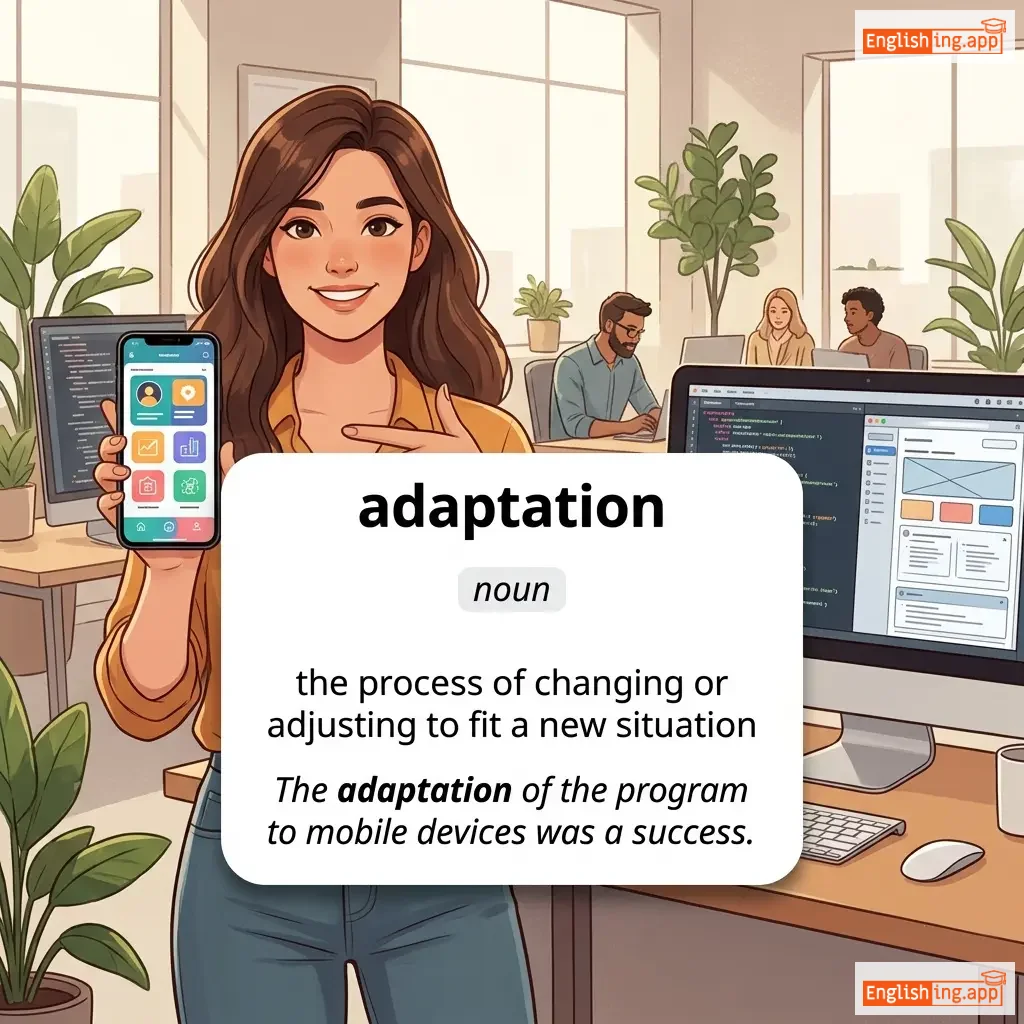
adaptation definition card — visual illustration of the meaning
noun
/ˌædæpˈteɪʃən/
адаптация (adaptatsiya)

the process of changing or adjusting to fit a new situation

"The adaptation of the program to mobile devices was a success."
"Адаптация программы для мобильных устройств прошла успешно." (Adaptatsiya programmy dlya mobil'nykh ustroystv proshla uspeshno.)
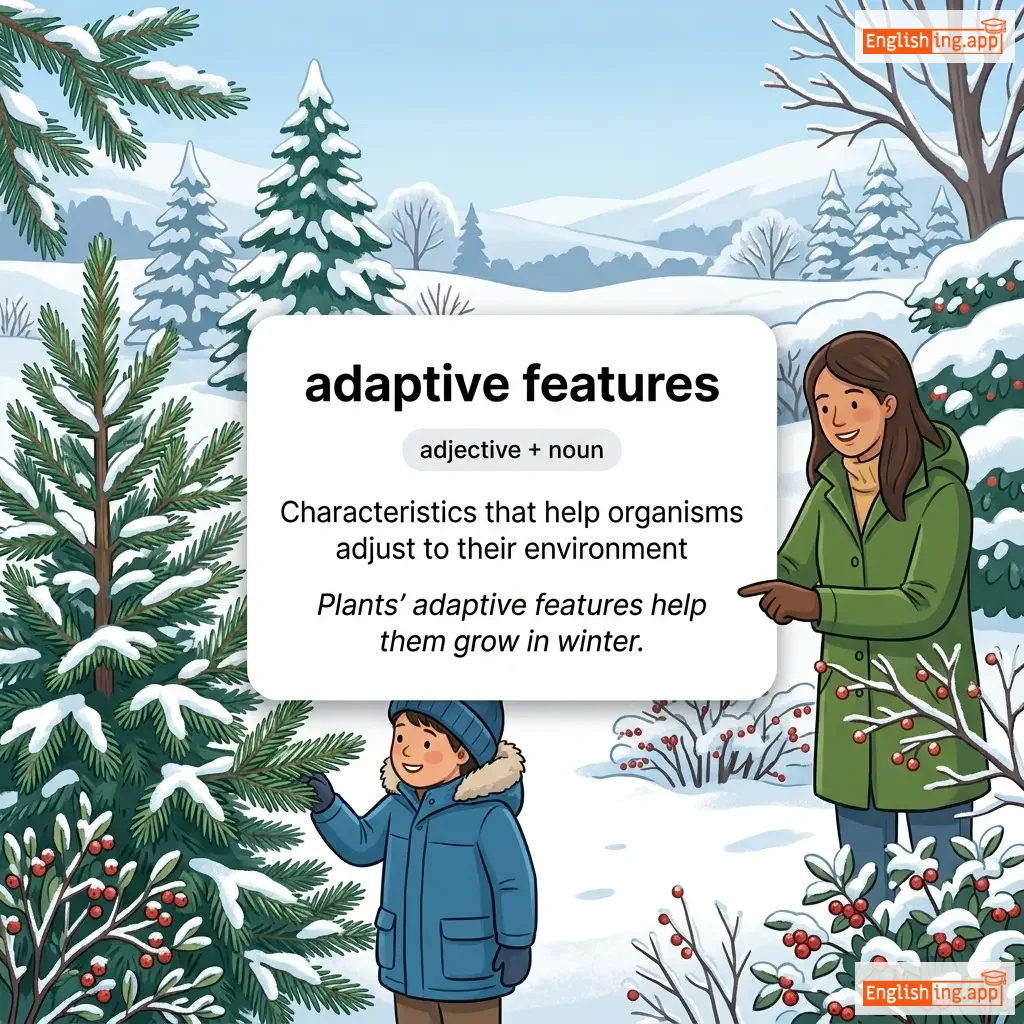
adaptive features definition card — visual illustration of the meaning
adjective + noun
əˈdæptɪv ˈfiːtʃərz
адаптивные особенности (adaptyvnyye osobennosti)

Characteristics that help organisms adjust to their environment

"Plants' adaptive features help them grow in winter."
"Адаптивные характеристики растений помогают им расти зимой." (Adaptyvnyye kharakteristiki rasteniy pomogayut im rasti zimoy.)
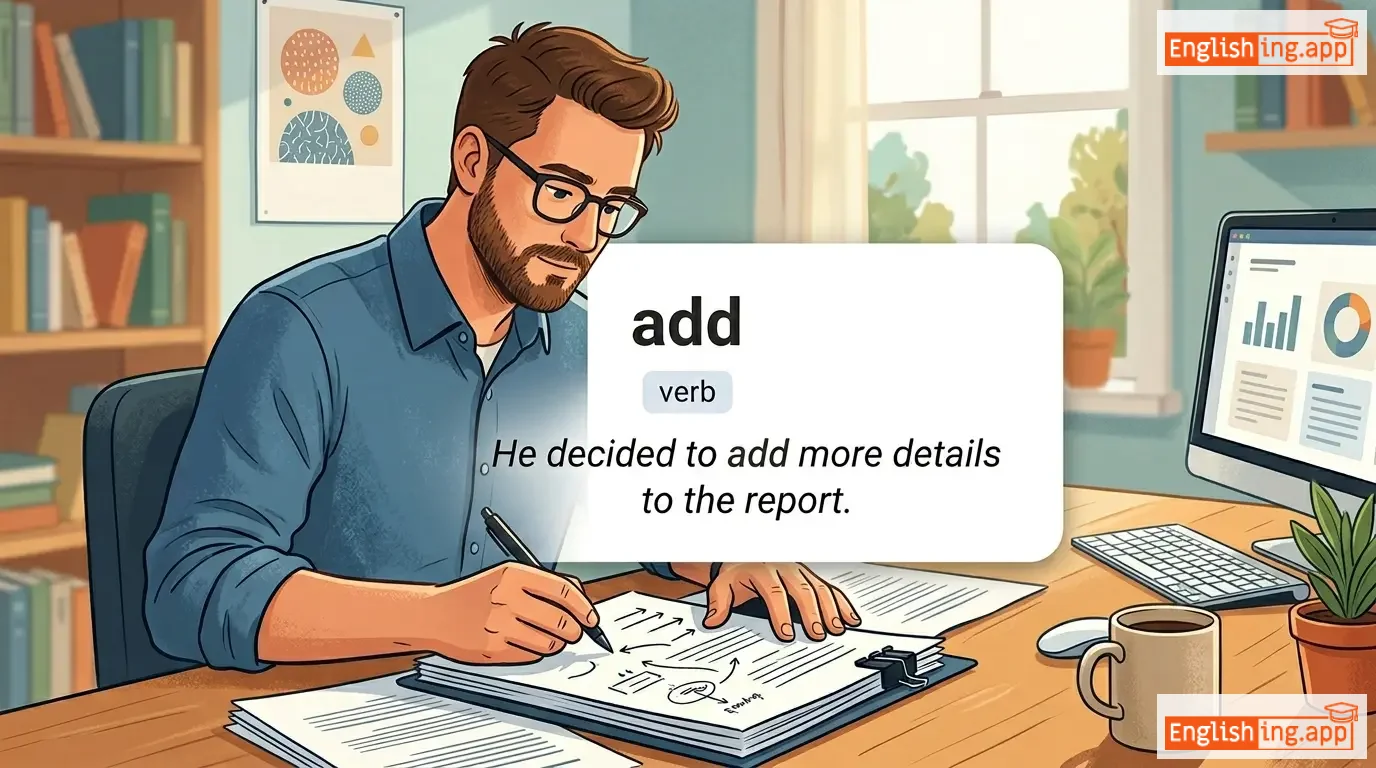
add definition card — visual illustration of the meaning
verb
/æd/
добавить (dobavit)

To put together or combine with something else; to increase the number, amount, or value.

"He decided to add more details to the report."

"Он решил добавить больше деталей в отчет." (On reshil dobavit' bol'she detaley v otchet.)
adjective
/ˈædɪd/
дополнительный (dopolnitelnyy)

included as an extra or additional part

"She received an added bonus for her performance."

"Она получила дополнительный бонус за свою работу." (Ona poluchila dopolnitel'nyy bonus za svoyu rabotu.)
noun
/əˈdɛndəm/
дополнение (dopolnenie)

an additional item or piece of information added at the end of a document or book

"The report included an addendum with updated statistics."

"В отчет был включен аддендум с обновленными статистическими данными." (V otchet byl vklyuchon addendum s obnovlennymi statisticheskimi dannymi.)
noun, verb
/ˈædɪkt/ (noun), /əˈdɪkt/ (verb)
наркоман (narkoman)

a person who is unable to stop using a harmful substance or doing something harmful; to cause someone to become dependent on something

"He is a video game addict who spends hours playing every day."
"Он зависим от видеоигр и проводит часы, играя каждый день." (On zavisim ot videoigr i provodit chasy, igraya kazhdyy den'.)
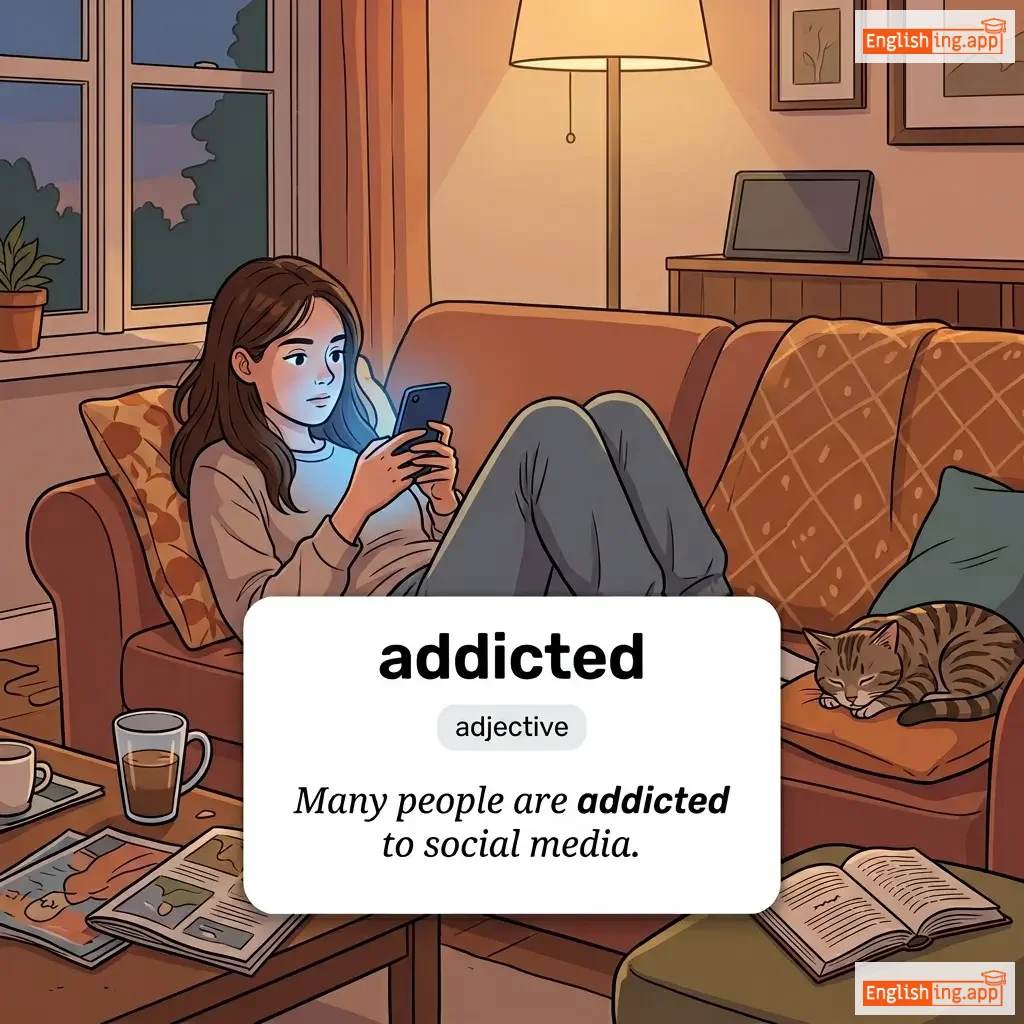
addicted definition card — visual illustration of the meaning
adjective
/əˈdɪktɪd/
зависимый (zavisimyy)

Being unable to stop engaging in a particular activity or consuming a particular substance.

"Many people are addicted to social media."

"Многие люди зависимы от социальных сетей." (Mnogie lyudi zavisimy ot sotsial'nykh setey.)
noun
/əˈdɪkʃən/
зависимость (zavisimost)

A strong and harmful need to regularly have or do something, such as drugs, alcohol, or habits.

"His addiction to video games affected his studies."

"Его зависимость от видеоигр повлияла на его учебу." (Ego zavisimost' ot videoigr povliyala na ego uchebu.)
noun
/əˈdɪʃən/
добавление (uhdishun)

the process of adding something to something else

"The addition of solar panels made the house more energy-efficient."

"Добавление солнечных панелей сделало дом более энергоэффективным." (Dobavlenie solnechnykh panelei sdelalo dom bolee energoeffektivnym)
adjective
/əˈdɪʃənəl/
дополнительный (dopolnitel'nyy)

added, extra, or supplementary to what already exists

"The teacher gave the students additional homework."

"Учитель дал ученикам дополнительную домашнюю работу." (Uchitel' dal uchenikam dopolnitel'nuyu domashnyuyu rabotu.)
adverb
/əˈdɪʃənəli/
дополнительно (dopolnitel'no)

in addition to what has been said or done

"Additionally, we offer discounts for early bookings."

"Кроме того, мы предлагаем скидки для ранних бронирований." (Krome togo, my predlagaem skidki dlya rannyh bronirovaniy.)