語彙集

英単語辞書 | 単語の意味、定義、例文

noun
/ˈeɪ.kər.ɪdʒ/
エーカー (ekā)

An area of land measured in acres.

"The farmer owns a large acreage of fertile land."

"農夫は広大な肥沃な土地を所有しています。" (Nōfu wa kōdai na hiwaku na tochi o shoyū shiteimasu.)
🌫️

Acrid

adjective
/ˈæk.rɪd/

Having a strong, unpleasantly sharp taste or smell.

"The acrid smoke from the fire made it hard to breathe."

adjective
/ˌæk.rɪˈmoʊ.ni.əs/
苦くて怒りに満ちた (nigakute ikari ni michita)

Bitter and angry, often involving harsh words.

"The debate turned acrimonious after the controversial remark."

"論争は物議を醸す発言の後、アクリモニアスになった。" (Ronsou wa butsugi o kamosu hatsugen no ato, akurimoniasu ni natta.)
noun
/ˈæk.rɪ.moʊ.ni/

Bitterness and anger, especially in speech or behavior.

"The divorce was filled with acrimony and disputes."

noun
/ˌæk.rəˈfoʊ.bi.ə/
高所恐怖症 (kōsho kyōfushō)

An extreme or irrational fear of heights.

"Her acrophobia prevented her from climbing the tall building."

"彼女のアクロフォビアは、高い建物に登ることを妨げました。" (Kanojo no akurofobia wa, takai tatemono ni noboru koto o samatagemashita.)
preposition/adverb
/əˈkrɒs/
横断する (oudan suru)

From one side to the other side of something.

"He ran across the street to catch the bus."

"彼はバスに乗るために通りを横断した。" (Kare wa basu ni noru tame ni toori o oudanshita.)
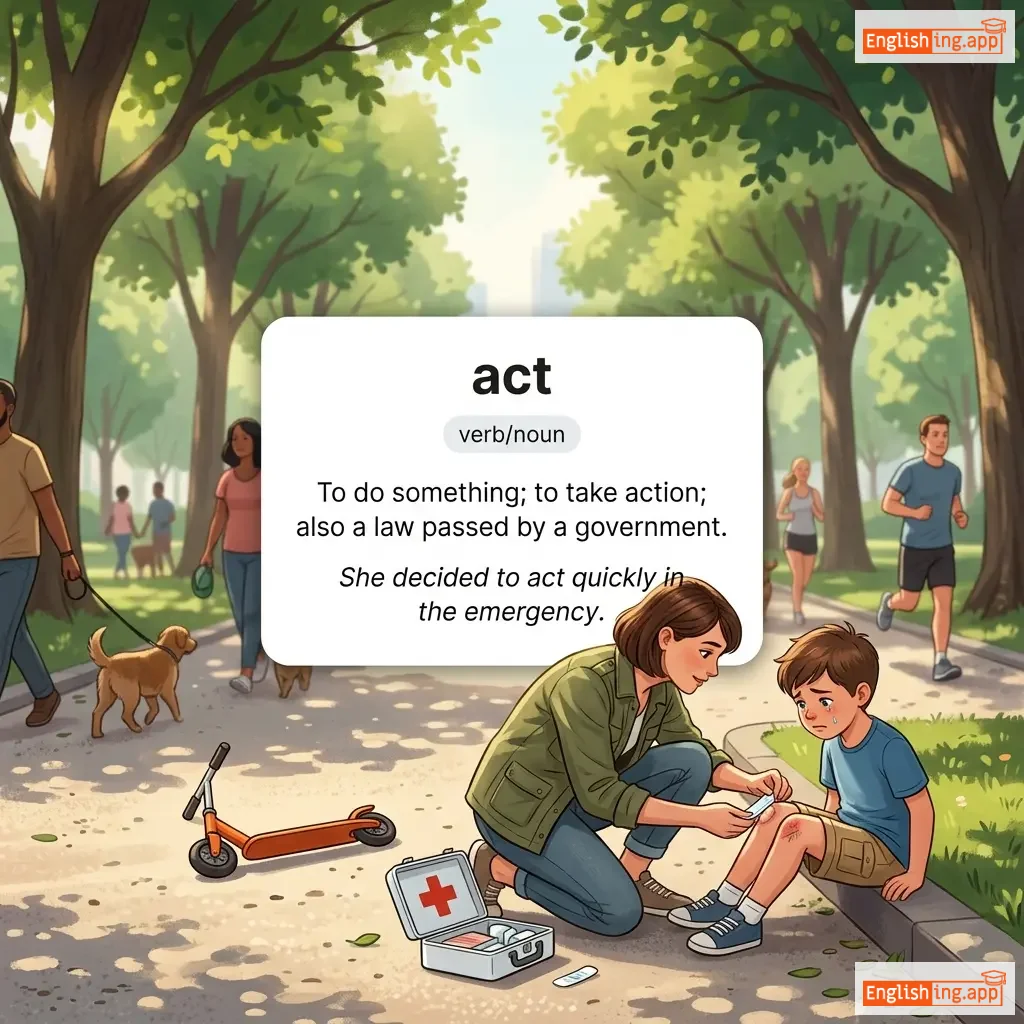
act definition card — visual illustration of the meaning
🎭

act

verb/noun
/ækt/

To do something; to take action; also a law passed by a government.

"She decided to act quickly in the emergency."

noun, adjective, gerund
/ˈæk.tɪŋ/
演技 (engi)

the art or profession of performing in plays, films, or television; temporary performance of duties; the process of performing an action

"She is studying acting to become a professional actress."

"彼女はプロの女優になるために演技を勉強しています。" (kanojo wa puro no joyu ni naru tame ni engi o benkyo shiteimasu)
noun
/ˈækʃən/
アクション (akushon)

The process of doing something, typically to achieve a goal.

"The government took immediate action to control inflation."

"政府はインフレーションを抑制するために迅速に行動を起こした。" (Seifu wa infurēshon o yokusei suru tame ni jinsoku ni kōdō o okoshita.)
adjective
/ˈækʃənəbl̩/
実行可能な (jikkō kanō na)

Able to be acted on or giving sufficient reason for legal action.

"The lawyer confirmed that the evidence was actionable in court."
"弁護士は証拠が法廷で実行可能であることを確認しました。" (Bengoshi wa shōko ga hōtei de jikkō kanō de aru koto o kakunin shimashita.)
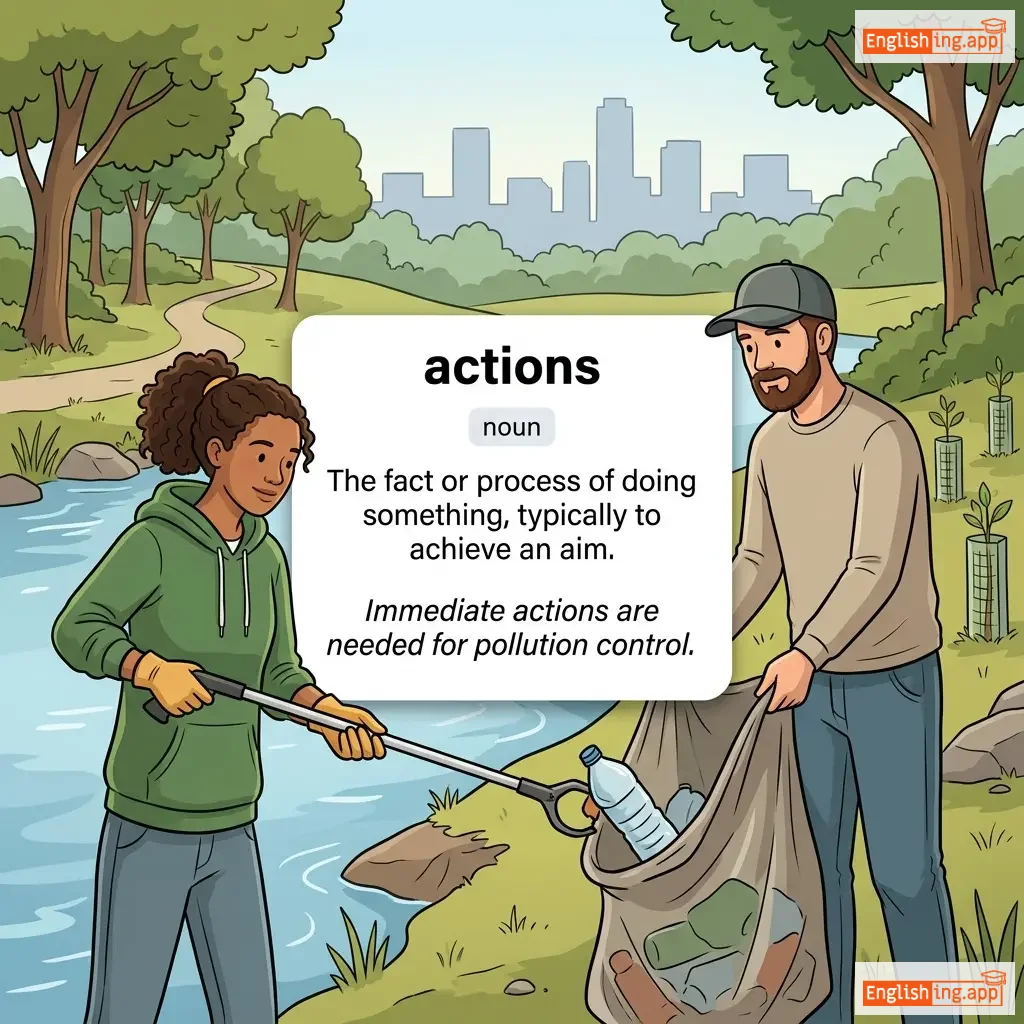
actions definition card — visual illustration of the meaning
noun
/ˈæk.ʃənz/
行動 (koudou)

The fact or process of doing something, typically to achieve an aim.

"Immediate actions are needed for pollution control."

"汚染防止のために即時の行動が必要です。" (Osen boushi no tame ni sokujitsu no koudou ga hitsuyou desu.)
verb
/ˈæktɪveɪt/
アクティベート (akutibēto)

to make something start or function

"She pressed the button to activate the machine."

"彼女は機械を起動するためにボタンを押しました。" (Kanojo wa kikai o kidō suru tame ni botan o oshimashita.)
noun
/ˌæktɪˈveɪʃən/
アクティベーション (akutibēshon)

the act of making something start functioning

"The activation of the system took longer than expected."
"システムのアクティベーションは予想よりも時間がかかりました。" (Shisutemu no akutibēshon wa yosō yori mo jikan ga kakarimashita.)
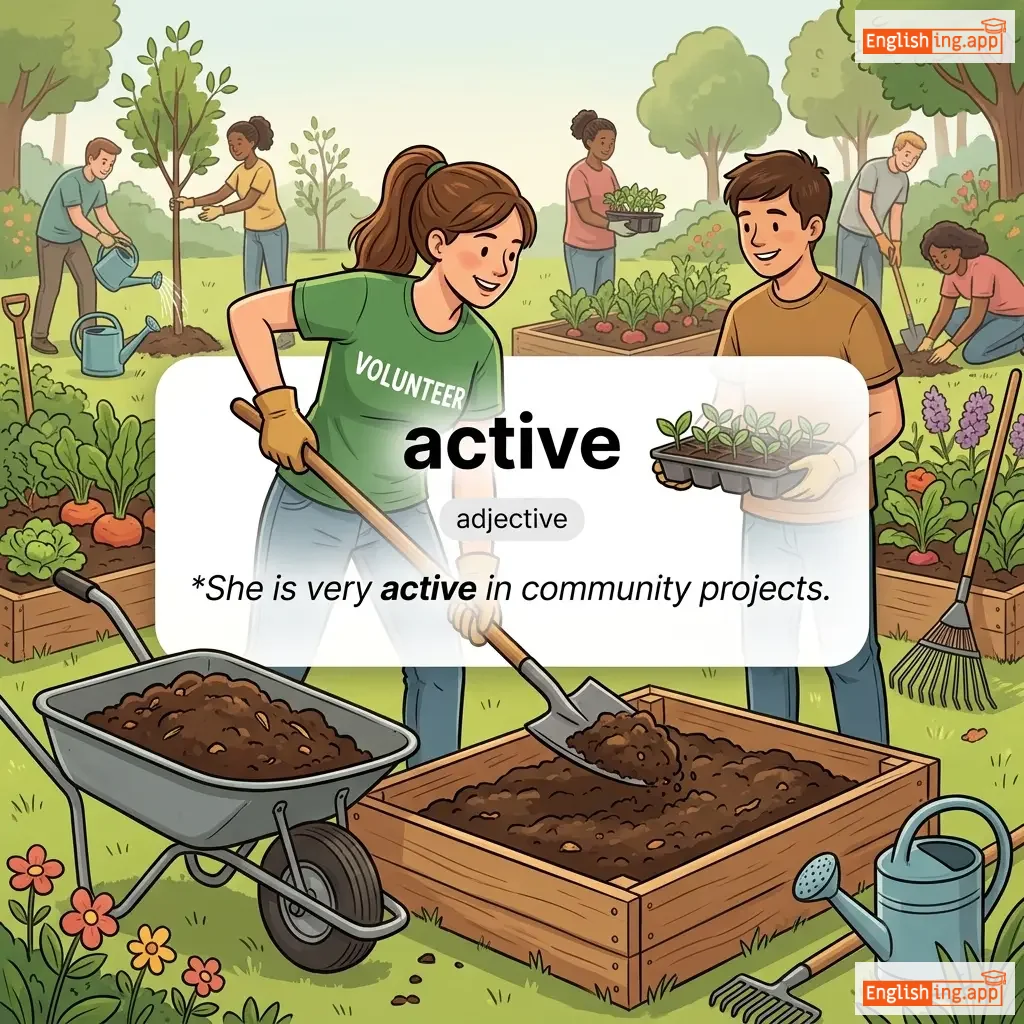
active definition card — visual illustration of the meaning
adjective
/ˈæktɪv/
アクティブな (akutibu na)

Engaging or ready to engage in physically energetic pursuits; taking action rather than being passive.

"She is very active in community projects."
"彼女はコミュニティプロジェクトに非常にアクティブです。" (Kanojo wa komyuniti purojekuto ni hijō ni akutibu desu.)
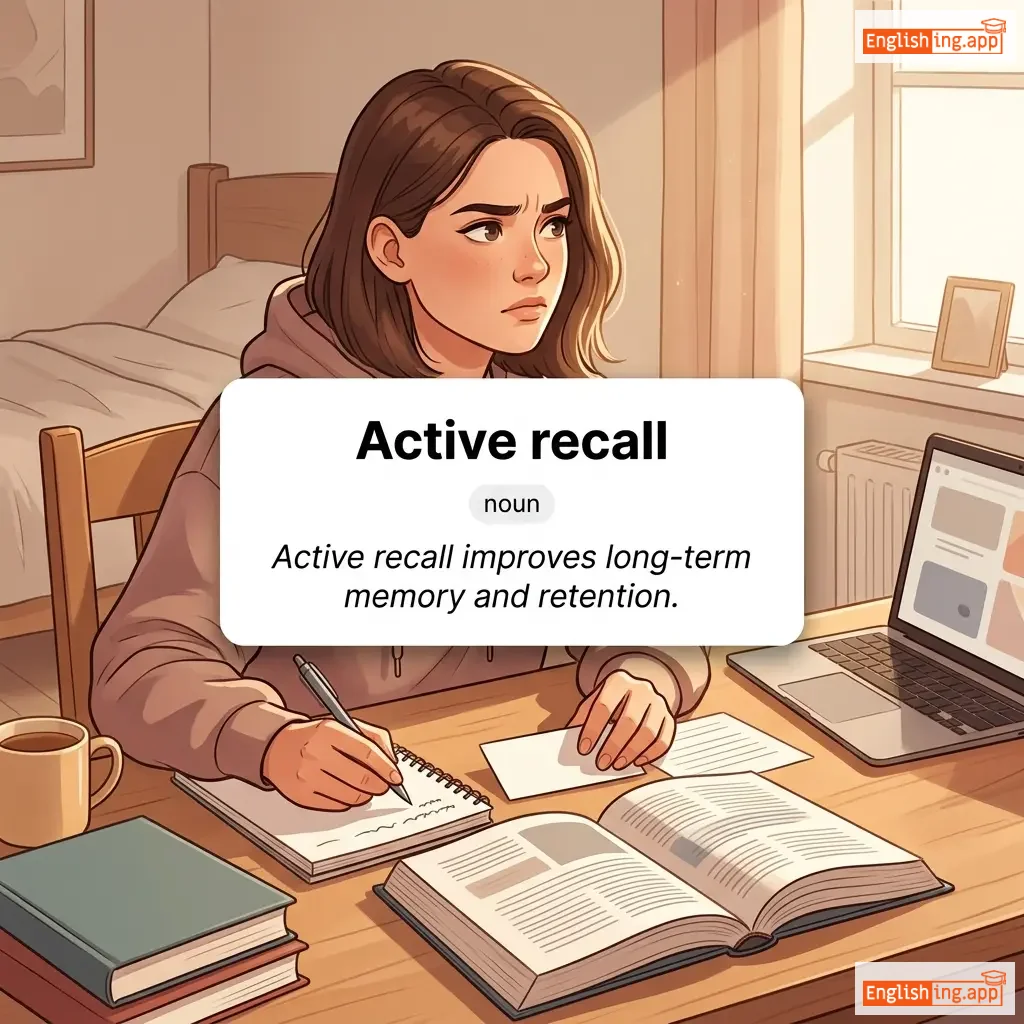
Active recall definition card — visual illustration of the meaning
noun
ˈæk.tɪv rɪˈkɔːl
アクティブリコール (akutibu rikōru)

A learning technique that involves actively trying to retrieve information from memory rather than passively reviewing material.

"Active recall improves long-term memory and retention."

"アクティブリコールは長期記憶と保持力を向上させます。" (Akutibu rikōru wa chōki kioku to hojiryou wo kōjō sasemasu.)
adverb
/ˈæktɪvli/
積極的に (sekkyokuteki ni)

in a manner that involves action or energy

"She is actively participating in the community service."

"彼女は地域活動に積極的に参加しています。" (Kanojo wa chiiki katsudou ni sekkyokuteki ni sanka shiteimasu.)
noun
/ˈæktɪˌvɪzəm/
アクティビズム (akutibizumu)

The policy or action of using vigorous campaigning to bring about political or social change.

"Her environmental activism inspired many young people to take action."

"彼女の環境アクティビズムは多くの若者に行動を促した。" (Kanojo no kankyo akutibizumu wa ooku no wakamono ni kodo o unagashita.)
noun
/ˈæktɪvɪst/
活動家 (katsudōka)

A person who works to bring about social or political change.

"The activist organized a protest against pollution."
"活動家は汚染に反対する抗議を組織しました。" (Katsudōka wa osen ni hantai suru kōgi o soshiki shimashita.)
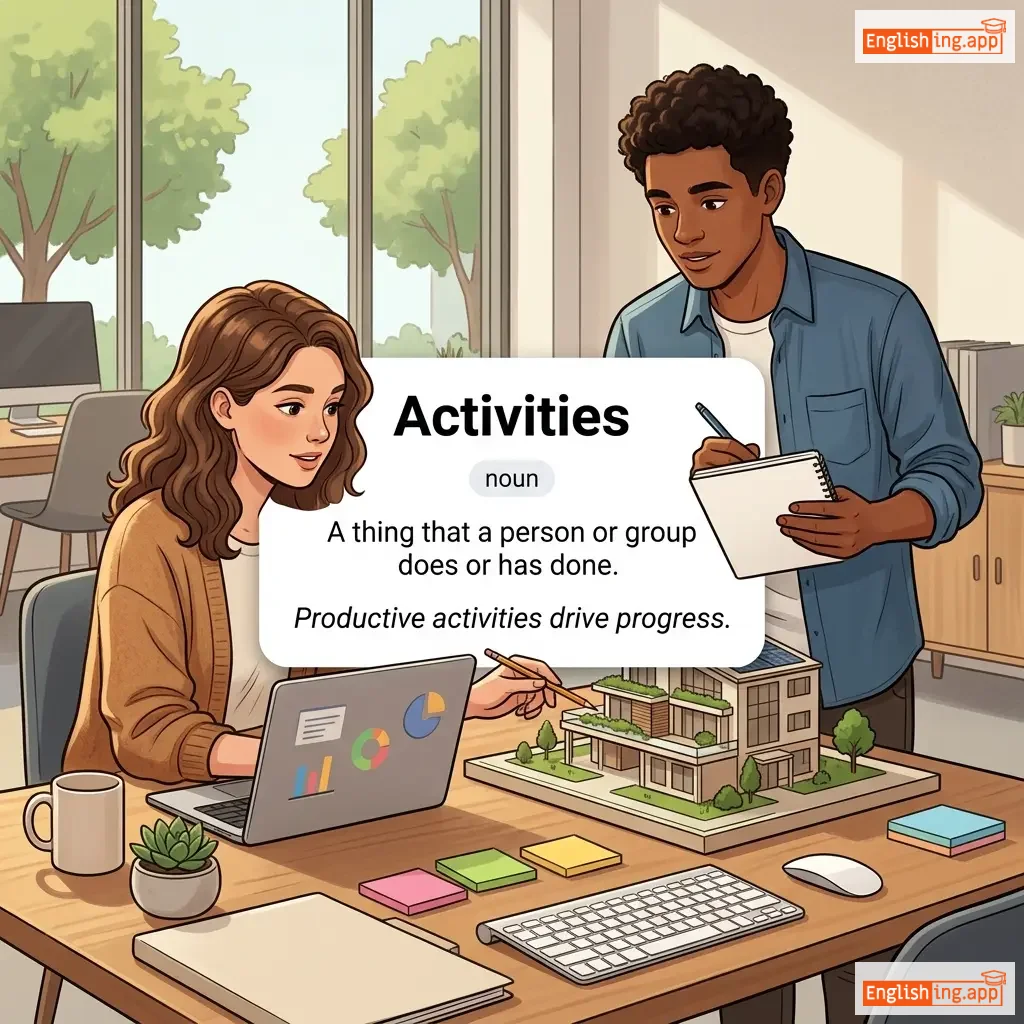
Activities definition card — visual illustration of the meaning
noun
ækˈtɪv.ɪ.ti
活動 (katsudou)

A thing that a person or group does or has done.

"Productive activities drive progress."

"生産的な活動は進展を促進します。" (Seisanteki na katsudou wa shinten o sokushin shimasu.)
noun
/ækˈtɪvɪti/
活動 (katsudou)

something that people do for enjoyment, work, or a particular purpose

"The children were engaged in outdoor activity."

"子供たちは屋外活動に従事していました。" (Kodomotachi wa okugai katsudou ni juuji shiteimashita.)
noun
/ˈæktər/
俳優 (haiyū)

a person who performs in plays, movies, or television

"The actor received an award for his performance."

"その俳優はパフォーマンスで賞を受け取った。" (sono haiyū wa pafōmansu de shō o uketotta.)
noun
/ˈæktrəs/
女優 (joyū)

a female performer in plays, movies, or television

"The actress looked stunning on the red carpet."

"その女優は赤い絨毯の上で素晴らしく見えました。" (Sono joyū wa akai jūtantan no ue de subarashiku miemashita.)
adjective
/ˈæktʃuəl/
実際の (jissai no)

real and existing, not just imagined or supposed

"The actual cost was higher than expected."

"実際のコストは予想より高かった。" (Jissai no kosuto wa yosō yori takakatta.)
noun
/ˌæktʃuˈæləti/
現実 (genjitsu)

The state of existing in reality rather than in appearance or imagination.

"The movie was based on historical actuality."

"その映画は歴史的な現実に基づいています。" (Sono eiga wa rekishiteki na genjitsu ni motozuiteimasu.)
adverb
/ˈæktʃuəli/
実際に (jissai ni)

used to emphasize that something is true, especially when surprising

"She actually completed the project ahead of schedule."

"彼女は実際に予定より早くプロジェクトを完了させた。" (Kanojo wa jissai ni yotei yori hayaku purojekuto o kanryō saseta.)
adjective
/ˌæktʃuˈɛəriəl/
アクチュアリール (akuchuarīru)

Relating to actuaries or their work of analyzing financial risk and uncertainty, especially in insurance and pensions.

"The company relied on actuarial reports to set insurance premiums."

"その会社は保険料を設定するためにアクチュアリール報告書に依存していた。" (Sono kaisha wa hokenryō o settei suru tame ni akuchuarīru hōkokusho ni izon shite ita.)
noun
/ˈæktʃuˌɛri/
アクチュアリー (akutyarī)

A professional who analyzes financial risk using mathematics, statistics, and financial theory, especially in insurance and pensions.

"The actuary calculated the risk before finalizing the insurance policy."

"アクチュアリーは保険契約を最終決定する前にリスクを計算しました。" (Akutyarī wa hoken keiyaku o saishū kettei suru mae ni risuku o keisan shimashita.)
verb
/ˈæktʃueɪt/
作動させる (sudoku saseru)

to put into action or motion; to motivate or activate

"The engineer actuated the machine with a simple switch."
"エンジニアは簡単なスイッチで機械を作動させました。" (Enjinia wa kantan na suicchi de kikai o sakudō sasemashita.)
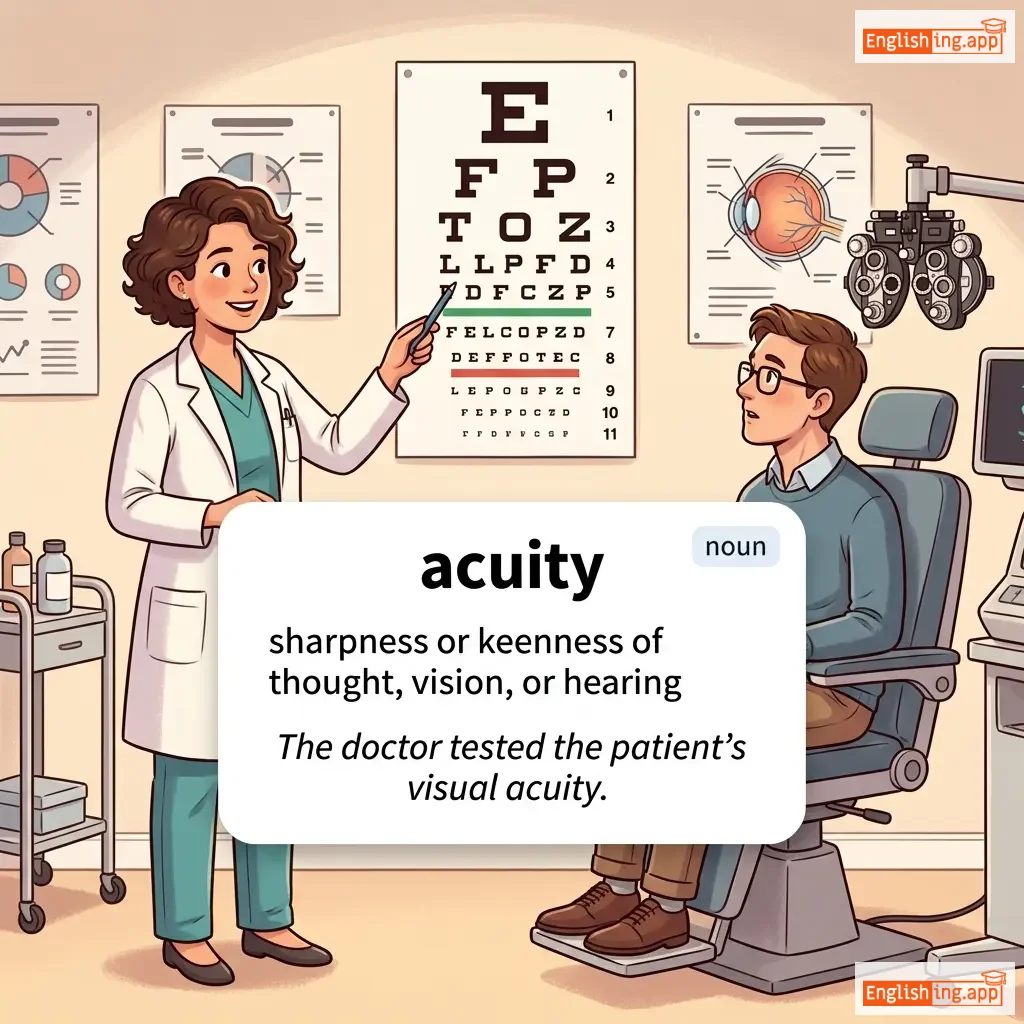
acuity definition card — visual illustration of the meaning
noun
/əˈkjuːɪti/
鋭敏 (eibin)

sharpness or keenness of thought, vision, or hearing

"The doctor tested the patient’s visual acuity."

"医師は患者の視力鋭敏度をテストしました。" (Ishi wa kanja no shiryoku eibin do wo tesuto shimashita.)
acumen definition card — visual illustration of the meaning
noun
/ˈækjʊmən/
鋭敏さ (eibinsa)

the ability to make good judgments and quick decisions, typically in a particular domain

"She has strong business acumen that helped grow the company."

"彼女は強いビジネス鋭敏さを持っており、会社の成長を助けました。" (Kanojo wa tsuyoi bijinesu eibinsa o motte ori, kaisha no seichō o tasukemashita.)
adjective
/əˈkjuːt/
急性 (kyūsei)

present or experienced to a severe or intense degree; having sharp perception

"The patient suffered from acute pain after the surgery."

"手術後、患者は激しい痛みを感じました。" (Shujutsugo, kanja wa hageshī itami o kanjimashita.)
adverb
/əˈkjuːtli/
鋭く (surudoku)

in a sharp, intense, or severe way; with keen awareness

"She was acutely aware of the risks involved."

"彼女はその危険性を鋭く認識していた。" (Kanojo wa sono kiken-sei o surudoku ninshiki shite ita)
noun
/əˈkjuːtnəs/
鋭敏さ;深刻さ (eibinsa; shinkokusa)

sharpness of mind or senses; severity or intensity of a condition

"Her acuteness allowed her to notice details others missed."

"彼女の鋭敏さは他の人が見逃した細部に気づかせた。" (kanojo no eibinsa wa hoka no hito ga minogashita saibui ni kizukaseta)
noun
/æd/
広告 (koukoku)

a notice or announcement in a public medium promoting a product, service, or event

"The company released a new ad for their smartphone."

"会社はスマートフォンの新しい広告を公開しました。" (Kaisha wa sumaatofon no atarashii koukoku o koukai shimashita.)
verb
/ˌæd ˈlɪb/
即興 (sokkyou)

to speak or perform without preparation; to improvise

"The comedian ad-libbed a joke when the microphone failed."

"コメディアンはマイクの故障でジョークをアドリブしました。" (Komedian wa maiku no koshou de jooku wo adoribu shimashita.)
noun
/ˈædɪdʒ/
格言 (kakugen)

a short, well-known saying that expresses a general truth or piece of advice

"The old adage says that honesty is the best policy."

"古い格言は、正直は最良の政策だと言っています。" (Furui kakugen wa, shōjiki wa sairyō no seisaku da to itteimasu.)
Adamant definition card — visual illustration of the meaning
adjective
/ˈædəmənt/
頑固な (ganko na)

refusing to change one's mind; firmly determined

"She was adamant about not changing her decision."

"彼女は自分の決定を変えないことに頑固だった。" (Kanojo wa jibun no kettei o kaenai koto ni ganko datta.)
verb
/əˈdæpt/
適応する (tekiō suru)

to adjust or change something to suit new conditions or situations

"He quickly adapted to the new environment."
"彼はすぐに新しい環境に適応しました。" (Kare wa sugu ni atarashī kankyō ni tekiō shimashita.)
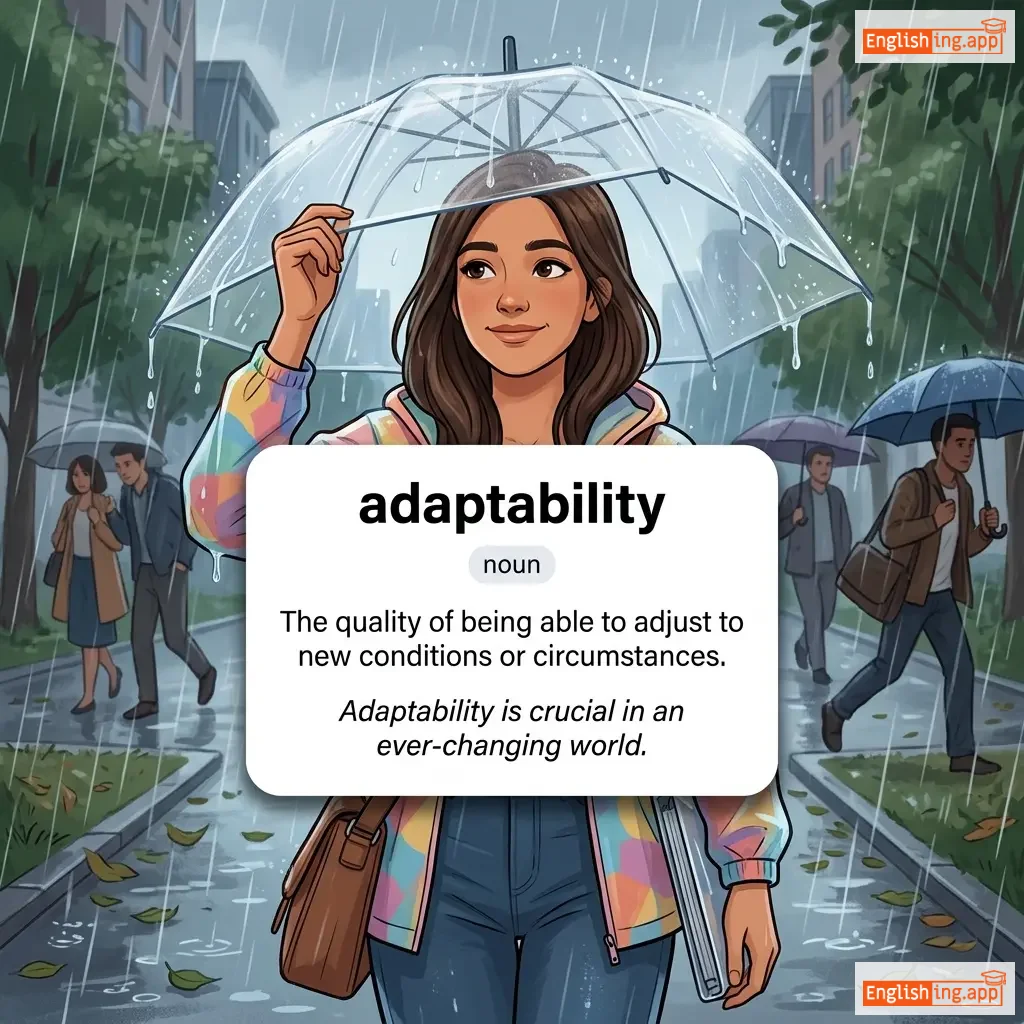
adaptability definition card — visual illustration of the meaning
noun
əˌdæp.təˈbɪl.ə.ti
適応力 (tekiōryoku)

The quality of being able to adjust to new conditions or circumstances.

"Adaptability is crucial in an ever-changing world."
"適応力は絶えず変化する世界で重要です。" (Tekiōryoku wa taezu henka suru sekai de jūyō desu.)
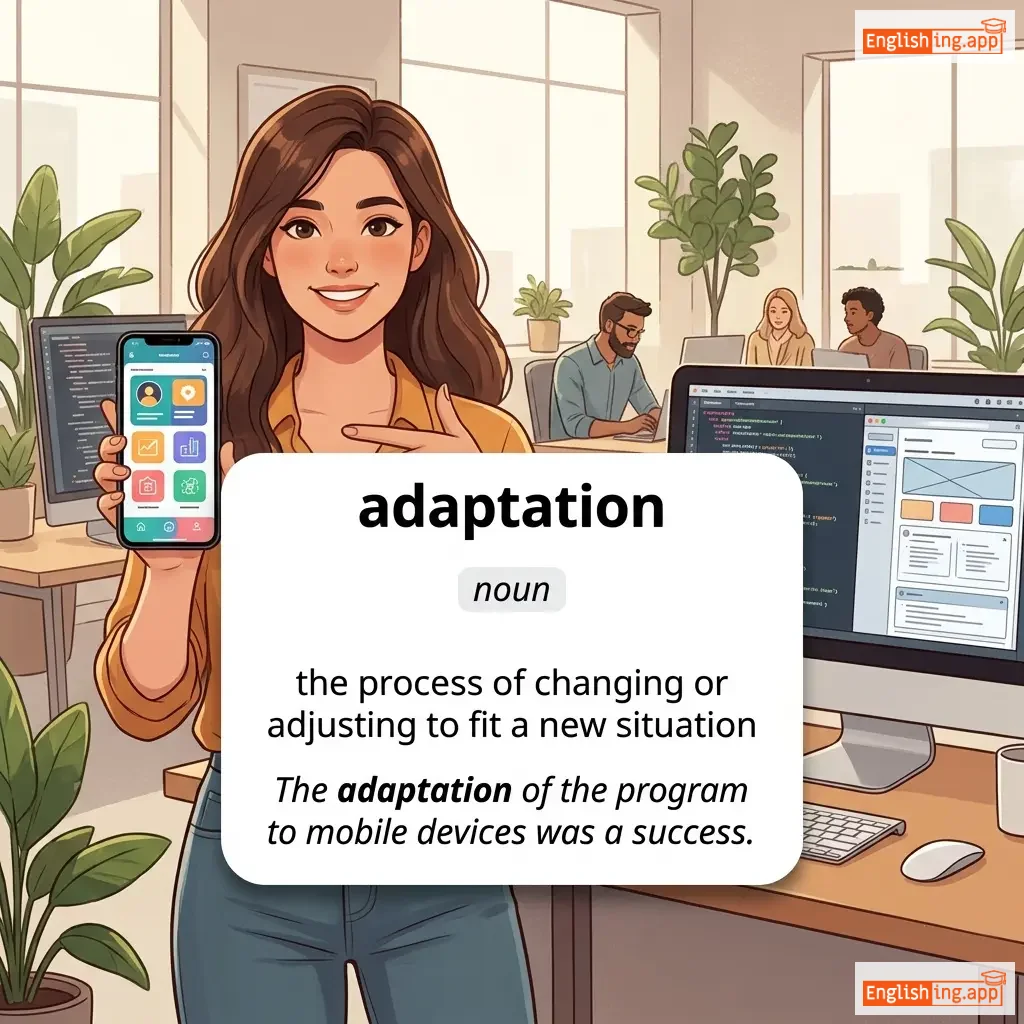
adaptation definition card — visual illustration of the meaning
noun
/ˌædæpˈteɪʃən/
適応 (tekiou)

the process of changing or adjusting to fit a new situation

"The adaptation of the program to mobile devices was a success."
"プログラムのモバイルデバイスへの適応は成功しました。" (Puroguramu no mobairu debaizu e no tekiou wa seikou shimashita.)
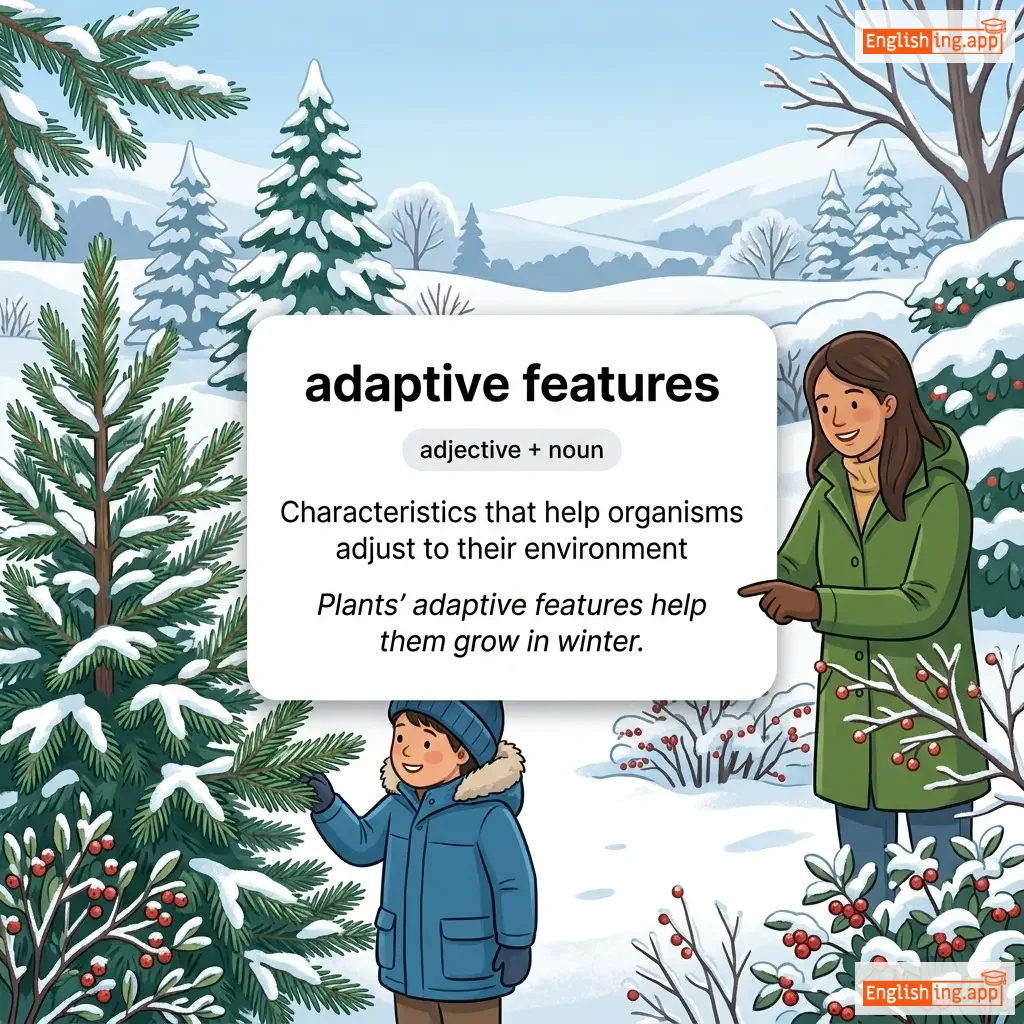
adaptive features definition card — visual illustration of the meaning
adjective + noun
əˈdæptɪv ˈfiːtʃərz
適応機能 (tekiou kinou)

Characteristics that help organisms adjust to their environment

"Plants' adaptive features help them grow in winter."

"植物の適応機能は、冬に成長するのを助けます。" (Shokubutsu no tekiou kinou wa, fuyu ni seichou suru no wo tasukemasu.)
add definition card — visual illustration of the meaning
verb
/æd/
追加する (tsuika suru)

To put together or combine with something else; to increase the number, amount, or value.

"He decided to add more details to the report."

"彼はレポートに詳細を追加することを決定しました。" (Kare wa repo-to ni shousai wo tsuika suru koto wo kettei shimashita.)
adjective
/ˈædɪd/
追加の (tsuika no)

included as an extra or additional part

"She received an added bonus for her performance."

"彼女はパフォーマンスのために追加のボーナスを受け取った。" (Kanojo wa pafōmansu no tame ni tsuika no bōnasu o uketotta.)
noun
/əˈdɛndəm/
補遺 (hoi)

an additional item or piece of information added at the end of a document or book

"The report included an addendum with updated statistics."

"報告書には更新された統計データが含まれている補遺が含まれていた。" (Hōkokusho ni wa kōshin sareta tōkei dēta ga fukumarete iru hoi ga fukumarete ita.)
noun, verb
/ˈædɪkt/ (noun), /əˈdɪkt/ (verb)
中毒者 (chuudoku-sha)

a person who is unable to stop using a harmful substance or doing something harmful; to cause someone to become dependent on something

"He is a video game addict who spends hours playing every day."
"彼は毎日何時間もゲームをするゲーム中毒者です。" (Kare wa mainichi nanjikan mo geemu o suru geemu chuudoku-sha desu.)
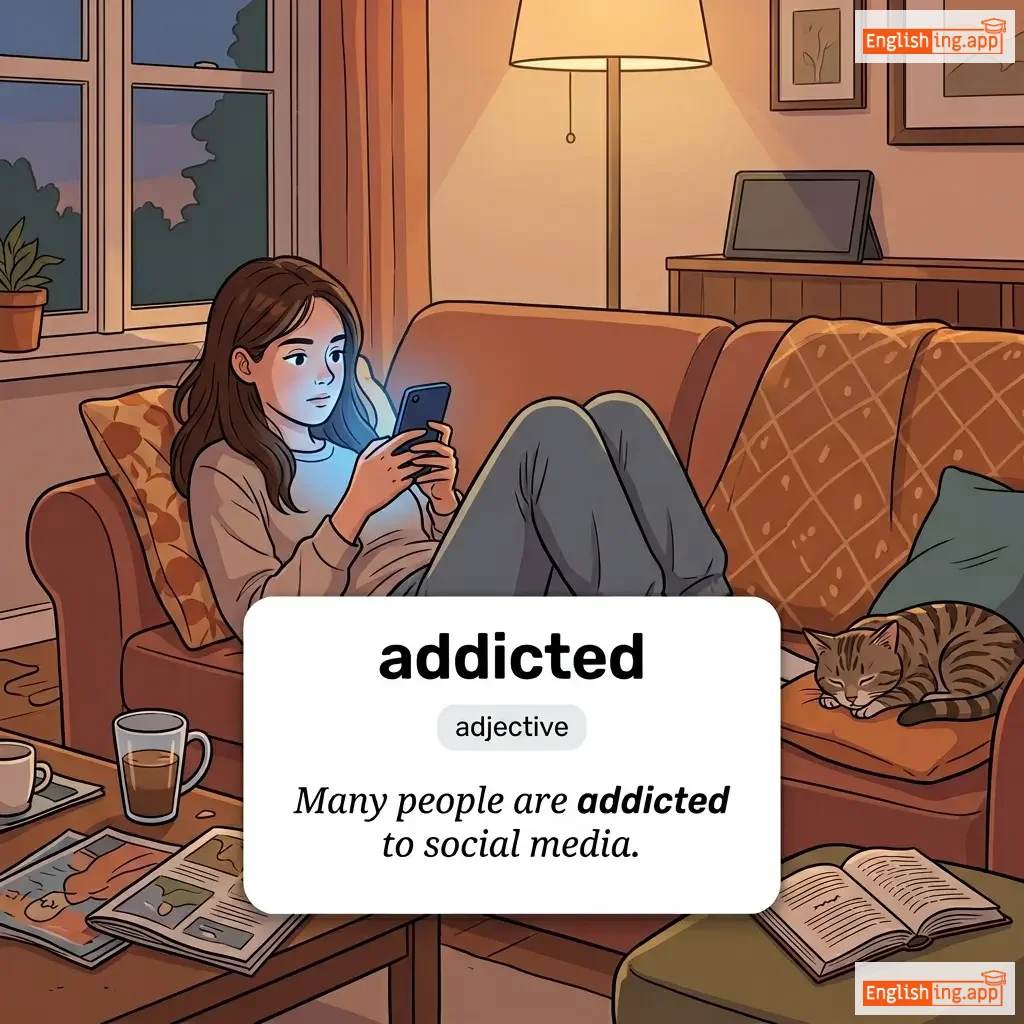
addicted definition card — visual illustration of the meaning
adjective
/əˈdɪktɪd/
中毒 (chuudoku)

Being unable to stop engaging in a particular activity or consuming a particular substance.

"Many people are addicted to social media."

"多くの人々がソーシャルメディアに中毒しています。" (Ookuno hitobito ga soosharu media ni chuudoku shiteimasu.)
noun
/əˈdɪkʃən/
依存 (izon)

A strong and harmful need to regularly have or do something, such as drugs, alcohol, or habits.

"His addiction to video games affected his studies."

"彼のビデオゲームへの依存は彼の学業に影響を与えました。" (Kare no bideo geemu e no izon wa kare no gakugyou ni eikyou o ataemashita.)
noun
/əˈdɪʃən/

the process of adding something to something else

"The addition of solar panels made the house more energy-efficient."

adjective
/əˈdɪʃənəl/
追加の (tsuika no)

added, extra, or supplementary to what already exists

"The teacher gave the students additional homework."

"先生は生徒に追加の宿題を出しました。" (Sensei wa seito ni tsuika no shukudai o dashimashita.)
adverb
/əˈdɪʃənəli/
さらに (sarani)

in addition to what has been said or done

"Additionally, we offer discounts for early bookings."

"さらに、私たちは早期予約に対する割引を提供しています。" (Sarani, watashitachi wa soki yoyaku ni taisuru waribiki wo teikyou shiteimasu.)