語彙集

英単語辞書 | 単語の意味、定義、例文

adverb
/ˌælfəˈbɛtɪkli/
アルファベット順に (arufabetto jun ni)

in the order of the letters of the alphabet

"The names are listed alphabetically in the register."

"名前は登録簿にアルファベット順に並んでいます。" (namae wa tourokubo ni arufabetto jun ni narande imasu)
adverb
/ɔːlˈrɛdi/
すでに (sudeni)

before or by now; prior to a time in question

"I have already finished my homework."

"私はすでに宿題を終わらせました。" (Watashi wa sudeni shukudai o owarasemashita.)
adjective, adverb, interjection
/ɔːlˈraɪt/
大丈夫 (daijoubu)

satisfactory or acceptable; safe or unharmed; used to express agreement or acknowledgment

"Everything is going to be alright."

"すべて大丈夫です。" (subete daijoubu desu)
adverb
/ˈɔːlsoʊ/
また (mata)

in addition; too

"She sings beautifully and also plays the guitar."

"彼女は美しく歌い、またギターを弾きます。" (Kanojo wa utsukushiku utai, mata gitā o hikimasu.)
noun
/ˈɔːltər/
祭壇 (saitan)

A table or flat surface used in religious rituals or worship.

"The priest placed the offerings on the altar."

"神父は祭壇に供物を置きました。" (Shinpu wa saitan ni kumotsu o okimashita.)
verb
/ˈɔːltər/
変更する (henkō suru)

to change or modify something slightly but significantly

"She decided to alter her dress to make it fit better."

"彼女はドレスをより良くするために変更することを決めました。" (Kanojo wa doresu o yori yoku suru tame ni henkō suru koto o kimemashita.)
noun
/ˌɔːltəˈreɪʃən/
変更 (henkou)

a change or modification made to something

"The tailor made an alteration to the suit."

"仕立屋はスーツに変更を加えました。" (Shitaya wa suutsu ni henkou o kuwaemashita.)
verb
/ˈɔːltərˌkeɪt/
議論する (giron suru)

to argue or dispute angrily or noisily

"The neighbors began to altercate over the boundary wall."

"隣人たちは境界の壁について議論し始めました。" (Rinjin-tachi wa kyōkai no kabe ni tsuite giron shihajimemashita.)
noun
/ˌɔːltərˈkeɪʃən/
口論, 言い争い (kōron, iarasoi)

a noisy argument or quarrel

"There was a brief altercation between the two drivers."

"二人のドライバーの間で短い口論がありました。" (Futari no doraibā no aida de mijikai kōron ga arimashita.)
verb, noun, adjective
/ˈɔːltərnət/ (adj, noun), /ˈɔːltərˌneɪt/ (verb)
交代、代替 (kōtai, daitai)

to occur in turn repeatedly; to take turns; also, a substitute or replacement

"The students alternate between online and offline classes."

"学生たちはオンラインとオフラインのクラスを交互に受講します。" (gakusei-tachi wa onrain to ofurain no kurasu o kōgo ni jukō shimasu.)
alternative definition card — visual illustration of the meaning
noun, adjective
/ɔːlˈtɜːrnətɪv/
代替 (daitai)

a choice between two or more possibilities; something that can be chosen instead of something else

"We need to find an alternative solution to this problem."

"この問題に対する代替案を見つける必要があります。" (Kono mondai ni taisuru daitai an o mitsukeru hitsuyou ga arimasu.)
conjunction
/ɔːlˈðoʊ/
しかし (shikashi)

in spite of the fact that; even though

"Although it was raining, they went for a walk."

"しかし、雨が降っていたが、彼らは散歩に出かけた。" (Shikashi, ame ga futte ita ga, karera wa sanpo ni dekaketa.)
noun
/ˈæltɪtuːd/
高度 (kōdo)

the height of an object or point in relation to sea level or ground level

"The airplane is flying at an altitude of 30,000 feet."

"飛行機は30,000フィートの高度で飛んでいます。" (Hikōki wa 30,000 fīto no kōdo de tondeimasu.)
noun
/ˈæltoʊ/
アルト (成人の歌声) (alto)

the second highest adult singing voice, between soprano and tenor

"She sang the alto part in the choir beautifully."

"彼女は合唱団でアルトパートを美しく歌いました。" (Kanojo wa gasshoudan de aruto paato wo utsukushiku utaimashita.)
adverb
/ˌɔːltəˈɡɛðər/
完全に (kanzen ni)

completely; in total; entirely

"The project was altogether successful despite the challenges."
"そのプロジェクトは挑戦にもかかわらず完全に成功しました。" (Sono purojekuto wa chōsen ni mo kakawarazu kanzen ni seikō shimashita.)
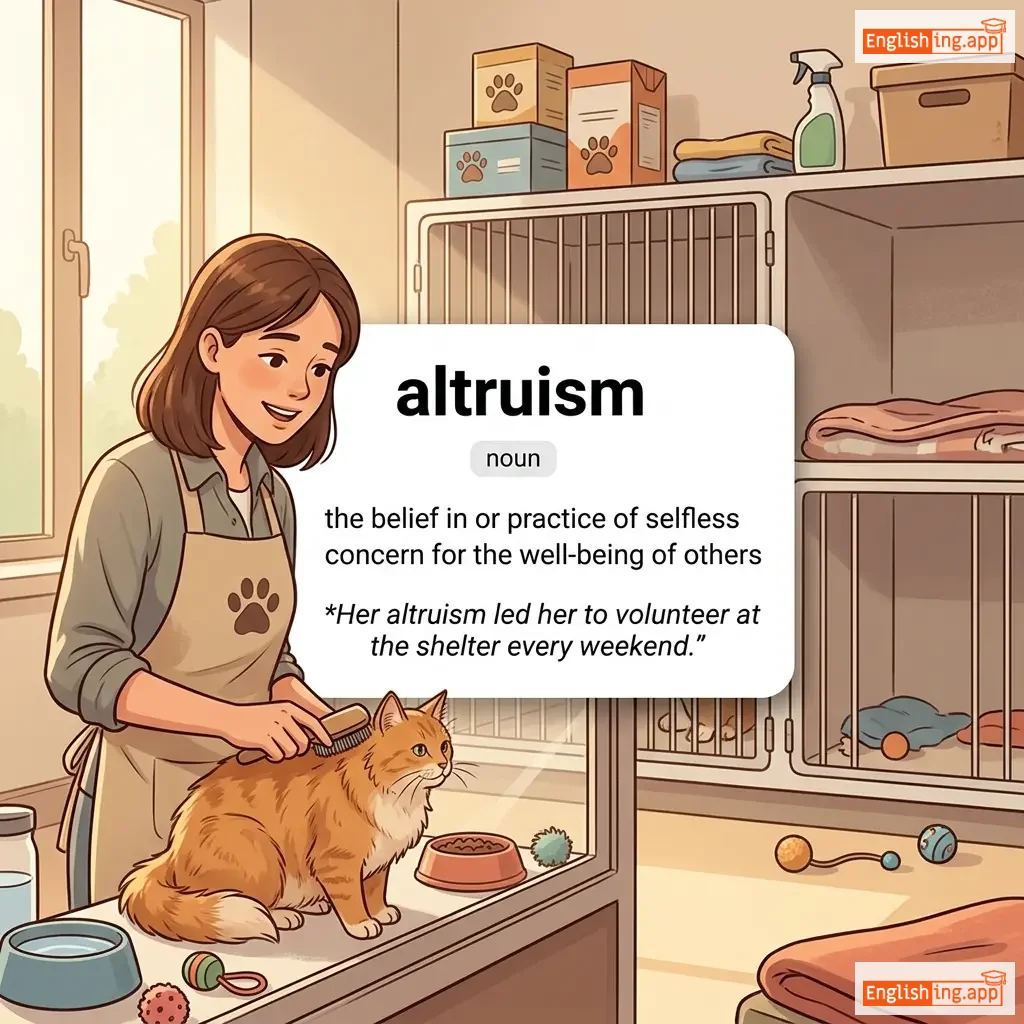
altruism definition card — visual illustration of the meaning
noun
/ˈæltruɪzəm/
利他主義 (ritashugi)

the belief in or practice of selfless concern for the well-being of others

"Her altruism led her to volunteer at the shelter every weekend."

"彼女の利他主義は、毎週末シェルターでボランティアをするように彼女を導きました。" (Kanojo no ritashugi wa, maishūmatsu shertā de borantia o suru yō ni kanojo o michibikimashita.)
noun
/ˈæltruɪst/
利他的な人 (ritateki na hito)

a person who has an unselfish concern for the welfare of others

"He is an altruist who always puts others' needs before his own."
"彼は常に他人のニーズを自分のニーズよりも優先する利他的な人です。" (Kare wa jōni tanin no nīzu o jibun no nīzu yori mo yūsen suru ritateki na hito desu)
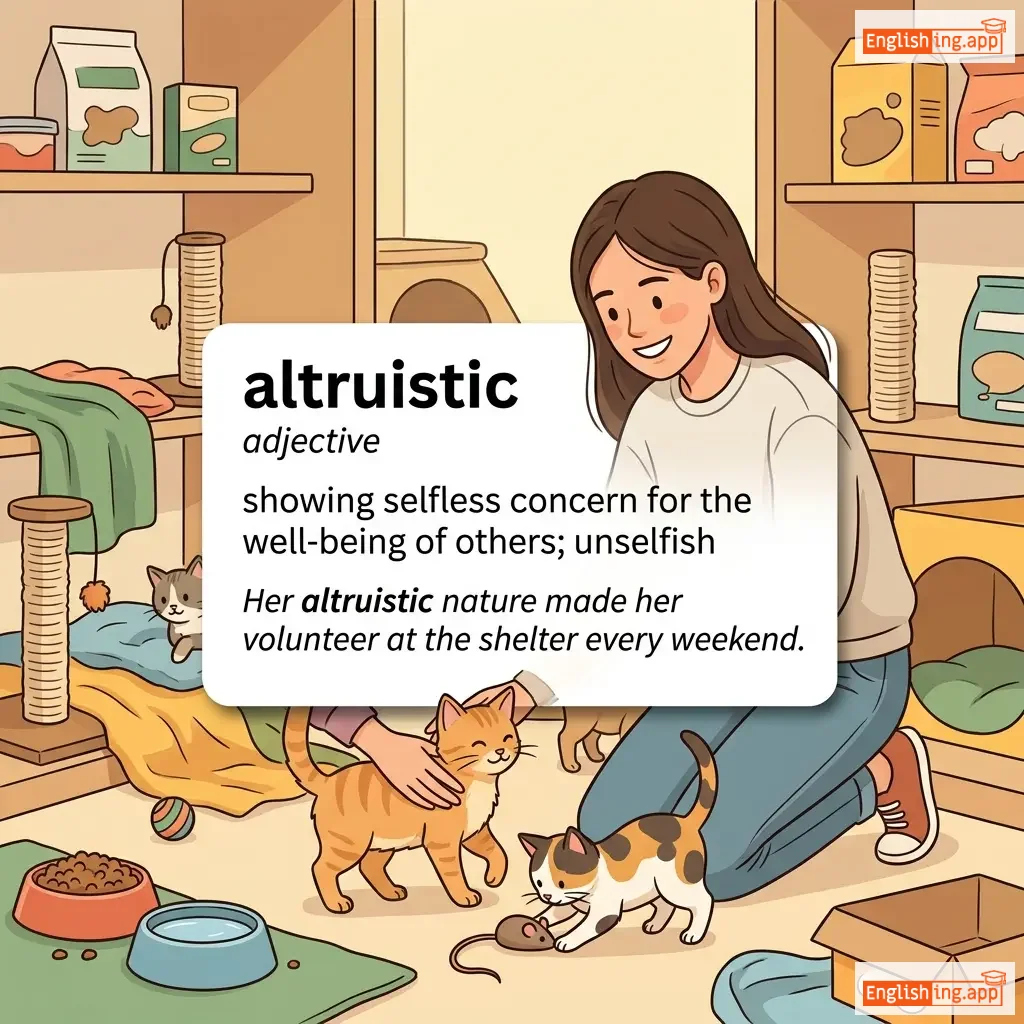
altruistic definition card — visual illustration of the meaning
adjective
/ˌæl.truˈɪs.tɪk/
利他的 (ritateki)

showing selfless concern for the well-being of others; unselfish

"Her altruistic nature made her volunteer at the shelter every weekend."

"彼女の利他的な性格は、毎週末シェルターでボランティアをするように彼女を駆り立てた。" (Kanojo no ritateki na seikaku wa, maishūmatsu sherutā de borantia o suru yō ni kanojo o karitate ta.)
noun
/ˌæljuˈmɪniəm/
アルミニウム (aruminiumu)

a lightweight, silvery-white metal used widely in manufacturing and packaging

"Aluminium is commonly used to make cans and aircraft parts."

"アルミニウムは缶や飛行機の部品に使われます。" (aruminiumu wa kan ya hikouki no buhin ni tsukawaremasu)
noun
/əˈluːmɪnəm/
アルミニウム (aruminiumu)

a lightweight silvery metal used for making cans, foils, and other items

"The airplane body is made of strong but light aluminum."

"飛行機の機体は強いが軽いアルミニウムで作られています。" (Hikouki no kitai wa tsuyoi ga karui aruminiumu de tsukurareteimasu.)
noun
/əˈlʌmnəs/
卒業生 (sotsugyousei)

a former student or graduate of a school, college, or university

"He is an alumnus of Harvard University."

"彼はハーバード大学の卒業生です。" (Kare wa Haabaado daigaku no sotsugyousei desu.)
adverb
/ˈɔːlweɪz/
いつも (itsumo)

at all times; on every occasion

"She always wakes up early in the morning."

"彼女はいつも朝早く起きます。" (Kanojo wa itsumo asa hayaku okimasu.)
verb (first person singular of 'be')
/æm/
私は (watashi wa)

the first person singular present tense of 'be'

"I am happy today."

"今日は私は幸せです。" (Kyou wa watashi wa shiawase desu.)
noun
/əˈmæl.ɡəm/
混合物 (kongou-mono)

a mixture or blend of different things

"The new policy is an amalgam of several previous laws."

"新しい政策は、いくつかの以前の法律の混合物です。" (Atarashii seisaku wa, ikutsuka no izen no houritsu no kongou-mono desu.)
amalgamate definition card — visual illustration of the meaning
verb
/əˈmæl.ɡə.meɪt/
統合する (tōgō suru)

to combine or unite to form one structure or organization

"The two companies decided to amalgamate to increase efficiency."
"二つの会社は効率を上げるために合併することを決めました。" (Futatsu no kaisha wa kōritsu o ageru tame ni gappei suru koto o kimemashita.)
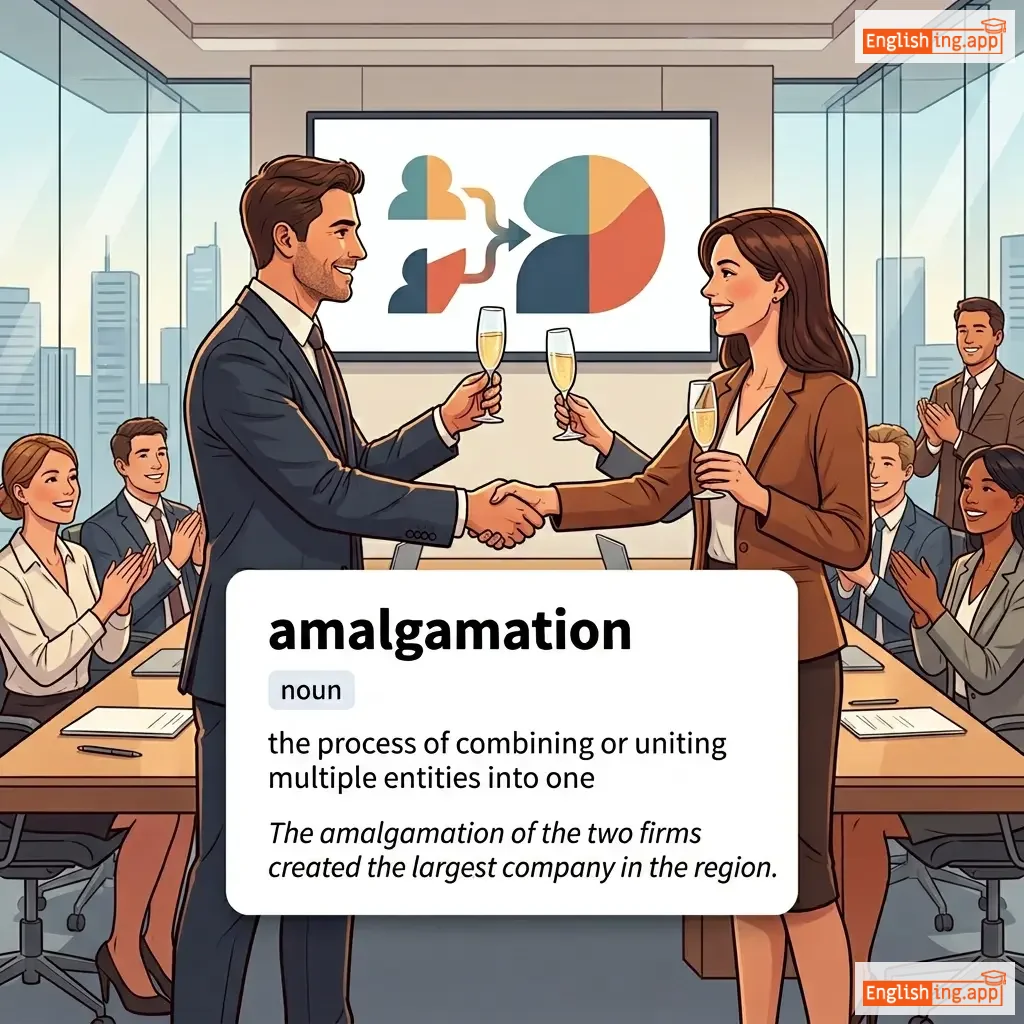
amalgamation definition card — visual illustration of the meaning
noun
/əˌmæl.ɡəˈmeɪ.ʃən/
合併 (gappei)

the process of combining or uniting multiple entities into one

"The amalgamation of the two firms created the largest company in the region."

"2社の合併により、地域で最大の会社が生まれました。" (2sha no gappei ni yori, chiiki de saidai no kaisha ga umaremashita.)
verb
/əˈmæs/
積み上げる (tsumiageru)

to gather together or accumulate over a period of time

"He managed to amass a fortune through wise investments."

"彼は賢い投資を通じて財産を積み上げることができました。" (Kare wa kashikoi tōshi o tōjite zaisan o tsumiageru koto ga dekimashita.)
noun
/ˈæmətər/
アマチュア (amachua)

A person who engages in a pursuit, especially a sport or art, on an unpaid basis.

"The painting looked impressive, even though it was done by an amateur."

"その絵画は印象的に見えましたが、アマチュアによって描かれました。" (Sono kaiga wa inshō-teki ni miemashita ga, amachua ni yotte kakaremashita.)
adjective
/ˈæməˌtɔːri/
愛に関する (ai ni kansuru)

Relating to or expressing sexual love.

"The poet’s verses were filled with amatory themes."

"詩人の詩は愛に関するテーマで満たされていました。" (Shijin no shi wa ai ni kansuru tēma de mitasarete imashita.)
verb
/əˈmeɪz/
驚かせる (odorokaseru)

to fill someone with great surprise or wonder

"The magician’s final trick amazed the audience."

"魔術師の最後のトリックは観客を驚かせた。" (majutsushi no saigo no torikku wa kyakkyaku o odorokaseta)
adjective
/əˈmeɪzɪŋ/
驚くべき (odorokubeki)

causing great surprise or wonder; astonishing

"The magician performed an amazing trick."

"マジシャンは驚くべきトリックを見せた。" (Majishan wa odorokubeki torikku o miseta.)
noun
/ˈæməzɒn/
力強い女性 (chikaradzuyoi josei)

A tall, strong, or powerful woman.

"She fought like an amazon in the competition."

"彼女は競技でアマゾンのように戦った。" (Kanojo wa kyōgi de Amazon no yō ni tatakatta.)
noun
/æmˈbæsədər/
大使 (taishi)

a person who represents their country in another country

"The ambassador attended the international peace conference."
"大使は国際平和会議に出席しました。" (taishi wa kokusai heiwa kaigi ni shusseki shimashita)
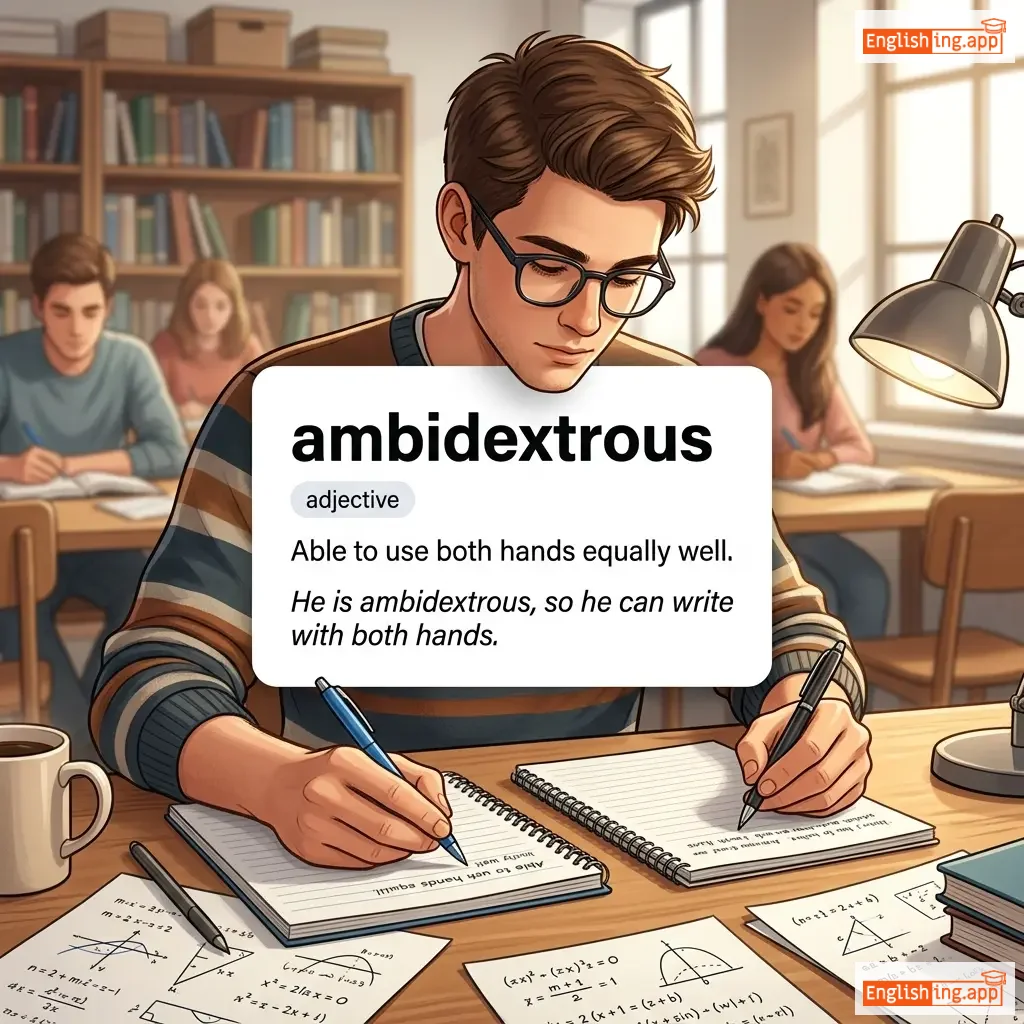
ambidextrous definition card — visual illustration of the meaning
adjective
/ˌæmbɪˈdɛkstrəs/
両手利き (ryoute kiki)

Able to use both hands equally well.

"He is ambidextrous, so he can write with both hands."
"彼はアンビデクストラスで、両手で書くことができます。" (Kare wa ambidextrous de, ryoute de kaku koto ga dekimasu.)
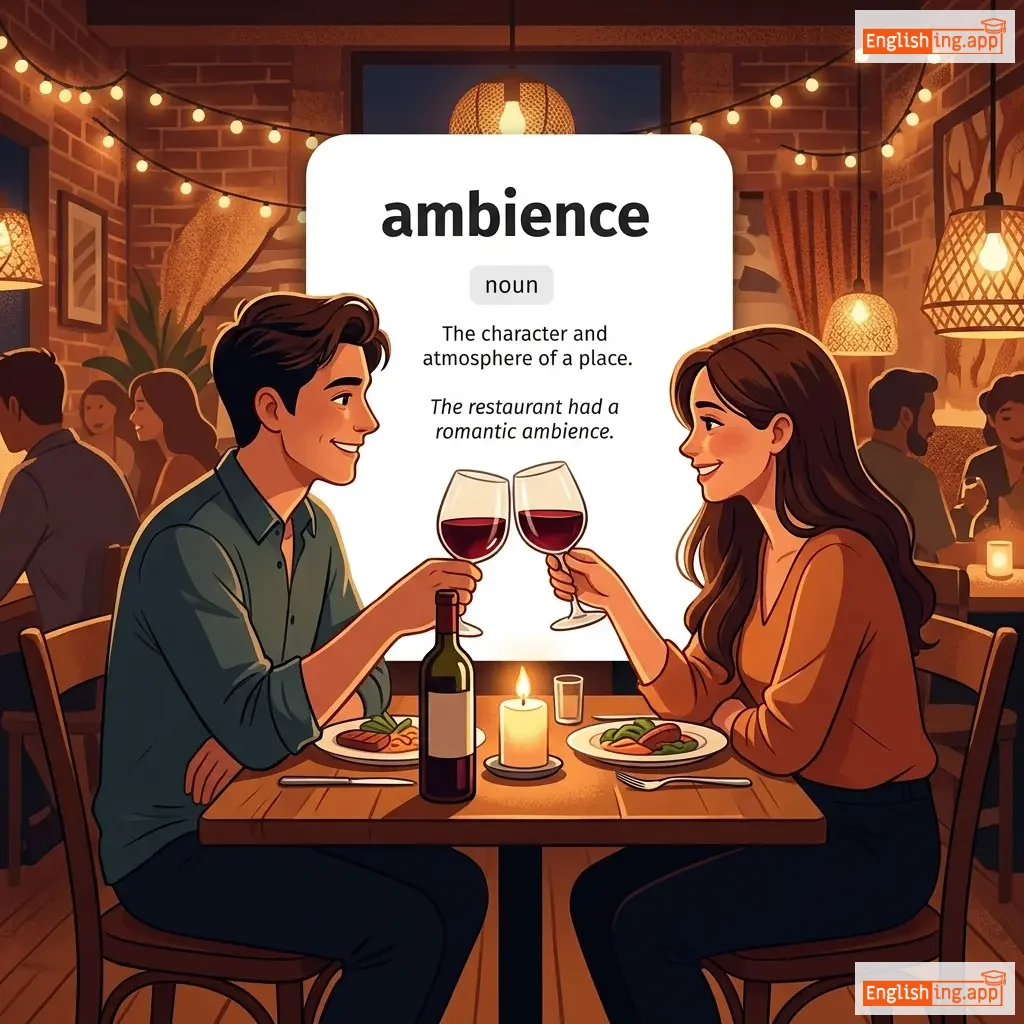
ambience definition card — visual illustration of the meaning
noun
/ˈæmbiəns/
雰囲気 (funiki)

The character and atmosphere of a place.

"The restaurant had a romantic ambience."
"レストランにはロマンチックな雰囲気があった。" (Resutoran niwa romanchikkuna funiki ga atta.)
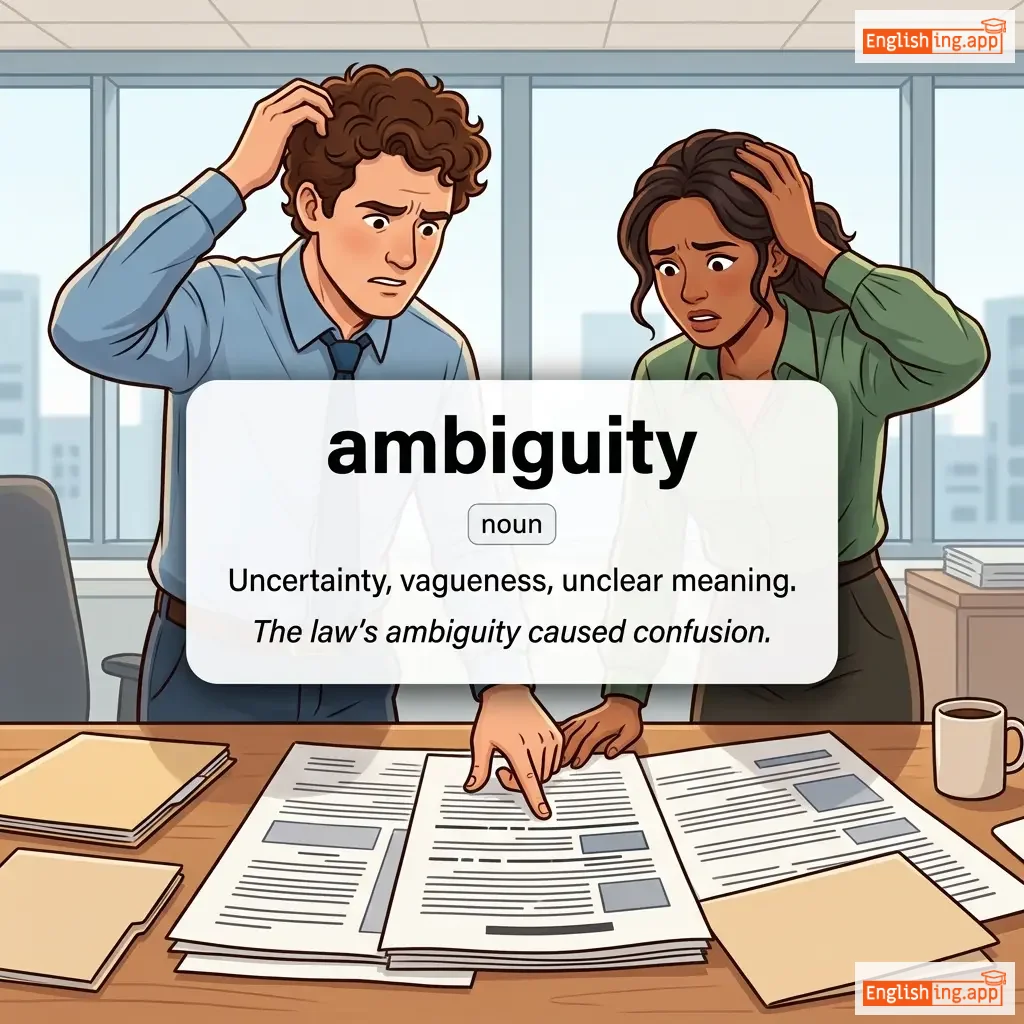
ambiguity definition card — visual illustration of the meaning
noun
ˌæm.bɪˈɡjuː.ə.ti
曖昧さ, 不確かさ, 不明瞭 (aimaisa, fukakasa, fumeiryō)

Uncertainty, vagueness, unclear meaning.

"The law's ambiguity caused confusion."

"法律のあいまいさが混乱を引き起こした。" (Hōritsu no aimai sa ga konran o hikiokoshita.)
ambiguous definition card — visual illustration of the meaning
adjective
/æmˈbɪɡjuəs/
曖昧な (aimai na)

Open to more than one interpretation; unclear or uncertain.

"His answer was so ambiguous that no one understood his real opinion."

"彼の答えは非常に曖昧で、誰も彼の本当の意見を理解できませんでした。" (Kare no kotae wa hijō ni aimai de, dare mo kare no hontō no iken o rikai dekimasen deshita.)
ambition definition card — visual illustration of the meaning
noun
/æmˈbɪʃən/
野望 (yabou)

a strong desire to achieve something, typically requiring determination and hard work

"Her ambition is to become a successful entrepreneur."

"彼女の野望は成功した起業家になることです。" (Kanojo no yabou wa seikou shita kigyouka ni naru koto desu.)
adjective
/æmˈbɪʃəs/
野心的 (yashinteki)

Having a strong desire to succeed or achieve something.

"She is very ambitious and wants to become a doctor."
"彼女は非常に野心的で、医者になりたいと考えています。" (Kanojo wa hijō ni yashinteki de, isha ni naritai to kangaeteimasu.)
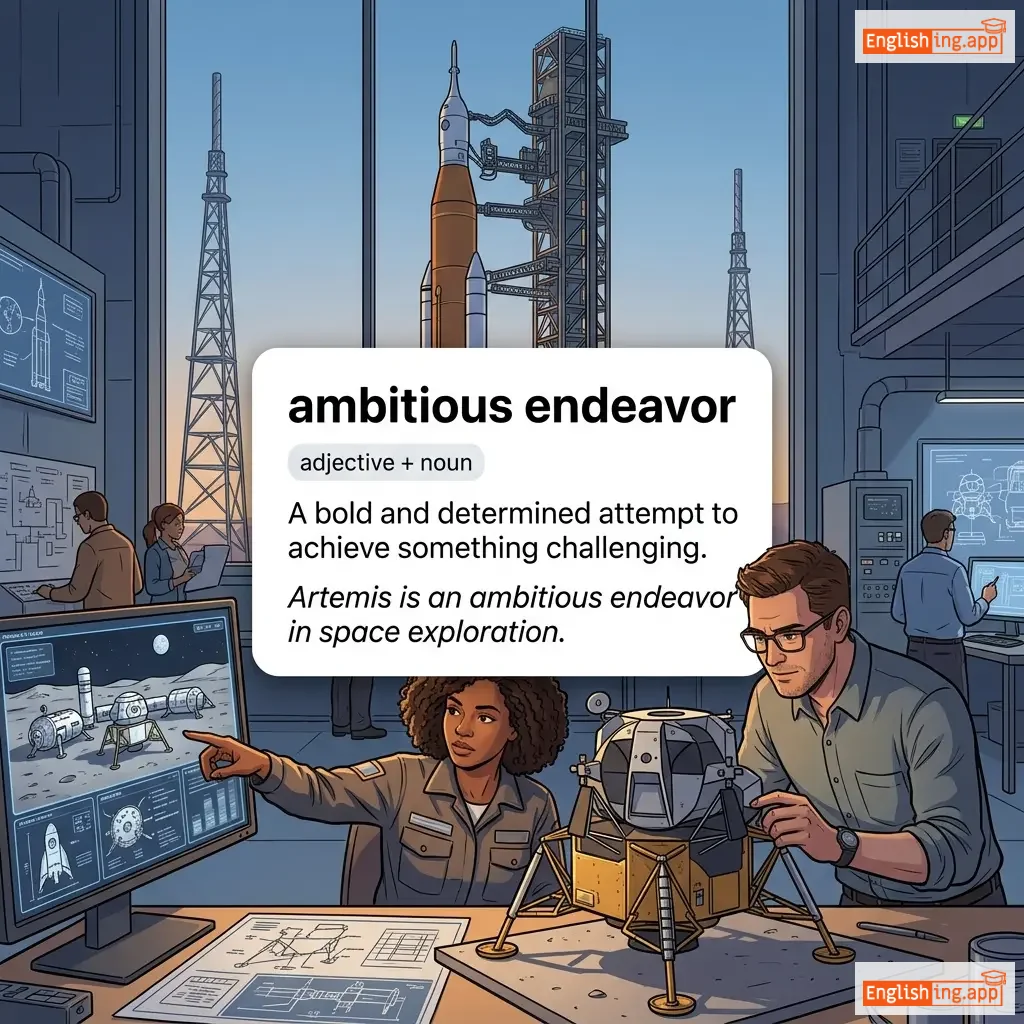
ambitious endeavor definition card — visual illustration of the meaning
adjective + noun
æmˈbɪʃəs ɪnˈdevər
野心的な試み (yashinteki na kokoromi)

A bold and determined attempt to achieve something challenging.

"Artemis is an ambitious endeavor in space exploration."

"アルテミスは宇宙探査における野心的な取り組みです。" (Arutemisu wa uchuu tansa ni okeru yashinteki na torikumi desu.)
ambivalence definition card — visual illustration of the meaning
noun
/æmˈbɪvələns/
相反感情 (sōhan kanjō)

The state of having mixed feelings or contradictory ideas about something.

"He felt ambivalence about moving to a new city."

"彼は新しい都市に引っ越すことについて相反感情を抱いていました。" (kare wa atarashī toshi ni hikkosu koto ni tsuite sōhan kanjō o daite imashita.)
adjective
/æmˈbɪvələnt/
相反する (sōhansuru)

Having mixed or contradictory feelings about something or someone.

"She was ambivalent about accepting the new job offer."

"彼女は新しい仕事のオファーを受け入れることに対してアンビヴァレントだった。" (Kanojo wa atarashī shigoto no ofā o ukeireru koto ni taishite ambibarento datta.)
verb
/ˈæmbl/
ゆっくり歩く (yukkuri aruku)

To walk at a slow, relaxed pace.

"They amble through the park on Sunday mornings."

"彼らは日曜日の朝に公園をゆっくり歩いています。" (Karera wa nichiyoubi no asa ni kouen wo yukkuri aruiteimasu.)
ambrosia definition card — visual illustration of the meaning
noun
/æmˈbroʊʒə/
神の食べ物 (kami no tabemono)

The food of the gods in classical mythology; something extremely pleasing to taste or smell.

"The dessert was so delicious that it tasted like ambrosia."

"デザートはあまりにも美味しくて、アンブロージアのような味がしました。" (Dezāto wa amari ni mo oishikute, anburōjia no yō na aji ga shimashita.)
adjective
/æmˈbroʊʒiəl/
神々しい (kamigamashī)

Exceptionally pleasing to taste or smell; divine.

"The aroma of freshly baked bread was simply ambrosial."

"焼きたてのパンの香りはまさに神々しいものでした。" (Yakitate no pan no kaori wa masani kamigamashī mono deshita.)
noun
/ˈæmbjʊləns/
救急車 (kyūkyūsha)

A specially equipped vehicle used to transport sick or injured people to the hospital.

"The ambulance rushed to the accident site within minutes."

"救急車は数分で事故現場に到着しました。" (Kyūkyūsha wa sū-fun de jiko genba ni tōchaku shimashita.)
adjective
/ˈæmbjələˌtɔːri/
外来患者 (gairaikanja)

Relating to or able to walk; relating to outpatient medical care.

"The patient is ambulatory and does not require bed rest."

"その患者は外来患者で、安静が必要ありません。" (Sono kanja wa gairaikanja de, ansei ga hitsuyō arimasen.)
verb
/ˈæmbʊʃ/
待ち伏せする (machibusesuru)

To attack suddenly and unexpectedly from a hidden position.

"The soldiers planned to ambush the enemy at dawn."
"兵士たちは夜明けに敵を待ち伏せする計画を立てた。" (heishitachi wa yoake ni teki o machibusesuru keikaku o tateta.)
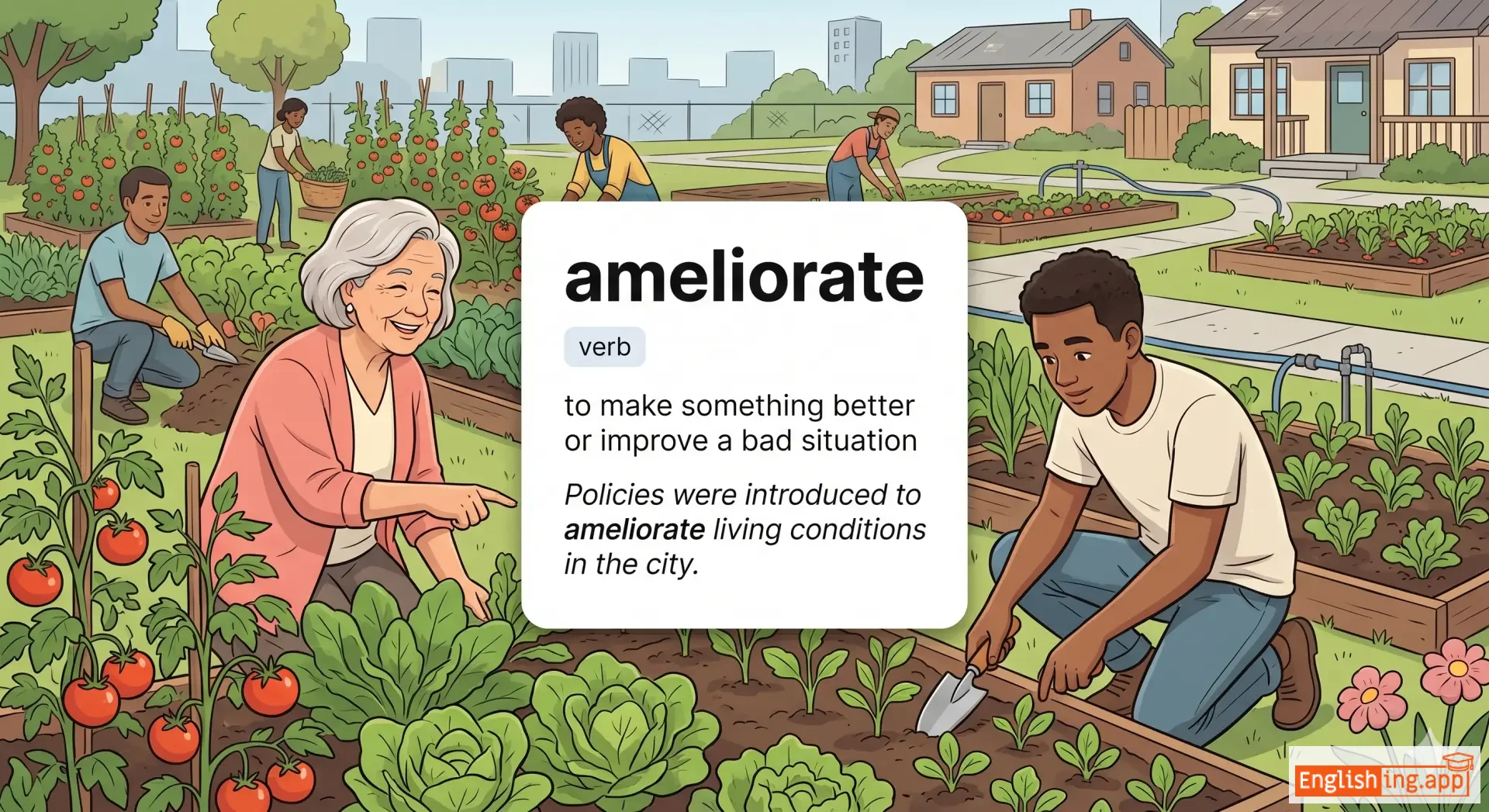
ameliorate definition card — visual illustration of the meaning
verb
/əˈmiːliəreɪt/
幸福 (kōfuku)

to make something better or improve a bad situation

"Policies were introduced to ameliorate living conditions in the city."
"都市の生活条件を改善するための政策が導入されました。" (Toshi no seikatsu jōken o kaizen suru tame no seisaku ga dōnyū saremashita.)
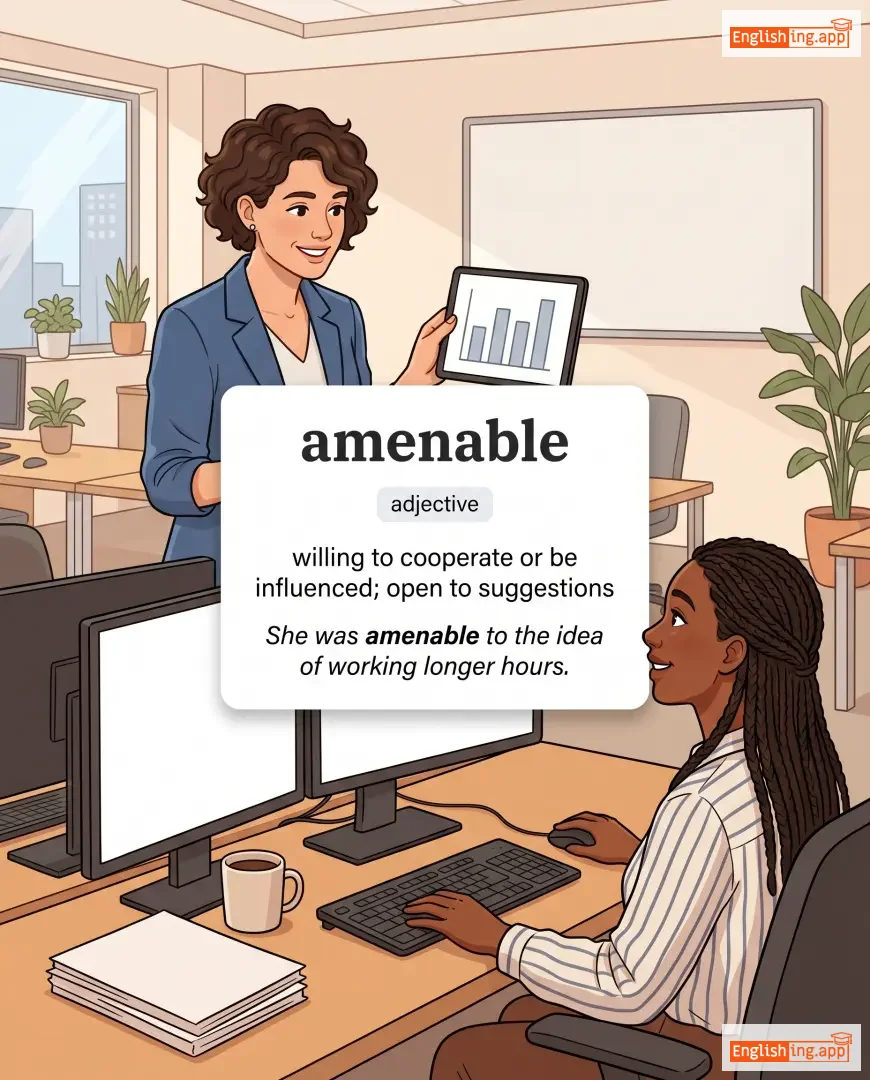
amenable definition card — visual illustration of the meaning
adjective
/əˈmiːnəbl/
協力的 (kyōryokuteki)

willing to cooperate or be influenced; open to suggestions

"She was amenable to the idea of working longer hours."

"彼女は長時間働くという考えに賛成だった。" (Kanojo wa chōjikan hataraku to iu kangae ni sansei datta.)