語彙集

英単語辞書 | 単語の意味、定義、例文

noun/verb
/eɪdʒ/
年齢 (nenrei)

The length of time that a person has lived; to grow older.

"She asked his age politely."

"彼女は彼の年齢を丁寧に尋ねました。" (Kanojo wa kare no nenrei o teinei ni tazunemashita.)
adjective
/eɪdʒd/
年老いた (nenoita)

having lived for a specified number of years; old

"The aged man sat in the park, watching the children play."

"年老いた男は公園に座り、子供たちが遊ぶのを見ていた。" (Nenoita otoko wa koen ni suwari, kodomotachi ga asobu no o mite ita.)
noun
/ˈeɪ.dʒən.si/
エージェンシー (e-jenshī)

An organization or business that provides a particular service.

"She works at a travel agency."

"彼女は旅行代理店で働いています。" (Kanojo wa ryokō dairi-ten de hataraiteimasu.)
noun
/əˈdʒɛndə/

A list of items to be discussed or acted upon in a meeting or plan.

"The manager reviewed the agenda before the meeting began."

noun
/ˈeɪ.dʒənt/
エージェント (ējento)

A person who acts on behalf of another person or organization.

"The real estate agent showed us several houses."

"不動産エージェントは私たちにいくつかの家を見せてくれました。" (Fudōsan ējento wa watashitachi ni ikutsuka no ie o misete kuremashita.)
verb
/əˈɡlɒməˌreɪt/
凝集する (gyoushu suru)

To collect or form into a mass or group.

"The dust particles began to agglomerate into larger clusters."

"埃の粒子がより大きな塊に集まり始めました。" (Hōki no ryūshi ga yori ōkina katamari ni atsumari hajimemashita.)
noun
/əˌɡlɒməˈreɪʃən/
集積 (shūseki)

A mass or collection of things, sometimes clustered together.

"The city is an agglomeration of diverse cultures and communities."
"その都市はさまざまな文化とコミュニティの集積です。" (Sono toshi wa samazama na bunka to komyuniti no shūseki desu.)
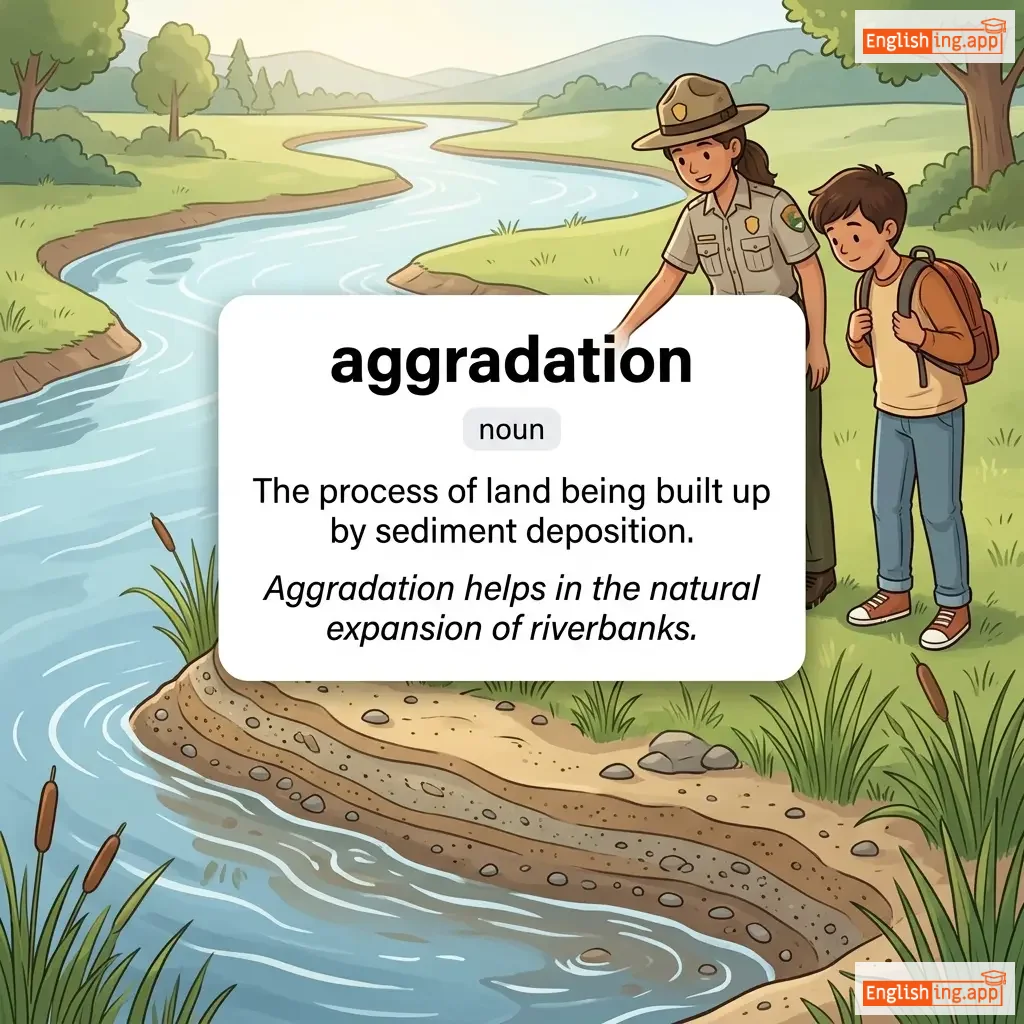
aggradation definition card — visual illustration of the meaning
noun
/ˌæɡ.rəˈdeɪ.ʃən/
堆積物によって土地が作られるプロセス (taisekimono ni yotte tochi ga tsukurareru purosesu)

The process of land being built up by sediment deposition.

"Aggradation helps in the natural expansion of riverbanks."
"アグレデーションは河川の自然な拡張を助けます。" (Agredeshon wa kasen no shizen na kakuchou o tasukemasu)
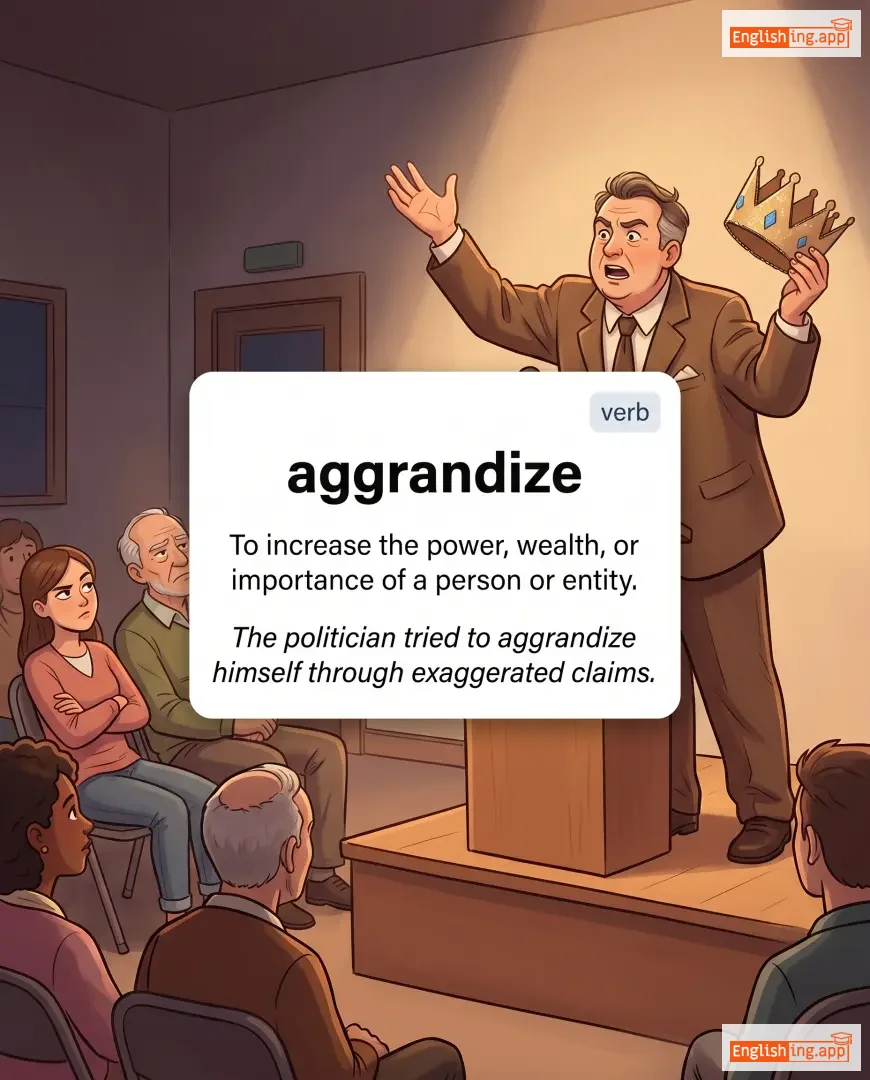
aggrandize definition card — visual illustration of the meaning
verb
/əˈɡræn.daɪz/
拡大する (kakudai suru)

To increase the power, wealth, or importance of a person or entity.

"The politician tried to aggrandize himself through exaggerated claims."

"政治家は誇張された主張を通じて自分を拡大しようとした。" (Seijika wa kojō sareta shuchō o tōjite jibun o kakudai shiyō to shita.)
verb
/ˈæɡ.rə.veɪt/
悪化させる (akka saseru)

To make a situation worse or more serious.

"Scratching the rash will only aggravate the condition."

"発疹をかくことは、状態を悪化させるだけです。" (Hasshin wo kaku koto wa, joutai wo akka saseru dake desu.)
noun
/ˌæɡ.rəˈveɪ.ʃən/
悪化, 増悪 (aguravēshon)

The act of making a situation worse or the state of being worsened.

"The delay caused great aggravation for the passengers."

"遅延は乗客に大きな不快感を引き起こしました。" (Chien wa jōkyaku ni ōkina fukaikan o hikiokoshimashita.)
aggregate definition card — visual illustration of the meaning
noun, verb, adjective
/ˈæɡ.rɪ.ɡət/ (noun/adjective), /ˈæɡ.rɪ.ɡeɪt/ (verb)
集合体, 総体 (shūgōtai, sōtai)

A whole formed by combining several elements; to combine into a total.

"The data was aggregated to provide a clearer picture of the market."

"データは市場のより明確な画像を提供するために集約されました。" (Dēta wa shijō no yori meikaku na gazō o teikyō suru tame ni shūyaku saremashita.)
verb
/əˈɡrɛs/
攻撃する (kōgeki suru)

to initiate an attack or show hostile behavior

"The army chose not to aggress without provocation."

"軍隊は挑発なしに攻撃しないことを決定しました。" (Guntai wa chōhatsu nashi ni kōgeki shinai koto o kettei shimashita.)
noun
/əˈɡrɛʃən/
攻撃性 (kougekisei)

hostile or violent behavior towards others

"His sudden aggression surprised everyone in the meeting."

"彼の突然の攻撃性は会議で誰もが驚いた。" (Kare no totsuzen no kougekisei wa kaigi de dare mo ga odoroita.)
adjective
/əˈɡrɛsɪv/
攻撃的 (kōgeki-teki)

ready or likely to attack or confront; forceful

"The salesman used an aggressive strategy to close the deal."

"営業マンは契約を結ぶために攻撃的な戦略を使用しました。" (Eigyō-man wa keiyaku o musubu tame ni kōgeki-teki na senryaku o shiyō shimashita.)
verb
/əˈɡriːv/
傷つける (kizutsukeru)

to cause distress or make someone feel resentful

"She felt aggrieved by the unfair decision."

"彼女は不公平な決定に心を痛めていた。" (Kanojo wa fukōhei na kettei ni kokoro o itamete ita.)
adjective
/əˈɡæst/
驚愕 (kyougaku)

filled with shock or horror

"The audience was aghast at the tragic scene."

"観客はその悲劇的なシーンに驚愕していた。" (Kankyaku wa sono higekiteki na shīn ni kyōgaku shite ita.)
adjective
/ˈædʒ.aɪl/
素早く柔軟 (subayaku jūnan)

able to move quickly and easily; quick and adaptable in thinking or action

"The startup team was agile in responding to market changes."
"スタートアップチームは市場の変化に迅速に対応しました。" (Sutātoappu chīmu wa shijō no henka ni jinsoku ni taio shimashita.)
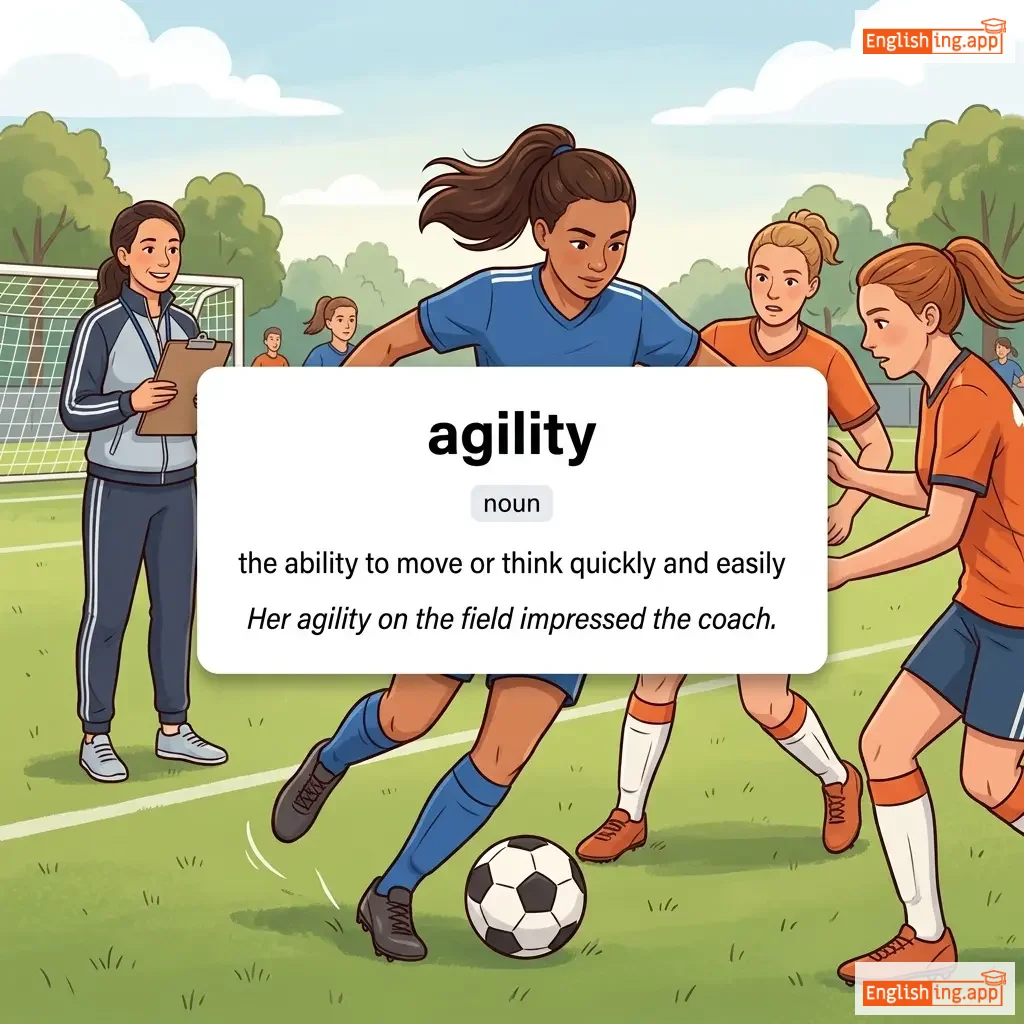
agility definition card — visual illustration of the meaning
noun
/əˈdʒɪl.ə.ti/
敏捷性 (binjōsei)

the ability to move or think quickly and easily

"Her agility on the field impressed the coach."

"彼女のフィールドでの敏捷性はコーチに感銘を与えました。" (Kanojo no fīrudo de no binjōsei wa kōchi ni kanmei o ataemashita.)
verb
/ˈædʒ.ɪ.teɪt/
扇動する, 激しくする (sendou suru, hageshiku suru)

to stir up feelings or disturb; to campaign for change

"The protesters agitated for better working conditions."

"抗議者たちはより良い労働条件を求めて活動した。" (Kougi-shatachi wa yori yoi roudou jouken wo motomete katsudou shita.)
adjective
/ˈædʒɪteɪtɪd/
動揺した; 不安な; 落ち着かない; 否定的に興奮した (dōyō shita; fuan na; ochitsukanai; hitei-teki ni kōfun shita)

disturbed; anxious; restless; excited in a negative way

"He became agitated when he heard the bad news."

"彼は悪いニュースを聞いて動揺した。" (Kare wa warui nyūsu o kiite dōyō shita.)
noun
/ˌædʒ.ɪˈteɪ.ʃən/
動揺 (dōyō)

a state of nervousness, excitement, or unrest; or action of stirring up public concern

"There was visible agitation among the crowd."

"群衆の中には明らかな動揺がありました。" (Gunshū no naka ni wa akirakana dōyō ga arimashita.)
noun
/æɡˈnɒs.tɪk/
アグノスティック (agnosutikku)

a person who believes that nothing is known or can be known about the existence of God; uncertain in belief

"He described himself as an agnostic rather than an atheist."

"彼は自分を無神論者ではなくアグノスティックだと説明した。" (Kare wa jibun o mushinronsha de wa naku agnosutikku da to setsumei shita.)
adverb
/əˈɡoʊ/
以前 (izen)

Used to indicate how long before the present something happened.

"I met her two years ago."

"私は2年前に彼女に会いました。" (Watashi wa 2-nen mae ni kanojo ni aimashita.)
🤩

agog

adjective
/əˈɡɒɡ/

Highly excited by eagerness, curiosity, or anticipation.

"The children were agog with excitement as they waited for the magician to appear."

verb
/ˈæɡənaɪz/
苦しむ (kurushimu)

To suffer extreme physical or mental pain; to spend time worrying.

"She agonized for days over whether she had made the right decision."

"彼女は自分が正しい決断を下したかどうかを何日も悩んでいました。" (Kanojo wa jibun ga tadashī ketsudan o kudashita ka dō ka o nannichi mo nayande imashita.)
noun
/ˈæɡ.ə.ni/
極度の肉体的または精神的苦痛; 激しい痛み (kyokudo no nikutai-teki matawa seishinteki kutsuu; hageshii itami)

extreme physical or mental suffering; intense pain

"He was in agony after the accident."

"事故後、彼は激しい痛みに苦しんでいた。" (jiko go, kare wa hageshii itami ni kurushinde ita.)
adjective
/əˈɡrɛəriən/
農業的 (nōgyōteki)

Related to farming, agriculture, or rural land.

"The country’s economy is still largely agrarian."
"その国の経済はまだ主に農業的です。" (Sono kuni no keizai wa mada omoni nōgyōteki desu.)
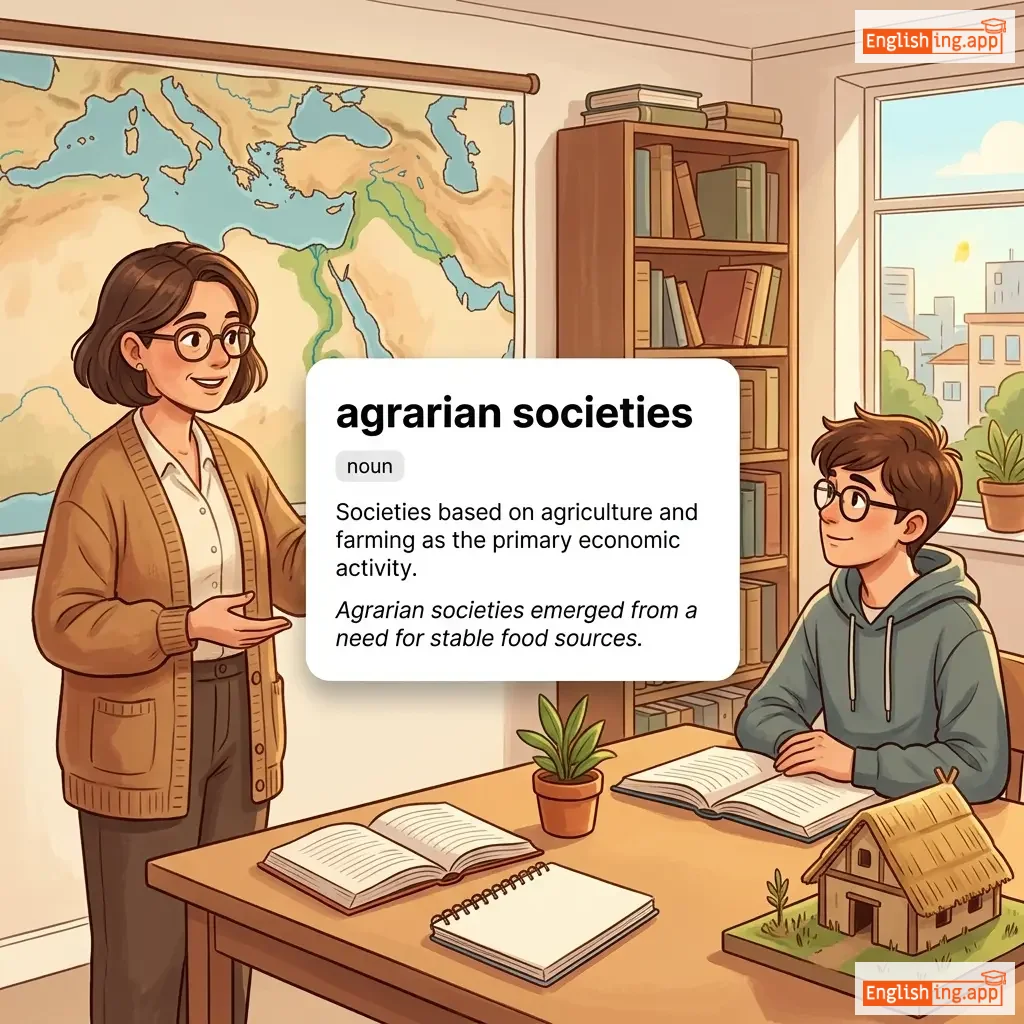
agrarian societies definition card — visual illustration of the meaning
noun
əˈɡrɛriən səˈsaɪətiz
農業社会 (nōgyō shakai)

Societies based on agriculture and farming as the primary economic activity.

"Agrarian societies emerged from a need for stable food sources."
"農業社会は安定した食料源の必要性から生まれました。" (Nōgyō shakai wa antei shita shokuryōgen no hitsuyō-sei kara umaremashita.)
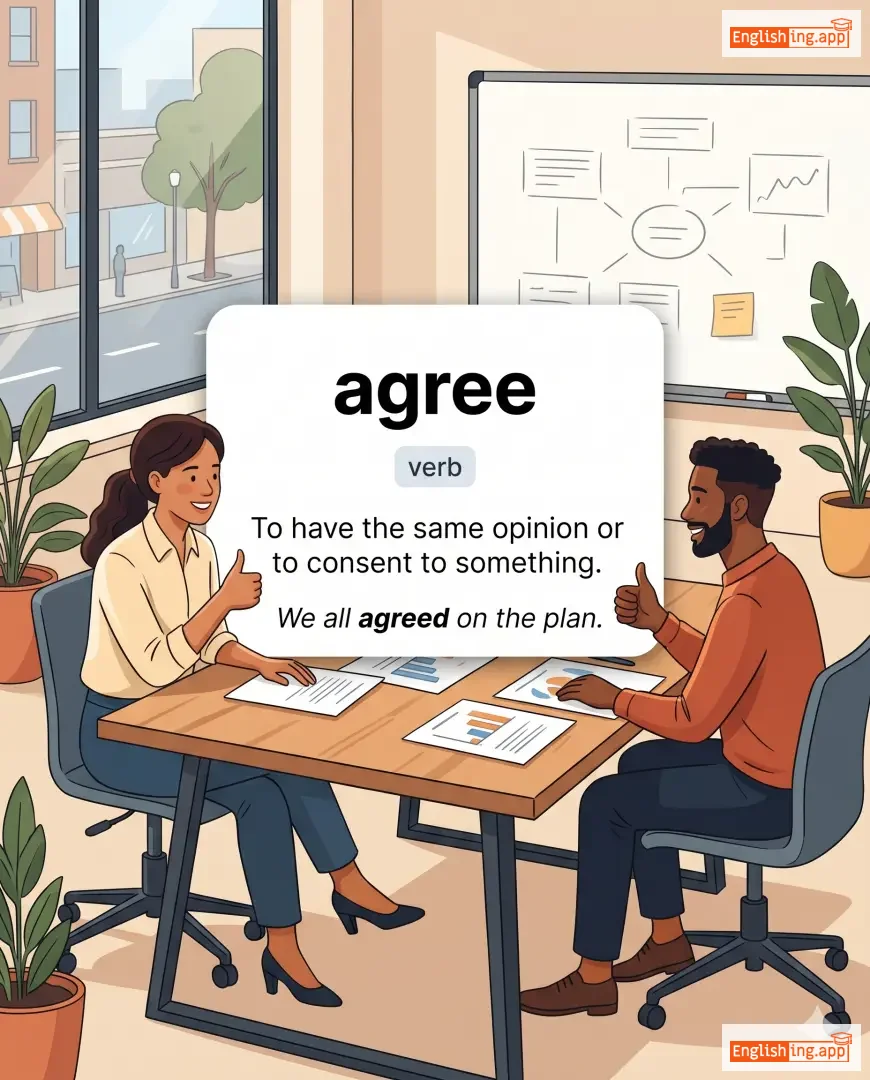
agree definition card — visual illustration of the meaning
verb
/əˈɡriː/
同意する (dōi suru)

To have the same opinion or to consent to something.

"We all agreed on the plan."

"私たちは皆、計画に同意しました。" (Watashitachi wa mina, keikaku ni dōi shimashita.)
adjective
/əˈɡriːəbl/
快適な; 楽しい; 魅力的な; 同意する気持ち (kaiteki na; tanoshī; miryokuteki na; dōi suru kimochi)

pleasant; enjoyable; delightful; willing to agree

"The weather is very agreeable today."

"今日はとても快適な天気です。" (Kyou wa totemo kaiteki na tenki desu.)
agreement definition card — visual illustration of the meaning
noun
/əˈɡriː.mənt/
契約 (keiyaku)

A mutual understanding or arrangement between two or more parties.

"They signed an agreement to work together."

"彼らは一緒に働くための契約に署名しました。" (Karera wa issho ni hataraku tame no keiyaku ni shomei shimashita.)
agreements definition card — visual illustration of the meaning
noun
/əˈɡriː.mənts/
契約 (keiyaku)

Formal arrangements or understandings between two or more parties.

"Agreements strengthen partnerships."
"契約はパートナーシップを強化します。" (Keiyaku wa pātonāshippu o kyōka shimasu.)
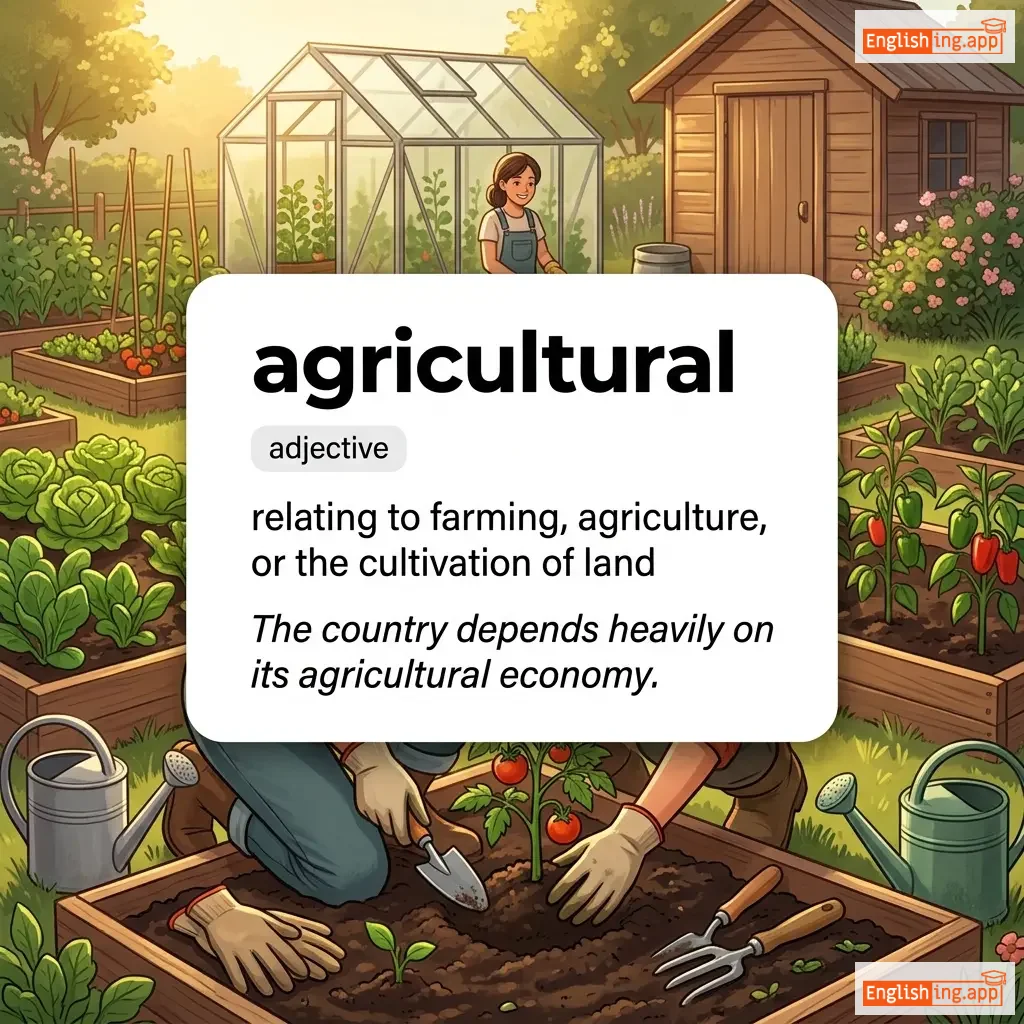
agricultural definition card — visual illustration of the meaning
adjective
/ˌæɡ.rɪˈkʌl.tʃər.əl/
農業の (nougyou no)

relating to farming, agriculture, or the cultivation of land

"The country depends heavily on its agricultural economy."
"その国は農業経済に大きく依存しています。" (Sono kuni wa nougyou keizai ni ookiku izon shiteimasu.)
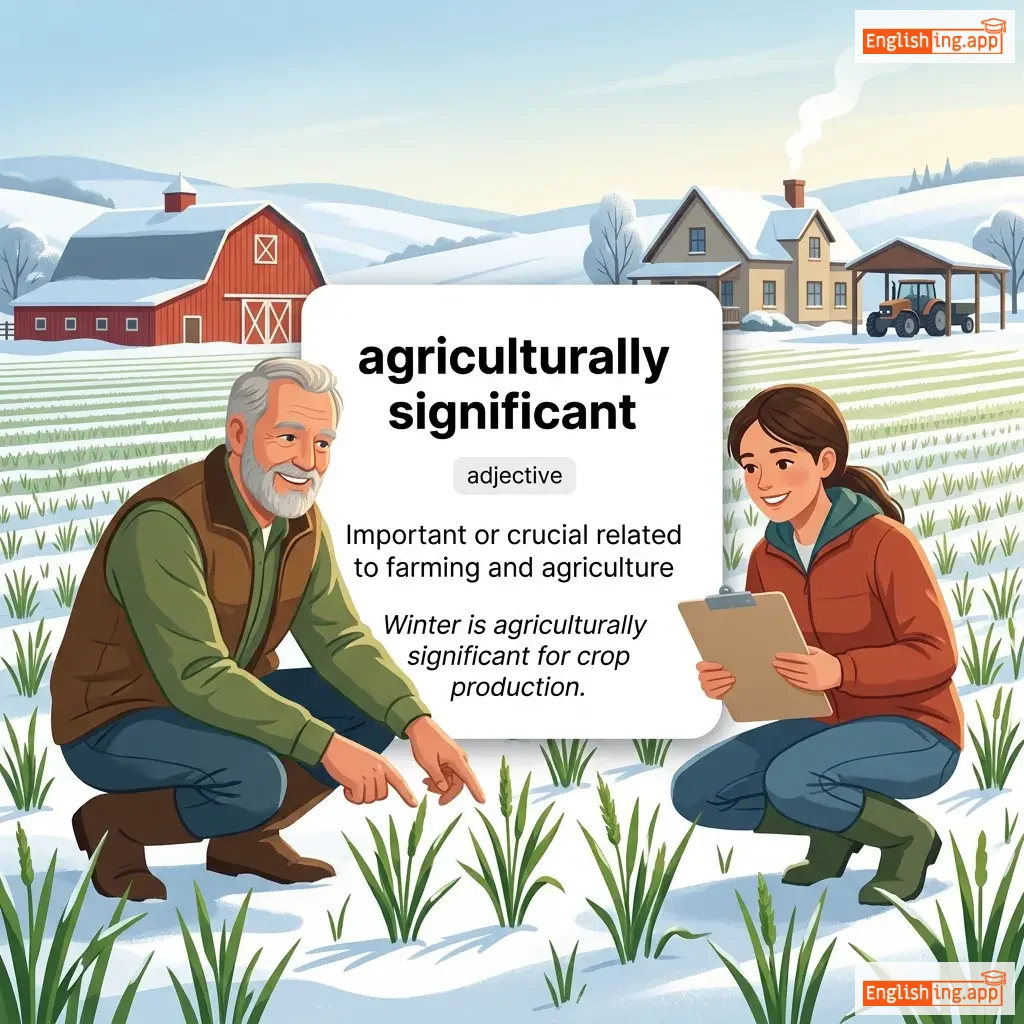
agriculturally significant definition card — visual illustration of the meaning
adjective
ˌæɡrɪˈkʌltʃərəli sɪɡˈnɪfɪkənt
農業に関連する重要な (nōgyō ni kanren suru jūyō na)

Important or crucial related to farming and agriculture

"Winter is agriculturally significant for crop production."
"冬は作物生産にとって農業に関連する重要な時期です。" (Fuyu wa sakumotsu seisan ni totte nōgyō ni kanren suru jūyō na jiki desu.)
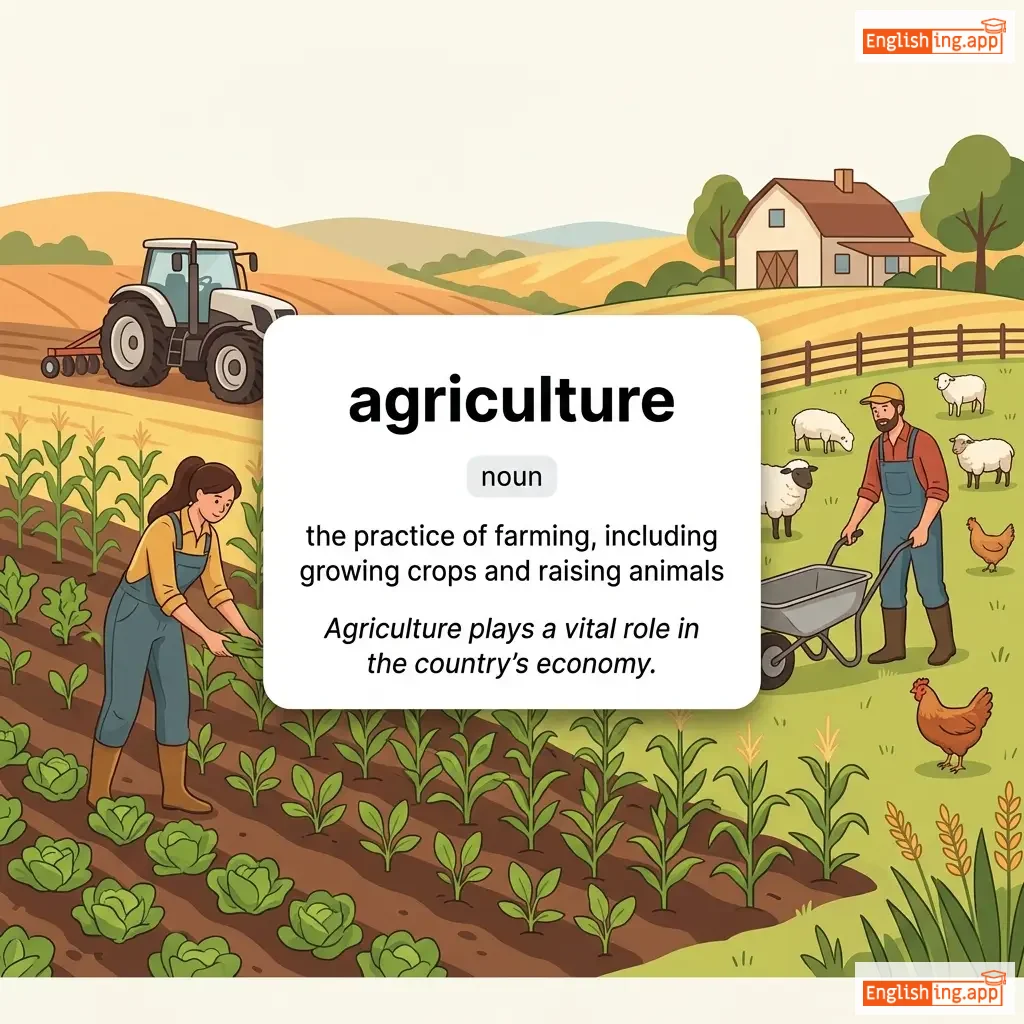
agriculture definition card — visual illustration of the meaning
noun
/ˈæɡrɪˌkʌltʃər/
農業 (nougyou)

the practice of farming, including growing crops and raising animals

"Agriculture plays a vital role in the country's economy."
"農業は国の経済において重要な役割を果たしています。" (Nougyou wa kuni no keizai ni oite juuyou na yakuwari wo hatashiteimasu.)
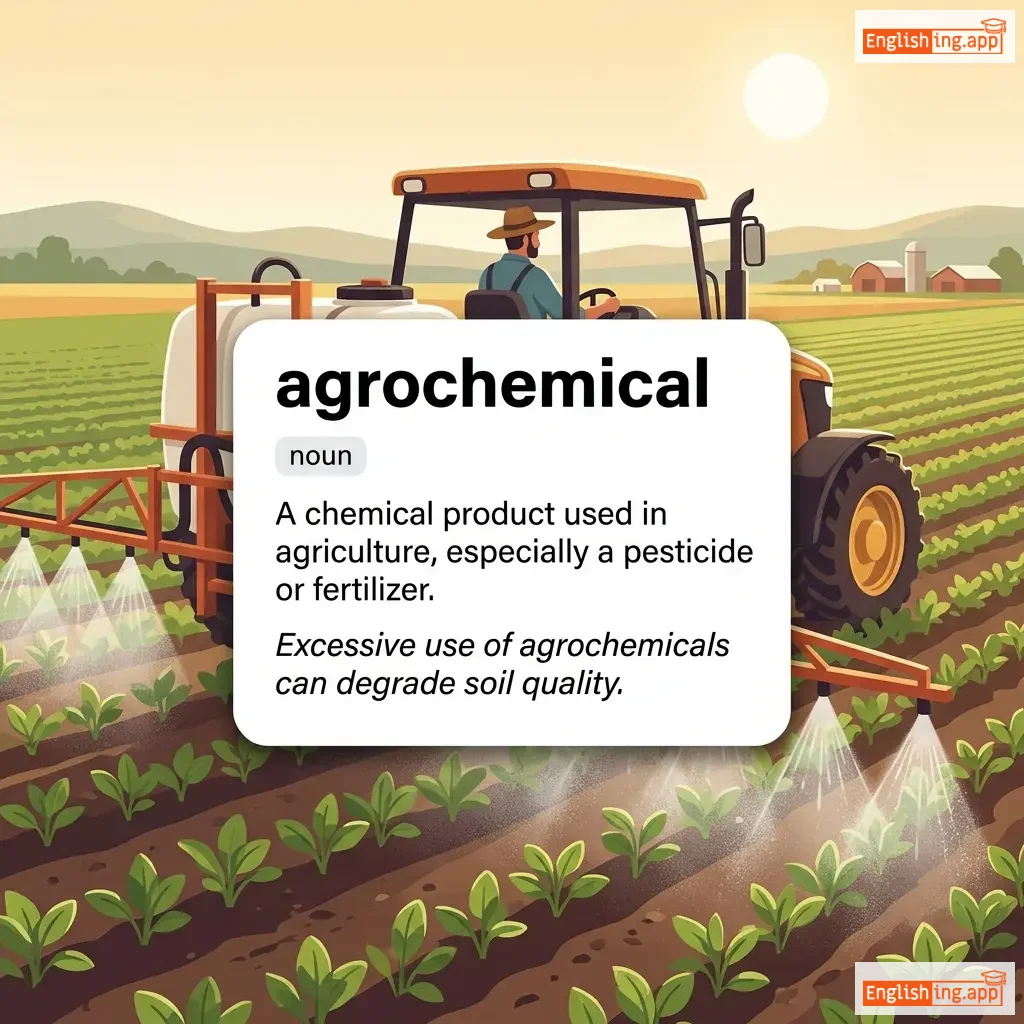
agrochemical definition card — visual illustration of the meaning
noun
ˌæɡ.rəʊˈkem.ɪ.kəl
農業化学物質 (nogyo kagaku busshitsu)

A chemical product used in agriculture, especially a pesticide or fertilizer.

"Excessive use of agrochemicals can degrade soil quality."
"過度なアグロケミカルの使用は土壌の質を低下させる可能性があります。" (kado na agurokemikaru no shiyo wa dojoyo no shitsu o teika saseru kanosei ga arimasu)
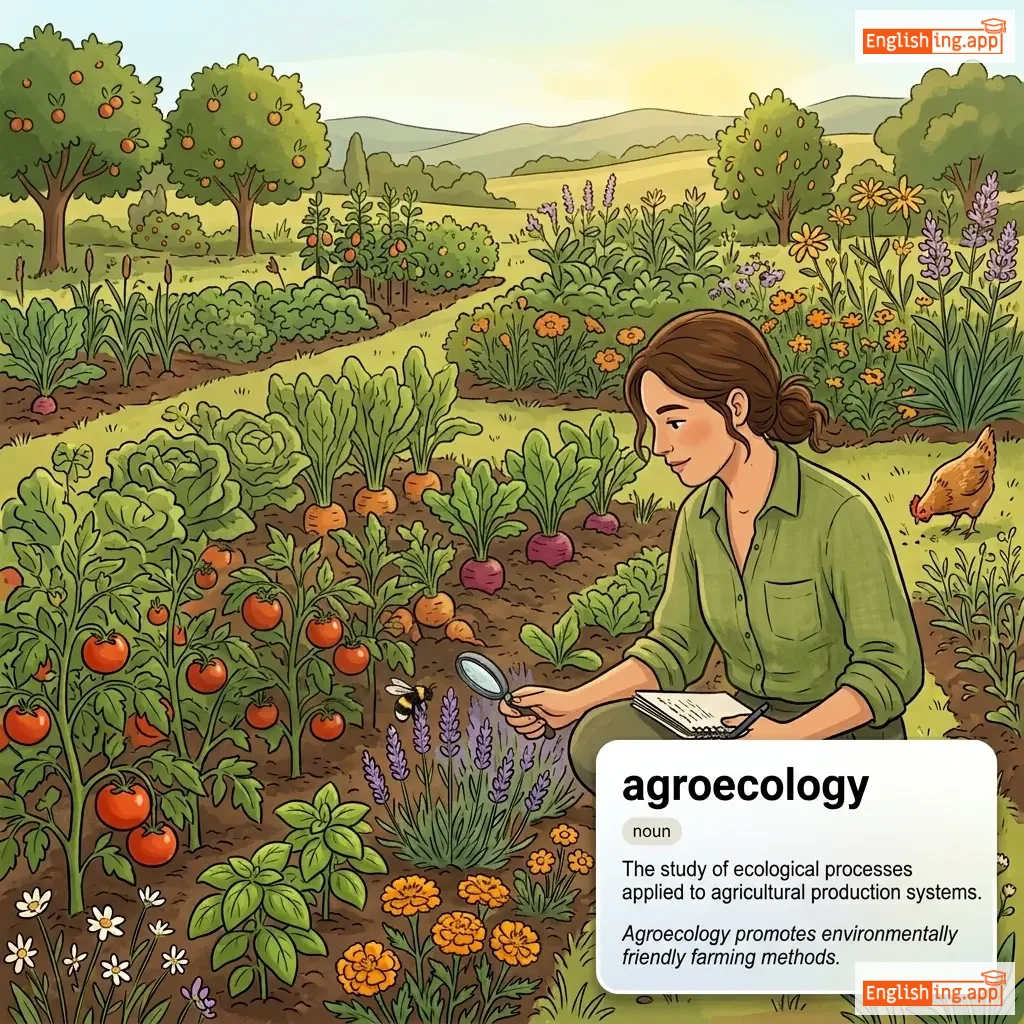
agroecology definition card — visual illustration of the meaning
noun
/ˌæɡ.roʊ.iˈkɑː.lə.dʒi/
アグロエコロジー (aguroekorojī)

The study of ecological processes applied to agricultural production systems.

"Agroecology promotes environmentally friendly farming methods."
"アグロエコロジーは環境に優しい農業方法を推進します。" (Aguroekorojī wa kankyō ni yasashī nōgyō hōhō o suishin shimasu.)
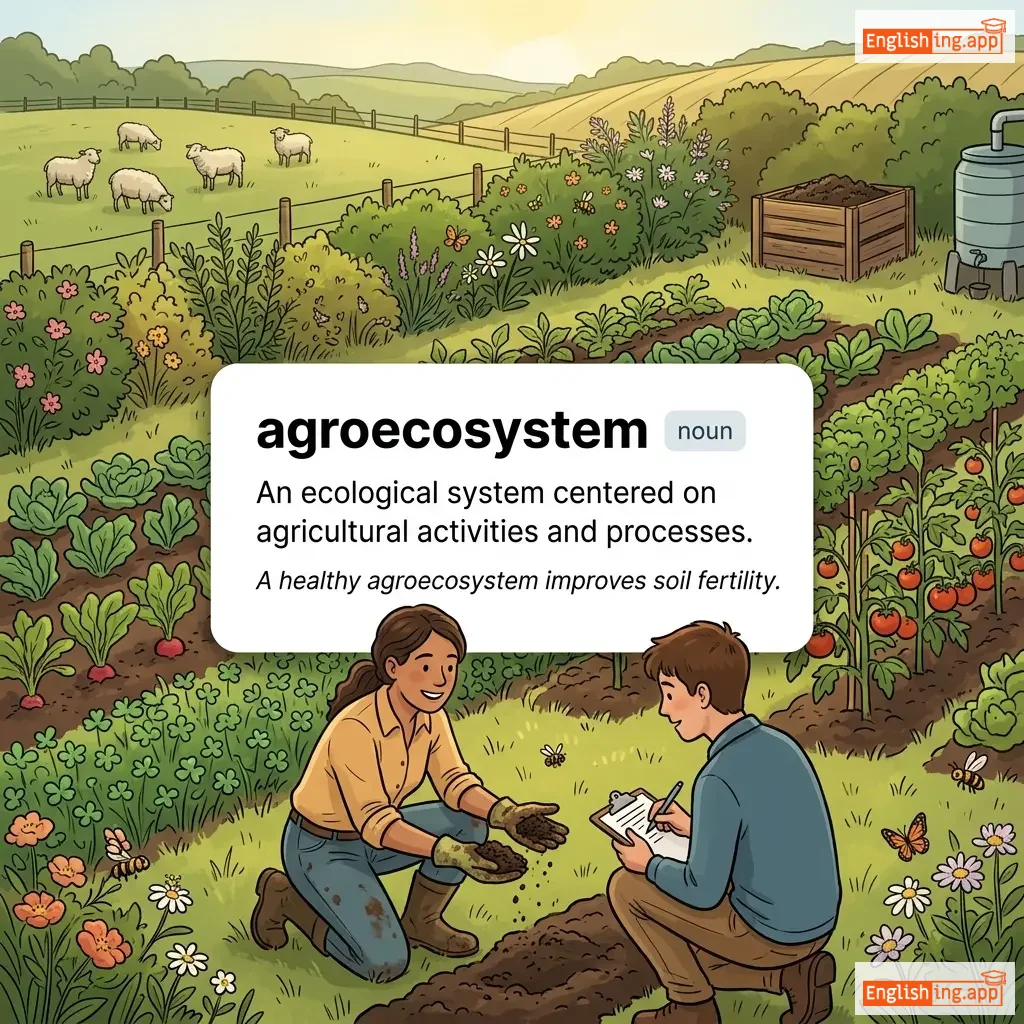
agroecosystem definition card — visual illustration of the meaning
noun
ˌæɡ.roʊˈiː.koʊˌsɪs.təm
農業生態系 (nougyou seitai kei)

An ecological system centered on agricultural activities and processes.

"A healthy agroecosystem improves soil fertility."
"健康な農業生態系は土壌の肥沃度を改善します。" (Kenkou na nougyou seitai kei wa dojou no hiyokudo wo kaizen shimasu.)
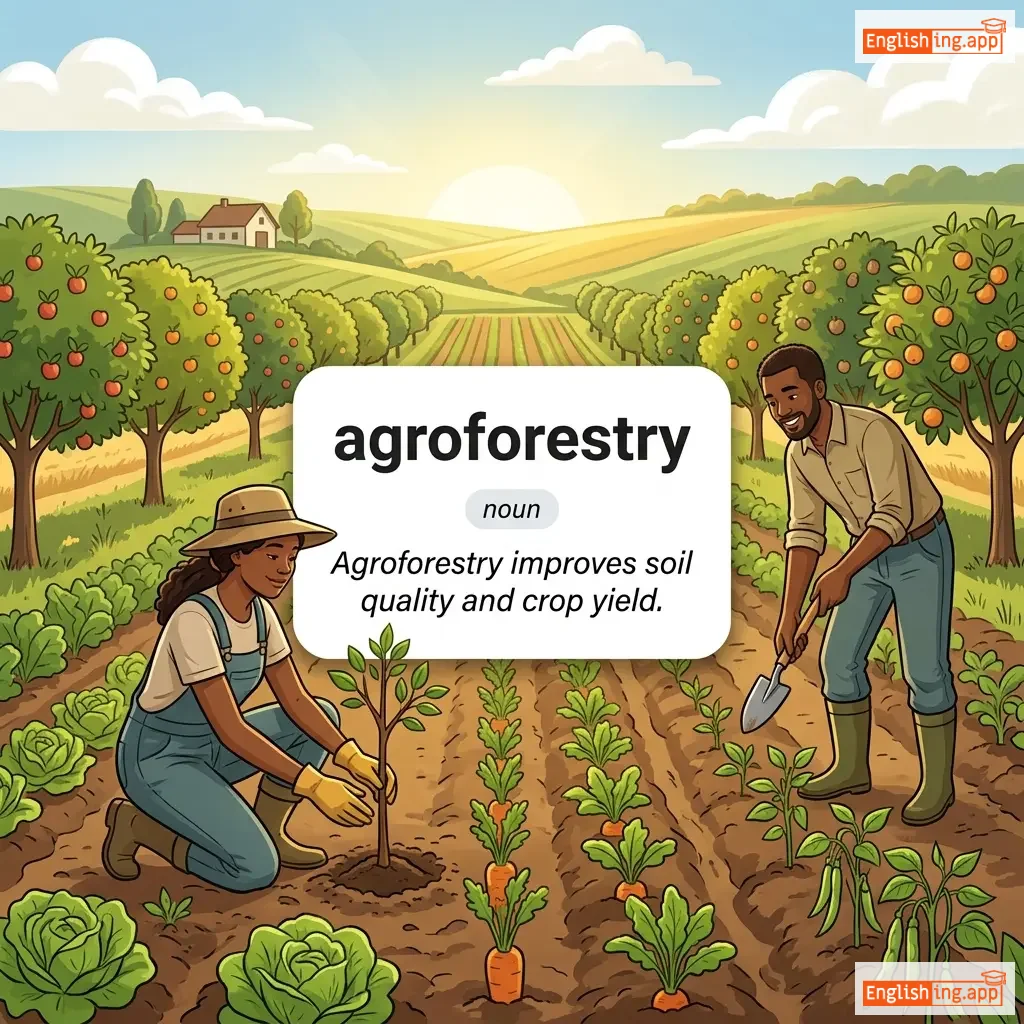
agroforestry definition card — visual illustration of the meaning
noun
ˌæɡ.roʊˈfɔːr.ɪ.stri
アグロフォレストリー (aguroforesutorī)

A land use management system in which trees or shrubs are grown around or among crops or pastureland.

"Agroforestry improves soil quality and crop yield."

"アグロフォレストリーは土壌の質と作物の収量を改善します。" (Aguroforesutorī wa dojo no shitsu to sakumotsu no shūryō o kaizen shimasu.)
noun
/əˈɡrɒnəmɪst/
農学者 (nogakusha)

A scientist who studies soil management and crop production.

"The agronomist suggested new methods to improve rice yields."
"農学者は、米の収穫量を改善するための新しい方法を提案しました。" (Nogakusha wa, kome no shūkakuryō o kaizen suru tame no atarashī hōhō o teian shimashita.)
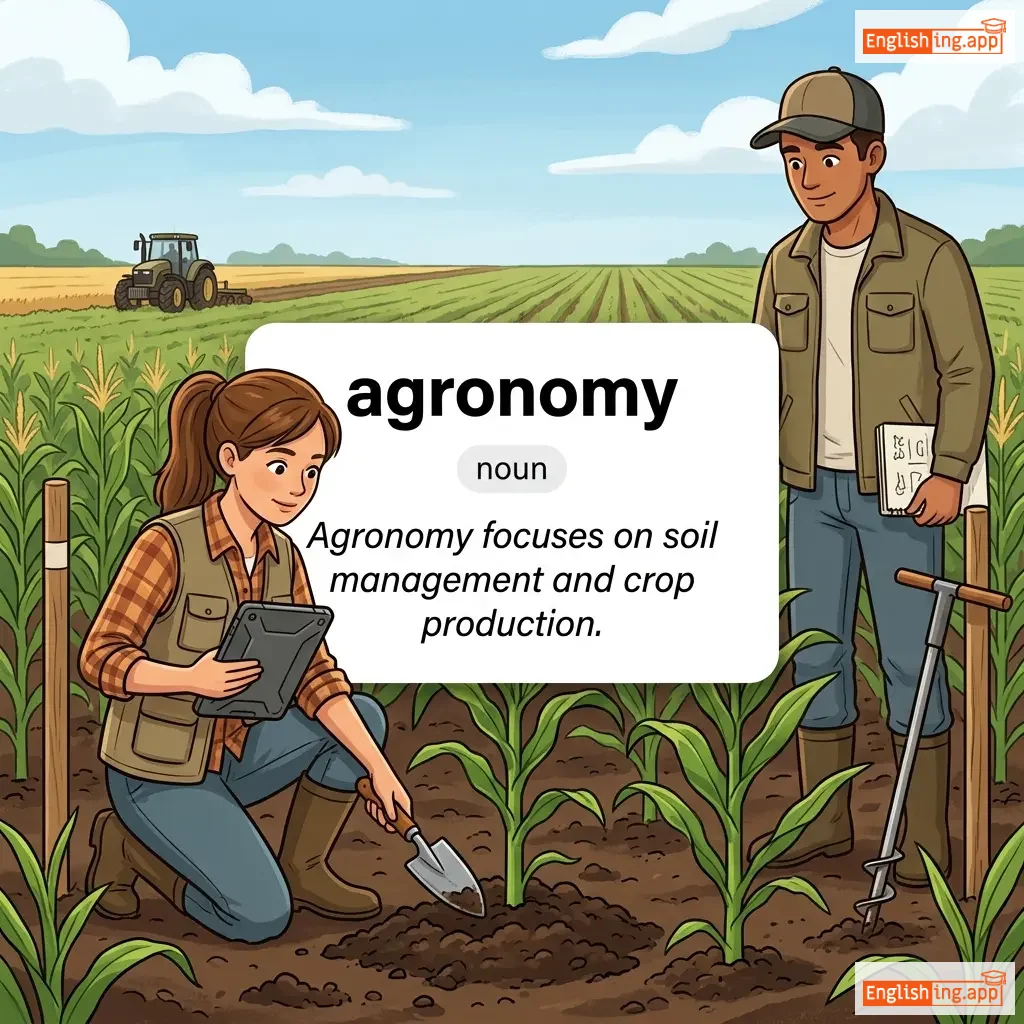
agronomy definition card — visual illustration of the meaning
noun
/əˈɡrɒnəmi/
農業学 (nōgyōgaku)

The science and practice of soil management and crop production, focusing on the principles of plant and soil science to optimize agricultural productivity.

"Agronomy focuses on soil management and crop production."

"農業学は土壌管理と作物生産に焦点を当てています。" (Nōgyōgaku wa dojō kanri to sakumotsu seisan ni shōten o ateteimasu.)
interjection
/ɑː/
ああ (aa)

used to express realization, surprise, or relief

"Ah, now I understand what you mean."

"ああ、今あなたが言いたいことがわかりました。" (Aa, ima anata ga iitai koto ga wakarimashita.)
adverb
/əˈhɛd/
前に (mae ni)

in front; in advance; before someone or something in position or progress

"She walked ahead of the group."

"彼女はグループの前に歩いていた。" (Kanojo wa guruupu no mae ni aruite ita.)
noun, verb
/eɪd/
援助 (enjo)

help or support, typically of a practical nature

"The volunteers provided aid to the flood victims."

"ボランティアは洪水の被害者に援助を提供しました。" (Borantia wa kōzui no higaisha ni enjo o teikyō shimashita.)
🧑‍💼

aide (エイド)

noun
/eɪd/
アシスタント (ashisutanto)

An assistant or helper, especially to an important person.

"The senator’s aide organized the meeting with journalists."

"上院議員のアシスタントがジャーナリストとの会議を組織しました。" (Jōin giin no ashisutanto ga jānarisuto to no kaigi o soshiki shimashita.)
noun
/ˌeɪd də ˈkæmp/
上級将校の秘密の補佐役として働く軍人 (joukyuu shoukou no himitsu no hosayaku to shite hataraku gunjin)

A military officer acting as a confidential assistant to a senior officer.

"The general was accompanied by his aide-de-camp during the ceremony."

"儀式の間、将軍は自分のエイド・デ・キャンプと共に出席しました。" (Gishiki no aida, shougun wa jibun no aid-de-kamp to tomoni shusseki shimashita.)
noun
/eɪdz/
エイズ病 (eizu byō)

Acquired Immune Deficiency Syndrome, a disease of the immune system caused by HIV

"AIDS is a major global health concern."

"エイズは世界的な健康問題です。" (Eizu wa sekaiteki na kenko mondai desu.)
verb
/eɪl/
病む (yamu)

to be ill or suffer from a physical or mental problem; to trouble or afflict

"She has been ailing since last winter."

"彼女は去年の冬から病んでいます。" (kanojo wa kyonen no fuyu kara yande imasu)
adjective, verb
/ˈeɪlɪŋ/
病気の (byoki no)

suffering from illness or poor health; experiencing problems or decline

"The ailing patient slowly began to recover after treatment."

"病気の患者は治療後、ゆっくり回復し始めた。" (byoki no kanja wa chiryo go yukkuri kaifuku shihajimeta)