語彙集

英単語辞書 | 単語の意味、定義、例文

noun
/ˌɛərəˈstætɪks/
エアロスタティクス (earosutatikusu)

The branch of physics that deals with the equilibrium of air and gases and the forces acting on bodies in them.

"Aerostatics is essential for understanding how balloons float."

"エアロスタティクスは、気球がどのように浮かぶかを理解するために不可欠です。" (Earosutatikusu wa, kikyū ga dono yō ni ukabu ka o rikai suru tame ni fukaketsu desu.)
noun
/ˈɪəri/ or /ˈɛəri/
ワシの巣 (washi no su)

An eagle’s nest, or a lofty, airy dwelling.

"The eagle perched proudly near its aery high on the cliff."

"鷲は崖の上にあるその巣の近くに誇らしげに止まった。" (Washi wa gake no ue ni aru sono su no chikaku ni hokorashige ni tomatta.)
noun
/ˈiːsθiːt/ or /ˈɛsθiːt/
美術愛好家 (bijutsu aikouka)

A person who has a special appreciation of art and beauty.

"The aesthete admired the subtle details of the painting."

"エステートは絵画の微細なディテールを賞賛していました。" (Esutēto wa kaiga no bisai na ditēru o shōsan shiteimashita.)
Aesthetic definition card — visual illustration of the meaning
adjective
/ɛsˈθɛtɪk/
美的 (biteki)

concerned with beauty or the appreciation of beauty

"The room was decorated in an aesthetic style that pleased everyone."

"部屋は美的なスタイルで装飾され、全員が喜びました。" (Heya wa biteki na sutairu de sōshoku sare, zen'in ga yorokobimashita.)
adjective
/iːsˈθɛθɪkəl/
美的な (biteki na)

concerned with beauty or the appreciation of beauty; related to artistic taste or appearance

"The architect focused on the aesthetical balance of the building."

"建築家は建物の美的なバランスに注目した。" (Kenchikuka wa tatemono no biteki na baransu ni chuumoku shita)
adverb
/iːsˈθetɪkli/
美的に (biteki ni)

in a way that is concerned with beauty or visual appeal

"The building is aesthetically pleasing despite its simple design."

"その建物はシンプルなデザインにもかかわらず美的に魅力的です。" (sono tatemono wa shinpuru na dezain ni mo kakawarazu biteki ni miryokuteki desu)
aesthetics definition card — visual illustration of the meaning
noun
esˈθet.ɪks
美学 (bigaku)

A set of principles concerned with the nature and appreciation of beauty, especially in art and design.

"Interior design focuses on aesthetics and functionality."

"インテリアデザインは美学と機能性に焦点を当てています。" (Interia dezain wa bigaku to kinōsei ni shōten o ateteimasu.)
adjective
/ˈæfəbəl/
愛想の良い (aisō no yoi)

friendly, easy to talk to, and pleasant in manner

"He is such an affable host that everyone feels comfortable at his parties."

"彼はとても愛想の良いホストで、誰もが彼のパーティーで快適に感じます。" (Kare wa totemo aisō no yoi hosuto de, dare mo ga kare no pātii de kaiteki ni kanjimasu.)
noun
/əˈfɛər/
事件 / 関係 (jiken / kankei)

an event, situation, or relationship, often one that is private or romantic

"The scandal became the most talked-about affair of the year."

"そのスキャンダルはその年で最も話題になった事件になった。" (Sono sukyandaru wa sono toshi de mottomo wadai ni natta jiken ni natta.)
verb
/əˈfɛkt/
影響する (eikyo suru)

to influence or make a difference to something

"The weather can greatly affect our mood."

"天気は私たちの気分に大きな影響を与えることがある。" (Tenki wa watashitachi no kibun ni ookina eikyo o ataeru koto ga aru.)
noun
/ˌæfɛkˈteɪʃən/

an unnatural behavior or speech intended to impress others

"Her British accent was just an affectation to sound sophisticated."
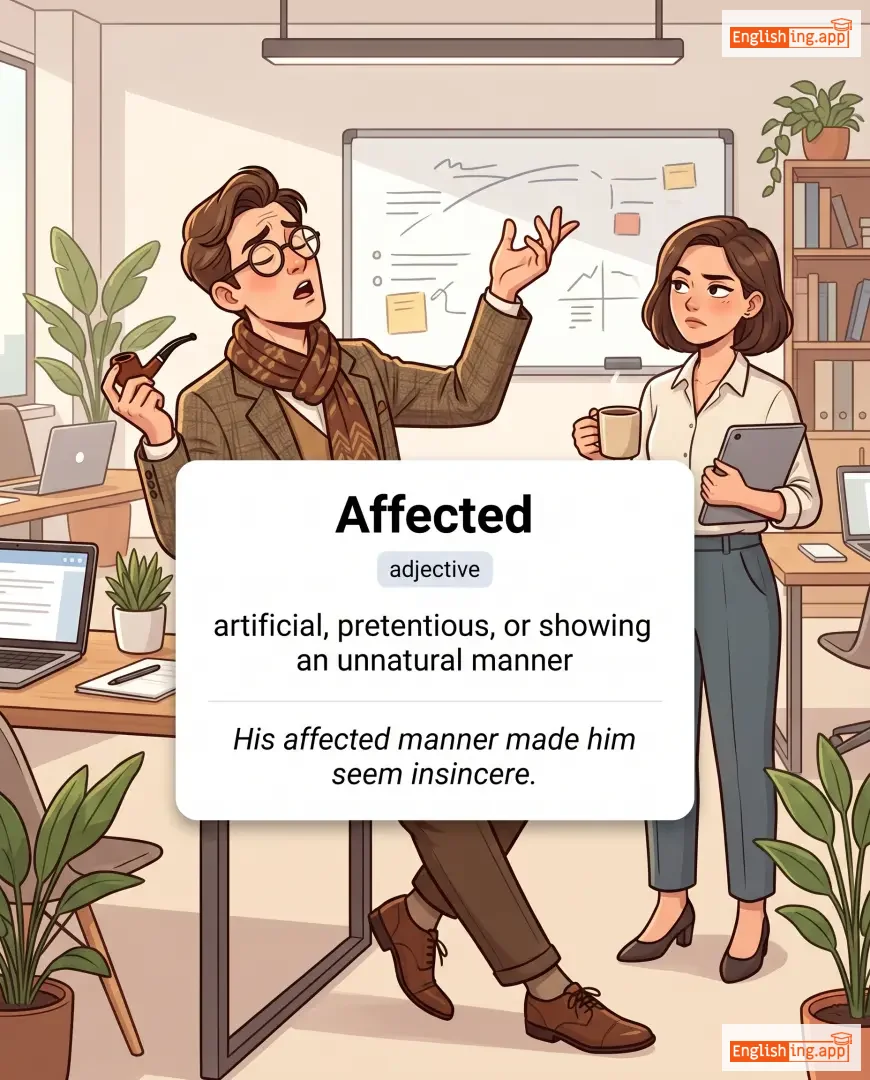
Affected definition card — visual illustration of the meaning
adjective
/əˈfɛktɪd/
偽りの (itsuwari no)

artificial, pretentious, or showing an unnatural manner

"His affected manner made him seem insincere."

"彼の偽りの態度は、彼を不誠実に見せていました。" (Kare no itsuwari no taido wa, kare o fuseijitsu ni misete imashita.)
noun
/əˈfɛkʃən/

a gentle feeling of fondness or liking

"She showed great affection for her younger brother."

adjective
/əˈfekʃənət/
愛情深い; 思いやりのある; 優しい; 愛情を示す (aijoubukai; omoiyari no aru; yasashii; aijou o shimesu)

loving; caring; tender; showing affection

"She is very affectionate towards her children."

"彼女は子供たちにとても愛情深いです。" (Kanojo wa kodomotachi ni totemo aijoubukai desu.)
adverb
/əˈfek.ʃən.ət.li/
愛情を込めて (aijou o komete)

in a way that shows feelings of liking or love; with fondness and care

"She hugged her grandmother affectionately."

"彼女はおばあちゃんを愛情を込めて抱きしめました。" (Kanojo wa obāchan o aijou o komete dakishimemashita.)
adjective
/ˈæfərənt/
求心 (kyuushin)

carrying impulses toward a central organ or part, especially toward the brain or spinal cord

"Afferent nerves carry signals from the body to the brain."

"求心神経は体から脳に信号を運びます。" (Kyuushin shinkei wa karada kara nou ni shingou wo hakobimasu.)
verb
/əˈfaɪəns/
婚約する (konyaku suru)

to promise or pledge marriage; to formally engage

"They decided to affiance after years of friendship."

"長年の友情の後、彼らは婚約することを決めた。" (naganen no yuujou no ato karera wa konyaku suru koto o kimeta)
noun
/ˌæfəˈdeɪvɪt/
宣誓供述書 (sensei kōjutsusho)

a written statement confirmed by oath or affirmation, used as evidence in court

"The witness submitted an affidavit to the court."

"証人は裁判所にアフィダビットを提出しました。" (Shōnin wa saibansho ni affidavit o teishutsu shimashita.)
verb
/əˈfɪliˌeɪt/
提携する (teikei suru)

to officially attach or connect (a group or organization) to a larger body

"The school is affiliated with the local university."
"その学校は地元の大学と提携しています。" (Sono gakkō wa jimoto no daigaku to teikei shiteimasu.)
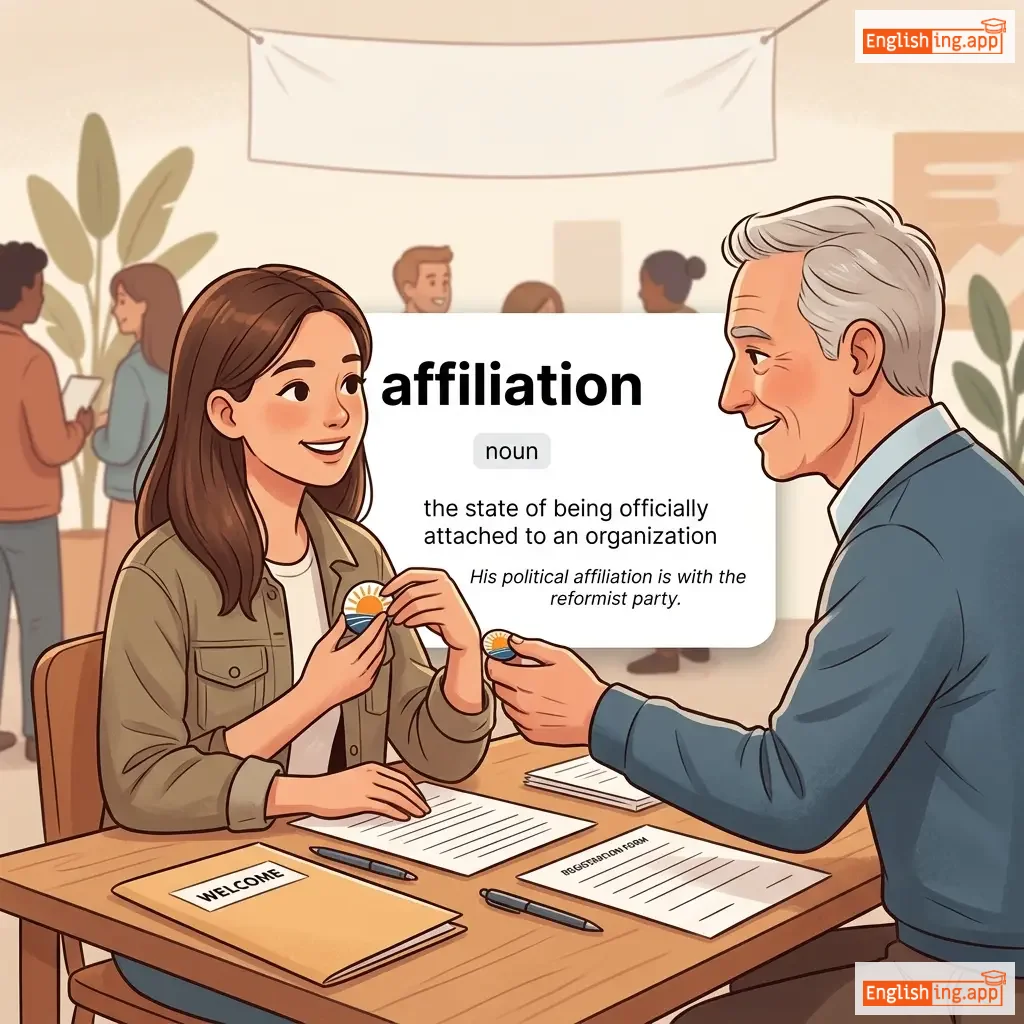
affiliation definition card — visual illustration of the meaning
noun
/əˌfɪliˈeɪʃən/
所属 (shozoku)

the state of being officially attached to an organization

"His political affiliation is with the reformist party."
"彼の政治的所属は改革派の党にあります。" (Kare no seijiteki shozoku wa kaikaku-ha no tou ni arimasu.)
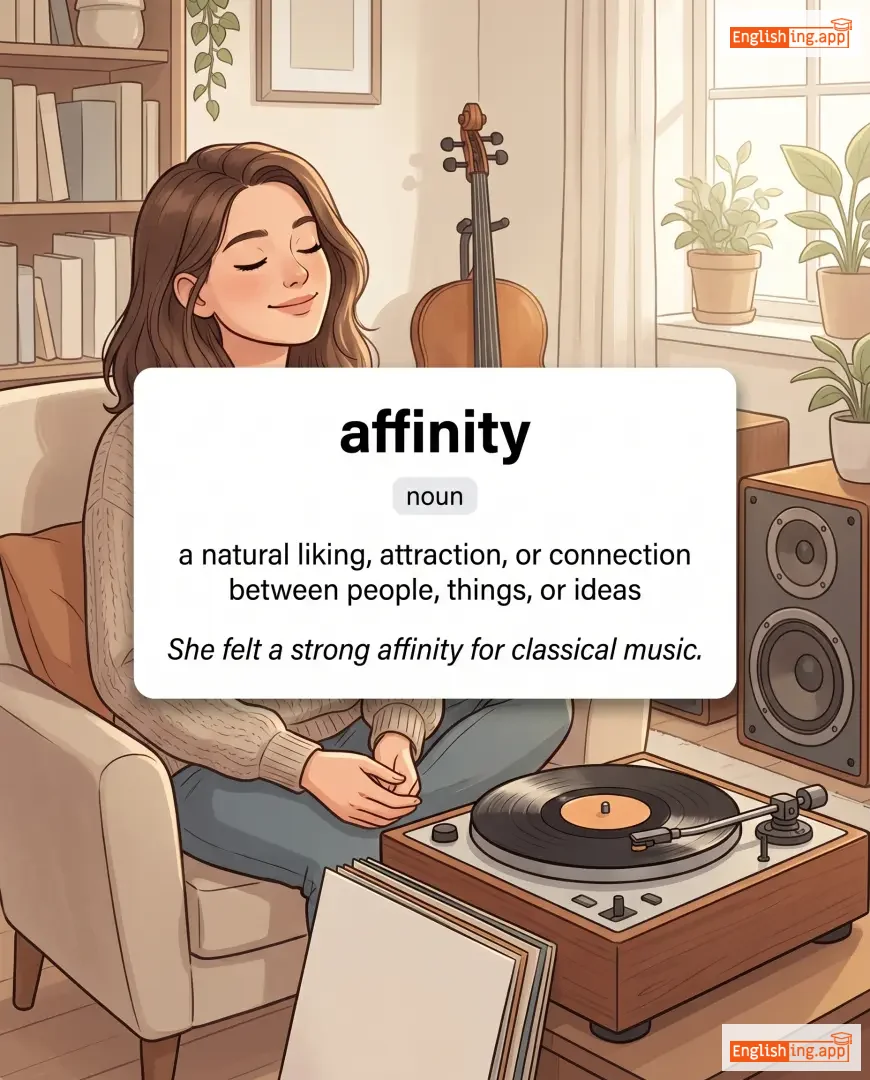
affinity definition card — visual illustration of the meaning
noun
/əˈfɪnɪti/
親和性 (shingosei)

a natural liking, attraction, or connection between people, things, or ideas

"She felt a strong affinity for classical music."

"彼女はクラシック音楽に強い親和性を感じた。" (Kanojo wa kurashikku ongaku ni tsuyoi shingosei o kanjita.)
affirmation definition card — visual illustration of the meaning
noun
/ˌæfərˈmeɪʃən/

the act of confirming or stating something positively; a declaration of support or belief

"Daily affirmation helps to build confidence and positivity."

adjective
/əˈfɜːrmətɪv/
肯定的 (kouteiteki)

expressing agreement, approval, or a positive response

"She gave an affirmative answer to the proposal."

"彼女は提案に対して肯定的な回答をしました。" (Kanojo wa teian ni taishite kouteiteki na kaitou o shimashita.)
verb
/əˈfɪks/
貼り付ける / 取り付ける (haritsukeru / toritsukeru)

to attach or stick something firmly to another thing

"Please affix the stamp to the envelope."

"切手を封筒に貼ってください。" (Kitte o fūtō ni hatte kudasai.)
noun
/əˈfleɪtəs/
神の啓示 (kami no keiji)

a sudden divine inspiration or creative impulse

"The poet wrote the verses under a sudden afflatus of inspiration."

"詩人は突然の神の啓示のもとで詩を書きました。" (Shijin wa totsuzen no kami no keiji no moto de shi wo kakimashita.)
verb
/əˈflɪkt/
苦しめる (kurushimeru)

to cause pain, suffering, or distress to someone or something

"Many people are afflicted by seasonal allergies."

"多くの人々が季節性アレルギーに悩まされています。" (Ōku no hitobito ga kisetsusei arerugī ni nayama sarete imasu.)
noun
/əˈflɪkʃən/
苦しみ (kurushimi)

a state of pain, suffering, or distress

"Poverty is a common affliction in many parts of the world."

"貧困は世界の多くの地域で一般的な苦しみです。" (Hinkon wa sekai no ooku no chiiki de ippanteki na kurushimi desu.)
affluence definition card — visual illustration of the meaning
noun
/ˈæfluəns/
富裕 (fuyū)

the state of having a great deal of money or wealth

"His lifestyle shows signs of great affluence."

"彼のライフスタイルは大きな富裕の兆しを示しています。" (Kare no raifusutairu wa ōkina fuyū no chōshi o shimeshiteimasu.)
adjective
/ˈæfluənt/
裕福 (yūfuku)

having a great deal of money; wealthy

"She grew up in an affluent neighborhood."
"彼女は裕福な地域で育ちました。" (Kanojo wa yūfuku na chiiki de sodachimashita.)
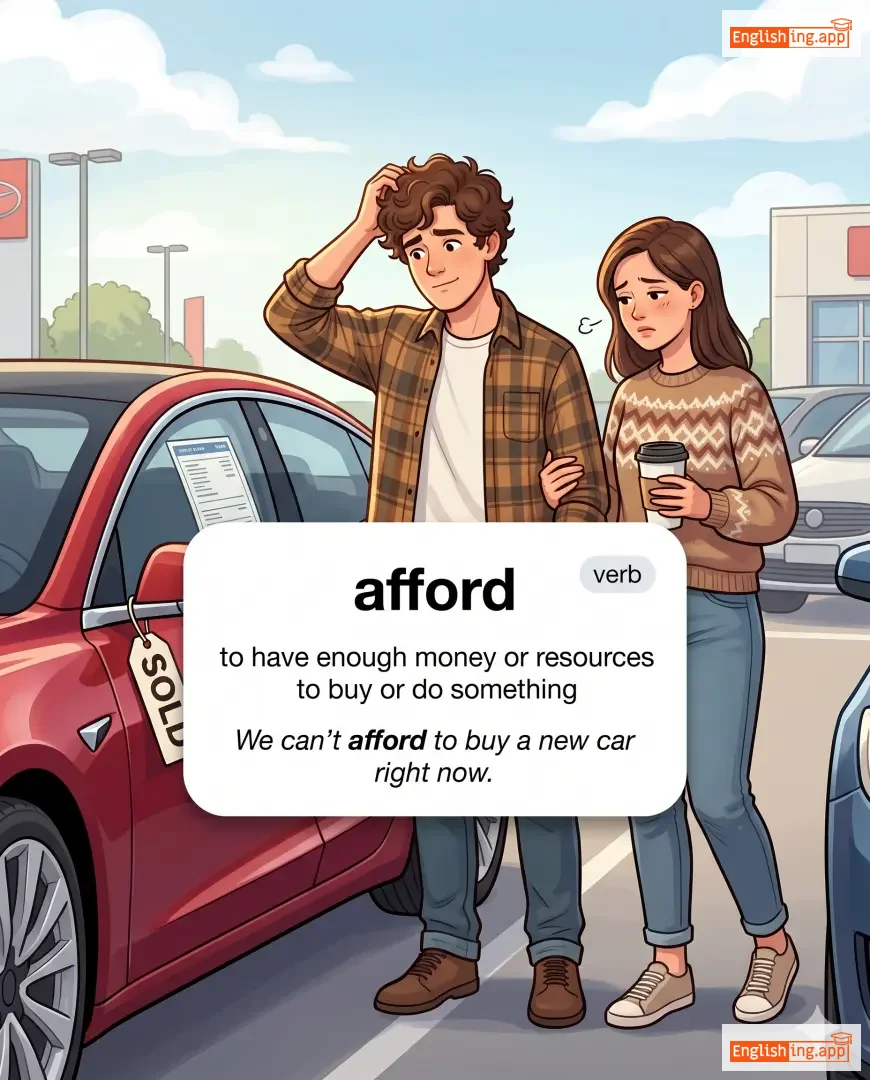
afford definition card — visual illustration of the meaning
verb
/əˈfɔːrd/
余裕がある (yoyū ga aru)

to have enough money or resources to buy or do something

"We can’t afford to buy a new car right now."

"今は新しい車を買う余裕がありません。" (Ima wa atarashī kuruma o kau yoyū ga arimasen.)
adjective
/əˈfɔːdəbl/
手頃な (tegorona)

inexpensive and within one's financial means

"This restaurant offers affordable meals for families."
"このレストランは家族向けに手頃な価格の食事を提供しています。" (Kono resutoran wa kazoku-muke ni tegorona kakaku no shokuji o teikyō shiteimasu.)
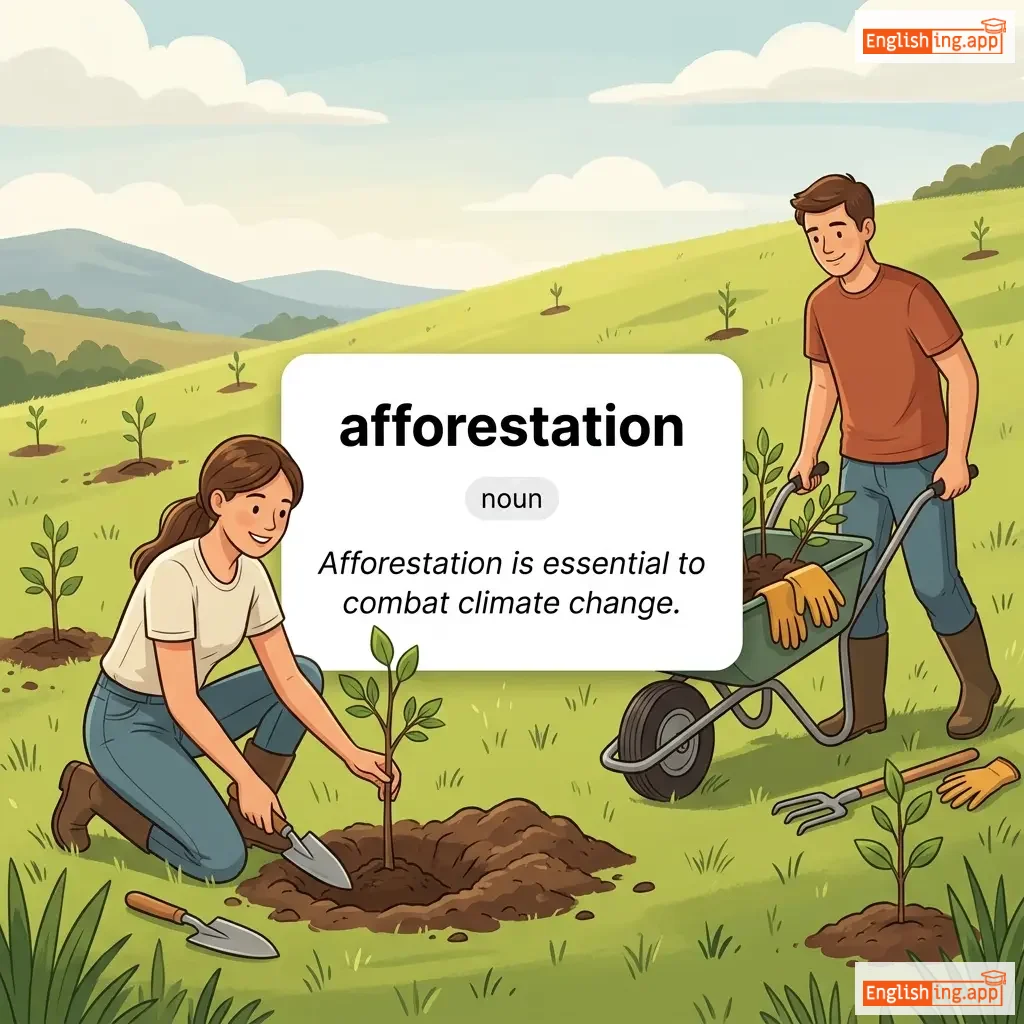
afforestation definition card — visual illustration of the meaning
noun
ˌæfɔːˈreɪʃən
森林再生 (shinrin saisei)

The process of establishing a forest, especially on land that was not recently forested.

"Afforestation is essential to combat climate change."

"森林再生は気候変動に立ち向かうために不可欠です。" (Shinrin saisei wa kikou hendou ni tachimukau tame ni fukaketsu desu.)
noun
/əˈfreɪ/
公開喧嘩 (koukai kenka)

A public fight or noisy disturbance that causes alarm.

"The police were called to break up an affray outside the stadium."

"警察はスタジアム外での喧嘩を止めるために呼ばれました。" (Keisatsu wa sutajiamu-gai de no kenka o tomeru tame ni yoba remashita.)
noun, verb
/əˈfrʌnt/
侮辱 (bujoku)

An action or remark that causes outrage or offense.

"He took her criticism as a personal affront."

"彼は彼女の批判を個人的な侮辱と受け止めた。" (Kare wa kanojo no hihan o kojinteki na bujoku to uketometa.)
adjective, adverb
/əˈfʊt/
進行中 (shinkouchuu)

In progress; happening or being prepared.

"There are several new projects afoot in the company."

"会社にはいくつかの新しいプロジェクトが進行中です。" (Kaisha ni wa ikutsuka no atarashii purojekuto ga shinkouchuu desu.)
adjective
/əˈfɔːrˌsɛd/
前述 (zenshutsu)

Mentioned earlier; previously stated.

"The aforesaid conditions must be met before the contract is signed."

"契約に署名する前に前述の条件を満たさなければなりません。" (Keiyaku ni shomei suru mae ni zenshutsu no jōken o mitasenakereba narimasen.)
adjective
/əˈfreɪd/
怖がっている (kowagatteiru)

feeling fear or anxiety; worried that something undesirable will happen

"She was afraid of the dark."

"彼女は暗闇を怖がっていた。" (Kanojo wa kurayami o kowagatteita.)
adverb
/əˈfrɛʃ/
再び (futatabi)

From the beginning, in a new way.

"After the failure, they started the project afresh."

"失敗後、彼らは新たにプロジェクトを始めた。" (Shippai go, karera wa aratani purojekuto o hajimeta.)
adjective
/ˈæfrɪkən/
アフリカの (afurika no)

relating to Africa or its people

"She studied African culture in university."

"彼女は大学でアフリカの文化を学びました。" (Kanojo wa daigaku de Afurika no bunka o manabimashita.)
noun/adjective
/ˌæfrɪkən əˈmɛrɪkən/
アフリカ系アメリカ人 (afurika-kei amerika-jin)

A person of African descent living in or originating from the United States; relating to such people.

"She is proud of her African-American heritage."

"彼女は自分のアフリカ系アメリカ人としての誇りを持っています。" (Kanojo wa jibun no afurika-kei amerika-jin toshite no hokori o motteimasu.)
preposition, conjunction, adverb
/ˈæftər/
(ato)

in the time following an event or another action

"We went for ice cream after the movie."

"映画の後にアイスクリームを食べに行った。" (Eiga no ato ni aisukurīmu o tabe ni itta.)
noun
/ˈæftərˌlaɪf/

Life or existence that some believe continues after physical death.

"Many cultures have different beliefs about the afterlife."

noun
/ˈɑːftərmɑːθ/
影響 (eikyo)

the consequences or aftereffects of an event or situation, especially a disastrous one

"The aftermath of the earthquake was devastating."

"地震の影響は壊滅的でした。" (Jishin no eikyō wa kaimetsu-teki deshita.)
noun
/ˌæftərˈnuːn/
午後 (gogo)

The part of the day between noon and evening.

"We met in the afternoon for coffee."

"私たちは午後にコーヒーを飲みに会いました。" (Watashitachi wa gogo ni kōhī o nomi ni aimashita.)
noun
/ˈæftərˌθɔːt/

Something added or considered later than originally planned.

"The gift seemed like an afterthought rather than a genuine gesture."

adverb
/ˈɑːftərwərd/
その後 (sono go)

at a later or subsequent time

"She went home afterward."

"彼女はその後家に帰った。" (Kanojo wa sono go ie ni kaetta.)
adverb
/ˈɑːf.tə.wərdz/
その後; 後で; 次に (sono ato; ato de; tsugi ni)

at a later time; after an event or time that has already been mentioned

"We had dinner and afterwards we watched a movie."

"私たちは夕食をとり、その後映画を見ました。" (Watashitachi wa yūshoku o tori, sono ato eiga o mimashita.)
adverb
/əˈɡɛn/ or /əˈɡeɪn/
再び (futatabi)

Once more; another time.

"She read the book again to understand it better."

"彼女はその本を再び読んで、よりよく理解しました。" (Kanojo wa sono hon o futatabi yonde, yori yoku rikai shimashita.)
preposition
/əˈɡɛnst/ or /əˈɡeɪnst/

In opposition to; contrary to; touching or resting on.

"They voted against the proposal."

adjective
/əˈɡeɪp/ or /əˈɡɑːp/
驚愕 (kyōgaku)

With the mouth wide open in surprise or wonder.

"She stood agape at the breathtaking view."

"彼女は息を呑むような景色に驚いて口を開けたまま立っていた。" (Kanojo wa iki o nomu yō na keshiki ni odoroite kuchi o aketa mama tatte ita.)