語彙集

英単語辞書 | 単語の意味、定義、例文

adjective
/ˈrɛtʃɪd/
悲惨 (hisan)

in a very unhappy, miserable, or poor condition

"They lived in a wretched hut with no clean water."

"彼らは清潔な水がない悲惨な小屋に住んでいた。" (Karera wa seiketsuna mizu ga nai hisan na koya ni sunde ita.)
adjective
/ˈwʌrisəm/
心配な; 面倒な (shinpai na; mendō na)

causing anxiety or concern; troubling

"The student's declining grades were worrisome to his parents."
"学生の成績が落ちていることは、親にとって心配でした。" (Gakusei no seiseki ga ochite iru koto wa, oya ni totte shinpai deshita.)
interjection
/jɛə/
はい (hai)

used to express agreement or affirmation

"Yeah, I’ll go to the store with you."

"はい、私はあなたと一緒に店に行きます。" (Hai, watashi wa anata to issho ni mise ni ikimasu.)
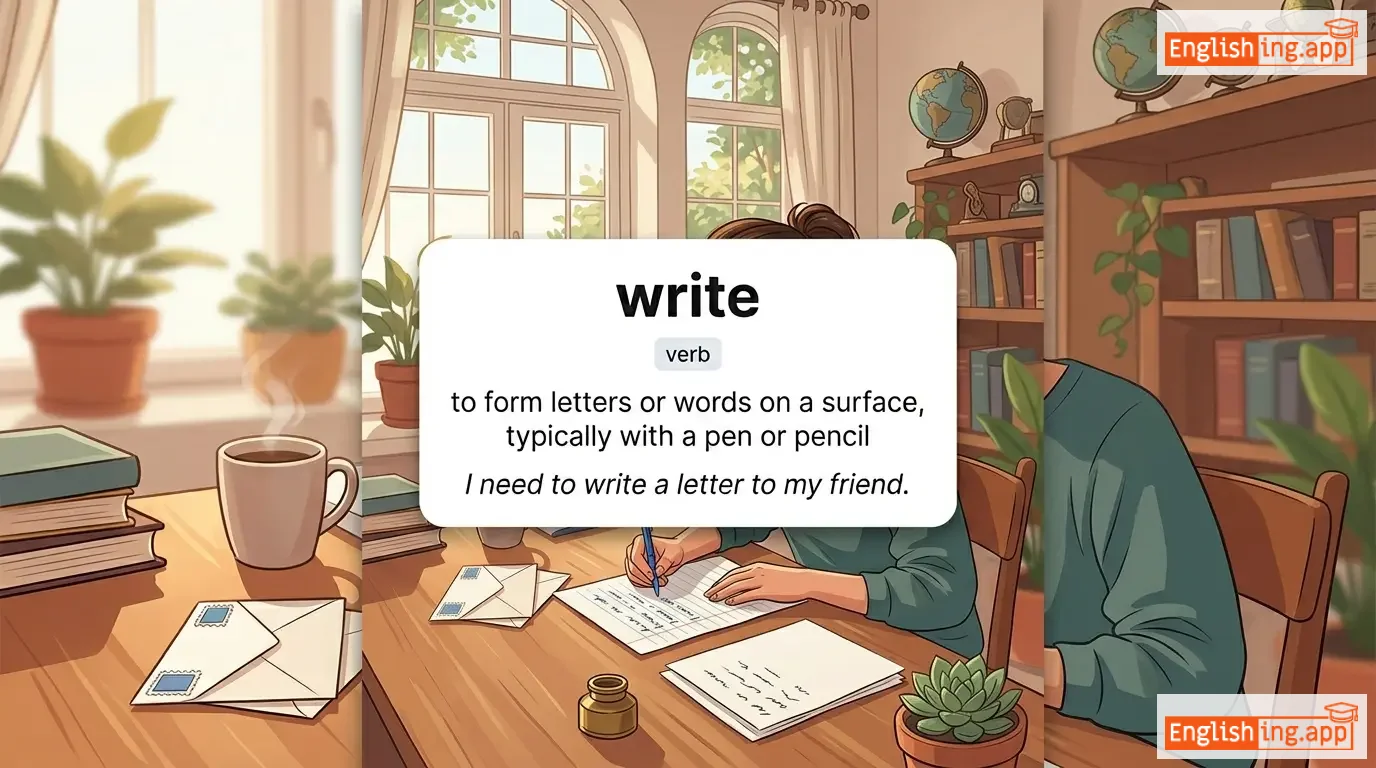
write definition card — visual illustration of the meaning
verb
/raɪt/
幸福 (kōfuku)

to form letters or words on a surface, typically with a pen or pencil

"I need to write a letter to my friend."

"彼女は賞を受け取ったとき、自分の幸せを隠せなかった。" (Kanojo wa shō o uketotta toki, jibun no kōfuku o kakusenakatta.)
noun/verb
/ˈraɪ.tɪŋ/
幸せ (shiawase)

The activity of putting words on paper or composing text; the written form of communication.

"She spends hours every day on her creative writing."

"彼女は賞を受け取ったとき、幸せを隠すことができませんでした。" (Kanojo wa shō o uketotta toki, shiawase o kakusu koto ga dekimasen deshita.)
adjective
/ˈwʊd biː/
見込みのある; 可能性のある; (mikomi no aru; kanōsei no aru;)

prospective; intending to be; aspiring

"The would-be actor practiced his lines every day."

"その見込みのある俳優は毎日セリフを練習していた。" (Sono mikomi no aru haiyū wa mainichi serifu o renshū shite ita.)
verb
/rɛntʃ/
強く引っ張る (tsuyoku hipparu)

to pull or twist suddenly and violently

"He wrenched the door open in anger."

"彼は怒りでドアを引っ張って開けた。" (Kare wa ikari de doa wo hippatte aketa.)
noun
/rɛtʃ/
不幸な人 (fukouna hito)

an unfortunate or miserable person; a despicable or contemptible person

"The poor wretch was left out in the cold with no shelter."

"貧しい不幸な人は避難所なしで寒さの中に放置された。" (Mazushii fukou na hito wa hinanjo nashi de samusa no naka ni houchi sareta.)
noun
/rɪst/

the joint connecting the hand with the forearm

"He wore a smartwatch on his left wrist."

noun
/rek/
破壊; 車両事故; (hakai; sharyou jiko;)

the destruction or disabling of a ship or vehicle; something that has been badly damaged or destroyed

"The car wreck blocked the highway for hours."
"自動車の事故で高速道路が数時間封鎖された。" (Jidousha no jiko de kousokudouro ga suujikan fūsasareta.)
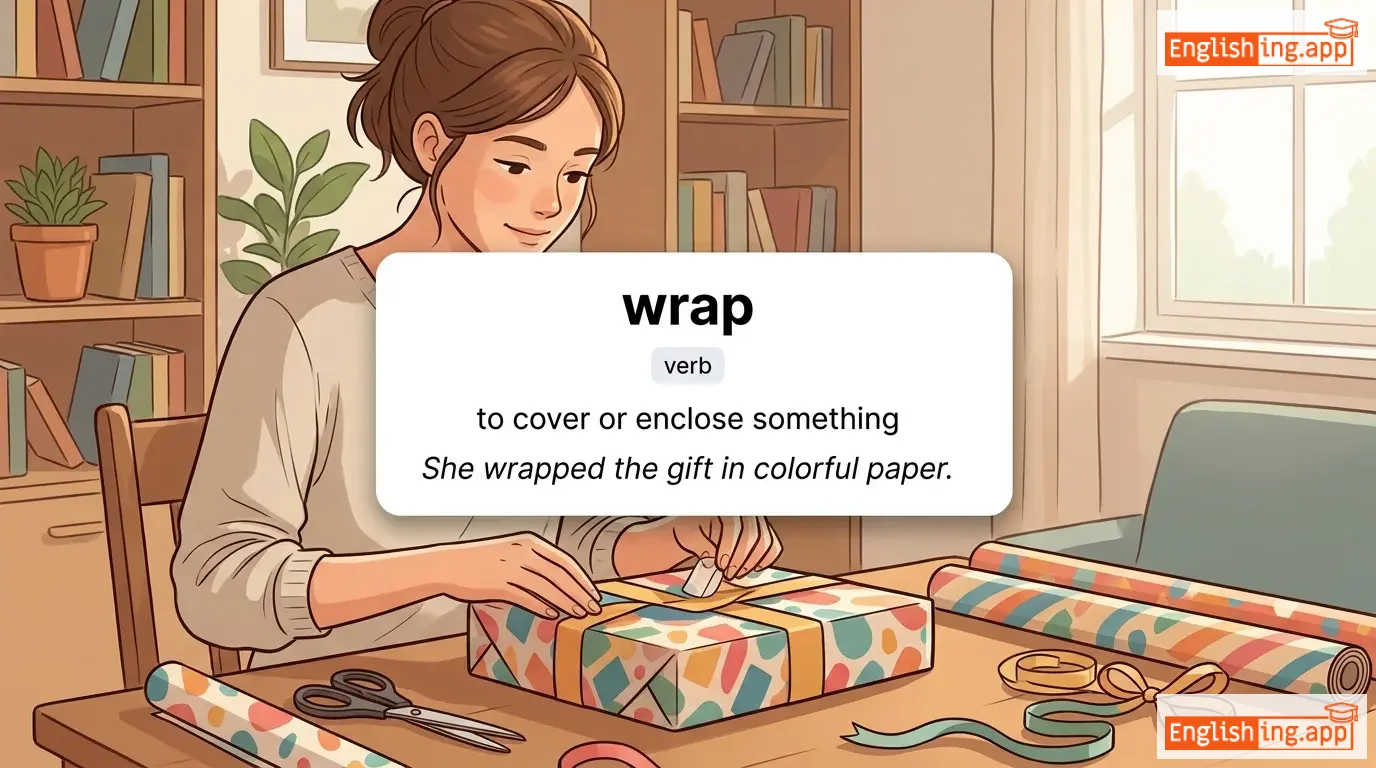
wrap definition card — visual illustration of the meaning
verb
/ræp/
包む (tsutsumu)

to cover or enclose something

"She wrapped the gift in colorful paper."

"彼女は贈り物をカラフルな紙で包みました。" (Kanojo wa okurimono o karafuru na kami de tsutsumimashita.)
noun
/ˈræp.ər/
包み (tsutsumi)

a loose garment worn around the body; covering material

"She put on a warm wrapper before going outside."

"彼女は外出前に温かいラッパーを着ました。" (Kanojo wa gaishutsu mae ni atatakai rappā o kimashita.)
noun
/jɑːrd/
ヤード (yādo)

a unit of linear measure equal to three feet or 0.9144 meters

"The garden is 50 yards long."

"庭は50ヤードの長さです。" (Niwa wa 50 yādo no nagasa desu.)
adjective
/rɒŋ/
間違い (machigai)

not correct or true; mistaken

"It is wrong to cheat on a test."

"テストでカンニングするのは間違いです。" (Tesuto de kanningu suru no wa machigai desu.)
adjective
/wɜːrθ/
価値のある (kachi no aru)

having a particular value, especially in terms of money

"The car is worth a lot of money."
"その車は多くの金額に値します。" (Sono kuruma wa ooku no kingaku ni atai shimasu.)
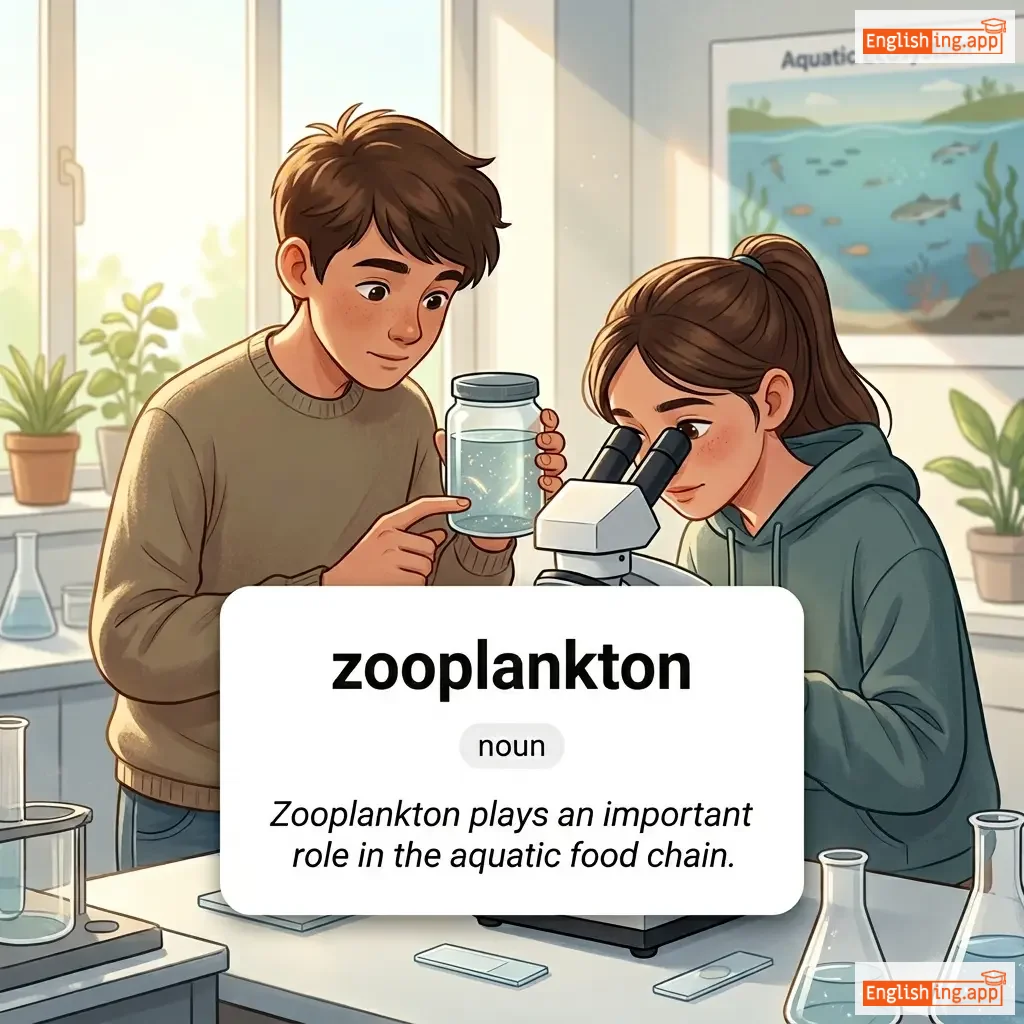
zooplankton definition card — visual illustration of the meaning
noun
/ˈzuːəʊˌplæŋktən/
動物プランクトン (dōbutsu purankuton)

Microscopic aquatic animals that drift in water bodies and form an essential part of the aquatic food chain, serving as food for fish and other marine organisms.

"Zooplankton plays an important role in the aquatic food chain."

"動物プランクトンは水生食物連鎖で重要な役割を果たします。" (Dōbutsu purankuton wa suisei shokumotsu rensa de jūyō na yakuwari o hatashimasu.)
adjective, verb (past participle of wear)
/wɔːrn/
擦り切れた (suri kireta)

damaged, weakened, or deteriorated from use or age

"His shoes were old and worn."

"彼の靴は古くて擦り切れていた。" (Kare no kutsu wa furukute surikirete ita.)
adjective
/ˈrɪtən/
書かれた (kakareta)

expressed in writing rather than spoken; composed or recorded in written form

"The agreement must be in written form to be valid."

"その契約は有効であるために書面でなければならない。" (Sono keiyaku wa yūkō de aru tame ni shomen de nakereba naranai.)
interjection
/waʊ/
驚きの表現 (odoroki no hyougen)

used to express great surprise, admiration, or pleasure

"Wow, that performance was amazing!"

"ワウ、そのパフォーマンスは素晴らしかった!" (Wau, sono pafomansu wa subarashikatta!)
adjective
/ˌrɒŋˈhɛd.ɪd/
誤った考え方 (ayamatta kangaekata)

Having or showing bad judgment or stubbornly holding to wrong ideas.

"The policy was considered wrongheaded and harmful."

"その政策は誤った考え方で有害だと見なされた。" (Sono seisaku wa ayamatta kangaekata de yuugai da to minasa reta.)
verb
/ˈræŋɡl̩/
議論する (giron suru)

to argue or dispute noisily or angrily

"The two neighbors wrangled over the property line for hours."

"二人の隣人は、敷地の境界について何時間も議論しました。" (Futari no rinjin wa, shikichi no kyōkai ni tsuite nan-jikan mo giron shimashita.)
adjective
/ˈwɜːrθləs/
無価値な; 役に立たない (mukachina; yaku ni tatanai)

having no value; useless

"The old computer became worthless after the new software updates."

"新しいソフトウェアのアップデート後、古いコンピュータは無価値になった。" (Atarashī sofutowea no appudēto go, furui konpyūta wa mukachina ni natta.)
noun
/jɑːrn/
(ito)

spun thread used for knitting, weaving, or sewing; a long or rambling story

"She bought colorful yarn for knitting a sweater."

"彼女はセーターを編むためにカラフルな糸を買いました。" (Kanojo wa seetaa wo amu tame ni karafuru na ito wo kaimashita.)
noun, verb
/ˈɛksˌreɪ/
X線; レントゲン (X sen; rentogen)

a form of electromagnetic radiation used to see inside objects or the human body; to examine or scan using X-rays

"The doctor ordered an X-ray to check for a broken bone."

"医者は骨を調べるためにレントゲンを撮った。" (isha wa hone o shiraberu tame ni rentogen o totta)
adverb
/ˈrɒŋli/
誤って (ayamatte)

in an incorrect or mistaken way; unfairly or unjustly

"He was wrongly accused of the crime."
"彼はその犯罪で誤って非難された。" (kare wa sono hanzai de ayamatte hinan sareta)
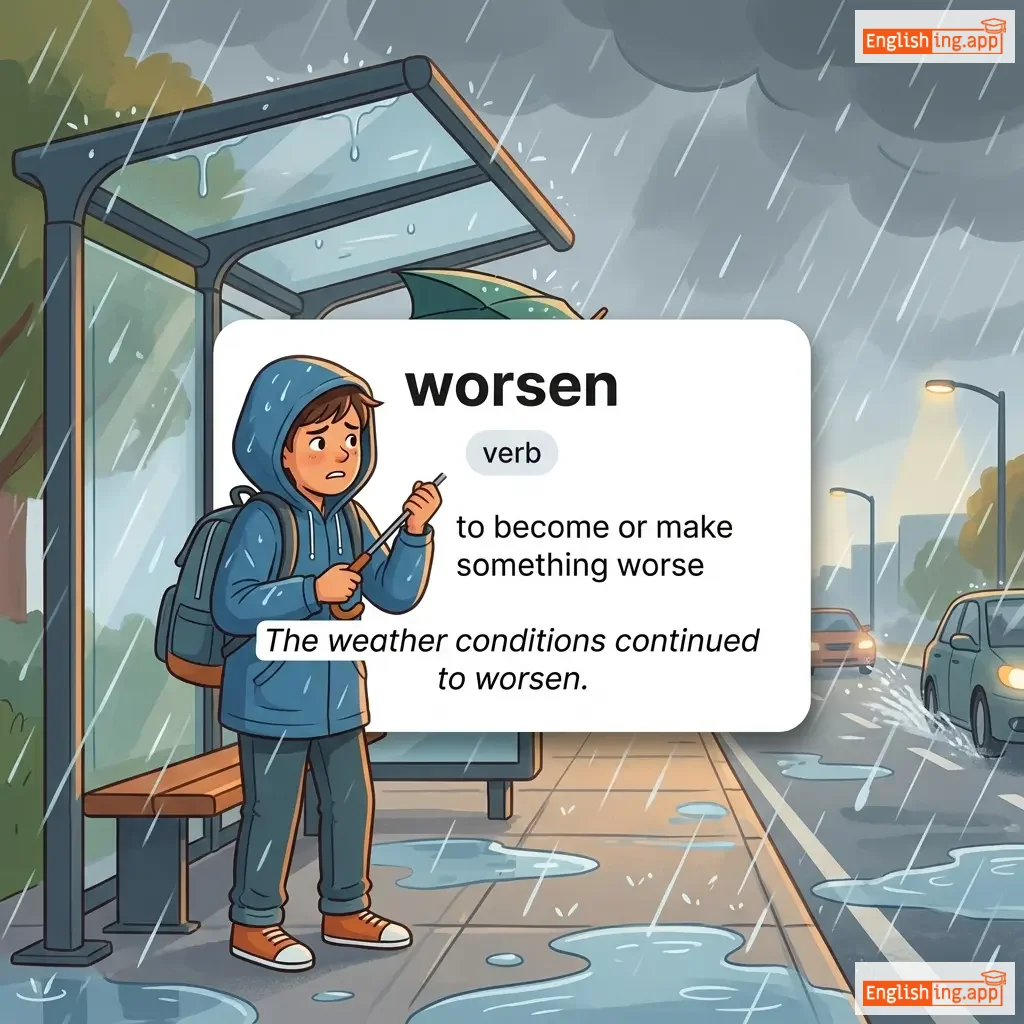
worsen definition card — visual illustration of the meaning
verb
/ˈwɜːrsən/
悪化する (akka suru)

to become or make something worse

"The weather conditions continued to worsen."

"天候条件はさらに悪化し続けた。" (Tenko joken wa sara ni akka shitsuzuketa.)
noun
/ˌzɛnəˈfoʊbiə/
外国人恐怖症 (gaikokujin kyōfushō)

fear or hatred of foreigners, people from different cultures, or strangers

"Xenophobia can lead to discrimination and social division."

"ゼノフォビアは差別や社会的分裂を引き起こす可能性があります。" (Zenofobia wa sabetsu ya shakaiteki bunretsu o hikiokosu kanōsei ga arimasu.)
verb
/ˈwɜːʃɪp/
礼拝 (reihaï)

To show reverence and adoration for a deity or sacred being.

"They gathered at the temple to worship together."
"彼らは寺院に集まり、一緒に礼拝しました。" (Karera wa jiin ni atsumari, issho ni reihai shimashita.)
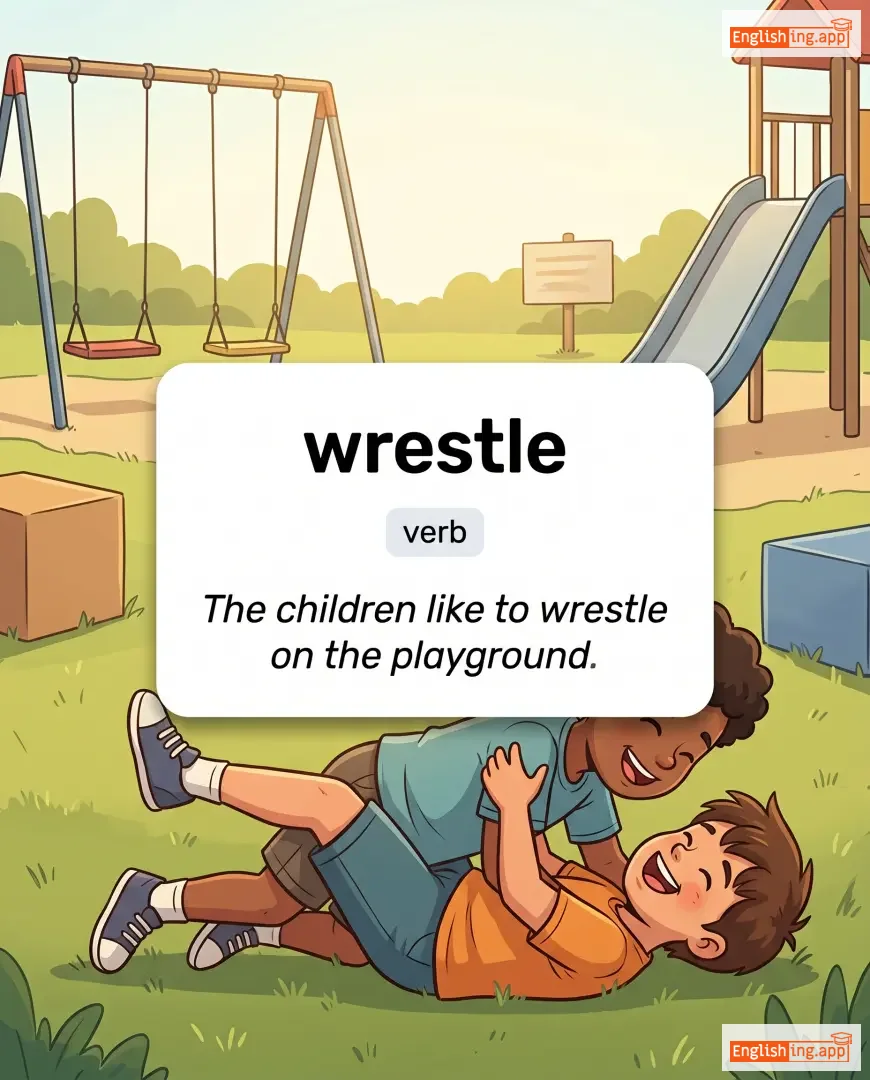
wrestle definition card — visual illustration of the meaning
verb
/ˈresəl/
レスリング (resuringu)

to fight by grappling and trying to throw down an opponent; to struggle with a problem

"The children like to wrestle on the playground."

"子供たちは遊び場でレスリングするのが好きです。" (Kodomotachi wa asobiba de resuringu suru no ga suki desu)
noun
/ˈræŋɡlər/
牧畜者 (bokuchusha)

a person who argues noisily; or someone who takes care of livestock on a ranch

"The cowboy worked as a wrangler on the ranch."

"カウボーイはランチでレングラーとして働いた。" (Kaubōi wa ranchi de rengurā toshite hataraita.)
noun
/reɪθ/
幽霊 (yūrei)

A ghost or ghostlike image of someone, especially seen shortly before or after their death.

"A wraith appeared in the fog near the old castle."

"古い城の近くの霧の中に幽霊が現れました。" (Furui shiro no chikaku no kiri no naka ni yūrei ga arawaremashita.)
noun/verb
/wuːnd/
幸福 (kōfuku)

an injury to the body or to harm someone

"He received a deep wound on his arm."

"彼女は賞を受け取ったとき、幸せを隠すことができませんでした。" (Kanojo wa shō o uketotta toki, kōfuku o kakusu koto ga dekimasen deshita.)
noun
/ˈrɛtʃɪdnəs/
悲惨 (hisan)

a state of misery, unhappiness, or poor condition

"The novel depicts the wretchedness of war victims."

"その小説は戦争の犠牲者の悲惨さを描いています。" (Sono shousetsu wa sensou no giseisha no hisansa o egaki masu.)
noun
/rɪt/
裁判所命令 (saibansho meirei)

A formal written order issued by a court.

"The judge issued a writ of habeas corpus."

"裁判官はハベアス・コーパス命令を発行しました。" (Saibankan wa habeasu kōpasu meirei o hakkō shimashita.)
😟

worry

verb
/ˈwʌri/

to feel anxious or concerned about something

"Don’t worry, everything will be okay."

verb
/riːk/
被害を与える (higai o ataeru)

to cause or inflict something, especially damage or harm

"The storm wreaked havoc on the coastal villages."

"嵐は沿岸の村に大きな被害をもたらしました。" (Arashi wa engan no mura ni ōkina higai o motarashimashita.)
noun
/jɔːn/
あくび (akubi)

an involuntary opening of the mouth and inhalation of air due to tiredness or boredom

"She couldn't suppress a yawn during the boring lecture."

"退屈な講義の最中にあくびを抑えることができなかった。" (Taikutsu na kougi no saichuu ni akubi o osaeru koto ga dekinakatta.)
verb
/raɪð/
身をよじる (mi o yojiru)

To twist or squirm in pain or discomfort.

"He writhed in pain after twisting his ankle."

"彼は足首を捻った後、痛みで身をよじっていた。" (Kare wa ashi kubi o nenatta ato, itami de mi o yojiteta.)
noun
/ˈzaɪləfoʊn/
木琴 (zairofon)

a percussion instrument consisting of wooden bars that are struck with mallets to produce musical tones

"The children enjoyed playing the colorful xylophone in music class."

"音楽の授業で、子どもたちは色とりどりの木琴を演奏するのを楽しんだ。" (ongaku no jugyou de, kodomotachi wa irotoridori no mokkin o ensou suru no o tanoshinda.)
adjective
/ˈwɜːði/
価値のある (kachi no aru)

having value or merit; deserving respect or attention

"She is worthy of praise for her dedication."

"彼女はその献身に対して賞賛に値する。" (Kanojo wa sono kenshin ni taishite shōsan ni atai suru.)
noun
/ræθ/
怒り (ikari)

extreme anger or rage

"The king's wrath terrified the villagers."

"王の怒りは村人たちを恐れさせた。" (Ō no ikari wa murabito-tachi o osore saseta.)
noun/verb
/ˈrɪŋ.kəl/
しわ (shiwa)

A small line or fold in the skin or fabric; to form small folds or lines.

"The old shirt had many wrinkles."

"その古いシャツにはたくさんのしわがありました。" (Sono furui shatsu ni wa takusan no shiwa ga arimashita.)
verb
/rɛst/
力づくで奪う (rikidukude ubau)

to forcibly pull something from a person's grasp; to seize with effort or struggle

"The police had to wrest the weapon from the suspect's hand."

"警察は容疑者の手から武器を引き離さなければならなかった。" (Keisatsu wa yōgisha no te kara buki o hikihanasanakereba naranakatta.)
adjective
/ˈwɜːrid/
心配 (shinpai)

feeling anxious or concerned about something

"She was worried about the upcoming exam."

"彼女は迫る試験について心配していた。" (Kanojo wa semaru shiken ni tsuite shinpai shite ita.)
verb
/wʊd/
だろう (darou)

used to indicate a future possibility or action in the past

"He said he would help me tomorrow."

"彼は明日私を手伝うと言った。" (Kare wa ashita watashi o tetsudau to itta.)
adjective
/ˈwɜːrθˌwaɪl/
価値がある (kachi ga aru)

worth the time, effort, or money spent; valuable

"Volunteering at the shelter was a worthwhile experience."

"シェルターでボランティアをすることは価値のある経験でした。" (Sherutā de borantia o suru koto wa kachi no aru keiken deshita.)
noun
/ˈzɛnəˌfoʊb/
外国人恐怖症者 (gaikokujin kyōfu shōsha)

a person who dislikes or fears people from other countries or cultures

"The politician was criticized as a xenophobe due to his anti-immigrant policies."

"その政治家は反移民政策のため、外国人恐怖症者として批判されました。" (Sono seijika wa han imin seisaku no tame, gaikokujin kyōfu shōsha to shite hihan saremashita.)
verb
/rɪŋ/
幸せ (shiawase)

to squeeze and twist something to force liquid out; to extract with effort

"She had to wring the towel after washing it."

"彼女は賞を受け取ったとき、幸せを隠すことができませんでした。" (Kanojo wa shō o uketotta toki, shiawase o kakusu koto ga dekimasen deshita.)
adjective
/ˌzɛnəˈfoʊbɪk/
外国人恐怖症 (gaikokujin kyōfushō)

having or showing a dislike or fear of people from other countries

"The leader’s xenophobic comments sparked outrage across the country."

"リーダーの外国人恐怖症に関するコメントは、全国で憤りを引き起こした。" (Rīdā no gaikokujin kyōfushō ni kansuru komento wa, zenkoku de ikidoi o hikiokoshita.)
adjective
/raɪ/
歪んだ、皮肉な (yuganda, hinikuna)

twisted or distorted in expression; showing dry, mocking humor

"He gave a wry smile after hearing the sarcastic remark."

"彼は皮肉なコメントを聞いた後、歪んだ笑顔を見せた。" (Kare wa hinikuna komento o kiita ato, yuganda egao o miseta.)