語彙集

英単語辞書 | 単語の意味、定義、例文

noun
/ˈwɛlˌduːər/
善行者 (zenkōsha)

A person who does good deeds; a benefactor.

"The community praised the well-doer for his charity."

"コミュニティはその善行者を称賛しました。" (Komyuniti wa sono zenkōsha o shōsan shimashita.)
adjective
/ˌwɛl tə ˈduː/
裕福 (yūfuku)

Prosperous, wealthy, or financially comfortable.

"They belong to a well-to-do family in the city."

"彼らは都市の裕福な家族に属しています。" (Karera wa toshi no yūfuku na kazoku ni zoku shiteimasu.)
pronoun
/wɒt/
(nani)

used to ask for information about something

"What is your name?"
"あなたの名前は何ですか?" (Anata no namae wa nan desu ka?)
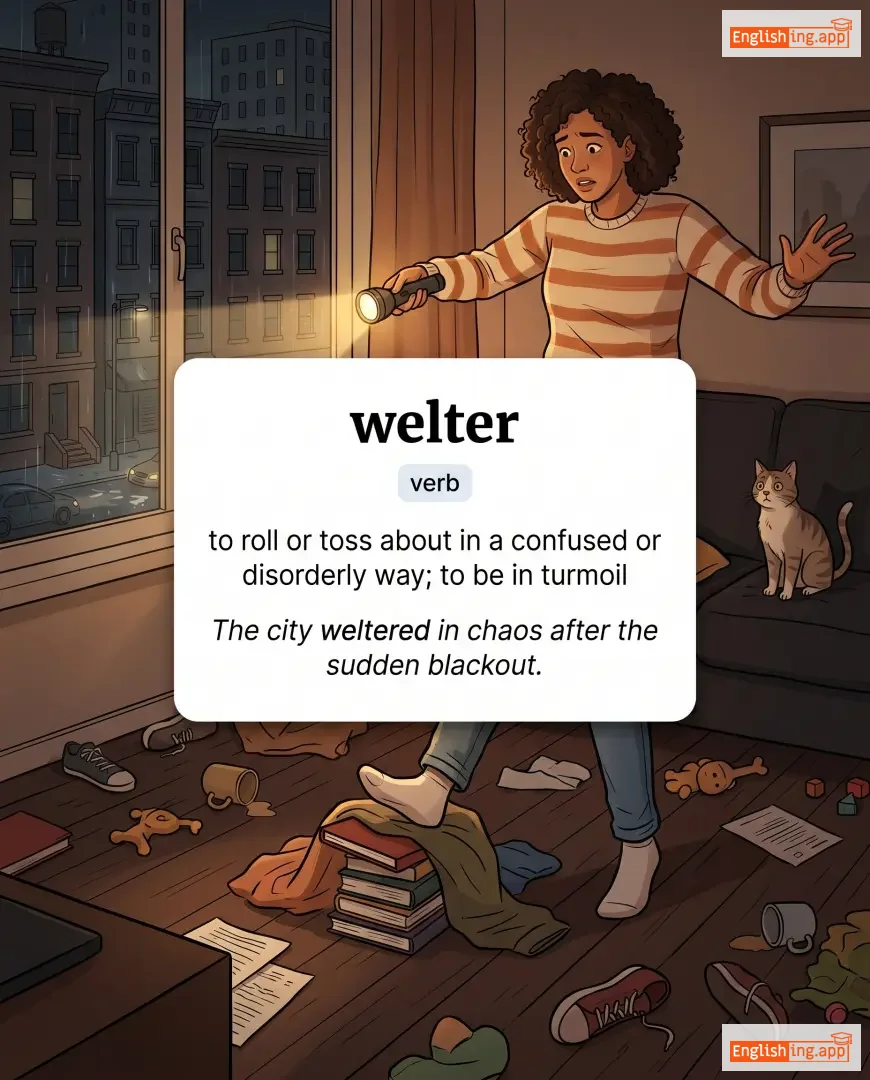
welter definition card — visual illustration of the meaning
verb
/ˈwɛltər/
混乱の中で転がる (konran no naka de korogaru)

to roll or toss about in a confused or disorderly way; to be in turmoil

"The city weltered in chaos after the sudden blackout."

"突然の停電後、都市は混乱の中に沈んだ。" (Totsuzen no teiden go, toshi wa konran no naka ni shizunda.)
noun
/wɛst/
西 (nishi)

the direction to the left of the north and to the right of the south, typically associated with the sunset

"The sun sets in the west."

"太陽は西に沈みます。" (Taiyō wa nishi ni shizumimasu.)
adjective
/ˌwel bɪˈheɪvd/
行儀が良い (gyōgi ga yoi)

conducting oneself in a proper and polite manner; showing good manners

"The children were well-behaved during the ceremony."

"儀式の間、子供たちは行儀が良かった。" (Gishiki no aida, kodomotachi wa gyōgi ga yokatta.)
adjective
/wɛt/
濡れた (nureta)

covered with, or saturated with liquid (usually water)

"The ground is wet after the rain."

"雨の後、地面は濡れている。" (Ame no ato, jimen wa nureteiru.)
verb
/ˈwiːdəl/
お世辞で説得する (oseshi de settoku suru)

to persuade or coax someone by using flattery or smooth talk

"She managed to wheedle extra pocket money from her father."

"彼女は父親から追加の小遣いを得ることに成功した。" (Kanojo wa chichioya kara tsuika no kozutsukai wo eru koto ni seikou shita.)
adverb
/ˌwɛr.əˈpɒn/
その後すぐに (sono ato sugu ni)

Immediately after which; as a result of which.

"He confessed his mistake, whereupon she forgave him."

"彼は自分の間違いを認め、すぐに彼女は彼を許しました。" (Kare wa jibun no machigai o mitome, sugu ni kanojo wa kare o yurushimashita.)
noun
/ˈwɛrəˌbaʊts/
所在場所 (sokai basho)

the place where someone or something is

"The police are trying to find out the suspect's whereabouts."

"警察は容疑者の所在場所を探そうとしています。" (Keisatsu wa yōgisha no sokai basho o sagasō to shiteimasu.)
adjective
/ˈweɪwərd/
反抗的な (hankōteki na)

Difficult to control or predict because of unusual or perverse behavior.

"The teacher struggled to manage the wayward students."

"教師は反抗的な生徒を管理するのに苦労していた。" (Kyōshi wa hankōteki na seito o kanri suru no ni kurō shite ita.)
adverb
/ˈwɪmzɪkli/
遊び心いっぱいに (uimuzikarii)

In a playful, fanciful, or capricious manner; with sudden changes of mind

"She decorated her room whimsically with colorful balloons."

"彼女は部屋をカラフルな風船で遊び心いっぱいに飾った。" (Kanojo wa heya o karafuru na fuusen de asobigokoro ippai ni kazatta.)
conjunction
/ˈwɛðər/
かどうか (kadouka)

used to express a doubt or choice between alternatives

"I don’t know whether I should go."

"私は行くべきかどうか分かりません。" (Watashi wa iku beki ka dō ka wakarimasen.)
noun
/wæks ɡɔːrd/
ワックスゴード (wakkusugōdo)

a large white or green gourd with waxy skin, commonly used in Asian cooking

"The wax gourd soup is very nutritious and helps with digestion."
"ワックスゴードのスープは非常に栄養があり、消化を助けます。" (wakkusugōdo no sūpu wa hijō ni eiyō ga ari, shōka o tasukemasu.)
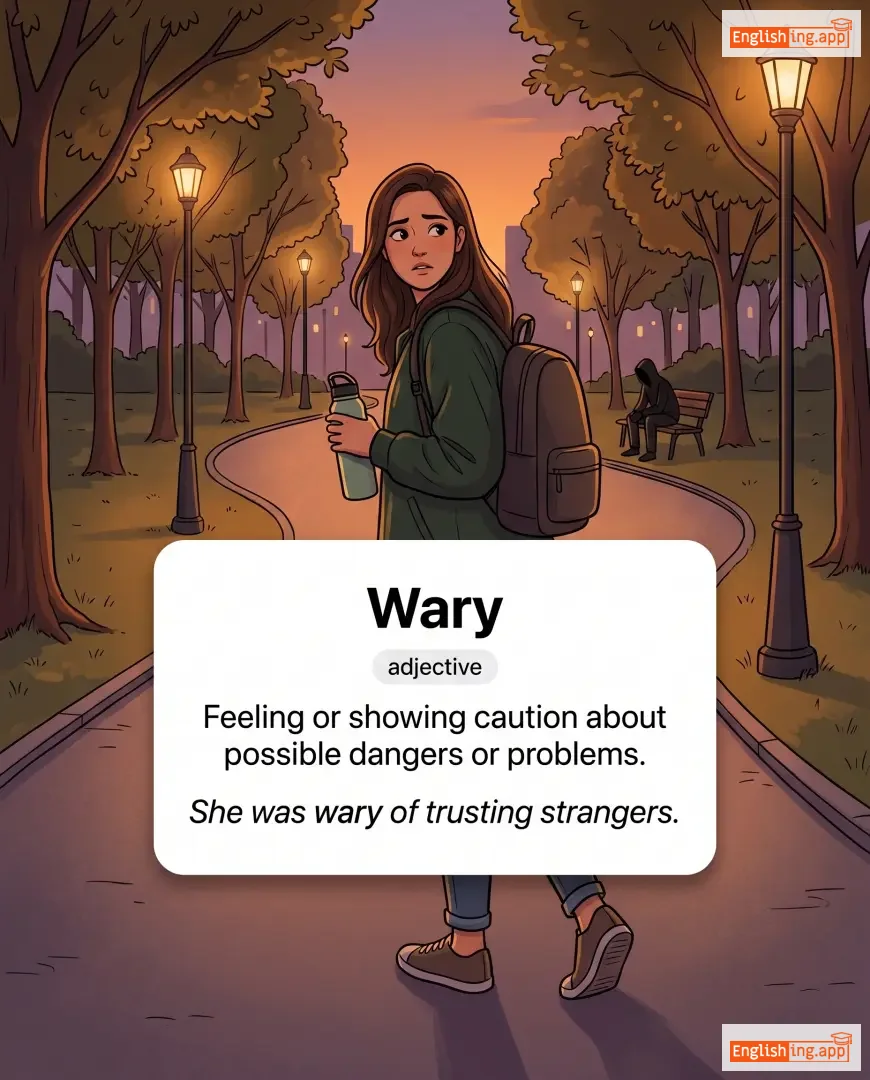
Wary definition card — visual illustration of the meaning
adjective
/ˈweəri/
用心深い (wary)

Feeling or showing caution about possible dangers or problems.

"She was wary of trusting strangers."

"彼女は見知らぬ人を信じることに用心深かった。" (Kanojo wa mishiranu hito o shinjiru koto ni yōjinbukatta.)
noun
/wiːl/
幸福 (kōfuku)

A raised mark on the skin left after a blow; or general well-being and prosperity.

"The charity worked for the common weal of the community."

"彼女は賞を受け取ったとき、喜びを隠すことができませんでした。" (Kanojo wa shō o uketotta toki, yorokobi o kakusu koto ga dekimasen deshita.)
verb
/ˌweɪˈleɪ/
突然立ち止まる / 攻撃する (totsuzen tachidomaru / kougeki suru)

to stop or interrupt someone unexpectedly, often to attack or detain them

"He was waylaid by reporters as he left the courthouse."

"彼は裁判所を出るとき、記者に道を遮られた。" (Kare wa saiban-sho o deru toki, kisha ni michi o saegirareta.)
adjective
/ˈwɪərɪsəm/
疲れる (tsukareru)

Causing one to feel tired or bored.

"The long and wearisome lecture put the students to sleep."

"長くて疲れる講義は学生たちを寝かせた。" (Nagakute tsukareru kōgi wa gakuseitachi o nekaseta.)
noun
/ˈwɒriər/
戦士 (senshi)

a person engaged or experienced in warfare; a brave or experienced fighter

"The ancient warrior fought fearlessly to protect his land."

"古代の戦士は自分の土地を守るために恐れずに戦った。" (Kodai no senshi wa jibun no tochi o mamoru tame ni osorezu ni tatakatta.)
noun
/ˈwɛpən/
武器 (buki)

a thing designed or used for inflicting harm or damage

"He carried a weapon for self-defense."

"彼は自己防衛のために武器を携帯していた。" (Kare wa jiko bōei no tame ni buki o keitai shite ita.)
noun
/ˈwiː.vər bɜːd/
織り鳥 (oritori)

a small bird that builds elaborate woven nests from grass and twigs

"The weaver bird skillfully constructs its intricate nest."
"織り鳥は巧みに複雑な巣を作る" (oritori wa takumi ni fukuzatsu na su wo tsukuru)
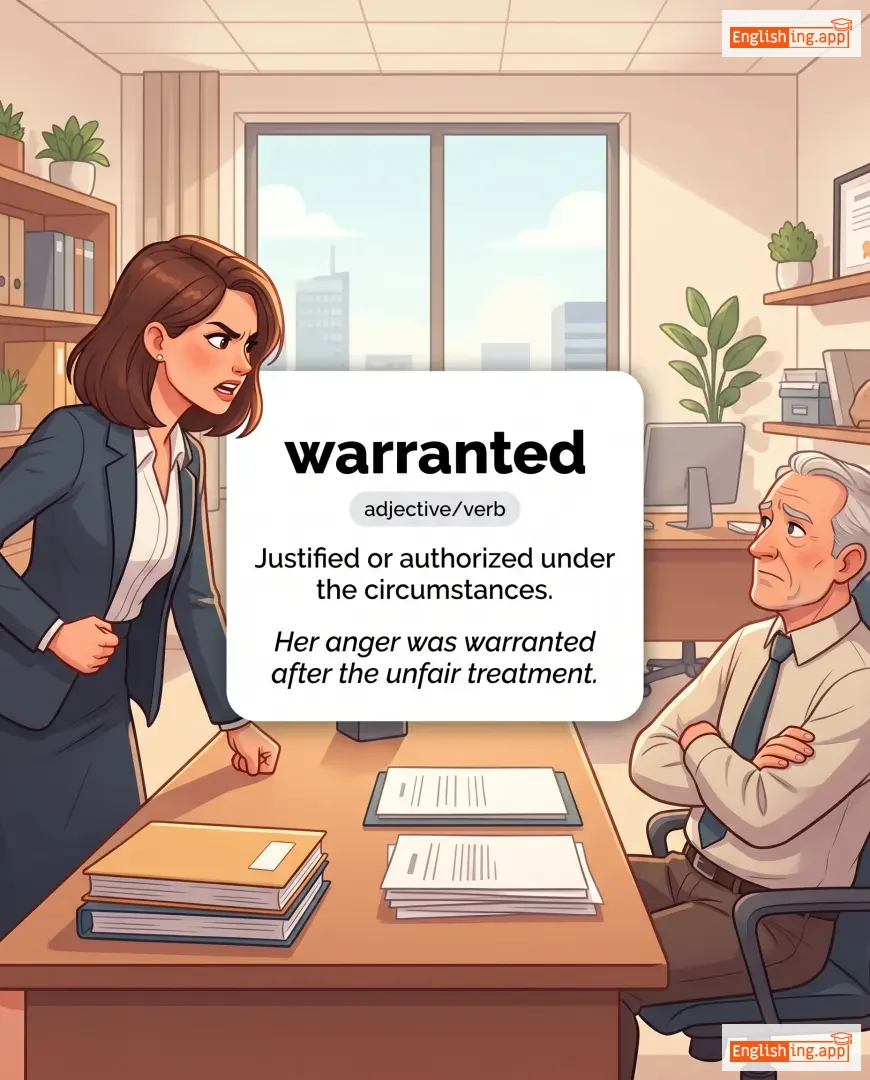
warranted definition card — visual illustration of the meaning
adjective/verb
/ˈwɒrəntɪd/
正当化された (seitouka sareta)

Justified or authorized under the circumstances.

"Her anger was warranted after the unfair treatment."

"不公平な扱いの後、彼女の怒りは正当化されていました。" (Fukouhei na atsukai no ato, kanojo no ikari wa seitouka sarete imashita.)
noun
/wɜːrl/
渦巻き (uzumaki)

A pattern of spirals or concentric circles, often found in fingerprints, shells, or flowers.

"The fingerprint displayed a clear whorl pattern."
"指紋に明確な渦巻きのパターンが表示されていました。" (Shimon ni meikaku na uzumaki no patān ga hyōji sareteimashita.)
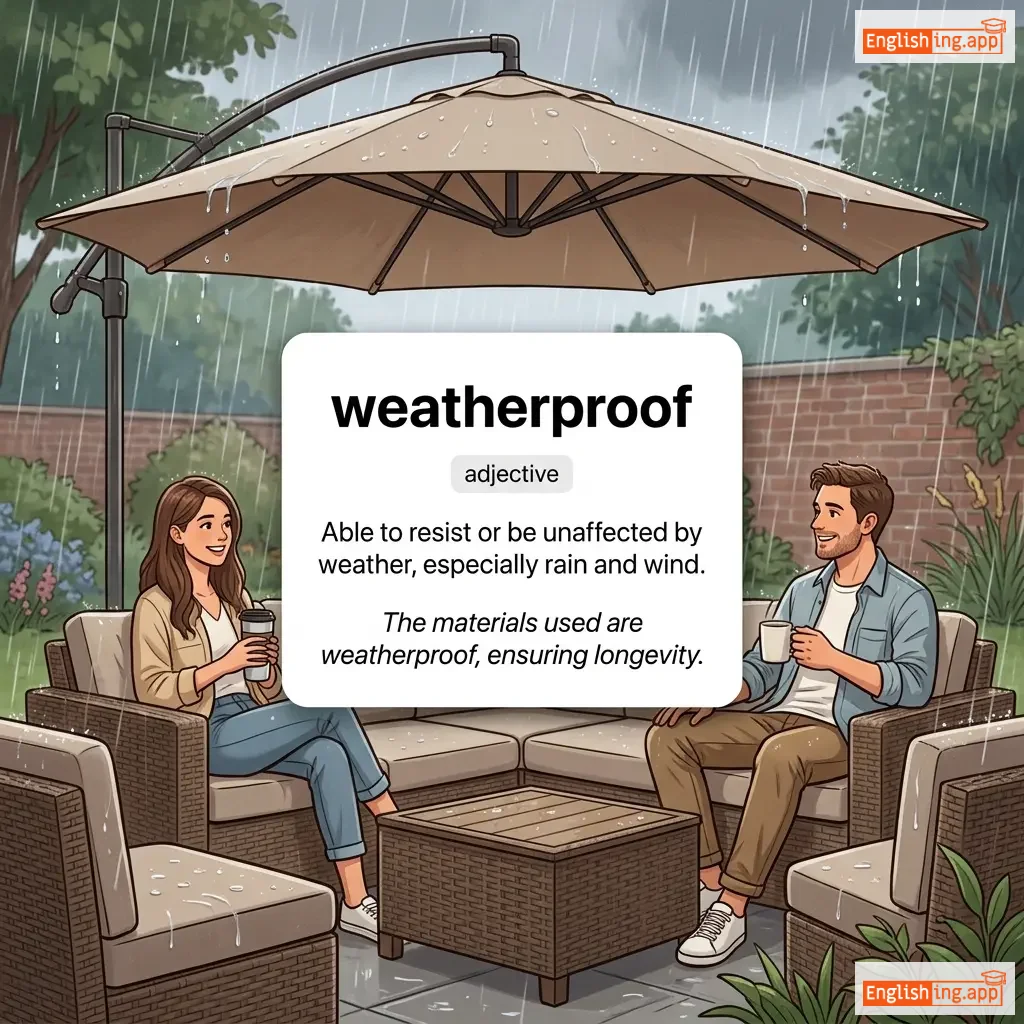
weatherproof definition card — visual illustration of the meaning
adjective
ˈwɛðərpruːf
防水 (bousui)

Able to resist or be unaffected by weather, especially rain and wind.

"The materials used are weatherproof, ensuring longevity."

"使用される材料は防水で、耐久性を保証します。" (Shiyō sareru zairyō wa bousui de, taikyū-sei o hoshō shimasu.)
🍴

whet

verb
/wɛt/

To sharpen the blade of a tool or to stimulate interest or appetite.

"The smell of food whetted my appetite."

pronoun
/wɪtʃ/
どれ (dore)

used to ask about one or more items from a defined set

"Which one do you prefer, the red or the blue?"

"赤と青、どちらを選びますか?" (Aka to ao, dochira o erabimasu ka?)
pronoun
/wi/
私たち (watashitachi)

used by a speaker to refer to himself or herself and one or more other people

"We are going to the park this afternoon."

"私たちは今日の午後公園に行きます。" (Watashitachi wa kyō no gogo kōen ni ikimasu.)
verb
/ˈwɪni/
いななき (inanaki)

to make the high-pitched sound a horse makes

"The horse whinnied when it saw its rider."
"馬は騎手を見たときにいななきました。" (Uma wa kishu wo mita toki ni inanakimashita.)
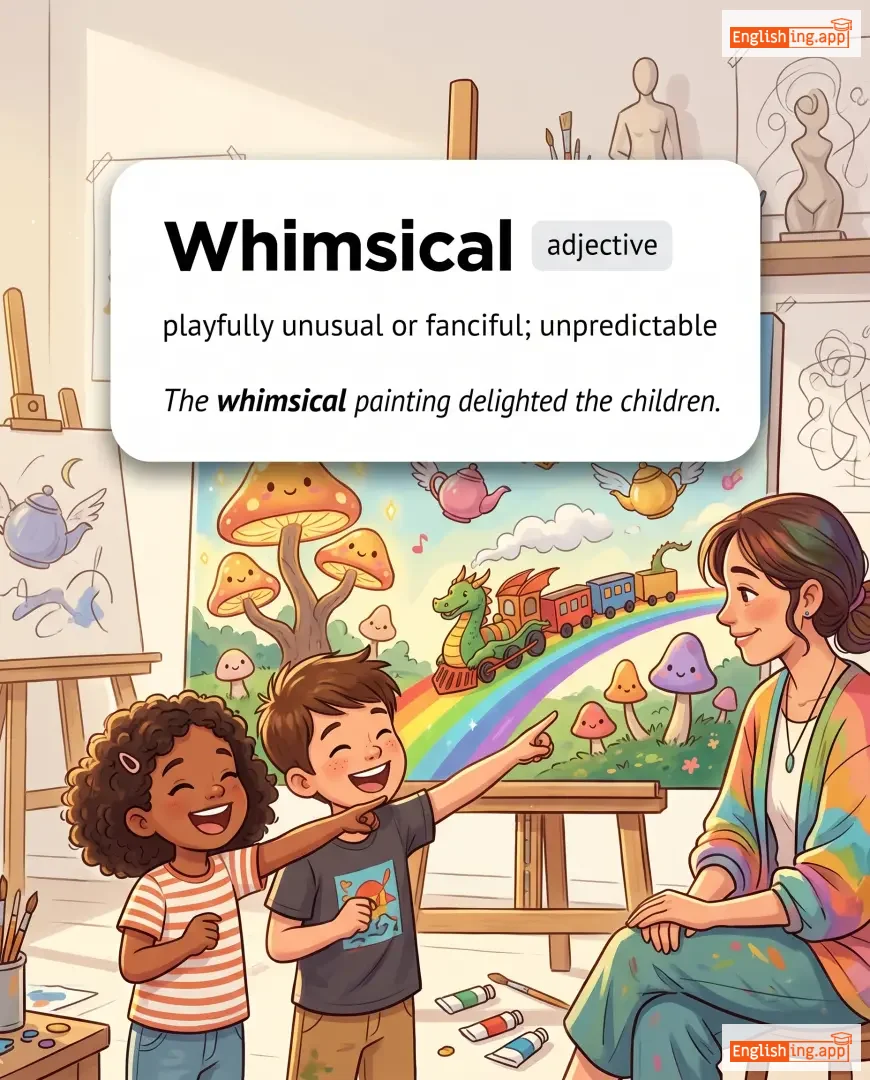
Whimsical definition card — visual illustration of the meaning
adjective
/ˈwɪmzɪkəl/
奇想天外 (kisō tengai)

playfully unusual or fanciful; unpredictable

"The whimsical painting delighted the children."

"その奇想天外な絵画は子供たちを喜ばせました。" (Sono kisō tengai na kaiga wa kodomotachi o yorokobasemashita.)
🕸️

web

noun
/wɛb/

a network of fine threads spun by a spider or a complex interconnected system

"The spider spun a large web in the corner of the room."

noun
/ˈwɒʃ.ɪŋ məˌʃiːn/

a machine for washing clothes and other textiles

"The washing machine broke down and needs repair."

noun
/ˈwɪdəʊ/
未亡人 (miboujin)

a woman whose husband has died and who has not married again

"She became a widow at a very young age."

"彼女はとても若い年齢で未亡人になりました。" (Kanojo wa totemo wakai nenrei de miboujin ni narimashita.)
noun
/wɪk/
キャンドルの芯 (kyandoru no shin)

a cord or strand of cotton that burns to provide light in a candle or lamp

"The candle wick needs to be trimmed for better burning."

"キャンドルの芯は、より良く燃えるために切る必要があります。" (Kyandoru no shin wa, yori yoku moeru tame ni kiru hitsuyō ga arimasu.)
adjective
/ˈwɪkɪd/
悪い (warui)

morally bad or evil; also informally very good or impressive

"The villain in the story was truly wicked."

"物語の中の悪役は本当に悪かった。" (Monogatari no naka no akuyaku wa hontou ni warukatta.)
noun
/ˈweɪstrəl/
浪費者, 怠け者 (wastrel)

A person who wastes time, money, or resources; an idler or spendthrift.

"The young man was dismissed as a wastrel by his family."

"その若者は家族から浪費者として追放されました。" (Sono wakamono wa kazoku kara rūhi-sha to shite tsuihō saremashita.)
noun
/waɪt ænt/
シロアリ (shiroari)

a small social insect that lives in colonies and feeds on wood and plant matter

"White ants damaged the wooden furniture in our house."

"シロアリは私たちの家の木製家具を傷つけました。" (Shiroari wa watashitachi no ie no mokusei kagu o kizutsukemashita.)
noun
/ˈwɪd.oʊ.ər/
未亡人の夫 (mibōjin no otto)

a man whose wife has died and who has not married again

"The elderly widower lived alone but had regular visits from his children."

"高齢の未亡人の夫は一人で住んでいましたが、子供たちから定期的に訪問を受けていました。" (Kōrei no mibōjin no otto wa hitori de sunde imashita ga, kodomotachi kara teikiteki ni hōmon o ukete imashita.)
noun
/ˈwɒrənti/
保証 (hoshō)

A written guarantee given by a manufacturer or seller promising to repair or replace a product if necessary within a specified period.

"The laptop comes with a two-year warranty."

"そのノートパソコンには2年間の保証が付いています。" (Sono nōto pasokon ni wa 2-nenkan no hoshō ga tsuiteimasu.)
verb
/ˈwɪtl/

to carve or shape something by cutting off small pieces; to gradually reduce

"He spent the afternoon whittling a piece of wood into a toy."

noun
/ˈwɔː.tər pɒt/
水差し (mizudashi)

a container used for storing or carrying water

"The water pot in the kitchen was filled with fresh drinking water."
"キッチンの水差しは新鮮な飲料水でいっぱいでした。" (kicchin no mizudashi wa shinsen na inryō mizu de ippai deshita.)
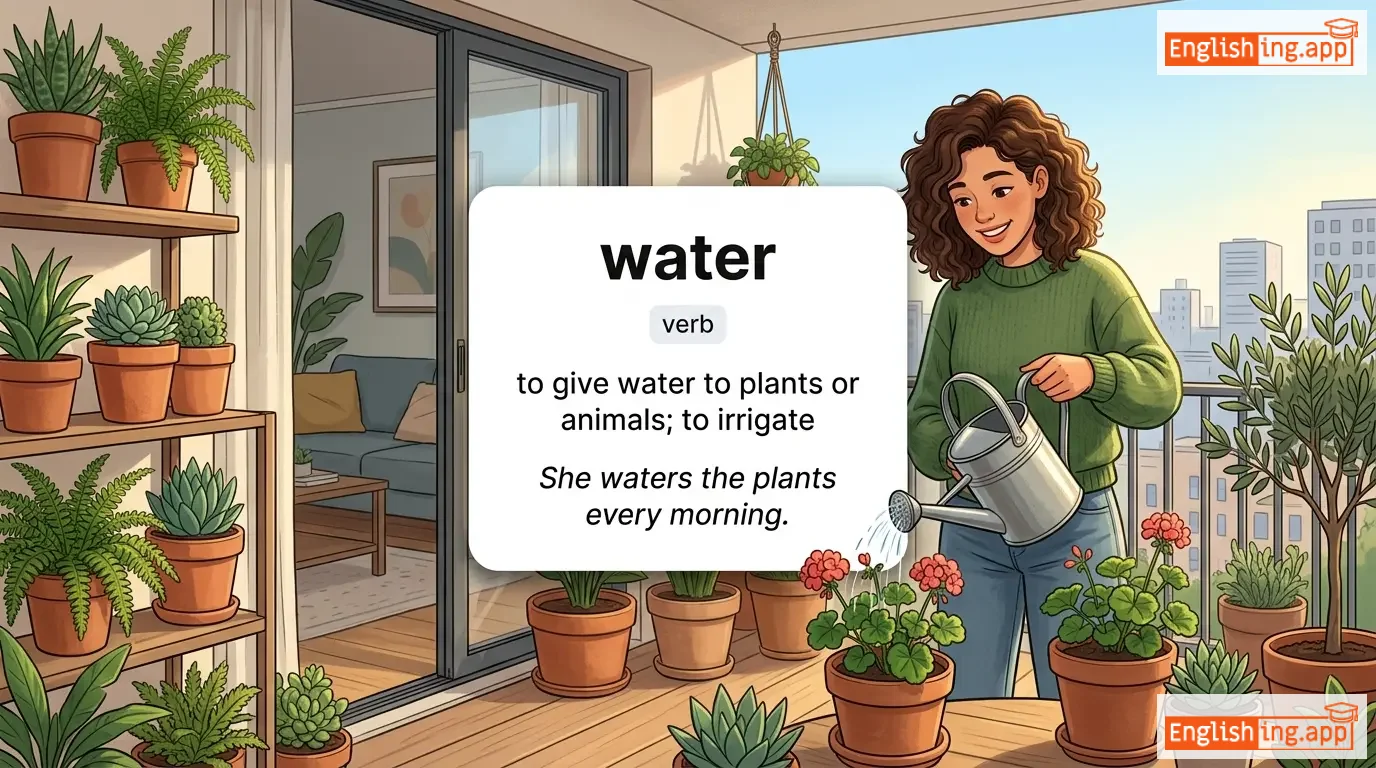
water definition card — visual illustration of the meaning
noun
/ˈwɔːtər/
(mizu)

a clear, colorless, odorless, and tasteless liquid that is essential for life

"We need to drink water to stay hydrated."

"私たちは水分補給のために水を飲む必要があります。" (Watashitachi wa suibun hokyū no tame ni mizu o nomu hitsuyō ga arimasu.)
noun
/ˈwɔː.tər ˌlɪl.i/
スイレン (suiren)

a floating flower that grows on the surface of ponds and lakes

"The white water-lily floated gracefully on the pond."
"白いスイレンが池に優雅に浮かんでいました。" (shiroi suiren ga ike ni yuuga ni ukande imashita)
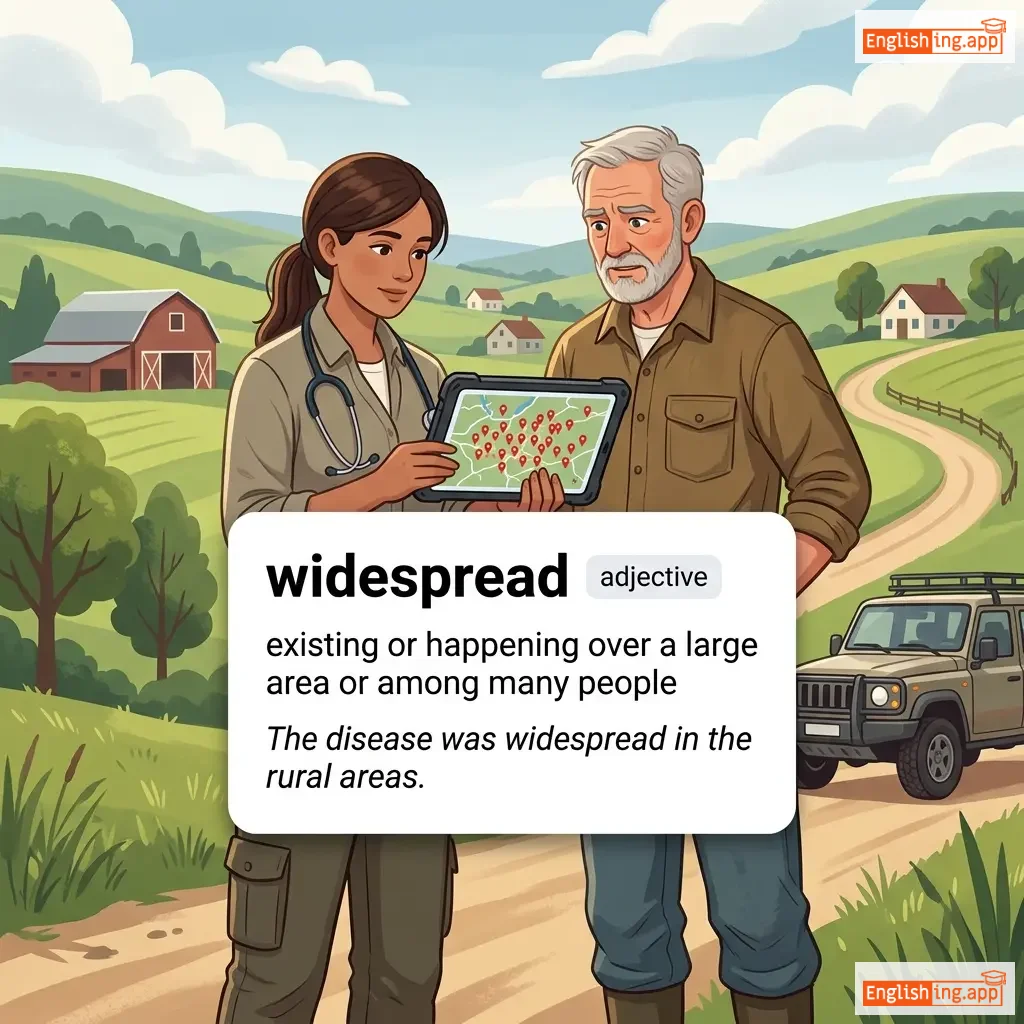
widespread definition card — visual illustration of the meaning
adjective
/ˈwaɪdˌsprɛd/
広範囲にわたる (kōhan'i ni wataru)

existing or happening over a large area or among many people

"The disease was widespread in the rural areas."

"その病気は農村地域で広範囲にわたっていました。" (Sono byōki wa nōson chiiki de kōhan'i ni watatte imashita.)
adjective
/waɪd/
広い (hiroi)

having a great extent from side to side; broad

"The river is wide enough to fit a boat."

"その川は十分に広く、ボートが入ることができます。" (Sono kawa wa juubun ni hiroku, bōto ga hairu koto ga dekimasu.)
noun
/ˈwiːltʃeər/
車椅子 (kurumaisu)

a chair with wheels, used by people who cannot walk easily or at all

"The hospital provided a wheelchair for the injured patient."

"病院は怪我をした患者のために車椅子を提供した。" (byōin wa kega o shita kanja no tame ni kurumaisu o teikyō shita.)
noun
/wɪm/
気まぐれ (kimagure)

a sudden or unpredictable idea, desire, or decision

"She bought the dress on a whim."

"彼女は気まぐれでそのドレスを買いました。" (Kanojo wa kimagure de sono doresu o kaimashita.)
adverb, noun
/ˈwɛə.wɪð/
手段 (shudan)

With which; the means or resources needed for something.

"He lacked the money wherewith to buy a new house."

"彼は新しい家を買うためのお金がなかった。" (Kare wa atarashī ie o kau tame no okane ga nakatta.)
adverb
/wɒtˈsəʊɛvər/
全く (mattaku)

used for emphasis after a negative statement to mean 'at all'

"She has no interest in the matter whatsoever."

"彼女はその問題に全く興味がありません。" (Kanojo wa sono mondai ni mattaku kyōmi ga arimasen.)
noun
/wiːl/
車輪 (sharin)

a circular object that revolves on an axle and is used to move or carry things

"The wheel of the car broke down on the way."

"車の車輪が道で壊れた。" (Kuruma no sharin ga michi de kowareta.)
noun
/wiːt/
小麦 (komugi)

a cereal plant whose grain is used to make flour for bread and other foods

"Farmers harvested the wheat in early summer."

"農家は初夏に小麦を収穫しました。" (Nouka wa shoka ni komugi o shuukaku shimashita.)