Vocabularios

Descubra, aprenda y domine el vocabulario en inglés

noun
/ˈwɛlˌduːər/
bienhechor (bienhechor)

A person who does good deeds; a benefactor.

"The community praised the well-doer for his charity."

"La comunidad elogió al bienhechor por su caridad." (La comunidad elogió al bienhechor por su caridad.)
adjective
/ˌwɛl tə ˈduː/
adinerado (adinerado)

Prosperous, wealthy, or financially comfortable.

"They belong to a well-to-do family in the city."

"Pertenecen a una familia adinerada de la ciudad." (Pertenecen a una familia adinerada de la ciudad.)
pronoun
/wɒt/
qué (que)

used to ask for information about something

"What is your name?"

"¿Cuál es tu nombre?" (¿Cuál es tu nombre?)
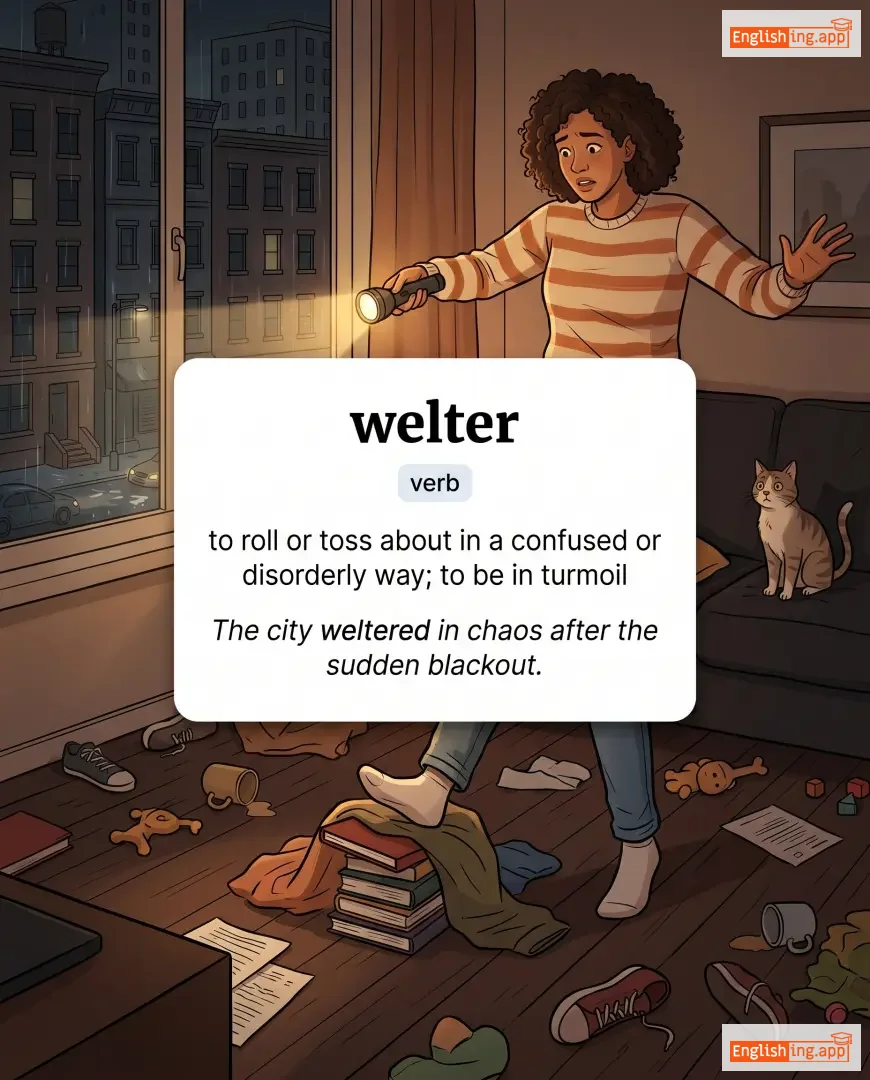
welter definition card — visual illustration of the meaning
verb
/ˈwɛltər/
dar vueltas en caos (dar vueltas en caos)

to roll or toss about in a confused or disorderly way; to be in turmoil

"The city weltered in chaos after the sudden blackout."

"La ciudad se sumió en el caos después del apagón repentino." (La ciudad se sumió en el caos después del apagón repentino.)
noun
/wɛst/
oeste (oeste)

the direction to the left of the north and to the right of the south, typically associated with the sunset

"The sun sets in the west."

"El sol se pone en el oeste." (El sol se pone en el oeste.)
adjective
/ˌwel bɪˈheɪvd/
bien educado (bien educado)

conducting oneself in a proper and polite manner; showing good manners

"The children were well-behaved during the ceremony."

"Los niños se comportaron bien durante la ceremonia." (Los niños se comportaron bien durante la ceremonia.)
adjective
/wɛt/
mojado (mojado)

covered with, or saturated with liquid (usually water)

"The ground is wet after the rain."

"El suelo está mojado después de la lluvia." (El suelo está mojado después de la lluvia.)
verb
/ˈwiːdəl/
persuadir con halagos (persuadir con halagos)

to persuade or coax someone by using flattery or smooth talk

"She managed to wheedle extra pocket money from her father."

"Ella consiguió convencer a su padre para obtener dinero extra." (Ella consiguió convencer a su padre para obtener dinero extra.)
adverb
/ˌwɛr.əˈpɒn/
inmediatamente después (inmediatamente despues)

Immediately after which; as a result of which.

"He confessed his mistake, whereupon she forgave him."

"Él confesó su error, inmediatamente después ella lo perdonó." (El confeso su error, inmediatamente despues ella lo perdono.)
noun
/ˈwɛrəˌbaʊts/
ubicación (ubicacion)

the place where someone or something is

"The police are trying to find out the suspect's whereabouts."

"La policía está tratando de encontrar la ubicación del sospechoso." (La policía está tratando de encontrar la ubicación del sospechoso.)
adjective
/ˈweɪwərd/
rebelde (rebelde)

Difficult to control or predict because of unusual or perverse behavior.

"The teacher struggled to manage the wayward students."

"El maestro luchaba por manejar a los estudiantes rebeldes." (El maestro luchaba por manejar a los estudiantes rebeldes.)
adverb
/ˈwɪmzɪkli/
caprichosamente (wimzikli)

In a playful, fanciful, or capricious manner; with sudden changes of mind

"She decorated her room whimsically with colorful balloons."

"Ella decoró su habitación de forma caprichosa con globos coloridos." (Ella decoro su habitacion de forma caprichosa con globos coloridos.)
conjunction
/ˈwɛðər/
si (si)

used to express a doubt or choice between alternatives

"I don’t know whether I should go."

"No sé si debo ir." (No sé si debo ir.)
noun
/wæks ɡɔːrd/
calabaza cerosa (calabaza cerosa)

a large white or green gourd with waxy skin, commonly used in Asian cooking

"The wax gourd soup is very nutritious and helps with digestion."

"La sopa de calabaza cerosa es muy nutritiva y ayuda con la digestión." (La sopa de calabaza cerosa es muy nutritiva y ayuda con la digestion.)
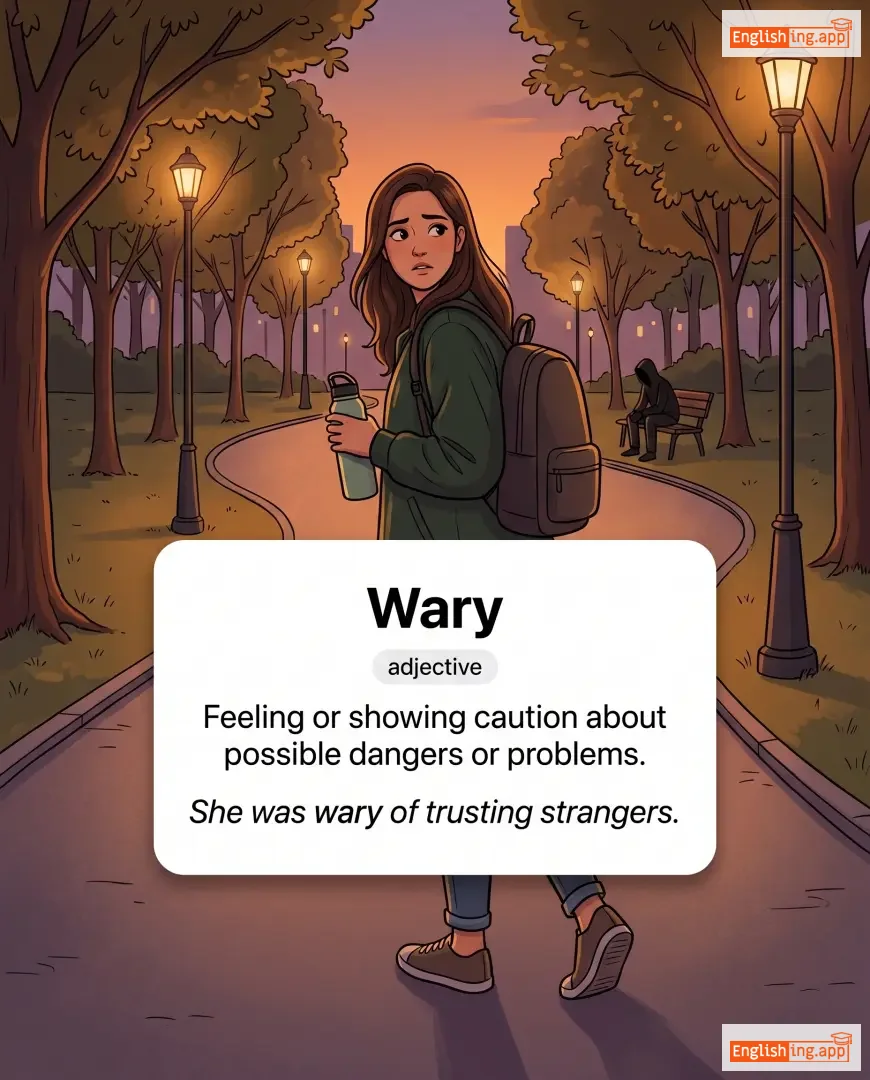
Wary definition card — visual illustration of the meaning
adjective
/ˈweəri/
cauteloso (wary)

Feeling or showing caution about possible dangers or problems.

"She was wary of trusting strangers."

"Ella estaba cautelosa de confiar en extraños." (Ella estaba cautelosa de confiar en extraños.)
noun
/wiːl/
felicidad (felicidad)

A raised mark on the skin left after a blow; or general well-being and prosperity.

"The charity worked for the common weal of the community."

"Ella no pudo ocultar su felicidad cuando recibió el premio." (Ella no pudo ocultar su felicidad cuando recibio el premio.)
verb
/ˌweɪˈleɪ/
detener / atacar inesperadamente (detener / atacar inesperadamente)

to stop or interrupt someone unexpectedly, often to attack or detain them

"He was waylaid by reporters as he left the courthouse."

"Fue detenido por los reporteros cuando salió del juzgado." (Fue detenido por los reporteros cuando salió del juzgado.)
adjective
/ˈwɪərɪsəm/
agotador (agotador)

Causing one to feel tired or bored.

"The long and wearisome lecture put the students to sleep."

"La larga y agotadora conferencia hizo que los estudiantes se durmieran." (La larga y agotadora conferencia hizo que los estudiantes se durmieran.)
noun
/ˈwɒriər/
guerrero (guerrero)

a person engaged or experienced in warfare; a brave or experienced fighter

"The ancient warrior fought fearlessly to protect his land."

"El guerrero antiguo luchó sin miedo para proteger su tierra." (El guerrero antiguo luchó sin miedo para proteger su tierra.)
noun
/ˈwɛpən/
arma (arma)

a thing designed or used for inflicting harm or damage

"He carried a weapon for self-defense."

"Él llevaba un arma para defensa propia." (Él llevaba un arma para defensa propia.)
noun
/ˈwiː.vər bɜːd/
pájaro tejedor (pajaro tejedor)

a small bird that builds elaborate woven nests from grass and twigs

"The weaver bird skillfully constructs its intricate nest."

"El pájaro tejedor construye hábilmente su nido intrincado" (El pajaro tejedor construye habilmente su nido intrincado)
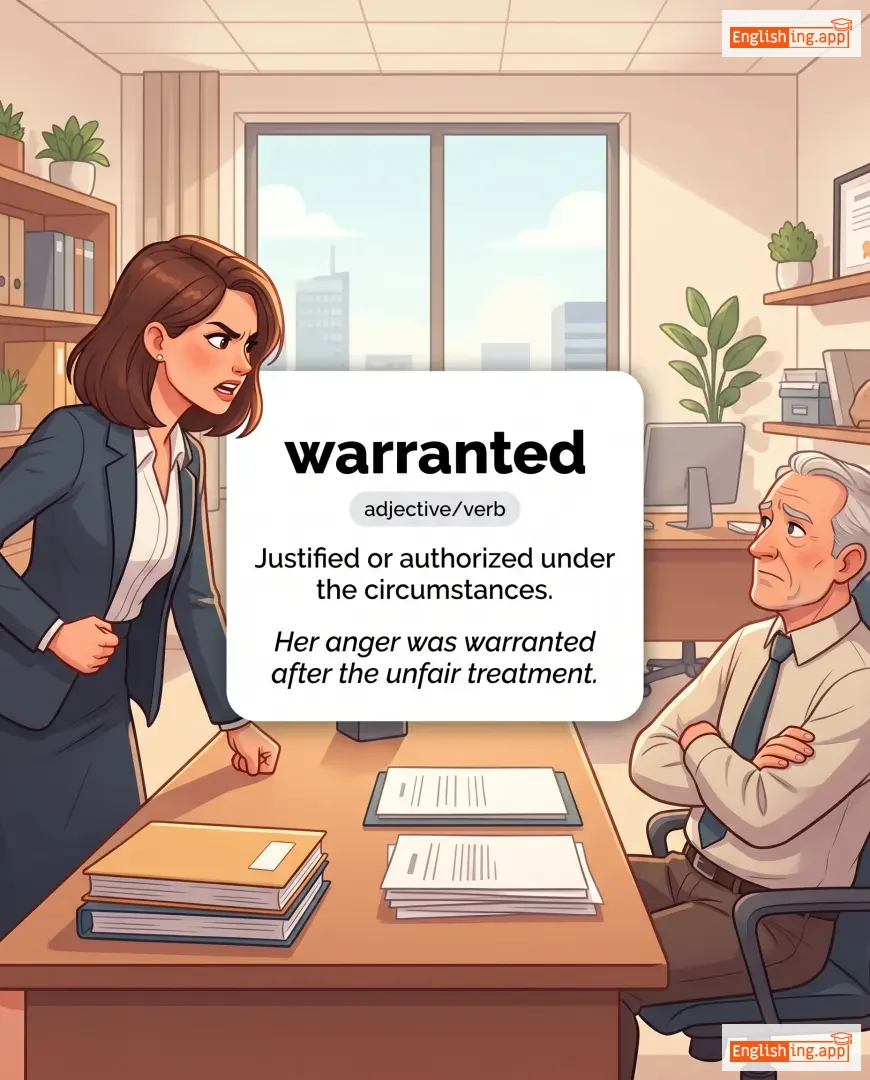
warranted definition card — visual illustration of the meaning
adjective/verb
/ˈwɒrəntɪd/
justificado (justificado)

Justified or authorized under the circumstances.

"Her anger was warranted after the unfair treatment."

"Su enojo fue justificado después del trato injusto." (Su enojo fue justificado después del trato injusto.)
noun
/wɜːrl/
espiral (espiral)

A pattern of spirals or concentric circles, often found in fingerprints, shells, or flowers.

"The fingerprint displayed a clear whorl pattern."

"La huella dactilar mostraba un patrón claro de espiral." (La huella dactilar mostraba un patron claro de espiral.)
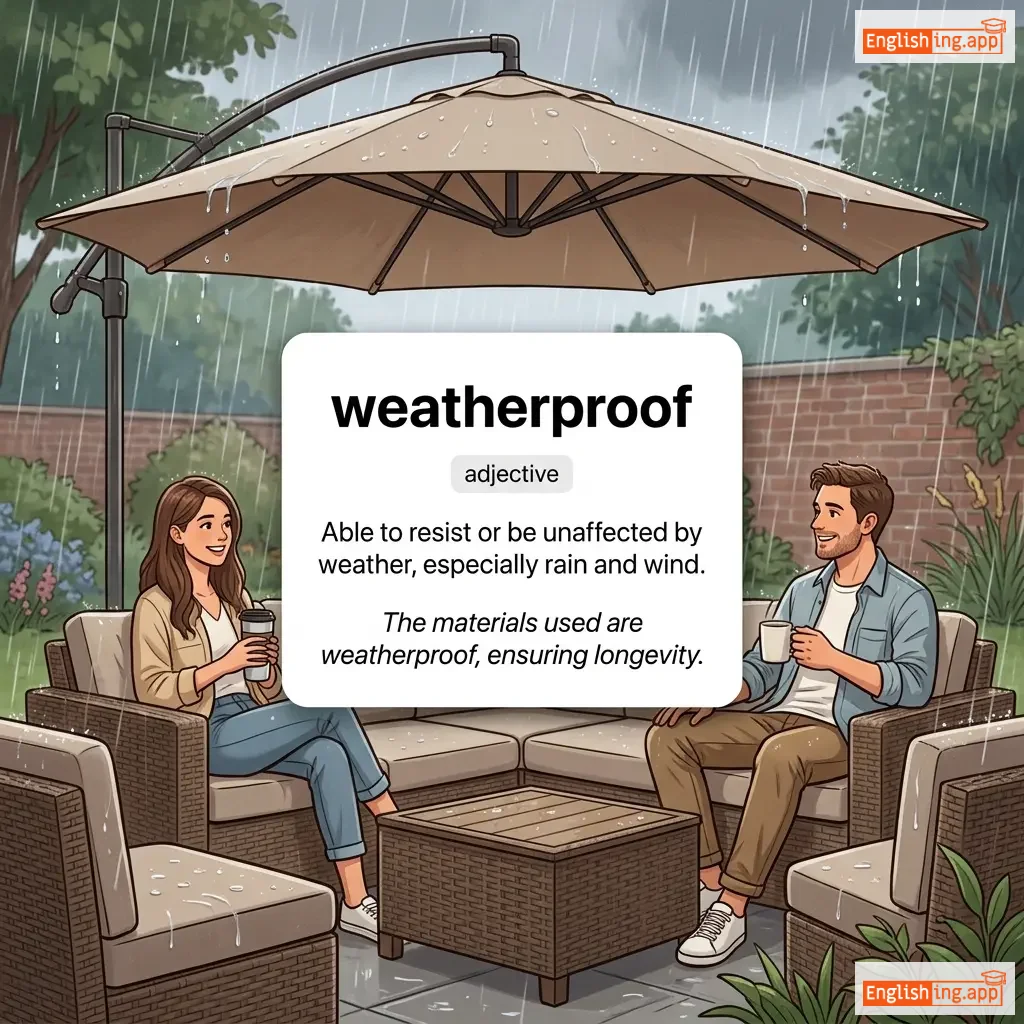
weatherproof definition card — visual illustration of the meaning
adjective
ˈwɛðərpruːf
resistente a la intemperie (resistente a la intemperie)

Able to resist or be unaffected by weather, especially rain and wind.

"The materials used are weatherproof, ensuring longevity."

"Los materiales utilizados son resistentes a la intemperie, asegurando longevidad." (Los materiales utilizados son resistentes a la intemperie, asegurando longevidad.)
verb
/wɛt/
afilar/estimular (afilar/estimular)

To sharpen the blade of a tool or to stimulate interest or appetite.

"The smell of food whetted my appetite."

"El olor de la comida aumentó mi apetito." (El olor de la comida aumento mi apetito.)
pronoun
/wɪtʃ/
cuál (cual)

used to ask about one or more items from a defined set

"Which one do you prefer, the red or the blue?"

"¿Cuál prefieres, el rojo o el azul?" (¿Cuál prefieres, el rojo o el azul?)
pronoun
/wi/
nosotros (nosotros)

used by a speaker to refer to himself or herself and one or more other people

"We are going to the park this afternoon."

"Vamos al parque esta tarde." (Vamos al parque esta tarde.)
verb
/ˈwɪni/
relincho (relincho)

to make the high-pitched sound a horse makes

"The horse whinnied when it saw its rider."

"El caballo relinchó cuando vio a su jinete." (El caballo relincho cuando vio a su jinete.)
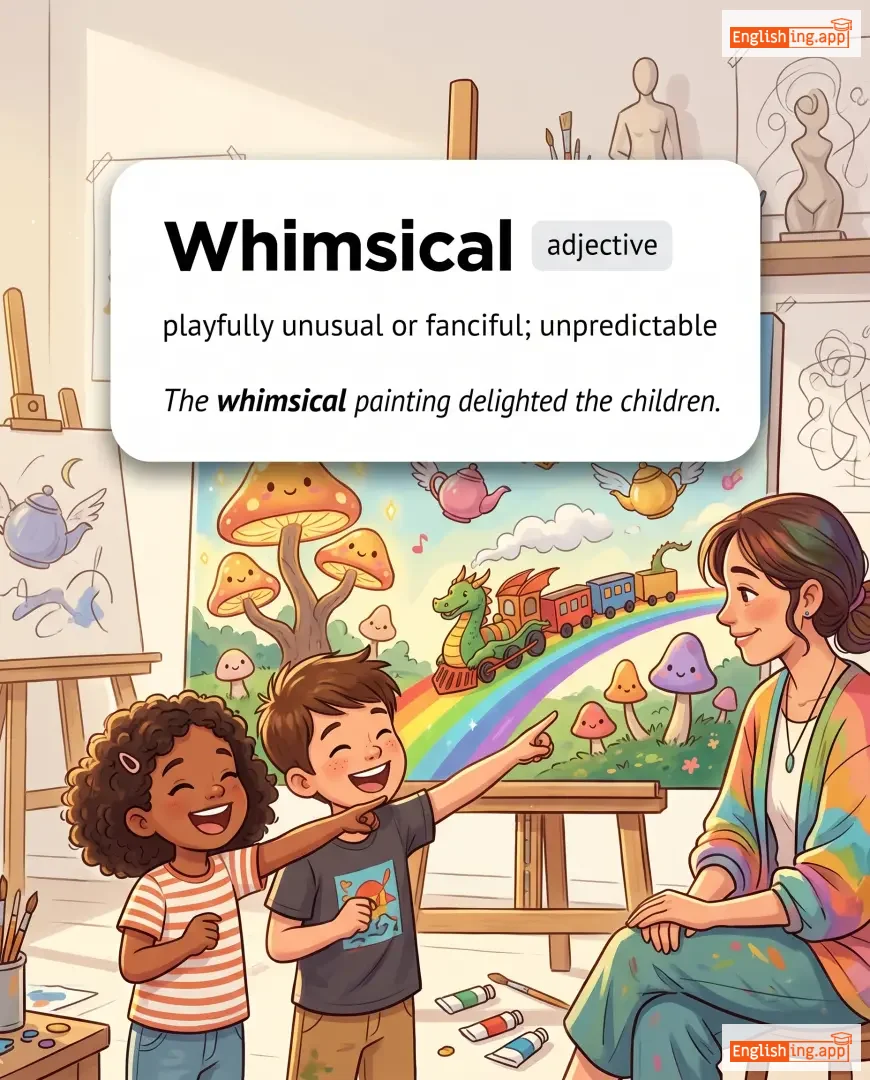
Whimsical definition card — visual illustration of the meaning
adjective
/ˈwɪmzɪkəl/
caprichoso (kaprichoso)

playfully unusual or fanciful; unpredictable

"The whimsical painting delighted the children."

"La pintura caprichosa deleitó a los niños." (La pintura caprichosa deleito a los ninos.)
🕸️

web (web)

noun
/wɛb/
telaraña (web)

a network of fine threads spun by a spider or a complex interconnected system

"The spider spun a large web in the corner of the room."

"La araña tejió una gran telaraña en la esquina de la habitación." (La arana teji o una gran telarana en la esquina de la habitacion.)
noun
/ˈwɒʃ.ɪŋ məˌʃiːn/
lavadora (uashing masheen)

a machine for washing clothes and other textiles

"The washing machine broke down and needs repair."

"La lavadora se averió y necesita reparación." (la lavadora se averio y necesita reparacion)
noun
/ˈwɪdəʊ/
viuda (viuda)

a woman whose husband has died and who has not married again

"She became a widow at a very young age."

"Se convirtió en viuda a una edad muy temprana." (Se convirtio en viuda a una edad muy temprana.)
noun
/wɪk/
mecha de vela (mecha de vela)

a cord or strand of cotton that burns to provide light in a candle or lamp

"The candle wick needs to be trimmed for better burning."

"La mecha de la vela necesita ser recortada para una mejor combustión." (La mecha de la vela necesita ser recortada para una mejor combustion.)
adjective
/ˈwɪkɪd/
malvado (malvado)

morally bad or evil; also informally very good or impressive

"The villain in the story was truly wicked."

"El villano en la historia era realmente malvado." (El villano en la historia era realmente malvado.)
noun
/ˈweɪstrəl/
derrochador, ocioso (wastrel)

A person who wastes time, money, or resources; an idler or spendthrift.

"The young man was dismissed as a wastrel by his family."

"El joven fue despedido como un derrochador por su familia." (El joven fue despedido como un derrochador por su familia.)
noun
/waɪt ænt/
hormiga blanca (hormiga blanca)

a small social insect that lives in colonies and feeds on wood and plant matter

"White ants damaged the wooden furniture in our house."

"Las hormigas blancas dañaron los muebles de madera de nuestra casa." (Las hormigas blancas dañaron los muebles de madera de nuestra casa.)
noun
/ˈwɪd.oʊ.ər/
viudo (viudo)

a man whose wife has died and who has not married again

"The elderly widower lived alone but had regular visits from his children."

"El anciano viudo vivía solo pero recibía visitas regulares de sus hijos." (El anciano viudo vivía solo pero recibía visitas regulares de sus hijos.)
noun
/ˈwɒrənti/
garantía (garantia)

A written guarantee given by a manufacturer or seller promising to repair or replace a product if necessary within a specified period.

"The laptop comes with a two-year warranty."

"El portátil viene con una garantía de dos años." (El portatil viene con una garantia de dos anos.)
verb
/ˈwɪtl/
tallar (tallar)

to carve or shape something by cutting off small pieces; to gradually reduce

"He spent the afternoon whittling a piece of wood into a toy."

"Él pasó la tarde tallando un trozo de madera en un juguete." (El paso la tarde tallando un trozo de madera en un juguete.)
noun
/ˈwɔː.tər pɒt/
tarro de agua (tarro de agua)

a container used for storing or carrying water

"The water pot in the kitchen was filled with fresh drinking water."

"El tarro de agua en la cocina estaba lleno de agua potable fresca." (El tarro de agua en la cocina estaba lleno de agua potable fresca.)
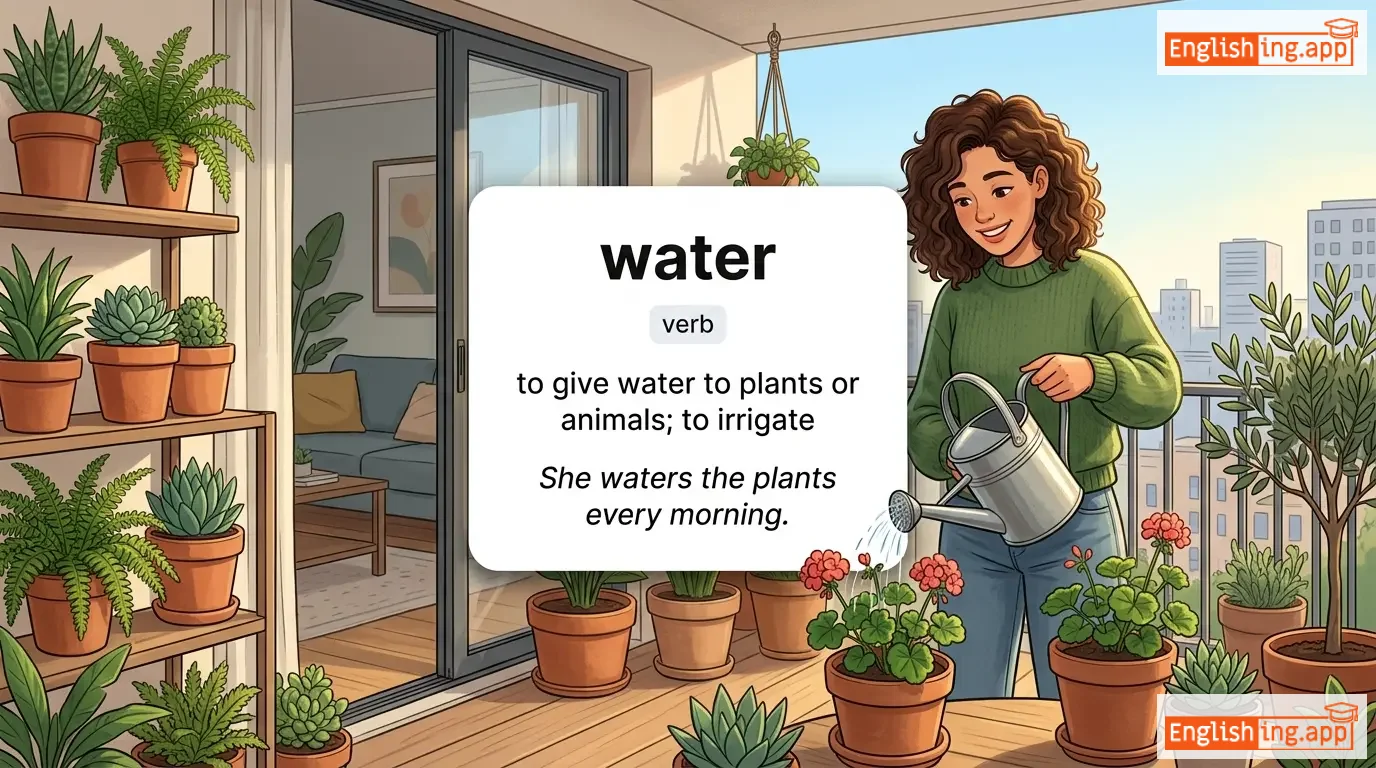
water definition card — visual illustration of the meaning
noun
/ˈwɔːtər/
agua (agua)

a clear, colorless, odorless, and tasteless liquid that is essential for life

"We need to drink water to stay hydrated."

"Necesitamos beber agua para mantenernos hidratados." (Necesitamos beber agua para mantenernos hidratados.)
noun
/ˈwɔː.tər ˌlɪl.i/
nenúfar (nenufar)

a floating flower that grows on the surface of ponds and lakes

"The white water-lily floated gracefully on the pond."

"El nenúfar blanco flotaba con gracia en el estanque." (el nenufar blanko flotaba kon grasia en el estanqe)
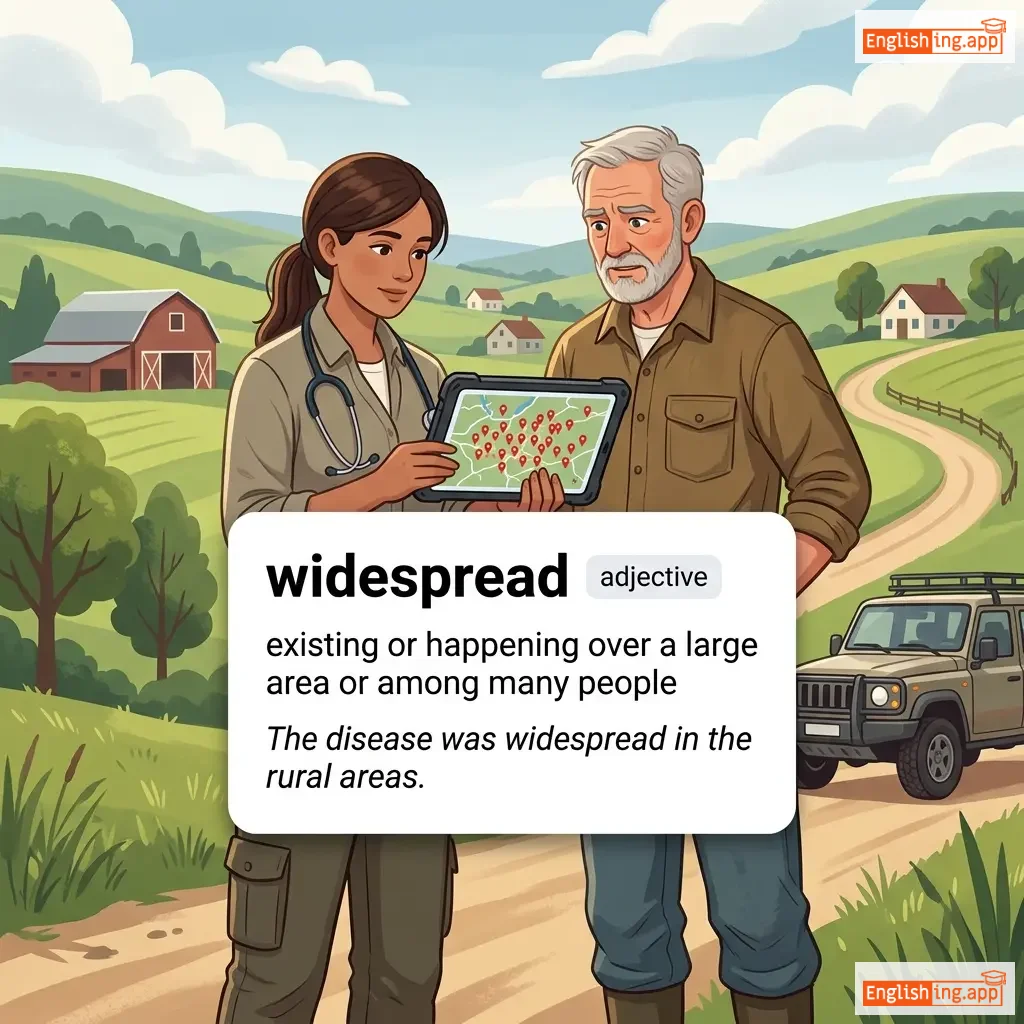
widespread definition card — visual illustration of the meaning
adjective
/ˈwaɪdˌsprɛd/
generalizado (generalizado)

existing or happening over a large area or among many people

"The disease was widespread in the rural areas."

"La enfermedad estaba generalizada en las zonas rurales." (La enfermedad estaba generalizada en las zonas rurales.)
adjective
/waɪd/
ancho (ancho)

having a great extent from side to side; broad

"The river is wide enough to fit a boat."

"El río es lo suficientemente ancho como para que quepa un bote." (El río es lo suficientemente ancho como para que quepa un bote.)
noun
/ˈwiːltʃeər/
silla de ruedas (silla de ruedas)

a chair with wheels, used by people who cannot walk easily or at all

"The hospital provided a wheelchair for the injured patient."

"El hospital proporcionó una silla de ruedas para el paciente herido." (El hospital proporcionó una silla de ruedas para el paciente herido.)
noun
/wɪm/
capricho (capricho)

a sudden or unpredictable idea, desire, or decision

"She bought the dress on a whim."

"Ella compró el vestido por capricho." (Ella compró el vestido por capricho.)
adverb, noun
/ˈwɛə.wɪð/
medios (medios)

With which; the means or resources needed for something.

"He lacked the money wherewith to buy a new house."

"No tenía el dinero con el cual comprar una casa nueva." (No tenía el dinero con el cual comprar una casa nueva.)
adverb
/wɒtˈsəʊɛvər/
en absoluto (en absoluto)

used for emphasis after a negative statement to mean 'at all'

"She has no interest in the matter whatsoever."

"Ella no tiene ningún interés en el asunto en absoluto." (Ella no tiene ningún interés en el asunto en absoluto.)
noun
/wiːl/
rueda (rueda)

a circular object that revolves on an axle and is used to move or carry things

"The wheel of the car broke down on the way."

"La rueda del coche se rompió en el camino." (La rueda del coche se rompió en el camino.)
noun
/wiːt/
trigo (trigo)

a cereal plant whose grain is used to make flour for bread and other foods

"Farmers harvested the wheat in early summer."

"Los agricultores cosecharon el trigo a principios del verano." (Los agricultores cosecharon el trigo a principios del verano.)