Vocabularios

Descubra, aprenda y domine el vocabulario en inglés

verb
/wɛt/
afilar/estimular (afilar/estimular)

To sharpen the blade of a tool or to stimulate interest or appetite.

"The smell of food whetted my appetite."

"El olor de la comida aumentó mi apetito." (El olor de la comida aumento mi apetito.)
verb
/ˈwaɪtˌwɑːʃ/
blanquear (blanquear)

to cover up faults, errors, or unpleasant facts; to paint with white paint or lime

"The report was criticized for trying to whitewash the company's failures."

"El informe fue criticado por tratar de blanquear los fracasos de la empresa." (El informe fue criticado por tratar de blanquear los fracasos de la empresa.)
adverb
/wɛərˈbaɪ/
mediante (mediante)

by which; because of which

"The company agreed to a contract whereby it would pay the penalty."

"La empresa acordó un contrato mediante el cual pagaría la multa." (La empresa acordó un contrato mediante el cual pagaría la multa.)
verb
/ˈwɪzn/
marchitarse (marchitarse)

To become dry, shrunken, and wrinkled.

"The flowers began to wizen after days without water."

"Las flores comenzaron a marchitarse después de varios días sin agua." (Las flores comenzaron a marchitarse después de varios días sin agua.)
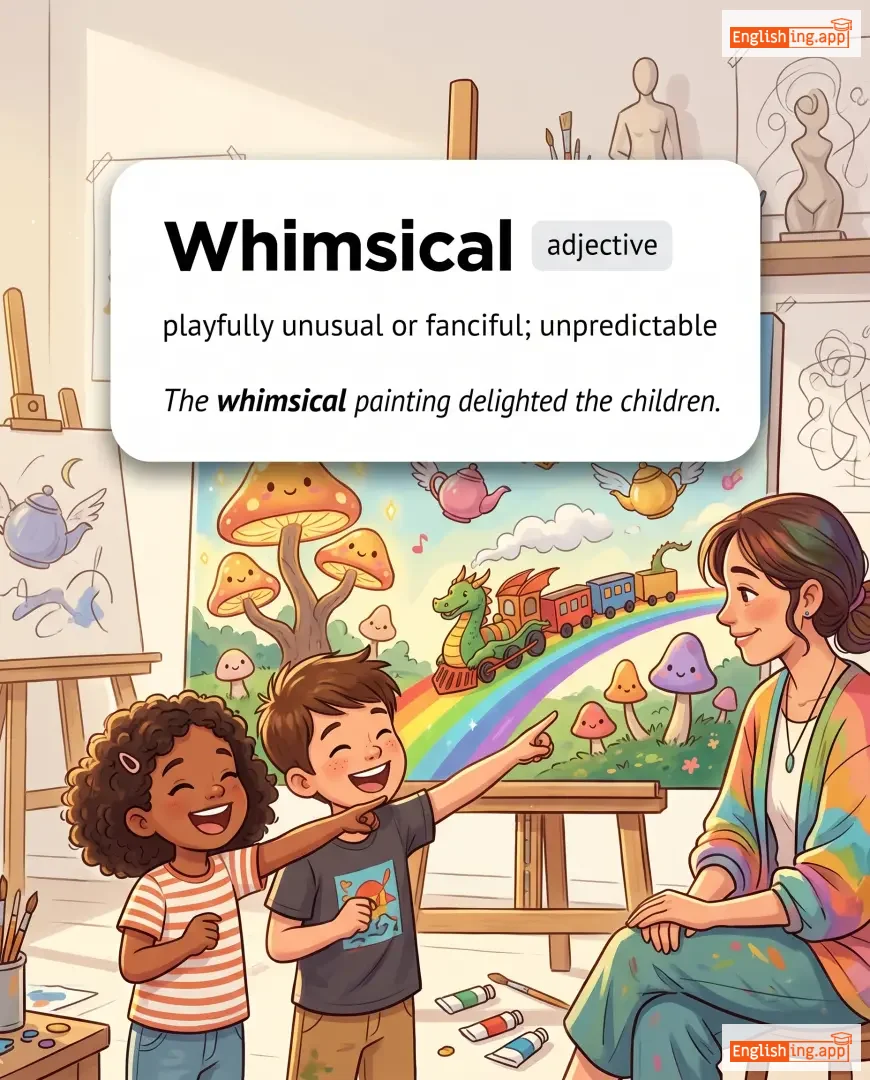
Whimsical definition card — visual illustration of the meaning
adjective
/ˈwɪmzɪkəl/
caprichoso (kaprichoso)

playfully unusual or fanciful; unpredictable

"The whimsical painting delighted the children."

"La pintura caprichosa deleitó a los niños." (La pintura caprichosa deleito a los ninos.)
noun
/waɪld bɔːr/
jabalí salvaje (jabalí salvaje)

a wild pig that lives in forests and has long curved teeth

"The wild boar ran through the forest quickly."

"El jabalí salvaje corrió rápidamente a través del bosque." (El jabalí salvaje corrió rápidamente a través del bosque.)
noun
/ˈwɔtər ˈpjʊrəˌfaɪər/
purificador de agua (purificador de agua)

A device that removes contaminants and impurities from water to make it safe for drinking

"We installed a water purifier in our kitchen to ensure clean drinking water."

"Instalamos un purificador de agua en nuestra cocina para asegurar agua potable limpia." (Instalamos un purificador de agua en nuestra cocina para asegurar agua potable limpia.)
noun
/ˈwɛnzdeɪ/
miércoles (miercoles)

the fourth day of the week, following Tuesday and preceding Thursday

"The meeting has been scheduled for Wednesday afternoon."

"La reunión se ha programado para el miércoles por la tarde." (la reunion se ha programado para el miercoles por la tarde)
adjective
/ˈhoʊlsəm/
saludable (saludable)

promoting health or well-being; morally good and beneficial

"The retreat offered wholesome food and peaceful surroundings."

"El retiro ofreció comida saludable y un entorno tranquilo." (El retiro ofreció comida saludable y un entorno tranquilo.)
noun
/ˈwɒtʃ.mən/
vigilante (vigilante)

a person employed to guard or watch over a building or area, especially at night

"The watchman patrols the factory every hour to ensure security."

"El vigilante patrulla la fábrica cada hora para asegurar la seguridad." (El vigilante patrulla la fábrica cada hora para asegurar la seguridad.)
verb
/ˈwɒloʊ/
revolcarse, sumergirse (revolcarse, sumergirse)

to roll about or indulge oneself in something excessively

"The buffalo likes to wallow in the mud on hot days."

"Al búfalo le gusta revolcarse en el barro durante los días calurosos." (Al búfalo le gusta revolcarse en el barro durante los días calurosos.)
noun
/ˈweɪvlət/
pequeña onda (pequena onda)

a small wave or ripple on the surface of water or another medium

"The pond was disturbed only by the tiny wavelets caused by the breeze."

"El estanque solo fue perturbado por las pequeñas ondas causadas por la brisa." (El estanque solo fue perturbado por las pequeñas ondas causadas por la brisa.)
adverb
/wɛnˈɛvər/
cuando sea (cuando sea)

at any time, or whenever it happens

"You can call me whenever you want."

"Puedes llamarme cuando sea." (Puedes llamarme cuando sea.)
🛣️

Way (uei)

noun
/weɪ/
camino / manera (camino / manera)

a path, direction, or method of doing something

"He found a new way to solve the problem."

"Encontró una nueva manera de resolver el problema." (Encontro una nueva manera de resolver el problema.)
noun
/ˈwɪmzi/
capricho (capricho)

playful or fanciful behavior or humor

"Her stories were full of whimsy and imagination."

"Sus historias estaban llenas de capricho e imaginación." (Sus historias estaban llenas de capricho e imaginacion.)
adjective
/ˈwaɪə.ləs/
inalámbrico; sin cables (inalámbrico; sin cables)

operating without wires; using radio waves for communication

"My wireless headphones provide excellent sound quality without any cables."

"Mis audífonos inalámbricos ofrecen excelente calidad de sonido sin cables." (Mis audífonos inalámbricos ofrecen excelente calidad de sonido sin cables.)
noun
/ˈwɪmən/
mujer (mujer)

an adult human female

"The woman at the counter helped me."

"La mujer en el mostrador me ayudó." (La mujer en el mostrador me ayudó.)
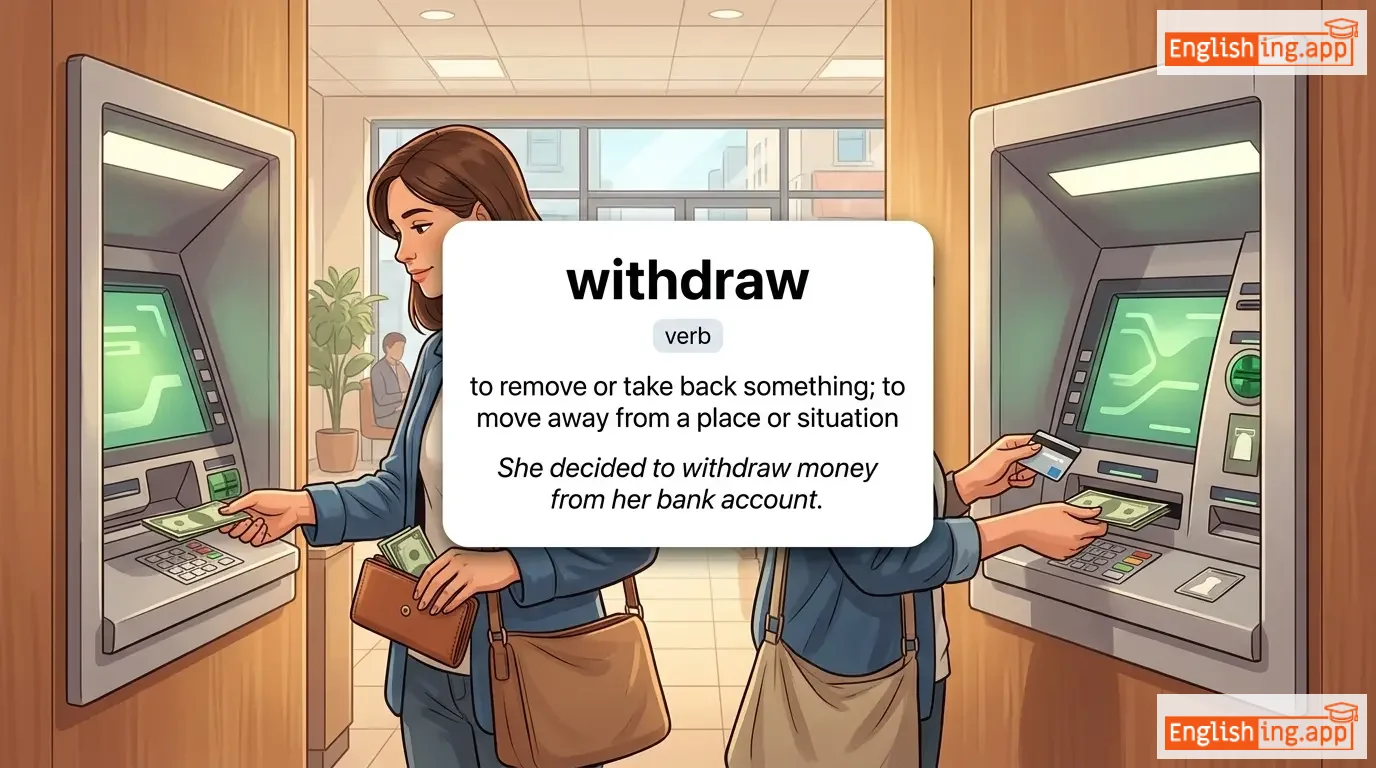
withdraw definition card — visual illustration of the meaning
verb
/wɪðˈdrɔː/
retirar (retirar)

to remove or take back something; to move away from a place or situation

"She decided to withdraw money from her bank account."

"Ella decidió retirar dinero de su cuenta bancaria." (Ella decidio retirar dinero de su cuenta bancaria.)
noun
/ˈwɔːdrəʊb/
armario (armario)

A large cupboard where clothes are stored; also the collection of clothes someone owns.

"Her wardrobe is full of colorful dresses."

"Su armario está lleno de vestidos coloridos." (Su armario está lleno de vestidos coloridos.)
noun/verb
/ˈwɒrənt/
orden de arresto (orden de arresto)

As a noun: An official authorization or order. As a verb: To justify or make something necessary.

"The judge issued a warrant for his arrest."

"El juez emitió una orden de arresto para él." (El juez emitió una orden de arresto para él.)
adverb
/wɛr/
dónde (donde)

in or at what place or position

"Where do you live?"

"¿Dónde vives?" (¿Dónde vives?)
noun
/ˈwɪkɪdnəs/
maldad, perversidad (maldad, perversidad)

Evil or morally bad behavior.

"The story highlights the wickedness of the cruel king."

"La historia destaca la maldad del cruel rey." (La historia destaca la maldad del cruel rey.)
🧙‍♀️

Witch (witch)

noun
/wɪtʃ/
bruja (bruja)

a woman thought to have magic powers, especially evil ones; a practitioner of witchcraft

"The old witch cast a spell on the prince."

"La vieja bruja lanzó un hechizo sobre el príncipe." (La vieja bruja lanzó un hechizo sobre el príncipe.)
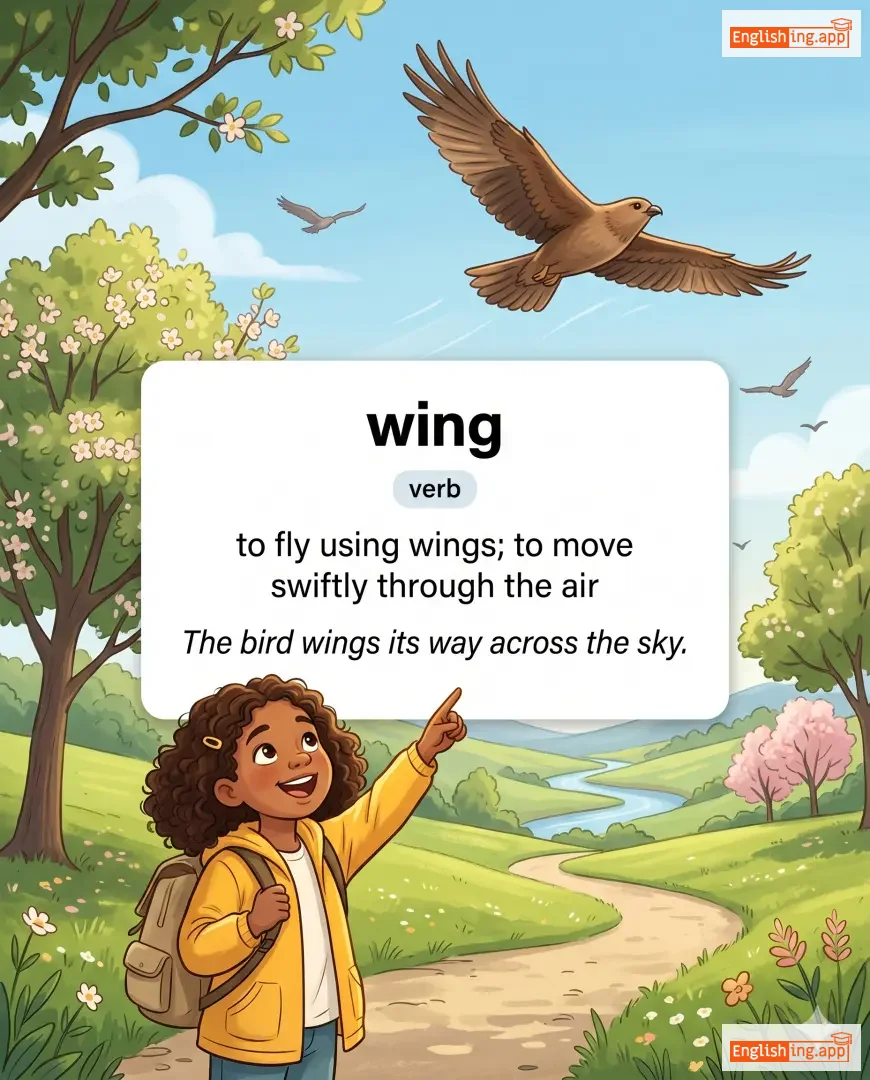
wing definition card — visual illustration of the meaning
noun
/wɪŋ/
ala (ala)

a part of a bird or aircraft that is used for flying

"The bird flapped its wings and flew away."

"El pájaro batió sus alas y voló lejos." (El pájaro batió sus alas y voló lejos.)
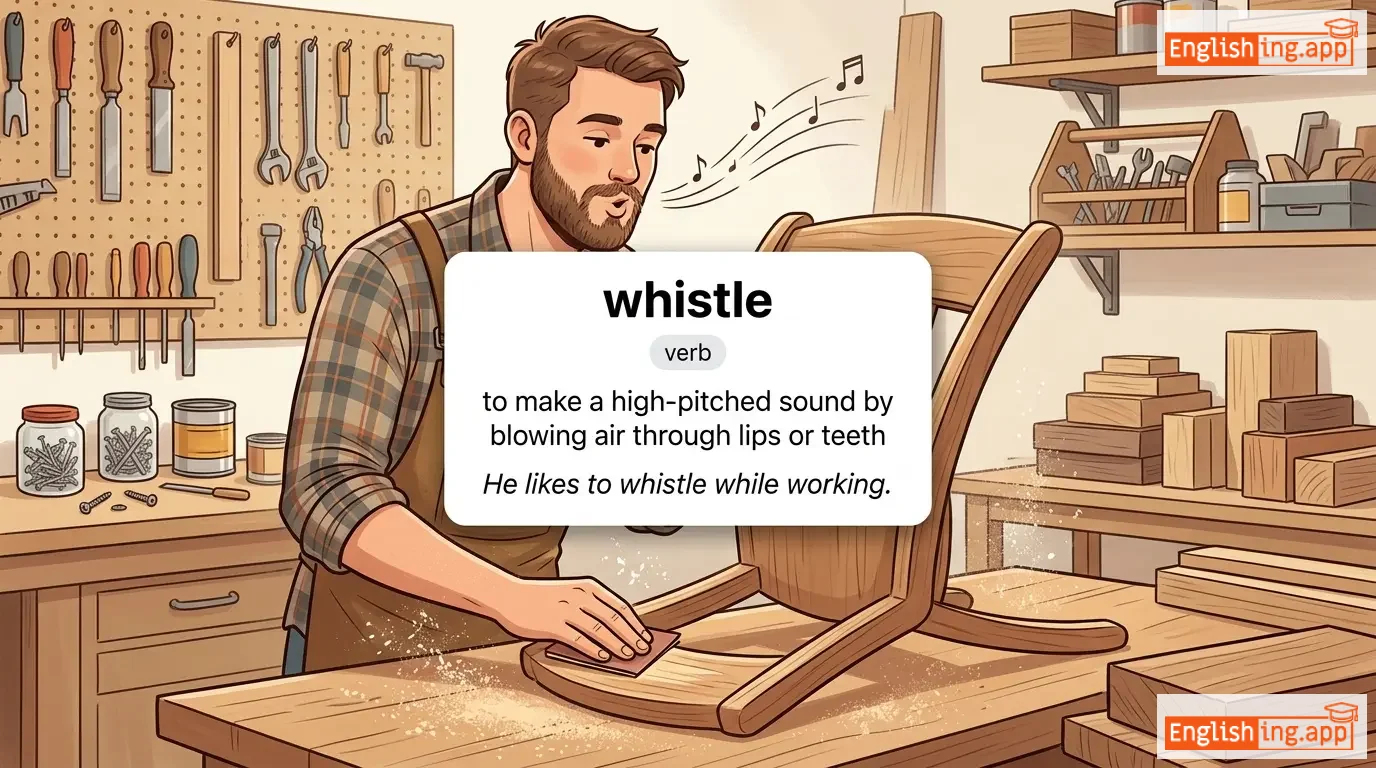
whistle definition card — visual illustration of the meaning
noun
/ˈwɪsəl/
silbato (silbato)

a small wind instrument that produces a high-pitched sound when blown

"The referee blew his whistle to start the game."

"El árbitro sopló su silbato para comenzar el juego." (El arbitro soplo su silbato para comenzar el juego.)
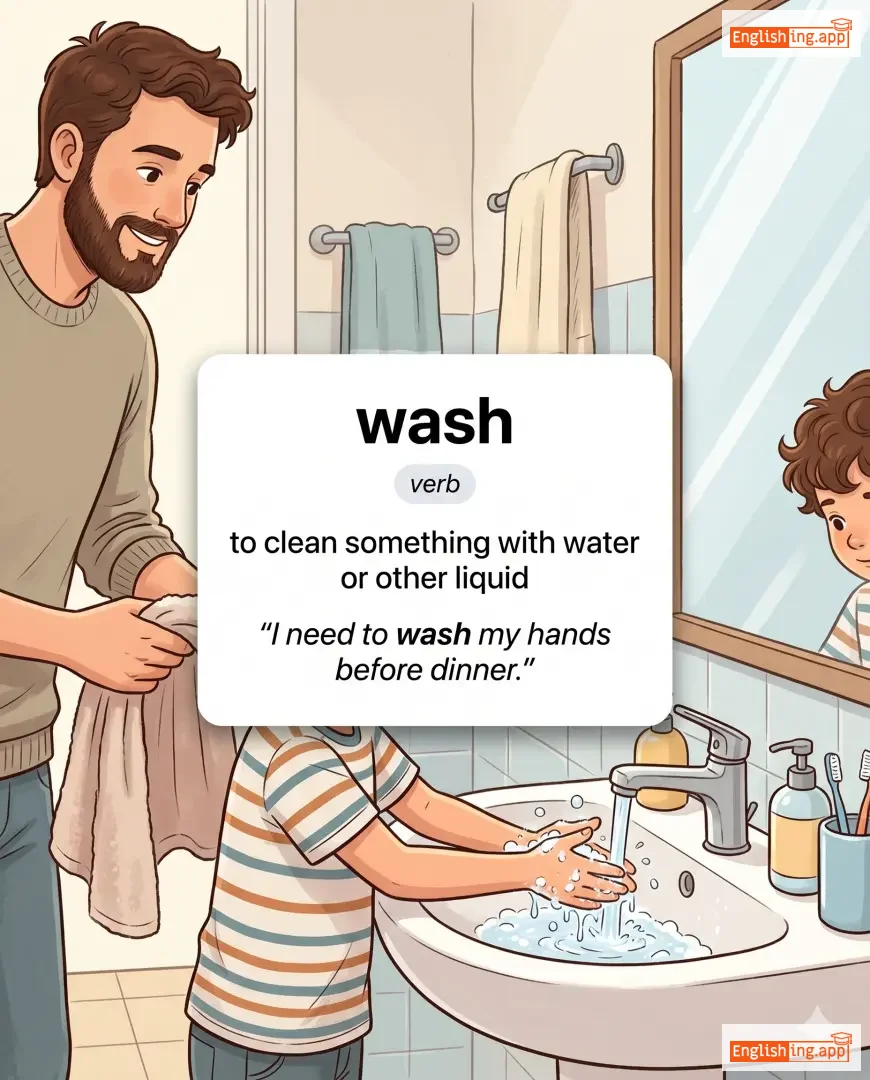
wash definition card — visual illustration of the meaning
verb
/wɒʃ/
lavar (lavar)

to clean something with water or other liquid

"I need to wash my hands before dinner."

"Necesito lavar mis manos antes de la cena." (Necesito lavar mis manos antes de la cena.)
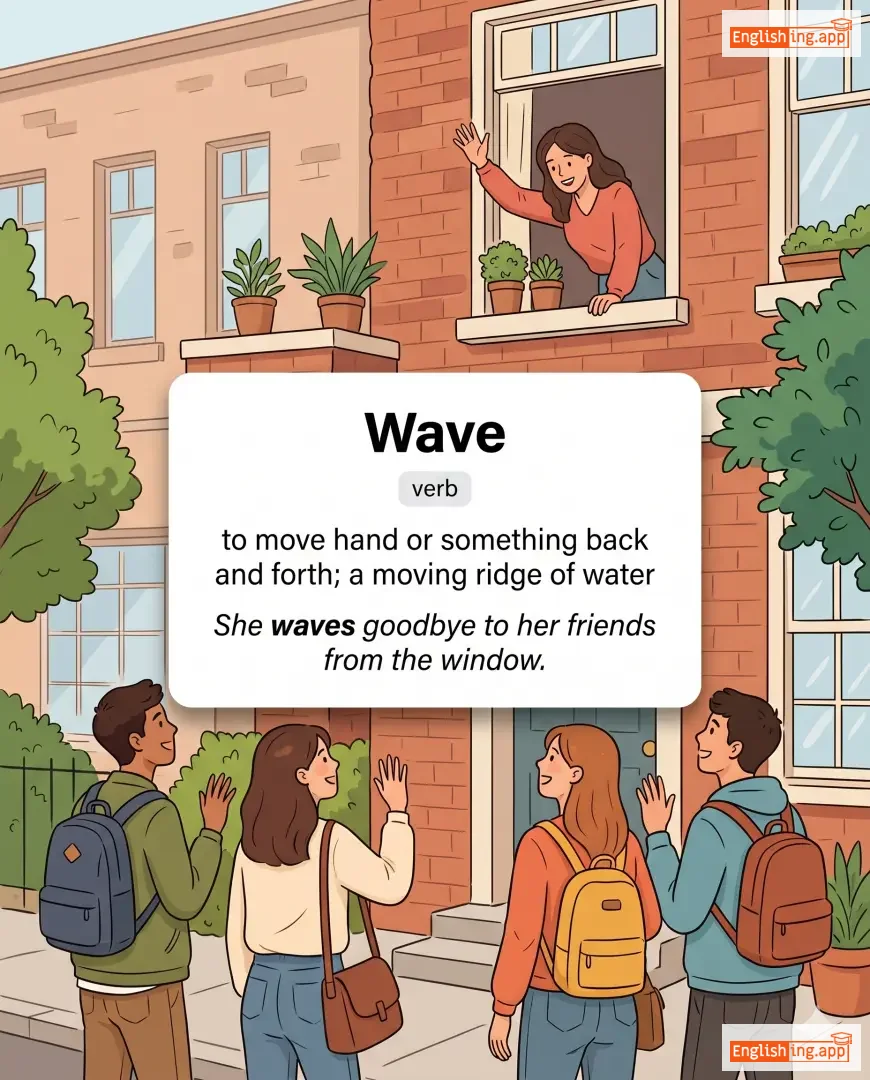
Wave definition card — visual illustration of the meaning
noun
/weɪv/
ola (ola)

a long body of water curling into an arched form and breaking on the shore

"The waves crashed against the rocks during the storm."

"Las olas chocaron contra las rocas durante la tormenta." (Las olas chocaron contra las rocas durante la tormenta.)
verb
/ˈwɒb.l̩/
tambalear (tambalear)

to move unsteadily from side to side; to shake or tremble slightly

"The table began to wobble when he leaned on it."

"La mesa comenzó a tambalear cuando él se apoyó sobre ella." (La mesa comenzo a tambalear cuando el se apoyó sobre ella.)
noun
/waɪl/
astucia, engaño (astucia, engano)

A trick or clever scheme meant to deceive or outwit someone.

"He used every wile to win her trust."

"Él usó toda su astucia para ganar su confianza." (El usó toda su astucia para ganar su confianza.)
noun
/ˈwiː.vər bɜːd/
pájaro tejedor (pajaro tejedor)

a small bird that builds elaborate woven nests from grass and twigs

"The weaver bird skillfully constructs its intricate nest."

"El pájaro tejedor construye hábilmente su nido intrincado" (El pajaro tejedor construye habilmente su nido intrincado)
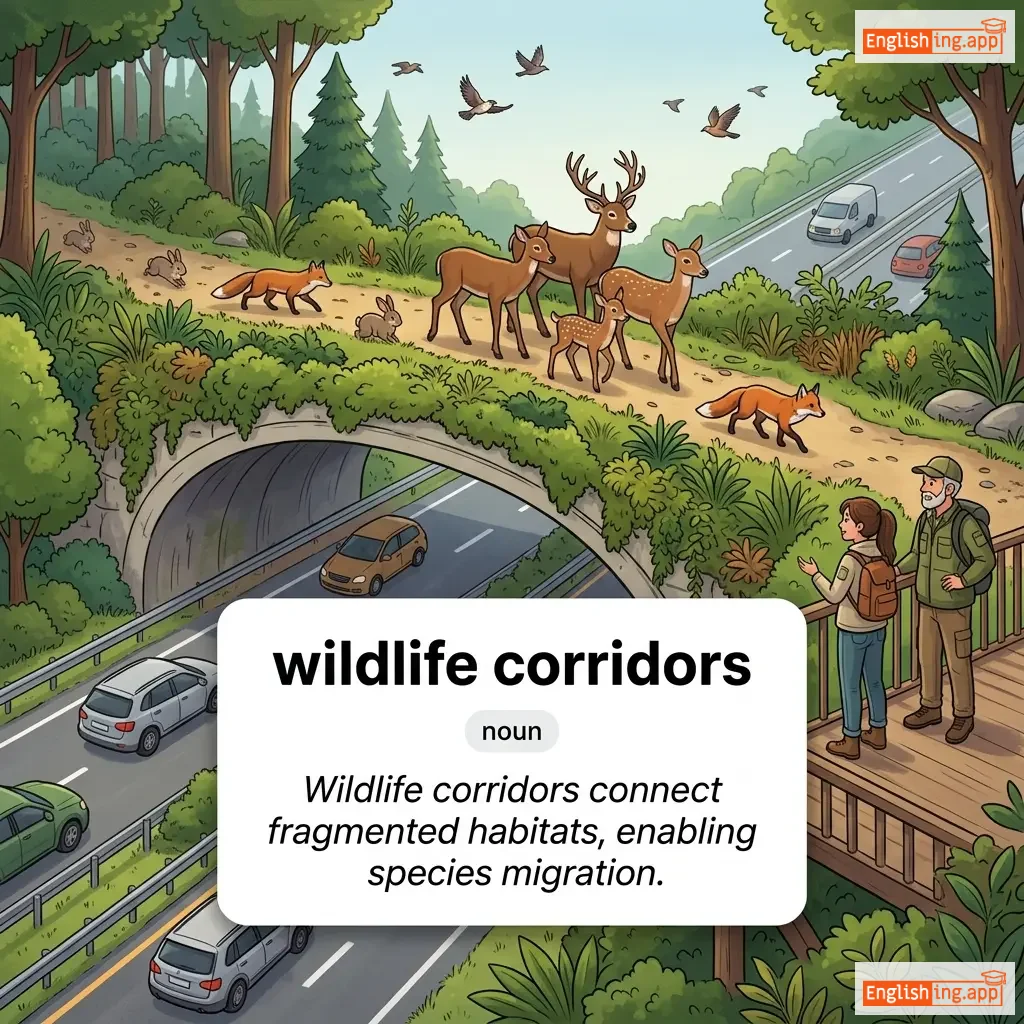
wildlife corridors definition card — visual illustration of the meaning
noun
ˈwaɪldlaɪf ˈkɔːrɪdɔːrz
corredores de vida silvestre (corredores de vida silvestre)

Areas of habitat connecting wildlife populations separated by human activities or structures.

"Wildlife corridors connect fragmented habitats, enabling species migration."

"Los corredores de vida silvestre conectan hábitats fragmentados, permitiendo la migración de especies." (Los corredores de vida silvestre conectan hábitats fragmentados, permitiendo la migración de especies.)
noun
/waɪt ˈpɛpər/
pimienta blanca (pimienta blanca)

a spice made from dried peppercorns with the outer husk removed

"She added white pepper to the cream soup for a mild spicy flavor."

"Ella agregó pimienta blanca a la sopa de crema para darle un sabor suave y picante." (ella agregó pimienta blanca a la sopa de crema para darle un sabor suave y picante)
adjective
/waɪz/
sabio (sabio)

having or showing experience, knowledge, and good judgment

"It was wise of him to save money for the future."

"Fue sabio de su parte ahorrar dinero para el futuro." (Fue sabio de su parte ahorrar dinero para el futuro.)
adjective
/ˈwɜːrkɪŋ/
trabajando (trabajando)

engaged in physical or mental effort to achieve a goal or task

"She is working on her project right now."

"Ella está trabajando en su proyecto ahora mismo." (Ella esta trabajando en su proyecto ahora mismo.)
adjective
/waɪd/
ancho (ancho)

having a great extent from side to side; broad

"The river is wide enough to fit a boat."

"El río es lo suficientemente ancho como para que quepa un bote." (El río es lo suficientemente ancho como para que quepa un bote.)
verb
/wiːld/
sujetar, usar (sujetar, usar)

To hold and use a weapon, tool, or power effectively.

"The warrior wielded his sword with great skill."

"El guerrero usó su espada con gran habilidad." (El guerrero usó su espada con gran habilidad.)
noun
/woʊz/
aflicciones (aflicciones)

great sorrow or distress; troubles

"The company faced financial woes after the market crash."

"La compañía enfrentó problemas financieros después del colapso del mercado." (La compañia enfrentó problemas financieros después del colapso del mercado.)
noun
/wɪk/
mecha de vela (mecha de vela)

a cord or strand of cotton that burns to provide light in a candle or lamp

"The candle wick needs to be trimmed for better burning."

"La mecha de la vela necesita ser recortada para una mejor combustión." (La mecha de la vela necesita ser recortada para una mejor combustion.)
adjective
/ˈwɪl.fəl/
terco; intencional (terko; intensional)

deliberately stubborn; done on purpose; intentional

"His wilful disobedience led to punishment."

"Su desobediencia deliberada lo llevó a un castigo." (Su desobediencia deliberada lo llevo a un castigo.)
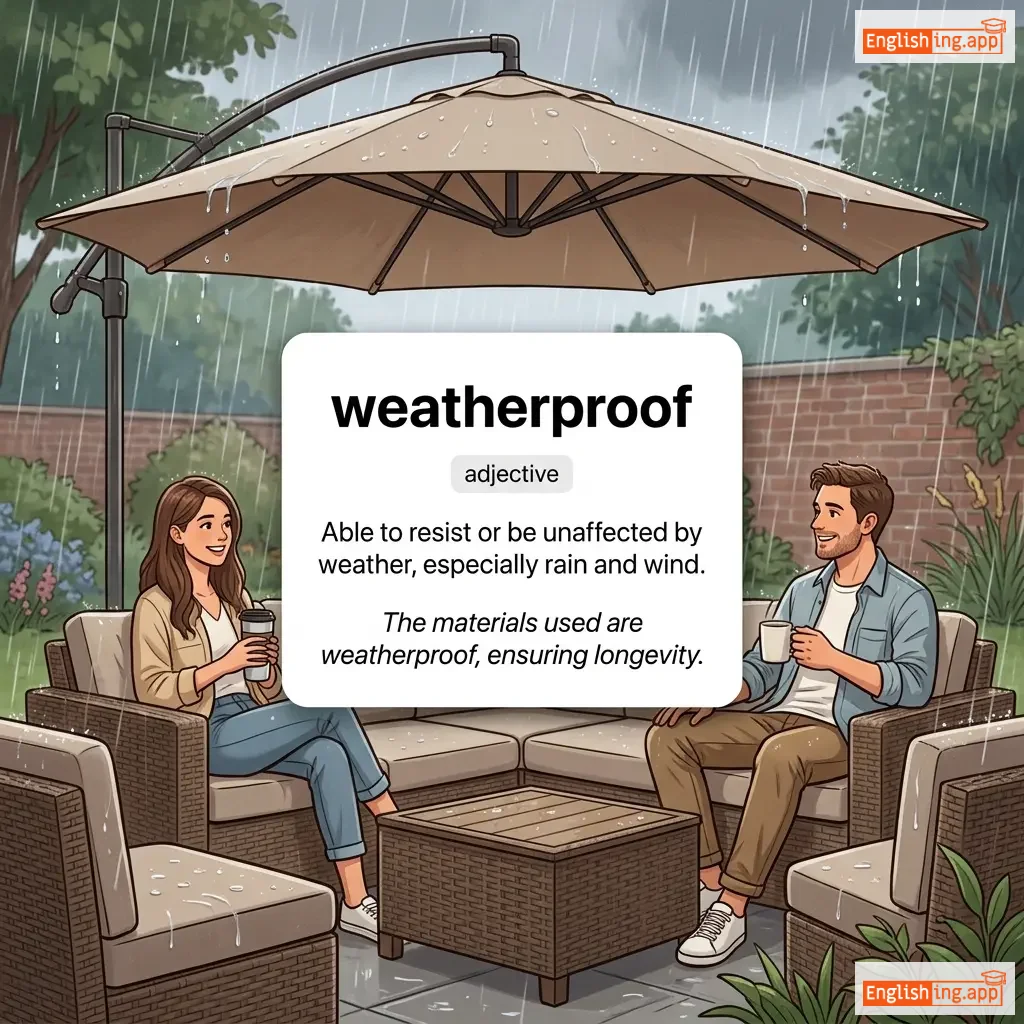
weatherproof definition card — visual illustration of the meaning
adjective
ˈwɛðərpruːf
resistente a la intemperie (resistente a la intemperie)

Able to resist or be unaffected by weather, especially rain and wind.

"The materials used are weatherproof, ensuring longevity."

"Los materiales utilizados son resistentes a la intemperie, asegurando longevidad." (Los materiales utilizados son resistentes a la intemperie, asegurando longevidad.)
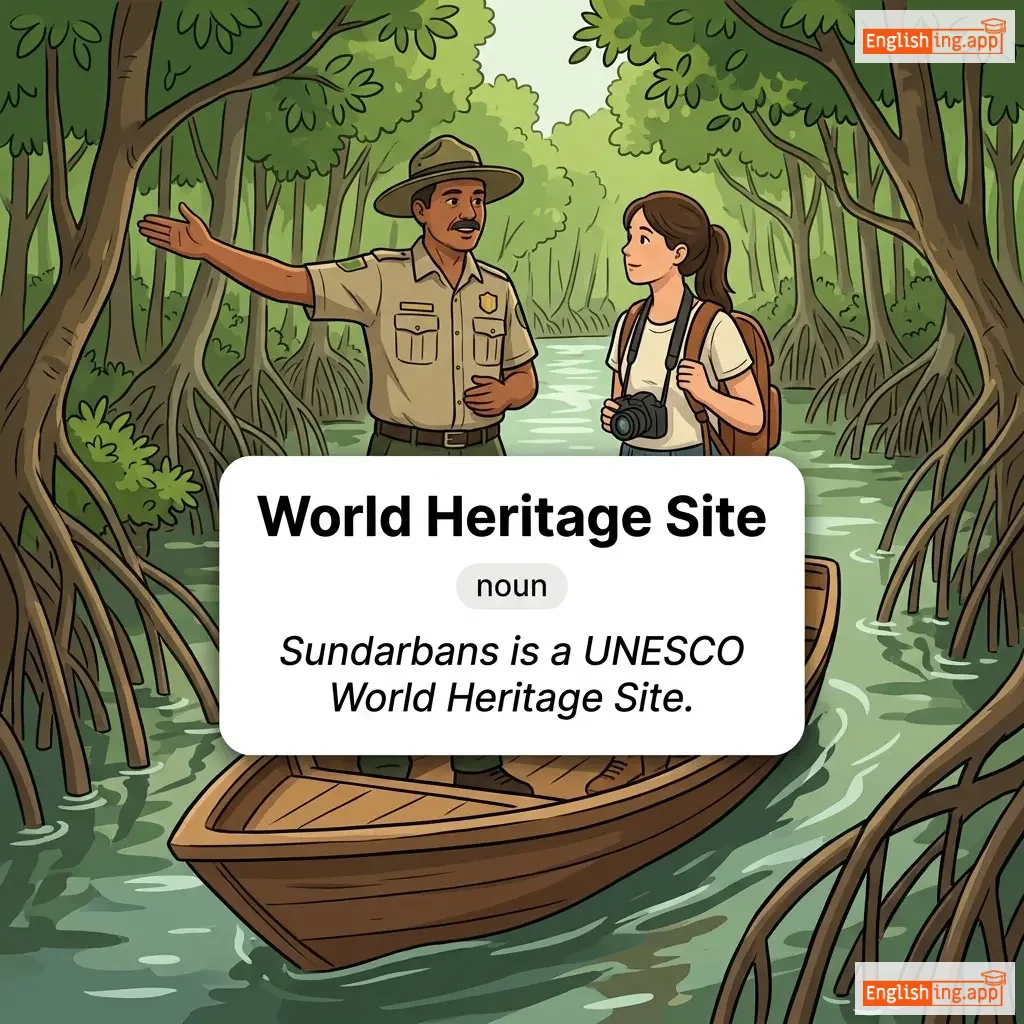
World Heritage Site definition card — visual illustration of the meaning
noun
wɜːrld ˈhɛrɪtɪdʒ saɪt
Sitio de Patrimonio Mundial (Sitio de Patrimonio Mundial)

A landmark or area selected by UNESCO for having cultural, historical, scientific or other form of significance.

"Sundarbans is a UNESCO World Heritage Site."

"Sundarbans es un Sitio de Patrimonio Mundial de la UNESCO." (Sundarbans es un Sitio de Patrimonio Mundial de la UNESCO.)
noun
/ˈwɜːrkˌfɔːrs/
fuerza laboral (fuerza laboral)

the people engaged in or available for work

"The company is looking to expand its workforce by 20%."

"La empresa está buscando expandir su fuerza laboral en un 20%." (La empresa está buscando expandir su fuerza laboral en un 20%.)
noun
/ˈwɜːrkpleɪs/
lugar de trabajo (lugar de trabajo)

a place where people work, such as an office, factory, or shop

"Maintaining good communication is vital in the workplace."

"Mantener una buena comunicación es vital en el lugar de trabajo." (Mantener una buena comunicación es vital en el lugar de trabajo.)
adjective
/ˈwɪspi/
delicado y tenue (delicado y tenue)

Thin, delicate, and weak in appearance or form.

"Her wispy hair blew gently in the breeze."

"Su cabello delicado volaba suavemente en la brisa." (Su cabello delicado volaba suavemente en la brisa.)
adjective
/ˈwɒŋki/
inestable; poco fiable; que no funciona correctamente (wonki)

unstable; unreliable; not working properly

"The old chair was wonky and wobbled every time someone sat on it."

"La vieja silla estaba inestable y se tambaleaba cada vez que alguien se sentaba en ella." (La vieja silla estaba inestable y se tambaleaba cada vez que alguien se sentaba en ella)
noun
/wɜːrd fɔːrˈmeɪʃən/
formación de palabras (formacion de palabras)

the process by which new words are created or existing words are modified in a language

"Word formation helps learners understand how new vocabulary develops in English."

"La formación de palabras ayuda a entender el vocabulario." (la formacion de palabras ayuda a entender el vocabulario)
adjective
/ˈwɪlfəl/
voluntario (voluntario)

Deliberate, intentional, or stubbornly determined to do as one wants.

"Her willful disregard for the rules got her into trouble."

"Su voluntariedad al ignorar las reglas le metió en problemas." (Su voluntariedad al ignorar las reglas le metió en problemas.)
noun
/wʊd ˈæp.əl/
manzana de madera (manzana de madera)

a hard-shelled tropical fruit with aromatic pulp used in beverages and medicine

"The wood apple has a hard shell but sweet pulp inside."

"La manzana de madera tiene una cáscara dura pero pulpa dulce en su interior" (La manzana de madera tiene una cáscara dura pero pulpa dulce en su interior)
noun
/ˈwaɪnəri/
bodega (bodega)

a place where wine is made

"They visited a famous winery in France."

"Ellos visitaron una famosa bodega en Francia." (Ellos visitaron una famosa bodega en Francia.)
verb
/wɪlt/
marchitarse (marchitarse)

To become limp, weak, or drooping, often due to lack of water or energy.

"The flowers wilted in the heat of the sun."

"Las flores se marchitaron por el calor del sol." (Las flores se marchitaron por el calor del sol.)