Vocabularios

Descubra, aprenda y domine el vocabulario en inglés

adjective
/ˈvoʊtɪv/
dedicado (dedicado)

Offered or dedicated in fulfillment of a vow.

"She lit a votive candle in the church as a prayer."

"Ella encendió una vela votiva en la iglesia como una oración." (Ella encendió una vela votiva en la iglesia como una oración.)
adjective
/ˈvɪvɪd/
vivo (vivo)

producing strong, clear, and detailed images in the mind; strikingly bright or intense

"She gave a vivid description of her childhood home."

"Ella dio una descripción vívida de su casa de la infancia." (Ella dio una descripcion vivida de su casa de la infancia.)
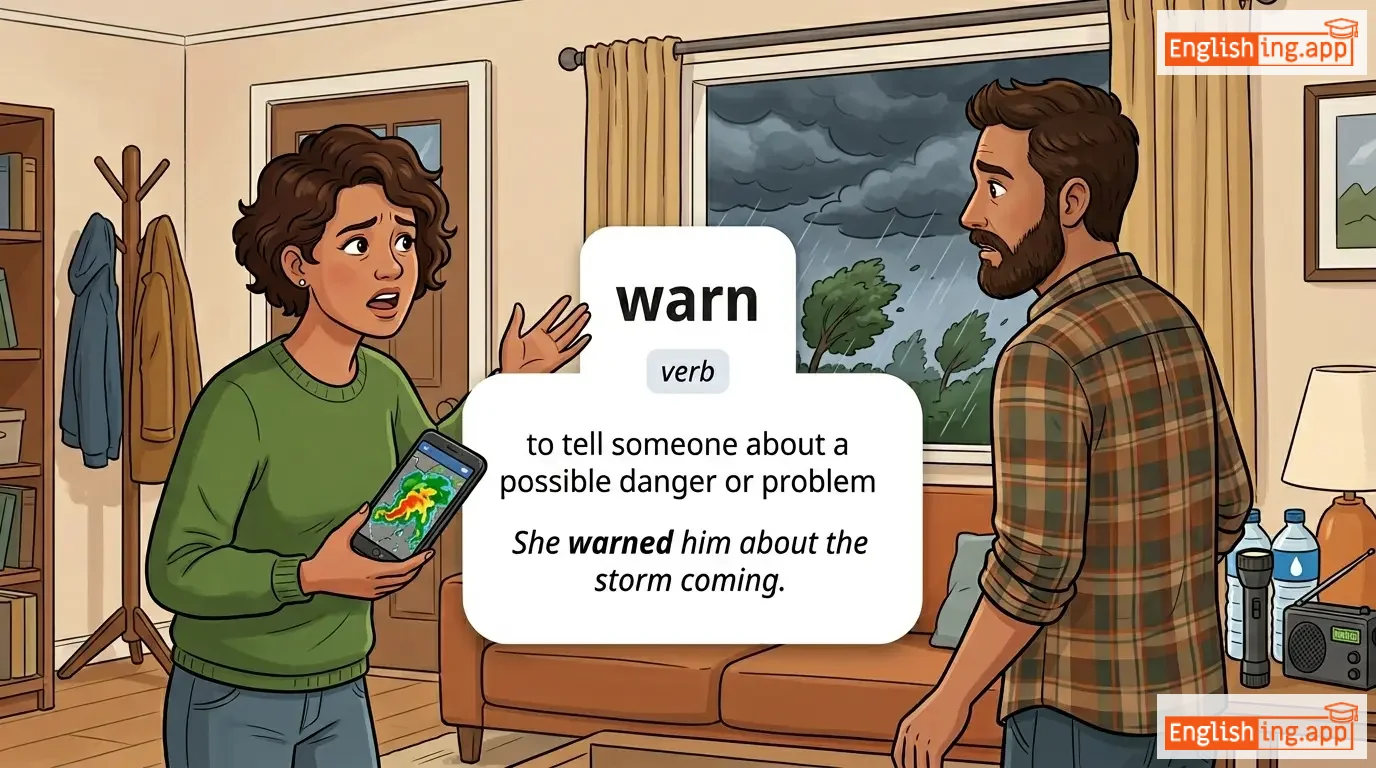
warn definition card — visual illustration of the meaning
verb
/wɔːrn/
advertir (advertir)

to tell someone about a possible danger or problem

"She warned him about the storm coming."

"Ella le advirtió sobre la tormenta que venía." (Ella le advirtió sobre la tormenta que venía.)
adjective
/ˈwɜːrldwaɪd/
mundial (mundial)

extending or reaching throughout the whole world

"The company has achieved worldwide recognition for its products."

"La empresa ha logrado un reconocimiento mundial por sus productos." (La empresa ha logrado un reconocimiento mundial por sus productos.)
verb
/wiːv/
tejer (tejer)

to make cloth by interlacing threads or to combine elements into a whole

"She weaves beautiful patterns on her loom."

"Ella teje hermosos patrones en su telar." (Ella teje hermosos patrones en su telar.)
noun
/ˈvʌl.tʃər/
buitre (buitre)

a large bird of prey that feeds mainly on carrion

"The vulture circled overhead, waiting for its prey."

"El buitre volaba en círculos sobre su cabeza, esperando su presa." (El buitre volaba en círculos sobre su cabeza, esperando su presa.)
🏋️‍♀️

workout (wɜːrkaʊt)

noun
/ˈwɜːrkaʊt/
ejercicio (ejercicio)

a session of physical exercise or training to improve fitness or health

"She does a full-body workout every morning before work."

"Ella hace un entrenamiento de cuerpo completo todas las mañanas antes de trabajar." (Ella hace un entrenamiento de cuerpo completo todas las mañanas antes de trabajar.)
noun
/wɔːrd/
sala (sala)

A separate room in a hospital for patients; also a division of a city or a person under guardianship.

"She was admitted to the children's ward."

"Ella fue admitida en la sala de niños." (Ella fue admitida en la sala de niños.)
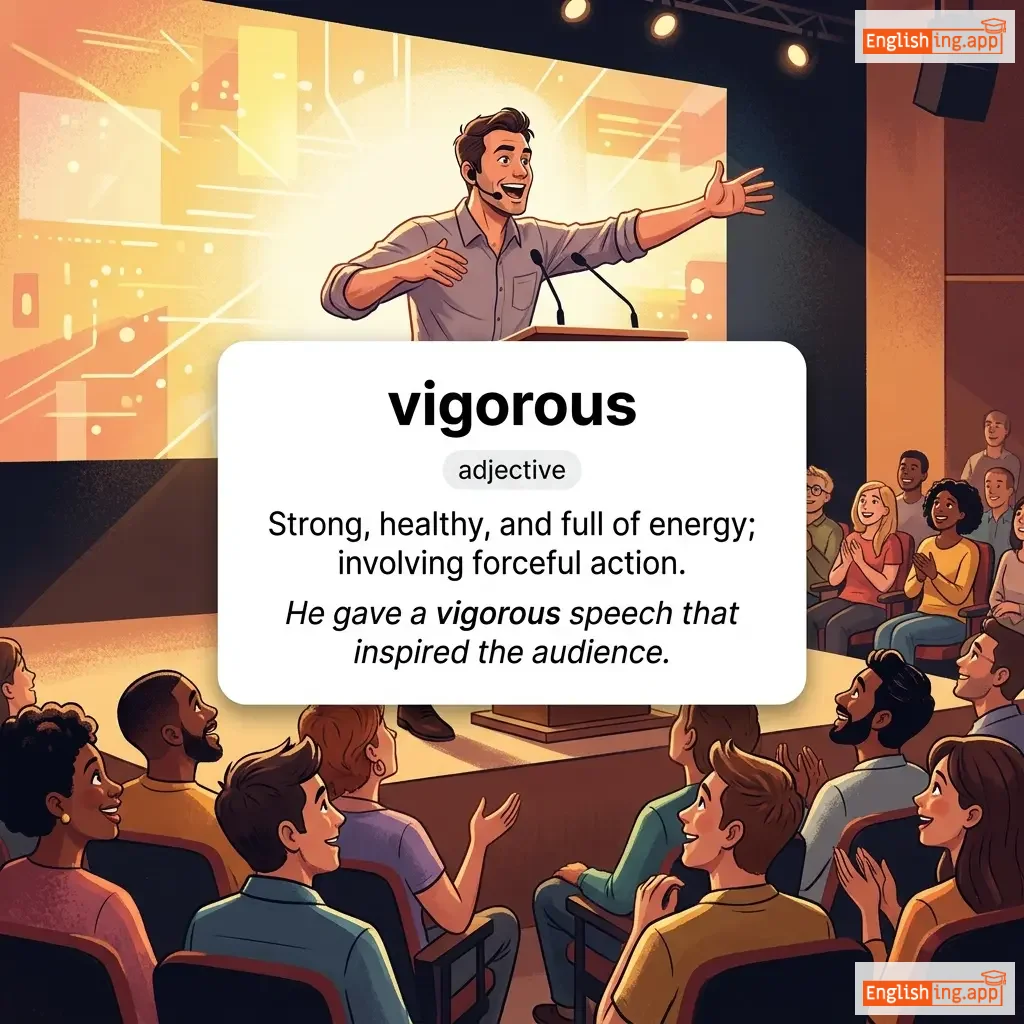
vigorous definition card — visual illustration of the meaning
adjective
/ˈvɪɡərəs/
enérgico (energiko)

Strong, healthy, and full of energy; involving forceful action.

"He gave a vigorous speech that inspired the audience."

"Él dio un discurso enérgico que inspiró a la audiencia." (El dio un discurso energico que inspiro a la audiencia.)
noun
/ˈvjuːpɔɪnt/
punto de vista (punto de vista)

a particular attitude or way of considering a matter

"From his viewpoint, the situation was hopeless."

"Desde su punto de vista, la situación era desesperada." (Desde su punto de vista, la situación era desesperada.)
adjective
/ʌnˈlaɪkli/
improbable (improbable)

not likely to happen or be true

"It is unlikely that he will arrive on time."

"Es improbable que él llegue a tiempo." (Es improbable que él llegue a tiempo.)
verb
/ˈvɪlɪfaɪ/
felicidad (felicidad)

to speak or write about someone in an abusive or disparaging manner

"The politician was vilified in the media for his controversial remarks."

"Ella no pudo ocultar su felicidad cuando recibió el premio." (Ella no pudo ocultar su felicidad cuando recibió el premio.)
noun
/vɪˈsɪn.ə.ti/
vicinidad; alrededores (vicinidad)

the area near or surrounding a particular place; neighborhood

"There are many shops in the vicinity of the school."

"Hay muchas tiendas cerca de la escuela." (Hay muchas tiendas cerca de la escuela.)
adjective
/ˈvɪndɪkeɪtɪv/
vindicatorio (vindicatorio)

showing a tendency to vindicate or justify; inclined to defend

"Her vindicative tone showed that she strongly believed in her innocence."

"Su tono vindicatorio mostró que creía firmemente en su inocencia." (Su tono vindicatorio mostró que creía firmemente en su inocencia.)
noun
/vaɪs/
vicio (vicio)

immoral or wicked behavior; a weakness in someone's character

"Greed is a vice that can destroy lives."

"La codicia es un vicio que puede destruir vidas." (La codicia es un vicio que puede destruir vidas.)
noun
/ˈvɪdiəʊ/
vídeo (video)

a recording of moving visual images made digitally or on film

"She watched the video of her favorite concert online."

"Ella vio el video de su concierto favorito en línea." (Ella vio el video de su concierto favorito en linea.)
noun
/ˈvaɪsrɔɪ/
Virrey (Virrey)

a ruler exercising authority on behalf of a sovereign in a colony or province

"The viceroy governed the colony in the king's name."

"El virrey gobernó la colonia en nombre del rey." (El virrey gobernó la colonia en nombre del rey.)
verb
/ʌnˈmɑːsk/
desenmascarar (desenmascarar)

to remove a mask or covering; to reveal the true identity, nature, or intentions of someone or something

"The investigation helped unmask the real culprit behind the crime."

"La investigación ayudó a desenmascarar al verdadero culpable del crimen." (La investigacion ayudo a desenmascarar al verdadero culpable del crimen)
verb
/vaɪ/
competir (competir)

To compete eagerly with someone in order to do or achieve something.

"Several companies are vying for the contract."

"Varias empresas están compitiendo por el contrato." (Varias empresas estan compitiendo por el contrato.)
adjective
/vɪkˈtɔː.ri.əs/
victorioso (victorioso)

having won a victory; successful in a struggle or contest

"The victorious team celebrated their championship win with great joy."

"El equipo victorioso celebró su victoria del campeonato con gran alegría." (El equipo victorioso celebró su victoria del campeonato con gran alegría.)
noun
/ˈvaɪnəri/
bodega de vino (bodega de vino)

A place where vines are cultivated, especially a vineyard or greenhouse for vines.

"The old vinery was filled with grapevines."

"La vieja bodega de vino estaba llena de vides." (La vieja bodega de vino estaba llena de vides.)
verb
/ʌnˈlɒk/
desbloquear (desbloquear)

to open something that is locked; to make something accessible or available

"She used the key to unlock the door."

"Usó la llave para desbloquear la puerta." (Uso la llave para desbloquear la puerta)
noun
/ˈvɪktɪm/
víctima (victima)

a person who suffers harm, injury, or death due to an event or action

"The victim of the accident was taken to the hospital immediately."

"La víctima del accidente fue llevada al hospital inmediatamente." (La víctima del accidente fue llevada al hospital inmediatamente.)
noun
/vɪm/
vigor (vigor)

energy and enthusiasm

"She performed the dance with great vim and vigor."

"Ella realizó la danza con gran vigor y energía." (Ella realizo la danza con gran vigor y energia.)
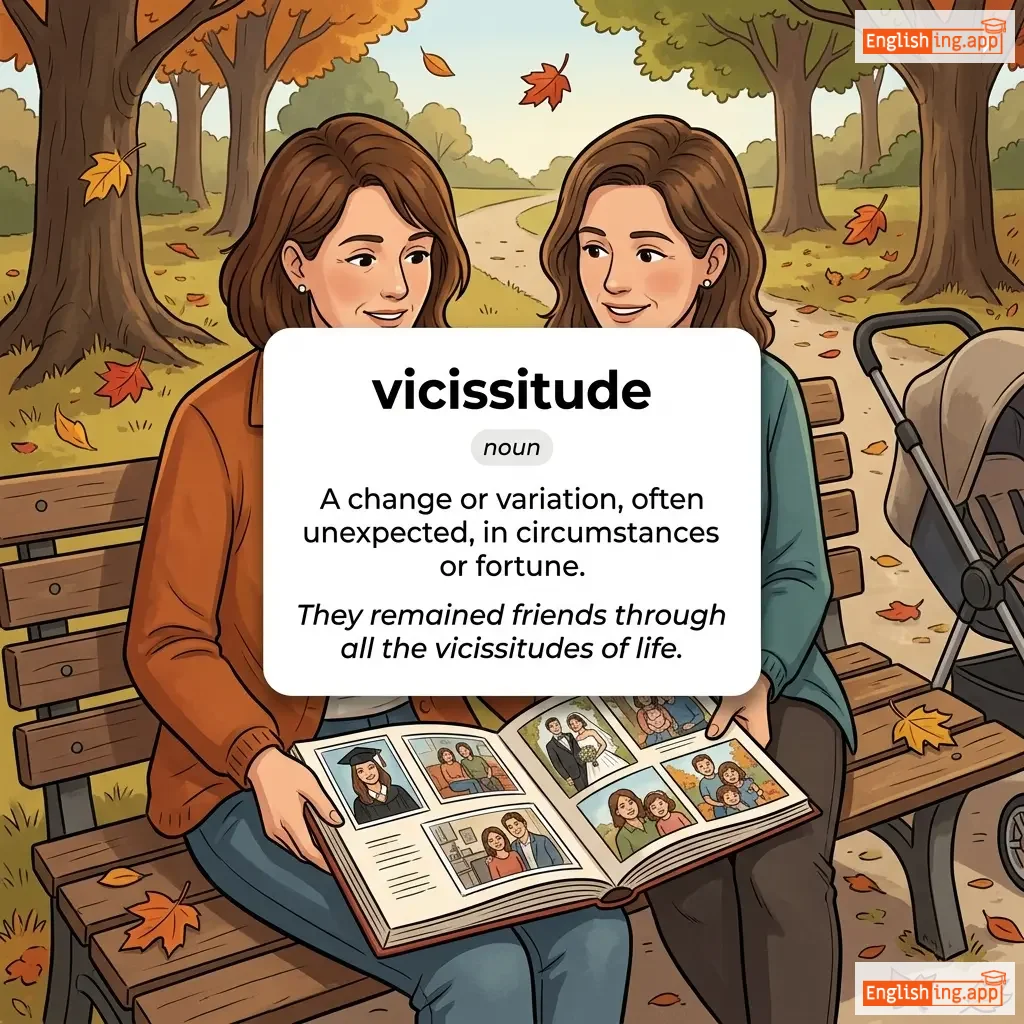
vicissitude definition card — visual illustration of the meaning
noun
/vɪˈsɪsɪtjuːd/
vicisitud (vicisitud)

A change or variation, often unexpected, in circumstances or fortune.

"They remained friends through all the vicissitudes of life."

"Permanecieron amigos a través de todas las vicisitudes de la vida." (Permanecieron amigos a través de todas las vicisitudes de la vida.)
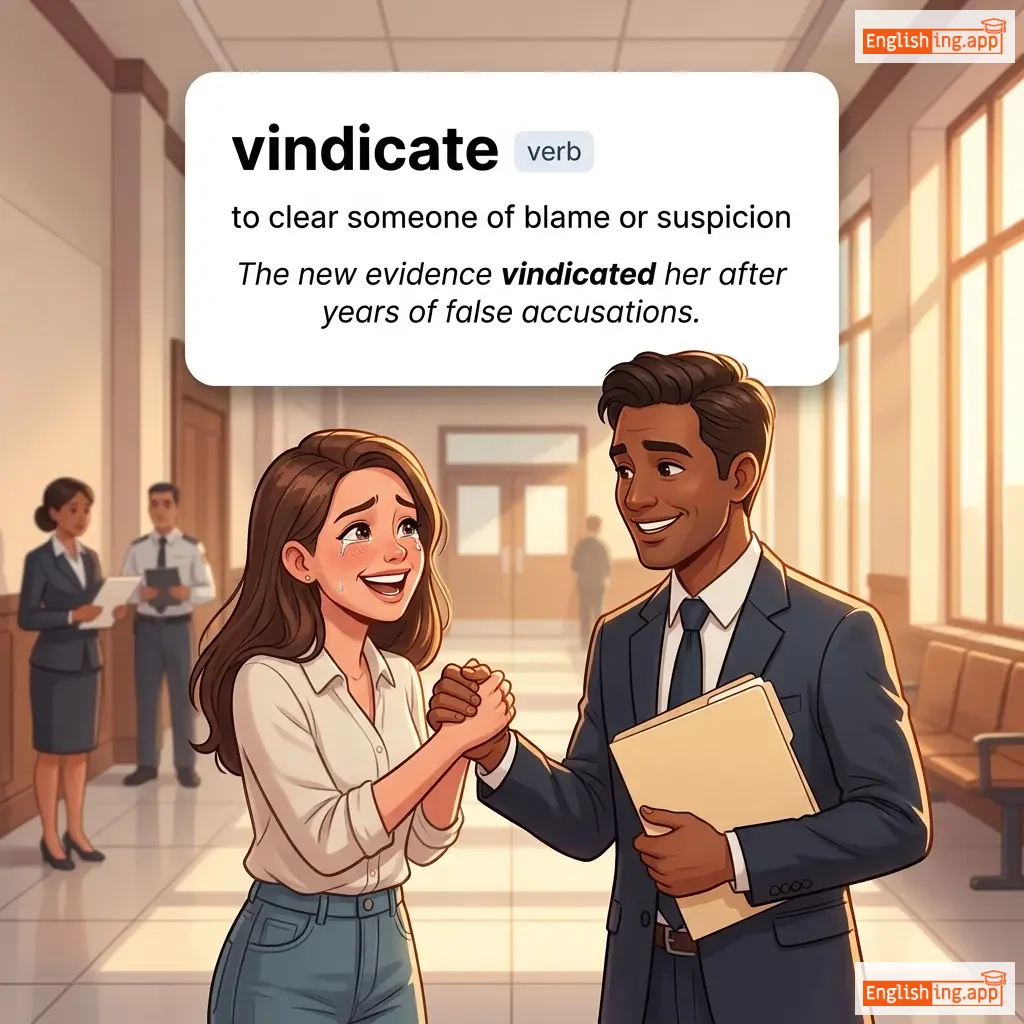
vindicate definition card — visual illustration of the meaning
verb
/ˈvɪndɪkeɪt/
vindicar (vindicar)

to clear someone of blame or suspicion

"The new evidence vindicated her after years of false accusations."

"Las nuevas pruebas la vindicaron después de años de falsas acusaciones." (Las nuevas pruebas la vindicaron despues de anos de falsas acusaciones.)
adjective
/ˈvɪndɪkətɔːri/
vindicativo (vindicativo)

Serving to justify, clear of blame, or defend.

"His vindicatory remarks restored his reputation."

"Sus comentarios vindicatorios restauraron su reputación." (Sus comentarios vindicatorios restauraron su reputación.)
adjective
/ʌnˈmænɪdʒəbəl/
incontrolable; fuera de control (incontrolable; fuera de control)

difficult or impossible to control or handle

"The large class became unmanageable without proper supervision."

"La gran clase se volvió incontrolable sin una supervisión adecuada." (La gran clase se volvio incontrolable sin una supervisión adecuada.)
adjective
/vaɪˈkɛəriəs/
felicidad (felicidad)

experienced through the feelings or actions of another person

"She felt vicarious excitement watching her son win the award."

"No pudo ocultar su felicidad cuando recibió el premio." (No pudo ocultar su felicidad cuando recibio el premio.)
noun
/vaɪˈbreɪ.ʃən/
vibración (vibration)

a rapid back and forth movement; oscillation

"The phone's vibration woke me up."

"La vibración del teléfono me despertó." (La vibracion del telefono me desperto.)
adjective
/ˈvɪʃəs/
vicioso (vicioso)

Deliberately cruel, violent, or immoral.

"The dog gave a vicious growl when the stranger approached."

"El perro dio un gruñido vicioso cuando el extraño se acercó." (El perro dio un gruñido vicioso cuando el extraño se acercó.)
noun
/ˈvɪn.ɪ.ɡər/
vinagre (vinagre)

a sour liquid made from fermented alcohol, used for cooking and preserving

"I added vinegar to the salad dressing for extra flavor."

"Añadí vinagre a la salsa de ensalada para más sabor." (Añadí vinagre a la salsa de ensalada para más sabor.)
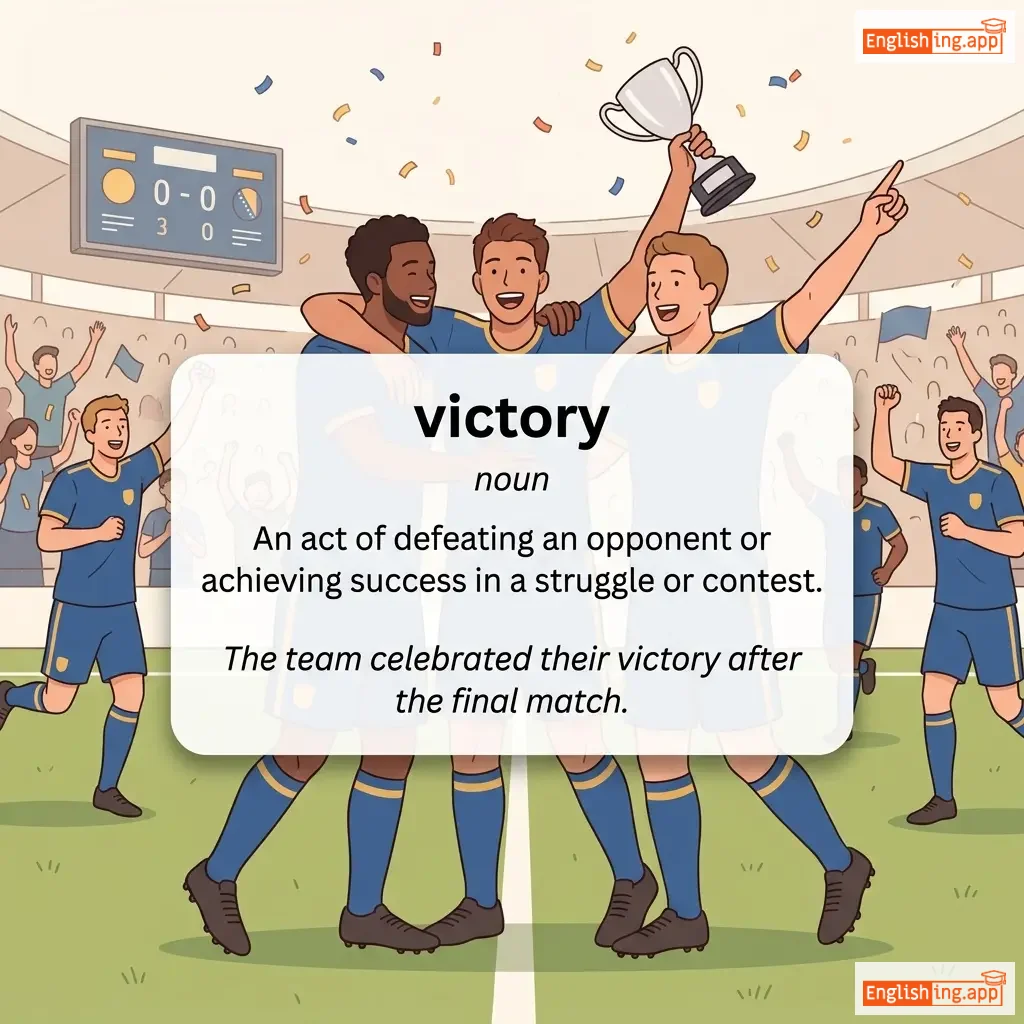
victory definition card — visual illustration of the meaning
noun
/ˈvɪktəri/
victoria (victoria)

An act of defeating an opponent or achieving success in a struggle or contest.

"The team celebrated their victory after the final match."

"El equipo celebró su victoria después del partido final." (El equipo celebró su victoria después del partido final.)
verb
/ˈvɪktɪmaɪz/
victimizar (victimizar)

To make someone a victim, often by treating them unfairly or cruelly.

"The corrupt officials victimized the poor villagers."

"Los funcionarios corruptos victimizaron a los pobres aldeanos." (Los funcionarios corruptos victimizaron a los pobres aldeanos.)
noun
/ˈvɪtəlz/
víveres (viveres)

Food or provisions, especially for human consumption.

"The travelers packed enough victuals for their long journey."

"Los viajeros empacaron suficientes víveres para su largo viaje." (Los viajeros empacaron suficientes víveres para su largo viaje.)
noun
/ˈvɪərər/
espectador (espectador)

a person who watches something, especially television or video content

"The viewer is able to switch channels with the remote control."

"El espectador puede cambiar de canal con el control remoto." (El espectador puede cambiar de canal con el control remoto.)
noun
/ˈvɪlɪdʒ/
pueblo (pueblo)

a small community or group of houses in a rural area

"They live in a small village surrounded by mountains."

"Viven en un pequeño pueblo rodeado de montañas." (Viven en un pequeno pueblo rodeado de montanas.)
noun
/vɪnˈjɛt/
vigneta (vigneta)

A short, descriptive piece of writing or a brief scene.

"The author included a poignant vignette in the introduction of the book."

"El autor incluyó una conmovedora vigneta en la introducción del libro." (El autor incluyó una conmovedora vigneta en la introducción del libro.)
noun
/vaɪn/
vid (vid)

a climbing or trailing plant with long stems; a plant that produces grapes

"The vine climbed up the wall and covered it with green leaves."

"La vid trepó por la pared y la cubrió de hojas verdes." (la vid trepo por la pared y la cubrio de hojas verdes)
adjective
/ˈvjuː.ləs/
invisible; sin opiniones (invisible; sin opiniones)

invisible; having no views or opinions

"The ghost remained viewless to most people in the haunted house."

"El fantasma permaneció invisible para la mayoría de las personas en la casa encantada." (El fantasma permaneció invisible para la mayoría de las personas en la casa encantada.)
adjective
/ˈvɪnsəbl/
vencible (vencible)

capable of being overcome or defeated

"The enemy seemed vincible after losing their main base."

"El enemigo parecía vencible después de perder su base principal." (El enemigo parecía vencible después de perder su base principal.)
noun/adjective
/ˈvɪntɪdʒ/
vintage / clásico (vintage / clasico)

Relating to high quality from the past; classic; also the year of a wine harvest.

"She wore a vintage dress from the 1950s."

"Ella llevaba un vestido vintage de los años 50." (Ella llevaba un vestido vintage de los anos 50.)
noun
/ˈvɪɡ.ər/
fuerza física y buena salud; esfuerzo, energía y entusiasmo (vigor)

physical strength and good health; effort, energy, and enthusiasm

"She approached her work with renewed vigour after the vacation."

"Después de las vacaciones, abordó su trabajo con renovado vigor." (despues de las vacaciones, abordo su trabajo con renovado vigor.)
adjective
/ʌnˈmærid/
soltero (soltero)

Not married; single.

"He is thirty-five and still unmarried."

"Él tiene treinta y cinco años y sigue soltero." (Él tiene treinta y cinco años y sigue soltero.)
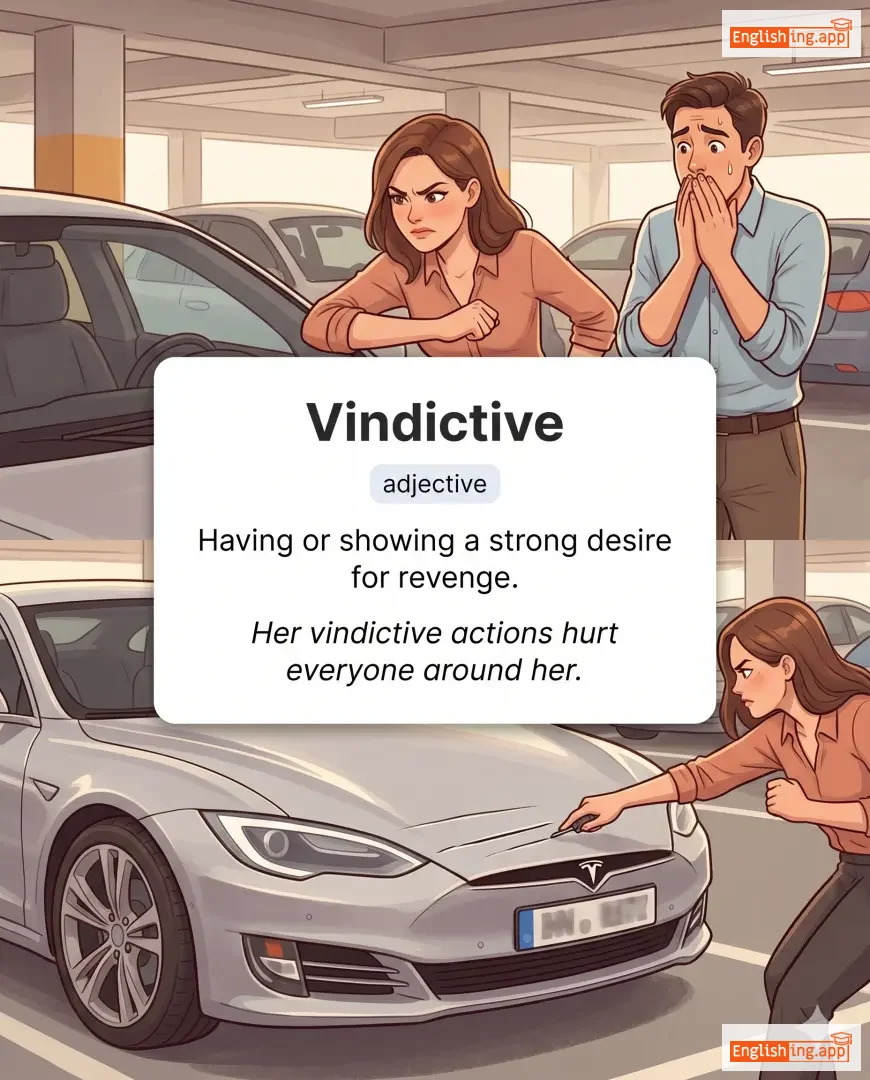
Vindictive definition card — visual illustration of the meaning
adjective
/vɪnˈdɪktɪv/
vengativo (vengativo)

Having or showing a strong desire for revenge.

"Her vindictive actions hurt everyone around her."

"Sus acciones vengativas lastimaron a todos a su alrededor." (Sus acciones vengativas lastimaron a todos a su alrededor.)
noun
/ˈvɪɡər/
vigor (vigor)

Physical strength, energy, or enthusiasm.

"She tackled the project with great vigor and determination."

"Ella abordó el proyecto con gran vigor y determinación." (Ella abordó el proyecto con gran vigor y determinación.)
adjective
/ʌnˈmaɪndfəl/
despreocupado; descuidado; (despreocupado; descuidado)

not paying attention; careless; heedless

"She was unmindful of the danger around her."

"Ella no prestaba atención al peligro a su alrededor." (Ella no prestaba atencion al peligro a su alrededor.)
adjective
/ʌnˈlɪmɪtɪd/
ilimitado (ilimitado)

without any limits or restrictions

"The internet plan offers unlimited data for the whole month."

"El plan de internet ofrece datos ilimitados durante todo el mes." (El plan de internet ofrece datos ilimitados durante todo el mes.)
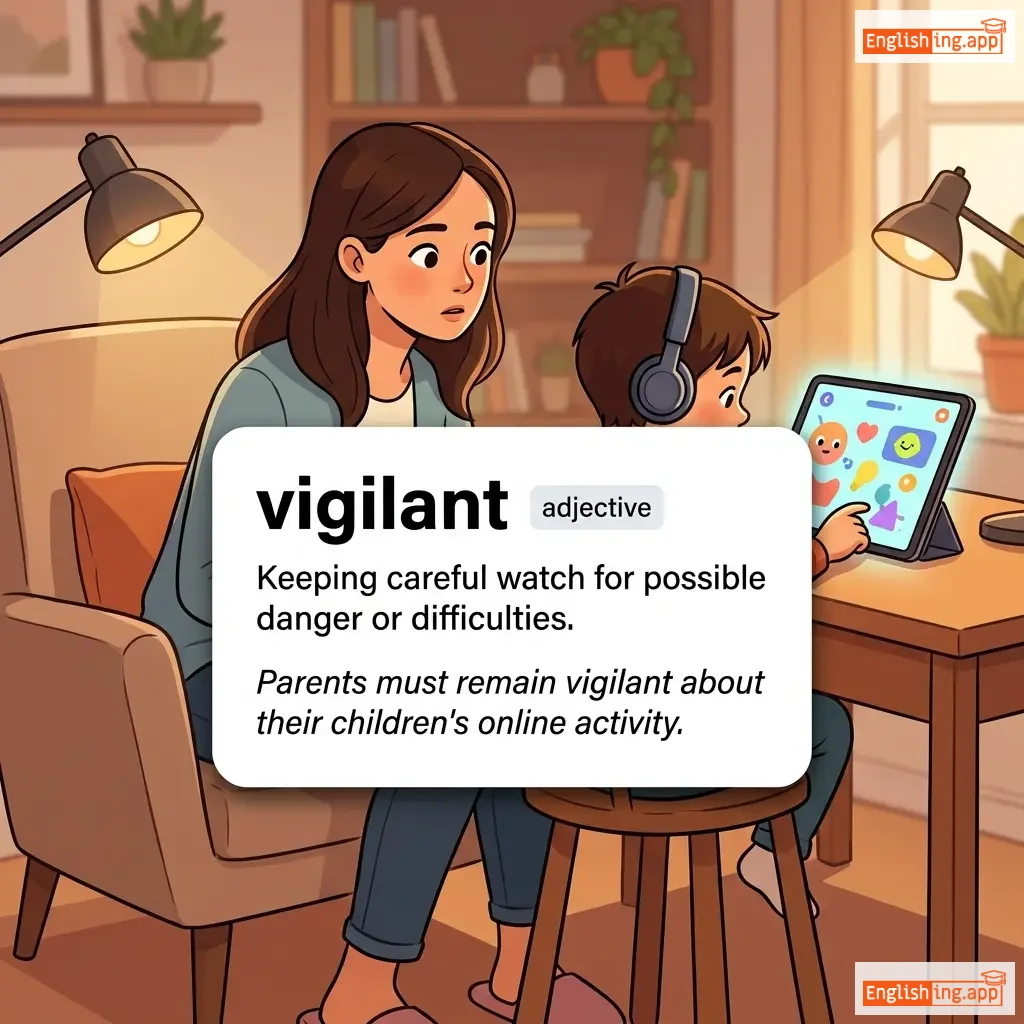
vigilant definition card — visual illustration of the meaning
adjective
/ˈvɪdʒɪlənt/
vigilante (vigilante)

Keeping careful watch for possible danger or difficulties.

"Parents must remain vigilant about their children's online activity."

"Los padres deben mantenerse vigilantes sobre la actividad en línea de sus hijos." (Los padres deben mantenerse vigilantes sobre la actividad en línea de sus hijos.)
adjective
/ʌnˈlʌki/
desafortunado; de mala suerte (desafortunado; de mala suerte)

having bad luck; unfortunate

"He was unlucky to miss the winning shot."

"Él tuvo mala suerte al perder el tiro ganador." (Él tuvo mala suerte al perder el tiro ganador.)