Vocabularios

Descubra, aprenda y domine el vocabulario en inglés

adjective
/ʌnˈwaɪz/
imprudente (imprudente)

Showing poor judgment; not sensible or prudent.

"It would be unwise to invest all your money in one company."

"Sería imprudente invertir todo tu dinero en una sola empresa." (Sería imprudente invertir todo tu dinero en una sola empresa.)
adjective
/ʌnˈseɪf/
inseguro; peligroso; (inseguro, peligroso)

involving or causing danger or risk; not protected from harm

"It is unsafe to walk alone in this neighborhood at night."

"Es inseguro caminar solo en este vecindario por la noche." (Es inseguro caminar solo en este vecindario por la noche.)
🏠⬆️

Upstairs

adverb
/ˌʌpˈstɛərz/

on or to a higher floor of a building

"She went upstairs to her bedroom."

noun
/ˈʌp.raɪt.nəs/
rectitud; integridad (rectitud; integridad)

the quality of being honest and morally correct; integrity

"His uprightness in business dealings earned him great respect."

"Su rectitud en los negocios le ganó gran respeto." (Su rectitud en los negocios le ganó gran respeto.)
verb
/ʌnˈræp/
desenvolver (desenvolver)

remove wrapping or covering from something; reveal something gradually or clearly

"She carefully unwrapped the gift with excitement."

"Ella desenvolvió el regalo con cuidado y emoción." (Ella desenvolvio el regalo con cuidado y emocion)
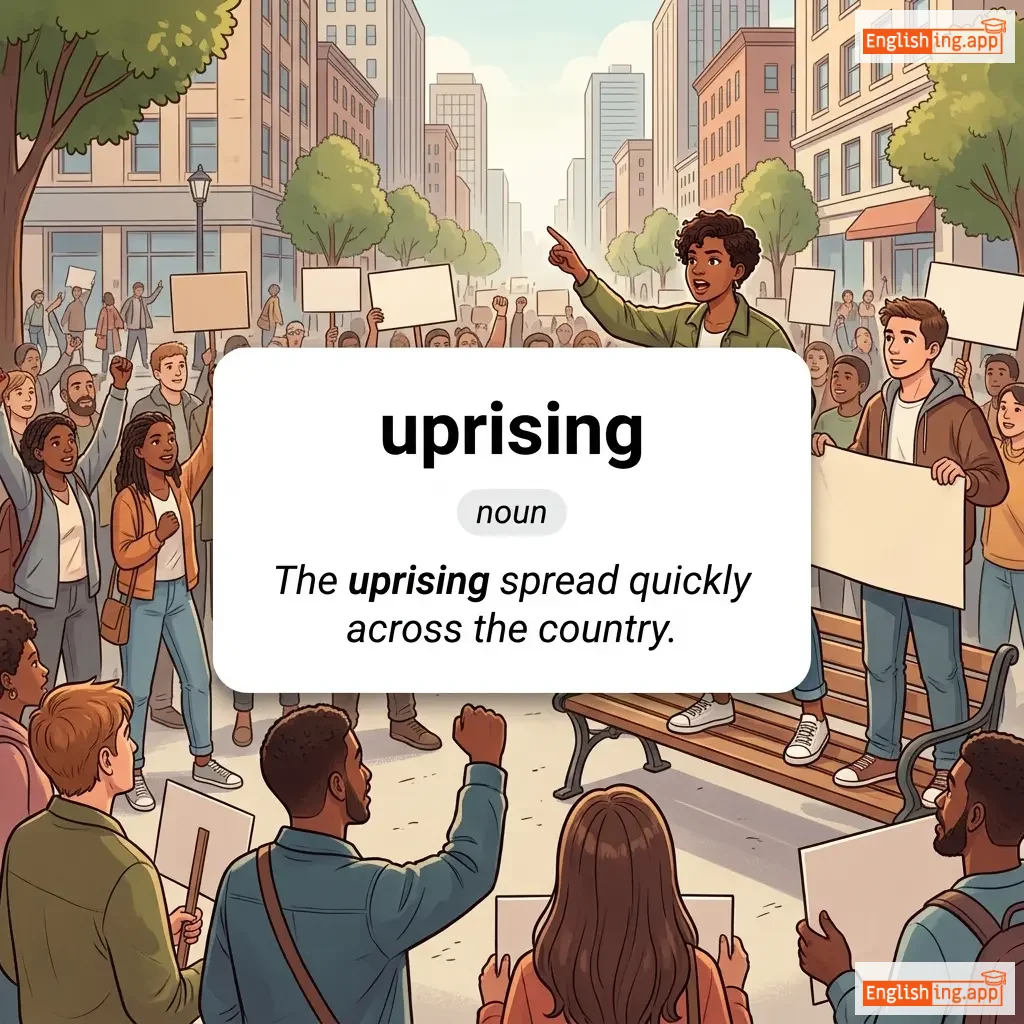
uprising definition card — visual illustration of the meaning
noun
/ˈʌpraɪzɪŋ/
levantamiento (levantamiento)

An act of resistance or rebellion; an attempt to overthrow authority or government.

"The uprising spread quickly across the country."

"El levantamiento se extendió rápidamente por todo el país." (El levantamiento se extendió rápidamente por todo el país.)
adjective
/ʌnˈsteɪtɪd/
no expresado (no expresado)

not expressed directly in words; implied or left unsaid

"The contract included several unstated expectations."

"El contrato incluía varias expectativas no expresadas." (El contrato incluía varias expectativas no expresadas.)
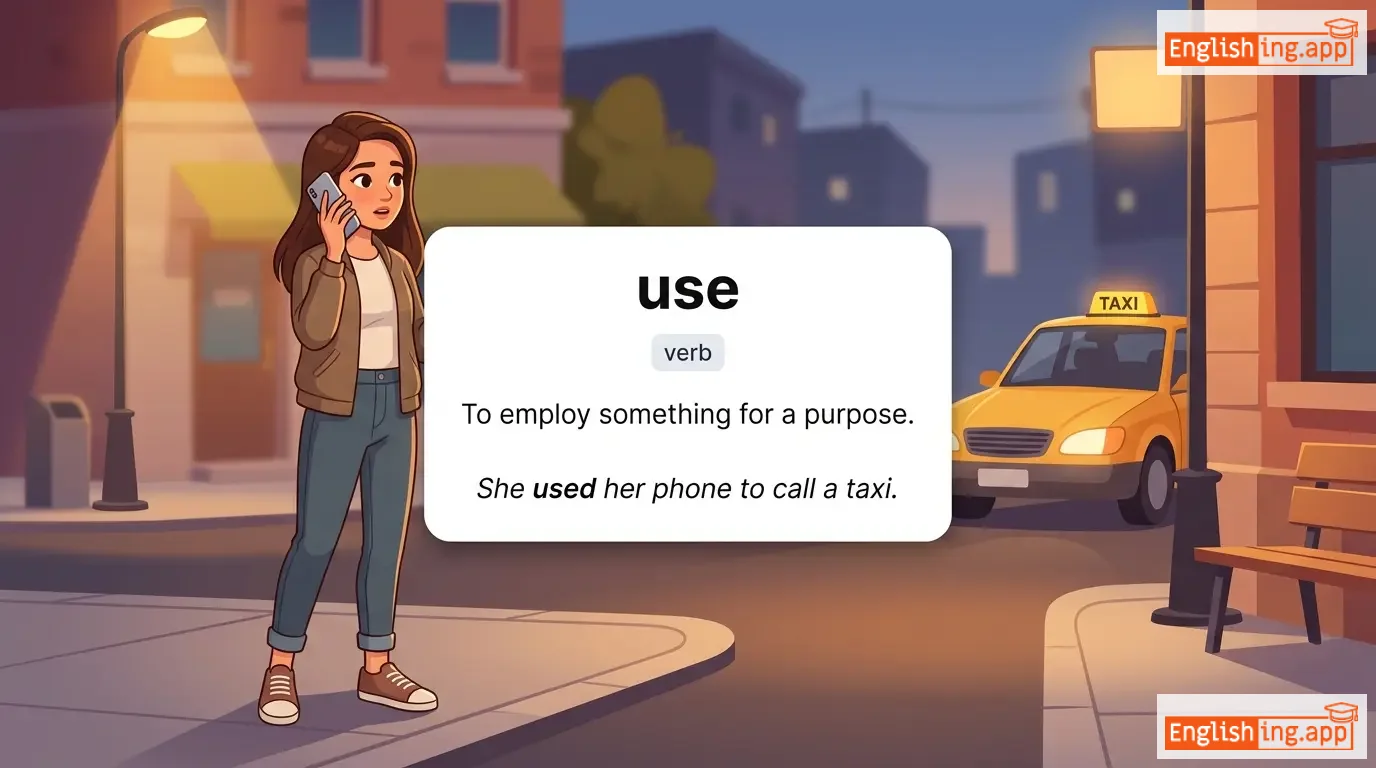
use definition card — visual illustration of the meaning
🛠️

use (yuz)

verb
/juːz/ (verb), /juːs/ (noun)
usar (usar)

To employ something for a purpose.

"She used her phone to call a taxi."

"Ella usó su teléfono para llamar un taxi." (Ella uso su telefono para llamar un taxi.)
adjective
/ˈʌpˌhɪl/
difícil; que requiere gran esfuerzo; inclinado hacia arriba (dificil; que requiere gran esfuerzo; inclinado hacia arriba)

difficult; requiring great effort; sloping upward

"Learning a new language can be an uphill battle."

"Aprender un nuevo idioma puede ser una batalla difícil." (aprender un nuevo idioma puede ser una batalla dificil.)
verb
/ʌnˈjoʊk/
desenganchar (desenganchar)

To release from a yoke or to free from restraint or obligation.

"The farmer unyoked the oxen after a long day of work."

"El agricultor desenganchó los bueyes después de un largo día de trabajo." (El agricultor desenganchó los bueyes después de un largo día de trabajo.)
adjective
/ʌnˈstɪntɪŋ/
generoso (generoso)

given generously without holding back

"She received unstinting support from her family."

"Ella recibió un apoyo generoso de su familia." (Ella recibio un apoyo generoso de su familia.)
verb
/ʌpˈhiːv/
levantar (levantar)

to lift or raise something forcefully; to cause to rise suddenly

"The workers had to upheave the heavy stone to clear the path."

"Los trabajadores tuvieron que levantar la piedra pesada para despejar el camino." (Los trabajadores tuvieron que levantar la piedra pesada para despejar el camino.)
adjective
/ʌnˈtiːtʃəbəl/
imposible de enseñar (imposible de ensenar)

not able or willing to learn; resistant to instruction or guidance

"He was so stubborn that he became almost unteachable."

"Era tan terco que se volvió casi imposible de enseñar." (era tan terco que se volvio casi imposible de ensenar)
visiting definition card — visual illustration of the meaning
verb
/ˈvɪzɪtɪŋ/
visitar (visitar)

Going to see and spend time with someone or at a place.

"The group is visiting islands during the expedition."

"El grupo está visitando islas durante la expedición." (El grupo está visitando islas durante la expedición.)
adjective
/ʌnˈsaɪtli/
desagradable (desagradable)

Unpleasant to look at; ugly.

"The garbage pile created an unsightly view in the park."

"El montón de basura creó una vista desagradable en el parque." (El monton de basura creo una vista desagradable en el parque.)
adjective
/ˌvɪtriˈɑːlɪk/
crítico mordaz (kritiko mordaz)

filled with bitter criticism or malice

"His vitriolic remarks hurt everyone in the room."

"Sus comentarios críticos mordaces hirieron a todos en la sala." (Sus komenterios kritikos mordases hirieron a todos en la sala.)
adjective
/ʌnˈwiːldi/
incómodo (incomodo)

Difficult to carry or move because of its size, shape, or weight.

"The box was too unwieldy to carry up the stairs."

"La caja era demasiado incómoda para subir por las escaleras." (La caja era demasiado incomoda para subir por las escaleras.)
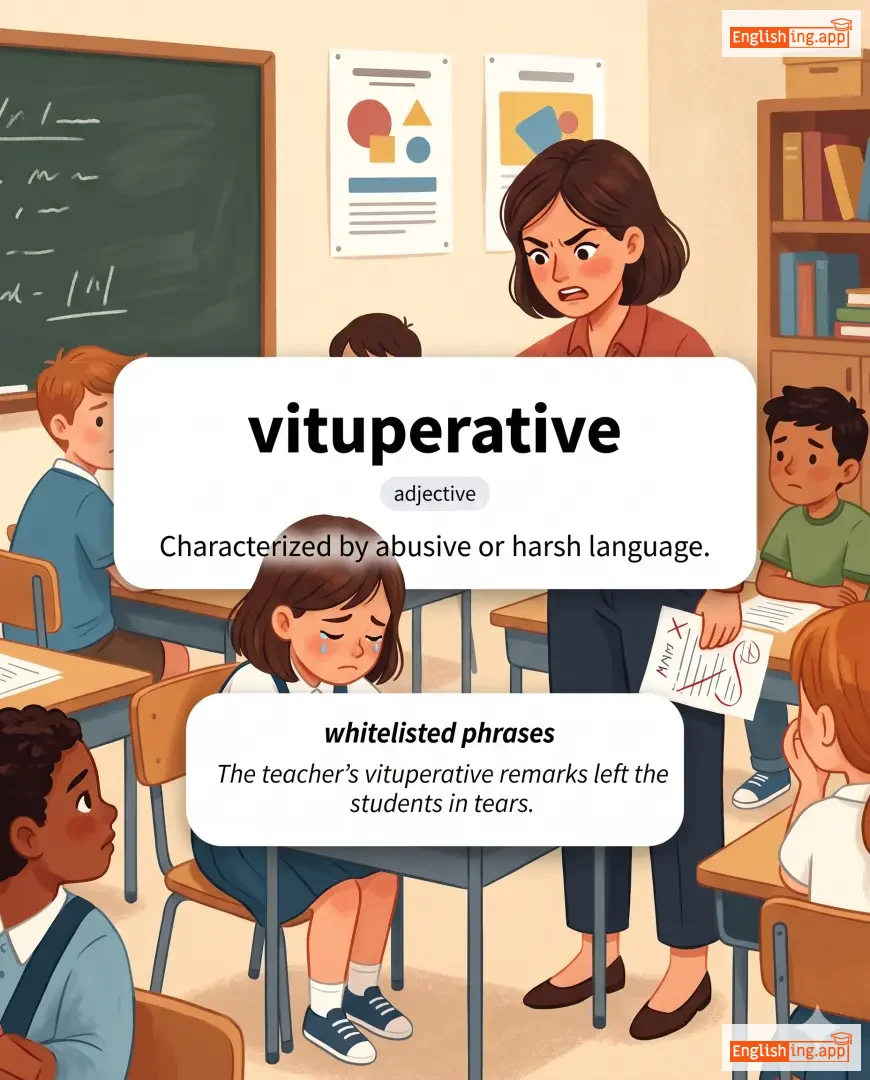
vituperative definition card — visual illustration of the meaning
adjective
/vɪˈtjuːpərətɪv/
vituperativo (vituperativo)

Characterized by abusive or harsh language.

"The teacher’s vituperative remarks left the students in tears."

"Los comentarios vituperativos del maestro dejaron a los estudiantes en lágrimas." (Los comentarios vituperativos del maestro dejaron a los estudiantes en lágrimas.)
adverb
/ʌnˈjuːʒuəli/
de manera inusual (de manera inusual)

in a way that is not typical or expected; to an uncommon degree

"It was unusually cold for this time of year."

"Hacía un frío inusual para esta época del año." (Hacia un frio inusual para esta epoca del ano)
noun
/ˈjuːsɪdʒ/
uso (uso)

The action of using something; the way in which a word or phrase is normally used.

"The book explains the proper usage of technical terms."

"El libro explica el uso adecuado de los términos técnicos." (El libro eksplika el uso adecuado de los términos técnicos.)
adjective
/ˈʌpˌkʌmɪŋ/
próximo (proximo)

about to happen or appear

"The upcoming event will be held next week."

"El próximo evento se llevará a cabo la próxima semana." (El proximo evento se llevará a cabo la proxima semana.)
adjective
/ʌnˈtɛmpərd/
intempérate (intemperate)

not moderated or softened; lacking proper balance or control

"The untempered anger of the crowd caused chaos."

"La ira intempérate de la multitud causó caos." (La ira intempérate de la multitud causó caos.)
verb
/ˈvɪʒuəlaɪz/
visualizar (visualizar)

To form a mental image of something; to imagine.

"She tried to visualize her success before the big presentation."

"Ella intentó visualizar su éxito antes de la gran presentación." (Ella intentó visualizar su éxito antes de la gran presentación.)
noun
/ˈɜːrtʃɪn/
niño travieso de la calle (nino travieso de la calle)

a mischievous or poorly dressed child, often from the streets

"The ragged urchins played by the riverbank."

"Los niños callejeros con ropa rasgada jugaban junto al río." (Los ninos callejeros con ropa rasgada jugaban junto al rio.)
adjective
/ʌnˈtʌtʃəbəl/
intocable; más allá de la crítica o el ataque (intocable; mas alla de la critica o el ataque)

not able to be touched or affected; beyond criticism or attack

"The CEO seemed untouchable despite the scandal."

"El CEO parecía intocable a pesar del escándalo." (El CEO parecia intocable a pesar del escandalo.)
adverb
/ʌnˈwɪlɪŋli/
de mala gana (de mala gana)

in a way that shows reluctance or lack of desire; not willingly

"She unwillingly agreed to attend the meeting."

"Ella aceptó asistir a la reunión de mala gana." (ella acepto asistir a la reunion de mala gana)
adjective
/ˌʌn.rɪˈdʒɛn.ər.ət/
intransigente (intransigente)

Not reformed or showing no signs of change; stubbornly refusing to reform or repent.

"He remained an unregenerate opponent of progress."

"Siguió siendo un oponente intransigente del progreso." (Siguiò siendo un oponente intransigente del progreso.)
adjective
/ʌnˈriːdəbl/
ilegible (ilegible)

not able to be read or understood clearly; illegible

"The doctor’s handwriting was completely unreadable."

"La letra del médico era completamente ilegible." (La letra del medico era completamente ilegible)
adjective
/ʌnˈwɜːrði/
indigno; no merecedor (indigno; no merecedor)

not deserving respect or attention; lacking worth or merit

"He felt unworthy of such praise and recognition."

"Él se sintió no digno de tal alabanza y reconocimiento." (Él se sintió no digno de tal alabanza y reconocimiento.)
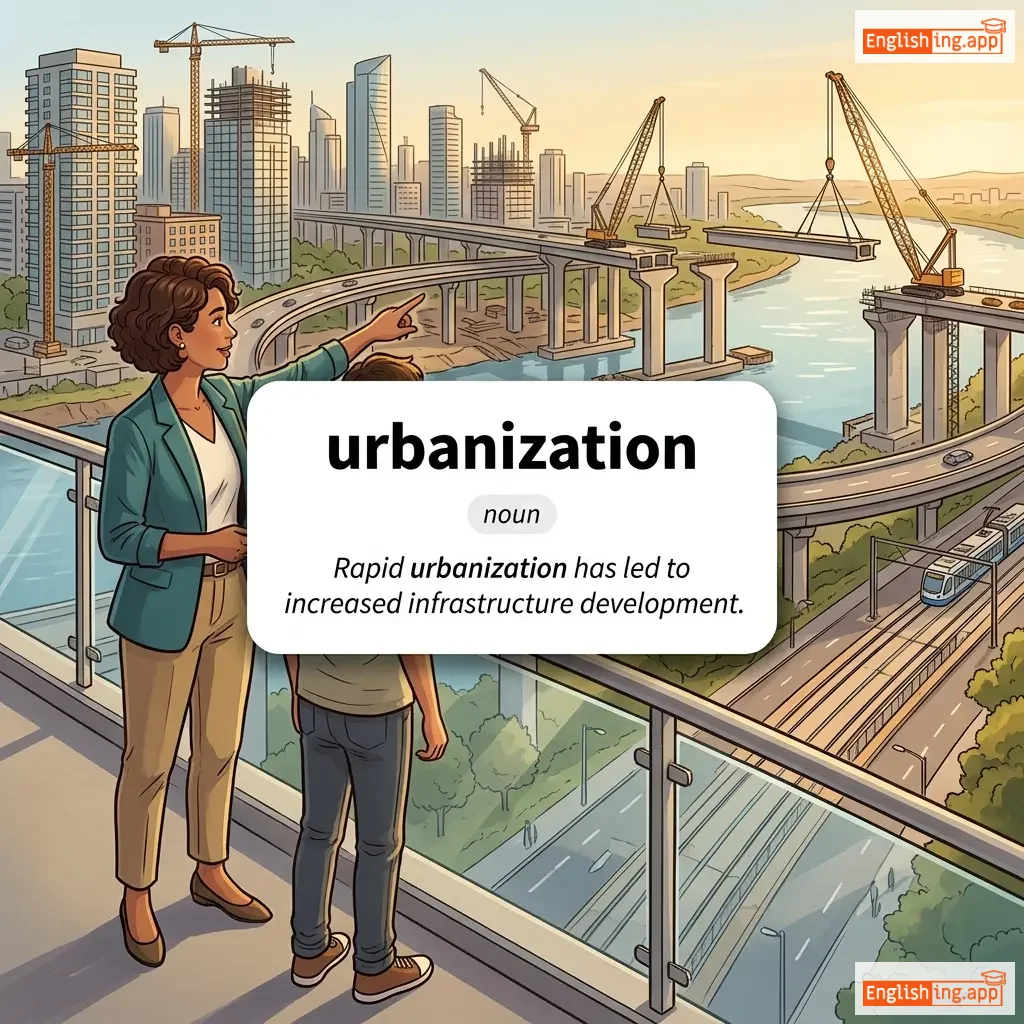
urbanization definition card — visual illustration of the meaning
noun
/ˌɜː.bən.aɪˈzeɪ.ʃən/
urbanización (urbanizacion)

The process by which towns and cities are formed and become larger as more people begin living and working in central areas.

"Rapid urbanization has led to increased infrastructure development."

"La rápida urbanización ha llevado al aumento del desarrollo de infraestructura." (La rapida urbanizacion ha llevado al aumento del desarrollo de infraestructura.)
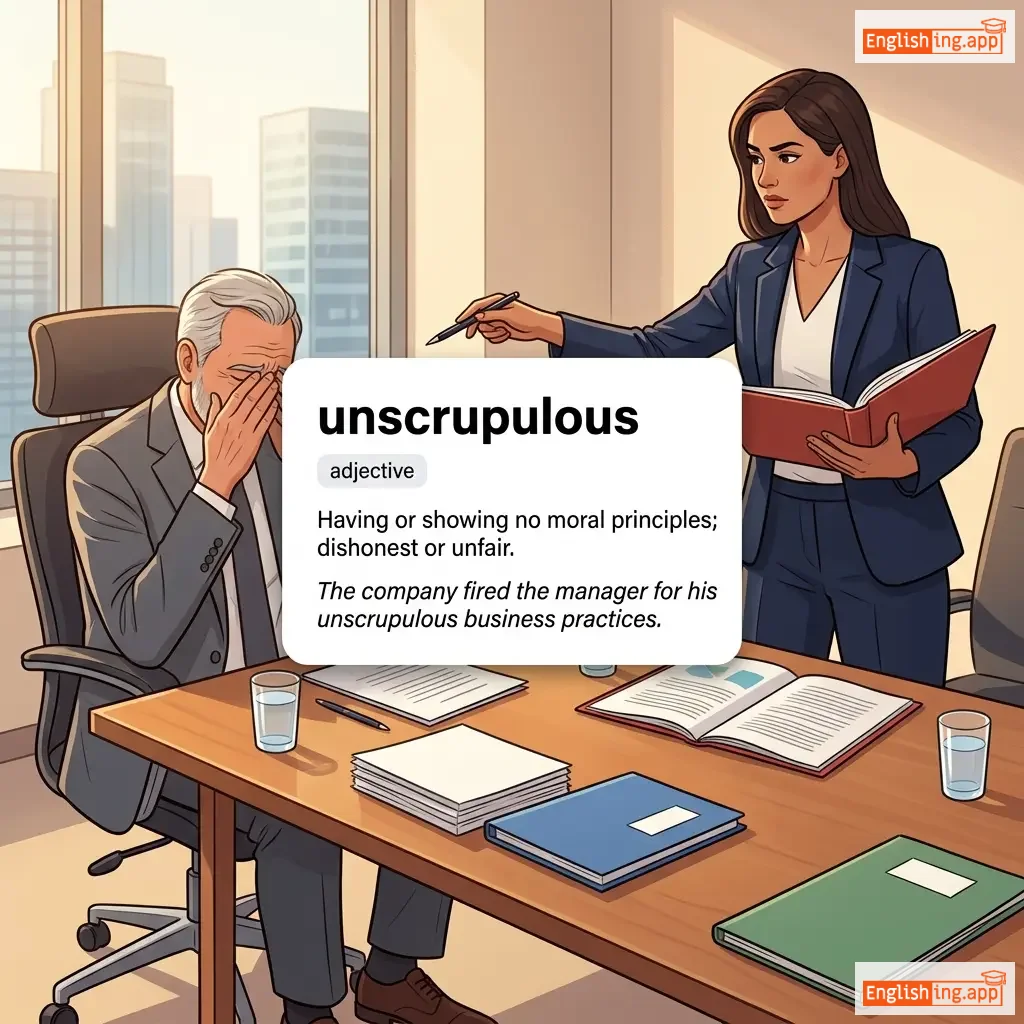
unscrupulous definition card — visual illustration of the meaning
adjective
/ʌnˈskruːpjələs/
desalmado (desalmado)

Having or showing no moral principles; dishonest or unfair.

"The company fired the manager for his unscrupulous business practices."

"La empresa despidió al gerente por sus prácticas comerciales desalmadas." (La empresa despidió al gerente por sus prácticas comerciales desalmadas.)
noun
/ˈʌp.ʃɒt/
resultado (resultado)

The final result or outcome of a process or situation.

"The upshot of the meeting was that the plan was postponed."

"El resultado de la reunión fue que el plan se pospuso." (El resultado de la reunion fue que el plan se pospuso.)
noun
/ɜːrˈbænɪti/
urbanidad (urbanidad)

refined courtesy, elegance, and sophistication in manner

"Her urbanity made her popular among diplomats and leaders."

"Su urbanidad la hizo popular entre diplomáticos y líderes." (Su urbanidad la hizo popular entre diplomáticos y líderes.)
👁️‍🗨️

Unseen (ansín)

adjective
/ʌnˈsiːn/
invisible; no visto ni notado anteriormente (invisible; no visto ni notado anteriormente)

not previously seen or noticed; invisible; hidden

"The unseen forces of nature can be very powerful."

"Las fuerzas invisibles de la naturaleza pueden ser muy poderosas." (Las fuerzas invisibles de la naturaleza pueden ser muy poderosas.)
adjective
/ʌnˈvɔɪst/
no expresado (no expresado)

not expressed in speech; in phonetics, a sound produced without vocal cord vibration

"The student kept her opinion unvoiced during the meeting."

"La estudiante mantuvo su opinión no expresada durante la reunión." (La estudiante mantuvo su opinión no expresada durante la reunión.)
verb
/ˈvɪtrɪfaɪ/
convertir en vidrio (convertir en vidrio)

to turn into glass or a glass-like substance by heat

"Sand can vitrify under intense heat."

"La arena puede convertirse en vidrio con calor intenso." (La arena puede convertirse en vidrio con calor intenso.)
adjective
/ʌnˈnætʃrəl/
antinatural (antinatural)

contrary to the usual course of nature; artificial or abnormal

"The bright green color of the drink looked unnatural."

"El color verde brillante de la bebida parecía antinatural." (El color verde brillante de la bebida parecía antinatural.)
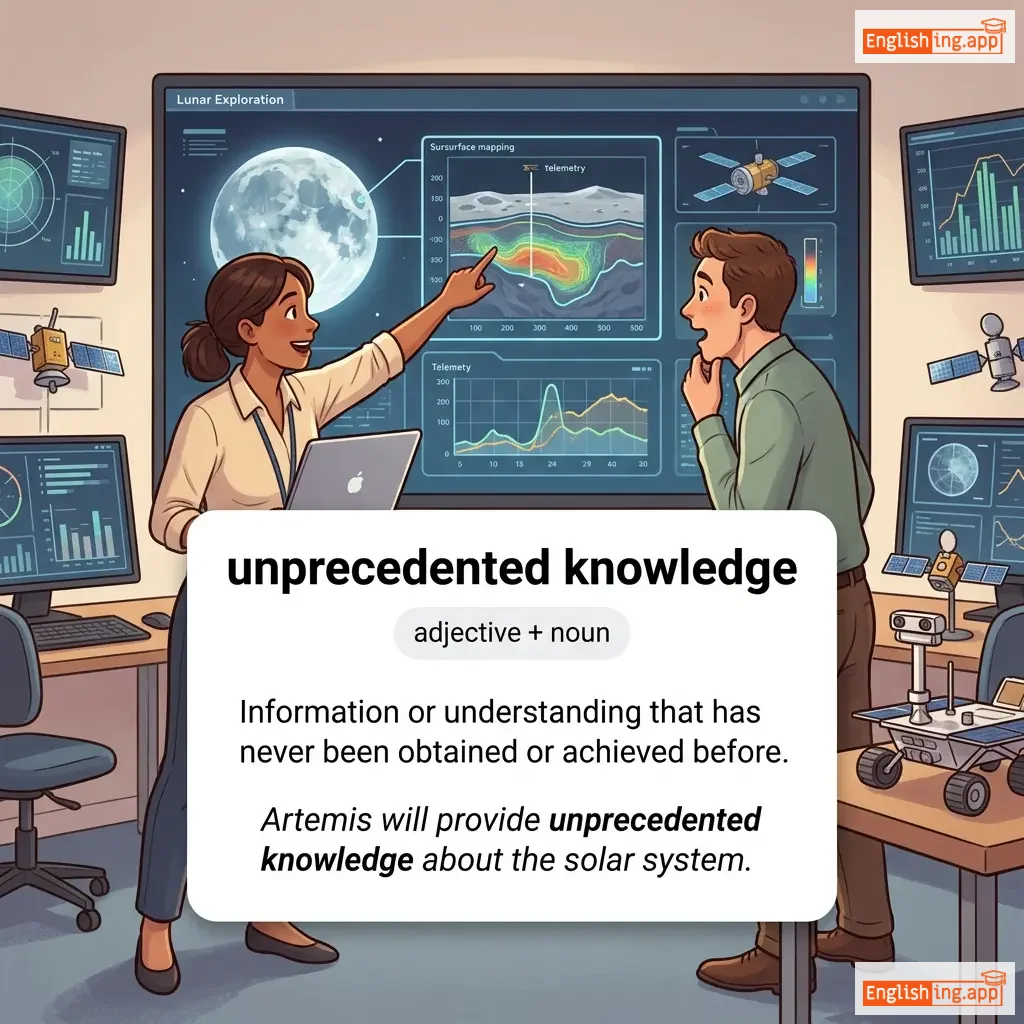
unprecedented knowledge definition card — visual illustration of the meaning
adjective + noun
ʌnˈpresɪdentɪd ˈnɒlɪdʒ
conocimiento sin precedentes (conocimiento sin precedentes)

Information or understanding that has never been obtained or achieved before.

"Artemis will provide unprecedented knowledge about the solar system."

"Artemis proporcionará un conocimiento sin precedentes sobre el sistema solar." (Artemis proporcionara un conocimiento sin precedentes sobre el sistema solar.)
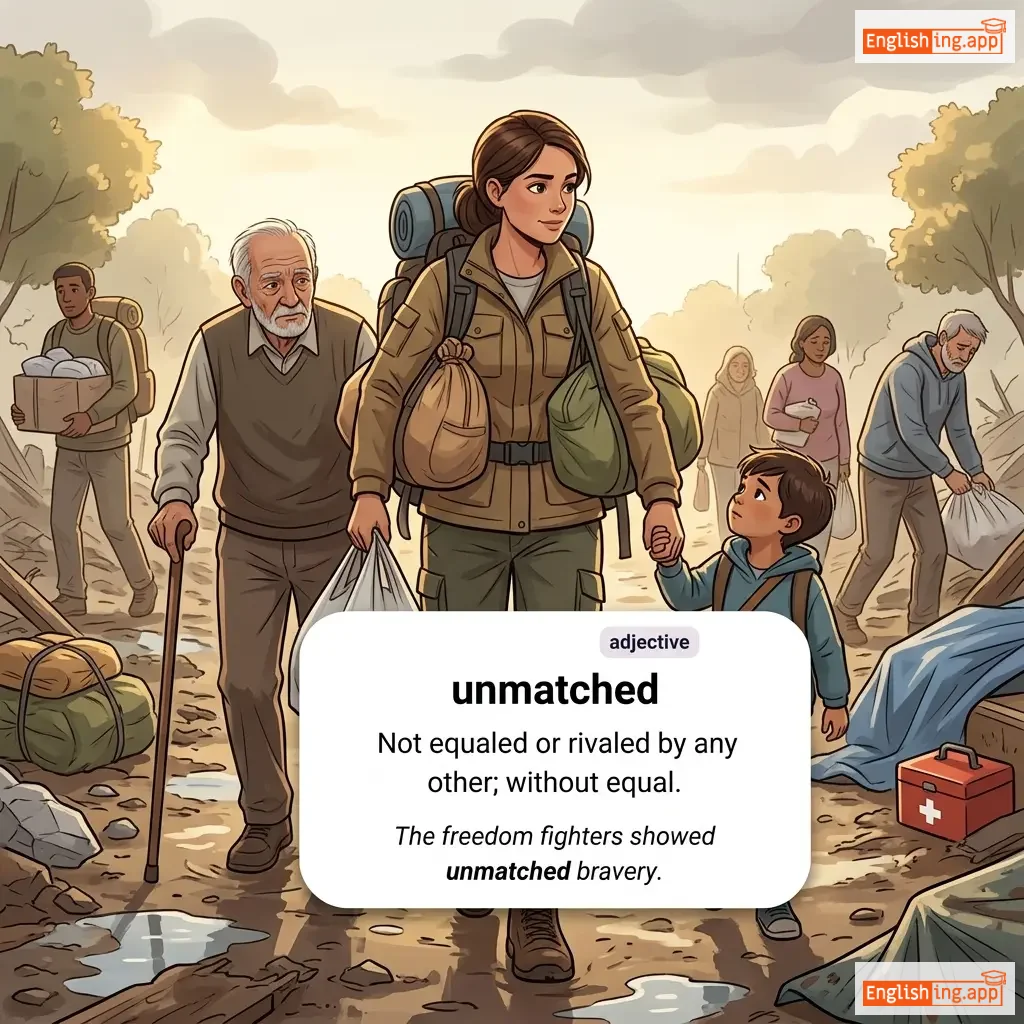
unmatched definition card — visual illustration of the meaning
adjective
ʌnˈmætʃt
incomparable (incomparable)

Not equaled or rivaled by any other; without equal.

"The freedom fighters showed unmatched bravery."

"Los luchadores por la libertad demostraron valentía incomparable." (Los luchadores por la libertad demostraron valentía incomparable.)
adjective
/ˌʌnˈpeɪd/
no remunerado; sin pago (no remunerado; sin pago)

not paid for; without payment or salary

"She worked as an unpaid intern for six months."

"Trabajó como una pasante no remunerada durante seis meses." (Trabajo como una pasante no remunerada durante seis meses)
adjective
/ʌnˈstɛdi/
inestable (inestable)

not firm or stable; likely to change or fail

"She felt unsteady on her feet after the long journey."

"Se sentía inestable después del largo viaje." (Se sentia inestable despues del largo viaje)
adverb
/ʌnˈnesəserəli/
innecesariamente (innecesariamente)

to a greater extent than is needed; without necessity

"Don't worry unnecessarily about the exam."

"No te preocupes innecesariamente por el examen." (No te preocupes innecesariamente por el examen.)
adjective
/ʌnˈmɪtɪɡeɪtɪd/
completo (kompleto)

absolute; not lessened or moderated

"The meeting was an unmitigated disaster."

"La reunión fue un desastre completo." (La reunion fue un desastre completo.)
adjective
/ˌʌnəˈfɪʃ.əl/
no oficial (no oficial)

not officially authorized or confirmed; informal

"The unofficial results showed a close race."

"Los resultados no oficiales mostraron una carrera reñida." (Los resultados no oficiales mostraron una carrera reñida.)
adjective
/ʌnˈmærid/
soltero (soltero)

Not married; single.

"He is thirty-five and still unmarried."

"Él tiene treinta y cinco años y sigue soltero." (Él tiene treinta y cinco años y sigue soltero.)
noun
/vɜːrˈtuː/
gusto por el arte (gusto por el arte)

a love of or taste for fine art, antiques, or curiosities

"The collector’s house was filled with objects of virtu."

"La casa del coleccionista estaba llena de objetos de virtu." (La casa del coleccionista estaba llena de objetos de virtu.)
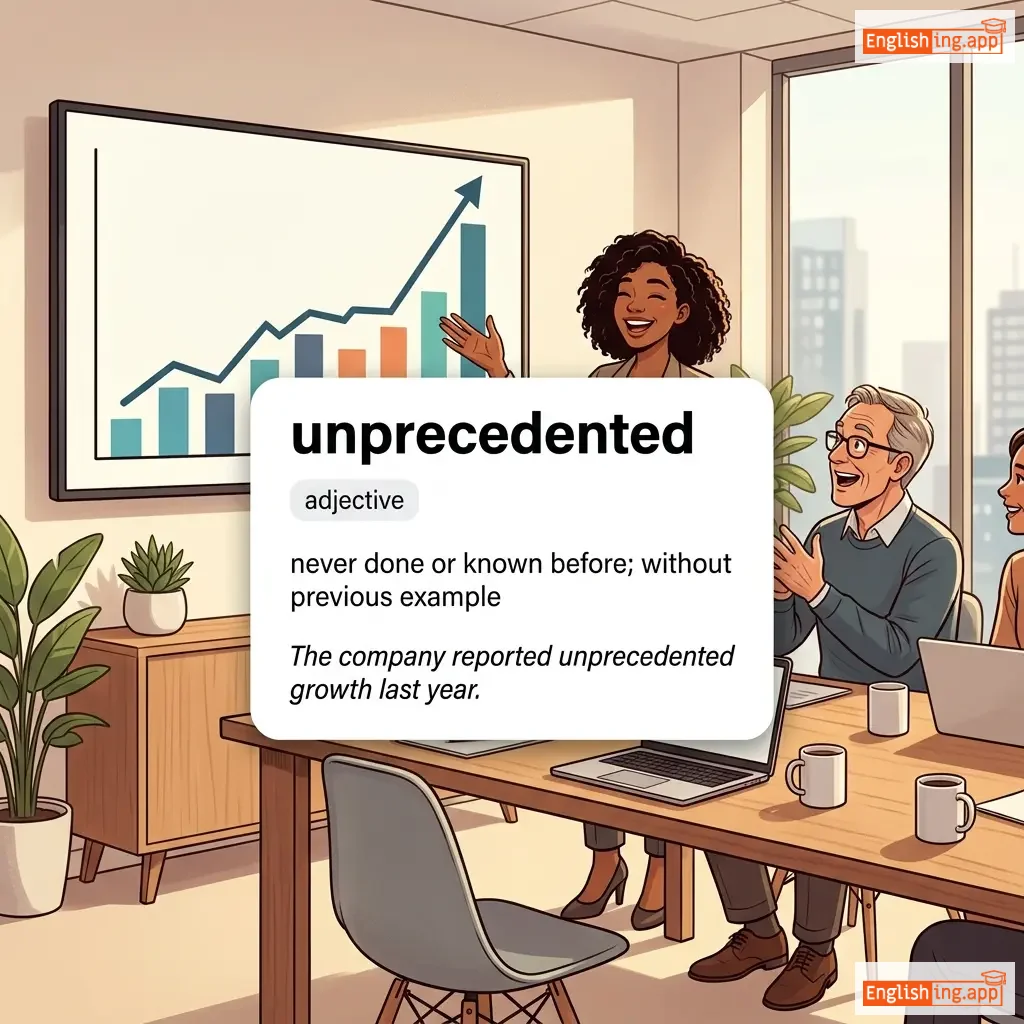
unprecedented definition card — visual illustration of the meaning
adjective
/ʌnˈprɛsɪˌdɛntɪd/
sin precedentes (sin precedentes)

never done or known before; without previous example

"The company reported unprecedented growth last year."

"La compañía reportó un crecimiento sin precedentes el año pasado." (La compañia reportó un crecimiento sin precedentes el año pasado.)
adjective
/ʌnˈnɛsəsɛri/
innecesario (innecesario)

not needed or required

"The manager cut all unnecessary expenses to save costs."

"El gerente recortó todos los gastos innecesarios para ahorrar costos." (El gerente recortó todos los gastos innecesarios para ahorrar costos.)
visuospatial definition card — visual illustration of the meaning
adjective
ˌvɪz.ju.oʊˈspeɪ.ʃəl
Relacionado con la comprensión de la relación entre el espacio y los objetos a través de la visión (relacionado con la comprension de la relacion entre el espacio y los objetos a traves de la vision)

Related to understanding the relationship between space and objects through vision.

"Good visuospatial skills are important for architecture and design."

"Las buenas habilidades visualespaciales son importantes para la arquitectura y el diseño." (Las buenas habilidades visualespaciales son importantes para la arquitectura y el diseño.)
adjective
/ʌnˈsəʊʃəbl/
poco sociable (poco sociable)

not enjoying the company of others; avoiding social interaction

"He became unsociable after moving to a new city."

"Se volvió poco sociable después de mudarse a una nueva ciudad." (se volvio poco sociable despues de mudarse a una nueva ciudad)