词汇表

英语词汇词典 | 单词含义、定义和示例

adjective
/ʌnˈwaɪz/
不明智 (bù míng zhì)

Showing poor judgment; not sensible or prudent.

"It would be unwise to invest all your money in one company."

"把所有的钱都投入一家公司的做法不明智。" (Bǎ suǒyǒu de qián dōu tóurù yījiā gōngsī de zuòfǎ bù míng zhì.)
adjective
/ʌnˈseɪf/
不安全; 危险的; (bù ānquán, wēixiǎn de)

involving or causing danger or risk; not protected from harm

"It is unsafe to walk alone in this neighborhood at night."

"晚上在这个社区独自行走是不安全的。" (Wǎnshàng zài zhège shèqū dúzì xíngzǒu shì bù ānquán de.)
🏠⬆️

Upstairs

adverb
/ˌʌpˈstɛərz/

on or to a higher floor of a building

"She went upstairs to her bedroom."

noun
/ˈʌp.raɪt.nəs/
正直; 正义 (zhèngzhí; zhèngyì)

the quality of being honest and morally correct; integrity

"His uprightness in business dealings earned him great respect."

"他在商业中的正直赢得了很大的尊重。" (Tā zài shāngyè zhōng de zhèngzhí yíngdéle hěn dà de zūnzhòng.)
verb
/ʌnˈræp/
拆开 (chai kai)

remove wrapping or covering from something; reveal something gradually or clearly

"She carefully unwrapped the gift with excitement."
"她兴奋地小心拆开了礼物。" (Ta xingfende xiaoxin chaikai le liwu)
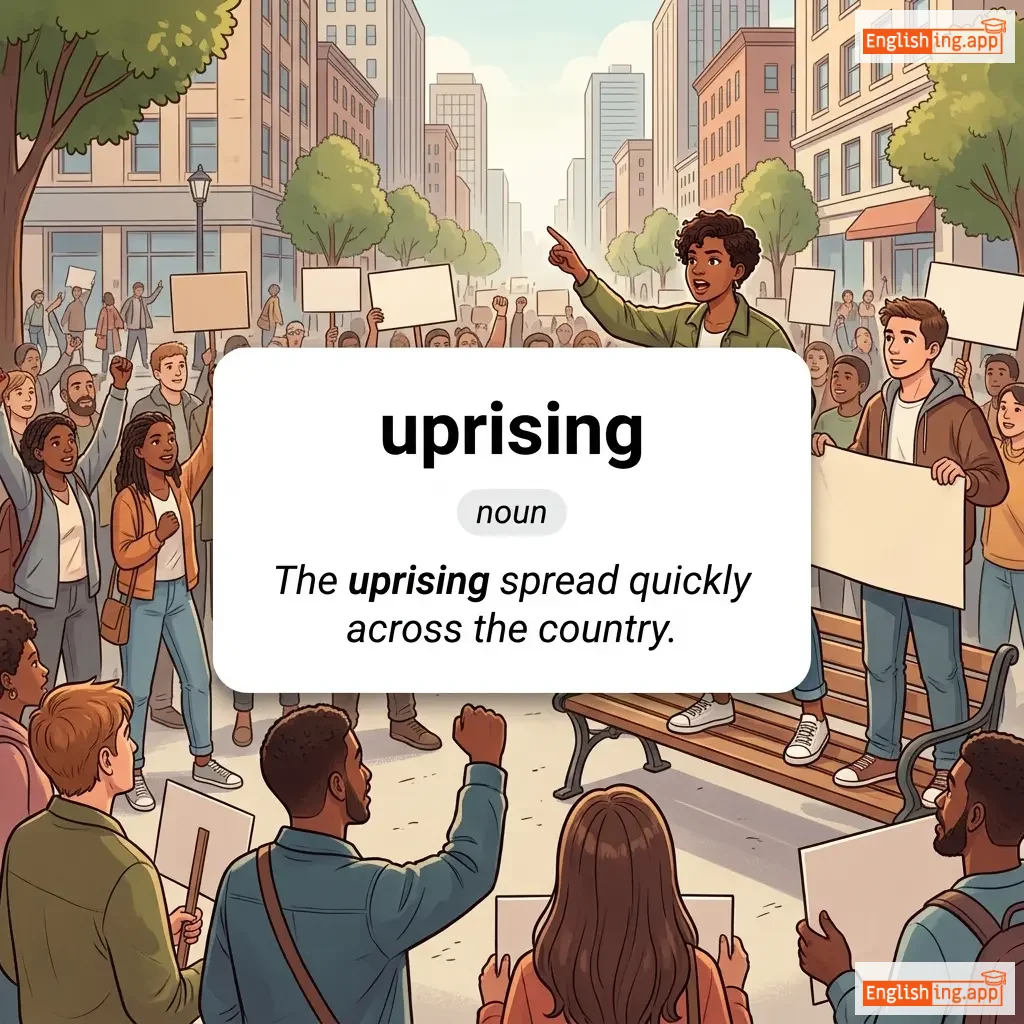
uprising definition card — visual illustration of the meaning
noun
/ˈʌpraɪzɪŋ/
起义 (qiyi)

An act of resistance or rebellion; an attempt to overthrow authority or government.

"The uprising spread quickly across the country."

"起义迅速蔓延到全国。" (Qiyi xunxu manyan dao quanguo.)
adjective
/ʌnˈsteɪtɪd/
未声明 (wei shengming)

not expressed directly in words; implied or left unsaid

"The contract included several unstated expectations."

"合同包括了几个未声明的期望。" (Hetong baokuo le jige wei shengming de qiwang.)
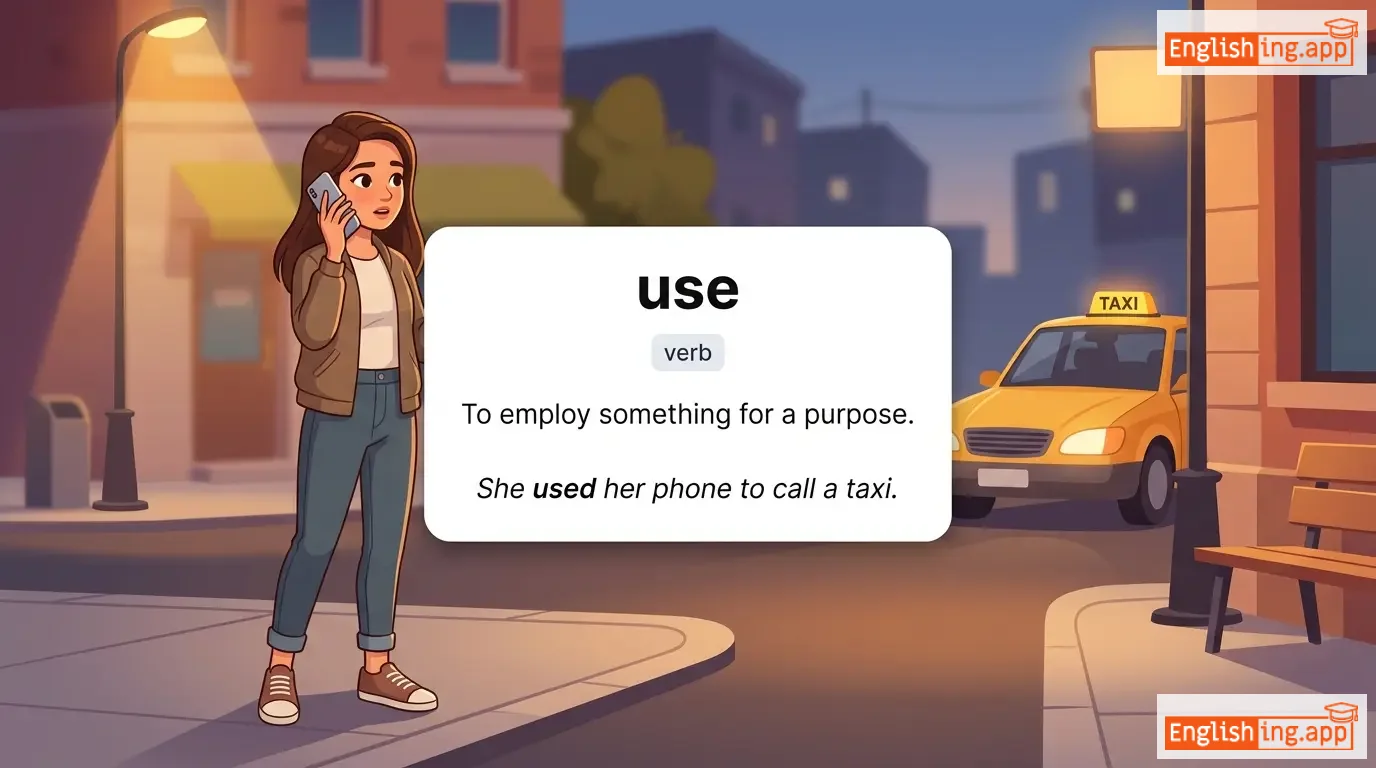
use definition card — visual illustration of the meaning
🛠️

use (yuz)

verb
/juːz/ (verb), /juːs/ (noun)
使用 (shiyong)

To employ something for a purpose.

"She used her phone to call a taxi."

"她用了手机叫出租车。" (Ta yongle shouji jiao chuzuche.)
adjective
/ˈʌpˌhɪl/
困难的; 需要巨大努力的; 向上的倾斜 (kunnan de; xuyao jida nuli de; xiang shang de qingxie)

difficult; requiring great effort; sloping upward

"Learning a new language can be an uphill battle."

"学习一门新语言可能是一个艰难的战斗。" (Xuexi yi men xin yuyan keneng shi yige jiannang de zhanzheng.)
verb
/ʌnˈjoʊk/
解开 (jiě kāi)

To release from a yoke or to free from restraint or obligation.

"The farmer unyoked the oxen after a long day of work."

"农民在长时间工作后解开了牛的套索。" (Nóngmín zài cháng shíjiān gōngzuò hòu jiě kāi le niú de tàosuǒ.)
adjective
/ʌnˈstɪntɪŋ/
慷慨的 (kangkai de)

given generously without holding back

"She received unstinting support from her family."

"她从家人那里得到了慷慨的支持。" (Ta cong jiaren nali dedaole kangkai de zhichi.)
verb
/ʌpˈhiːv/
抬起 (tái qǐ)

to lift or raise something forcefully; to cause to rise suddenly

"The workers had to upheave the heavy stone to clear the path."

"工人们不得不抬起重石来清理道路。" (Gōngrén men bùdé bù tái qǐ zhòng shí lái qīnglǐ dàolù.)
adjective
/ʌnˈtiːtʃəbəl/
不可教的 (bu ke jiao de)

not able or willing to learn; resistant to instruction or guidance

"He was so stubborn that he became almost unteachable."

"他非常固执,几乎变得不可教。" (ta fei chang gu zhi ji hu bian de bu ke jiao)
visiting definition card — visual illustration of the meaning
verb
/ˈvɪzɪtɪŋ/
拜访 (baifang)

Going to see and spend time with someone or at a place.

"The group is visiting islands during the expedition."

"小组在远征期间访问岛屿。" (Xiaozu zai yuanzheng qijian fangwen daoyu.)
adjective
/ʌnˈsaɪtli/
难看 (nankan)

Unpleasant to look at; ugly.

"The garbage pile created an unsightly view in the park."

"垃圾堆在公园里创造了一个难看的景象。" (Lājī duī zài gōngyuán lǐ chuàngzào le yīgè nán kàn de jǐngxiàng.)
adjective
/ˌvɪtriˈɑːlɪk/
尖刻的批评 (jiān kè de pī píng)

filled with bitter criticism or malice

"His vitriolic remarks hurt everyone in the room."

"他尖刻的评论伤害了房间里所有的人。" (Tā jiān kè de píng lùn shāng hài le fáng jiān lǐ suǒ yǒu de rén.)
adjective
/ʌnˈwiːldi/
笨重 (bènzhòng)

Difficult to carry or move because of its size, shape, or weight.

"The box was too unwieldy to carry up the stairs."
"这个盒子太笨重了,无法把它提上楼梯。" (zhège hézi tài bènzhòng le, wúfǎ bǎ tā tí shàng lóutī.)
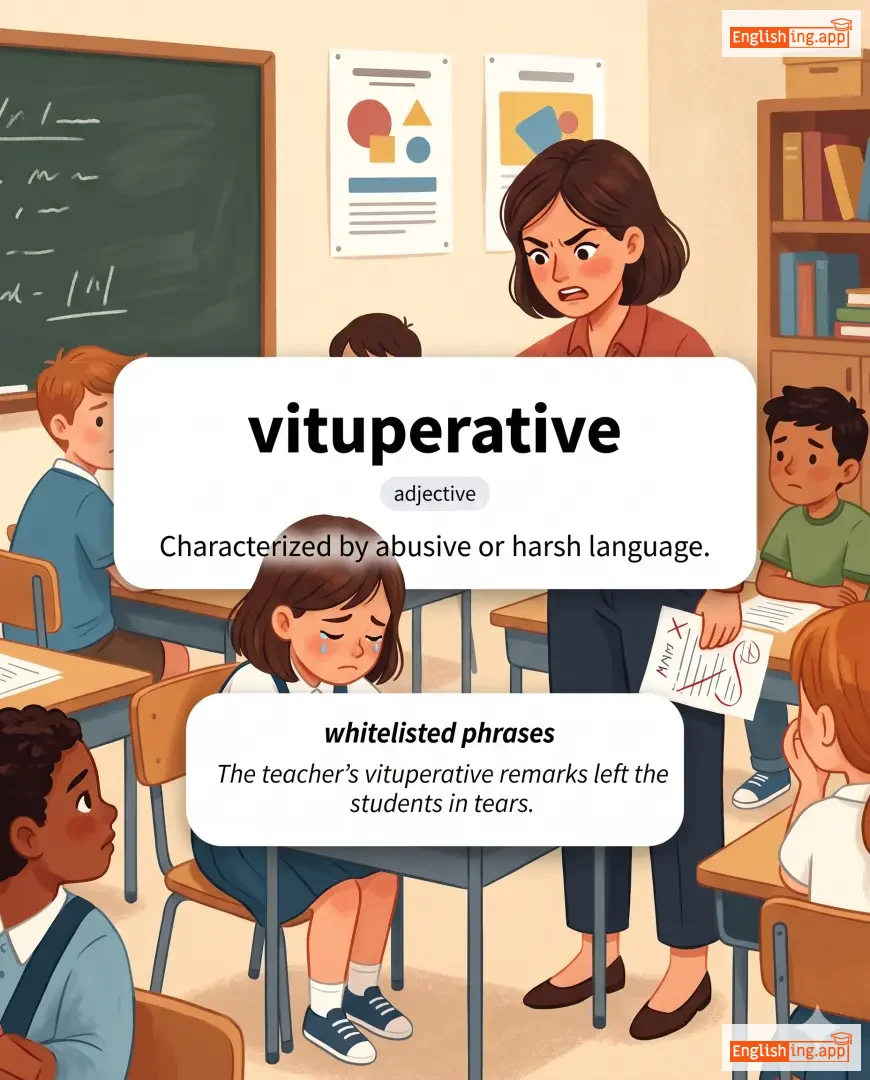
vituperative definition card — visual illustration of the meaning
adjective
/vɪˈtjuːpərətɪv/
辱骂的 (rǔmà de)

Characterized by abusive or harsh language.

"The teacher’s vituperative remarks left the students in tears."

"老师的辱骂言辞让学生们泪流满面。" (Lǎoshī de rǔmà yáncí ràng xuéshēngmen lèi liú mǎn miàn.)
adverb
/ʌnˈjuːʒuəli/
异常地 (yichang de)

in a way that is not typical or expected; to an uncommon degree

"It was unusually cold for this time of year."

"对一年中的这个时候来说,天气异常寒冷。" (Dui yi nian zhong de zhe ge shihou laishuo tianqi yichang hanleng)
noun
/ˈjuːsɪdʒ/
使用 (shiyong)

The action of using something; the way in which a word or phrase is normally used.

"The book explains the proper usage of technical terms."

"这本书解释了技术术语的正确使用。" (Zhè běn shū jiěshìle jìshù shùyǔ de zhèngquè shǐyòng.)
adjective
/ˈʌpˌkʌmɪŋ/
即将到来 (jijiang daolai)

about to happen or appear

"The upcoming event will be held next week."

"即将到来的活动将在下周举行。" (Jijiang daolai de huodong jiang zai xia zhou juxing.)
adjective
/ʌnˈtɛmpərd/
失控的 (shīkòng de)

not moderated or softened; lacking proper balance or control

"The untempered anger of the crowd caused chaos."

"人群的失控愤怒引发了混乱。" (Rénqún de shīkòng fènnù yǐnfāle hùnluàn.)
verb
/ˈvɪʒuəlaɪz/
想象 (xiǎngxiàng)

To form a mental image of something; to imagine.

"She tried to visualize her success before the big presentation."

"她在大演讲前尝试去想象自己的成功。" (Tā zài dà yǎnjiǎng qián chángshì qù xiǎngxiàng zìjǐ de chénggōng.)
noun
/ˈɜːrtʃɪn/
街头小孩 (jietou xiaohai)

a mischievous or poorly dressed child, often from the streets

"The ragged urchins played by the riverbank."

"那些穿着破烂的街头小孩在河边玩耍。" (naxie chuanzhuo polan de jietou xiaohai zai he bian wanshua.)
adjective
/ʌnˈtʌtʃəbəl/
不可触碰的; 无法批评或攻击 (bù kě chù pèng de; wú fǎ pī píng huò gōng jī)

not able to be touched or affected; beyond criticism or attack

"The CEO seemed untouchable despite the scandal."

"即使有丑闻,首席执行官似乎仍然是不可触碰的。" (Jí shǐ yǒu chǒu wén, shǒu xí zhí xíng guān shì hū réng rán shì bù kě chù pèng de.)
adverb
/ʌnˈwɪlɪŋli/
不情愿地 (bu qingyuan de)

in a way that shows reluctance or lack of desire; not willingly

"She unwillingly agreed to attend the meeting."

"她不情愿地同意参加会议。" (ta bu qingyuan de tongyi canjia huiyi)
adjective
/ˌʌn.rɪˈdʒɛn.ər.ət/
顽固 (wángù)

Not reformed or showing no signs of change; stubbornly refusing to reform or repent.

"He remained an unregenerate opponent of progress."

"他仍然是进步的顽固反对者。" (Tā réngrán shì jìnbù de wángù fǎnduìzhě.)
adjective
/ʌnˈriːdəbl/
难以辨认的 (nanyi bianren de)

not able to be read or understood clearly; illegible

"The doctor’s handwriting was completely unreadable."

"医生的字迹完全难以辨认。" (Yisheng de ziji wanquan nanyi bianren)
adjective
/ʌnˈwɜːrði/
不配; 没有价值 (bù pèi; méiyǒu jiàzhí)

not deserving respect or attention; lacking worth or merit

"He felt unworthy of such praise and recognition."
"他觉得自己不配得到这样的赞扬和认可。" (Tā juédé zìjǐ bùpèi dédào zhèyàng de zànyáng hé rènkě.)
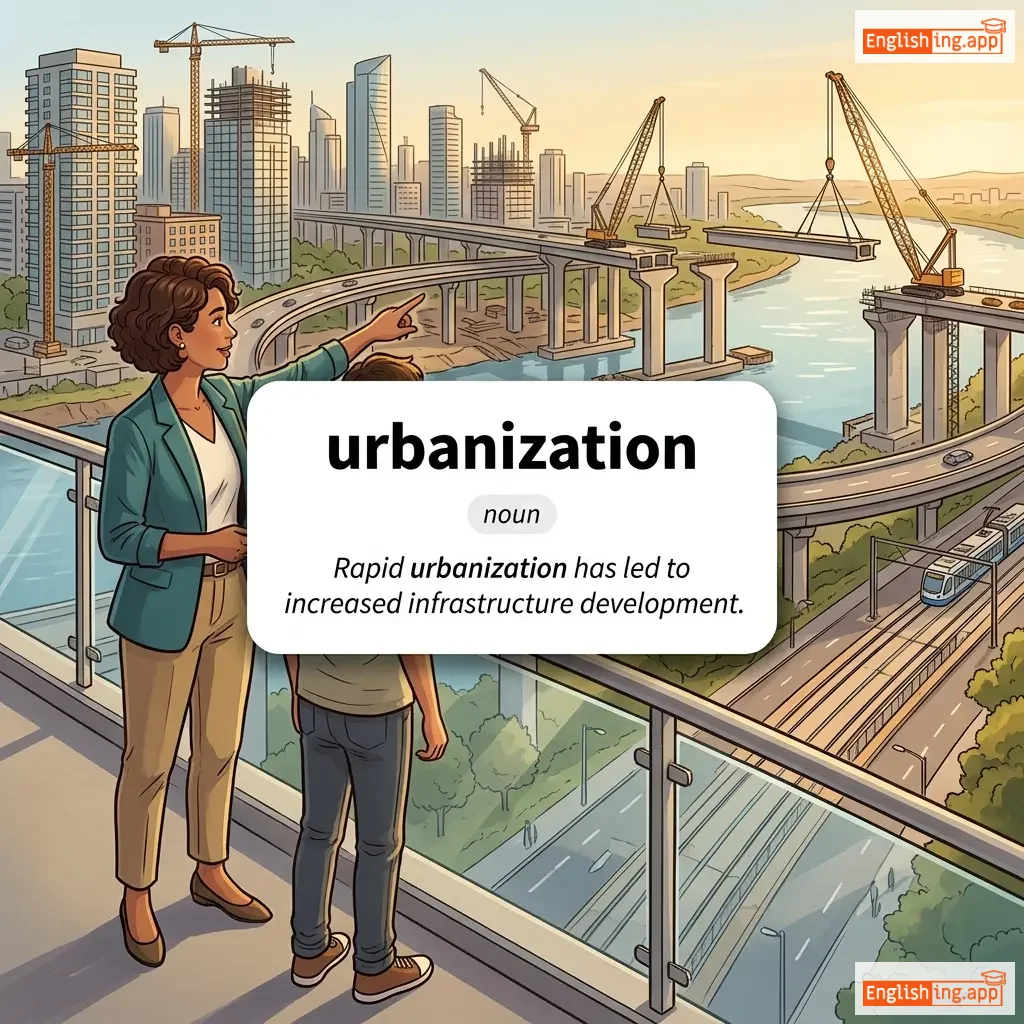
urbanization definition card — visual illustration of the meaning
noun
/ˌɜː.bən.aɪˈzeɪ.ʃən/
城市化 (chengshihua)

The process by which towns and cities are formed and become larger as more people begin living and working in central areas.

"Rapid urbanization has led to increased infrastructure development."
"快速的城市化导致了基础设施发展的增加。" (Kuaisu de chengshihua daozhile jichusheshi fazhande zengjia.)
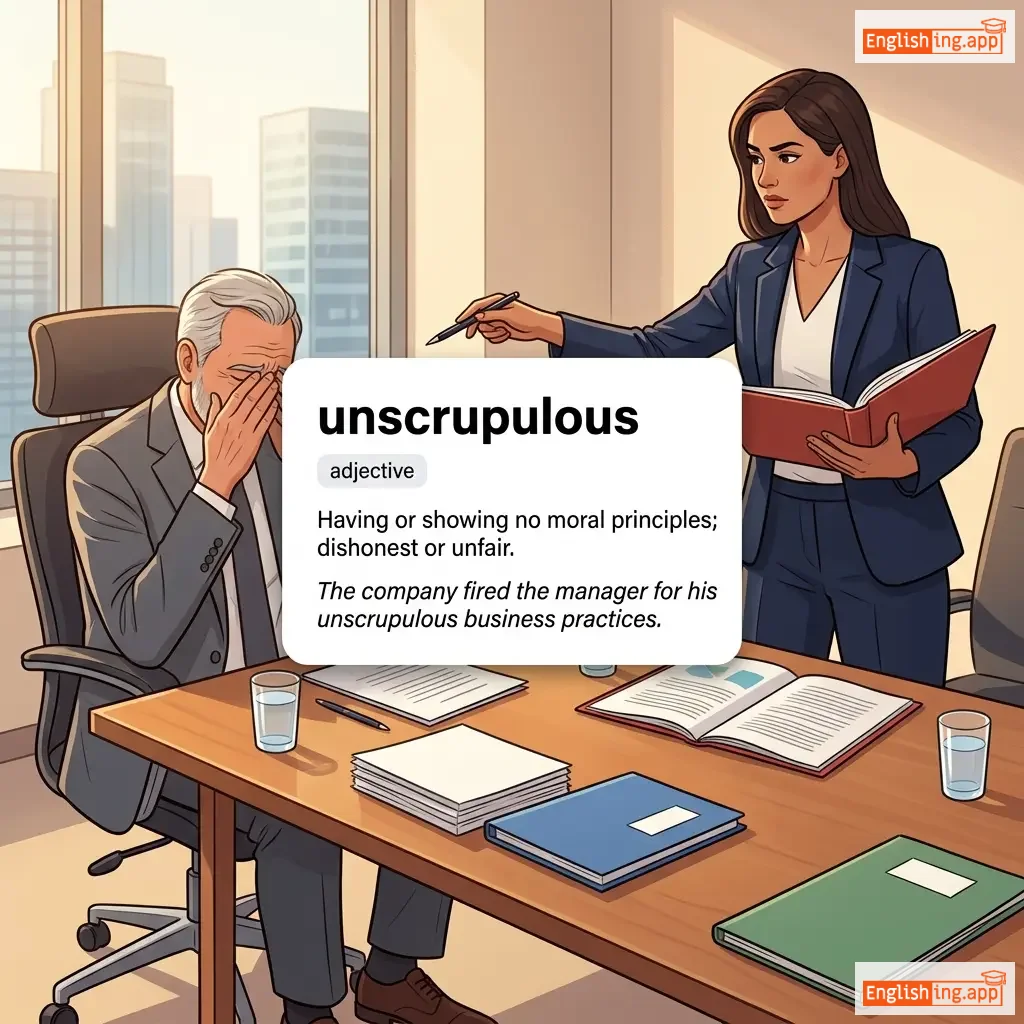
unscrupulous definition card — visual illustration of the meaning
adjective
/ʌnˈskruːpjələs/
不择手段 (bùzé shǒuduàn)

Having or showing no moral principles; dishonest or unfair.

"The company fired the manager for his unscrupulous business practices."

"公司因其不择手段的商业行为解雇了经理。" (Gōngsī yīn qí bùzé shǒuduàn de shāngyè xíngwéi jiěgù le jīnglǐ.)
noun
/ˈʌp.ʃɒt/
结果 (jieguo)

The final result or outcome of a process or situation.

"The upshot of the meeting was that the plan was postponed."

"会议的结果是计划被推迟了。" (Huiyi de jieguo shi jihua bei tuichi le.)
noun
/ɜːrˈbænɪti/
都市气质 (dūshì qìzhí)

refined courtesy, elegance, and sophistication in manner

"Her urbanity made her popular among diplomats and leaders."

"她的都市气质让她在外交官和领导人中非常受欢迎。" (Tā de dūshì qìzhí ràng tā zài wàijiāo guān hé lǐngdǎo rén zhōng fēicháng shòu huānyíng.)
👁️‍🗨️

Unseen (ʌnˈsiːn)

adjective
/ʌnˈsiːn/
看不见的;未曾看到或注意到的 (kan bu jian de; wei ceng kan dao huo zhu yi dao de)

not previously seen or noticed; invisible; hidden

"The unseen forces of nature can be very powerful."

"自然界的看不见的力量可能非常强大。" (ziran jie de kan bu jian de li liang ke neng fei chang qiang da.)
adjective
/ʌnˈvɔɪst/
未表达 (wei biao da)

not expressed in speech; in phonetics, a sound produced without vocal cord vibration

"The student kept her opinion unvoiced during the meeting."

"学生在会议期间保持她的意见未表达。" (Xuesheng zai huiyi qijian baochi ta de yijian wei biaoda.)
verb
/ˈvɪtrɪfaɪ/
转变为玻璃 (zhuǎnbiàn wéi bōlí)

to turn into glass or a glass-like substance by heat

"Sand can vitrify under intense heat."

"沙子在强烈的热量下可以转变为玻璃。" (Shāzi zài qiángliè de rèliàng xià kěyǐ zhuǎnbiàn wéi bōlí.)
adjective
/ʌnˈnætʃrəl/
不自然 (bù zìrán)

contrary to the usual course of nature; artificial or abnormal

"The bright green color of the drink looked unnatural."
"这款饮料的亮绿色看起来不自然。" (Zhè kuǎn yǐnliào de liàng lǜsè kàn qǐlái bù zìrán.)
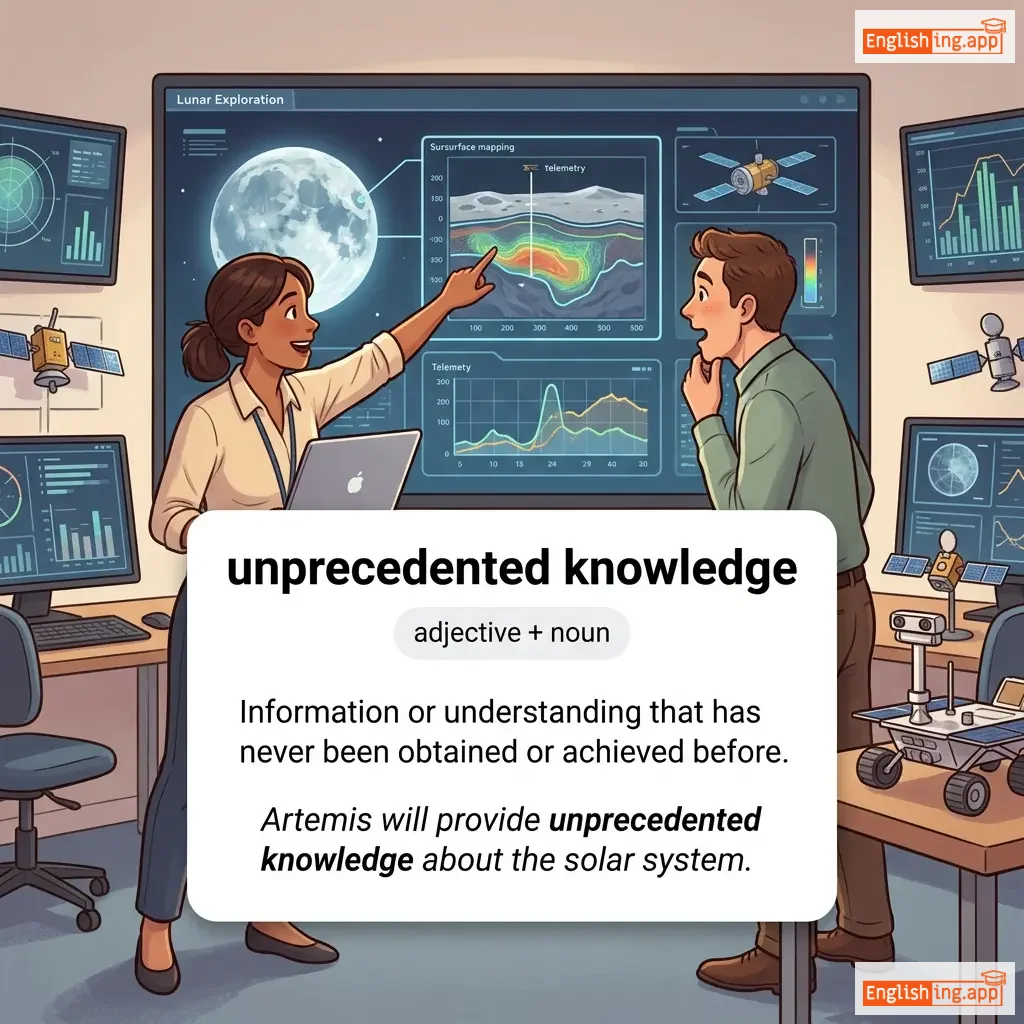
unprecedented knowledge definition card — visual illustration of the meaning
adjective + noun
ʌnˈpresɪdentɪd ˈnɒlɪdʒ
前所未有的知识 (qian suo wei you de zhi shi)

Information or understanding that has never been obtained or achieved before.

"Artemis will provide unprecedented knowledge about the solar system."
"阿尔忏将提供关于太阳系的前所未有的知识。" (A'erchan jiang tigong guanyu taiyangxi de qian suo wei you de zhishi.)
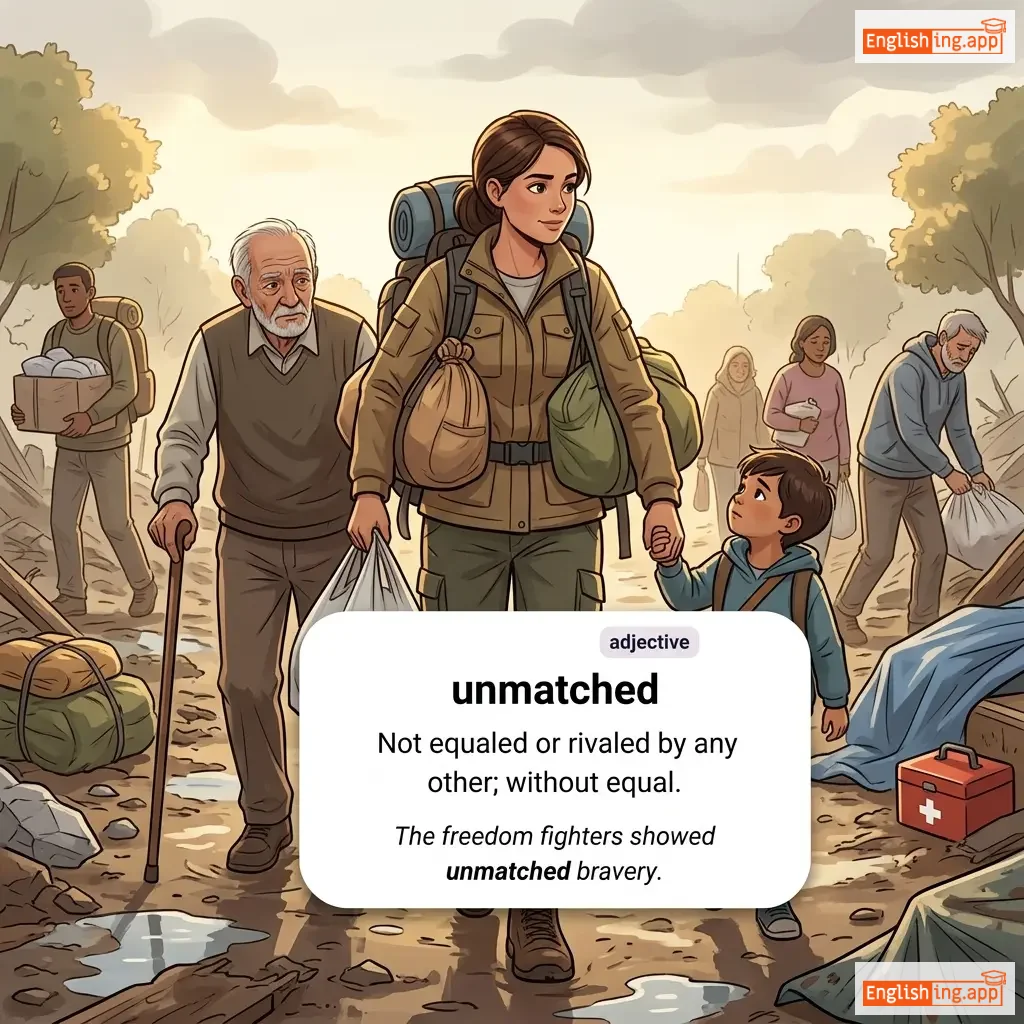
unmatched definition card — visual illustration of the meaning
adjective
ʌnˈmætʃt
无与伦比 (wú yǔ lún bǐ)

Not equaled or rivaled by any other; without equal.

"The freedom fighters showed unmatched bravery."

"自由战士们展示了无与伦比的勇气。" (Zìyóu zhànshìmen zhǎnshìle wú yǔ lún bǐ de yǒngqì.)
adjective
/ˌʌnˈpeɪd/
未支付的; 无薪的 (wei zhi fu de; wu xin de)

not paid for; without payment or salary

"She worked as an unpaid intern for six months."

"她作为一名无薪实习生工作了六个月。" (ta zuo wei yi ming wu xin shi xi sheng gong zuo le liu ge yue)
adjective
/ʌnˈstɛdi/
不稳定的 (bu wending de)

not firm or stable; likely to change or fail

"She felt unsteady on her feet after the long journey."

"长途旅行后,她感到站立不稳。" (Changtu lüxing hou, ta gandao zhanli bu wen)
adverb
/ʌnˈnesəserəli/
不必要地 (bù bì yào de)

to a greater extent than is needed; without necessity

"Don't worry unnecessarily about the exam."

"不要为考试不必要地担心。" (bù yào wèi kǎo shì bù bì yào de dān xīn.)
adjective
/ʌnˈmɪtɪɡeɪtɪd/
完全 (wanquan)

absolute; not lessened or moderated

"The meeting was an unmitigated disaster."

"会议是一次完全的灾难。" (Huiyi shi yici wanquan de zainan.)
adjective
/ˌʌnəˈfɪʃ.əl/
非官方的 (fei guanfang de)

not officially authorized or confirmed; informal

"The unofficial results showed a close race."

"非官方的结果显示出一场激烈的比赛。" (fēi guānfāng de jiéguǒ xiǎnshì chū yī chǎng jīliè de bǐsài.)
adjective
/ʌnˈmærid/
未婚 (weihun)

Not married; single.

"He is thirty-five and still unmarried."

"他三十五岁,仍然未婚。" (Ta sanshiwu sui, rengran weihun.)
noun
/vɜːrˈtuː/
对艺术的爱好 (duì yìshù de àihào)

a love of or taste for fine art, antiques, or curiosities

"The collector’s house was filled with objects of virtu."
"收藏家的房子里充满了虚拟的物品。" (Shōucáng jiā de fángzi lǐ chōngmǎnle xūnǐ de wùpǐn.)
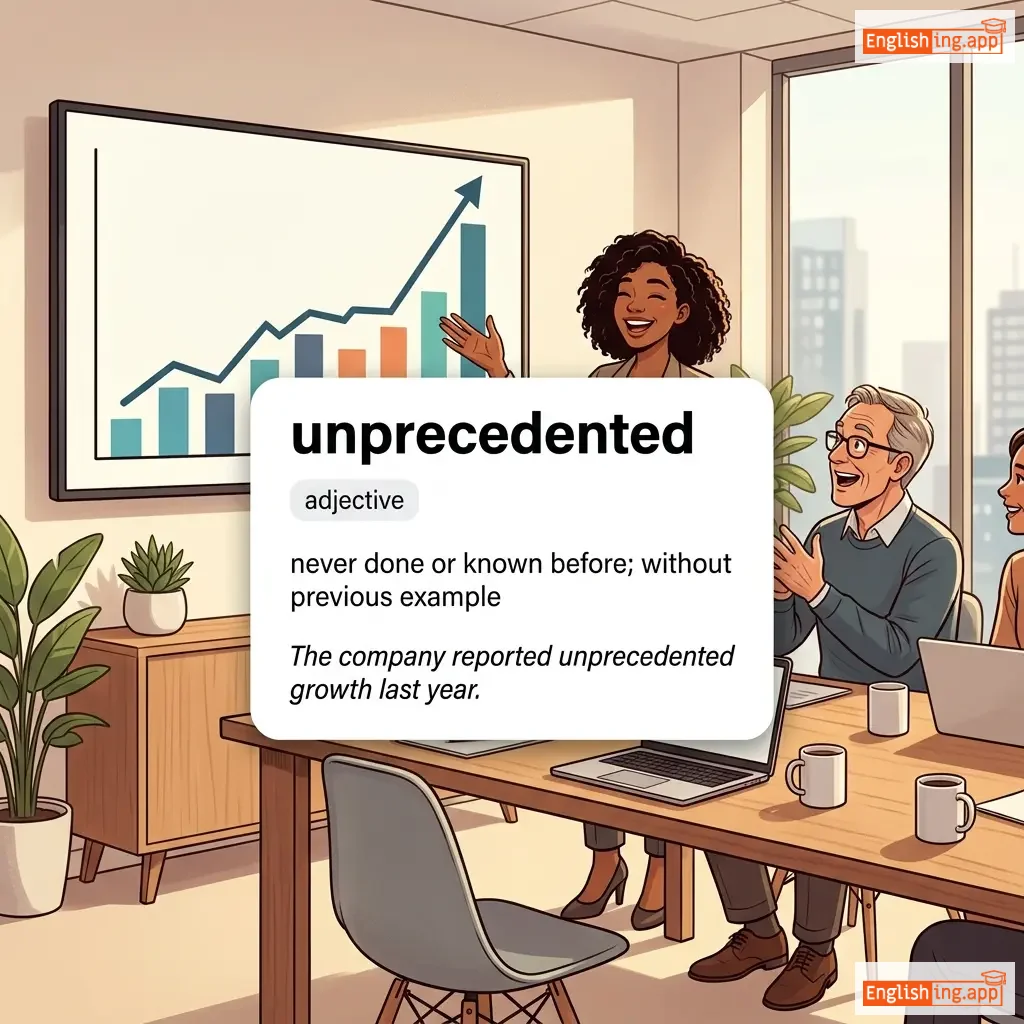
unprecedented definition card — visual illustration of the meaning
adjective
/ʌnˈprɛsɪˌdɛntɪd/
前所未有 (qián suǒ wèi yǒu)

never done or known before; without previous example

"The company reported unprecedented growth last year."

"公司报告了去年前所未有的增长。" (gōngsī bàogào le qùnián qián suǒ wèi yǒu de zēngzhǎng.)
adjective
/ʌnˈnɛsəsɛri/
不必要 (bù bì yào)

not needed or required

"The manager cut all unnecessary expenses to save costs."

"经理削减了所有不必要的开支以节省成本。" (Jīnglǐ xuējiǎnle suǒyǒu bù bì yào de kāizhī yǐ jiéshěng chéngběn.)
visuospatial definition card — visual illustration of the meaning
adjective
ˌvɪz.ju.oʊˈspeɪ.ʃəl
与通过视觉理解空间和物体之间的关系有关 (yu tongguo shijue liangan kongjian he wutai zhijian de guanxi youguan)

Related to understanding the relationship between space and objects through vision.

"Good visuospatial skills are important for architecture and design."

"良好的视觉空间技能对建筑和设计非常重要。" (Lianghao de shijue kongjian jineng dui jianzhu he sheji feichang zhongyao.)
adjective
/ʌnˈsəʊʃəbl/
不合群的 (bu he qun de)

not enjoying the company of others; avoiding social interaction

"He became unsociable after moving to a new city."

"搬到新城市后,他变得不合群。" (ban dao xin chengshi hou ta bian de bu he qun)