词汇表

英语词汇词典 | 单词含义、定义和示例

adjective
/ʌnˈseɪf/
不安全; 危险的; (bù ānquán, wēixiǎn de)

involving or causing danger or risk; not protected from harm

"It is unsafe to walk alone in this neighborhood at night."

"晚上在这个社区独自行走是不安全的。" (Wǎnshàng zài zhège shèqū dúzì xíngzǒu shì bù ānquán de.)
adjective
/ˈjuːsfəl/
有用的 (you yong de)

having a practical or beneficial use

"This tool is very useful."

"这个工具非常有用。" (Zhège gōngjù fēicháng yǒuyòng.)
adjective
/ˈʌpər/
上层 (shàngcéng)

higher in position or rank

"The upper floor of the building is under renovation."

"建筑物的上层正在翻修。" (Jiànzhúwù de shàngcéng zhèngzài fāngxiū.)
adjective
/ˌʌnprɪˈtɛnʃəs/
谦虚的 (qianxu de)

modest; not attempting to impress others with appearance or importance

"She lives in an unpretentious home but is very happy."

"她住在一个谦虚的家里,但非常快乐。" (Ta zhu zai yi ge qianxu de jia li, dan feichang kuaile.)
adjective
/ˈvɪzəbl/
可见的 (kejian de)

able to be seen; perceptible by the eye

"The stars were clearly visible in the night sky."

"星星在夜空中清晰可见。" (Xīngxīng zài yèkōng zhōng qīngxī kějiàn.)
verb
/ʌnˈnɜːrv/
失去信心 (shīqù xìnxīn)

to make someone lose confidence, courage, or composure

"The hostile questions began to unnerve the witness."

"敌对问题开始让证人感到不安。" (Díduì wèntí kāishǐ ràng zhèngrén gǎndào bù'ān.)
conjunction
/ʌnˈlɛs/
除非 (chúfēi)

except if

"We won't go unless it stops raining."

"除非雨停了,否则我们不去。" (Chúfēi yǔ tíngle, fǒuzé wǒmen bù qù.)
visuospatial definition card — visual illustration of the meaning
adjective
ˌvɪz.ju.oʊˈspeɪ.ʃəl
与通过视觉理解空间和物体之间的关系有关 (yu tongguo shijue liangan kongjian he wutai zhijian de guanxi youguan)

Related to understanding the relationship between space and objects through vision.

"Good visuospatial skills are important for architecture and design."
"良好的视觉空间技能对建筑和设计非常重要。" (Lianghao de shijue kongjian jineng dui jianzhu he sheji feichang zhongyao.)
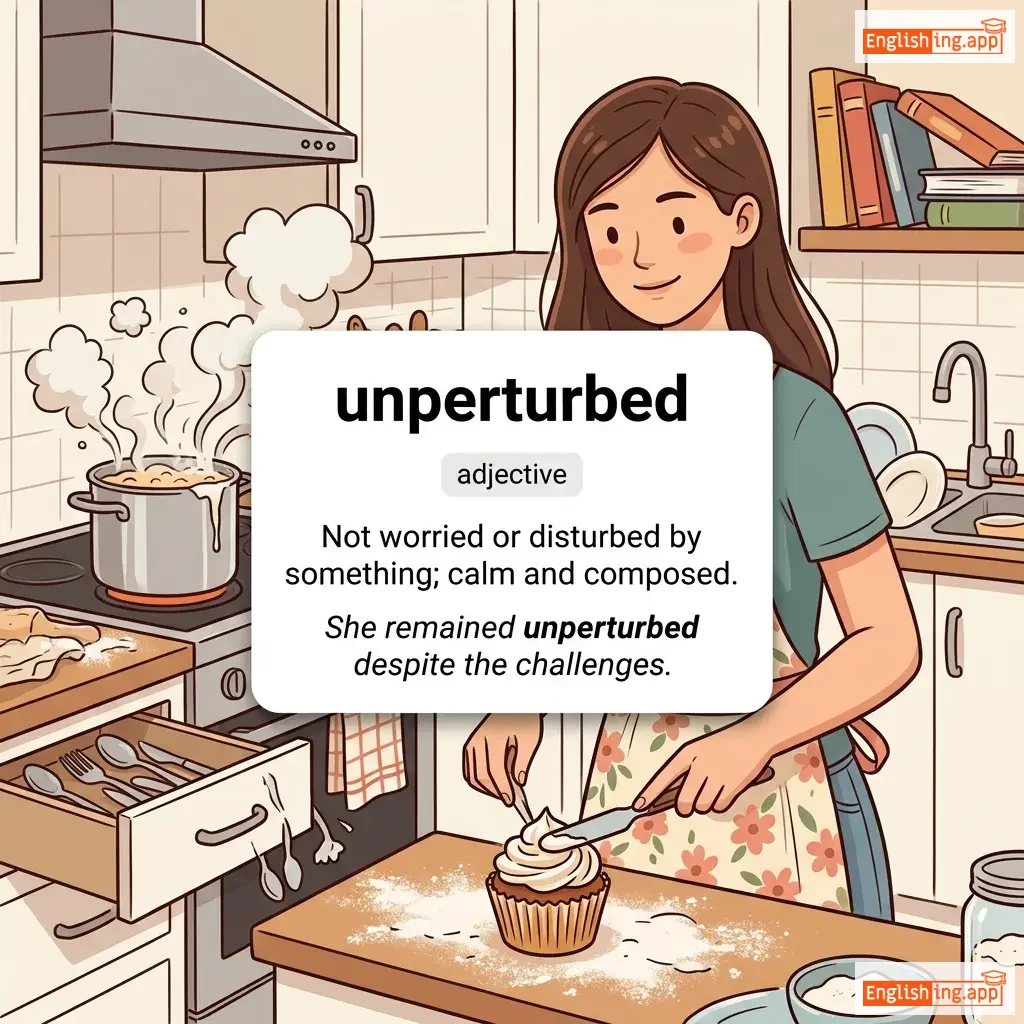
unperturbed definition card — visual illustration of the meaning
adjective
ˌʌn.pəˈtɜːbd
不为某事烦恼或困扰;冷静且镇定 (bù wéi mǒu shì fán nǎo huò kùn rǎo; lěng jìng qiě zhèn dìng)

Not worried or disturbed by something; calm and composed.

"She remained unperturbed despite the challenges."

"尽管有挑战,她依然保持冷静。" (Jǐnguǎn yǒu tiǎozhàn, tā yīrán bǎochí lěngjìng.)
adjective
/ʌnˈkwes.tʃən.ə.bl̩/
无可争议的; 确定的 (wú kě zhēng yì de; què dìng de)

not able to be disputed or doubted; certain and beyond doubt

"Her honesty and integrity are unquestionable qualities."

"她的诚实和正直是无可争议的品质。" (tā de chéngshí hé zhèngzhí shì wú kě zhēng yì de pǐnzhì.)
adjective
/ˈvɜːrtʃuəs/
有德行的 (yǒu déxíng de)

Having or showing high moral standards.

"She is known as a virtuous woman who helps the poor."

"她是一个以帮助穷人而著名的有德行的女人。" (Tā shì yīgè yǐ bāngzhù qióngrén ér zhùmíng de yǒu déxíng de nǚrén.)
adjective
/ʌnˈprɒf.ɪ.tə.bl̩/
无利可图 (wú lì kě tú)

not yielding profit or gain; not producing financial benefit

"The unprofitable business was forced to close down after three years."
"这个无利可图的生意在三年后被迫关闭。" (Zhè ge wú lì kě tú de shēng yì zài sān nián hòu bèi pò guān bì.)
noun
/ˈviːzə/
签证 (qiānzhèng)

an official authorization or permission to enter, leave, or stay in a country

"She applied for a visa to study abroad."

"她申请了签证以便出国留学。" (Tā shēnqǐngle qiānzhèng yǐbiàn chūguó liúxué.)
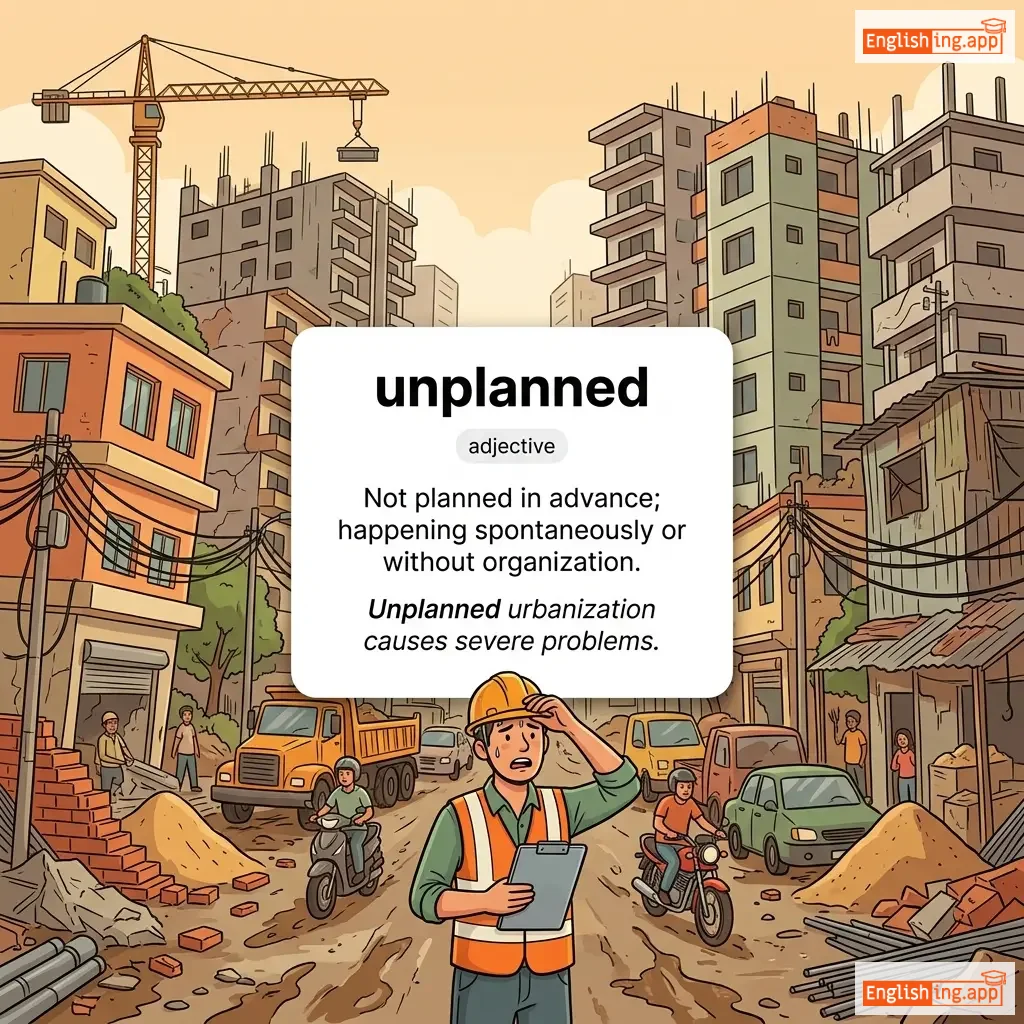
unplanned definition card — visual illustration of the meaning
adjective
ʌnˈplænd
未计划的 (wei jihua de)

Not planned in advance; happening spontaneously or without organization.

"Unplanned urbanization causes severe problems."

"无计划的城市化造成严重的问题。" (Wu jihua de chengshihua zaocheng yanzhong de wenti.)
adjective
/ʌnˈmɪtɪɡeɪtɪd/
完全 (wanquan)

absolute; not lessened or moderated

"The meeting was an unmitigated disaster."

"会议是一次完全的灾难。" (Huiyi shi yici wanquan de zainan.)
vitiate definition card — visual illustration of the meaning
verb
/ˈvɪʃieɪt/
败坏 (bàihuài)

to spoil, weaken, or make something less effective

"One careless remark can vitiate the entire argument."

"一句不小心的话可能会破坏整个论点。" (Yī jù bù xiǎoxīn de huà kěnéng huì pòhuài zhěnggè lùndiǎn.)
noun
/ˈvɪrjʊləns/
毒性 (dúxìng)

The severity or harmfulness of a disease or poison.

"Scientists studied the virulence of the new virus strain."

"科学家研究了新病毒株的毒性。" (Kēxuéjiā yánjiūle xīn bìngdú zhū de dúxìng.)
noun
/ˈvɪzɪtər/
游客 (youke)

a person who goes to see a place or someone for a short time

"The museum had many visitors last weekend."

"博物馆上周末有很多游客。" (Bówùguǎn shàng zhōumò yǒu hěn duō yóukè.)
adjective
/ˌʌnˈpɑr.də.nə.bəl/
不可宽恕的 (bù kě kuān shù de)

too bad to be forgiven; inexcusable

"His betrayal of trust was an unpardonable offense."
"他的背叛是不可原谅的罪行。" (tā de bèi pàn shì bù kě yuán liàng de zuì xíng)
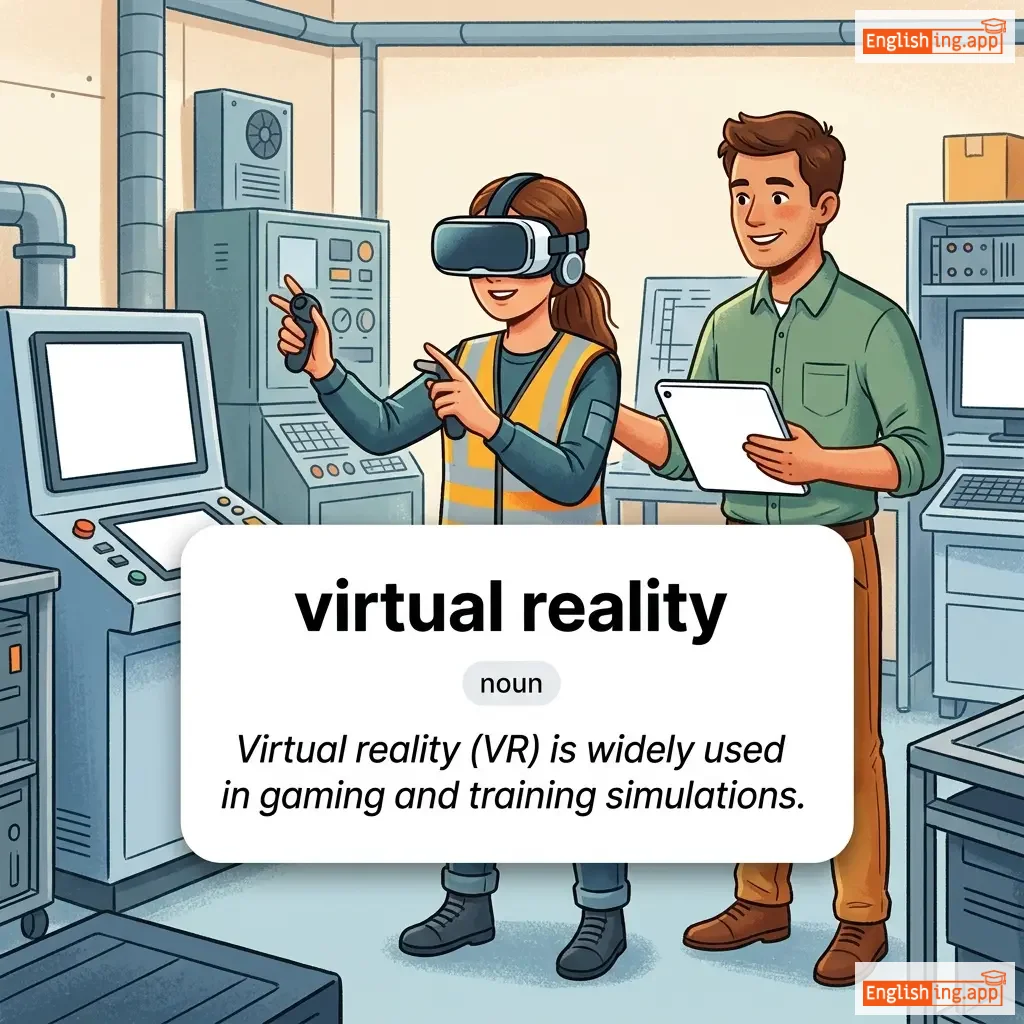
virtual reality definition card — visual illustration of the meaning
noun
/ˈvɜː.tʃu.əl riˈæl.ɪ.ti/
虚拟现实 (xūnǐ xiànshí)

Computer technology that creates an artificial three-dimensional environment where users can feel like they are in a real environment.

"Virtual reality (VR) is widely used in gaming and training simulations."

"虚拟现实(VR)在游戏和训练模拟中被广泛使用。" (Xūnǐ xiànshí (VR) zài yóuxì hé xùnliàn móniàn zhōng bèi guǎngfàn shǐyòng.)
verb
/vɪˈtjuːpəreɪt/
严厉批评 (yánlì pīpíng)

To criticize harshly or abuse verbally.

"The politician was quick to vituperate his opponents during the debate."

"政治家在辩论中迅速地批评了他的对手。" (Zhèngzhìjiā zài biànlùn zhōng xùnsù de pīpíngle tā de duìshǒu.)
adjective
/ˌʌnrɪˈzɒlvd/
未解决的 (wei jiejue de)

not solved or settled; remaining undecided or unclear

"The dispute remains unresolved despite several meetings."
"尽管开了几次会议,这个争议仍未解决。" (jinguan kailiao jici huiyi zhege zhengyi reng wei jiejue)
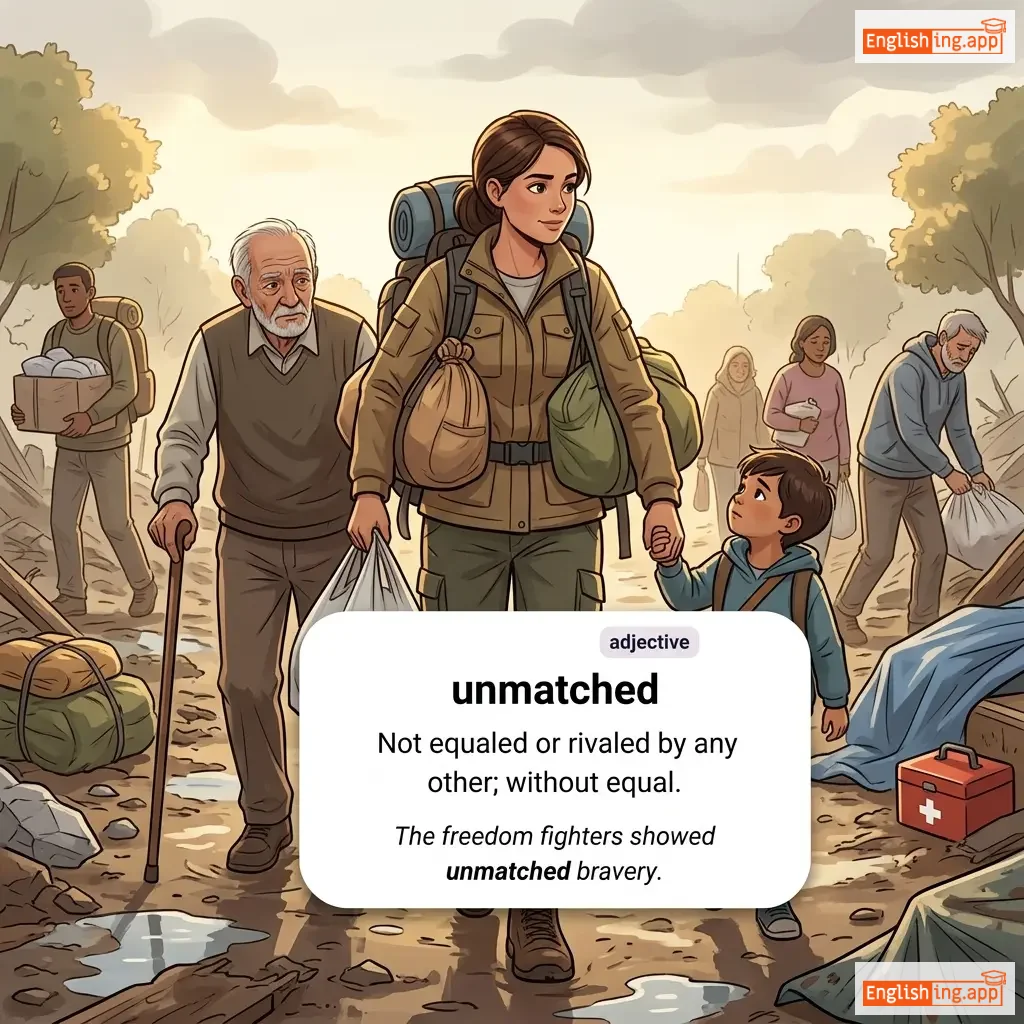
unmatched definition card — visual illustration of the meaning
adjective
ʌnˈmætʃt
无与伦比 (wú yǔ lún bǐ)

Not equaled or rivaled by any other; without equal.

"The freedom fighters showed unmatched bravery."

"自由战士们展示了无与伦比的勇气。" (Zìyóu zhànshìmen zhǎnshìle wú yǔ lún bǐ de yǒngqì.)
verb
/ˈvɪtrɪfaɪ/
转变为玻璃 (zhuǎnbiàn wéi bōlí)

to turn into glass or a glass-like substance by heat

"Sand can vitrify under intense heat."

"沙子在强烈的热量下可以转变为玻璃。" (Shāzi zài qiángliè de rèliàng xià kěyǐ zhuǎnbiàn wéi bōlí.)
adjective
/ʌnˈlɛtəd/
文盲 (wénmáng)

lacking education or the ability to read and write; illiterate

"The unlettered villagers relied on oral traditions to preserve their history."
"那些文盲村民依赖口头传统来保存他们的历史。" (Nàxiē wénmáng cūnmín yīlài kǒutóu chuántǒng lái bǎocún tāmen de lìshǐ.)
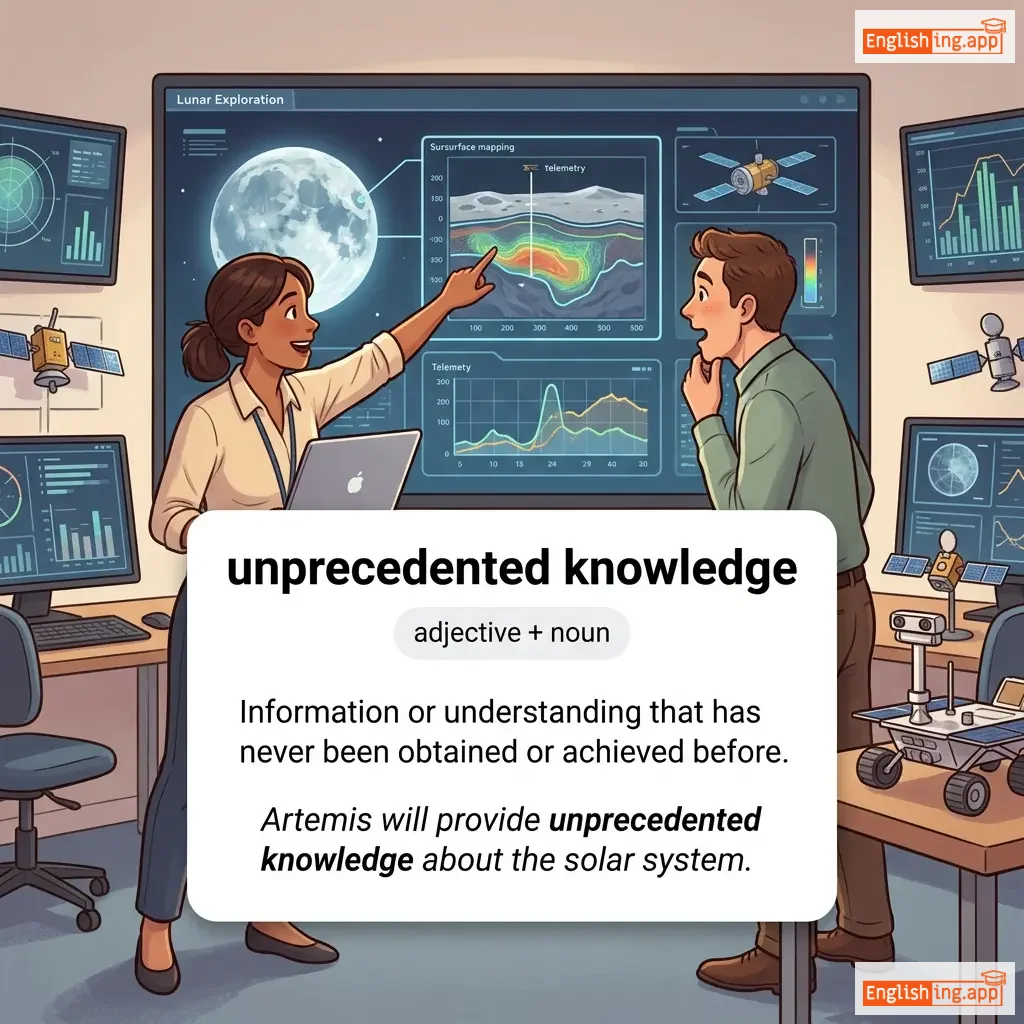
unprecedented knowledge definition card — visual illustration of the meaning
adjective + noun
ʌnˈpresɪdentɪd ˈnɒlɪdʒ
前所未有的知识 (qian suo wei you de zhi shi)

Information or understanding that has never been obtained or achieved before.

"Artemis will provide unprecedented knowledge about the solar system."
"阿尔忏将提供关于太阳系的前所未有的知识。" (A'erchan jiang tigong guanyu taiyangxi de qian suo wei you de zhishi.)
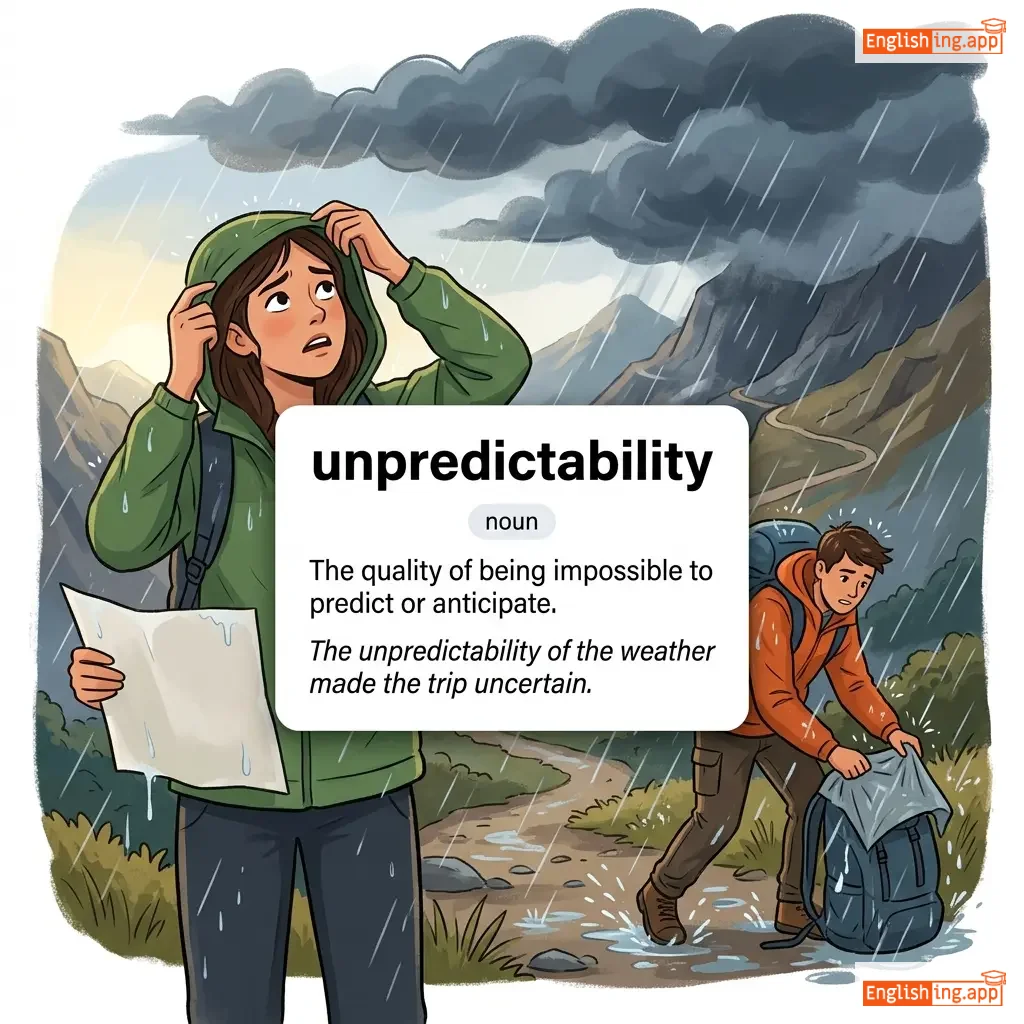
unpredictability definition card — visual illustration of the meaning
noun
/ˌʌnprɪˈdɪktəˌbɪləti/
不可预测性 (bù kě yù cè xìng)

The quality of being impossible to predict or anticipate.

"The unpredictability of the weather made the trip uncertain."

"天气的不可预测性使得旅行充满不确定性。" (Tiānqì de bù kě yù cè xìng shǐdé lǚxíng chōngmǎn bù quèdìngxìng.)
noun
/ˈvaɪrəs/
病毒 (bingdu)

A tiny infectious agent that can replicate only inside the living cells of an organism.

"The computer was infected with a dangerous virus."

"计算机感染了一个危险的病毒。" (Jìsuànjī gǎnrǎnle yīgè wēixiǎn de bìngdú.)
adjective
/ʌnprəˈfɛʃ.ən.əl/
不专业 (bù zhuānyè)

not conforming to the standards expected in a particular profession

"His unprofessional behavior led to his dismissal from the company."

"他的不专业行为导致他被公司解雇。" (Tā de bù zhuānyè xíngwéi dǎozhì tā bèi gōngsī jiěgù.)
viscous definition card — visual illustration of the meaning
adjective
/ˈvɪskəs/
粘性 (niánxìng)

Having a thick, sticky consistency between solid and liquid.

"Honey is a viscous liquid that flows slowly."

"蜂蜜是一种粘性液体,流动缓慢。" (Fēngmì shì yī zhǒng niánxìng yètǐ, liúdòng huǎnmàn.)
adjective
/ˌʌnprɪˈdɪktəbəl/
不可预测的 (buke yuce de)

not able to be predicted; changing suddenly and unexpectedly

"The weather in this region is highly unpredictable."

"这个地区的天气非常不可预测。" (zhege diqu de tianqi feichang buke yuce de)
adjective
/ʌnˈskeɪðd/
毫发无损 (háo fà wú sǔn)

Without suffering any injury, damage, or harm.

"She escaped from the accident unscathed."

"她毫发无损地逃离了事故。" (Tā háo fà wú sǔn de táo líle shìgù.)
adjective
/ʌnˈkwɒl.ɪ.faɪd/
不合格的; 无资格的; (bù hé gé de; wú zī gé de)

not having the necessary skills or qualifications; complete or absolute

"He was unqualified for the engineering position due to lack of experience."

"他因缺乏经验而不适合这个工程职位。" (Tā yīn quēfá jīngyàn ér bù shìhé zhège gōngchéng zhíwèi.)
vision definition card — visual illustration of the meaning
noun
/ˈvɪʒən/
幸福 (xingfu)

the ability to see or a mental image of something

"She had a clear vision of her future."

"当她收到奖项时,她无法掩饰她的幸福。" (Dang ta shoudao jiangxiang shi, ta wu fa yanshi ta de xingfu.)
verb
/ˈvɪʒuəlaɪz/
想象 (xiǎngxiàng)

To form a mental image of something; to imagine.

"She tried to visualize her success before the big presentation."

"她在大演讲前尝试去想象自己的成功。" (Tā zài dà yǎnjiǎng qián chángshì qù xiǎngxiàng zìjǐ de chénggōng.)
adjective
/ˈvɪtriəs/
玻璃状 (bolizhuang)

having a glass-like appearance or quality

"The mineral has a vitreous shine."

"这种矿物有玻璃状的光泽。" (Zhezhong kuangwu you bolizhuang de guangze.)
adjective
/ˌʌnrɪˈlaɪəbl/
不可靠的; 不能被信任或依赖 (bù kěkào de; bù néng bèi xìnrèn huò yīlài)

not dependable; not able to be trusted or relied upon

"The old car is unreliable and breaks down frequently."

"这辆老车不可靠,常常坏掉。" (Zhè liàng lǎo chē bù kěkào, chángcháng huài diào.)
adjective
/ʌnˈmænɪdʒəbəl/
无法控制的; 失控 (wúfǎ kòngzhì de; shī kòng)

difficult or impossible to control or handle

"The large class became unmanageable without proper supervision."

"没有适当的监督,班级变得无法控制。" (méiyǒu shìdàng de jiāndū, bānjí biàndé wúfǎ kòngzhì.)
adjective
/ˌʌnəˈfɪʃ.əl/
非官方的 (fei guanfang de)

not officially authorized or confirmed; informal

"The unofficial results showed a close race."

"非官方的结果显示出一场激烈的比赛。" (fēi guānfāng de jiéguǒ xiǎnshì chū yī chǎng jīliè de bǐsài.)
noun
/ˈvaɪtəmɪn/
维他命 (weitaming)

a natural substance needed by the body to stay healthy

"Fruits and vegetables are rich sources of vitamins."

"水果和蔬菜是维他命的丰富来源。" (shuǐguǒ hé shūcài shì wéitāmìng de fēngfù láiyuán.)
adjective
/ˌʌnprəˈdʌktɪv/
无效的 (wúxiào de)

Not producing or achieving much; not effective or useful.

"The meeting was unproductive and wasted everyone's time."

"会议没有成效,浪费了大家的时间。" (Huìyì méiyǒu chéngxiào, làngfèi le dàjiā de shíjiān.)
adjective
/ʌnˈsoʊld/
未售出的 (wei shou chu de)

not sold; remaining without a buyer

"The unsold goods were returned to the warehouse."
"未售出的商品被退回仓库。" (wei shou chu de shangpin bei tui hui cangku)
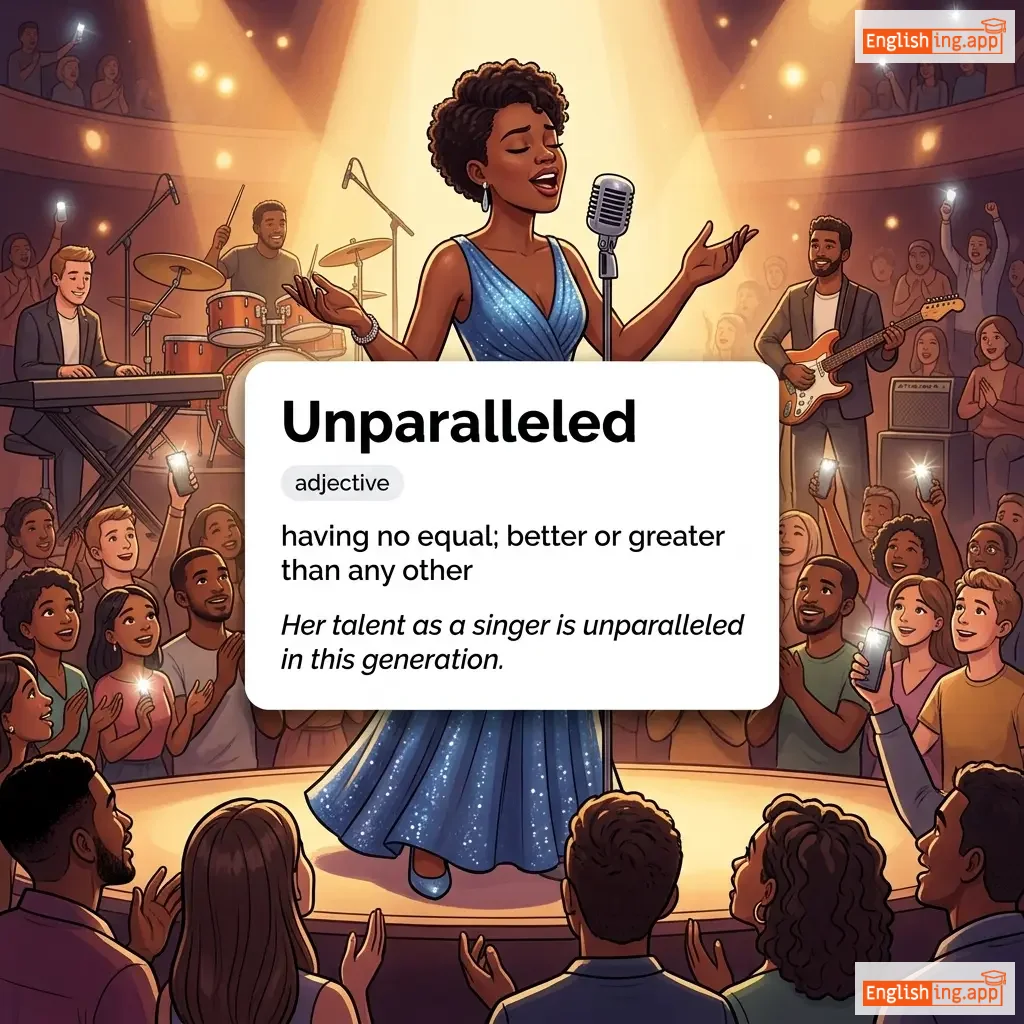
Unparalleled definition card — visual illustration of the meaning
adjective
/ˌʌnˈpær.ə.leld/
无与伦比; 独一无二; 无敌 (wuyu lunbi; duyi wuyi; wudi)

having no equal; better or greater than any other

"Her talent as a singer is unparalleled in this generation."

"她作为歌手的才华在这一代人中是无可比拟的。" (Ta zuowei geshou de caihua zai zhe yi dai ren zhong shi wu ke bini de.)
adjective
/ˌʌnpriːpəˈzɛsɪŋ/
不吸引人 (bù xīyǐn rén)

not attractive or appealing in appearance

"Despite his unprepossessing looks, he was very kind and intelligent."

"尽管他的外貌不吸引人,他还是非常友善和聪明。" (Jǐnguǎn tā de wàibiǎo bù xīyǐn rén, tā hái shì fēicháng yǒushàn hé cōngmíng.)
noun
/ˈvɪstə/
景观 (jingguan)

A pleasing view, especially one seen through a long, narrow opening.

"From the mountain top, we admired the breathtaking vista of the valley below."

"从山顶,我们欣赏到山谷下方令人叹为观止的景观。" (Cóng shāndǐng, wǒmen xīnshǎng dào shāngǔ xiàfāng lìng rén tànwèi guānzhǐ de jǐngguān.)
adjective
/ʌnˈruːli/
不听话 (bù tīnghuà)

Disorderly, disruptive, or difficult to control.

"The teacher struggled to calm the unruly students."
"老师努力平静那些不听话的学生。" (Lǎoshī nǔlì píngjìng nàxiē bù tīnghuà de xuéshēng.)
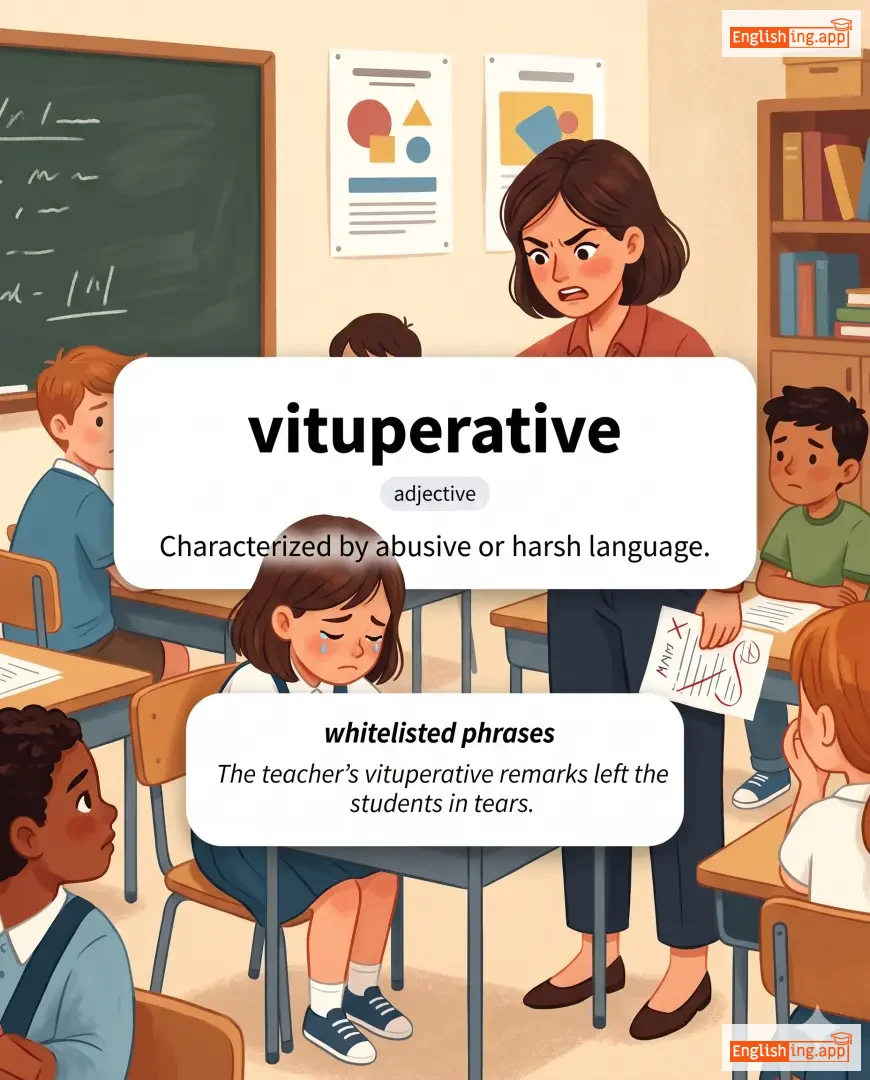
vituperative definition card — visual illustration of the meaning
adjective
/vɪˈtjuːpərətɪv/
辱骂的 (rǔmà de)

Characterized by abusive or harsh language.

"The teacher’s vituperative remarks left the students in tears."

"老师的辱骂言辞让学生们泪流满面。" (Lǎoshī de rǔmà yáncí ràng xuéshēngmen lèi liú mǎn miàn.)
visiting definition card — visual illustration of the meaning
verb
/ˈvɪzɪtɪŋ/
拜访 (baifang)

Going to see and spend time with someone or at a place.

"The group is visiting islands during the expedition."

"小组在远征期间访问岛屿。" (Xiaozu zai yuanzheng qijian fangwen daoyu.)
adjective
/ʌnˈsəʊʃəbl/
不合群的 (bu he qun de)

not enjoying the company of others; avoiding social interaction

"He became unsociable after moving to a new city."

"搬到新城市后,他变得不合群。" (ban dao xin chengshi hou ta bian de bu he qun)
noun
/ˈvɜːrtʃuː/
美德 (meidé)

High moral standards or a good quality considered morally good.

"Patience is considered a great virtue."

"耐心被认为是一种伟大的美德。" (Nàixīn bèi rènwéi shì yī zhǒng wěidà de měidé.)