語彙集

英単語辞書 | 単語の意味、定義、例文

adjective
/ʌnˈseɪf/
危険な; 危ない; (kiken na, abunai)

involving or causing danger or risk; not protected from harm

"It is unsafe to walk alone in this neighborhood at night."

"この地域では夜間に一人で歩くのは危険です。" (Kono chiiki de wa yakan ni hitori de aruku no wa kiken desu.)
adjective
/ˈjuːsfəl/
便利な (benrina)

having a practical or beneficial use

"This tool is very useful."

"このツールはとても便利です。" (Kono tsūru wa totemo benri desu.)
adjective
/ˈʌpər/
上部 (joubu)

higher in position or rank

"The upper floor of the building is under renovation."

"建物の上の階は改装中です。" (Tatemono no ue no kai wa kaisouchuu desu.)
adjective
/ˌʌnprɪˈtɛnʃəs/
控えめな (hikaeme na)

modest; not attempting to impress others with appearance or importance

"She lives in an unpretentious home but is very happy."

"彼女は控えめな家に住んでいますが、とても幸せです。" (Kanojo wa hikaeme na ie ni sundeimasu ga, totemo shiawase desu.)
adjective
/ˈvɪzəbl/
可視的 (kashiteki)

able to be seen; perceptible by the eye

"The stars were clearly visible in the night sky."

"星は夜空ではっきりと見えました。" (Hoshi wa yozora de hakkiri to miemashita.)
verb
/ʌnˈnɜːrv/
自信を失う (jishin o ushinau)

to make someone lose confidence, courage, or composure

"The hostile questions began to unnerve the witness."

"敵意のある質問が証人を動揺させ始めた。" (Tekii no aru shitsumon ga shōnin o dōyō sasehajimeta.)
conjunction
/ʌnˈlɛs/
もし~でない限り (moshi ~ denai kagiri)

except if

"We won't go unless it stops raining."
"雨が止まない限り、私たちは行きません。" (Ame ga yamanai kagiri, watashitachi wa ikimasen.)
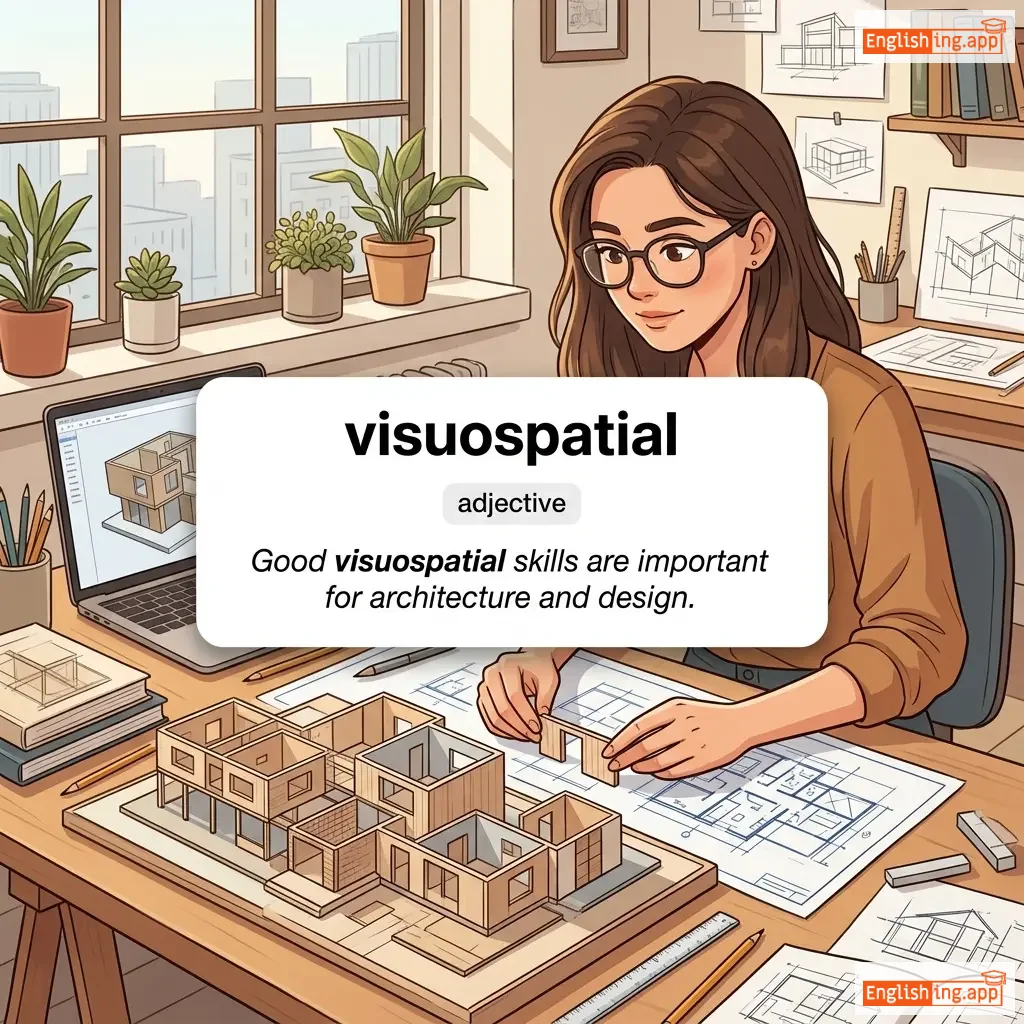
visuospatial definition card — visual illustration of the meaning
adjective
ˌvɪz.ju.oʊˈspeɪ.ʃəl
視覚を通じて空間と物体の関係を理解することに関連する (shikaku o tōjite kūkan to butai no kankei o rikai suru koto ni kanren suru)

Related to understanding the relationship between space and objects through vision.

"Good visuospatial skills are important for architecture and design."
"優れたビジュアルスペーシャルスキルは建築とデザインにとって重要です。" (Sugureta bijuarusupēsharu sukiru wa kenchiku to dezain ni totte jūyō desu.)
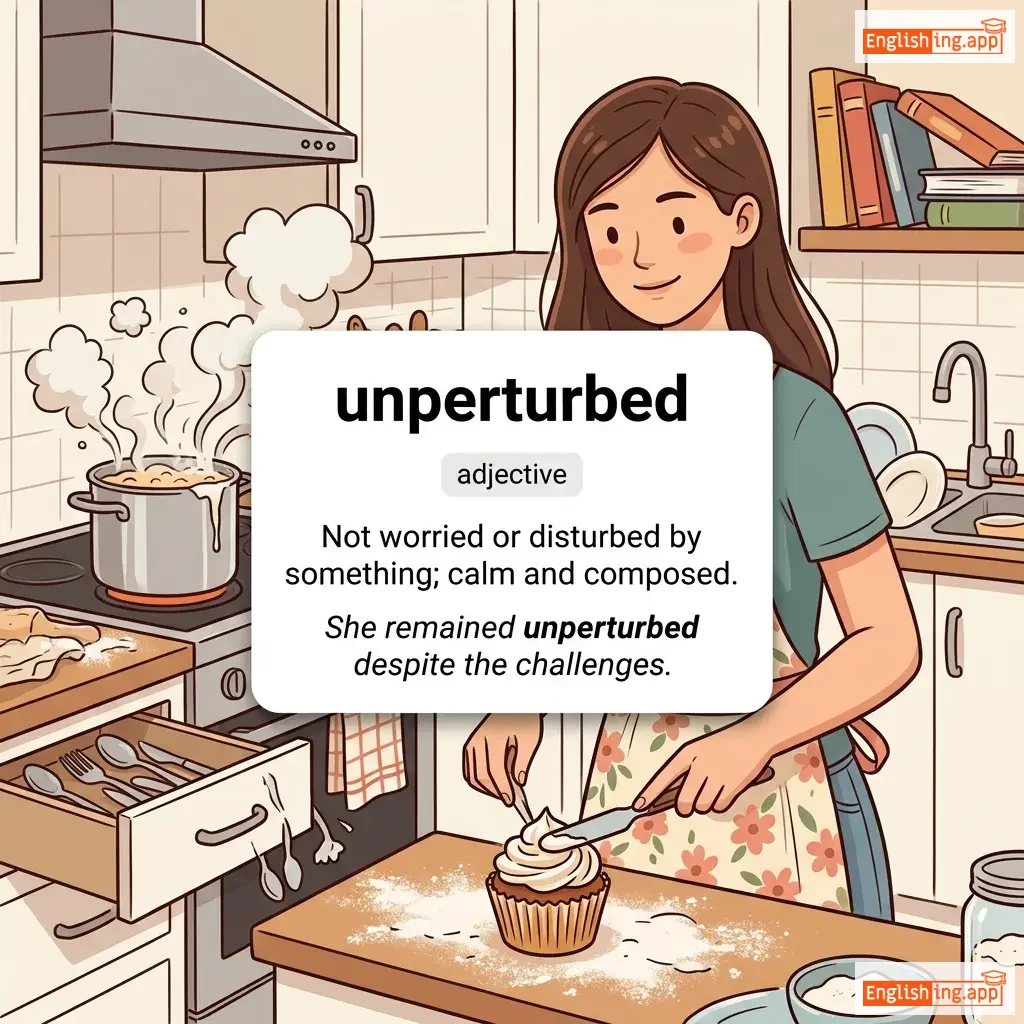
unperturbed definition card — visual illustration of the meaning
adjective
ˌʌn.pəˈtɜːbd
何かに悩まされたり、動揺したりしない; 冷静で落ち着いている (nanika ni nayamasaretari, dōyō shitari shinai; reisei de ochitsuite iru)

Not worried or disturbed by something; calm and composed.

"She remained unperturbed despite the challenges."

"彼女は挑戦にもかかわらず冷静さを保っていた。" (Kanojo wa chōsen ni mo kakawarazu reiseisa o tamotsu.)
adjective
/ʌnˈkwes.tʃən.ə.bl̩/
議論の余地がない; 確実な (giron no yochi ga nai; kakujitsu na)

not able to be disputed or doubted; certain and beyond doubt

"Her honesty and integrity are unquestionable qualities."

"彼女の誠実さと誠意は議論の余地がない特性です。" (kanojo no seijitsusa to sei wa giron no yochi ga nai tokusei desu.)
adjective
/ˈvɜːrtʃuəs/
徳のある (toku no aru)

Having or showing high moral standards.

"She is known as a virtuous woman who helps the poor."

"彼女は貧しい人々を助ける徳のある女性として知られています。" (Kanojo wa mazushī hitobito o tasukeru toku no aru josei toshite shirareteimasu.)
adjective
/ʌnˈprɒf.ɪ.tə.bl̩/
採算が取れない (saisan ga torenai)

not yielding profit or gain; not producing financial benefit

"The unprofitable business was forced to close down after three years."
"採算が取れないビジネスは3年後に閉店を余儀なくされました。" (Saisan ga torenai bijinesu wa san nen go ni heiten o yoginaku saremashita.)
noun
/ˈviːzə/
ビザ (biza)

an official authorization or permission to enter, leave, or stay in a country

"She applied for a visa to study abroad."

"彼女は留学するためにビザを申請しました。" (Kanojo wa ryūgaku suru tame ni biza o shinsei shimashita.)
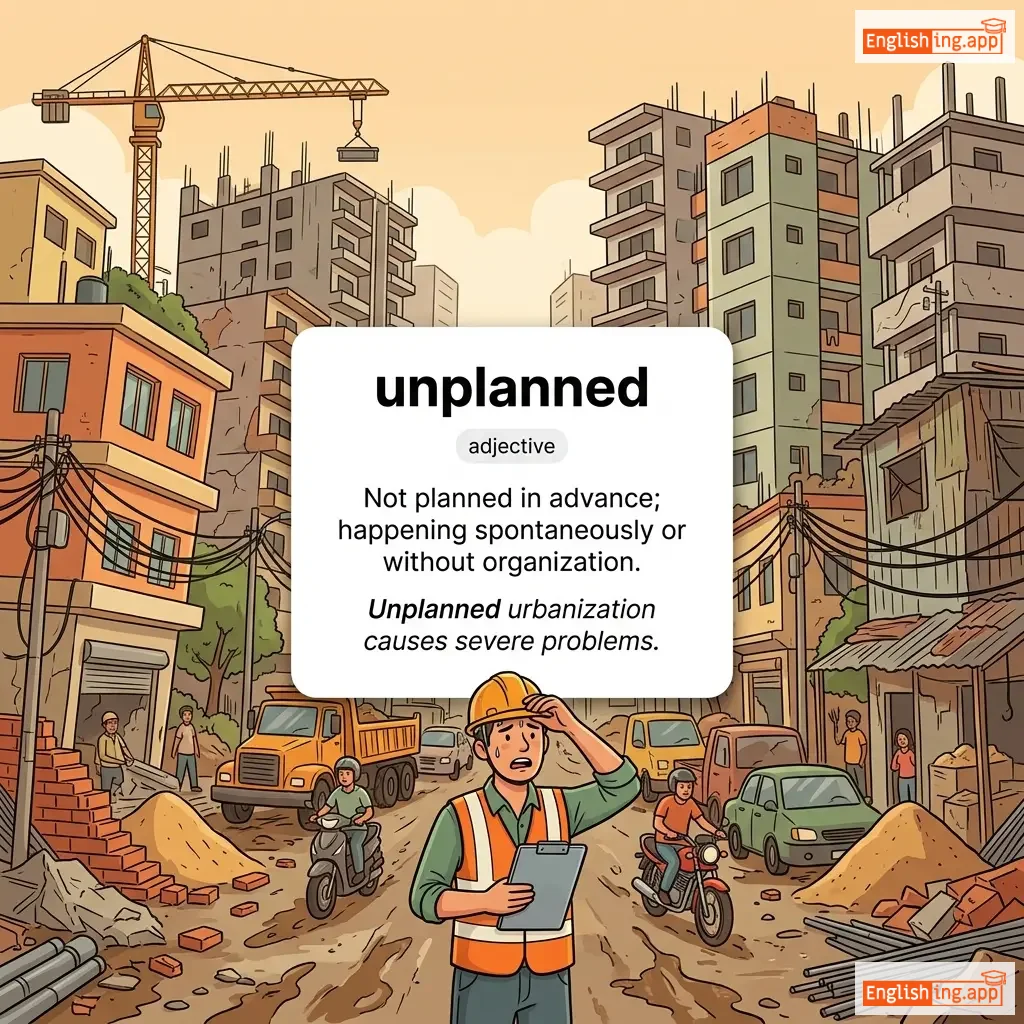
unplanned definition card — visual illustration of the meaning
adjective
ʌnˈplænd
計画外 (keikakugai)

Not planned in advance; happening spontaneously or without organization.

"Unplanned urbanization causes severe problems."

"計画外の都市化は深刻な問題を引き起こす。" (Keikakugai no toshika wa shinkokuna mondai o hikiokosu.)
adjective
/ʌnˈmɪtɪɡeɪtɪd/
完全な (kanzen na)

absolute; not lessened or moderated

"The meeting was an unmitigated disaster."

"会議は完全な災害でした。" (Kaigi wa kanzen na saigai deshita.)
vitiate definition card — visual illustration of the meaning
verb
/ˈvɪʃieɪt/
損なう (sonanau)

to spoil, weaken, or make something less effective

"One careless remark can vitiate the entire argument."

"一つの不注意なコメントが議論全体を損なう可能性がある。" (Hitotsu no fuchūi na komento ga giron zentai wo sokonau kanōsei ga aru.)
noun
/ˈvɪrjʊləns/
病原性 (byōgensei)

The severity or harmfulness of a disease or poison.

"Scientists studied the virulence of the new virus strain."

"科学者たちは新しいウイルス株の病原性を研究しました。" (Kagakusha-tachi wa atarashī uirusu kabu no byōgensei o kenkyū shimashita.)
noun
/ˈvɪzɪtər/
訪問者 (hōmonsha)

a person who goes to see a place or someone for a short time

"The museum had many visitors last weekend."

"博物館には先週末、多くの訪問者がいました。" (Hakubutsukan ni wa senshūmatsu, ōku no hōmonsha ga imashita.)
adjective
/ˌʌnˈpɑr.də.nə.bəl/
許されざる (yurusa rezaru)

too bad to be forgiven; inexcusable

"His betrayal of trust was an unpardonable offense."
"彼の裏切りは許されざる犯罪でした。" (kare no uragiri wa yurusarezaru hanzai deshita)
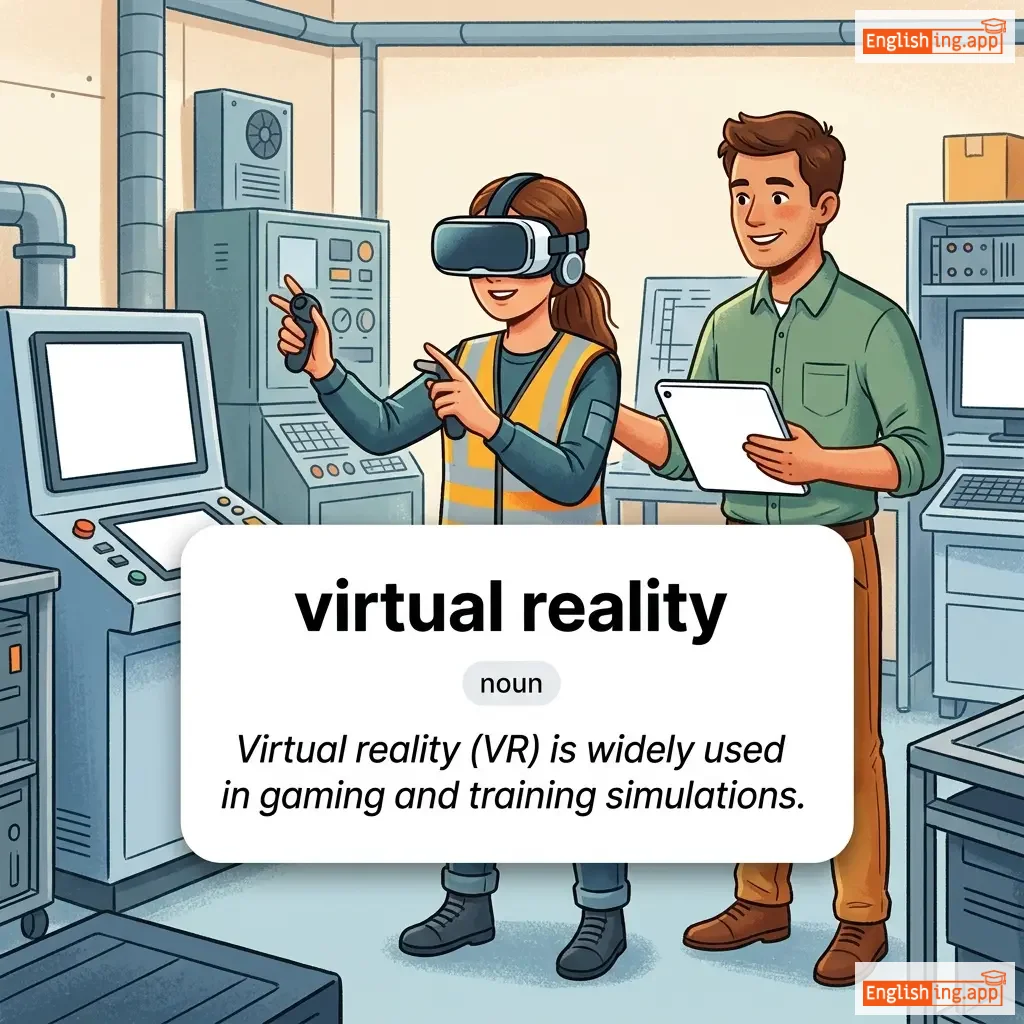
virtual reality definition card — visual illustration of the meaning
noun
/ˈvɜː.tʃu.əl riˈæl.ɪ.ti/
仮想現実 (kasou genjitsu)

Computer technology that creates an artificial three-dimensional environment where users can feel like they are in a real environment.

"Virtual reality (VR) is widely used in gaming and training simulations."

"仮想現実(VR)はゲームやトレーニングシミュレーションで広く使用されています。" (Kasou genjitsu (VR) wa gēmu ya torēningu shimurēshon de hiroku shiyō sareteimasu.)
verb
/vɪˈtjuːpəreɪt/
酷評する (kokyō suru)

To criticize harshly or abuse verbally.

"The politician was quick to vituperate his opponents during the debate."

"政治家は討論中に相手をすぐに批判しました。" (Seijika wa tōron-chū ni aite o sugu ni hihan shimashita.)
adjective
/ˌʌnrɪˈzɒlvd/
未解決の (mikaiketsu no)

not solved or settled; remaining undecided or unclear

"The dispute remains unresolved despite several meetings."
"その問題は何度も会議をしたにもかかわらず未解決のままだ。" (sono mondai wa nando mo kaigi o shita ni mo kakawarazu mikaiketsu no mama da)
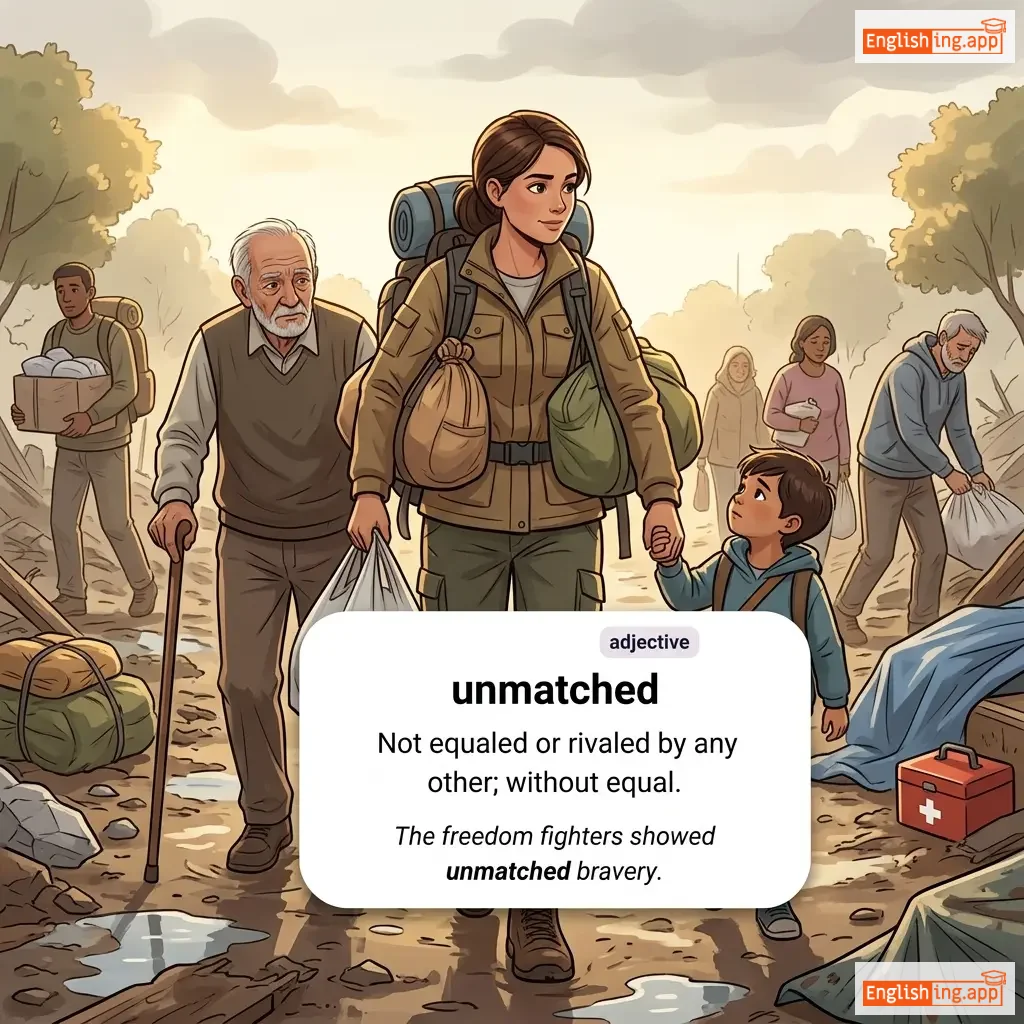
unmatched definition card — visual illustration of the meaning
adjective
ʌnˈmætʃt
比類のない (hirui no nai)

Not equaled or rivaled by any other; without equal.

"The freedom fighters showed unmatched bravery."

"自由の戦士たちは比類のない勇気を示しました。" (Jiyū no senshi-tachi wa hirui no nai yūki o shimeshimashita.)
verb
/ˈvɪtrɪfaɪ/
ガラスに変える (garasu ni kaeru)

to turn into glass or a glass-like substance by heat

"Sand can vitrify under intense heat."

"砂は強い熱でガラスに変わることがあります。" (Suna wa tsuyoi netsu de garasu ni kawaru koto ga arimasu.)
adjective
/ʌnˈlɛtəd/
識字障害者 (shikiji shougai sha)

lacking education or the ability to read and write; illiterate

"The unlettered villagers relied on oral traditions to preserve their history."
"識字障害者の村人たちは口承伝承に頼って歴史を保存していた。" (Shikiji shougai sha no murabito-tachi wa koushou denshou ni tayotte rekishi wo hozon shite ita.)
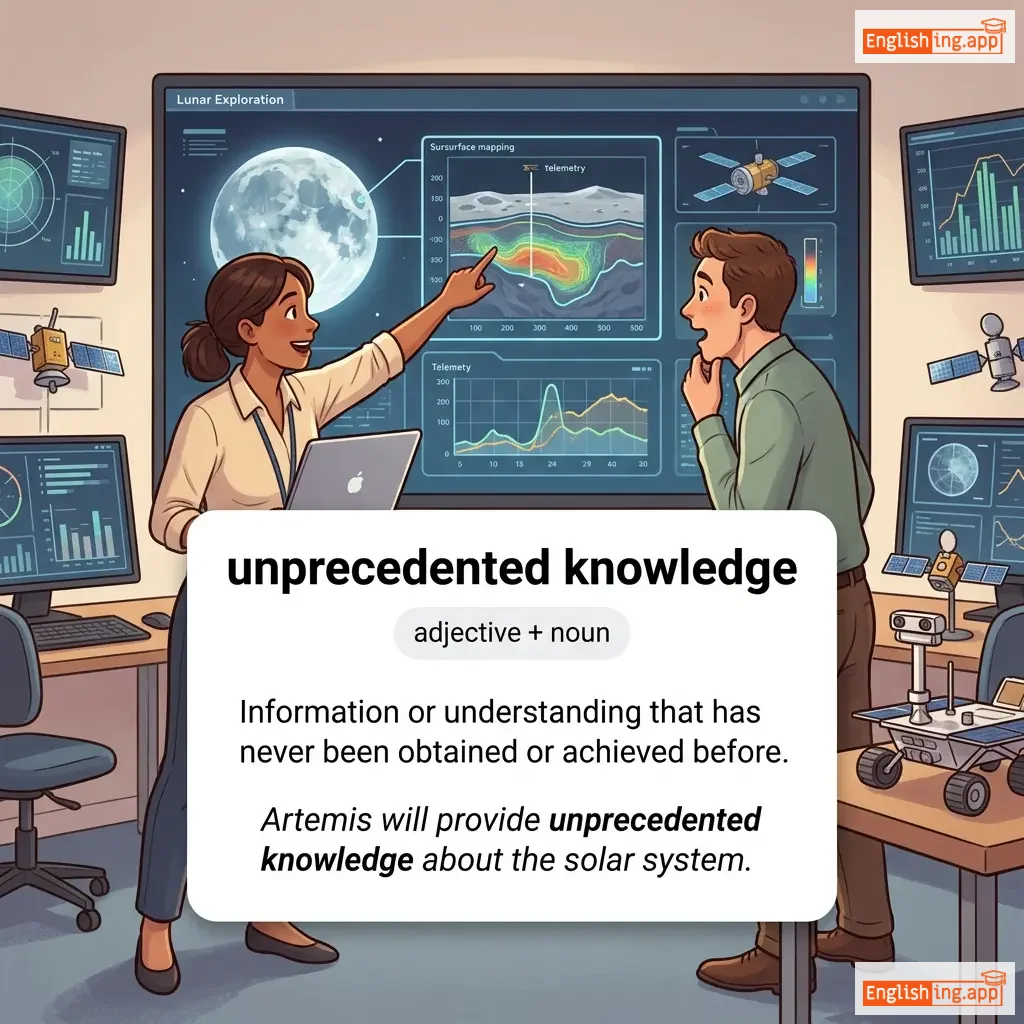
unprecedented knowledge definition card — visual illustration of the meaning
adjective + noun
ʌnˈpresɪdentɪd ˈnɒlɪdʒ
前例のない知識 (zenrei no nai chishiki)

Information or understanding that has never been obtained or achieved before.

"Artemis will provide unprecedented knowledge about the solar system."
"アルテミスは太陽系に関する前例のない知識を提供する。" (Artemisu wa taiyoukei ni kansuru zenrei no nai chishiki wo teikyou suru.)
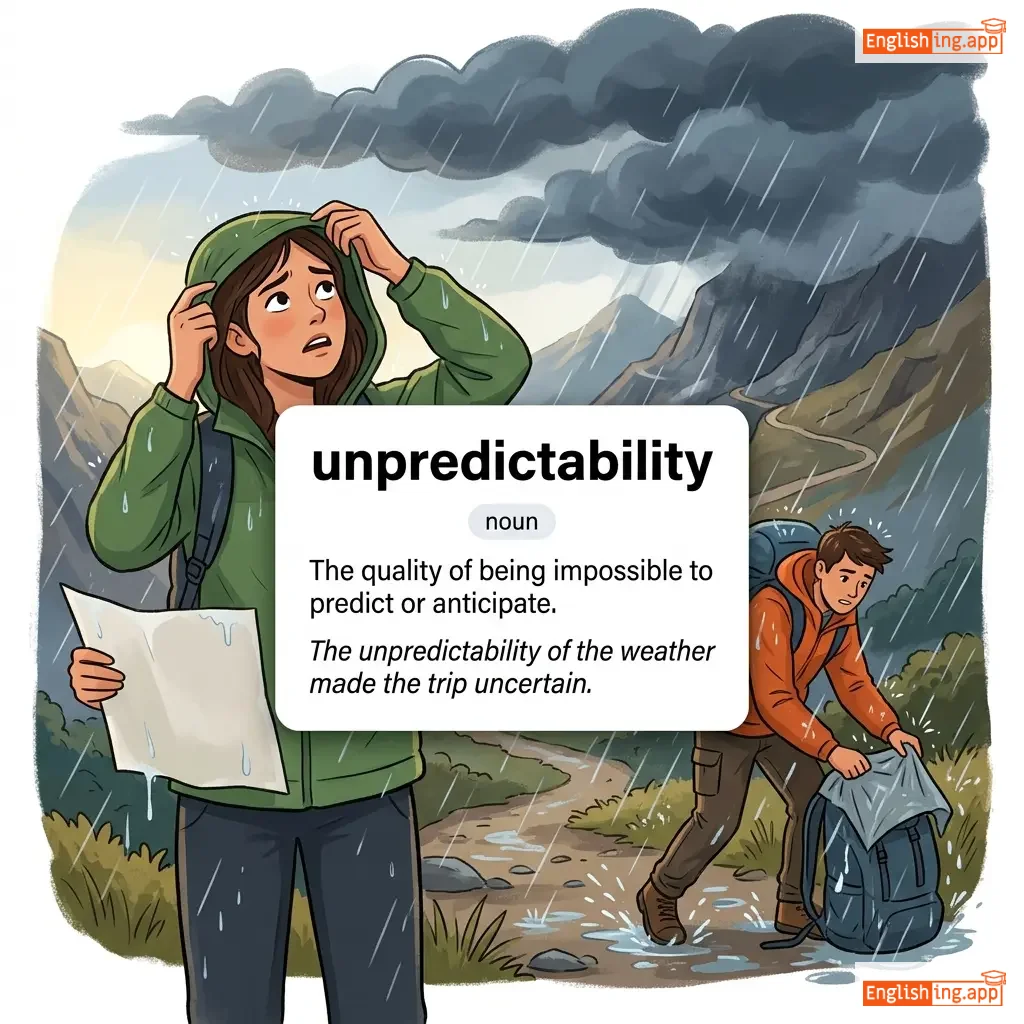
unpredictability definition card — visual illustration of the meaning
noun
/ˌʌnprɪˈdɪktəˌbɪləti/
予測不可能性 (yosoku fukanō-sei)

The quality of being impossible to predict or anticipate.

"The unpredictability of the weather made the trip uncertain."

"天気の予測不可能性は旅行を不確実にした。" (Tenki no yosoku fukanō-sei wa ryokō o fukakujitsu ni shita.)
noun
/ˈvaɪrəs/
ウイルス (uirusu)

A tiny infectious agent that can replicate only inside the living cells of an organism.

"The computer was infected with a dangerous virus."

"コンピュータは危険なウイルスに感染していました。" (Konpyūta wa kiken na uirusu ni kansen shite imashita.)
adjective
/ʌnprəˈfɛʃ.ən.əl/
不专业 (fujōzu)

not conforming to the standards expected in a particular profession

"His unprofessional behavior led to his dismissal from the company."

"彼の不専門的な行動は、会社からの解雇を引き起こしました。" (Kare no fujōzu na kōdō wa, kaisha kara no kaiko o hikiokoshimashita.)
viscous definition card — visual illustration of the meaning
adjective
/ˈvɪskəs/
粘性の (nensei no)

Having a thick, sticky consistency between solid and liquid.

"Honey is a viscous liquid that flows slowly."

"蜂蜜は遅く流れる粘性の液体です。" (Hachimitsu wa osoku nagareru nensei no ekitai desu.)
adjective
/ˌʌnprɪˈdɪktəbəl/
予測できない (yosoku dekinai)

not able to be predicted; changing suddenly and unexpectedly

"The weather in this region is highly unpredictable."

"この地域の天気はとても予測できない。" (kono chiiki no tenki wa totemo yosoku dekinai)
adjective
/ʌnˈskeɪðd/
無傷 (mushō)

Without suffering any injury, damage, or harm.

"She escaped from the accident unscathed."

"彼女は事故から無傷で逃げ出した。" (Kanojo wa jiko kara mushō de nigedashita.)
adjective
/ʌnˈkwɒl.ɪ.faɪd/
資格がない; 経験不足の; (shikakuganai; keiken busoku no)

not having the necessary skills or qualifications; complete or absolute

"He was unqualified for the engineering position due to lack of experience."

"彼は経験不足でエンジニアの職に不適格でした。" (Kare wa keiken busoku de enjinia no shoku ni futekikaku deshita.)
vision definition card — visual illustration of the meaning
noun
/ˈvɪʒən/
幸せ (shiawase)

the ability to see or a mental image of something

"She had a clear vision of her future."

"彼女は賞を受け取ったとき、自分の幸せを隠すことができませんでした。" (Kanojo wa shou o uketotta toki, jibun no shiawase o kakusu koto ga dekimasen deshita.)
verb
/ˈvɪʒuəlaɪz/
視覚化する (shikakuka suru)

To form a mental image of something; to imagine.

"She tried to visualize her success before the big presentation."

"彼女は大きなプレゼンテーションの前に自分の成功をビジュアライズしようとした。" (Kanojo wa ōkina purezentēshon no mae ni jibun no seikō o bijuaraisu shiyou to shita.)
adjective
/ˈvɪtriəs/
ガラスのような (garasu no you na)

having a glass-like appearance or quality

"The mineral has a vitreous shine."

"その鉱物はガラスのような光沢を持っています。" (Sono koumotsu wa garasu no you na koutaku o motteimasu.)
adjective
/ˌʌnrɪˈlaɪəbl/
信頼できない; 信頼や依存ができない (shinrai dekinai; shinrai ya izon ga dekinai)

not dependable; not able to be trusted or relied upon

"The old car is unreliable and breaks down frequently."

"その古い車は信頼できず、よく壊れます。" (Sono furui kuruma wa shinrai dekinai, yoku kowaremasu.)
adjective
/ʌnˈmænɪdʒəbəl/
管理できない; 手に負えない (kanri dekinai; te ni oenai)

difficult or impossible to control or handle

"The large class became unmanageable without proper supervision."

"適切な監視がなければ、大きなクラスは管理できなくなった。" (tekisetsu na kanshi ga nakereba, ookina kurasu wa kanri dekinakunatta.)
adjective
/ˌʌnəˈfɪʃ.əl/
非公式な (hikoushiki na)

not officially authorized or confirmed; informal

"The unofficial results showed a close race."

"非公式な結果は接戦を示しました。" (hikoushiki na kekka wa sessen o shimeshita.)
noun
/ˈvaɪtəmɪn/
ビタミン (bitamin)

a natural substance needed by the body to stay healthy

"Fruits and vegetables are rich sources of vitamins."

"果物や野菜はビタミンの豊富な源です。" (kudamono ya yasai wa bitamin no hōfu na minamoto desu.)
adjective
/ˌʌnprəˈdʌktɪv/
非生産的 (hiseisanteki)

Not producing or achieving much; not effective or useful.

"The meeting was unproductive and wasted everyone's time."

"会議は非生産的で、皆の時間を無駄にしました。" (Kaigi wa hiseisanteki de, minna no jikan o muda ni shimashita.)
adjective
/ʌnˈsoʊld/
未販売の (mihambai no)

not sold; remaining without a buyer

"The unsold goods were returned to the warehouse."
"未販売の商品は倉庫に戻されました。" (mihambai no shouhin wa souko ni modosaremashita)
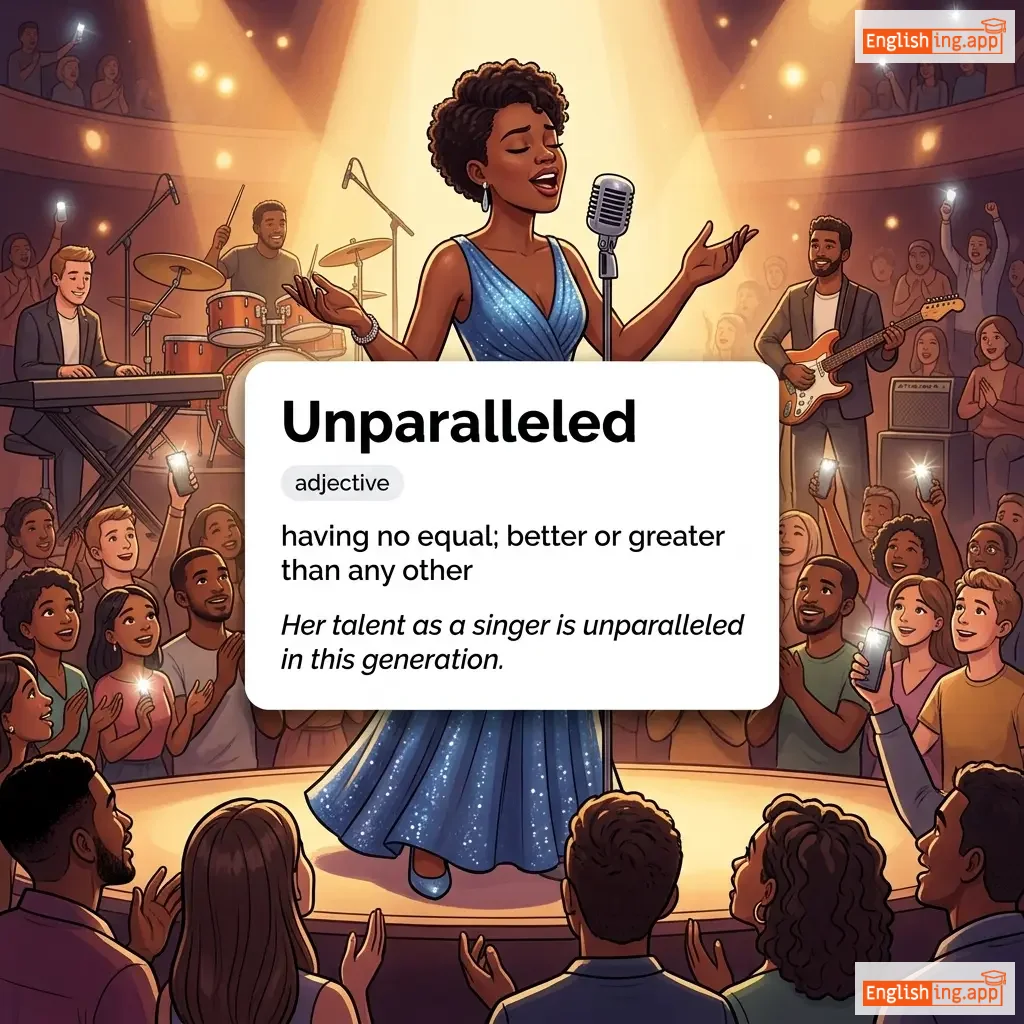
Unparalleled definition card — visual illustration of the meaning
adjective
/ˌʌnˈpær.ə.leld/
比類のない; 無比; 唯一無二 (hirui no nai; mubi; yuiitsumuni)

having no equal; better or greater than any other

"Her talent as a singer is unparalleled in this generation."

"彼女の歌手としての才能はこの世代で比類のないものです。" (Kanojo no kashu to shite no sainou wa kono sedai de hirui no nai mono desu.)
adjective
/ˌʌnpriːpəˈzɛsɪŋ/
魅力的でない (miryokuteki de nai)

not attractive or appealing in appearance

"Despite his unprepossessing looks, he was very kind and intelligent."

"彼は魅力的でない外見にもかかわらず、非常に親切で賢かった。" (Kare wa miryokuteki de nai gaiken ni mo kakawarazu, hijō ni shinsetsu de kashikokatta.)
noun
/ˈvɪstə/
景色 (keshiki)

A pleasing view, especially one seen through a long, narrow opening.

"From the mountain top, we admired the breathtaking vista of the valley below."

"山の頂上から、私たちは谷底の息を呑むような景色を堪能しました。" (Yama no chōjō kara, watashitachi wa tani soko no iki o nomu yō na keshiki o tannō shimashita.)
adjective
/ʌnˈruːli/
手に負えない (teni oenai)

Disorderly, disruptive, or difficult to control.

"The teacher struggled to calm the unruly students."
"教師は不従順な生徒を落ち着かせるのに苦労した。" (Kyōshi wa fujūjun na seito o ochitsukaseru no ni kurō shita.)
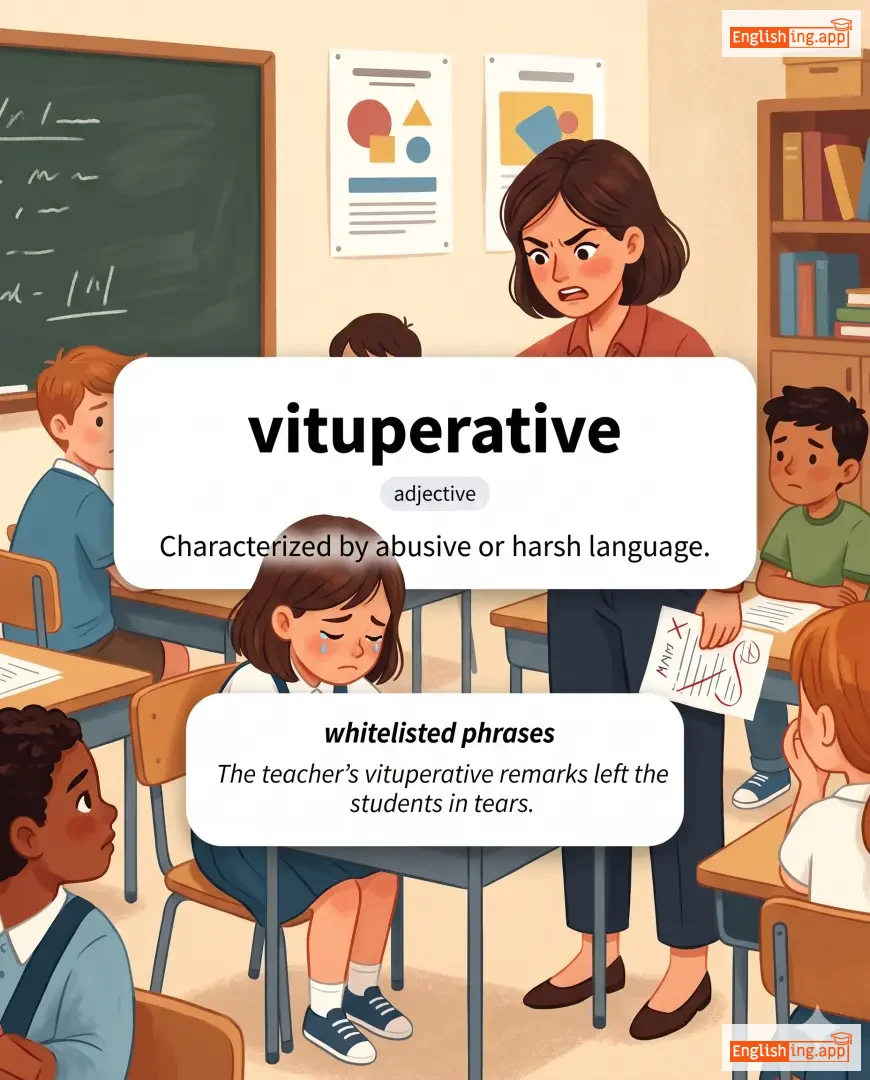
vituperative definition card — visual illustration of the meaning
adjective
/vɪˈtjuːpərətɪv/
悪口な (warukuchi na)

Characterized by abusive or harsh language.

"The teacher’s vituperative remarks left the students in tears."

"教師の悪口な言葉が学生たちを涙で満たしました。" (Kyōshi no warukuchi na kotoba ga gakusei-tachi o namida de mitashimashita.)
visiting definition card — visual illustration of the meaning
verb
/ˈvɪzɪtɪŋ/
訪問する (hōmon suru)

Going to see and spend time with someone or at a place.

"The group is visiting islands during the expedition."

"グループは探検中に島を訪問しています。" (Gurūpu wa tanken-chū ni shima o hōmon shiteimasu.)
adjective
/ʌnˈsəʊʃəbl/
非社交的な (hi shakaiteki na)

not enjoying the company of others; avoiding social interaction

"He became unsociable after moving to a new city."

"新しい街に引っ越してから、彼は非社交的になった。" (atarashii machi ni hikkoshite kara kare wa hi shakaiteki ni natta)
noun
/ˈvɜːrtʃuː/
美徳 (bitoku)

High moral standards or a good quality considered morally good.

"Patience is considered a great virtue."

"忍耐は偉大な美徳と考えられています。" (Nintai wa idaina bitoku to kangae rareteimasu.)