語彙集

英単語辞書 | 単語の意味、定義、例文

noun
/ˈvɛnɪsən/
鹿肉 (shikaniku)

meat from a deer

"The restaurant served venison steak with red wine."

"レストランは赤ワインと一緒に鹿肉のステーキを出しました。" (Resutoran wa akawain to issho ni shikaniku no sutēki o dashimashita.)
verb
/ˈvæŋkwɪʃ/
打ち負かす (uchimakasu)

to defeat thoroughly, especially in battle or competition

"The army vanquished its enemies with superior strategy."

"軍隊は優れた戦略で敵を打ち負かしました。" (Guntai wa sugureta senryaku de teki o uchimakashimashita.)
adjective
/ˈvæljuːəbl/
貴重な (kichou na)

worth a great deal of money or importance

"The diamond ring is very valuable."

"そのダイヤモンドの指輪は非常に貴重です。" (Sono daiyamondo no yubiwa wa hijō ni kichō desu.)
noun
/ˈvænɡɑːrd/
先駆者 (senkusha)

the forefront of an action, movement, or military force

"The company is at the vanguard of technological innovation."
"その会社は技術革新の先駆者です。" (Sono kaisha wa gijutsu kakushin no senkusha desu.)
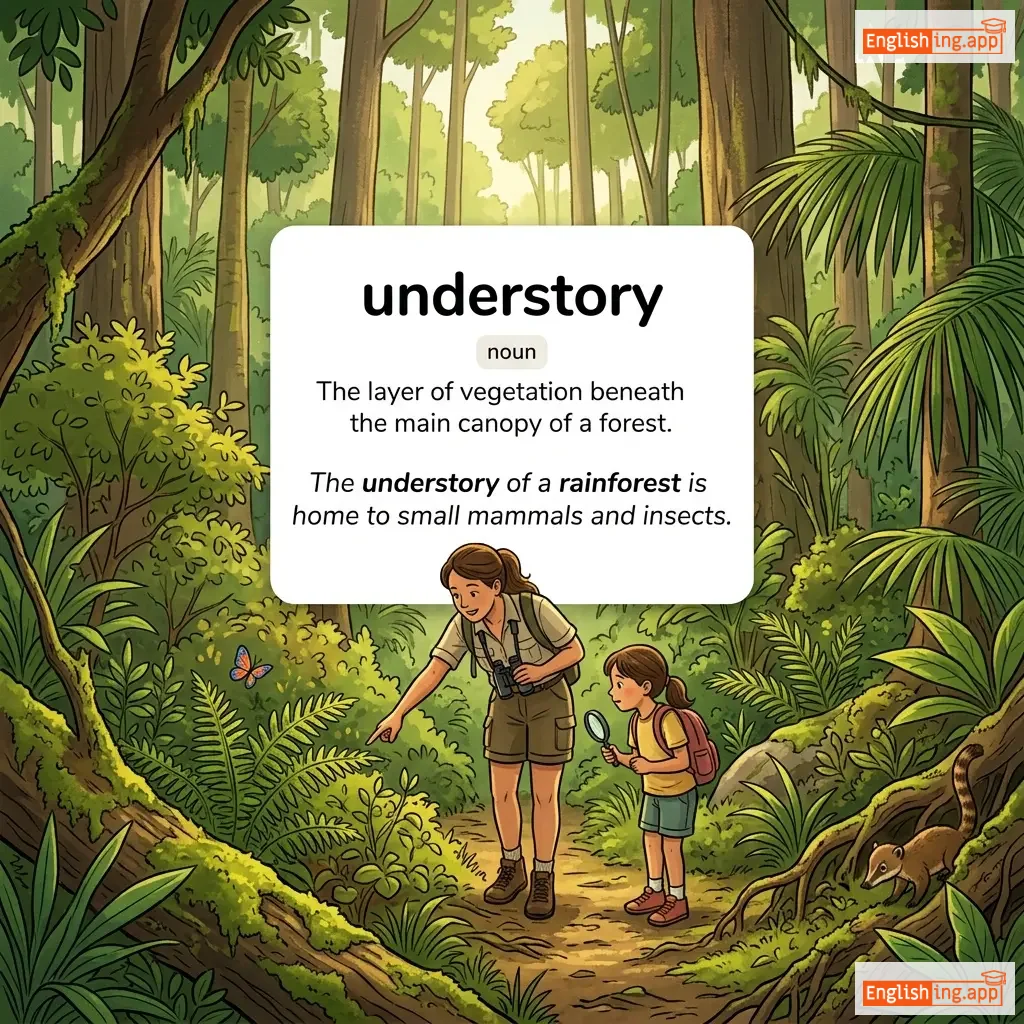
understory definition card — visual illustration of the meaning
noun
/ˈʌn.dɚˌstɔː.ri/
下層植物 (kasou shokubutsu)

The layer of vegetation beneath the main canopy of a forest.

"The understory of a rainforest is home to small mammals and insects."

"熱帯雨林の下層植物は小さな哺乳動物や昆虫の家です。" (Nettai urin no kasou shokubutsu wa chiisana honnyuudoubutsu ya konchuu no ie desu.)
adjective
/ˈvendʒ.fəl/
復讐心の強い (fukushūshin no tsuyoi)

seeking to harm someone in return for a perceived injury; vindictive

"She felt vengeful after her friend betrayed her trust."

"彼女は友達に裏切られた後、復讐心を感じた。" (Kanojo wa tomodachi ni uragirarareta ato, fukushūshin o kanjita.)
adjective
/vəˈnɪəriəl/
性病の (seibyo no)

relating to sexual intercourse or sexually transmitted diseases

"Doctors warn about the dangers of venereal diseases."

"医師は性病の危険について警告しています。" (Ishi wa seibyo no kiken ni tsuite keikoku shiteimasu.)
noun
/vəˈlɪd.ə.ti/
有効性 (yūkō-sei)

the quality of being logically or factually sound; legal acceptability

"The lawyer questioned the validity of the contract."

"弁護士は契約の有効性に疑問を呈しました。" (Bengoshi wa keiyaku no yūkō-sei ni gimon o teishimashita.)
adjective
/ˈvɔːntɪd/
過度に称賛された (kadoni shōsan sareta)

praised or boasted about, especially excessively

"The vaunted technology failed to deliver the expected results."

"過度に称賛された技術は期待された結果を提供できませんでした。" (Kadoni shōsan sareta gijutsu wa kitai sareta kekka o teikyō dekimasen deshita.)
noun
/ˈvæləns/
装飾用バランス (sōshokuyō baransu)

A decorative drapery hung across the top of a window or bed.

"She chose a floral valance to match the curtains in her bedroom."

"彼女は寝室のカーテンに合うように花柄のバランスを選びました。" (Kanojo wa shinshitsu no kāten ni au yō ni hanagara no baransu o erabimashita.)
noun
/veɪl/
(tani)

A valley, often used in a poetic or literary sense.

"The village lay hidden in a quiet green vale."

"村は静かな緑の谷に隠れていました。" (Mura wa shizukana midori no tani ni kakurete imashita.)
noun
/ˈvel.vɪt/
ベルベット (berubetto)

a soft, luxurious fabric with a thick, short pile on one side

"The royal curtains were made of rich red velvet."

"ロイヤルカーテンは豊かな赤いベルベットで作られていました。" (Roiyaru kāten wa yutakana akai berubetto de tsukurarete imashita.)
noun
/vɜːrdʒ/
縁; 境界; しきい値 (verge)

the edge or border of something; very close to happening

"She was on the verge of tears."

"彼女は涙の縁に立っていた。" (kanojo wa namida no en ni tatte ita.)
adjective
/ˈvɜːrdənt/
緑豊かな (midori yutakana)

Green with grass or other rich vegetation; lush and fertile.

"The hills looked verdant after the monsoon rains."
"モンスーンの雨の後、丘は緑豊かに見えた。" (Monsūn no ame no ato, oka wa midori yutaka ni mieta.)
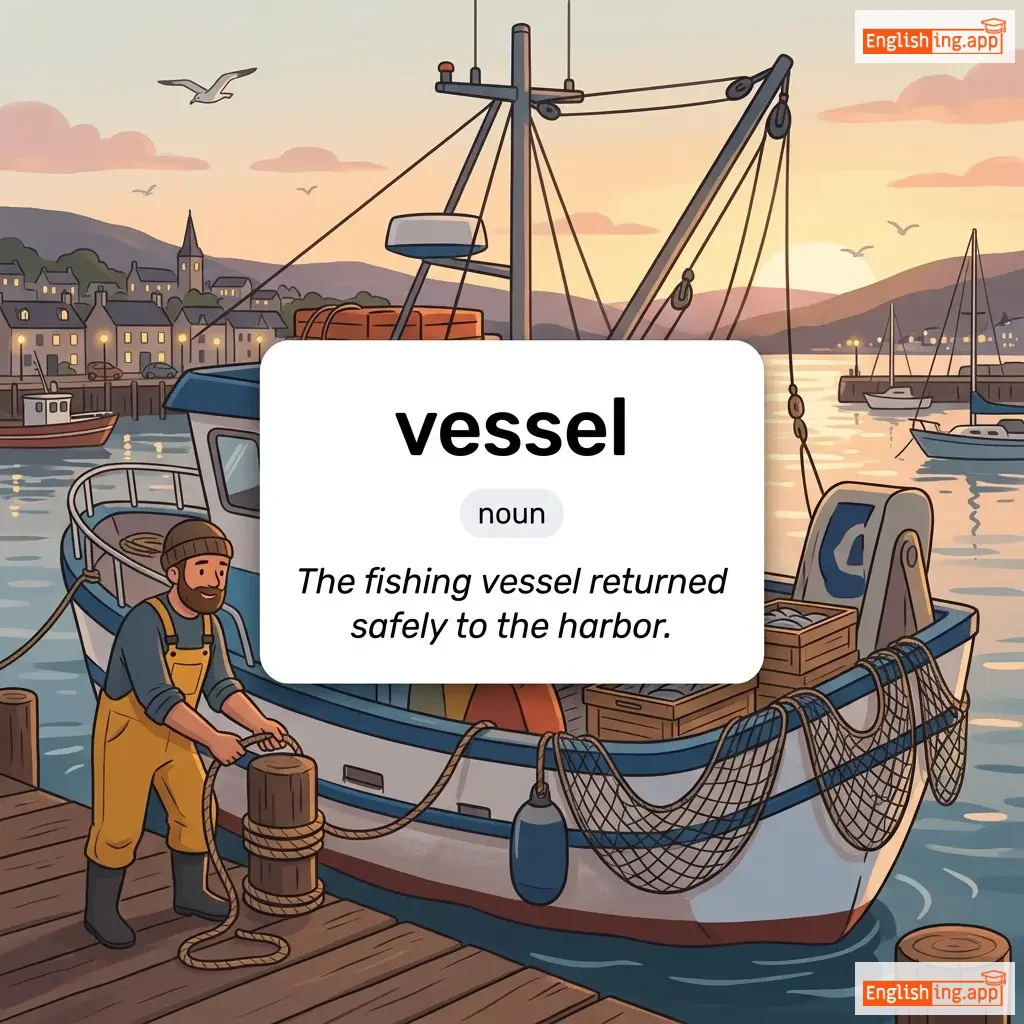
vessel definition card — visual illustration of the meaning
noun
/ˈvɛsəl/
船 / 容器 (fune / youki)

A ship or large boat; also a container for holding liquids or a tube in the body that carries blood.

"The fishing vessel returned safely to the harbor."

"漁船は安全に港に戻った。" (Gyosen wa anzen ni minato ni modotta.)
adjective
/ˈvɛrɪtəbl/
真実の (shinjitsu no)

used to emphasize that something is genuine or true

"The house was a veritable palace compared to ours."

"その家は私たちの家と比べて、まさに本物の宮殿でした。" (Sono ie wa watashitachi no ie to kurabete, masa ni honmono no kyūden deshita.)
noun
/ˈvɛndɔːr/
販売者 (hanbaisha)

A person or company that sells goods or services.

"The street vendor sold fresh fruits every morning."

"街のベンダーは毎朝新鮮な果物を売っていた。" (Machi no bendā wa mai asa shinsen na kudamono o utte ita.)
noun
/ˈvɛləm/
パーチメント (pāchimento)

a fine parchment made originally from the skin of a calf, used for writing or printing

"The ancient manuscript was written on vellum."
"古代の写本はパーチメントに書かれていました。" (Kodai no shahon wa pāchimento ni kakarete imashita.)
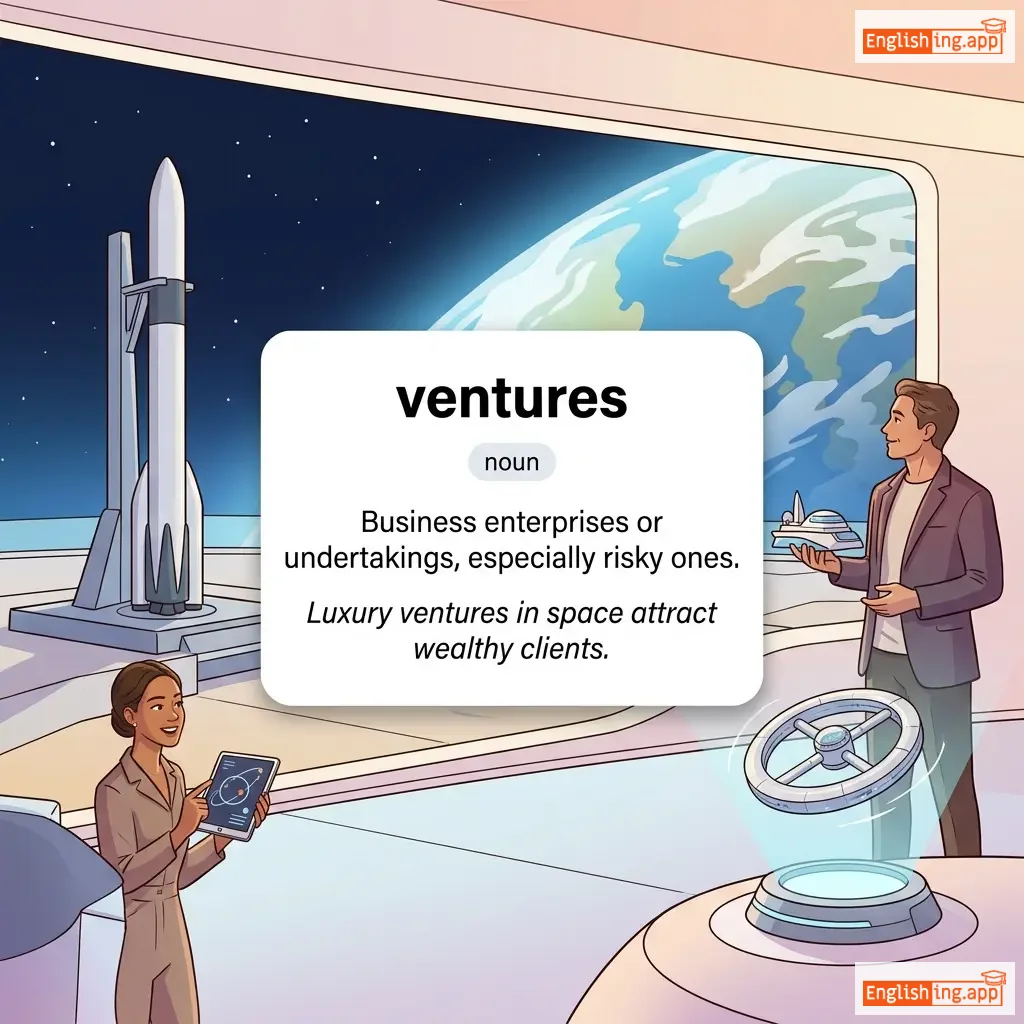
ventures definition card — visual illustration of the meaning
noun
ˈven.tʃərz
事業 (jigyou)

Business enterprises or undertakings, especially risky ones.

"Luxury ventures in space attract wealthy clients."
"宇宙での豪華なベンチャーは裕福な顧客を引きつける。" (Uchū de no gōka na benchā wa yūfuku na kokyaku o hikitsukeru.)
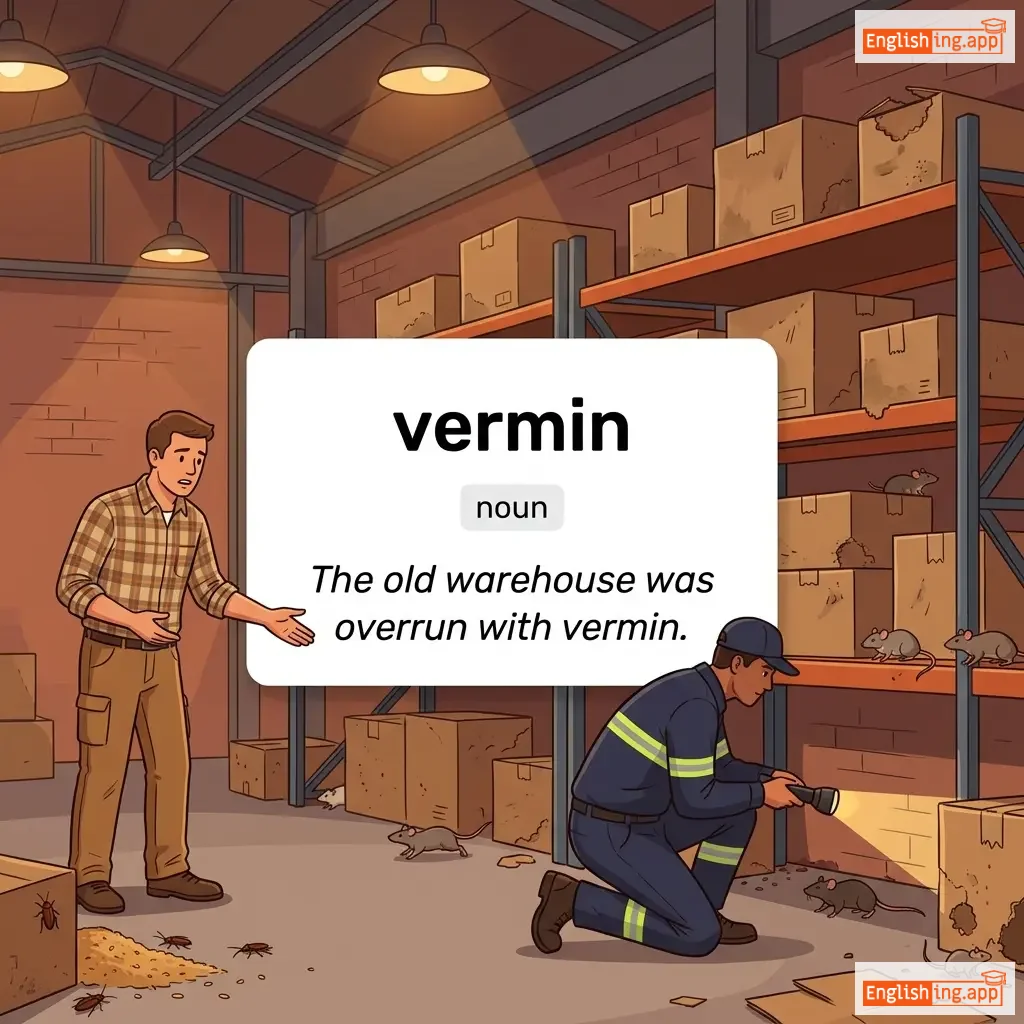
vermin definition card — visual illustration of the meaning
noun
/ˈvɜːrmɪn/
有害動物 (yūgai dōbutsu)

small animals or insects that are harmful or destructive, such as rats, lice, or fleas

"The old warehouse was overrun with vermin."

"古い倉庫は有害動物であふれていました。" (Furui sōko wa yūgai dōbutsu de afurete imashita.)
🌌

Vast

adjective
/vɑːst/

extremely large in size, amount, or extent

"The desert stretches across a vast area of land."

noun
/ˈvɪktɪm/
被害者 (higaisha)

a person who suffers harm, injury, or death due to an event or action

"The victim of the accident was taken to the hospital immediately."

"事故の被害者はすぐに病院に運ばれました。" (Jiko no higaisha wa sugu ni byōin ni hakobaremashita.)
adjective
/ˈviːnəs/
静脈の (jōmyaku no)

relating to the veins that carry blood to the heart

"The doctor examined the patient’s venous circulation."

"医者は患者の静脈循環を検査しました。" (Isha wa kanja no jōmyaku junkan o kensa shimashita.)
adjective
/ˈvɛntrəl/
腹側の (fukusoku no)

relating to the underside or abdominal part of an animal or organ

"The fish has a white ventral surface."

"その魚は白い腹側の表面を持っています。" (Sono sakana wa shiroi fukusoku no hyōmen o motteimasu.)
adjective
/ˈvɛərɪd/
多様な (tayōna)

showing many different kinds or forms

"The menu offers a varied selection of dishes."

"メニューには多様な料理が揃っています。" (Menyū ni wa tayōna ryōri ga sorotteimasu.)
noun
/vɛnˈdɪʃən/
販売 (hanbai)

The act of selling; sale.

"The auction was a formal vendition of the estate's assets."

"オークションは不動産の資産の正式な販売でした。" (Ōkushon wa fudōsan no shisan no seishiki na hanbai deshita.)
noun
/ˈvaɪsrɔɪ/
副王 (fukuou)

a ruler exercising authority on behalf of a sovereign in a colony or province

"The viceroy governed the colony in the king's name."

"バイセロイは王の名のもとに植民地を統治しました。" (Baiseroi wa ō no na no moto ni shokuminchi o tōchi shimashita.)
noun
/ˈven.juː/
会場 (kaijou)

a place where an event or activity takes place

"The wedding venue was beautifully decorated."

"結婚式の会場は美しく飾られていました。" (kekkonshiki no kaijou wa utsukushiku kazararete imashita)
adjective
/vɜːrˈtɪdʒɪnəs/
めまいを引き起こす (memai o hikiokosu)

Causing dizziness due to great height or steepness.

"The tourists looked down from the vertiginous cliffs with awe."

"観光客はめまいを引き起こす崖から下を見ていました。" (Kankōkyaku wa memai o hikiokosu gake kara shita o mite imashita.)
verb
/ˈvɛdʒɪteɪt/
無為に過ごす (mui ni sugosu)

to live in a dull, inactive, or unchallenging way, often with little physical or mental effort

"He spent his vacation vegetating on the couch in front of the TV."
"彼はソファでテレビの前に座って、休暇を過ごしました。" (Kare wa sofa de terebi no mae ni suwatte, kyūka o sugoshimashita.)
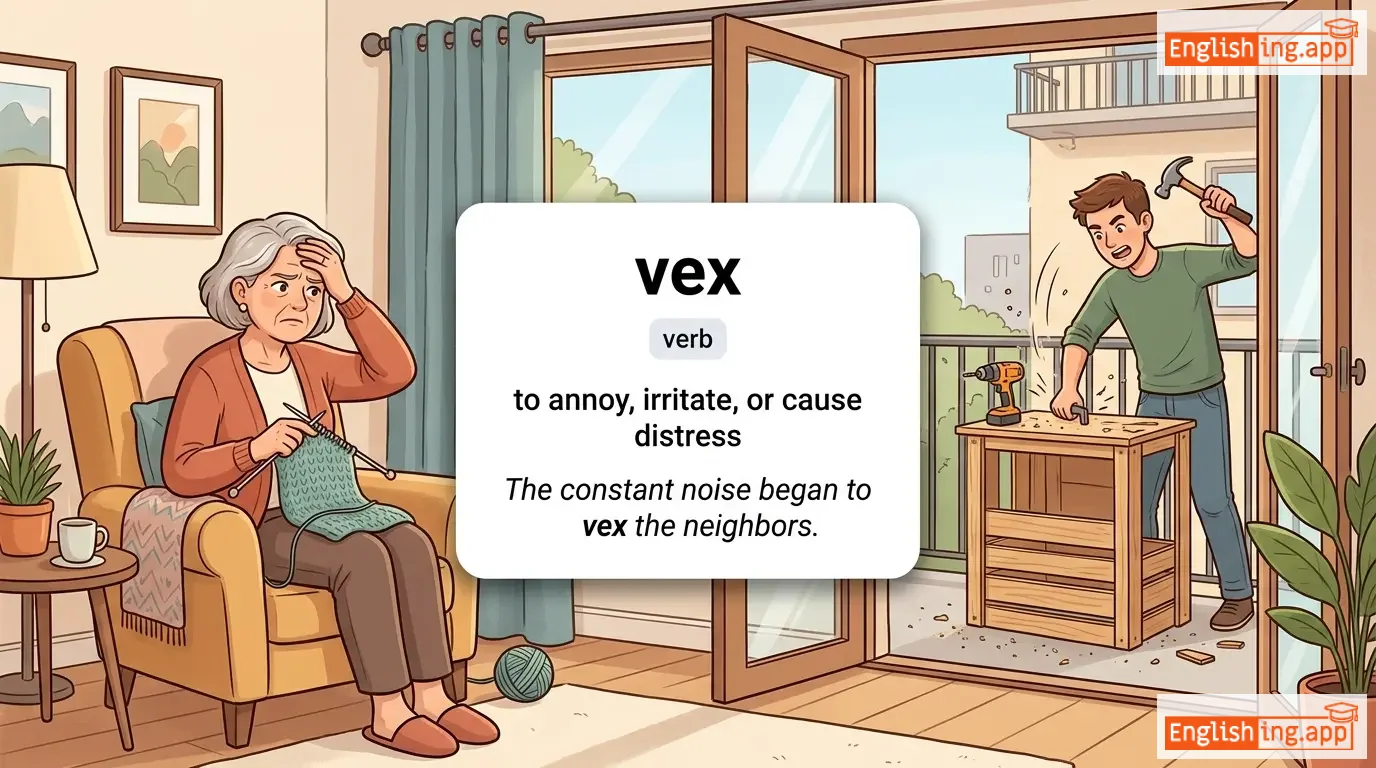
vex definition card — visual illustration of the meaning
verb
/vɛks/
悩ませる (nayamaseru)

to annoy, irritate, or cause distress

"The constant noise began to vex the neighbors."

"絶え間ない騒音が隣人を悩ませ始めた。" (Taemai na souon ga rinjin wo nayamasete hajimeta.)
adjective
/ˈvɜːrtɪkl/
垂直 (suichoku)

Standing or pointing straight up; perpendicular to the ground.

"The skyscraper has a perfectly vertical design."

"その超高層ビルは完璧な垂直デザインを持っています。" (Sono chōkōsō biru wa kanpeki na suichoku dezain o motteimasu.)
valuation definition card — visual illustration of the meaning
noun
/ˌvæl.juˈeɪ.ʃən/
評価 (hyouka)

the process of deciding how much money something is worth; an estimated value

"The property valuation came in higher than expected."

"不動産の評価は予想より高かった。" (Fudousan no hyouka wa yosou yori takakatta.)
noun
/ˌvæsɪˈleɪʃən/
揺れ動き (yuredoki)

The inability to decide between different opinions or actions; indecisiveness.

"His constant vacillation frustrated his colleagues during the meeting."

"彼の絶え間ない揺れ動きは会議中、同僚たちを苛立たせた。" (Kare no taemai yuredoki wa kaigichuu, doryou-tachi o iradataseta.)
noun
/juːˌtɪlɪˈtɛəriənɪzəm/
功利主義 (kōrishugi)

The ethical theory that actions are right if they are useful or for the benefit of the majority.

"Utilitarianism suggests that we should act to maximize overall happiness."

"功利主義は、私たちが全体的な幸福を最大化するために行動すべきだと示唆しています。" (Kōrishugi wa, watashitachi ga zentaiteki na kōfuku o saidaika suru tame ni kōdō subeki da to shisa shiteimasu.)
noun
/ˈvɜːrtɛks/
頂点 (chouten)

The highest point; the top or the apex.

"The climber reached the vertex of the mountain."

"登山者は山の頂点に達しました。" (Tōzan-sha wa yama no chōten ni tasshimashita.)
noun
/vɜːrv/
活力 (katsuryoku)

Great enthusiasm, spirit, or energy in expression or performance.

"The actor performed his role with remarkable verve."

"その俳優は素晴らしい活力で役を演じました。" (Sono haiyū wa subarashī katsuryoku de yaku o enjimashita.)
adjective
/ˌjuːtɪlɪˈtɛəriən/

Designed to be useful or practical rather than attractive; relating to the doctrine that actions are right if they are useful or for the benefit of a majority.

"The building had a simple utilitarian design."

adjective
/ˈviːəmənt/
激しい (hageshī)

showing strong feeling; forceful, passionate, or intense

"She made a vehement argument against the proposal."
"彼女は提案に対して強い反論をしました。" (Kanojo wa teian ni taishite tsuyoi hanron o shimashita.)
🛢️

vat (væt)

noun
/væt/
大きな容器 (ookina youki)

A large container used for holding liquids such as dye or wine.

"The workers filled the vat with freshly pressed grape juice."

"作業員たちは新しく絞ったぶどうジュースを大きな容器に入れました。" (Sagyouin-tachi wa atarashiku shibotta budou juusu o ookina youki ni iremashita.)
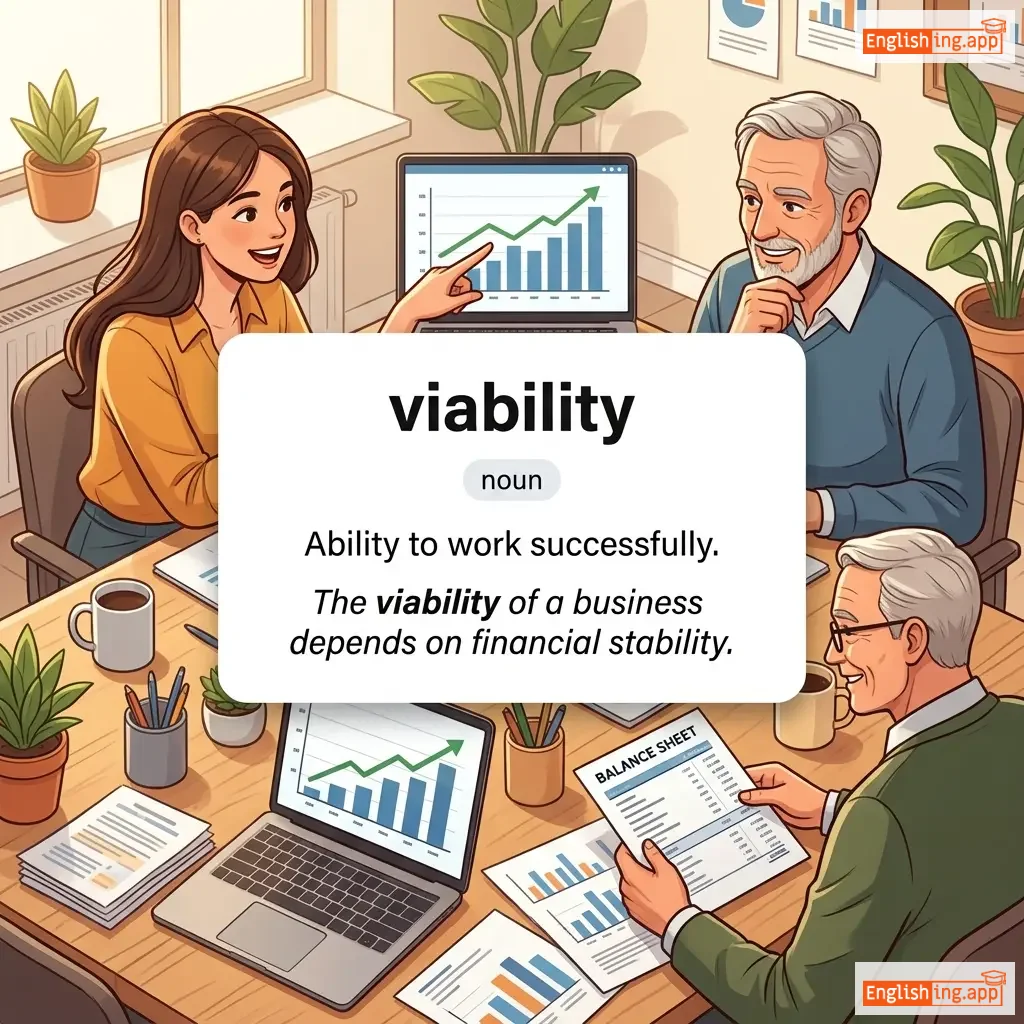
viability definition card — visual illustration of the meaning
noun
/ˌvaɪ.əˈbɪl.ə.ti/
実行可能性 (jikkoukanousei)

Ability to work successfully.

"The viability of a business depends on financial stability."
"ビジネスの実行可能性は、財務の安定性に依存します。" (Bijinesu no jikkoukanousei wa, zaimu no antei ni izon shimasu.)
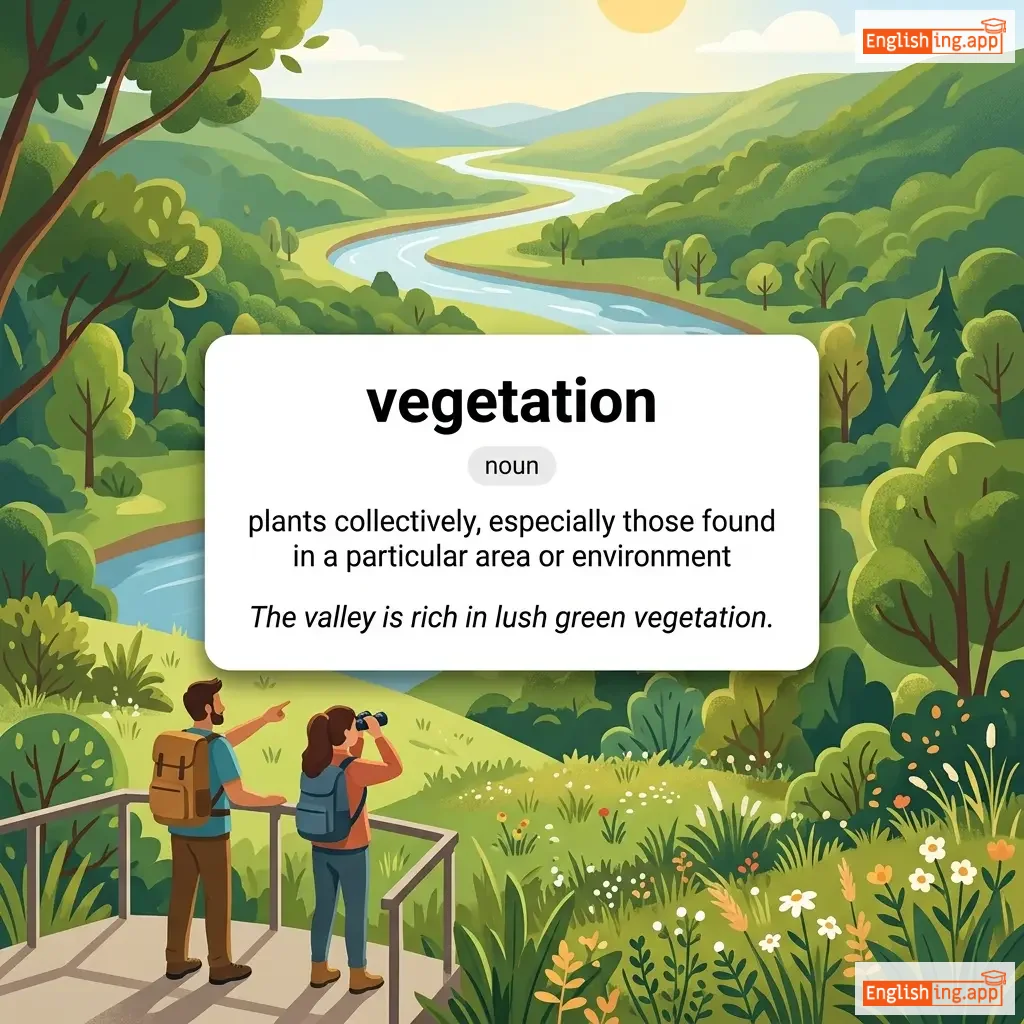
vegetation definition card — visual illustration of the meaning
noun
/ˌvɛdʒɪˈteɪʃən/
植生 (shokusei)

plants collectively, especially those found in a particular area or environment

"The valley is rich in lush green vegetation."

"その谷は豊かな緑の植生で満ちています。" (Sono tani wa yutakana midori no shokusei de michiteimasu.)
noun
/væn/
バン (ban)

a large vehicle used for transporting goods or people

"The delivery van stopped in front of our house."

"配送バンが私たちの家の前で止まりました。" (Haisou ban ga watashitachi no ie no mae de tomarimashita.)
noun
/ˈvɛnəm/
毒液 (doku-eki)

a poisonous substance secreted by animals such as snakes or spiders; also used to describe intense ill will or malice

"The snake injected its venom into the prey."

"ヘビは獲物に毒液を注入した。" (Hebi wa emono ni doku-eki o chuunyuu shita.)
verb
/ˈvɛrɪfaɪ/
確認する (kakunin suru)

To make sure or demonstrate that something is true, accurate, or justified.

"Please verify your email address to complete the registration."

"登録を完了するために、メールアドレスを確認してください。" (Tōroku o kanryō suru tame ni, mēru adoresu o kakunin shite kudasai.)
adjective
/ˈvæljuːləs/
無価値 (mukachi)

having no worth, importance, or usefulness

"The old broken phone was considered valueless."

"壊れた古い電話は無価値だと見なされました。" (Kowareta furui denwa wa mukachi da to minasaremashita.)
noun
/ˈviːɪkəl/
車両 (sharyou)

a machine used for transporting people or goods

"He drives a vehicle to work every day."

"彼は毎日車で仕事に行きます。" (Kare wa mainichi kuruma de shigoto ni ikimasu.)
verb
/ˈvɪktɪmaɪz/
被害者にする (higaisha ni suru)

To make someone a victim, often by treating them unfairly or cruelly.

"The corrupt officials victimized the poor villagers."
"腐敗した役人たちは貧しい村人を犠牲にした。" (Fuhai shita yakunin-tachi wa mazushii murabito o gisei ni shita.)
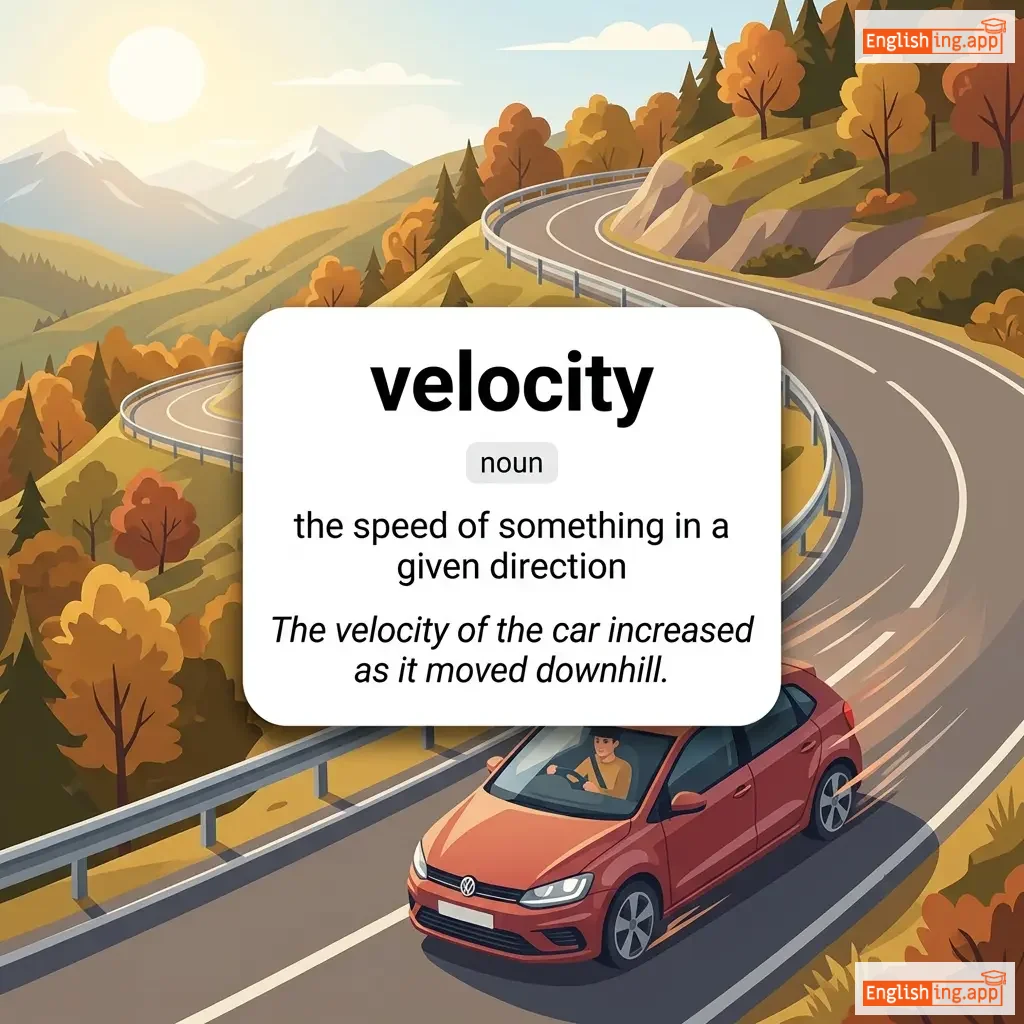
velocity definition card — visual illustration of the meaning
noun
/vəˈlɒsəti/
速度 (sokudo)

the speed of something in a given direction

"The velocity of the car increased as it moved downhill."

"車の速度は、丘を下るにつれて増加しました。" (Kuruma no sokudo wa, oka o kudaru ni tsurete zouka shimashita.)
adjective
/ˈvɛə.ri.əs/
さまざまな (samazama na)

different from one another; of several different kinds

"She owns various kinds of books."

"彼女はさまざまな種類の本を持っています。" (Kanojo wa samazama na shurui no hon o motteimasu.)