語彙集

英単語辞書 | 単語の意味、定義、例文

adjective
/ʌnˈmænɪdʒəbəl/
管理できない; 手に負えない (kanri dekinai; te ni oenai)

difficult or impossible to control or handle

"The large class became unmanageable without proper supervision."

"適切な監視がなければ、大きなクラスは管理できなくなった。" (tekisetsu na kanshi ga nakereba, ookina kurasu wa kanri dekinakunatta.)
adjective
/ʌnˈmærid/
未婚 (mikon)

Not married; single.

"He is thirty-five and still unmarried."

"彼は三十五歳で、まだ未婚です。" (Kare wa sanjuugosai de, mada mikon desu.)
adjective
/ʌnˈmɪtɪɡeɪtɪd/
完全な (kanzen na)

absolute; not lessened or moderated

"The meeting was an unmitigated disaster."

"会議は完全な災害でした。" (Kaigi wa kanzen na saigai deshita.)
adjective
/ʌpˈrɔːr.i.əs/
非常に面白い (hijō ni omoshiroi)

Extremely funny or noisy; causing loud laughter or commotion.

"The comedian's jokes were absolutely uproarious."

"コメディアンのジョークは絶対に非常に面白かったです。" (Komedian no jōku wa zettai ni hijō ni omoshirokatta desu.)
adjective
/ʌnˈtaɪdi/
散らかった; 無秩序な; (chirakatta)

not neat or orderly; messy and disorganized

"Her untidy room was filled with clothes scattered everywhere."

"彼女の散らかった部屋は、どこにでも散らばった服でいっぱいでした。" (kanojo no chirakatta heya wa, doko ni demo chirabatta fuku de ippai deshita.)
adjective
/ʌnˈprɒf.ɪ.tə.bl̩/
採算が取れない (saisan ga torenai)

not yielding profit or gain; not producing financial benefit

"The unprofitable business was forced to close down after three years."

"採算が取れないビジネスは3年後に閉店を余儀なくされました。" (Saisan ga torenai bijinesu wa san nen go ni heiten o yoginaku saremashita.)
adjective
/ˌʌnprəˈpɪʃəs/
不運な (fuunna)

Not giving or indicating a good chance of success; unfavorable.

"The team began their journey under unpropitious weather conditions."

"チームは不運な天候の中で旅を始めました。" (Chiimu wa fuunna tenkou no naka de tabi o hajimemashita.)
adjective
/ʌnˈsoʊld/
未販売の (mihambai no)

not sold; remaining without a buyer

"The unsold goods were returned to the warehouse."

"未販売の商品は倉庫に戻されました。" (mihambai no shouhin wa souko ni modosaremashita)
adjective
/ʌnˈsəʊʃəl/
非社交的な (hi shakouteki na)

not enjoying the company of others; avoiding social interaction; contrary to social norms

"He prefers unsocial hours so he can work alone without interruptions."

"彼は一人で働くために非社交的な時間を好む。" (kare wa hitori de hataraku tame ni hi shakouteki na jikan o konomu)
adjective
/ˌʌnsəkˈsesfl/
失敗した; 成功しなかった; (shippai shita; seikou shinakatta)

not achieving desired aims or results; failing to accomplish a purpose

"His unsuccessful attempt to climb the mountain left him disappointed."

"彼の失敗した山登りの試みは彼を失望させた。" (Kare no shippai shita yamanobori no kokoromi wa kare o shitsubou saseta.)
adjective
/ʌnˈtʌtʃəbəl/
触れられない; 批判や攻撃を受けない (furerarenai; hihan ya kōgeki o ukenai)

not able to be touched or affected; beyond criticism or attack

"The CEO seemed untouchable despite the scandal."

"CEOはスキャンダルにもかかわらず、アンタッチャブルのように見えた。" (CEO wa sukyandaru ni mo kakawarazu, antatchaburu no yō ni mieta.)
adjective
/ʌnˈkwes.tʃən.ə.bl̩/
議論の余地がない; 確実な (giron no yochi ga nai; kakujitsu na)

not able to be disputed or doubted; certain and beyond doubt

"Her honesty and integrity are unquestionable qualities."
"彼女の誠実さと誠意は議論の余地がない特性です。" (kanojo no seijitsusa to sei wa giron no yochi ga nai tokusei desu.)
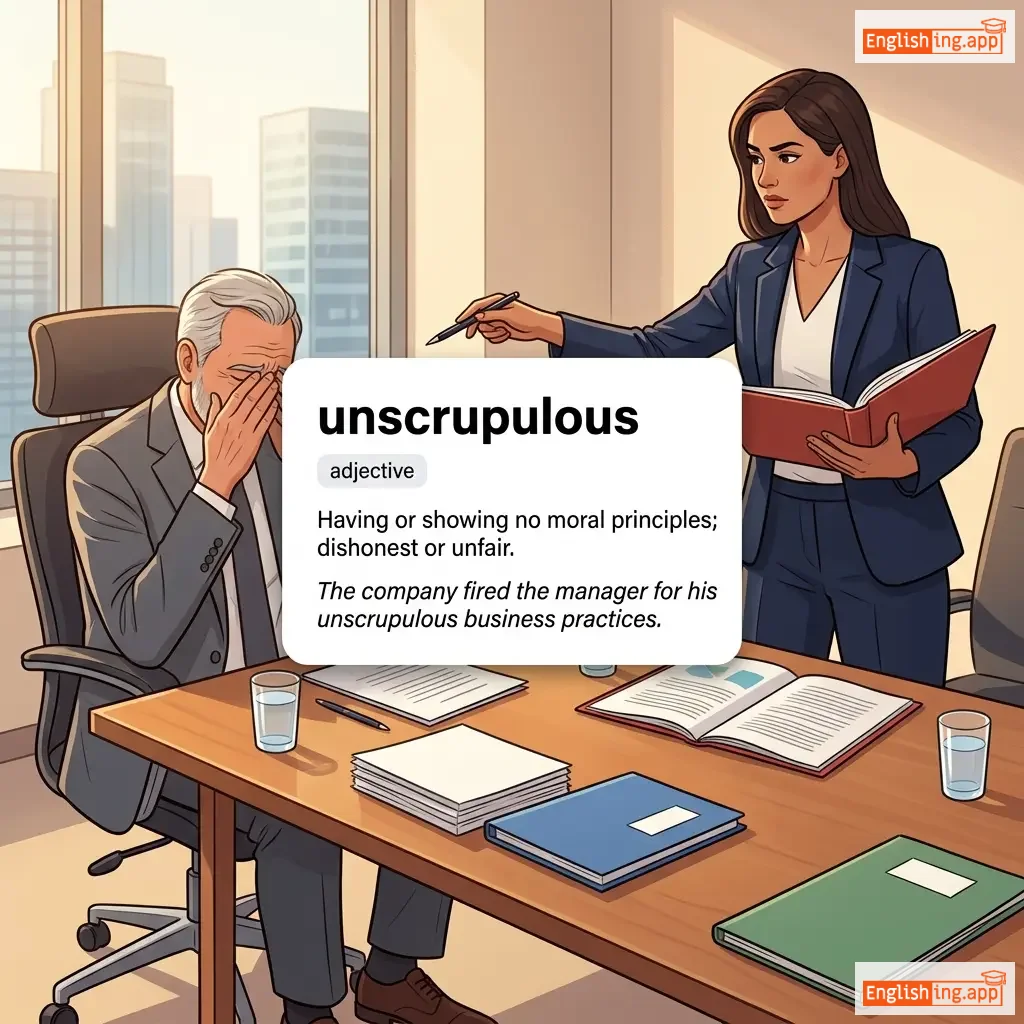
unscrupulous definition card — visual illustration of the meaning
adjective
/ʌnˈskruːpjələs/
無道徳 (mudōtoku)

Having or showing no moral principles; dishonest or unfair.

"The company fired the manager for his unscrupulous business practices."

"会社はその無道徳なビジネス慣行のためにマネージャーを解雇しました。" (Kaisha wa sono mudōtoku na bijinesu kankō no tame ni manējā o kaiko shimashita.)
preposition/conjunction
/ʌnˈtɪl/
まで (made)

up to the time of

"I will wait until you come back."

"私はあなたが戻るまで待ちます。" (Watashi wa anata ga modoru made machimasu.)
verb
/ʌnˈveɪl/
発表する (happyo suru)

to reveal or disclose something, especially in a formal manner

"The company will unveil a new product next week."

"会社は来週新製品を発表します。" (Kaisha wa raishū shin seihin o happyō shimasu.)
adjective
/ˌʌnrɪˈlaɪəbl/
信頼できない; 信頼や依存ができない (shinrai dekinai; shinrai ya izon ga dekinai)

not dependable; not able to be trusted or relied upon

"The old car is unreliable and breaks down frequently."

"その古い車は信頼できず、よく壊れます。" (Sono furui kuruma wa shinrai dekinai, yoku kowaremasu.)
adjective
/ʌnˈsɜːrvɪsəbəl/
使えない; 故障した (tsukaenai; koshou shita)

not in working order; unable to be used; defective

"The old computer became unserviceable after the system crash."

"古いコンピュータはシステムクラッシュ後、使えなくなりました。" (Furui konpyu-ta wa shisutemu kurasshu go, tsukaenaku narimashita.)
noun
/ˌʌnriˈælɪti/
非現実感 (hi genjitsukan)

the state or quality of being unreal; lack of reality or truth

"The dreamlike setting gave the story a sense of unreality."

"夢のような舞台は物語に非現実感を与えた。" (Yume no you na butai wa monogatari ni hi genjitsukan o ataeta)
adjective
/ʌnˈlɛtəd/
識字障害者 (shikiji shougai sha)

lacking education or the ability to read and write; illiterate

"The unlettered villagers relied on oral traditions to preserve their history."

"識字障害者の村人たちは口承伝承に頼って歴史を保存していた。" (Shikiji shougai sha no murabito-tachi wa koushou denshou ni tayotte rekishi wo hozon shite ita.)
adjective
/ʌnˈseɪvəri/
不快 (fukai)

Disagreeable, unpleasant, or morally offensive.

"The politician was linked to an unsavory scandal."
"その政治家は不快なスキャンダルに関連していました。" (Sono seijika wa fukai na sukyandaru ni kanren shiteimashita.)
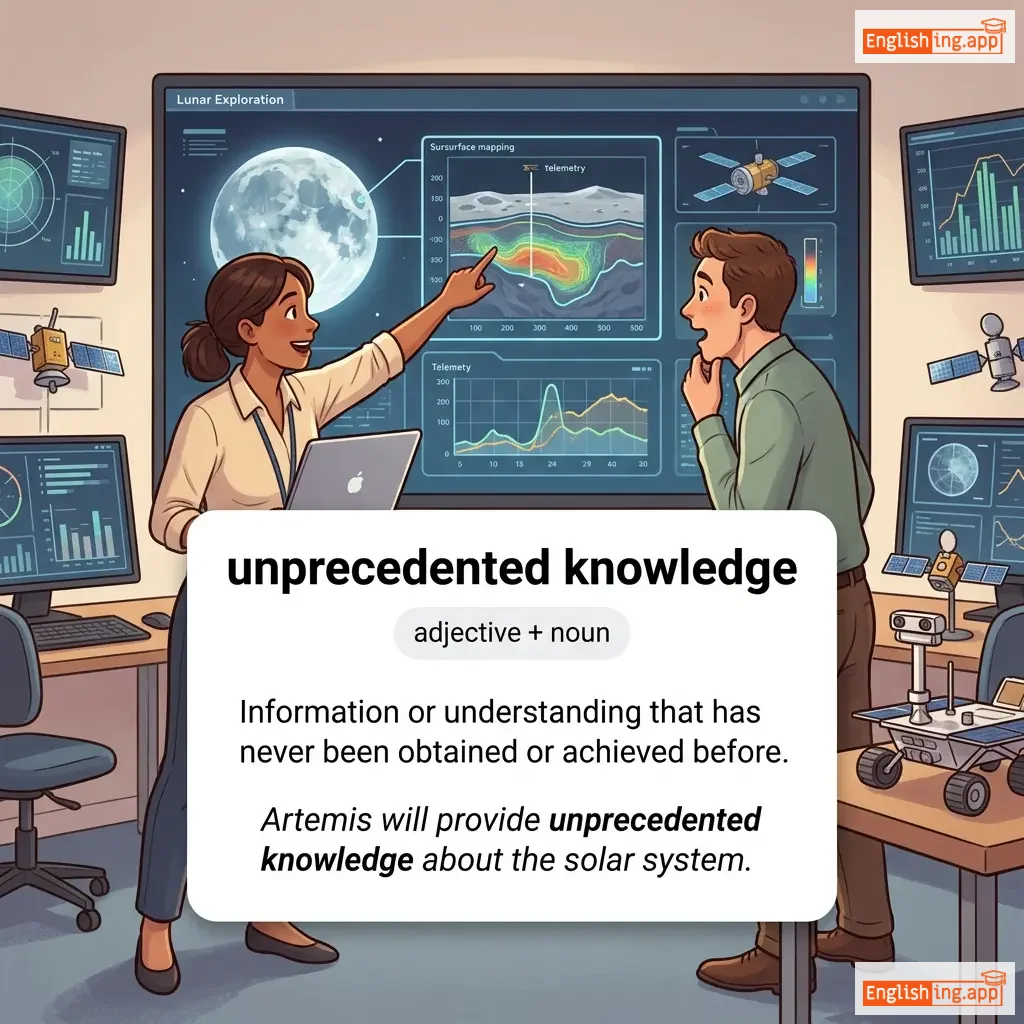
unprecedented knowledge definition card — visual illustration of the meaning
adjective + noun
ʌnˈpresɪdentɪd ˈnɒlɪdʒ
前例のない知識 (zenrei no nai chishiki)

Information or understanding that has never been obtained or achieved before.

"Artemis will provide unprecedented knowledge about the solar system."

"アルテミスは太陽系に関する前例のない知識を提供する。" (Artemisu wa taiyoukei ni kansuru zenrei no nai chishiki wo teikyou suru.)
adjective
/ʌnˈtɛmpərd/
無調整 (muchiōsei)

not moderated or softened; lacking proper balance or control

"The untempered anger of the crowd caused chaos."
"群衆の無調整な怒りが混乱を引き起こしました。" (Gunshū no muchiōsei na ikari ga konran o hikiokoshimashita.)
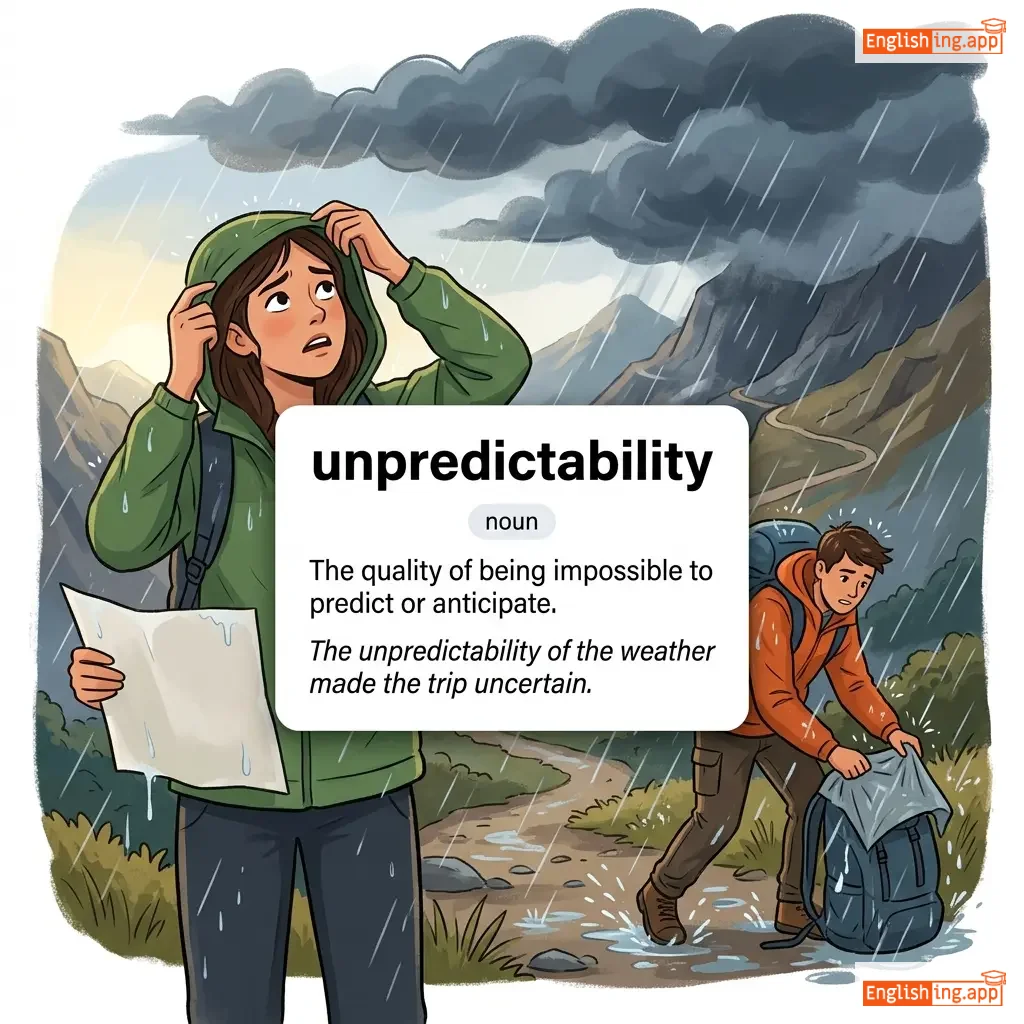
unpredictability definition card — visual illustration of the meaning
noun
/ˌʌnprɪˈdɪktəˌbɪləti/
予測不可能性 (yosoku fukanō-sei)

The quality of being impossible to predict or anticipate.

"The unpredictability of the weather made the trip uncertain."

"天気の予測不可能性は旅行を不確実にした。" (Tenki no yosoku fukanō-sei wa ryokō o fukakujitsu ni shita.)
adjective
/ʌnˈstɛdi/
不安定な (fuantei na)

not firm or stable; likely to change or fail

"She felt unsteady on her feet after the long journey."

"長旅の後、彼女は足元が不安定だった。" (Nagata bi no ato, kanojo wa ashimoto ga fuantei datta)
adjective
/ʌnˈsuːtəbl/
不適切; 不適当 (futekisetsu; futekitou)

not fitting or appropriate for a particular purpose or situation

"This formal dress is unsuitable for a casual beach party."

"このフォーマルなドレスはカジュアルなビーチパーティには不適切です。" (Kono fōmaru na doresu wa kajuaru na bīchi pātī ni wa futekisetsu desu.)
adjective
/ʌnˈsəʊʃəbl/
非社交的な (hi shakaiteki na)

not enjoying the company of others; avoiding social interaction

"He became unsociable after moving to a new city."

"新しい街に引っ越してから、彼は非社交的になった。" (atarashii machi ni hikkoshite kara kare wa hi shakaiteki ni natta)
adjective
/ʌnˈθɪŋkɪŋ/
軽率な (keisotsu na)

done without careful thought; automatic or thoughtless

"His unthinking remark hurt her feelings."

"彼の軽率な発言は彼女の気持ちを傷つけた。" (kare no keisotsu na hatsugen wa kanojo no kimochi o kizutsuketa)
adjective
/ˈʌpˌhɪl/
困難な; 大きな努力が必要な; 上向きの傾斜 (konnan na; ookina doryoku ga hitsuyou na; ue-muki no keisha)

difficult; requiring great effort; sloping upward

"Learning a new language can be an uphill battle."

"新しい言語を学ぶことは困難な戦いである可能性があります。" (Atarashii gengo o manabu koto wa konnan na tatakai de aru kanousei ga arimasu.)
adjective
/ˌʌnɪnˈtenʃənəl/
意図しない; 偶発的 (itoshinai; gūhatsuteki)

not done on purpose; accidental

"The damage to the car was unintentional."

"車の損傷は意図しないものでした。" (Kuruma no sonshō wa itoshinai mono deshita.)
adjective
/ʌnˈʃeɪkən/
動揺しない; 固い (dōyō shinai; katai)

not disturbed or affected; firm and steady; unwavering

"Her faith remained unshaken despite all the challenges."

"彼女の信念はすべての困難にも動揺しませんでした。" (Kanojo no shin'nen wa subete no konnan ni mo dōyō shimasen deshita.)
adjective
/ʌnˈtruː/
虚偽 (kyogi)

not true; false or incorrect

"The rumor about the company closing was completely untrue."

"会社閉鎖の噂は完全に虚偽でした。" (Kaisha heisa no uwasa wa kanzen ni kyogi deshita.)
adjective
/ʌnˈʃʊr/
不確かな (futashikana)

not certain or confident; feeling doubt

"She felt unsure about the decision."

"彼女はその決定について不確かだった。" (kanojo wa sono kettei ni tsuite futashika datta)
adjective
/ʌnˈθɪŋkəbl/
想像を絶する (souzou o zessuru)

impossible to conceive or imagine; beyond belief or consideration

"It was unthinkable that such a tragedy could happen in our peaceful town."

"私たちの平和な街でそのような悲劇が起こるなんて、想像を絶していました。" (Watashitachi no heiwa na machi de sono youna higeki ga okoru nante, souzou o zesshite imashita.)
adjective
/ˌʌnəbˈtruːsɪv/
目立たない (medatanai)

not attracting attention; blending in without causing notice

"The security cameras are designed to be unobtrusive."
"セキュリティカメラは目立たないように設計されています。" (Sekyuriti kamera wa medatanai yō ni sekkei sareteimasu.)
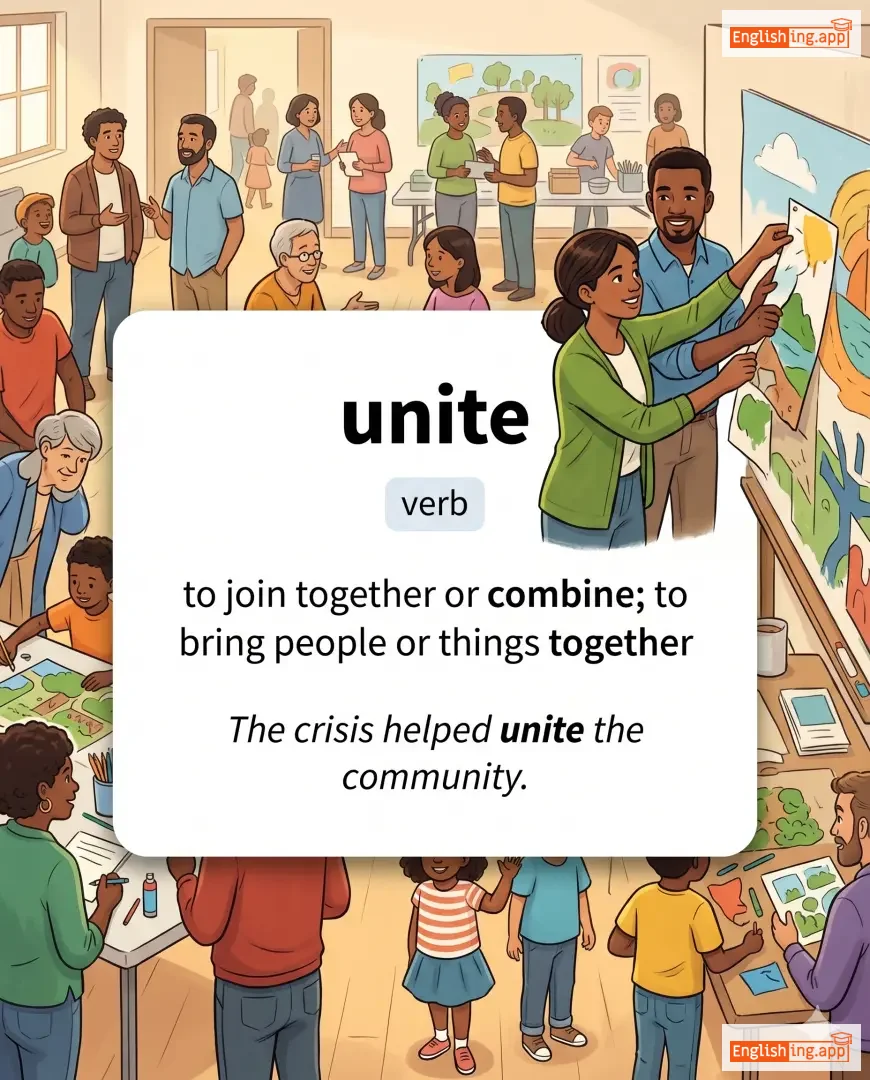
unite definition card — visual illustration of the meaning
verb
/juˈnaɪt/
団結する (danketsu suru)

to join together or combine; to bring people or things together

"The crisis helped unite the community."

"危機がコミュニティを団結させました。" (Kiki ga komyuniti o danketsu sasemashita.)
noun
/ˈjuːs.fəl.nəs/
有用性 (yūyōsei)

the quality of being useful; practical value or helpfulness

"The usefulness of this tool became apparent during the project."

"このツールの有用性はプロジェクト中に明らかになりました。" (Kono tsūru no yūyōsei wa purojekuto chū ni akiraka ni narimashita.)
adjective
/ʌnˈdʒʌst/
不当な; 不正な (futōna; fuseina)

not fair or right; morally wrong

"The punishment was unjust for such a minor offense."

"その罰は軽微な違反に対して不当でした。" (Sono bachi wa keibi na ihan ni taishite futō deshita.)
adjective
/ʌnˈnætʃrəl/
不自然 (fushizen)

contrary to the usual course of nature; artificial or abnormal

"The bright green color of the drink looked unnatural."

"その飲み物の鮮やかな緑色は不自然に見えた。" (Sono nomimono no azayakana midoriiro wa fushizen ni mieta.)
adjective
/ʌnˈtaɪmli/
時期尚早 (jiki shōsō)

Happening or done at an unsuitable or premature time.

"His untimely death shocked the entire community."

"彼の時期尚早な死はコミュニティ全体を驚かせました。" (Kare no jiki shōsō na shi wa komyuniti zentai o odorokasemashita.)
adjective
/ʌnˈwɪl.ɪŋ/
嫌がる; したくない; (iyagaru; shitakunai)

not ready to do something; reluctant; not wanting to do

"He was unwilling to share his secret with anyone."

"彼は誰にも自分の秘密を共有することを望まなかった。" (Kare wa dare ni mo jibun no himitsu o kyōyū suru koto o nozomanakatta.)
adjective
/ʌnˈtiːtʃəbəl/
教えられない (oshierarenai)

not able or willing to learn; resistant to instruction or guidance

"He was so stubborn that he became almost unteachable."

"彼はとても頑固で、ほとんど教えられない状態だった。" (kare wa totemo ganko de hotondo oshierarenai jotai datta)
adjective
/ʌnˈriːdəbl/
読めない (yomenai)

not able to be read or understood clearly; illegible

"The doctor’s handwriting was completely unreadable."

"医者の字は完全に読めなかった。" (Isha no ji wa kanzen ni yomenakatta)
adjective
/ʌnˈlʌki/
不運; ラッキーでない (fuun; rakkī denai)

having bad luck; unfortunate

"He was unlucky to miss the winning shot."

"彼は勝つシュートを外して不運だった。" (Kare wa katsu shūto o hazushite fuun datta.)
adjective
/ʌnˈwel.kəm/
不快な; 望ましくない; 招待されていない (fukai na; nozomashikunai; shoutai sarete inai)

not wanted or accepted; not invited or pleasant

"The unwelcome news ruined their vacation plans."

"その歓迎されないニュースは彼らの休暇計画を台無しにしました。" (Sono kangei sarenai nyuusu wa karera no kyūka keikaku o dainashi ni shimashita.)
adjective
/ʌnˈjuːʒuəl/
異常 (ijou)

not common or ordinary; remarkable or exceptional

"She has an unusual talent for solving complex problems."

"彼女は複雑な問題を解決するための異常な才能を持っています。" (Kanojo wa fukuzatsu na mondai wo kaiketsu suru tame no ijou na sainou wo motteimasu.)
noun/verb
/ˈʌpˌkæst/
上に投げる (ue ni nageru)

Verb: To cast or throw upward. Noun: Something thrown or directed upward.

"The fisherman upcast his net into the air."

"漁師は彼の網を空中に投げた。" (Ryoushi wa kare no ami o kuuchuu ni nageta.)
adjective
/ʌnˈkwaɪ.ət/
落ち着かない; 不安な; 動揺した (ochitsukanai; fuan na; dōyō shita)

restless; unable to remain still or quiet; anxious or troubled

"She spent an unquiet night worrying about the exam results."

"彼女は試験結果を心配して落ち着かない夜を過ごした。" (Kanojo wa shiken kekka o shinpai shite ochitsukanai yoru o sugoshita.)
adjective
/ʌnˈsaɪtli/
見苦しい (migurushii)

Unpleasant to look at; ugly.

"The garbage pile created an unsightly view in the park."

"ゴミの山は公園に見苦しい景色を作り出した。" (Gomi no yama wa kōen ni migurushii keshiki o tsukuridashita.)
adjective
/ʌnˈjuzd/
未使用の; 使われていない (mishiyou no; tsukawarete inai)

not being used; not having been used before

"There are many unused rooms in this old mansion."

"この古い館には未使用の部屋がたくさんあります。" (Kono furui yakata ni wa mishiyou no heya ga takusan arimasu.)
adjective
/ʌnˈpɒpjʊlə/
不人気な (funinki na)

not liked or supported by many people

"The decision was unpopular with the public."

"その決定は世間で不人気だった。" (sono kettei wa seken de funinki datta)