Vocabularios

Descubra, aprenda y domine el vocabulario en inglés

adjective
/ʌnˈmænɪdʒəbəl/
incontrolable; fuera de control (incontrolable; fuera de control)

difficult or impossible to control or handle

"The large class became unmanageable without proper supervision."

"La gran clase se volvió incontrolable sin una supervisión adecuada." (La gran clase se volvio incontrolable sin una supervisión adecuada.)
adjective
/ʌnˈmærid/
soltero (soltero)

Not married; single.

"He is thirty-five and still unmarried."

"Él tiene treinta y cinco años y sigue soltero." (Él tiene treinta y cinco años y sigue soltero.)
adjective
/ʌnˈmɪtɪɡeɪtɪd/
completo (kompleto)

absolute; not lessened or moderated

"The meeting was an unmitigated disaster."

"La reunión fue un desastre completo." (La reunion fue un desastre completo.)
adjective
/ʌpˈrɔːr.i.əs/
sumamente cómico (sumamente comico)

Extremely funny or noisy; causing loud laughter or commotion.

"The comedian's jokes were absolutely uproarious."

"Los chistes del comediante fueron absolutamente sumamente cómicos." (Los chistes del comediante fueron absolutamente sumamente comicos.)
adjective
/ʌnˈtaɪdi/
desordenado; desorganizado; (desordenado)

not neat or orderly; messy and disorganized

"Her untidy room was filled with clothes scattered everywhere."

"Su habitación desordenada estaba llena de ropa esparcida por todas partes." (su habitacion desordenada estaba llena de ropa esparcida por todas partes.)
adjective
/ʌnˈprɒf.ɪ.tə.bl̩/
no rentable (no rentable)

not yielding profit or gain; not producing financial benefit

"The unprofitable business was forced to close down after three years."

"El negocio no rentable se vio obligado a cerrar después de tres años." (El negocio no rentable se vio obligado a cerrar después de tres años.)
adjective
/ˌʌnprəˈpɪʃəs/
desfavorable (desfavorable)

Not giving or indicating a good chance of success; unfavorable.

"The team began their journey under unpropitious weather conditions."

"El equipo comenzó su viaje bajo condiciones meteorológicas desfavorables." (El equipo comenzó su viaje bajo condiciones meteorológicas desfavorables.)
adjective
/ʌnˈsoʊld/
no vendido (no vendido)

not sold; remaining without a buyer

"The unsold goods were returned to the warehouse."

"Los productos no vendidos fueron devueltos al almacén." (los productos no vendidos fueron devueltos al almacen)
adjective
/ʌnˈsəʊʃəl/
antisocial (antisocial)

not enjoying the company of others; avoiding social interaction; contrary to social norms

"He prefers unsocial hours so he can work alone without interruptions."

"Prefiere horarios antisociales para trabajar solo." (prefiere horarios antisociales para trabajar solo)
adjective
/ˌʌnsəkˈsesfl/
fallido; no logrado; (fallido; no logrado)

not achieving desired aims or results; failing to accomplish a purpose

"His unsuccessful attempt to climb the mountain left him disappointed."

"Su intento fallido de escalar la montaña lo dejó decepcionado." (Su intento fallido de escalar la montaña lo dejó decepcionado.)
adjective
/ʌnˈtʌtʃəbəl/
intocable; más allá de la crítica o el ataque (intocable; mas alla de la critica o el ataque)

not able to be touched or affected; beyond criticism or attack

"The CEO seemed untouchable despite the scandal."

"El CEO parecía intocable a pesar del escándalo." (El CEO parecia intocable a pesar del escandalo.)
adjective
/ʌnˈkwes.tʃən.ə.bl̩/
indiscutible; seguro (indiscutible; seguro)

not able to be disputed or doubted; certain and beyond doubt

"Her honesty and integrity are unquestionable qualities."

"Su honestidad e integridad son cualidades indiscutibles." (su honestidad e integridad son cualidades indiscutibles.)
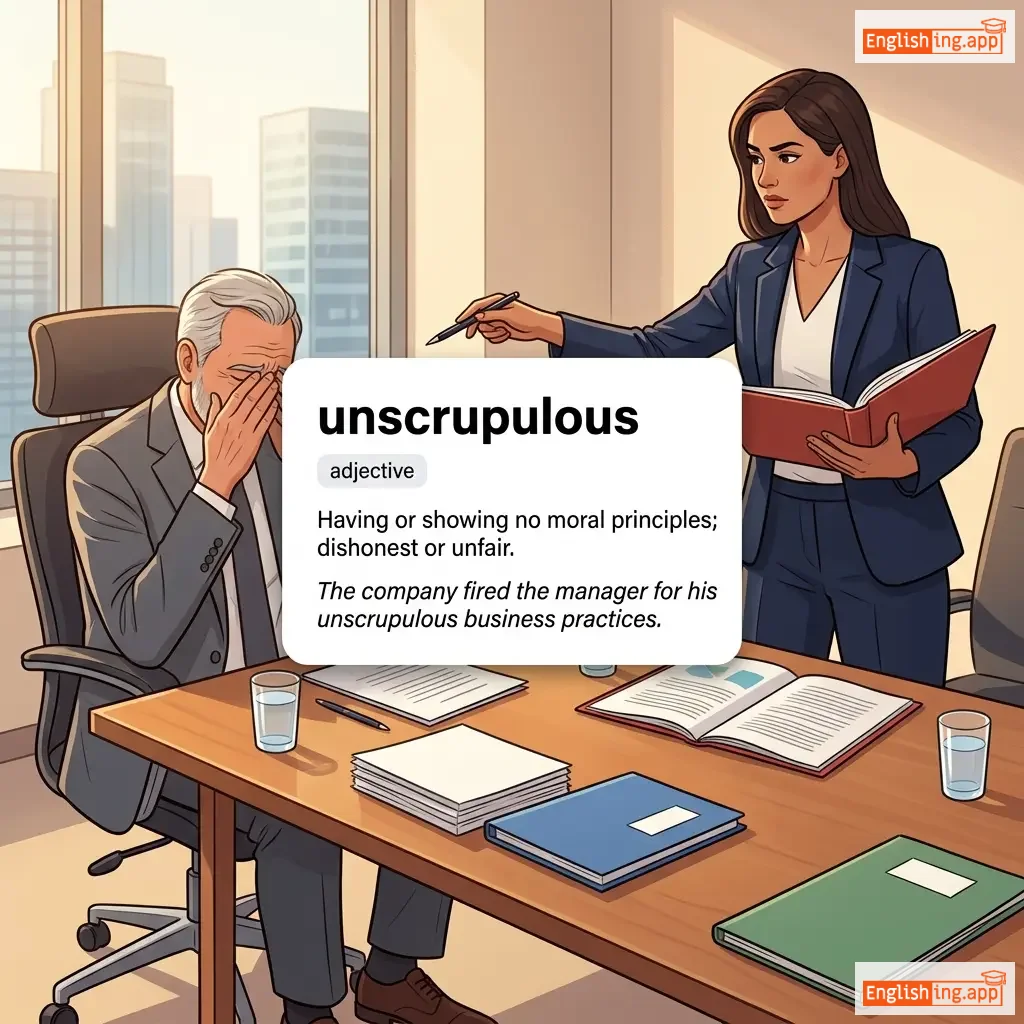
unscrupulous definition card — visual illustration of the meaning
adjective
/ʌnˈskruːpjələs/
desalmado (desalmado)

Having or showing no moral principles; dishonest or unfair.

"The company fired the manager for his unscrupulous business practices."

"La empresa despidió al gerente por sus prácticas comerciales desalmadas." (La empresa despidió al gerente por sus prácticas comerciales desalmadas.)
preposition/conjunction
/ʌnˈtɪl/
hasta (hasta)

up to the time of

"I will wait until you come back."

"Esperaré hasta que regreses." (Esperaré hasta que regreses.)
verb
/ʌnˈveɪl/
desvelar (desvelar)

to reveal or disclose something, especially in a formal manner

"The company will unveil a new product next week."

"La compañía desvelará un nuevo producto la próxima semana." (La compañia desvelara un nuevo producto la proxima semana.)
adjective
/ˌʌnrɪˈlaɪəbl/
no confiable; no se puede confiar ni depender de él (no confiable; no se puede confiar ni depender de él)

not dependable; not able to be trusted or relied upon

"The old car is unreliable and breaks down frequently."

"El coche viejo no es confiable y se descompone con frecuencia." (El coche viejo no es confiable y se descompone con frecuencia.)
adjective
/ʌnˈsɜːrvɪsəbəl/
inservible; defectuoso (inservible; defectuoso)

not in working order; unable to be used; defective

"The old computer became unserviceable after the system crash."

"La computadora vieja se volvió inservible después del fallo del sistema." (La computadora vieja se volvio inservible despues del fallo del sistema.)
noun
/ˌʌnriˈælɪti/
irrealidad (irrealidad)

the state or quality of being unreal; lack of reality or truth

"The dreamlike setting gave the story a sense of unreality."

"El escenario onírico dio a la historia una sensación de irrealidad." (El escenario onirico dio a la historia una sensacion de irrealidad)
adjective
/ʌnˈlɛtəd/
analfabeto (analfabeto)

lacking education or the ability to read and write; illiterate

"The unlettered villagers relied on oral traditions to preserve their history."

"Los aldeanos analfabetos dependían de las tradiciones orales para preservar su historia." (Los aldeanos analfabetos dependian de las tradiciones orales para preservar su historia.)
adjective
/ʌnˈseɪvəri/
desagradable (desagradable)

Disagreeable, unpleasant, or morally offensive.

"The politician was linked to an unsavory scandal."

"El político estaba vinculado a un escándalo desagradable." (El político estaba vinculado a un escándalo desagradable.)
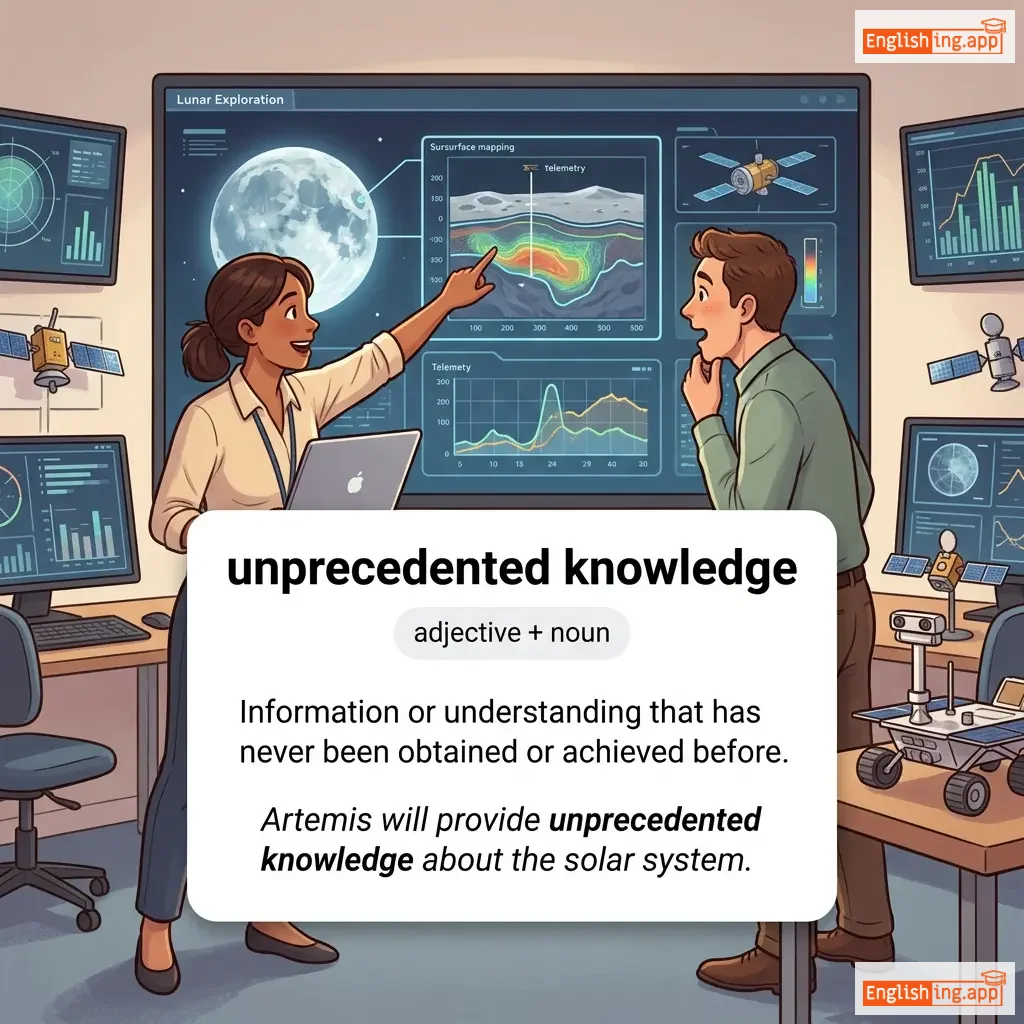
unprecedented knowledge definition card — visual illustration of the meaning
adjective + noun
ʌnˈpresɪdentɪd ˈnɒlɪdʒ
conocimiento sin precedentes (conocimiento sin precedentes)

Information or understanding that has never been obtained or achieved before.

"Artemis will provide unprecedented knowledge about the solar system."

"Artemis proporcionará un conocimiento sin precedentes sobre el sistema solar." (Artemis proporcionara un conocimiento sin precedentes sobre el sistema solar.)
adjective
/ʌnˈtɛmpərd/
intempérate (intemperate)

not moderated or softened; lacking proper balance or control

"The untempered anger of the crowd caused chaos."

"La ira intempérate de la multitud causó caos." (La ira intempérate de la multitud causó caos.)
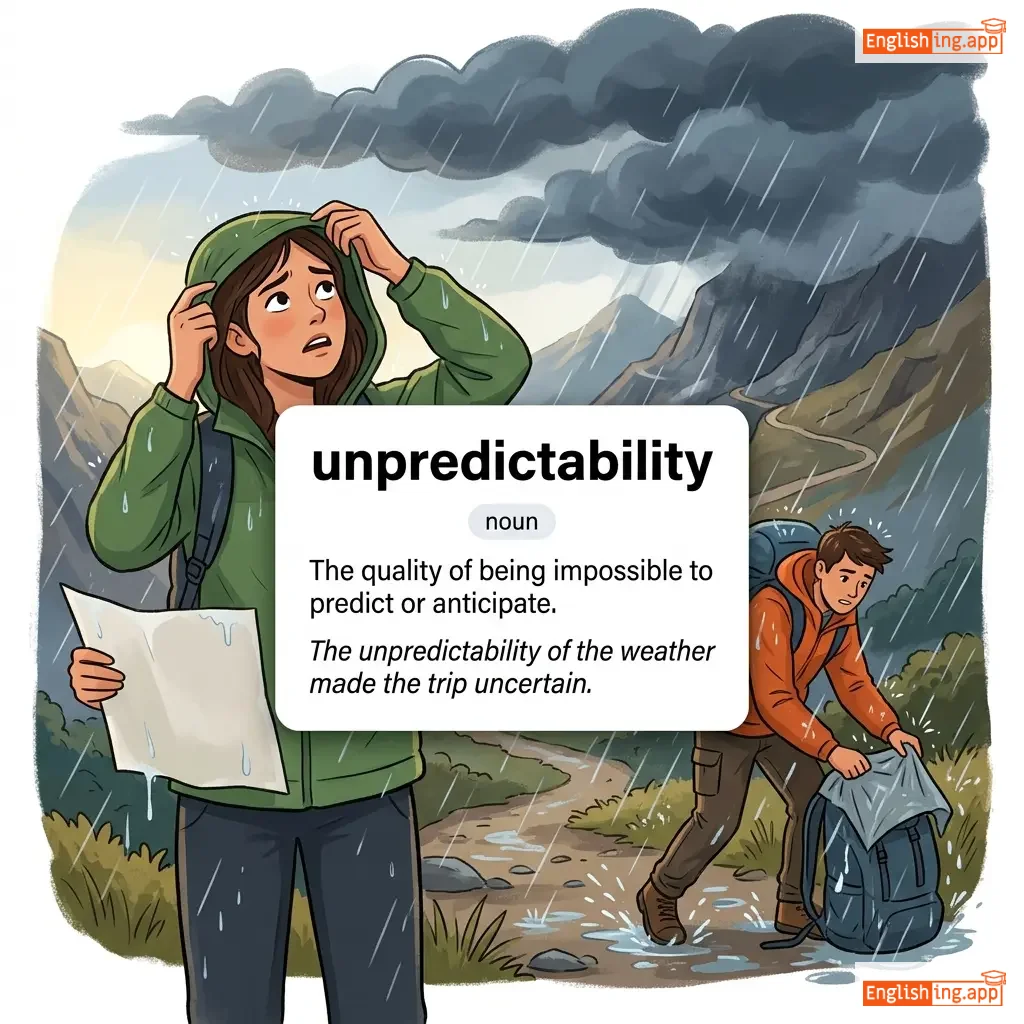
unpredictability definition card — visual illustration of the meaning
noun
/ˌʌnprɪˈdɪktəˌbɪləti/
imprevisibilidad (imprevisibilidad)

The quality of being impossible to predict or anticipate.

"The unpredictability of the weather made the trip uncertain."

"La imprevisibilidad del clima hizo que el viaje fuera incierto." (La imprevisibilidad del clima hizo que el viaje fuera incierto.)
adjective
/ʌnˈstɛdi/
inestable (inestable)

not firm or stable; likely to change or fail

"She felt unsteady on her feet after the long journey."

"Se sentía inestable después del largo viaje." (Se sentia inestable despues del largo viaje)
adjective
/ʌnˈsuːtəbl/
inapropiado; inapto (inapropiado; inapto)

not fitting or appropriate for a particular purpose or situation

"This formal dress is unsuitable for a casual beach party."

"Este vestido formal es inapropiado para una fiesta de playa casual." (Este vestido formal es inapropiado para una fiesta de playa casual.)
adjective
/ʌnˈsəʊʃəbl/
poco sociable (poco sociable)

not enjoying the company of others; avoiding social interaction

"He became unsociable after moving to a new city."

"Se volvió poco sociable después de mudarse a una nueva ciudad." (se volvio poco sociable despues de mudarse a una nueva ciudad)
adjective
/ʌnˈθɪŋkɪŋ/
irreflexivo (irreflexivo)

done without careful thought; automatic or thoughtless

"His unthinking remark hurt her feelings."

"Su comentario irreflexivo hirió sus sentimientos." (su comentario irreflexivo hirio sus sentimientos)
adjective
/ˈʌpˌhɪl/
difícil; que requiere gran esfuerzo; inclinado hacia arriba (dificil; que requiere gran esfuerzo; inclinado hacia arriba)

difficult; requiring great effort; sloping upward

"Learning a new language can be an uphill battle."

"Aprender un nuevo idioma puede ser una batalla difícil." (aprender un nuevo idioma puede ser una batalla dificil.)
adjective
/ˌʌnɪnˈtenʃənəl/
no intencionado; accidental (no intencionado; accidental)

not done on purpose; accidental

"The damage to the car was unintentional."

"El daño al coche fue no intencionado." (El daño al coche fue no intencionado.)
adjective
/ʌnˈʃeɪkən/
inquebrantable; firme (inquebrantable; firme)

not disturbed or affected; firm and steady; unwavering

"Her faith remained unshaken despite all the challenges."

"Su fe permaneció inquebrantable a pesar de todos los desafíos." (Su fe permaneció inquebrantable a pesar de todos los desafíos.)
adjective
/ʌnˈtruː/
falso (falso)

not true; false or incorrect

"The rumor about the company closing was completely untrue."

"El rumor sobre el cierre de la empresa era completamente falso." (El rumor sobre el cierre de la empresa era completamente falso.)
adjective
/ʌnˈʃʊr/
inseguro (inseguro)

not certain or confident; feeling doubt

"She felt unsure about the decision."

"Ella se sentía insegura sobre la decisión." (ella se sentia insegura sobre la decision)
adjective
/ʌnˈθɪŋkəbl/
inimaginable (inimaginable)

impossible to conceive or imagine; beyond belief or consideration

"It was unthinkable that such a tragedy could happen in our peaceful town."

"Era inimaginable que tal tragedia pudiera ocurrir en nuestra tranquila ciudad." (Era inimaginable que tal tragedia pudiera ocurrir en nuestra tranquila ciudad.)
adjective
/ˌʌnəbˈtruːsɪv/
discreto (discreto)

not attracting attention; blending in without causing notice

"The security cameras are designed to be unobtrusive."

"Las cámaras de seguridad están diseñadas para ser discretas." (Las camaras de seguridad estan disenadas para ser discretas.)
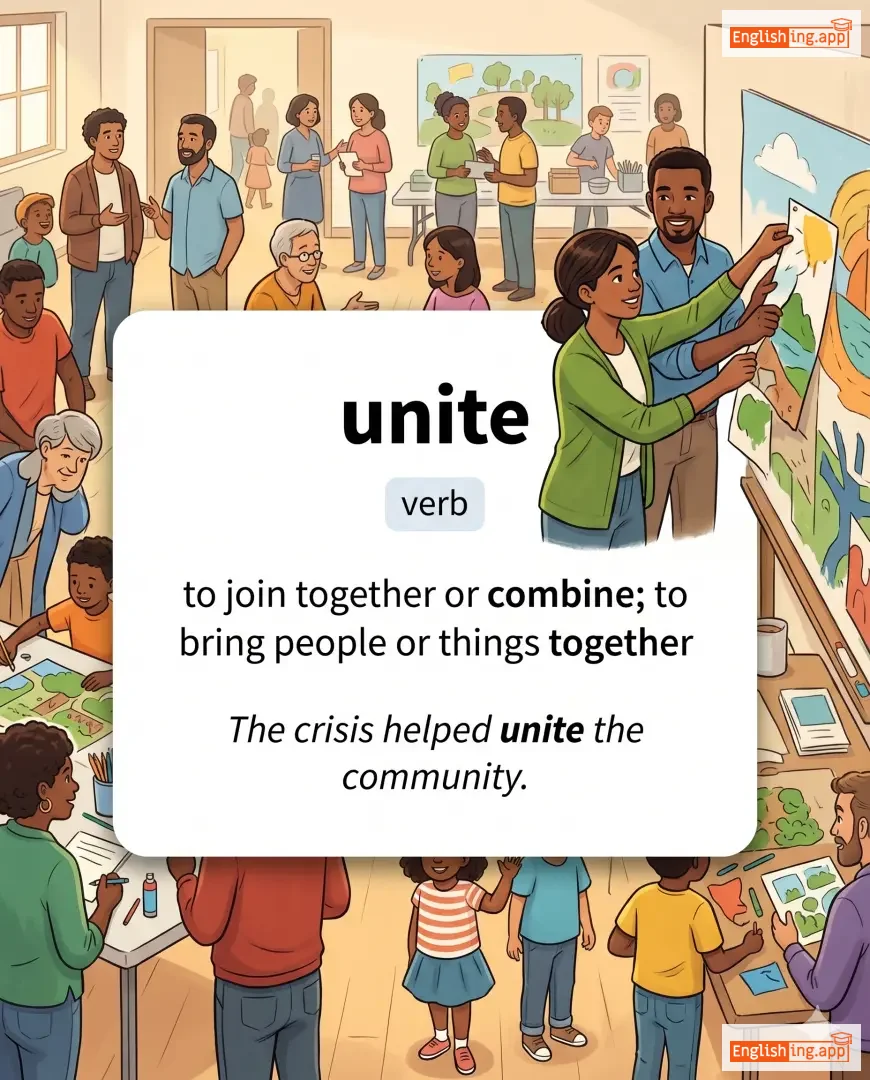
unite definition card — visual illustration of the meaning
verb
/juˈnaɪt/
unir (unir)

to join together or combine; to bring people or things together

"The crisis helped unite the community."

"La crisis ayudó a unir la comunidad." (La crisis ayudó a unir la comunidad.)
noun
/ˈjuːs.fəl.nəs/
utilidad (utilidad)

the quality of being useful; practical value or helpfulness

"The usefulness of this tool became apparent during the project."

"La utilidad de esta herramienta se hizo evidente durante el proyecto." (La utilidad de esta herramienta se hizo evidente durante el proyecto.)
adjective
/ʌnˈdʒʌst/
injusto; incorrecto (injusto; incorrecto)

not fair or right; morally wrong

"The punishment was unjust for such a minor offense."

"El castigo fue injusto por tal pequeña ofensa." (El castigo fue injusto por tal pequena ofensa)
adjective
/ʌnˈnætʃrəl/
antinatural (antinatural)

contrary to the usual course of nature; artificial or abnormal

"The bright green color of the drink looked unnatural."

"El color verde brillante de la bebida parecía antinatural." (El color verde brillante de la bebida parecía antinatural.)
adjective
/ʌnˈtaɪmli/
prematuro (prematuro)

Happening or done at an unsuitable or premature time.

"His untimely death shocked the entire community."

"Su muerte prematura sorprendió a toda la comunidad." (Su muerte prematura sorprendió a toda la comunidad.)
adjective
/ʌnˈwɪl.ɪŋ/
reacio; reticente; (reacio; reticente)

not ready to do something; reluctant; not wanting to do

"He was unwilling to share his secret with anyone."

"Él no quería compartir su secreto con nadie." (El no queria compartir su secreto con nadie.)
adjective
/ʌnˈtiːtʃəbəl/
imposible de enseñar (imposible de ensenar)

not able or willing to learn; resistant to instruction or guidance

"He was so stubborn that he became almost unteachable."

"Era tan terco que se volvió casi imposible de enseñar." (era tan terco que se volvio casi imposible de ensenar)
adjective
/ʌnˈriːdəbl/
ilegible (ilegible)

not able to be read or understood clearly; illegible

"The doctor’s handwriting was completely unreadable."

"La letra del médico era completamente ilegible." (La letra del medico era completamente ilegible)
adjective
/ʌnˈlʌki/
desafortunado; de mala suerte (desafortunado; de mala suerte)

having bad luck; unfortunate

"He was unlucky to miss the winning shot."

"Él tuvo mala suerte al perder el tiro ganador." (Él tuvo mala suerte al perder el tiro ganador.)
adjective
/ʌnˈwel.kəm/
desagradable; no deseado; indeseado (desagradable; no deseado; indeseado)

not wanted or accepted; not invited or pleasant

"The unwelcome news ruined their vacation plans."

"Las malas noticias arruinaron sus planes de vacaciones." (Las malas noticias arruinaron sus planes de vacaciones.)
adjective
/ʌnˈjuːʒuəl/
inusual (inusual)

not common or ordinary; remarkable or exceptional

"She has an unusual talent for solving complex problems."

"Ella tiene un talento inusual para resolver problemas complejos." (Ella tiene un talento inusual para resolver problemas complejos.)
noun/verb
/ˈʌpˌkæst/
lanzar hacia arriba (lanzar hacia arriba)

Verb: To cast or throw upward. Noun: Something thrown or directed upward.

"The fisherman upcast his net into the air."

"El pescador lanzó su red al aire." (El pescador lanzó su red al aire.)
adjective
/ʌnˈkwaɪ.ət/
inquieto; ansioso; perturbado (inquieto; ansioso; perturbado)

restless; unable to remain still or quiet; anxious or troubled

"She spent an unquiet night worrying about the exam results."

"Pasó una noche inquieta preocupada por los resultados del examen." (Paso una noche inquieta preocupada por los resultados del examen.)
adjective
/ʌnˈsaɪtli/
desagradable (desagradable)

Unpleasant to look at; ugly.

"The garbage pile created an unsightly view in the park."

"El montón de basura creó una vista desagradable en el parque." (El monton de basura creo una vista desagradable en el parque.)
adjective
/ʌnˈjuzd/
sin usar; no utilizado (sin usar; no utilizado)

not being used; not having been used before

"There are many unused rooms in this old mansion."

"Hay muchas habitaciones sin usar en esta antigua mansión." (Hay muchas habitaciones sin usar en esta antigua mansión.)
adjective
/ʌnˈpɒpjʊlə/
impopular (impopular)

not liked or supported by many people

"The decision was unpopular with the public."

"La decisión fue impopular entre el público." (la decision fue impopular entre el publico)