Vocabularios

Descubra, aprenda y domine el vocabulario en inglés

noun
/ʌpˈhiːvəl/
upheaval (upheaval)

a violent or sudden change or disruption to something

"The company faced a major upheaval after the sudden resignation of its CEO."

"La empresa enfrentó un gran desorden tras la repentina renuncia de su CEO." (La empresa enfrento un gran desorden tras la repentina renuncia de su CEO.)
adjective
/ʌnˈtaɪərɪŋ/
incansable; persistente; infatigable (incansable; persistente; infatigable)

continuing without stopping; persistent; tireless

"Her untiring efforts finally led to success."

"Sus esfuerzos incansables finalmente llevaron al éxito." (Sus esfuerzos incansables finalmente llevaron al éxito.)
adjective
/ʌnˈtruː/
falso (falso)

not true; false or incorrect

"The rumor about the company closing was completely untrue."

"El rumor sobre el cierre de la empresa era completamente falso." (El rumor sobre el cierre de la empresa era completamente falso.)
🏠⬆️

Upstairs

adverb
/ˌʌpˈstɛərz/

on or to a higher floor of a building

"She went upstairs to her bedroom."

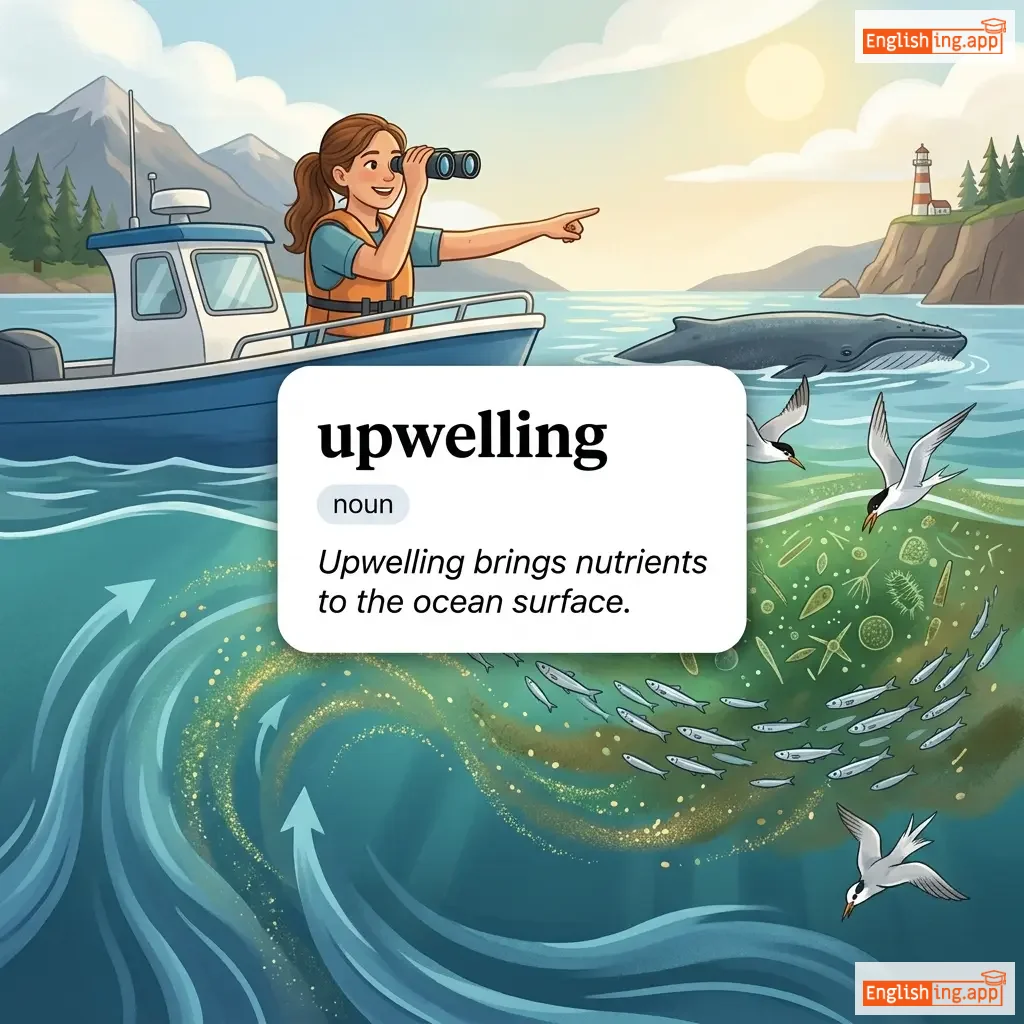
upwelling definition card — visual illustration of the meaning
noun
/ˈʌp.wel.ɪŋ/
Fenómeno oceanográfico que implica el movimiento de agua densa, fría y rica en nutrientes hacia la superficie del océano. (Fenomeno oceanografico que implica el movimiento de agua densa, fria y rica en nutrientes hacia la superficie del oceano.)

An oceanographic phenomenon that involves wind-driven motion of dense, cooler, and nutrient-rich water towards the ocean surface.

"Upwelling brings nutrients to the ocean surface."

"El upwelling lleva nutrientes a la superficie del océano." (El upwelling lleva nutrientes a la superficie del oceano.)
adjective
/ʌnˈʃeɪkən/
inquebrantable; firme (inquebrantable; firme)

not disturbed or affected; firm and steady; unwavering

"Her faith remained unshaken despite all the challenges."

"Su fe permaneció inquebrantable a pesar de todos los desafíos." (Su fe permaneció inquebrantable a pesar de todos los desafíos.)
adjective
/ʌnprəˈfɛʃ.ən.əl/
no profesional (no profesional)

not conforming to the standards expected in a particular profession

"His unprofessional behavior led to his dismissal from the company."

"Su comportamiento no profesional llevó a su despido de la empresa." (Su comportamiento no profesional llevo a su despido de la empresa)
verb
/ʌnˈræp/
desenvolver (desenvolver)

remove wrapping or covering from something; reveal something gradually or clearly

"She carefully unwrapped the gift with excitement."

"Ella desenvolvió el regalo con cuidado y emoción." (Ella desenvolvio el regalo con cuidado y emocion)
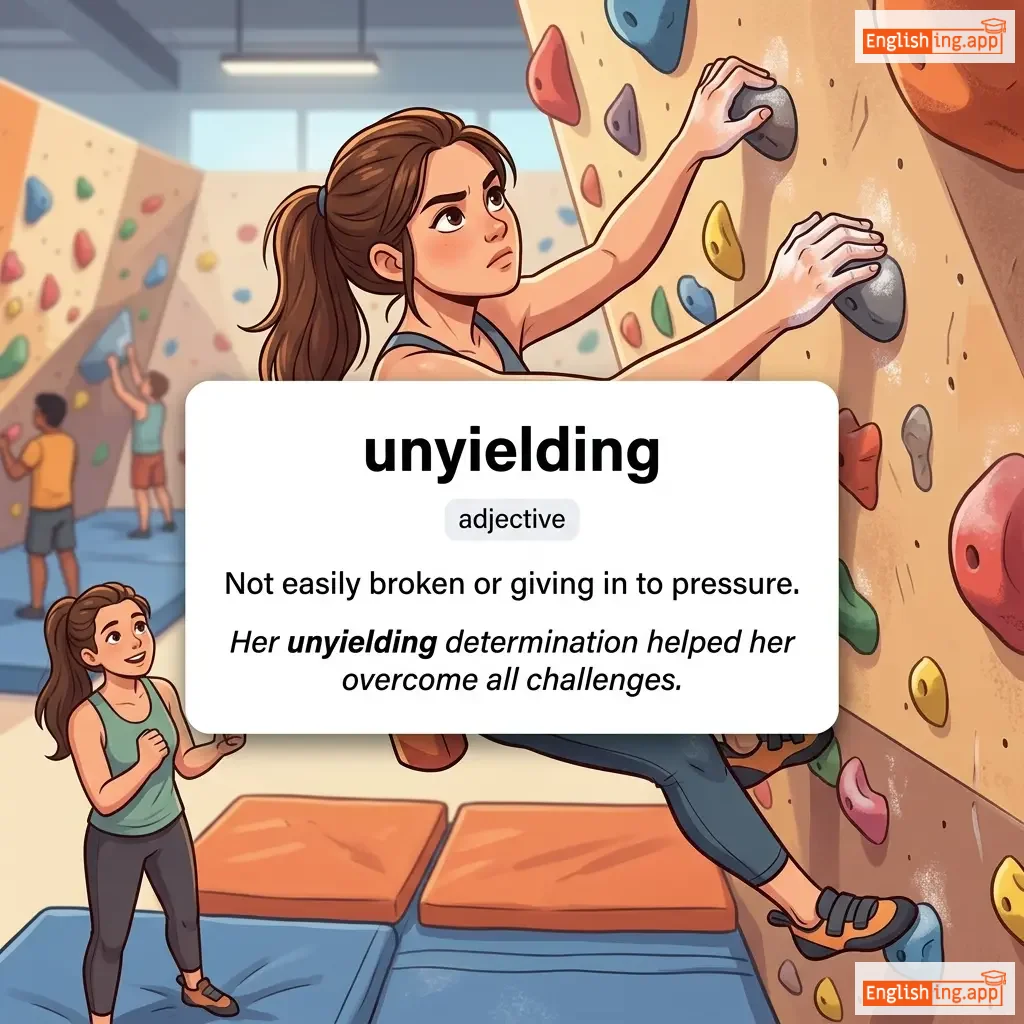
unyielding definition card — visual illustration of the meaning
adjective
ʌnˈjiːl.dɪŋ
inquebrantable o firme (inqueebrantable o firme)

Not easily broken or giving in to pressure.

"Her unyielding determination helped her overcome all challenges."

"Su determinación inquebrantable la ayudó a superar todos los desafíos." (Su determinacion inquebrantable la ayudo a superar todos los desafios.)
⬆️

up (áp)

adverb
/ʌp/
arriba (arriba)

towards a higher position or level

"He climbed up the ladder quickly."

"Él subió rápidamente la escalera." (El subio rapidamente la escalera.)
noun
/ˈʌpˌkiːp/
mantenimiento (mantenimiento)

The process or cost of maintaining something in good condition.

"The upkeep of the old house is very expensive."

"El mantenimiento de la casa antigua es muy caro." (El mantenimiento de la casa antigua es muy caro.)
noun
/ˈʌp.ʃɒt/
resultado (resultado)

The final result or outcome of a process or situation.

"The upshot of the meeting was that the plan was postponed."

"El resultado de la reunión fue que el plan se pospuso." (El resultado de la reunion fue que el plan se pospuso.)
adjective
/ʌnˈθɪŋkəbl/
inimaginable (inimaginable)

impossible to conceive or imagine; beyond belief or consideration

"It was unthinkable that such a tragedy could happen in our peaceful town."

"Era inimaginable que tal tragedia pudiera ocurrir en nuestra tranquila ciudad." (Era inimaginable que tal tragedia pudiera ocurrir en nuestra tranquila ciudad.)
adjective
/ʌnˈwaɪz/
imprudente (imprudente)

Showing poor judgment; not sensible or prudent.

"It would be unwise to invest all your money in one company."

"Sería imprudente invertir todo tu dinero en una sola empresa." (Sería imprudente invertir todo tu dinero en una sola empresa.)
adverb
/ʌnˈjuːʒuəli/
de manera inusual (de manera inusual)

in a way that is not typical or expected; to an uncommon degree

"It was unusually cold for this time of year."

"Hacía un frío inusual para esta época del año." (Hacia un frio inusual para esta epoca del ano)
adjective
/ʌnˈtɛmpərd/
intempérate (intemperate)

not moderated or softened; lacking proper balance or control

"The untempered anger of the crowd caused chaos."

"La ira intempérate de la multitud causó caos." (La ira intempérate de la multitud causó caos.)
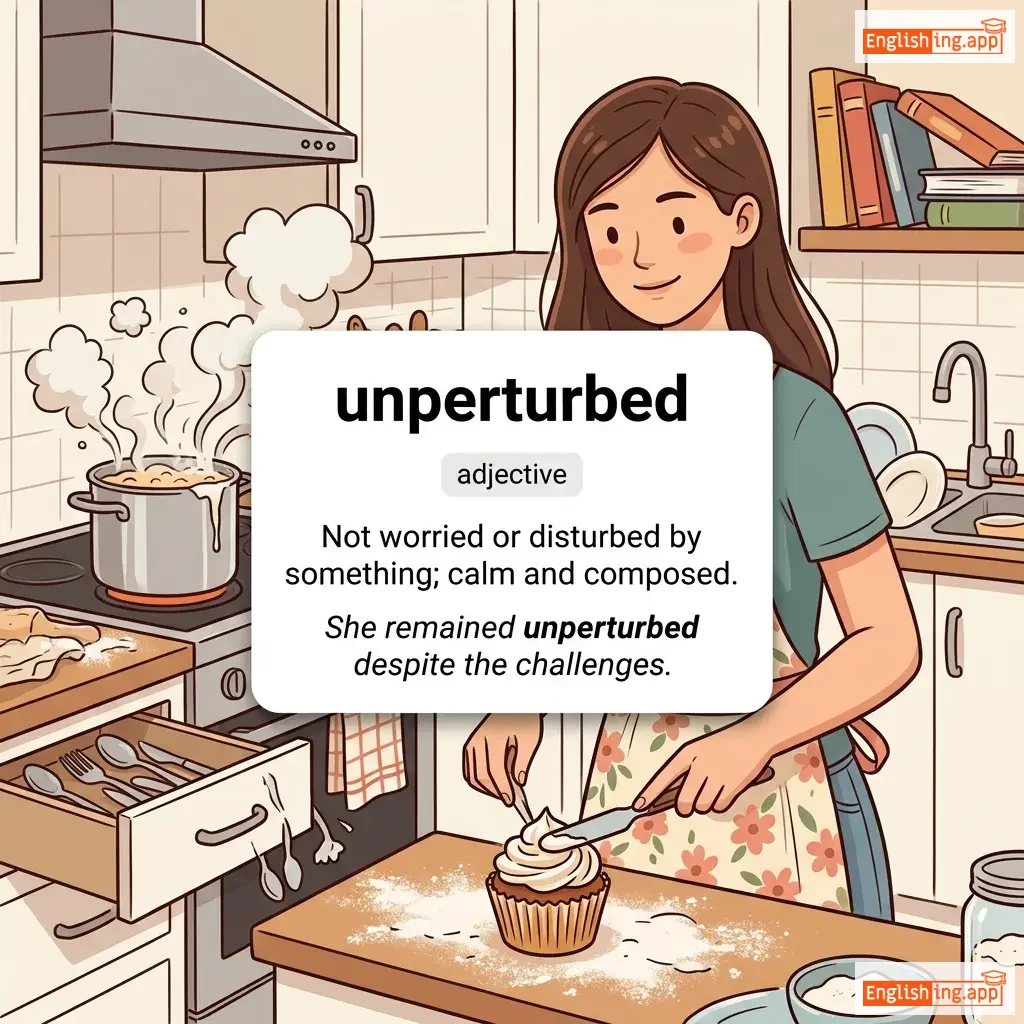
unperturbed definition card — visual illustration of the meaning
adjective
ˌʌn.pəˈtɜːbd
no preocupado o perturbado por algo; calmado y compuesto (no preocupado o perturbado por algo; calmado y compuesto)

Not worried or disturbed by something; calm and composed.

"She remained unperturbed despite the challenges."

"Ella permaneció tranquila a pesar de los desafíos." (Ella permaneció tranquila a pesar de los desafíos.)
adjective
/ʌnˈsʌlid/
inmaculado (inmaculado)

not spoiled or made impure; perfectly clean or pure

"His reputation remained unsullied despite the accusations."

"Su reputación permaneció inmaculada a pesar de las acusaciones." (Su reputación permaneció inmaculada a pesar de las acusaciones.)
noun/verb
/ˈʌpˌkæst/
lanzar hacia arriba (lanzar hacia arriba)

Verb: To cast or throw upward. Noun: Something thrown or directed upward.

"The fisherman upcast his net into the air."

"El pescador lanzó su red al aire." (El pescador lanzó su red al aire.)
preposition/conjunction
/ʌnˈtɪl/
hasta (hasta)

up to the time of

"I will wait until you come back."

"Esperaré hasta que regreses." (Esperaré hasta que regreses.)
adjective
/ʌnˈsteɪbəl/
inestable (inestable)

likely to change; not steady or secure; unsteady

"The unstable economy made people worried about their jobs."

"La economía inestable hizo que las personas se preocuparan por sus trabajos." (La economia inestable hizo que las personas se preocuparan por sus trabajos.)
adverb
/ʌnˈwɪlɪŋli/
de mala gana (de mala gana)

in a way that shows reluctance or lack of desire; not willingly

"She unwillingly agreed to attend the meeting."

"Ella aceptó asistir a la reunión de mala gana." (ella acepto asistir a la reunion de mala gana)
adjective
/ʌnˈwɒn.tɪd/
no deseado (no deseado)

not desired or welcome; not wanted

"He felt like an unwanted guest at the meeting."

"Él se sintió como un invitado no deseado en la reunión." (El se sintió como un invitado no deseado en la reunión)
verb
/ʌnˈveɪl/
desvelar (desvelar)

to reveal or disclose something, especially in a formal manner

"The company will unveil a new product next week."

"La compañía desvelará un nuevo producto la próxima semana." (La compañia desvelara un nuevo producto la proxima semana.)
verb
/ʌnˈjoʊk/
desenganchar (desenganchar)

To release from a yoke or to free from restraint or obligation.

"The farmer unyoked the oxen after a long day of work."

"El agricultor desenganchó los bueyes después de un largo día de trabajo." (El agricultor desenganchó los bueyes después de un largo día de trabajo.)
noun
/ˈʌp.raɪt.nəs/
rectitud; integridad (rectitud; integridad)

the quality of being honest and morally correct; integrity

"His uprightness in business dealings earned him great respect."

"Su rectitud en los negocios le ganó gran respeto." (Su rectitud en los negocios le ganó gran respeto.)
adverb
/ˈɜːrdʒəntli/
urgentemente (urgentemente)

in a way that requires immediate attention or action

"The patient urgently needs medical attention."

"El paciente necesita atención médica urgentemente." (el paciente necesita atencion medica urgentemente)
adjective
/ʌnˈtaɪmli/
prematuro (prematuro)

Happening or done at an unsuitable or premature time.

"His untimely death shocked the entire community."

"Su muerte prematura sorprendió a toda la comunidad." (Su muerte prematura sorprendió a toda la comunidad.)
adjective
/ʌnˈwɜːrði/
indigno; no merecedor (indigno; no merecedor)

not deserving respect or attention; lacking worth or merit

"He felt unworthy of such praise and recognition."

"Él se sintió no digno de tal alabanza y reconocimiento." (Él se sintió no digno de tal alabanza y reconocimiento.)
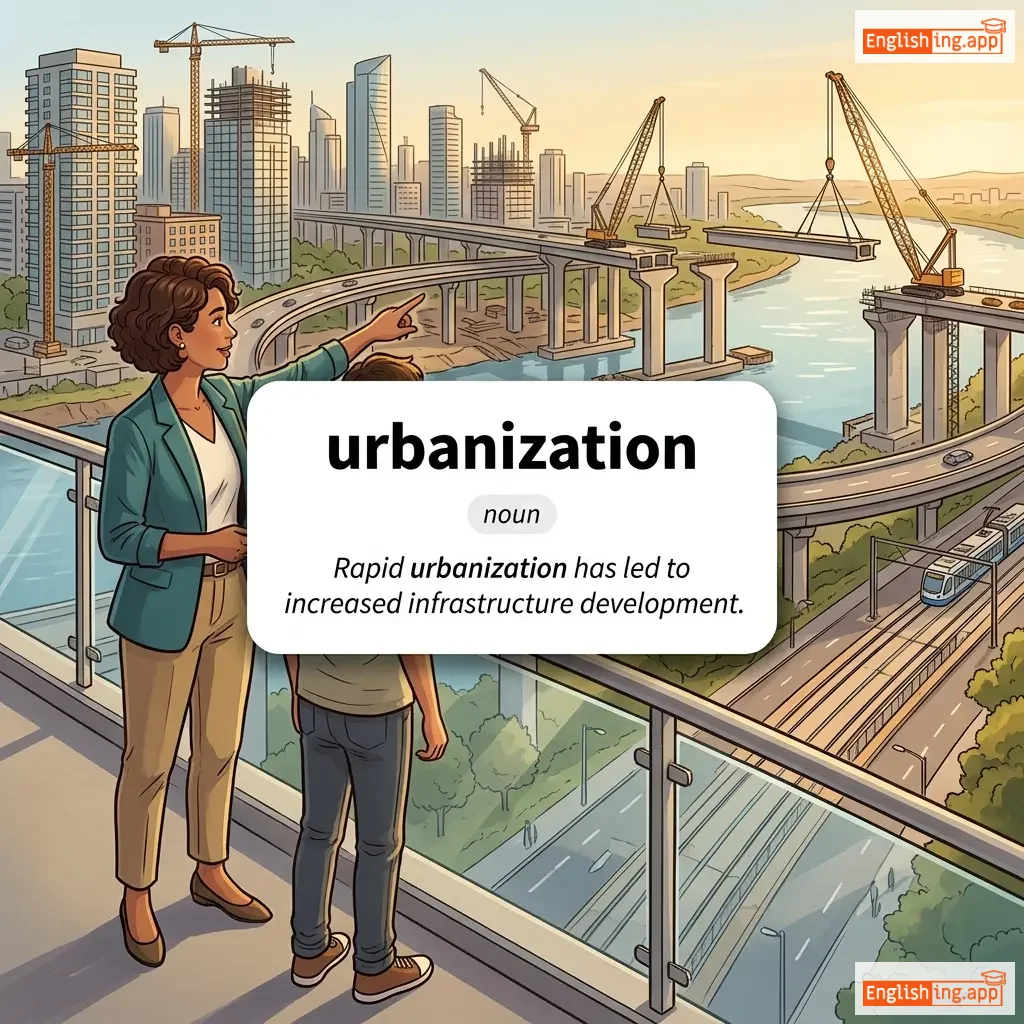
urbanization definition card — visual illustration of the meaning
noun
/ˌɜː.bən.aɪˈzeɪ.ʃən/
urbanización (urbanizacion)

The process by which towns and cities are formed and become larger as more people begin living and working in central areas.

"Rapid urbanization has led to increased infrastructure development."

"La rápida urbanización ha llevado al aumento del desarrollo de infraestructura." (La rapida urbanizacion ha llevado al aumento del desarrollo de infraestructura.)
adjective
/ˈʌpərˌmoʊst/
más alto (mas alto)

situated at the highest place or most important

"Her family's safety was uppermost in her mind during the crisis."

"La seguridad de su familia era lo más importante en su mente durante la crisis." (La seguridad de su familia era lo mas importante en su mente durante la crisis.)
adjective
/ˈviːəmənt/
vehemente (vehemente)

showing strong feeling; forceful, passionate, or intense

"She made a vehement argument against the proposal."

"Ella hizo un argumento vehemente contra la propuesta." (Ella hizo un argumento vehemente contra la propuesta.)
adjective
/ʌnˈsəʊʃəbl/
poco sociable (poco sociable)

not enjoying the company of others; avoiding social interaction

"He became unsociable after moving to a new city."

"Se volvió poco sociable después de mudarse a una nueva ciudad." (se volvio poco sociable despues de mudarse a una nueva ciudad)
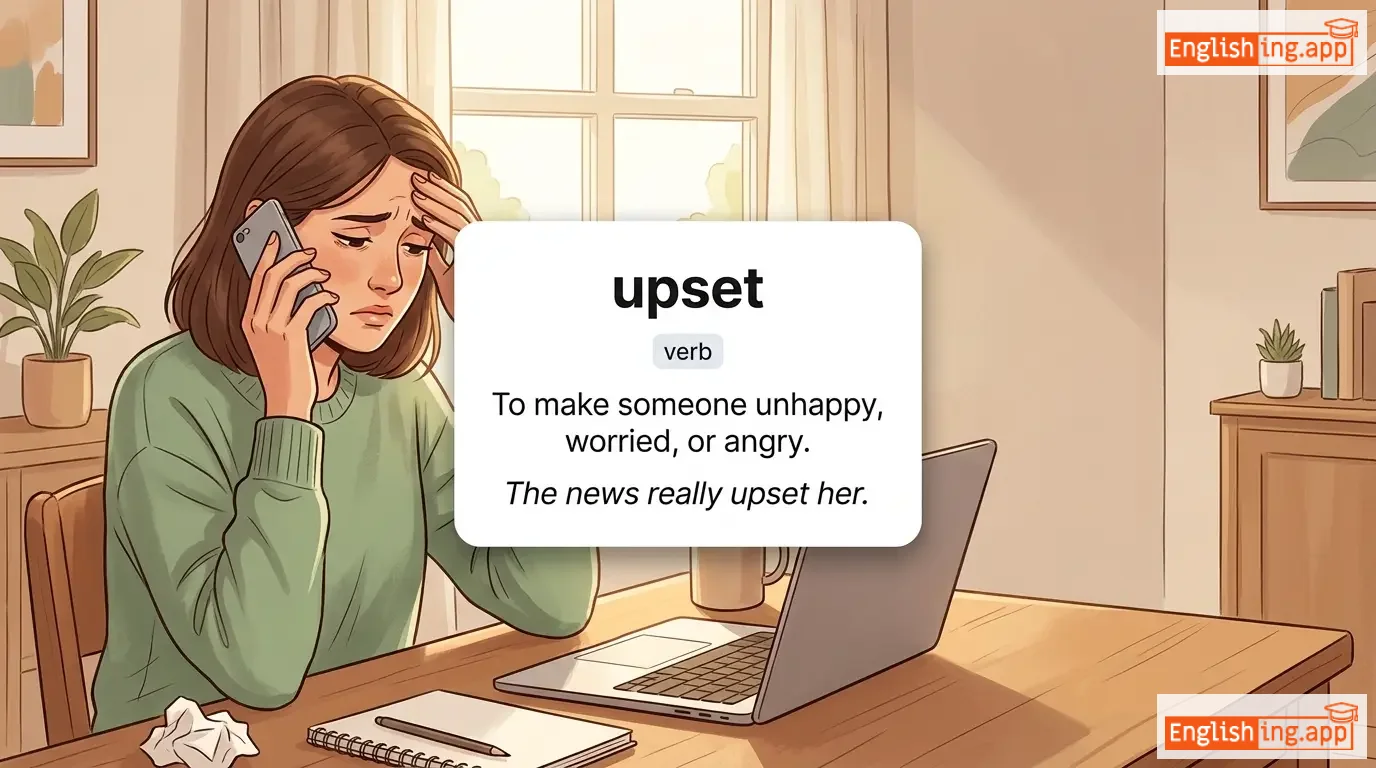
upset definition card — visual illustration of the meaning
verb
/ʌpˈsɛt/
molestar (molestar)

To make someone unhappy, worried, or angry.

"The news really upset her."

"Las noticias realmente la molestaron." (Las noticias realmente la molestaron.)
adjective, adverb
/ˈʌpraɪt/
felicidad (felicidad)

positioned vertically; morally good and honest

"He remained upright despite the strong winds."

"Ella no pudo ocultar su felicidad cuando recibió el premio." (Ella no pudo ocultar su felicidad cuando recibió el premio.)
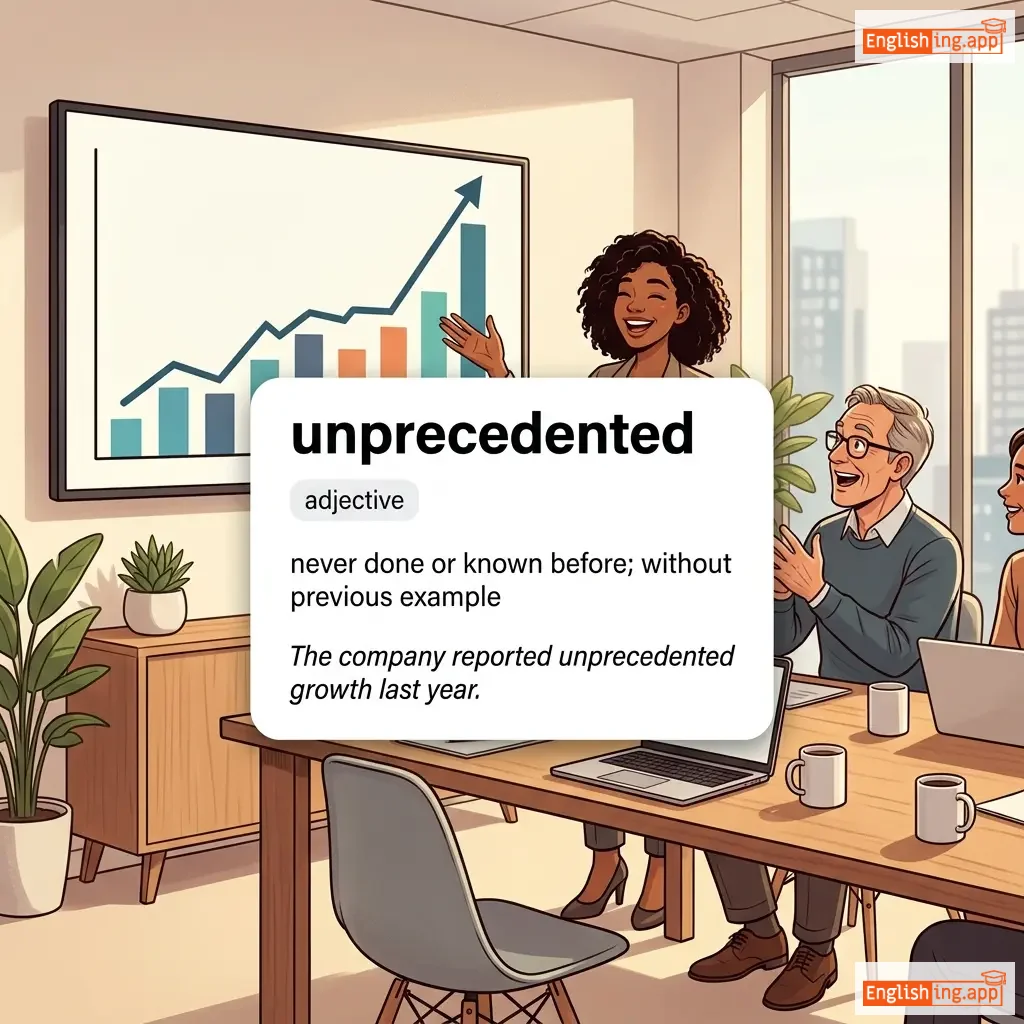
unprecedented definition card — visual illustration of the meaning
adjective
/ʌnˈprɛsɪˌdɛntɪd/
sin precedentes (sin precedentes)

never done or known before; without previous example

"The company reported unprecedented growth last year."

"La compañía reportó un crecimiento sin precedentes el año pasado." (La compañia reportó un crecimiento sin precedentes el año pasado.)
noun
/ˈjuːs.fəl.nəs/
utilidad (utilidad)

the quality of being useful; practical value or helpfulness

"The usefulness of this tool became apparent during the project."

"La utilidad de esta herramienta se hizo evidente durante el proyecto." (La utilidad de esta herramienta se hizo evidente durante el proyecto.)
adjective
/ʌnˈspiːkəbl/
inexpresable (inexpresable)

too bad or shocking to be expressed in words

"The survivors endured unspeakable horrors during the war."

"Los sobrevivientes soportaron horrores inexpresables durante la guerra." (Los sobrevivientes soportaron horrores inexpresables durante la guerra.)
verb
/ʌnˈpæk/
desempacar (desempacar)

to remove items from a container; to explain or analyze something in detail

"After arriving home, she began to unpack her suitcase."

"Después de llegar a casa, empezó a desempacar su maleta." (Despues de llegar a casa, empezo a desempacar su maleta)
adjective
/ˌʌnəˈfɪʃ.əl/
no oficial (no oficial)

not officially authorized or confirmed; informal

"The unofficial results showed a close race."

"Los resultados no oficiales mostraron una carrera reñida." (Los resultados no oficiales mostraron una carrera reñida.)
noun
/ˈvæk.juːm ˈkliː.nər/
aspiradora (aspiradora)

an electrical appliance that uses suction to remove dirt and dust from carpets and floors

"She used the vacuum cleaner to clean the living room carpet."

"Ella usó el aspirador para limpiar la alfombra de la sala de estar." (Ella uso el aspirador para limpiar la alfombra de la sala de estar.)
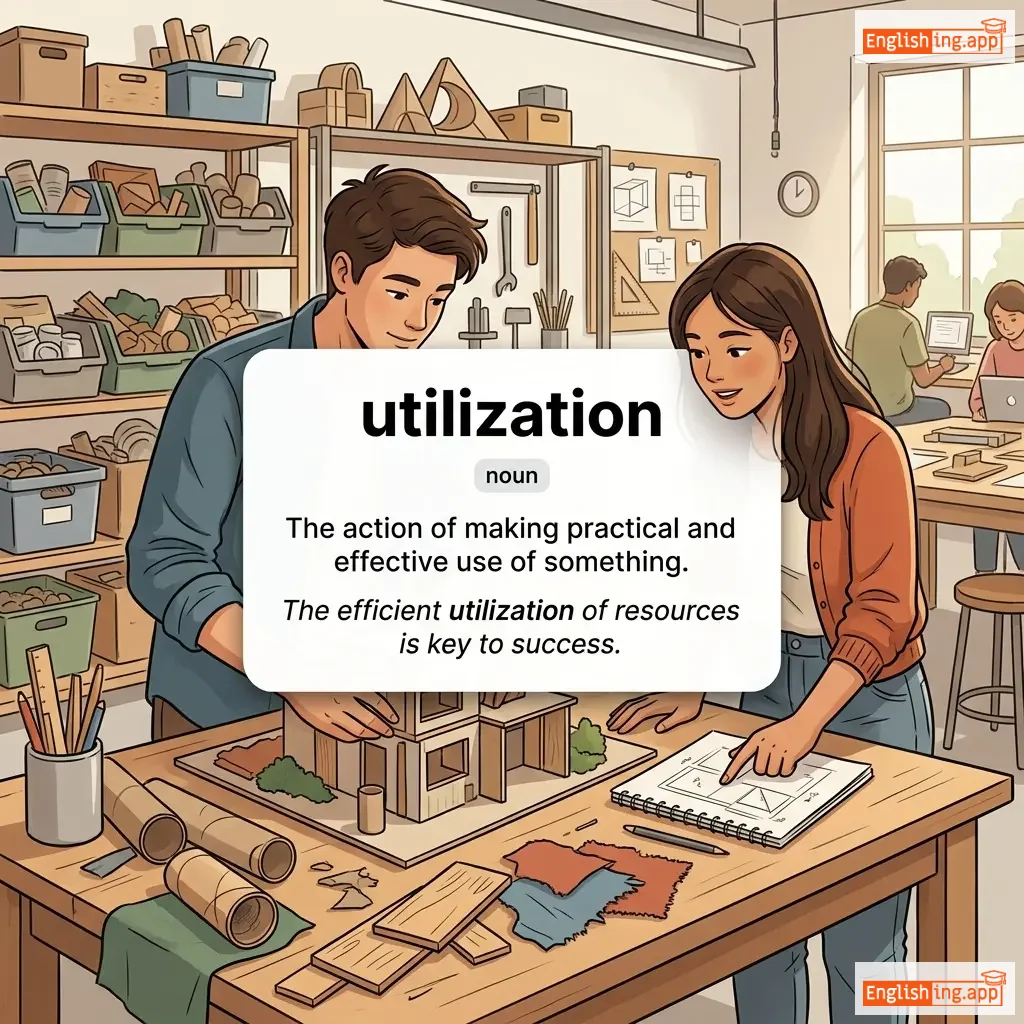
utilization definition card — visual illustration of the meaning
noun
ˌjuːtɪlaɪˈzeɪʃən
utilización (utilizacion)

The action of making practical and effective use of something.

"The efficient utilization of resources is key to success."

"La utilización eficiente de los recursos es clave para el éxito." (La utilizacion eficiente de los recursos es clave para el exito.)
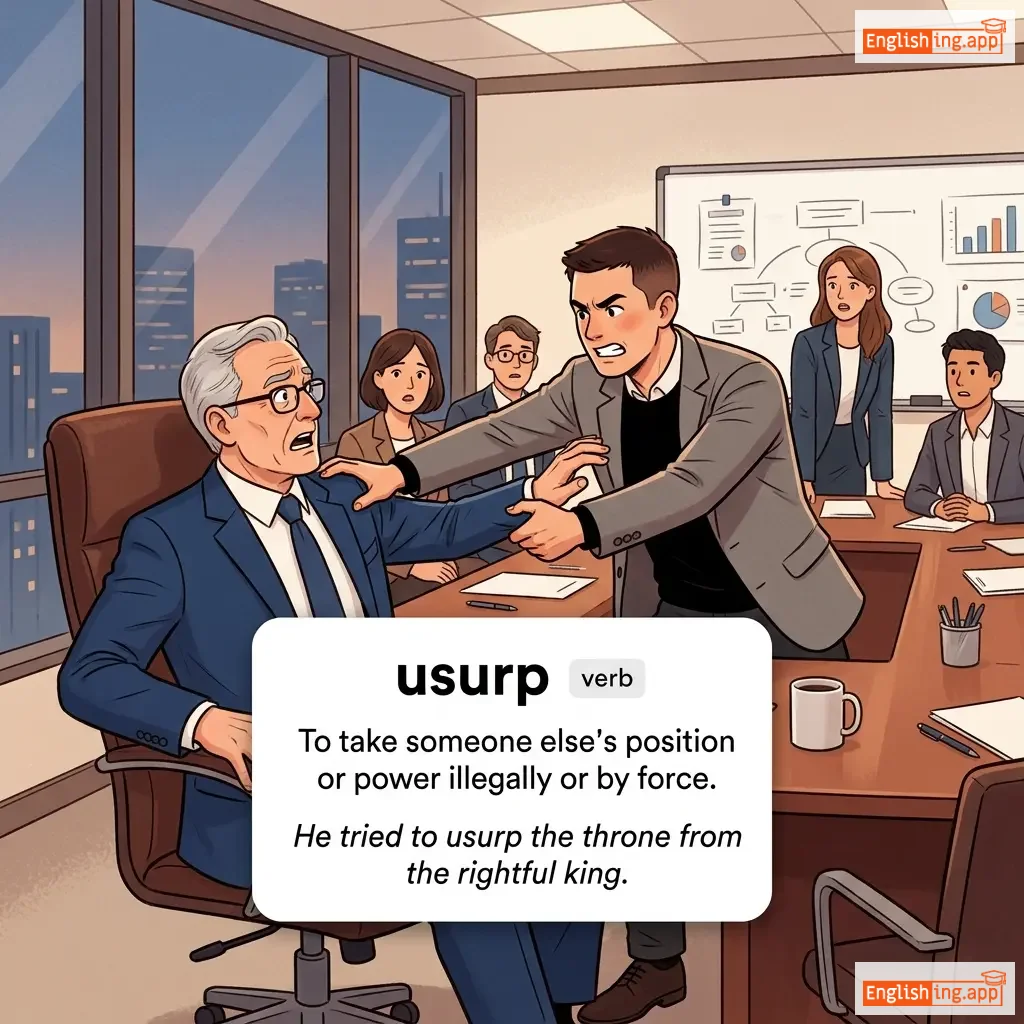
usurp definition card — visual illustration of the meaning
verb
/juːˈzɜːrp/
apoderarse ilegalmente (apoderarse ilegalmente)

To take someone else's position or power illegally or by force.

"He tried to usurp the throne from the rightful king."

"Intentó usurpar el trono del legítimo rey." (Intentó usurpar el trono del legítimo rey.)
noun
/ˌvælɪˌtjuːdɪˈnɛəriən/
persona hipocondríaca (persona hipocondriaca)

A person who is unduly anxious about their health or constantly concerned with minor ailments.

"He was regarded as a valetudinarian, always worrying about his health."

"Se le consideraba un hipocondríaco, siempre preocupado por su salud." (Se le consideraba un hipocondriaco, siempre preocupado por su salud.)
noun
/ˌjuːzɜːrˈpeɪʃən/
usurpación (usurpacion)

The act of taking someone's power or property illegally or by force.

"The general's usurpation of the presidency led to political unrest."

"La usurpación de la presidencia por el general condujo a disturbios políticos." (La usurpacion de la presidencia por el general condujo a disturbios politicos.)
noun
/ˈvæk.siːn/
vacuna (vacuna)

a substance used to stimulate the body's immune response against diseases

"Children are given the polio vaccine to prevent infection."

"A los niños se les da la vacuna contra la polio para prevenir la infección." (A los niños se les da la vacuna contra la polio para prevenir la infección.)
adjective
/ˈʌtmoʊst/
felicidad (felicidad)

Greatest or highest in degree, importance, or extent.

"She showed the utmost respect to her teachers."

"Ella no pudo ocultar su felicidad cuando recibió el premio." (Ella no pudo ocultar su felicidad cuando recibió el premio.)
adjective
/ˈjuːʒəl/
habitual (habitual)

habitually or typically occurring or done

"It’s our usual meeting spot."

"Es nuestro lugar habitual de reuniones." (Es nuestro lugar habitual de reuniones.)
noun
/ˌvælədɪkˈtɔːriən/
mejor estudiante (mejor estudiante)

The student with the highest academic achievements in a graduating class, often chosen to give the farewell speech.

"She was honored as the valedictorian of her class."

"Fue honrada como la mejor estudiante de su clase." (Fue honrada como la mejor estudiante de su clase.)
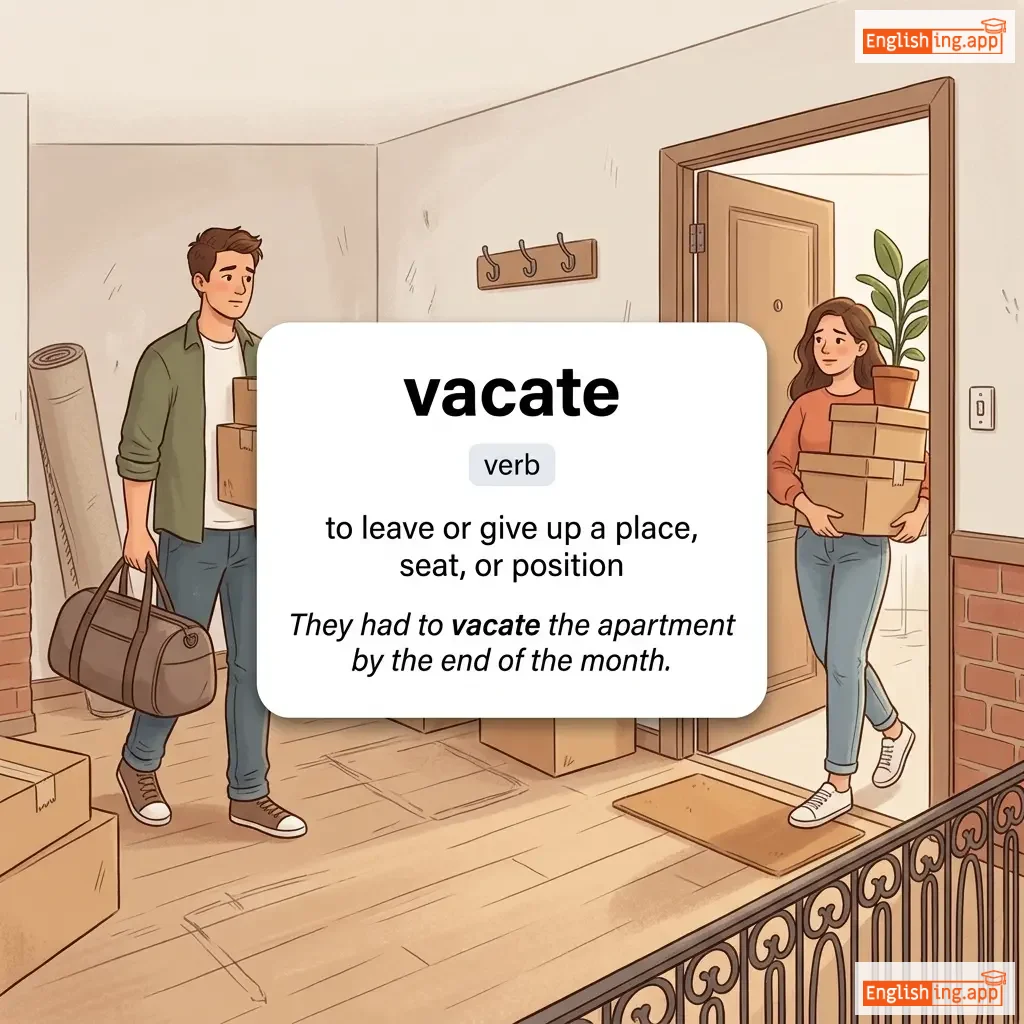
vacate definition card — visual illustration of the meaning
verb
/vəˈkeɪt/
desocupar (desocupar)

to leave or give up a place, seat, or position

"They had to vacate the apartment by the end of the month."

"Tenían que desocupar el apartamento antes de fin de mes." (Tenían que desocupar el apartamento antes de fin de mes.)