वोकैबुलरीज

इंग्लिश वोकैबुलरी डिस्कवर, लर्न और मास्टर करें

noun
/ʌpˈhiːvəl/
उथल-पुथल (uthal-puthal)

a violent or sudden change or disruption to something

"The company faced a major upheaval after the sudden resignation of its CEO."

"कंपनी को उसके सीईओ के अचानक इस्तीफे के बाद एक बड़ी उथल-पुथल का सामना करना पड़ा।" (Company ko uske CEO ke achanak isteefe ke baad ek badi uthal-puthal ka samna karna pada.)
adjective
/ʌnˈtaɪərɪŋ/
निरंतर; निराश्रित; अथक (nirantar; nirashrit; athak)

continuing without stopping; persistent; tireless

"Her untiring efforts finally led to success."

"उसकी निरंतर कोशिशों ने अंततः सफलता दिलाई।" (uski nirantar koshishon ne antatah safalta dilayi.)
adjective
/ʌnˈtruː/
झूठा (jhootha)

not true; false or incorrect

"The rumor about the company closing was completely untrue."

"कंपनी के बंद होने की अफवाह पूरी तरह से झूठी थी।" (Kampani ke band hone ki afwah puri tarah se jhoothi thi.)
adverb
/ˌʌpˈstɛərz/
ऊपर (apasteyerz)

on or to a higher floor of a building

"She went upstairs to her bedroom."

"वह ऊपर अपने बेडरूम में गई।" (vah upar apne bedroom mein gai.)
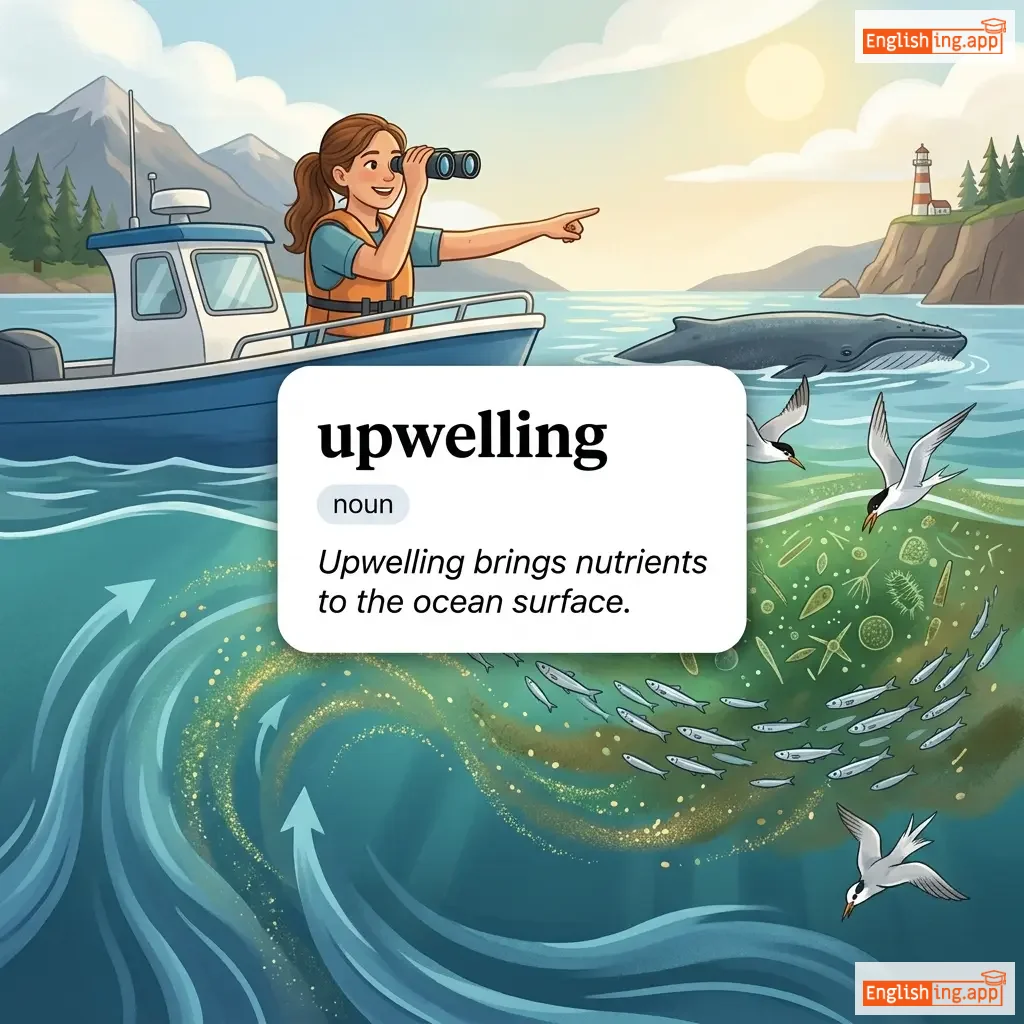
upwelling definition card — visual illustration of the meaning
noun
/ˈʌp.wel.ɪŋ/
समुद्र विज्ञानिक घटना जिसमें घने, ठंडे, और पोषक तत्वों से भरपूर पानी समुद्र की सतह की ओर खिंचता है। (samudra vigyanik ghatna jismein ghane, thande, aur poshak tatvon se bhara pani samudra ki sathah ki aur khinchta hai.)

An oceanographic phenomenon that involves wind-driven motion of dense, cooler, and nutrient-rich water towards the ocean surface.

"Upwelling brings nutrients to the ocean surface."

"अपवेलिंग समुद्र की सतह पर पोषक तत्व लाता है।" (Apwelling samudra ki sathah par poshak tatva lata hai.)
adjective
/ʌnˈʃeɪkən/
अडिग; अडिग और स्थिर (adig; adig aur sthir)

not disturbed or affected; firm and steady; unwavering

"Her faith remained unshaken despite all the challenges."

"उसकी आस्था सभी चुनौतियों के बावजूद अडिग बनी रही।" (uski aastha sabhi chunautiyon ke bawajood adig bani rahi.)
adjective
/ʌnprəˈfɛʃ.ən.əl/
अप्रोफेशनल (aprofesanal)

not conforming to the standards expected in a particular profession

"His unprofessional behavior led to his dismissal from the company."

"उसका अप्रोफेशनल व्यवहार कंपनी से उसकी बर्खास्तगी का कारण बना।" (uska aprofesanal vyavhaar kampani se uski barkhaastgi ka kaaran bana)
verb
/ʌnˈræp/
लपेट खोलना (lapet kholna)

remove wrapping or covering from something; reveal something gradually or clearly

"She carefully unwrapped the gift with excitement."

"उसने उत्साह के साथ उपहार को सावधानी से खोला।" (usne utsah ke sath upahar ko savdhani se khola)
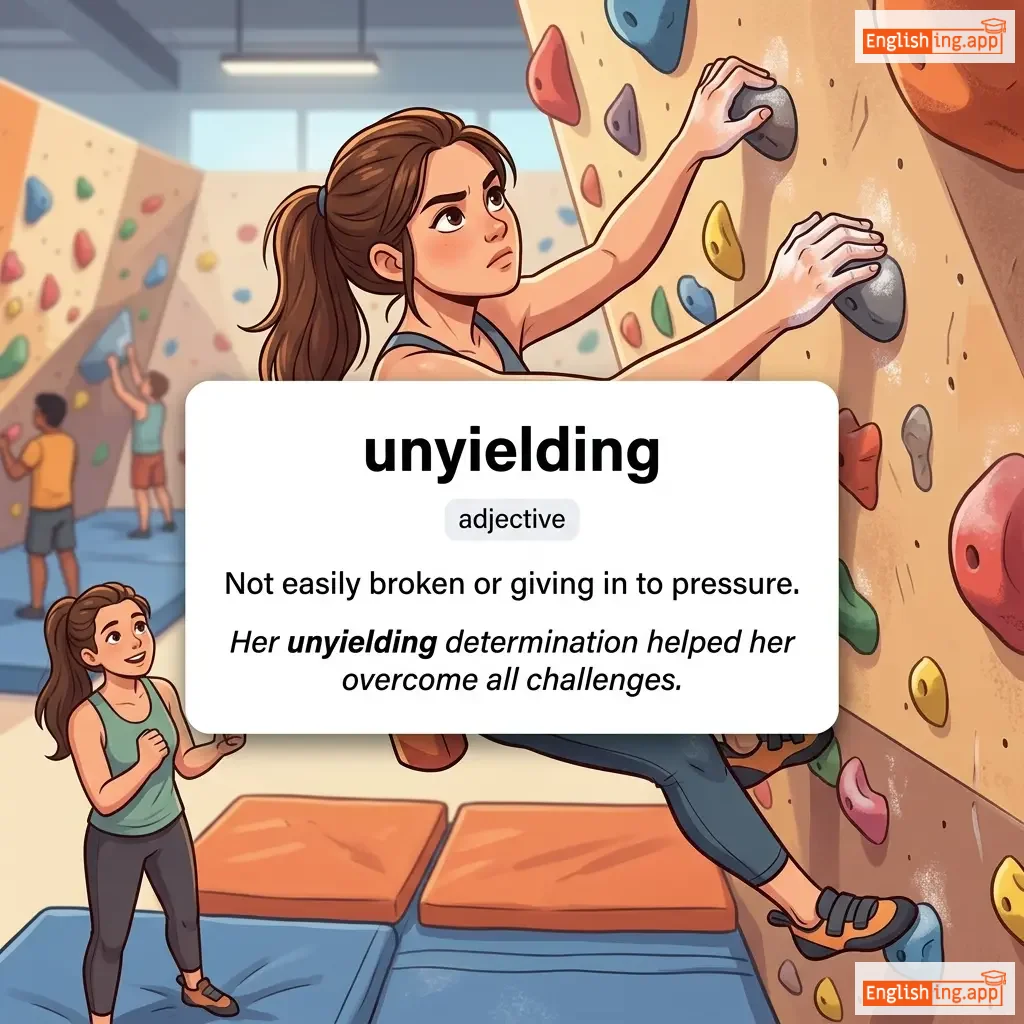
unyielding definition card — visual illustration of the meaning
adjective
ʌnˈjiːl.dɪŋ
अडिग या दृढ़ (adig ya dridh)

Not easily broken or giving in to pressure.

"Her unyielding determination helped her overcome all challenges."

"उसकी अडिग दृढ़ता ने उसे सभी चुनौतियों को पार करने में मदद की।" (Uski adig dridhata ne use sabhi chunautiyon ko paar karne mein madad ki.)
adverb
/ʌp/
ऊपर (upar)

towards a higher position or level

"He climbed up the ladder quickly."

"वह सीढ़ी चढ़कर जल्दी ऊपर गया।" (vah seedhi chadhkar jaldi upar gaya.)
noun
/ˈʌpˌkiːp/
रखरखाव (rakharkhaav)

The process or cost of maintaining something in good condition.

"The upkeep of the old house is very expensive."

"पुराने घर की रखरखाव बहुत महंगी है।" (Purane ghar ki rakharkhaav bahut mehengi hai.)
noun
/ˈʌp.ʃɒt/
परिणाम (parinaam)

The final result or outcome of a process or situation.

"The upshot of the meeting was that the plan was postponed."

"बैठक का परिणाम यह था कि योजना को स्थगित कर दिया गया था।" (Baithak ka parinaam yah tha ki yojana ko sthagit kar diya gaya tha.)
adjective
/ʌnˈθɪŋkəbl/
अकल्पनीय (akalpneey)

impossible to conceive or imagine; beyond belief or consideration

"It was unthinkable that such a tragedy could happen in our peaceful town."

"यह असंभव था कि हमारे शांतिपूर्ण शहर में ऐसी कोई त्रासदी घटित हो सकती थी।" (Yeh asambhav tha ki hamare shaantipoorn shahar mein aisi koi traasdi ghatit ho sakti thi.)
adjective
/ʌnˈwaɪz/
अविचारपूर्ण (avicharpurn)

Showing poor judgment; not sensible or prudent.

"It would be unwise to invest all your money in one company."

"यह एक ही कंपनी में अपना सारा पैसा निवेश करना अविचारपूर्ण होगा।" (Yeh ek hi company mein apna saara paisa nivesh karna avicharpurn hoga.)
adverb
/ʌnˈjuːʒuəli/
असामान्य रूप से (asamanya roop se)

in a way that is not typical or expected; to an uncommon degree

"It was unusually cold for this time of year."

"साल के इस समय के लिए मौसम असामान्य रूप से ठंडा था।" (saal ke is samay ke liye mausam asamanya roop se thanda tha)
adjective
/ʌnˈtɛmpərd/
अविन्यस्त (avinyast)

not moderated or softened; lacking proper balance or control

"The untempered anger of the crowd caused chaos."

"भीड़ का अविन्यस्त गुस्सा अराजकता का कारण बना।" (Bheed ka avinyast gussa arajakta ka karan bana.)
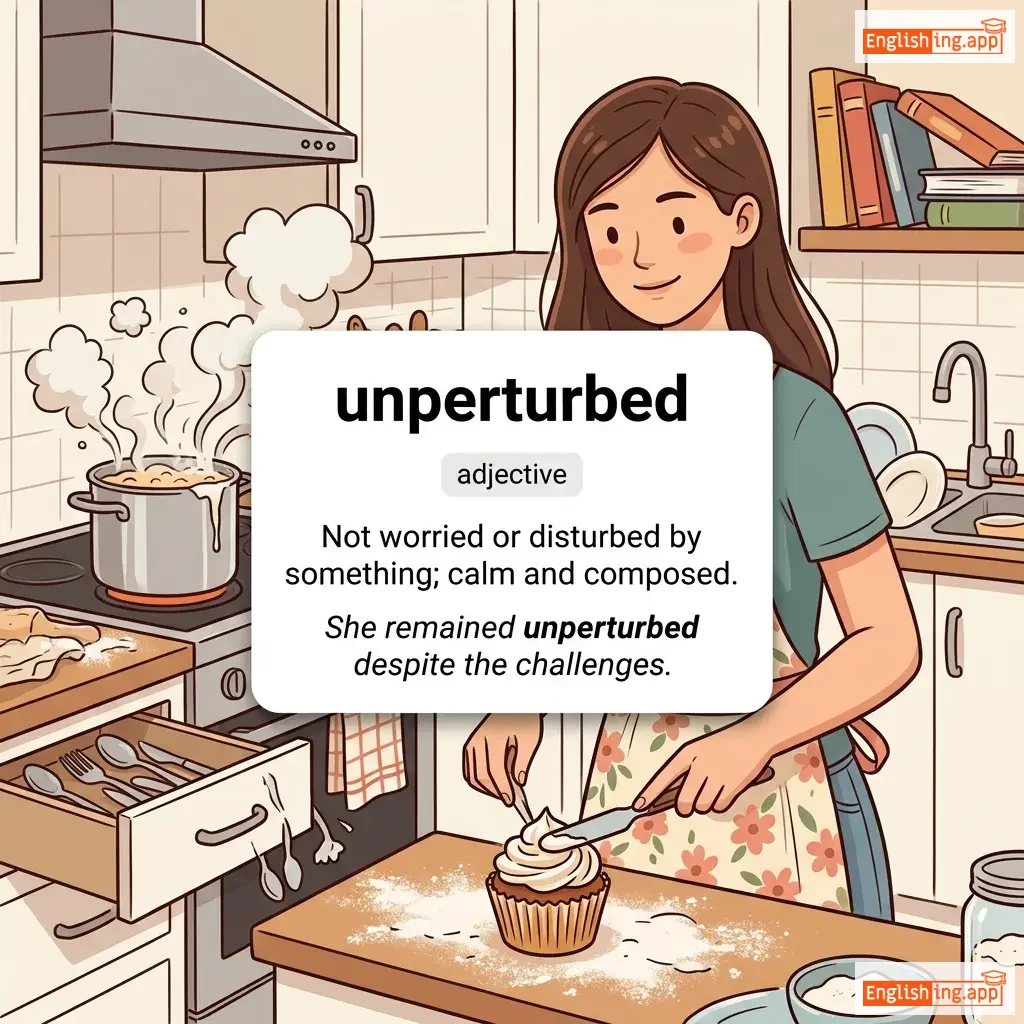
unperturbed definition card — visual illustration of the meaning
adjective
ˌʌn.pəˈtɜːbd
चिंतित या परेशान न होना; शांत और संयमित होना (chintit ya pareshan na hona; shaant aur sanyamit hona)

Not worried or disturbed by something; calm and composed.

"She remained unperturbed despite the challenges."

"वह चुनौतियों के बावजूद शांत रही।" (Wah chunautiyon ke bawajood shaant rahi.)
adjective
/ʌnˈsʌlid/
दाग रहित (daag rahit)

not spoiled or made impure; perfectly clean or pure

"His reputation remained unsullied despite the accusations."

"आरोपों के बावजूद उसकी प्रतिष्ठा दाग रहित बनी रही।" (Aropo ke bawajood uski pratishtha daag rahit bani rahi.)
noun/verb
/ˈʌpˌkæst/
ऊपर फेंकना (upar fenkna)

Verb: To cast or throw upward. Noun: Something thrown or directed upward.

"The fisherman upcast his net into the air."

"मछुआरे ने अपना जाल हवा में ऊपर फेंका।" (Machware ne apna jaal hawa mein upar fenka.)
preposition/conjunction
/ʌnˈtɪl/
जब तक (jab tak)

up to the time of

"I will wait until you come back."

"मैं तब तक इंतजार करूंगा जब तक तुम वापस नहीं आ जाते।" (Main tab tak intezaar karunga jab tak tum wapas nahi aa jaate.)
adjective
/ʌnˈsteɪbəl/
अस्थिर (asthir)

likely to change; not steady or secure; unsteady

"The unstable economy made people worried about their jobs."

"अस्थिर अर्थव्यवस्था ने लोगों को अपनी नौकरियों के बारे में चिंतित कर दिया।" (asthir arthvyavastha ne logon ko apni naukriyon ke baare mein chintit kar diya.)
adverb
/ʌnˈwɪlɪŋli/
अनिच्छा से (anichchha se)

in a way that shows reluctance or lack of desire; not willingly

"She unwillingly agreed to attend the meeting."

"वह अनिच्छा से बैठक में जाने के लिए सहमत हुई।" (vah anichchha se baithak mein jaane ke liye sahmat hui)
adjective
/ʌnˈwɒn.tɪd/
अनचाहा (anachaha)

not desired or welcome; not wanted

"He felt like an unwanted guest at the meeting."

"उसे बैठक में एक अनचाहे अतिथि की तरह महसूस हुआ।" (use baithak mein ek anachaha atithi ki tarah mahsus hua)
verb
/ʌnˈveɪl/
उघाड़ना (ugadna)

to reveal or disclose something, especially in a formal manner

"The company will unveil a new product next week."

"कंपनी अगले हफ्ते एक नया उत्पाद अनवेल करेगी।" (Kampani agle hafte ek naya utpad unveil karegi.)
verb
/ʌnˈjoʊk/
जोड़ से मुक्त करना (jod se mukt karna)

To release from a yoke or to free from restraint or obligation.

"The farmer unyoked the oxen after a long day of work."

"किसान ने एक लंबी दिन की मेहनत के बाद बैल को जोड़ से मुक्त कर दिया।" (Kisan ne ek lambi din ki mehnat ke baad bail ko jod se mukt kar diya.)
noun
/ˈʌp.raɪt.nəs/
ईमानदारी; नैतिकता (imaanadaari; naitikta)

the quality of being honest and morally correct; integrity

"His uprightness in business dealings earned him great respect."

"उसकी व्यापारिक निष्ठा ने उसे महान सम्मान दिलवाया।" (uski vyaapaarik nishtha ne use mahaan sammaan dilvaaya)
adverb
/ˈɜːrdʒəntli/
तत्काल रूप से (tatkaal roop se)

in a way that requires immediate attention or action

"The patient urgently needs medical attention."

"मरीज़ को तत्काल रूप से चिकित्सा की आवश्यकता है।" (mareez ko tatkaal roop se chikitsa ki aavashyakta hai)
adjective
/ʌnˈtaɪmli/
असामयिक (asamayik)

Happening or done at an unsuitable or premature time.

"His untimely death shocked the entire community."

"उसकी असामयिक मृत्यु ने पूरे समुदाय को चौंका दिया।" (uski asamayik mrityu ne pure samuday ko chonka diya.)
adjective
/ʌnˈwɜːrði/
अयोग्य; अवांछनीय (ayogya; avanchaniy)

not deserving respect or attention; lacking worth or merit

"He felt unworthy of such praise and recognition."

"उसे ऐसी सराहना और पहचान के लिए खुद को अनवर्थी महसूस हुआ।" (use aisī sarāhnā aur pehchān ke liye khud ko anavarthī mahasoos huā.)
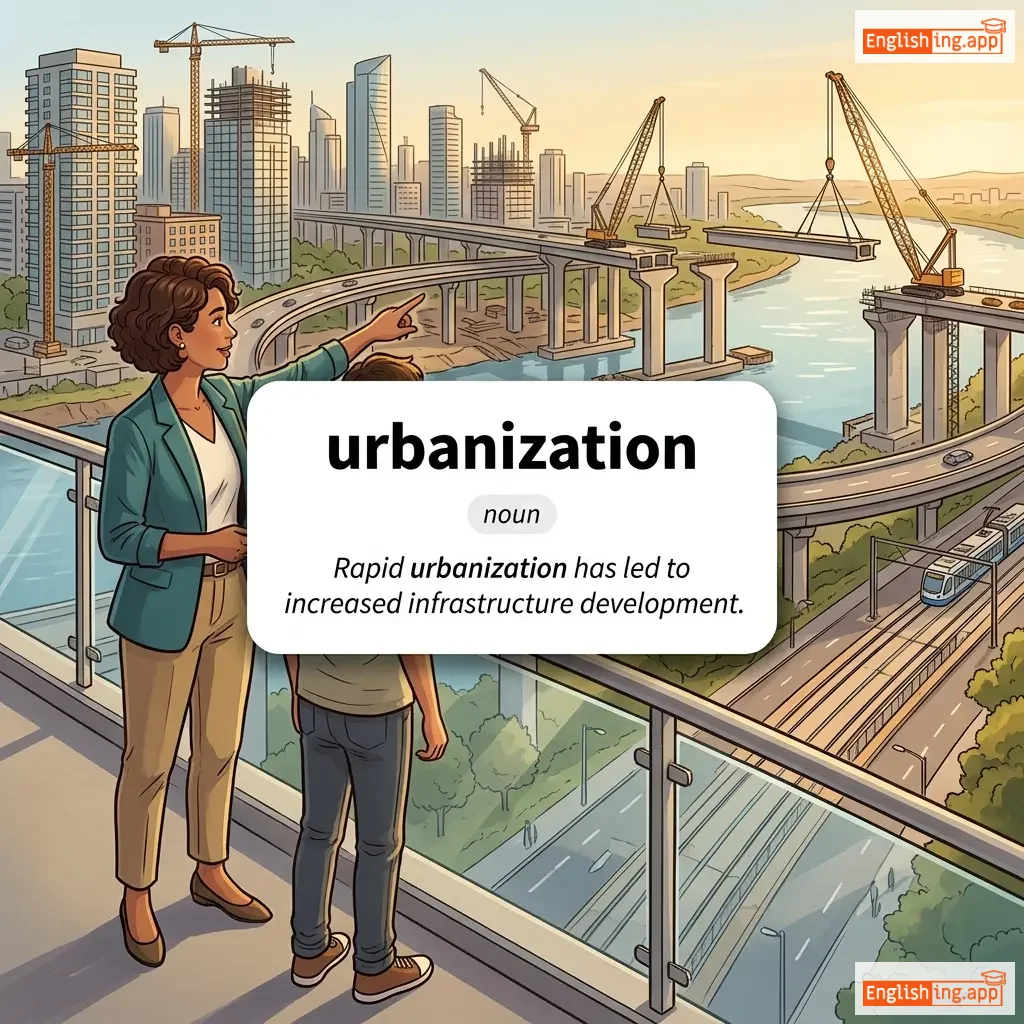
urbanization definition card — visual illustration of the meaning
noun
/ˌɜː.bən.aɪˈzeɪ.ʃən/
शहरीकरण (shaharikaran)

The process by which towns and cities are formed and become larger as more people begin living and working in central areas.

"Rapid urbanization has led to increased infrastructure development."

"तेज शहरीकरण के कारण अवसंरचना विकास में वृद्धि हुई है।" (Tez shaharikaran ke kaaran avsanrachna vikas mein vruddhi hui hai.)
adjective
/ˈʌpərˌmoʊst/
सबसे ऊपर (sabse upar)

situated at the highest place or most important

"Her family's safety was uppermost in her mind during the crisis."

"उसके मन में संकट के दौरान परिवार की सुरक्षा सबसे ऊपर थी।" (Uske man mein sankat ke dauran parivaar ki suraksha sabse upar thi.)
adjective
/ˈviːəmənt/
जोरदार (jordar)

showing strong feeling; forceful, passionate, or intense

"She made a vehement argument against the proposal."

"उसने प्रस्ताव के खिलाफ एक जोरदार तर्क प्रस्तुत किया।" (Usne prastav ke khilaf ek jordar tark prastut kiya.)
adjective
/ʌnˈsəʊʃəbl/
असामाजिक (asamajik)

not enjoying the company of others; avoiding social interaction

"He became unsociable after moving to a new city."

"नए शहर में जाने के बाद वह असामाजिक हो गया।" (nae shahar mein jaane ke baad vah asamajik ho gaya)
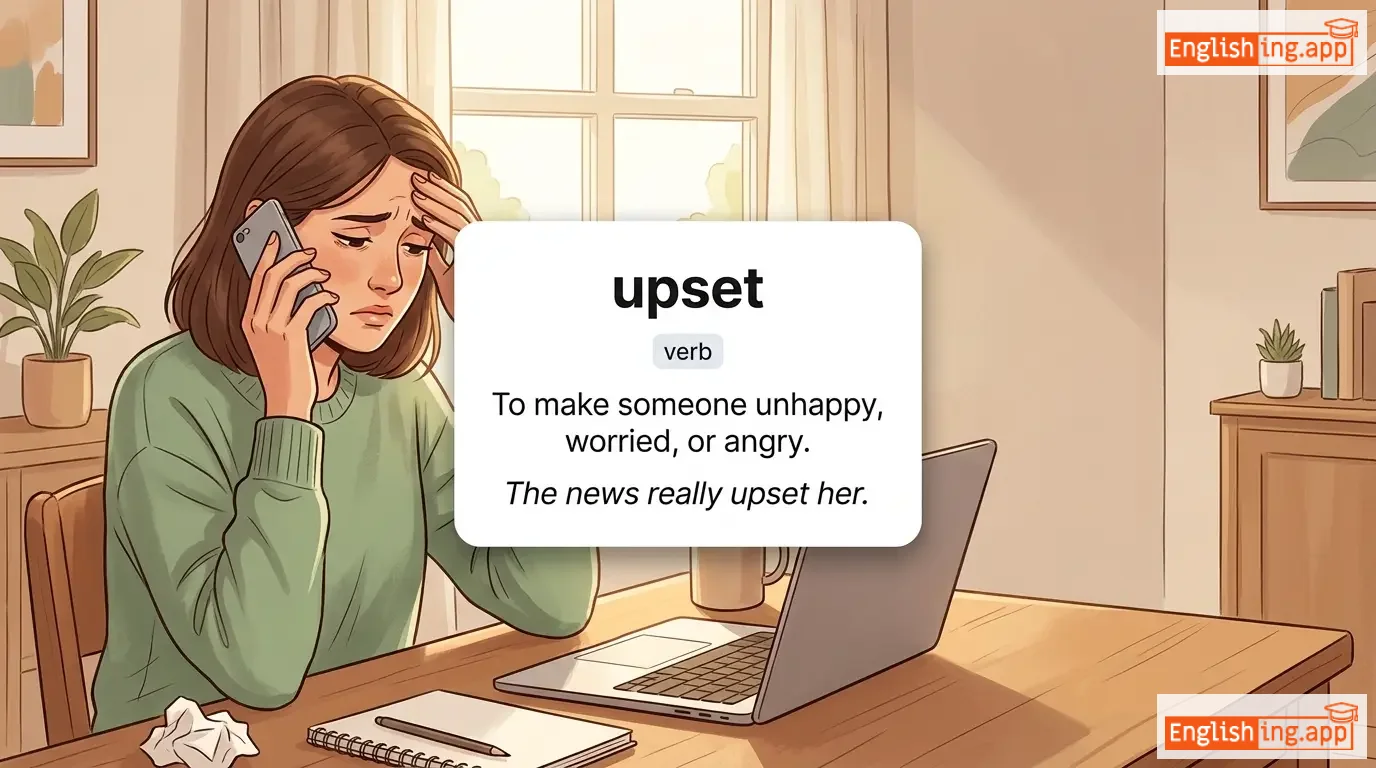
upset definition card — visual illustration of the meaning
verb
/ʌpˈsɛt/
उदास करना (udaas karna)

To make someone unhappy, worried, or angry.

"The news really upset her."

"ख़बर ने सचमुच उसे परेशान कर दिया।" (Khabar ne sachmuch use pareshan kar diya.)
adjective, adverb
/ˈʌpraɪt/
खुशी (khushi)

positioned vertically; morally good and honest

"He remained upright despite the strong winds."

"जब उसने पुरस्कार प्राप्त किया, तो वह अपनी खुशी छिपा नहीं पाई।" (Jab usne puraskar prapt kiya, to vah apni khushi chhupa nahin pai.)
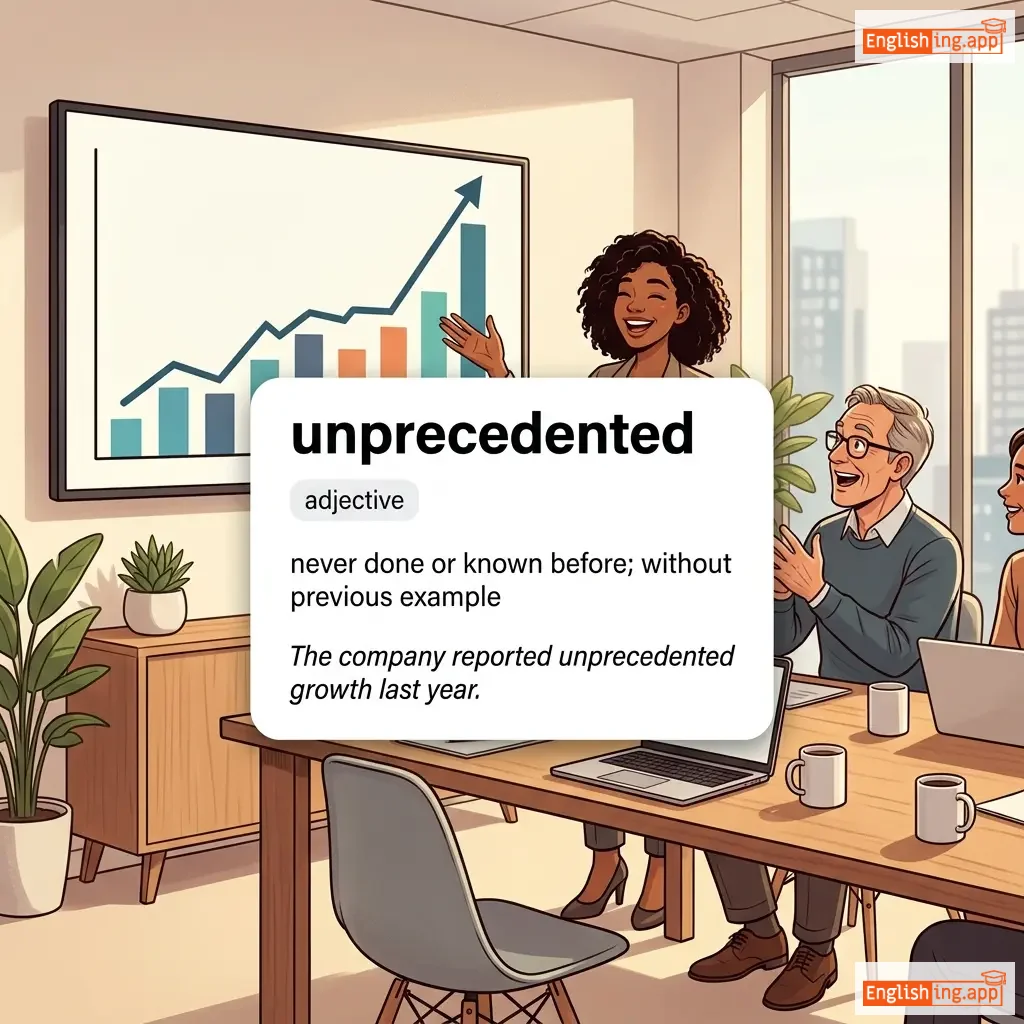
unprecedented definition card — visual illustration of the meaning
adjective
/ʌnˈprɛsɪˌdɛntɪd/
अव precedented (aprecedented)

never done or known before; without previous example

"The company reported unprecedented growth last year."

"कंपनी ने पिछले साल अभूतपूर्व वृद्धि की रिपोर्ट की।" (Company ne pichle saal abhootpurv vruddhi ki report ki.)
noun
/ˈjuːs.fəl.nəs/
उपयोगिता (upayogita)

the quality of being useful; practical value or helpfulness

"The usefulness of this tool became apparent during the project."

"इस उपकरण की उपयोगिता परियोजना के दौरान स्पष्ट हो गई।" (is upkaran ki upayogita pariyojna ke dauran spasht ho gayi)
adjective
/ʌnˈspiːkəbl/
अवर्णनीय (avarnaniy)

too bad or shocking to be expressed in words

"The survivors endured unspeakable horrors during the war."

"जीवित बचे हुए लोगों ने युद्ध के दौरान अवर्णनीय आतंक सहा।" (Jeevit bache hue logon ne yudh ke dauran avarnaniy aatank saha.)
verb
/ʌnˈpæk/
खोलना (kholna)

to remove items from a container; to explain or analyze something in detail

"After arriving home, she began to unpack her suitcase."

"घर पहुँचने के बाद उसने अपना सूटकेस खोलना शुरू किया।" (ghar pahunchne ke baad usne apna suitcase kholna shuru kiya)
adjective
/ˌʌnəˈfɪʃ.əl/
अनाधिकारिक (anadhikarik)

not officially authorized or confirmed; informal

"The unofficial results showed a close race."

"अनाधिकारिक परिणामों ने एक करीबी मुकाबला दिखाया।" (anadhikarik parinaamon ne ek kareebi mukabala dikhaya)
noun
/ˈvæk.juːm ˈkliː.nər/
वैक्यूम क्लीनर (vaikyoom kleener)

an electrical appliance that uses suction to remove dirt and dust from carpets and floors

"She used the vacuum cleaner to clean the living room carpet."

"उसने लिविंग रूम का कालीन साफ करने के लिए वैक्यूम क्लीनर का इस्तेमाल किया।" (usne living room ka kaaleen saaf karne ke liye vaikyoom kleener ka istemaal kiya)
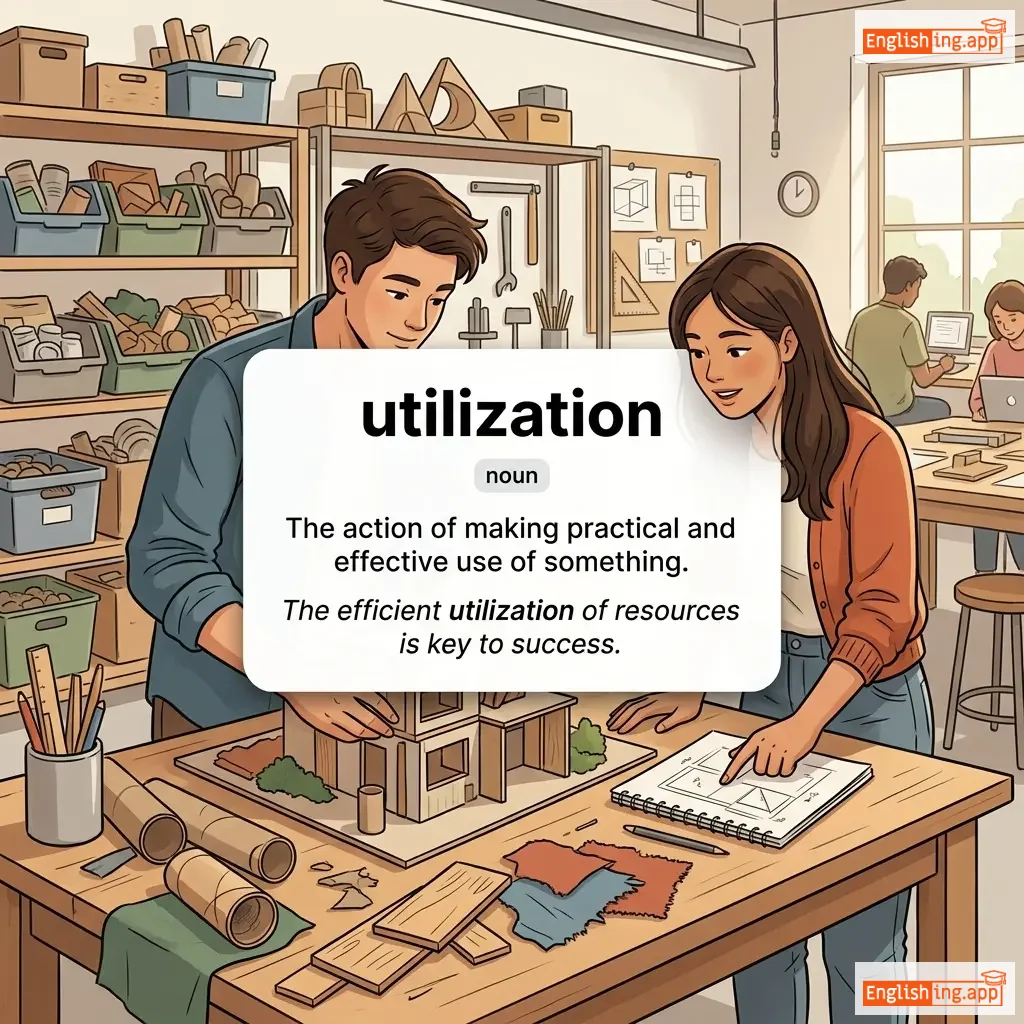
utilization definition card — visual illustration of the meaning
noun
ˌjuːtɪlaɪˈzeɪʃən
उपयोग, सदुपयोग (upayog, sadupayog)

The action of making practical and effective use of something.

"The efficient utilization of resources is key to success."

"संसाधनों का कुशल उपयोग सफलता की कुंजी है।" (Sansadhanon ka kushal upayog safalta ki kunji hai.)
usurp definition card — visual illustration of the meaning
verb
/juːˈzɜːrp/
अवैध रूप से कब्जा करना (avaidh roop se kabza karna)

To take someone else's position or power illegally or by force.

"He tried to usurp the throne from the rightful king."

"उसने वैध राजा से सिंहासन छीनने की कोशिश की।" (Usne vaidh raja se singhasan cheenne ki koshish ki.)
noun
/ˌvælɪˌtjuːdɪˈnɛəriən/
स्वास्थ्य के प्रति अत्यधिक चिंतित व्यक्ति (swasthya ke prati atyadhik chintit vyakti)

A person who is unduly anxious about their health or constantly concerned with minor ailments.

"He was regarded as a valetudinarian, always worrying about his health."

"वह एक वैलट्यूडिनैरियन के रूप में जाना जाता था, जो हमेशा अपनी सेहत के बारे में चिंता करता था।" (Wah ek valetudinarian ke roop mein jana jata tha, jo hamesha apni sehat ke baare mein chinta karta tha.)
noun
/ˌjuːzɜːrˈpeɪʃən/
अवैध कब्जा (avaidh kabza)

The act of taking someone's power or property illegally or by force.

"The general's usurpation of the presidency led to political unrest."

"जनरल का राष्ट्रपति पद का अवैध कब्जा राजनीतिक अशांति का कारण बना।" (General ka rashtrapati pad ka avaidh kabza rajnaitik ashaanti ka kaaran bana.)
noun
/ˈvæk.siːn/
टीका (tika)

a substance used to stimulate the body's immune response against diseases

"Children are given the polio vaccine to prevent infection."

"बच्चों को संक्रमण से बचाने के लिए पोलियो का टीका दिया जाता है।" (Bachon ko sankraman se bachane ke liye polio ka tika diya jata hai.)
adjective
/ˈʌtmoʊst/
खुशी (khushi)

Greatest or highest in degree, importance, or extent.

"She showed the utmost respect to her teachers."

"वह जब पुरस्कार प्राप्त कर रही थी, तो वह अपनी खुशी छिपा नहीं पाई।" (Wah jab puraskar prapt kar rahi thi, to wah apni khushi chhupa nahin paayi.)
adjective
/ˈjuːʒəl/
सामान्य (saamanya)

habitually or typically occurring or done

"It’s our usual meeting spot."

"यह हमारी सामान्य बैठक स्थल है।" (Yeh humari saamaanya baithak sthal hai.)
noun
/ˌvælədɪkˈtɔːriən/
उत्कृष्ट छात्र (utkrisht chatra)

The student with the highest academic achievements in a graduating class, often chosen to give the farewell speech.

"She was honored as the valedictorian of her class."

"उसे अपनी कक्षा का वैलेडिक्टोरियन के रूप में सम्मानित किया गया।" (Use apni kaksha ka valedictorian ke roop mein sammaanit kiya gaya.)
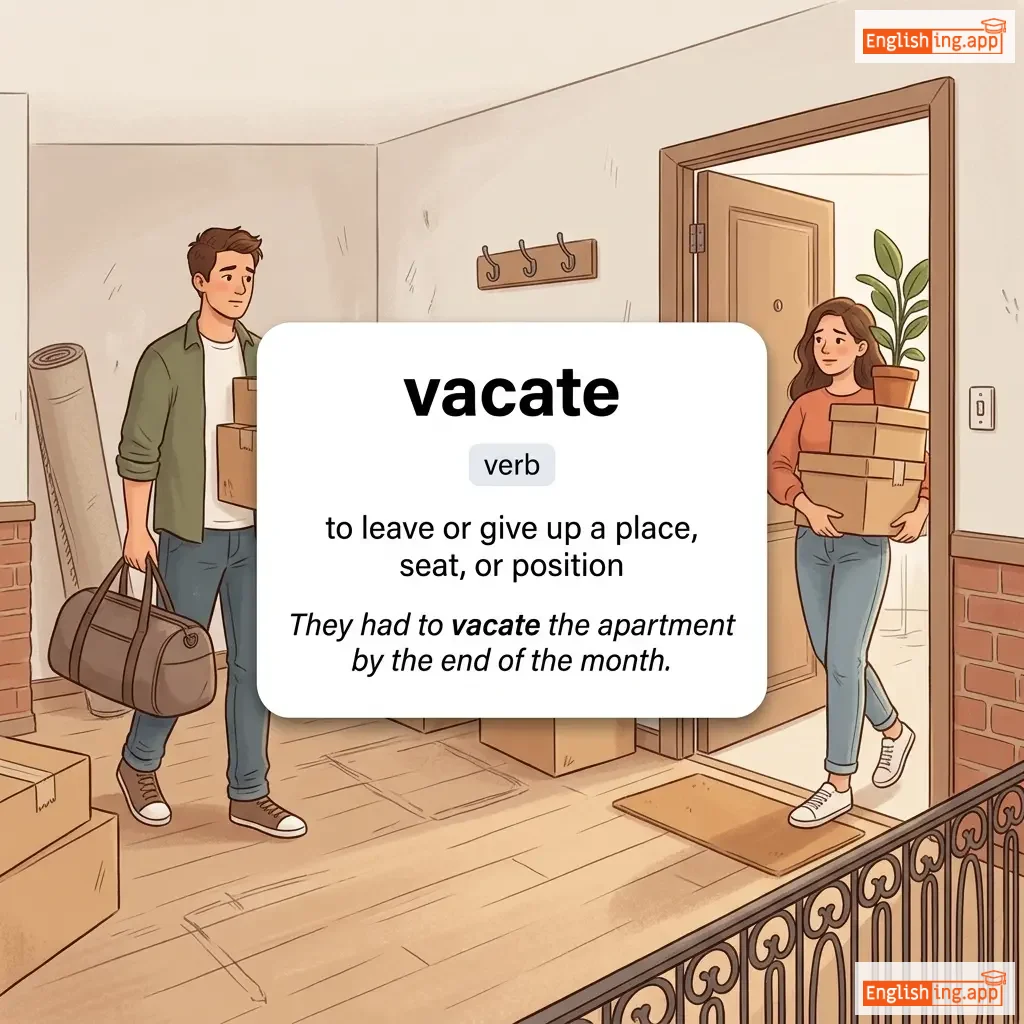
vacate definition card — visual illustration of the meaning
verb
/vəˈkeɪt/
खाली करना (khali karna)

to leave or give up a place, seat, or position

"They had to vacate the apartment by the end of the month."

"उन्हें महीने के अंत तक अपार्टमेंट खाली करना था।" (Unhein mahine ke ant tak apartment khali karna tha.)