Vocabulaires

Découvrez, apprenez et maîtrisez le vocabulaire anglais

noun
/ʌpˈhiːvəl/
bouleversement (bouleversement)

a violent or sudden change or disruption to something

"The company faced a major upheaval after the sudden resignation of its CEO."

"L'entreprise a connu un grand bouleversement après la démission soudaine de son PDG." (L'entreprise a connu un grand bouleversement après la démission soudaine de son PDG.)
adjective
/ʌnˈtaɪərɪŋ/
inlassable; persévérant; infatigable (inlassable; perseverant; infatigable)

continuing without stopping; persistent; tireless

"Her untiring efforts finally led to success."

"Ses efforts inlassables ont finalement conduit au succès." (Ses efforts inlassables ont finalement conduit au succès.)
adjective
/ʌnˈtruː/
faux (faux)

not true; false or incorrect

"The rumor about the company closing was completely untrue."

"La rumeur sur la fermeture de l'entreprise était complètement fausse." (La rumeur sur la fermeture de l'entreprise était complètement fausse.)
adverb
/ˌʌpˈstɛərz/
à l'étage (upstairs)

on or to a higher floor of a building

"She went upstairs to her bedroom."

"Elle est montée à l'étage jusqu'à sa chambre." (Elle est montee a l etage jusqu a sa chambre)
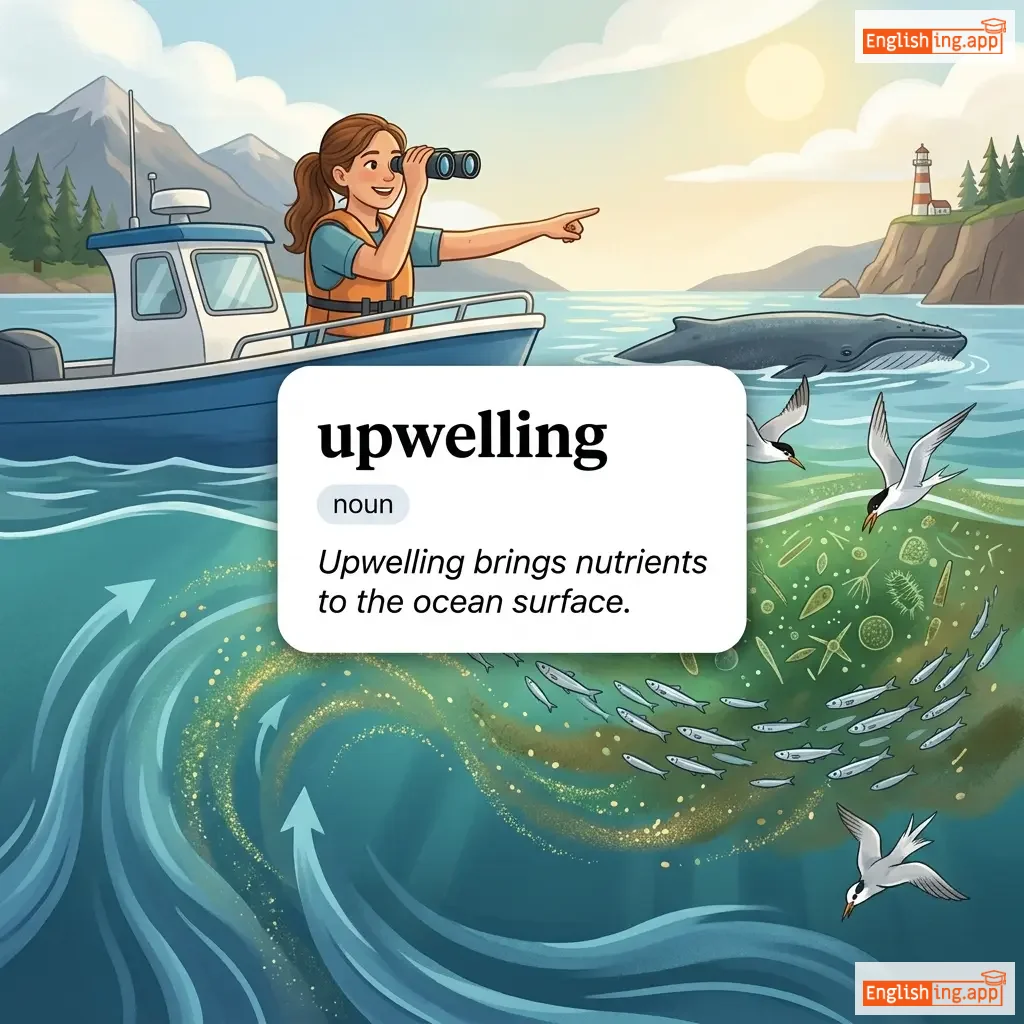
upwelling definition card — visual illustration of the meaning
noun
/ˈʌp.wel.ɪŋ/
Un phénomène océanographique impliquant le mouvement de l'eau dense, froide et riche en nutriments vers la surface de l'océan. (Un phenomeno oceanographique impliquant le mouvement de l'eau dense, froide et riche en nutriments vers la surface de l'ocean.)

An oceanographic phenomenon that involves wind-driven motion of dense, cooler, and nutrient-rich water towards the ocean surface.

"Upwelling brings nutrients to the ocean surface."

"L'upwelling apporte des nutriments à la surface de l'océan." (L'upwelling apporte des nutriments à la surface de l'ocean.)
adjective
/ʌnˈʃeɪkən/
inquétable; ferme (inquetable; ferme)

not disturbed or affected; firm and steady; unwavering

"Her faith remained unshaken despite all the challenges."

"Sa foi est restée inébranlable malgré tous les défis." (Sa foi est restée inébranlable malgré tous les défis.)
adjective
/ʌnprəˈfɛʃ.ən.əl/
non professionnel (non professionnel)

not conforming to the standards expected in a particular profession

"His unprofessional behavior led to his dismissal from the company."

"Son comportement non professionnel a conduit à son licenciement de l'entreprise." (Son comportement non professionnel a conduit a son licenciement de l'entreprise)
verb
/ʌnˈræp/
déballer (deballer)

remove wrapping or covering from something; reveal something gradually or clearly

"She carefully unwrapped the gift with excitement."

"Elle a déballé le cadeau avec précaution et excitation." (Elle a deballe le cadeau avec precaution et excitation)
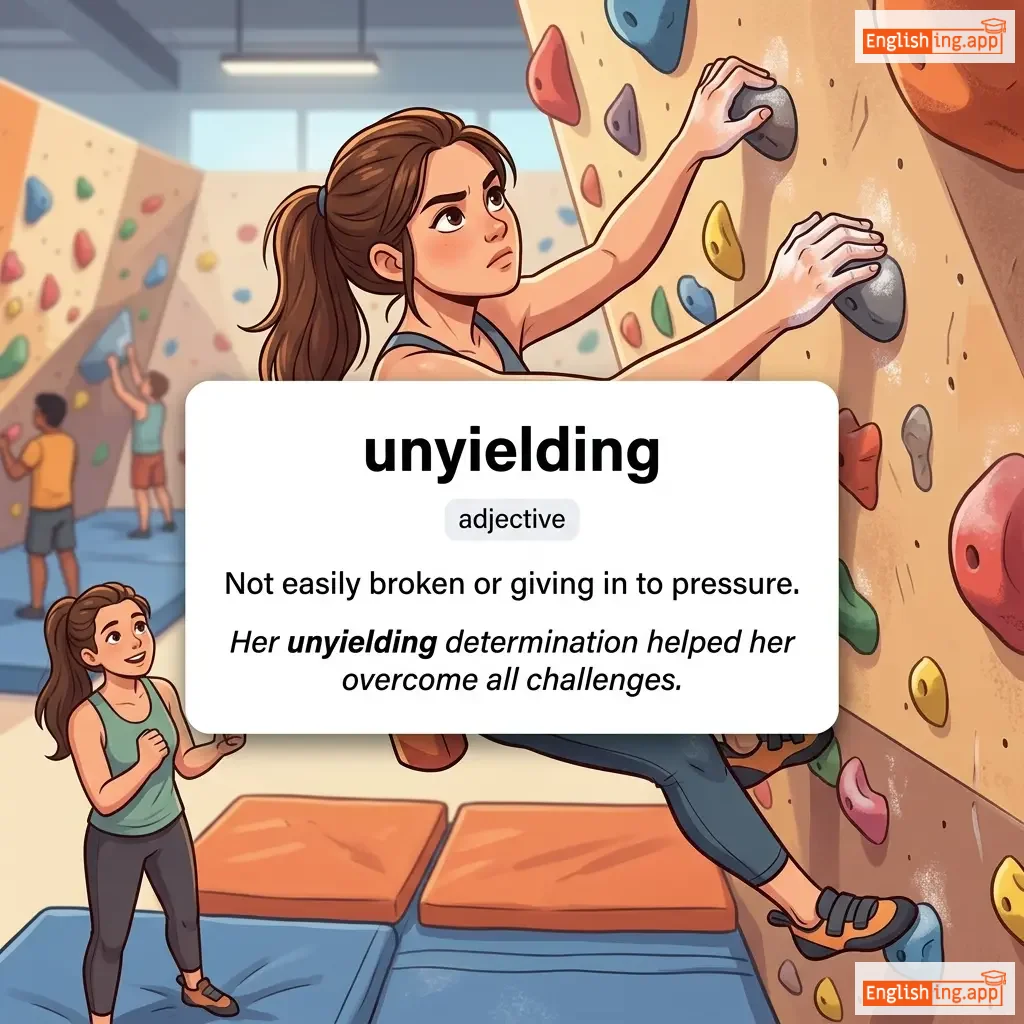
unyielding definition card — visual illustration of the meaning
adjective
ʌnˈjiːl.dɪŋ
inébranlable ou ferme (inebranlable ou ferme)

Not easily broken or giving in to pressure.

"Her unyielding determination helped her overcome all challenges."

"Sa détermination inébranlable l'a aidée à surmonter tous les défis." (Sa determination inebranlable l'a aidee a surmonter tous les defis.)
⬆️

up (ap)

adverb
/ʌp/
en haut (en haut)

towards a higher position or level

"He climbed up the ladder quickly."

"Il a monté rapidement l'échelle." (Il a monte rapidement l'echelle.)
noun
/ˈʌpˌkiːp/
entretien (entretien)

The process or cost of maintaining something in good condition.

"The upkeep of the old house is very expensive."

"L'entretien de la vieille maison est très cher." (L'entretien de la vieille maison est très cher.)
noun
/ˈʌp.ʃɒt/
résultat (resultat)

The final result or outcome of a process or situation.

"The upshot of the meeting was that the plan was postponed."

"Le résultat de la réunion a été que le plan a été reporté." (Le resultat de la reunion a ete que le plan a ete reporte.)
adjective
/ʌnˈθɪŋkəbl/
impensable (impensable)

impossible to conceive or imagine; beyond belief or consideration

"It was unthinkable that such a tragedy could happen in our peaceful town."

"Il était impensable qu'une telle tragédie puisse se produire dans notre ville paisible." (Il était impensable qu'une telle tragédie puisse se produire dans notre ville paisible.)
adjective
/ʌnˈwaɪz/
imprudent (imprudent)

Showing poor judgment; not sensible or prudent.

"It would be unwise to invest all your money in one company."

"Il serait imprudent d'investir tout votre argent dans une seule entreprise." (Il serait imprudent d'investir tout votre argent dans une seule entreprise.)
adverb
/ʌnˈjuːʒuəli/
de manière inhabituelle (de maniere inhabituelle)

in a way that is not typical or expected; to an uncommon degree

"It was unusually cold for this time of year."

"Il faisait inhabituellement froid pour cette période de l'année." (Il faisait inhabituellement froid pour cette periode de l annee)
adjective
/ʌnˈtɛmpərd/
non tempéré (non tempeire)

not moderated or softened; lacking proper balance or control

"The untempered anger of the crowd caused chaos."

"La colère non tempérée de la foule a provoqué le chaos." (La colère non tempérée de la foule a provoqué le chaos.)
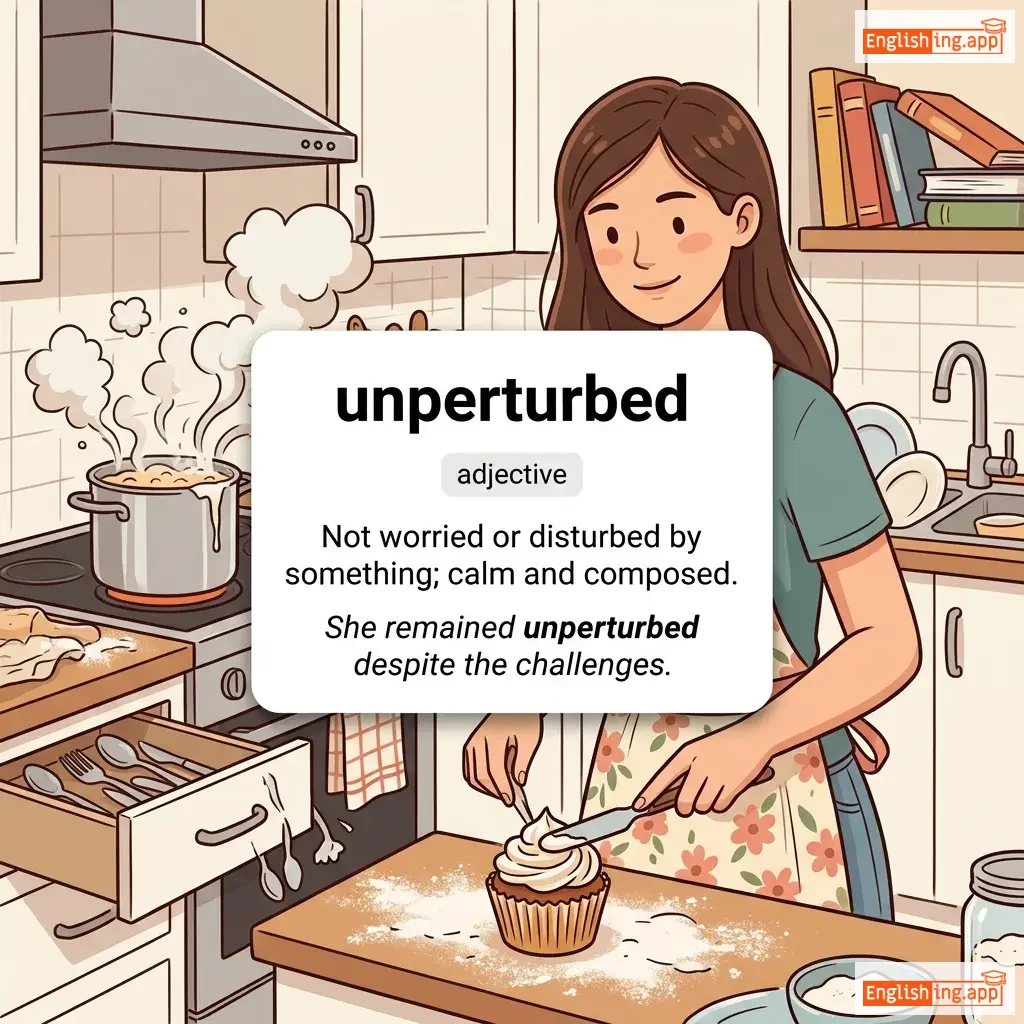
unperturbed definition card — visual illustration of the meaning
adjective
ˌʌn.pəˈtɜːbd
pas inquiet ou perturbé par quelque chose ; calme et composé (pas inquiet ou perturbé par quelque chose ; calme et composé)

Not worried or disturbed by something; calm and composed.

"She remained unperturbed despite the challenges."

"Elle est restée calme malgré les défis." (Elle est restée calme malgré les défis.)
adjective
/ʌnˈsʌlid/
immaculé (immacule)

not spoiled or made impure; perfectly clean or pure

"His reputation remained unsullied despite the accusations."

"Sa réputation est restée immaculée malgré les accusations." (Sa réputation est restée immaculée malgré les accusations.)
noun/verb
/ˈʌpˌkæst/
lancer vers le haut (lancer vers le haut)

Verb: To cast or throw upward. Noun: Something thrown or directed upward.

"The fisherman upcast his net into the air."

"Le pêcheur a lancé son filet dans les airs." (Le pêcheur a lancé son filet dans les airs.)
preposition/conjunction
/ʌnˈtɪl/
jusqu'à (jusqu'a)

up to the time of

"I will wait until you come back."

"J'attendrai jusqu'à ce que tu reviennes." (J'attendrai jusqu'à ce que tu reviennes.)
adjective
/ʌnˈsteɪbəl/
instable (instable)

likely to change; not steady or secure; unsteady

"The unstable economy made people worried about their jobs."

"L'économie instable a rendu les gens inquiets au sujet de leurs emplois." (L'economie instable a rendu les gens inquiets au sujet de leurs emplois.)
adverb
/ʌnˈwɪlɪŋli/
à contrecœur (a contrecœur)

in a way that shows reluctance or lack of desire; not willingly

"She unwillingly agreed to attend the meeting."

"Elle a accepté à contrecœur d'assister à la réunion." (elle a accepte a contrecœur dassister a la reunion)
adjective
/ʌnˈwɒn.tɪd/
indésirable (indesirable)

not desired or welcome; not wanted

"He felt like an unwanted guest at the meeting."

"Il se sentait comme un invité indésirable à la réunion." (Il se sentait comme un invité indésirable à la réunion.)
verb
/ʌnˈveɪl/
dévoiler (devoiler)

to reveal or disclose something, especially in a formal manner

"The company will unveil a new product next week."

"L'entreprise dévoilera un nouveau produit la semaine prochaine." (L'entreprise devoilera un nouveau produit la semaine prochaine.)
verb
/ʌnˈjoʊk/
dételer (dételer)

To release from a yoke or to free from restraint or obligation.

"The farmer unyoked the oxen after a long day of work."

"Le fermier a dételé les bœufs après une longue journée de travail." (Le fermier a dételé les bœufs après une longue journée de travail.)
noun
/ˈʌp.raɪt.nəs/
rectitude; intégrité (rectitude; integrite)

the quality of being honest and morally correct; integrity

"His uprightness in business dealings earned him great respect."

"Sa droiture dans les affaires lui a valu un grand respect." (Sa droiture dans les affaires lui a valu un grand respect.)
adverb
/ˈɜːrdʒəntli/
d'urgence (d'urgence)

in a way that requires immediate attention or action

"The patient urgently needs medical attention."

"Le patient a besoin d'une attention médicale d'urgence." (le patient a besoin d une attention medicale d urgence)
adjective
/ʌnˈtaɪmli/
prématuré (premature)

Happening or done at an unsuitable or premature time.

"His untimely death shocked the entire community."

"Sa mort prématurée a choqué toute la communauté." (Sa mort prématurée a choqué toute la communauté.)
adjective
/ʌnˈwɜːrði/
indigne; sans valeur (indigne; sans valeur)

not deserving respect or attention; lacking worth or merit

"He felt unworthy of such praise and recognition."

"Il se sentait indigne de tant d'éloges et de reconnaissance." (Il se sentait indigne de tant d'éloges et de reconnaissance.)
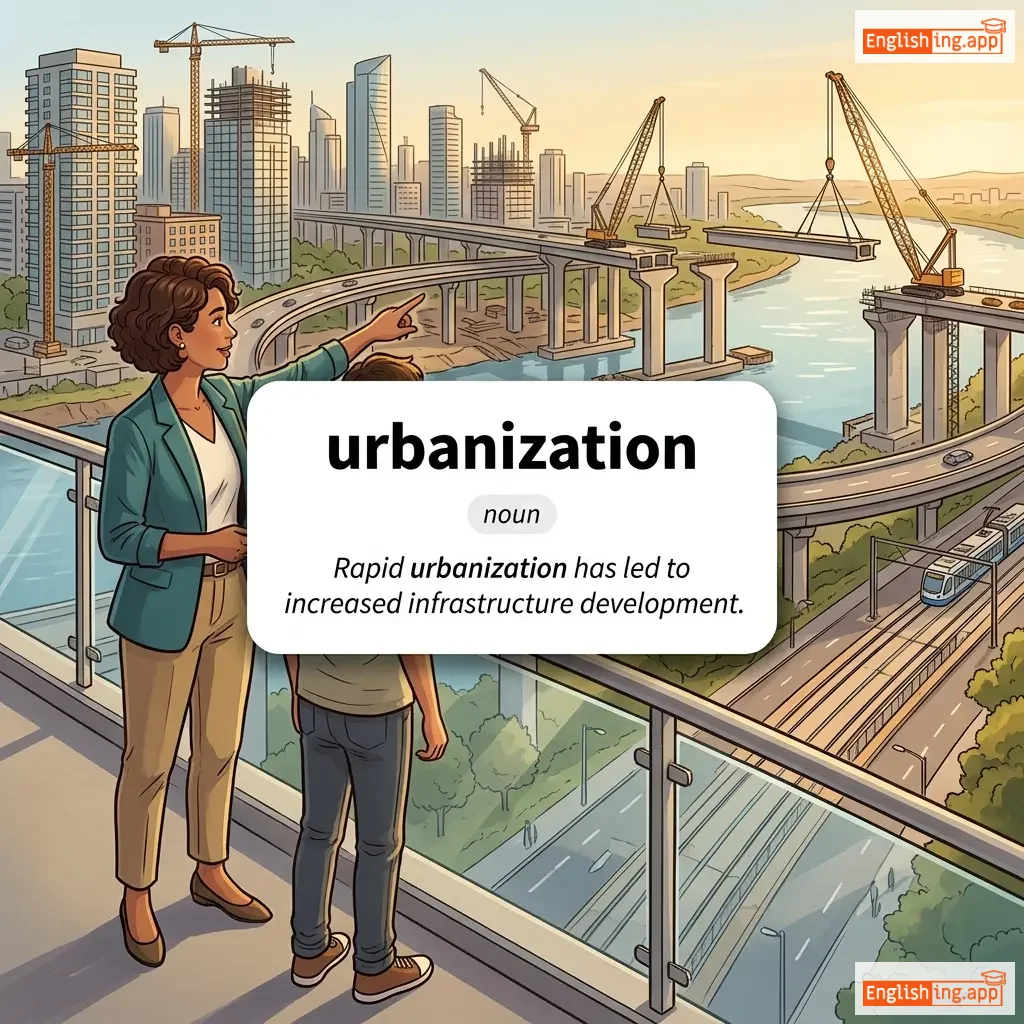
urbanization definition card — visual illustration of the meaning
noun
/ˌɜː.bən.aɪˈzeɪ.ʃən/
urbanisation (urbanisation)

The process by which towns and cities are formed and become larger as more people begin living and working in central areas.

"Rapid urbanization has led to increased infrastructure development."

"La rapide urbanisation a conduit à une augmentation du développement des infrastructures." (La rapide urbanisation a conduit à une augmentation du développement des infrastructures.)
adjective
/ˈʌpərˌmoʊst/
le plus élevé (le plus eleve)

situated at the highest place or most important

"Her family's safety was uppermost in her mind during the crisis."

"La sécurité de sa famille était la priorité dans son esprit pendant la crise." (La securite de sa famille etait la priorite dans son esprit pendant la crise.)
adjective
/ˈviːəmənt/
véhément (vehément)

showing strong feeling; forceful, passionate, or intense

"She made a vehement argument against the proposal."

"Elle a fait un argument véhément contre la proposition." (Elle a fait un argument véhément contre la proposition.)
adjective
/ʌnˈsəʊʃəbl/
asocial (asocial)

not enjoying the company of others; avoiding social interaction

"He became unsociable after moving to a new city."

"Il est devenu asocial après avoir déménagé dans une nouvelle ville." (il est devenu asocial apres avoir demenage dans une nouvelle ville)
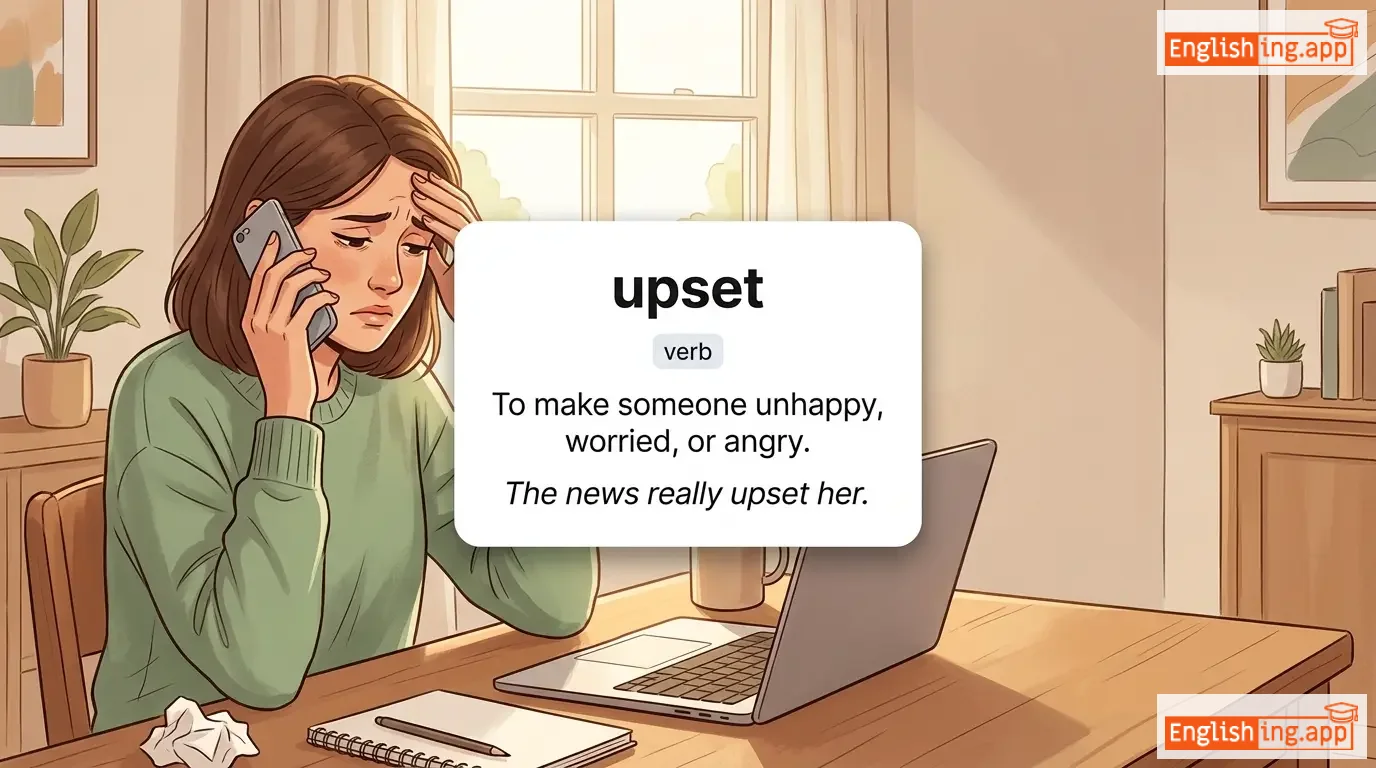
upset definition card — visual illustration of the meaning
verb
/ʌpˈsɛt/
contrarier (contrarier)

To make someone unhappy, worried, or angry.

"The news really upset her."

"Les nouvelles l'ont vraiment contrariée." (Les nouvelles l'ont vraiment contrariée.)
adjective, adverb
/ˈʌpraɪt/
bonheur (bonheur)

positioned vertically; morally good and honest

"He remained upright despite the strong winds."

"Elle ne pouvait cacher son bonheur lorsqu'elle a reçu le prix." (Elle ne pouvait cacher son bonheur lorsqu'elle a reçu le prix.)
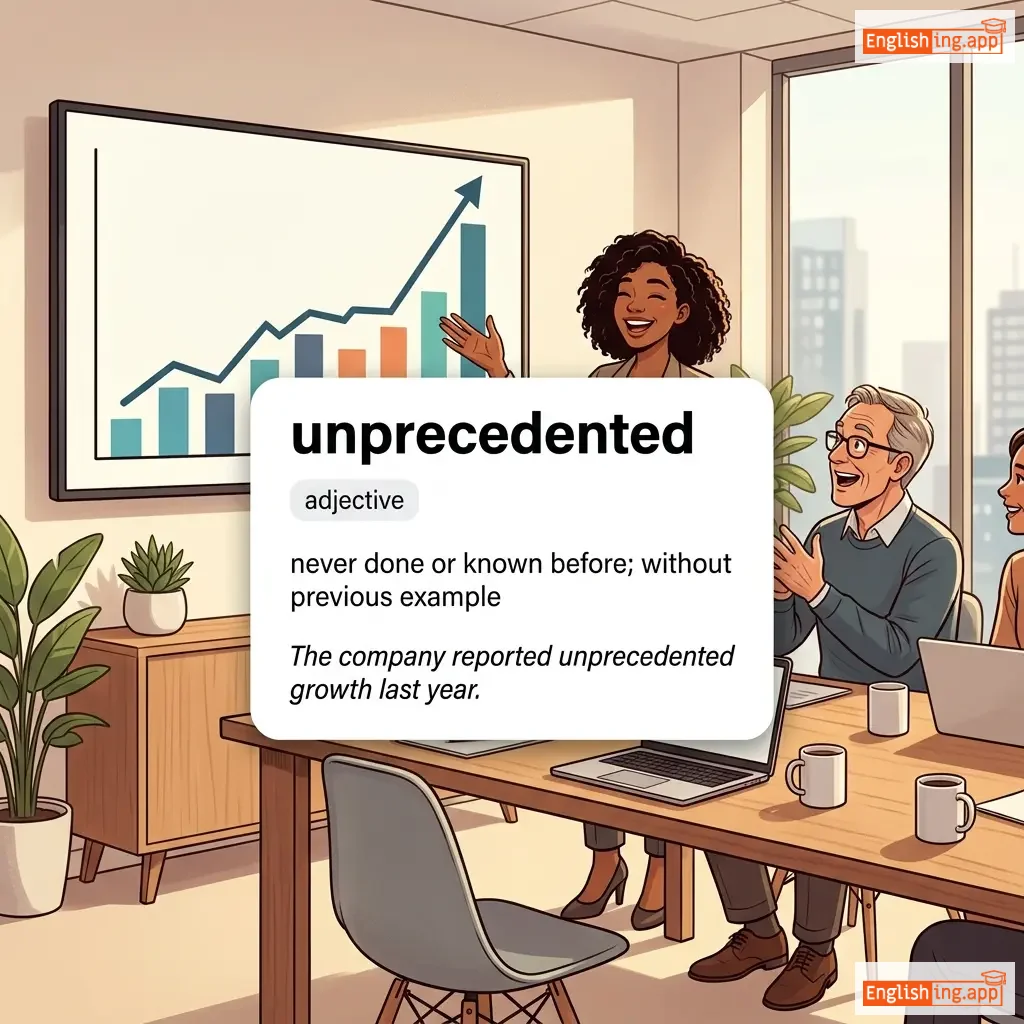
unprecedented definition card — visual illustration of the meaning
adjective
/ʌnˈprɛsɪˌdɛntɪd/
sans précédent (san precedent)

never done or known before; without previous example

"The company reported unprecedented growth last year."

"L'entreprise a signalé une croissance sans précédent l'année dernière." (L'entreprise a signalé une croissance sans précédent l'année dernière.)
noun
/ˈjuːs.fəl.nəs/
utilité (utilite)

the quality of being useful; practical value or helpfulness

"The usefulness of this tool became apparent during the project."

"L'utilité de cet outil est devenue évidente pendant le projet." (L'utilite de cet outil est devenue evidente pendant le projet.)
adjective
/ʌnˈspiːkəbl/
indicible (indicible)

too bad or shocking to be expressed in words

"The survivors endured unspeakable horrors during the war."

"Les survivants ont enduré des horreurs indicibles pendant la guerre." (Les survivants ont enduré des horreurs indicibles pendant la guerre.)
verb
/ʌnˈpæk/
déballer (deballer)

to remove items from a container; to explain or analyze something in detail

"After arriving home, she began to unpack her suitcase."

"Après être rentrée à la maison, elle a commencé à déballer sa valise." (Apres etre rentree a la maison, elle a commence a deballer sa valise)
adjective
/ˌʌnəˈfɪʃ.əl/
non officiel (non officiel)

not officially authorized or confirmed; informal

"The unofficial results showed a close race."

"Les résultats non officiels ont montré une course serrée." (Les résultats non officiels ont montré une course serrée.)
noun
/ˈvæk.juːm ˈkliː.nər/
aspirateur (aspirateur)

an electrical appliance that uses suction to remove dirt and dust from carpets and floors

"She used the vacuum cleaner to clean the living room carpet."

"Elle a utilisé l'aspirateur pour nettoyer le tapis du salon." (Elle a utilise l'aspirateur pour nettoyer le tapis du salon.)
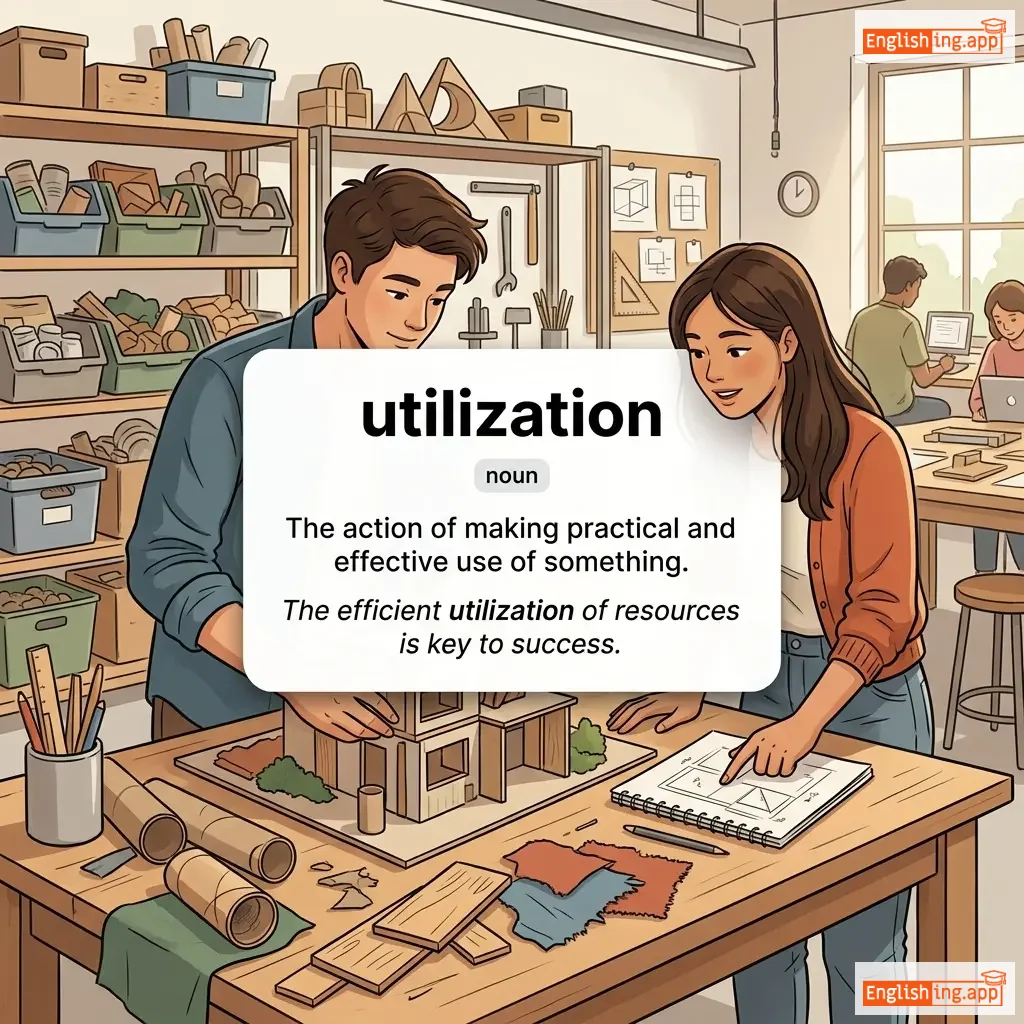
utilization definition card — visual illustration of the meaning
noun
ˌjuːtɪlaɪˈzeɪʃən
utilisation (utilisation)

The action of making practical and effective use of something.

"The efficient utilization of resources is key to success."

"L'utilisation efficace des ressources est la clé du succès." (L'utilisation efficace des ressources est la cle du succes.)
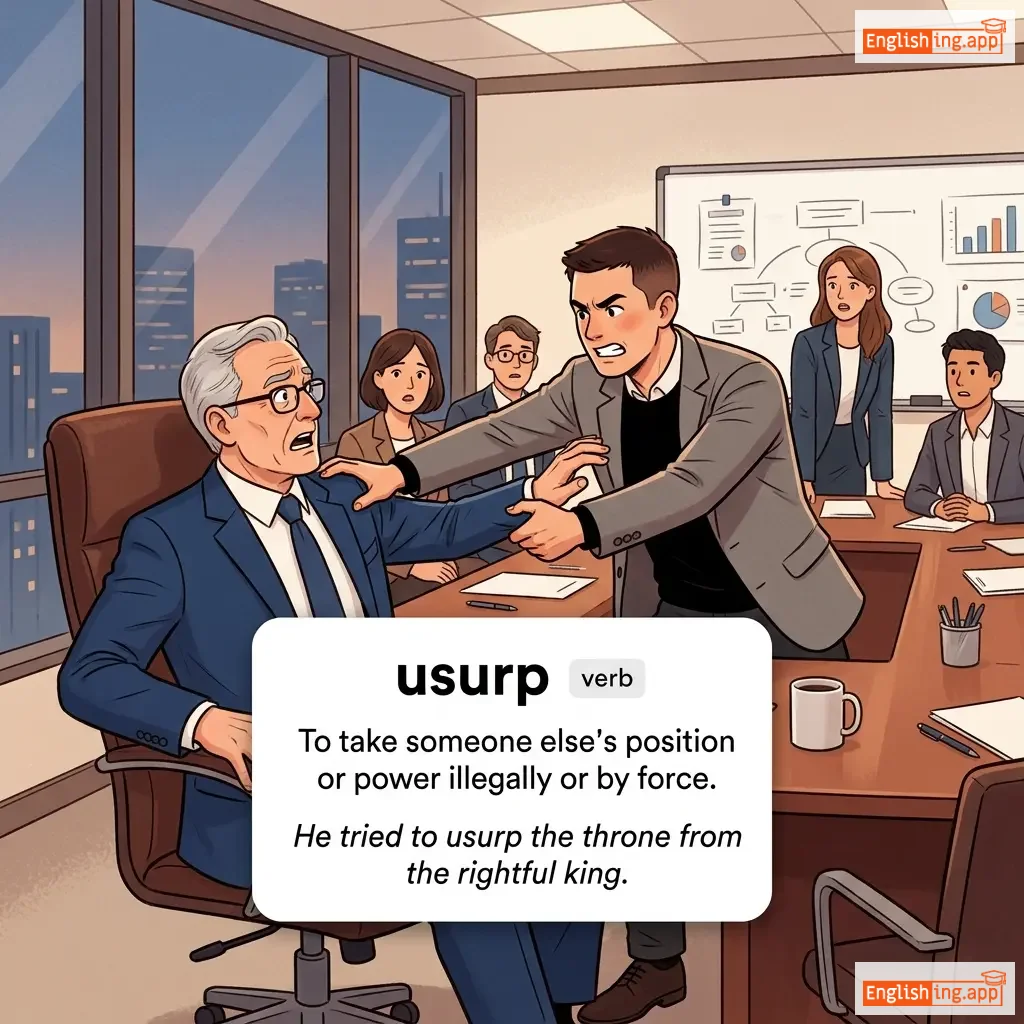
usurp definition card — visual illustration of the meaning
verb
/juːˈzɜːrp/
usurper (usurper)

To take someone else's position or power illegally or by force.

"He tried to usurp the throne from the rightful king."

"Il a essayé d'usurper le trône du roi légitime." (Il a essayé d'usurper le trône du roi légitime.)
noun
/ˌvælɪˌtjuːdɪˈnɛəriən/
personne hypocondriaque (personne hypocondriaque)

A person who is unduly anxious about their health or constantly concerned with minor ailments.

"He was regarded as a valetudinarian, always worrying about his health."

"Il était considéré comme un hypocondriaque, toujours préoccupé par sa santé." (Il etait considere comme un hypocondriaque, toujours preoccupe par sa sante.)
noun
/ˌjuːzɜːrˈpeɪʃən/
usurpation (usurpation)

The act of taking someone's power or property illegally or by force.

"The general's usurpation of the presidency led to political unrest."

"L'usurpation de la présidence par le général a conduit à des troubles politiques." (L'usurpation de la presidence par le general a conduit a des troubles politiques.)
noun
/ˈvæk.siːn/
vaccin (vaccin)

a substance used to stimulate the body's immune response against diseases

"Children are given the polio vaccine to prevent infection."

"Les enfants reçoivent le vaccin contre la polio pour prévenir l'infection." (Les enfants reçoivent le vaccin contre la polio pour prévenir l'infection.)
adjective
/ˈʌtmoʊst/
bonheur (bonheur)

Greatest or highest in degree, importance, or extent.

"She showed the utmost respect to her teachers."

"Elle ne pouvait pas cacher son bonheur lorsqu'elle a reçu le prix." (Elle ne pouvait pas cacher son bonheur lorsqu'elle a reçu le prix.)
adjective
/ˈjuːʒəl/
habituel (habituel)

habitually or typically occurring or done

"It’s our usual meeting spot."

"C'est notre lieu de réunion habituel." (C'est notre lieu de réunion habituel.)
noun
/ˌvælədɪkˈtɔːriən/
meilleur élève (meilleur eleve)

The student with the highest academic achievements in a graduating class, often chosen to give the farewell speech.

"She was honored as the valedictorian of her class."

"Elle a été honorée en tant que meilleure élève de sa classe." (Elle a été honorée en tant que meilleure élève de sa classe.)
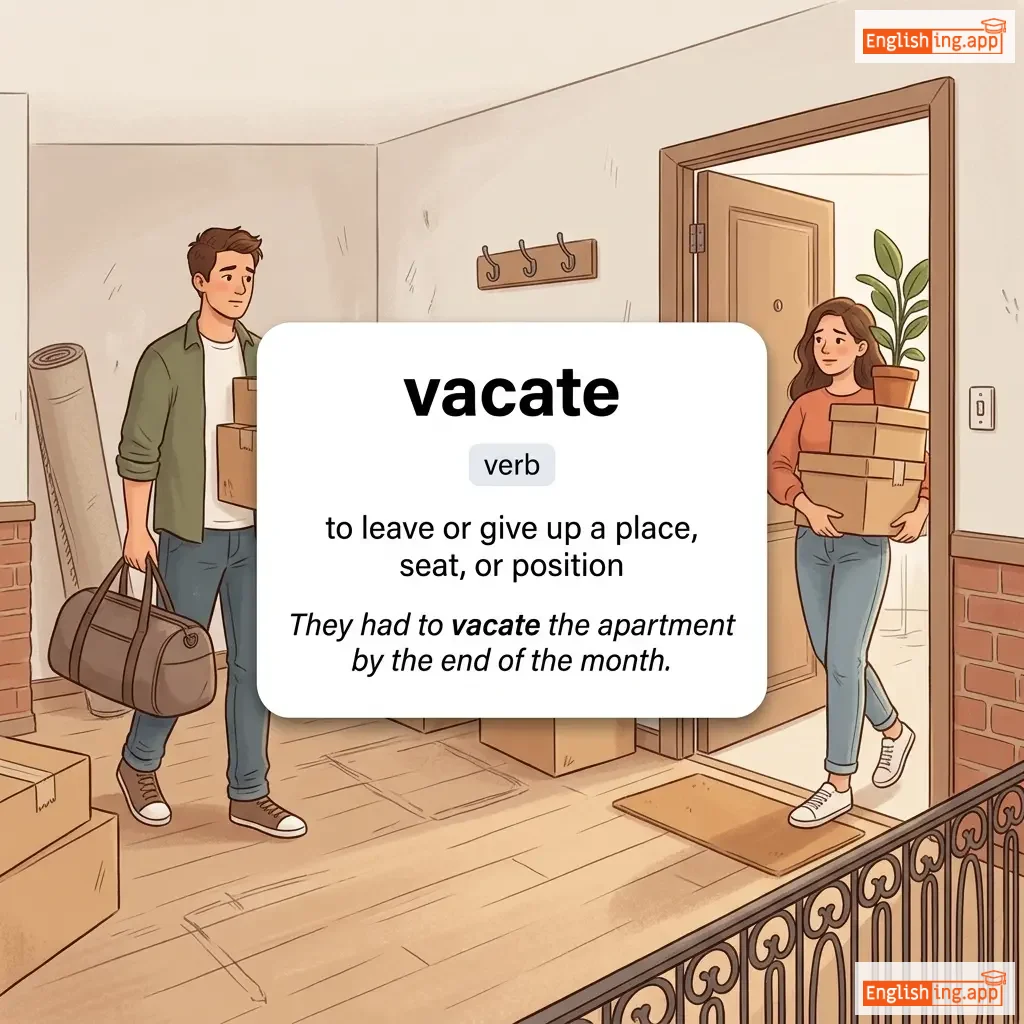
vacate definition card — visual illustration of the meaning
verb
/vəˈkeɪt/
libérer (liberer)

to leave or give up a place, seat, or position

"They had to vacate the apartment by the end of the month."

"Ils ont dû libérer l'appartement avant la fin du mois." (Ils ont dû libérer l'appartement avant la fin du mois.)