Vocabulaires

Découvrez, apprenez et maîtrisez le vocabulaire anglais

verb
/ˈæd.l̩/
embrouiller (embrouiller)

To confuse or muddle someone’s mind.

"The complicated instructions only served to addle him."

"Les instructions compliquées n'ont servi qu'à le rendre confus." (Les instructions compliquées n'ont servi qu'à le rendre confus.)
address definition card — visual illustration of the meaning
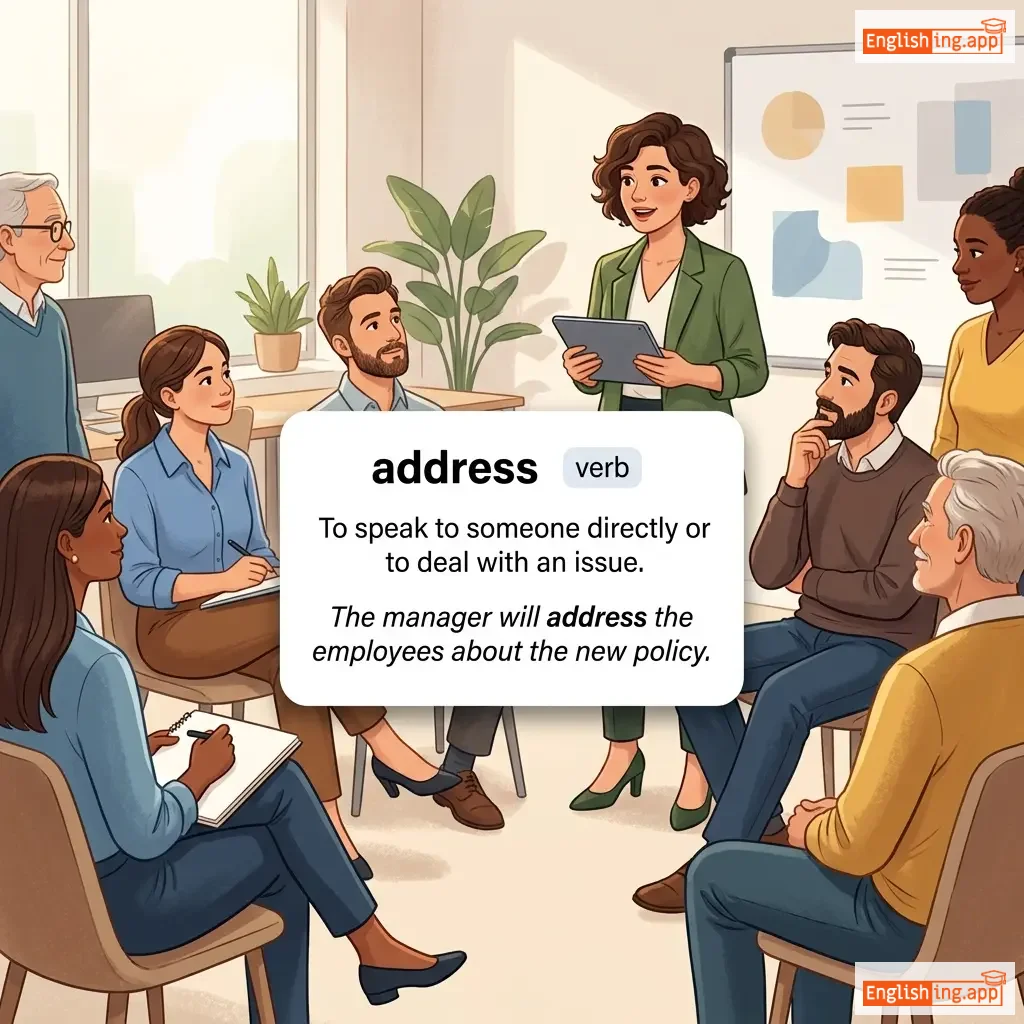
verb
/əˈdrɛs/
aborder, résoudre (aborder, resoudre)

To speak to someone directly or to deal with an issue.

"The manager will address the employees about the new policy."

"Le manager adressera les employés sur la nouvelle politique." (Le manager adressera les employés sur la nouvelle politique.)
addressed definition card — visual illustration of the meaning
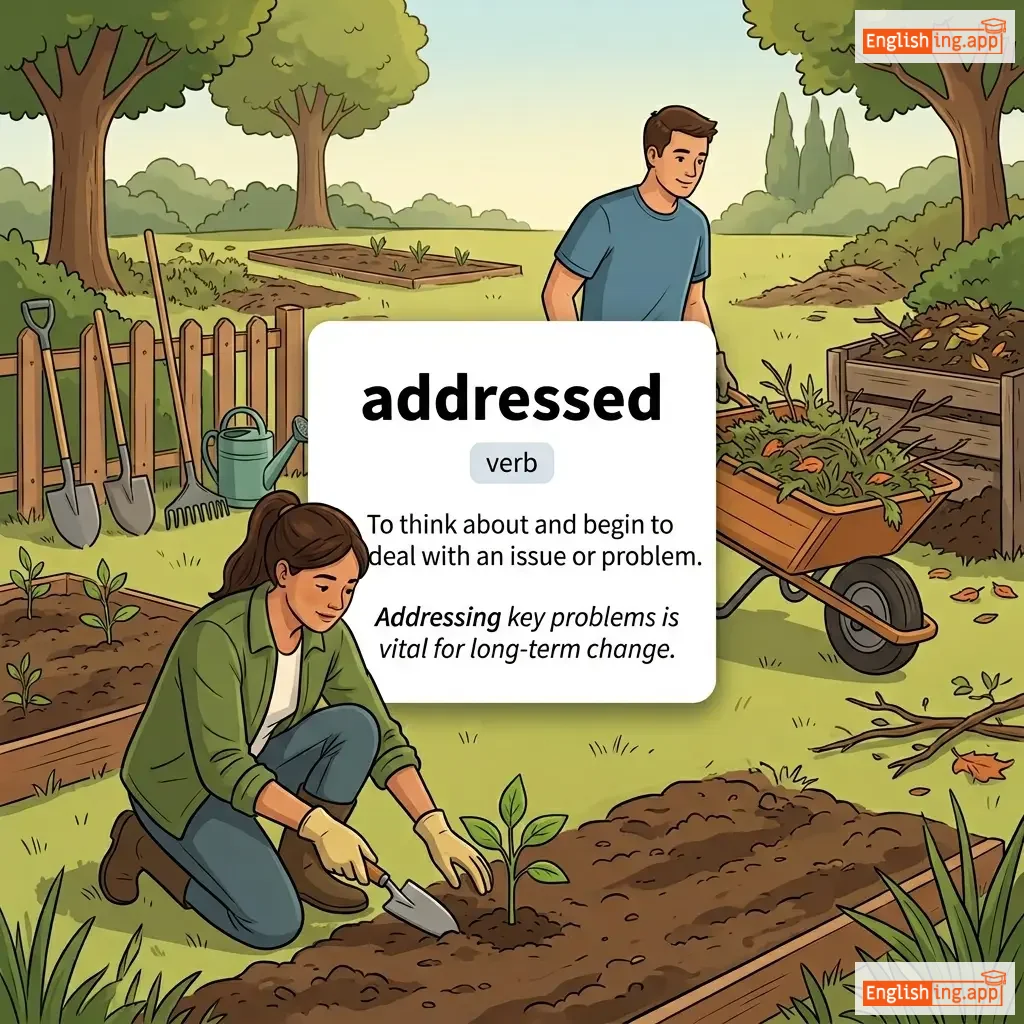
verb
əˈdrɛst
adressé (adresse)

To think about and begin to deal with an issue or problem.

"Addressing key problems is vital for long-term change."

"S'attaquer aux problèmes clés est essentiel pour un changement à long terme." (S'attaquer aux problèmes clés est essentiel pour un changement à long terme.)
verb
/əˈdjuːs/
présenter des preuves ou des raisons (presenter des preuves ou des raisons)

To provide evidence or reasons to support an argument or idea.

"The lawyer adduced several examples to support his case."

"L'avocat a adduit plusieurs exemples pour soutenir son cas." (L'avocat a adduit plusieurs exemples pour soutenir son cas.)
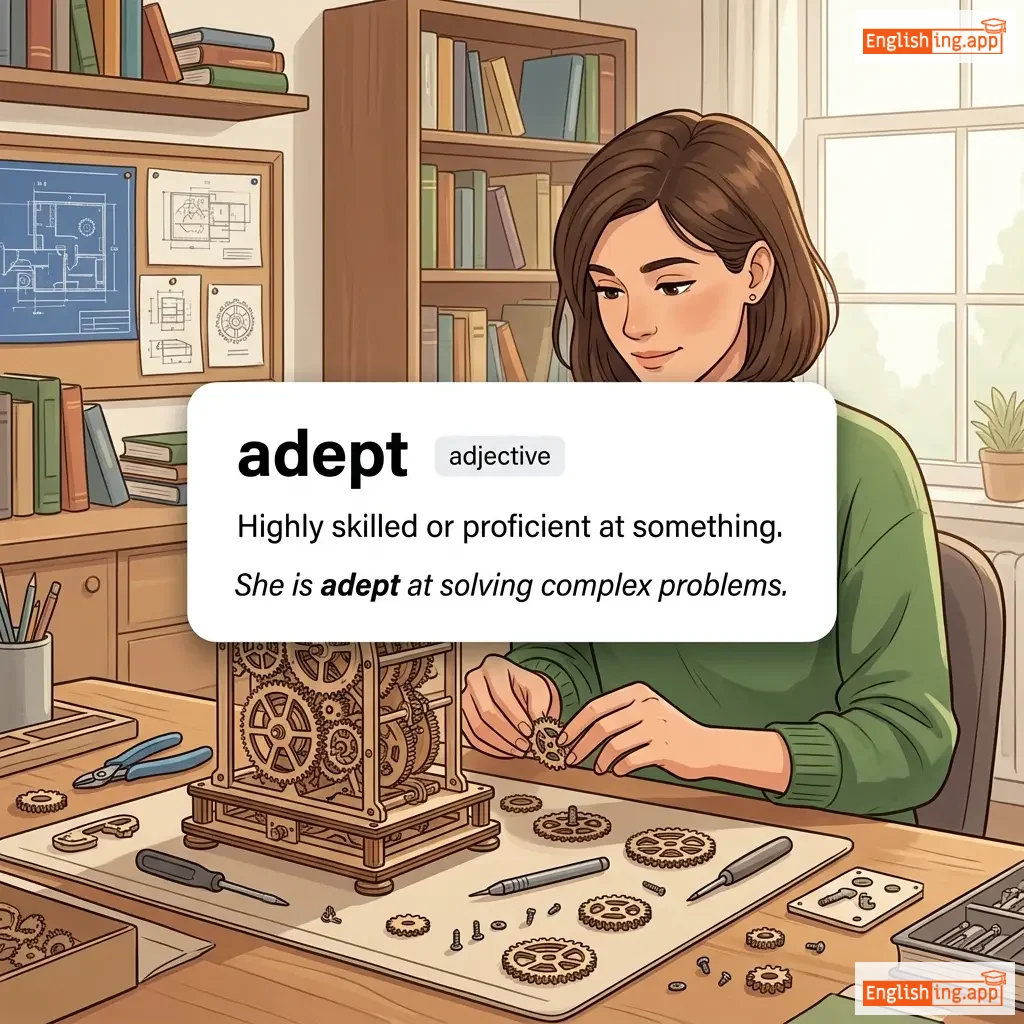
adept definition card — visual illustration of the meaning
adjective
/əˈdɛpt/
habile (uhdept)

Highly skilled or proficient at something.

"She is adept at solving complex problems."

"Elle est habile à résoudre des problèmes complexes." (Elle est habile a resoudre des problemes complexes.)
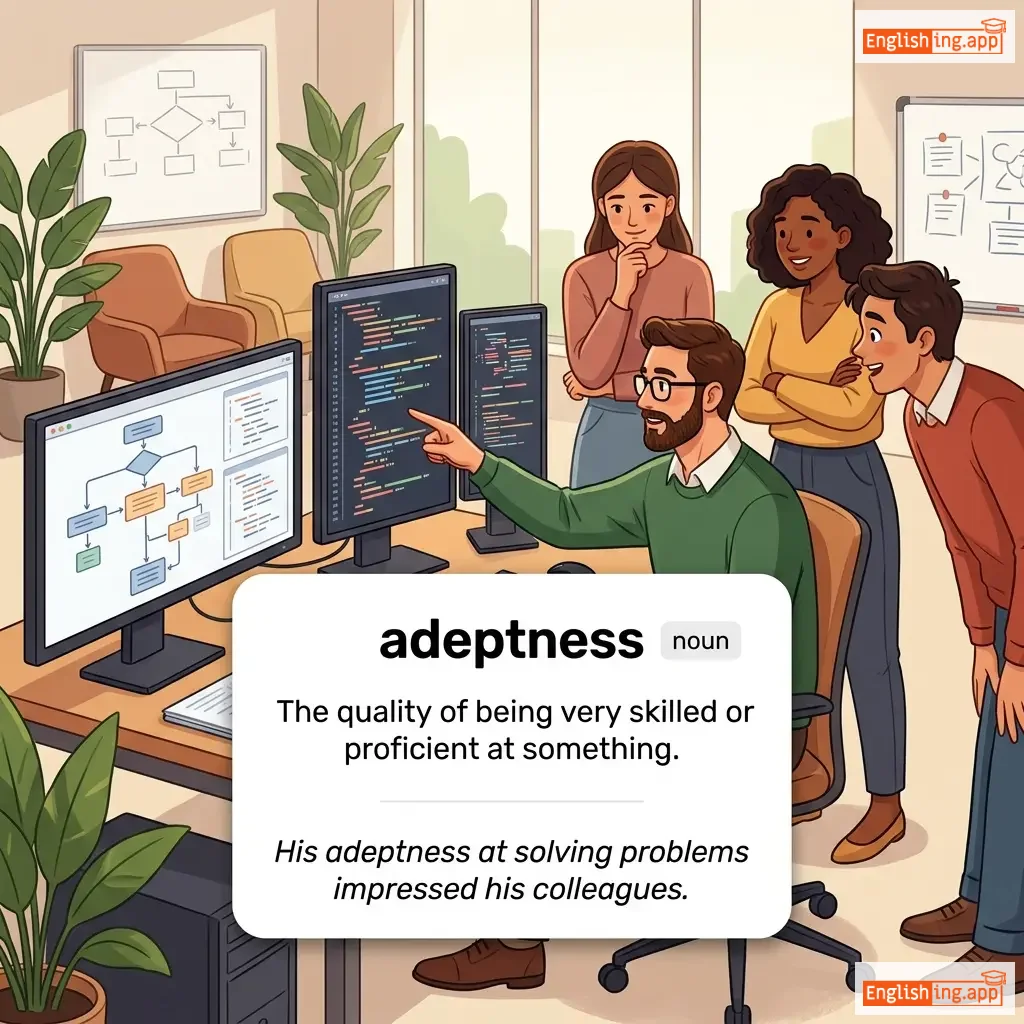
adeptness definition card — visual illustration of the meaning
noun
əˈdept.nəs
compétence (competence)

The quality of being very skilled or proficient at something.

"His adeptness at solving problems impressed his colleagues."

"Sa compétence à résoudre les problèmes a impressionné ses collègues." (Sa compétence à résoudre les problèmes a impressionné ses collègues.)
adjective
/ˈædɪkwət/
adéquat (adequat)

sufficient or acceptable in quality or quantity

"The food was adequate for the small group."

"La nourriture était adéquate pour le petit groupe." (La nourriture etait adequate pour le petit groupe.)
adverb
/ˈædɪkwətli/
de manière adéquate (de maniere adequate)

in a satisfactory manner

"He completed the task adequately, but could improve next time."

"Il a accompli la tâche de manière adéquate, mais pourrait s'améliorer la prochaine fois." (Il a accompli la tache de maniere adequate, mais pourrait s'ameliorer la prochaine fois.)
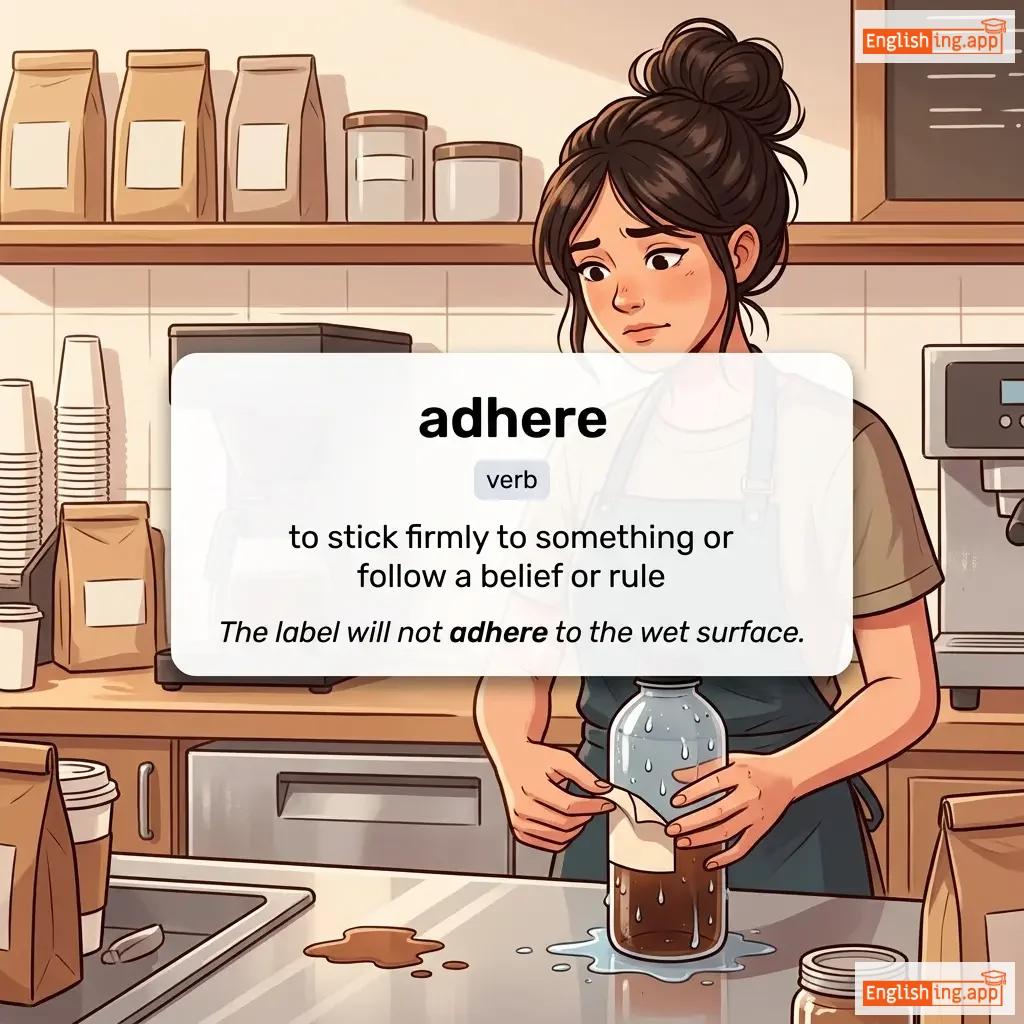
adhere definition card — visual illustration of the meaning
verb
/ədˈhɪər/
adhérer, suivre (adhérer, suivre)

to stick firmly to something or follow a belief or rule

"The label will not adhere to the wet surface."

"L'étiquette ne restera pas collée à la surface humide." (L'étiquette ne restera pas collée à la surface humide.)
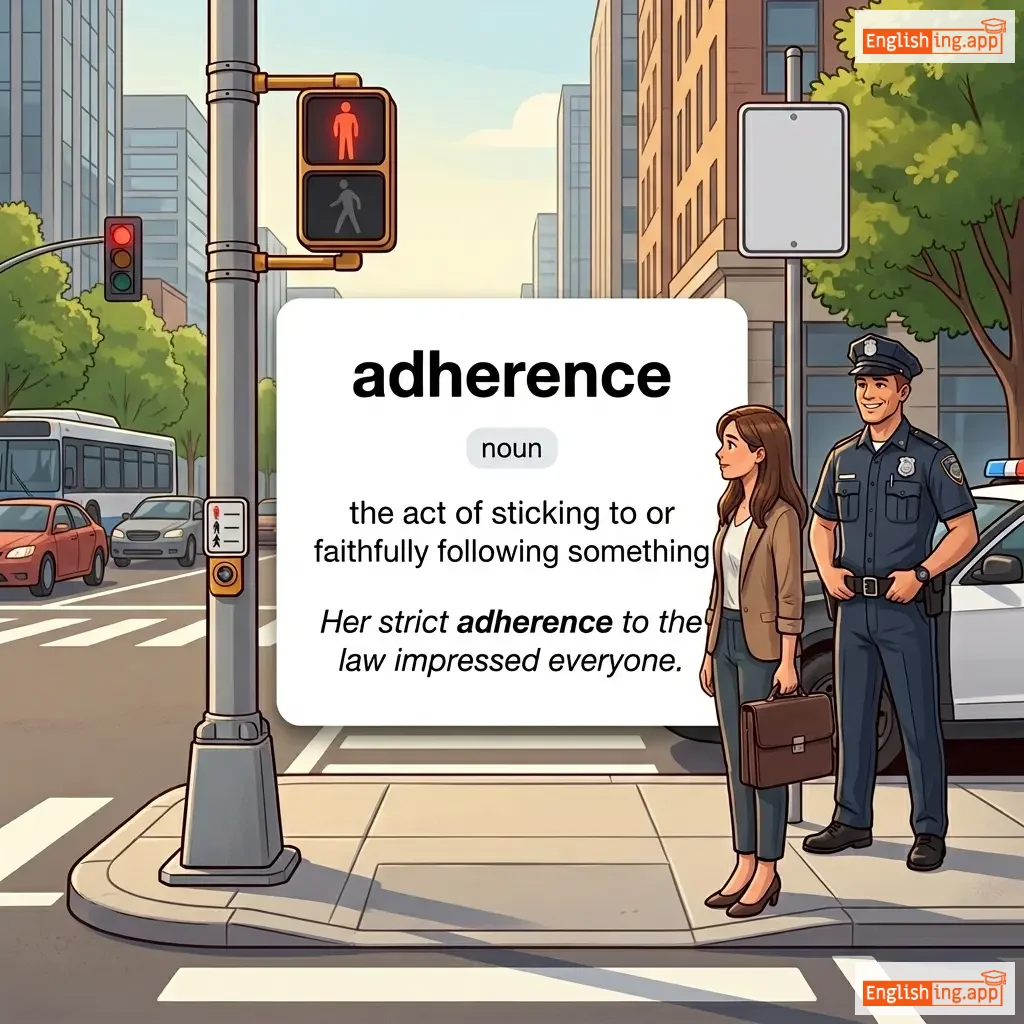
adherence definition card — visual illustration of the meaning
noun
/ədˈhɪərəns/
adhérence (adherans)

the act of sticking to or faithfully following something

"Her strict adherence to the law impressed everyone."

"Sa stricte adhérence à la loi a impressionné tout le monde." (Sa stricte adherence a la loi a impressionne tout le monde.)
noun
/ədˈhɪərənt/
adhérent (adheran)

a person who supports or follows a particular belief, cause, or leader

"He is a strong adherent of democratic values."

"Il est un fervent adhérent des valeurs démocratiques." (Il est un fervent adhérent des valeurs démocratiques.)
noun
/ədˈhiːʒən/
adhésion (adhesion)

the process or state of sticking to something

"Strong adhesion is needed for the tiles to stay in place."

"Une forte adhésion est nécessaire pour que les carreaux restent en place." (Une forte adhesion est necessaire pour que les carreaux restent en place.)
adjective
/ədˈhiːsɪv/
collant (collant)

আঠালো; চটচটে;

"The adhesive tape stuck firmly to the wall."

"Le ruban adhésif s'est fixé fermement au mur." (Le ruban adhésif s'est fixé fermement au mur.)
noun
/əˈdjuː/
adieu (adieu)

A farewell or goodbye, often used in a formal or poetic sense.

"She bid her friends adieu before leaving for France."

"Elle fit ses adieux à ses amis avant de partir pour la France." (Elle fit ses adieux a ses amis avant de partir pour la France.)
adjective
/ˈædɪˌpoʊs/
adipeux (adipeux)

Relating to or consisting of animal fat; fatty.

"The doctor explained that the tissue was mainly adipose in nature."

"Le médecin a expliqué que le tissu était principalement adipeux par nature." (Le médecin a expliqué que le tissu était principalement adipeux par nature.)
noun
/əˈdʒeɪsənsi/
adjacence (adjasans)

The state of being next to or adjoining something else.

"The adjacency of the two buildings made it easy to connect them."

"L'adjacence des deux bâtiments a facilité leur connexion." (L'adjacence des deux bâtiments a facilité leur connexion.)
adjective
/əˈdʒeɪsənt/
adjacent (adjacent)

Next to or adjoining something else.

"The hotel is adjacent to the beach."

"L'hôtel est près de la plage." (L'hôtel est près de la plage.)
noun
/ˈædʒɪktɪv/
adjectif (adjectif)

a word that describes or modifies a noun by giving more information about its quality, quantity, or state

"The adjective in the sentence adds more detail to the noun."

"L’adjectif ajoute des informations au nom." (L adjectif ajoute des informations au nom)
verb
/əˈdʒɔɪn/
joindre (joindre)

To be next to and joined with something.

"Their house adjoins the park."

"Leur maison est jointe au parc." (Leur maison est jointe au parc.)
verb
/əˈdʒɜrn/
ajourner (ajourner)

to suspend a meeting or session to another time or place

"The judge decided to adjourn the hearing until next week."

"Le juge a décidé de reporter l'audience jusqu'à la semaine prochaine." (Le juge a decide de reporter l'audience jusqu'a la semaine prochaine.)
verb
/əˈdʒʌdʒ/
juger (juger)

to consider or declare officially in a legal or formal manner

"He was adjudged guilty by the court."

"Il a été déclaré coupable par le tribunal." (Il a été declare coupable par le tribunal.)
verb
/əˈdʒuːdɪˌkeɪt/
juger (juger)

to make a formal judgment or decision about a problem or dispute

"The committee was formed to adjudicate disputes between the parties."

"Un comité a été formé pour juger les différends entre les parties." (Un comité a été formé pour juger les différends entre les parties.)
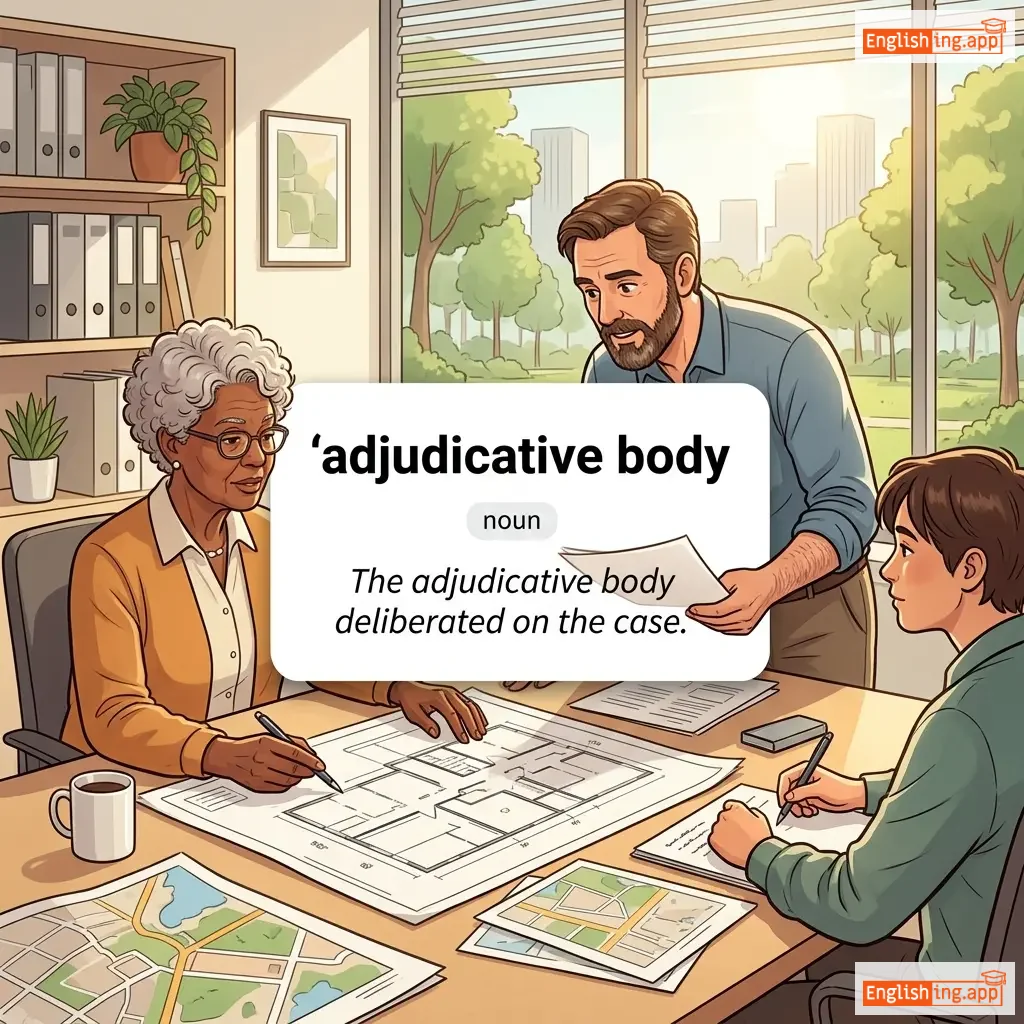
adjudicative body definition card — visual illustration of the meaning
noun
əˈdʒuː.dɪ.kə.tɪv ˈbɒd.i
organe adjudicatif (organe adjudicatif)

An official organization that has the authority to judge disputes and make decisions.

"The adjudicative body deliberated on the case."

"L'organe adjudicatif a délibéré sur le cas." (L'organe adjudicatif a délibéré sur le cas.)
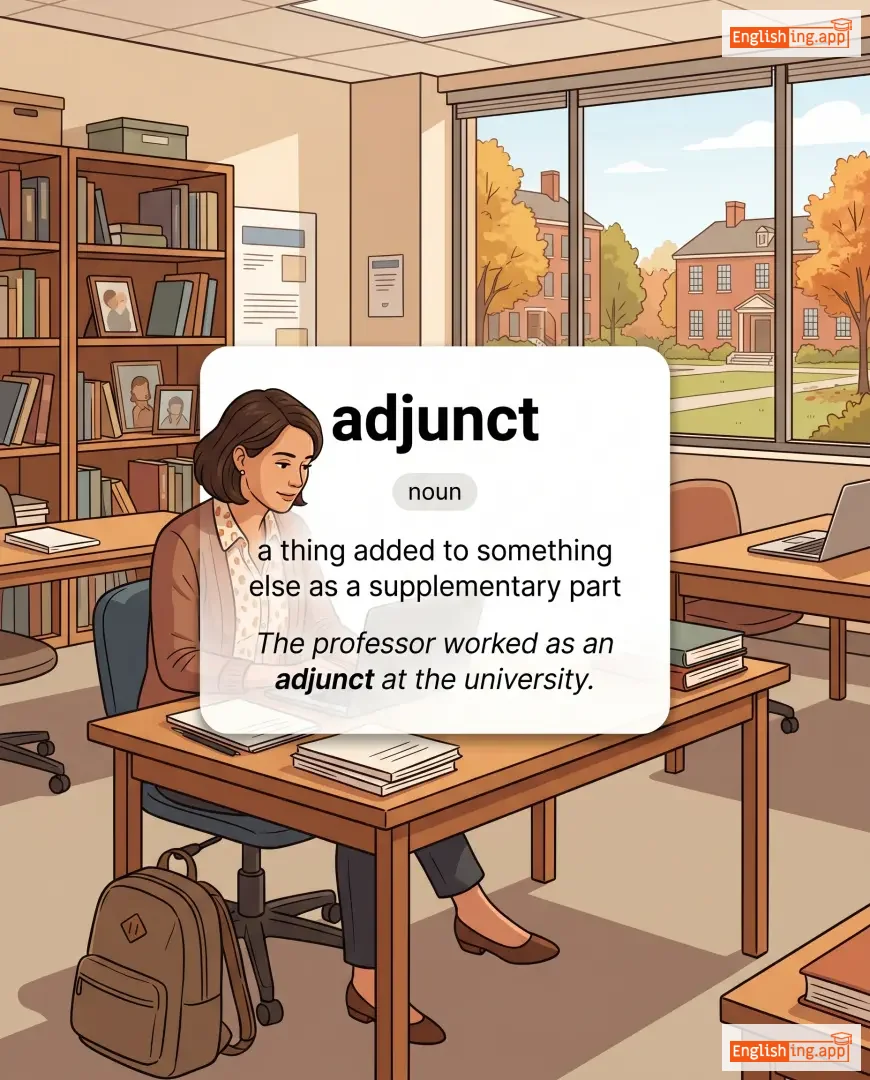
adjunct definition card — visual illustration of the meaning
noun
/ˈædʒʌŋkt/
adjoint (adjoint)

a thing added to something else as a supplementary part

"The professor worked as an adjunct at the university."

"Le professeur travaillait comme adjoint à l'université." (Le professeur travaillait comme adjoint à l'université.)
noun
/ˌædʒʊˈreɪʃən/
supplication solennelle (supplication solennelle)

a solemn urging or appeal

"The priest made an adjuration for peace and unity."

"Le prêtre a fait une supplication solennelle pour la paix et l'unité." (Le pretre a fait une supplication solennelle pour la paix et l'unite.)
verb
/əˈdʒʊər/
adjurer (adjurer)

to urge or command someone solemnly, often under oath or a strong sense of duty

"The witness was adjured to tell the truth in court."

"Le témoin a été adjuré de dire la vérité au tribunal." (Le témoin a été adjuré de dire la vérité au tribunal.)
verb
/əˈdʒʌst/
ajuster (ajuster)

to change something slightly to make it more suitable or effective

"She adjusted the mirror to see the road clearly."

"Elle a ajusté le miroir pour voir la route clairement." (Elle a ajusté le miroir pour voir la route clairement.)
adjective
/əˈdʒʌstəbəl/
ajustable; modifiable; réglable; (ajustable; modifiable; réglable;)

নিয়মযোগ্য; পরিবর্তন-সাধ্য; সমন্বয়যোগ্য;

"This chair has an adjustable height feature."

"Cette chaise a une hauteur ajustable." (Cette chaise a une hauteur ajustable.)
noun
/əˈdʒʌstmənt/
ajustement (ajustement)

a small change made to improve something or make it work better

"The doctor made an adjustment to the patient’s medication."

"Le docteur a fait un ajustement au médicament du patient." (Le docteur a fait un ajustement au médicament du patient.)
noun
/ˈædʒʊtənt/
officier militaire qui agit comme assistant administratif d'un officier supérieur (officier militaire qui agit comme assistant administratif d'un officier supérieur)

a military officer who acts as an administrative assistant to a senior officer

"The colonel relied on his adjutant to manage daily orders."

"Le colonel comptait sur son adjoint pour gérer les ordres quotidiens." (Le colonel comptait sur son adjoint pour gérer les ordres quotidiens.)
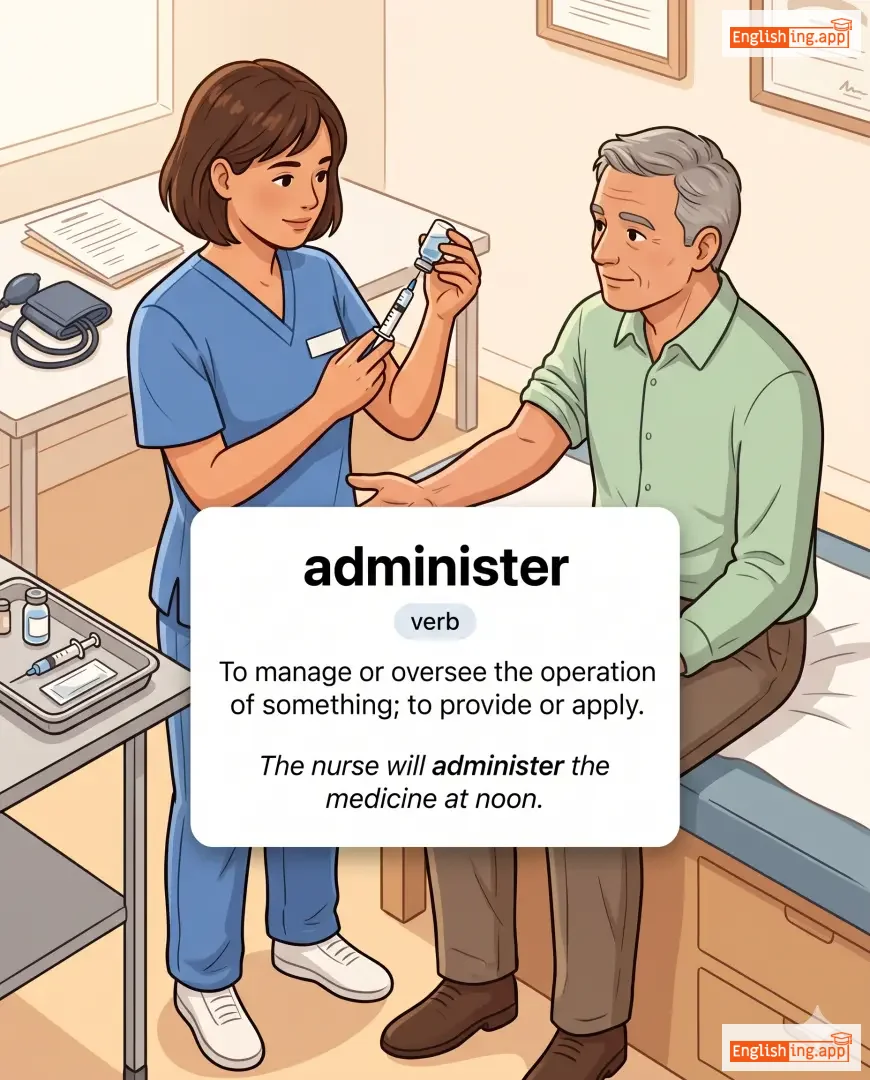
administer definition card — visual illustration of the meaning
verb
/ədˈmɪnɪstər/
administrer / appliquer (administrer / appliquer)

To manage or oversee the operation of something; to provide or apply.

"The nurse will administer the medicine at noon."

"L'infirmière administrera le médicament à midi." (L'infirmière administrera le médicament à midi.)
verb
/ədˈmɪnɪstreɪt/
administrer (administrer)

to manage or supervise the execution of duties, laws, or resources; to formally give or apply something such as a test or medicine

"The committee will administrate the new policy across all departments."

"Le comité administrera la nouvelle politique dans tous les départements." (le comite administrera la nouvelle politique dans tous les departements)
noun
/ədˌmɪnɪˈstreɪʃən/
administration (administration)

The management or organization of a business, institution, or government.

"The new administration introduced several reforms."

"La nouvelle administration a introduit plusieurs réformes." (La nouvelle administration a introduit plusieurs reformes.)
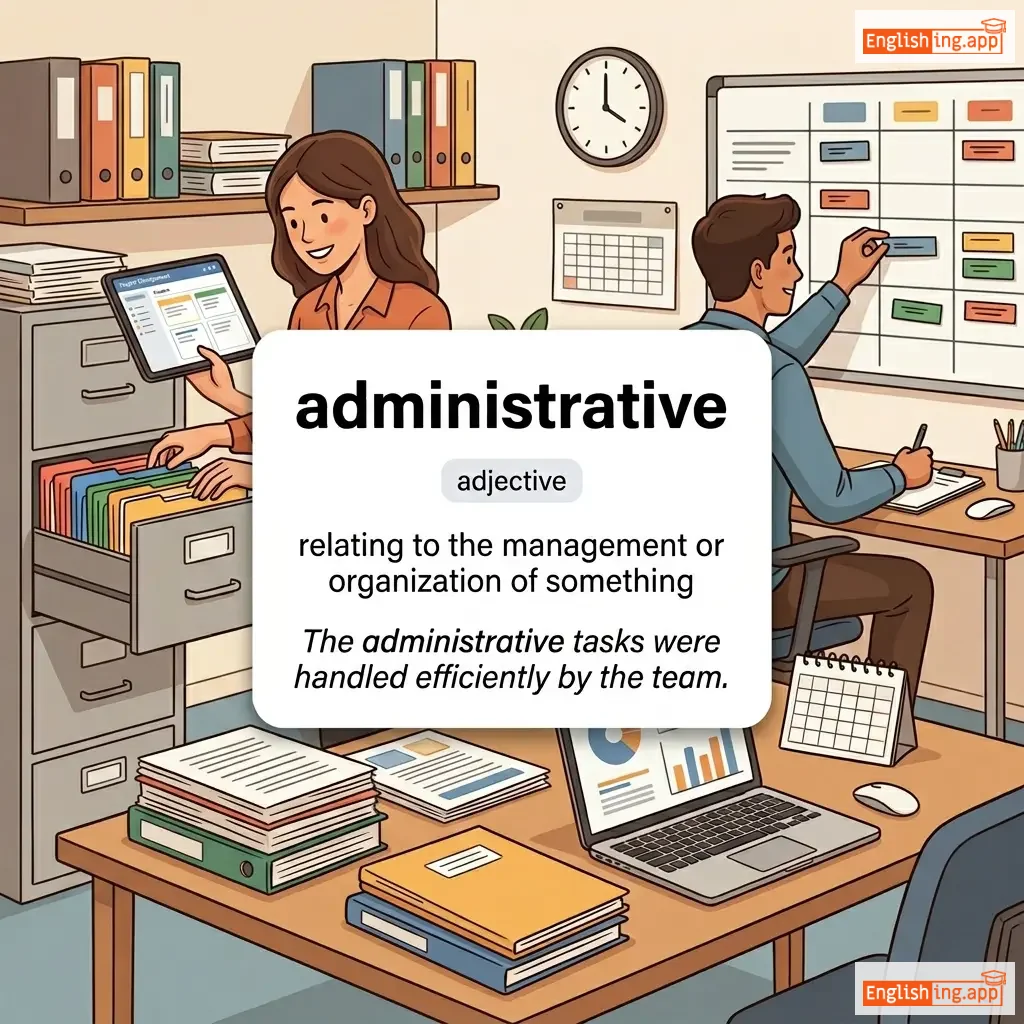
administrative definition card — visual illustration of the meaning
adjective
/ədˈmɪnɪstrətɪv/
administratif (administratif)

relating to the management or organization of something

"The administrative tasks were handled efficiently by the team."

"Les tâches administratives ont été gérées efficacement par l'équipe." (Les taches administratives ont ete gerees efficacement par l'equipe.)
noun
/ədˈmɪnɪstreɪtər/
administrateur (administrator)

a person responsible for running or managing an organization or system

"The school administrator implemented new policies for students."

"L'administrateur de l'école a mis en œuvre de nouvelles politiques pour les élèves." (L administrateur de lecole a mis en oeuvre de nouvelles politiques pour les eleves)
adjective
/ˈædmərəbəl/
admirable (admirable)

প্রশংসনীয়; চমৎকার;

"Her dedication to helping others is truly admirable."

"Son dévouement à aider les autres est vraiment admirable." (Son dévouement à aider les autres est vraiment admirable.)
noun
/ˌædməˈreɪʃən/
admiration (admiration)

a feeling of respect, pleasure, or approval for someone or something

"She felt great admiration for her teacher’s dedication."

"Elle ressentait une grande admiration pour son professeur." (elle ressentait une grande admiration pour son professeur)
verb
/ədˈmaɪər/
admirer (admirer)

To respect, appreciate, or look up to someone or something.

"I really admire her dedication to education."

"J'admire vraiment son engagement envers l'éducation." (J'admire vraiment son engagement envers l'éducation.)
adjective
/ədˈmɪsəbl/
admissible (admissible)

acceptable or valid, especially as evidence in a court of law

"The judge ruled that the document was admissible as evidence."

"Le juge a jugé que le document était admissible comme preuve." (Le juge a juge que le document etait admissible comme preuve.)
noun
/ədˈmɪʃən/
admission (admission)

The process or fact of being allowed to enter a place or join an organization.

"The admission fee to the museum is five dollars."

"Le tarif d'admission au musée est de cinq dollars." (Le tarif d'admission au musée est de cinq dollars.)
admit definition card — visual illustration of the meaning
verb
/ədˈmɪt/
admettre (admettre)

To confess or acknowledge something as true; to allow entry.

"He admitted that he had made a mistake."

"Il a admis qu'il avait fait une erreur." (Il a admis qu'il avait fait une erreur.)
noun
/ədˈmɪtəns/
admission (admission)

the process or fact of entering or being allowed to enter a place

"No admittance without a valid ticket."

"Pas d'admission sans un billet valide." (Pas d'admission sans un billet valide.)
admonish definition card — visual illustration of the meaning
verb
/ədˈmɒnɪʃ/
admonester (admonester)

to warn or reprimand someone firmly; to advise or urge earnestly

"The teacher admonished the students for being late."

"Le professeur a admonesté les étudiants pour être en retard." (Le professeur a admonesté les étudiants pour être en retard.)
noun
/ˌædməˈnɪʃən/
avertissement (avertissement)

a firm warning or reprimand; gentle or earnest advice

"He received an admonition for his careless work."

"Il a reçu un avertissement pour son travail négligent." (Il a recu un avertissement pour son travail negligent.)
adjective
/ədˈmɒnɪtəri/
d'avertissement (d'avertissement)

giving or conveying a warning or reprimand

"She gave him an admonitory glance."

"Elle lui a lancé un regard d'avertissement." (Elle lui a lancé un regard d'avertissement.)
noun
/əˈduː/
agitation / activité inutile (agitation / activite inutile)

a fuss or unnecessary activity; trouble or difficulty

"Without further ado, let’s begin the ceremony."

"Sans plus d'agitation, commençons la cérémonie." (Sans plus d'agitation, commençons la cérémonie.)
noun/adjective
/ˌædəˈlɛsənt/
adolescent (adolescent)

A young person in the process of developing from a child into an adult.

"Adolescents often experience rapid physical and emotional changes."

"Les adolescents vivent souvent des changements physiques et émotionnels rapides." (Les adolescents vivent souvent des changements physiques et émotionnels rapides.)
👨‍👩‍👧

adopt (adopter)

verb
/əˈdɒpt/
adopter (adopter)

To take something as your own, such as a child, idea, or method.

"They decided to adopt a child from the orphanage."

"Ils ont décidé d'adopter un enfant de l'orphelinat." (Ils ont décidé d'adopter un enfant de l'orphelinat.)
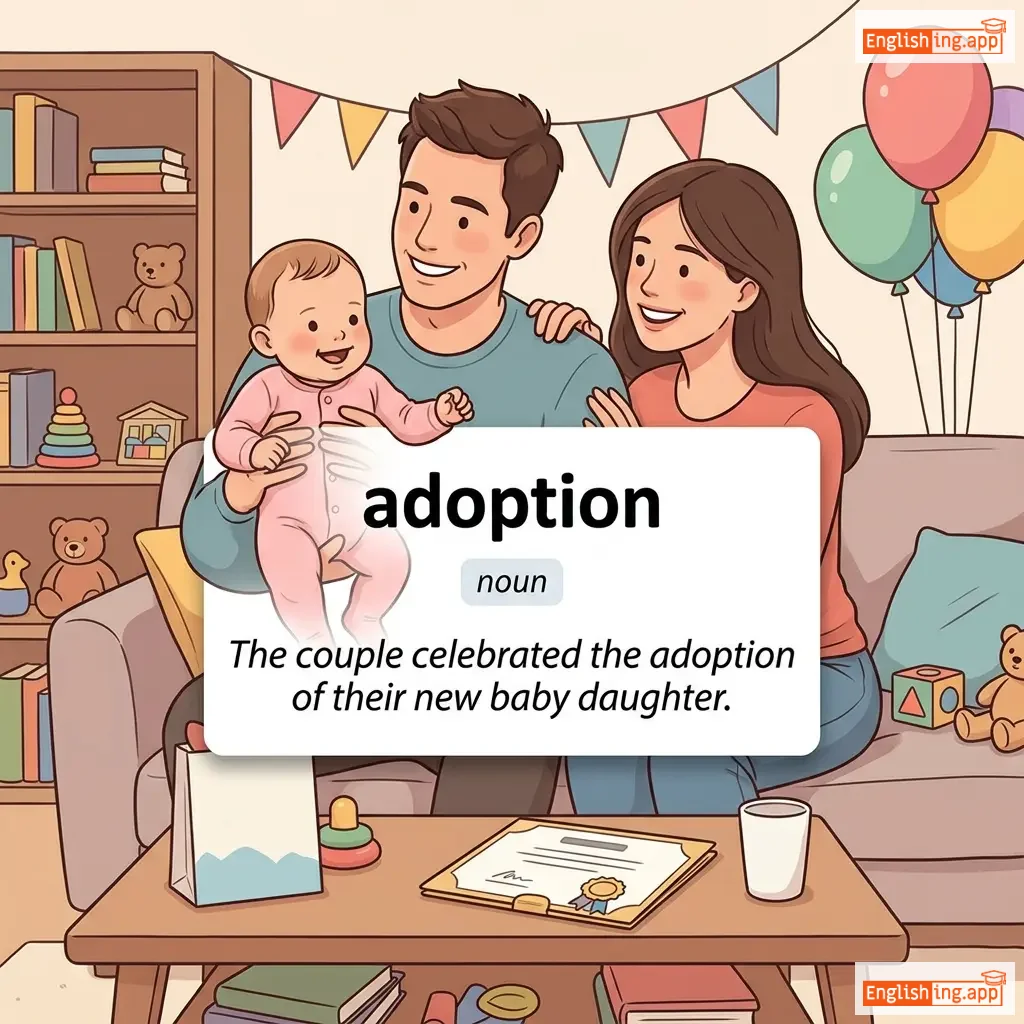
adoption definition card — visual illustration of the meaning
noun
/əˈdɒpʃən/
adoption (adoption)

the action or fact of adopting something

"The adoption of new technology has improved our efficiency."

"L'adoption de nouvelles technologies a amélioré notre efficacité." (L'adoption de nouvelles technologies a amélioré notre efficacité.)
👨‍👩‍👧

adoptive (adoptiv)

adjective
/əˈdɒptɪv/
adoptif (adoptif)

relating to the adoption of a child or the act of taking something as one’s own

"She grew up in a loving adoptive family."

"Elle a grandi dans une famille adoptive aimante." (elle a grandi dans une famille adoptive aimante)