語彙集

英単語辞書 | 単語の意味、定義、例文

noun
/ʌpˈhiːvəl/
激変 (geihen)

a violent or sudden change or disruption to something

"The company faced a major upheaval after the sudden resignation of its CEO."

"その会社は、CEOの突然の辞任後、大きな激変を経験しました。" (Sono kaisha wa, CEO no totsuzen no jinin go, ookina geihen o keiken shimashita.)
adjective
/ʌnˈtaɪərɪŋ/
不屈の; 絶え間ない; 疲れを知らない (fuketsu no; taemai nai; tsukare o shiranai)

continuing without stopping; persistent; tireless

"Her untiring efforts finally led to success."

"彼女の不屈の努力は最終的に成功に繋がった。" (Kanojo no fuketsu no doryoku wa saishūteki ni seikō ni tsunagatta.)
adjective
/ʌnˈtruː/
虚偽 (kyogi)

not true; false or incorrect

"The rumor about the company closing was completely untrue."
"会社閉鎖の噂は完全に虚偽でした。" (Kaisha heisa no uwasa wa kanzen ni kyogi deshita.)
🏠⬆️

Upstairs

adverb
/ˌʌpˈstɛərz/

on or to a higher floor of a building

"She went upstairs to her bedroom."

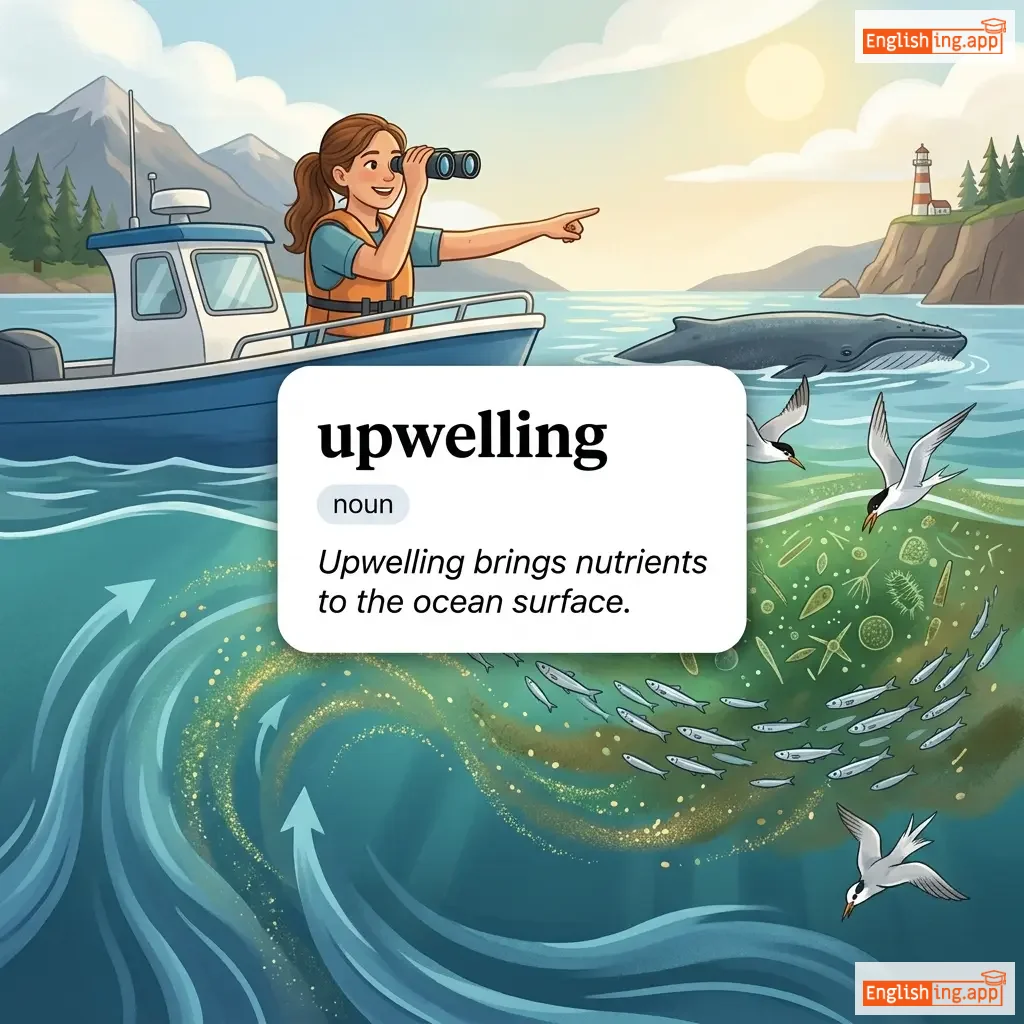
upwelling definition card — visual illustration of the meaning
noun
/ˈʌp.wel.ɪŋ/
湧昇流 (youshouryuu)

An oceanographic phenomenon that involves wind-driven motion of dense, cooler, and nutrient-rich water towards the ocean surface.

"Upwelling brings nutrients to the ocean surface."

"湧昇流は海面へ栄養分を運ぶ。" (youshouryuu wa kaimen e eiyou bun wo hakobu)
adjective
/ʌnˈʃeɪkən/
動揺しない; 固い (dōyō shinai; katai)

not disturbed or affected; firm and steady; unwavering

"Her faith remained unshaken despite all the challenges."

"彼女の信念はすべての困難にも動揺しませんでした。" (Kanojo no shin'nen wa subete no konnan ni mo dōyō shimasen deshita.)
adjective
/ʌnprəˈfɛʃ.ən.əl/
不专业 (fujōzu)

not conforming to the standards expected in a particular profession

"His unprofessional behavior led to his dismissal from the company."

"彼の不専門的な行動は、会社からの解雇を引き起こしました。" (Kare no fujōzu na kōdō wa, kaisha kara no kaiko o hikiokoshimashita.)
verb
/ʌnˈræp/
包みを開ける (tsutsumi o akeru)

remove wrapping or covering from something; reveal something gradually or clearly

"She carefully unwrapped the gift with excitement."
"彼女は興奮しながら慎重に贈り物の包みを開けた。" (Kanojo wa koufun shinagara shinchou ni okurimono no tsutsumi o aketa)
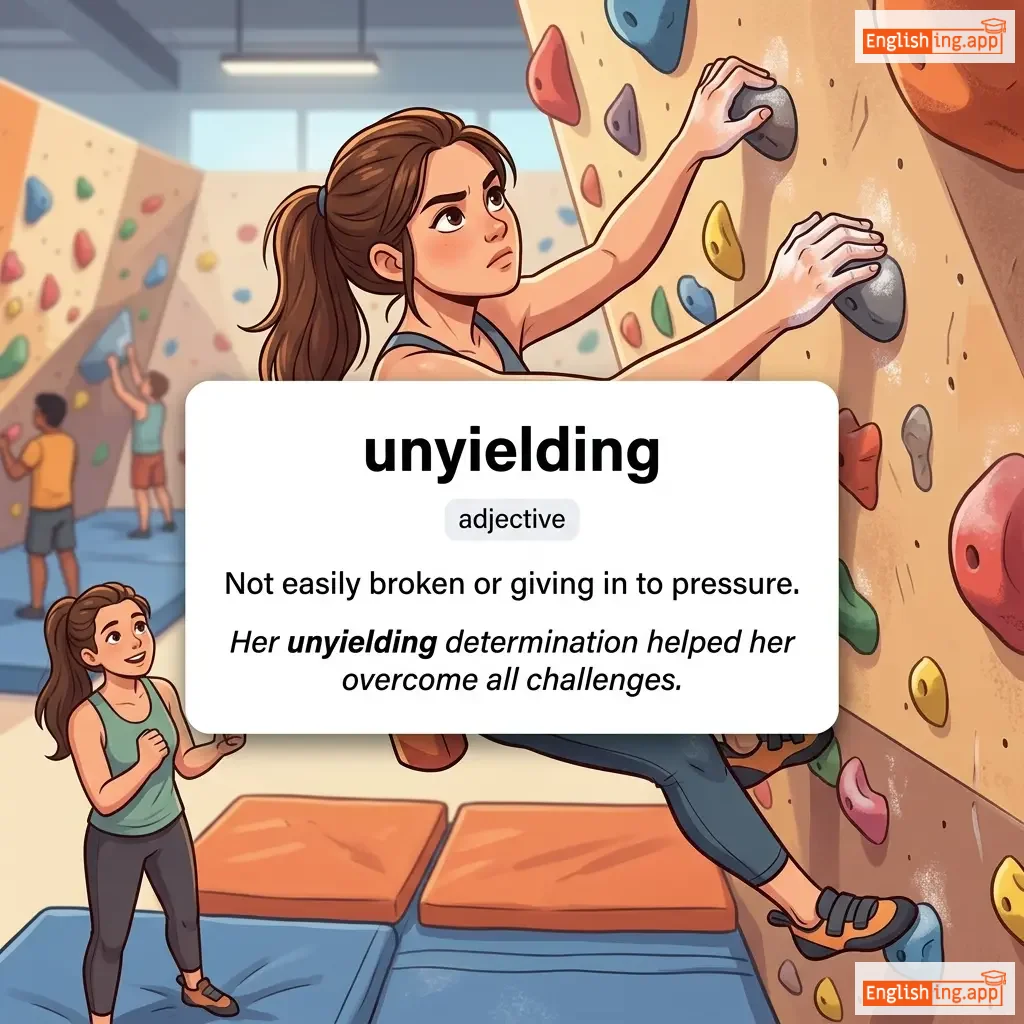
unyielding definition card — visual illustration of the meaning
adjective
ʌnˈjiːl.dɪŋ
揺るぎないまたは堅い (yuruginai matawa katai)

Not easily broken or giving in to pressure.

"Her unyielding determination helped her overcome all challenges."

"彼女の揺るぎない決意が彼女をすべての挑戦を乗り越えさせました。" (Kanojo no yuruginai ketsui ga kanojo o subete no chōsen o norikoesasemashita.)
adverb
/ʌp/
(ue)

towards a higher position or level

"He climbed up the ladder quickly."

"彼はすばやくはしごを上った。" (Kare wa subayaku hasigo o nobotta.)
noun
/ˈʌpˌkiːp/
維持管理 (Iji kanri)

The process or cost of maintaining something in good condition.

"The upkeep of the old house is very expensive."

"古い家の維持管理は非常に高価です。" (Furui ie no iji kanri wa hijō ni kōka desu.)
noun
/ˈʌp.ʃɒt/
結果 (kekka)

The final result or outcome of a process or situation.

"The upshot of the meeting was that the plan was postponed."

"会議の結果は、計画が延期されたことでした。" (Kaigi no kekka wa, keikaku ga enki sareta koto deshita.)
adjective
/ʌnˈθɪŋkəbl/
想像を絶する (souzou o zessuru)

impossible to conceive or imagine; beyond belief or consideration

"It was unthinkable that such a tragedy could happen in our peaceful town."

"私たちの平和な街でそのような悲劇が起こるなんて、想像を絶していました。" (Watashitachi no heiwa na machi de sono youna higeki ga okoru nante, souzou o zesshite imashita.)
adjective
/ʌnˈwaɪz/
賢明でない (kenmei denai)

Showing poor judgment; not sensible or prudent.

"It would be unwise to invest all your money in one company."

"すべてのお金を1つの会社に投資するのは賢明でないことです。" (Subete no okane o hitotsu no kaisha ni tōshi suru no wa kenmei denai koto desu.)
adverb
/ʌnˈjuːʒuəli/
異常に (ijo ni)

in a way that is not typical or expected; to an uncommon degree

"It was unusually cold for this time of year."

"この時期にしては異常に寒かった。" (kono jiki ni shite wa ijo ni samukatta)
adjective
/ʌnˈtɛmpərd/
無調整 (muchiōsei)

not moderated or softened; lacking proper balance or control

"The untempered anger of the crowd caused chaos."
"群衆の無調整な怒りが混乱を引き起こしました。" (Gunshū no muchiōsei na ikari ga konran o hikiokoshimashita.)
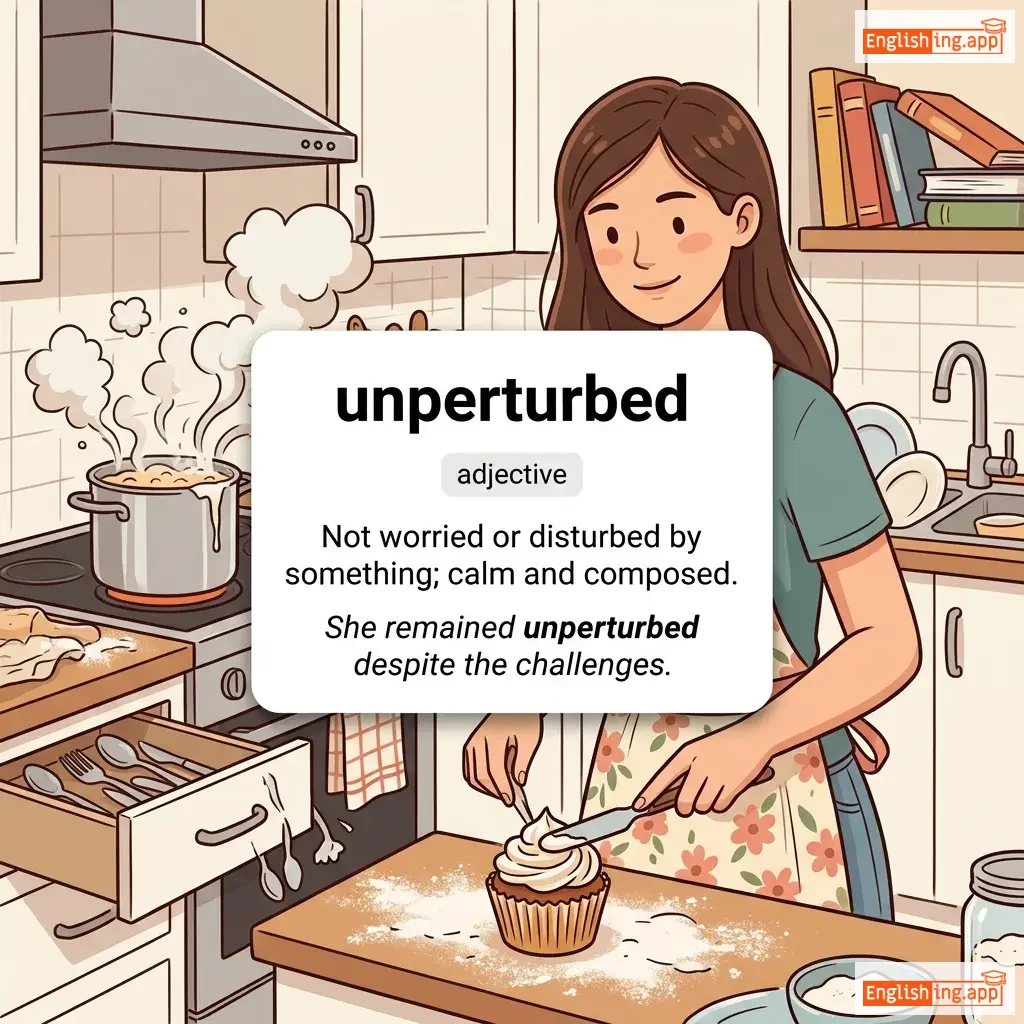
unperturbed definition card — visual illustration of the meaning
adjective
ˌʌn.pəˈtɜːbd
何かに悩まされたり、動揺したりしない; 冷静で落ち着いている (nanika ni nayamasaretari, dōyō shitari shinai; reisei de ochitsuite iru)

Not worried or disturbed by something; calm and composed.

"She remained unperturbed despite the challenges."

"彼女は挑戦にもかかわらず冷静さを保っていた。" (Kanojo wa chōsen ni mo kakawarazu reiseisa o tamotsu.)
adjective
/ʌnˈsʌlid/
汚れのない (yogore no nai)

not spoiled or made impure; perfectly clean or pure

"His reputation remained unsullied despite the accusations."

"彼の評判は告発にもかかわらず汚れのないままでした。" (Kare no hyōban wa kokuhatsu ni mo kakawarazu yogore no nai mamadeshita.)
noun/verb
/ˈʌpˌkæst/
上に投げる (ue ni nageru)

Verb: To cast or throw upward. Noun: Something thrown or directed upward.

"The fisherman upcast his net into the air."

"漁師は彼の網を空中に投げた。" (Ryoushi wa kare no ami o kuuchuu ni nageta.)
preposition/conjunction
/ʌnˈtɪl/
まで (made)

up to the time of

"I will wait until you come back."

"私はあなたが戻るまで待ちます。" (Watashi wa anata ga modoru made machimasu.)
adjective
/ʌnˈsteɪbəl/
不安定 (fu antei)

likely to change; not steady or secure; unsteady

"The unstable economy made people worried about their jobs."

"不安定な経済は、人々を自分たちの仕事について心配させました。" (Fuan tei na keizai wa, hitobito o jibuntachi no shigoto ni tsuite shinpai sasemashita.)
adverb
/ʌnˈwɪlɪŋli/
不本意に (fuhoni ni)

in a way that shows reluctance or lack of desire; not willingly

"She unwillingly agreed to attend the meeting."

"彼女は不本意に会議に出席することに同意した。" (kanojo wa fuhoni ni kaigi ni shusseki suru koto ni doi shita)
adjective
/ʌnˈwɒn.tɪd/
望まれない (nozomarenai)

not desired or welcome; not wanted

"He felt like an unwanted guest at the meeting."

"彼は会議で望まれない客のように感じた。" (kare wa kaigi de nozomarenai kyaku no you ni kanjita)
verb
/ʌnˈveɪl/
発表する (happyo suru)

to reveal or disclose something, especially in a formal manner

"The company will unveil a new product next week."

"会社は来週新製品を発表します。" (Kaisha wa raishū shin seihin o happyō shimasu.)
verb
/ʌnˈjoʊk/
束縛から解放する (sokubaku kara kaihō suru)

To release from a yoke or to free from restraint or obligation.

"The farmer unyoked the oxen after a long day of work."

"農夫は長い労働の後に牛の首輪を外した。" (Nōfu wa nagai rōdō no ato ni ushi no kubiwa o hazushita.)
noun
/ˈʌp.raɪt.nəs/
誠実; 正直 (seijitsu; shoujiki)

the quality of being honest and morally correct; integrity

"His uprightness in business dealings earned him great respect."

"彼のビジネスでの正直さは、彼に大きな尊敬をもたらした。" (Kare no bijinesu de no shoujikisa wa, kare ni ookina sonkei o motarashita.)
adverb
/ˈɜːrdʒəntli/
緊急に (kinkyu ni)

in a way that requires immediate attention or action

"The patient urgently needs medical attention."

"患者は緊急に医療処置が必要です。" (kanja wa kinkyu ni iryo shochi ga hitsuyo desu)
adjective
/ʌnˈtaɪmli/
時期尚早 (jiki shōsō)

Happening or done at an unsuitable or premature time.

"His untimely death shocked the entire community."

"彼の時期尚早な死はコミュニティ全体を驚かせました。" (Kare no jiki shōsō na shi wa komyuniti zentai o odorokasemashita.)
adjective
/ʌnˈwɜːrði/
値しない; 価値がない (ataishinai; kachi ga nai)

not deserving respect or attention; lacking worth or merit

"He felt unworthy of such praise and recognition."
"彼はそのような賞賛と認識を受けるには値しないと感じた。" (Kare wa sono yōna shōsan to ninshiki o ukeru ni wa atai shinai to kanjita.)
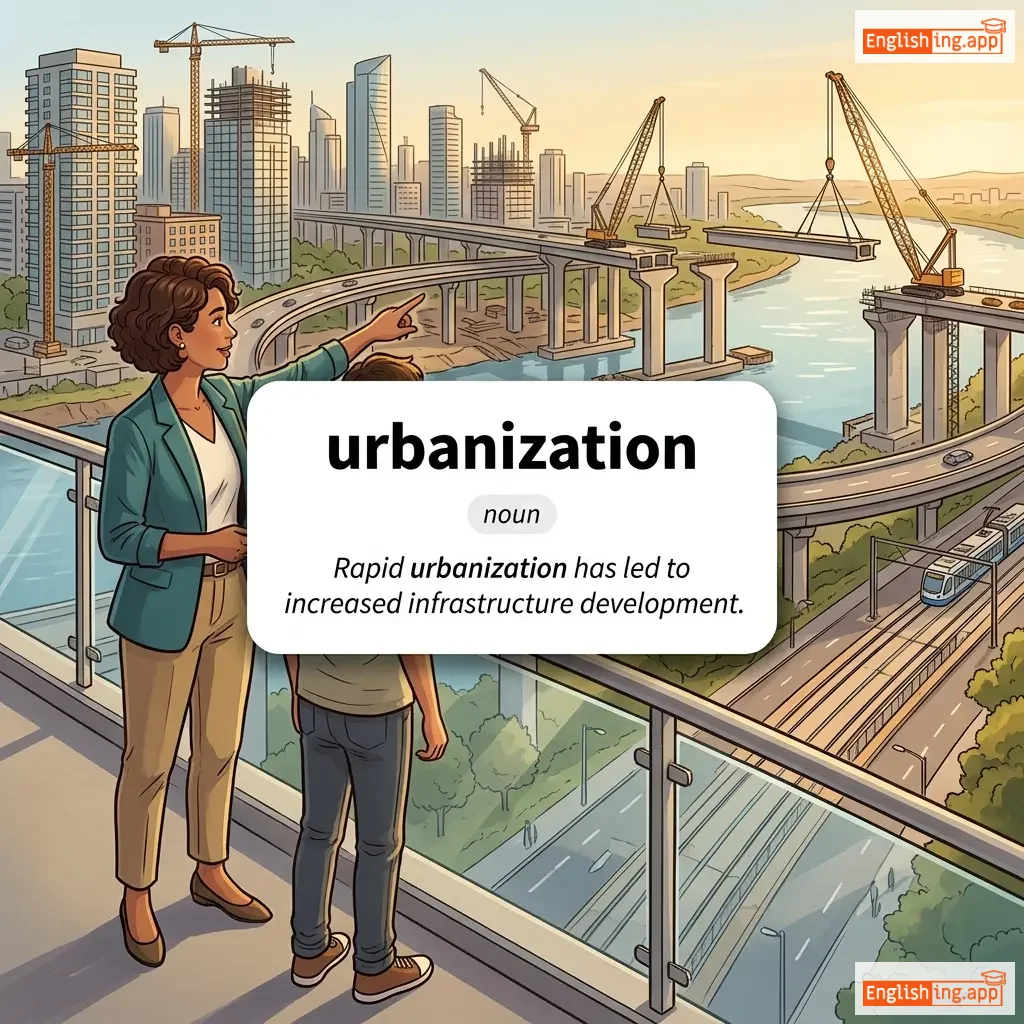
urbanization definition card — visual illustration of the meaning
noun
/ˌɜː.bən.aɪˈzeɪ.ʃən/
都市化 (toshika)

The process by which towns and cities are formed and become larger as more people begin living and working in central areas.

"Rapid urbanization has led to increased infrastructure development."

"急速な都市化は、インフラの発展の増加をもたらしました。" (Kyūsokuna toshika wa, infura no hatten no zōka o motarashimashita.)
adjective
/ˈʌpərˌmoʊst/
最上 (saijou)

situated at the highest place or most important

"Her family's safety was uppermost in her mind during the crisis."

"危機の間、彼女の心の中で最も重要なのは家族の安全でした。" (Kiki no aida, kanojo no kokoro no naka de mottomo juuyou na no wa kazoku no anzen deshita.)
adjective
/ˈviːəmənt/
激しい (hageshī)

showing strong feeling; forceful, passionate, or intense

"She made a vehement argument against the proposal."

"彼女は提案に対して強い反論をしました。" (Kanojo wa teian ni taishite tsuyoi hanron o shimashita.)
adjective
/ʌnˈsəʊʃəbl/
非社交的な (hi shakaiteki na)

not enjoying the company of others; avoiding social interaction

"He became unsociable after moving to a new city."
"新しい街に引っ越してから、彼は非社交的になった。" (atarashii machi ni hikkoshite kara kare wa hi shakaiteki ni natta)
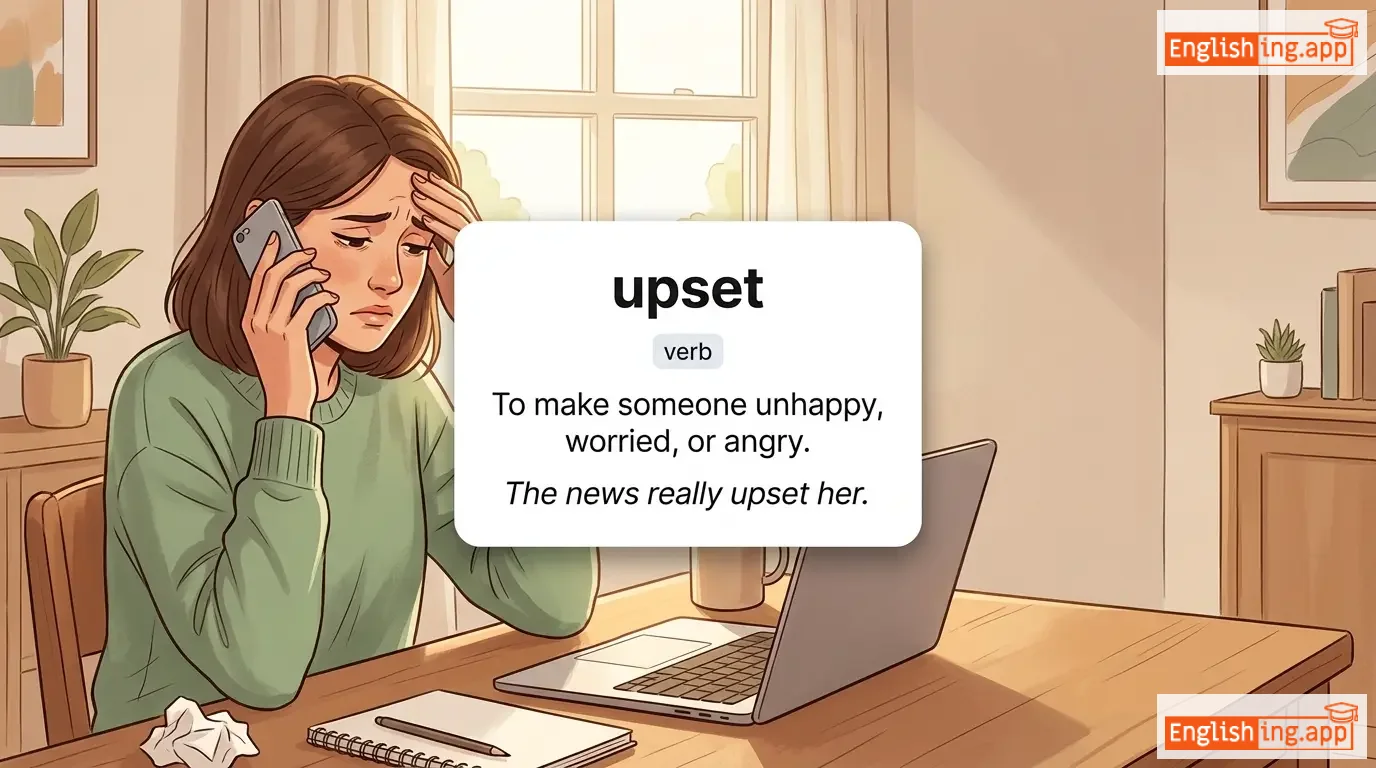
upset definition card — visual illustration of the meaning
verb
/ʌpˈsɛt/
動揺させる (douyou saseru)

To make someone unhappy, worried, or angry.

"The news really upset her."

"そのニュースは彼女を本当に動揺させました。" (Sono nyu-su wa kanojo o hontou ni douyou sasemashita.)
adjective, adverb
/ˈʌpraɪt/
幸福 (kōfuku)

positioned vertically; morally good and honest

"He remained upright despite the strong winds."
"彼女は賞を受け取ったとき、自分の幸福を隠すことができませんでした。" (Kanojo wa shō o uketotta toki, jibun no kōfuku o kakusu koto ga dekimasen deshita.)
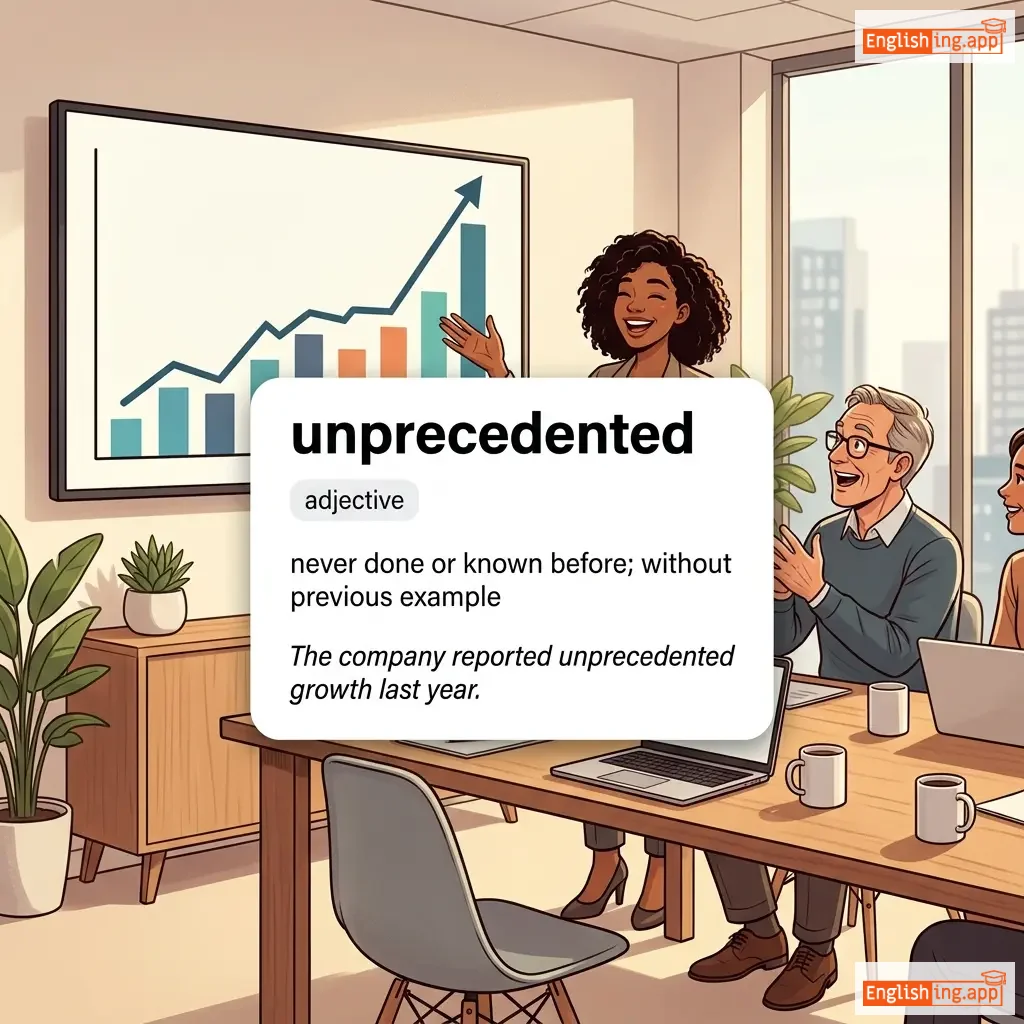
unprecedented definition card — visual illustration of the meaning
adjective
/ʌnˈprɛsɪˌdɛntɪd/
前例のない (zenrei no nai)

never done or known before; without previous example

"The company reported unprecedented growth last year."

"会社は昨年、前例のない成長を報告しました。" (Kaisha wa sakunen, zenrei no nai seichou o houkoku shimashita.)
noun
/ˈjuːs.fəl.nəs/
有用性 (yūyōsei)

the quality of being useful; practical value or helpfulness

"The usefulness of this tool became apparent during the project."

"このツールの有用性はプロジェクト中に明らかになりました。" (Kono tsūru no yūyōsei wa purojekuto chū ni akiraka ni narimashita.)
adjective
/ʌnˈspiːkəbl/
言葉では表現できない (kotoba de wa hyougen dekinai)

too bad or shocking to be expressed in words

"The survivors endured unspeakable horrors during the war."

"生存者は戦争中に言葉では表現できない恐怖に耐えました。" (Seizon-sha wa sensou-chuu ni kotoba de wa hyougen dekinai kyoufu ni taemashita.)
verb
/ʌnˈpæk/
荷解きする (nidoki suru)

to remove items from a container; to explain or analyze something in detail

"After arriving home, she began to unpack her suitcase."

"家に着いた後、彼女はスーツケースの荷解きを始めた。" (ie ni tsuita ato, kanojo wa sutsukeesu no nidoki o hajimeta)
adjective
/ˌʌnəˈfɪʃ.əl/
非公式な (hikoushiki na)

not officially authorized or confirmed; informal

"The unofficial results showed a close race."

"非公式な結果は接戦を示しました。" (hikoushiki na kekka wa sessen o shimeshita.)
noun
/ˈvæk.juːm ˈkliː.nər/
掃除機 (soujiki)

an electrical appliance that uses suction to remove dirt and dust from carpets and floors

"She used the vacuum cleaner to clean the living room carpet."
"彼女はリビングルームのカーペットを掃除機で掃除しました。" (Kanojo wa ribingu rūmu no kāpetto wo soujiki de sōji shimashita.)
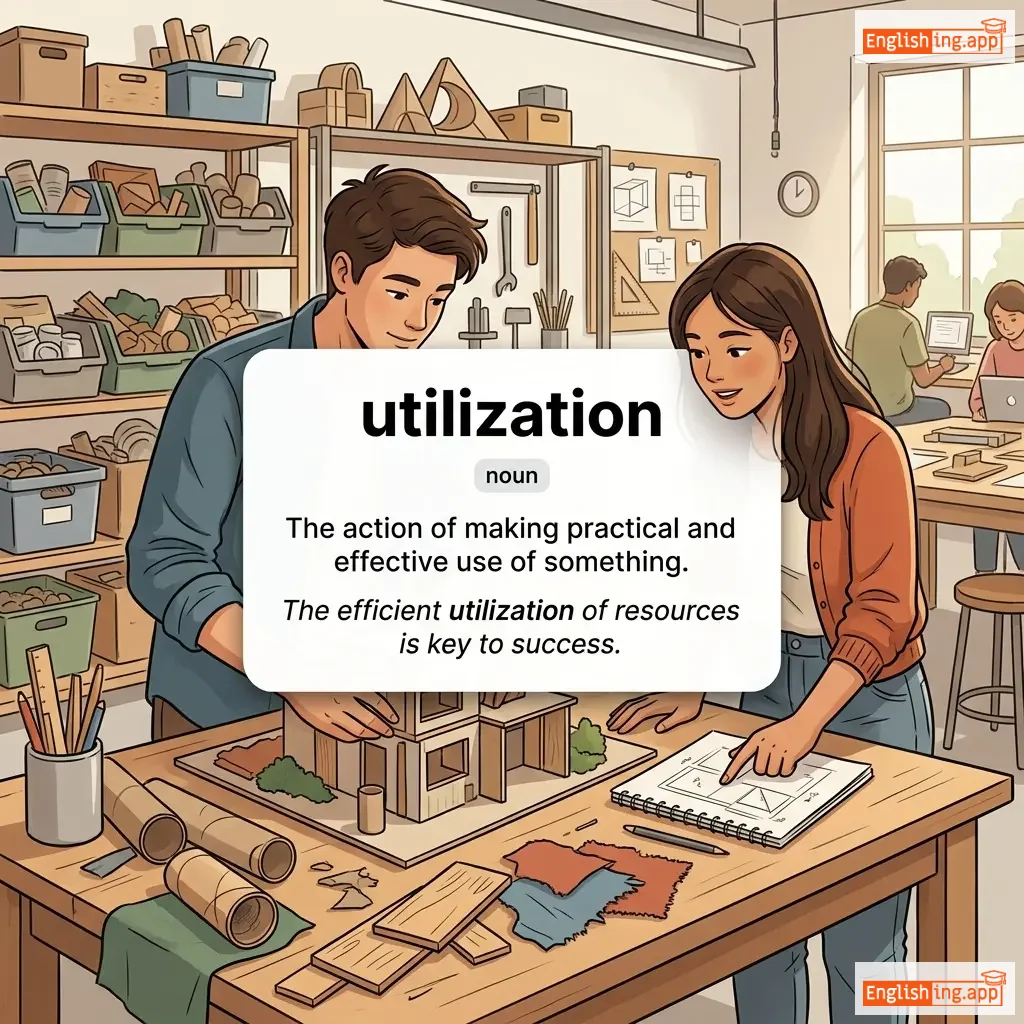
utilization definition card — visual illustration of the meaning
noun
ˌjuːtɪlaɪˈzeɪʃən
利用 (riyō)

The action of making practical and effective use of something.

"The efficient utilization of resources is key to success."

"資源の効果的な利用が成功の鍵です。" (Shigen no kōka-teki na riyō ga seikō no kagi desu.)
usurp definition card — visual illustration of the meaning
verb
/juːˈzɜːrp/
不正に取る (fusei ni toru)

To take someone else's position or power illegally or by force.

"He tried to usurp the throne from the rightful king."

"彼は正当な王から王位を奪おうとした。" (Kare wa seitōna ō kara ōi o ubaō to shita.)
noun
/ˌvælɪˌtjuːdɪˈnɛəriən/
健康気にしすぎな人 (kenkou ki ni shisugi na hito)

A person who is unduly anxious about their health or constantly concerned with minor ailments.

"He was regarded as a valetudinarian, always worrying about his health."

"彼は健康気にしすぎな人として知られていた。" (Kare wa kenkou ki ni shisugi na hito toshite shirarete ita.)
noun
/ˌjuːzɜːrˈpeɪʃən/
横領 (Ōryō)

The act of taking someone's power or property illegally or by force.

"The general's usurpation of the presidency led to political unrest."

"将軍の大統領職の横領は政治的混乱を引き起こした。" (Shōgun no daitōryō-shoku no ōryō wa seijiteki konran o hikiokoshita.)
noun
/ˈvæk.siːn/
ワクチン (wakuchin)

a substance used to stimulate the body's immune response against diseases

"Children are given the polio vaccine to prevent infection."

"子供たちは感染を予防するためにポリオワクチンを接種します。" (Kodomotachi wa kansen o yobō suru tame ni porio wakuchin o sesshu shimasu.)
adjective
/ˈʌtmoʊst/
幸福 (kōfuku)

Greatest or highest in degree, importance, or extent.

"She showed the utmost respect to her teachers."

"彼女は賞を受け取ったとき、幸福を隠すことができませんでした。" (Kanojo wa shō o uketotta toki, kōfuku o kakusu koto ga dekimasen deshita.)
adjective
/ˈjuːʒəl/
通常 (tsūjō)

habitually or typically occurring or done

"It’s our usual meeting spot."

"これは私たちの通常の会議場所です。" (Kore wa watashitachi no tsūjō no kaigi basho desu.)
noun
/ˌvælədɪkˈtɔːriən/
最優秀学生 (sai yūshū gakusei)

The student with the highest academic achievements in a graduating class, often chosen to give the farewell speech.

"She was honored as the valedictorian of her class."
"彼女はクラスの最優秀学生として表彰されました。" (Kanojo wa kurasu no sai yūshū gakusei to shite hyōshō saremashita.)
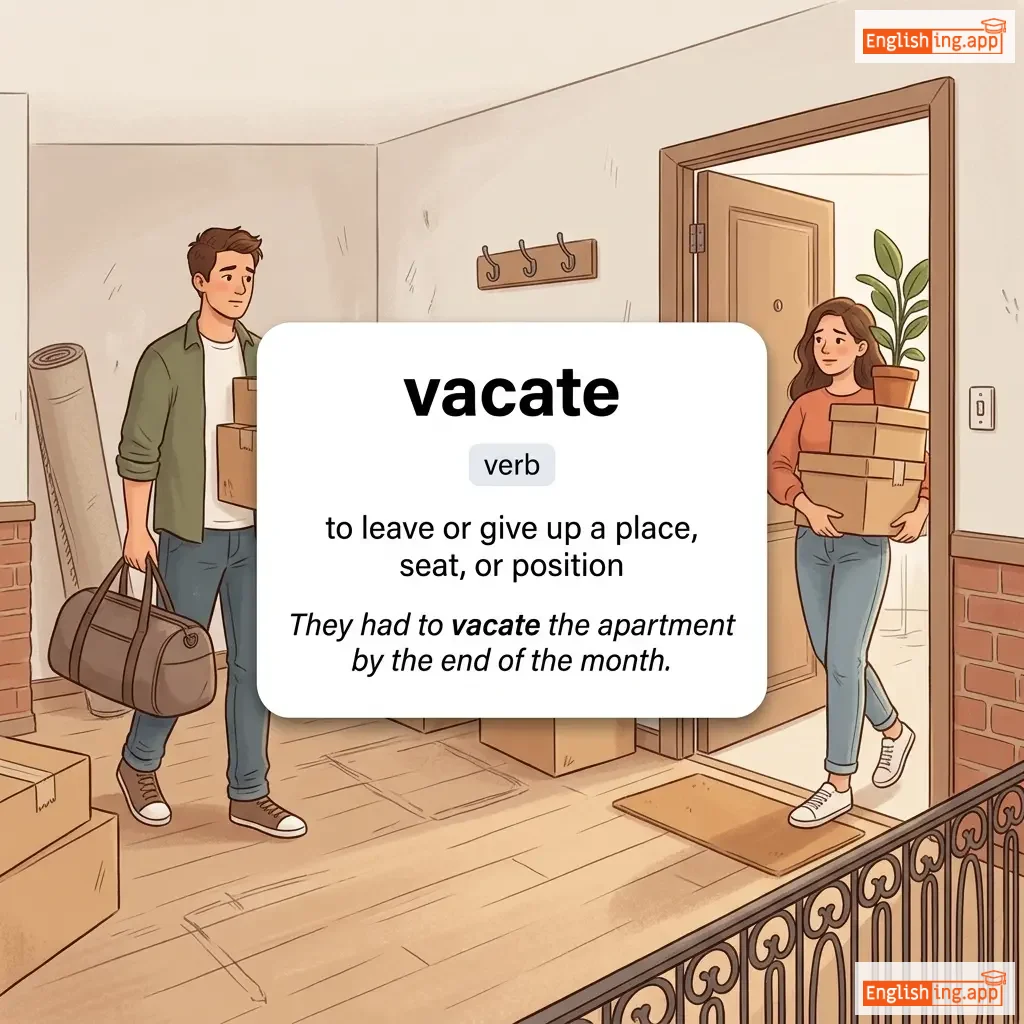
vacate definition card — visual illustration of the meaning
verb
/vəˈkeɪt/
退去する (taikyo suru)

to leave or give up a place, seat, or position

"They had to vacate the apartment by the end of the month."

"彼らは月末までにアパートを退去しなければなりませんでした。" (Karera wa getsumatsu made ni apāto o taikyo shinakereba narimasen deshita.)