語彙集

英単語辞書 | 単語の意味、定義、例文

verb
/ˌʌndərˈsteɪt/
過小評価する (かしょうひょうかする)

To describe something as being less important or serious than it really is.

"He tends to understate his achievements."
"彼は自分の業績を過小評価する傾向があります。" (かれはじぶんのぎょうせきをかしょうひょうかするけいこうがあります。)
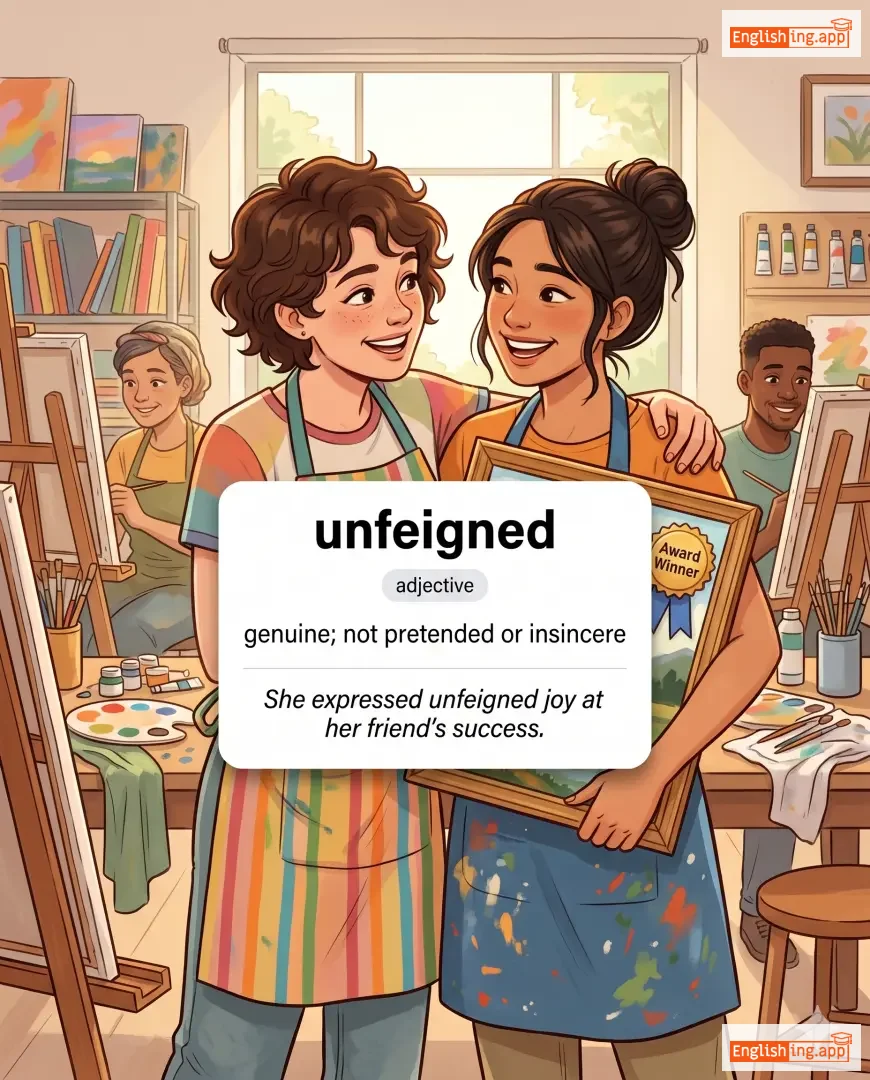
unfeigned definition card — visual illustration of the meaning
adjective
/ʌnˈfeɪnd/
本物 (honmono)

genuine; not pretended or insincere

"She expressed unfeigned joy at her friend's success."

"彼女は友達の成功に対して本物の喜びを表現しました。" (Kanojo wa tomodachi no seikou ni taishite honmono no yorokobi o hyougen shimashita.)
noun
/ˌʌnɪmˈplɔɪmənt/
失業 (shitsugyou)

the state of not having a paid job despite being able and willing to work

"High unemployment is a major issue in the country."

"高い失業率は、国の大きな問題です。" (Takai shitsugyou ritsu wa, kuni no ookina mondai desu.)
verb
/ʌnˈfəʊld/
広げるまたは開く (hirogeru matawa hiraku)

to open or spread out something that was folded; to gradually reveal or develop

"She unfolded the letter carefully."

"彼女は手紙を慎重に広げました。" (Kanojo wa tegami o shinchou ni hirogemashita.)
noun
/ˈʌndərˌwɜːrld/
アンダーワールド (andāwārudo)

The criminal world of organized crime or the mythical world of the dead.

"The detective spent years studying the secrets of the underworld."

"探偵はアンダーワールドの秘密を何年も研究していました。" (Tantei wa andāwārudo no himitsu o nannen mo kenkyū shite imashita.)
adjective
/ˈvɪnsəbl/
打ち負かされる可能性がある (uchimakasareru kanousei ga aru)

capable of being overcome or defeated

"The enemy seemed vincible after losing their main base."

"敵は主要基地を失った後、打ち負かされる可能性があった。" (Teki wa shuyou kichi o ushinatta ato, uchimakasareru kanousei ga atta.)
adjective
/ʌnˈlɪmɪtɪd/
無制限 (museigen)

without any limits or restrictions

"The internet plan offers unlimited data for the whole month."

"インターネットプランは1ヶ月間の無制限データを提供します。" (Intānetto puran wa ikkagetsukan no museigen dēta o teikyō shimasu.)
adjective
/ʌnˈnoʊn/
不明 (fumei)

not known or familiar

"The origin of the disease remains unknown."

"その病気の起源は未だに不明です。" (Sono byouki no kigen wa imada ni fumei desu.)
adjective
/ʌnˈfɔːrtʃənət/
不運 (fuun)

Having or marked by bad luck; unlucky.

"It was unfortunate that the meeting was canceled at the last minute."

"会議が最後の瞬間にキャンセルされたのは不運でした。" (Kaigi ga saigo no shunkan ni kyanseru sareta no wa fuan deshita.)
adjective
/ˌʌnɪnˈfɔːrmd/
情報に疎い (joho ni utoi)

lacking knowledge or awareness about a particular subject; not educated or informed

"The decision was made by an uninformed committee."

"その決定は情報に疎い委員会によって下された。" (sono kettei wa joho ni utoi iinkai ni yotte kudasareta)
noun
/ˈvaɪənd/
珍味 (chinmi)

an item of food, especially a delicacy

"The banquet was filled with rich viands and wines."
"晩餐会は豪華な珍味とワインで満たされていた。" (Bansankai wa gōkana chinmi to wain de mitasarete ita.)
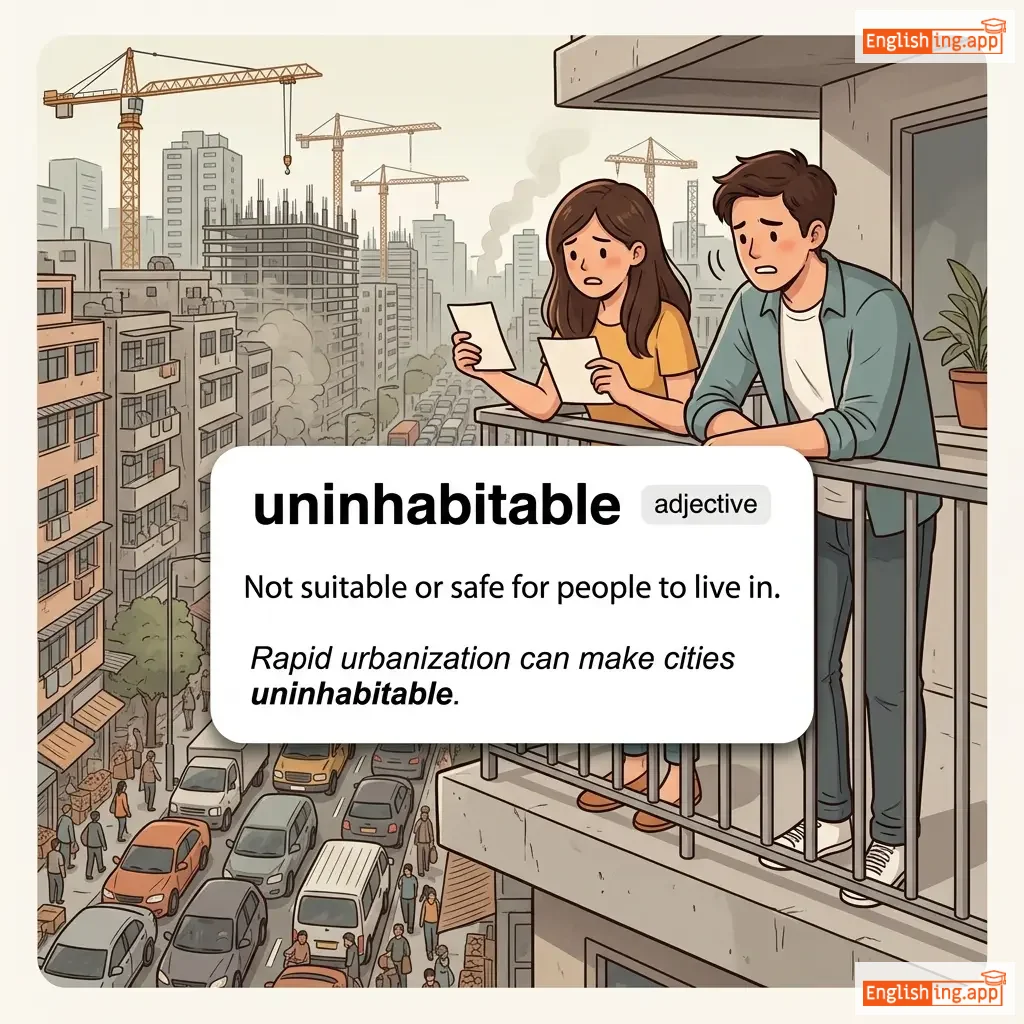
uninhabitable definition card — visual illustration of the meaning
adjective
ʌnɪnˈhæbɪtəbəl
住めない (sumenai)

Not suitable or safe for people to live in.

"Rapid urbanization can make cities uninhabitable."

"急速な都市化は都市を住めない場所にする可能性があります。" (Kyūsokuna toshika wa toshi o sumenai basho ni suru kanōsei ga arimasu.)
adjective
/ˌjuːnɪˈvɜːsəl/
普遍的 (fuhenteki)

Relating to or done by all people or things in the world; applicable everywhere or in all cases.

"There is a universal need for love and acceptance."

"愛と受容には普遍的な必要があります。" (Ai to juyō ni wa fuhenteki na hitsuyō ga arimasu.)
noun
/ˈjuːnɪsən/
ユニゾン (unizon)

Simultaneous performance or utterance of action or speech.

"The choir sang in unison."

"合唱団はユニゾンで歌いました。" (Kasshōdan wa unizon de utaimashita.)
adjective
/ˌʌnɪˈkwɪvəkəl/
明確 (meikaku)

Leaving no doubt; clear and unambiguous

"She gave an unequivocal answer to the question."

"彼女は質問に対して明確な答えを出しました。" (Kanojo wa shitsumon ni taishite meikaku na kotae o dashimashita.)
adjective
/ʌnˈfɔːltərɪŋ/
不屈不挠 (fuketsu funou)

Steady and resolute; not weakening or hesitating

"She continued with unfaltering determination."

"彼女は不屈不挠の決意で続けた。" (Kanojo wa fuketsu funou no ketsui de tsuzuketa.)
adjective
/ʌnˈendɪŋ/
終わりのない (owari no nai)

continuing forever; without end

"The unending rain made the day feel gloomy."

"終わりのない雨が一日を憂鬱にした。" (owari no nai ame ga ichinichi o yuuutsu ni shita)
verb
/ˌʌndərˈvæljuː/
過小評価する (kasho hyouka suru)

To assign too low a value or importance to something or someone.

"She felt that her boss consistently undervalued her contributions."

"彼女は自分の上司が彼女の貢献を一貫して過小評価していると感じていた。" (Kanojo wa jibun no joushi ga kanojo no kouken wo ikkan shite kasho hyouka shite iru to kanjite ita.)
virtual classrooms definition card — visual illustration of the meaning
noun
ˈvɜː.tʃu.əl ˈklɑːs.ruːmz
バーチャル教室 (bācharu kyōshitsu)

An online learning environment where teachers and students interact via digital platforms.

"Virtual classrooms enable remote learning for students worldwide."

"バーチャル教室は、世界中の生徒にリモート学習の機会を提供します。" (Bācharu kyōshitsu wa, sekaijū no seito ni rimōto gakushū no kikai o teikyō shimasu.)
conjunction
/ʌnˈlɛs/
もし~でない限り (moshi ~ denai kagiri)

except if

"We won't go unless it stops raining."
"雨が止まない限り、私たちは行きません。" (Ame ga yamanai kagiri, watashitachi wa ikimasen.)
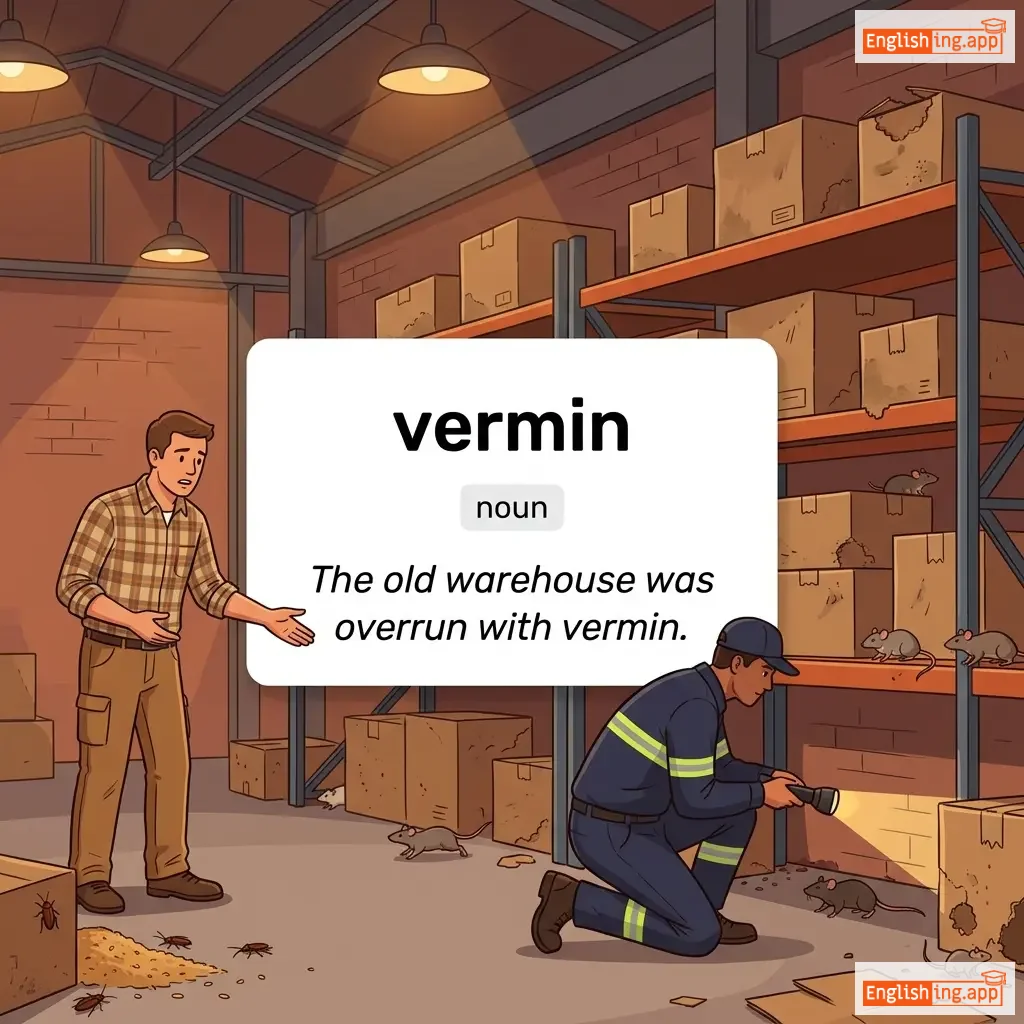
vermin definition card — visual illustration of the meaning
noun
/ˈvɜːrmɪn/
有害動物 (yūgai dōbutsu)

small animals or insects that are harmful or destructive, such as rats, lice, or fleas

"The old warehouse was overrun with vermin."

"古い倉庫は有害動物であふれていました。" (Furui sōko wa yūgai dōbutsu de afurete imashita.)
noun
/ˈvaɪəl/
古代の弦楽器の一種 (kodai no gengakki no isshu)

A stringed musical instrument of the Renaissance and Baroque periods, played with a bow and similar to but distinct from the violin family.

"The musician played an old viol in the chamber music concert."

"ミュージシャンは室内楽のコンサートで古いヴィオールを演奏しました。" (Myūjishan wa shitsunai gaku no konsāto de furui viōru o ensō shimashita.)
noun
/ˈjuːnɪən/
組合 (kumiai)

the action or fact of joining or being joined with others, especially to form a single unit

"The union of the two companies created a global leader."

"二つの会社の統合により、グローバルリーダーが誕生しました。" (Futatsu no kaisha no tōgō ni yori, gurōbaru rīdā ga tanjō shimashita.)
adverb
/ˈvaɪtəli/
極めて重要に (kiwamete juuyo ni)

in an extremely important or essential way; in a manner relating to life or vitality

"Access to clean water is vitally important for public health."

"清潔な水へのアクセスは公衆衛生にとって極めて重要です。" (Seiketsu na mizu e no akusesu wa koshu eisei ni totte kiwamete juuyo desu)
adjective
/ʌnˈlɔːfəl/
違法 (ihou)

Not conforming to or permitted by law; illegal.

"The police arrested him for unlawful possession of weapons."

"警察は違法な武器所持で彼を逮捕しました。" (Keisatsu wa ihō na buki shoji de kare o taiho shimashita.)
adjective
/juˈnaɪtɪd/
団結した (danketsu shita)

joined together or combined as one

"The united team won the championship."

"団結したチームがチャンピオンシップを勝ち取った。" (Danketsu shita chīmu ga chanpionshipu o kachitotta.)
noun
/ˌjuːnɪˈtɛəriən/
ユニタリアン (Unitarian)

A person who believes that God exists as one entity rather than as a Trinity; a member of a religious denomination that emphasizes individual freedom of belief.

"The Unitarian church is known for its inclusive and open-minded approach."

"ユニタリアン教会は、その包括的で開かれた考え方で知られています。" (Yunitarian kyōkai wa, sono hōkatsu-teki de hirakareta kangaekata de shirareteimasu.)
adjective
/ʌnˈflæpəbəl/
冷静沈着 (reisei chinchou)

calm and composed, especially in difficult situations

"Despite the crisis, he remained unflappable and confident."

"危機にもかかわらず、彼は冷静沈着で自信に満ちていた。" (Kiki ni mo kakawarazu, kare wa reisei chinchou de jishin ni michite ita.)
adjective
/ʌnˈdʒʌst/
不当な; 不正な (futōna; fuseina)

not fair or right; morally wrong

"The punishment was unjust for such a minor offense."

"その罰は軽微な違反に対して不当でした。" (Sono bachi wa keibi na ihan ni taishite futō deshita.)
vision definition card — visual illustration of the meaning
noun
/ˈvɪʒən/
幸せ (shiawase)

the ability to see or a mental image of something

"She had a clear vision of her future."
"彼女は賞を受け取ったとき、自分の幸せを隠すことができませんでした。" (Kanojo wa shou o uketotta toki, jibun no shiawase o kakusu koto ga dekimasen deshita.)
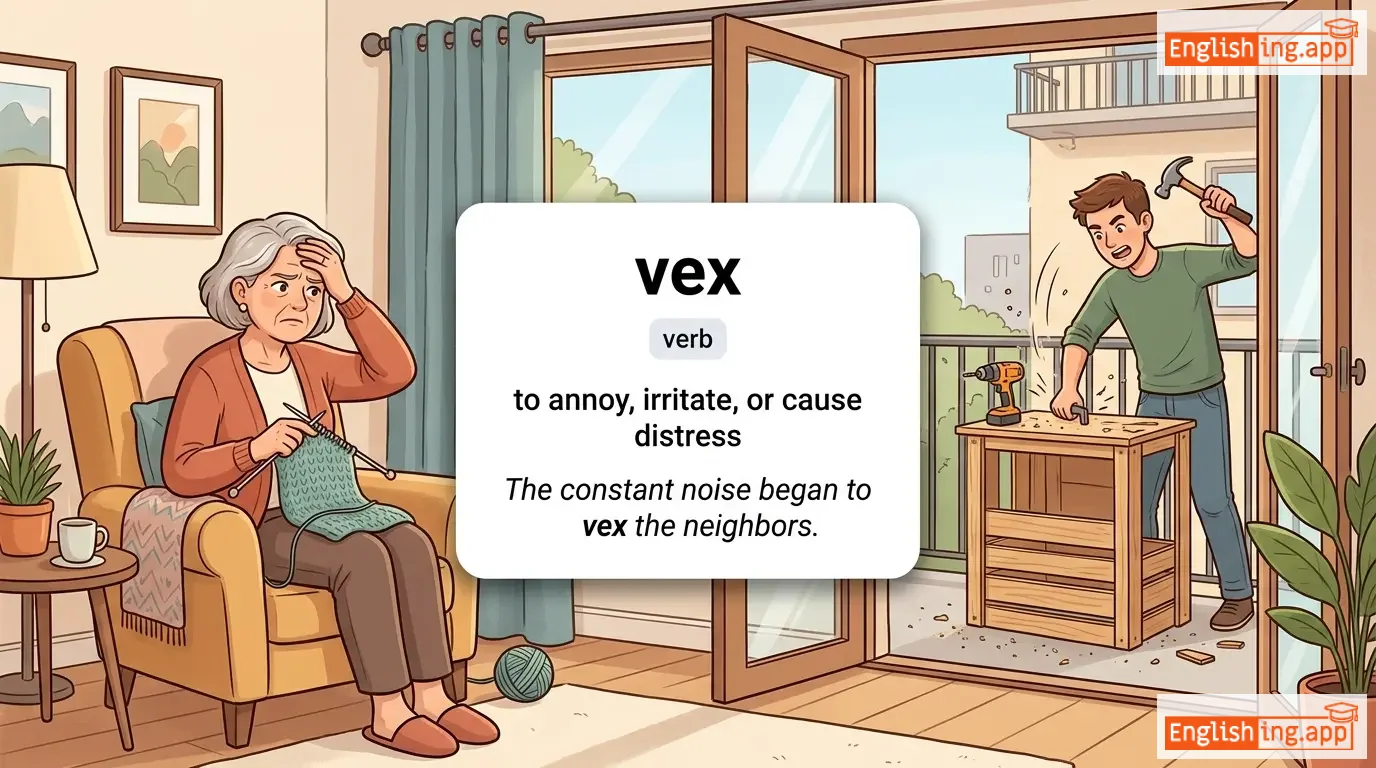
vex definition card — visual illustration of the meaning
verb
/vɛks/
悩ませる (nayamaseru)

to annoy, irritate, or cause distress

"The constant noise began to vex the neighbors."

"絶え間ない騒音が隣人を悩ませ始めた。" (Taemai na souon ga rinjin wo nayamasete hajimeta.)
adverb
/ˈvɜː.tʃu.ə.li/
ほとんど, バーチャル (hotondo, bācharu)

almost or nearly, but not completely; by means of computer technology

"The meeting was held virtually due to travel restrictions."

"旅行制限のため、会議はバーチャルで行われました。" (Ryokō seigen no tame, kaigi wa bācharu de okonawaremashita.)
verb
/ˈvɪtrɪfaɪ/
ガラスに変える (garasu ni kaeru)

to turn into glass or a glass-like substance by heat

"Sand can vitrify under intense heat."

"砂は強い熱でガラスに変わることがあります。" (Suna wa tsuyoi netsu de garasu ni kawaru koto ga arimasu.)
noun
/ˌjuːnɪˈfɔːrmɪti/
均一性 (kin'itsusei)

The quality or state of being the same, consistent, or without variation.

"The teacher insisted on uniformity in the students' dress code."

"教師は生徒の服装の均一性を主張しました。" (Kyoushi wa seito no fukusou no kin'itsusei o shuchou shimashita.)
verb
/ˈvɪʒuəlaɪz/
視覚化する (shikakuka suru)

To form a mental image of something; to imagine.

"She tried to visualize her success before the big presentation."

"彼女は大きなプレゼンテーションの前に自分の成功をビジュアライズしようとした。" (Kanojo wa ōkina purezentēshon no mae ni jibun no seikō o bijuaraisu shiyou to shita.)
adjective
/ˈvɪsɪd/
粘着性のある (nenchakusei no aru)

Having a thick, sticky consistency.

"The sap had a viscid texture that stuck to his hands."

"樹液はべたべたした質感で、彼の手にくっついていた。" (Jueki wa betabeta shita shitsukan de, kare no te ni kuttsuite ita.)
noun
/ˈjuːnɪvɜːrs/
宇宙 (uchuu)

the totality of known or supposed objects and phenomena throughout space; the cosmos

"The universe is vast and full of mysteries."

"宇宙は広大で謎に満ちています。" (Uchuu wa koudai de nazo ni michiteimasu.)
adjective
/ˌʌnˈɪntrəstɪŋ/
つまらない (tsumaranai)

not holding attention or curiosity; boring

"The lecture was uninteresting and difficult to stay focused on."

"その講義はつまらなく、集中するのが難しかった。" (Sono kougi wa tsumaranaku, shuuchuu suru no ga muzukashikatta)
preposition/adjective
/ʌnˈlaɪk/
異なる (kotonaru)

differing from or not similar to

"Unlike his brother, he enjoys playing soccer."

"彼の兄とは異なり、彼はサッカーを楽しんでいます。" (Kare no ani to wa kotonaru, kare wa sakkā o tanoshindeimasu.)
adjective
/ʌnˈkaɪnd/
無愛想; 不親切 (buaisou; fushinsetsu)

cruel; not nice or caring toward others

"It was unkind of him to make fun of her appearance."

"彼が彼女の外見をからかうのは不親切だった。" (Kare ga kanojo no gaiken o karakau no wa fushinsetsu datta.)
noun
/ˈvɜːrtɛks/
頂点 (chouten)

The highest point; the top or the apex.

"The climber reached the vertex of the mountain."

"登山者は山の頂点に達しました。" (Tōzan-sha wa yama no chōten ni tasshimashita.)
adjective
/ˌʌnɪmˈpɔːrtənt/
重要でない (juuyou de nai)

not having much value, significance, or influence

"The detail seemed unimportant compared to the main issue."

"その詳細は主要な問題と比べて重要でないように思えた。" (sono shousai wa shuyou na mondai to kurabete juuyou de nai you ni omoeta)
noun
/ˈvɪstə/
景色 (keshiki)

A pleasing view, especially one seen through a long, narrow opening.

"From the mountain top, we admired the breathtaking vista of the valley below."

"山の頂上から、私たちは谷底の息を呑むような景色を堪能しました。" (Yama no chōjō kara, watashitachi wa tani soko no iki o nomu yō na keshiki o tannō shimashita.)
adjective
/ˌvɪtriˈɑːlɪk/
痛烈な批判 (tsūretsu na hihan)

filled with bitter criticism or malice

"His vitriolic remarks hurt everyone in the room."

"彼の痛烈なコメントは部屋の中の皆を傷つけました。" (Kare no tsūretsu na komento wa heya no naka no mina o kizutsukemashita.)
noun
/vɪˈsɪn.ə.ti/
近隣; 周辺 (vicinity)

the area near or surrounding a particular place; neighborhood

"There are many shops in the vicinity of the school."

"学校の近くにたくさんの店があります。" (gakkou no chikaku ni takusan no mise ga arimasu.)
noun
/ˈʌndərˌteɪkɪŋ/
事業 (jigyō)

A task, project, or responsibility that someone agrees to do.

"Starting a new company is a difficult undertaking."

"新しい会社を立ち上げるのは難しい事業です。" (Atarashī kaisha o tachiageru no wa muzukashī jigyō desu.)
adjective
/ˈvɪrəl/
男性的 (danseiteki)

having traditionally masculine qualities, such as strength, energy, and sexual vigor

"The actor was admired for his virile appearance."

"俳優はその男性的な外見で賞賛されました。" (Haiyū wa sono danseiteki na gaiken de shōsan saremashita.)
adjective
/ʌnˈɡeɪnli/
不器用 (bukiyou)

Awkward, clumsy, or lacking grace in movement or appearance.

"The tall boy moved in an ungainly manner."

"背の高い男の子は不器用な仕草で動いた。" (Se no takai otokonoko wa bukiyou na shigusa de uita.)
adjective
/ʌnˈɪndʒərd/
無傷 (mukizu)

Without injury; not physically harmed.

"All the passengers were rescued uninjured."

"すべての乗客は無傷で救助されました。" (Subete no jōkyaku wa mukizu de kyūjo saremashita.)
adjective
/juːˈnɪsənənt/
調和の取れた (chōwa no toreta)

Sounding together or in harmony.

"The unisonant voices created a powerful effect."

"調和の取れた声が強力な効果を生み出した。" (Chōwa no toreta koe ga kyōryoku na kōka o umidashita.)