वोकैबुलरीज

इंग्लिश वोकैबुलरी डिस्कवर, लर्न और मास्टर करें

verb
/ˌʌndərˈsteɪt/
कम आंका हुआ (kam anka hua)

To describe something as being less important or serious than it really is.

"He tends to understate his achievements."

"वह अपनी उपलब्धियों को कम करके पेश करता है।" (Woh apni uplabdhiyon ko kam karke pesh karta hai.)
unfeigned definition card — visual illustration of the meaning
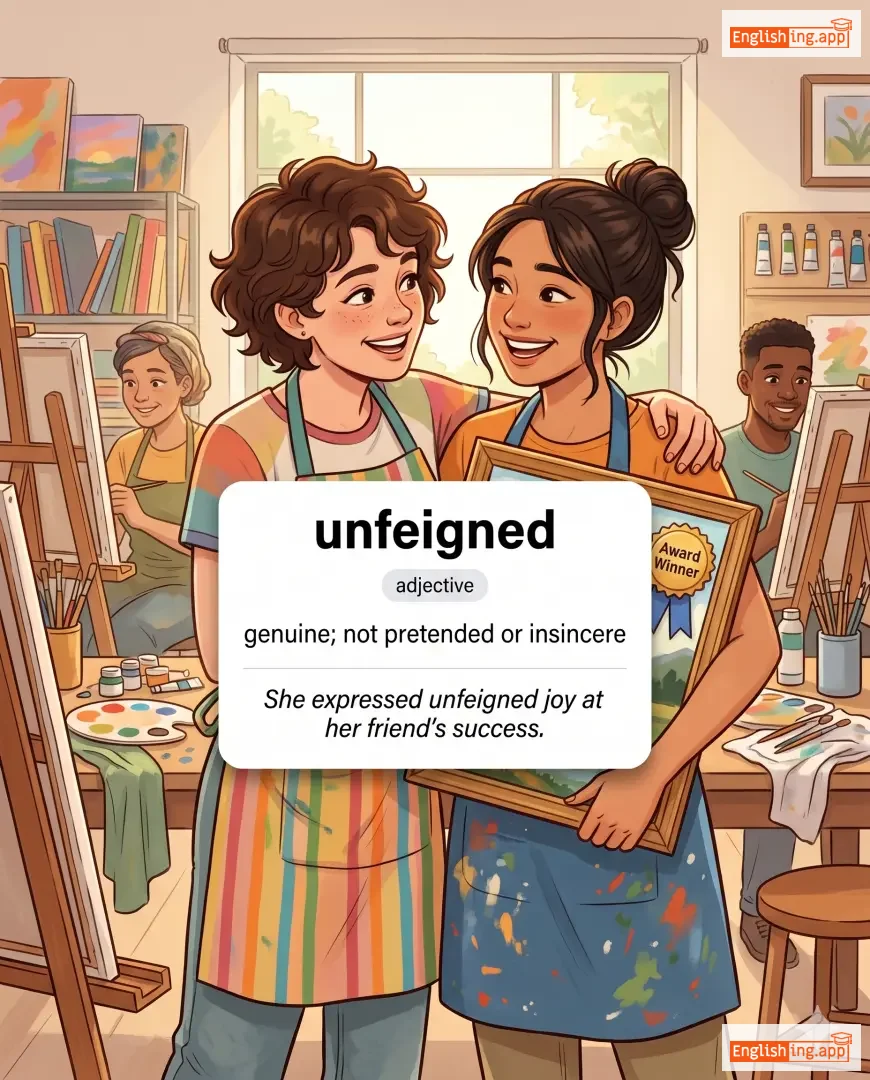
adjective
/ʌnˈfeɪnd/
असली (asli)

genuine; not pretended or insincere

"She expressed unfeigned joy at her friend's success."

"उसने अपनी दोस्त की सफलता पर असली खुशी व्यक्त की।" (Usne apni dost ki safalta par asli khushi vyakt ki.)
noun
/ˌʌnɪmˈplɔɪmənt/
बेरोज़गारी (berozgaari)

the state of not having a paid job despite being able and willing to work

"High unemployment is a major issue in the country."

"उच्च बेरोज़गारी देश में एक प्रमुख समस्या है।" (Ucch berozgaari desh mein ek pramukh samasya hai.)
verb
/ʌnˈfəʊld/
खोलना या खोलना (kholna ya kholna)

to open or spread out something that was folded; to gradually reveal or develop

"She unfolded the letter carefully."

"उसने पत्र को ध्यान से खोला।" (Usne patra ko dhyan se khola.)
noun
/ˈʌndərˌwɜːrld/
अंडरवर्ल्ड (underworld)

The criminal world of organized crime or the mythical world of the dead.

"The detective spent years studying the secrets of the underworld."

"जासूस ने अंडरवर्ल्ड के रहस्यों का अध्ययन किया।" (Jasoos ne underworld ke rahasyon ka adhyayan kiya.)
adjective
/ˈvɪnsəbl/
पराजेय (parajey)

capable of being overcome or defeated

"The enemy seemed vincible after losing their main base."

"दुश्मन मुख्य ठिकाना खोने के बाद पराजेय लग रहा था।" (Dushman mukhya thikana khone ke baad parajey lag raha tha.)
adjective
/ʌnˈlɪmɪtɪd/
असीमित (aseemit)

without any limits or restrictions

"The internet plan offers unlimited data for the whole month."

"इंटरनेट प्लान पूरे महीने के लिए असीमित डेटा प्रदान करता है।" (Internet plan poore mahine ke liye aseemit data pradan karta hai.)
adjective
/ʌnˈnoʊn/
अज्ञात (ajnyat)

not known or familiar

"The origin of the disease remains unknown."

"रोग की उत्पत्ति अज्ञात रही है।" (rog ki utpatti ajnyat rahi hai.)
adjective
/ʌnˈfɔːrtʃənət/
दुर्भाग्यपूर्ण (durbhagyapurn)

Having or marked by bad luck; unlucky.

"It was unfortunate that the meeting was canceled at the last minute."

"यह दुर्भाग्यपूर्ण था कि बैठक आखिरी मिनट में रद्द कर दी गई।" (Yeh durbhagyapurn tha ki baithak aakhiri minute mein radd kar di gayi.)
adjective
/ˌʌnɪnˈfɔːrmd/
अज्ञान (agyan)

lacking knowledge or awareness about a particular subject; not educated or informed

"The decision was made by an uninformed committee."

"यह निर्णय एक अज्ञान समिति द्वारा लिया गया था।" (yah nirnay ek agyan samiti dwara liya gaya tha)
noun
/ˈvaɪənd/
विविध व्यंजन (vividh vyanjan)

an item of food, especially a delicacy

"The banquet was filled with rich viands and wines."

"भोजन में विभिन्न प्रकार के व्यंजन और शराब थी।" (Bhojan mein vividh prakar ke vyanjan aur sharab thi.)
uninhabitable definition card — visual illustration of the meaning
adjective
ʌnɪnˈhæbɪtəbəl
असंगत (asangath)

Not suitable or safe for people to live in.

"Rapid urbanization can make cities uninhabitable."

"तेज़ शहरीकरण शहरों को असंगत बना सकता है।" (Tez shaharikaran shahron ko asangath bana sakta hai.)
adjective
/ˌjuːnɪˈvɜːsəl/
सार्वभौमिक (sarvbhaumik)

Relating to or done by all people or things in the world; applicable everywhere or in all cases.

"There is a universal need for love and acceptance."

"प्यार और स्वीकृति के लिए एक सार्वभौमिक आवश्यकता है।" (pyaar aur sveekriti ke liye ek sarvbhaumik avashyakta hai.)
noun
/ˈjuːnɪsən/
एक साथ (ek saath)

Simultaneous performance or utterance of action or speech.

"The choir sang in unison."

"गाना एक साथ गाया गया।" (Gana ek saath gaya gaya.)
adjective
/ˌʌnɪˈkwɪvəkəl/
स्पष्ट (spasht)

Leaving no doubt; clear and unambiguous

"She gave an unequivocal answer to the question."

"उसने सवाल का एक स्पष्ट उत्तर दिया।" (Usne sawal ka ek spasht uttar diya.)
adjective
/ʌnˈfɔːltərɪŋ/
अडिग (adig)

Steady and resolute; not weakening or hesitating

"She continued with unfaltering determination."

"उसने अडिग संकल्प के साथ जारी रखा।" (Usne adig sankalp ke saath jari rakha.)
adjective
/ʌnˈendɪŋ/
अंतहीन (antheen)

continuing forever; without end

"The unending rain made the day feel gloomy."

"लगातार बारिश ने दिन को उदास बना दिया।" (lagatar barish ne din ko udaas bana diya)
verb
/ˌʌndərˈvæljuː/
कम मूल्यांकित करना (kam mulyankan karna)

To assign too low a value or importance to something or someone.

"She felt that her boss consistently undervalued her contributions."

"वह महसूस कर रही थी कि उसका बॉस लगातार उसके योगदानों को कम आंकता था।" (Vah mahsus kar rahi thi ki uska boss lagatar uske yogdanon ko kam aankta tha.)
virtual classrooms definition card — visual illustration of the meaning
noun
ˈvɜː.tʃu.əl ˈklɑːs.ruːmz
वर्चुअल कक्षा (virtual kaksha)

An online learning environment where teachers and students interact via digital platforms.

"Virtual classrooms enable remote learning for students worldwide."

"वर्चुअल कक्षाएं छात्रों को दूरस्थ शिक्षा का अवसर प्रदान करती हैं।" (Virtual kakshaen chhatron ko durasth shiksha ka avsar pradan karti hain.)
conjunction
/ʌnˈlɛs/
यदि नहीं (yadi nahin)

except if

"We won't go unless it stops raining."

"हम नहीं जाएंगे यदि बारिश बंद नहीं होती।" (ham nahin jayenge yadi baarish band nahin hoti.)
vermin definition card — visual illustration of the meaning
noun
/ˈvɜːrmɪn/
हानिकारक जीव (hanikarak jeev)

small animals or insects that are harmful or destructive, such as rats, lice, or fleas

"The old warehouse was overrun with vermin."

"पुराना गोदाम हानिकारक जीवों से भर गया था।" (Purana godaam hanikarak jeevon se bhar gaya tha.)
noun
/ˈvaɪəl/
एक प्रकार का प्राचीन तार वाद्ययंत्र (ek prakar ka prachin taar vaadyayantra)

A stringed musical instrument of the Renaissance and Baroque periods, played with a bow and similar to but distinct from the violin family.

"The musician played an old viol in the chamber music concert."

"संगीतकार ने चेंबर म्यूज़िक कॉन्सर्ट में एक पुराना वायल बजाया।" (sangeetkar ne chamber music concert mein ek purana viol bajaya.)
noun
/ˈjuːnɪən/
संघ (sangh)

the action or fact of joining or being joined with others, especially to form a single unit

"The union of the two companies created a global leader."

"दो कंपनियों का संघ एक वैश्विक नेता बना।" (do kompanion ka sangh ek vaishvik neta bana.)
adverb
/ˈvaɪtəli/
अत्यंत महत्वपूर्ण रूप से (atyant mahatvapurn rup se)

in an extremely important or essential way; in a manner relating to life or vitality

"Access to clean water is vitally important for public health."

"स्वास्थ्य के लिए साफ पानी तक पहुंच अत्यंत महत्वपूर्ण रूप से आवश्यक है।" (swasthya ke liye saaf pani tak pahunch atyant mahatvapurn rup se avashyak hai)
adjective
/ʌnˈlɔːfəl/
अवैध (avaidh)

Not conforming to or permitted by law; illegal.

"The police arrested him for unlawful possession of weapons."

"पुलिस ने उसे अवैध हथियारों की तस्करी के लिए गिरफ्तार किया।" (Police ne use avaidh hathiyaaron ki taskari ke liye giraftar kiya.)
adjective
/juˈnaɪtɪd/
एकत्रित (ektrit)

joined together or combined as one

"The united team won the championship."

"एकत्रित टीम ने चैंपियनशिप जीती।" (ektrit team ne championship jīti.)
noun
/ˌjuːnɪˈtɛəriən/
यूनिटेरियन (Unitarian)

A person who believes that God exists as one entity rather than as a Trinity; a member of a religious denomination that emphasizes individual freedom of belief.

"The Unitarian church is known for its inclusive and open-minded approach."

"यूनिटेरियन चर्च अपनी समावेशी और खुले विचारों वाली दृष्टिकोण के लिए जाना जाता है।" (Unitarian church apni samaaveshi aur khule vicharon wali drishtikon ke liye jana jata hai.)
adjective
/ʌnˈflæpəbəl/
अडिग (adig)

calm and composed, especially in difficult situations

"Despite the crisis, he remained unflappable and confident."

"संकट के बावजूद, वह अडिग और आत्मविश्वासी बना रहा।" (Sankat ke bawjood, vah adig aur atmbishwasi bana raha.)
adjective
/ʌnˈdʒʌst/
अन्यायपूर्ण; गलत; (anyaaypoorn; galat)

not fair or right; morally wrong

"The punishment was unjust for such a minor offense."

"यह दंड एक छोटे अपराध के लिए अन्यायपूर्ण था।" (yah dand ek chhote apraadh ke liye anyaaypoorn tha)
vision definition card — visual illustration of the meaning
noun
/ˈvɪʒən/
सुख (sukh)

the ability to see or a mental image of something

"She had a clear vision of her future."

"जब उसे पुरस्कार मिला तो वह अपनी खुशी छुपा नहीं पाई।" (Jab use puraskar mila to vah apni khushi chhupa nahi pai.)
vex definition card — visual illustration of the meaning
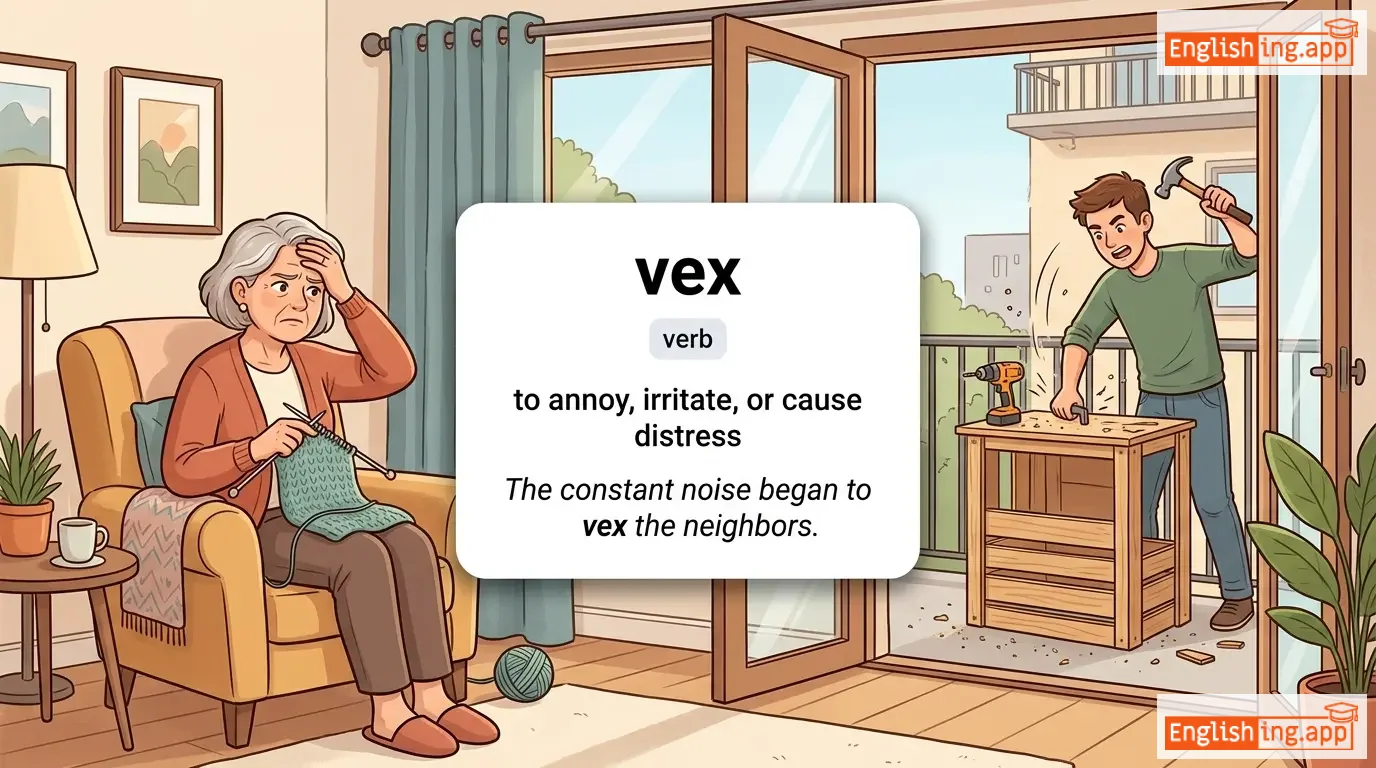
verb
/vɛks/
परेशान करना (pareshan karna)

to annoy, irritate, or cause distress

"The constant noise began to vex the neighbors."

"लगातार शोर ने पड़ोसियों को परेशान करना शुरू कर दिया।" (Lagaataar shor ne padosiyon ko pareshan karna shuru kar diya.)
adverb
/ˈvɜː.tʃu.ə.li/
लगभग, ऑनलाइन (lagbhag, online)

almost or nearly, but not completely; by means of computer technology

"The meeting was held virtually due to travel restrictions."

"यात्रा प्रतिबंधों के कारण बैठक वर्चुअली आयोजित की गई थी।" (Yatra pratibandhon ke karan baithak virtually aayojit ki gayi thi.)
verb
/ˈvɪtrɪfaɪ/
गिलास में बदलना (gilaas mein badalna)

to turn into glass or a glass-like substance by heat

"Sand can vitrify under intense heat."

"गर्मी में रेत गिलास में बदल सकती है।" (Garmi mein ret gilaas mein badal sakti hai.)
noun
/ˌjuːnɪˈfɔːrmɪti/
एकरूपता (ekarupta)

The quality or state of being the same, consistent, or without variation.

"The teacher insisted on uniformity in the students' dress code."

"शिक्षक ने छात्रों के वस्त्रकोड में एकरूपता पर जोर दिया।" (Shikshak ne chhatron ke vastrakoḍ mein ekarupta par zor diya.)
verb
/ˈvɪʒuəlaɪz/
कल्पना करना (kalpana karna)

To form a mental image of something; to imagine.

"She tried to visualize her success before the big presentation."

"वह बड़ी प्रस्तुति से पहले अपनी सफलता की कल्पना करने की कोशिश कर रही थी।" (Wah badi prastuti se pehle apni safalta ki kalpana karne ki koshish kar rahi thi.)
adjective
/ˈvɪsɪd/
चिपचिपा (chipchipa)

Having a thick, sticky consistency.

"The sap had a viscid texture that stuck to his hands."

"रस में चिपचिपा बनावट थी जो उसके हाथों में चिपक गई।" (ras mein chipchipa banawat thi jo uske haathon mein chipak gayi.)
noun
/ˈjuːnɪvɜːrs/
ब्रह्मांड (brahmand)

the totality of known or supposed objects and phenomena throughout space; the cosmos

"The universe is vast and full of mysteries."

"ब्रह्मांड विशाल है और रहस्यों से भरा हुआ है।" (brahmand vishal hai aur rahasyon se bhara hua hai)
adjective
/ˌʌnˈɪntrəstɪŋ/
उबाऊ (ubaau)

not holding attention or curiosity; boring

"The lecture was uninteresting and difficult to stay focused on."

"वह व्याख्यान उबाऊ था और ध्यान केंद्रित रखना कठिन था।" (vah vyaakhyaan ubaau tha aur dhyaan kendrit rakhna kathin tha)
preposition/adjective
/ʌnˈlaɪk/
विभिन्न (vibhinn)

differing from or not similar to

"Unlike his brother, he enjoys playing soccer."

"उसके भाई के विपरीत, उसे फुटबॉल खेलना पसंद है।" (Uske bhai ke vipreet, use football khelna pasand hai.)
adjective
/ʌnˈkaɪnd/
अक्रूर; दयालु नहीं (akrur; dayalu nahi)

cruel; not nice or caring toward others

"It was unkind of him to make fun of her appearance."

"यह उसके लिए उसकी उपस्थिति का मजाक बनाने के लिए अक्रूर था।" (yah uske liye uski upasthiti ka mazak banane ke liye akroor tha.)
noun
/ˈvɜːrtɛks/
शिखर (shikhar)

The highest point; the top or the apex.

"The climber reached the vertex of the mountain."

"चढ़ाई करने वाला पर्वत की शिखर तक पहुंच गया।" (Chadhai karne wala parvat ki shikhar tak pahunch gaya.)
adjective
/ˌʌnɪmˈpɔːrtənt/
महत्वहीन (mahatvheen)

not having much value, significance, or influence

"The detail seemed unimportant compared to the main issue."

"मुख्य मुद्दे की तुलना में यह विवरण महत्वहीन लगा।" (mukhya mudde ki tulna mein yah vivaran mahatvheen laga)
noun
/ˈvɪstə/
दृश्य (drishya)

A pleasing view, especially one seen through a long, narrow opening.

"From the mountain top, we admired the breathtaking vista of the valley below."

"पहाड़ी की चोटी से, हमने घाटी के नीचे के आश्चर्यजनक दृश्य का आनंद लिया।" (Pahaadi ki choti se, humne ghaati ke neeche ke aashcharyajanak drishya ka aanand liya.)
adjective
/ˌvɪtriˈɑːlɪk/
कटु आलोचनात्मक (katu alochanātmaka)

filled with bitter criticism or malice

"His vitriolic remarks hurt everyone in the room."

"उसकी कटु आलोचनात्मक टिप्पणियाँ कमरे में सभी को आहत कर गईं।" (Uski katu alochanātmaka tippaniyan kamre mein sabhi ko ahat kar gayi.)
noun
/vɪˈsɪn.ə.ti/
आसपास; निकटवर्ती (vicinity)

the area near or surrounding a particular place; neighborhood

"There are many shops in the vicinity of the school."

"स्कूल के पास कई दुकानें हैं।" (school ke paas kai dukanein hain.)
noun
/ˈʌndərˌteɪkɪŋ/
कार्य (kaary)

A task, project, or responsibility that someone agrees to do.

"Starting a new company is a difficult undertaking."

"नई कंपनी शुरू करना एक कठिन कार्य है।" (Nayi company shuru karna ek kathin kaary hai.)
adjective
/ˈvɪrəl/
पुरुषोचित (purushocit)

having traditionally masculine qualities, such as strength, energy, and sexual vigor

"The actor was admired for his virile appearance."

"अभिनेता को उसके पुरुषोचित रूप के लिए सराहा गया।" (Abhineta ko uske purushocit roop ke liye saraha gaya.)
adjective
/ʌnˈɡeɪnli/
असंगत (asangat)

Awkward, clumsy, or lacking grace in movement or appearance.

"The tall boy moved in an ungainly manner."

"लंबा लड़का एक अजीब तरीके से चला।" (Lamba ladka ek ajeeb tareeke se chala.)
adjective
/ʌnˈɪndʒərd/
अखरोट नहीं (akharot nahin)

Without injury; not physically harmed.

"All the passengers were rescued uninjured."

"सभी यात्री बिना चोट के बचाए गए थे।" (Sabhi yatri bina chot ke bachaye gaye the.)
adjective
/juːˈnɪsənənt/
सुरेल (surel)

Sounding together or in harmony.

"The unisonant voices created a powerful effect."

"सुरेल आवाजों ने एक शक्तिशाली प्रभाव उत्पन्न किया।" (Surel aawazon ne ek shaktishaali prabhav utpann kiya.)