वोकैबुलरीज

इंग्लिश वोकैबुलरी डिस्कवर, लर्न और मास्टर करें

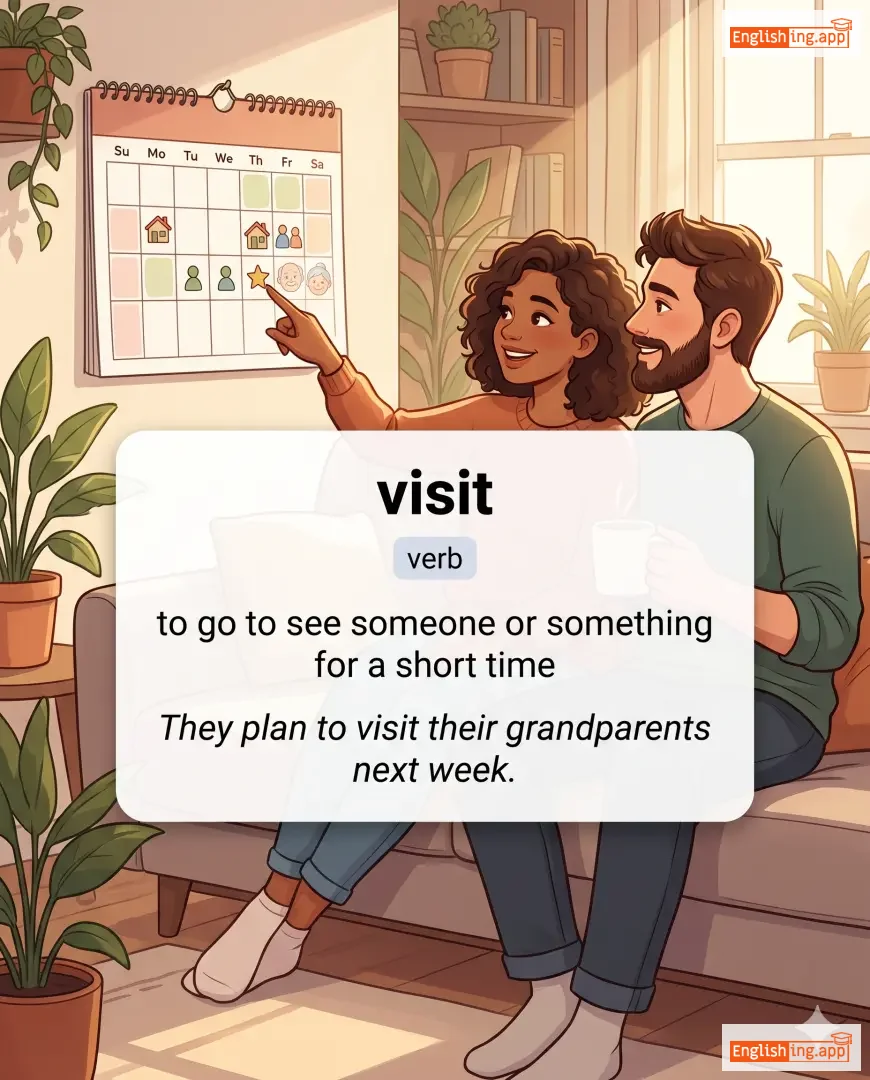
visit definition card — visual illustration of the meaning
verb
/ˈvɪzɪt/
यात्रा (yatra)

to go to see someone or something for a short time

"They plan to visit their grandparents next week."

"वे अगले हफ्ते अपने दादी-दादी से मिलने का प्लान बना रहे हैं।" (Ve agle hafte apne dadi-dadi se milne ka plan bana rahe hain.)
adjective
/ˈvɪrjʊlənt/
अत्यंत हानिकारक (atyant hanikarak)

Extremely severe or harmful in its effects.

"The virulent disease spread rapidly across the region."

"वायरुलेंट बीमारी ने क्षेत्र भर में तेजी से फैलने शुरू कर दिया।" (Viralent bimari ne kshetra bhar mein tezi se phailne shuru kar diya.)
adjective
/ʌnˈnɛsəsɛri/
अनावश्यक (anavashyak)

not needed or required

"The manager cut all unnecessary expenses to save costs."

"मैनेजर ने खर्च बचाने के लिए सभी अनावश्यक खर्चों में कटौती की।" (Manager ne kharch bachane ke liye sabhi anavashyak kharchon mein katoti ki.)
noun
/ˈvaɪəˌleɪtər/
उल्लंघनकर्ता (ullanghankarta)

A person who breaks or disregards a law, rule, or agreement.

"The police caught the traffic violator at the intersection."

"पुलिस ने ट्रैफिक उल्लंघनकर्ता को चौराहे पर पकड़ा।" (police ne traffic ullanghankarta ko chaurahe par pakda.)
adjective
/ˈvɪsɪd/
चिपचिपा (chipchipa)

Having a thick, sticky consistency.

"The sap had a viscid texture that stuck to his hands."

"रस में चिपचिपा बनावट थी जो उसके हाथों में चिपक गई।" (ras mein chipchipa banawat thi jo uske haathon mein chipak gayi.)
viscous definition card — visual illustration of the meaning
adjective
/ˈvɪskəs/
गाढ़ा चिपचिपा (gadha chipchipa)

Having a thick, sticky consistency between solid and liquid.

"Honey is a viscous liquid that flows slowly."

"शहद एक चिपचिपा तरल है जो धीरे-धीरे बहता है।" (shahad ek chipchipa taral hai jo dheere-dheere bahta hai.)
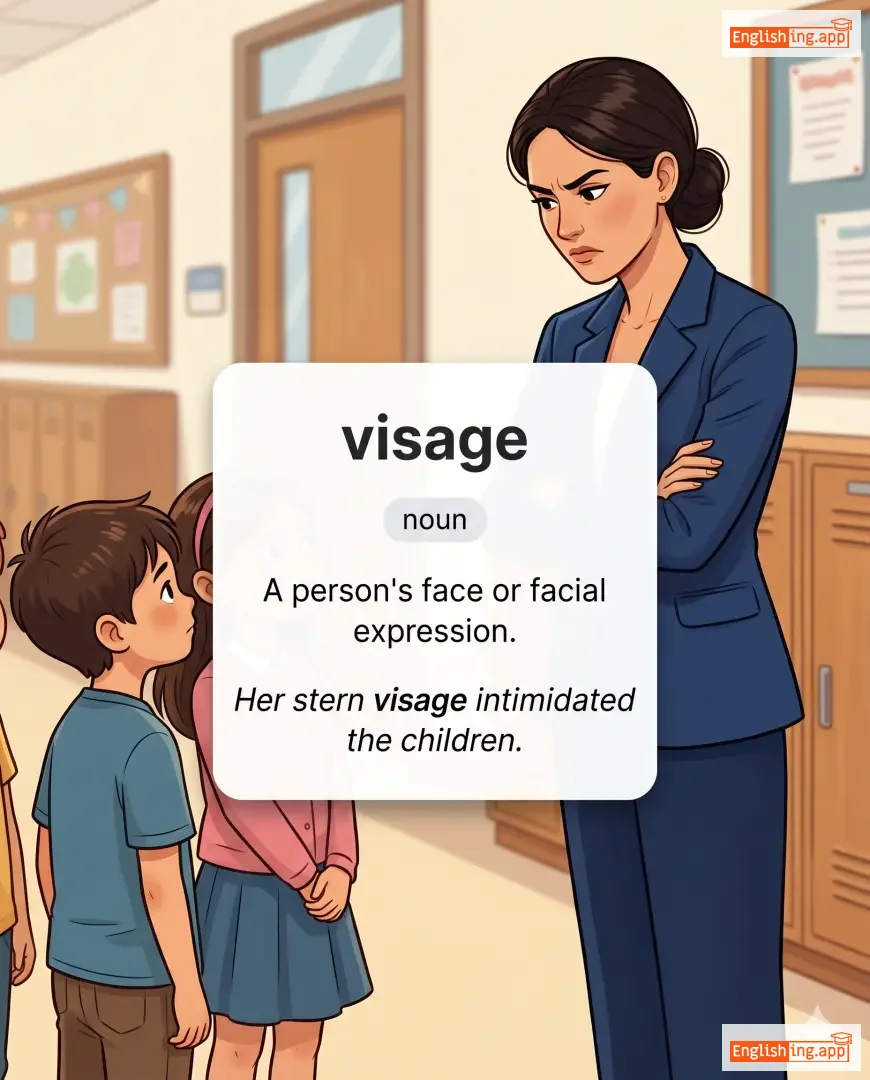
visage definition card — visual illustration of the meaning
noun
/ˈvɪzɪdʒ/
ख़ुशी (khushi)

A person's face or facial expression.

"Her stern visage intimidated the children."

"वह पुरस्कार प्राप्त करते समय अपनी खुशी को छिपा नहीं सकी।" (vah puraskaar praapt karte samay apni khushi ko chhupa nahi sakee.)
adjective
/ˌʌnəbˈtruːsɪv/
अप्रत्याशित (aprtyashit)

not attracting attention; blending in without causing notice

"The security cameras are designed to be unobtrusive."

"सुरक्षा कैमरे इस तरह से डिज़ाइन किए गए हैं ताकि वे अप्रत्याशित रहें।" (Suraksha kaimere is tarah se dizain kiye gaye hain taaki ve aprtyashit rahe.)
noun/adjective
/ˈvɪntɪdʒ/
प्राचीन / पुरानी मूल्यवान (prachin / purani mulyavan)

Relating to high quality from the past; classic; also the year of a wine harvest.

"She wore a vintage dress from the 1950s."

"उसने 1950 के दशक का एक विंटेज ड्रेस पहना था।" (usne 1950 ke dashak ka ek vintage dress pehna tha.)
adjective
/ˈvaɪtl/
अत्यंत महत्वपूर्ण (atyant mahatvapurn)

essential or necessary for life or success

"It's vital to stay hydrated during the summer."

"गर्मियों में हाइड्रेटेड रहना महत्वपूर्ण है।" (Garmiyon mein hydrated rehna mahatvapurn hai.)
noun
/ˈjuːnɪt/
यूनिट (unit)

an individual thing or person regarded as a single and complete entity

"Each unit in the production line is carefully tested."

"प्रत्येक यूनिट को उत्पादन लाइन में सावधानी से परखा जाता है।" (pratyek unit ko utpadan line mein saavdhaani se pariksha kiya jaata hai.)
adjective
/ʌnˈrɪəl/
अवास्तविक (avastavik)

not real or not based on reality; exaggerated or imaginary

"The experience felt unreal after the sudden news."

"अचानक खबर के बाद अनुभव अवास्तविक लगा।" (achanak khabar ke baad anubhav avastavik laga)
adjective
/ˌʌnprɪˈtɛnʃəs/
नम्र (namra)

modest; not attempting to impress others with appearance or importance

"She lives in an unpretentious home but is very happy."

"वह एक नम्र घर में रहती है लेकिन बहुत खुश है।" (vah ek namra ghar mein rahti hai lekin bahut khush hai.)
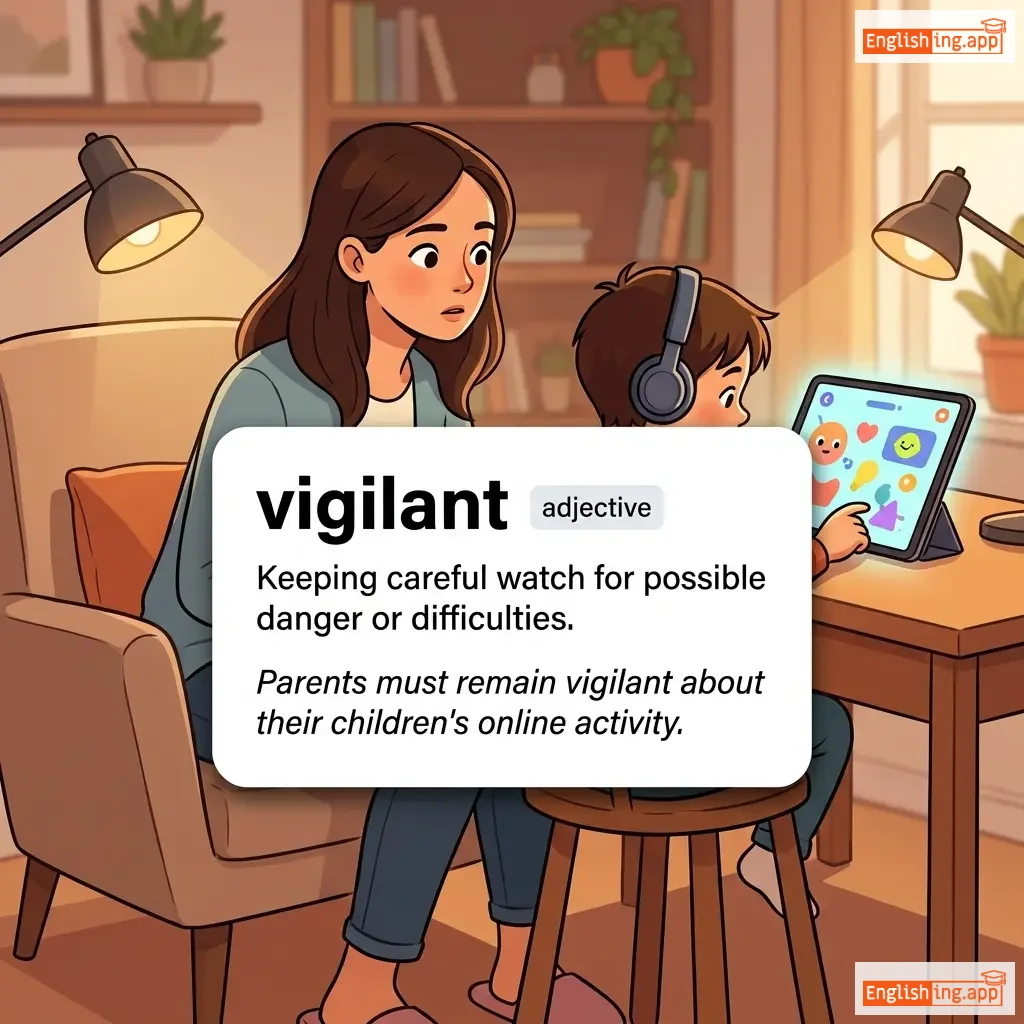
vigilant definition card — visual illustration of the meaning
adjective
/ˈvɪdʒɪlənt/
सतर्क (satark)

Keeping careful watch for possible danger or difficulties.

"Parents must remain vigilant about their children's online activity."

"माता-पिता को अपने बच्चों की ऑनलाइन गतिविधियों के बारे में सतर्क रहना चाहिए।" (Mata-pita ko apne bachchon ki online gatividhiyon ke baare mein satark rehna chahiye.)
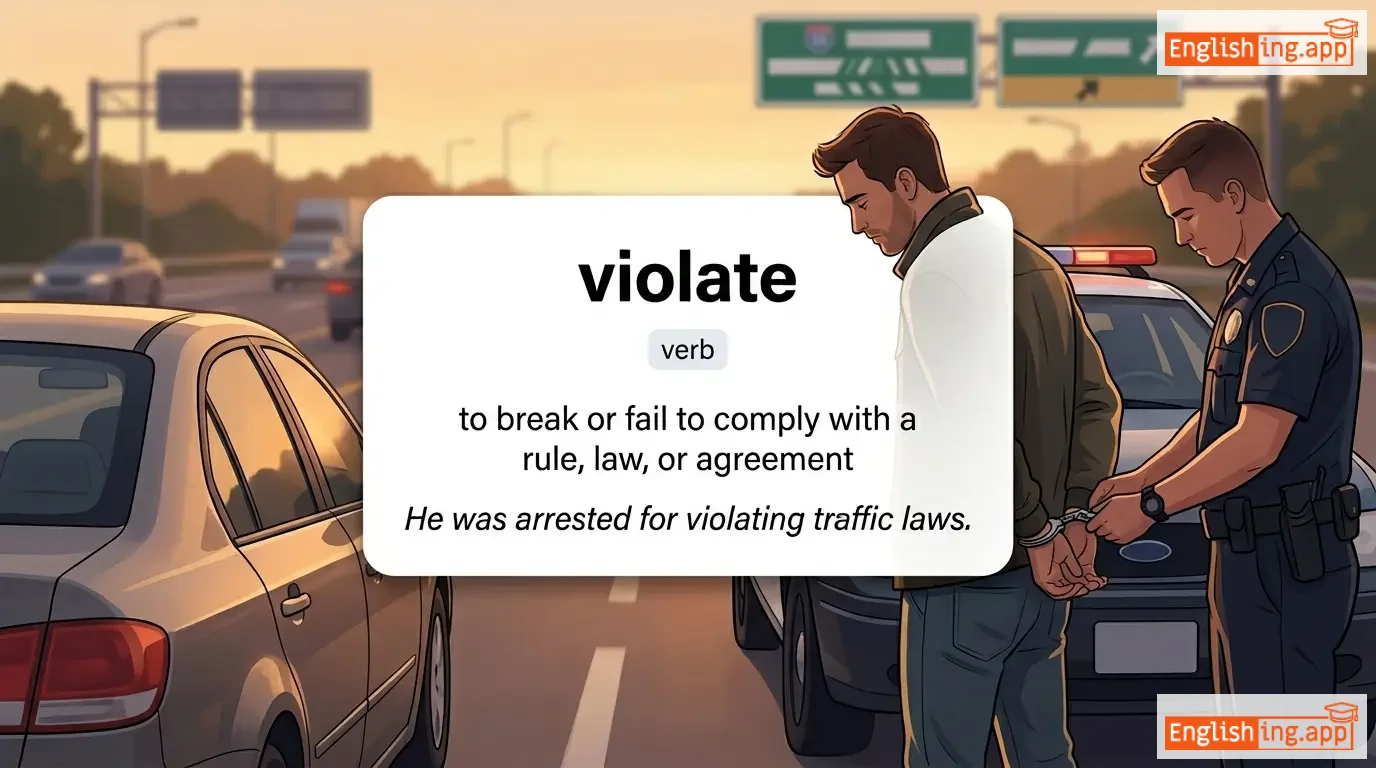
violate definition card — visual illustration of the meaning
verb
/ˈvaɪ.ə.leɪt/
उल्लंघन करना (ullanghan karna)

to break or fail to comply with a rule, law, or agreement

"He was arrested for violating traffic laws."

"उसे ट्रैफिक कानून उल्लंघन करने पर गिरफ्तार किया गया था।" (Use traffic kanoon ullanghan karne par giraftaar kiya gaya tha.)
adjective
/ˈvaɪə.lət/
बैंगनी (baingani)

a bluish-purple color

"She wore a beautiful violet dress to the party."

"उसने पार्टी में एक खूबसूरत बैंगनी ड्रेस पहनी थी।" (usne party mein ek khoobsurat baingani dress pehni thi)
adjective
/ʌnˈmærid/
अविवाहित (avivahit)

Not married; single.

"He is thirty-five and still unmarried."

"वह पैंतीस साल का है और अभी भी अविवाहित है।" (Vah pantiis saal ka hai aur abhi bhi avivahit hai.)
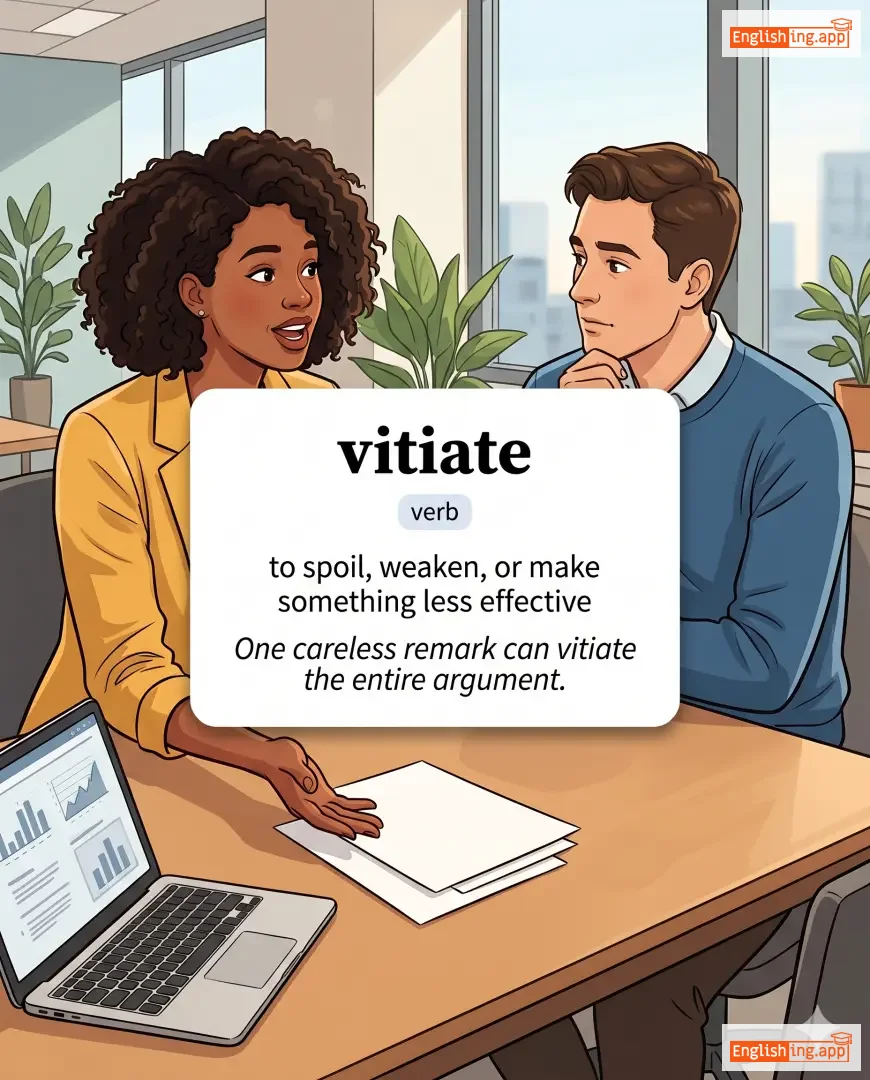
vitiate definition card — visual illustration of the meaning
verb
/ˈvɪʃieɪt/
नष्ट करना (nasht karna)

to spoil, weaken, or make something less effective

"One careless remark can vitiate the entire argument."

"एक असावधान टिप्पणी सम्पूर्ण तर्क को नष्ट कर सकती है।" (Ek asavdhan tipanni sampoorn tark ko nasht kar sakti hai.)
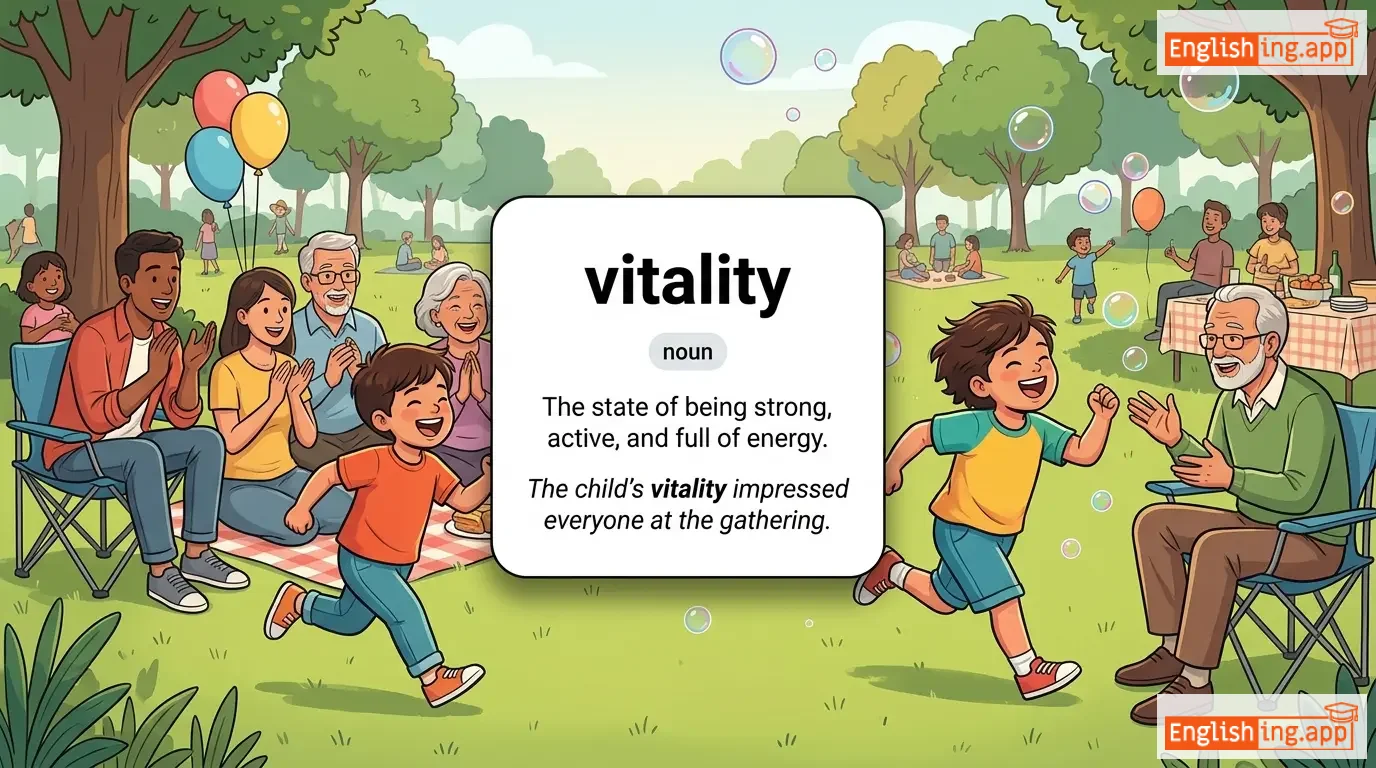
vitality definition card — visual illustration of the meaning
noun
/vaɪˈtæləti/
जीवंतता (jeevantata)

The state of being strong, active, and full of energy.

"The child’s vitality impressed everyone at the gathering."

"बच्चे की जीवंतता ने सभा में सभी को प्रभावित किया।" (bachche ki jeevantata ne sabha mein sabhi ko prabhavit kiya.)
noun
/ˈvɜːrtʃuː/
गुण (gun)

High moral standards or a good quality considered morally good.

"Patience is considered a great virtue."

"धैर्य को एक महान गुण माना जाता है।" (Dhairya ko ek mahaan gun maana jaata hai.)
adjective
/ʌn.rɪˈleɪ.tɪd/
अप्रासंगिक; बिना किसी संबंध के (aprasangik; bina kisi sambandh ke)

having no connection or relationship; not connected by family ties

"The two incidents were completely unrelated to each other."

"दो घटनाएँ एक-दूसरे से पूरी तरह अप्रासंगिक थीं।" (do ghatnayein ek-doosre se puri tarah aprasangik thin.)
adverb
/ʌnˈfɔːtʃənətli/
दुर्भाग्यवश (durbhagya vash)

used to express regret or disappointment about something that has happened or is going to happen

"Unfortunately, the event was canceled due to the rain."

"दुर्भाग्यवश, कार्यक्रम वर्षा के कारण रद्द कर दिया गया था।" (durbhagya vash, karyakram varsha ke karan radd kar diya gaya tha.)
adjective
/vaɪˈtjuːpərəbl̩/
निंदा योग्य (ninda yogya)

Deserving of blame, censure, or harsh criticism.

"His reckless actions made him vituperable in the eyes of his colleagues."

"उसकी लापरवाह हरकतों ने उसे उसके साथियों की नजरों में निंदा योग्य बना दिया।" (Uski laparwah harkaton ne use uske saathiyon ki nazron mein ninda yogya bana diya.)
adverb
/ˈvɜː.tʃu.ə.li/
लगभग, ऑनलाइन (lagbhag, online)

almost or nearly, but not completely; by means of computer technology

"The meeting was held virtually due to travel restrictions."

"यात्रा प्रतिबंधों के कारण बैठक वर्चुअली आयोजित की गई थी।" (Yatra pratibandhon ke karan baithak virtually aayojit ki gayi thi.)
noun
/ˌjuːnɪˈfɔːrmɪti/
एकरूपता (ekarupta)

The quality or state of being the same, consistent, or without variation.

"The teacher insisted on uniformity in the students' dress code."

"शिक्षक ने छात्रों के वस्त्रकोड में एकरूपता पर जोर दिया।" (Shikshak ne chhatron ke vastrakoḍ mein ekarupta par zor diya.)
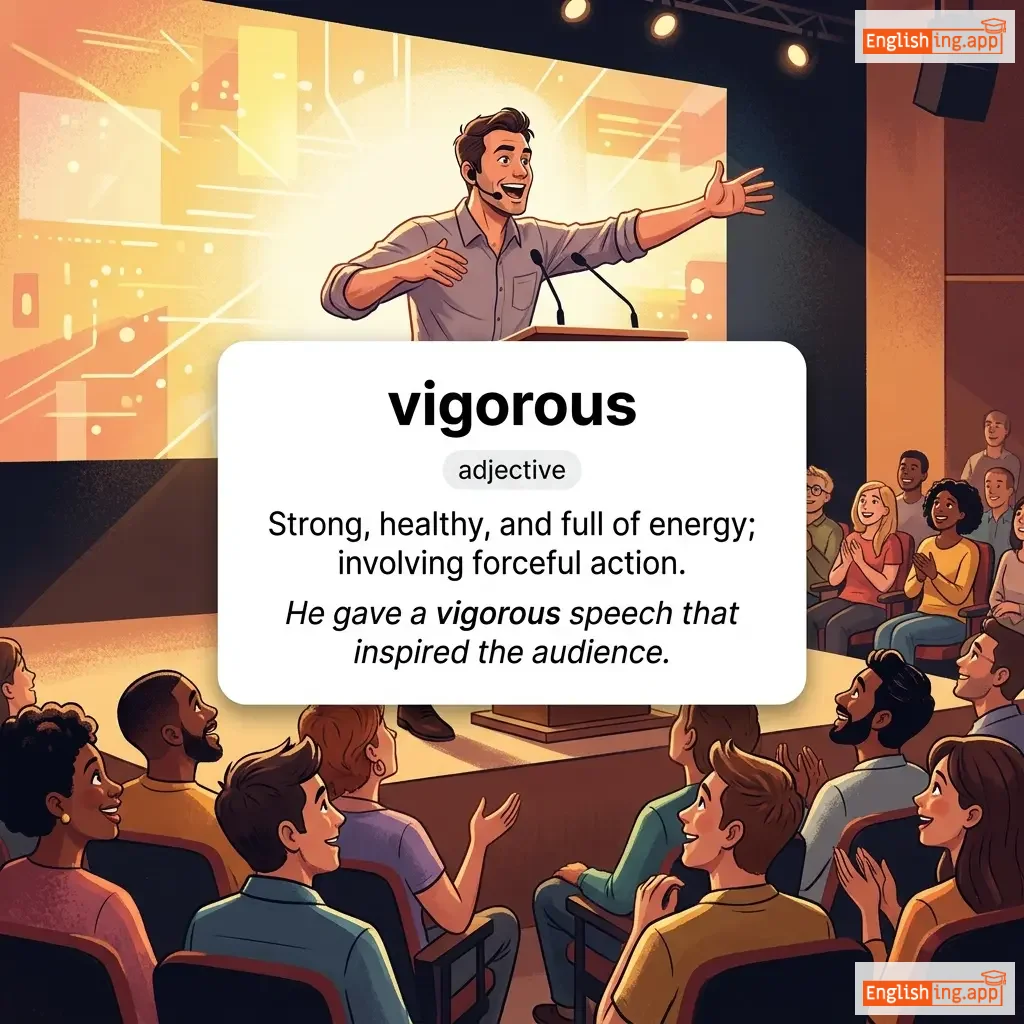
vigorous definition card — visual illustration of the meaning
adjective
/ˈvɪɡərəs/
उद्यमी (udyami)

Strong, healthy, and full of energy; involving forceful action.

"He gave a vigorous speech that inspired the audience."

"उसने एक जोरदार भाषण दिया जिसने दर्शकों को प्रेरित किया।" (Usne ek jor daar bhashan diya jisne darshako ko prerit kiya.)
noun
/ˈviːzə/
वीज़ा (veezā)

an official authorization or permission to enter, leave, or stay in a country

"She applied for a visa to study abroad."

"उसने विदेश में पढ़ाई करने के लिए वीजा के लिए आवेदन किया।" (Usne videsh mein padhai karne ke liye veezā ke liye āvedan kiyā.)
adjective
/ʌnˈlɪmɪtɪd/
असीमित (aseemit)

without any limits or restrictions

"The internet plan offers unlimited data for the whole month."

"इंटरनेट प्लान पूरे महीने के लिए असीमित डेटा प्रदान करता है।" (Internet plan poore mahine ke liye aseemit data pradan karta hai.)
noun
/ˌvaɪəˈleɪʃən/
उल्लंघन (ullanghan)

The act of breaking or disregarding a law, rule, or agreement.

"Driving without a license is a violation of the law."

"बिना लाइसेंस के गाड़ी चलाना कानून का उल्लंघन है।" (bina license ke gadi chalana kanoon ka ullanghan hai.)
adjective
/ʌnˈnoʊn/
अज्ञात (ajnyat)

not known or familiar

"The origin of the disease remains unknown."

"रोग की उत्पत्ति अज्ञात रही है।" (rog ki utpatti ajnyat rahi hai.)
vision definition card — visual illustration of the meaning
noun
/ˈvɪʒən/
सुख (sukh)

the ability to see or a mental image of something

"She had a clear vision of her future."

"जब उसे पुरस्कार मिला तो वह अपनी खुशी छुपा नहीं पाई।" (Jab use puraskar mila to vah apni khushi chhupa nahi pai.)
adjective
/ʌnˈθɪŋkəbl/
अकल्पनीय (akalpneey)

impossible to conceive or imagine; beyond belief or consideration

"It was unthinkable that such a tragedy could happen in our peaceful town."

"यह असंभव था कि हमारे शांतिपूर्ण शहर में ऐसी कोई त्रासदी घटित हो सकती थी।" (Yeh asambhav tha ki hamare shaantipoorn shahar mein aisi koi traasdi ghatit ho sakti thi.)
verb
/ʌnˈfɛtər/
बाधामुक्त करना (baadhamukt karna)

to release from restraint or restriction; to free

"The new law will unfetter small businesses from excessive regulations."

"नया कानून छोटे व्यवसायों को अत्यधिक नियमों से मुक्त करेगा।" (Naya kanoon chhote vyavsayon ko atyadhik niyamon se mukt karega.)
adjective
/ˈvɪzəbl/
दृश्यमान (drishyamaan)

able to be seen; perceptible by the eye

"The stars were clearly visible in the night sky."

"तारें रात के आकाश में स्पष्ट रूप से दृश्यमान थीं।" (Tare raat ke aakaash mein spashṭ roop se drishyamaan thiin.)
noun
/ˌjuːnɪˈvɜːrsɪti/
विश्वविद्यालय (vishwavidyalaya)

an institution of higher education and research, which grants academic degrees

"She is studying law at the university."

"वह विश्वविद्यालय में कानून पढ़ रही है।" (vah vishwavidyalaya mein kanoon padh rahi hai.)
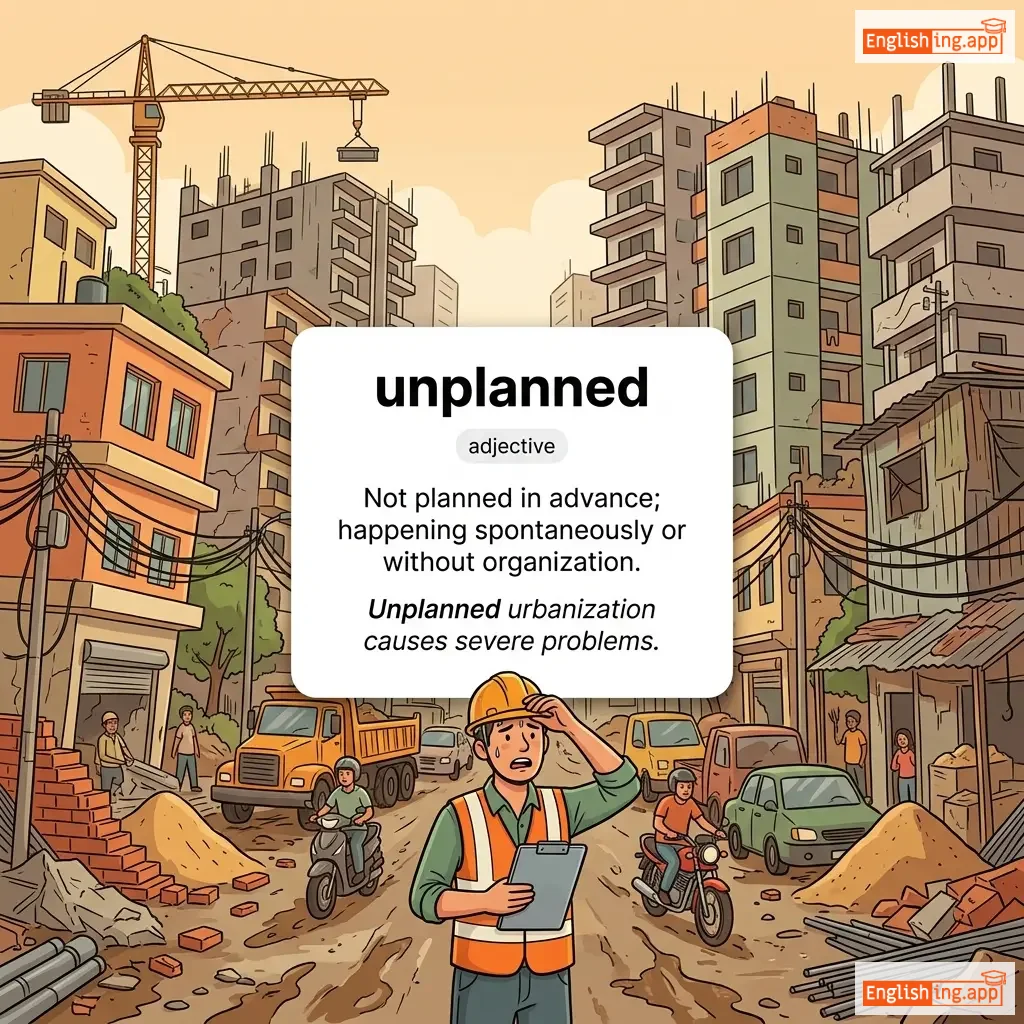
unplanned definition card — visual illustration of the meaning
adjective
ʌnˈplænd
अनियोजित (aniyojit)

Not planned in advance; happening spontaneously or without organization.

"Unplanned urbanization causes severe problems."

"अनियोजित शहरीकरण गंभीर समस्याएँ उत्पन्न करता है।" (Aniyojit shaharikaran gambhir samasyaen utpann karta hai.)
adjective
/ˌʌnɪnˈhɪbɪtɪd/
अनियंत्रित (aniyantrit)

Not restrained or restricted; free in behavior or expression.

"She gave an uninhibited laugh at the joke."

"उसने मजाक पर बिना किसी हिचक के हंसी हंसी।" (Usne mazak par bina kisi hichak ke hansi hansi.)
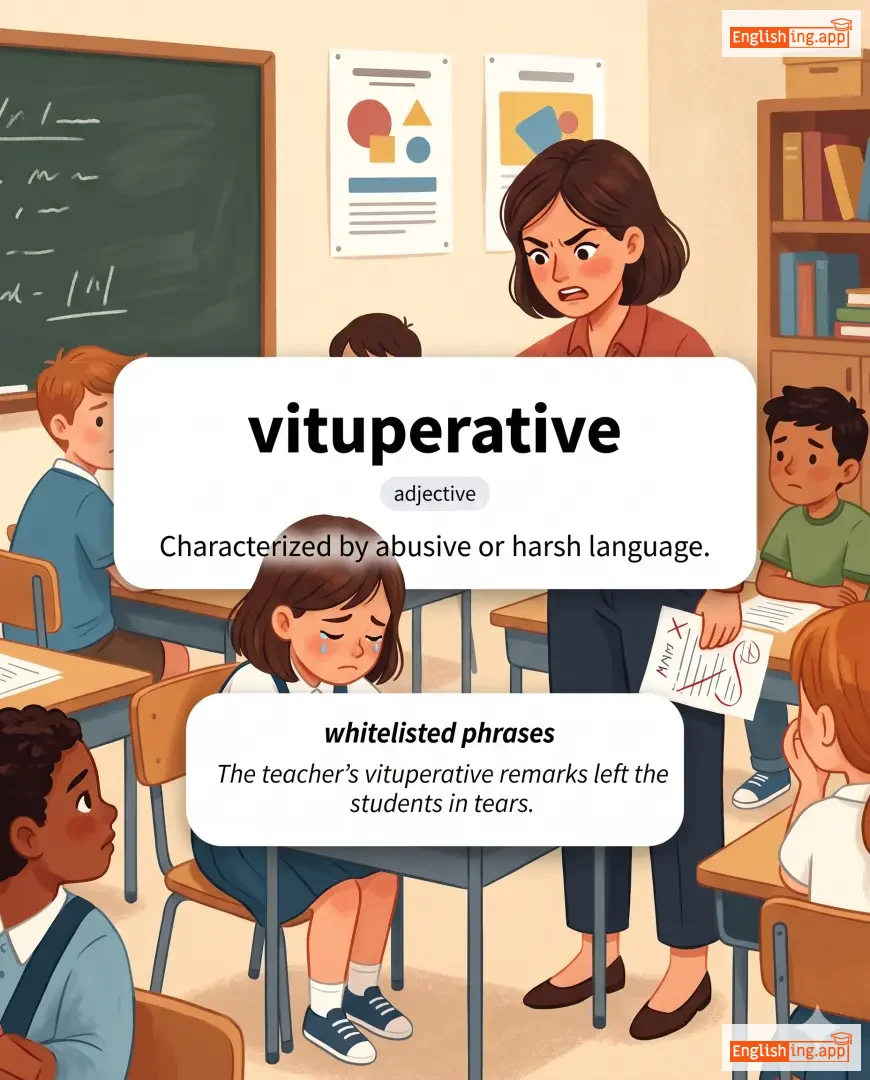
vituperative definition card — visual illustration of the meaning
adjective
/vɪˈtjuːpərətɪv/
दुर्व्यक्तिपूर्ण (durvyaktipoorn)

Characterized by abusive or harsh language.

"The teacher’s vituperative remarks left the students in tears."

"शिक्षक की दुर्व्यक्तिपूर्ण टिप्पणियाँ छात्रों को आँसुओं में डुबो गईं।" (shikshak ki durvyaktipoorn tippaniyan chatron ko aansuon mein dubo gayin.)
adjective
/ʌnˈdʒʌst/
अन्यायपूर्ण; गलत; (anyaaypoorn; galat)

not fair or right; morally wrong

"The punishment was unjust for such a minor offense."

"यह दंड एक छोटे अपराध के लिए अन्यायपूर्ण था।" (yah dand ek chhote apraadh ke liye anyaaypoorn tha)
adjective
/ʌnˈɜːrθli/
अलौकिक (aloukik)

Strange or unnatural in a way that seems not of this world

"The forest was filled with an unearthly glow."

"जंगल एक अलौकिक आभा से भरा हुआ था।" (Jangal ek aloukik abha se bhara hua tha.)
preposition/adjective
/ʌnˈlaɪk/
विभिन्न (vibhinn)

differing from or not similar to

"Unlike his brother, he enjoys playing soccer."

"उसके भाई के विपरीत, उसे फुटबॉल खेलना पसंद है।" (Uske bhai ke vipreet, use football khelna pasand hai.)
adjective
/ˈvɪtriəs/
काँच जैसा (kaanch jaisa)

having a glass-like appearance or quality

"The mineral has a vitreous shine."

"खनिज में काँच जैसा चमक है।" (Khanij mein kaanch jaisa chamak hai.)
adjective
/ʌnˈsəʊʃəbl/
असामाजिक (asamajik)

not enjoying the company of others; avoiding social interaction

"He became unsociable after moving to a new city."

"नए शहर में जाने के बाद वह असामाजिक हो गया।" (nae shahar mein jaane ke baad vah asamajik ho gaya)
adjective
/ʌnˈsaɪtli/
अपसंद (apsand)

Unpleasant to look at; ugly.

"The garbage pile created an unsightly view in the park."

"कचरे का ढेर पार्क में एक अपसंद दृश्य बना रहा था।" (kachre ka dher park mein ek apsand drishya bana raha tha.)
adjective
/ʌnˈhel.θi/
अस्वास्थ्यकर; अस्वस्थ (aswasthyakaar, aswasth)

harmful to health; not in good health; detrimental to well-being

"Eating too much fast food is unhealthy for your body."

"बहुत अधिक फास्ट फूड खाना आपके शरीर के लिए अस्वास्थ्यकर है।" (bahut adhik fast food khana aapke sharir ke liye aswasthyakaar hai।)
noun
/vɪnˈjɛt/
संक्षिप्त लेख (sankshipt lekh)

A short, descriptive piece of writing or a brief scene.

"The author included a poignant vignette in the introduction of the book."

"लेखक ने किताब की प्रस्तावना में एक मार्मिक संक्षिप्त लेख शामिल किया।" (Lekhak ne kitaab ki prastaavna mein ek maarmik sankshipt lekh shaamil kiya.)
verb
/ˌʌndərˈsɛl/
कम कीमत पर बेचना (kam keemat par bechna)

to sell something at a lower price than competitors or to downplay the value of something

"The shop undersold its rivals by offering huge discounts."

"दुकान ने भारी छूट देकर अपने प्रतिस्पर्धियों से कम कीमत पर बेचा।" (Dukaan ne bhaari chhoot dekar apne pratishpardhiyon se kam keemat par becha.)
verb
/ˈvɛəriəˌɡeɪt/
विविध करना (vividh karna)

To diversify or mark with different colors or patterns.

"The artist used different shades to variegate the design."

"कलाकार ने डिजाइन को विविध बनाने के लिए विभिन्न शेड्स का उपयोग किया।" (kalakar ne design ko vividh banane ke liye vibhinn shades ka upyog kiya.)
adjective
/ˈvaɪ.ə.lənt/
हिंसक (hinsak)

using or involving physical force intended to hurt or damage

"He became violent after hearing the bad news."

"वह बुरी खबर सुनने के बाद हिंसक हो गया।" (Vah buri khabar sunne ke baad hinsak ho gaya.)
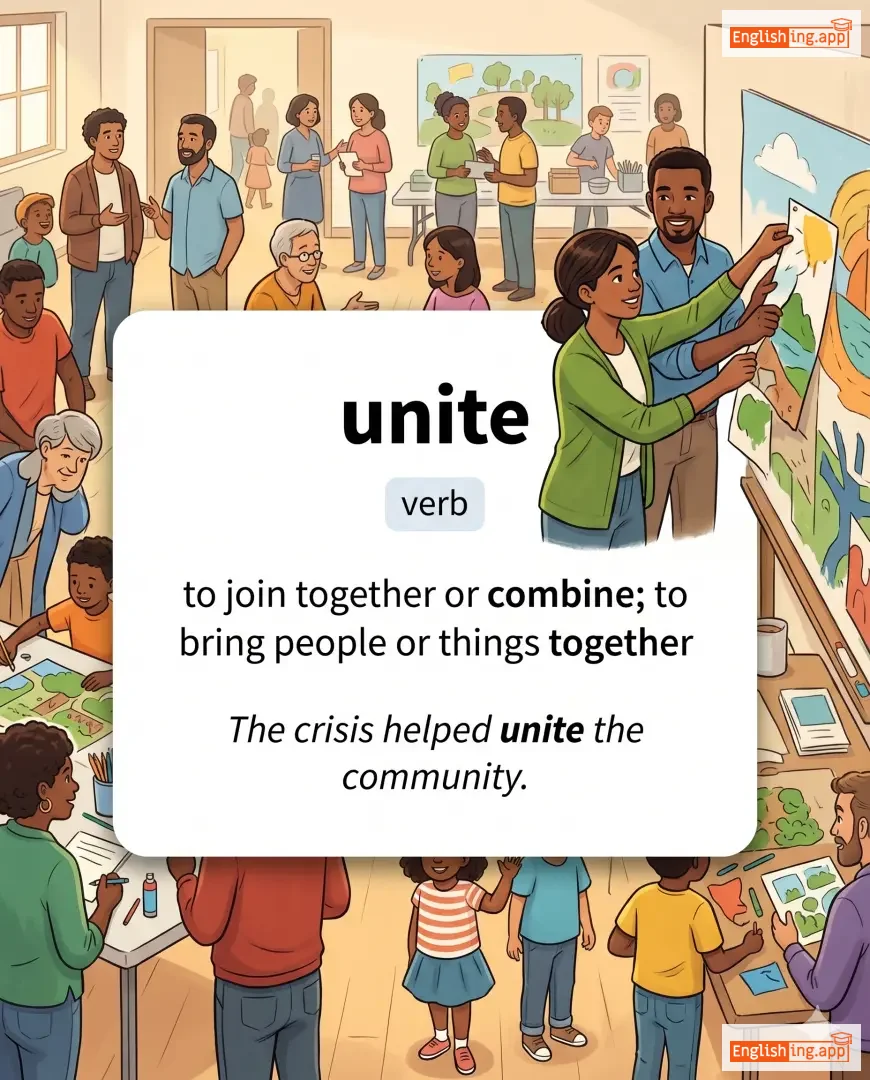
unite definition card — visual illustration of the meaning
verb
/juˈnaɪt/
एकत्र करना (ekatr karna)

to join together or combine; to bring people or things together

"The crisis helped unite the community."

"संकट ने समुदाय को एकत्र करने में मदद की।" (Sankat ne samudaay ko ekatr karne mein madad ki.)