
词汇表

英语词汇词典 | 单词含义、定义和示例

visit definition card — visual illustration of the meaning
verb
/ˈvɪzɪt/
访问 (fǎngwèn)

to go to see someone or something for a short time

"They plan to visit their grandparents next week."

"他们计划下周去看望他们的祖父母。" (Tāmen jìhuà xià zhōu qù kànwàng tāmen de zǔfùmǔ.)
adjective
/ˈvɪrjʊlənt/
极其有害 (jí qí yǒu hài)

Extremely severe or harmful in its effects.

"The virulent disease spread rapidly across the region."

"这种病毒性疾病迅速在该地区传播。" (Zhè zhǒng bìngdúxìng jíbìng xùnsù zài gāi dìqū chuánbò.)
adjective
/ʌnˈnɛsəsɛri/
不必要 (bù bì yào)

not needed or required

"The manager cut all unnecessary expenses to save costs."

"经理削减了所有不必要的开支以节省成本。" (Jīnglǐ xuējiǎnle suǒyǒu bù bì yào de kāizhī yǐ jiéshěng chéngběn.)
noun
/ˈvaɪəˌleɪtər/
违规者 (wéiguī zhě)

A person who breaks or disregards a law, rule, or agreement.

"The police caught the traffic violator at the intersection."

"警察在交叉口抓住了交通违规者。" (Jǐngchá zài jiāochā kǒu zhuāzhùle jiāotōng wéiguī zhě.)
adjective
/ˈvɪsɪd/
粘稠 (zhānchóu)

Having a thick, sticky consistency.

"The sap had a viscid texture that stuck to his hands."

"树汁有一种粘稠的质地,粘在他的手上。" (Shù zhī yǒu yī zhǒng zhānchóu de zhìdì, zhān zài tā de shǒu shàng.)
viscous definition card — visual illustration of the meaning
adjective
/ˈvɪskəs/
粘性 (niánxìng)

Having a thick, sticky consistency between solid and liquid.

"Honey is a viscous liquid that flows slowly."
"蜂蜜是一种粘性液体,流动缓慢。" (Fēngmì shì yī zhǒng niánxìng yètǐ, liúdòng huǎnmàn.)
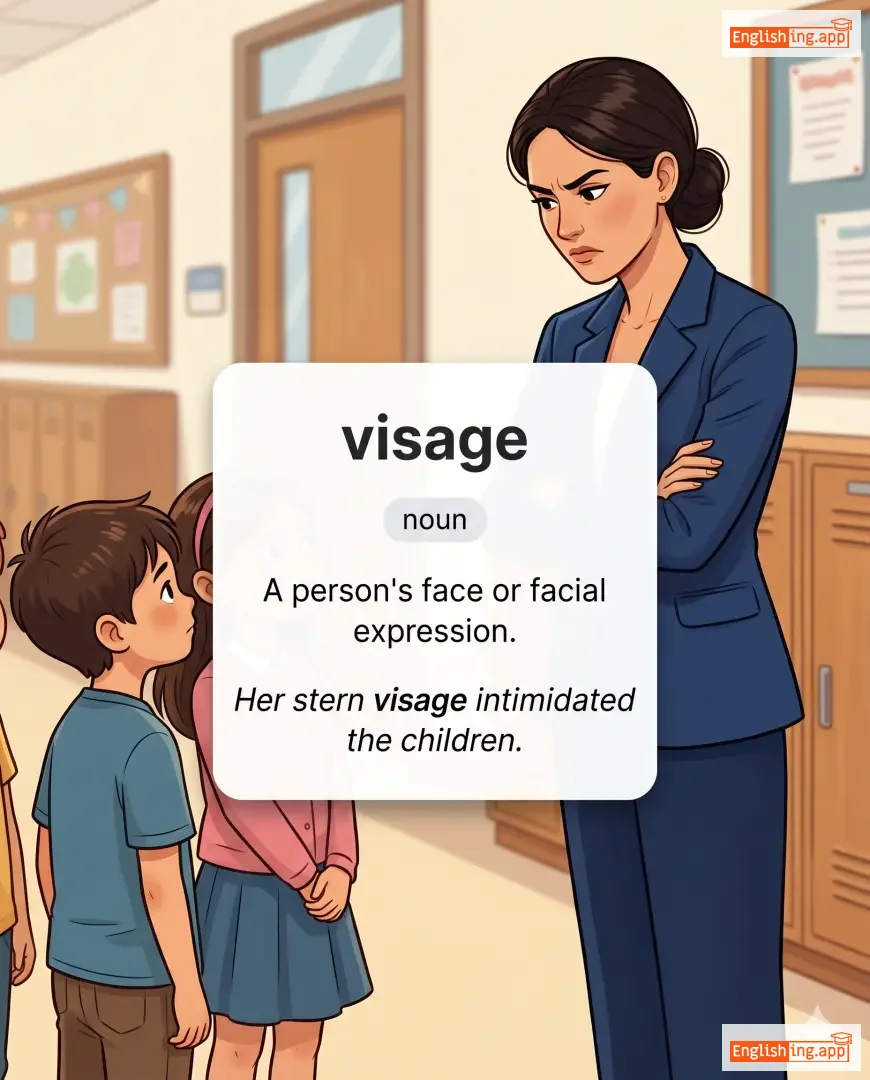
visage definition card — visual illustration of the meaning
noun
/ˈvɪzɪdʒ/
幸福 (xìngfú)

A person's face or facial expression.

"Her stern visage intimidated the children."

"她获得奖项时,无法掩饰她的幸福。" (Tā huòdé jiǎngxiàng shí, wúfǎ yǎnshì tā de xìngfú.)
adjective
/ˌʌnəbˈtruːsɪv/
不引人注目 (bù yǐn rén zhùmù)

not attracting attention; blending in without causing notice

"The security cameras are designed to be unobtrusive."

"安全摄像头被设计成不引人注目。" (Ānquán shèxiàngtóu bèi shèjì chéng bù yǐn rén zhùmù.)
noun/adjective
/ˈvɪntɪdʒ/
复古 / 经典 (fu gu / jing dian)

Relating to high quality from the past; classic; also the year of a wine harvest.

"She wore a vintage dress from the 1950s."

"她穿着一件1950年代的复古裙子。" (Ta chuanzhuo yi jian 1950 niandai de fugu qunzi.)
adjective
/ˈvaɪtl/
至关重要 (zhìguān zhòngyào)

essential or necessary for life or success

"It's vital to stay hydrated during the summer."

"在夏天保持水分非常重要。" (Zài xiàtiān bǎochí shuǐfèn fēicháng zhòngyào.)
noun
/ˈjuːnɪt/
单元 (dānyuán)

an individual thing or person regarded as a single and complete entity

"Each unit in the production line is carefully tested."

"生产线上的每个单元都经过仔细测试。" (Shēngchǎn xiàn shàng de měi gè dānyuán dōu jīngguò zǐxì cèshì.)
adjective
/ʌnˈrɪəl/
不真实的 (bu zhenshi de)

not real or not based on reality; exaggerated or imaginary

"The experience felt unreal after the sudden news."

"突如其来的消息后,这种经历感觉不真实。" (Tu ru qi lai de xiaoxi hou, zhe zhong jingli ganjue bu zhenshi)
adjective
/ˌʌnprɪˈtɛnʃəs/
谦虚的 (qianxu de)

modest; not attempting to impress others with appearance or importance

"She lives in an unpretentious home but is very happy."
"她住在一个谦虚的家里,但非常快乐。" (Ta zhu zai yi ge qianxu de jia li, dan feichang kuaile.)
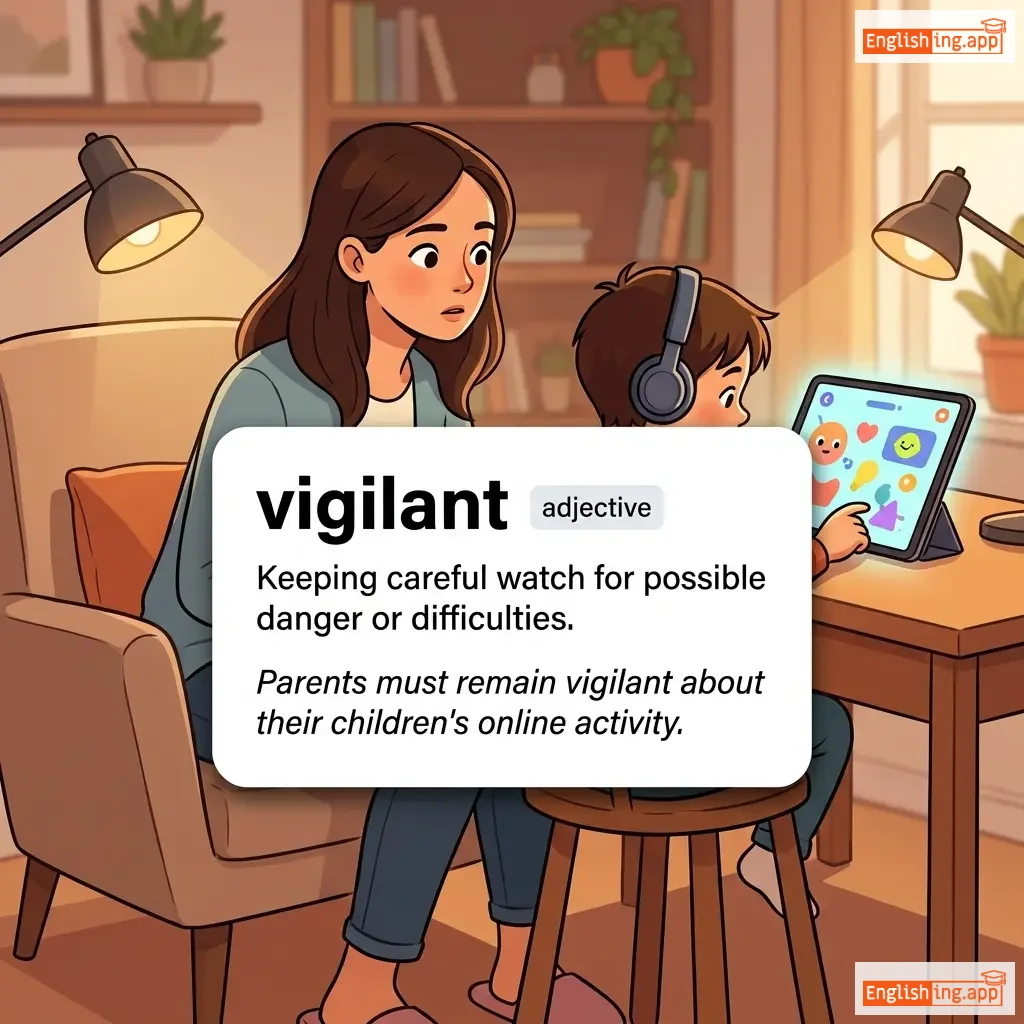
vigilant definition card — visual illustration of the meaning
adjective
/ˈvɪdʒɪlənt/
警觉 (jǐngjué)

Keeping careful watch for possible danger or difficulties.

"Parents must remain vigilant about their children's online activity."
"父母必须保持对孩子们在线活动的警觉。" (Fùmǔ bìxū bǎochí duì háizimen zàixiàn huódòng de jǐngjué.)
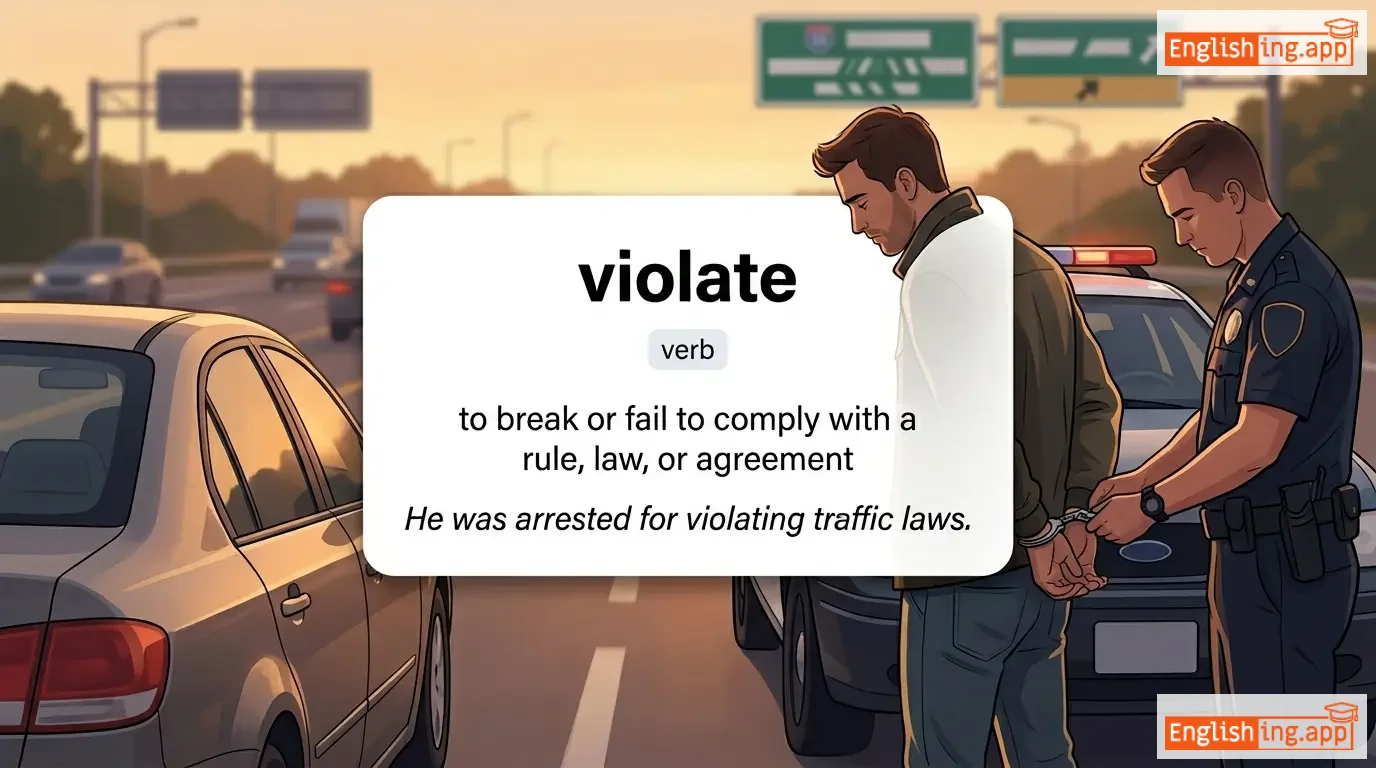
violate definition card — visual illustration of the meaning
verb
/ˈvaɪ.ə.leɪt/
违反 (wéifǎn)

to break or fail to comply with a rule, law, or agreement

"He was arrested for violating traffic laws."

"他因违反交通法规被逮捕。" (Tā yīnwèi wéifǎ bōfǎo jiāotōng fǎlǜ ér bèi dǔlì.)
adjective
/ˈvaɪə.lət/
紫色 (zǐsè)

a bluish-purple color

"She wore a beautiful violet dress to the party."

"她穿着一件美丽的紫色裙子参加聚会。" (Tā chuānzhuó yī jiàn měilì de zǐsè qúnzi cānjiā jùhuì.)
adjective
/ʌnˈmærid/
未婚 (weihun)

Not married; single.

"He is thirty-five and still unmarried."

"他三十五岁,仍然未婚。" (Ta sanshiwu sui, rengran weihun.)
vitiate definition card — visual illustration of the meaning
verb
/ˈvɪʃieɪt/
败坏 (bàihuài)

to spoil, weaken, or make something less effective

"One careless remark can vitiate the entire argument."
"一句不小心的话可能会破坏整个论点。" (Yī jù bù xiǎoxīn de huà kěnéng huì pòhuài zhěnggè lùndiǎn.)
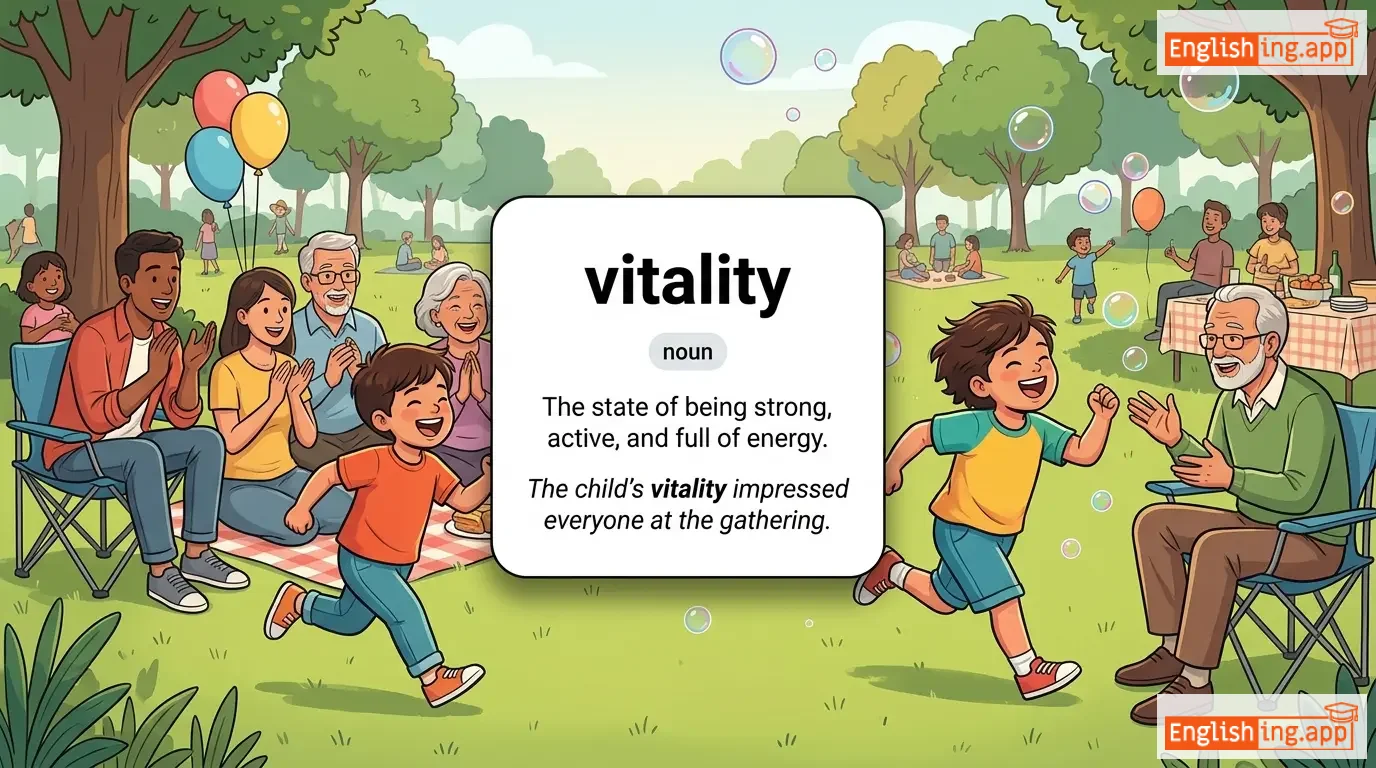
vitality definition card — visual illustration of the meaning
noun
/vaɪˈtæləti/
生命力 (shengmingli)

The state of being strong, active, and full of energy.

"The child’s vitality impressed everyone at the gathering."

"孩子的生命力给聚会上的每个人留下了深刻印象。" (Háizi de shēngmìnglì gěi jùhuì shàng de měi gè rén liúxiàle shēnkè yìnxiàng.)
noun
/ˈvɜːrtʃuː/
美德 (meidé)

High moral standards or a good quality considered morally good.

"Patience is considered a great virtue."

"耐心被认为是一种伟大的美德。" (Nàixīn bèi rènwéi shì yī zhǒng wěidà de měidé.)
adjective
/ʌn.rɪˈleɪ.tɪd/
无关的; 不相关 (wúguān de; bù xiāngguān)

having no connection or relationship; not connected by family ties

"The two incidents were completely unrelated to each other."

"这两个事件完全无关。" (Zhè liǎng gè shìjiàn wánquán wúguān.)
adverb
/ʌnˈfɔːtʃənətli/
不幸的是 (bù xìng de shì)

used to express regret or disappointment about something that has happened or is going to happen

"Unfortunately, the event was canceled due to the rain."

"不幸的是,由于下雨,活动被取消了。" (Bù xìng de shì, yóu yú xià yǔ, huódòng bèi qǔxiāo le.)
adjective
/vaɪˈtjuːpərəbl̩/
应受指责的 (ying shou zhize de)

Deserving of blame, censure, or harsh criticism.

"His reckless actions made him vituperable in the eyes of his colleagues."

"他鲁莽的行为使他在同事眼中变得应受指责的。" (Ta lumang de xingwei shi ta zai tongshi yan zhong biande ying shou zhize de.)
adverb
/ˈvɜː.tʃu.ə.li/
几乎, 虚拟 (jī hū, xū nǐ)

almost or nearly, but not completely; by means of computer technology

"The meeting was held virtually due to travel restrictions."

"由于旅行限制,会议是虚拟举行的。" (Yóu yú lǚ xíng xiàn zhì, huì yì shì xū nǐ jǔ xíng de.)
noun
/ˌjuːnɪˈfɔːrmɪti/
统一性 (tongyixing)

The quality or state of being the same, consistent, or without variation.

"The teacher insisted on uniformity in the students' dress code."
"老师坚持要求学生的着装保持统一性。" (Laoshi jiānchí yāoqiú xuéshēng de zhuózhuāng bǎochí tǒngyīxìng.)
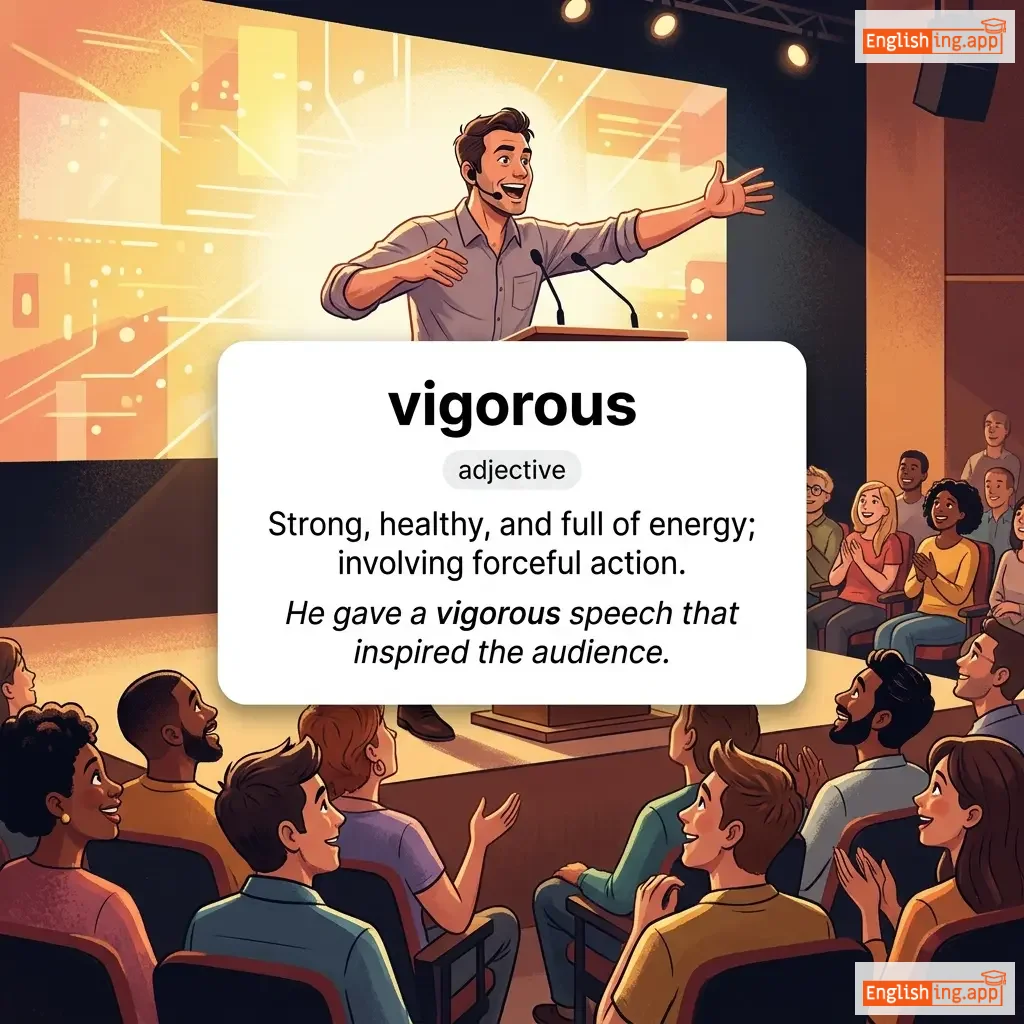
vigorous definition card — visual illustration of the meaning
adjective
/ˈvɪɡərəs/
精力充沛 (jingli chōngpèi)

Strong, healthy, and full of energy; involving forceful action.

"He gave a vigorous speech that inspired the audience."

"他发表了一场精力充沛的演讲,激励了听众。" (Tā fābiǎo le yī chǎng jīnglì chōngpèi de yǎnjiǎng, jīlì le tīngzhòng.)
noun
/ˈviːzə/
签证 (qiānzhèng)

an official authorization or permission to enter, leave, or stay in a country

"She applied for a visa to study abroad."

"她申请了签证以便出国留学。" (Tā shēnqǐngle qiānzhèng yǐbiàn chūguó liúxué.)
adjective
/ʌnˈlɪmɪtɪd/
无限 (wuxian)

without any limits or restrictions

"The internet plan offers unlimited data for the whole month."

"该互联网计划提供整个一个月的无限数据。" (Gai hùliánwǎng jìhuà tígōng zhěnggè yīgè yuè de wúxiàn shùjù.)
noun
/ˌvaɪəˈleɪʃən/
违反 (wéifǎn)

The act of breaking or disregarding a law, rule, or agreement.

"Driving without a license is a violation of the law."

"没有驾照开车是违反法律的行为。" (méiyǒu jiàzhào kāichē shì wéifǎn fǎlǜ de xíngwéi.)
adjective
/ʌnˈnoʊn/
未知 (weizhi)

not known or familiar

"The origin of the disease remains unknown."

"疾病的来源仍然未知。" (Jibing de laiyuan rengran weizhi.)
vision definition card — visual illustration of the meaning
noun
/ˈvɪʒən/
幸福 (xingfu)

the ability to see or a mental image of something

"She had a clear vision of her future."

"当她收到奖项时,她无法掩饰她的幸福。" (Dang ta shoudao jiangxiang shi, ta wu fa yanshi ta de xingfu.)
adjective
/ʌnˈθɪŋkəbl/
难以想象的 (nán yǐ xiǎng xiàng de)

impossible to conceive or imagine; beyond belief or consideration

"It was unthinkable that such a tragedy could happen in our peaceful town."

"在我们和平的小镇上发生这样一场悲剧,简直是难以想象的。" (Zài wǒmen hépíng de xiǎo zhèn shàng fāshēng zhèyàng yī chǎng bēijù, jiǎnzhí shì nán yǐ xiǎngxiàng de.)
verb
/ʌnˈfɛtər/
解开束缚 (jiě kāi shù fù)

to release from restraint or restriction; to free

"The new law will unfetter small businesses from excessive regulations."

"新法律将使小企业免于过多的规定。" (Xīn fǎlǜ jiāng shǐ xiǎo qǐyè miǎn yú guò duō de guīdìng.)
adjective
/ˈvɪzəbl/
可见的 (kejian de)

able to be seen; perceptible by the eye

"The stars were clearly visible in the night sky."

"星星在夜空中清晰可见。" (Xīngxīng zài yèkōng zhōng qīngxī kějiàn.)
noun
/ˌjuːnɪˈvɜːrsɪti/
大学 (daxue)

an institution of higher education and research, which grants academic degrees

"She is studying law at the university."
"她在大学学习法律。" (Ta zai daxue xuexi falu.)
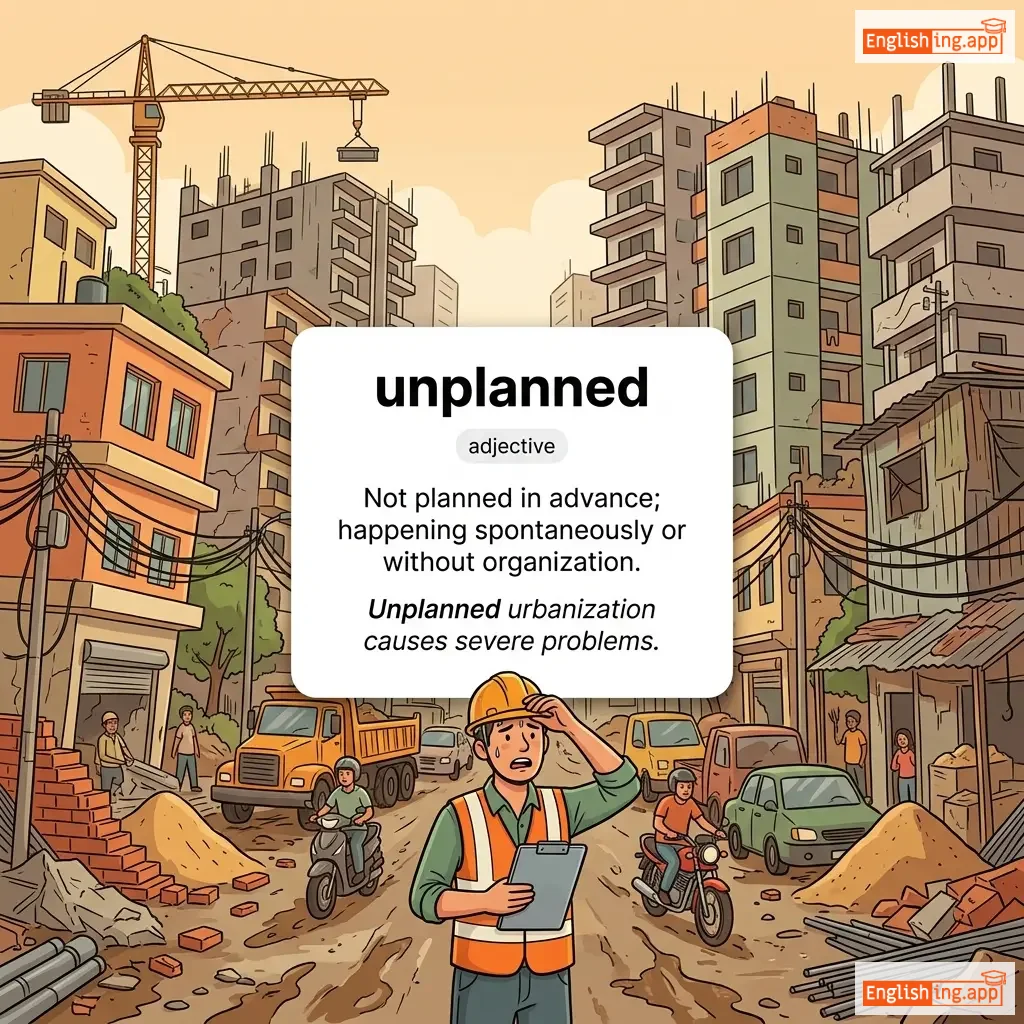
unplanned definition card — visual illustration of the meaning
adjective
ʌnˈplænd
未计划的 (wei jihua de)

Not planned in advance; happening spontaneously or without organization.

"Unplanned urbanization causes severe problems."

"无计划的城市化造成严重的问题。" (Wu jihua de chengshihua zaocheng yanzhong de wenti.)
adjective
/ˌʌnɪnˈhɪbɪtɪd/
不受抑制的 (bù shòu yìzhì de)

Not restrained or restricted; free in behavior or expression.

"She gave an uninhibited laugh at the joke."
"她在笑话中放声大笑。" (Tā zài xiàohuà zhōng fàngshēng dà xiào.)
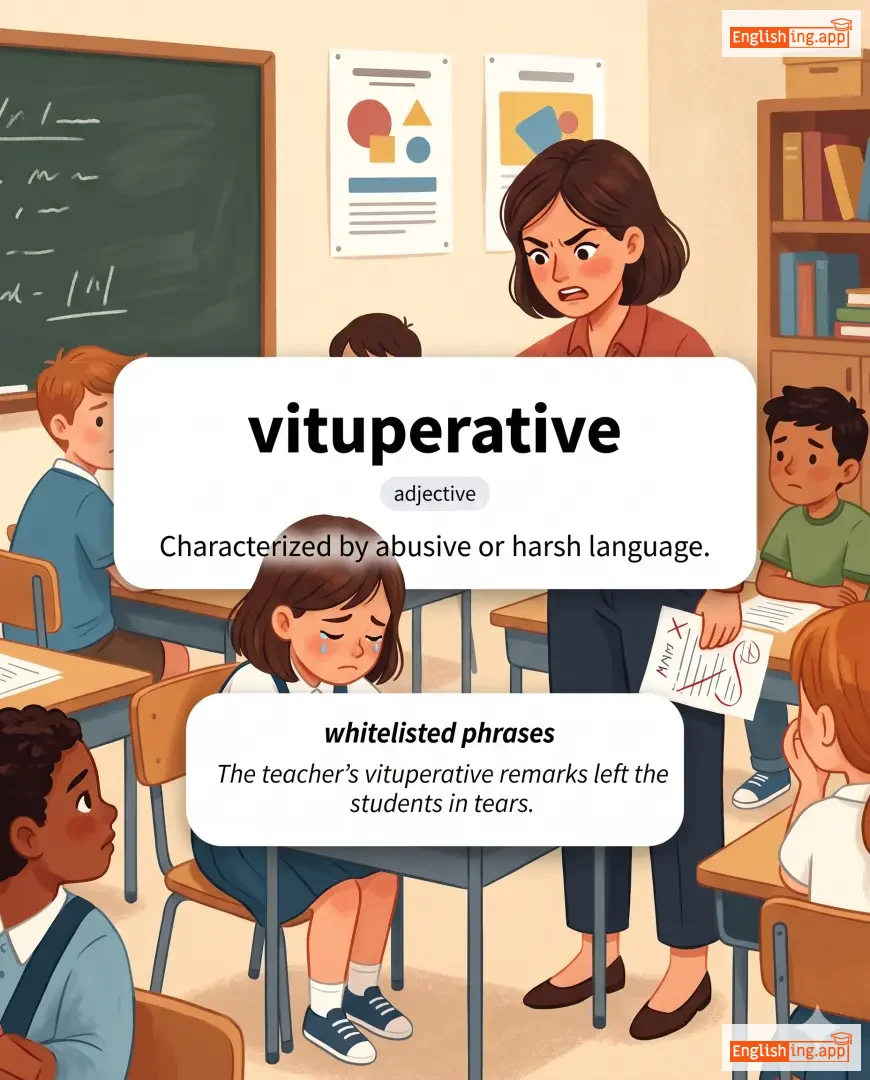
vituperative definition card — visual illustration of the meaning
adjective
/vɪˈtjuːpərətɪv/
辱骂的 (rǔmà de)

Characterized by abusive or harsh language.

"The teacher’s vituperative remarks left the students in tears."

"老师的辱骂言辞让学生们泪流满面。" (Lǎoshī de rǔmà yáncí ràng xuéshēngmen lèi liú mǎn miàn.)
adjective
/ʌnˈdʒʌst/
不公正的; 错误的 (bù gōngzhèng de; cuòwù de)

not fair or right; morally wrong

"The punishment was unjust for such a minor offense."

"这个惩罚对于如此轻微的罪行来说是不公正的。" (zhège chéngfá duìyú rúcǐ qīngwēi de zuìxíng lái shuō shì bù gōngzhèng de.)
adjective
/ʌnˈɜːrθli/
超自然的 (chaonaturande)

Strange or unnatural in a way that seems not of this world

"The forest was filled with an unearthly glow."

"森林中充满了超自然的光辉。" (Senlin zhong chongman le chaonaturande guanghui.)
preposition/adjective
/ʌnˈlaɪk/
不同 (bùtóng)

differing from or not similar to

"Unlike his brother, he enjoys playing soccer."

"与他的兄弟不同,他喜欢踢足球。" (Yǔ tā de xiōngdì bùtóng, tā xǐhuān tī zúqiú.)
adjective
/ˈvɪtriəs/
玻璃状 (bolizhuang)

having a glass-like appearance or quality

"The mineral has a vitreous shine."

"这种矿物有玻璃状的光泽。" (Zhezhong kuangwu you bolizhuang de guangze.)
adjective
/ʌnˈsəʊʃəbl/
不合群的 (bu he qun de)

not enjoying the company of others; avoiding social interaction

"He became unsociable after moving to a new city."

"搬到新城市后,他变得不合群。" (ban dao xin chengshi hou ta bian de bu he qun)
adjective
/ʌnˈsaɪtli/
难看 (nankan)

Unpleasant to look at; ugly.

"The garbage pile created an unsightly view in the park."

"垃圾堆在公园里创造了一个难看的景象。" (Lājī duī zài gōngyuán lǐ chuàngzào le yīgè nán kàn de jǐngxiàng.)
adjective
/ʌnˈhel.θi/
不健康的; 有害的 (bù jiàn kāng de, yǒu hài de)

harmful to health; not in good health; detrimental to well-being

"Eating too much fast food is unhealthy for your body."

"吃太多快餐对你的身体不健康。" (Chī tài duō kuài cān duì nǐ de shēn tǐ bù jiàn kāng.)
noun
/vɪnˈjɛt/
小品 (xiǎopǐn)

A short, descriptive piece of writing or a brief scene.

"The author included a poignant vignette in the introduction of the book."

"作者在书的序言中加入了一篇感人的小品。" (Zuòzhě zài shū de xùyán zhōng jiārùle yī piān gǎn rén de xiǎopǐn.)
verb
/ˌʌndərˈsɛl/

to sell something at a lower price than competitors or to downplay the value of something

"The shop undersold its rivals by offering huge discounts."

verb
/ˈvɛəriəˌɡeɪt/
使多样化 (shǐ duōyàng huà)

To diversify or mark with different colors or patterns.

"The artist used different shades to variegate the design."

"艺术家使用不同的阴影来使设计变得多样化。" (Yìshùjiā shǐyòng bùtóng de yīnyǐng lái shǐ shèjì biàn dé duōyàng huà.)
adjective
/ˈvaɪ.ə.lənt/
暴力的 (baolide)

using or involving physical force intended to hurt or damage

"He became violent after hearing the bad news."
"听到坏消息后,他变得暴力了。" (Tingdao huai xiaoxi hou, ta biande baolile.)
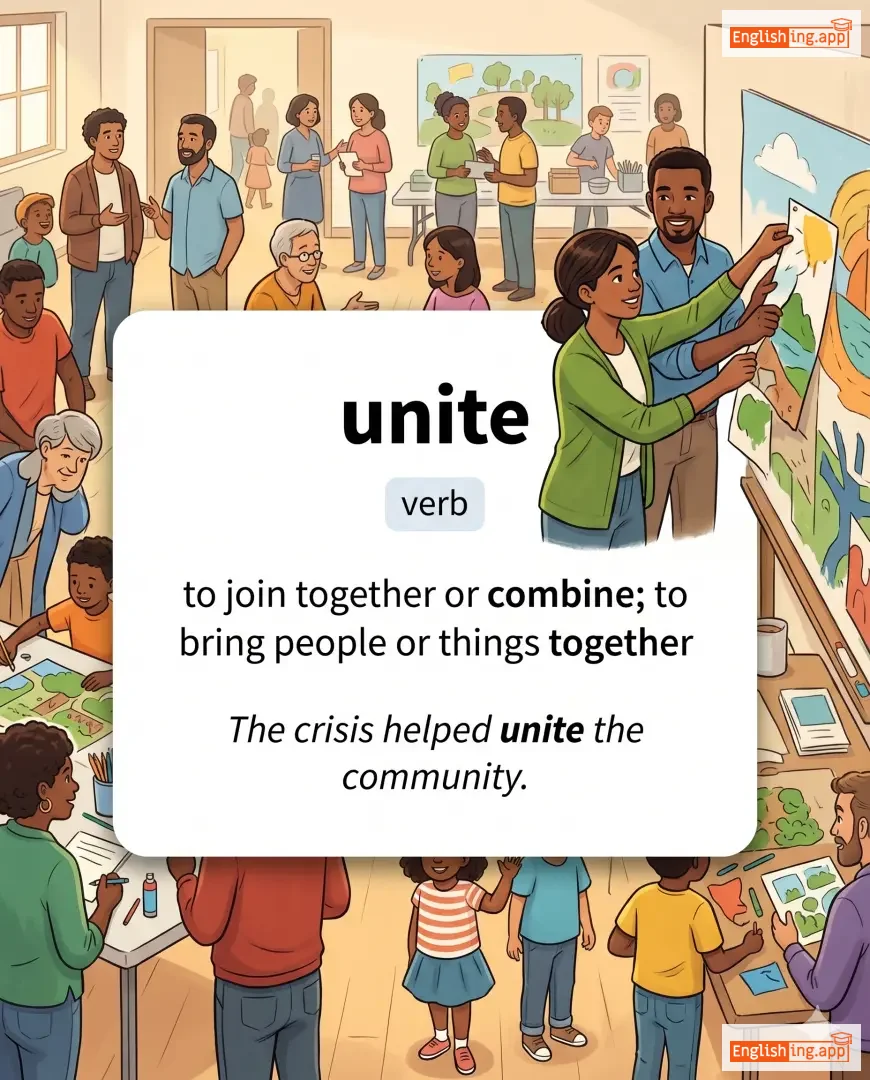
unite definition card — visual illustration of the meaning
verb
/juˈnaɪt/
联合 (lianhe)

to join together or combine; to bring people or things together

"The crisis helped unite the community."

"危机帮助了团结社区。" (Weiji bangzhu le tuanjie shequ.)