Vocabularios

Descubra, aprenda y domine el vocabulario en inglés

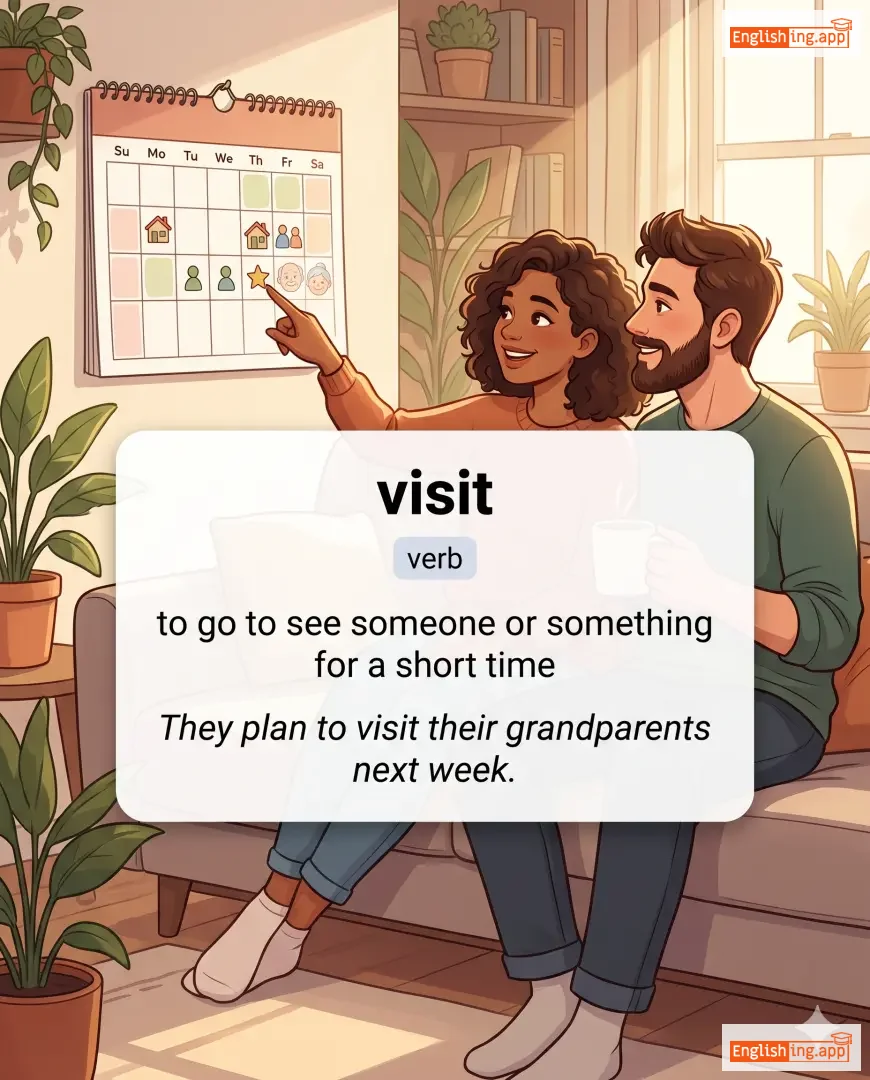
visit definition card — visual illustration of the meaning
verb
/ˈvɪzɪt/
visitar (visitar)

to go to see someone or something for a short time

"They plan to visit their grandparents next week."

"Ellos planean visitar a sus abuelos la próxima semana." (Ellos planean visitar a sus abuelos la próxima semana.)
adjective
/ˈvɪrjʊlənt/
sumamente dañino (sumamente danino)

Extremely severe or harmful in its effects.

"The virulent disease spread rapidly across the region."

"La enfermedad virulenta se extendió rápidamente por la región." (La enfermedad virulenta se extendió rápidamente por la región.)
adjective
/ʌnˈnɛsəsɛri/
innecesario (innecesario)

not needed or required

"The manager cut all unnecessary expenses to save costs."

"El gerente recortó todos los gastos innecesarios para ahorrar costos." (El gerente recortó todos los gastos innecesarios para ahorrar costos.)
noun
/ˈvaɪəˌleɪtər/
infractor (infractor)

A person who breaks or disregards a law, rule, or agreement.

"The police caught the traffic violator at the intersection."

"La policía atrapó al infractor de tráfico en la intersección." (La policía atrapó al infractor de tráfico en la intersección.)
adjective
/ˈvɪsɪd/
viscoso (viscoso)

Having a thick, sticky consistency.

"The sap had a viscid texture that stuck to his hands."

"La savia tenía una textura viscosa que se pegaba a sus manos." (La savia tenía una textura viscosa que se pegaba a sus manos.)
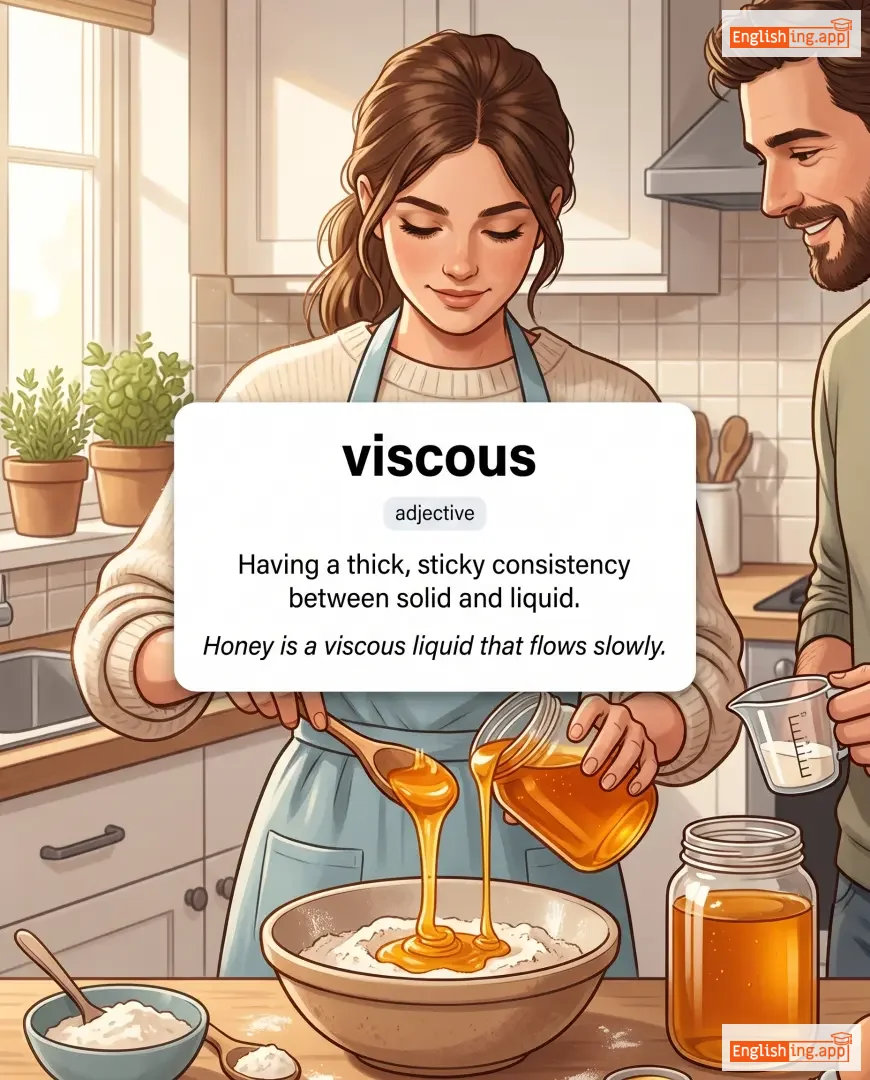
viscous definition card — visual illustration of the meaning
adjective
/ˈvɪskəs/
viscoso (viscoso)

Having a thick, sticky consistency between solid and liquid.

"Honey is a viscous liquid that flows slowly."

"La miel es un líquido viscoso que fluye lentamente." (La miel es un liquido viscoso que fluye lentamente.)
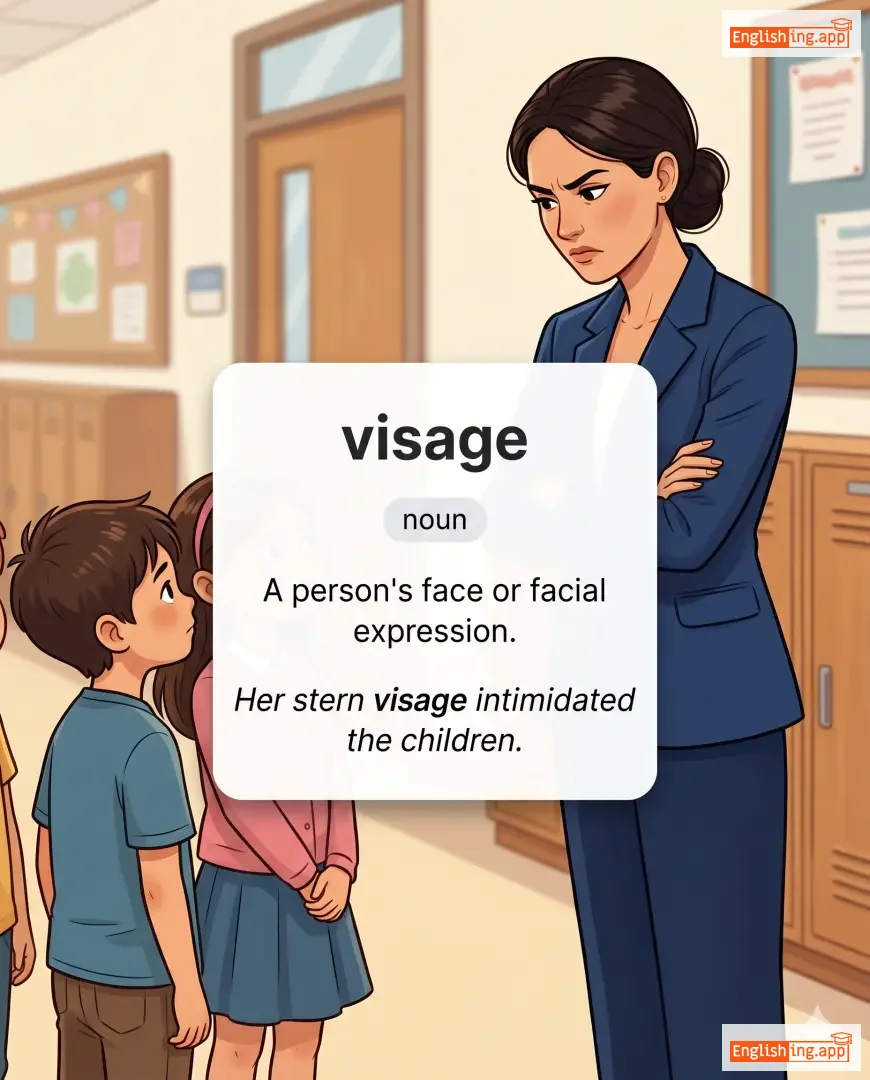
visage definition card — visual illustration of the meaning
noun
/ˈvɪzɪdʒ/
felicidad (felicidad)

A person's face or facial expression.

"Her stern visage intimidated the children."

"Ella no pudo ocultar su felicidad cuando recibió el premio." (Ella no pudo ocultar su felicidad cuando recibió el premio.)
adjective
/ˌʌnəbˈtruːsɪv/
discreto (discreto)

not attracting attention; blending in without causing notice

"The security cameras are designed to be unobtrusive."

"Las cámaras de seguridad están diseñadas para ser discretas." (Las camaras de seguridad estan disenadas para ser discretas.)
noun/adjective
/ˈvɪntɪdʒ/
vintage / clásico (vintage / clasico)

Relating to high quality from the past; classic; also the year of a wine harvest.

"She wore a vintage dress from the 1950s."

"Ella llevaba un vestido vintage de los años 50." (Ella llevaba un vestido vintage de los anos 50.)
adjective
/ˈvaɪtl/
vital (vital)

essential or necessary for life or success

"It's vital to stay hydrated during the summer."

"Es vital mantenerse hidratado durante el verano." (Es vital mantenerse hidratado durante el verano.)
noun
/ˈjuːnɪt/
unidad (unidad)

an individual thing or person regarded as a single and complete entity

"Each unit in the production line is carefully tested."

"Cada unidad en la línea de producción se prueba cuidadosamente." (Cada unidad en la linea de produccion se prueba cuidadosamente.)
adjective
/ʌnˈrɪəl/
irreal (irreal)

not real or not based on reality; exaggerated or imaginary

"The experience felt unreal after the sudden news."

"La experiencia se sintió irreal después de la noticia repentina." (La experiencia se sintio irreal despues de la noticia repentina)
adjective
/ˌʌnprɪˈtɛnʃəs/
modesto (modesto)

modest; not attempting to impress others with appearance or importance

"She lives in an unpretentious home but is very happy."

"Ella vive en una casa modesta pero es muy feliz." (Ella vive en una casa modesta pero es muy feliz.)
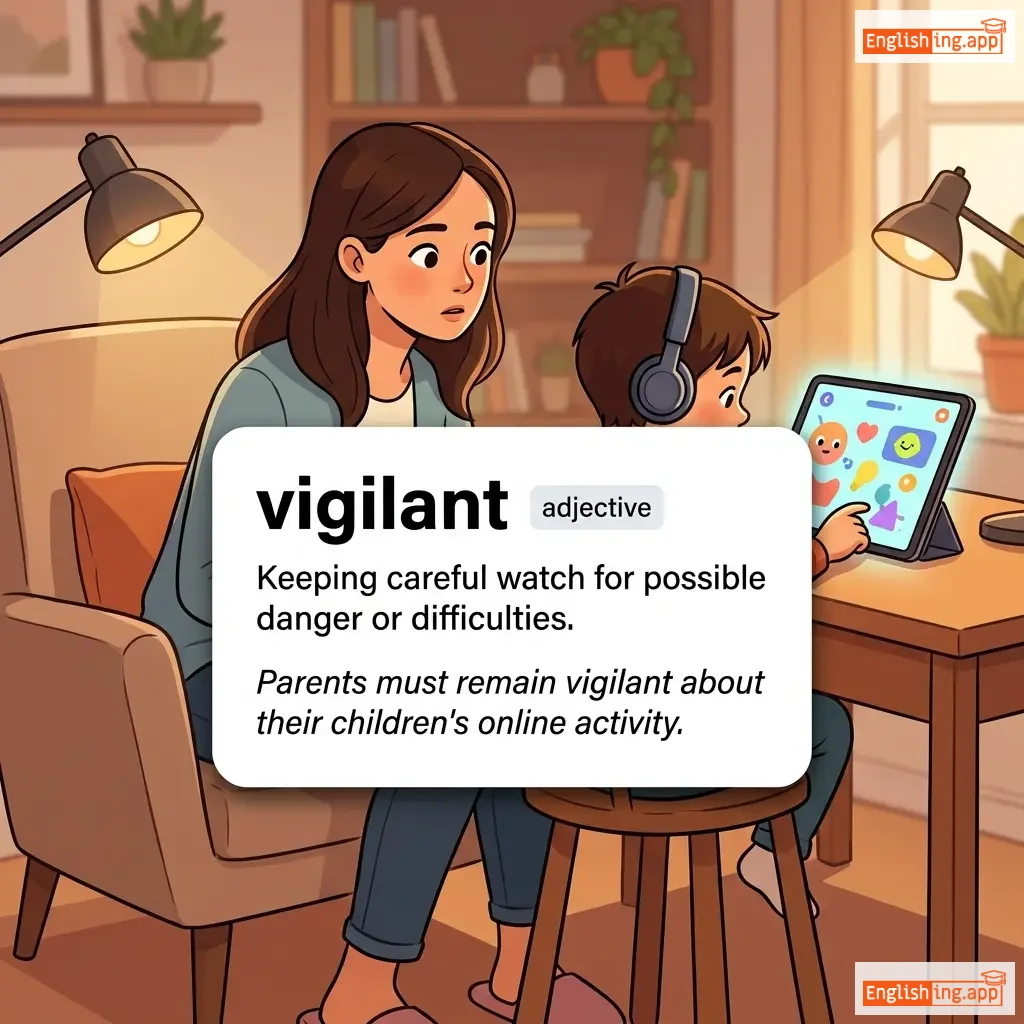
vigilant definition card — visual illustration of the meaning
adjective
/ˈvɪdʒɪlənt/
vigilante (vigilante)

Keeping careful watch for possible danger or difficulties.

"Parents must remain vigilant about their children's online activity."

"Los padres deben mantenerse vigilantes sobre la actividad en línea de sus hijos." (Los padres deben mantenerse vigilantes sobre la actividad en línea de sus hijos.)
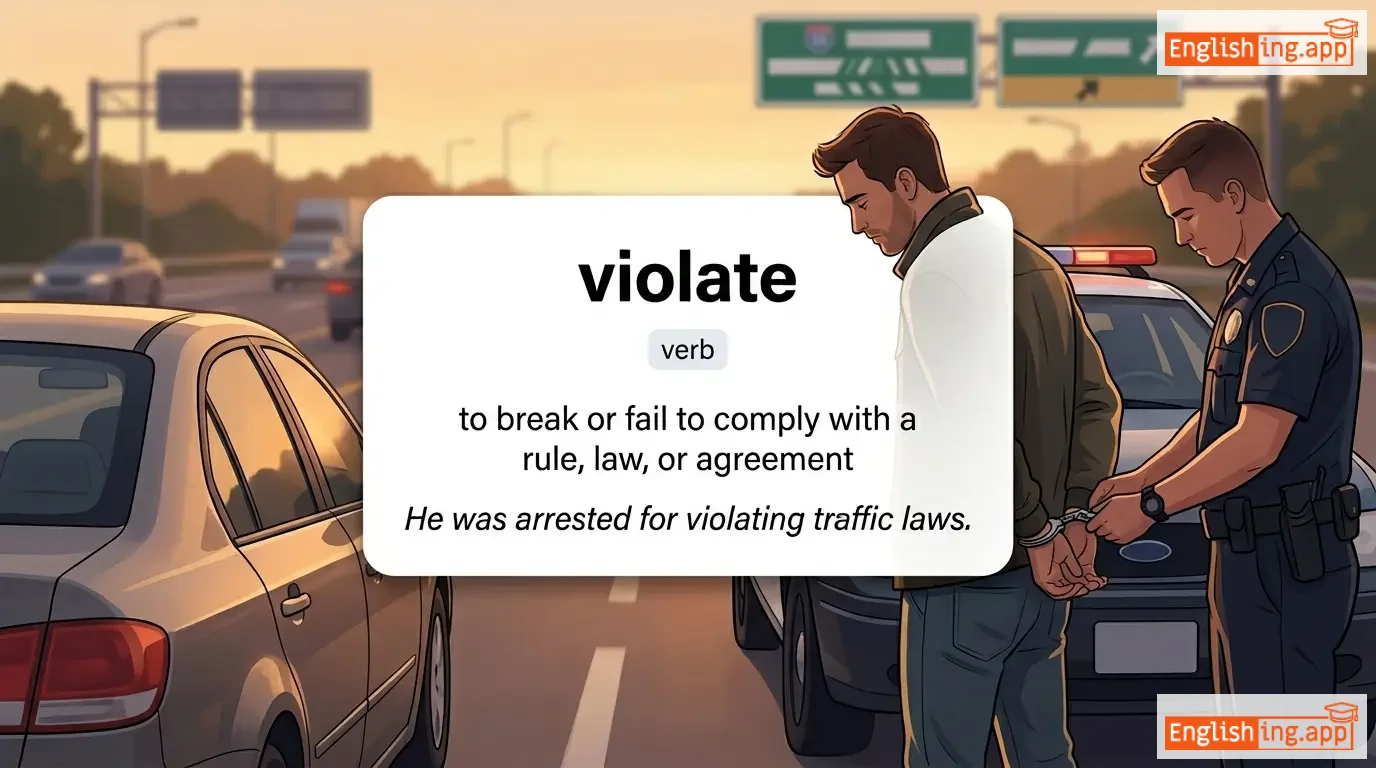
violate definition card — visual illustration of the meaning
verb
/ˈvaɪ.ə.leɪt/
violar (violar)

to break or fail to comply with a rule, law, or agreement

"He was arrested for violating traffic laws."

"fue arrestado por violar las leyes de tráfico." (fue arrestado por violar las leyes de tráfico.)
adjective
/ˈvaɪə.lət/
morado (morado)

a bluish-purple color

"She wore a beautiful violet dress to the party."

"Ella llevaba un hermoso vestido morado en la fiesta." (Ella llevaba un hermoso vestido morado en la fiesta.)
adjective
/ʌnˈmærid/
soltero (soltero)

Not married; single.

"He is thirty-five and still unmarried."

"Él tiene treinta y cinco años y sigue soltero." (Él tiene treinta y cinco años y sigue soltero.)
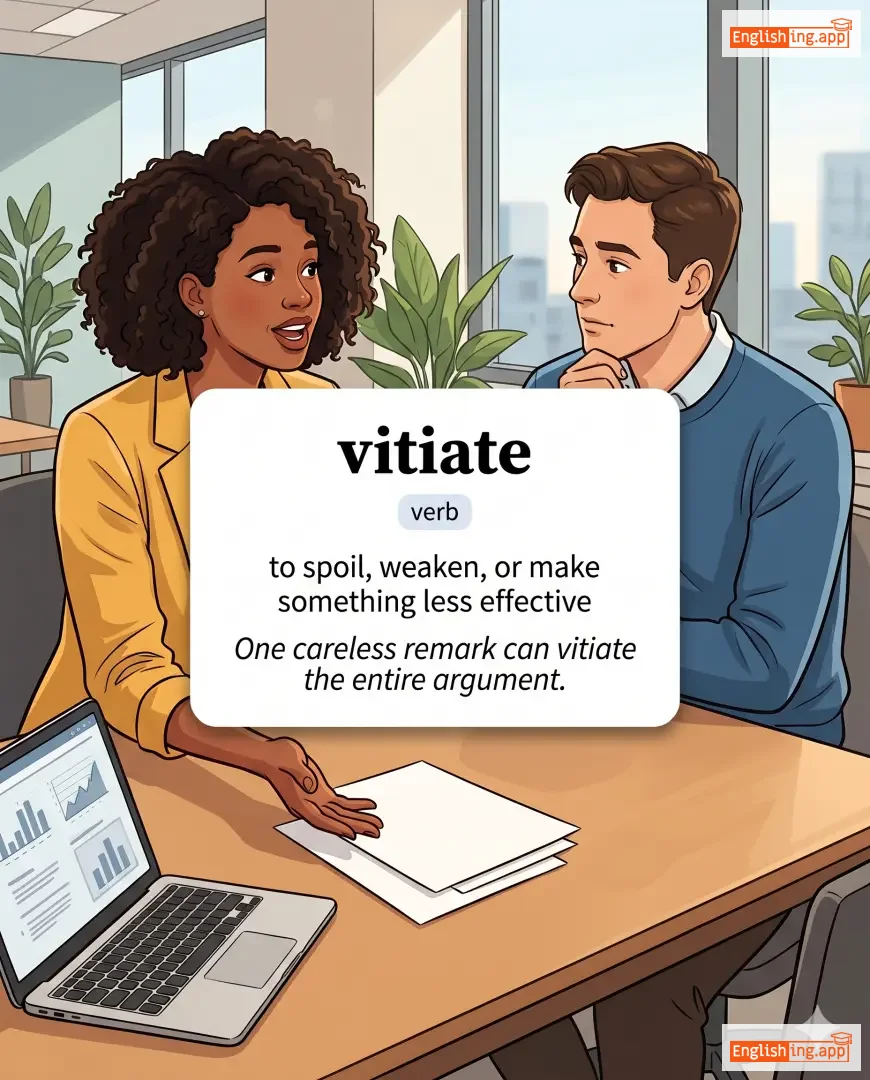
vitiate definition card — visual illustration of the meaning
verb
/ˈvɪʃieɪt/
viciar (viciar)

to spoil, weaken, or make something less effective

"One careless remark can vitiate the entire argument."

"Un comentario imprudente puede viciar todo el argumento." (Un comentario imprudente puede viciar todo el argumento.)
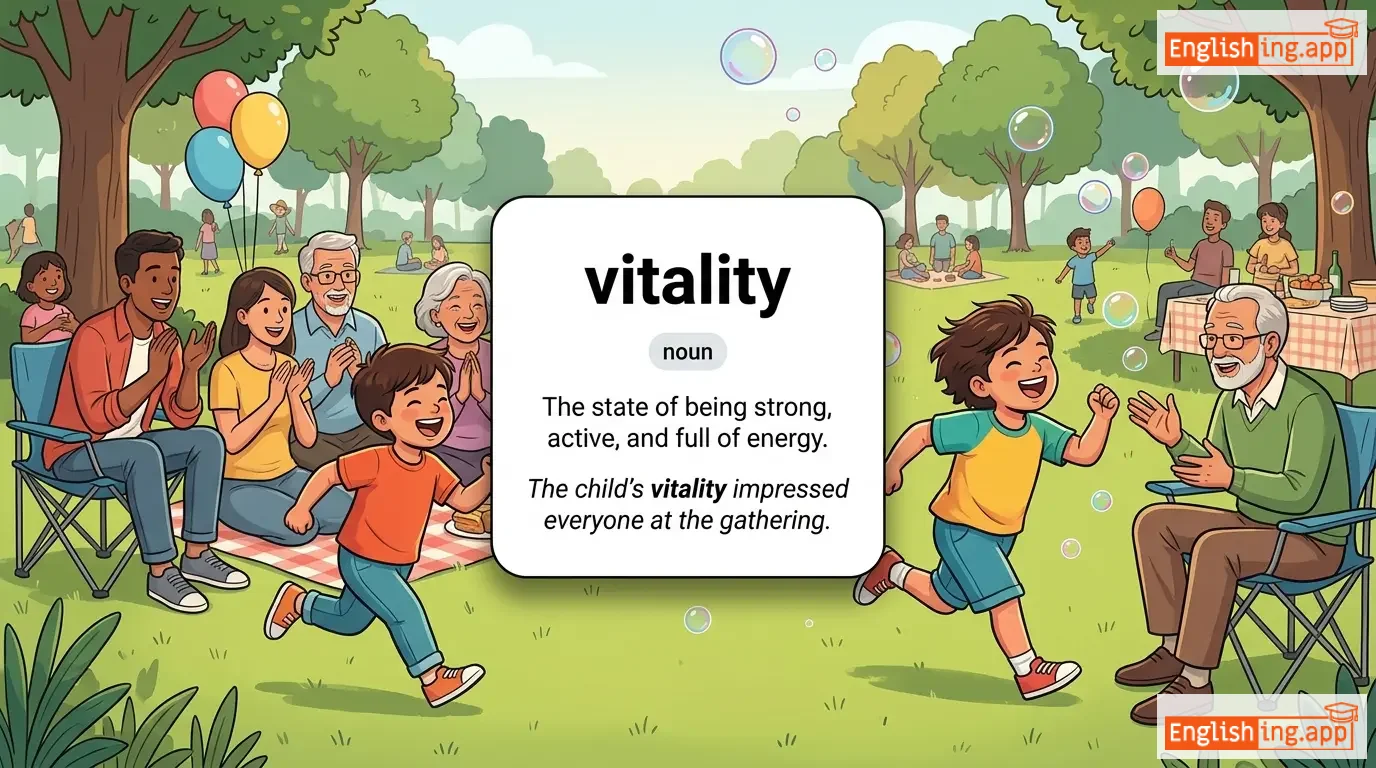
vitality definition card — visual illustration of the meaning
noun
/vaɪˈtæləti/
vitalidad (vitalidad)

The state of being strong, active, and full of energy.

"The child’s vitality impressed everyone at the gathering."

"La vitalidad del niño impresionó a todos en la reunión." (La vitalidad del niño impresionó a todos en la reunión.)
noun
/ˈvɜːrtʃuː/
virtud (virtud)

High moral standards or a good quality considered morally good.

"Patience is considered a great virtue."

"La paciencia es considerada una gran virtud." (La paciencia es considerada una gran virtud.)
adjective
/ʌn.rɪˈleɪ.tɪd/
irrelevante; no relacionado (irrelevante; no relacionado)

having no connection or relationship; not connected by family ties

"The two incidents were completely unrelated to each other."

"Los dos incidentes estaban completamente no relacionados entre sí." (Los dos incidentes estaban completamente no relacionados entre sí.)
adverb
/ʌnˈfɔːtʃənətli/
desafortunadamente (desafortunadamente)

used to express regret or disappointment about something that has happened or is going to happen

"Unfortunately, the event was canceled due to the rain."

"Desafortunadamente, el evento fue cancelado debido a la lluvia." (Desafortunadamente, el evento fue cancelado debido a la lluvia.)
adjective
/vaɪˈtjuːpərəbl̩/
digno de reproche (digno de reproche)

Deserving of blame, censure, or harsh criticism.

"His reckless actions made him vituperable in the eyes of his colleagues."

"Sus acciones imprudentes lo hicieron digno de reproche a los ojos de sus colegas." (Sus akciones imprudentes lo hicieron digno de reproche a los ojos de sus kolegas.)
adverb
/ˈvɜː.tʃu.ə.li/
casi, virtualmente (kasi, virtualmente)

almost or nearly, but not completely; by means of computer technology

"The meeting was held virtually due to travel restrictions."

"La reunión se celebró virtualmente debido a las restricciones de viaje." (La reunion se celebro virtualmente debido a las restricciones de viaje.)
noun
/ˌjuːnɪˈfɔːrmɪti/
uniformidad (uniformidad)

The quality or state of being the same, consistent, or without variation.

"The teacher insisted on uniformity in the students' dress code."

"El maestro insistió en la uniformidad en el código de vestimenta de los estudiantes." (El maestro insistió en la uniformidad en el código de vestimenta de los estudiantes.)
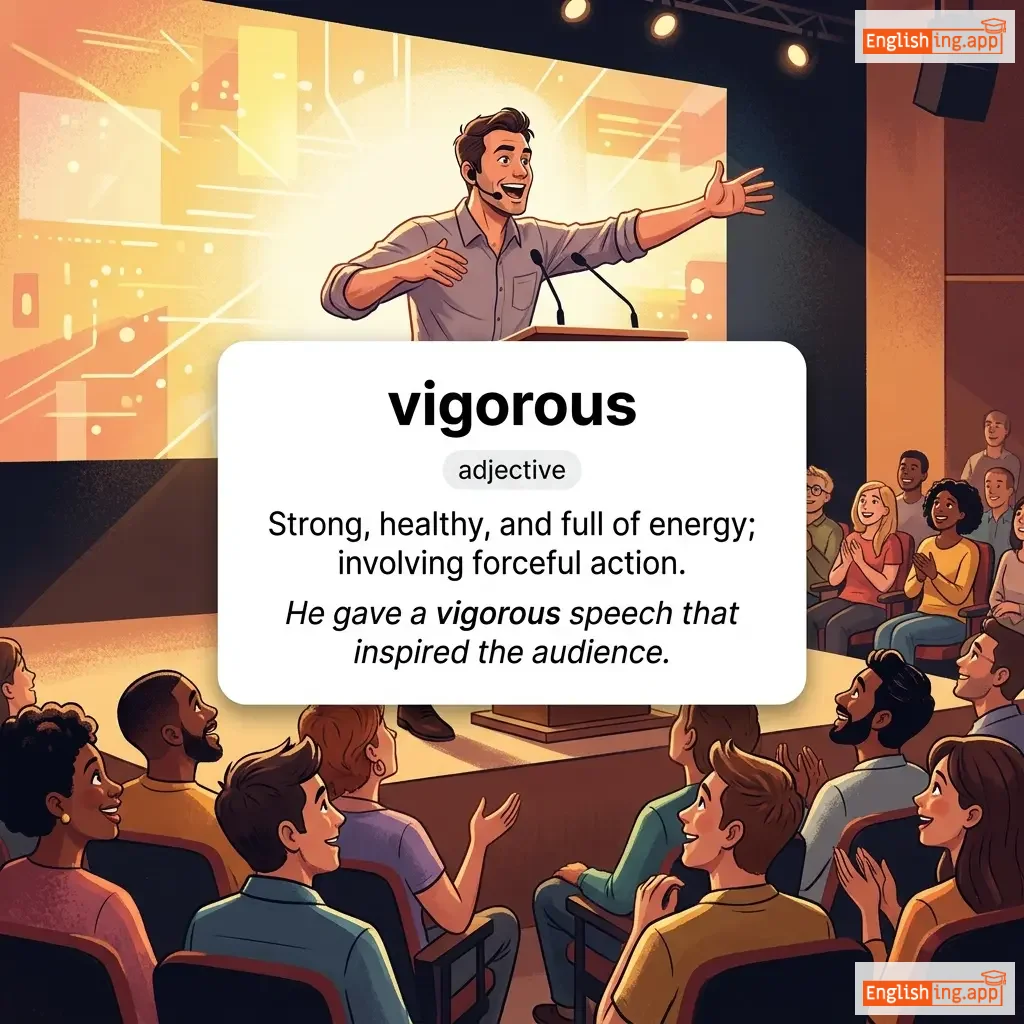
vigorous definition card — visual illustration of the meaning
adjective
/ˈvɪɡərəs/
enérgico (energiko)

Strong, healthy, and full of energy; involving forceful action.

"He gave a vigorous speech that inspired the audience."

"Él dio un discurso enérgico que inspiró a la audiencia." (El dio un discurso energico que inspiro a la audiencia.)
noun
/ˈviːzə/
visa (visa)

an official authorization or permission to enter, leave, or stay in a country

"She applied for a visa to study abroad."

"Ella solicitó una visa para estudiar en el extranjero." (Ella solicitó una visa para estudiar en el extranjero.)
adjective
/ʌnˈlɪmɪtɪd/
ilimitado (ilimitado)

without any limits or restrictions

"The internet plan offers unlimited data for the whole month."

"El plan de internet ofrece datos ilimitados durante todo el mes." (El plan de internet ofrece datos ilimitados durante todo el mes.)
noun
/ˌvaɪəˈleɪʃən/
violación (violacion)

The act of breaking or disregarding a law, rule, or agreement.

"Driving without a license is a violation of the law."

"Conducir sin licencia es una violación de la ley." (Conducir sin licencia es una violacion de la ley.)
adjective
/ʌnˈnoʊn/
desconocido (desconocido)

not known or familiar

"The origin of the disease remains unknown."

"El origen de la enfermedad sigue siendo desconocido." (El origen de la enfermedad sigue siendo desconocido.)
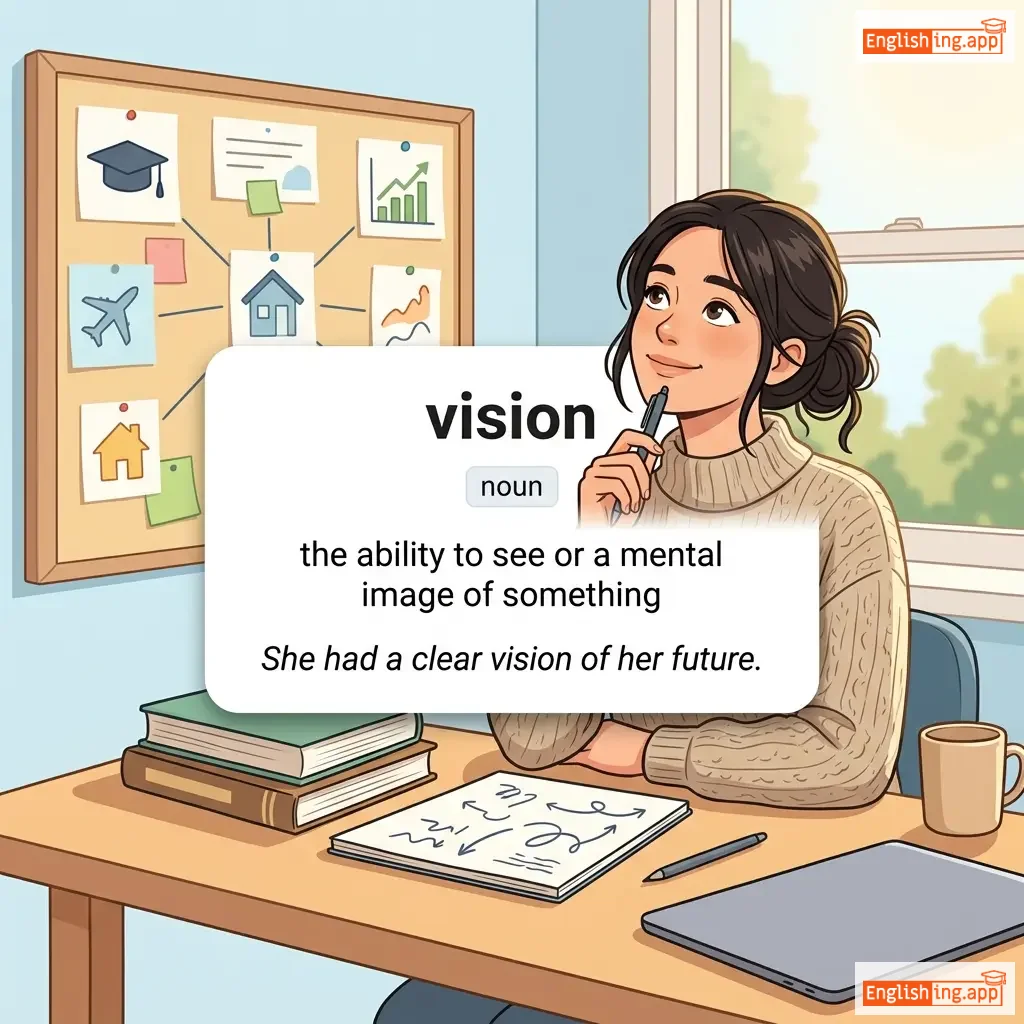
vision definition card — visual illustration of the meaning
noun
/ˈvɪʒən/
felicidad (felicidad)

the ability to see or a mental image of something

"She had a clear vision of her future."

"Ella no pudo ocultar su felicidad cuando recibió el premio." (Ella no pudo ocultar su felicidad cuando recibió el premio.)
adjective
/ʌnˈθɪŋkəbl/
inimaginable (inimaginable)

impossible to conceive or imagine; beyond belief or consideration

"It was unthinkable that such a tragedy could happen in our peaceful town."

"Era inimaginable que tal tragedia pudiera ocurrir en nuestra tranquila ciudad." (Era inimaginable que tal tragedia pudiera ocurrir en nuestra tranquila ciudad.)
verb
/ʌnˈfɛtər/
desatar (desatar)

to release from restraint or restriction; to free

"The new law will unfetter small businesses from excessive regulations."

"La nueva ley liberará a las pequeñas empresas de regulaciones excesivas." (La nueva ley liberará a las pequeñas empresas de regulaciones excesivas.)
adjective
/ˈvɪzəbl/
visible (visible)

able to be seen; perceptible by the eye

"The stars were clearly visible in the night sky."

"Las estrellas eran claramente visibles en el cielo nocturno." (Las estrellas eran claramente visibles en el cielo nocturno.)
noun
/ˌjuːnɪˈvɜːrsɪti/
universidad (universidad)

an institution of higher education and research, which grants academic degrees

"She is studying law at the university."

"Ella está estudiando derecho en la universidad." (Ella esta estudiando derecho en la universidad.)
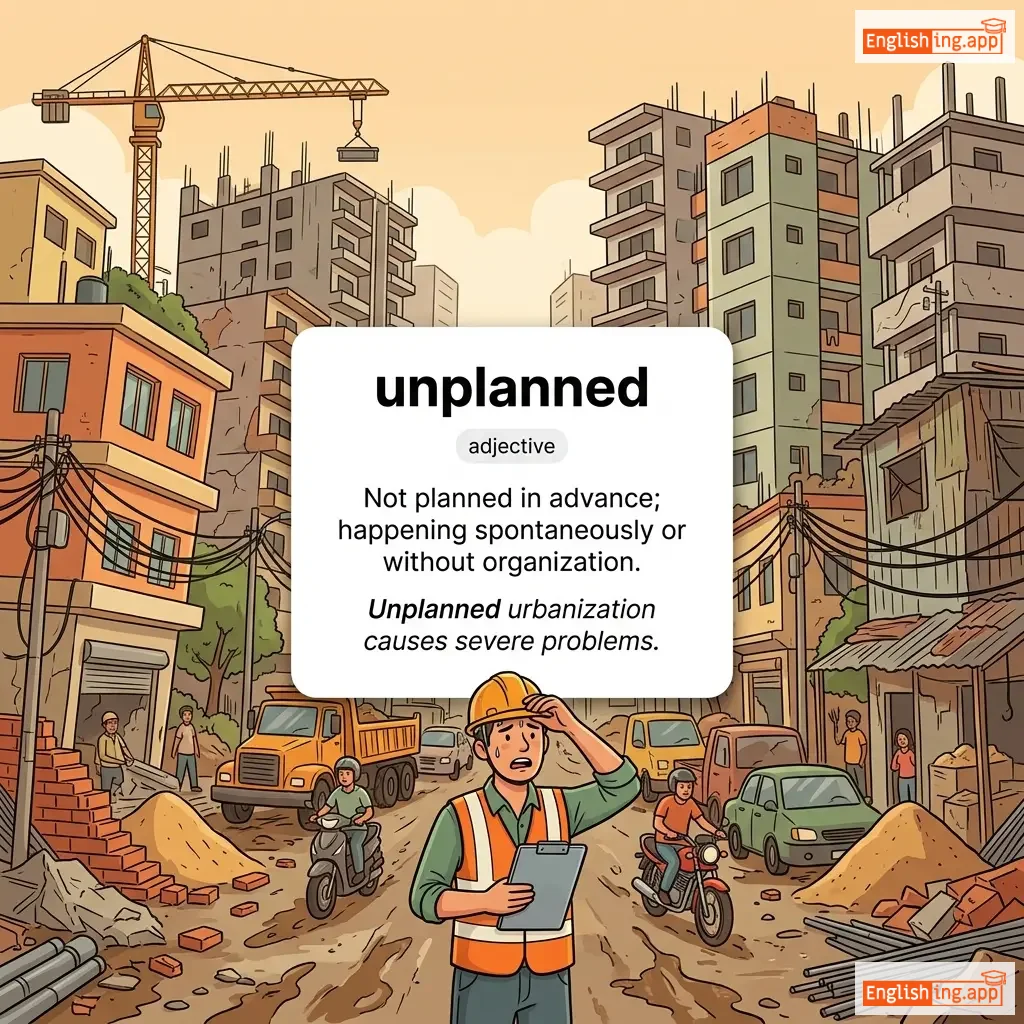
unplanned definition card — visual illustration of the meaning
adjective
ʌnˈplænd
no planificado (no planificado)

Not planned in advance; happening spontaneously or without organization.

"Unplanned urbanization causes severe problems."

"La urbanización no planificada causa problemas graves." (La urbanización no planificada causa problemas graves.)
adjective
/ˌʌnɪnˈhɪbɪtɪd/
desinhibido (desinhibido)

Not restrained or restricted; free in behavior or expression.

"She gave an uninhibited laugh at the joke."

"Ella dio una risa desinhibida al chiste." (Ella dio una risa desinhibida al chiste.)
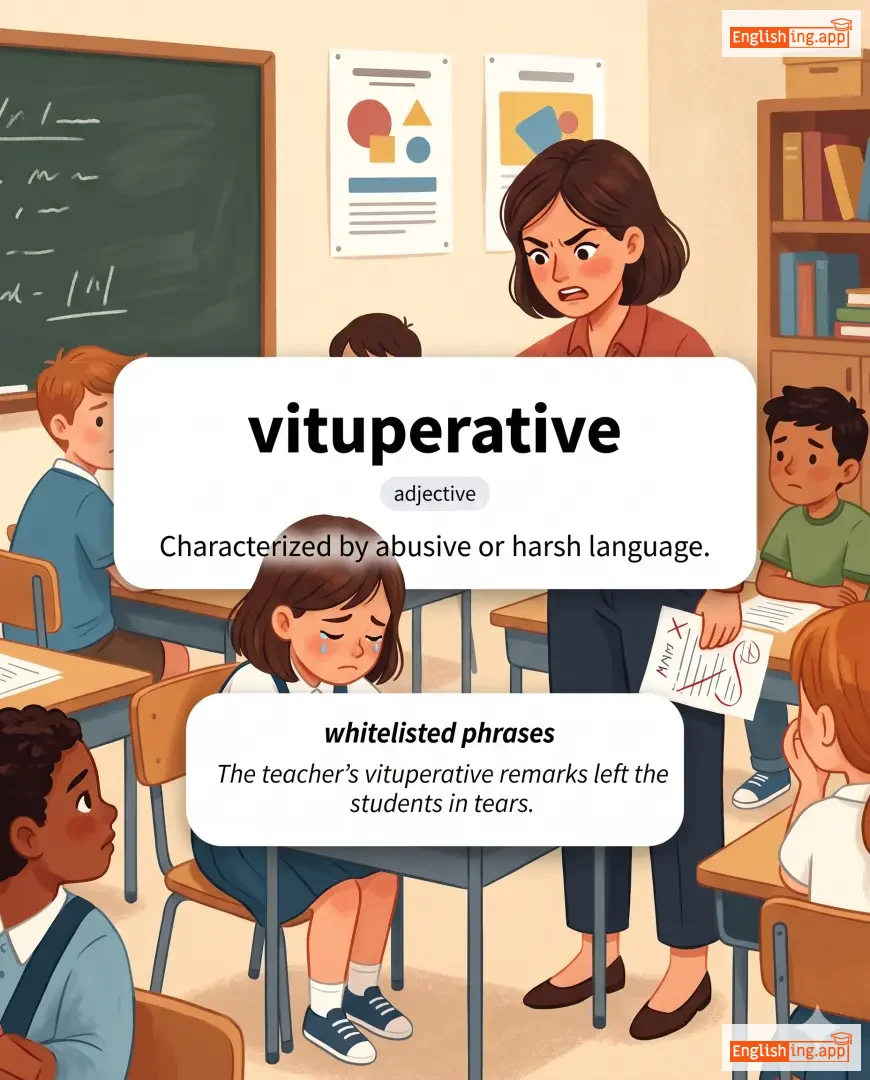
vituperative definition card — visual illustration of the meaning
adjective
/vɪˈtjuːpərətɪv/
vituperativo (vituperativo)

Characterized by abusive or harsh language.

"The teacher’s vituperative remarks left the students in tears."

"Los comentarios vituperativos del maestro dejaron a los estudiantes en lágrimas." (Los comentarios vituperativos del maestro dejaron a los estudiantes en lágrimas.)
adjective
/ʌnˈdʒʌst/
injusto; incorrecto (injusto; incorrecto)

not fair or right; morally wrong

"The punishment was unjust for such a minor offense."

"El castigo fue injusto por tal pequeña ofensa." (El castigo fue injusto por tal pequena ofensa)
adjective
/ʌnˈɜːrθli/
sobrenatural (sobrenatural)

Strange or unnatural in a way that seems not of this world

"The forest was filled with an unearthly glow."

"El bosque estaba lleno de un resplandor sobrenatural." (El bosque estaba lleno de un resplandor sobrenatural.)
preposition/adjective
/ʌnˈlaɪk/
diferente (diferente)

differing from or not similar to

"Unlike his brother, he enjoys playing soccer."

"A diferencia de su hermano, le gusta jugar al fútbol." (A diferencia de su hermano, le gusta jugar al fútbol.)
adjective
/ˈvɪtriəs/
vítreo (vitreo)

having a glass-like appearance or quality

"The mineral has a vitreous shine."

"El mineral tiene un brillo vítreo." (El mineral tiene un brillo vitreo.)
adjective
/ʌnˈsəʊʃəbl/
poco sociable (poco sociable)

not enjoying the company of others; avoiding social interaction

"He became unsociable after moving to a new city."

"Se volvió poco sociable después de mudarse a una nueva ciudad." (se volvio poco sociable despues de mudarse a una nueva ciudad)
adjective
/ʌnˈsaɪtli/
desagradable (desagradable)

Unpleasant to look at; ugly.

"The garbage pile created an unsightly view in the park."

"El montón de basura creó una vista desagradable en el parque." (El monton de basura creo una vista desagradable en el parque.)
adjective
/ʌnˈhel.θi/
insalubre; no saludable (insalubre, no saludable)

harmful to health; not in good health; detrimental to well-being

"Eating too much fast food is unhealthy for your body."

"Comer demasiada comida rápida es insalubre para tu cuerpo." (Comer demasiada comida rápida es insalubre para tu cuerpo.)
noun
/vɪnˈjɛt/
vigneta (vigneta)

A short, descriptive piece of writing or a brief scene.

"The author included a poignant vignette in the introduction of the book."

"El autor incluyó una conmovedora vigneta en la introducción del libro." (El autor incluyó una conmovedora vigneta en la introducción del libro.)
verb
/ˌʌndərˈsɛl/
vender a un precio más bajo (vender a un precio más bajo)

to sell something at a lower price than competitors or to downplay the value of something

"The shop undersold its rivals by offering huge discounts."

"La tienda vendió a sus rivales a un precio más bajo ofreciendo grandes descuentos." (La tienda vendió a sus rivales a un precio más bajo ofreciendo grandes descuentos.)
verb
/ˈvɛəriəˌɡeɪt/
variar (variar)

To diversify or mark with different colors or patterns.

"The artist used different shades to variegate the design."

"El artista usó diferentes tonos para variar el diseño." (El artista uso diferentes tonos para variar el diseño.)
adjective
/ˈvaɪ.ə.lənt/
violento (violento)

using or involving physical force intended to hurt or damage

"He became violent after hearing the bad news."

"Se volvió violento después de escuchar las malas noticias." (Se volvio violento despues de escuchar las malas noticias.)
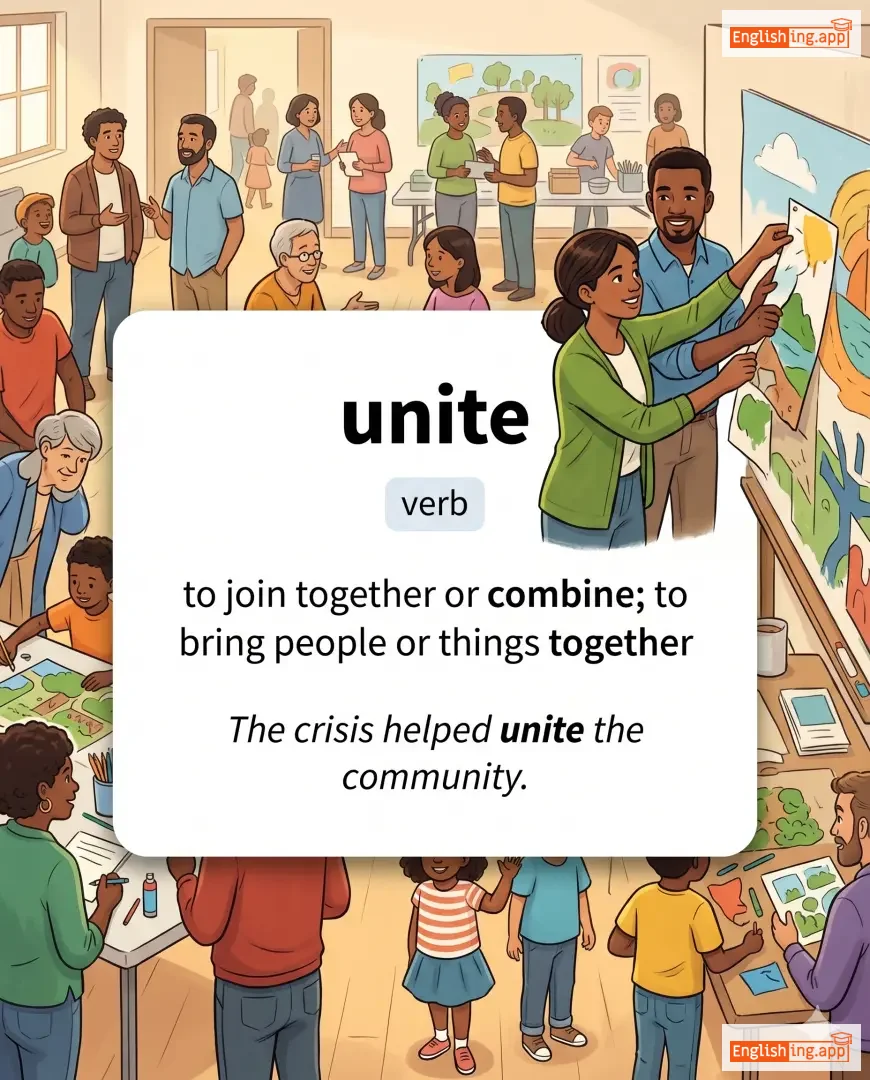
unite definition card — visual illustration of the meaning
verb
/juˈnaɪt/
unir (unir)

to join together or combine; to bring people or things together

"The crisis helped unite the community."

"La crisis ayudó a unir la comunidad." (La crisis ayudó a unir la comunidad.)