词汇表

英语词汇词典 | 单词含义、定义和示例

noun/adjective
/ˈvɪntɪdʒ/
复古 / 经典 (fu gu / jing dian)

Relating to high quality from the past; classic; also the year of a wine harvest.

"She wore a vintage dress from the 1950s."

"她穿着一件1950年代的复古裙子。" (Ta chuanzhuo yi jian 1950 niandai de fugu qunzi.)
noun
/vərˈnækjələr/
方言 (fangyan)

the language or dialect spoken by ordinary people in a particular region

"He gave his speech in the local vernacular so everyone could understand."

"他用当地的方言发表了演讲,以便每个人都能理解。" (Ta yong dangdi de fangyan fabiao le yanjiang, yiban meigeren dou neng lijie.)
noun
/ˈvɪktɪm/
受害者 (shòuhài zhě)

a person who suffers harm, injury, or death due to an event or action

"The victim of the accident was taken to the hospital immediately."

"事故的受害者被立即送往医院。" (Shìgù de shòuhài zhě bèi lìjí sòngwǎng yīyuàn.)
noun
/ˈvɜːrʒən/
版本 (banben)

A particular form or variant of something.

"The software has a new version with added features."

"软件有一个新版本,带有附加功能。" (Ruǎnjiàn yǒu yīgè xīn bǎnběn, dài yǒu fùjiā gōngnéng.)
noun
/ˈvɛləm/
羊皮纸 (yangpizhi)

a fine parchment made originally from the skin of a calf, used for writing or printing

"The ancient manuscript was written on vellum."

"古老的手稿是用羊皮纸写的。" (Gǔlǎo de shǒugǎo shì yòng yángpí zhǐ xiě de.)
verbal definition card — visual illustration of the meaning
adjective
/ˈvɜː.bəl/
口头的 (kǒutóu de)

relating to words or speech rather than writing or action

"They had a verbal agreement instead of a written one."

"他们达成了口头协议,而不是书面协议。" (Tāmen dáchéngle kǒutóu xiéyì, ér bù shì shūmiàn xiéyì.)
noun
/vɜːrs/
诗句 (shī jù)

A line of writing in poetry; a section of a song or poem.

"She wrote a beautiful verse for the wedding ceremony."

"她为婚礼仪式写了一首美丽的诗句。" (Tā wèi hūnlǐ yíshì xiěle yī shǒu měilì de shī jù.)
noun
/ˈvaɪsrɔɪ/
副总督 (fu zong du)

a ruler exercising authority on behalf of a sovereign in a colony or province

"The viceroy governed the colony in the king's name."

"副总督以国王的名义治理殖民地。" (Fu zong du yi guowang de mingyi zhili zhimin di.)
noun
/ˈvaɪəˌleɪtər/
违规者 (wéiguī zhě)

A person who breaks or disregards a law, rule, or agreement.

"The police caught the traffic violator at the intersection."

"警察在交叉口抓住了交通违规者。" (Jǐngchá zài jiāochā kǒu zhuāzhùle jiāotōng wéiguī zhě.)
adjective
/vɜːrˈtɪdʒɪnəs/
眩晕的 (xuànyùn de)

Causing dizziness due to great height or steepness.

"The tourists looked down from the vertiginous cliffs with awe."

"游客从眩晕的悬崖上低头望去,满怀敬畏。" (Yóukè cóng xuànyùn de xuán yá shàng dī tóu wàng qù, mǎn huái jìng wèi.)
adjective
/ˈvæpɪd/
乏味的 (fámèi de)

lacking liveliness, flavor, or interest; dull and uninspired

"The lecture was so vapid that half the audience fell asleep."

"讲座如此乏味,以至于一半的听众都睡着了。" (Jiǎngzuò rúcǐ fámèi, yǐ zhì yú yībàn de tīngzhòng dōu shuìzhe le.)
noun
/vɪnˈjɛt/
小品 (xiǎopǐn)

A short, descriptive piece of writing or a brief scene.

"The author included a poignant vignette in the introduction of the book."

"作者在书的序言中加入了一篇感人的小品。" (Zuòzhě zài shū de xùyán zhōng jiārùle yī piān gǎn rén de xiǎopǐn.)
noun
/ˈvaɪ.ə.ləns/
暴力 (baoli)

behavior involving physical force intended to hurt or damage

"The protest turned into an act of violence."
"抗议活动变成了一种暴力行为。" (Kàngyì huódòng biàn chéngle yī zhǒng bàolì xíngwéi.)
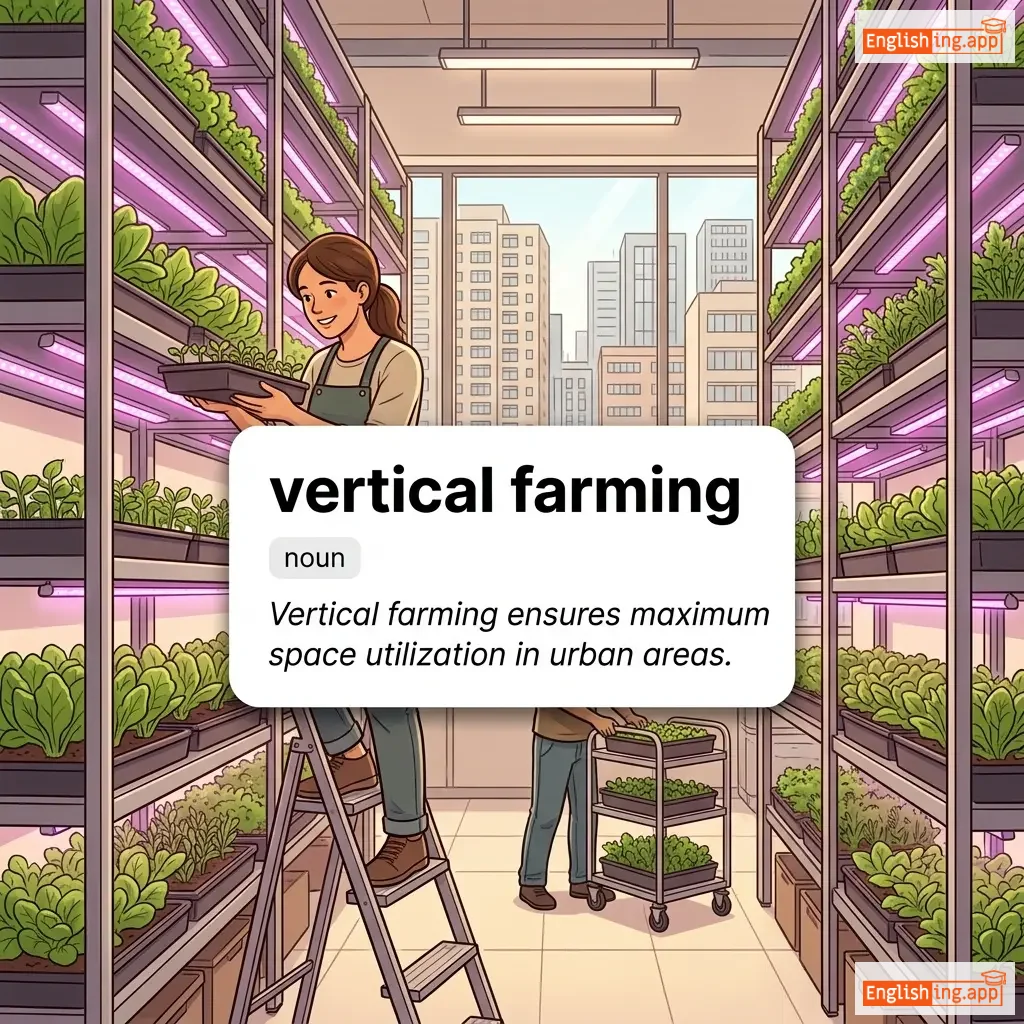
vertical farming definition card — visual illustration of the meaning
noun
/ˈvɜː.tɪ.kəl ˈfɑː.mɪŋ/
垂直农业 (chuízhí nóngyè)

The practice of growing crops in vertically stacked layers, often incorporating controlled-environment agriculture.

"Vertical farming ensures maximum space utilization in urban areas."
"垂直农业确保城市区域的最大空间利用。" (Chuízhí nóngyè quèbǎo chéngshì qūyù de zuìdà kōngjiān lìyòng)
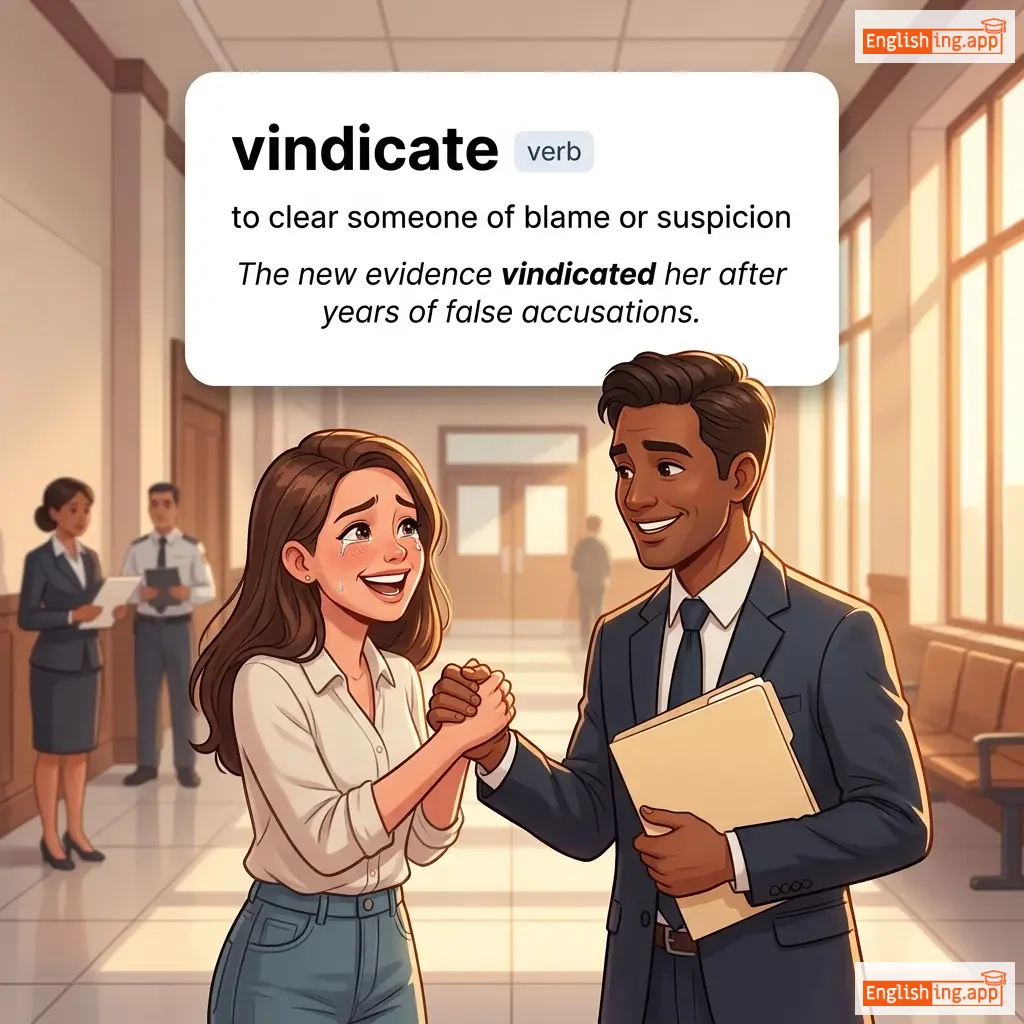
vindicate definition card — visual illustration of the meaning
verb
/ˈvɪndɪkeɪt/

to clear someone of blame or suspicion

"The new evidence vindicated her after years of false accusations."

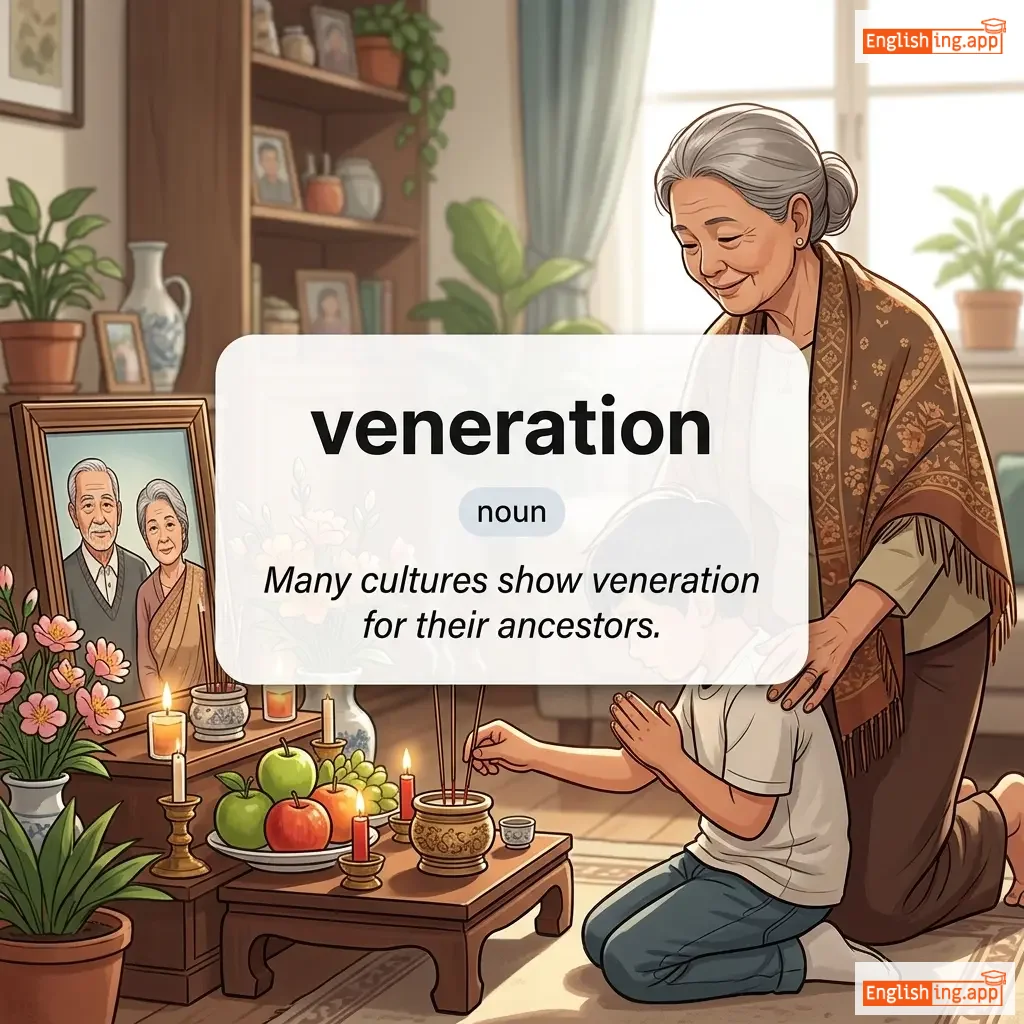
veneration definition card — visual illustration of the meaning
noun
ˌvɛn.əˈreɪ.ʃən
崇敬 (chóngjìng)

Great respect; reverence; the action of regarding with great respect or reverence.

"Many cultures show veneration for their ancestors."

"许多文化表现出对祖先的崇敬。" (Xǔduō wénhuà biǎoxiàn chū duì zǔxiān de chóngjìng.)
noun
/ˈvɪdiəʊ/
视频 (shipin)

a recording of moving visual images made digitally or on film

"She watched the video of her favorite concert online."

"她在网上观看了她最喜欢的演唱会视频。" (Ta zai wangshang guankanle ta zui xihuan de yanchanghui shipin.)
noun
/ˈvɜːrbiɪdʒ/
废话 (feihua)

Excessive use of words, often with little content or meaning; wordiness.

"The contract was filled with unnecessary legal verbiage."

"合同充满了不必要的法律废话。" (Hetong chongmanle buyiyao de falu feihua.)
noun
/vəˈraɪəti/
多样性 (duōyàngxì)

the quality or state of being different or diverse; a range of different things

"There is a variety of fruits available in the market."

"市场上有各种各样的水果。" (Shìchǎng shàng yǒu gè zhǒng gè yàng de shuǐguǒ.)
noun
/vərˈmɪl.jən/
鲜红色-橙色; 这种颜色的颜料 (vermillion)

a bright red-orange color; a pigment of this color

"The artist used vermillion paint for the sunset."

"艺术家为日落使用了维米利昂颜料。" (Yìshùjiā wèi rìluò shǐyòngle wéimìlì'áng yánliào.)
adjective
/ˈvɜːrnəl/
春天的 (chūntiān de)

related to spring; fresh, youthful

"The garden was filled with vernal beauty after the long winter."

"经过漫长的冬季,花园充满了春天的美丽。" (Jīngguò màncháng de dōngjì, huāyuán chōngmǎnle chūntiān de měilì.)
adjective
/ˌvɛrɪˈsɪmɪlər/
类似于真实 (lèisì yú zhēnshí)

appearing to be true or real

"The story seemed verisimilar though it was entirely fictional."

"这个故事看起来类似于真实,尽管它完全是虚构的。" (Zhège gùshì kàn qǐlái lèisì yú zhēnshí, jǐnguǎn tā wánquán shì xūgòu de.)
noun
/vaɪn/
藤蔓 (tengman)

a climbing or trailing plant with long stems; a plant that produces grapes

"The vine climbed up the wall and covered it with green leaves."

"藤蔓爬上了墙,覆盖了绿色的叶子。" (tengman pa shang le qiang, fugai le lvse de yezi)
preposition
/ˈvaɪə/ or /ˈviːə/
通过 (tongguo)

through, by way of, or using a particular route or means

"She sent the documents via email."

"她通过电子邮件发送了文件。" (Ta tongguo dianzi youjian fasongle wenjian.)
noun
/ˌvɛəriəˈɡeɪʃən/
变色 (biansè)

The appearance of differently colored zones in the leaves, flowers, or stems of plants.

"Variegation makes the foliage look more attractive."

"变色使得植物的叶子更加吸引人。" (Biansè shǐdé zhíwù de yèzi gèngjiā xīyǐn rén.)
noun/verb
/vɔːlt/
保险库 / 跳跃 (bǎoxiǎn kù / tiàoyuè)

A secure room for storing valuables; also to leap or spring over something.

"The bank kept its gold bars in a secure vault."
"银行将其黄金条存放在一个安全的金库中。" (Yínháng jiāng qí huángjīn tiáo cún fàng zài yī gè ān quán de jīn kù zhōng.)
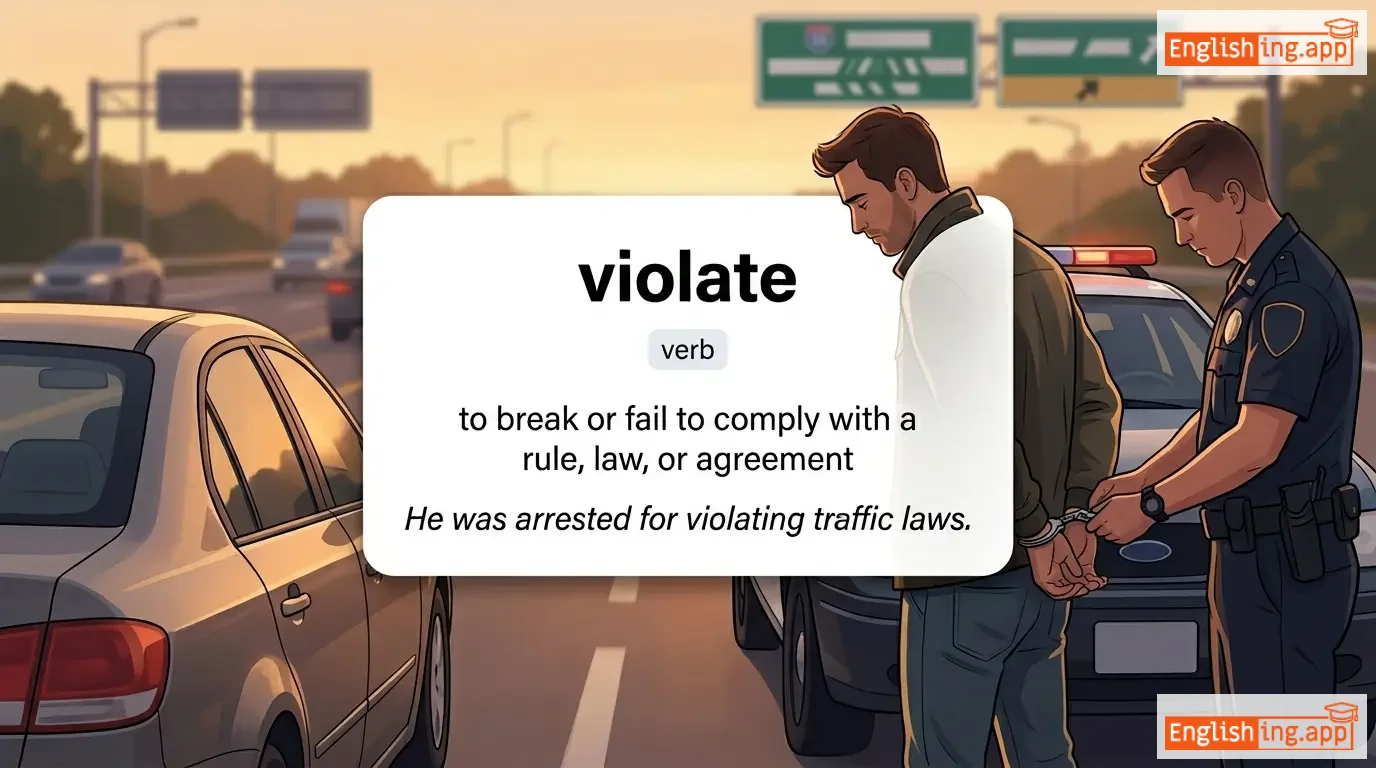
violate definition card — visual illustration of the meaning
verb
/ˈvaɪ.ə.leɪt/
违反 (wéifǎn)

to break or fail to comply with a rule, law, or agreement

"He was arrested for violating traffic laws."

"他因违反交通法规被逮捕。" (Tā yīnwèi wéifǎ bōfǎo jiāotōng fǎlǜ ér bèi dǔlì.)
adjective
/ˈvɛntʃərəs/
冒险的 (màoxiǎn de)

Willing to take risks or try out new and exciting things; adventurous.

"The venturous explorers set out to cross the uncharted desert."

"那些冒险的探险者出发穿越未被探索的沙漠。" (Nàxiē màoxiǎn de tànxiǎnzhě chūfā chuānyuè wèibèi tànsuǒ de shāmò.)
noun
/vaɪəˈlɪn/
小提琴 (xiaotiqin)

a musical instrument with four strings that is played with a bow

"She plays the violin beautifully in the orchestra."

"她在乐队中优美地演奏小提琴。" (Tā zài yuèduì zhōng yōuměi de yǎnzòu xiǎo tíqín.)
adjective
/ˈvaɪ.ə.lənt/
暴力的 (baolide)

using or involving physical force intended to hurt or damage

"He became violent after hearing the bad news."

"听到坏消息后,他变得暴力了。" (Tingdao huai xiaoxi hou, ta biande baolile.)
verb
/vaɪ/
争夺 (zhēngduó)

To compete eagerly with someone in order to do or achieve something.

"Several companies are vying for the contract."

"几家公司正在争夺合同。" (Jǐ jiā gōngsī zhèngzài zhēngduó hétóng.)
adjective
/ˈvɛərɪd/
多样的 (duōyàng de)

showing many different kinds or forms

"The menu offers a varied selection of dishes."

"菜单提供各种各样的菜肴选择。" (Càidān tígōng gè zhǒng gè yàng de càiyáo xuǎnzé.)
noun
/ˈviː.ɪ.kəlz/
交通工具 (jiaotong gongju)

machines used for transporting people or goods from one place to another

"There are many different types of vehicles on the road today."

"今天路上有许多不同类型的交通工具。" (Jintian lù shàng yǒu xǔduō bùtóng lèixíng de jiāotōng gōngjù)
noun
/vɪˈsɪn.ə.ti/
附近; 邻近 (vicinity)

the area near or surrounding a particular place; neighborhood

"There are many shops in the vicinity of the school."

"学校附近有很多商店。" (xuexiao fujin you henduo shangdian.)
noun
/ˈvɪn.ɪ.ɡər/
(cu)

a sour liquid made from fermented alcohol, used for cooking and preserving

"I added vinegar to the salad dressing for extra flavor."

"我在沙拉酱里加了醋,以增加味道。" (Wo zai shala jiang li jia le cu, yi zengjia weidao.)
👨‍🌾🍷

vintner (vintner)

noun
/ˈvɪntnər/
酿酒师 / 酒商 (niàngjiǔ shī / jiǔ shāng)

A person who makes or sells wine.

"The vintner explained the process of making red wine."

"酿酒师解释了酿制红葡萄酒的过程。" (Niàngjiǔ shī jiěshìle niàngzhì hóng pútáojiǔ de guòchéng.)
noun
/ˌvɛəriˈeɪʃən/
变化 (bianhua)

A change or slight difference in condition, amount, or level.

"There is a wide variation in climate across the country."
"全国气候存在很大变化。" (quan guo qi hou cun zai hen da bian hua.)
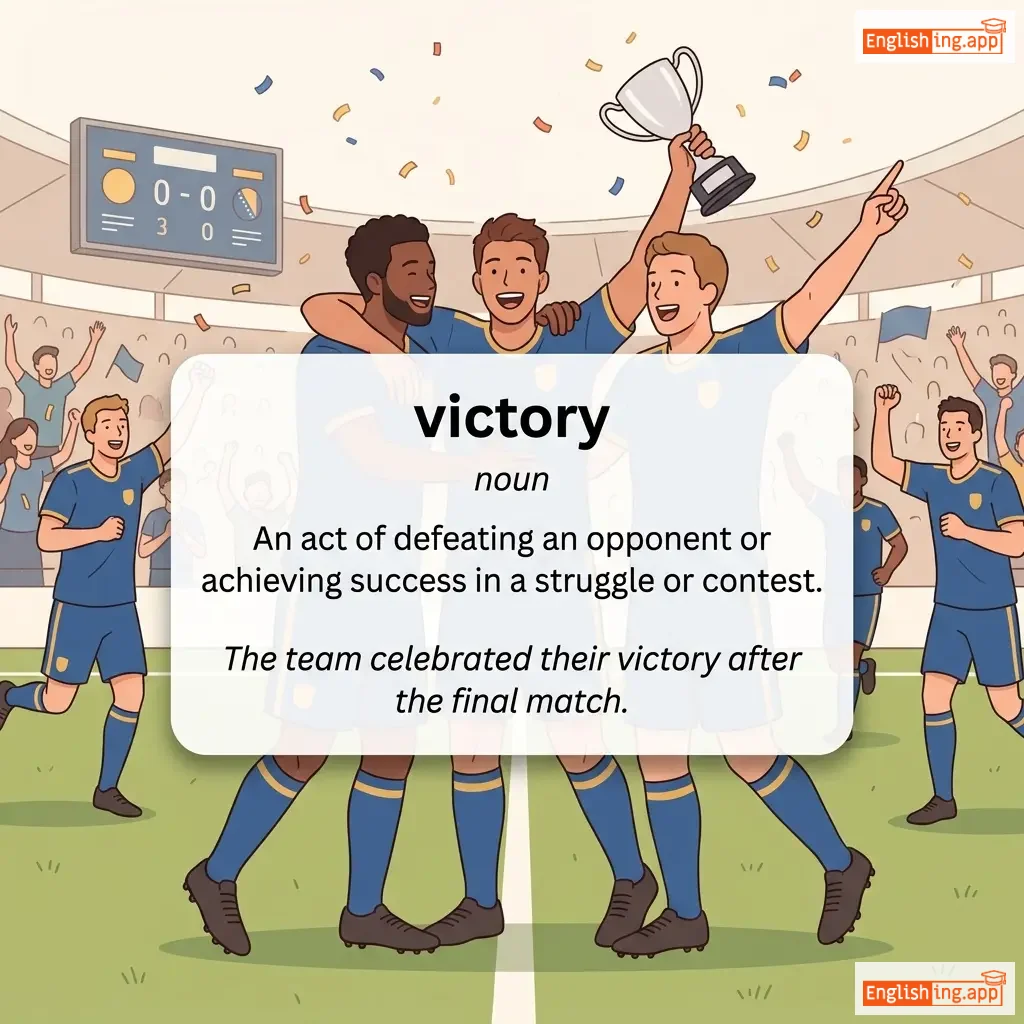
victory definition card — visual illustration of the meaning
noun
/ˈvɪktəri/
胜利 (shengli)

An act of defeating an opponent or achieving success in a struggle or contest.

"The team celebrated their victory after the final match."

"球队在最后一场比赛后庆祝了他们的胜利。" (qiú duì zài zuì hòu yī chǎng bǐ sài hòu qìng zhù le tā men de shèng lì.)
adjective
/ˈvɜːrtʃuəl/
虚拟 / 模拟 (xūnǐ / mó nǐ)

existing or simulated on a computer or online rather than physically; almost but not exactly the same as

"The company held a virtual meeting with employees worldwide."

"公司与全球员工举行了虚拟会议。" (Gōngsī yǔ quánqiú yuángōng jǔxíngle xūnǐ huìyì.)
noun
/vɜːrˈtuː/
对艺术的爱好 (duì yìshù de àihào)

a love of or taste for fine art, antiques, or curiosities

"The collector’s house was filled with objects of virtu."

"收藏家的房子里充满了虚拟的物品。" (Shōucáng jiā de fángzi lǐ chōngmǎnle xūnǐ de wùpǐn.)
noun
/ˈvedʒtəbəl ɔɪl/
植物油 (zhí wù yóu)

Oil extracted from plants, seeds, or nuts used for cooking

"She heated vegetable oil in the pan before adding the vegetables."

"她在锅里加热植物油,然后加入蔬菜。" (Tā zài guō lǐ jiā rè zhí wù yóu, ránhòu jiārù shūcài.)
adjective
/ˈvɛntrəl/
腹侧的 (fùcè de)

relating to the underside or abdominal part of an animal or organ

"The fish has a white ventral surface."

"鱼的腹侧表面是白色的。" (Yú de fùcè biǎomiàn shì báisè de.)
noun
/ˈven.juː/
场地 (chang di)

a place where an event or activity takes place

"The wedding venue was beautifully decorated."

"婚礼场地被精美装饰。" (hunli changdi bei jingmei zhuangshi)
noun
/ˈvɜːrtɛks/
顶点 (dingdian)

The highest point; the top or the apex.

"The climber reached the vertex of the mountain."

"登山者达到了山顶。" (Deng shanzhe daduo le shanding.)
adjective
/ˈvɛnəˌreɪtɪd/
受人尊敬的 (shòu rén zūn jìng de)

respected and admired deeply

"The venerated professor was honored with an award."

"这位受人尊敬的教授获得了奖项。" (Zhè wèi shòu rén zūn jìng de jiàoshòu huòdéle jiǎngxiàng.)
adjective
/vərˈmɪkjələr/
像虫子一样 (xiàng chóngzi yīyàng)

having a shape or appearance like a worm; worm-like

"The artist used a vermicular design to decorate the border of the manuscript."

"艺术家用虫子一样的设计装饰手稿的边缘。" (Yìshùjiā yòng chóngzi yīyàng de shèjì zhuāngshì shǒugǎo de biānyuán.)
noun
/ˈvendʒəns/
复仇 (fuchou)

punishment inflicted or retribution exacted for an injury or wrong; revenge

"He swore to seek vengeance against those who wronged him."

"他发誓要向那些伤害他的人复仇。" (Tā fāshì yào xiàng nàxiē shānghài tā de rén fùchóu.)
noun
/ˌvɛrɪsɪˈmɪlɪtjuːd/
逼真 (bī zhēn)

the appearance of being true or real

"The movie was praised for its verisimilitude to actual events."

"这部电影因其与实际事件的逼真感而受到称赞。" (Zhè bù diànyǐng yīn qí yǔ shíjì shìjiàn de bī zhēn gǎn ér shòudào chēngzàn.)
noun
/ˈvɛnəm/
毒液 (duye)

a poisonous substance secreted by animals such as snakes or spiders; also used to describe intense ill will or malice

"The snake injected its venom into the prey."

"蛇将它的毒液注入了猎物。" (She jiang ta de duye zhu ru le lie wu.)
adjective
/vɪkˈtɔː.ri.əs/
胜利的 (shengli de)

having won a victory; successful in a struggle or contest

"The victorious team celebrated their championship win with great joy."

"胜利的队伍以巨大的喜悦庆祝他们的冠军胜利。" (Shengli de duiwŭ yǐ jùdà de xǐyuè qìngzhù tāmen de guànjūn shènglì.)