词汇表

英语词汇词典 | 单词含义、定义和示例

noun
/ʌpˈhiːvəl/
动荡 (dongtang)

a violent or sudden change or disruption to something

"The company faced a major upheaval after the sudden resignation of its CEO."

"公司在其CEO突然辞职后经历了巨大的动荡。" (Gongsi zai qishi CEO tuuran cizhi hou jingli le juyida de dongtang.)
adjective
/ʌnˈtaɪərɪŋ/
不知疲倦的; 坚持不懈的; 永不止步的 (bù zhī pítuì de; jiānchí bùxiè de; yǒng bù zhǐbù de)

continuing without stopping; persistent; tireless

"Her untiring efforts finally led to success."

"她的不知疲倦的努力最终带来了成功。" (Tā de bù zhī pítuì de nǔlì zuìzhōng dàilái le chénggōng.)
adjective
/ʌnˈtruː/
虚假 (xūjiǎ)

not true; false or incorrect

"The rumor about the company closing was completely untrue."
"关于公司关闭的谣言完全不真实。" (Guānyú gōngsī guānbì de yáoyán wánquán bù zhēnshí.)
🏠⬆️

Upstairs

adverb
/ˌʌpˈstɛərz/

on or to a higher floor of a building

"She went upstairs to her bedroom."

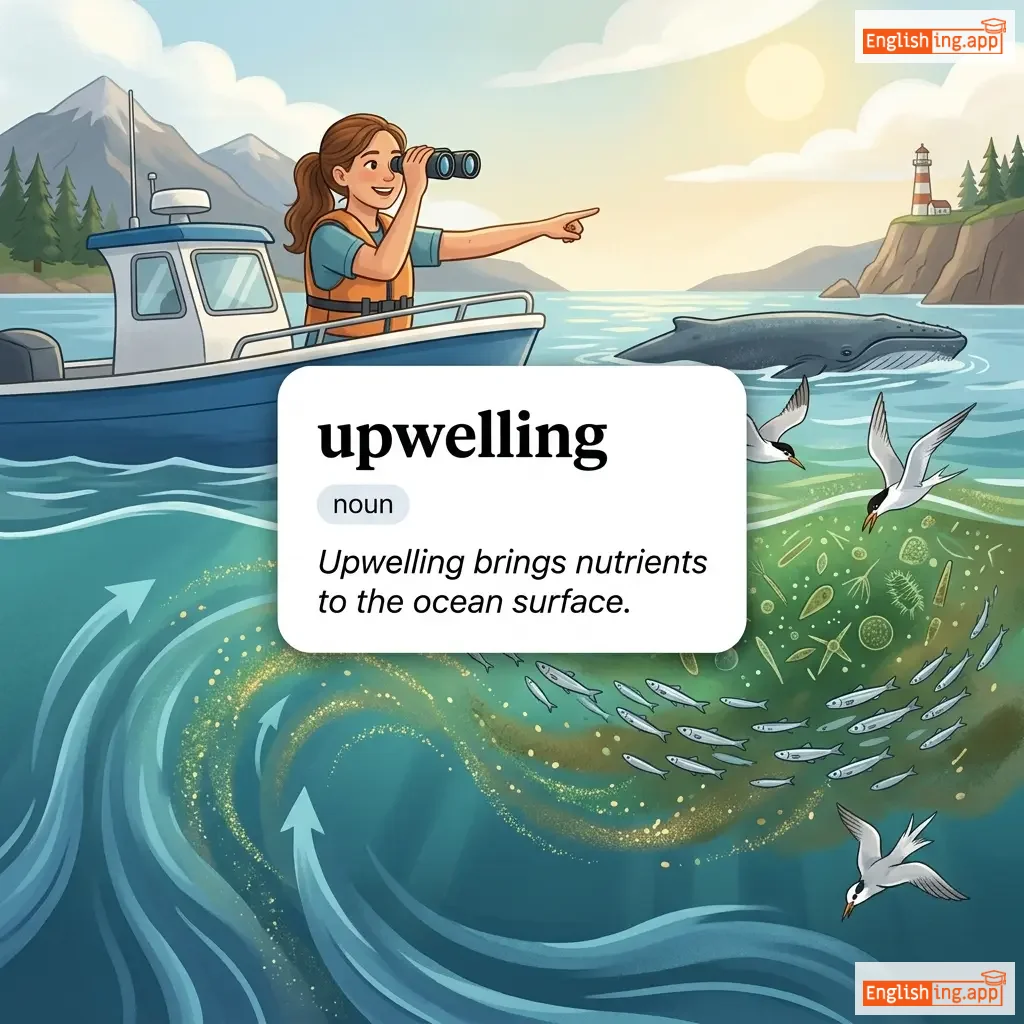
upwelling definition card — visual illustration of the meaning
noun
/ˈʌp.wel.ɪŋ/
上升流 (upwelling)

An oceanographic phenomenon that involves wind-driven motion of dense, cooler, and nutrient-rich water towards the ocean surface.

"Upwelling brings nutrients to the ocean surface."

"上升流将营养物质带到海洋表面。" (Shang sheng liu jiang yingyang wuzhi dai dao haiyang biaomian)
adjective
/ʌnˈʃeɪkən/
坚定不移; 坚固 (jiān dìng bù yí; jiān gù)

not disturbed or affected; firm and steady; unwavering

"Her faith remained unshaken despite all the challenges."

"尽管面临所有挑战,她的信念依然坚定不移。" (Jǐnguǎn miànlín suǒyǒu tiǎozhàn, tā de xìnniàn yīrán jiāndìng bù yí.)
adjective
/ʌnprəˈfɛʃ.ən.əl/
不专业 (bù zhuānyè)

not conforming to the standards expected in a particular profession

"His unprofessional behavior led to his dismissal from the company."

"他的不专业行为导致他被公司解雇。" (Tā de bù zhuānyè xíngwéi dǎozhì tā bèi gōngsī jiěgù.)
verb
/ʌnˈræp/
拆开 (chai kai)

remove wrapping or covering from something; reveal something gradually or clearly

"She carefully unwrapped the gift with excitement."

"她兴奋地小心拆开了礼物。" (Ta xingfende xiaoxin chaikai le liwu)
unyielding definition card — visual illustration of the meaning
adjective
ʌnˈjiːl.dɪŋ
坚定或坚韧 (jiān dìng huò jiān rèn)

Not easily broken or giving in to pressure.

"Her unyielding determination helped her overcome all challenges."

"她坚定的决心帮助她克服了所有的挑战。" (Tā jiāndìng de juéxīn bāngzhù tā kèfúle suǒyǒu de tiǎozhàn.)
⬆️

up (āp)

adverb
/ʌp/
向上 (xiang shang)

towards a higher position or level

"He climbed up the ladder quickly."

"他迅速爬上了梯子。" (Ta xun su pa shang le ti zi.)
noun
/ˈʌpˌkiːp/
维护 (wéi hù)

The process or cost of maintaining something in good condition.

"The upkeep of the old house is very expensive."

"老房子的维护非常昂贵。" (Lǎo fángzi de wéihù fēicháng ángguì.)
noun
/ˈʌp.ʃɒt/
结果 (jieguo)

The final result or outcome of a process or situation.

"The upshot of the meeting was that the plan was postponed."

"会议的结果是计划被推迟了。" (Huiyi de jieguo shi jihua bei tuichi le.)
adjective
/ʌnˈθɪŋkəbl/
难以想象的 (nán yǐ xiǎng xiàng de)

impossible to conceive or imagine; beyond belief or consideration

"It was unthinkable that such a tragedy could happen in our peaceful town."

"在我们和平的小镇上发生这样一场悲剧,简直是难以想象的。" (Zài wǒmen hépíng de xiǎo zhèn shàng fāshēng zhèyàng yī chǎng bēijù, jiǎnzhí shì nán yǐ xiǎngxiàng de.)
adjective
/ʌnˈwaɪz/
不明智 (bù míng zhì)

Showing poor judgment; not sensible or prudent.

"It would be unwise to invest all your money in one company."

"把所有的钱都投入一家公司的做法不明智。" (Bǎ suǒyǒu de qián dōu tóurù yījiā gōngsī de zuòfǎ bù míng zhì.)
adverb
/ʌnˈjuːʒuəli/
异常地 (yichang de)

in a way that is not typical or expected; to an uncommon degree

"It was unusually cold for this time of year."

"对一年中的这个时候来说,天气异常寒冷。" (Dui yi nian zhong de zhe ge shihou laishuo tianqi yichang hanleng)
adjective
/ʌnˈtɛmpərd/
失控的 (shīkòng de)

not moderated or softened; lacking proper balance or control

"The untempered anger of the crowd caused chaos."
"人群的失控愤怒引发了混乱。" (Rénqún de shīkòng fènnù yǐnfāle hùnluàn.)
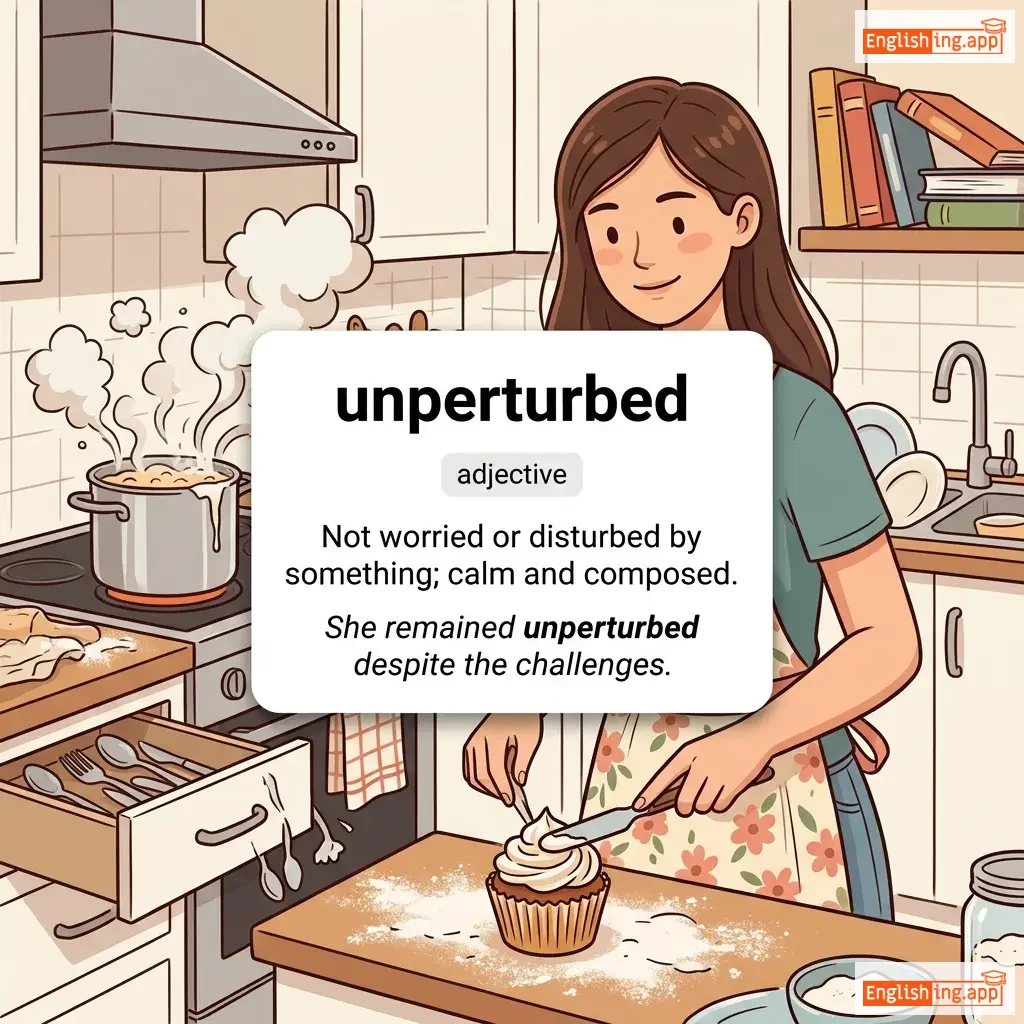
unperturbed definition card — visual illustration of the meaning
adjective
ˌʌn.pəˈtɜːbd
不为某事烦恼或困扰;冷静且镇定 (bù wéi mǒu shì fán nǎo huò kùn rǎo; lěng jìng qiě zhèn dìng)

Not worried or disturbed by something; calm and composed.

"She remained unperturbed despite the challenges."

"尽管有挑战,她依然保持冷静。" (Jǐnguǎn yǒu tiǎozhàn, tā yīrán bǎochí lěngjìng.)
adjective
/ʌnˈsʌlid/
无暇 (wú xiá)

not spoiled or made impure; perfectly clean or pure

"His reputation remained unsullied despite the accusations."

"尽管有指控,他的声誉仍然无暇。" (Jǐnguǎn yǒu zhǐkòng, tā de shēngyù réngrán wú xiá.)
noun/verb
/ˈʌpˌkæst/
向上投掷 (xiang shang tou zhi)

Verb: To cast or throw upward. Noun: Something thrown or directed upward.

"The fisherman upcast his net into the air."

"渔夫把他的网投向空中。" (Yu fu ba ta de wang tou xiang kong zhong.)
preposition/conjunction
/ʌnˈtɪl/
直到 (zhídào)

up to the time of

"I will wait until you come back."

"我会等到你回来。" (Wǒ huì děng dào nǐ huílái.)
adjective
/ʌnˈsteɪbəl/
不稳定 (bù wěn dìng)

likely to change; not steady or secure; unsteady

"The unstable economy made people worried about their jobs."

"不稳定的经济让人们担心他们的工作。" (Bù wěn dìng de jīng jì ràng rén men dān xīn tā men de gōng zuò.)
adverb
/ʌnˈwɪlɪŋli/
不情愿地 (bu qingyuan de)

in a way that shows reluctance or lack of desire; not willingly

"She unwillingly agreed to attend the meeting."

"她不情愿地同意参加会议。" (ta bu qingyuan de tongyi canjia huiyi)
adjective
/ʌnˈwɒn.tɪd/
不受欢迎的 (bù shòu huānyíng de)

not desired or welcome; not wanted

"He felt like an unwanted guest at the meeting."

"他在会议上觉得自己像个不受欢迎的客人。" (tā zài huìyì shàng juédé zìjǐ xiàng gè bù shòu huānyíng de kèrén.)
verb
/ʌnˈveɪl/
揭示 (jiēshì)

to reveal or disclose something, especially in a formal manner

"The company will unveil a new product next week."

"公司将在下周揭示一款新产品。" (Gōngsī jiāng zài xià zhōu jiēshì yī kuǎn xīn chǎnpǐn.)
verb
/ʌnˈjoʊk/
解开 (jiě kāi)

To release from a yoke or to free from restraint or obligation.

"The farmer unyoked the oxen after a long day of work."

"农民在长时间工作后解开了牛的套索。" (Nóngmín zài cháng shíjiān gōngzuò hòu jiě kāi le niú de tàosuǒ.)
noun
/ˈʌp.raɪt.nəs/
正直; 正义 (zhèngzhí; zhèngyì)

the quality of being honest and morally correct; integrity

"His uprightness in business dealings earned him great respect."

"他在商业中的正直赢得了很大的尊重。" (Tā zài shāngyè zhōng de zhèngzhí yíngdéle hěn dà de zūnzhòng.)
adverb
/ˈɜːrdʒəntli/
紧急地 (jinji de)

in a way that requires immediate attention or action

"The patient urgently needs medical attention."

"病人紧急地需要医疗救助。" (bingren jinji de xuyao yiliao jiujiu)
adjective
/ʌnˈtaɪmli/
不合时宜 (bù hé shí yí)

Happening or done at an unsuitable or premature time.

"His untimely death shocked the entire community."

"他不合时宜的去世震惊了整个社区。" (Tā bù hé shí yí de qù shì zhèn jīng le zhěng gè shè qū.)
adjective
/ʌnˈwɜːrði/
不配; 没有价值 (bù pèi; méiyǒu jiàzhí)

not deserving respect or attention; lacking worth or merit

"He felt unworthy of such praise and recognition."
"他觉得自己不配得到这样的赞扬和认可。" (Tā juédé zìjǐ bùpèi dédào zhèyàng de zànyáng hé rènkě.)
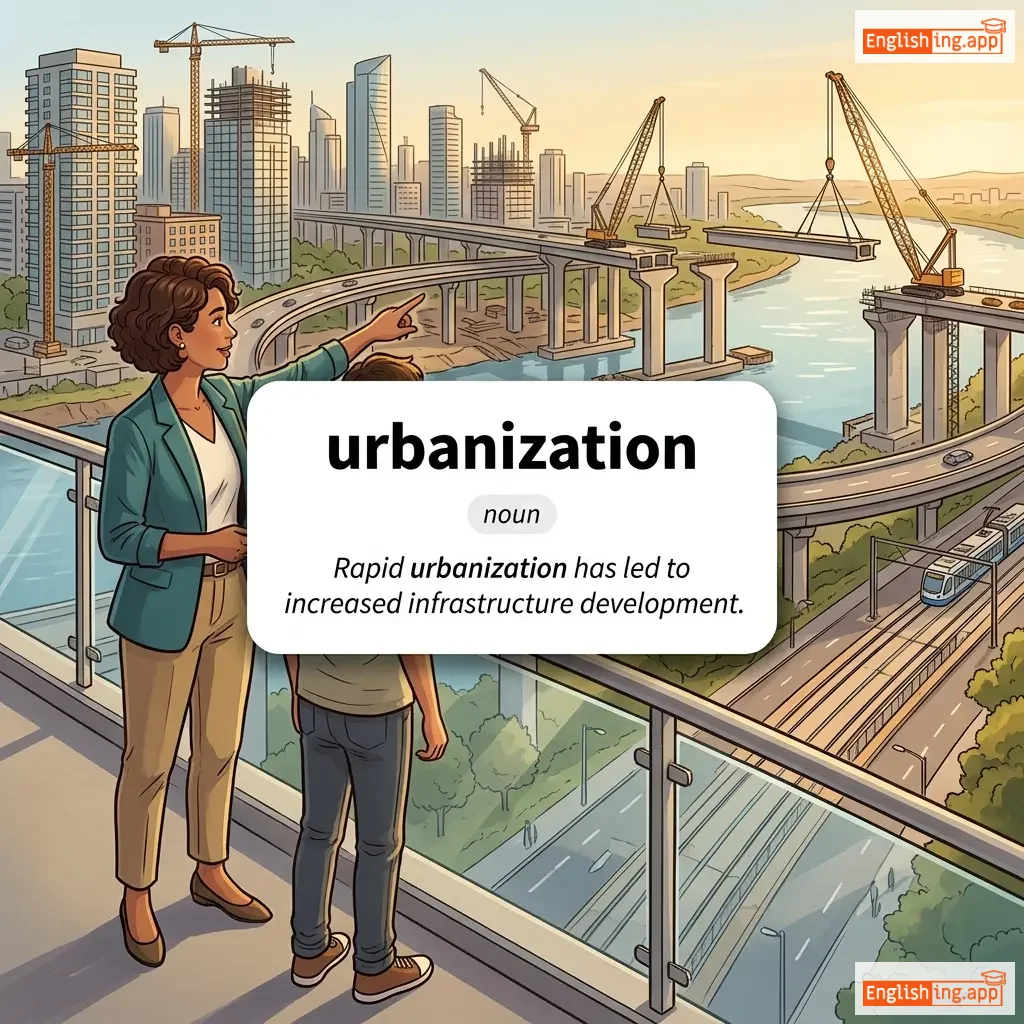
urbanization definition card — visual illustration of the meaning
noun
/ˌɜː.bən.aɪˈzeɪ.ʃən/
城市化 (chengshihua)

The process by which towns and cities are formed and become larger as more people begin living and working in central areas.

"Rapid urbanization has led to increased infrastructure development."

"快速的城市化导致了基础设施发展的增加。" (Kuaisu de chengshihua daozhile jichusheshi fazhande zengjia.)
adjective
/ˈʌpərˌmoʊst/
最高 (zuìgāo)

situated at the highest place or most important

"Her family's safety was uppermost in her mind during the crisis."

"她在危机期间心里最重要的是家庭的安全。" (Tā zài wéijī qījiān xīnlǐ zuì zhòngyào de shì jiātíng de ānquán.)
adjective
/ˈviːəmənt/
激烈 (jīliè)

showing strong feeling; forceful, passionate, or intense

"She made a vehement argument against the proposal."

"她对这个提案提出了激烈的论点。" (Tā duì zhège tí'àn tíchūle jīliè de lùndiǎn.)
adjective
/ʌnˈsəʊʃəbl/
不合群的 (bu he qun de)

not enjoying the company of others; avoiding social interaction

"He became unsociable after moving to a new city."
"搬到新城市后,他变得不合群。" (ban dao xin chengshi hou ta bian de bu he qun)
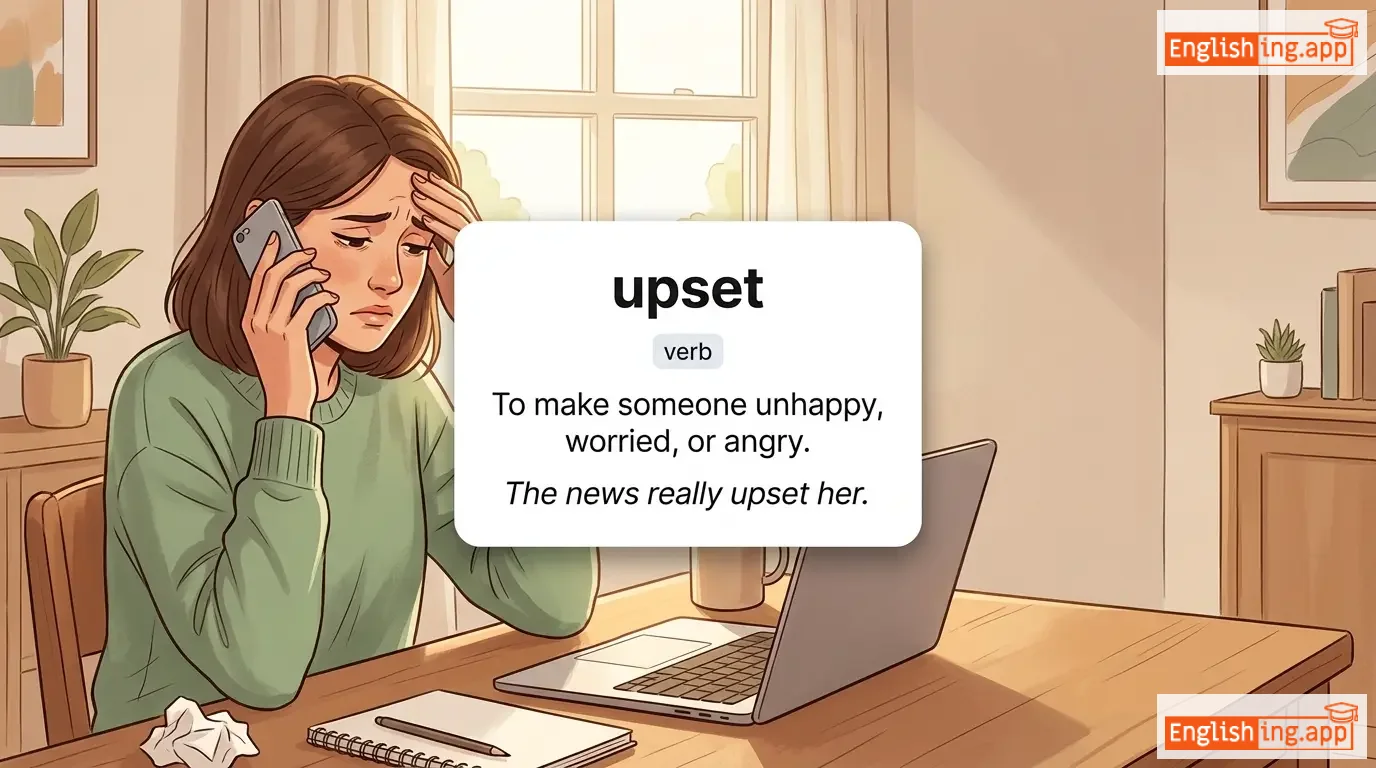
upset definition card — visual illustration of the meaning
verb
/ʌpˈsɛt/
使不高兴 (shi bu gaoxing)

To make someone unhappy, worried, or angry.

"The news really upset her."

"新闻真的让她很不高兴。" (Xīnwén zhēn de ràng tā hěn bù gāoxìng.)
adjective, adverb
/ˈʌpraɪt/
幸福 (xìng fú)

positioned vertically; morally good and honest

"He remained upright despite the strong winds."

"当她获得奖项时,她无法掩饰自己的幸福。" (Dāng tā huòdé jiǎngxiàng shí, tā wúfǎ yǎnshì zìjǐ de xìngfú.)
unprecedented definition card — visual illustration of the meaning
adjective
/ʌnˈprɛsɪˌdɛntɪd/
前所未有 (qián suǒ wèi yǒu)

never done or known before; without previous example

"The company reported unprecedented growth last year."

"公司报告了去年前所未有的增长。" (gōngsī bàogào le qùnián qián suǒ wèi yǒu de zēngzhǎng.)
noun
/ˈjuːs.fəl.nəs/
有用性 (youyongxing)

the quality of being useful; practical value or helpfulness

"The usefulness of this tool became apparent during the project."

"这个工具的有用性在项目过程中变得显而易见。" (Zhege gongju de youyongxing zai xiangmu guocheng zhong biande xian eryijian.)
adjective
/ʌnˈspiːkəbl/
难以形容 (nán yǐ xíng róng)

too bad or shocking to be expressed in words

"The survivors endured unspeakable horrors during the war."

"幸存者在战争中忍受了难以形容的恐怖。" (xìng cún zhě zài zhàn zhēng zhōng rěn shòu le nán yǐ xíng róng de kǒng bù.)
verb
/ʌnˈpæk/
拆开 (chai kai)

to remove items from a container; to explain or analyze something in detail

"After arriving home, she began to unpack her suitcase."

"到家后,她开始拆开自己的行李箱。" (Dao jia hou, ta kaishi chai kai ziji de xinglixiang)
adjective
/ˌʌnəˈfɪʃ.əl/
非官方的 (fei guanfang de)

not officially authorized or confirmed; informal

"The unofficial results showed a close race."

"非官方的结果显示出一场激烈的比赛。" (fēi guānfāng de jiéguǒ xiǎnshì chū yī chǎng jīliè de bǐsài.)
noun
/ˈvæk.juːm ˈkliː.nər/
吸尘器 (xī chén qì)

an electrical appliance that uses suction to remove dirt and dust from carpets and floors

"She used the vacuum cleaner to clean the living room carpet."

"她用吸尘器清洁客厅的地毯。" (Tā yòng xī chén qì qīngjié kètīng de dìtǎn.)
utilization definition card — visual illustration of the meaning
noun
ˌjuːtɪlaɪˈzeɪʃən
利用 (lìyòng)

The action of making practical and effective use of something.

"The efficient utilization of resources is key to success."

"有效利用资源是成功的关键。" (Yǒuxiào lìyòng zīyuán shì chénggōng de guānjiàn.)
usurp definition card — visual illustration of the meaning
verb
/juːˈzɜːrp/
非法夺取 (fēi fǎ duó qǔ)

To take someone else's position or power illegally or by force.

"He tried to usurp the throne from the rightful king."

"他试图从合法国王手中篡夺王位。" (Tā shìtú cóng héfǎ guówáng shǒuzhōng cuànduó wángwèi.)
noun
/ˌvælɪˌtjuːdɪˈnɛəriən/
疑病症患者 (yí bìng zhèng huàn zhě)

A person who is unduly anxious about their health or constantly concerned with minor ailments.

"He was regarded as a valetudinarian, always worrying about his health."

"他被认为是一个疑病症患者,总是为自己的健康担忧。" (Tā bèi rènwéi shì yīgè yí bìng zhèng huàn zhě, zǒng shì wèi zìjǐ de jiànkāng dānxīn.)
noun
/ˌjuːzɜːrˈpeɪʃən/
篡夺 (cuàn duó)

The act of taking someone's power or property illegally or by force.

"The general's usurpation of the presidency led to political unrest."

"将军对总统职位的篡夺导致了政治动荡。" (Jiāngjūn duì zǒngtǒng zhíwèi de cuàn duó dǎozhìle zhèngzhì dòngdàng.)
noun
/ˈvæk.siːn/
疫苗 (yimiao)

a substance used to stimulate the body's immune response against diseases

"Children are given the polio vaccine to prevent infection."

"孩子们接种脊髓灰质炎疫苗以预防感染。" (Háizimen jiēzhǒng jǐsuǐ huīzhìyán yìmiáo yǐ yùfáng gǎnrǎn.)
adjective
/ˈʌtmoʊst/
幸福 (xìngfú)

Greatest or highest in degree, importance, or extent.

"She showed the utmost respect to her teachers."

"她在获得奖项时无法掩饰自己的幸福。" (Tā zài huòdé jiǎngxiàng shí wúfǎ yǎnshì zìjǐ de xìngfú.)
adjective
/ˈjuːʒəl/
常见 (changjian)

habitually or typically occurring or done

"It’s our usual meeting spot."

"这是我们常见的会议地点。" (Zhè shì wǒmen chángjiàn de huìyì dìdiǎn.)
noun
/ˌvælədɪkˈtɔːriən/
最佳学生 (zui jia xue sheng)

The student with the highest academic achievements in a graduating class, often chosen to give the farewell speech.

"She was honored as the valedictorian of her class."

"她被尊为班级的最佳学生。" (Ta bei zun wei banji de zui jia xue sheng.)
vacate definition card — visual illustration of the meaning
verb
/vəˈkeɪt/
腾出 (teng chu)

to leave or give up a place, seat, or position

"They had to vacate the apartment by the end of the month."

"他们必须在月底前腾出公寓。" (Tamen bixi zai yuedi qian teng chu gongyu.)