語彙集

英単語辞書 | 単語の意味、定義、例文

noun/adjective
/ˈvɪntɪdʒ/
ヴィンテージ / クラシック (vintage / kurashikku)

Relating to high quality from the past; classic; also the year of a wine harvest.

"She wore a vintage dress from the 1950s."

"彼女は1950年代のヴィンテージドレスを着ていました。" (Kanojo wa 1950 nendai no vintage doresu o kite imashita.)
noun
/vərˈnækjələr/
方言 (hougen)

the language or dialect spoken by ordinary people in a particular region

"He gave his speech in the local vernacular so everyone could understand."

"彼は地元の方言でスピーチをしたので、誰でも理解できました。" (Kare wa jimoto no hougen de supiichi o shita node, dare demo rikai dekimashita.)
noun
/ˈvɪktɪm/
被害者 (higaisha)

a person who suffers harm, injury, or death due to an event or action

"The victim of the accident was taken to the hospital immediately."

"事故の被害者はすぐに病院に運ばれました。" (Jiko no higaisha wa sugu ni byōin ni hakobaremashita.)
noun
/ˈvɜːrʒən/
バージョン (bājon)

A particular form or variant of something.

"The software has a new version with added features."

"ソフトウェアには新しいバージョンがあり、追加機能が搭載されています。" (Sofutowea ni wa atarashī bājon ga ari, tsuika kinō ga tōsai sareteimasu.)
noun
/ˈvɛləm/
パーチメント (pāchimento)

a fine parchment made originally from the skin of a calf, used for writing or printing

"The ancient manuscript was written on vellum."

"古代の写本はパーチメントに書かれていました。" (Kodai no shahon wa pāchimento ni kakarete imashita.)
verbal definition card — visual illustration of the meaning
adjective
/ˈvɜː.bəl/
口頭の (kōtō no)

relating to words or speech rather than writing or action

"They had a verbal agreement instead of a written one."

"彼らは書面による契約ではなく、口頭での契約を結んだ。" (Karera wa shomen ni yoru keiyaku de wa naku, kōtō de no keiyaku o musunda.)
noun
/vɜːrs/
詩句 (shikyoku)

A line of writing in poetry; a section of a song or poem.

"She wrote a beautiful verse for the wedding ceremony."

"彼女は結婚式のために美しい詩句を書きました。" (Kanojo wa kekkonshiki no tame ni utsukushī shikyoku o kakimashita.)
noun
/ˈvaɪsrɔɪ/
副王 (fukuou)

a ruler exercising authority on behalf of a sovereign in a colony or province

"The viceroy governed the colony in the king's name."

"バイセロイは王の名のもとに植民地を統治しました。" (Baiseroi wa ō no na no moto ni shokuminchi o tōchi shimashita.)
noun
/ˈvaɪəˌleɪtər/
違反者 (ihan-sha)

A person who breaks or disregards a law, rule, or agreement.

"The police caught the traffic violator at the intersection."

"警察は交差点で交通違反者を捕まえました。" (Keisatsu wa kōsaten de kōtsū ihan-sha o tsukamaemashita.)
adjective
/vɜːrˈtɪdʒɪnəs/
めまいを引き起こす (memai o hikiokosu)

Causing dizziness due to great height or steepness.

"The tourists looked down from the vertiginous cliffs with awe."

"観光客はめまいを引き起こす崖から下を見ていました。" (Kankōkyaku wa memai o hikiokosu gake kara shita o mite imashita.)
adjective
/ˈvæpɪd/
退屈な (taikutsuna)

lacking liveliness, flavor, or interest; dull and uninspired

"The lecture was so vapid that half the audience fell asleep."

"講義は退屈すぎて、観客の半分が寝てしまった。" (Kōgi wa taikutsu sugite, kankyaku no hanbun ga nete shimatta.)
noun
/vɪnˈjɛt/
短編小説 (tanpen shōsetsu)

A short, descriptive piece of writing or a brief scene.

"The author included a poignant vignette in the introduction of the book."

"著者は本の序文に感動的な短編小説を含めた。" (Chosha wa hon no jobun ni kandō-tekina tanpen shōsetsu o fukumeta.)
noun
/ˈvaɪ.ə.ləns/
暴力 (bōryoku)

behavior involving physical force intended to hurt or damage

"The protest turned into an act of violence."
"抗議は暴力行為に変わった。" (Kōgi wa bōryoku kōi ni kawatta.)
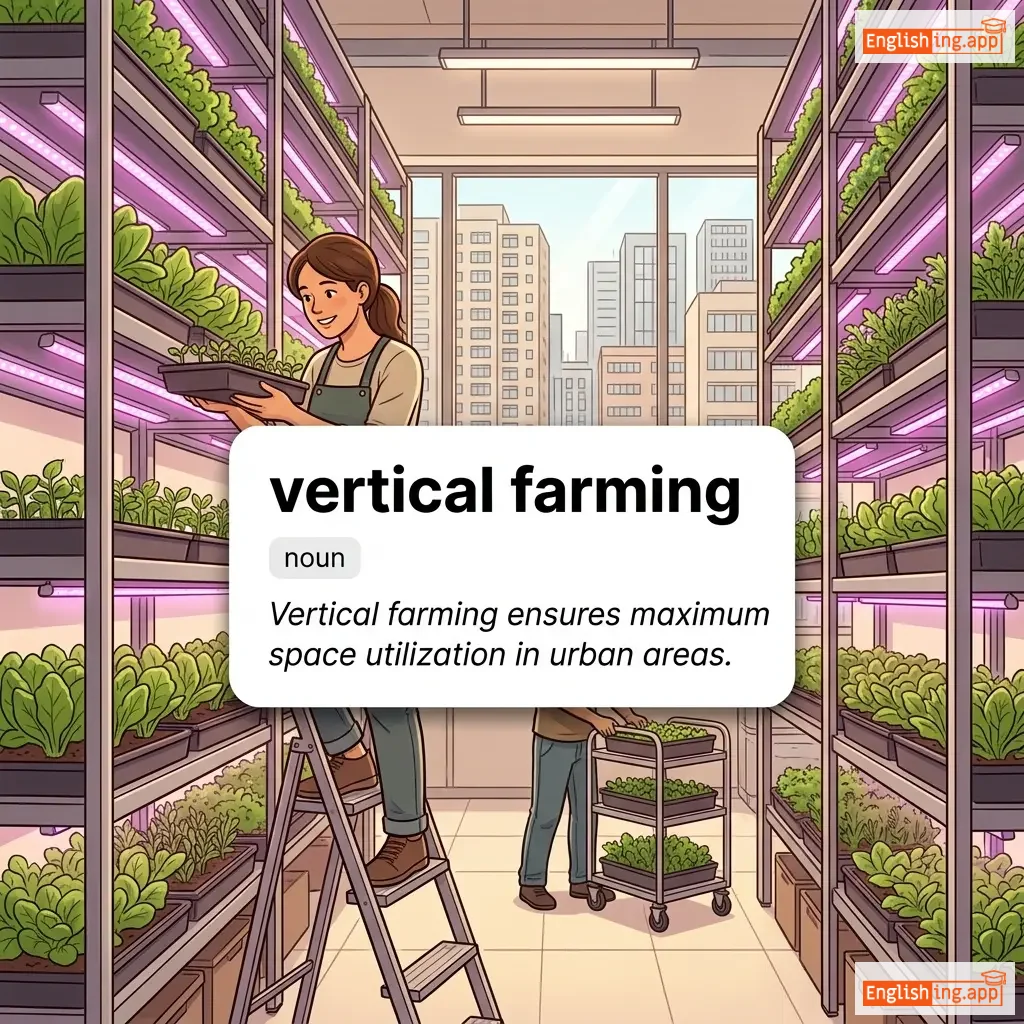
vertical farming definition card — visual illustration of the meaning
noun
/ˈvɜː.tɪ.kəl ˈfɑː.mɪŋ/
垂直農業 (suichoku nōgyō)

The practice of growing crops in vertically stacked layers, often incorporating controlled-environment agriculture.

"Vertical farming ensures maximum space utilization in urban areas."
"垂直農業は都市部で最大のスペース活用を確保します。" (Suichoku nōgyō wa toshibu de saidai no supēsu katsuyō o kakuho shimasu)
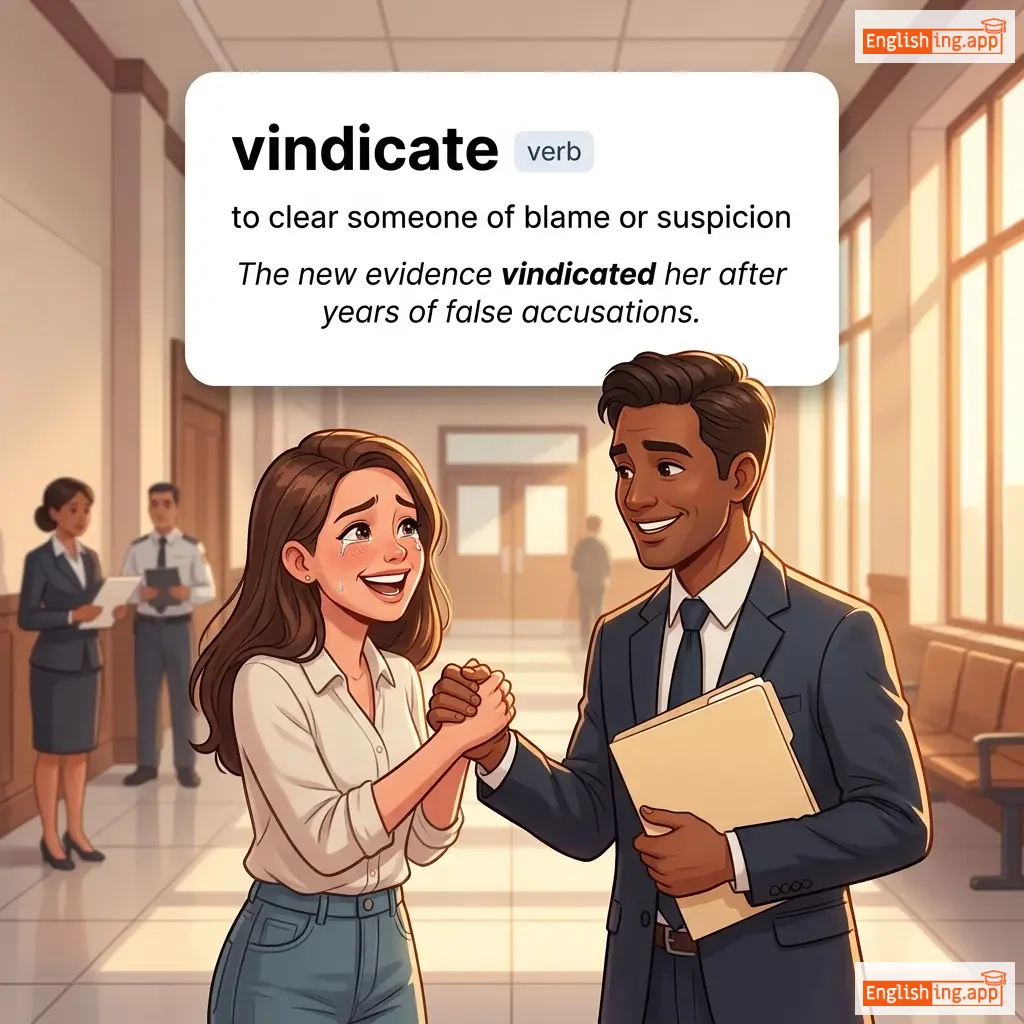
vindicate definition card — visual illustration of the meaning
verb
/ˈvɪndɪkeɪt/

to clear someone of blame or suspicion

"The new evidence vindicated her after years of false accusations."

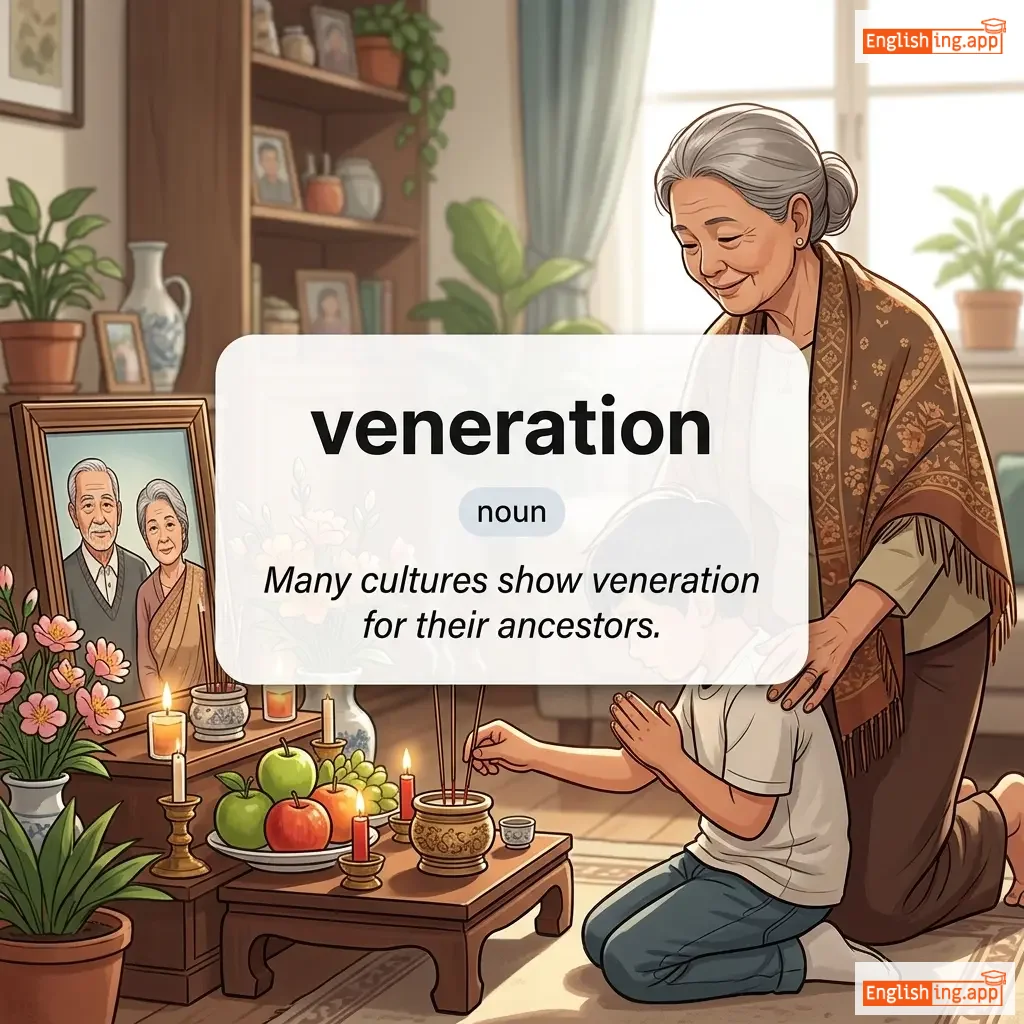
veneration definition card — visual illustration of the meaning
noun
ˌvɛn.əˈreɪ.ʃən
尊敬 (sonkei)

Great respect; reverence; the action of regarding with great respect or reverence.

"Many cultures show veneration for their ancestors."

"多くの文化が祖先に対して尊敬を示します。" (Ōku no bunka ga sosen ni taishite sonkei o shimeshimasu.)
noun
/ˈvɪdiəʊ/
ビデオ (bideo)

a recording of moving visual images made digitally or on film

"She watched the video of her favorite concert online."

"彼女はオンラインでお気に入りのコンサートのビデオを見ました。" (Kanojo wa onrain de okiniiri no konsato no bideo o mimashita.)
noun
/ˈvɜːrbiɪdʒ/
冗長な言葉 (jouchou na kotoba)

Excessive use of words, often with little content or meaning; wordiness.

"The contract was filled with unnecessary legal verbiage."

"契約は不要な法的冗長な言葉で満たされていた。" (Keiyaku wa fuyou na houteki jouchou na kotoba de mitasarete ita.)
noun
/vəˈraɪəti/
多様性 (tayōsei)

the quality or state of being different or diverse; a range of different things

"There is a variety of fruits available in the market."

"市場にはさまざまな種類の果物があります。" (Ichiba ni wa samazama na shurui no kudamono ga arimasu.)
noun
/vərˈmɪl.jən/
鮮やかな赤橙色; この色の顔料 (vermillion)

a bright red-orange color; a pigment of this color

"The artist used vermillion paint for the sunset."

"アーティストは夕焼けのためにヴァーミリオンペイントを使用しました。" (Ātisuto wa yūyake no tame ni vāmirion peinto o shiyō shimashita.)
adjective
/ˈvɜːrnəl/
春の (haru no)

related to spring; fresh, youthful

"The garden was filled with vernal beauty after the long winter."

"長い冬の後、庭は春の美しさで満たされていました。" (Nagai fuyu no ato, niwa wa haru no utsukushisa de mitasarete imashita.)
adjective
/ˌvɛrɪˈsɪmɪlər/
真実に似ている (shinjitsu ni niteiru)

appearing to be true or real

"The story seemed verisimilar though it was entirely fictional."

"その話は真実に似ているように思えたが、完全に架空のものだった。" (Sono hanashi wa shinjitsu ni niteiru you ni omoeta ga, kanzen ni kakuu no mono datta.)
noun
/vaɪn/
つる植物 (tsuru shokubutsu)

a climbing or trailing plant with long stems; a plant that produces grapes

"The vine climbed up the wall and covered it with green leaves."

"そのつる植物は壁を登り、緑の葉で覆った。" (sono tsuru shokubutsu wa kabe o nobori, midori no ha de ootta)
preposition
/ˈvaɪə/ or /ˈviːə/
経由で (keiyu de)

through, by way of, or using a particular route or means

"She sent the documents via email."

"彼女はメールを通じて書類を送った。" (Kanojo wa mēru o tōjite shorui o okutta.)
noun
/ˌvɛəriəˈɡeɪʃən/
変色 (henshoku)

The appearance of differently colored zones in the leaves, flowers, or stems of plants.

"Variegation makes the foliage look more attractive."

"変化は植物の葉をより魅力的に見せます。" (Henshoku wa shokubutsu no ha o yori miryokuteki ni misemasu.)
noun/verb
/vɔːlt/
金庫 / 飛び越える (kinko / tobikoeru)

A secure room for storing valuables; also to leap or spring over something.

"The bank kept its gold bars in a secure vault."
"銀行は金の延べ棒を安全な金庫に保管していました。" (Ginkou wa kin no nobebou wo anzen na kinko ni hokan shiteimashita.)
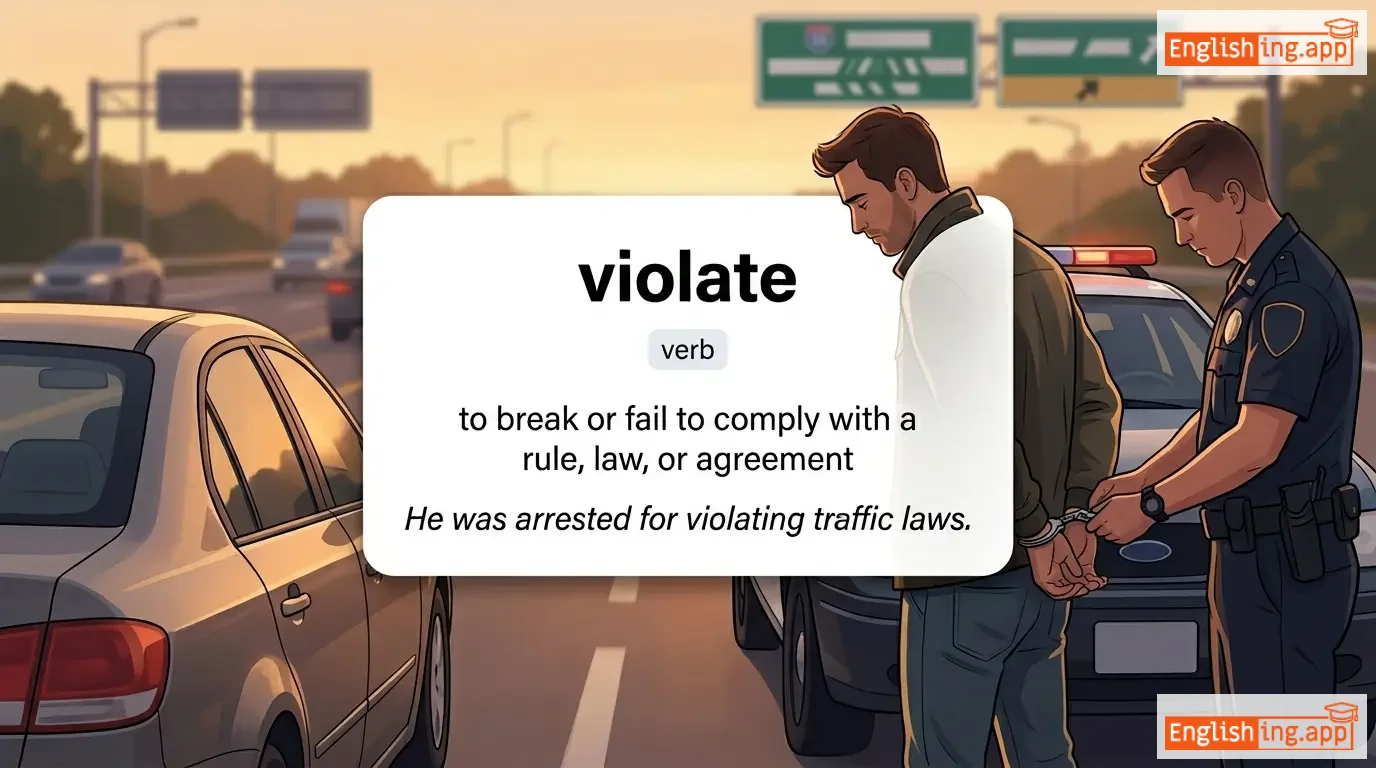
violate definition card — visual illustration of the meaning
verb
/ˈvaɪ.ə.leɪt/
違反する (ihan suru)

to break or fail to comply with a rule, law, or agreement

"He was arrested for violating traffic laws."

"彼は交通法を違反して逮捕された。" (Kare wa kōtsūhō o ihan shite taiho sareta.)
adjective
/ˈvɛntʃərəs/
冒険的な (bōkente-ki na)

Willing to take risks or try out new and exciting things; adventurous.

"The venturous explorers set out to cross the uncharted desert."

"冒険的な探検家たちは、未踏の砂漠を横断するために出発しました。" (Bōkente-ki na tankenka-tachi wa, mitō no sabaku o ōdan suru tame ni shuppatsu shimashita.)
noun
/vaɪəˈlɪn/
ヴァイオリン (vaiorin)

a musical instrument with four strings that is played with a bow

"She plays the violin beautifully in the orchestra."

"彼女はオーケストラで美しくヴァイオリンを弾きます。" (Kanojo wa ōkesutora de utsukushiku vaiorin wo hikimasu.)
adjective
/ˈvaɪ.ə.lənt/
暴力的 (bōryokuteki)

using or involving physical force intended to hurt or damage

"He became violent after hearing the bad news."

"悪いニュースを聞いた後、彼は暴力的になった。" (Warui nyūsu o kiita ato, kare wa bōryokuteki ni natta.)
verb
/vaɪ/
争う (arasou)

To compete eagerly with someone in order to do or achieve something.

"Several companies are vying for the contract."

"いくつかの企業が契約を争っています。" (Ikutsuka no kigyō ga keiyaku o arasotteimasu.)
adjective
/ˈvɛərɪd/
多様な (tayōna)

showing many different kinds or forms

"The menu offers a varied selection of dishes."

"メニューには多様な料理が揃っています。" (Menyū ni wa tayōna ryōri ga sorotteimasu.)
noun
/ˈviː.ɪ.kəlz/
乗り物 (norimono)

machines used for transporting people or goods from one place to another

"There are many different types of vehicles on the road today."

"今日、道路にはさまざまな種類の乗り物があります。" (Kyou, douro ni wa samazama na shurui no norimono ga arimasu)
noun
/vɪˈsɪn.ə.ti/
近隣; 周辺 (vicinity)

the area near or surrounding a particular place; neighborhood

"There are many shops in the vicinity of the school."

"学校の近くにたくさんの店があります。" (gakkou no chikaku ni takusan no mise ga arimasu.)
noun
/ˈvɪn.ɪ.ɡər/
(su)

a sour liquid made from fermented alcohol, used for cooking and preserving

"I added vinegar to the salad dressing for extra flavor."

"私はサラダドレッシングにビネガーを加えて、味を増しました。" (Watashi wa sarada doresshingu ni binegaa wo kuwaete, aji wo mashimashita.)
noun
/ˈvɪntnər/
ワイン製造者 / ワイン販売者 (wain seizō-sha / wain hanbai-sha)

A person who makes or sells wine.

"The vintner explained the process of making red wine."

"ヴィントナーは赤ワインの作り方を説明しました。" (Vintnā wa aka wain no tsukurikata o setsumei shimashita.)
noun
/ˌvɛəriˈeɪʃən/
変化 (henka)

A change or slight difference in condition, amount, or level.

"There is a wide variation in climate across the country."
"国全体で気候に大きな変化があります。" (koku zentai de kikou ni ookina henka ga arimasu.)
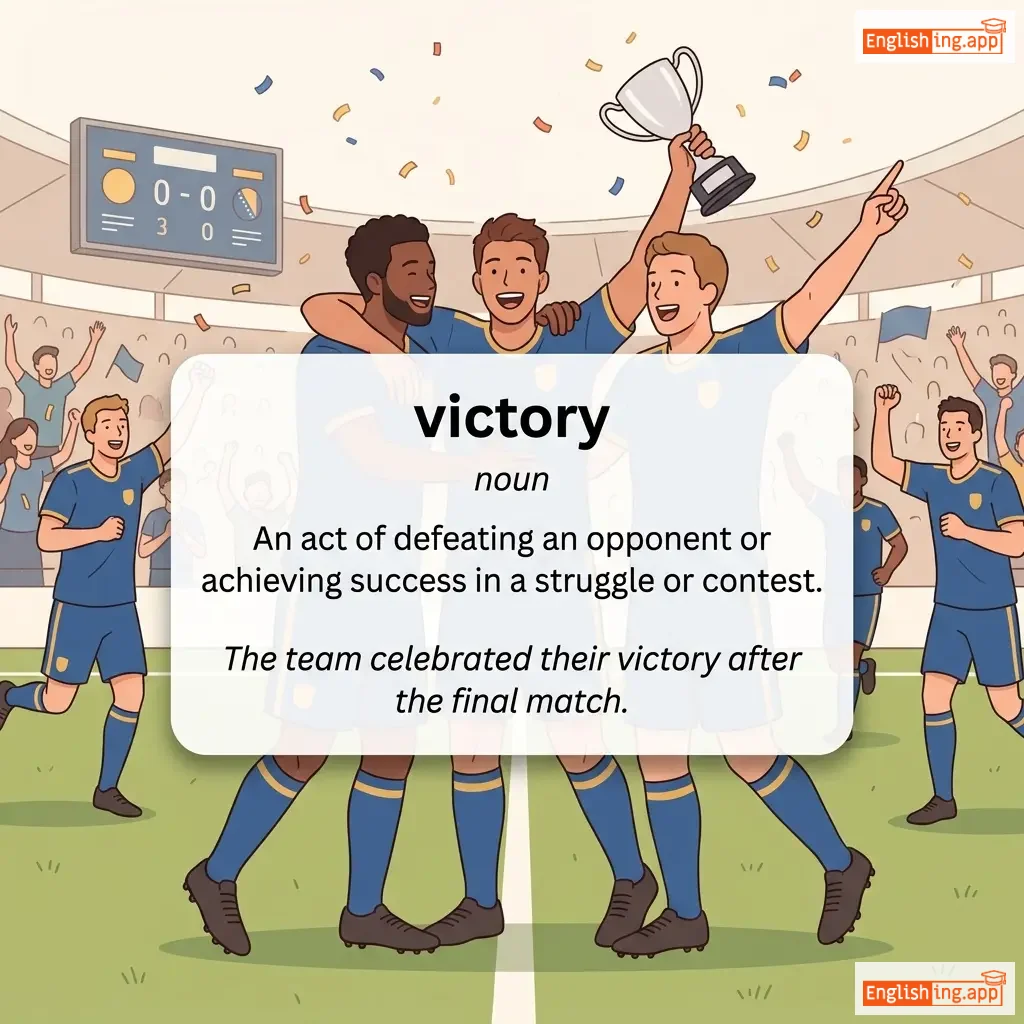
victory definition card — visual illustration of the meaning
noun
/ˈvɪktəri/
勝利 (shōri)

An act of defeating an opponent or achieving success in a struggle or contest.

"The team celebrated their victory after the final match."

"チームは最終試合の後、勝利を祝いました。" (chīmu wa saishū shiai no ato, shōri o iwai mashita.)
adjective
/ˈvɜːrtʃuəl/
バーチャル / 仮想 (bācharu / kasou)

existing or simulated on a computer or online rather than physically; almost but not exactly the same as

"The company held a virtual meeting with employees worldwide."

"その会社は世界中の従業員とバーチャルミーティングを開催しました。" (Sono kaisha wa sekaijū no jūgyōin to bācharu mītingu o kaisai shimashita.)
noun
/vɜːrˈtuː/
美術に対する愛 (bijutsu ni taisuru ai)

a love of or taste for fine art, antiques, or curiosities

"The collector’s house was filled with objects of virtu."

"コレクターの家は美術品で満ちていました。" (Korekuta no ie wa bijutsuhin de michiteimashita.)
noun
/ˈvedʒtəbəl ɔɪl/
植物油 (shokubutsu abura)

Oil extracted from plants, seeds, or nuts used for cooking

"She heated vegetable oil in the pan before adding the vegetables."

"彼女は野菜を加える前にフライパンで植物油を加熱しました。" (Kanojo wa yasai o kuwaeru mae ni furaipan de shokubutsu abura o nenatsu shimashita.)
adjective
/ˈvɛntrəl/
腹側の (fukusoku no)

relating to the underside or abdominal part of an animal or organ

"The fish has a white ventral surface."

"その魚は白い腹側の表面を持っています。" (Sono sakana wa shiroi fukusoku no hyōmen o motteimasu.)
noun
/ˈven.juː/
会場 (kaijou)

a place where an event or activity takes place

"The wedding venue was beautifully decorated."

"結婚式の会場は美しく飾られていました。" (kekkonshiki no kaijou wa utsukushiku kazararete imashita)
noun
/ˈvɜːrtɛks/
頂点 (chouten)

The highest point; the top or the apex.

"The climber reached the vertex of the mountain."

"登山者は山の頂点に達しました。" (Tōzan-sha wa yama no chōten ni tasshimashita.)
adjective
/ˈvɛnəˌreɪtɪd/
尊敬される (sonkei sareru)

respected and admired deeply

"The venerated professor was honored with an award."

"その尊敬される教授は賞を授与されました。" (Sono sonkei sareru kyōju wa shō o juyo saremashita.)
adjective
/vərˈmɪkjələr/
ミミズのような (mimizu no youna)

having a shape or appearance like a worm; worm-like

"The artist used a vermicular design to decorate the border of the manuscript."

"アーティストは手稿の縁をミミズのようなデザインで飾った。" (Ātisuto wa shukō no fuchi o mimizu no yōna dezain de kazatta.)
noun
/ˈvendʒəns/
復讐 (fukushū)

punishment inflicted or retribution exacted for an injury or wrong; revenge

"He swore to seek vengeance against those who wronged him."

"彼は自分を傷つけた者に復讐すると誓った。" (Kare wa jibun o kizutsuketa mono ni fukushū suru to chikatta.)
noun
/ˌvɛrɪsɪˈmɪlɪtjuːd/
真実味 (shinjitsumi)

the appearance of being true or real

"The movie was praised for its verisimilitude to actual events."

"その映画は実際の出来事に対する真実味で賞賛されました。" (Sono eiga wa jissai no dekigoto ni taisuru shinjitsumi de shousan saremashita.)
noun
/ˈvɛnəm/
毒液 (doku-eki)

a poisonous substance secreted by animals such as snakes or spiders; also used to describe intense ill will or malice

"The snake injected its venom into the prey."

"ヘビは獲物に毒液を注入した。" (Hebi wa emono ni doku-eki o chuunyuu shita.)
adjective
/vɪkˈtɔː.ri.əs/
勝利した (shōri shita)

having won a victory; successful in a struggle or contest

"The victorious team celebrated their championship win with great joy."

"勝利したチームは、チャンピオンシップの勝利を大きな喜びで祝いました。" (Shōri shita chīmu wa, chanpionshipu no shōri o ōkina yorokobi de iwai mashita.)