語彙集

英単語辞書 | 単語の意味、定義、例文

adjective
/traɪˈʌmfənt/
勝利した; 幸せな (shōri shita; shiawase na)

having won a battle or contest; rejoicing as a result of success

"The team was triumphant after winning the championship."

"チームはチャンピオンシップに勝利した後、勝利者のように感じていた。" (chīmu wa chanpionship ni shōri shita ato, shōrisha no yō ni kanjite ita)
noun
/traɪˈʌmvɪər/
三人委員 (sannin iin)

One of a group of three men holding power in ancient Rome.

"Caesar was a triumvir in the first Roman triumvirate."

"カエサルは最初のローマの三人委員会の一員でした。" (Kaesaru wa saisho no Rōma no sannin iinkai no ichiin deshita.)
noun
/traɪˈʌmvɪrət/
三頭政治 (santō seiji)

A political regime ruled or dominated by three powerful individuals.

"The Roman Republic was once governed by a triumvirate."

"ローマ共和政はかつて三頭政治によって統治されていました。" (Rōma kyōwasei wa katsute santō seiji ni yotte tōchi sarete imashita.)
noun
/ˈtrɪviə/
雑学 (zatsugaku)

Details or information that are considered unimportant or of little value.

"The quiz was filled with fun trivia about movies and music."

"クイズは映画や音楽に関する楽しい雑学で満たされていました。" (Kizu wa eiga ya ongaku ni kansuru tanoshī zatsugaku de mitasareteimashita.)
adjective
/ˈtrɪviəl/
些細な (sasina)

Of little value or importance.

"He often gets upset over the most trivial matters."

"彼は最も些細なことに腹を立てることがよくあります。" (Kare wa mottomo sasina koto ni hara o tateru koto ga yoku arimasu.)
noun
/ˈtrɒɡlədaɪt/
洞窟人 (doukutsu jin)

A person who lives in a cave or is considered old-fashioned and out of touch.

"Some called him a troglodyte for refusing to use modern technology."

"彼は現代の技術を使うことを拒んだため、洞窟人と呼ばれた。" (Kare wa gendai no gijutsu o tsukau koto o kobanda tame, doukutsu jin to yobareta.)
noun
/ˈtruːɪzəm/
自明の理 (jimyo no ri)

a statement that is obviously true and says nothing new or interesting

"It is a truism that hard work leads to success."

"努力は成功に繋がるという自明の理です。" (doryoku wa seikou ni tsunagaru to iu jimyo no ri desu.)
noun
/ˈtʌɡboʊt/
タグボート (tagubōto)

a small, powerful boat used for towing or pushing ships

"The tugboat guided the massive ship safely into the harbor."

"タグボートは巨大な船を安全に港に案内しました。" (Tagubōto wa kyodaina fune o anzen ni minato ni annai shimashita.)
adjective
/ˈtʌf.tɪd/
小さな束がついた; 束を使った (chiisana taba ga tsuita; taba o tsukatta)

having a tuft or tufts; furnished with a tuft or clump of threads, hairs, or other material

"The tufted sofa looked elegant in the living room."

"小さな束がついたソファはリビングルームで優雅に見えました。" (Chiisana taba ga tsuita sofa wa ribingu rūmu de yūga ni miemashita.)
noun
/ˈtjuːzdeɪ/
火曜日 (kayoubi)

The second day of the week, following Monday and preceding Wednesday.

"We have a meeting scheduled for Tuesday."

"私たちは火曜日に会議を予定しています。" (Watashitachi wa kayoubi ni kaigi wo yotei shiteimasu.)
verb
/tʌk/
タック (takku)

to push or fold something neatly into a particular place

"She tucked the blanket around the baby to keep him warm."

"彼女は赤ちゃんの周りに毛布をタックして温かく保ちました。" (Kanojo wa akachan no mawari ni moufu wo takku shite atatakai ni tamotsu mashita.)
noun
/ˈtuːb.roʊz/
チューバローズ (chūbarōzu)

a night-blooming flower with an intensely sweet fragrance, native to Mexico

"The tuberose flowers filled the evening air with their heavenly scent."

"チューバローズの花は夕方の空気に天国のような香りを満たしました。" (Chūbarōzu no hana wa yūgata no kūki ni tengoku no yō na kaori o mitashimashita.)
noun
/tjuːb/
チューブ (chūbu)

a hollow cylinder used to convey something, typically fluid

"He used a tube to measure the liquid."

"彼は液体を測るためにチューブを使った。" (Kare wa ekitai o hakaru tame ni chūbu o tsukatta.)
noun
/tsuːˈnɑː.mi/
津波 (tsunami)

a large sea wave caused by an underwater earthquake or volcanic eruption

"The tsunami devastated the coastal town, leaving thousands homeless."
"津波は沿岸の町を壊滅させ、何千人もの人々を家なしにしました。" (Tsunami wa engan no machi o kaimetsu sase, nanzen nin mono hitobito o ie nashi ni shimashita.)
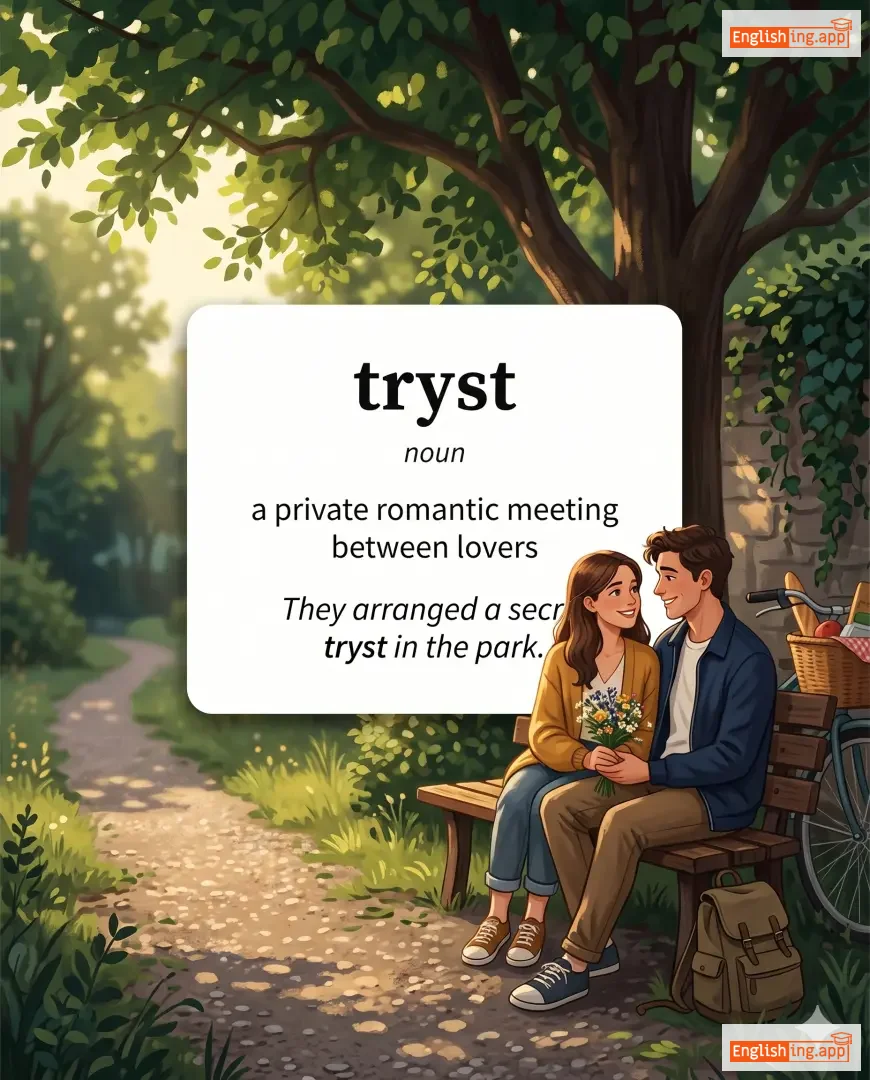
tryst definition card — visual illustration of the meaning
noun
/traɪst/
秘密の逢引 (himitsu no aibi)

a private romantic meeting between lovers

"They arranged a secret tryst in the park."

"彼らは公園で秘密の逢引を手配した。" (Karera wa kouen de himitsu no aibi o tehai shita.)
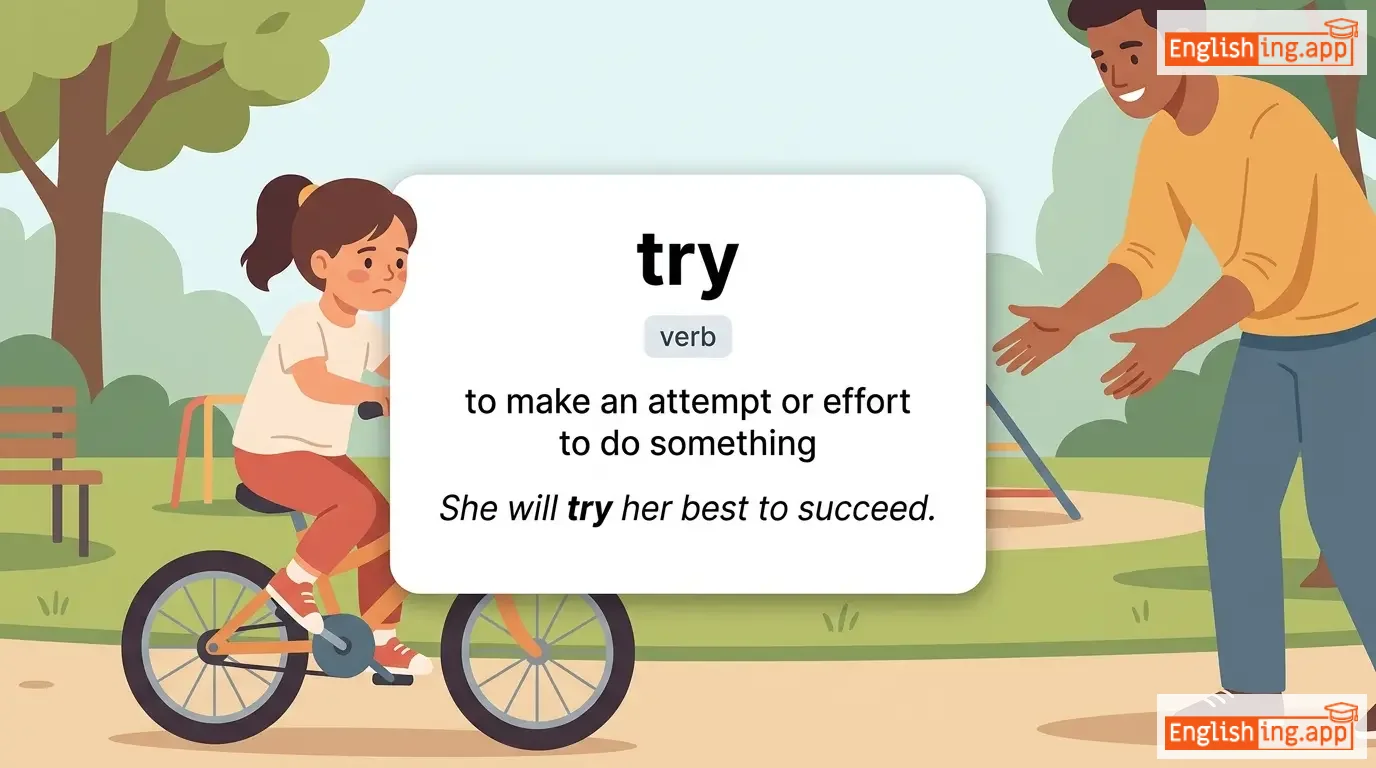
try definition card — visual illustration of the meaning
verb
/traɪ/
試みる (kokoromiru)

to make an attempt or effort to do something

"She will try her best to succeed."

"彼女は成功するために最善を尽くすつもりです。" (Kanojo wa seikou suru tame ni saizen o tsukusu tsumori desu.)
noun
/ˈtruːθ.fəl.nəs/
正直 (seijitsu)

the quality of being truthful; honesty and accuracy in what one says or does

"Her truthfulness in the investigation helped solve the case quickly."

"調査における彼女の正直さが、事件を迅速に解決するのに役立ちました。" (Chousa ni okeru kanojo no shoujikisa ga, jiken o jinsoku ni kaiketsu suru no ni yakudachimashita.)
adjective
/ˈtruːθfʊl/
正直な (shoujiki na)

telling or expressing the truth; honest

"He gave a truthful account of the incident."

"彼は事件の正直な報告をした。" (Kare wa jiken no shoujiki na houkoku o shita.)
🧭

Truth

noun
/truːθ/

the quality or state of being true; facts or reality

"The truth will always come out in the end."

adjective
/ˈtrʌstˌwɜːrði/
信頼できる (shinraidekiru)

Able to be relied on as honest or truthful.

"She is a trustworthy friend who never lies."

"彼女は決して嘘をつかない信頼できる友達です。" (Kanojo wa kesshite uso o tsukanai shinrai dekiru tomodachi desu.)
adjective
/ˈtrʌst.fəl/
信頼する; 誰かまたは何かに信頼を示す (shinrai suru)

having or showing trust in someone or something; trusting

"She was too trustful and believed everything he said."

"彼女はあまりにも信頼しすぎて、彼が言うことをすべて信じていました。" (Kanojo wa amari ni mo shinrai shisugite, kare ga iu koto o subete shinjite imashita.)
noun
/trʌsˈtiː/
受託者 (jutakusha)

a person who holds or manages property or assets for the benefit of others

"She was appointed as the trustee of the family estate."

"彼女は家族の財産の受託者に任命された。" (Kanojo wa kazoku no zaisan no jutakusha ni ninmei sareta.)
trust definition card — visual illustration of the meaning
🤝

trust

verb
/trʌst/

to believe in the reliability, truth, ability, or strength of someone or something

"I trust you to handle this situation carefully."

🏗️

truss

noun
/trʌs/

a framework, typically consisting of rafters, posts, and struts, supporting a roof, bridge, or other structure

"The engineer designed a strong truss for the new bridge."

🌳

Trunk

noun
/trʌŋk/

the main woody stem of a tree; also a large, strong container for storage or travel; the enclosed space at the back of a car

"She packed her clothes into a trunk before leaving for college."

adjective
/ˈtrʌŋkeɪtɪd/
短縮された (tanshuku sareta)

shortened by cutting off a part; cut short

"The meeting was truncated due to time constraints."

"会議は時間の制約により短縮されました。" (Kaigi wa jikan no seiyaku ni yori tanshuku saremashita.)
verb
/ˈtrʌŋkeɪt/
切り詰める (kiritsumeru)

to shorten something by cutting off the top or the end

"The article was truncated to fit the limited space."

"その記事は限られたスペースに収めるために切り詰められました。" (Sono kiji wa kagirareta supēsu ni osameru tame ni kiritsumeraremashita.)
noun/verb
/ˈtrʌmpɪt/

a brass musical instrument with a bright sound; to proclaim loudly

"The band played the trumpet loudly at the parade."

noun
/ˈtrʌmpəri/
無価値なナンセンスまたは見せかけのあるが無価値なもの (mukachi na nansensu matawa misekake no aru ga mukachi na mono)

worthless nonsense or showy but worthless things

"The speech was full of political trumpery."

"その演説は政治的なトランプリーで満ちていた。" (Sono enzetsu wa seijiteki na torampurī de michite ita.)
adverb
/ˈtruːli/
本当に (hontōni)

in a truthful, genuine, or sincere manner

"She truly believed in the power of kindness."

"彼女は本当に親切の力を信じていた。" (Kanojo wa hontōni shinsetsu no chikara o shinjite ita.)
noun
/truːp/
劇団 (gekidan)

A group of dancers, actors, or performers who work together.

"The theater troupe performed brilliantly on stage."

"劇団はステージで素晴らしいパフォーマンスをしました。" (Gekidan wa suteeji de subarashī pafōmansu o shimashita.)
noun
/truːp/
部隊 (butai)

a group of people, animals, or things moving together

"A troop of soldiers marched down the street."

"兵士たちの部隊が通りを行進していた。" (Heishitachi no butai ga tōri o kōshin shite ita.)
noun
/troʊp/
文学的な使い古し (bungakuteki na tsukaikureshi)

A common or overused theme, idea, or device in literature, film, or speech.

"The film avoided the usual superhero tropes."

"その映画は、一般的なスーパーヒーローのトロープを避けました。" (Sono eiga wa, ippanteki na sūpāhīrō no torōpu o sakemashita.)
noun
/ˈtroʊfi/
トロフィー (torofī)

An object awarded as a prize for a victory or achievement.

"She proudly displayed the trophy she won in the competition."
"彼女はコンペティションで勝ったトロフィーを誇らしげに展示しました。" (Kanojo wa konpetishon de katta torofī o hokorashige ni tenji shimashita.)
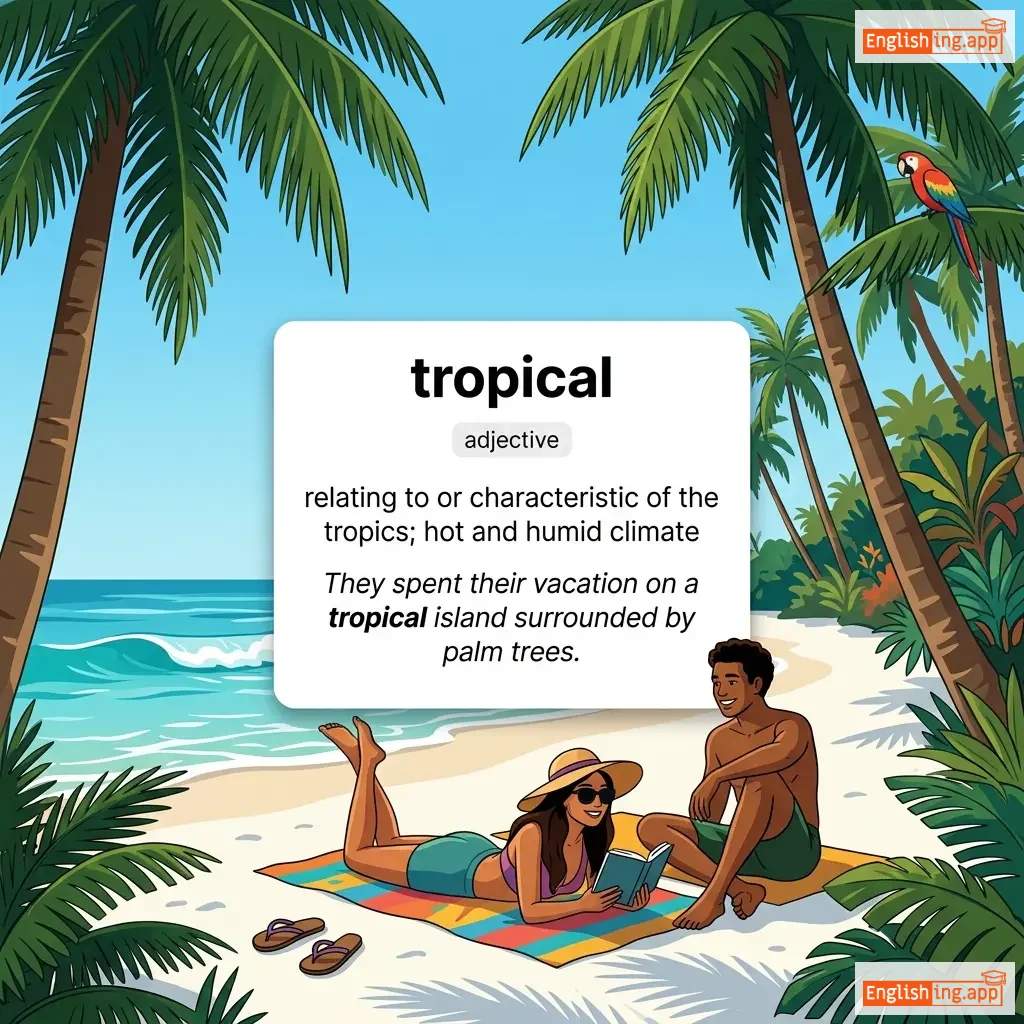
tropical definition card — visual illustration of the meaning
adjective
/ˈtrɒpɪkəl/
熱帯の (nettai no)

relating to or characteristic of the tropics; hot and humid climate

"They spent their vacation on a tropical island surrounded by palm trees."
"彼らはヤシの木に囲まれた熱帯の島で休暇を過ごしました。" (Karera wa yashi no ki ni kakomareta nettai no shima de kyūka o sugoshimashita.)
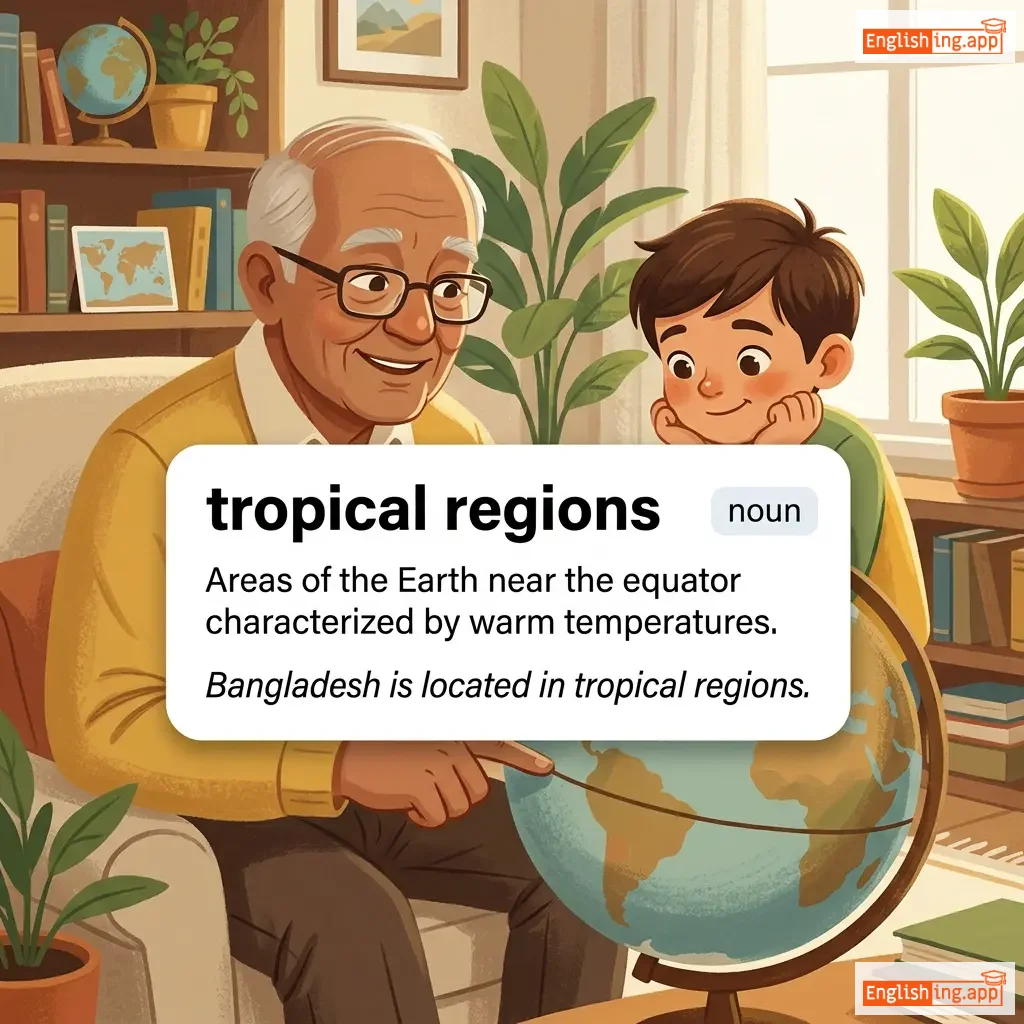
tropical regions definition card — visual illustration of the meaning
noun
ট্রপিক্যাল রিজিওনস
熱帯地域 (nettai chiiki)

Areas of the Earth near the equator characterized by warm temperatures.

"Bangladesh is located in tropical regions."
"バングラデシュは熱帯地域に位置しています。" (Banguradeshu wa nettai chiiki ni ichi shiteimasu.)
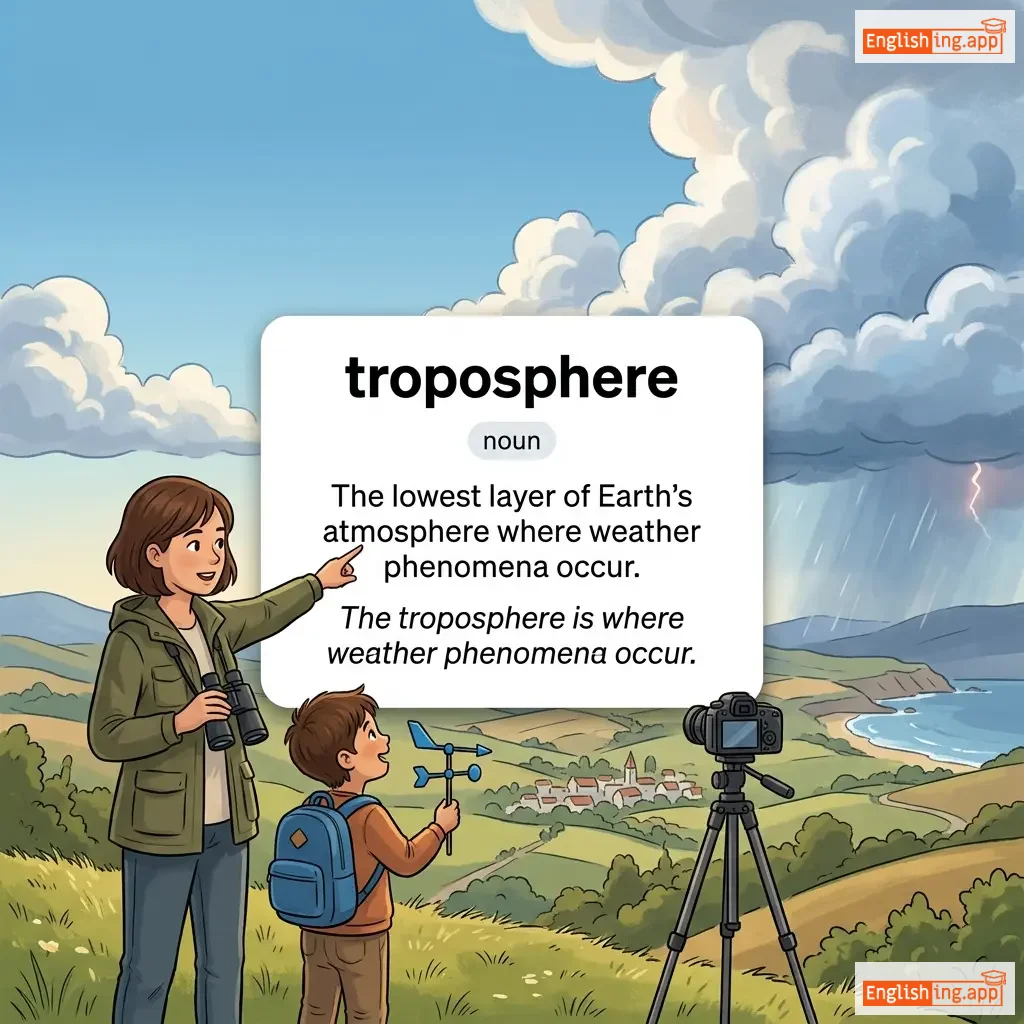
troposphere definition card — visual illustration of the meaning
noun
ট্রোপোস্ফিয়ার
対流圏 (tairyūken)

The lowest layer of Earth's atmosphere where weather phenomena occur.

"The troposphere is where weather phenomena occur."

"対流圏は天候現象が発生する場所です。" (Tairyūken wa tenkō genshō ga hassei suru basho desu.)
🤵‍♀️

troth (トロス)

noun
/troʊθ/
誓い, 忠誠 (chikai, chuusei)

Faith or loyalty when pledged in a solemn agreement or vow, especially in marriage.

"He pledged his troth to her before the gathering."

"彼は集会の前に彼女に誓いを立てた。" (Kare wa shuukai no mae ni kanojo ni chikai o tateta.)
noun
/ˈtrʌbəl/
問題 (mondai)

difficulty or problems that cause distress or inconvenience

"She had a lot of trouble finding her keys."

"彼女は鍵を見つけるのに多くの問題を抱えていた。" (Kanojo wa kagi wo mitsukeru no ni ooku no mondai wo kakaete ita.)
adjective
/ˈtrʌbəld/
困っている (komatteiru)

experiencing or showing distress, anxiety, or worry

"He looked deeply troubled after hearing the bad news."

"悪い知らせを聞いた後、彼は非常に困っているように見えた。" (Warui shirase wo kiita ato, kare wa hijou ni komatteiru you ni mieta.)
adjective
/ˈtrʌb.əl.səm/
面倒な、困った (mendou na, komatta)

Causing difficulty, annoyance, or worry.

"The troublesome child refused to follow the rules."

"その面倒な子供はルールに従うことを拒否した。" (Sono mendou na kodomo wa ruuru ni shitagau koto o kyohi shita.)
noun
/trɔːf/
飼い葉桶、低点 (kaiha-oke, teiten)

A long, narrow container from which animals eat or drink; also, a low point between waves or in business cycles.

"The cows drank water from the wooden trough."

"牛は木製の飼い葉桶から水を飲みました。" (ushi wa mokusei no kaiha-oke kara mizu o nomimashita.)
verb
/ˈtrʌk.əl/
従う (shitagau)

To submit or yield obsequiously to someone in power.

"He refused to truckle to the demands of the corrupt officials."
"彼は腐敗した役人の要求に従うことを拒否した。" (Kare wa fuhai shita yakunin no yōkyū ni shitagau koto wo kyohi shita.)
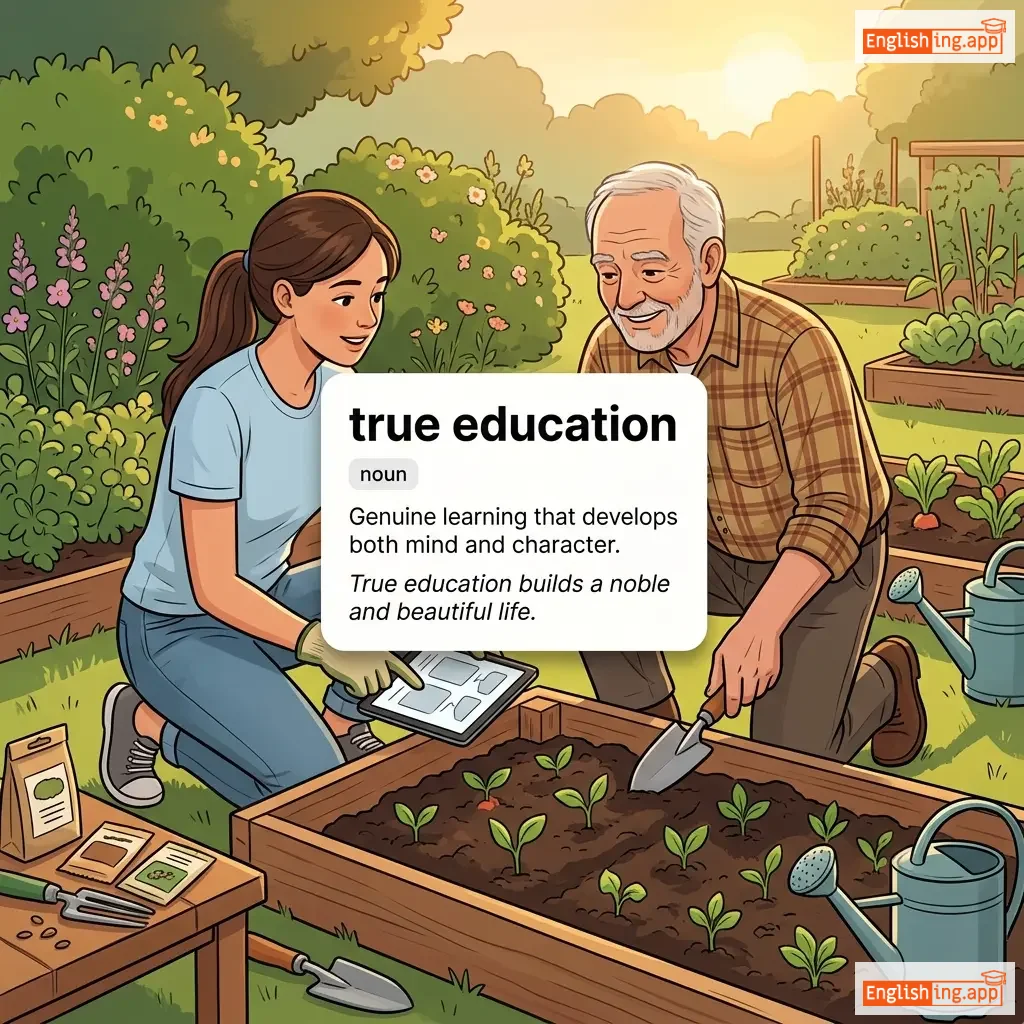
true education definition card — visual illustration of the meaning
noun
truː ˌɛdjuˈkeɪʃən
真の教育 (shin no kyoiku)

Genuine learning that develops both mind and character.

"True education builds a noble and beautiful life."

"真の教育は高貴で美しい人生を築きます。" (Shin no kyōiku wa kōki de utsukushī jinsei o kizukimasu.)
adjective
/truː/
真実 (shinjitsu)

in accordance with fact or reality; correct

"His story was true, and everyone believed him."

"彼の話は本当で、みんな彼を信じていました。" (Kare no hanashi wa hontou de, minna kare wo shinjiteimashita.)
verb
/trʌdʒ/
足を引きずって歩く (ashi o hikizutte aruku)

To walk slowly and with heavy steps, typically because of exhaustion or harsh conditions.

"They had to trudge through the snow to reach the village."

"彼らは村に到達するために雪の中を足を引きずって歩かなければならなかった。" (Karera wa mura ni tōtatsu suru tame ni yuki no naka o ashi o hikizutte arukanakereba naranakatta.)
adjective
/ˈtrʌk.jʊ.lənt/
攻撃的な (kougekitekina)

Eager or quick to argue, fight, or show aggression.

"She became truculent when her ideas were challenged."
"彼女は自分の考えが挑戦されると攻撃的になった。" (Kanojo wa jibun no kangae ga chousen sareru to kougekiteki ni natta.)
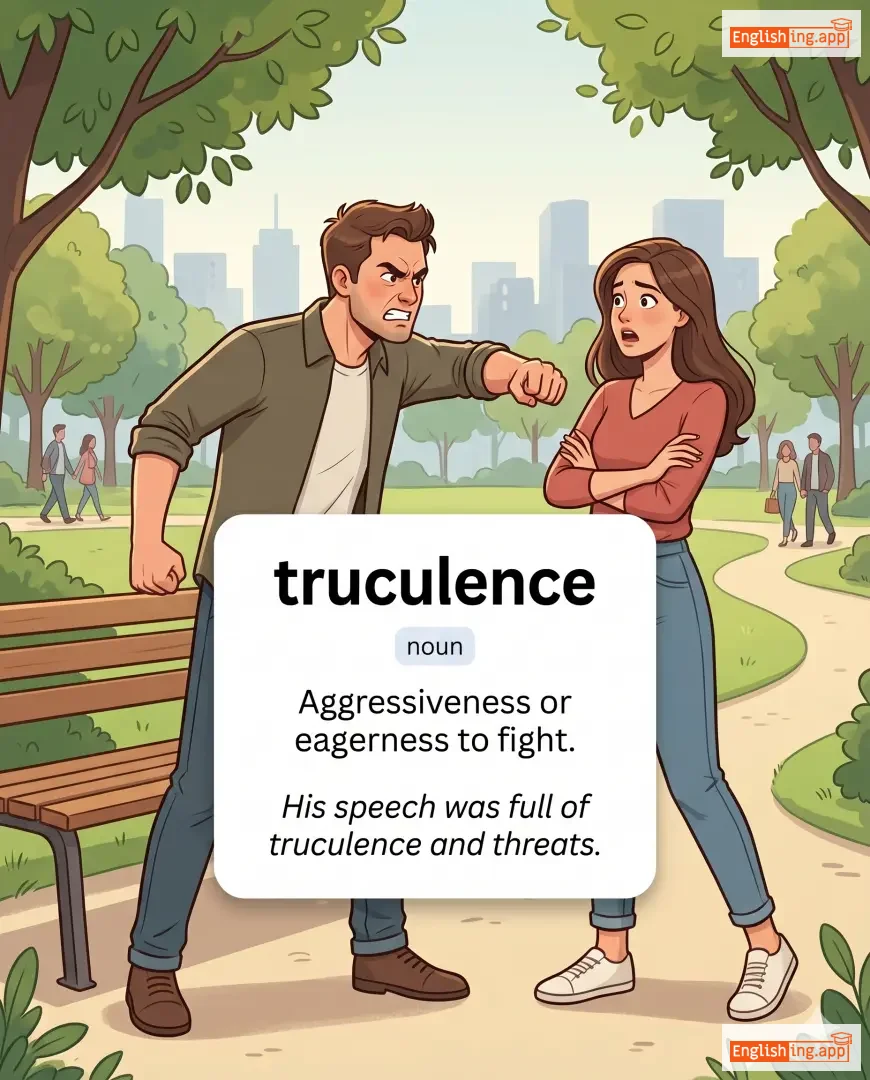
truculence definition card — visual illustration of the meaning
noun
/ˈtrʌk.jʊ.ləns/
好戦的 (kousenteki)

Aggressiveness or eagerness to fight.

"His speech was full of truculence and threats."

"彼の演説は好戦的で脅しに満ちていた。" (Kare no enzetsu wa kousenteki de odoshi ni michite ita.)
noun
/truːs/
休戦 (kyūsen)

An agreement between enemies or opponents to stop fighting for a certain time.

"The two countries agreed to a truce after weeks of intense fighting."

"二国は数週間にわたる激しい戦闘の後、休戦に合意しました。" (Nikoku wa sū shūkan ni wataru hageshī sentō no ato, kyūsen ni gōi shimashita.)
noun
/traʊt/
マス (masu)

a freshwater fish species known for its delicate flavor and often found in cold, clear waters

"Rainbow trout is popular among anglers for sport fishing."

"レインボートラウトはスポーツフィッシングの中で人気があります。" (Reinbō torauto wa supōtsu fisshingu no naka de ninki ga arimasu.)