語彙集

英単語辞書 | 単語の意味、定義、例文

adjective
/ʌnˈwaɪz/
賢明でない (kenmei denai)

Showing poor judgment; not sensible or prudent.

"It would be unwise to invest all your money in one company."

"すべてのお金を1つの会社に投資するのは賢明でないことです。" (Subete no okane o hitotsu no kaisha ni tōshi suru no wa kenmei denai koto desu.)
adjective
/ʌnˈseɪf/
危険な; 危ない; (kiken na, abunai)

involving or causing danger or risk; not protected from harm

"It is unsafe to walk alone in this neighborhood at night."

"この地域では夜間に一人で歩くのは危険です。" (Kono chiiki de wa yakan ni hitori de aruku no wa kiken desu.)
🏠⬆️

Upstairs

adverb
/ˌʌpˈstɛərz/

on or to a higher floor of a building

"She went upstairs to her bedroom."

noun
/ˈʌp.raɪt.nəs/
誠実; 正直 (seijitsu; shoujiki)

the quality of being honest and morally correct; integrity

"His uprightness in business dealings earned him great respect."

"彼のビジネスでの正直さは、彼に大きな尊敬をもたらした。" (Kare no bijinesu de no shoujikisa wa, kare ni ookina sonkei o motarashita.)
verb
/ʌnˈræp/
包みを開ける (tsutsumi o akeru)

remove wrapping or covering from something; reveal something gradually or clearly

"She carefully unwrapped the gift with excitement."
"彼女は興奮しながら慎重に贈り物の包みを開けた。" (Kanojo wa koufun shinagara shinchou ni okurimono no tsutsumi o aketa)
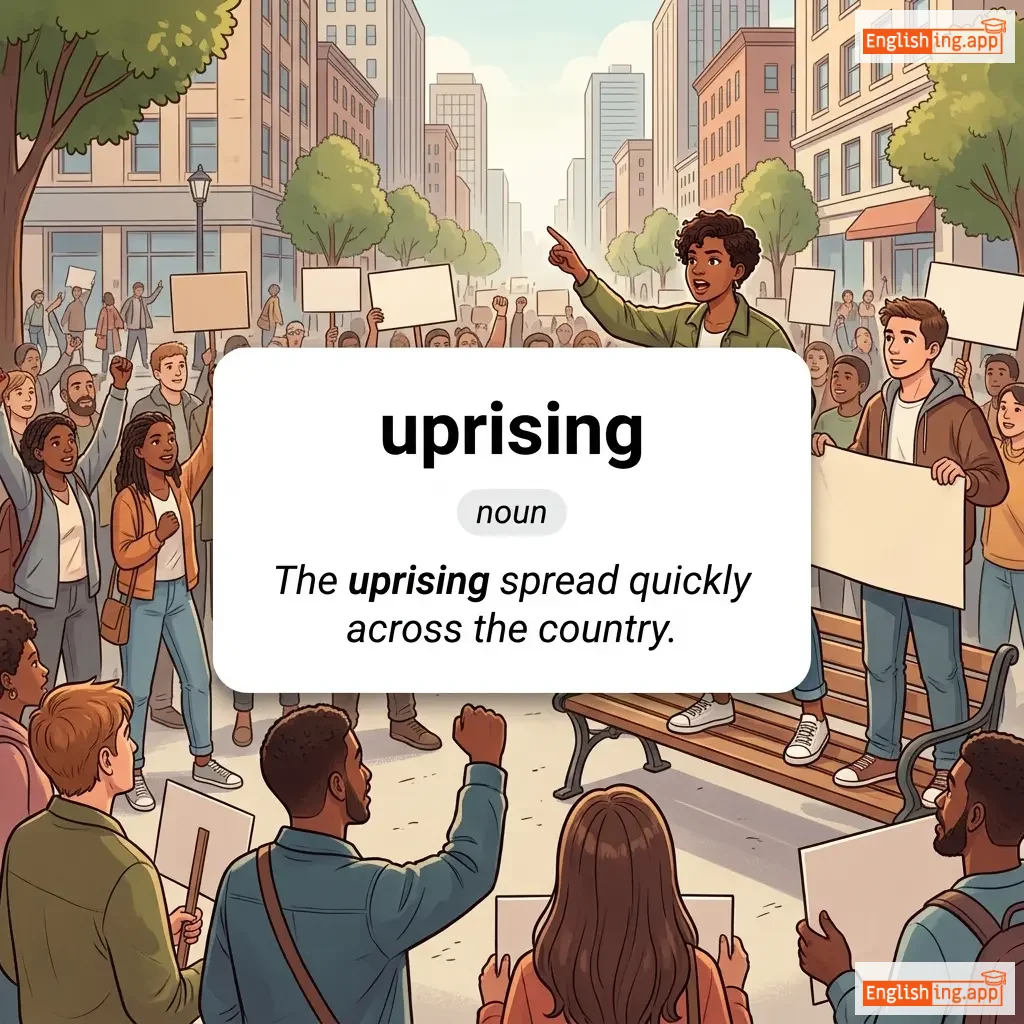
uprising definition card — visual illustration of the meaning
noun
/ˈʌpraɪzɪŋ/
反乱 (hanran)

An act of resistance or rebellion; an attempt to overthrow authority or government.

"The uprising spread quickly across the country."

"反乱は国全体に急速に広がった。" (Hanran wa kuni zentai ni kyūsoku ni hirogatta.)
adjective
/ʌnˈsteɪtɪd/
未表明 (mihyoumei)

not expressed directly in words; implied or left unsaid

"The contract included several unstated expectations."
"契約にはいくつかの未表明の期待が含まれていました。" (Keiyaku ni wa ikutsuka no mihyoumei no kitai ga fukumarete imashita.)
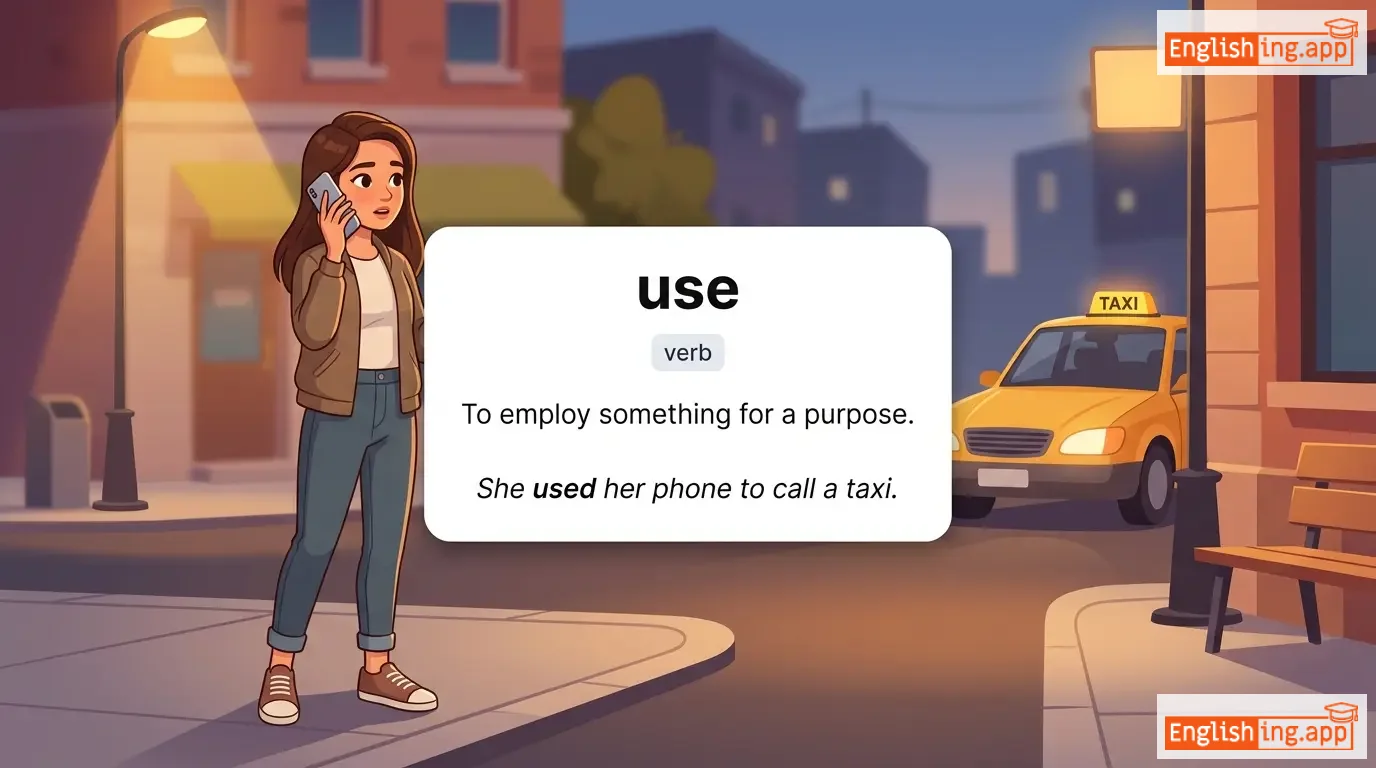
use definition card — visual illustration of the meaning
verb
/juːz/ (verb), /juːs/ (noun)
使う (tsukau)

To employ something for a purpose.

"She used her phone to call a taxi."

"彼女はタクシーを呼ぶために電話を使いました。" (Kanojo wa takushī o yobu tame ni denwa o tsukaimashita.)
adjective
/ˈʌpˌhɪl/
困難な; 大きな努力が必要な; 上向きの傾斜 (konnan na; ookina doryoku ga hitsuyou na; ue-muki no keisha)

difficult; requiring great effort; sloping upward

"Learning a new language can be an uphill battle."

"新しい言語を学ぶことは困難な戦いである可能性があります。" (Atarashii gengo o manabu koto wa konnan na tatakai de aru kanousei ga arimasu.)
verb
/ʌnˈjoʊk/
束縛から解放する (sokubaku kara kaihō suru)

To release from a yoke or to free from restraint or obligation.

"The farmer unyoked the oxen after a long day of work."

"農夫は長い労働の後に牛の首輪を外した。" (Nōfu wa nagai rōdō no ato ni ushi no kubiwa o hazushita.)
adjective
/ʌnˈstɪntɪŋ/
惜しみなく (oshiminaku)

given generously without holding back

"She received unstinting support from her family."

"彼女は家族から惜しみなく支援を受けた。" (Kanojo wa kazoku kara oshiminaku shien wo uketa.)
verb
/ʌpˈhiːv/
持ち上げる (mochiageru)

to lift or raise something forcefully; to cause to rise suddenly

"The workers had to upheave the heavy stone to clear the path."

"作業員たちは道を清掃するために重い石を持ち上げなければならなかった。" (Sagyouin-tachi wa michi o seisou suru tame ni omoi ishi o mochiagenakereba naranakatta.)
adjective
/ʌnˈtiːtʃəbəl/
教えられない (oshierarenai)

not able or willing to learn; resistant to instruction or guidance

"He was so stubborn that he became almost unteachable."

"彼はとても頑固で、ほとんど教えられない状態だった。" (kare wa totemo ganko de hotondo oshierarenai jotai datta)
visiting definition card — visual illustration of the meaning
verb
/ˈvɪzɪtɪŋ/
訪問する (hōmon suru)

Going to see and spend time with someone or at a place.

"The group is visiting islands during the expedition."

"グループは探検中に島を訪問しています。" (Gurūpu wa tanken-chū ni shima o hōmon shiteimasu.)
adjective
/ʌnˈsaɪtli/
見苦しい (migurushii)

Unpleasant to look at; ugly.

"The garbage pile created an unsightly view in the park."

"ゴミの山は公園に見苦しい景色を作り出した。" (Gomi no yama wa kōen ni migurushii keshiki o tsukuridashita.)
adjective
/ˌvɪtriˈɑːlɪk/
痛烈な批判 (tsūretsu na hihan)

filled with bitter criticism or malice

"His vitriolic remarks hurt everyone in the room."

"彼の痛烈なコメントは部屋の中の皆を傷つけました。" (Kare no tsūretsu na komento wa heya no naka no mina o kizutsukemashita.)
adjective
/ʌnˈwiːldi/
扱いにくい (atsukainikui)

Difficult to carry or move because of its size, shape, or weight.

"The box was too unwieldy to carry up the stairs."
"その箱は階段を上がるには重すぎて扱いにくかった。" (sono hako wa kaidan o agaru ni wa omo sugite atsukainikukatta.)
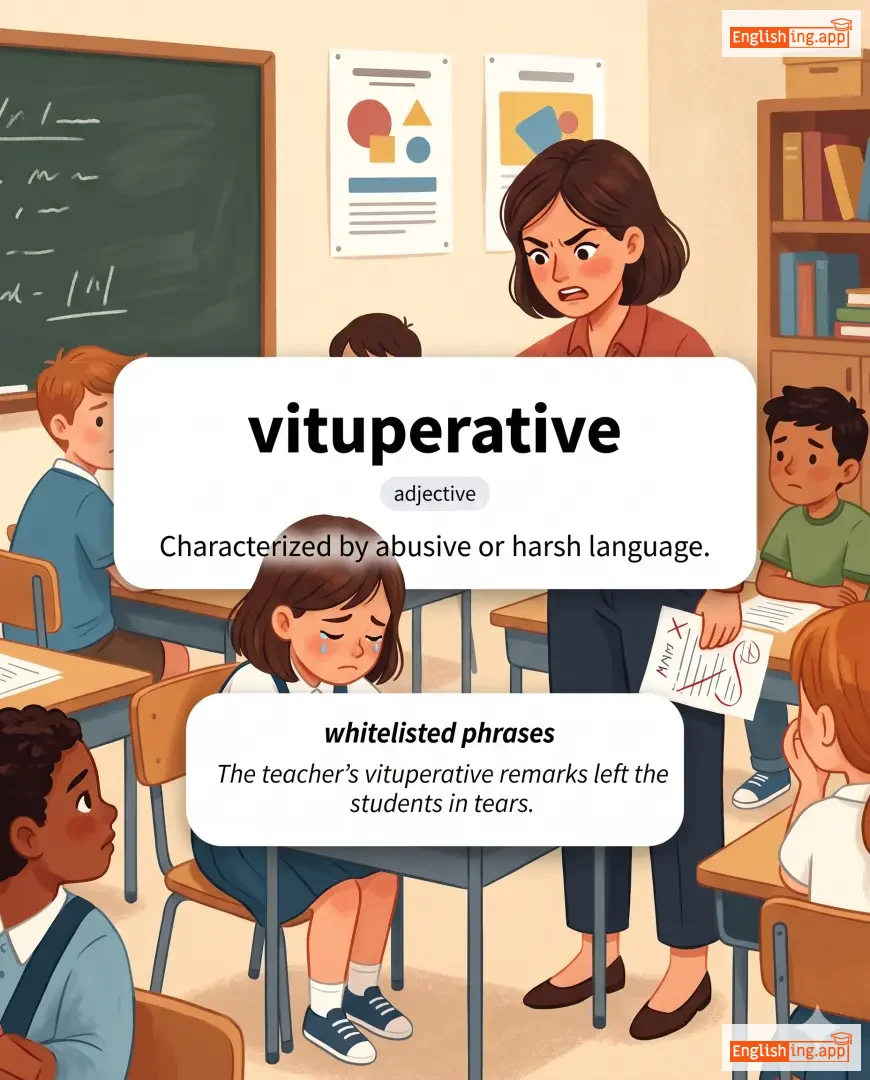
vituperative definition card — visual illustration of the meaning
adjective
/vɪˈtjuːpərətɪv/
悪口な (warukuchi na)

Characterized by abusive or harsh language.

"The teacher’s vituperative remarks left the students in tears."

"教師の悪口な言葉が学生たちを涙で満たしました。" (Kyōshi no warukuchi na kotoba ga gakusei-tachi o namida de mitashimashita.)
adverb
/ʌnˈjuːʒuəli/
異常に (ijo ni)

in a way that is not typical or expected; to an uncommon degree

"It was unusually cold for this time of year."

"この時期にしては異常に寒かった。" (kono jiki ni shite wa ijo ni samukatta)
noun
/ˈjuːsɪdʒ/
使用 (shiyou)

The action of using something; the way in which a word or phrase is normally used.

"The book explains the proper usage of technical terms."

"その本は技術的な用語の正しい使用法を説明しています。" (Sono hon wa gijutsuteki na yougo no tadashii shiyouhou o setsumei shiteimasu.)
adjective
/ˈʌpˌkʌmɪŋ/
今後の (kongo no)

about to happen or appear

"The upcoming event will be held next week."

"今後のイベントは来週行われます。" (Kongo no ibento wa raishuu okonawaremasu.)
adjective
/ʌnˈtɛmpərd/
無調整 (muchiōsei)

not moderated or softened; lacking proper balance or control

"The untempered anger of the crowd caused chaos."

"群衆の無調整な怒りが混乱を引き起こしました。" (Gunshū no muchiōsei na ikari ga konran o hikiokoshimashita.)
verb
/ˈvɪʒuəlaɪz/
視覚化する (shikakuka suru)

To form a mental image of something; to imagine.

"She tried to visualize her success before the big presentation."

"彼女は大きなプレゼンテーションの前に自分の成功をビジュアライズしようとした。" (Kanojo wa ōkina purezentēshon no mae ni jibun no seikō o bijuaraisu shiyou to shita.)
noun
/ˈɜːrtʃɪn/
路上の子供 (rojo no kodomo)

a mischievous or poorly dressed child, often from the streets

"The ragged urchins played by the riverbank."

"ぼろぼろの服を着た路上の子供たちが川辺で遊んでいた。" (boroboro no fuku o kita rojo no kodomotachi ga kawabe de asonde ita.)
adjective
/ʌnˈtʌtʃəbəl/
触れられない; 批判や攻撃を受けない (furerarenai; hihan ya kōgeki o ukenai)

not able to be touched or affected; beyond criticism or attack

"The CEO seemed untouchable despite the scandal."

"CEOはスキャンダルにもかかわらず、アンタッチャブルのように見えた。" (CEO wa sukyandaru ni mo kakawarazu, antatchaburu no yō ni mieta.)
adverb
/ʌnˈwɪlɪŋli/
不本意に (fuhoni ni)

in a way that shows reluctance or lack of desire; not willingly

"She unwillingly agreed to attend the meeting."

"彼女は不本意に会議に出席することに同意した。" (kanojo wa fuhoni ni kaigi ni shusseki suru koto ni doi shita)
adjective
/ˌʌn.rɪˈdʒɛn.ər.ət/
頑固 (ganko)

Not reformed or showing no signs of change; stubbornly refusing to reform or repent.

"He remained an unregenerate opponent of progress."

"彼は進歩の頑固な反対者であり続けた。" (Kare wa shinpo no ganko na hantai-sha de ari tsudzuketa.)
adjective
/ʌnˈriːdəbl/
読めない (yomenai)

not able to be read or understood clearly; illegible

"The doctor’s handwriting was completely unreadable."

"医者の字は完全に読めなかった。" (Isha no ji wa kanzen ni yomenakatta)
adjective
/ʌnˈwɜːrði/
値しない; 価値がない (ataishinai; kachi ga nai)

not deserving respect or attention; lacking worth or merit

"He felt unworthy of such praise and recognition."
"彼はそのような賞賛と認識を受けるには値しないと感じた。" (Kare wa sono yōna shōsan to ninshiki o ukeru ni wa atai shinai to kanjita.)
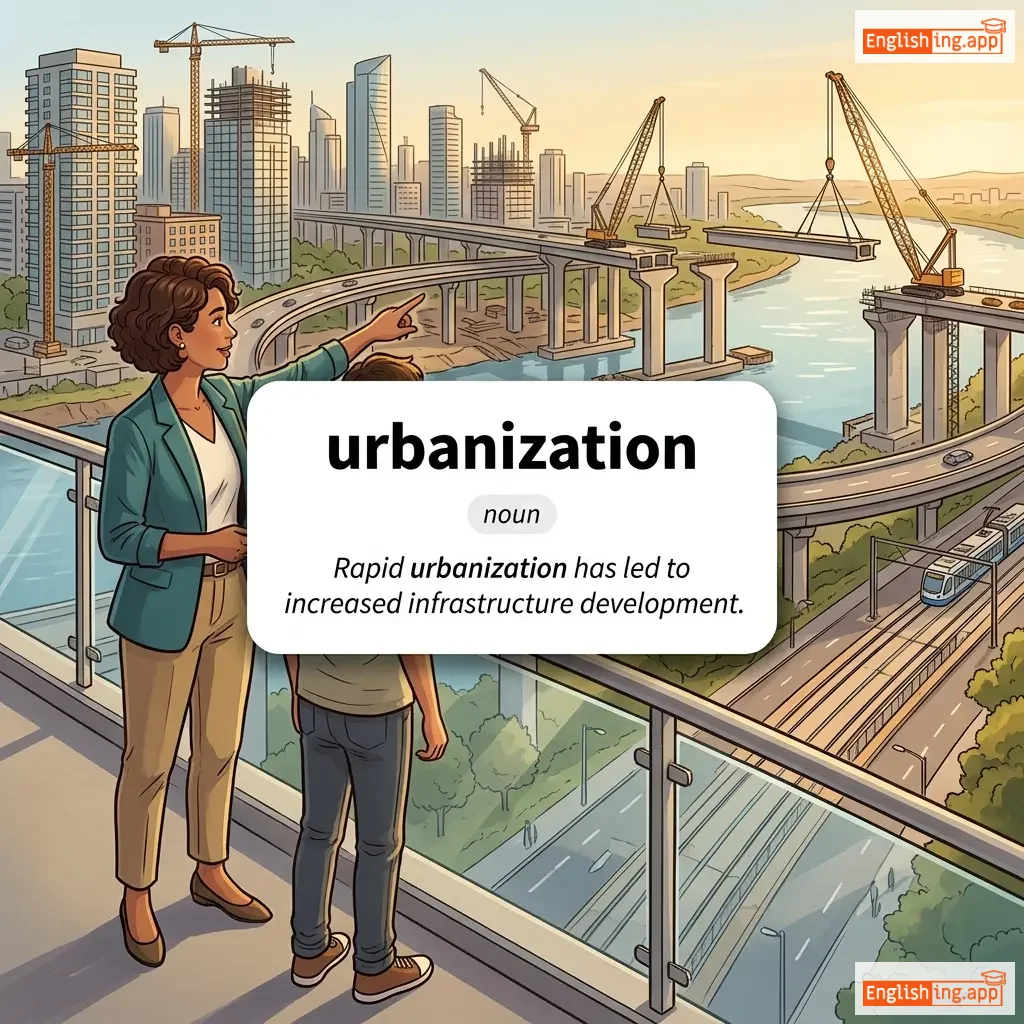
urbanization definition card — visual illustration of the meaning
noun
/ˌɜː.bən.aɪˈzeɪ.ʃən/
都市化 (toshika)

The process by which towns and cities are formed and become larger as more people begin living and working in central areas.

"Rapid urbanization has led to increased infrastructure development."
"急速な都市化は、インフラの発展の増加をもたらしました。" (Kyūsokuna toshika wa, infura no hatten no zōka o motarashimashita.)
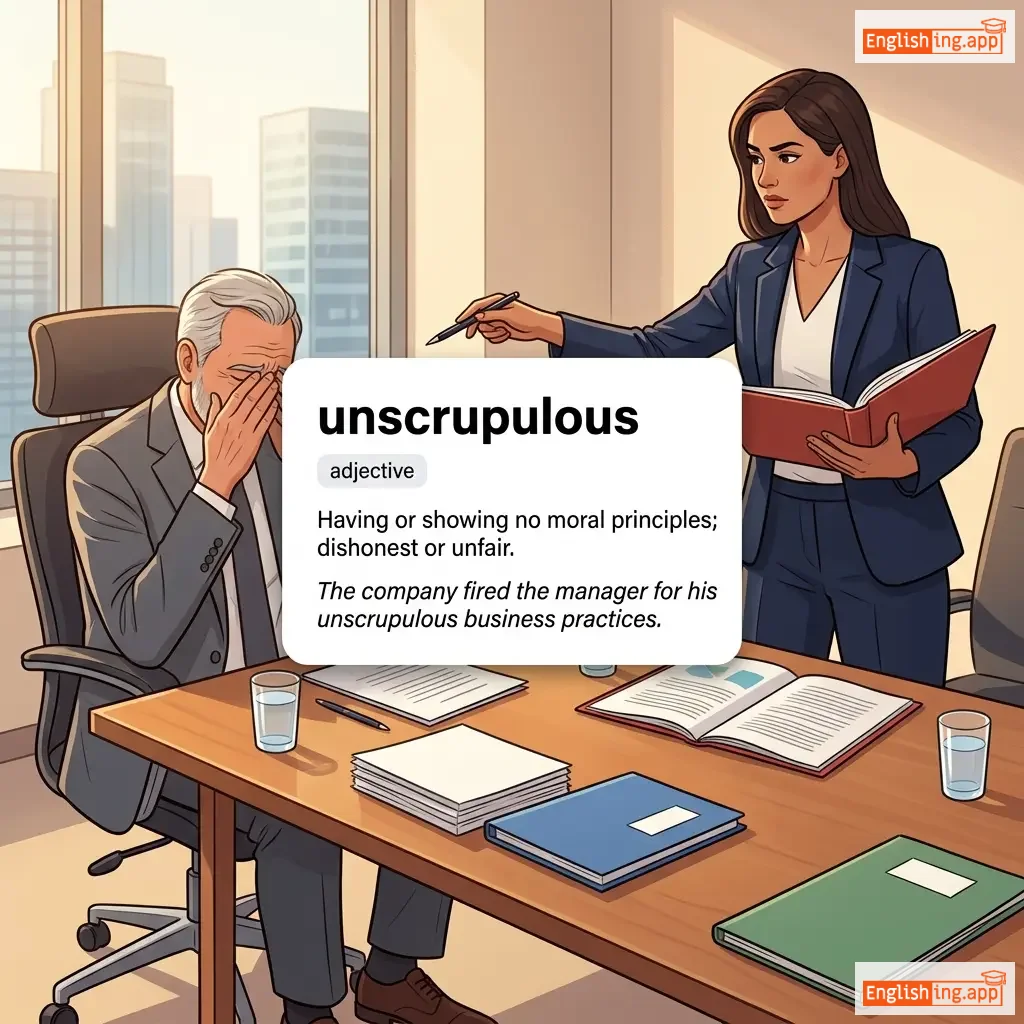
unscrupulous definition card — visual illustration of the meaning
adjective
/ʌnˈskruːpjələs/
無道徳 (mudōtoku)

Having or showing no moral principles; dishonest or unfair.

"The company fired the manager for his unscrupulous business practices."

"会社はその無道徳なビジネス慣行のためにマネージャーを解雇しました。" (Kaisha wa sono mudōtoku na bijinesu kankō no tame ni manējā o kaiko shimashita.)
noun
/ˈʌp.ʃɒt/
結果 (kekka)

The final result or outcome of a process or situation.

"The upshot of the meeting was that the plan was postponed."

"会議の結果は、計画が延期されたことでした。" (Kaigi no kekka wa, keikaku ga enki sareta koto deshita.)
noun
/ɜːrˈbænɪti/
都会的な気品 (tokai-teki na kihin)

refined courtesy, elegance, and sophistication in manner

"Her urbanity made her popular among diplomats and leaders."

"彼女の都会的な気品は、外交官やリーダーの間で人気を集めました。" (Kanojo no tokai-teki na kihin wa, gaikōkan ya rīdā no aida de ninki o atsume mashita.)
👁️‍🗨️

Unseen (アンシーン)

adjective
/ʌnˈsiːn/
見えない; 前に見たり気づいたりしたことがない (mienai; mae ni mitari kidzuitari shita koto ga nai)

not previously seen or noticed; invisible; hidden

"The unseen forces of nature can be very powerful."

"自然界の見えない力は非常に強力である可能性があります。" (shizenkai no mienai chikara wa hijou ni kyouryoku dearu kanousei ga arimasu.)
adjective
/ʌnˈvɔɪst/
未表現 (mihyougen)

not expressed in speech; in phonetics, a sound produced without vocal cord vibration

"The student kept her opinion unvoiced during the meeting."

"学生は会議中に自分の意見を未表現のままにしておいた。" (Gakusei wa kaigi-chuu ni jibun no iken wo mihyougen no mama ni shite oita.)
verb
/ˈvɪtrɪfaɪ/
ガラスに変える (garasu ni kaeru)

to turn into glass or a glass-like substance by heat

"Sand can vitrify under intense heat."

"砂は強い熱でガラスに変わることがあります。" (Suna wa tsuyoi netsu de garasu ni kawaru koto ga arimasu.)
adjective
/ʌnˈnætʃrəl/
不自然 (fushizen)

contrary to the usual course of nature; artificial or abnormal

"The bright green color of the drink looked unnatural."
"その飲み物の鮮やかな緑色は不自然に見えた。" (Sono nomimono no azayakana midoriiro wa fushizen ni mieta.)
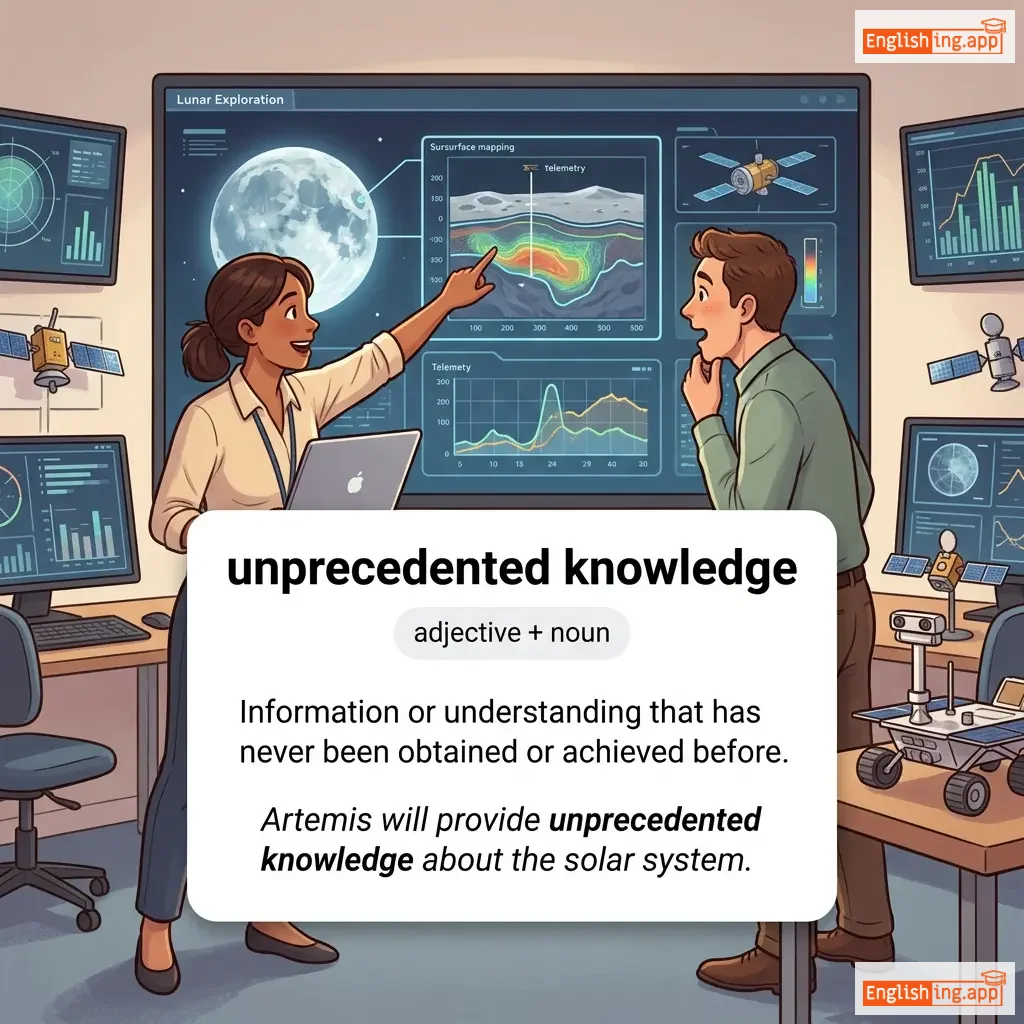
unprecedented knowledge definition card — visual illustration of the meaning
adjective + noun
ʌnˈpresɪdentɪd ˈnɒlɪdʒ
前例のない知識 (zenrei no nai chishiki)

Information or understanding that has never been obtained or achieved before.

"Artemis will provide unprecedented knowledge about the solar system."
"アルテミスは太陽系に関する前例のない知識を提供する。" (Artemisu wa taiyoukei ni kansuru zenrei no nai chishiki wo teikyou suru.)
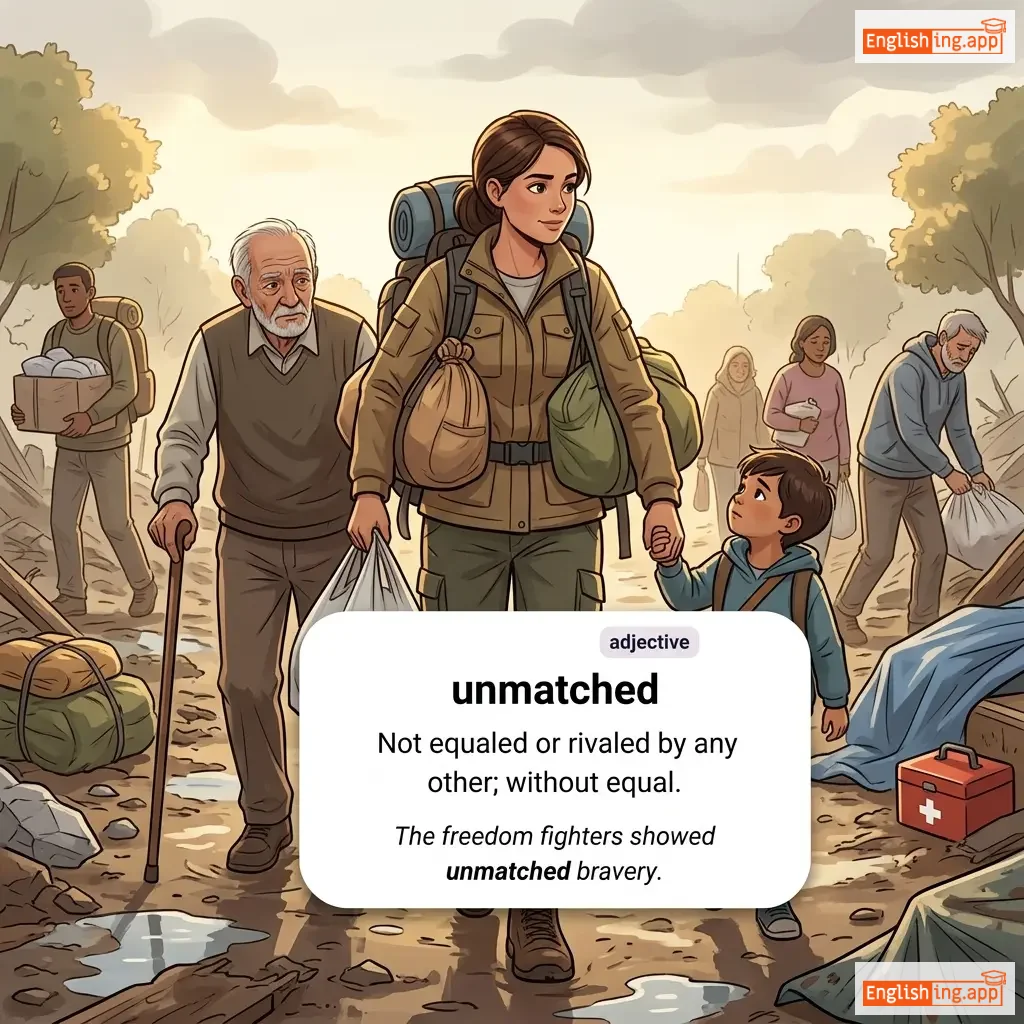
unmatched definition card — visual illustration of the meaning
adjective
ʌnˈmætʃt
比類のない (hirui no nai)

Not equaled or rivaled by any other; without equal.

"The freedom fighters showed unmatched bravery."

"自由の戦士たちは比類のない勇気を示しました。" (Jiyū no senshi-tachi wa hirui no nai yūki o shimeshimashita.)
adjective
/ˌʌnˈpeɪd/
無給の; 支払いなし (mukyuu no; shiharai nashi)

not paid for; without payment or salary

"She worked as an unpaid intern for six months."

"彼女は無給のインターンとして6ヶ月間働きました。" (Kanojo wa mukyuu no intaan toshite rokkagetsu kan hatarakimashita)
adjective
/ʌnˈstɛdi/
不安定な (fuantei na)

not firm or stable; likely to change or fail

"She felt unsteady on her feet after the long journey."

"長旅の後、彼女は足元が不安定だった。" (Nagata bi no ato, kanojo wa ashimoto ga fuantei datta)
adverb
/ʌnˈnesəserəli/
不必要に (fuhitsuyou ni)

to a greater extent than is needed; without necessity

"Don't worry unnecessarily about the exam."

"試験について不必要に心配しないでください。" (shiken ni tsuite fuhitsuyou ni shinpai shinaide kudasai.)
adjective
/ʌnˈmɪtɪɡeɪtɪd/
完全な (kanzen na)

absolute; not lessened or moderated

"The meeting was an unmitigated disaster."

"会議は完全な災害でした。" (Kaigi wa kanzen na saigai deshita.)
adjective
/ˌʌnəˈfɪʃ.əl/
非公式な (hikoushiki na)

not officially authorized or confirmed; informal

"The unofficial results showed a close race."

"非公式な結果は接戦を示しました。" (hikoushiki na kekka wa sessen o shimeshita.)
adjective
/ʌnˈmærid/
未婚 (mikon)

Not married; single.

"He is thirty-five and still unmarried."

"彼は三十五歳で、まだ未婚です。" (Kare wa sanjuugosai de, mada mikon desu.)
noun
/vɜːrˈtuː/
美術に対する愛 (bijutsu ni taisuru ai)

a love of or taste for fine art, antiques, or curiosities

"The collector’s house was filled with objects of virtu."
"コレクターの家は美術品で満ちていました。" (Korekuta no ie wa bijutsuhin de michiteimashita.)
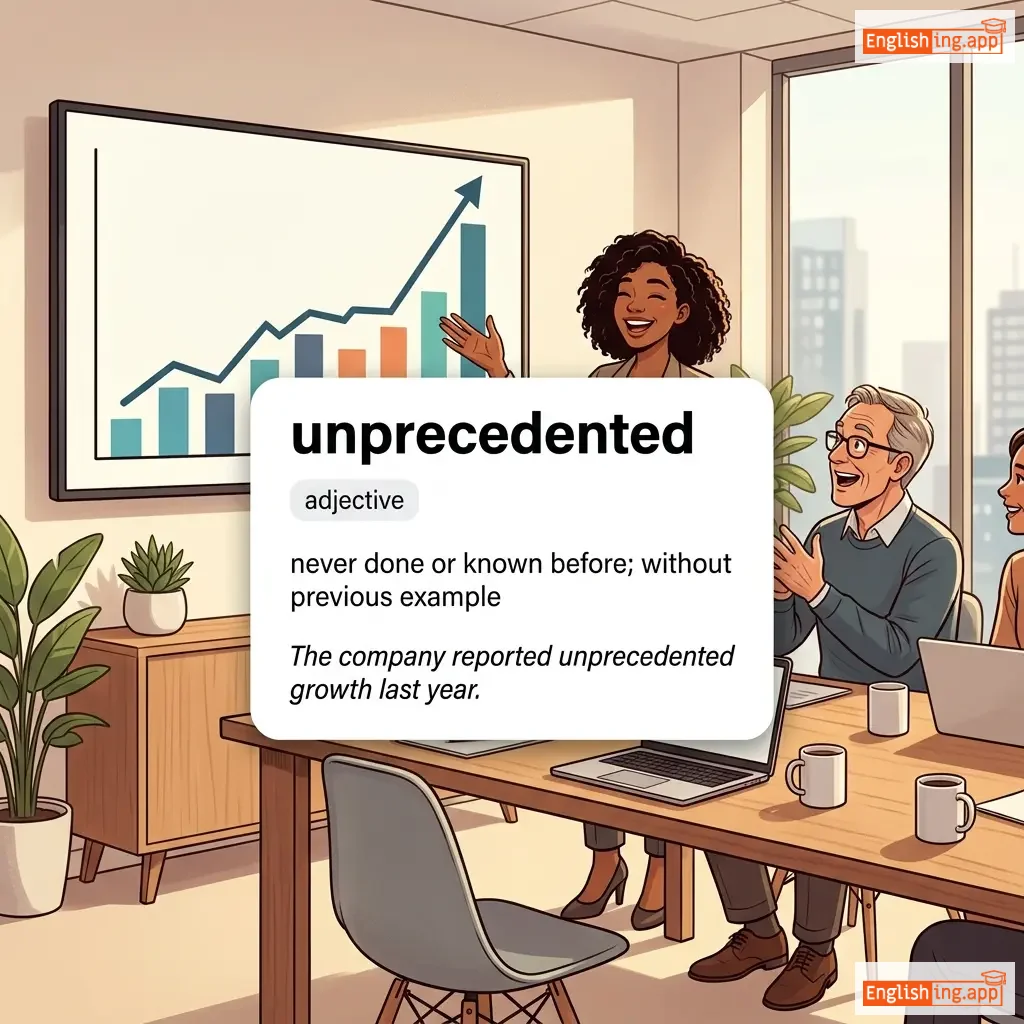
unprecedented definition card — visual illustration of the meaning
adjective
/ʌnˈprɛsɪˌdɛntɪd/
前例のない (zenrei no nai)

never done or known before; without previous example

"The company reported unprecedented growth last year."

"会社は昨年、前例のない成長を報告しました。" (Kaisha wa sakunen, zenrei no nai seichou o houkoku shimashita.)
adjective
/ʌnˈnɛsəsɛri/
不必要 (fuhitsuyou)

not needed or required

"The manager cut all unnecessary expenses to save costs."

"マネージャーはコストを節約するためにすべての不必要な支出を削減しました。" (Manējā wa kosuto o setsuyaku suru tame ni subete no fuhitsuyou na shishutsu o sakugen shimashita.)
visuospatial definition card — visual illustration of the meaning
adjective
ˌvɪz.ju.oʊˈspeɪ.ʃəl
視覚を通じて空間と物体の関係を理解することに関連する (shikaku o tōjite kūkan to butai no kankei o rikai suru koto ni kanren suru)

Related to understanding the relationship between space and objects through vision.

"Good visuospatial skills are important for architecture and design."

"優れたビジュアルスペーシャルスキルは建築とデザインにとって重要です。" (Sugureta bijuarusupēsharu sukiru wa kenchiku to dezain ni totte jūyō desu.)
adjective
/ʌnˈsəʊʃəbl/
非社交的な (hi shakaiteki na)

not enjoying the company of others; avoiding social interaction

"He became unsociable after moving to a new city."

"新しい街に引っ越してから、彼は非社交的になった。" (atarashii machi ni hikkoshite kara kare wa hi shakaiteki ni natta)