語彙集

英単語辞書 | 単語の意味、定義、例文

adjective
/ˌʌnrɪˈzɒlvd/
未解決の (mikaiketsu no)

not solved or settled; remaining undecided or unclear

"The dispute remains unresolved despite several meetings."

"その問題は何度も会議をしたにもかかわらず未解決のままだ。" (sono mondai wa nando mo kaigi o shita ni mo kakawarazu mikaiketsu no mama da)
adjective
/ˈvɜːrtʃuəs/
徳のある (toku no aru)

Having or showing high moral standards.

"She is known as a virtuous woman who helps the poor."

"彼女は貧しい人々を助ける徳のある女性として知られています。" (Kanojo wa mazushī hitobito o tasukeru toku no aru josei toshite shirareteimasu.)
noun
/ˈvɪntnər/
ワイン製造者 / ワイン販売者 (wain seizō-sha / wain hanbai-sha)

A person who makes or sells wine.

"The vintner explained the process of making red wine."

"ヴィントナーは赤ワインの作り方を説明しました。" (Vintnā wa aka wain no tsukurikata o setsumei shimashita.)
adjective
/ʌnˈseɪf/
危険な; 危ない; (kiken na, abunai)

involving or causing danger or risk; not protected from harm

"It is unsafe to walk alone in this neighborhood at night."

"この地域では夜間に一人で歩くのは危険です。" (Kono chiiki de wa yakan ni hitori de aruku no wa kiken desu.)
adjective
/ʌnˈsoʊld/
未販売の (mihambai no)

not sold; remaining without a buyer

"The unsold goods were returned to the warehouse."

"未販売の商品は倉庫に戻されました。" (mihambai no shouhin wa souko ni modosaremashita)
adjective
/ʌnˈriːdəbl/
読めない (yomenai)

not able to be read or understood clearly; illegible

"The doctor’s handwriting was completely unreadable."

"医者の字は完全に読めなかった。" (Isha no ji wa kanzen ni yomenakatta)
adjective
/ˈvɪtriəs/
ガラスのような (garasu no you na)

having a glass-like appearance or quality

"The mineral has a vitreous shine."

"その鉱物はガラスのような光沢を持っています。" (Sono koumotsu wa garasu no you na koutaku o motteimasu.)
adjective
/ʌnˈplɛz.ənt/
不快な (fukai na)

not giving or causing pleasure; disagreeable

"The medicine had an unpleasant taste."
"その薬は不快な味がしました。" (Sono kusuri wa fukai na aji ga shimashita.)
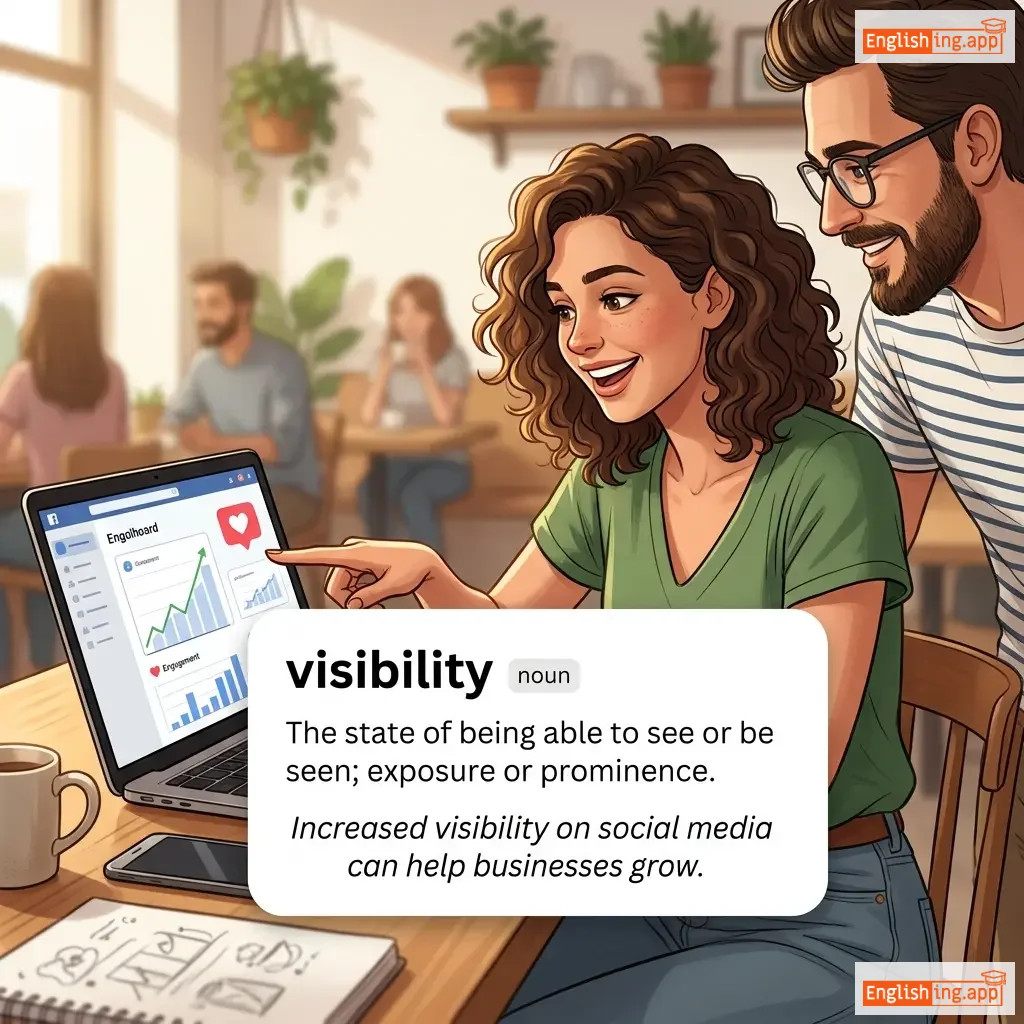
visibility definition card — visual illustration of the meaning
noun
/ˌvɪz.ɪˈbɪlɪti/
可視性 (kashisei)

The state of being able to see or be seen; exposure or prominence.

"Increased visibility on social media can help businesses grow."

"ソーシャルメディアでの可視性の向上は、ビジネスの成長に役立ちます。" (So-sharu media de no kashisei no koujou wa, bijinesu no seichou ni yakudachimasu.)
adjective
/ˌʌnprəˈpɪʃəs/
不運な (fuunna)

Not giving or indicating a good chance of success; unfavorable.

"The team began their journey under unpropitious weather conditions."

"チームは不運な天候の中で旅を始めました。" (Chiimu wa fuunna tenkou no naka de tabi o hajimemashita.)
adjective
/ʌnˈsʌlid/
汚れのない (yogore no nai)

not spoiled or made impure; perfectly clean or pure

"His reputation remained unsullied despite the accusations."

"彼の評判は告発にもかかわらず汚れのないままでした。" (Kare no hyōban wa kokuhatsu ni mo kakawarazu yogore no nai mamadeshita.)
adjective
/vaɪˈtjuːpərəbl̩/
非難されるべき (hinansarerebeki)

Deserving of blame, censure, or harsh criticism.

"His reckless actions made him vituperable in the eyes of his colleagues."

"彼の無謀な行動は、彼を同僚の目には非難されるべき存在にしました。" (Kare no mubou na koudou wa, kare wo douryou no me ni wa hinansarerebeki sonzai ni shimashita.)
noun
/ˈvɪrjʊləns/
病原性 (byōgensei)

The severity or harmfulness of a disease or poison.

"Scientists studied the virulence of the new virus strain."

"科学者たちは新しいウイルス株の病原性を研究しました。" (Kagakusha-tachi wa atarashī uirusu kabu no byōgensei o kenkyū shimashita.)
noun
/ˌvaɪəˈleɪʃən/
違反 (ihan)

The act of breaking or disregarding a law, rule, or agreement.

"Driving without a license is a violation of the law."

"免許なしで運転することは法律違反です。" (Menkyo nashi de unten suru koto wa hōritsu ihan desu.)
adjective
/ʌnˈtʌtʃəbəl/
触れられない; 批判や攻撃を受けない (furerarenai; hihan ya kōgeki o ukenai)

not able to be touched or affected; beyond criticism or attack

"The CEO seemed untouchable despite the scandal."

"CEOはスキャンダルにもかかわらず、アンタッチャブルのように見えた。" (CEO wa sukyandaru ni mo kakawarazu, antatchaburu no yō ni mieta.)
adjective
/ˌʌnrɪˈfaɪnd/
未精製の (miseisei no)

not processed or purified; lacking polish or sophistication

"The unrefined oil must be processed before it can be used as fuel."

"未精製の石油は燃料として使う前に処理する必要がある。" (miseisei no sekiyu wa nenryo toshite tsukau mae ni shori suru hitsuyo ga aru)
visiting definition card — visual illustration of the meaning
verb
/ˈvɪzɪtɪŋ/
訪問する (hōmon suru)

Going to see and spend time with someone or at a place.

"The group is visiting islands during the expedition."

"グループは探検中に島を訪問しています。" (Gurūpu wa tanken-chū ni shima o hōmon shiteimasu.)
adverb
/ˈvɜː.tʃu.ə.li/
ほとんど, バーチャル (hotondo, bācharu)

almost or nearly, but not completely; by means of computer technology

"The meeting was held virtually due to travel restrictions."

"旅行制限のため、会議はバーチャルで行われました。" (Ryokō seigen no tame, kaigi wa bācharu de okonawaremashita.)
adjective
/ˌʌn.rɪˈdʒɛn.ər.ət/
頑固 (ganko)

Not reformed or showing no signs of change; stubbornly refusing to reform or repent.

"He remained an unregenerate opponent of progress."

"彼は進歩の頑固な反対者であり続けた。" (Kare wa shinpo no ganko na hantai-sha de ari tsudzuketa.)
adjective
/ʌnˈseɪvəri/
不快 (fukai)

Disagreeable, unpleasant, or morally offensive.

"The politician was linked to an unsavory scandal."

"その政治家は不快なスキャンダルに関連していました。" (Sono seijika wa fukai na sukyandaru ni kanren shiteimashita.)
adjective
/ʌnˈkwes.tʃən.ə.bl̩/
議論の余地がない; 確実な (giron no yochi ga nai; kakujitsu na)

not able to be disputed or doubted; certain and beyond doubt

"Her honesty and integrity are unquestionable qualities."

"彼女の誠実さと誠意は議論の余地がない特性です。" (kanojo no seijitsusa to sei wa giron no yochi ga nai tokusei desu.)
adjective
/ʌnˈsaɪtli/
見苦しい (migurushii)

Unpleasant to look at; ugly.

"The garbage pile created an unsightly view in the park."

"ゴミの山は公園に見苦しい景色を作り出した。" (Gomi no yama wa kōen ni migurushii keshiki o tsukuridashita.)
noun
/ˌʌnriˈælɪti/
非現実感 (hi genjitsukan)

the state or quality of being unreal; lack of reality or truth

"The dreamlike setting gave the story a sense of unreality."

"夢のような舞台は物語に非現実感を与えた。" (Yume no you na butai wa monogatari ni hi genjitsukan o ataeta)
adjective
/ʌnˈsteɪbəl/
不安定 (fu antei)

likely to change; not steady or secure; unsteady

"The unstable economy made people worried about their jobs."

"不安定な経済は、人々を自分たちの仕事について心配させました。" (Fuan tei na keizai wa, hitobito o jibuntachi no shigoto ni tsuite shinpai sasemashita.)
adjective
/ʌnˈspɛərɪŋ/
容赦ない (yōsha nai)

Showing no mercy or generosity; harsh or severe.

"The critic was unsparing in his review of the play."

"批評家は彼の演劇レビューで容赦なかった。" (Hihyōka wa kare no engeki rebyū de yōsha nakatta.)
adjective
/ʌnˈvɔɪst/
未表現 (mihyougen)

not expressed in speech; in phonetics, a sound produced without vocal cord vibration

"The student kept her opinion unvoiced during the meeting."

"学生は会議中に自分の意見を未表現のままにしておいた。" (Gakusei wa kaigi-chuu ni jibun no iken wo mihyougen no mama ni shite oita.)
adjective
/ˌʌnrɪˈlaɪəbl/
信頼できない; 信頼や依存ができない (shinrai dekinai; shinrai ya izon ga dekinai)

not dependable; not able to be trusted or relied upon

"The old car is unreliable and breaks down frequently."

"その古い車は信頼できず、よく壊れます。" (Sono furui kuruma wa shinrai dekinai, yoku kowaremasu.)
adjective
/ʌnˈtɛmpərd/
無調整 (muchiōsei)

not moderated or softened; lacking proper balance or control

"The untempered anger of the crowd caused chaos."

"群衆の無調整な怒りが混乱を引き起こしました。" (Gunshū no muchiōsei na ikari ga konran o hikiokoshimashita.)
adjective
/ʌnˈraɪp/
未熟 (mijuku)

not fully developed or matured; not ready to be eaten

"The unripe bananas will turn yellow in a few days."

"未熟なバナナは数日後に黄色くなります。" (Mijuku na banana wa suujitsu go ni kiiroku narimasu.)
verb
/ˈvɪtrɪfaɪ/
ガラスに変える (garasu ni kaeru)

to turn into glass or a glass-like substance by heat

"Sand can vitrify under intense heat."

"砂は強い熱でガラスに変わることがあります。" (Suna wa tsuyoi netsu de garasu ni kawaru koto ga arimasu.)
adjective
/ʌnˈtruː/
虚偽 (kyogi)

not true; false or incorrect

"The rumor about the company closing was completely untrue."

"会社閉鎖の噂は完全に虚偽でした。" (Kaisha heisa no uwasa wa kanzen ni kyogi deshita.)
👁️‍🗨️

Unseen (アンシーン)

adjective
/ʌnˈsiːn/
見えない; 前に見たり気づいたりしたことがない (mienai; mae ni mitari kidzuitari shita koto ga nai)

not previously seen or noticed; invisible; hidden

"The unseen forces of nature can be very powerful."

"自然界の見えない力は非常に強力である可能性があります。" (shizenkai no mienai chikara wa hijou ni kyouryoku dearu kanousei ga arimasu.)
adjective
/ʌnˈwɒn.tɪd/
望まれない (nozomarenai)

not desired or welcome; not wanted

"He felt like an unwanted guest at the meeting."

"彼は会議で望まれない客のように感じた。" (kare wa kaigi de nozomarenai kyaku no you ni kanjita)
adjective
/ʌnˈwiːldi/
扱いにくい (atsukainikui)

Difficult to carry or move because of its size, shape, or weight.

"The box was too unwieldy to carry up the stairs."

"その箱は階段を上がるには重すぎて扱いにくかった。" (sono hako wa kaidan o agaru ni wa omo sugite atsukainikukatta.)
verb
/ʌnˈroʊl/
広げる (hirogeru)

to open something that is rolled up; to spread out gradually

"She unrolled the map on the table to find the route."
"彼女は道を探すためにテーブルの上で地図を広げた。" (kanojo wa michi o sagasu tame ni teeburu no ue de chizu o hirogeta)
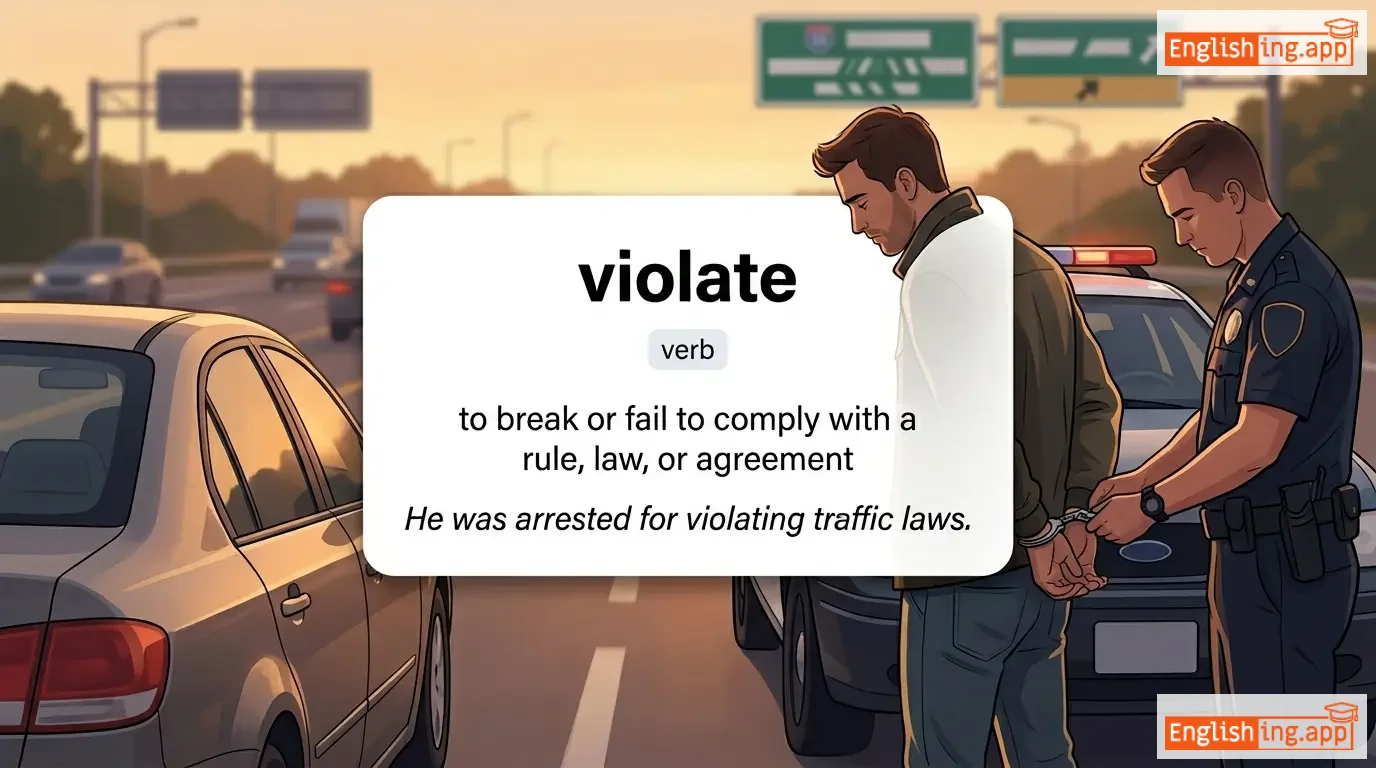
violate definition card — visual illustration of the meaning
verb
/ˈvaɪ.ə.leɪt/
違反する (ihan suru)

to break or fail to comply with a rule, law, or agreement

"He was arrested for violating traffic laws."

"彼は交通法を違反して逮捕された。" (Kare wa kōtsūhō o ihan shite taiho sareta.)
noun
/ˈvɪn.ɪ.ɡər/
(su)

a sour liquid made from fermented alcohol, used for cooking and preserving

"I added vinegar to the salad dressing for extra flavor."

"私はサラダドレッシングにビネガーを加えて、味を増しました。" (Watashi wa sarada doresshingu ni binegaa wo kuwaete, aji wo mashimashita.)
noun
/ˌviːələnsɛloʊ/
チェロ (chelo)

The full name of the cello, a large string instrument played with a bow and held between the knees.

"He practiced the violoncello for hours each day."

"彼は毎日何時間もビオロンチェロを練習しました。" (Kare wa mainichi nan jikan mo bioronchelo o renshū shimashita.)
adjective
/ʌnˈtaɪmli/
時期尚早 (jiki shōsō)

Happening or done at an unsuitable or premature time.

"His untimely death shocked the entire community."

"彼の時期尚早な死はコミュニティ全体を驚かせました。" (Kare no jiki shōsō na shi wa komyuniti zentai o odorokasemashita.)
adjective
/ˌʌnprəˈdʌktɪv/
非生産的 (hiseisanteki)

Not producing or achieving much; not effective or useful.

"The meeting was unproductive and wasted everyone's time."

"会議は非生産的で、皆の時間を無駄にしました。" (Kaigi wa hiseisanteki de, minna no jikan o muda ni shimashita.)
noun
/ˈvaɪəˌleɪtər/
違反者 (ihan-sha)

A person who breaks or disregards a law, rule, or agreement.

"The police caught the traffic violator at the intersection."

"警察は交差点で交通違反者を捕まえました。" (Keisatsu wa kōsaten de kōtsū ihan-sha o tsukamaemashita.)
adjective
/ʌnˈθɪŋkəbl/
想像を絶する (souzou o zessuru)

impossible to conceive or imagine; beyond belief or consideration

"It was unthinkable that such a tragedy could happen in our peaceful town."

"私たちの平和な街でそのような悲劇が起こるなんて、想像を絶していました。" (Watashitachi no heiwa na machi de sono youna higeki ga okoru nante, souzou o zesshite imashita.)
adjective
/ʌnˈskɪld/
未熟な; 技術のない労働者 (mijukuna; gijutsu no nai rōdōsha)

lacking technical training or ability; not requiring special skills

"Many unskilled workers are looking for training opportunities."

"多くの未熟な労働者がトレーニングの機会を探しています。" (Ōku no mijukuna rōdōsha ga torēningu no kikai o sagashiteimasu.)
verb
/ʌnˈveɪl/
発表する (happyo suru)

to reveal or disclose something, especially in a formal manner

"The company will unveil a new product next week."

"会社は来週新製品を発表します。" (Kaisha wa raishū shin seihin o happyō shimasu.)
noun
/ˈvɜːrtʃuː/
美徳 (bitoku)

High moral standards or a good quality considered morally good.

"Patience is considered a great virtue."

"忍耐は偉大な美徳と考えられています。" (Nintai wa idaina bitoku to kangae rareteimasu.)
verb
/ˈvaɪtəlaɪz/
活力を与える (katsuryoku o ataeru)

To give life, energy, or strength to something.

"Fresh air and exercise can vitalize the body and mind."

"新鮮な空気と運動は体と心に活力を与えることができます。" (Shinsen na kūki to undō wa karada to kokoro ni katsuryoku o ataeru koto ga dekimasu.)
adjective
/ʌnˈskeɪðd/
無傷 (mushō)

Without suffering any injury, damage, or harm.

"She escaped from the accident unscathed."

"彼女は事故から無傷で逃げ出した。" (Kanojo wa jiko kara mushō de nigedashita.)
verb
/ʌnˈtaɪ/
解く (toku)

to loosen or remove a knot or binding; to release something that is tied

"She untied the rope to free the boat."

"彼女は船を自由にするためにロープを解いた。" (kanojo wa fune o jiyuu ni suru tame ni roopu o toita)
adjective
/ʌnˈsiːmli/
不適切な (futekisetsu na)

Not proper or appropriate in behavior or appearance; unbecoming.

"His unseemly remarks embarrassed everyone at the dinner table."

"彼の不適切な発言はディナーテーブルで皆を困らせました。" (Kare no futekisetsu na hatsugen wa dinā tēburu de mina o komarasemashita.)
adjective
/ˈvɜːrtʃuəl/
バーチャル / 仮想 (bācharu / kasou)

existing or simulated on a computer or online rather than physically; almost but not exactly the same as

"The company held a virtual meeting with employees worldwide."

"その会社は世界中の従業員とバーチャルミーティングを開催しました。" (Sono kaisha wa sekaijū no jūgyōin to bācharu mītingu o kaisai shimashita.)