वोकैबुलरीज

इंग्लिश वोकैबुलरी डिस्कवर, लर्न और मास्टर करें

adjective
/ˌʌnrɪˈzɒlvd/
अनसुलझा (ansuljha)

not solved or settled; remaining undecided or unclear

"The dispute remains unresolved despite several meetings."

"कई बैठकों के बावजूद विवाद अनसुलझा रहा।" (kai baithakon ke bawajood vivaad ansuljha raha)
adjective
/ˈvɜːrtʃuəs/
गुणी (guni)

Having or showing high moral standards.

"She is known as a virtuous woman who helps the poor."

"वह एक गुणी महिला के रूप में जानी जाती है जो गरीबों की मदद करती है।" (Wah ek guni mahila ke roop mein jani jati hai jo gareebon ki madad karti hai.)
noun
/ˈvɪntnər/
शराब बनानेवाला / विक्रेता (sharab bananewala / vikreta)

A person who makes or sells wine.

"The vintner explained the process of making red wine."

"शराब बनानेवाले ने लाल शराब बनाने की प्रक्रिया समझाई।" (sharab bananewale ne lal sharab banane ki prakriya samjhayi.)
adjective
/ʌnˈseɪf/
असुरक्षित; खतरनाक; (asurakshit, khatarnak)

involving or causing danger or risk; not protected from harm

"It is unsafe to walk alone in this neighborhood at night."

"रात में इस मोहल्ले में अकेले चलना असुरक्षित है।" (Raat mein is mohalle mein akele chalna asurakshit hai.)
adjective
/ʌnˈsoʊld/
अविक्रीत (avikrit)

not sold; remaining without a buyer

"The unsold goods were returned to the warehouse."

"अविक्रीत सामान गोदाम में वापस भेज दिया गया।" (avikrit samaan godaam mein vaapas bhej diya gaya)
adjective
/ʌnˈriːdəbl/
अपठनीय (apathniya)

not able to be read or understood clearly; illegible

"The doctor’s handwriting was completely unreadable."

"डॉक्टर की लिखावट पूरी तरह अपठनीय थी।" (doctor ki likhawat poori tarah apathniya thi)
adjective
/ˈvɪtriəs/
काँच जैसा (kaanch jaisa)

having a glass-like appearance or quality

"The mineral has a vitreous shine."

"खनिज में काँच जैसा चमक है।" (Khanij mein kaanch jaisa chamak hai.)
adjective
/ʌnˈplɛz.ənt/
अप्रिय (apriya)

not giving or causing pleasure; disagreeable

"The medicine had an unpleasant taste."

"दवाइयों का स्वाद अप्रिय था।" (dawaiyon ka swaad apriya tha)
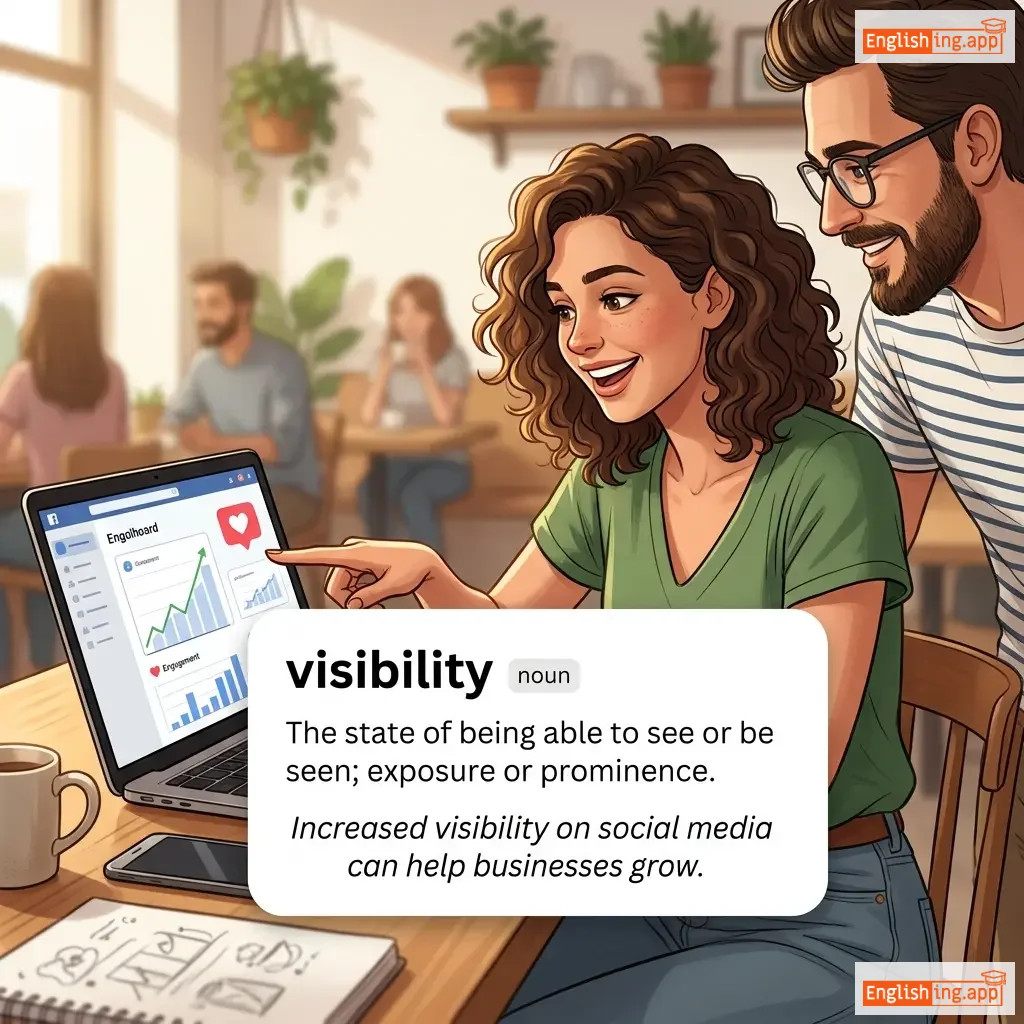
visibility definition card — visual illustration of the meaning
noun
/ˌvɪz.ɪˈbɪlɪti/
दृश्यता, दिखाई देना (drishyata, dikhai dena)

The state of being able to see or be seen; exposure or prominence.

"Increased visibility on social media can help businesses grow."

"सोशल मीडिया पर दृश्यता बढ़ाने से व्यवसायों को बढ़ने में मदद मिल सकती है।" (Social media par drishyata badhane se vyavsayon ko badhne mein madad mil sakti hai.)
adjective
/ˌʌnprəˈpɪʃəs/
अशुभ (ashubh)

Not giving or indicating a good chance of success; unfavorable.

"The team began their journey under unpropitious weather conditions."

"टीम ने अनप्रोपीशस मौसम की स्थिति में अपनी यात्रा शुरू की।" (Team ne anpropishas mausam ki sthiti mein apni yatra shuru ki.)
adjective
/ʌnˈsʌlid/
दाग रहित (daag rahit)

not spoiled or made impure; perfectly clean or pure

"His reputation remained unsullied despite the accusations."

"आरोपों के बावजूद उसकी प्रतिष्ठा दाग रहित बनी रही।" (Aropo ke bawajood uski pratishtha daag rahit bani rahi.)
adjective
/vaɪˈtjuːpərəbl̩/
निंदा योग्य (ninda yogya)

Deserving of blame, censure, or harsh criticism.

"His reckless actions made him vituperable in the eyes of his colleagues."

"उसकी लापरवाह हरकतों ने उसे उसके साथियों की नजरों में निंदा योग्य बना दिया।" (Uski laparwah harkaton ne use uske saathiyon ki nazron mein ninda yogya bana diya.)
noun
/ˈvɪrjʊləns/
संक्रमणता (sankramanta)

The severity or harmfulness of a disease or poison.

"Scientists studied the virulence of the new virus strain."

"वैज्ञानिकों ने नए वायरस के स्ट्रेन की संक्रमणता का अध्ययन किया।" (Vaigyanikon ne naye virus ke strain ki sankramanta ka adhyayan kiya.)
noun
/ˌvaɪəˈleɪʃən/
उल्लंघन (ullanghan)

The act of breaking or disregarding a law, rule, or agreement.

"Driving without a license is a violation of the law."

"बिना लाइसेंस के गाड़ी चलाना कानून का उल्लंघन है।" (bina license ke gadi chalana kanoon ka ullanghan hai.)
adjective
/ʌnˈtʌtʃəbəl/
अस्पृश्य; जो छुआ न जा सके या आलोचना से परे हो (ashprishya; jo chhua na ja sake ya alochna se pare ho)

not able to be touched or affected; beyond criticism or attack

"The CEO seemed untouchable despite the scandal."

"सीईओ कांड के बावजूद अंटाचेबल लग रहे थे।" (CEO kaand ke bawajood anṭāchēbal lag rahe the.)
adjective
/ˌʌnrɪˈfaɪnd/
अपरिष्कृत (aparishkrit)

not processed or purified; lacking polish or sophistication

"The unrefined oil must be processed before it can be used as fuel."

"अपरिष्कृत तेल को ईंधन के रूप में उपयोग से पहले संसाधित करना पड़ता है।" (aparishkrit tel ko indhan ke roop mein upyog se pahle sansadhit karna padta hai)
visiting definition card — visual illustration of the meaning
verb
/ˈvɪzɪtɪŋ/
दौरा करना (daura karna)

Going to see and spend time with someone or at a place.

"The group is visiting islands during the expedition."

"समूह अभियान के दौरान द्वीपों का दौरा कर रहा है।" (Samuh abhiyan ke dauran dweepo ka daura kar raha hai.)
adverb
/ˈvɜː.tʃu.ə.li/
लगभग, ऑनलाइन (lagbhag, online)

almost or nearly, but not completely; by means of computer technology

"The meeting was held virtually due to travel restrictions."

"यात्रा प्रतिबंधों के कारण बैठक वर्चुअली आयोजित की गई थी।" (Yatra pratibandhon ke karan baithak virtually aayojit ki gayi thi.)
adjective
/ˌʌn.rɪˈdʒɛn.ər.ət/
अविनीत (avinit)

Not reformed or showing no signs of change; stubbornly refusing to reform or repent.

"He remained an unregenerate opponent of progress."

"वह प्रगति के एक अविनीत विरोधी बने रहे।" (Wah pragati ke ek avinit virodhi bane rahe.)
adjective
/ʌnˈseɪvəri/
अप्रिय (apriya)

Disagreeable, unpleasant, or morally offensive.

"The politician was linked to an unsavory scandal."

"राजनेता एक अप्रिय स्कैंडल से जुड़े थे।" (Raajneeta ek apriya skandal se jude the.)
adjective
/ʌnˈkwes.tʃən.ə.bl̩/
संदेह से परे; निश्चित (sandeh se pare; nishchit)

not able to be disputed or doubted; certain and beyond doubt

"Her honesty and integrity are unquestionable qualities."

"उसकी ईमानदारी और अखंडता संदेह से परे गुण हैं।" (uski imandari aur akhandata sandeh se pare gun hain.)
adjective
/ʌnˈsaɪtli/
अपसंद (apsand)

Unpleasant to look at; ugly.

"The garbage pile created an unsightly view in the park."

"कचरे का ढेर पार्क में एक अपसंद दृश्य बना रहा था।" (kachre ka dher park mein ek apsand drishya bana raha tha.)
noun
/ˌʌnriˈælɪti/
अवास्तविकता (avastavikta)

the state or quality of being unreal; lack of reality or truth

"The dreamlike setting gave the story a sense of unreality."

"सपनों जैसे माहौल ने कहानी को अवास्तविकता का एहसास दिया।" (sapnon jaise mahaul ne kahani ko avastavikta ka ehsaas diya)
adjective
/ʌnˈsteɪbəl/
अस्थिर (asthir)

likely to change; not steady or secure; unsteady

"The unstable economy made people worried about their jobs."

"अस्थिर अर्थव्यवस्था ने लोगों को अपनी नौकरियों के बारे में चिंतित कर दिया।" (asthir arthvyavastha ne logon ko apni naukriyon ke baare mein chintit kar diya.)
adjective
/ʌnˈspɛərɪŋ/
निर्दयी (nirdayi)

Showing no mercy or generosity; harsh or severe.

"The critic was unsparing in his review of the play."

"समालोचक नाटक की समीक्षा में निर्दयी था।" (samalochak natak ki sameeksha mein nirdayi tha.)
adjective
/ʌnˈvɔɪst/
निर्वाचित (nirvachit)

not expressed in speech; in phonetics, a sound produced without vocal cord vibration

"The student kept her opinion unvoiced during the meeting."

"छात्रा ने बैठक के दौरान अपनी राय अनवॉयस्ट रखी।" (Chhatra ne baithak ke dauran apni ray anvoyst rakhi.)
adjective
/ˌʌnrɪˈlaɪəbl/
विश्वसनीय नहीं; जिस पर भरोसा या निर्भर नहीं किया जा सकता (vishwasneey nahin; jis par bharosa ya nirbhar nahin kiya ja sakta)

not dependable; not able to be trusted or relied upon

"The old car is unreliable and breaks down frequently."

"पुराना कार अविश्वसनीय है और अक्सर खराब हो जाता है।" (Purana car avishwasneey hai aur aksar kharab ho jata hai.)
adjective
/ʌnˈtɛmpərd/
अविन्यस्त (avinyast)

not moderated or softened; lacking proper balance or control

"The untempered anger of the crowd caused chaos."

"भीड़ का अविन्यस्त गुस्सा अराजकता का कारण बना।" (Bheed ka avinyast gussa arajakta ka karan bana.)
adjective
/ʌnˈraɪp/
कच्चा; अपरिपक्व (kacha; aparipakva)

not fully developed or matured; not ready to be eaten

"The unripe bananas will turn yellow in a few days."

"कच्चे केले कुछ दिनों में पीले हो जाएंगे।" (Kachche kele kuch dino mein peele ho jaayenge.)
verb
/ˈvɪtrɪfaɪ/
गिलास में बदलना (gilaas mein badalna)

to turn into glass or a glass-like substance by heat

"Sand can vitrify under intense heat."

"गर्मी में रेत गिलास में बदल सकती है।" (Garmi mein ret gilaas mein badal sakti hai.)
adjective
/ʌnˈtruː/
झूठा (jhootha)

not true; false or incorrect

"The rumor about the company closing was completely untrue."

"कंपनी के बंद होने की अफवाह पूरी तरह से झूठी थी।" (Kampani ke band hone ki afwah puri tarah se jhoothi thi.)
👁️‍🗨️

Unseen (अनसीन)

adjective
/ʌnˈsiːn/
अदृश्य; पहले कभी देखा या नोटिस नहीं किया गया (adrishya; pehle kabhi dekha ya notis nahi kiya gaya)

not previously seen or noticed; invisible; hidden

"The unseen forces of nature can be very powerful."

"प्रकृति की अदृश्य शक्तियाँ बहुत शक्तिशाली हो सकती हैं।" (prakriti ki adrishya shaktiyan bahut shaktishali ho sakti hain.)
adjective
/ʌnˈwɒn.tɪd/
अनचाहा (anachaha)

not desired or welcome; not wanted

"He felt like an unwanted guest at the meeting."

"उसे बैठक में एक अनचाहे अतिथि की तरह महसूस हुआ।" (use baithak mein ek anachaha atithi ki tarah mahsus hua)
adjective
/ʌnˈwiːldi/
असुविधाजनक (asubidhajanik)

Difficult to carry or move because of its size, shape, or weight.

"The box was too unwieldy to carry up the stairs."

"बॉक्स स्टेयर ऊपर ले जाने के लिए बहुत असुविधाजनक था।" (box stair upar le jane ke liye bahut asubidhajanik tha.)
verb
/ʌnˈroʊl/
खोलकर फैलाना (kholkar phailana)

to open something that is rolled up; to spread out gradually

"She unrolled the map on the table to find the route."

"उसने रास्ता खोजने के लिए मेज़ पर नक्शा खोलकर फैलाया।" (usne rasta khojne ke liye mez par naksha kholkar phailaya)
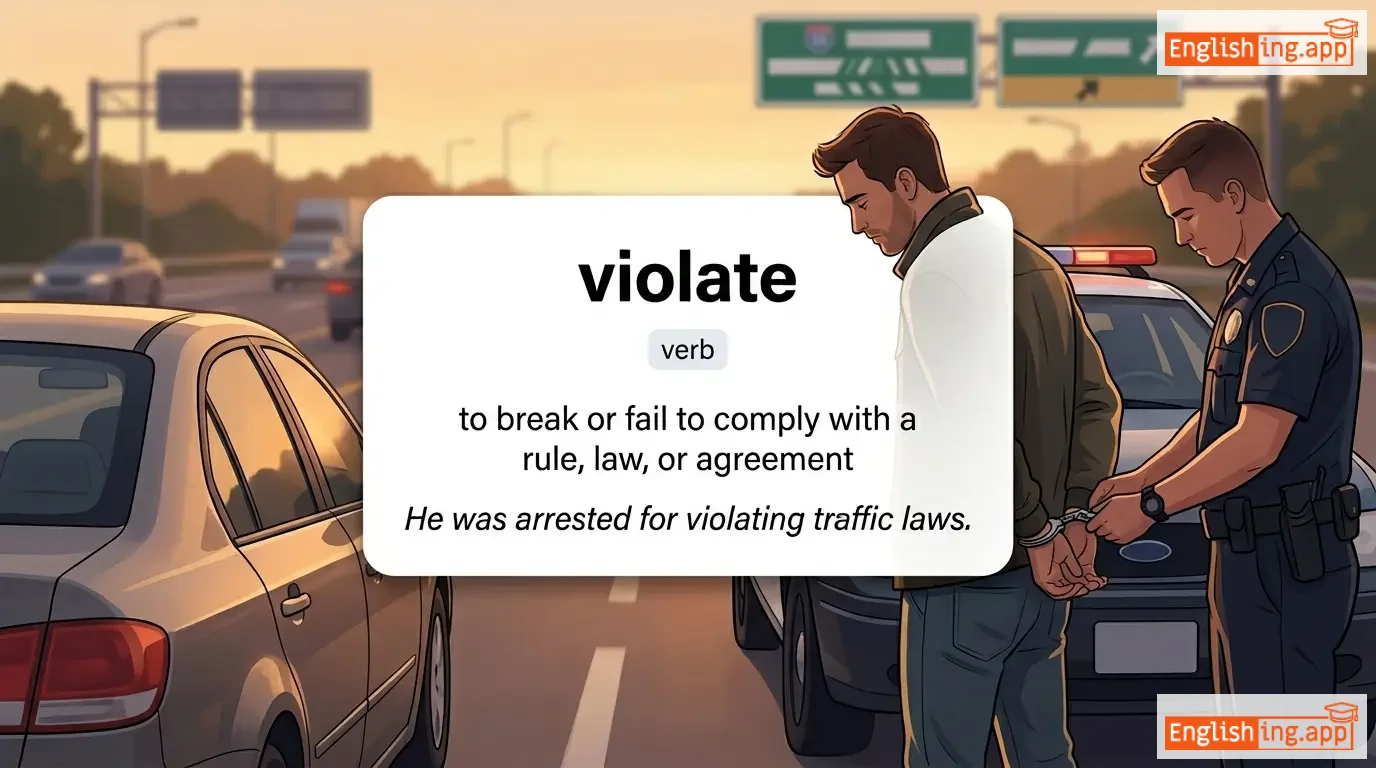
violate definition card — visual illustration of the meaning
verb
/ˈvaɪ.ə.leɪt/
उल्लंघन करना (ullanghan karna)

to break or fail to comply with a rule, law, or agreement

"He was arrested for violating traffic laws."

"उसे ट्रैफिक कानून उल्लंघन करने पर गिरफ्तार किया गया था।" (Use traffic kanoon ullanghan karne par giraftaar kiya gaya tha.)
noun
/ˈvɪn.ɪ.ɡər/
सिरका (sirka)

a sour liquid made from fermented alcohol, used for cooking and preserving

"I added vinegar to the salad dressing for extra flavor."

"मैंने सलाद ड्रेसिंग में अतिरिक्त स्वाद के लिए सिरका डाला।" (maine salad dressing mein atirikt swad ke liye sirka dala.)
noun
/ˌviːələnsɛloʊ/
चेलो (chelo)

The full name of the cello, a large string instrument played with a bow and held between the knees.

"He practiced the violoncello for hours each day."

"उसने हर दिन घंटों तक वायोलोंचेलो का अभ्यास किया।" (usne har din ghanton tak violoncello ka abhyas kiya.)
adjective
/ʌnˈtaɪmli/
असामयिक (asamayik)

Happening or done at an unsuitable or premature time.

"His untimely death shocked the entire community."

"उसकी असामयिक मृत्यु ने पूरे समुदाय को चौंका दिया।" (uski asamayik mrityu ne pure samuday ko chonka diya.)
adjective
/ˌʌnprəˈdʌktɪv/
निष्क्रिय (nishkriy)

Not producing or achieving much; not effective or useful.

"The meeting was unproductive and wasted everyone's time."

"बैठक निष्क्रिय थी और इसने सभी का समय बर्बाद किया।" (Baithak nishkriy thi aur isne sabhi ka samay barbaad kiya.)
noun
/ˈvaɪəˌleɪtər/
उल्लंघनकर्ता (ullanghankarta)

A person who breaks or disregards a law, rule, or agreement.

"The police caught the traffic violator at the intersection."

"पुलिस ने ट्रैफिक उल्लंघनकर्ता को चौराहे पर पकड़ा।" (police ne traffic ullanghankarta ko chaurahe par pakda.)
adjective
/ʌnˈθɪŋkəbl/
अकल्पनीय (akalpneey)

impossible to conceive or imagine; beyond belief or consideration

"It was unthinkable that such a tragedy could happen in our peaceful town."

"यह असंभव था कि हमारे शांतिपूर्ण शहर में ऐसी कोई त्रासदी घटित हो सकती थी।" (Yeh asambhav tha ki hamare shaantipoorn shahar mein aisi koi traasdi ghatit ho sakti thi.)
adjective
/ʌnˈskɪld/
अकुशल; अप्रशिक्षित श्रमिक (akushal; aprashikshit shramik)

lacking technical training or ability; not requiring special skills

"Many unskilled workers are looking for training opportunities."

"बहुत से अप्रशिक्षित श्रमिक प्रशिक्षण अवसरों की तलाश कर रहे हैं।" (bahut se aprashikshit shramik prashikshan avasharon ki talash kar rahe hain.)
verb
/ʌnˈveɪl/
उघाड़ना (ugadna)

to reveal or disclose something, especially in a formal manner

"The company will unveil a new product next week."

"कंपनी अगले हफ्ते एक नया उत्पाद अनवेल करेगी।" (Kampani agle hafte ek naya utpad unveil karegi.)
noun
/ˈvɜːrtʃuː/
गुण (gun)

High moral standards or a good quality considered morally good.

"Patience is considered a great virtue."

"धैर्य को एक महान गुण माना जाता है।" (Dhairya ko ek mahaan gun maana jaata hai.)
verb
/ˈvaɪtəlaɪz/
जीवन्त करना (jivant karna)

To give life, energy, or strength to something.

"Fresh air and exercise can vitalize the body and mind."

"ताजे हवा और व्यायाम शरीर और मन को जीवन दे सकते हैं।" (Taje hawa aur vyayam sharir aur man ko jeevan de sakte hain.)
adjective
/ʌnˈskeɪðd/
अख़ात (akhāt)

Without suffering any injury, damage, or harm.

"She escaped from the accident unscathed."

"वह दुर्घटना से अख़ात बच निकली।" (Vah durghatnā se akhāt bach nikalī.)
verb
/ʌnˈtaɪ/
खोलना (kholna)

to loosen or remove a knot or binding; to release something that is tied

"She untied the rope to free the boat."

"उसने नाव को मुक्त करने के लिए रस्सी खोल दी।" (usne naav ko mukt karne ke liye rassi khol di)
adjective
/ʌnˈsiːmli/
अशोभनीय (ashobhaniya)

Not proper or appropriate in behavior or appearance; unbecoming.

"His unseemly remarks embarrassed everyone at the dinner table."

"उसकी अशोभनीय टिप्पणियाँ डिनर टेबल पर सभी को शर्मिंदा कर गईं।" (uski ashobhaniya tippaniyan dinner table par sabhi ko sharminda kar gayi.)
adjective
/ˈvɜːrtʃuəl/
वर्चुअल / काल्पनिक (varchual / kalpnik)

existing or simulated on a computer or online rather than physically; almost but not exactly the same as

"The company held a virtual meeting with employees worldwide."

"कंपनी ने दुनिया भर के कर्मचारियों के साथ एक वर्चुअल बैठक की।" (Company ne duniya bhar ke karyakartao ke saath ek varchual baithak ki.)