词汇表

英语词汇词典 | 单词含义、定义和示例

adjective
/ˌʌnrɪˈzɒlvd/
未解决的 (wei jiejue de)

not solved or settled; remaining undecided or unclear

"The dispute remains unresolved despite several meetings."

"尽管开了几次会议,这个争议仍未解决。" (jinguan kailiao jici huiyi zhege zhengyi reng wei jiejue)
adjective
/ˈvɜːrtʃuəs/
有德行的 (yǒu déxíng de)

Having or showing high moral standards.

"She is known as a virtuous woman who helps the poor."

"她是一个以帮助穷人而著名的有德行的女人。" (Tā shì yīgè yǐ bāngzhù qióngrén ér zhùmíng de yǒu déxíng de nǚrén.)
👨‍🌾🍷

vintner (vintner)

noun
/ˈvɪntnər/
酿酒师 / 酒商 (niàngjiǔ shī / jiǔ shāng)

A person who makes or sells wine.

"The vintner explained the process of making red wine."

"酿酒师解释了酿制红葡萄酒的过程。" (Niàngjiǔ shī jiěshìle niàngzhì hóng pútáojiǔ de guòchéng.)
adjective
/ʌnˈseɪf/
不安全; 危险的; (bù ānquán, wēixiǎn de)

involving or causing danger or risk; not protected from harm

"It is unsafe to walk alone in this neighborhood at night."

"晚上在这个社区独自行走是不安全的。" (Wǎnshàng zài zhège shèqū dúzì xíngzǒu shì bù ānquán de.)
adjective
/ʌnˈsoʊld/
未售出的 (wei shou chu de)

not sold; remaining without a buyer

"The unsold goods were returned to the warehouse."

"未售出的商品被退回仓库。" (wei shou chu de shangpin bei tui hui cangku)
adjective
/ʌnˈriːdəbl/
难以辨认的 (nanyi bianren de)

not able to be read or understood clearly; illegible

"The doctor’s handwriting was completely unreadable."

"医生的字迹完全难以辨认。" (Yisheng de ziji wanquan nanyi bianren)
adjective
/ˈvɪtriəs/
玻璃状 (bolizhuang)

having a glass-like appearance or quality

"The mineral has a vitreous shine."

"这种矿物有玻璃状的光泽。" (Zhezhong kuangwu you bolizhuang de guangze.)
adjective
/ʌnˈplɛz.ənt/
令人不悦的 (lìng rén bù yuè de)

not giving or causing pleasure; disagreeable

"The medicine had an unpleasant taste."

"药物有一种令人不悦的味道。" (Yàowù yǒu yī zhǒng lìng rén bù yuè de wèi dào.)
visibility definition card — visual illustration of the meaning
noun
/ˌvɪz.ɪˈbɪlɪti/
可见性 (kejianxing)

The state of being able to see or be seen; exposure or prominence.

"Increased visibility on social media can help businesses grow."

"在社交媒体上的可见性增加可以帮助企业成长。" (Zai shejiao meiti shang de kejianxing zengjia keyi bangzhu qiye chengzhang.)
adjective
/ˌʌnprəˈpɪʃəs/
不利 (bùlì)

Not giving or indicating a good chance of success; unfavorable.

"The team began their journey under unpropitious weather conditions."

"团队在不利的天气条件下开始了他们的旅程。" (Tuánduì zài bùlì de tiānqì tiáojiàn xià kāishǐle tāmen de lǚchéng.)
adjective
/ʌnˈsʌlid/
无暇 (wú xiá)

not spoiled or made impure; perfectly clean or pure

"His reputation remained unsullied despite the accusations."

"尽管有指控,他的声誉仍然无暇。" (Jǐnguǎn yǒu zhǐkòng, tā de shēngyù réngrán wú xiá.)
adjective
/vaɪˈtjuːpərəbl̩/
应受指责的 (ying shou zhize de)

Deserving of blame, censure, or harsh criticism.

"His reckless actions made him vituperable in the eyes of his colleagues."

"他鲁莽的行为使他在同事眼中变得应受指责的。" (Ta lumang de xingwei shi ta zai tongshi yan zhong biande ying shou zhize de.)
noun
/ˈvɪrjʊləns/
毒性 (dúxìng)

The severity or harmfulness of a disease or poison.

"Scientists studied the virulence of the new virus strain."

"科学家研究了新病毒株的毒性。" (Kēxuéjiā yánjiūle xīn bìngdú zhū de dúxìng.)
noun
/ˌvaɪəˈleɪʃən/
违反 (wéifǎn)

The act of breaking or disregarding a law, rule, or agreement.

"Driving without a license is a violation of the law."

"没有驾照开车是违反法律的行为。" (méiyǒu jiàzhào kāichē shì wéifǎn fǎlǜ de xíngwéi.)
adjective
/ʌnˈtʌtʃəbəl/
不可触碰的; 无法批评或攻击 (bù kě chù pèng de; wú fǎ pī píng huò gōng jī)

not able to be touched or affected; beyond criticism or attack

"The CEO seemed untouchable despite the scandal."

"即使有丑闻,首席执行官似乎仍然是不可触碰的。" (Jí shǐ yǒu chǒu wén, shǒu xí zhí xíng guān shì hū réng rán shì bù kě chù pèng de.)
adjective
/ˌʌnrɪˈfaɪnd/
未精炼的 (wei jinglian de)

not processed or purified; lacking polish or sophistication

"The unrefined oil must be processed before it can be used as fuel."

"未精炼的石油在用作燃料之前必须进行加工。" (wei jinglian de shiyou zai yongzuo ranliao zhiqian bixu jinxing jiagong)
visiting definition card — visual illustration of the meaning
verb
/ˈvɪzɪtɪŋ/
拜访 (baifang)

Going to see and spend time with someone or at a place.

"The group is visiting islands during the expedition."

"小组在远征期间访问岛屿。" (Xiaozu zai yuanzheng qijian fangwen daoyu.)
adverb
/ˈvɜː.tʃu.ə.li/
几乎, 虚拟 (jī hū, xū nǐ)

almost or nearly, but not completely; by means of computer technology

"The meeting was held virtually due to travel restrictions."

"由于旅行限制,会议是虚拟举行的。" (Yóu yú lǚ xíng xiàn zhì, huì yì shì xū nǐ jǔ xíng de.)
adjective
/ˌʌn.rɪˈdʒɛn.ər.ət/
顽固 (wángù)

Not reformed or showing no signs of change; stubbornly refusing to reform or repent.

"He remained an unregenerate opponent of progress."

"他仍然是进步的顽固反对者。" (Tā réngrán shì jìnbù de wángù fǎnduìzhě.)
adjective
/ʌnˈseɪvəri/
令人不快 (lìng rén bù kuài)

Disagreeable, unpleasant, or morally offensive.

"The politician was linked to an unsavory scandal."

"那位政治家与一宗令人不快的丑闻有关。" (Nà wèi zhèngzhìjiā yǔ yī zōng lìng rén bù kuài de chǒuwén yǒuguān.)
adjective
/ʌnˈkwes.tʃən.ə.bl̩/
无可争议的; 确定的 (wú kě zhēng yì de; què dìng de)

not able to be disputed or doubted; certain and beyond doubt

"Her honesty and integrity are unquestionable qualities."

"她的诚实和正直是无可争议的品质。" (tā de chéngshí hé zhèngzhí shì wú kě zhēng yì de pǐnzhì.)
adjective
/ʌnˈsaɪtli/
难看 (nankan)

Unpleasant to look at; ugly.

"The garbage pile created an unsightly view in the park."

"垃圾堆在公园里创造了一个难看的景象。" (Lājī duī zài gōngyuán lǐ chuàngzào le yīgè nán kàn de jǐngxiàng.)
noun
/ˌʌnriˈælɪti/
非现实 (fei xianshi)

the state or quality of being unreal; lack of reality or truth

"The dreamlike setting gave the story a sense of unreality."

"这种梦幻的场景让故事充满了非现实感。" (Zhe zhong menghuan de changjing rang gushi chongman le fei xianshi gan)
adjective
/ʌnˈsteɪbəl/
不稳定 (bù wěn dìng)

likely to change; not steady or secure; unsteady

"The unstable economy made people worried about their jobs."

"不稳定的经济让人们担心他们的工作。" (Bù wěn dìng de jīng jì ràng rén men dān xīn tā men de gōng zuò.)
adjective
/ʌnˈspɛərɪŋ/
无情的 (wu qing de)

Showing no mercy or generosity; harsh or severe.

"The critic was unsparing in his review of the play."

"评论家在他的剧评中毫不留情。" (Pínglùn jiā zài tā de jùpíng zhōng háo bù liúqíng.)
adjective
/ʌnˈvɔɪst/
未表达 (wei biao da)

not expressed in speech; in phonetics, a sound produced without vocal cord vibration

"The student kept her opinion unvoiced during the meeting."

"学生在会议期间保持她的意见未表达。" (Xuesheng zai huiyi qijian baochi ta de yijian wei biaoda.)
adjective
/ˌʌnrɪˈlaɪəbl/
不可靠的; 不能被信任或依赖 (bù kěkào de; bù néng bèi xìnrèn huò yīlài)

not dependable; not able to be trusted or relied upon

"The old car is unreliable and breaks down frequently."

"这辆老车不可靠,常常坏掉。" (Zhè liàng lǎo chē bù kěkào, chángcháng huài diào.)
adjective
/ʌnˈtɛmpərd/
失控的 (shīkòng de)

not moderated or softened; lacking proper balance or control

"The untempered anger of the crowd caused chaos."

"人群的失控愤怒引发了混乱。" (Rénqún de shīkòng fènnù yǐnfāle hùnluàn.)
adjective
/ʌnˈraɪp/
未成熟的 (wèi chéngzhí de)

not fully developed or matured; not ready to be eaten

"The unripe bananas will turn yellow in a few days."

"未成熟的香蕉几天后会变黄。" (Wèi chéngzhí de xiāngjiāo jǐ tiān hòu huì biàn huáng.)
verb
/ˈvɪtrɪfaɪ/
转变为玻璃 (zhuǎnbiàn wéi bōlí)

to turn into glass or a glass-like substance by heat

"Sand can vitrify under intense heat."

"沙子在强烈的热量下可以转变为玻璃。" (Shāzi zài qiángliè de rèliàng xià kěyǐ zhuǎnbiàn wéi bōlí.)
adjective
/ʌnˈtruː/
虚假 (xūjiǎ)

not true; false or incorrect

"The rumor about the company closing was completely untrue."

"关于公司关闭的谣言完全不真实。" (Guānyú gōngsī guānbì de yáoyán wánquán bù zhēnshí.)
👁️‍🗨️

Unseen (ʌnˈsiːn)

adjective
/ʌnˈsiːn/
看不见的;未曾看到或注意到的 (kan bu jian de; wei ceng kan dao huo zhu yi dao de)

not previously seen or noticed; invisible; hidden

"The unseen forces of nature can be very powerful."

"自然界的看不见的力量可能非常强大。" (ziran jie de kan bu jian de li liang ke neng fei chang qiang da.)
adjective
/ʌnˈwɒn.tɪd/
不受欢迎的 (bù shòu huānyíng de)

not desired or welcome; not wanted

"He felt like an unwanted guest at the meeting."

"他在会议上觉得自己像个不受欢迎的客人。" (tā zài huìyì shàng juédé zìjǐ xiàng gè bù shòu huānyíng de kèrén.)
adjective
/ʌnˈwiːldi/
笨重 (bènzhòng)

Difficult to carry or move because of its size, shape, or weight.

"The box was too unwieldy to carry up the stairs."

"这个盒子太笨重了,无法把它提上楼梯。" (zhège hézi tài bènzhòng le, wúfǎ bǎ tā tí shàng lóutī.)
verb
/ʌnˈroʊl/
展开 (zhankai)

to open something that is rolled up; to spread out gradually

"She unrolled the map on the table to find the route."
"她把地图在桌子上展开来寻找路线。" (ta ba ditu zai zhuozi shang zhankai lai xunzhao luxian)
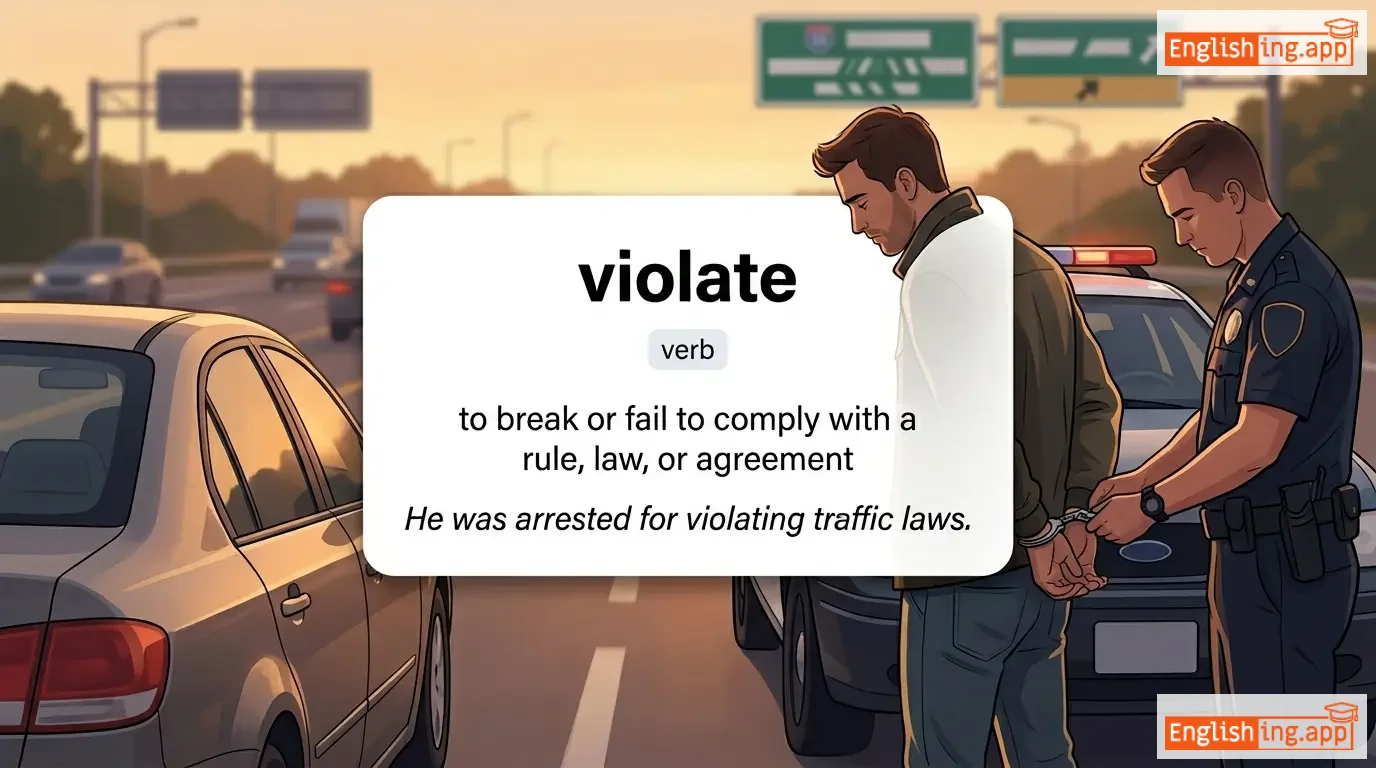
violate definition card — visual illustration of the meaning
verb
/ˈvaɪ.ə.leɪt/
违反 (wéifǎn)

to break or fail to comply with a rule, law, or agreement

"He was arrested for violating traffic laws."

"他因违反交通法规被逮捕。" (Tā yīnwèi wéifǎ bōfǎo jiāotōng fǎlǜ ér bèi dǔlì.)
noun
/ˈvɪn.ɪ.ɡər/
(cu)

a sour liquid made from fermented alcohol, used for cooking and preserving

"I added vinegar to the salad dressing for extra flavor."

"我在沙拉酱里加了醋,以增加味道。" (Wo zai shala jiang li jia le cu, yi zengjia weidao.)
noun
/ˌviːələnsɛloʊ/
大提琴 (dà tíqín)

The full name of the cello, a large string instrument played with a bow and held between the knees.

"He practiced the violoncello for hours each day."

"他每天练习大提琴好几个小时。" (Tā měitiān liànxí dà tíqín hǎo jǐ gè xiǎoshí.)
adjective
/ʌnˈtaɪmli/
不合时宜 (bù hé shí yí)

Happening or done at an unsuitable or premature time.

"His untimely death shocked the entire community."

"他不合时宜的去世震惊了整个社区。" (Tā bù hé shí yí de qù shì zhèn jīng le zhěng gè shè qū.)
adjective
/ˌʌnprəˈdʌktɪv/
无效的 (wúxiào de)

Not producing or achieving much; not effective or useful.

"The meeting was unproductive and wasted everyone's time."

"会议没有成效,浪费了大家的时间。" (Huìyì méiyǒu chéngxiào, làngfèi le dàjiā de shíjiān.)
noun
/ˈvaɪəˌleɪtər/
违规者 (wéiguī zhě)

A person who breaks or disregards a law, rule, or agreement.

"The police caught the traffic violator at the intersection."

"警察在交叉口抓住了交通违规者。" (Jǐngchá zài jiāochā kǒu zhuāzhùle jiāotōng wéiguī zhě.)
adjective
/ʌnˈθɪŋkəbl/
难以想象的 (nán yǐ xiǎng xiàng de)

impossible to conceive or imagine; beyond belief or consideration

"It was unthinkable that such a tragedy could happen in our peaceful town."

"在我们和平的小镇上发生这样一场悲剧,简直是难以想象的。" (Zài wǒmen hépíng de xiǎo zhèn shàng fāshēng zhèyàng yī chǎng bēijù, jiǎnzhí shì nán yǐ xiǎngxiàng de.)
adjective
/ʌnˈskɪld/
无技能的; 无技术的工人 (wú jìnéng de; wú jìshù de gōngrén)

lacking technical training or ability; not requiring special skills

"Many unskilled workers are looking for training opportunities."

"许多没有技能的工人正在寻找培训机会。" (xǔduō méiyǒu jìnéng de gōngrén zhèngzài xúnzhǎo péixùn jīhuì.)
verb
/ʌnˈveɪl/
揭示 (jiēshì)

to reveal or disclose something, especially in a formal manner

"The company will unveil a new product next week."

"公司将在下周揭示一款新产品。" (Gōngsī jiāng zài xià zhōu jiēshì yī kuǎn xīn chǎnpǐn.)
noun
/ˈvɜːrtʃuː/
美德 (meidé)

High moral standards or a good quality considered morally good.

"Patience is considered a great virtue."

"耐心被认为是一种伟大的美德。" (Nàixīn bèi rènwéi shì yī zhǒng wěidà de měidé.)
verb
/ˈvaɪtəlaɪz/
赋予生命 (fùyǔ shēngmìng)

To give life, energy, or strength to something.

"Fresh air and exercise can vitalize the body and mind."

"新鲜的空气和运动可以使身体和心灵充满活力。" (Xīnxiān de kōngqì hé yùndòng kěyǐ shǐ shēntǐ hé xīnlíng chōngmǎn huólì.)
adjective
/ʌnˈskeɪðd/
毫发无损 (háo fà wú sǔn)

Without suffering any injury, damage, or harm.

"She escaped from the accident unscathed."

"她毫发无损地逃离了事故。" (Tā háo fà wú sǔn de táo líle shìgù.)
verb
/ʌnˈtaɪ/
解开 (jie kai)

to loosen or remove a knot or binding; to release something that is tied

"She untied the rope to free the boat."

"她解开绳子来释放船只。" (ta jie kai shengzi lai shifang chuan zhi)
adjective
/ʌnˈsiːmli/
不得体 (bùdétǐ)

Not proper or appropriate in behavior or appearance; unbecoming.

"His unseemly remarks embarrassed everyone at the dinner table."

"他不得体的言论让晚餐桌上的每个人都感到尴尬。" (Tā bùdétǐ de yánlùn ràng wǎncān zhuō shàng de měi gèrén dōu gǎndào gāngà.)
adjective
/ˈvɜːrtʃuəl/
虚拟 / 模拟 (xūnǐ / mó nǐ)

existing or simulated on a computer or online rather than physically; almost but not exactly the same as

"The company held a virtual meeting with employees worldwide."

"公司与全球员工举行了虚拟会议。" (Gōngsī yǔ quánqiú yuángōng jǔxíngle xūnǐ huìyì.)