词汇表

英语词汇词典 | 单词含义、定义和示例

adjective
/ʌnˈseɪf/
不安全; 危险的; (bù ānquán, wēixiǎn de)

involving or causing danger or risk; not protected from harm

"It is unsafe to walk alone in this neighborhood at night."

"晚上在这个社区独自行走是不安全的。" (Wǎnshàng zài zhège shèqū dúzì xíngzǒu shì bù ānquán de.)
adjective
/ˈvɪtriəs/
玻璃状 (bolizhuang)

having a glass-like appearance or quality

"The mineral has a vitreous shine."

"这种矿物有玻璃状的光泽。" (Zhezhong kuangwu you bolizhuang de guangze.)
adjective
/ˌʌnrɪˈlaɪəbl/
不可靠的; 不能被信任或依赖 (bù kěkào de; bù néng bèi xìnrèn huò yīlài)

not dependable; not able to be trusted or relied upon

"The old car is unreliable and breaks down frequently."

"这辆老车不可靠,常常坏掉。" (Zhè liàng lǎo chē bù kěkào, chángcháng huài diào.)
adjective
/ˌʌnrɪˈzɒlvd/
未解决的 (wei jiejue de)

not solved or settled; remaining undecided or unclear

"The dispute remains unresolved despite several meetings."

"尽管开了几次会议,这个争议仍未解决。" (jinguan kailiao jici huiyi zhege zhengyi reng wei jiejue)
adjective
/ˈvɜːrtʃuəs/
有德行的 (yǒu déxíng de)

Having or showing high moral standards.

"She is known as a virtuous woman who helps the poor."

"她是一个以帮助穷人而著名的有德行的女人。" (Tā shì yīgè yǐ bāngzhù qióngrén ér zhùmíng de yǒu déxíng de nǚrén.)
noun
/ˈvaɪpər/
毒蛇 (dú shé)

a type of poisonous snake; metaphorically, a spiteful or treacherous person

"The viper lay hidden in the tall grass."

"毒蛇隐藏在高草中。" (Dú shé yǐncáng zài gāo cǎo zhōng.)
adjective
/ʌnˈriːzənəbəl/
不合理的 (bu heli de)

not guided by reason or fairness; excessive or extreme beyond what is acceptable

"The manager made an unreasonable demand that no one could realistically meet."

"经理提出了一个不合理的要求。" (jingli tichu le yige bu heli de yaoqiu)
adjective
/ˈvɪndɪkətɔːri/
辩护的 (biànhù de)

Serving to justify, clear of blame, or defend.

"His vindicatory remarks restored his reputation."
"他的辩护性评论恢复了他的声誉。" (Tā de biànhù xìng pínglùn huīfùle tā de shēngyù.)
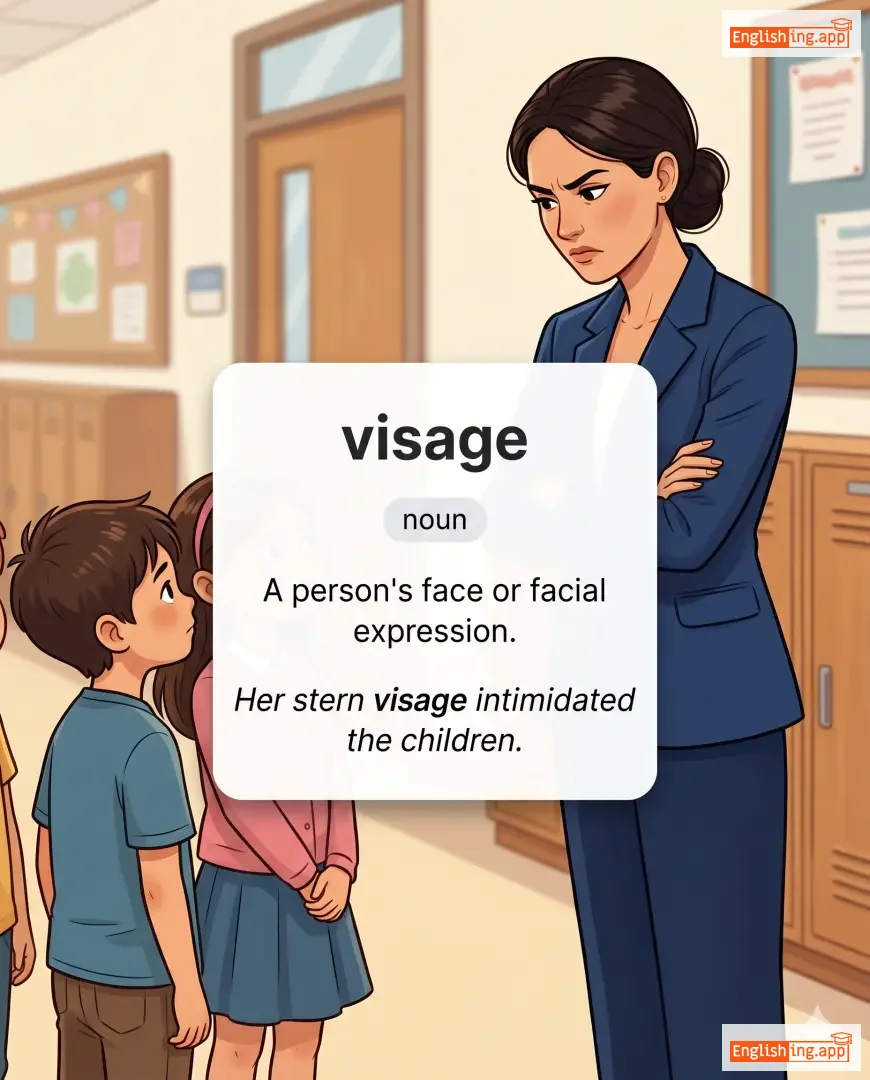
visage definition card — visual illustration of the meaning
noun
/ˈvɪzɪdʒ/
幸福 (xìngfú)

A person's face or facial expression.

"Her stern visage intimidated the children."

"她获得奖项时,无法掩饰她的幸福。" (Tā huòdé jiǎngxiàng shí, wúfǎ yǎnshì tā de xìngfú.)
adjective
/ˌʌnrɪˈkwaɪtɪd/

Not returned or reciprocated, especially in the context of love or affection.

"He suffered from unrequited love for years."

adjective
/ʌnˈplɛz.ənt/
令人不悦的 (lìng rén bù yuè de)

not giving or causing pleasure; disagreeable

"The medicine had an unpleasant taste."

"药物有一种令人不悦的味道。" (Yàowù yǒu yī zhǒng lìng rén bù yuè de wèi dào.)
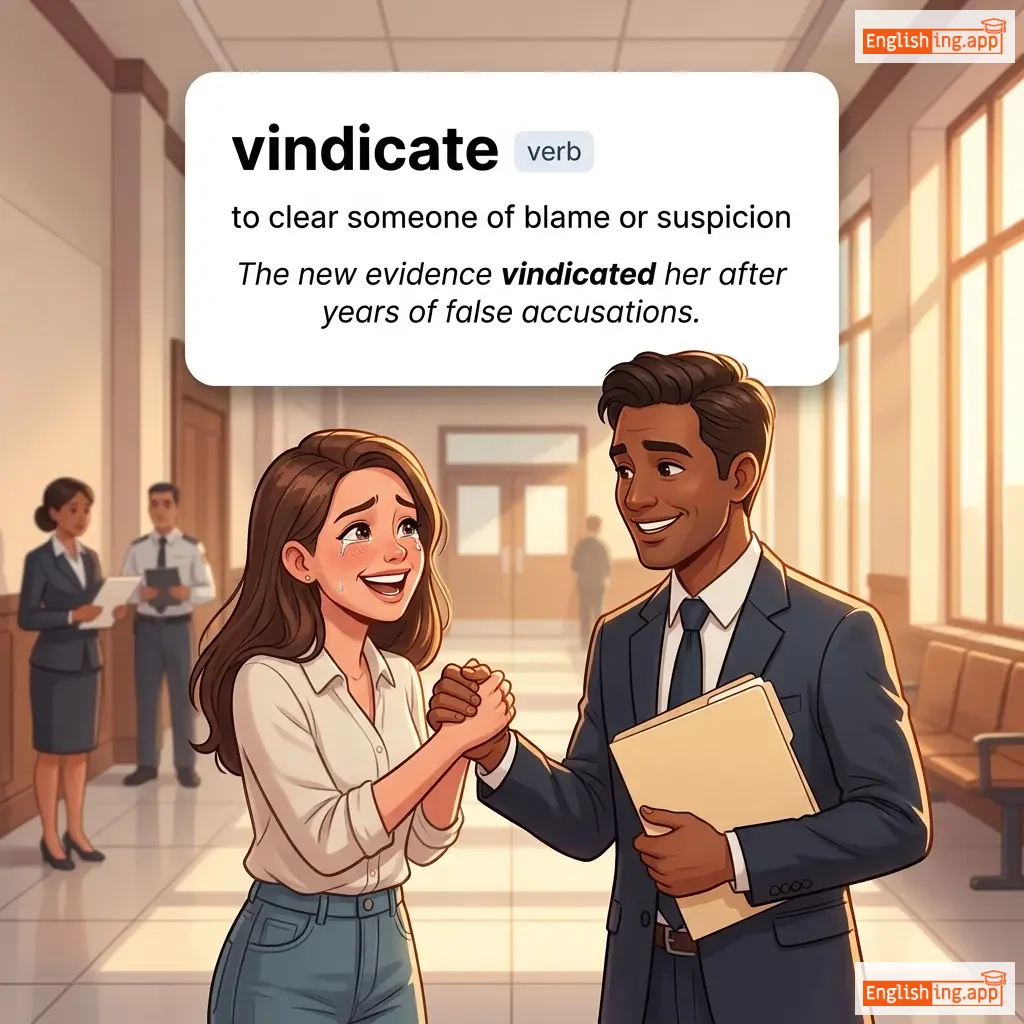
vindicate definition card — visual illustration of the meaning
verb
/ˈvɪndɪkeɪt/

to clear someone of blame or suspicion

"The new evidence vindicated her after years of false accusations."

noun
/ˈvaɪəl/
一种古老的弦乐器 (yī zhǒng gǔlǎo de xián yuèqì)

A stringed musical instrument of the Renaissance and Baroque periods, played with a bow and similar to but distinct from the violin family.

"The musician played an old viol in the chamber music concert."

"音乐家在室内音乐会中演奏了一把古老的维奥尔。" (Yīnyuèjiā zài shìnèi yīnyuè huì zhōng yǎnzòule yī bǎ gǔlǎo de wéi ào ěr.)
adjective
/ˌʌnpriːpəˈzɛsɪŋ/
不吸引人 (bù xīyǐn rén)

not attractive or appealing in appearance

"Despite his unprepossessing looks, he was very kind and intelligent."
"尽管他的外貌不吸引人,他还是非常友善和聪明。" (Jǐnguǎn tā de wàibiǎo bù xīyǐn rén, tā hái shì fēicháng yǒushàn hé cōngmíng.)
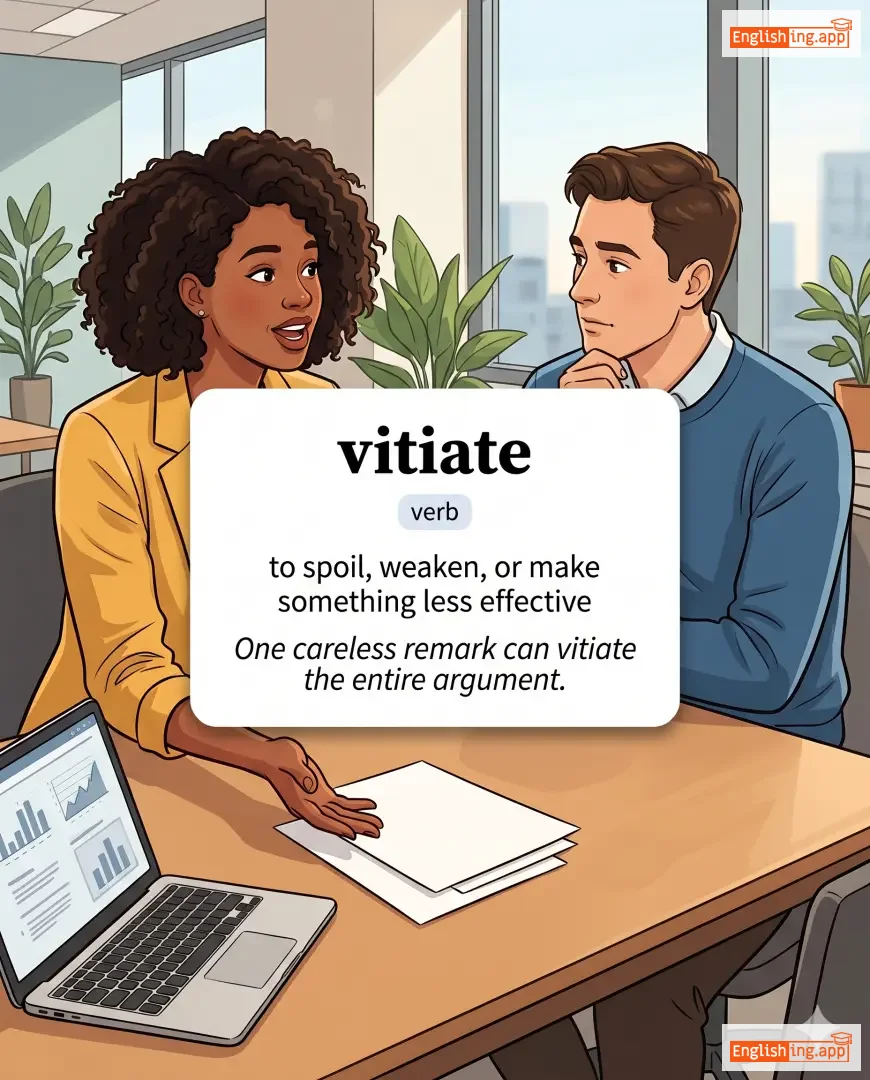
vitiate definition card — visual illustration of the meaning
verb
/ˈvɪʃieɪt/
败坏 (bàihuài)

to spoil, weaken, or make something less effective

"One careless remark can vitiate the entire argument."

"一句不小心的话可能会破坏整个论点。" (Yī jù bù xiǎoxīn de huà kěnéng huì pòhuài zhěnggè lùndiǎn.)
adjective
/ˈvɪʒuəl/
视觉的 (shìjué de)

Relating to seeing or sight.

"The movie was praised for its stunning visual effects."

"这部电影因其惊人的视觉效果而受到称赞。" (Zhè bù diànyǐng yīn qí jīngrén de shìjué xiàoguǒ ér shòudào chēngzàn.)
adverb
/ˈvaɪtəli/
至关重要地 (zhi guan zhong yao de)

in an extremely important or essential way; in a manner relating to life or vitality

"Access to clean water is vitally important for public health."

"获得清洁的水对公共健康至关重要。" (Huo de qing jie de shui dui gong gong jian kang zhi guan zhong yao)
adjective
/ˈvɪʒəneri/
有远见的人 (yǒu yuǎn jiàn de rén)

Thinking about or planning the future with imagination and wisdom.

"She is considered a visionary leader in technology."

"她被认为是技术领域的远见领导者。" (Tā bèi rènwéi shì jìshù lǐngyù de yuǎn jiàn lǐngdǎo zhě.)
noun
/ˈvɜːrtʃuː/
美德 (meidé)

High moral standards or a good quality considered morally good.

"Patience is considered a great virtue."

"耐心被认为是一种伟大的美德。" (Nàixīn bèi rènwéi shì yī zhǒng wěidà de měidé.)
noun
/ˈvaɪnəri/
葡萄园 (putao yuan)

A place where vines are cultivated, especially a vineyard or greenhouse for vines.

"The old vinery was filled with grapevines."

"旧的葡萄园里满是葡萄藤。" (Jiù de pútáo yuán lǐ mǎn shì pútáo téng.)
adjective
/ʌn.rɪˈleɪ.tɪd/
无关的; 不相关 (wúguān de; bù xiāngguān)

having no connection or relationship; not connected by family ties

"The two incidents were completely unrelated to each other."

"这两个事件完全无关。" (Zhè liǎng gè shìjiàn wánquán wúguān.)
noun
/ˈvaɪəˌleɪtər/
违规者 (wéiguī zhě)

A person who breaks or disregards a law, rule, or agreement.

"The police caught the traffic violator at the intersection."

"警察在交叉口抓住了交通违规者。" (Jǐngchá zài jiāochā kǒu zhuāzhùle jiāotōng wéiguī zhě.)
viscous definition card — visual illustration of the meaning
adjective
/ˈvɪskəs/
粘性 (niánxìng)

Having a thick, sticky consistency between solid and liquid.

"Honey is a viscous liquid that flows slowly."

"蜂蜜是一种粘性液体,流动缓慢。" (Fēngmì shì yī zhǒng niánxìng yètǐ, liúdòng huǎnmàn.)
virtual reality definition card — visual illustration of the meaning
noun
/ˈvɜː.tʃu.əl riˈæl.ɪ.ti/
虚拟现实 (xūnǐ xiànshí)

Computer technology that creates an artificial three-dimensional environment where users can feel like they are in a real environment.

"Virtual reality (VR) is widely used in gaming and training simulations."

"虚拟现实(VR)在游戏和训练模拟中被广泛使用。" (Xūnǐ xiànshí (VR) zài yóuxì hé xùnliàn móniàn zhōng bèi guǎngfàn shǐyòng.)
adjective
/ˈvɪrəl/
男性化 (nánxìng huà)

having traditionally masculine qualities, such as strength, energy, and sexual vigor

"The actor was admired for his virile appearance."

"演员因其男性化的外貌而受到赞赏。" (Yǎnyuán yīn qí nánxìng huà de wàimào ér shòudào zànshǎng.)
adjective
/ʌnˈpɒpjʊlə/
不受欢迎的 (bu shou huanying de)

not liked or supported by many people

"The decision was unpopular with the public."

"这个决定在公众中不受欢迎。" (zhege jueding zai gongzhong zhong bu shou huanying)
adjective
/ˈvɜːrtʃuəl/
虚拟 / 模拟 (xūnǐ / mó nǐ)

existing or simulated on a computer or online rather than physically; almost but not exactly the same as

"The company held a virtual meeting with employees worldwide."

"公司与全球员工举行了虚拟会议。" (Gōngsī yǔ quánqiú yuángōng jǔxíngle xūnǐ huìyì.)
noun
/vɜːrˈtuː/
对艺术的爱好 (duì yìshù de àihào)

a love of or taste for fine art, antiques, or curiosities

"The collector’s house was filled with objects of virtu."

"收藏家的房子里充满了虚拟的物品。" (Shōucáng jiā de fángzi lǐ chōngmǎnle xūnǐ de wùpǐn.)
adjective
/ˌʌnrɪˈfaɪnd/
未精炼的 (wei jinglian de)

not processed or purified; lacking polish or sophistication

"The unrefined oil must be processed before it can be used as fuel."

"未精炼的石油在用作燃料之前必须进行加工。" (wei jinglian de shiyou zai yongzuo ranliao zhiqian bixu jinxing jiagong)
noun
/vəˈrɑːɡoʊ/
强势或严厉的女性 (qiángshì huò yánlì de nǚxìng)

a loud, overbearing woman; historically, a strong or courageous woman

"The play depicted the heroine as a fierce virago who defied tradition."

"这部剧描绘了女主角作为一位勇敢的维拉戈,挑战传统。" (Zhè bù jù miáohuìle nǚ zhǔjiǎo zuòwéi yī wèi yǒnggǎn de wéilàgē, tiǎozhàn chuántǒng.)
noun
/ˈvaɪ.ə.ləns/
暴力 (baoli)

behavior involving physical force intended to hurt or damage

"The protest turned into an act of violence."
"抗议活动变成了一种暴力行为。" (Kàngyì huódòng biàn chéngle yī zhǒng bàolì xíngwéi.)
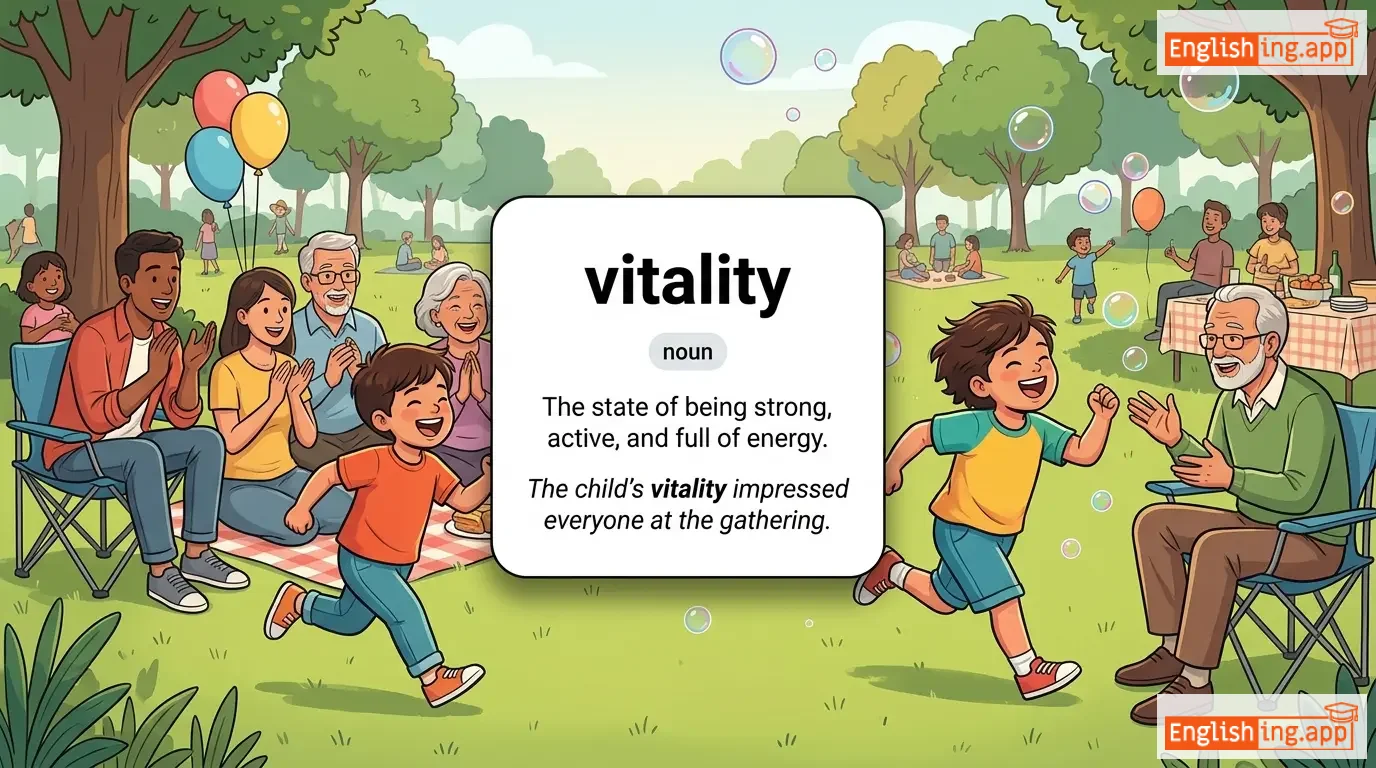
vitality definition card — visual illustration of the meaning
noun
/vaɪˈtæləti/
生命力 (shengmingli)

The state of being strong, active, and full of energy.

"The child’s vitality impressed everyone at the gathering."

"孩子的生命力给聚会上的每个人留下了深刻印象。" (Háizi de shēngmìnglì gěi jùhuì shàng de měi gè rén liúxiàle shēnkè yìnxiàng.)
noun
/ˈvɪn.ɪ.ɡər/
(cu)

a sour liquid made from fermented alcohol, used for cooking and preserving

"I added vinegar to the salad dressing for extra flavor."

"我在沙拉酱里加了醋,以增加味道。" (Wo zai shala jiang li jia le cu, yi zengjia weidao.)
noun/adjective
/ˈvɪntɪdʒ/
复古 / 经典 (fu gu / jing dian)

Relating to high quality from the past; classic; also the year of a wine harvest.

"She wore a vintage dress from the 1950s."

"她穿着一件1950年代的复古裙子。" (Ta chuanzhuo yi jian 1950 niandai de fugu qunzi.)
adjective
/ˌʌnprəˈdʌktɪv/
无效的 (wúxiào de)

Not producing or achieving much; not effective or useful.

"The meeting was unproductive and wasted everyone's time."

"会议没有成效,浪费了大家的时间。" (Huìyì méiyǒu chéngxiào, làngfèi le dàjiā de shíjiān.)
adjective
/ʌnˈkwaɪ.ət/
不安的; 焦虑的; 激动的 (bu'an de; jiaolü de; jīdòng de)

restless; unable to remain still or quiet; anxious or troubled

"She spent an unquiet night worrying about the exam results."

"她度过了一个不安的夜晚,担心考试结果。" (Tā dùguòle yīgè bù'ān de yèwǎn, dānxīn kǎoshì jiéguǒ.)
noun
/viˈoʊlə/ or /ˈvaɪələ/
维奥拉 (wei ao la)

A stringed instrument slightly larger than a violin, with a deeper and mellower tone.

"She chose to play the viola in the school orchestra."
"她选择在学校管弦乐队中演奏维奥拉。" (Ta xuanze zai xuexiao guanxian yuedui zhong yanzou wei aola.)
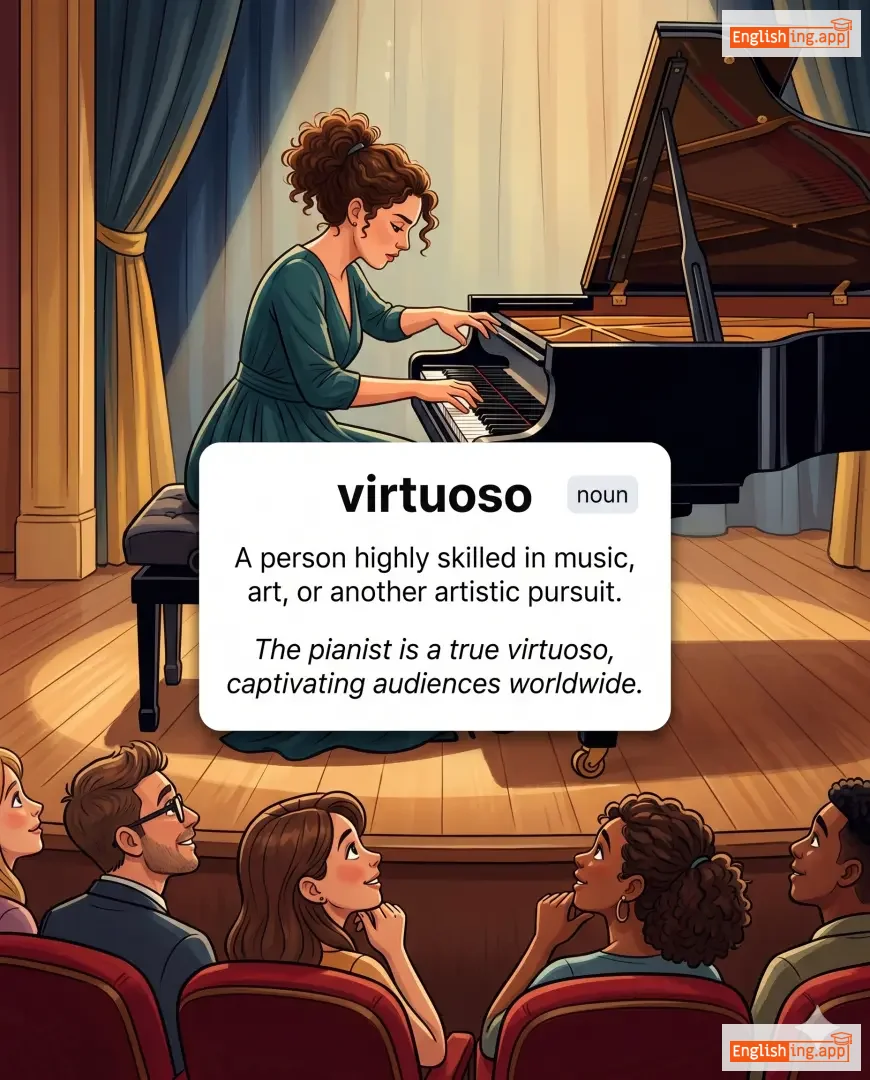
virtuoso definition card — visual illustration of the meaning
noun
/ˌvɜːrtʃuˈoʊsoʊ/
艺术大师 (yì shù dà shī)

A person highly skilled in music, art, or another artistic pursuit.

"The pianist is a true virtuoso, captivating audiences worldwide."

"这位钢琴家是真正的艺术大师,吸引着全球的观众。" (Zhè wèi gāngqín jiā shì zhēnzhèng de yìshù dà shī, xīyǐn zhe quánqiú de guānzhòng.)
adjective
/ˈvɪndɪkeɪtɪv/
辩护的 (bianhu de)

showing a tendency to vindicate or justify; inclined to defend

"Her vindicative tone showed that she strongly believed in her innocence."

"她的辩护语气表明她坚信自己的清白。" (Ta de bianhu yuqi biaoming ta jianxin ziji de qingbai.)
noun
/ˈvaɪkaʊnt/
副伯爵 (fù bó jué)

A British nobleman ranking below an earl and above a baron.

"The viscount inherited the estate from his father."
"副伯爵从父亲那里继承了庄园。" (Fù bó jué cóng fùqīn nàlǐ jìchéngle zhuāngyuán.)
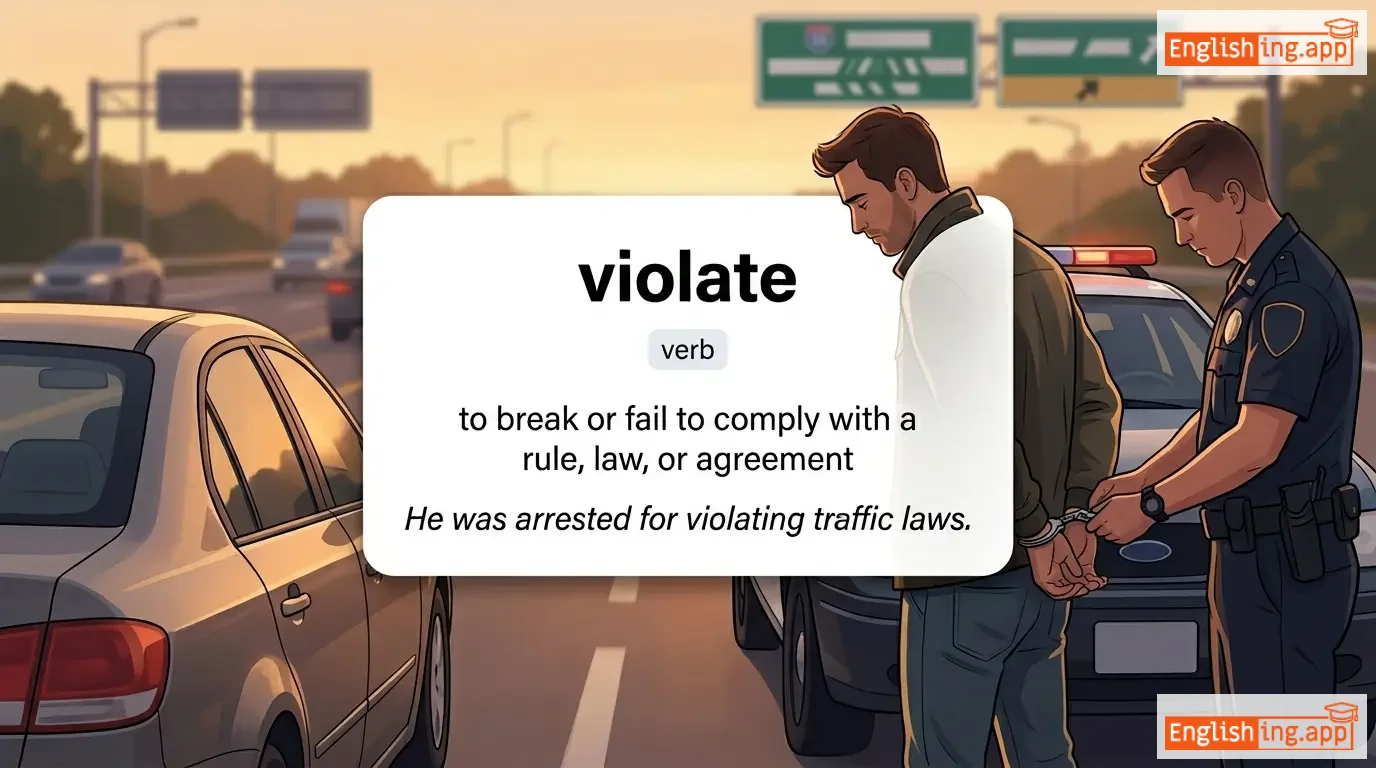
violate definition card — visual illustration of the meaning
verb
/ˈvaɪ.ə.leɪt/
违反 (wéifǎn)

to break or fail to comply with a rule, law, or agreement

"He was arrested for violating traffic laws."
"他因违反交通法规被逮捕。" (Tā yīnwèi wéifǎ bōfǎo jiāotōng fǎlǜ ér bèi dǔlì.)
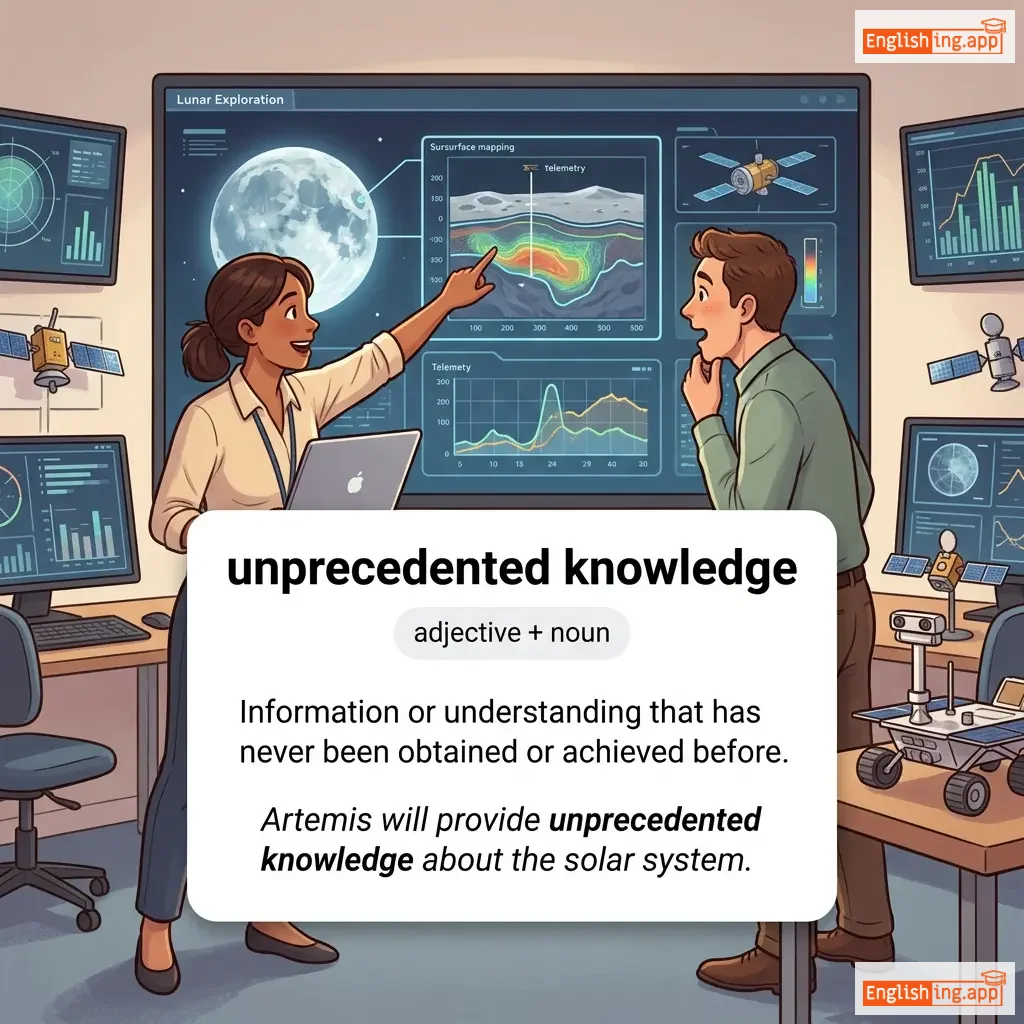
unprecedented knowledge definition card — visual illustration of the meaning
adjective + noun
ʌnˈpresɪdentɪd ˈnɒlɪdʒ
前所未有的知识 (qian suo wei you de zhi shi)

Information or understanding that has never been obtained or achieved before.

"Artemis will provide unprecedented knowledge about the solar system."

"阿尔忏将提供关于太阳系的前所未有的知识。" (A'erchan jiang tigong guanyu taiyangxi de qian suo wei you de zhishi.)
adjective
/ʌnˈprɒf.ɪ.tə.bl̩/
无利可图 (wú lì kě tú)

not yielding profit or gain; not producing financial benefit

"The unprofitable business was forced to close down after three years."

"这个无利可图的生意在三年后被迫关闭。" (Zhè ge wú lì kě tú de shēng yì zài sān nián hòu bèi pò guān bì.)
noun
/ˈvɪtrioʊl/
尖刻的批评 (jiānkè de pīpíng)

harsh and bitter criticism

"The politician faced vitriol from the public."

"政治家遭受了公众的尖刻批评。" (Zhèngzhìjiā zāoshòu le gōngzhòng de jiānkè pīpíng.)
noun
/ˌviːələnsɛloʊ/
大提琴 (dà tíqín)

The full name of the cello, a large string instrument played with a bow and held between the knees.

"He practiced the violoncello for hours each day."

"他每天练习大提琴好几个小时。" (Tā měitiān liànxí dà tíqín hǎo jǐ gè xiǎoshí.)
noun
/ˌʌnriˈælɪti/
非现实 (fei xianshi)

the state or quality of being unreal; lack of reality or truth

"The dreamlike setting gave the story a sense of unreality."

"这种梦幻的场景让故事充满了非现实感。" (Zhe zhong menghuan de changjing rang gushi chongman le fei xianshi gan)
visiting definition card — visual illustration of the meaning
verb
/ˈvɪzɪtɪŋ/
拜访 (baifang)

Going to see and spend time with someone or at a place.

"The group is visiting islands during the expedition."

"小组在远征期间访问岛屿。" (Xiaozu zai yuanzheng qijian fangwen daoyu.)
noun
/ˈvɪzɪtər/
游客 (youke)

a person who goes to see a place or someone for a short time

"The museum had many visitors last weekend."

"博物馆上周末有很多游客。" (Bówùguǎn shàng zhōumò yǒu hěn duō yóukè.)
adjective
/ˈvɪzəbl/
可见的 (kejian de)

able to be seen; perceptible by the eye

"The stars were clearly visible in the night sky."

"星星在夜空中清晰可见。" (Xīngxīng zài yèkōng zhōng qīngxī kějiàn.)
adverb
/ˈvɜː.tʃu.ə.li/
几乎, 虚拟 (jī hū, xū nǐ)

almost or nearly, but not completely; by means of computer technology

"The meeting was held virtually due to travel restrictions."

"由于旅行限制,会议是虚拟举行的。" (Yóu yú lǚ xíng xiàn zhì, huì yì shì xū nǐ jǔ xíng de.)