Словари

Словарь английского языка | Значения слов, определения и примеры

adjective
/ʌnˈseɪf/
опасный; рискованный; (opasnyy, riskovannyy)

involving or causing danger or risk; not protected from harm

"It is unsafe to walk alone in this neighborhood at night."

"Не безопасно гулять в этом районе ночью." (Ne bezopasno gulyat' v etom rayone noch'yu.)
adjective
/ˈvɪtriəs/
стекловидный (steklovidny)

having a glass-like appearance or quality

"The mineral has a vitreous shine."

"Минерал имеет стекловидный блеск." (Mineral imeet steklovidny blesk.)
adjective
/ˌʌnrɪˈlaɪəbl/
ненадежный; на него нельзя положиться или довериться (nenadezhnyy; na nego nel'zya polozhit'sya ili doverit'sya)

not dependable; not able to be trusted or relied upon

"The old car is unreliable and breaks down frequently."

"Старая машина ненадежна и часто ломается." (Staraya mashina nenadezhnaya i chasto lomayetsya.)
adjective
/ˌʌnrɪˈzɒlvd/
нерешённый (nereshyonnyi)

not solved or settled; remaining undecided or unclear

"The dispute remains unresolved despite several meetings."

"Спор остаётся нерешённым, несмотря на несколько встреч." (spor ostayotsya nereshyonnym nesmotrya na neskolko vstrech)
adjective
/ˈvɜːrtʃuəs/
добродетельный (dobrodetel'nyy)

Having or showing high moral standards.

"She is known as a virtuous woman who helps the poor."

"Она известна как добродетельная женщина, помогающая бедным." (Ona izvestna kak dobrodetelnaya zhenshchina, pomogayushchaya bednym.)
noun
/ˈvaɪpər/
ядовитая змея (yadovitaya zmiya)

a type of poisonous snake; metaphorically, a spiteful or treacherous person

"The viper lay hidden in the tall grass."

"Гадюка лежала скрытая в высокой траве." (Gadyuka lezhala skrytaya v vysokoy trave.)
adjective
/ʌnˈriːzənəbəl/
неразумный (nerazumnyi)

not guided by reason or fairness; excessive or extreme beyond what is acceptable

"The manager made an unreasonable demand that no one could realistically meet."

"Менеджер выдвинул неразумное требование." (menedzher vydvinul nerazumnoe trebovanie)
adjective
/ˈvɪndɪkətɔːri/
оправдательный (opravdatel'nyy)

Serving to justify, clear of blame, or defend.

"His vindicatory remarks restored his reputation."
"Его оправдательные замечания восстановили его репутацию." (Ego opravdatelnye zamechaniya vosstanovili ego reputatsiyu.)
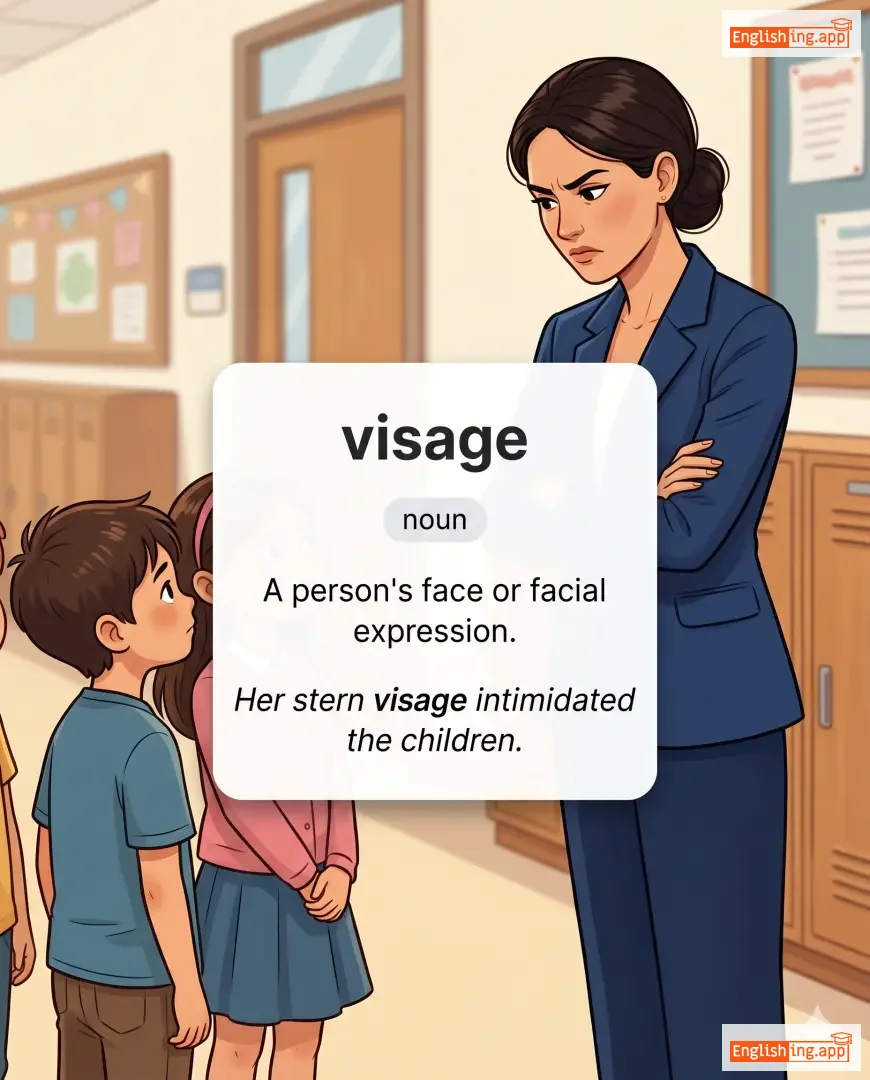
visage definition card — visual illustration of the meaning
noun
/ˈvɪzɪdʒ/
счастье (schastye)

A person's face or facial expression.

"Her stern visage intimidated the children."

"Она не могла скрыть своего счастья, когда получила награду." (Ona ne mogla skryt' svoego schast'ya, kogda poluchila nagradu.)
adjective
/ˌʌnrɪˈkwaɪtɪd/
безответный (bezotvetny)

Not returned or reciprocated, especially in the context of love or affection.

"He suffered from unrequited love for years."

"Он страдал от безответной любви годами." (On stradal ot bezotvetnoj lyubvi godami.)
adjective
/ʌnˈplɛz.ənt/
неприятный (nepriyatny)

not giving or causing pleasure; disagreeable

"The medicine had an unpleasant taste."
"Лекарство имело неприятный вкус." (Lekarstvo imelo nepriyatnyy vkus.)
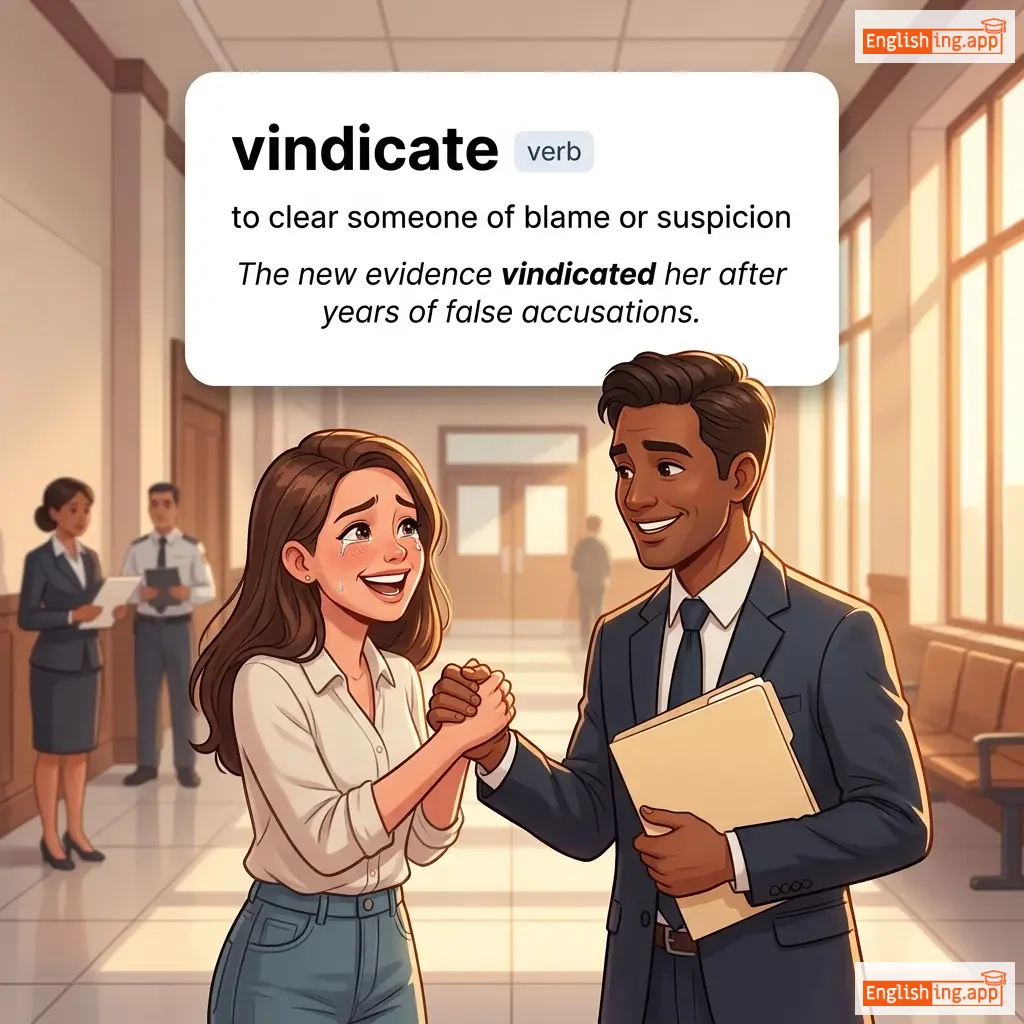
vindicate definition card — visual illustration of the meaning
verb
/ˈvɪndɪkeɪt/

to clear someone of blame or suspicion

"The new evidence vindicated her after years of false accusations."

noun
/ˈvaɪəl/
вид старинного струнного инструмента (vid starinnogo strunnogo instrumenta)

A stringed musical instrument of the Renaissance and Baroque periods, played with a bow and similar to but distinct from the violin family.

"The musician played an old viol in the chamber music concert."

"Музыкант играл на старом виале на концерте камерной музыки." (Muzykant igral na starom viale na koncerte kamernoy muzyki.)
adjective
/ˌʌnpriːpəˈzɛsɪŋ/
непривлекательный (neprivlekatel'nyy)

not attractive or appealing in appearance

"Despite his unprepossessing looks, he was very kind and intelligent."
"Несмотря на его непривлекательную внешность, он был очень добрым и умным." (Nesmotrya na ego neprivlekatel'nuyu vneshnost', on byl ochen' dobrym i umnym.)
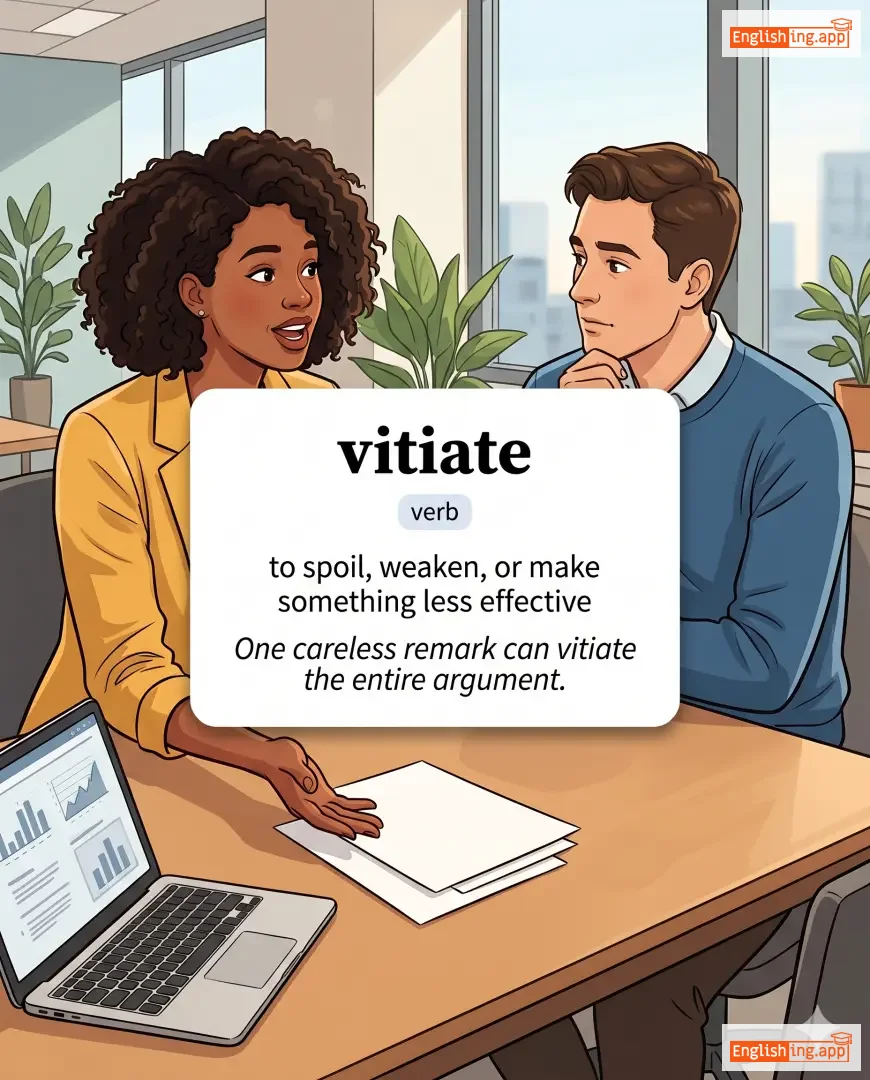
vitiate definition card — visual illustration of the meaning
verb
/ˈvɪʃieɪt/
портить (portit)

to spoil, weaken, or make something less effective

"One careless remark can vitiate the entire argument."

"Один неосторожный комментарий может испортить весь аргумент." (Odin neostorozhnyy kommentariy mozhet isportit' ves' argument.)
adjective
/ˈvɪʒuəl/
визуальный (vizual'nyy)

Relating to seeing or sight.

"The movie was praised for its stunning visual effects."

"Фильм был отмечен за свои впечатляющие визуальные эффекты." (Film byl otmechen za svoi vpechatlyayushchie vizual'nye effekty.)
adverb
/ˈvaɪtəli/
жизненно важно (zhiznenno vazhno)

in an extremely important or essential way; in a manner relating to life or vitality

"Access to clean water is vitally important for public health."

"Доступ к чистой воде жизненно важно для общественного здоровья." (Dostup k chistoi vode zhiznenno vazhno dlya obshchestvennogo zdorovya)
adjective
/ˈvɪʒəneri/
визионер (vizioner)

Thinking about or planning the future with imagination and wisdom.

"She is considered a visionary leader in technology."

"Ее считают визионером в области технологий." (Eyo schitayut vizionerom v oblasti tekhnologiy.)
noun
/ˈvɜːrtʃuː/
добродетель (dobrodetel)

High moral standards or a good quality considered morally good.

"Patience is considered a great virtue."

"Терпение считается великой добродетелью." (Terpenie schitayetsya velikoy dobrodetelyu.)
noun
/ˈvaɪnəri/
винодельня (vinodel'nya)

A place where vines are cultivated, especially a vineyard or greenhouse for vines.

"The old vinery was filled with grapevines."

"Старый винодельня был полон виноградных лоз." (Staryy vinodel'nya byl polon vinogradnykh loz.)
adjective
/ʌn.rɪˈleɪ.tɪd/
не относящийся; не связанный (ne otnosyashchiesya; ne svyazannyy)

having no connection or relationship; not connected by family ties

"The two incidents were completely unrelated to each other."

"Два инцидента были полностью не связанны друг с другом." (Dva intsidenta byli polnost'yu ne svyazannyy drug s drugom.)
noun
/ˈvaɪəˌleɪtər/
нарушитель (narushitel)

A person who breaks or disregards a law, rule, or agreement.

"The police caught the traffic violator at the intersection."

"Полиция поймала нарушителя правил дорожного движения на перекрёстке." (Politsiya poymala narushitelya pravil dorozhnogo dvizhiniya na perekryostke.)
viscous definition card — visual illustration of the meaning
adjective
/ˈvɪskəs/
вязкий (vyazkiy)

Having a thick, sticky consistency between solid and liquid.

"Honey is a viscous liquid that flows slowly."

"Мед — это вязкая жидкость, которая течет медленно." (Med — eto vyazkaya zhidkost', kotoraya techet medlenno.)
virtual reality definition card — visual illustration of the meaning
noun
/ˈvɜː.tʃu.əl riˈæl.ɪ.ti/
виртуальная реальность (virtual'naya real'nost')

Computer technology that creates an artificial three-dimensional environment where users can feel like they are in a real environment.

"Virtual reality (VR) is widely used in gaming and training simulations."

"Виртуальная реальность (VR) широко используется в играх и тренажерах." (Virtual'naya real'nost' (VR) shiroko ispol'zuyetsya v igrah i trenazherakh.)
adjective
/ˈvɪrəl/
мужской (muzhskoy)

having traditionally masculine qualities, such as strength, energy, and sexual vigor

"The actor was admired for his virile appearance."

"Актера восхищали за его мужской внешний вид." (Akyera voskhishchali za ego muzhskoy vneshniy vid.)
adjective
/ʌnˈpɒpjʊlə/
непопулярный (nepopulyarnyy)

not liked or supported by many people

"The decision was unpopular with the public."

"Это решение было непопулярным среди общественности." (eto resheniye bylo nepopulyarnym sredi obshchestvennosti)
adjective
/ˈvɜːrtʃuəl/
виртуальный / смоделированный (virtual'nyy / smodelirovannyy)

existing or simulated on a computer or online rather than physically; almost but not exactly the same as

"The company held a virtual meeting with employees worldwide."

"Компания провела виртуальную встречу с сотрудниками по всему миру." (Kompaniya provyodla virtual'nuyu vstrechu s sotrudnikami po vsemu miru.)
noun
/vɜːrˈtuː/
любовь к искусству (lyubov' k iskusstvu)

a love of or taste for fine art, antiques, or curiosities

"The collector’s house was filled with objects of virtu."

"Дом коллекционера был заполнен предметами вирту." (Dom kollektsionera byl zapolnen predmetami virtu.)
adjective
/ˌʌnrɪˈfaɪnd/
неочищенный (neochishchennyy)

not processed or purified; lacking polish or sophistication

"The unrefined oil must be processed before it can be used as fuel."

"Неочищенную нефть необходимо переработать перед использованием в качестве топлива." (neochishchennuyu neft neobkhodimo pererabotat pered ispolzovaniem v kachestve topliva)
noun
/vəˈrɑːɡoʊ/
громкая или властная женщина (gromkaya ili vlastnaya zhenshchina)

a loud, overbearing woman; historically, a strong or courageous woman

"The play depicted the heroine as a fierce virago who defied tradition."

"Пьеса изображала героиню как яростную вираго, которая бросала вызов традициям." (P'yesa izobrazhala geroinyu kak yarostnuyu virago, kotoraya brosala vyzov traditsiyam.)
noun
/ˈvaɪ.ə.ləns/
насилие (nasilie)

behavior involving physical force intended to hurt or damage

"The protest turned into an act of violence."
"Протест превратился в акт насилия." (Protest prevratilsya v akt nasiliya.)
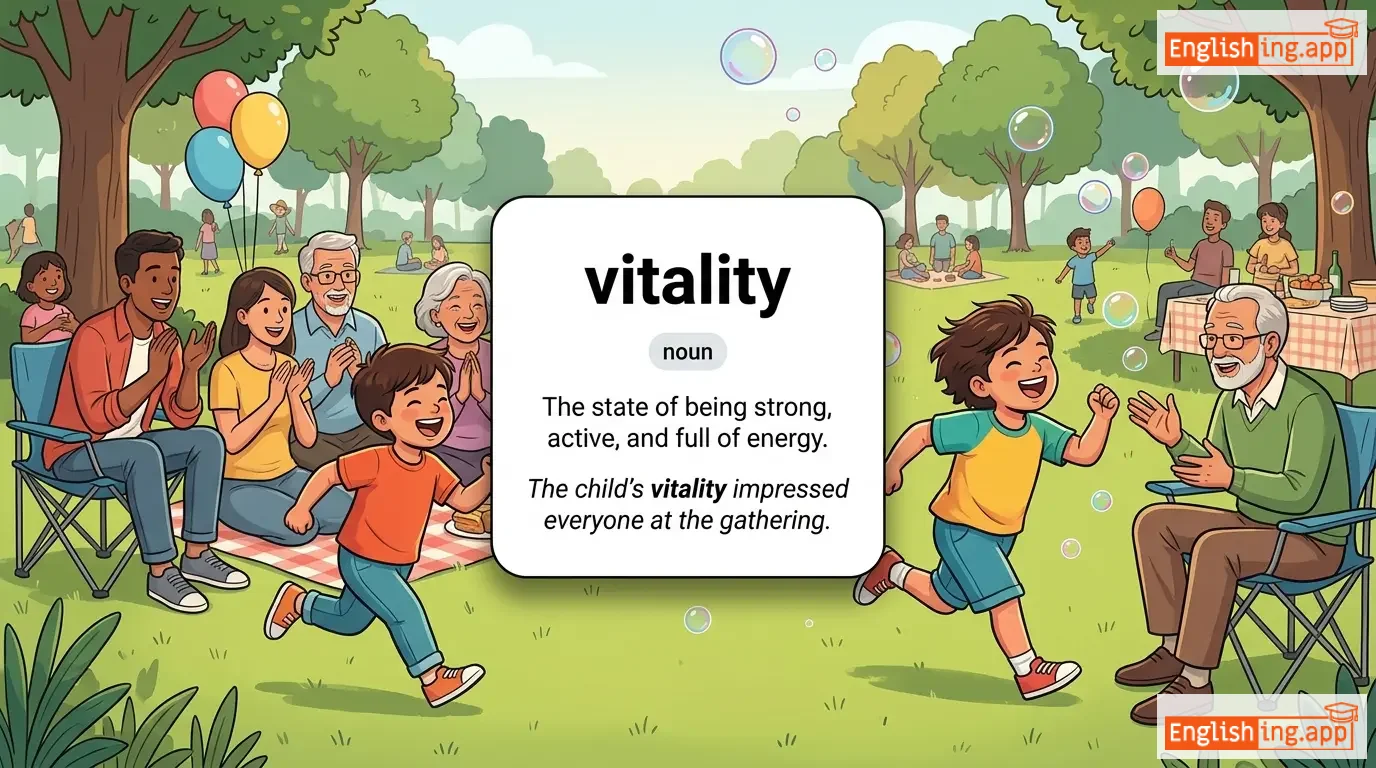
vitality definition card — visual illustration of the meaning
noun
/vaɪˈtæləti/
жизненная сила (zhiznennaya sila)

The state of being strong, active, and full of energy.

"The child’s vitality impressed everyone at the gathering."

"Жизненная сила ребенка впечатлила всех на встрече." (Zhiznennaya sila rebenka vpechatlila vsekh na vstreche.)
noun
/ˈvɪn.ɪ.ɡər/
уксус (uksus)

a sour liquid made from fermented alcohol, used for cooking and preserving

"I added vinegar to the salad dressing for extra flavor."

"Я добавил уксус в заправку для салата для дополнительного вкуса." (Ya dobavil uksus v zapravku dlya salata dlya dopolnitel'nogo vkusa.)
noun/adjective
/ˈvɪntɪdʒ/
винтаж / классика (vintage / klassika)

Relating to high quality from the past; classic; also the year of a wine harvest.

"She wore a vintage dress from the 1950s."

"Она носила винтажное платье 1950-х годов." (Ona nosila vintage noje plat'e 1950-kh godov.)
adjective
/ˌʌnprəˈdʌktɪv/
непродуктивный (neproduktivnyj)

Not producing or achieving much; not effective or useful.

"The meeting was unproductive and wasted everyone's time."

"Совещание было непродуктивным и потратило время всех." (Soveshchanie bylo neproduktivnym i potratilo vremya vsekh.)
adjective
/ʌnˈkwaɪ.ət/
беспокойный; тревожный; расстроенный (bespokoynyy; trevozhnoy; rasstroennyy)

restless; unable to remain still or quiet; anxious or troubled

"She spent an unquiet night worrying about the exam results."

"Она провела беспокойную ночь, переживая из-за результатов экзамена." (Ona provela bespokoynuyu noch', perezhivaya iz-za rezul'tatov eksamen.)
noun
/viˈoʊlə/ or /ˈvaɪələ/
виола (viola)

A stringed instrument slightly larger than a violin, with a deeper and mellower tone.

"She chose to play the viola in the school orchestra."
"Она выбрала играть на виоле в школьном оркестре." (Ona vybrala igrat' na viole v shkol'nom orkestre.)
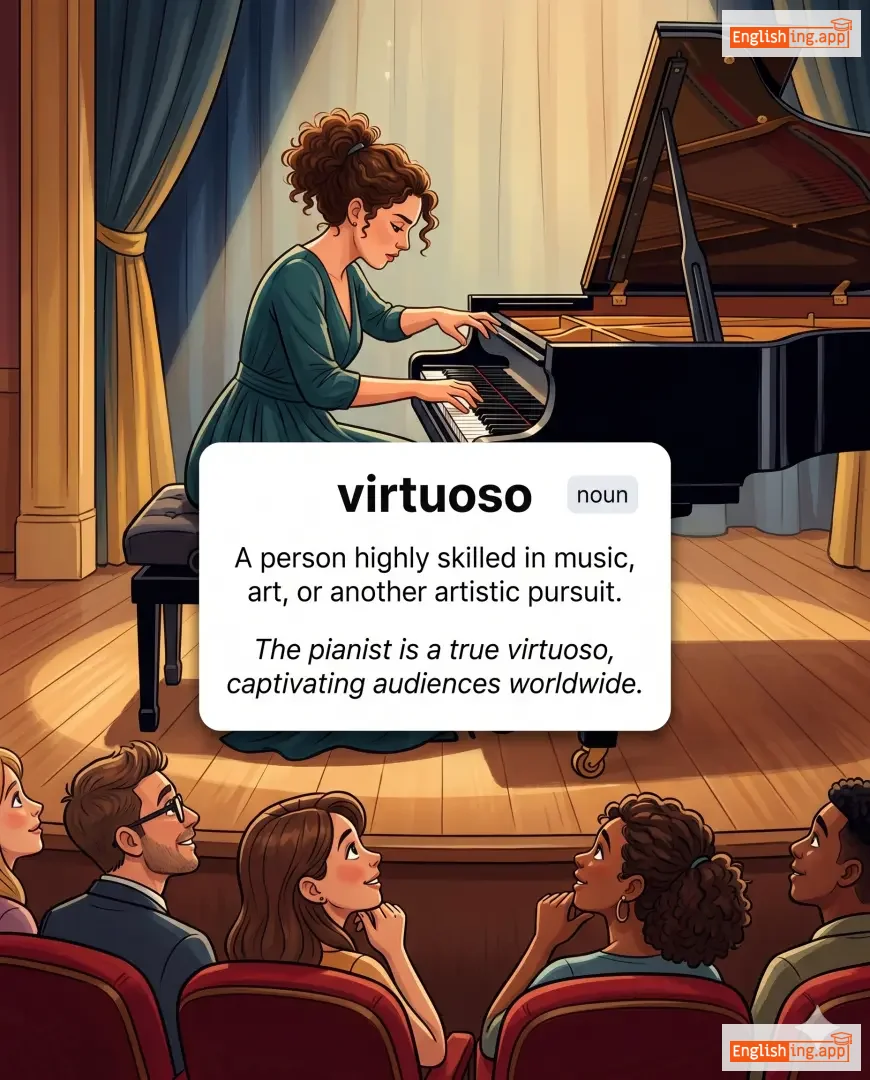
virtuoso definition card — visual illustration of the meaning
noun
/ˌvɜːrtʃuˈoʊsoʊ/
виртуоз (virtuoz)

A person highly skilled in music, art, or another artistic pursuit.

"The pianist is a true virtuoso, captivating audiences worldwide."

"Пианист — настоящий виртуоз, очаровывающий аудиторию по всему миру." (Pianist — nastoyashchiy virtuoz, ocharovyvayushchiy auditoriyu po vsemu miru.)
adjective
/ˈvɪndɪkeɪtɪv/
оправдательный (opravdatel'nyy)

showing a tendency to vindicate or justify; inclined to defend

"Her vindicative tone showed that she strongly believed in her innocence."

"Её виндикативный тон показал, что она твердо верит в свою невиновность." (Yeyo vindikativnyy ton pokazal, chto ona tverdó verit v svoyu nevinovnost'.)
noun
/ˈvaɪkaʊnt/
виконт (vikont)

A British nobleman ranking below an earl and above a baron.

"The viscount inherited the estate from his father."
"Виконт унаследовал имение от своего отца." (Vikont unasledoval imeniye ot svoego otca.)
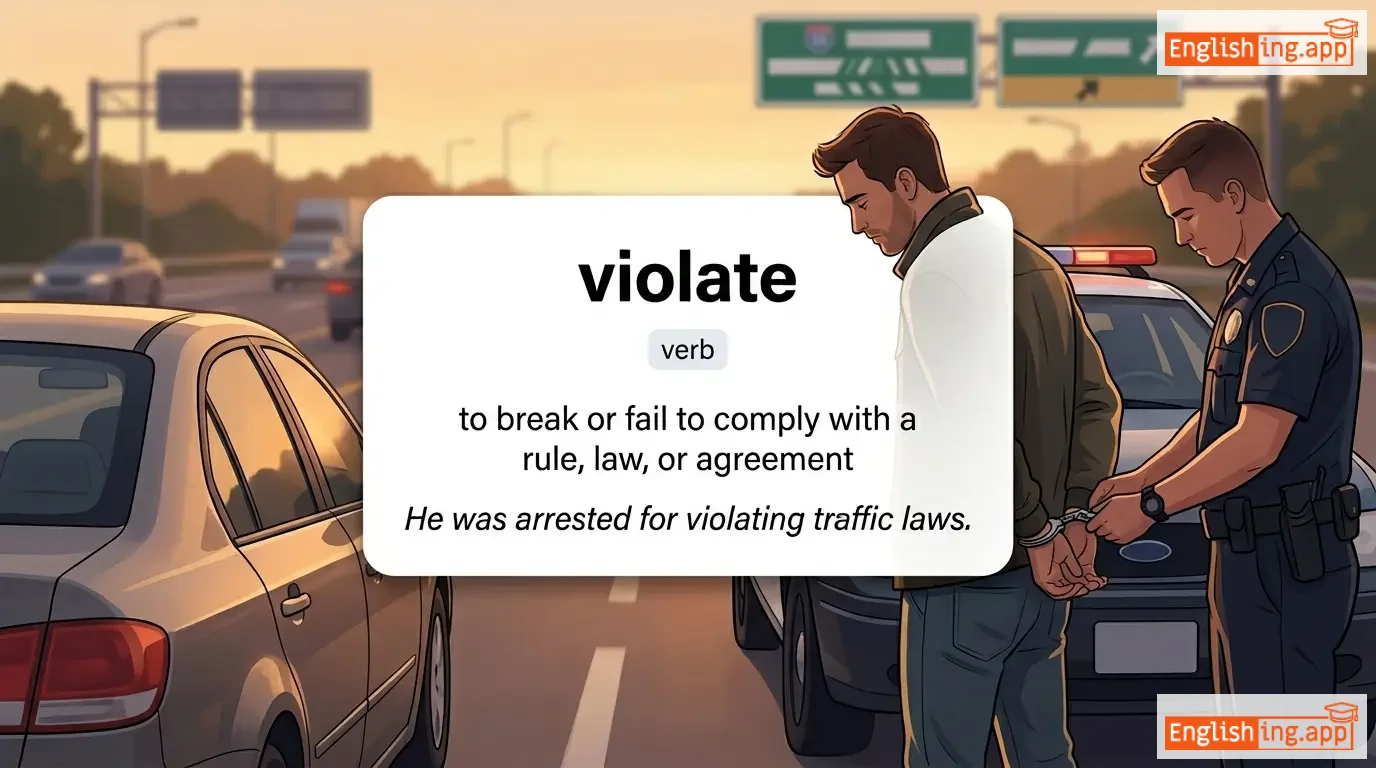
violate definition card — visual illustration of the meaning
verb
/ˈvaɪ.ə.leɪt/
нарушать (narushat)

to break or fail to comply with a rule, law, or agreement

"He was arrested for violating traffic laws."

"его арестовали за нарушение правил дорожного движения." (ego arestovali za narushenie pravil dorozhnogo dvizhения.)
unprecedented knowledge definition card — visual illustration of the meaning
adjective + noun
ʌnˈpresɪdentɪd ˈnɒlɪdʒ
беспрецедентные знания (bespretsedentnye znaniya)

Information or understanding that has never been obtained or achieved before.

"Artemis will provide unprecedented knowledge about the solar system."

"Артемис предоставит беспрецедентные знания о солнечной системе." (Artemis predostavit bespretsedentnye znaniya o solnechnoy sisteme.)
adjective
/ʌnˈprɒf.ɪ.tə.bl̩/
убыточный (ubytochnyy)

not yielding profit or gain; not producing financial benefit

"The unprofitable business was forced to close down after three years."

"Убыточный бизнес был вынужден закрыться через три года." (Ubytochnyy biznes byl vynuzhden zakryt'sya cherez tri goda.)
noun
/ˈvɪtrioʊl/
язвительная критика (yazvitel'naya kritika)

harsh and bitter criticism

"The politician faced vitriol from the public."

"Политик столкнулся с язвительной критикой со стороны общественности." (Politik stolknulsya s yazvitel'noy kritikoy so storony obshchestvennosti.)
noun
/ˌviːələnsɛloʊ/
виолончело (violonchello)

The full name of the cello, a large string instrument played with a bow and held between the knees.

"He practiced the violoncello for hours each day."

"Он репетировал на виолончелло по несколько часов каждый день." (On repetiroval na violonchello po neskol'ko chasov kazhdyy den'.)
noun
/ˌʌnriˈælɪti/
нереальность (nerealnost)

the state or quality of being unreal; lack of reality or truth

"The dreamlike setting gave the story a sense of unreality."

"Сонная атмосфера придала истории ощущение нереальности." (Sonnaya atmosfera pridala istorii oshchushchenie nerealnosti)
visiting definition card — visual illustration of the meaning
verb
/ˈvɪzɪtɪŋ/
посещать (poseshchat)

Going to see and spend time with someone or at a place.

"The group is visiting islands during the expedition."

"Группа посещает острова во время экспедиции." (Gruppa poseschaet ostrova vo vremya ekspeditsii.)
noun
/ˈvɪzɪtər/
посетитель (posetitel)

a person who goes to see a place or someone for a short time

"The museum had many visitors last weekend."

"В музее было много посетителей в прошлые выходные." (V muzeye bylo mnogo posetiteley v proshlye vykhodnye.)
adjective
/ˈvɪzəbl/
видимый (vidimyy)

able to be seen; perceptible by the eye

"The stars were clearly visible in the night sky."

"Звезды были ясно видны на ночном небе." (Zvezdy byli yasno vidny na nochnom nebe.)
adverb
/ˈvɜː.tʃu.ə.li/
почти, виртуально (pochtí, virtual'no)

almost or nearly, but not completely; by means of computer technology

"The meeting was held virtually due to travel restrictions."

"Встреча прошла виртуально из-за ограничений на путешествия." (Vstrecha proshla virtual'no iz-za ogranicheniy na puteshestviya.)