Словари

Словарь английского языка | Значения слов, определения и примеры

noun
/ˈvɒl.juːm/
объем (ob'yem)

the amount of space that a substance or object occupies, or that is enclosed within a container

"The volume of water in the tank increased after the rain."

"Объем воды в баке увеличился после дождя." (Ob'yem vody v bake uvelichilsya posle dozhdya.)
adverb
/ˈwɔːm.li/
тепло; с любовью (teplo; s lyubov'yu)

in a warm manner; with warmth; cordially; affectionately

"She welcomed the guests warmly at the door."
"Она тепло встретила гостей у двери." (Ona teplo vstretala gostey u dveri.)
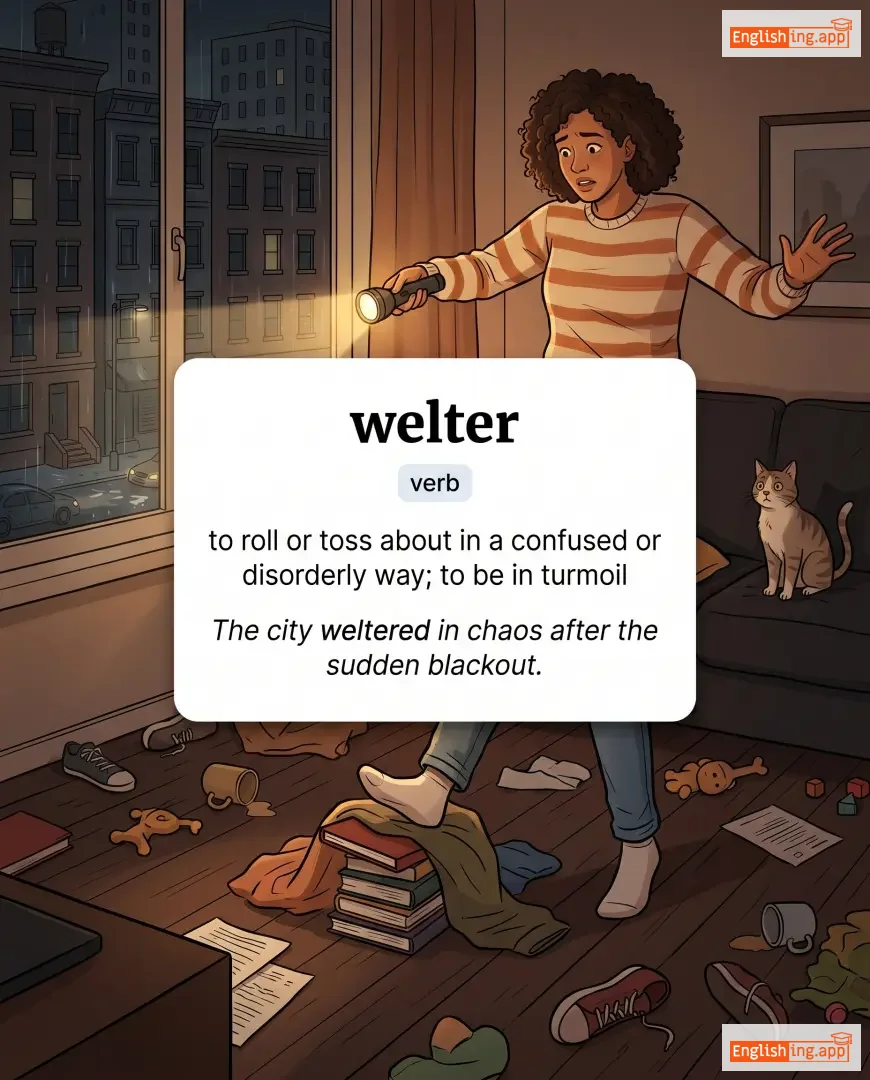
welter definition card — visual illustration of the meaning
verb
/ˈwɛltər/
крутиться в хаосе (krutit'sya v khaose)

to roll or toss about in a confused or disorderly way; to be in turmoil

"The city weltered in chaos after the sudden blackout."

"Город погрузился в хаос после внезапного отключения электроэнергии." (Gorod pogruzilsya v khaos posle vnezapnogo otklyucheniya elektrichestva.)
🌕

Wax

verb
/wæks/

to increase gradually in size, number, strength, or intensity

"The moon will wax until it becomes full."
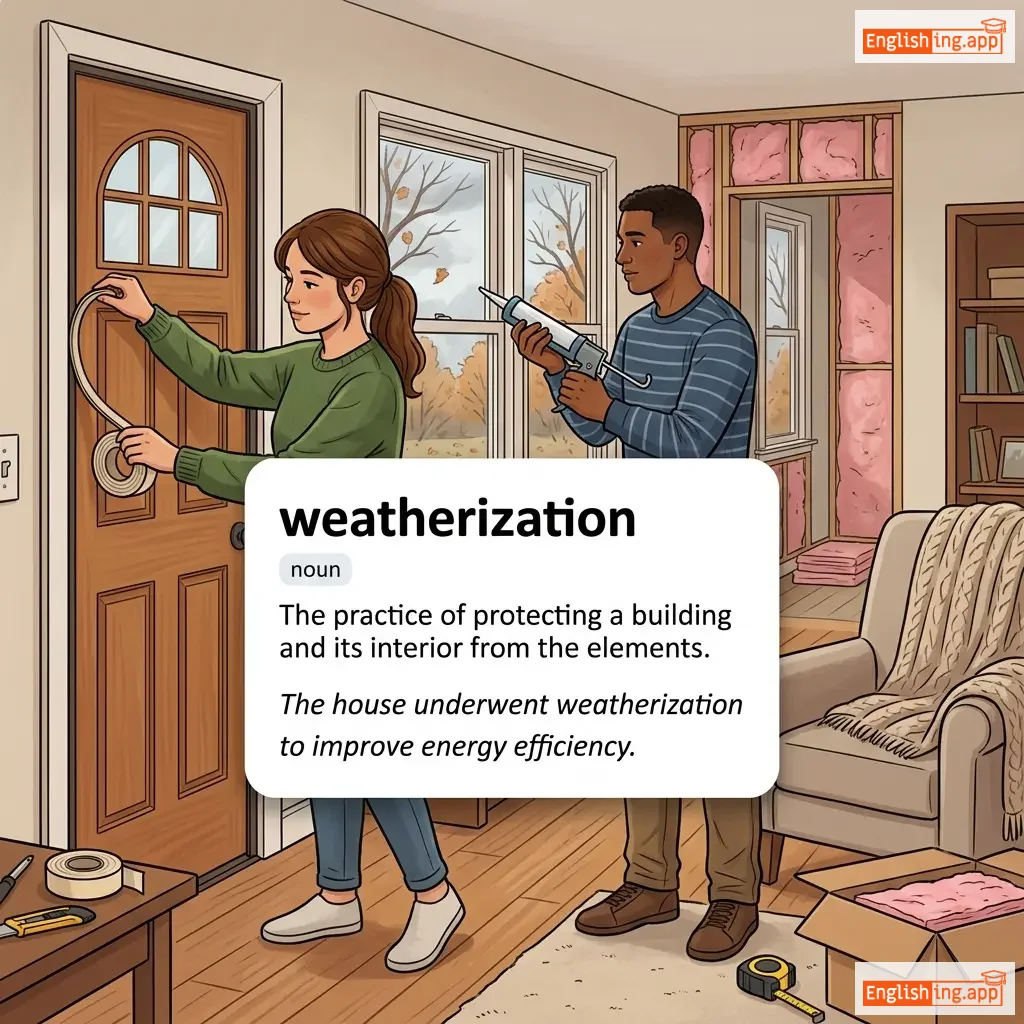
weatherization definition card — visual illustration of the meaning
noun
ˌwɛðəraɪˈzeɪʃən
метеоизоляция (meteoizolyatsiya)

The practice of protecting a building and its interior from the elements.

"The house underwent weatherization to improve energy efficiency."

"Дом прошел через процесс метеоизоляции для повышения энергоэффективности." (Dom proshel cherez protsess meteoizolyatsii dlya povysheniya energoeffektivnosti.)
adjective
/ˈwɒŋki/
нестабильный; ненадежный; не работает должным образом (wonki)

unstable; unreliable; not working properly

"The old chair was wonky and wobbled every time someone sat on it."

"Старый стул был нестабильным и качался каждый раз, когда кто-то на него садился." (Staryy stul byl nestabil'nym i kachalsya kazhdyy raz, kogda kto-to na nego sadilsya)
adjective
/ˈwɪtləs/
глупый (glupyy)

lacking intelligence or good sense

"It was a witless decision to leave the door unlocked."
"Это было глупое решение оставить дверь незапертой." (Eto bylo glupoye resheniye ostavit' dver' nezapertoy.)
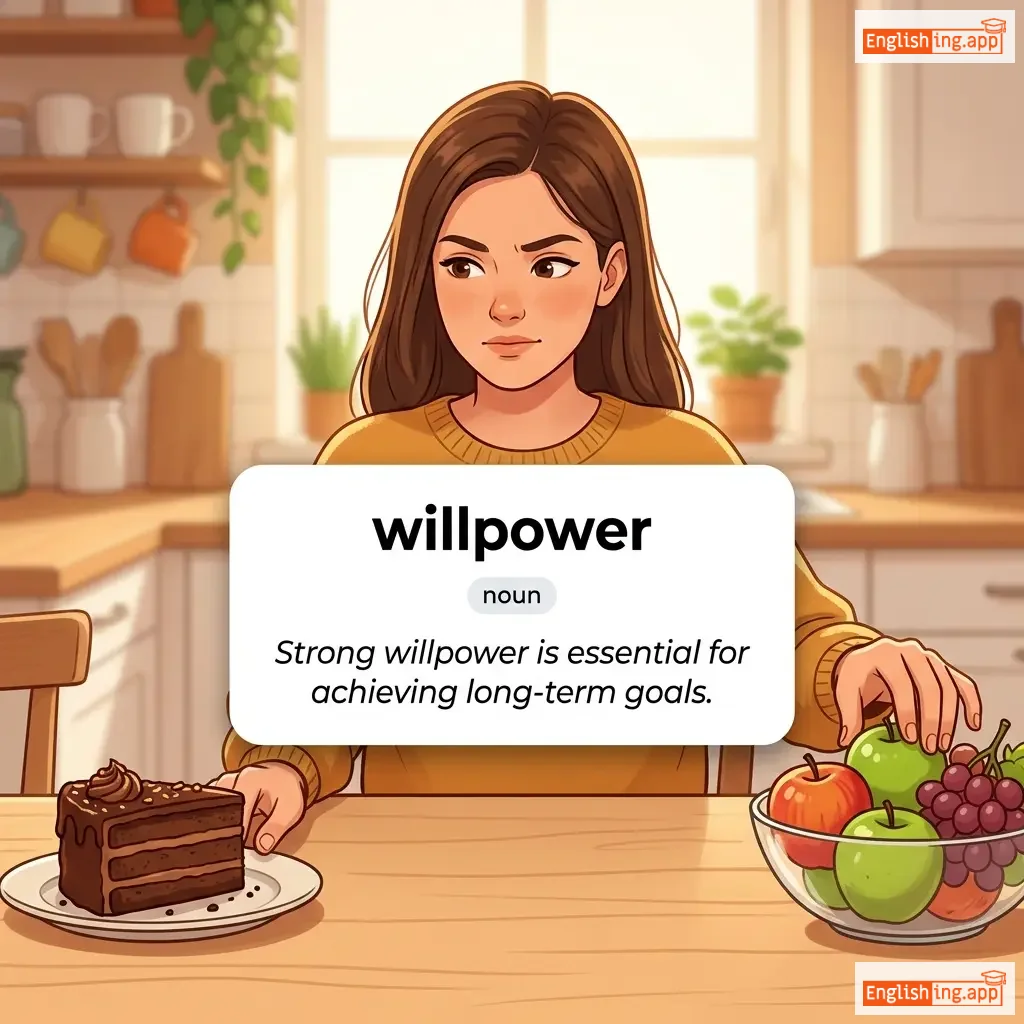
willpower definition card — visual illustration of the meaning
noun
ˈwɪl.paʊər
сила воли (sila voli)

The ability to control your thoughts and actions in order to achieve what you want to do.

"Strong willpower is essential for achieving long-term goals."

"Сильная сила воли необходима для достижения долгосрочных целей." (Sil'naya sila voli neobkhodima dlya dostizheniya dolgoročnykh tseley.)
noun
/voʊˈsɪfərəns/
кричать громко (krichat' gromko)

the act of shouting or making a loud outcry

"The vociferance of the protesters filled the streets."
"Воксиферанс протестующих заполнил улицы." (Voksifrans protestuyushchikh zapolnil ulitsy.)
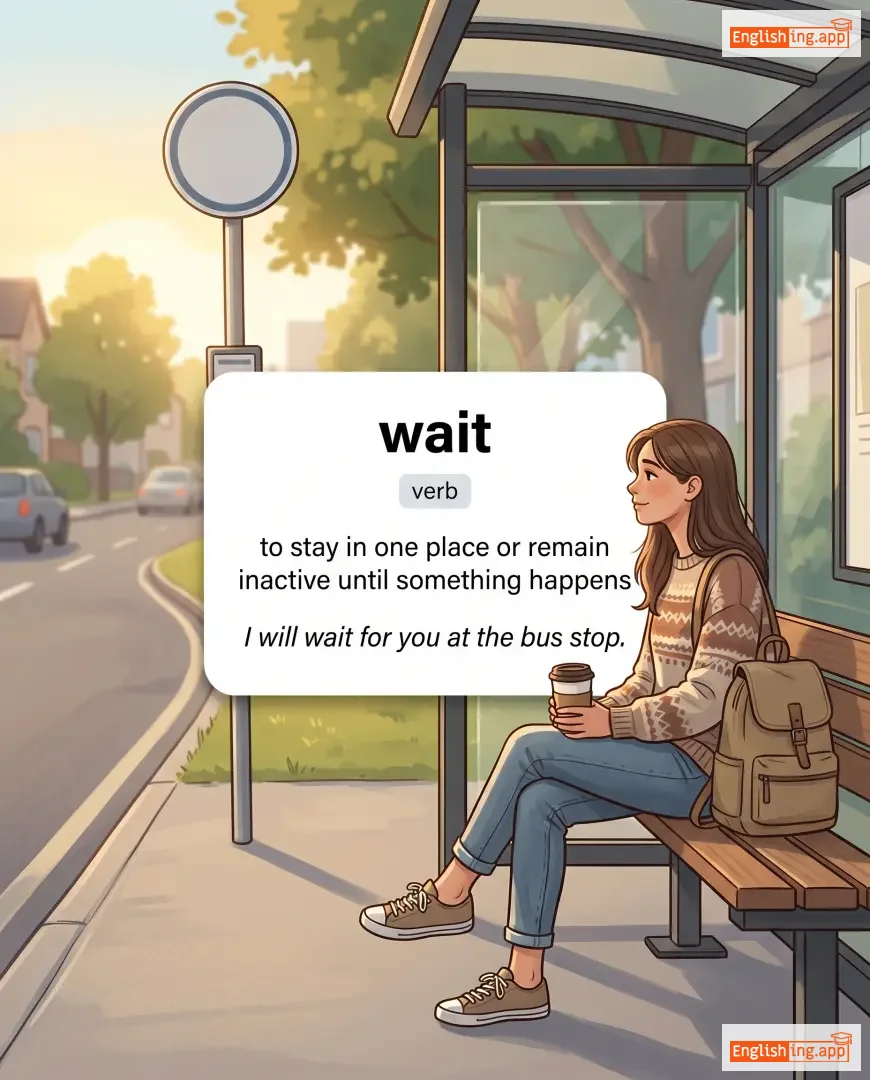
wait definition card — visual illustration of the meaning
verb
/weɪt/
ждать (zhdat')

to stay in one place or remain inactive until something happens

"I will wait for you at the bus stop."
"Я буду ждать тебя на автобусной остановке." (Ya budu zhdat' tebya na avtobusnoy ostanovke.)
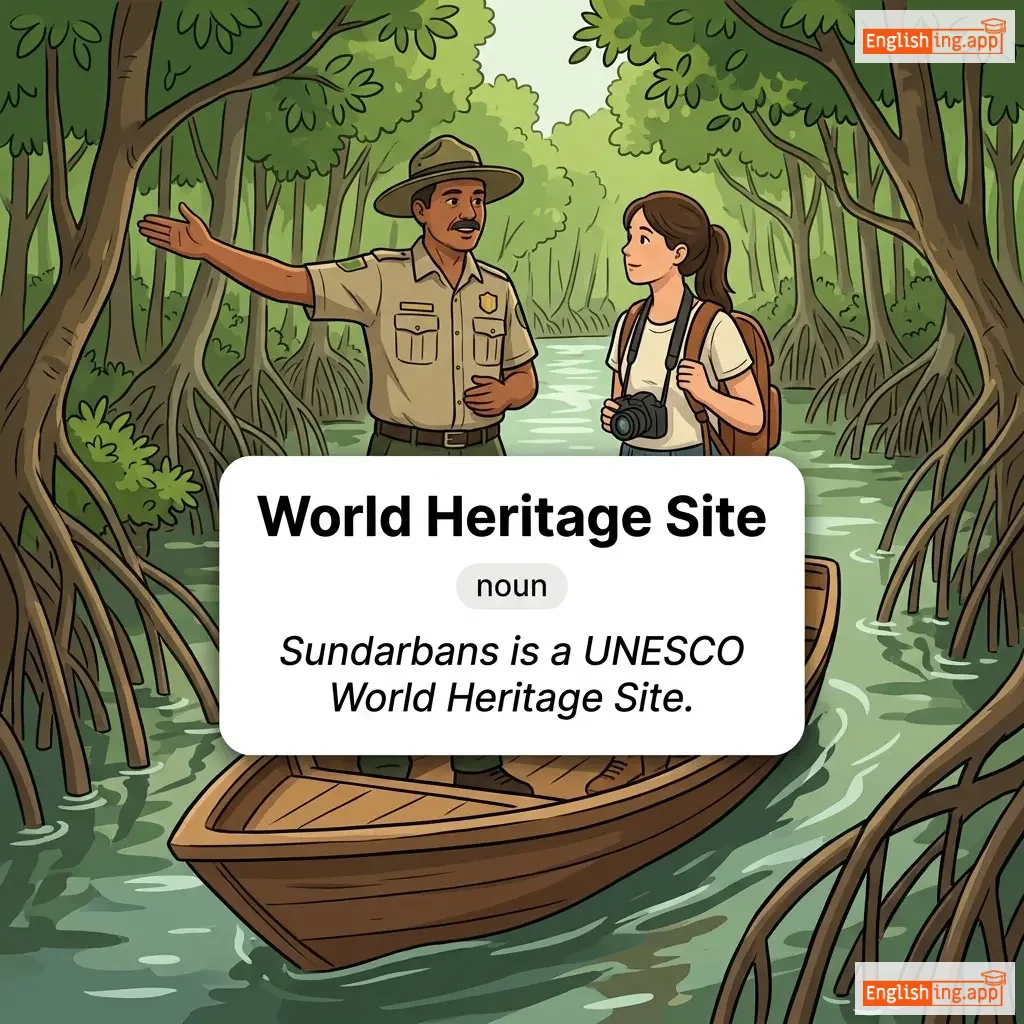
World Heritage Site definition card — visual illustration of the meaning
noun
wɜːrld ˈhɛrɪtɪdʒ saɪt
Объект всемирного наследия (Ob'ekt vsemyrnogo naslediya)

A landmark or area selected by UNESCO for having cultural, historical, scientific or other form of significance.

"Sundarbans is a UNESCO World Heritage Site."

"Сундарбаны — это объект всемирного наследия ЮНЕСКО." (Sundarbany — eto ob'ekt vsemyrnogo naslediya YUNESKO.)
noun
/ˈwɔː.tər hen/
водяная курица (vodyanaya kuritsa)

a waterbird with dark plumage that lives near ponds and wetlands

"The water hen swam gracefully across the pond."

"Водяная курица плавала грациозно по пруду." (Vodyanaya kuritsa plavala gratsiozno po prudu.)
noun
/wɜːrd/
слово (slovo)

a single distinct meaningful element of speech or writing

"He looked up the word in the dictionary."

"Он нашел слово в словаре." (On nashel slovo v slovare.)
viva voce definition card — visual illustration of the meaning
noun
ˈvaɪ.və ˈvəʊs
устный экзамен (ustnyy ekzamen)

An oral examination, typically for an academic qualification.

"Viva Voce tests communication skills."

"Экзамен Viva Voce оценивает коммуникативные навыки." (Ekzamen Viva Voce otsenivayet kommunikativnye navyki.)
adjective
/ˈwɜːrkɪŋ/
работающий (rabotayushchiy)

engaged in physical or mental effort to achieve a goal or task

"She is working on her project right now."

"Она сейчас работает над своим проектом." (Ona seychas rabotayet nad svoim proyektom.)
adjective
/ˈwaɪə.ləs/
беспроводной; без проводов (bēspravazdnoy; bēz prōvodōv)

operating without wires; using radio waves for communication

"My wireless headphones provide excellent sound quality without any cables."

"Мои беспроводные наушники обеспечивают отличное качество звука без проводов." (Moyi bēspravazdnoy naushniki obespechivayut otlichnoye kachestvo zvuka bēz prōvodōv.)
noun, verb
/wɪl/
воля (volya)

expressing future tense or intention; a legal document

"She will attend the meeting tomorrow."
"Она будет присутствовать на встрече завтра." (Ona budet prisutstvovat na vstreche zavtra.)
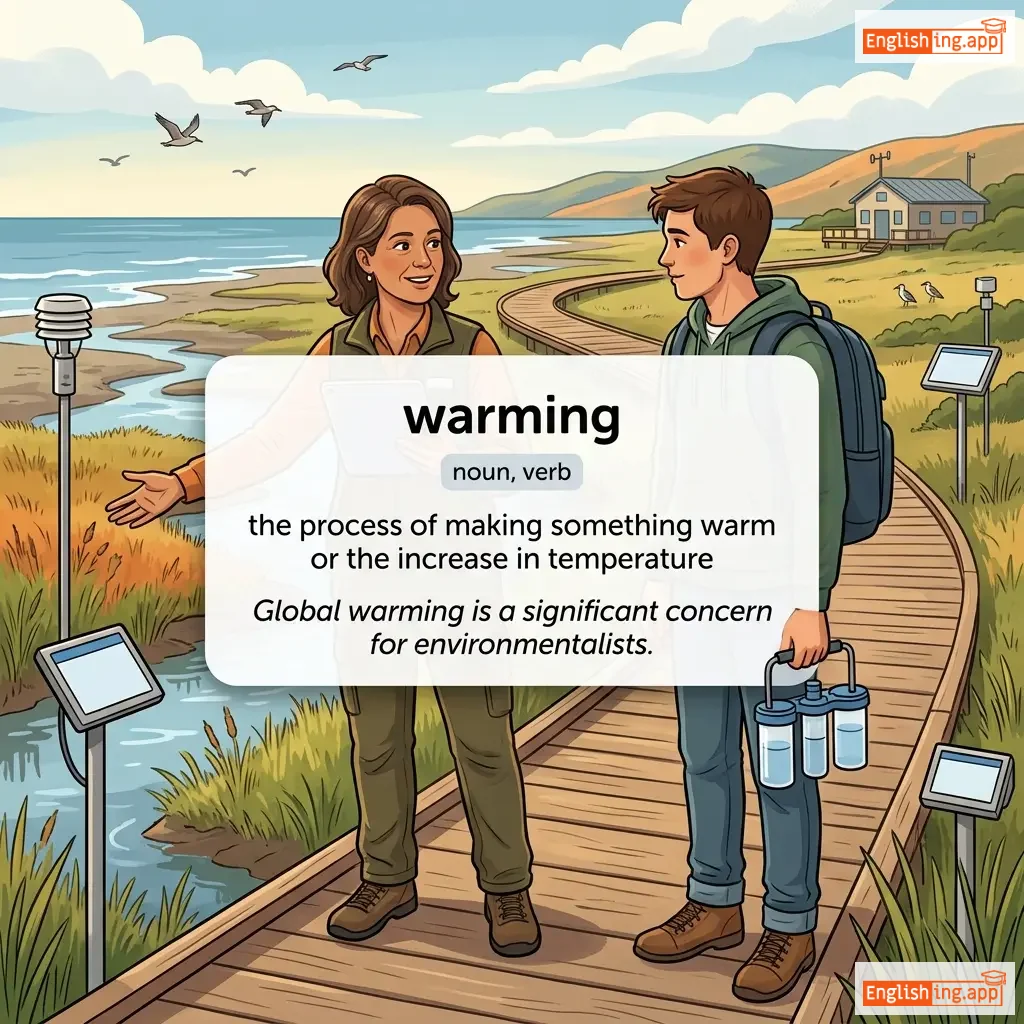
warming definition card — visual illustration of the meaning
noun, verb
/ˈwɔːmɪŋ/
повышение температуры (povyshenie temperatury)

the process of making something warm or the increase in temperature

"Global warming is a significant concern for environmentalists."

"Глобальное потепление — это серьезная проблема для экологов." (Globalnoe poteplenie — eto ser'yezhnaya problema dlya ekologov.)
verb
/ˈvaʊtʃ.seɪf/
даровать (darovat')

to grant or give something in a gracious or condescending manner

"He vouchsafed them a rare smile."

"Он вручил им редкую улыбку." (On vruchil im redkuyu ulybku.)
noun
/wɪsp/
небольшой пучок или кусок (nebol'shoy puchok ili kusok)

A small thin or twisted bunch, piece, or amount of something.

"A wisp of smoke rose from the chimney."

"Вспышка дыма поднялась из трубы." (Vspyshka dyma podnyalas' iz truby.)
noun
/ˈwɒrənti/
гарантия (garantiya)

A written guarantee given by a manufacturer or seller promising to repair or replace a product if necessary within a specified period.

"The laptop comes with a two-year warranty."

"Ноутбук поставляется с двухлетней гарантией." (Noutbuk postavlyaetsya s dvukhletney garantiyei.)
adjective; noun; gerund
/ˈwɪnɪŋ/
победный (pobednyy)

achieving victory or success; attractive or pleasing in a way that brings success

"She has a winning attitude that inspires the whole team."

"У неё победный настрой, который вдохновляет всю команду." (U nee pobednyy nastroy kotoryy vdokhnovlyaet vsyu komandu)
adjective
/ˈwɜːkmənˌlaɪk/
практичный (praktichny)

Showing efficient, competent, and practical skill, but without flair or creativity.

"The carpenter delivered a workmanlike performance on the project."

"Плотник продемонстрировал практичное исполнение на проекте." (Plotnik prodyusiroval praktichnoe ispolnenie na proyekte.)
noun
/ˈwɪzərd/
волшебник (volshebnik)

a man who is supposed to have magical powers; a person who is very skilled in a particular area

"The wizard performed amazing magic tricks."
"Волшебник проделал потрясающие фокусы." (Volshebnik prodelal potryasayushchie fokusy.)
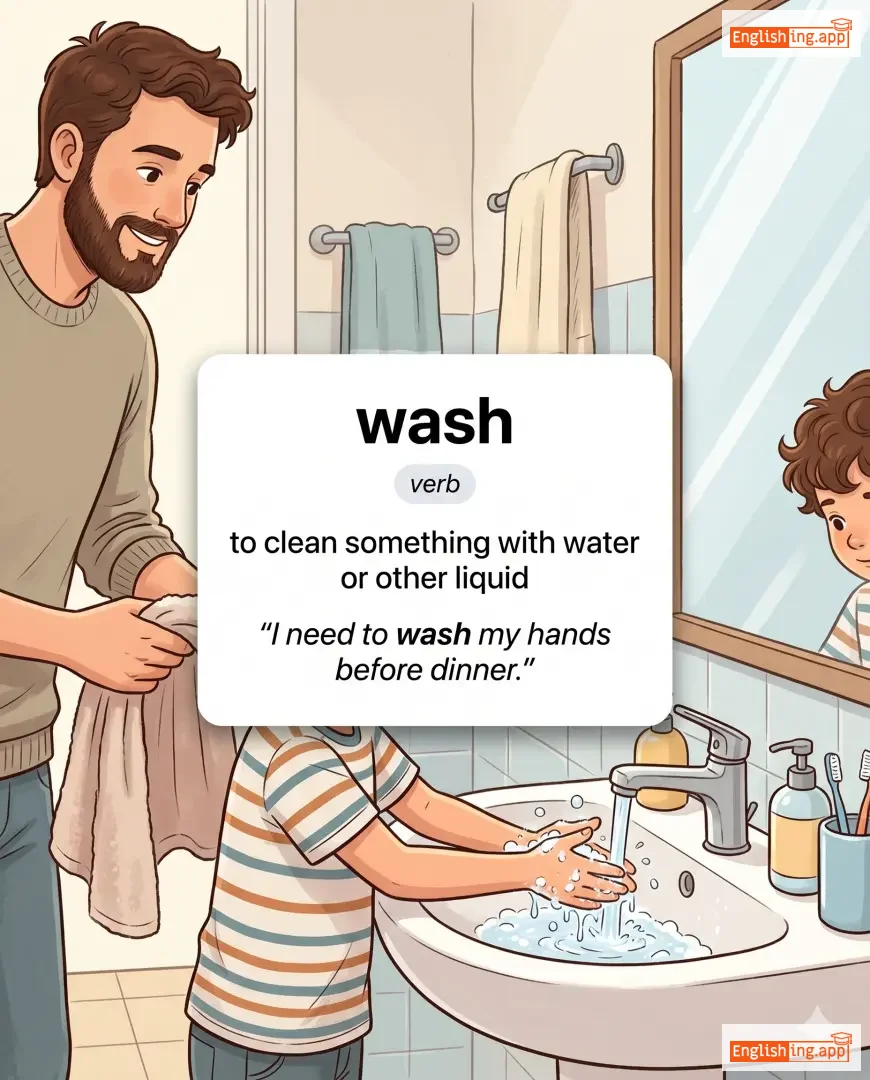
wash definition card — visual illustration of the meaning
verb
/wɒʃ/
мыть (myt)

to clean something with water or other liquid

"I need to wash my hands before dinner."

"Мне нужно помыть руки перед ужином." (Mne nuzhno pomyt' ruki pered uzhinom.)
noun
/wɜːrd fɔːrˈmeɪʃən/
словообразование (slovoobrazovanie)

the process by which new words are created or existing words are modified in a language

"Word formation helps learners understand how new vocabulary develops in English."

"Словообразование важно для изучения языка." (slovoobrazovanie vazhno dlya izucheniya yazyka)
adjective
/ˈwɪnsəm/
привлекательный (privlekatel'nyy)

pleasant and attractive in a fresh, innocent, or charming way

"Her winsome smile instantly put the nervous guests at ease."

"Её привлекательная улыбка сразу же успокоила нервных гостей." (Yeyo privlekatelnaya ulybka srazu zhe uspokoyila nervnykh gostey.)
adjective
/waɪz/
мудрый (mudryj)

having or showing experience, knowledge, and good judgment

"It was wise of him to save money for the future."
"Ему было мудро сохранить деньги на будущее." (Emu bylo mudro sokhranit' dengi na budushchee.)
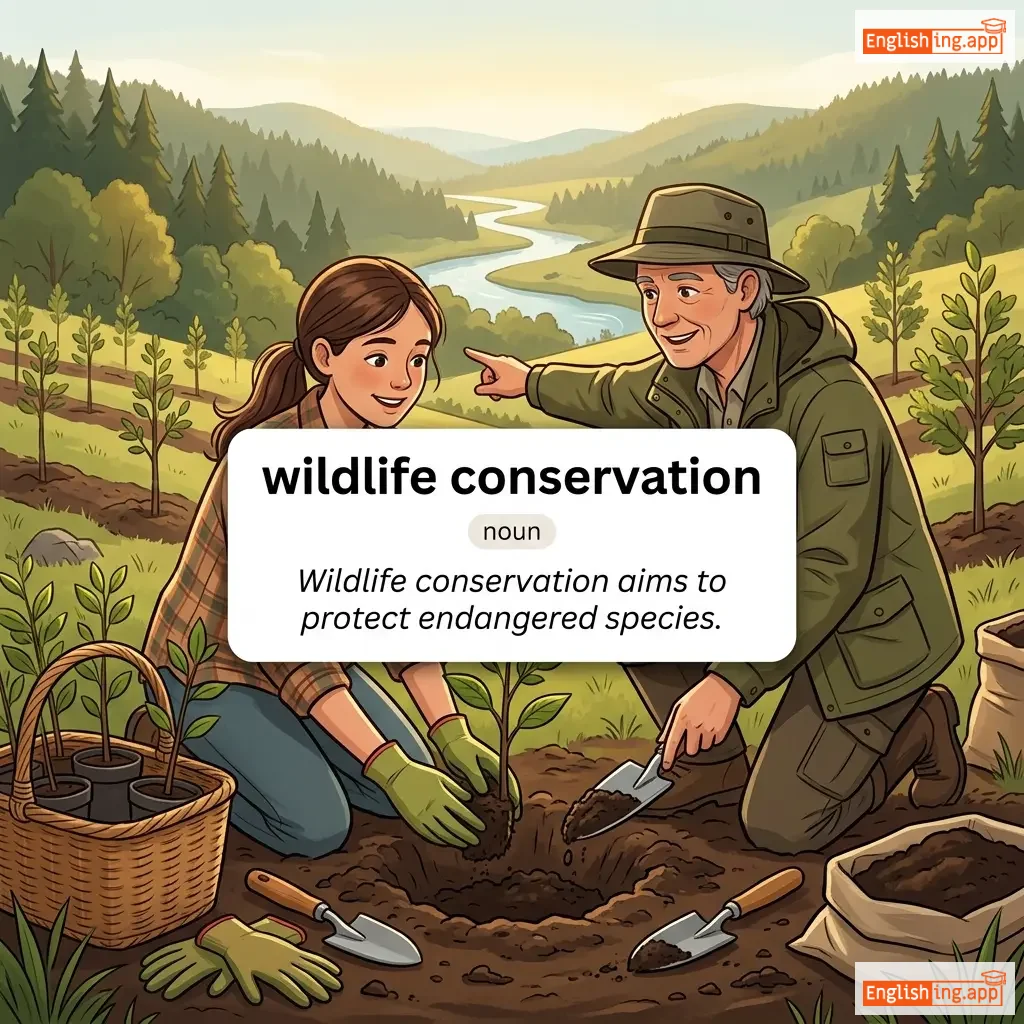
wildlife conservation definition card — visual illustration of the meaning
noun
/ˈwaɪld.laɪf ˌkɒnsərˈveɪʃən/
сохранение дикой природы (soxranenie dikoy prirody)

The practice of protecting wild animal species and their habitats in order to maintain healthy wildlife species or populations and to restore, protect or enhance natural ecosystems.

"Wildlife conservation aims to protect endangered species."

"Сохранение дикой природы направлено на защиту исчезающих видов." (Soxranenie dikoy prirody napravleno na zashchitu ishchizayushchikh vidov.)
adjective
/ˈwaɪəri/
худой, крепкий и выносливый (khudoy, krepkij i vynoslivyj)

Lean, tough, and strong, often with sinewy muscles.

"The wiry athlete moved with remarkable speed and agility."
"Этот худой атлет двигался с невероятной скоростью и ловкостью." (Etot khudoy atlet dvigalsya s neveroyatnoj skorost'yu i lovkost'yu.)
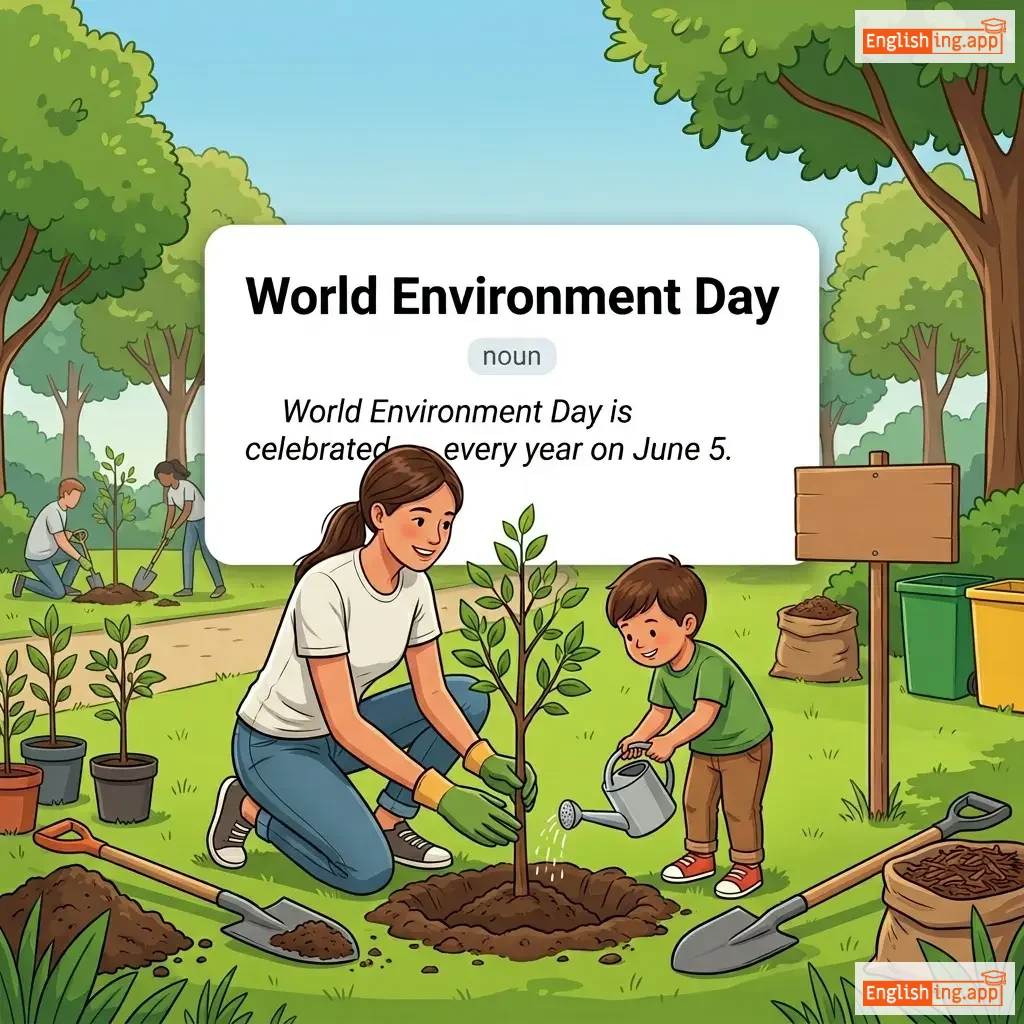
World Environment Day definition card — visual illustration of the meaning
noun
/wɜːrld ɪnˈvaɪrənmənt deɪ/
Всемирный день охраны окружающей среды (Vsemirnyy den' okhrany okruzhayushchey sredy)

An annual global event celebrated on June 5 to raise awareness about environmental protection and encourage action for environmental conservation.

"World Environment Day is celebrated every year on June 5."

"Всемирный день охраны окружающей среды отмечается каждый год 5 июня." (Vsemirnyy den' okhrany okruzhayushchey sredy otmechayetsya kazhdyy god 5 iyunya.)
adjective
/ˈvoʊlənt/
летучий (letuchiy)

able to fly or moving swiftly

"The volant bird soared gracefully across the sky."

"Летучая птица грациозно взмыла в небо." (Letuchaya ptitsa gratsiozno vzmyla v nebo.)
noun
/wʊd ˈæp.əl/
деревянное яблоко (derevyannoye yabloko)

a hard-shelled tropical fruit with aromatic pulp used in beverages and medicine

"The wood apple has a hard shell but sweet pulp inside."

"Деревянное яблоко имеет твердую кожуру, но внутри сладкая мякоть" (Derevyannoye yabloko imeyet tverdoy kozhurom, no vnutri sladkaya myakot)
adjective
/ˈvɑːljəbl/
болтливый (boltlivyy)

Speaking or spoken incessantly and fluently.

"She became more voluble as the evening progressed."

"Она стала более болтливой по мере того, как вечер продвигался." (Ona stala boleye boltlivoy po mere togo, kak vecher prodvigalsya.)
adjective
/ˈvɒkətɪv/
вокатив (vokativ)

relating to a case in grammar used for directly addressing someone

"In Latin, the vocative case is used when directly calling someone by name."

"В латинском языке вокатив используется для прямого обращения к кому-то по имени." (V latinskom yazyke vokativ ispol'zuyetsya dlya pryamogo obrashcheniya k komu-to po imeni.)
wish definition card — visual illustration of the meaning
verb
/wɪʃ/
желать (zhelat')

to desire something or hope for something to happen

"I wish you all the best in your new job."

"Я желаю тебе всего наилучшего в новой работе." (Ya zhelayu tebe vsego nailuchshego v novoy rabote.)
vow definition card — visual illustration of the meaning
noun
/vaʊ/
клятва (klyatva)

a solemn promise or assertion, typically one made publicly

"They took a vow to always support each other."

"Они дали клятву всегда поддерживать друг друга." (Oni dali klyatvu vsegda podderzhivat' drug druga.)
noun
/waɪn/
вино (vino)

an alcoholic drink made from fermented grapes or other fruits

"They served a glass of red wine at the dinner."
"Они подали бокал красного вина на ужин." (Oni podali bokal krasnogo vina na uzhin.)
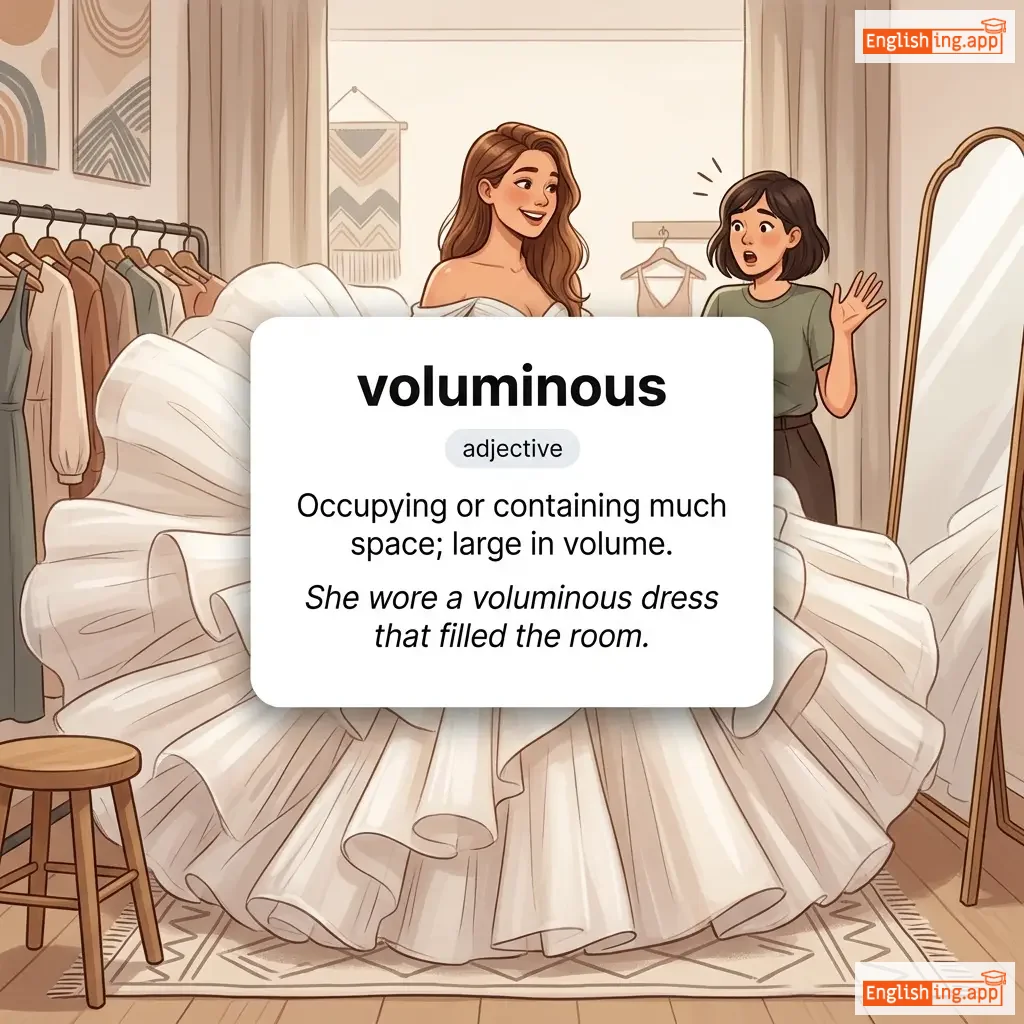
voluminous definition card — visual illustration of the meaning
adjective
/vəˈluːmənəs/
объемный (obyomny)

Occupying or containing much space; large in volume.

"She wore a voluminous dress that filled the room."
"Она носила объемное платье, которое заполнило комнату." (Ona nosila obyomnoye plat'ye, kotoroye zapolnilo komnatu.)
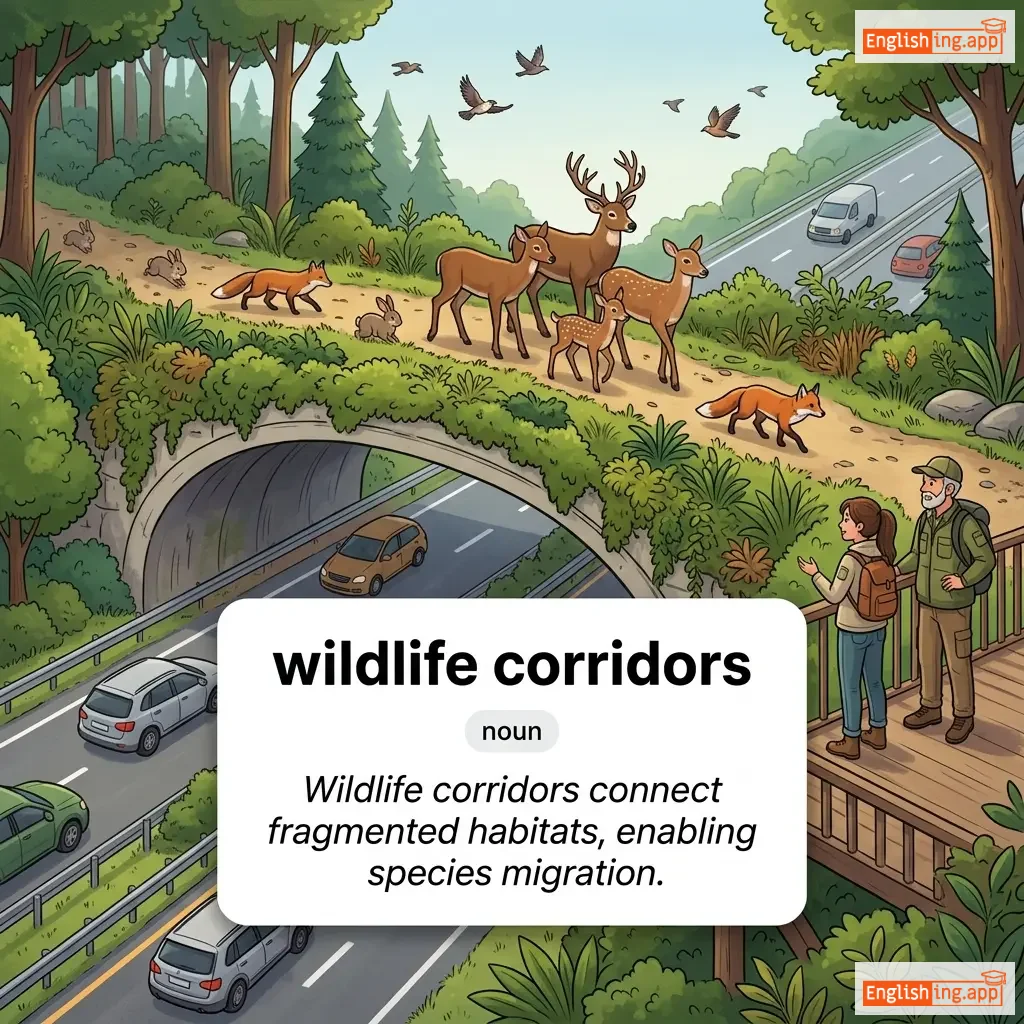
wildlife corridors definition card — visual illustration of the meaning
noun
ˈwaɪldlaɪf ˈkɔːrɪdɔːrz
коридоры дикой природы (koridory dikoy prirody)

Areas of habitat connecting wildlife populations separated by human activities or structures.

"Wildlife corridors connect fragmented habitats, enabling species migration."

"Коридоры дикой природы соединяют фрагментированные среды, позволяя миграцию видов." (Koridory dikoy prirody soyedinyayut fragmentirovannyye sredy, pozvolyayu migratsiyu vidov.)
verb
/vaʊtʃ/
поручиться (poruchit'sya)

to confirm or assert the truth or reliability of something

"I can vouch for his honesty."

"Я могу поручиться за его честность." (Ya mogu poruchit'sya za yego chestnost'.)
adjective
/ˈwʌndərfəl/
замечательный (zamechatel'nyy)

extremely good or impressive

"She had a wonderful time at the party."

"Она прекрасно провела время на вечеринке." (Ona prekrasno provela vremya na vecherinke.)
noun
/ˈwɪlɪŋnəs/
готовность (gotovnost)

the quality of being prepared or ready to do something

"Her willingness to help others made her very popular."

"Ее готовность помогать другим сделала ее очень популярной." (Eyo gotovnost' pomogat' drugym sdelala eyo ochen' popularnoy.)
noun
/ˈwɜːrkər/
работник (rabotnik)

a person who is employed to perform tasks or duties

"The workers were busy building the bridge."

"Рабочие были заняты строительством моста." (Rabochie byli zanyaty stroitel'stvom mosta.)
verb
/wɪns/
морщиться от боли (morshchitsya ot boli)

To make an involuntary movement of the face or body as a result of pain or distress.

"He winced when the doctor touched his injured arm."

"Он поморщился, когда доктор коснулся его раненой руки." (On pomorshchilsya, kogda doktor kosnulsya ego ranneoy ruki.)
noun
/ˈwiːknəs/
слабость (slabost)

a state of being weak; a flaw or shortcoming in character or structure

"His main weakness is his lack of patience."

"Его главная слабость — это отсутствие терпения." (Ego glavnaia slabost' — eto otsutstvie terpeniia.)
noun
/ˈwɪntər/
зима (zima)

the coldest season of the year, typically from December to February in the Northern Hemisphere

"Winter in the north can be very harsh with heavy snowfall."

"Зима на севере может быть очень суровой, с сильными снегопадами." (Zima na severe mozhet byt' ochen' surovoy, s sil'nymi snego-padami.)
noun
/ˈwaɪər/
провод (provod)

a thin, flexible thread of metal used to conduct electricity or connect things

"The electrician fixed the wire to restore the power."

"Электрик починил провод, чтобы восстановить питание." (Elektrik pochinit provod, chtoby vosstanovit pitaniye.)
verb
/wɛd/
жениться (zhenit'sya)

to marry someone; to enter into a marriage

"They decided to wed in a small ceremony by the beach."

"Они решили пожениться на маленькой церемонии на пляже." (Oni reshilis' pozhinit'sya na malen'koy tseremonii na plyazhe.)
preposition
/wɪðˈaʊt/
без (bez)

in the absence of, or not having something

"He left without saying goodbye."

"Он ушел, не попрощавшись." (On ushel, ne poproshchavshis'.)