Vocabulaires

Découvrez, apprenez et maîtrisez le vocabulaire anglais

adjective
/ˈvoʊtɪv/
votif (votif)

Offered or dedicated in fulfillment of a vow.

"She lit a votive candle in the church as a prayer."

"Elle a allumé une bougie votive dans l'église comme prière." (Elle a allumé une bougie votive dans l'église comme prière.)
adjective
/ˈvɪvɪd/
vif (vif)

producing strong, clear, and detailed images in the mind; strikingly bright or intense

"She gave a vivid description of her childhood home."

"Elle a donné une description vive de sa maison d'enfance." (Elle a donne une description vive de sa maison d'enfance.)
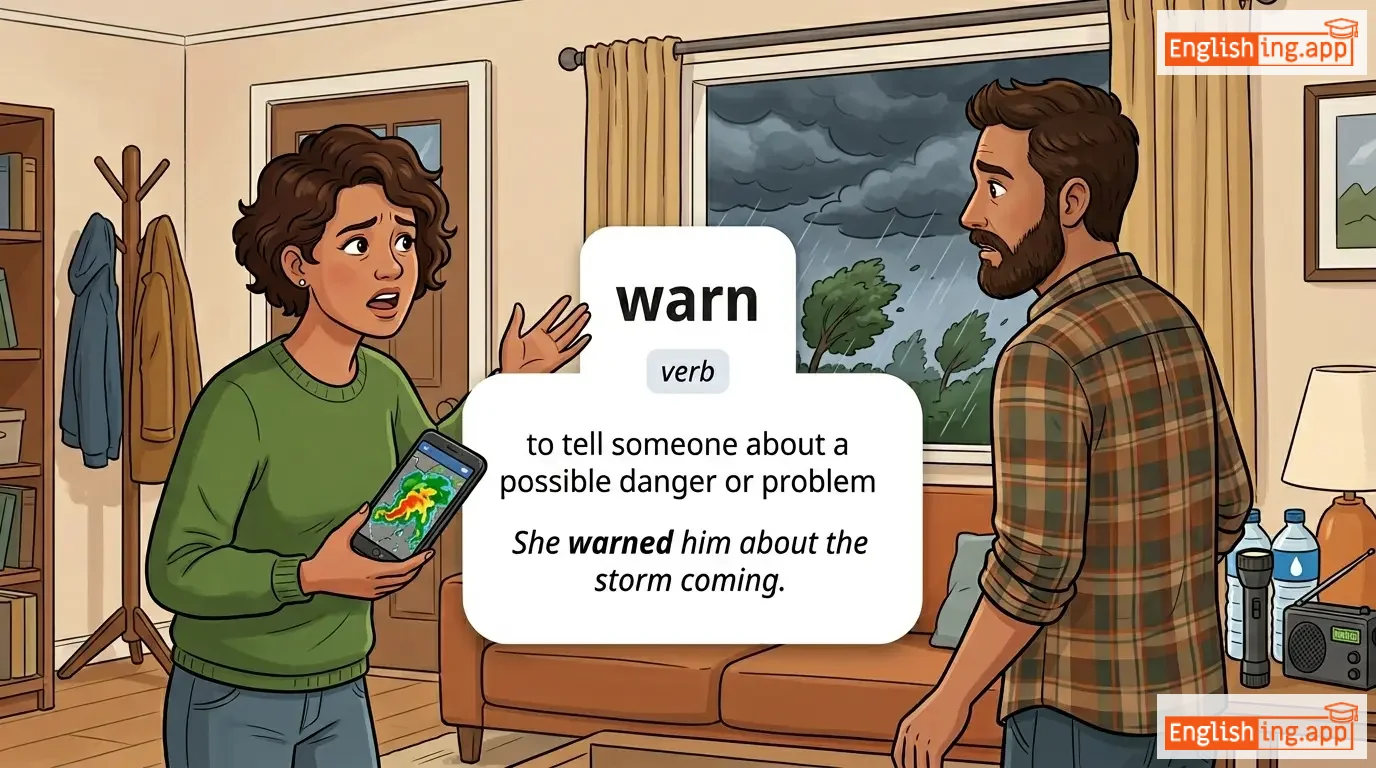
warn definition card — visual illustration of the meaning
verb
/wɔːrn/
avertir (avertir)

to tell someone about a possible danger or problem

"She warned him about the storm coming."

"Elle lui a averti de la tempête qui arrivait." (Elle lui a averti de la tempête qui arrivait.)
adjective
/ˈwɜːrldwaɪd/
mondial (mondial)

extending or reaching throughout the whole world

"The company has achieved worldwide recognition for its products."

"L'entreprise a obtenu une reconnaissance mondiale pour ses produits." (L'entreprise a obtenu une reconnaissance mondiale pour ses produits.)
verb
/wiːv/
tisser (tisser)

to make cloth by interlacing threads or to combine elements into a whole

"She weaves beautiful patterns on her loom."

"Elle tisse de beaux motifs sur son métier à tisser." (Elle tisse de beaux motifs sur son métier à tisser.)
noun
/ˈvʌl.tʃər/
vautour (vautour)

a large bird of prey that feeds mainly on carrion

"The vulture circled overhead, waiting for its prey."

"Le vautour volait en cercles au-dessus, attendant sa proie." (Le vautour volait en cercles au-dessus, attendant sa proie.)
🏋️‍♀️

workout (wɜːrkaʊt)

noun
/ˈwɜːrkaʊt/
exercice (exercice)

a session of physical exercise or training to improve fitness or health

"She does a full-body workout every morning before work."

"Elle fait un entraînement complet du corps chaque matin avant de travailler." (Elle fait un entrainement complet du corps chaque matin avant de travailler.)
noun
/wɔːrd/
salle (salle)

A separate room in a hospital for patients; also a division of a city or a person under guardianship.

"She was admitted to the children's ward."

"Elle a été admise dans la salle des enfants." (Elle a ete admise dans la salle des enfants.)
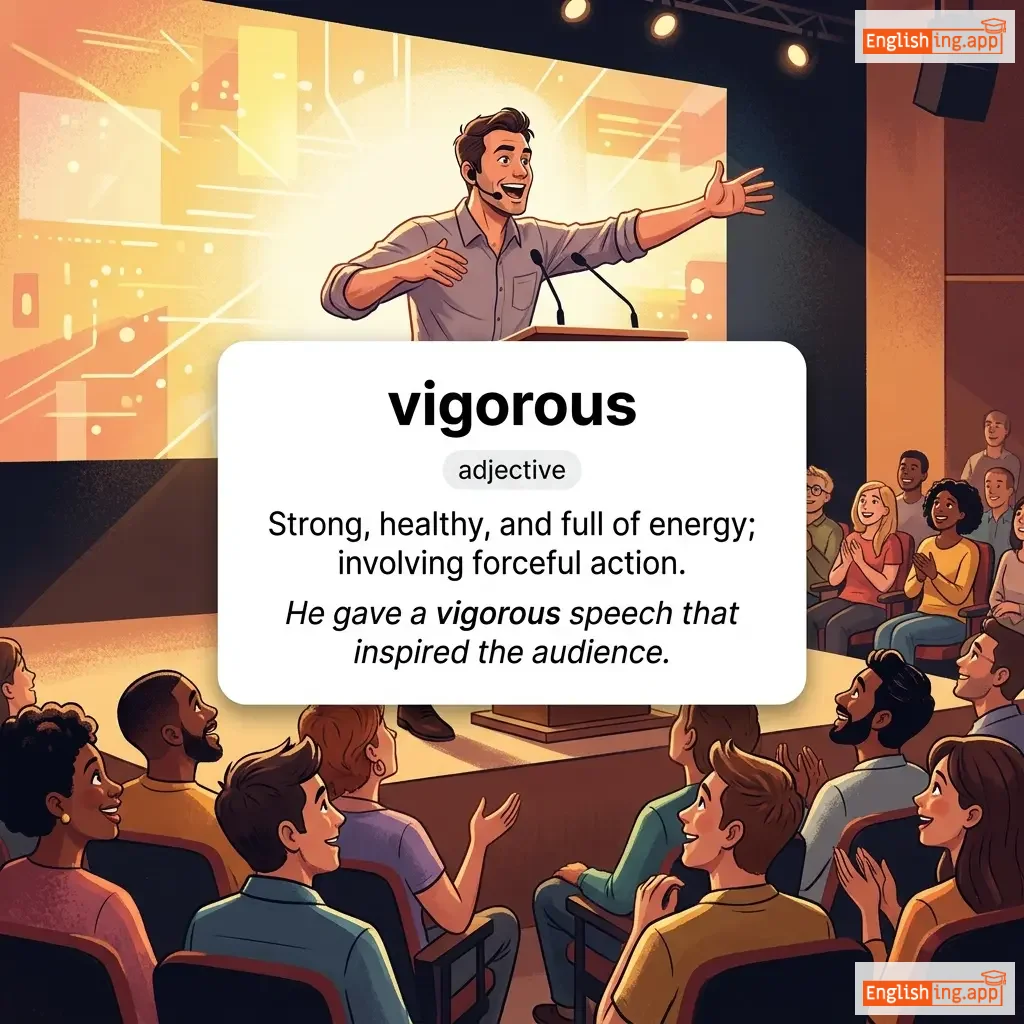
vigorous definition card — visual illustration of the meaning
adjective
/ˈvɪɡərəs/
vigoureux (vigo-rou)

Strong, healthy, and full of energy; involving forceful action.

"He gave a vigorous speech that inspired the audience."

"Il a donné un discours vigoureux qui a inspiré le public." (Il a donne un discours vigoureux qui a inspire le public.)
noun
/ˈvjuːpɔɪnt/
point de vue (point de vue)

a particular attitude or way of considering a matter

"From his viewpoint, the situation was hopeless."

"Depuis son point de vue, la situation était désespérée." (Depuis son point de vue, la situation était désespérée.)
adjective
/ʌnˈlaɪkli/
improbable (improbable)

not likely to happen or be true

"It is unlikely that he will arrive on time."

"Il est peu probable qu'il arrive à l'heure." (Il est peu probable qu'il arrive à l'heure.)
verb
/ˈvɪlɪfaɪ/
bonheur (bonheur)

to speak or write about someone in an abusive or disparaging manner

"The politician was vilified in the media for his controversial remarks."

"Elle n'a pas pu cacher son bonheur lorsqu'elle a reçu le prix." (Elle n'a pas pu cacher son bonheur lorsqu'elle a reçu le prix.)
noun
/vɪˈsɪn.ə.ti/
proximité; voisinage (vicinite)

the area near or surrounding a particular place; neighborhood

"There are many shops in the vicinity of the school."

"Il y a beaucoup de magasins près de l'école." (Il y a beaucoup de magasins pres de l'ecole.)
adjective
/ˈvɪndɪkeɪtɪv/
vindicatif (vindicatif)

showing a tendency to vindicate or justify; inclined to defend

"Her vindicative tone showed that she strongly believed in her innocence."

"Son ton vindicatif montrait qu'elle croyait fermement en son innocence." (Son ton vindicatif montrait qu'elle croyait fermement en son innocence.)
noun
/vaɪs/
vice (vice)

immoral or wicked behavior; a weakness in someone's character

"Greed is a vice that can destroy lives."

"L'avidité est un vice qui peut détruire des vies." (L'avidité est un vice qui peut détruire des vies.)
noun
/ˈvɪdiəʊ/
vidéo (video)

a recording of moving visual images made digitally or on film

"She watched the video of her favorite concert online."

"Elle a regardé la vidéo de son concert préféré en ligne." (Elle a regarde la video de son concert prefere en ligne.)
noun
/ˈvaɪsrɔɪ/
Viceroy (Viceroy)

a ruler exercising authority on behalf of a sovereign in a colony or province

"The viceroy governed the colony in the king's name."

"Le vice-roi gouvernait la colonie au nom du roi." (Le vice-roi gouvernait la colonie au nom du roi.)
verb
/ʌnˈmɑːsk/
démasquer (demasquer)

to remove a mask or covering; to reveal the true identity, nature, or intentions of someone or something

"The investigation helped unmask the real culprit behind the crime."

"L’enquête a permis de démasquer le vrai coupable du crime." (Lenquete a permis de demasquer le vrai coupable du crime)
verb
/vaɪ/
concurrencer (concurrencer)

To compete eagerly with someone in order to do or achieve something.

"Several companies are vying for the contract."

"Plusieurs entreprises sont en compétition pour le contrat." (Plusieurs entreprises sont en compétition pour le contrat.)
adjective
/vɪkˈtɔː.ri.əs/
victorieux (victorieux)

having won a victory; successful in a struggle or contest

"The victorious team celebrated their championship win with great joy."

"L'équipe victorieuse a célébré leur victoire en championnat avec une grande joie." (L'équipe victorieuse a célébré leur victoire en championnat avec une grande joie.)
noun
/ˈvaɪnəri/
vignoble (vignoble)

A place where vines are cultivated, especially a vineyard or greenhouse for vines.

"The old vinery was filled with grapevines."

"Le vieux vignoble était rempli de vignes." (Le vieux vignoble était rempli de vignes.)
verb
/ʌnˈlɒk/
déverrouiller (deverrouiller)

to open something that is locked; to make something accessible or available

"She used the key to unlock the door."

"Elle a utilisé la clé pour déverrouiller la porte." (Elle a utilise la cle pour deverrouiller la porte)
noun
/ˈvɪktɪm/
victime (victime)

a person who suffers harm, injury, or death due to an event or action

"The victim of the accident was taken to the hospital immediately."

"La victime de l'accident a été emmenée à l'hôpital immédiatement." (La victime de l'accident a été emmenée à l'hôpital immédiatement.)
noun
/vɪm/
vigueur (vigueur)

energy and enthusiasm

"She performed the dance with great vim and vigor."

"Elle a exécuté la danse avec une grande vigueur et énergie." (Elle a execute la danse avec une grande vigueur et energie.)
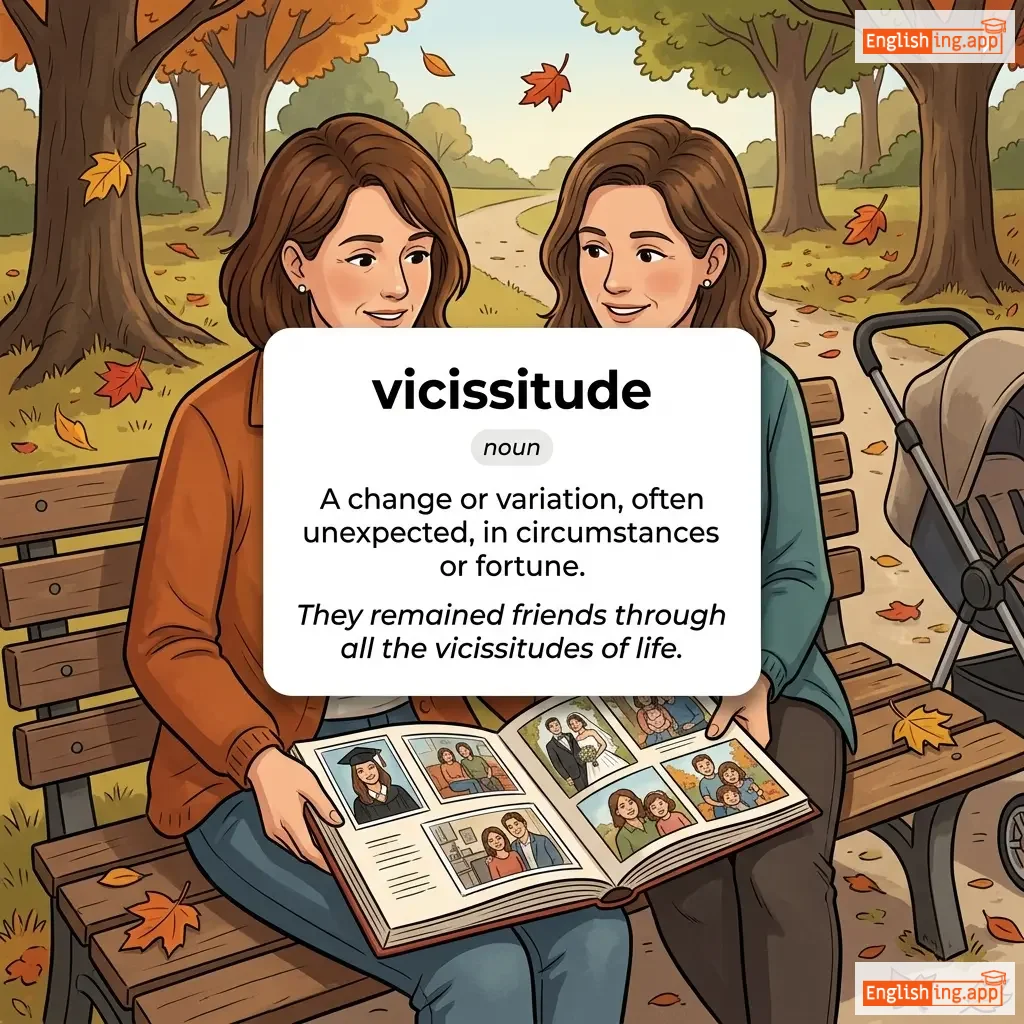
vicissitude definition card — visual illustration of the meaning
noun
/vɪˈsɪsɪtjuːd/
vicissitude (vicissitude)

A change or variation, often unexpected, in circumstances or fortune.

"They remained friends through all the vicissitudes of life."

"Ils sont restés amis à travers toutes les vicissitudes de la vie." (Ils sont restés amis à travers toutes les vicissitudes de la vie.)
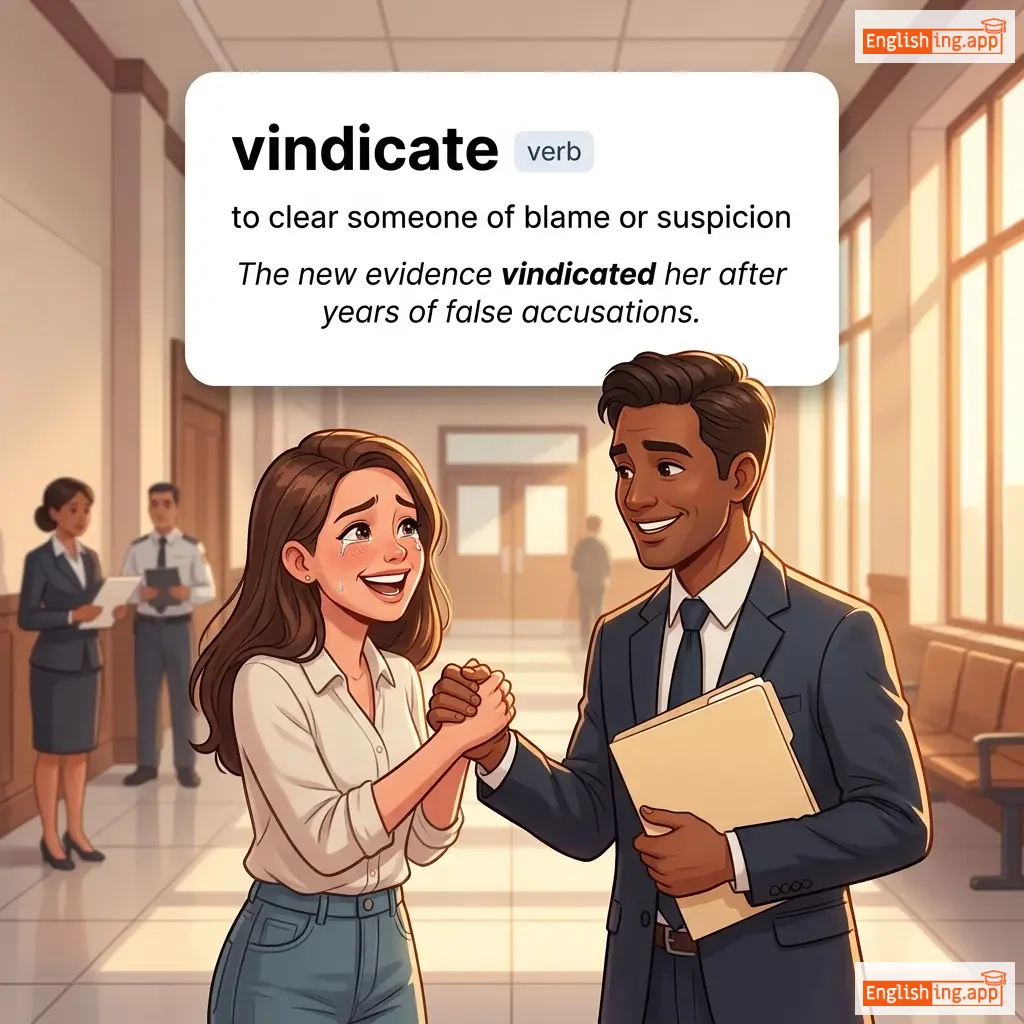
vindicate definition card — visual illustration of the meaning
verb
/ˈvɪndɪkeɪt/
réhabiliter (rehabiliter)

to clear someone of blame or suspicion

"The new evidence vindicated her after years of false accusations."

"Les nouvelles preuves l'ont réhabilitée après des années de fausses accusations." (Les nouvelles preuves l'ont rehabilitee apres des annees de fausses accusations.)
adjective
/ˈvɪndɪkətɔːri/
vindicatif (vindicatif)

Serving to justify, clear of blame, or defend.

"His vindicatory remarks restored his reputation."

"Ses remarques vindicatoires ont restauré sa réputation." (Ses remarques vindicatoires ont restauré sa réputation.)
adjective
/ʌnˈmænɪdʒəbəl/
ingérable; hors de contrôle (ingerable; hors de controle)

difficult or impossible to control or handle

"The large class became unmanageable without proper supervision."

"La grande classe est devenue ingérable sans une supervision adéquate." (La grande classe est devenue ingerable sans une supervision adequate.)
adjective
/vaɪˈkɛəriəs/
bonheur (bonheur)

experienced through the feelings or actions of another person

"She felt vicarious excitement watching her son win the award."

"Elle ne pouvait cacher son bonheur lorsqu'elle a reçu le prix." (Elle ne pouvait cacher son bonheur lorsqu'elle a recu le prix.)
noun
/vaɪˈbreɪ.ʃən/
vibration (vibration)

a rapid back and forth movement; oscillation

"The phone's vibration woke me up."

"La vibration du téléphone m'a réveillé." (La vibration du telephone m'a reveille.)
adjective
/ˈvɪʃəs/
vicieux (vicieux)

Deliberately cruel, violent, or immoral.

"The dog gave a vicious growl when the stranger approached."

"Le chien a émis un grognement vicieux lorsque l'étranger s'est approché." (Le chien a émis un grognement vicieux lorsque l'étranger s'est approché.)
noun
/ˈvɪn.ɪ.ɡər/
vinaigre (vinaigre)

a sour liquid made from fermented alcohol, used for cooking and preserving

"I added vinegar to the salad dressing for extra flavor."

"J'ai ajouté du vinaigre à la vinaigrette pour plus de saveur." (J'ai ajouté du vinaigre à la vinaigrette pour plus de saveur.)
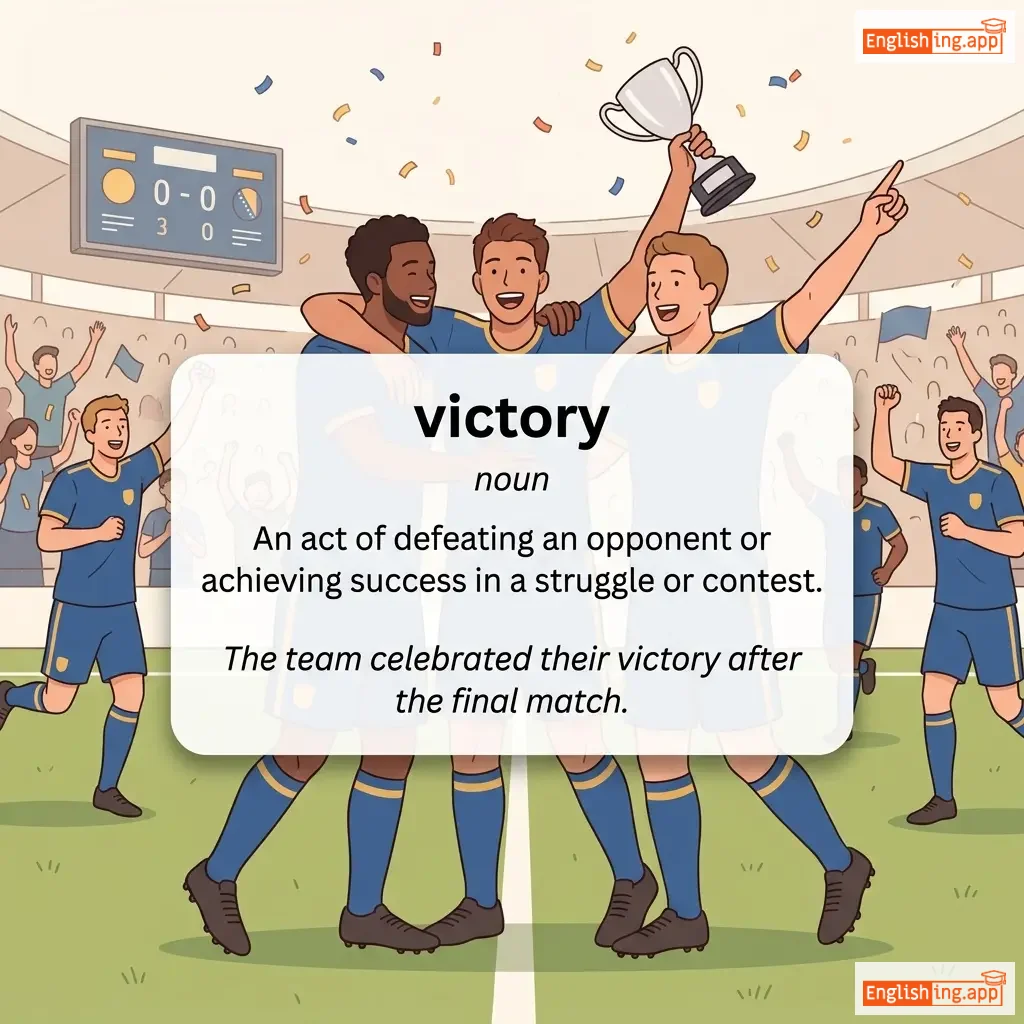
victory definition card — visual illustration of the meaning
noun
/ˈvɪktəri/
victoire (victoire)

An act of defeating an opponent or achieving success in a struggle or contest.

"The team celebrated their victory after the final match."

"L'équipe a célébré leur victoire après le match final." (L'équipe a célébré leur victoire après le match final.)
verb
/ˈvɪktɪmaɪz/
victimiser (victimiser)

To make someone a victim, often by treating them unfairly or cruelly.

"The corrupt officials victimized the poor villagers."

"Les fonctionnaires corrompus ont victimisé les pauvres villageois." (Les fonctionnaires corrompus ont victimisé les pauvres villageois.)
noun
/ˈvɪtəlz/
vivres (vivres)

Food or provisions, especially for human consumption.

"The travelers packed enough victuals for their long journey."

"Les voyageurs ont emballé suffisamment de vivres pour leur long voyage." (Les voyageurs ont emballé suffisamment de vivres pour leur long voyage.)
noun
/ˈvɪərər/
spectateur (spectateur)

a person who watches something, especially television or video content

"The viewer is able to switch channels with the remote control."

"Le spectateur peut changer de chaîne avec la télécommande." (Le spectateur peut changer de chaîne avec la télécommande.)
noun
/ˈvɪlɪdʒ/
village (village)

a small community or group of houses in a rural area

"They live in a small village surrounded by mountains."

"Ils vivent dans un petit village entouré de montagnes." (Ils vivent dans un petit village entoure de montagnes.)
noun
/vɪnˈjɛt/
vignette (vignette)

A short, descriptive piece of writing or a brief scene.

"The author included a poignant vignette in the introduction of the book."

"L'auteur a inclus une vignette poignante dans l'introduction du livre." (L'auteur a inclus une vignette poignante dans l'introduction du livre.)
noun
/vaɪn/
vigne (vigne)

a climbing or trailing plant with long stems; a plant that produces grapes

"The vine climbed up the wall and covered it with green leaves."

"La vigne a grimpé le long du mur et l’a couvert de feuilles vertes." (la vigne a grimpe le long du mur et la couvert de feuilles vertes)
adjective
/ˈvjuː.ləs/
invisible; sans opinions (invisible; san opinyon)

invisible; having no views or opinions

"The ghost remained viewless to most people in the haunted house."

"Le fantôme est resté invisible pour la plupart des gens dans la maison hantée." (Le fantôme est resté invisible pour la plupart des gens dans la maison hantée.)
adjective
/ˈvɪnsəbl/
vincible (vincible)

capable of being overcome or defeated

"The enemy seemed vincible after losing their main base."

"L'ennemi semblait vincible après avoir perdu sa base principale." (L'ennemi semblait vincible après avoir perdu sa base principale.)
noun/adjective
/ˈvɪntɪdʒ/
vintage / classique (vintage / classique)

Relating to high quality from the past; classic; also the year of a wine harvest.

"She wore a vintage dress from the 1950s."

"Elle portait une robe vintage des années 1950." (Elle portait une robe vintage des annees 1950.)
noun
/ˈvɪɡ.ər/
force physique et bonne santé; effort, énergie et enthousiasme (vigour)

physical strength and good health; effort, energy, and enthusiasm

"She approached her work with renewed vigour after the vacation."

"Après les vacances, elle a abordé son travail avec un nouveau vigoureux élan." (apres les vacances, elle a aborde son travail avec un nouveau vigoureux elan.)
adjective
/ʌnˈmærid/
célibataire (celibataire)

Not married; single.

"He is thirty-five and still unmarried."

"Il a trente-cinq ans et il est toujours célibataire." (Il a trente-cinq ans et il est toujours célibataire.)
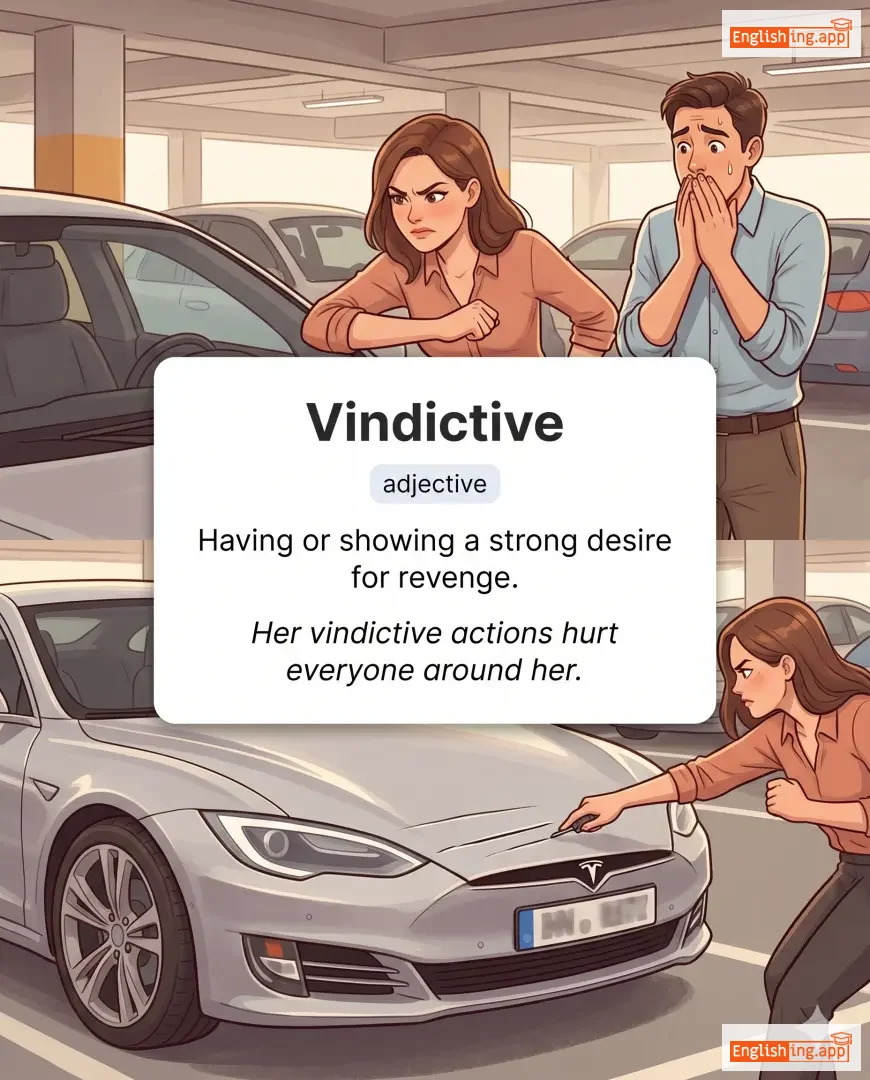
Vindictive definition card — visual illustration of the meaning
adjective
/vɪnˈdɪktɪv/
vengatif (vengatif)

Having or showing a strong desire for revenge.

"Her vindictive actions hurt everyone around her."

"Ses actions vengatives ont blessé tout le monde autour d'elle." (Ses actions vengatives ont blessé tout le monde autour d'elle.)
noun
/ˈvɪɡər/
vigueur (vigueur)

Physical strength, energy, or enthusiasm.

"She tackled the project with great vigor and determination."

"Elle a abordé le projet avec une grande vigueur et détermination." (Elle a abordé le projet avec une grande vigueur et détermination.)
adjective
/ʌnˈmaɪndfəl/
négligent; inattentif; (neglijant; inattentif)

not paying attention; careless; heedless

"She was unmindful of the danger around her."

"Elle ne faisait pas attention au danger autour d'elle." (Elle ne faisait pas attention au danger autour d'elle.)
adjective
/ʌnˈlɪmɪtɪd/
illimité (illimite)

without any limits or restrictions

"The internet plan offers unlimited data for the whole month."

"Le plan Internet offre des données illimitées pendant tout le mois." (Le plan Internet offre des données illimitées pendant tout le mois.)
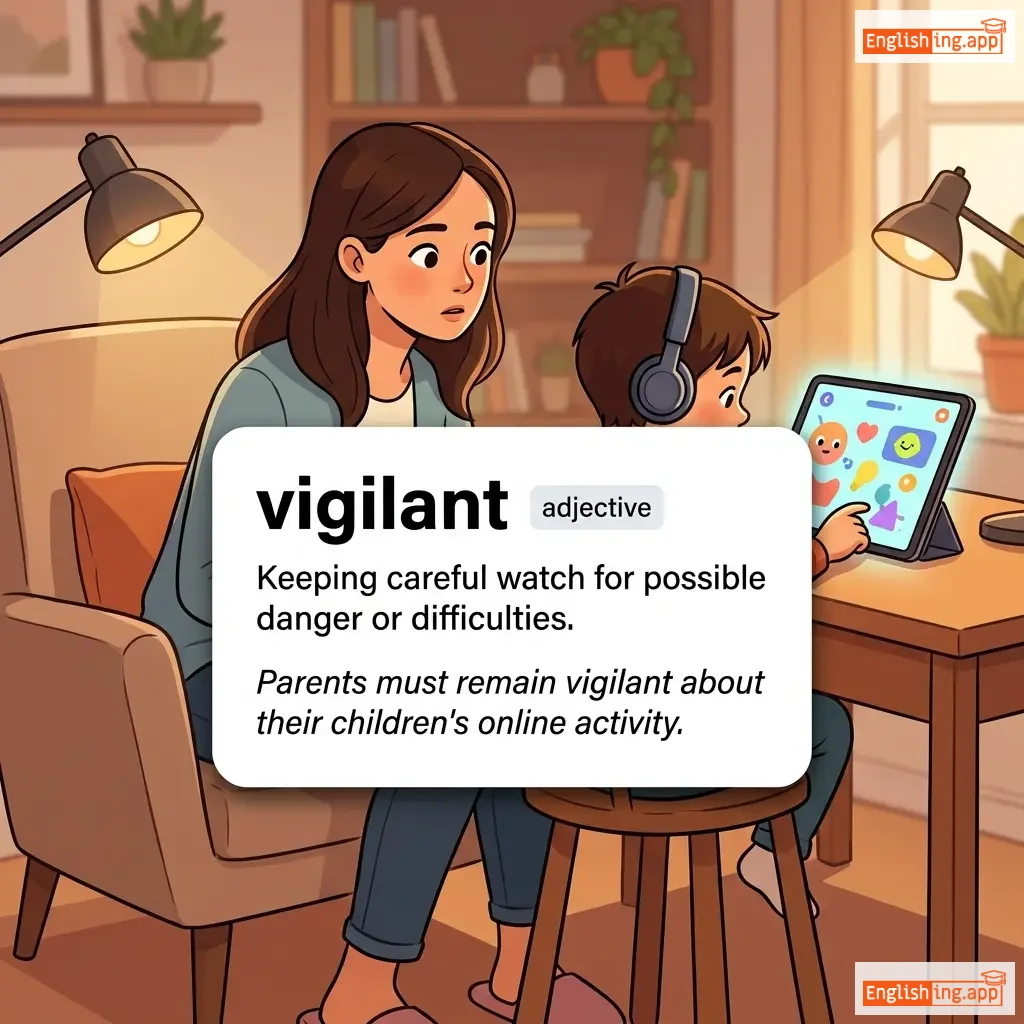
vigilant definition card — visual illustration of the meaning
adjective
/ˈvɪdʒɪlənt/
vigilant (vigilant)

Keeping careful watch for possible danger or difficulties.

"Parents must remain vigilant about their children's online activity."

"Les parents doivent rester vigilants face aux activités en ligne de leurs enfants." (Les parents doivent rester vigilants face aux activités en ligne de leurs enfants.)
adjective
/ʌnˈlʌki/
malchanceux; de mauvaise chance (malchanceux; de mauvaise chance)

having bad luck; unfortunate

"He was unlucky to miss the winning shot."

"Il était malchanceux de manquer le tir gagnant." (Il était malchanceux de manquer le tir gagnant.)