Vocabularios

Descubra, aprenda y domine el vocabulario en inglés

adjective
/ˌwɛlˈbrɛd/
bien educado (bien educado)

Having or showing good manners; properly raised.

"She is a well-bred young lady with excellent manners."

"Ella es una joven bien educada con excelentes modales." (Ella es una joven bien educada con excelentes modales.)
noun
/weɪl/
ballena (bah-yeh-nah)

a very large marine mammal that lives in the ocean

"We saw a huge whale swimming near the boat."

"Vimos una enorme ballena nadando cerca del bote." (Vimos una enorme ballena nadando cerca del bote.)
noun
/ˈwel.wɪʃ.ər/
bienhechor (bienhechor)

a person who desires happiness or success for another

"Many well-wishers came to congratulate her on her graduation."

"Muchos bienhechores vinieron a felicitarla por su graduación." (Muchos bienhechores vinieron a felicitarla por su graduación.)
noun
/ˈwɛlfɛr/
bienestar (bienestar)

the health, happiness, and fortunes of a person or group

"The government provides welfare to low-income families."

"El gobierno proporciona bienestar a las familias de bajos ingresos." (El gobierno proporciona bienestar a las familias de bajos ingresos.)
noun
/ˈwɒʃ.ɪŋ məˌʃiːn/
lavadora (uashing masheen)

a machine for washing clothes and other textiles

"The washing machine broke down and needs repair."

"La lavadora se averió y necesita reparación." (la lavadora se averio y necesita reparacion)
noun
/wiːt/
trigo (trigo)

a cereal plant whose grain is used to make flour for bread and other foods

"Farmers harvested the wheat in early summer."

"Los agricultores cosecharon el trigo a principios del verano." (Los agricultores cosecharon el trigo a principios del verano.)
noun
/ˈwɒrənti/
garantía (garantia)

A written guarantee given by a manufacturer or seller promising to repair or replace a product if necessary within a specified period.

"The laptop comes with a two-year warranty."

"El portátil viene con una garantía de dos años." (El portatil viene con una garantia de dos anos.)
noun
/wiːl/
felicidad (felicidad)

A raised mark on the skin left after a blow; or general well-being and prosperity.

"The charity worked for the common weal of the community."

"Ella no pudo ocultar su felicidad cuando recibió el premio." (Ella no pudo ocultar su felicidad cuando recibio el premio.)
adjective
/ˈwɪərɪsəm/
agotador (agotador)

Causing one to feel tired or bored.

"The long and wearisome lecture put the students to sleep."

"La larga y agotadora conferencia hizo que los estudiantes se durmieran." (La larga y agotadora conferencia hizo que los estudiantes se durmieran.)
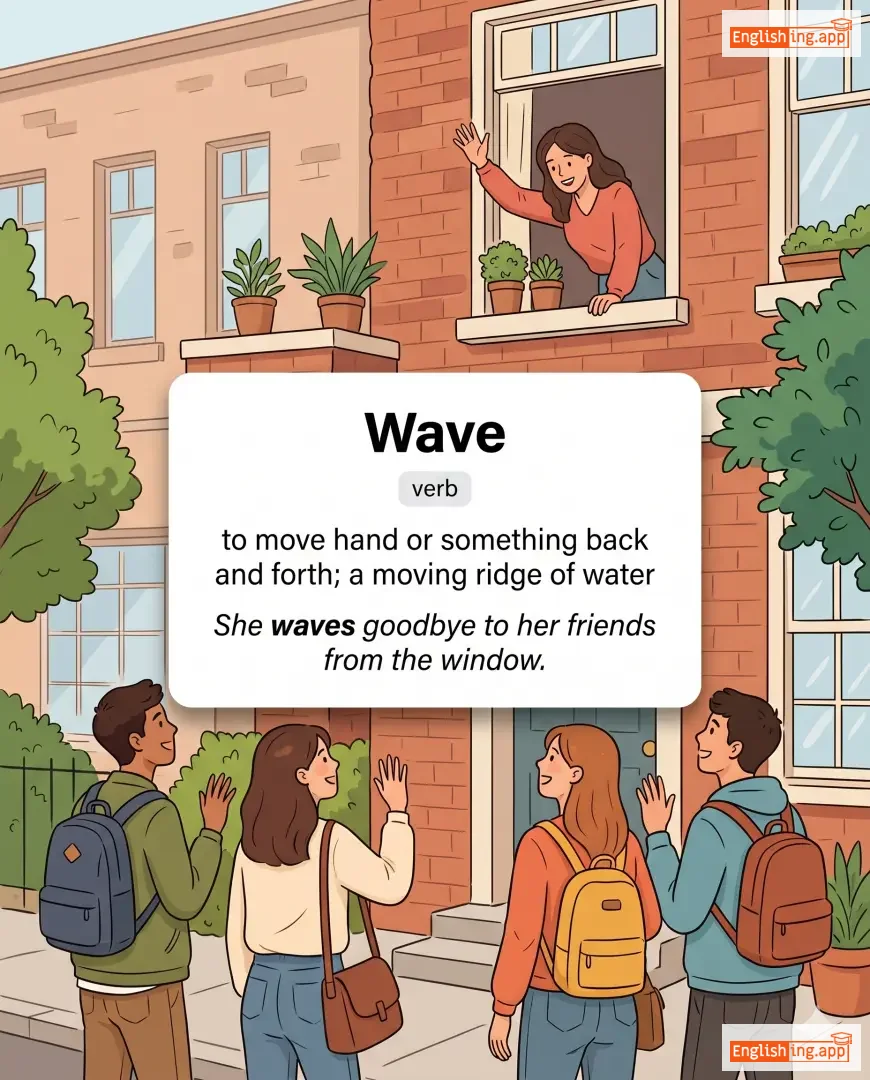
Wave definition card — visual illustration of the meaning
noun
/weɪv/
ola (ola)

a long body of water curling into an arched form and breaking on the shore

"The waves crashed against the rocks during the storm."

"Las olas chocaron contra las rocas durante la tormenta." (Las olas chocaron contra las rocas durante la tormenta.)
noun
/ˈwɛnzdeɪ/
miércoles (miercoles)

the fourth day of the week, following Tuesday and preceding Thursday

"The meeting has been scheduled for Wednesday afternoon."

"La reunión se ha programado para el miércoles por la tarde." (la reunion se ha programado para el miercoles por la tarde)
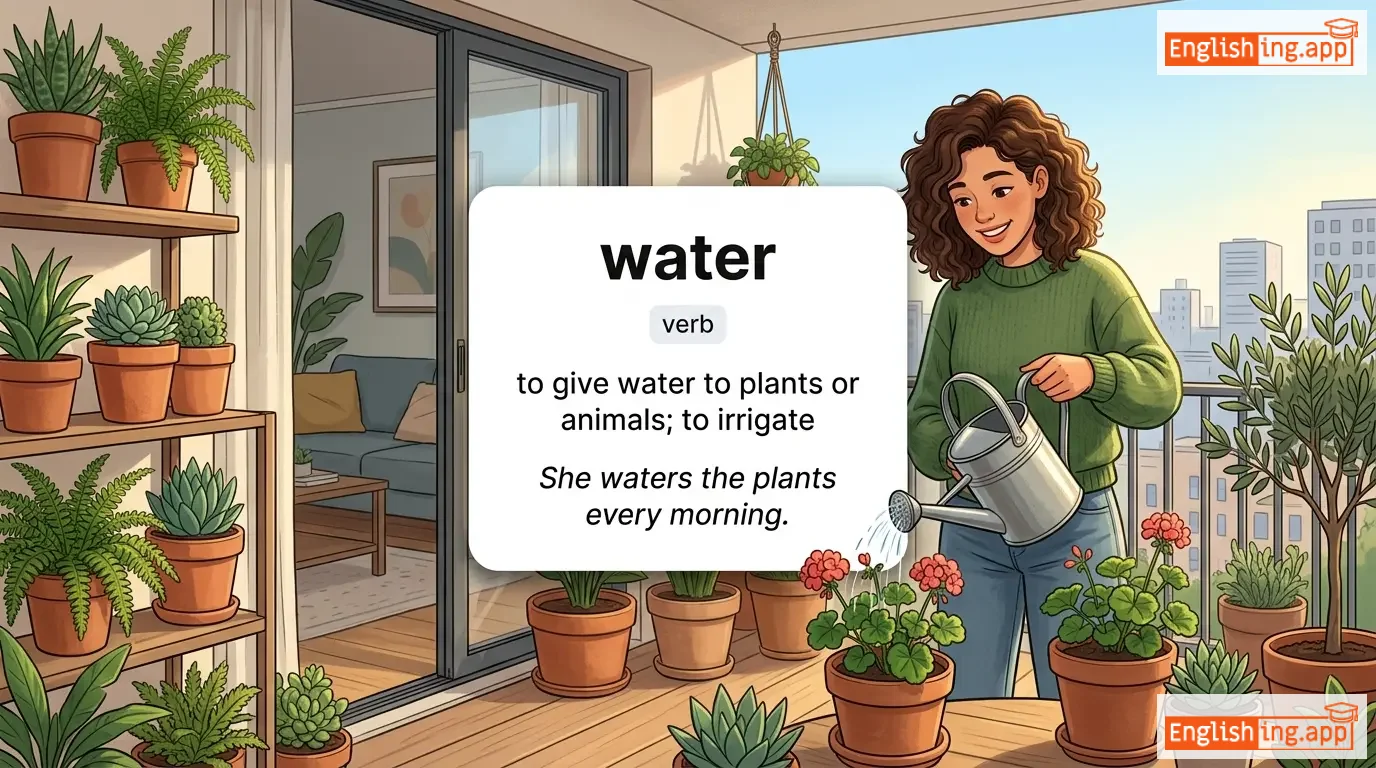
water definition card — visual illustration of the meaning
noun
/ˈwɔːtər/
agua (agua)

a clear, colorless, odorless, and tasteless liquid that is essential for life

"We need to drink water to stay hydrated."

"Necesitamos beber agua para mantenernos hidratados." (Necesitamos beber agua para mantenernos hidratados.)
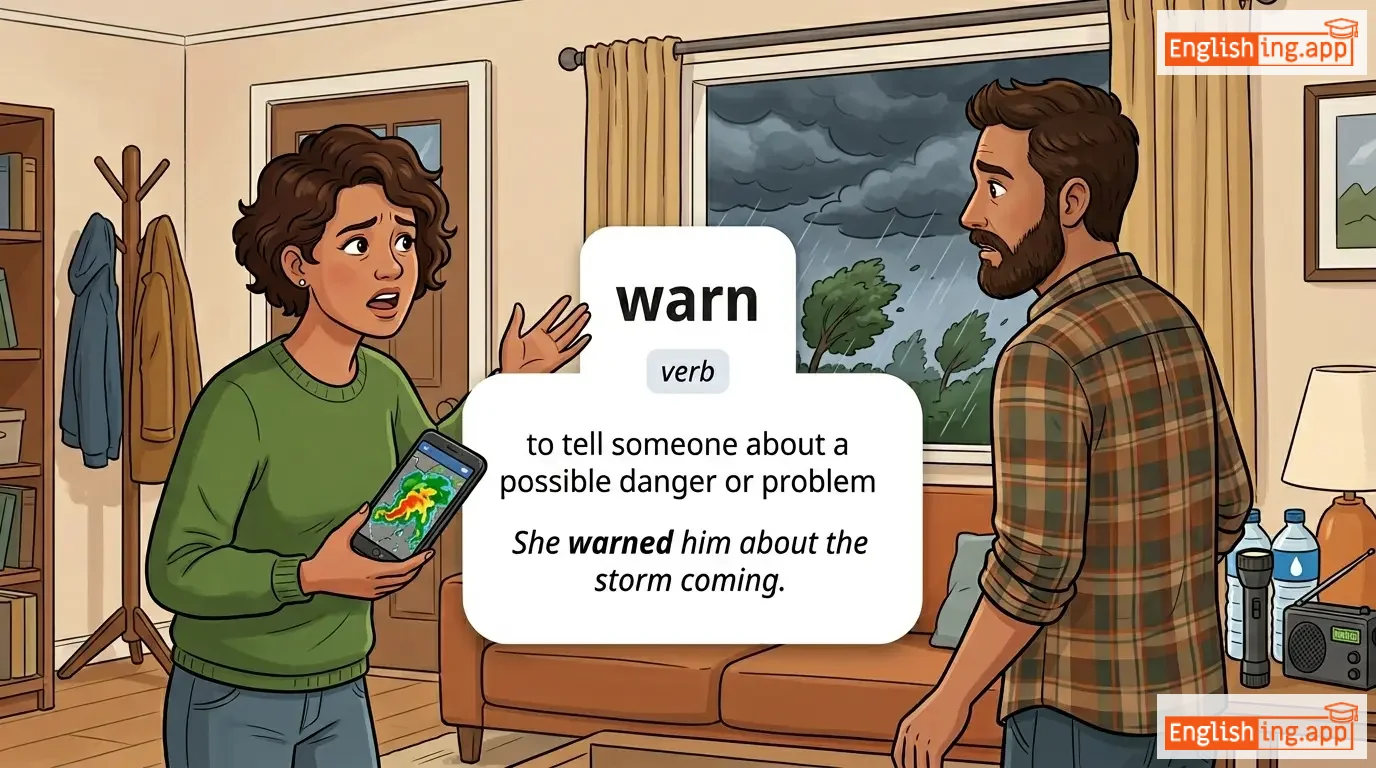
warn definition card — visual illustration of the meaning
verb
/wɔːrn/
advertir (advertir)

to tell someone about a possible danger or problem

"She warned him about the storm coming."

"Ella le advirtió sobre la tormenta que venía." (Ella le advirtió sobre la tormenta que venía.)
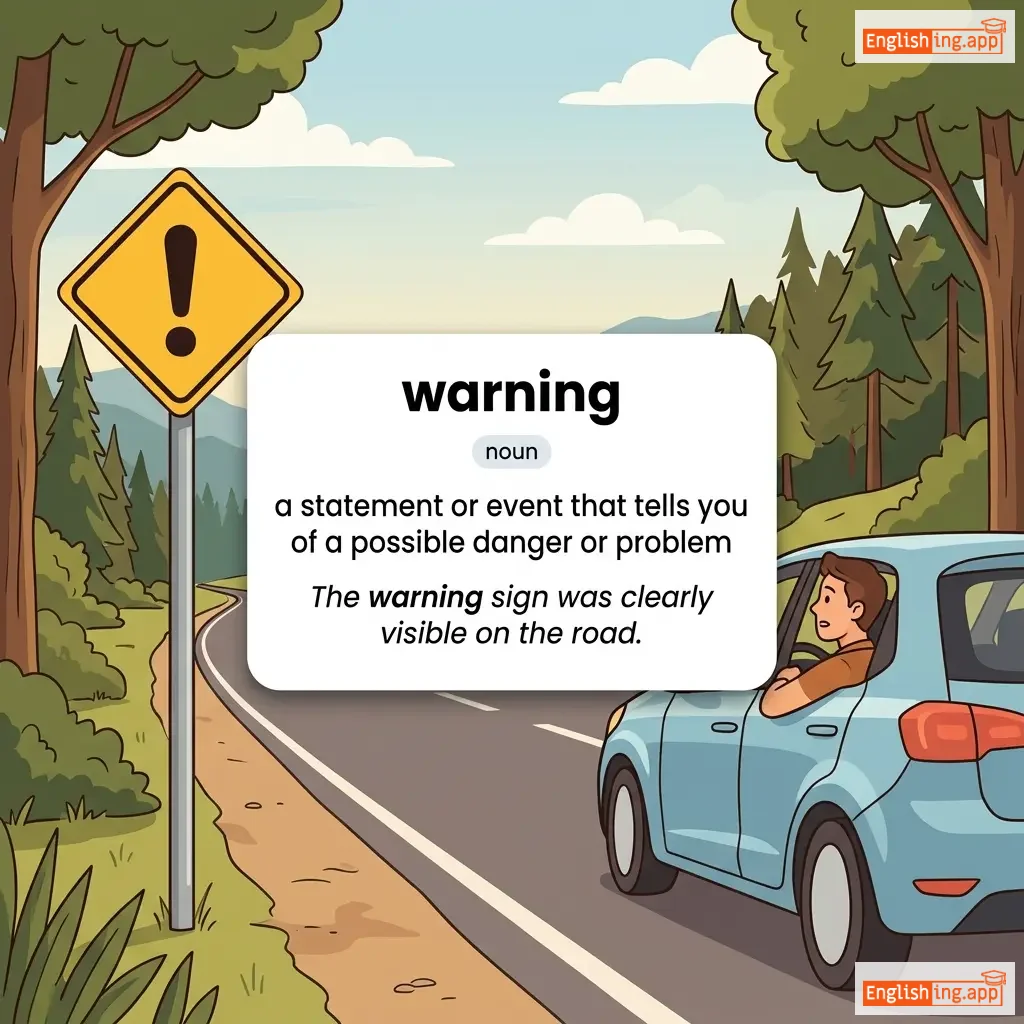
warning definition card — visual illustration of the meaning
noun
/ˈwɔːrnɪŋ/
advertencia (advertencia)

a statement or event that tells you of a possible danger or problem

"The warning sign was clearly visible on the road."

"La señal de advertencia era claramente visible en el camino." (La senal de advertencia era claramente visible en el camino.)
noun
/ˈwiː.vər bɜːd/
pájaro tejedor (pajaro tejedor)

a small bird that builds elaborate woven nests from grass and twigs

"The weaver bird skillfully constructs its intricate nest."

"El pájaro tejedor construye hábilmente su nido intrincado" (El pajaro tejedor construye habilmente su nido intrincado)
pronoun
/wi/
nosotros (nosotros)

used by a speaker to refer to himself or herself and one or more other people

"We are going to the park this afternoon."

"Vamos al parque esta tarde." (Vamos al parque esta tarde.)
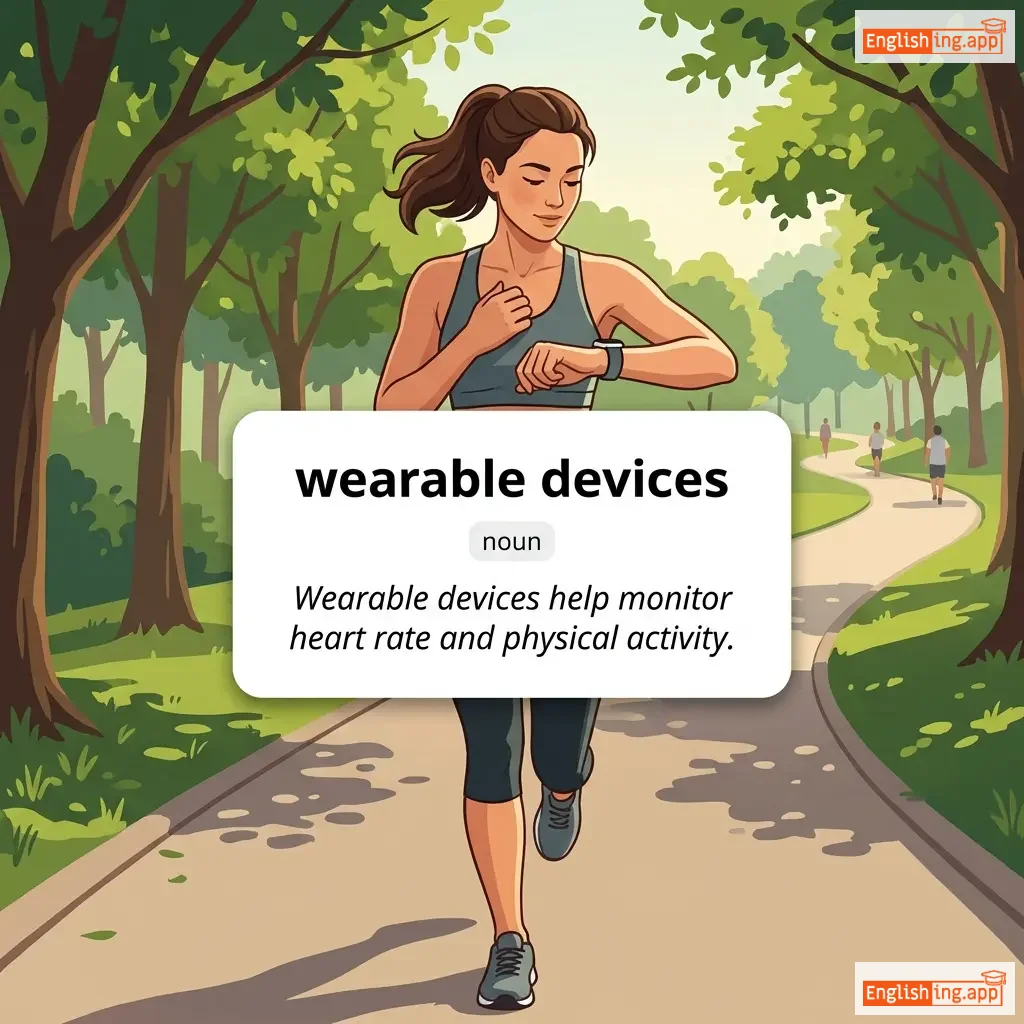
wearable devices definition card — visual illustration of the meaning
noun
ˈweə.rə.bəl dɪˈvaɪ.sɪz
dispositivos ponibles (dispositivos ponibles)

Electronic devices that can be worn on the body, typically incorporating smart technology for monitoring health or providing information.

"Wearable devices help monitor heart rate and physical activity."

"Los dispositivos ponibles ayudan a monitorear el ritmo cardíaco y la actividad física." (Los dispositivos ponibles ayudan a monitorear el ritmo cardiaco y la actividad fisica.)
adjective
/ˈwɛlθi/
rico (rico)

having a great deal of money, resources, or assets

"He became wealthy after investing in real estate."

"Se volvió rico después de invertir en bienes raíces." (Se volvió rico después de invertir en bienes raíces.)
adjective
/ˈwiːkli/
semanal (semanal)

occurring or done every week

"We have a weekly meeting on Mondays."

"Tenemos una reunión semanal los lunes." (Tenemos una reunion semanal los lunes.)
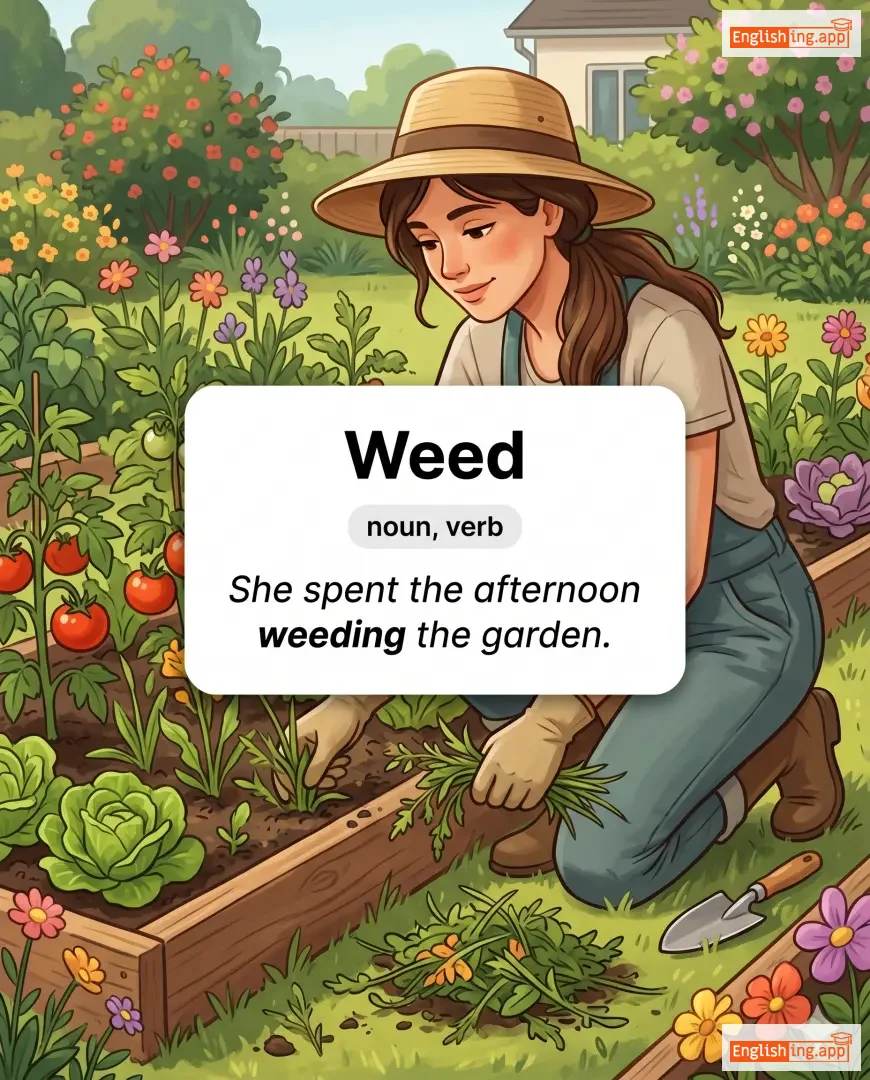
Weed definition card — visual illustration of the meaning
noun, verb
/wiːd/
maleza (maleza)

a wild plant growing where it is not wanted, especially among crops; to remove such plants

"She spent the afternoon weeding the garden."

"Ella pasó la tarde desmalezando el jardín." (Ella paso la tarde desmalezando el jardin.)
noun
/ˈweɪvlət/
pequeña onda (pequena onda)

a small wave or ripple on the surface of water or another medium

"The pond was disturbed only by the tiny wavelets caused by the breeze."

"El estanque solo fue perturbado por las pequeñas ondas causadas por la brisa." (El estanque solo fue perturbado por las pequeñas ondas causadas por la brisa.)
noun
/wæks ˈkændəl/
vela (vela)

a cylinder of wax with a wick through it that burns to give light

"We lit a wax candle during the power outage."

"Encendimos una vela durante el corte de energía" (Encendimos una vela durante el corte de energía)
noun
/wæks ɡɔːrd/
calabaza cerosa (calabaza cerosa)

a large white or green gourd with waxy skin, commonly used in Asian cooking

"The wax gourd soup is very nutritious and helps with digestion."

"La sopa de calabaza cerosa es muy nutritiva y ayuda con la digestión." (La sopa de calabaza cerosa es muy nutritiva y ayuda con la digestion.)
noun
/ˈwɛdɪŋ/
boda (boda)

a marriage ceremony, especially considered as including the associated celebrations

"They are planning a wedding in the summer."

"Están planeando una boda en el verano." (Están planeando una boda en el verano.)
adjective
/ˈwɪəri/
cansado (cansado)

feeling or showing extreme tiredness, especially as a result of exertion or lack of sleep

"After the long journey, she felt weary and wanted to rest."

"Después del largo viaje, ella se sintió cansada y quería descansar." (Despues del largo viaje, ella se sintio cansada y queria descansar.)
adjective
/ˈwiːk niːd/
débil (debil)

Lacking determination or courage; easily frightened or yielding.

"The leader was criticized for being weak-kneed in the face of opposition."

"El líder fue criticado por ser débil ante la oposición." (El lider fue criticado por ser debil ante la oposicion.)
noun
/ˈwɔːtəʃɛd/
punto de inflexión, línea divisoria (watershed)

An event or period marking a turning point in a situation; also refers to a ridge dividing two drainage areas.

"The independence movement was a watershed in the nation's history."

"El movimiento de independencia fue un punto de inflexión en la historia de la nación." (El movimiento de independencia fue un punto de inflexión en la historia de la nación.)
noun
/ˈwɔː.tər hen/
gallineta (gallineta)

a waterbird with dark plumage that lives near ponds and wetlands

"The water hen swam gracefully across the pond."

"La gallineta nadó elegantemente a través del estanque." (La gallineta nadó elegantemente a través del estanque.)
🛣️

Way (uei)

noun
/weɪ/
camino / manera (camino / manera)

a path, direction, or method of doing something

"He found a new way to solve the problem."

"Encontró una nueva manera de resolver el problema." (Encontro una nueva manera de resolver el problema.)
adjective
/wɔːrm/
cálido (kalido)

having a moderate degree of heat

"The warm sunlight made the room feel cozy."

"La luz cálida hizo que la habitación se sintiera acogedora." (La luz cálido hizo que la habitación se sintiera acogedora.)
verb
/wæks/
aumentar gradualmente (aumentar gradualmente)

to increase gradually in size, number, strength, or intensity

"The moon will wax until it becomes full."

"La luna aumentará hasta que se vuelva llena." (La luna aumentara hasta que se vuelva llena.)
noun
/ˈwiːknəs/
debilidad (debilidad)

a state of being weak; a flaw or shortcoming in character or structure

"His main weakness is his lack of patience."

"Su principal debilidad es su falta de paciencia." (Su principal debilidad es su falta de paciencia.)
noun
/ˈwɑː.ʃər mæn/
lavandero (lavandero)

a person whose job is to wash clothes and linens for others

"The washer man collected dirty clothes from every household in the village."

"El lavandero recogió ropa sucia de cada hogar en el pueblo." (El lavandero recogió ropa sucia de cada hogar en el pueblo)
adjective
/wiːk/
débil (debil)

lacking physical strength or energy

"She felt weak after the long run."

"Ella se sintió débil después de la larga carrera." (Ella se sintio debil despues de la larga carrera.)
noun
/weɪt/
peso (peso)

a measure of how heavy something is

"The weight of the package was 10 kilograms."

"El peso del paquete era de 10 kilogramos." (El peso del paquete era de 10 kilogramos.)
noun
/wiːk/
semana (semana)

a period of seven days

"I will finish the project by the end of the week."

"Terminaré el proyecto para el final de la semana." (Terminaré el proyecto para el final de la semana.)
noun
/ˈwɔː.tər ˈtʃes.nʌt/
castaña de agua (castana de agua)

aquatic plant with edible white crisp tubers

"Water chestnuts add a nice crunch to stir-fry dishes."

"Las castañas de agua añaden un buen crujido a los platos salteados." (Las castanas de agua anaden un buen crujido a los platos salteados)
noun
/wɒsp/
avispón (avispón)

a flying insect with a yellow and black striped body and a painful sting

"The wasp stung me when I disturbed its nest."

"El avispa me picó cuando molesté su nido." (El avispa me picó cuando molesté su nido.)
noun
/wɛst/
oeste (oeste)

the direction to the left of the north and to the right of the south, typically associated with the sunset

"The sun sets in the west."

"El sol se pone en el oeste." (El sol se pone en el oeste.)
adverb
/wɒtˈsəʊɛvər/
en absoluto (en absoluto)

used for emphasis after a negative statement to mean 'at all'

"She has no interest in the matter whatsoever."

"Ella no tiene ningún interés en el asunto en absoluto." (Ella no tiene ningún interés en el asunto en absoluto.)
noun
/wɛlp/
cachorro (cachorro)

a young offspring of a dog or other carnivorous mammal; sometimes used to mean an impudent young person

"The farmer found a wolf whelp hiding near the barn."

"El granjero encontró un cachorro de lobo escondido cerca del granero." (El granjero encontró un cachorro de lobo escondido cerca del granero.)
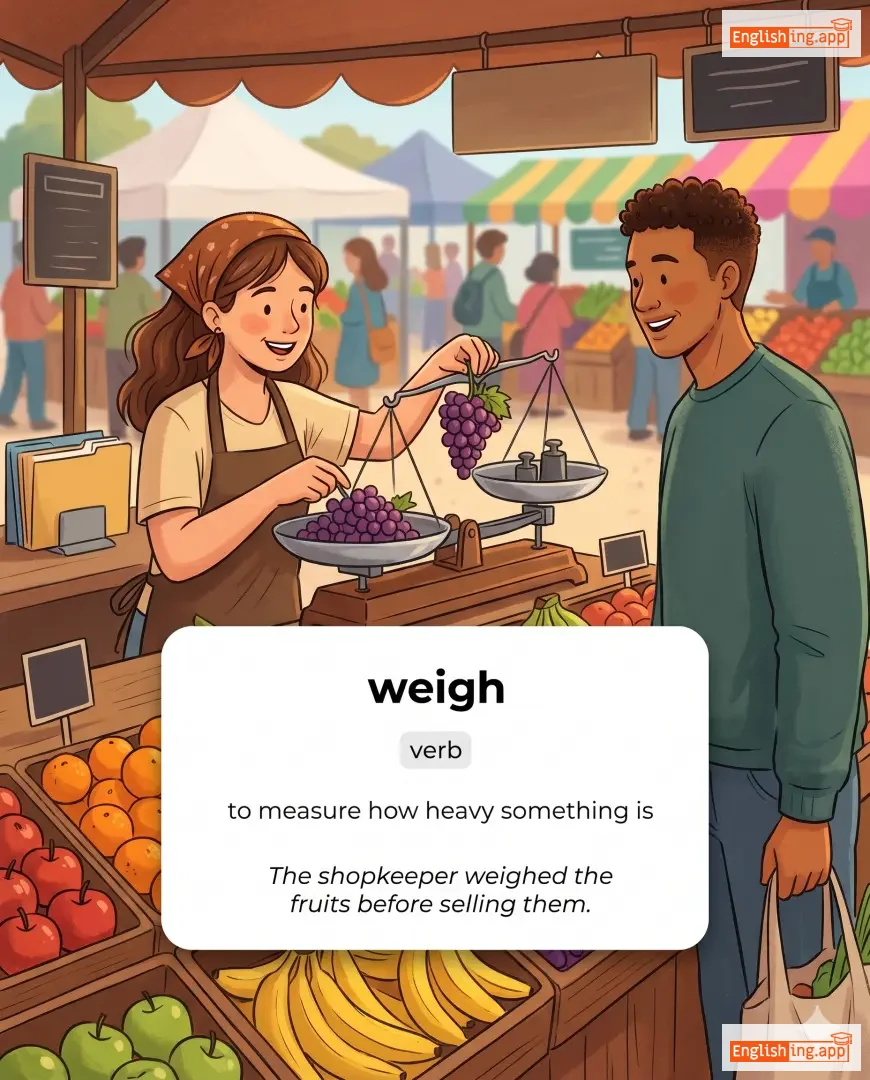
weigh definition card — visual illustration of the meaning
verb
/weɪ/
pesar (pesar)

to measure how heavy something is

"The shopkeeper weighed the fruits before selling them."

"El tendero pesó las frutas antes de venderlas." (El tendero pesó las frutas antes de venderlas.)
adjective
/ˌwel bɪˈheɪvd/
bien educado (bien educado)

conducting oneself in a proper and polite manner; showing good manners

"The children were well-behaved during the ceremony."

"Los niños se comportaron bien durante la ceremonia." (Los niños se comportaron bien durante la ceremonia.)
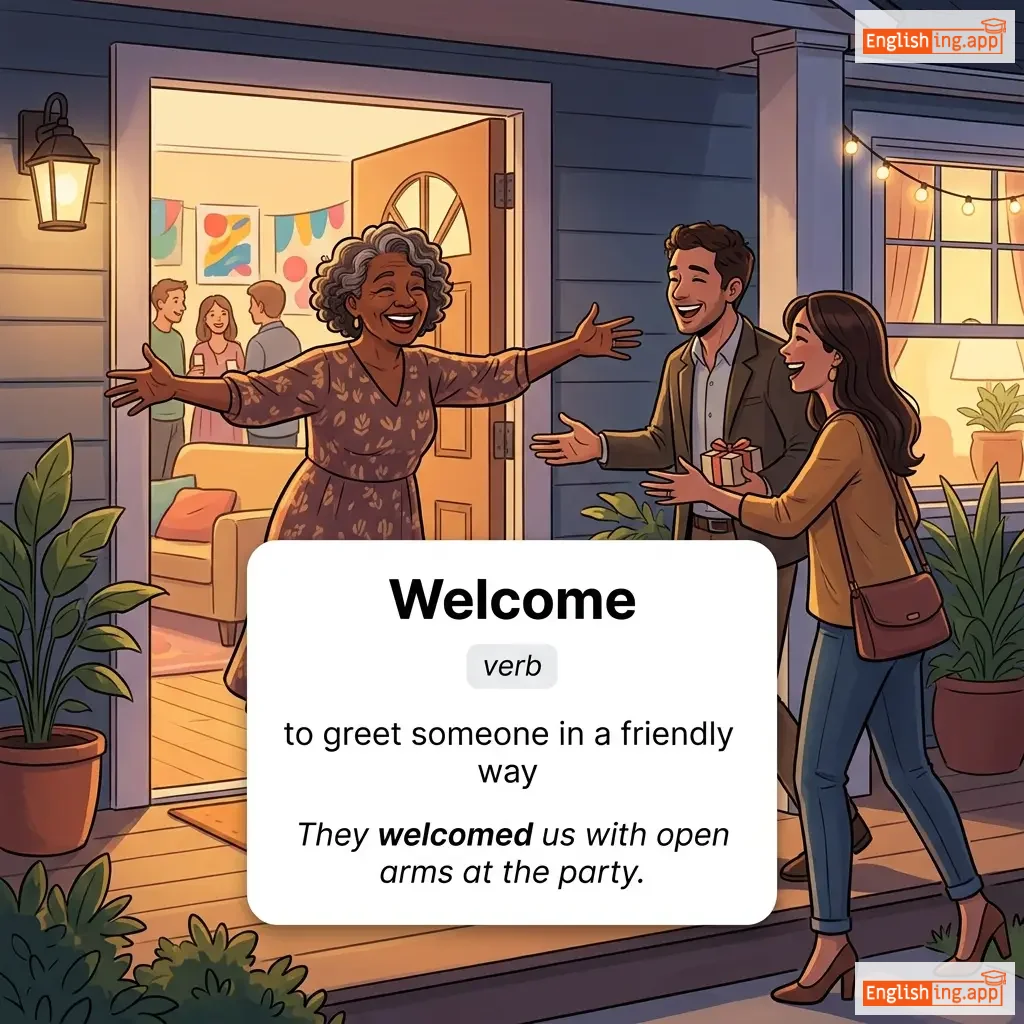
Welcome definition card — visual illustration of the meaning
verb
/ˈwɛlkəm/
bienvenida (bienvenida)

to greet someone in a friendly way

"They welcomed us with open arms at the party."

"Nos recibieron con los brazos abiertos en la fiesta." (Nos recibieron con los brazos abiertos en la fiesta.)
noun
/ˈwɛlkɪn/
cielo (cielo)

The sky, the heavens, or the upper air.

"The eagle soared high into the welkin."

"El águila voló alto en el cielo." (El aguila volo alto en el cielo.)
noun
/ˈweɪtˌlɪftɪŋ/
halterofilia (halterofilia)

the sport or activity of lifting heavy weights to build strength and muscle

"Weightlifting requires discipline, proper technique, and consistent training."

"La halterofilia requiere disciplina y una técnica adecuada." (La halterofilia requiere disciplina y una tecnica adecuada)
pronoun
/wɒt/
qué (que)

used to ask for information about something

"What is your name?"

"¿Cuál es tu nombre?" (¿Cuál es tu nombre?)
noun
/wɛlt/
marca (marca)

A raised mark on the skin, usually from a blow or allergic reaction.

"He had a red welt on his arm after the bee sting."

"Tenía una marca roja en su brazo después de la picadura de la abeja." (Tenia una marka roja en su brazo despues de la picadura de la abeja.)
adjective
/wɪrd/
extraño (extrano)

suggesting something supernatural or very strange; unusual

"The movie had a weird ending that nobody expected."

"La película tenía un final extraño que nadie esperaba." (La pelicula tenia un final extrano que nadie esperaba.)
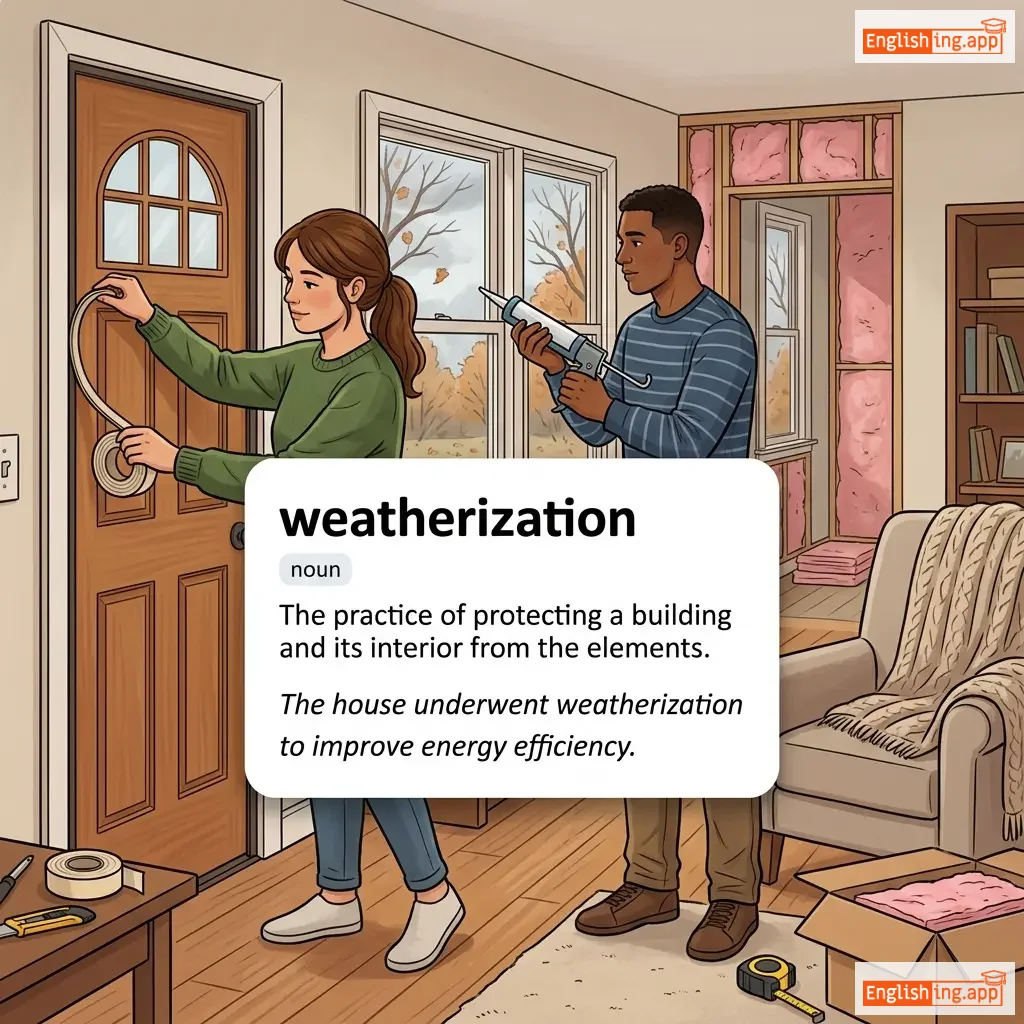
weatherization definition card — visual illustration of the meaning
noun
ˌwɛðəraɪˈzeɪʃən
climatización (climatizacion)

The practice of protecting a building and its interior from the elements.

"The house underwent weatherization to improve energy efficiency."

"La casa pasó por un proceso de climatización para mejorar la eficiencia energética." (La casa pasó por un proceso de climatización para mejorar la eficiencia energética.)