Vocabulaires

Découvrez, apprenez et maîtrisez le vocabulaire anglais

adjective
/ˌwɛlˈbrɛd/
bien élevé (bien eleve)

Having or showing good manners; properly raised.

"She is a well-bred young lady with excellent manners."

"C'est une jeune femme bien élevée avec d'excellentes manières." (C'est une jeune femme bien élevée avec d'excellentes manières.)
noun
/weɪl/
baleine (ba-len)

a very large marine mammal that lives in the ocean

"We saw a huge whale swimming near the boat."

"Nous avons vu une énorme baleine nager près du bateau." (Nous avons vu une énorme baleine nager près du bateau.)
noun
/ˈwel.wɪʃ.ər/
bienfaiteur (bienfaiteur)

a person who desires happiness or success for another

"Many well-wishers came to congratulate her on her graduation."

"De nombreux bienfaiteurs sont venus la féliciter pour sa remise de diplôme." (De nombreux bienfaiteurs sont venus la féliciter pour sa remise de diplôme.)
noun
/ˈwɛlfɛr/
bien-être (bien-etre)

the health, happiness, and fortunes of a person or group

"The government provides welfare to low-income families."

"Le gouvernement fournit du bien-être aux familles à faibles revenus." (Le gouvernement fournit du bien-être aux familles à faibles revenus.)
noun
/ˈwɒʃ.ɪŋ məˌʃiːn/
lave-linge (lavlanj)

a machine for washing clothes and other textiles

"The washing machine broke down and needs repair."

"Le lave-linge est tombé en panne et a besoin de réparation." (Le lave linge est tombe en panne et a besoin de reparation)
noun
/wiːt/
blé (ble)

a cereal plant whose grain is used to make flour for bread and other foods

"Farmers harvested the wheat in early summer."

"Les agriculteurs ont récolté le blé au début de l'été." (Les agriculteurs ont récolté le blé au début de l'été.)
noun
/ˈwɒrənti/
garantie (garanti)

A written guarantee given by a manufacturer or seller promising to repair or replace a product if necessary within a specified period.

"The laptop comes with a two-year warranty."

"L'ordinateur portable vient avec une garantie de deux ans." (L'ordinateur portable vient avec une garantie de deux ans.)
noun
/wiːl/
bonheur (bonheur)

A raised mark on the skin left after a blow; or general well-being and prosperity.

"The charity worked for the common weal of the community."

"Elle n'a pas pu cacher son bonheur lorsqu'elle a reçu le prix." (Elle n'a pas pu cacher son bonheur lorsqu'elle a recu le prix.)
adjective
/ˈwɪərɪsəm/
épuisant (epwizã)

Causing one to feel tired or bored.

"The long and wearisome lecture put the students to sleep."

"La longue et épuisante conférence a endormi les étudiants." (La longue et épuisante conférence a endormi les étudiants.)
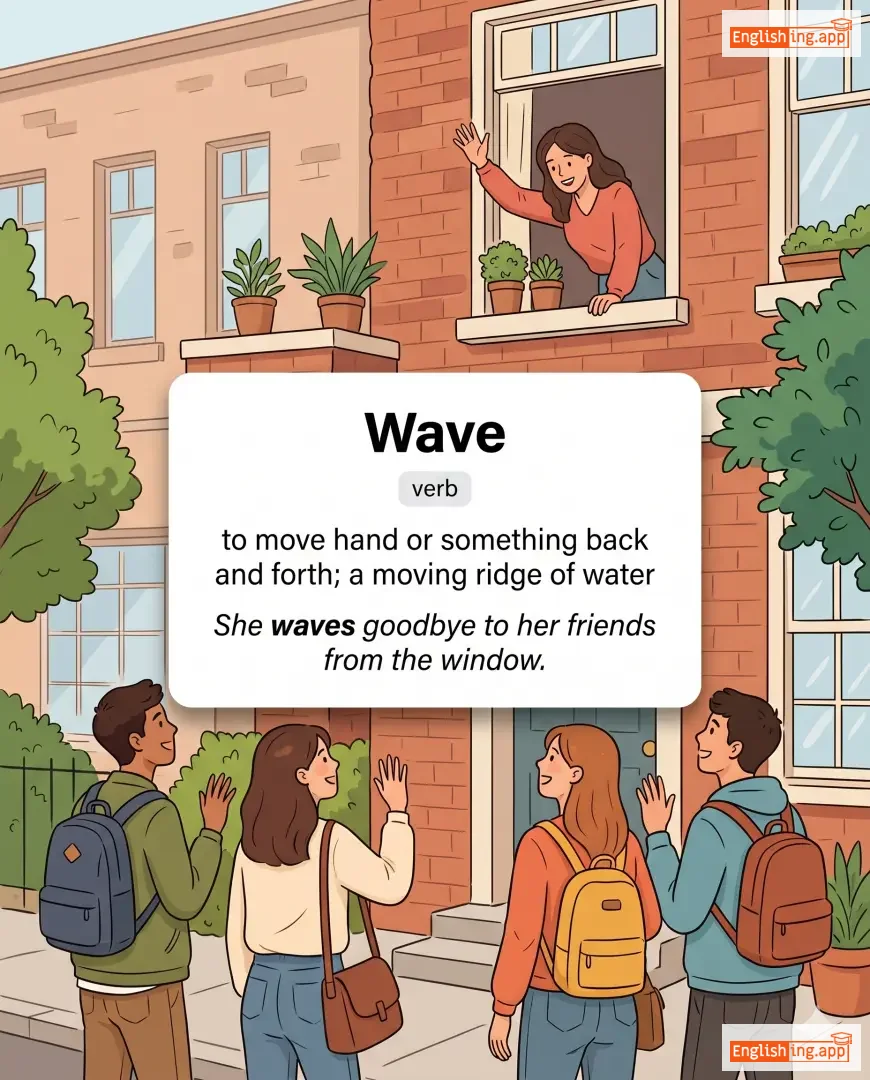
Wave definition card — visual illustration of the meaning
noun
/weɪv/
vague (vague)

a long body of water curling into an arched form and breaking on the shore

"The waves crashed against the rocks during the storm."

"Les vagues se sont écrasées contre les rochers pendant la tempête." (Les vagues se sont écrasées contre les rochers pendant la tempête.)
noun
/ˈwɛnzdeɪ/
mercredi (mercredi)

the fourth day of the week, following Tuesday and preceding Thursday

"The meeting has been scheduled for Wednesday afternoon."

"La réunion est prévue pour mercredi après-midi." (la reunion est prevue pour mercredi apres-midi)
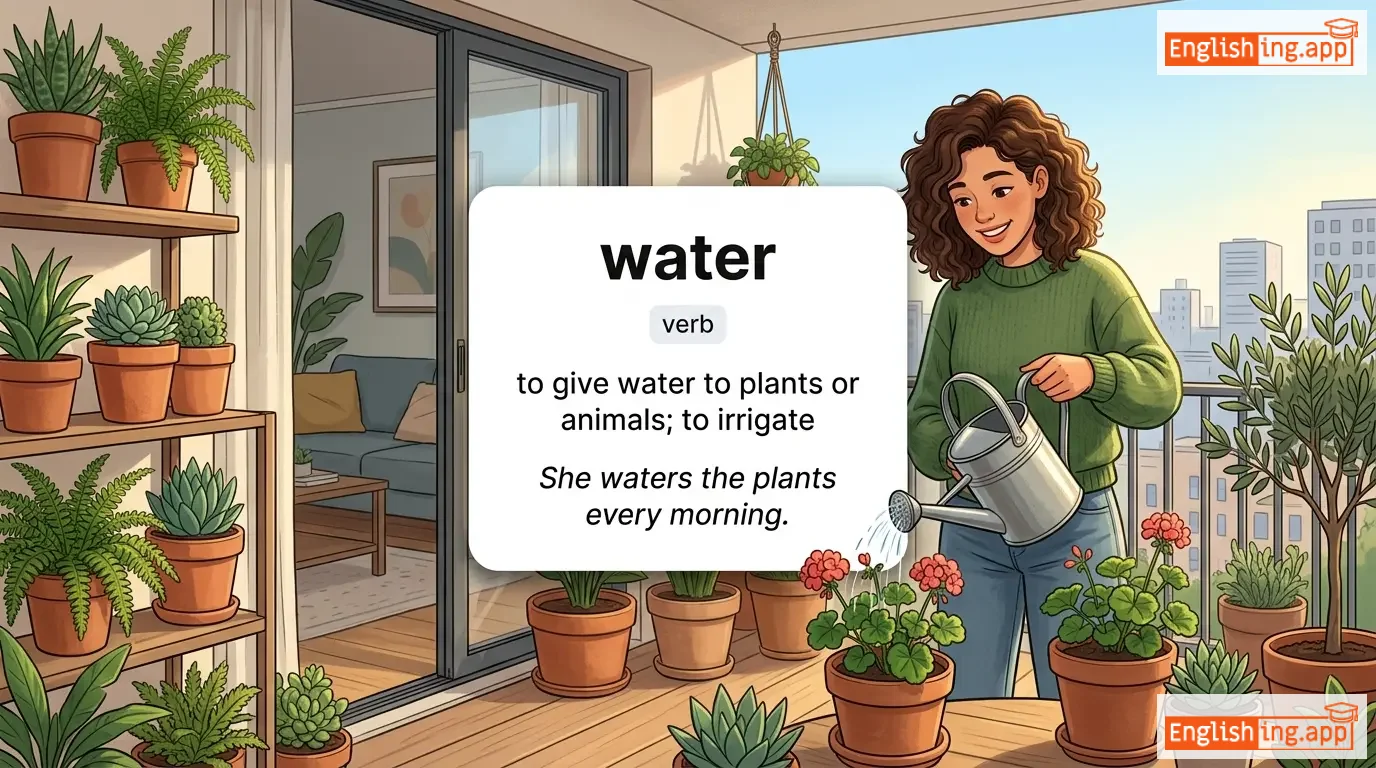
water definition card — visual illustration of the meaning
noun
/ˈwɔːtər/
eau (o)

a clear, colorless, odorless, and tasteless liquid that is essential for life

"We need to drink water to stay hydrated."

"Nous devons boire de l'eau pour rester hydratés." (Nous devons boire de l'eau pour rester hydratés.)
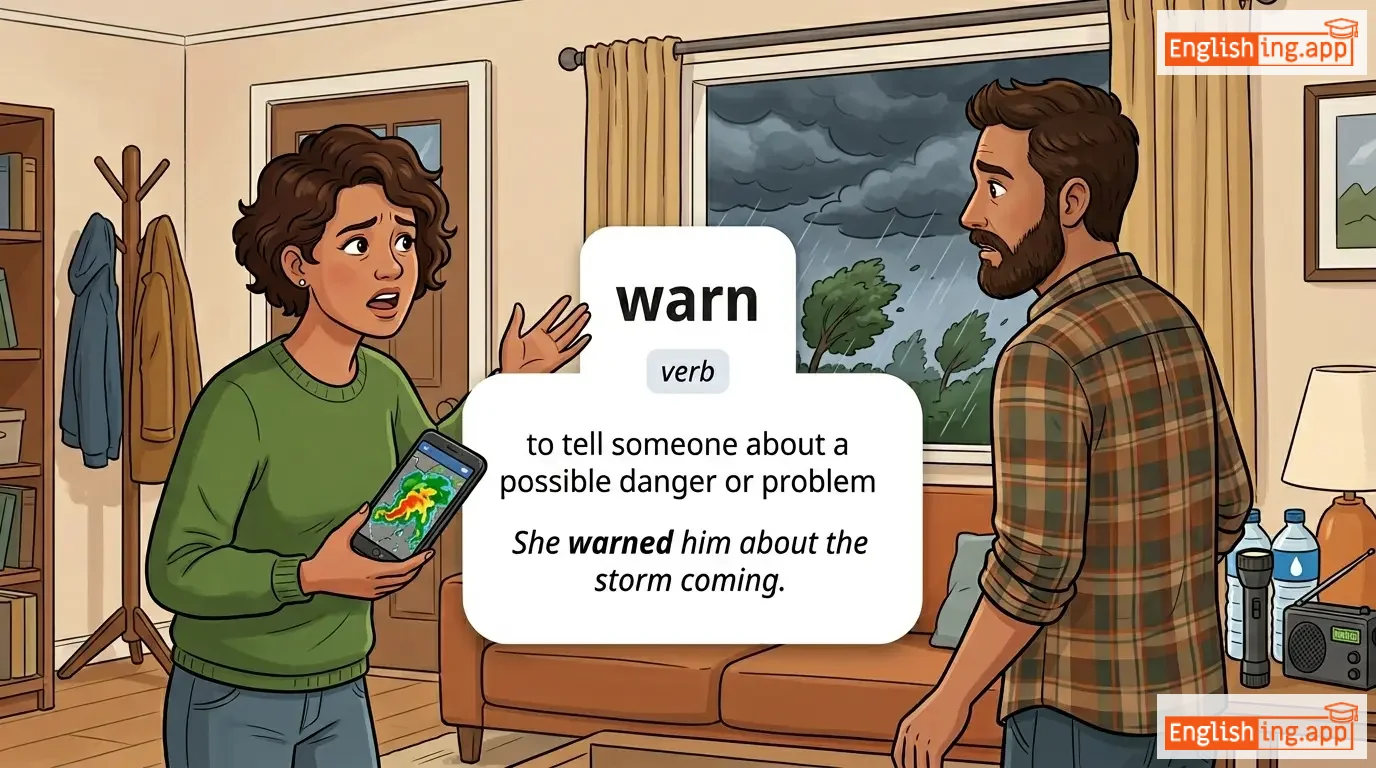
warn definition card — visual illustration of the meaning
verb
/wɔːrn/
avertir (avertir)

to tell someone about a possible danger or problem

"She warned him about the storm coming."

"Elle lui a averti de la tempête qui arrivait." (Elle lui a averti de la tempête qui arrivait.)
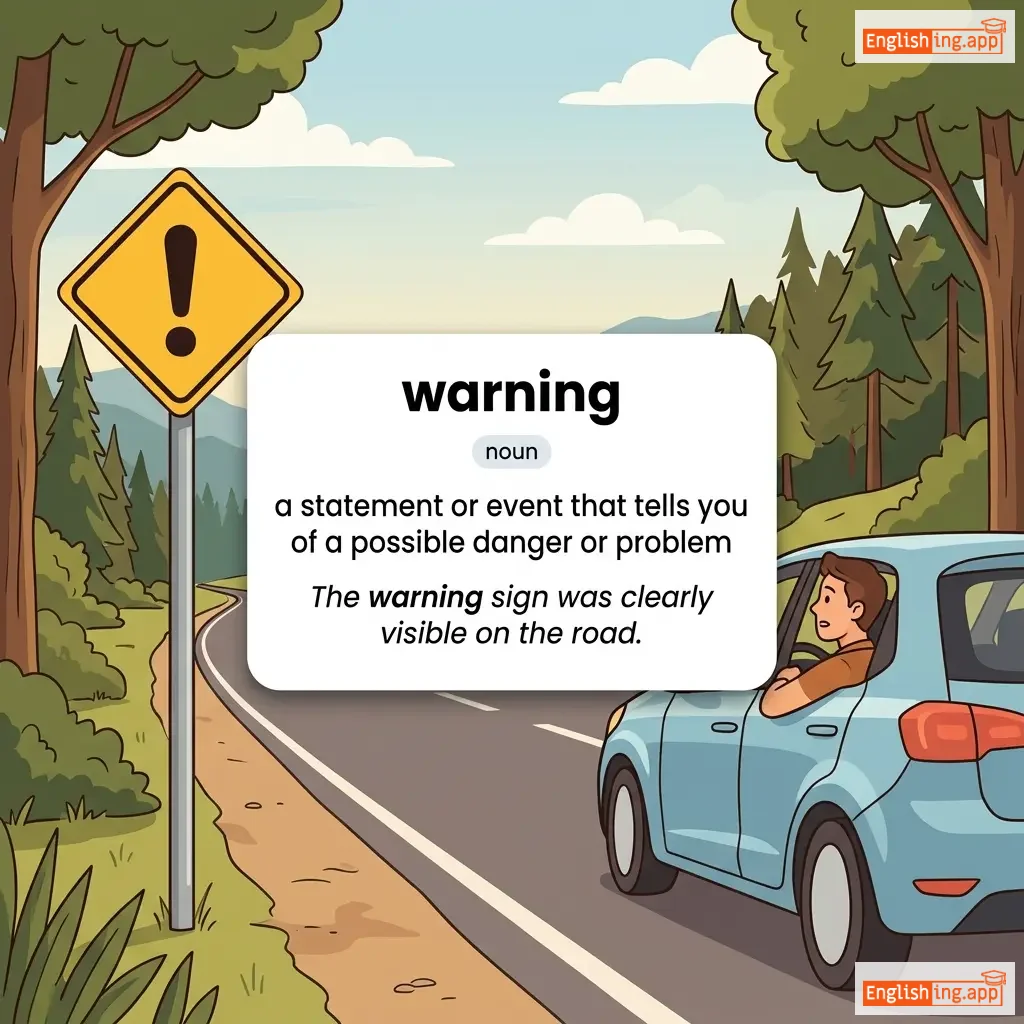
warning definition card — visual illustration of the meaning
noun
/ˈwɔːrnɪŋ/
avertissement (avertissement)

a statement or event that tells you of a possible danger or problem

"The warning sign was clearly visible on the road."

"Le panneau d'avertissement était clairement visible sur la route." (Le panneau d'avertissement etait clairement visible sur la route.)
noun
/ˈwiː.vər bɜːd/
oiseau tisserand (oiseau tisserand)

a small bird that builds elaborate woven nests from grass and twigs

"The weaver bird skillfully constructs its intricate nest."

"L'oiseau tisserand construit habilement son nid complexe" (L'oiseau tisserand construit habilement son nid complexe)
pronoun
/wi/
nous (nous)

used by a speaker to refer to himself or herself and one or more other people

"We are going to the park this afternoon."

"Nous allons au parc cet après-midi." (Nous allons au parc cet après-midi.)
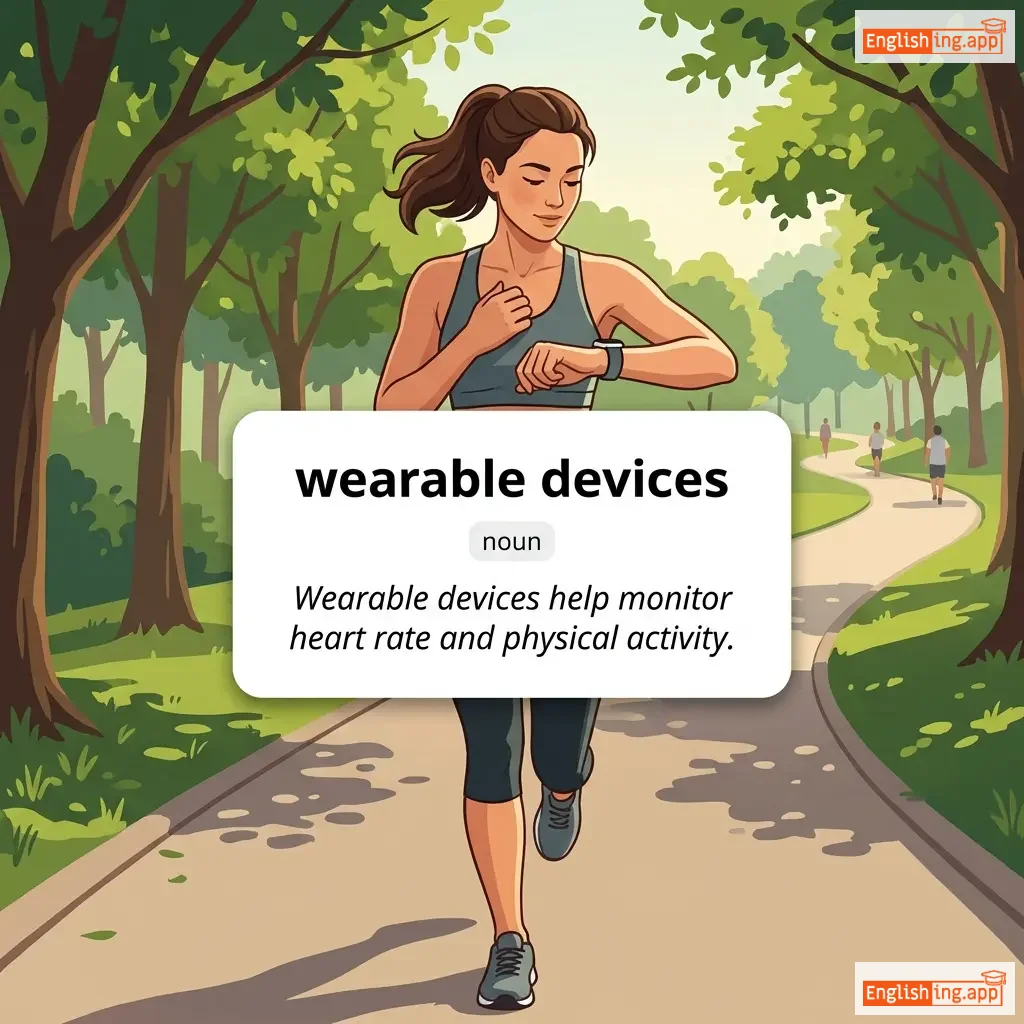
wearable devices definition card — visual illustration of the meaning
noun
ˈweə.rə.bəl dɪˈvaɪ.sɪz
dispositifs portables (dispositifs portables)

Electronic devices that can be worn on the body, typically incorporating smart technology for monitoring health or providing information.

"Wearable devices help monitor heart rate and physical activity."

"Les dispositifs portables aident à surveiller le rythme cardiaque et l'activité physique." (Les dispositifs portables aident a surveiller le rythme cardiaque et l'activite physique.)
adjective
/ˈwɛlθi/
riche (riche)

having a great deal of money, resources, or assets

"He became wealthy after investing in real estate."

"Il est devenu riche après avoir investi dans l'immobilier." (Il est devenu riche après avoir investi dans l'immobilier.)
adjective
/ˈwiːkli/
hebdomadaire (hebdomadaire)

occurring or done every week

"We have a weekly meeting on Mondays."

"Nous avons une réunion hebdomadaire le lundi." (Nous avons une reunion hebdomadaire le lundi.)
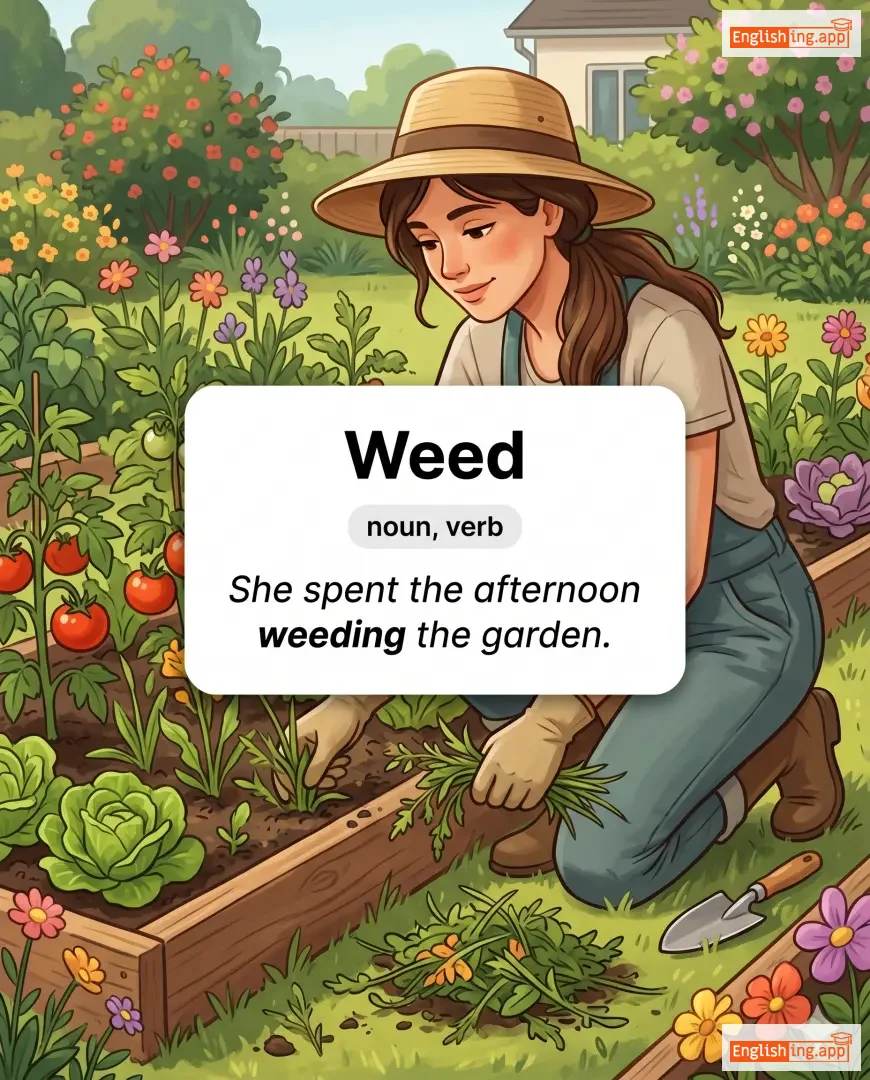
Weed definition card — visual illustration of the meaning
noun, verb
/wiːd/
mauvaise herbe (mauvaise herbe)

a wild plant growing where it is not wanted, especially among crops; to remove such plants

"She spent the afternoon weeding the garden."

"Elle a passé l'après-midi à désherber le jardin." (Elle a passé l'après-midi à désherber le jardin.)
noun
/ˈweɪvlət/
petite vague (petite vague)

a small wave or ripple on the surface of water or another medium

"The pond was disturbed only by the tiny wavelets caused by the breeze."

"L'étang n'a été perturbé que par les petites vagues causées par la brise." (L'étang n'a été perturbé que par les petites vagues causées par la brise.)
noun
/wæks ˈkændəl/
bougie (bougie)

a cylinder of wax with a wick through it that burns to give light

"We lit a wax candle during the power outage."

"Nous avons allumé une bougie pendant la panne de courant" (Nous avons allumé une bougie pendant la panne de courant)
noun
/wæks ɡɔːrd/
courge cireuse (courge cireuse)

a large white or green gourd with waxy skin, commonly used in Asian cooking

"The wax gourd soup is very nutritious and helps with digestion."

"La soupe de courge cireuse est très nutritive et aide à la digestion." (La soupe de courge cireuse est tres nutritive et aide a la digestion.)
noun
/ˈwɛdɪŋ/
mariage (mariage)

a marriage ceremony, especially considered as including the associated celebrations

"They are planning a wedding in the summer."

"Ils prévoient un mariage cet été." (Ils prévoient un mariage cet été.)
adjective
/ˈwɪəri/
fatigué (fatigue)

feeling or showing extreme tiredness, especially as a result of exertion or lack of sleep

"After the long journey, she felt weary and wanted to rest."

"Après le long voyage, elle se sentait fatiguée et voulait se reposer." (Apres le long voyage, elle se sentait fatiguee et voulait se reposer.)
adjective
/ˈwiːk niːd/
faible (faible)

Lacking determination or courage; easily frightened or yielding.

"The leader was criticized for being weak-kneed in the face of opposition."

"Le leader a été critiqué pour être faible face à l'opposition." (Le leader a ete critique pour etre faible face a l'opposition.)
noun
/ˈwɔːtəʃɛd/
point tournant, ligne de partage des eaux (watershed)

An event or period marking a turning point in a situation; also refers to a ridge dividing two drainage areas.

"The independence movement was a watershed in the nation's history."

"Le mouvement d'indépendance a été un tournant dans l'histoire de la nation." (Le mouvement d'indépendance a été un tournant dans l'histoire de la nation.)
noun
/ˈwɔː.tər hen/
poule d'eau (poule d'eau)

a waterbird with dark plumage that lives near ponds and wetlands

"The water hen swam gracefully across the pond."

"La poule d'eau nagea gracieusement à travers l'étang." (La poule d'eau nagea gracieusement à travers l'étang.)
🛣️

Way (oué)

noun
/weɪ/
chemin / façon (chemin / façon)

a path, direction, or method of doing something

"He found a new way to solve the problem."

"Il a trouvé une nouvelle façon de résoudre le problème." (Il a trouve une nouvelle facon de resoudre le probleme.)
adjective
/wɔːrm/
chaleur (chaleur)

having a moderate degree of heat

"The warm sunlight made the room feel cozy."

"La lumière chaude a rendu la pièce confortable." (La lumière chaude a rendu la pièce confortable.)
verb
/wæks/
augmenter progressivement (augmenter progressivement)

to increase gradually in size, number, strength, or intensity

"The moon will wax until it becomes full."

"La lune va augmenter jusqu'à ce qu'elle devienne pleine." (La lune va augmenter jusqu'à ce qu'elle devienne pleine.)
noun
/ˈwiːknəs/
faiblesse (faiblesse)

a state of being weak; a flaw or shortcoming in character or structure

"His main weakness is his lack of patience."

"Sa principale faiblesse est son manque de patience." (Sa principale faiblesse est son manque de patience.)
noun
/ˈwɑː.ʃər mæn/
blanchisseur (blanchisseur)

a person whose job is to wash clothes and linens for others

"The washer man collected dirty clothes from every household in the village."

"Le blanchisseur a collecté les vêtements sales de chaque maison du village." (Le blanchisseur a collecté les vetements sales de chaque maison du village)
adjective
/wiːk/
faible (faible)

lacking physical strength or energy

"She felt weak after the long run."

"Elle se sentait faible après la longue course." (Elle se sentait faible apres la longue course.)
noun
/weɪt/
poids (poid)

a measure of how heavy something is

"The weight of the package was 10 kilograms."

"Le poids du paquet était de 10 kilogrammes." (Le poids du paquet était de 10 kilogrammes.)
noun
/wiːk/
semaine (semaine)

a period of seven days

"I will finish the project by the end of the week."

"Je finirai le projet d'ici la fin de la semaine." (Je finirai le projet d'ici la fin de la semaine.)
noun
/ˈwɔː.tər ˈtʃes.nʌt/
châtaigne d'eau (chataigne d'eau)

aquatic plant with edible white crisp tubers

"Water chestnuts add a nice crunch to stir-fry dishes."

"Les châtaignes d'eau ajoutent un croquant agréable aux plats sautés." (Les chataignes d'eau ajoutent un croquant agréable aux plats sautés)
noun
/wɒsp/
guêpe (guepe)

a flying insect with a yellow and black striped body and a painful sting

"The wasp stung me when I disturbed its nest."

"La guêpe m'a piqué quand j'ai dérangé son nid." (La guepe m'a pique quand j'ai derange son nid.)
noun
/wɛst/
ouest (ouest)

the direction to the left of the north and to the right of the south, typically associated with the sunset

"The sun sets in the west."

"Le soleil se couche à l'ouest." (Le soleil se couche a l'ouest.)
adverb
/wɒtˈsəʊɛvər/
pas du tout (pa du tu)

used for emphasis after a negative statement to mean 'at all'

"She has no interest in the matter whatsoever."

"Elle n'a aucun intérêt dans cette affaire, pas du tout." (Elle n'a aucun intérêt dans cette affaire, pas du tout.)
noun
/wɛlp/
chiot (chiot)

a young offspring of a dog or other carnivorous mammal; sometimes used to mean an impudent young person

"The farmer found a wolf whelp hiding near the barn."

"Le fermier a trouvé un chiot de loup caché près de la grange." (Le fermier a trouvé un chiot de loup caché près de la grange.)
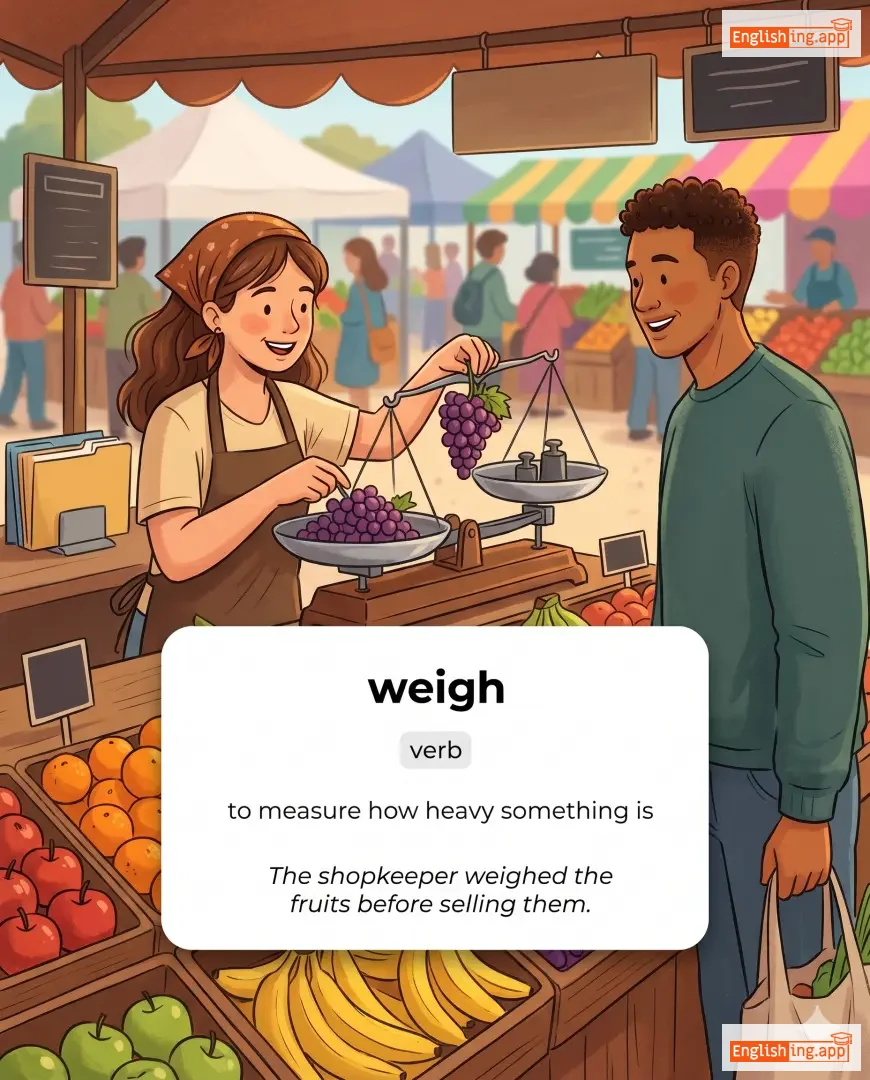
weigh definition card — visual illustration of the meaning
verb
/weɪ/
peser (peser)

to measure how heavy something is

"The shopkeeper weighed the fruits before selling them."

"Le commerçant a pesé les fruits avant de les vendre." (Le commerçant a pesé les fruits avant de les vendre.)
adjective
/ˌwel bɪˈheɪvd/
bien élevé (bien eleve)

conducting oneself in a proper and polite manner; showing good manners

"The children were well-behaved during the ceremony."

"Les enfants se comportaient bien pendant la cérémonie." (Les enfants se comportaient bien pendant la ceremony.)
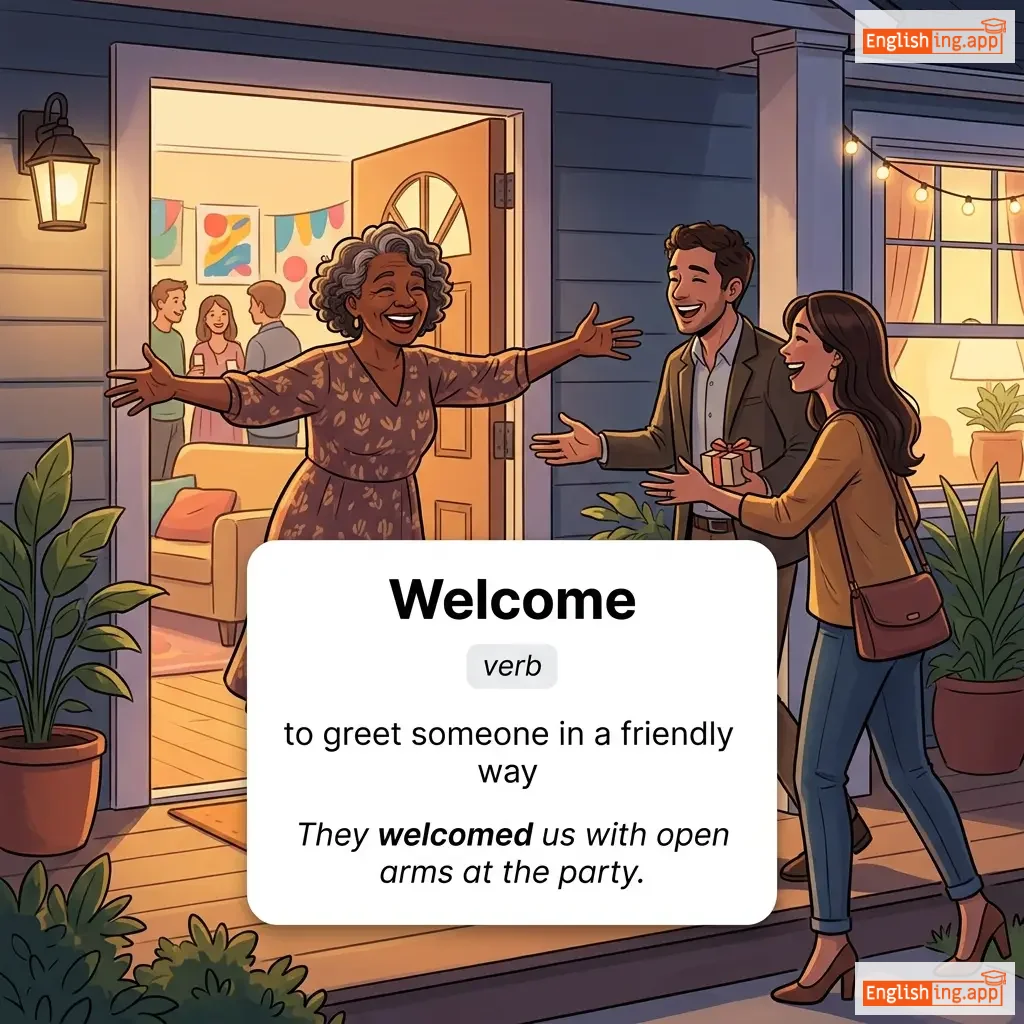
Welcome definition card — visual illustration of the meaning
verb
/ˈwɛlkəm/
accueil (accueil)

to greet someone in a friendly way

"They welcomed us with open arms at the party."

"Ils nous ont accueillis à bras ouverts à la fête." (Ils nous ont accueillis à bras ouverts à la fête.)
noun
/ˈwɛlkɪn/
ciel (ciel)

The sky, the heavens, or the upper air.

"The eagle soared high into the welkin."

"L'aigle a volé haut dans le ciel." (L'aigle a volé haut dans le ciel.)
noun
/ˈweɪtˌlɪftɪŋ/
haltérophilie (halterophilie)

the sport or activity of lifting heavy weights to build strength and muscle

"Weightlifting requires discipline, proper technique, and consistent training."

"L’haltérophilie demande de la discipline et une bonne technique." (L halterophilie demande de la discipline et une bonne technique)
pronoun
/wɒt/
quoi (koi)

used to ask for information about something

"What is your name?"

"Quel est ton nom ?" (Quel est ton nom ?)
noun
/wɛlt/
marque (marque)

A raised mark on the skin, usually from a blow or allergic reaction.

"He had a red welt on his arm after the bee sting."

"Il avait une marque rouge sur son bras après la piqûre d'abeille." (Il avait une marque rouge sur son bras apres la piqure d'abeille.)
adjective
/wɪrd/
bizarre (bizarre)

suggesting something supernatural or very strange; unusual

"The movie had a weird ending that nobody expected."

"Le film avait une fin bizarre que personne n'attendait." (Le film avait une fin bizarre que personne n'attendait.)
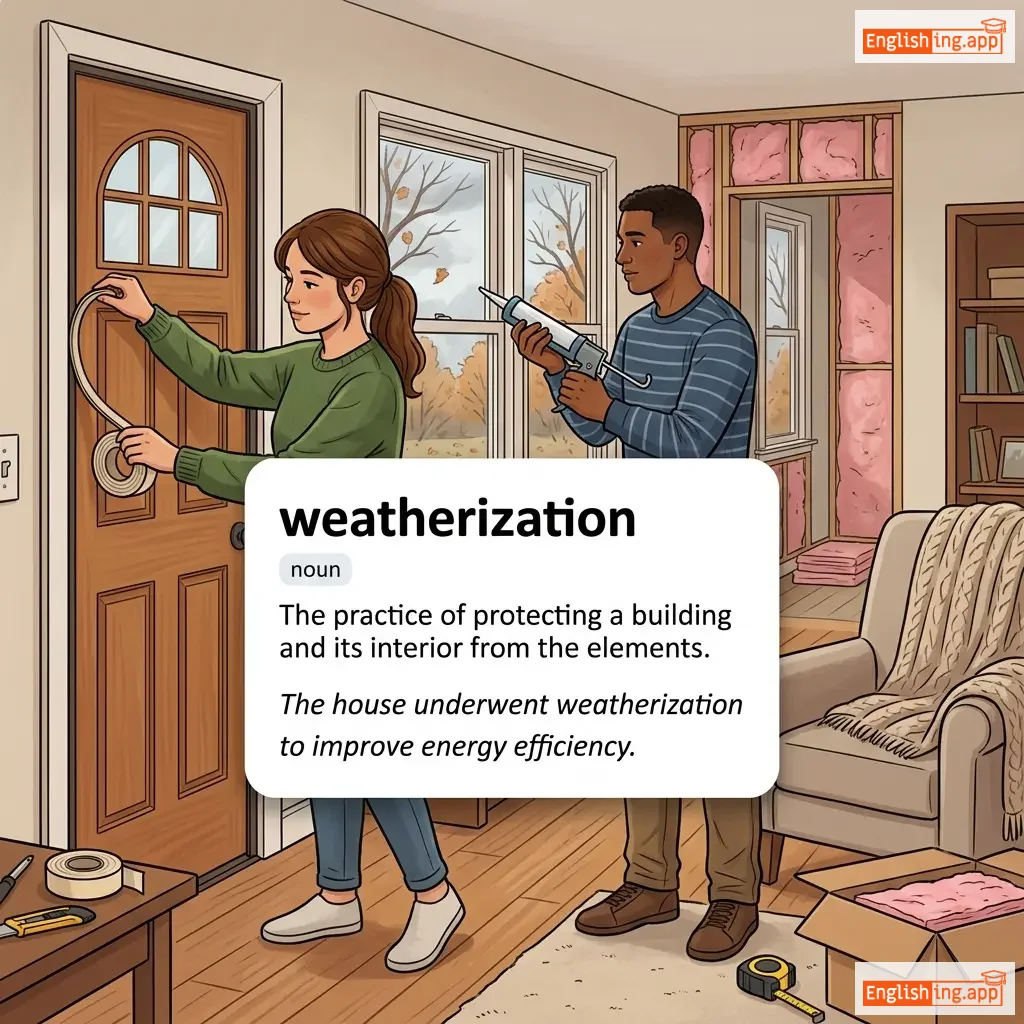
weatherization definition card — visual illustration of the meaning
noun
ˌwɛðəraɪˈzeɪʃən
météo-optimisation (meteo-optimisation)

The practice of protecting a building and its interior from the elements.

"The house underwent weatherization to improve energy efficiency."

"La maison a subi une opération de météo-optimisation pour améliorer l'efficacité énergétique." (La maison a subi une opération de météo-optimisation pour améliorer l'efficacité énergétique.)