वोकैबुलरीज

इंग्लिश वोकैबुलरी डिस्कवर, लर्न और मास्टर करें

adjective
/ˌwɛlˈbrɛd/
सभ्य (sabhy)

Having or showing good manners; properly raised.

"She is a well-bred young lady with excellent manners."

"वह एक सभ्य और अच्छे संस्कारों वाली युवती है।" (Vah ek sabhy aur acche sanskaron wali yuvti hai.)
noun
/weɪl/
तिमिंग (timing)

a very large marine mammal that lives in the ocean

"We saw a huge whale swimming near the boat."

"हमने नाव के पास एक विशाल व्हेल को तैरते हुए देखा।" (hamne naav ke paas ek vishal vhel ko tairte hue dekha.)
noun
/ˈwel.wɪʃ.ər/
कल्याणकामी (kalyankami)

a person who desires happiness or success for another

"Many well-wishers came to congratulate her on her graduation."

"कई कल्याणकामी उसे उसकी स्नातक होने पर बधाई देने आए।" (Kai kalyankami use uski snatak hone par badhai dene aaye.)
noun
/ˈwɛlfɛr/
कल्याण (kalyān)

the health, happiness, and fortunes of a person or group

"The government provides welfare to low-income families."

"सरकार निम्न-आय वाले परिवारों को कल्याण प्रदान करती है।" (Sarkār nimn-āy wāle parivāron ko kalyān pradan kartī hai.)
noun
/ˈwɒʃ.ɪŋ məˌʃiːn/
वॉशिंग मशीन (voshin mashin)

a machine for washing clothes and other textiles

"The washing machine broke down and needs repair."

"वॉशिंग मशीन खराब हो गई है और मरम्मत की ज़रूरत है." (voshin mashin kharaab ho gayi hai aur marammat ki zaroorat hai)
noun
/wiːt/
गेंहू (genhoo)

a cereal plant whose grain is used to make flour for bread and other foods

"Farmers harvested the wheat in early summer."

"किसानों ने गर्मी की शुरुआत में गेंहू की फसल काटी।" (Kisano ne garmi ki shuruat mein genhoo ki fasal kaati.)
noun
/ˈwɒrənti/
वारंटी (waranti)

A written guarantee given by a manufacturer or seller promising to repair or replace a product if necessary within a specified period.

"The laptop comes with a two-year warranty."

"लैपटॉप दो साल की वारंटी के साथ आता है।" (Laptop do saal ki waranti ke saath aata hai.)
noun
/wiːl/
सुख (sukh)

A raised mark on the skin left after a blow; or general well-being and prosperity.

"The charity worked for the common weal of the community."

"जब उसे पुरस्कार मिला, तो वह अपनी खुशी छिपा नहीं सकी।" (Jab use puraskar mila, to vah apni khushi chhupa nahi saki.)
adjective
/ˈwɪərɪsəm/
थकाऊ (thakau)

Causing one to feel tired or bored.

"The long and wearisome lecture put the students to sleep."

"लंबी और थकाऊ लेक्चर ने छात्रों को सोने पर मजबूर कर दिया।" (Lambi aur thakau lecture ne chhatron ko sone par majboor kar diya.)
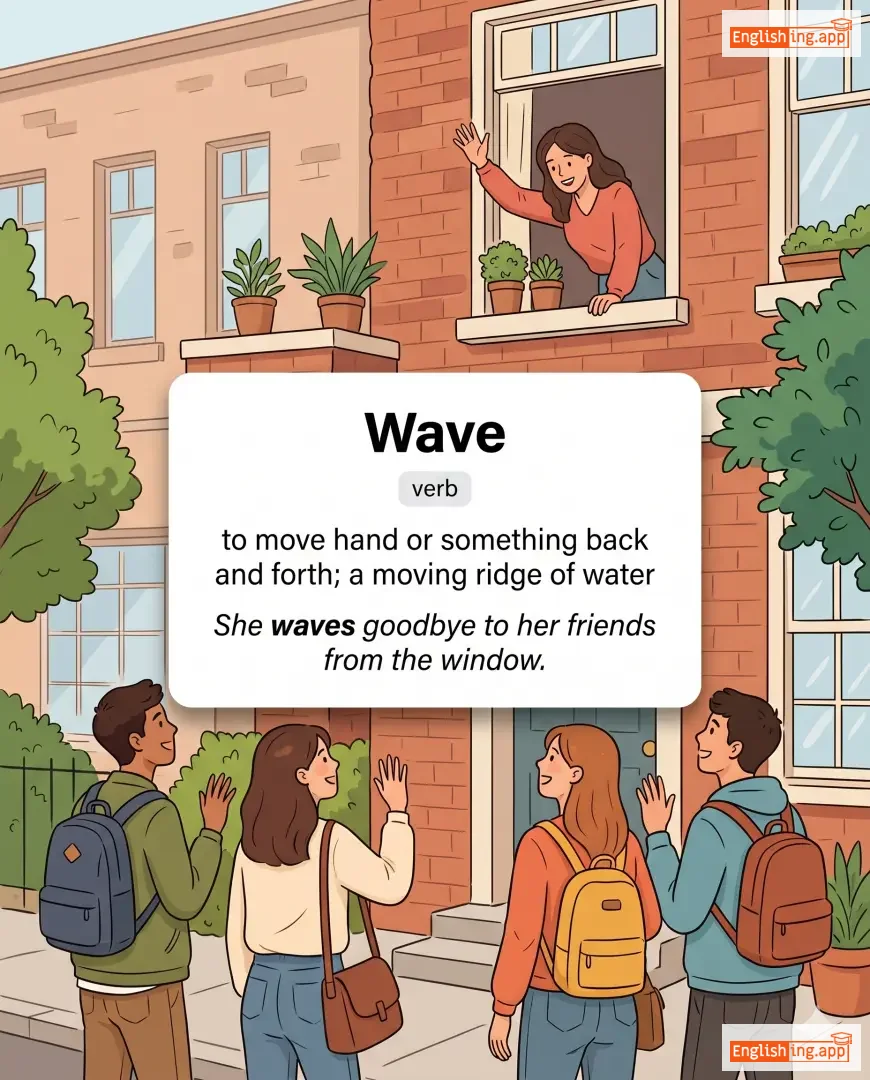
Wave definition card — visual illustration of the meaning
noun
/weɪv/
लहर (lahar)

a long body of water curling into an arched form and breaking on the shore

"The waves crashed against the rocks during the storm."

"तूफान के दौरान लहरें चट्टानों से टकराई।" (Toofan ke dauran lahrain chattanon se takraayi.)
noun
/ˈwɛnzdeɪ/
बुधवार (budhvar)

the fourth day of the week, following Tuesday and preceding Thursday

"The meeting has been scheduled for Wednesday afternoon."

"बैठक बुधवार दोपहर के लिए तय की गई है।" (baithak budhvar dopahar ke liye tay ki gai hai)
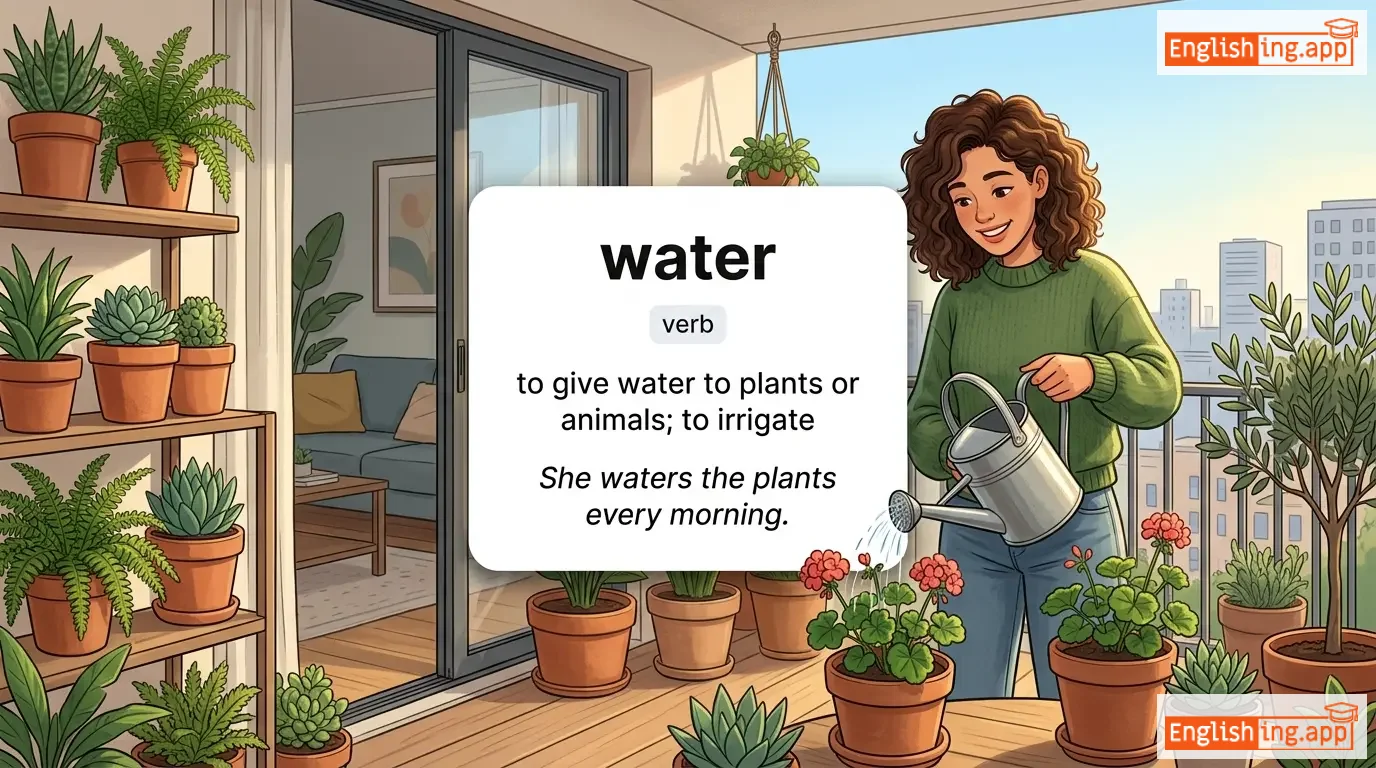
water definition card — visual illustration of the meaning
noun
/ˈwɔːtər/
पानी (pani)

a clear, colorless, odorless, and tasteless liquid that is essential for life

"We need to drink water to stay hydrated."

"हमें हाइड्रेटेड रहने के लिए पानी पीने की आवश्यकता है।" (Humein hydrated rahne ke liye pani peene ki avashyakta hai.)
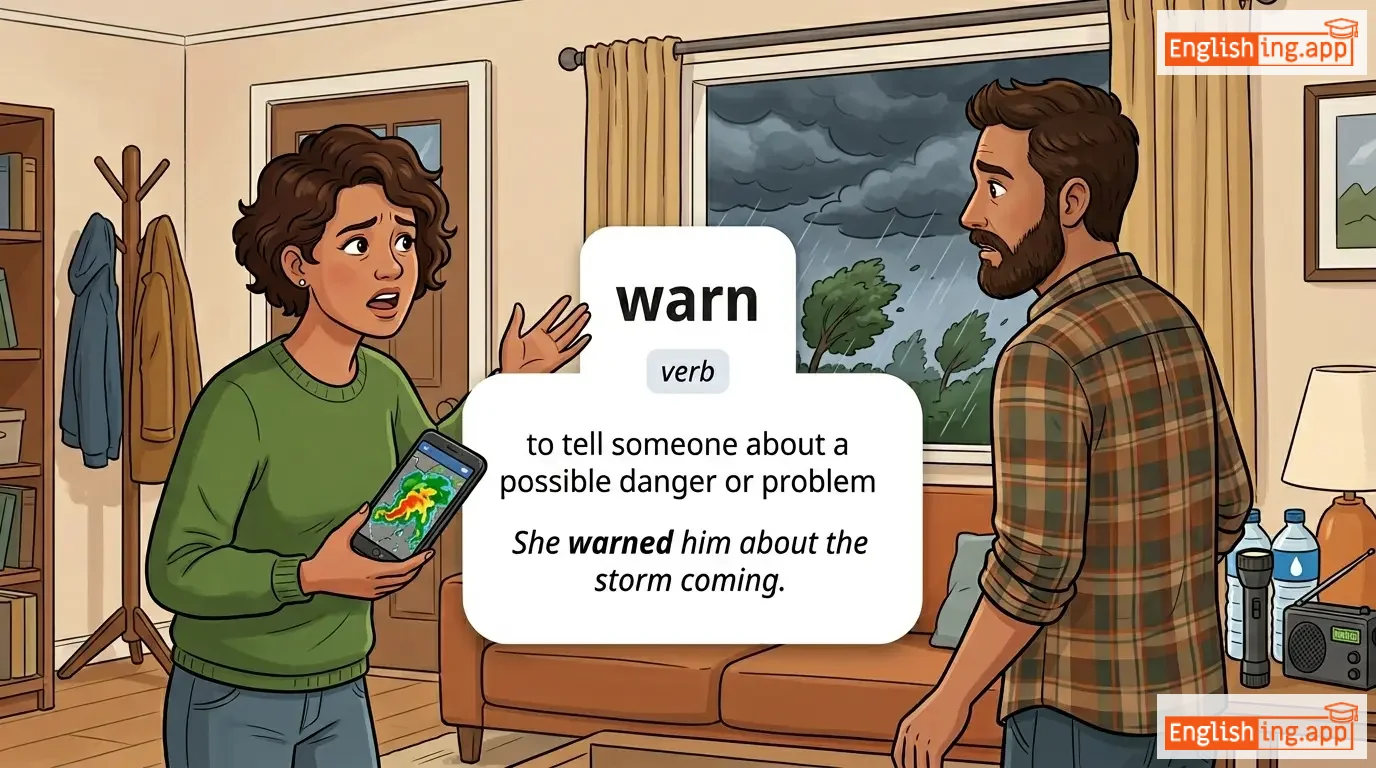
warn definition card — visual illustration of the meaning
verb
/wɔːrn/
चेतावनी देना (chetavani dena)

to tell someone about a possible danger or problem

"She warned him about the storm coming."

"उसने उसे आ रही तूफान के बारे में चेतावनी दी।" (Usne use aa rahi toofan ke baare mein chetavani di.)
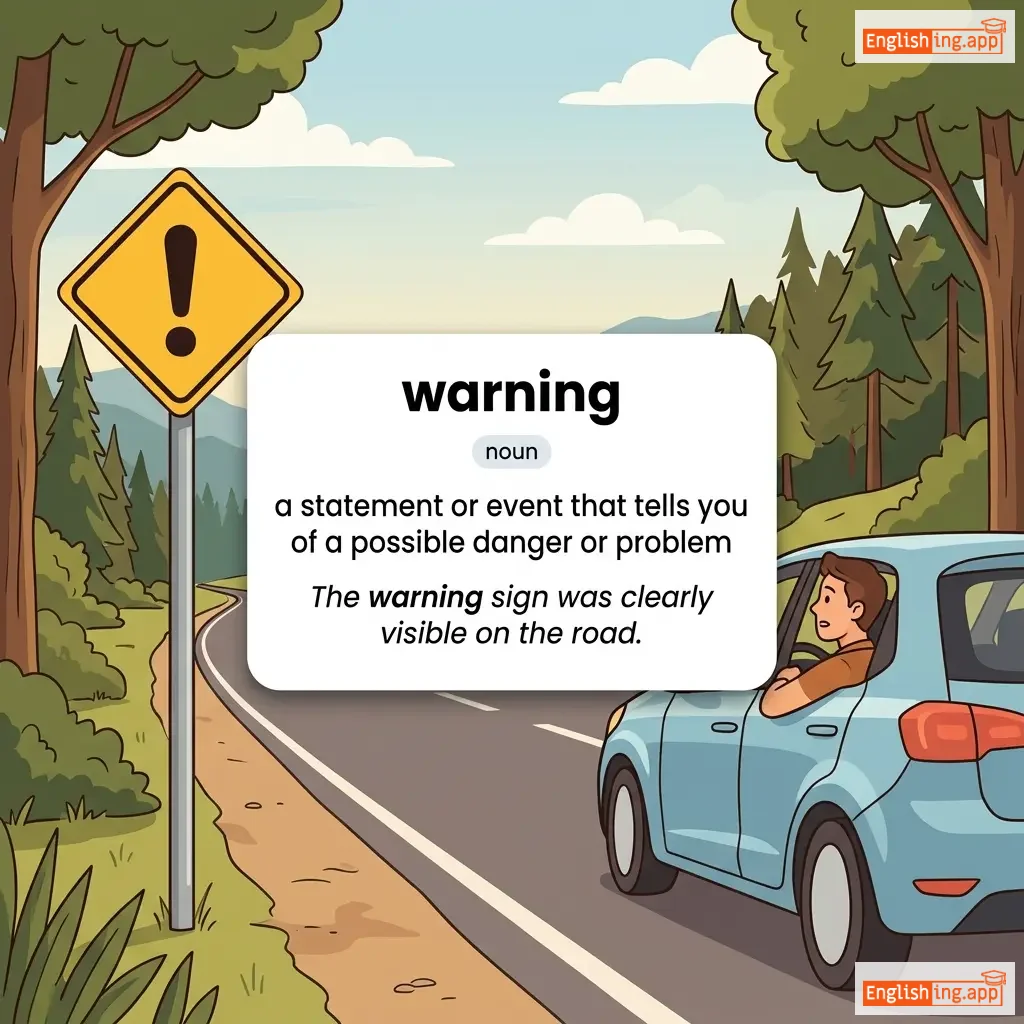
warning definition card — visual illustration of the meaning
noun
/ˈwɔːrnɪŋ/
चेतावनी (chetavni)

a statement or event that tells you of a possible danger or problem

"The warning sign was clearly visible on the road."

"सड़क पर चेतावनी का चिन्ह स्पष्ट रूप से दिखाई दे रहा था।" (Sadak par chetavni ka chinha spashth roop se dikhai de raha tha.)
noun
/ˈwiː.vər bɜːd/
बुनकर पक्षी (bunkar pakshi)

a small bird that builds elaborate woven nests from grass and twigs

"The weaver bird skillfully constructs its intricate nest."

"वीवर बर्ड कुशलता से अपना जटिल घोंसला बनाता है" (weaver bird kushalta se apna jatil ghosla banata hai)
pronoun
/wi/
हम (ham)

used by a speaker to refer to himself or herself and one or more other people

"We are going to the park this afternoon."

"हम इस दोपहर पार्क जा रहे हैं।" (Ham is dopehar park ja rahe hain.)
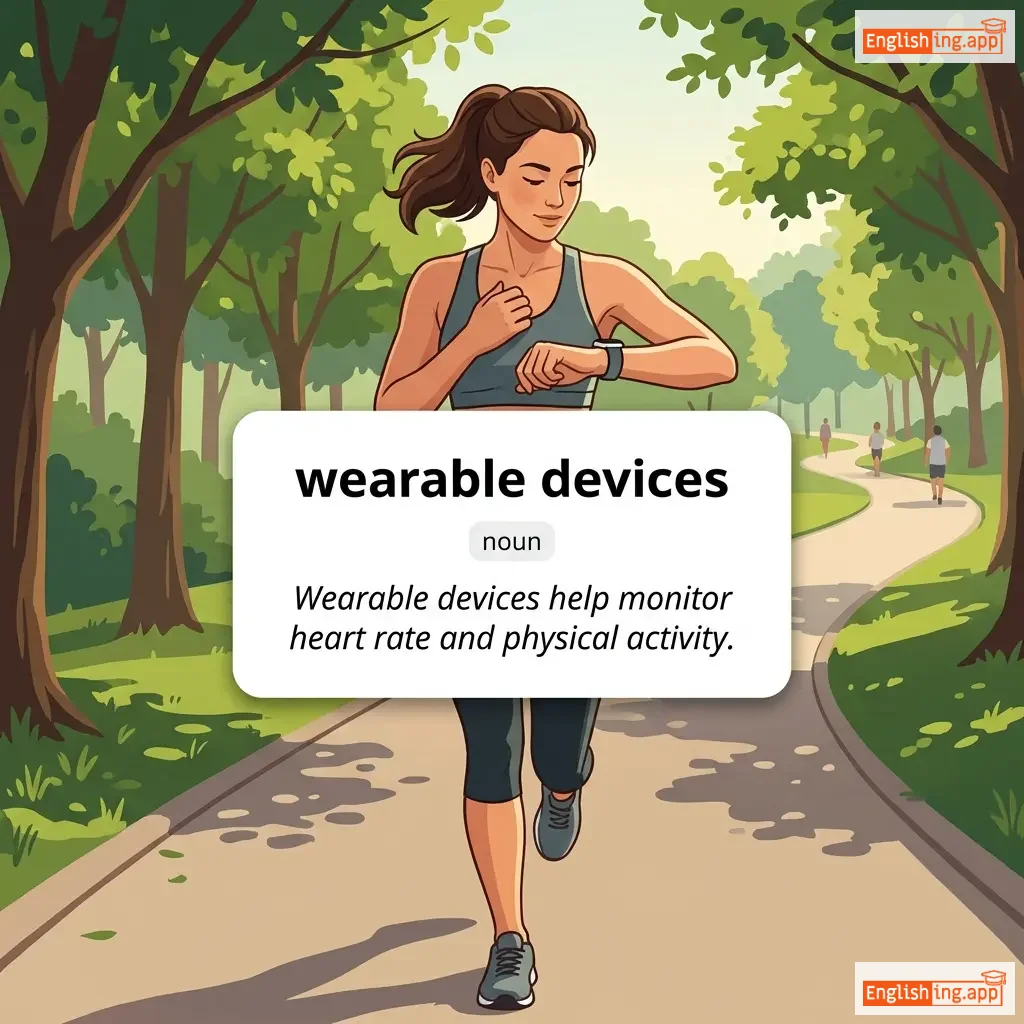
wearable devices definition card — visual illustration of the meaning
noun
ˈweə.rə.bəl dɪˈvaɪ.sɪz
पहनने योग्य उपकरण (pehane yogya upkaran)

Electronic devices that can be worn on the body, typically incorporating smart technology for monitoring health or providing information.

"Wearable devices help monitor heart rate and physical activity."

"वियरएबल डिवाइसेस दिल की धड़कन और शारीरिक गतिविधियों की निगरानी में मदद करते हैं।" (Wearable devices dil ki dhadkan aur sharirik gatividhiyon ki nigrani mein madad karte hain.)
adjective
/ˈwɛlθi/
अमीर (ameer)

having a great deal of money, resources, or assets

"He became wealthy after investing in real estate."

"वह रियल एस्टेट में निवेश करने के बाद अमीर हो गया।" (Vah real estate mein nivesh karne ke baad ameer ho gaya.)
adjective
/ˈwiːkli/
साप्ताहिक (saptahik)

occurring or done every week

"We have a weekly meeting on Mondays."

"हमारी साप्ताहिक बैठक सोमवार को होती है।" (Hamari saptahik baithak somvaar ko hoti hai.)
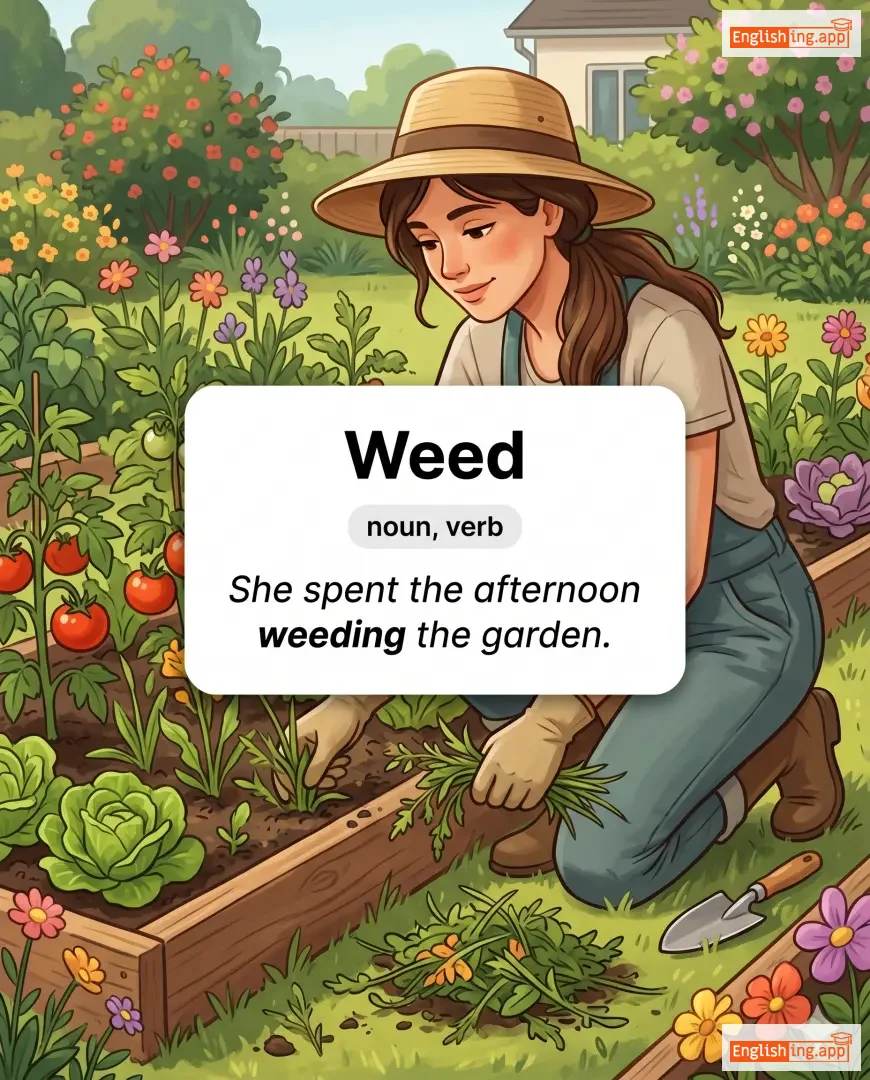
Weed definition card — visual illustration of the meaning
noun, verb
/wiːd/
घास (ghas)

a wild plant growing where it is not wanted, especially among crops; to remove such plants

"She spent the afternoon weeding the garden."

"वह दोपहर का समय बगिया की घास निकालने में बिता रही थी।" (Wah dopahar ka samay bagiya ki ghas nikaalne mein bita rahi thi.)
noun
/ˈweɪvlət/
छोटी लहर (chhoti lehr)

a small wave or ripple on the surface of water or another medium

"The pond was disturbed only by the tiny wavelets caused by the breeze."

"तालाब केवल हवा से उत्पन्न छोटे लहरों के कारण हिल गया था।" (Talab keval hawa se utpann chhote lehron ke karan hil gaya tha.)
noun
/wæks ˈkændəl/
मोमबत्ती (mombatti)

a cylinder of wax with a wick through it that burns to give light

"We lit a wax candle during the power outage."

"हमने पावर आउटेज के दौरान एक मोमबत्ती जलायी" (hamne power outage ke dauran ek mombatti jalayi)
noun
/wæks ɡɔːrd/
वैक्स लौकी (vaiks lauki)

a large white or green gourd with waxy skin, commonly used in Asian cooking

"The wax gourd soup is very nutritious and helps with digestion."

"वैक्स लौकी का सूप बहुत पौष्टिक होता है और पाचन में मदद करता है।" (vaiks lauki ka soup bahut poshtik hota hai aur pachan mein madad karta hai.)
noun
/ˈwɛdɪŋ/
विवाह (vivāh)

a marriage ceremony, especially considered as including the associated celebrations

"They are planning a wedding in the summer."

"वे गर्मियों में एक शादी की योजना बना रहे हैं।" (Ve garmiyon mein ek shadi ki yojana bana rahe hain.)
adjective
/ˈwɪəri/
थका हुआ (thaka hua)

feeling or showing extreme tiredness, especially as a result of exertion or lack of sleep

"After the long journey, she felt weary and wanted to rest."

"लंबी यात्रा के बाद, उसे थका हुआ महसूस हुआ और वह आराम करना चाहती थी।" (Lambi yatra ke baad, use thaka hua mehsoos hua aur wah aaram karna chahti thi.)
adjective
/ˈwiːk niːd/
डरपोक (darpok)

Lacking determination or courage; easily frightened or yielding.

"The leader was criticized for being weak-kneed in the face of opposition."

"नेता को विरोध का सामना करने में डरपोक होने के लिए आलोचना की गई।" (Neta ko virodh ka samna karne mein darpok hone ke liye alochana ki gayi.)
noun
/ˈwɔːtəʃɛd/
महत्वपूर्ण मोड़, जलविभाजन रेखा (watershed)

An event or period marking a turning point in a situation; also refers to a ridge dividing two drainage areas.

"The independence movement was a watershed in the nation's history."

"स्वतंत्रता आंदोलन राष्ट्र के इतिहास में एक महत्वपूर्ण मोड़ था।" (Svatantrata aandolan rashtr ke itihaas mein ek mahatvapoorn mod tha.)
noun
/ˈwɔː.tər hen/
जल मुर्गी (jal murgi)

a waterbird with dark plumage that lives near ponds and wetlands

"The water hen swam gracefully across the pond."

"जल मुर्गी ने तालाब के पार gracefully तैरा।" (jal murgi ne talab ke paar gracefully tairaa.)
noun
/weɪ/
रास्ता / तरीका (rasta / tarika)

a path, direction, or method of doing something

"He found a new way to solve the problem."

"उसने समस्या को हल करने का एक नया तरीका ढूंढा।" (Usne samasya ko hal karne ka ek naya tarika dhoonda.)
adjective
/wɔːrm/
गर्म (garm)

having a moderate degree of heat

"The warm sunlight made the room feel cozy."

"गर्म धूप ने कमरे को आरामदायक बना दिया।" (Garm dhoop ne kamre ko aaramdayak bana diya.)
verb
/wæks/
क्रमशः बढ़ना (kramashah badhna)

to increase gradually in size, number, strength, or intensity

"The moon will wax until it becomes full."

"चाँद पूर्ण होने तक बढ़ेगा।" (Chaand poorn hone tak badhega.)
noun
/ˈwiːknəs/
कमज़ोरी (kamzori)

a state of being weak; a flaw or shortcoming in character or structure

"His main weakness is his lack of patience."

"उसकी मुख्य कमज़ोरी उसका धैर्य की कमी है।" (Uski mukhya kamzori uska dhairya ki kami hai.)
noun
/ˈwɑː.ʃər mæn/
धोबी (dhobi)

a person whose job is to wash clothes and linens for others

"The washer man collected dirty clothes from every household in the village."

"वॉशर मैन ने गाँव के हर घर से गंदे कपड़े इकट्ठा किए।" (washer main ne gaon ke har ghar se gande kapde ikattha kiye)
adjective
/wiːk/
कमज़ोर (kamzor)

lacking physical strength or energy

"She felt weak after the long run."

"लंबी दौड़ के बाद वह कमज़ोर महसूस कर रही थी।" (Lambi daud ke baad vah kamzor mehsoos kar rahi thi.)
noun
/weɪt/
वजन (vajan)

a measure of how heavy something is

"The weight of the package was 10 kilograms."

"पैकेज का वजन 10 किलोग्राम था।" (Paikej ka vajan 10 kilogram tha.)
noun
/wiːk/
सप्ताह (saptah)

a period of seven days

"I will finish the project by the end of the week."

"मैं परियोजना को सप्ताह के अंत तक समाप्त कर लूंगा।" (Main pariyojna ko saptah ke ant tak samaapt kar loonga.)
noun
/ˈwɔː.tər ˈtʃes.nʌt/
जल चेस्टनट (jal chestnut)

aquatic plant with edible white crisp tubers

"Water chestnuts add a nice crunch to stir-fry dishes."

"जल चेस्टनट्स सटिर-फ्राई व्यंजनों में अच्छा क्रंच डालते हैं।" (jal chestnuts stir-fry vyanjano mein accha crunch daalte hain)
noun
/wɒsp/
तितली (titli)

a flying insect with a yellow and black striped body and a painful sting

"The wasp stung me when I disturbed its nest."

"वह मुझे डंक मारने के बाद उड़ गया जब मैंने उसका घोंसला disturbed किया।" (Woh mujhe dank maarne ke baad ud gaya jab maine uska ghosla disturbed kiya.)
noun
/wɛst/
पश्चिम (pashchim)

the direction to the left of the north and to the right of the south, typically associated with the sunset

"The sun sets in the west."

"सूरज पश्चिम में अस्त होता है।" (Suraj pashchim mein ast hota hai.)
adverb
/wɒtˈsəʊɛvər/
बिलकुल भी (bilkul bhi)

used for emphasis after a negative statement to mean 'at all'

"She has no interest in the matter whatsoever."

"उसको इस मामले में कोई रुचि नहीं है, बिल्कुल भी।" (Usko is maamle mein koi ruchi nahi hai, bilkul bhi.)
noun
/wɛlp/
पिल्ला (pilla)

a young offspring of a dog or other carnivorous mammal; sometimes used to mean an impudent young person

"The farmer found a wolf whelp hiding near the barn."

"किसान ने खलिहान के पास एक भेड़िए के पिल्ले को छिपते हुए पाया।" (Kisaan ne khalihaan ke paas ek bhediye ke pille ko chhipte hue paaya.)
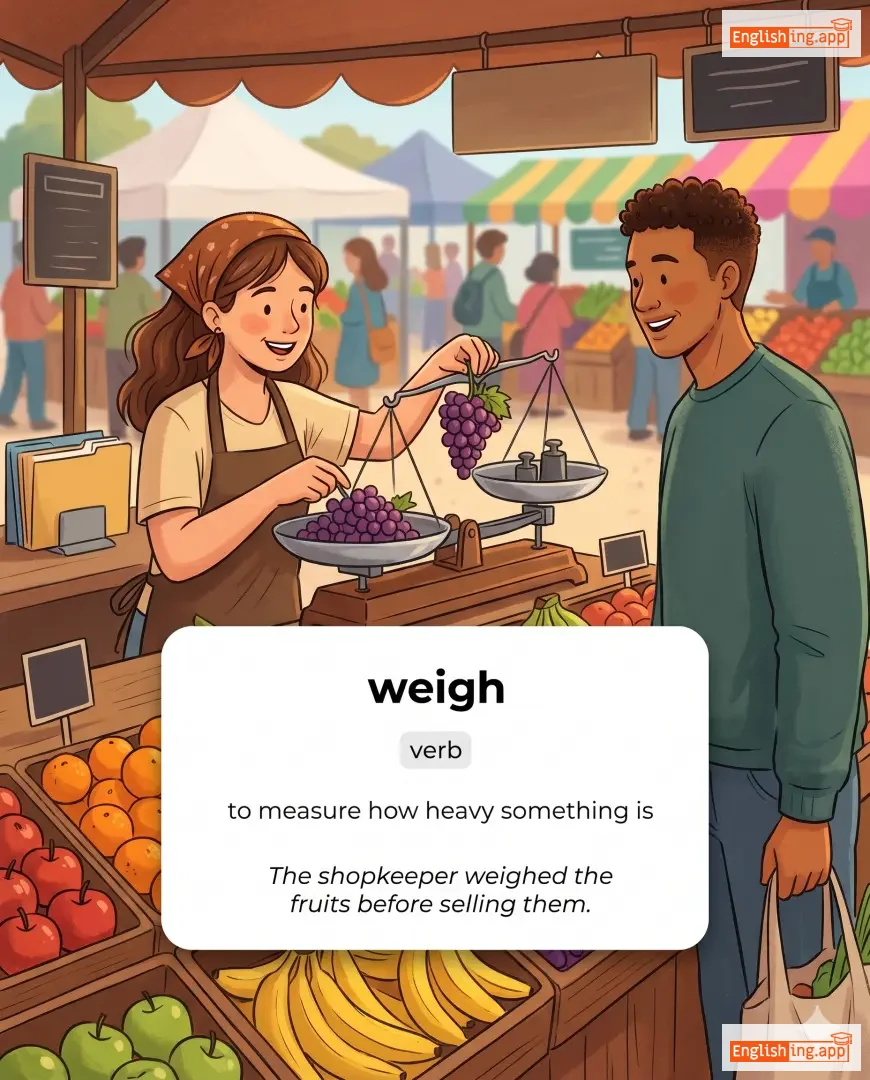
weigh definition card — visual illustration of the meaning
verb
/weɪ/
तौलना (taulna)

to measure how heavy something is

"The shopkeeper weighed the fruits before selling them."

"दुकानदार ने फल बेचने से पहले तौल लिया।" (Dukandaar ne phal bechne se pehle taul liya.)
adjective
/ˌwel bɪˈheɪvd/
शिष्ट; सभ्य; (shisht; sabhya)

conducting oneself in a proper and polite manner; showing good manners

"The children were well-behaved during the ceremony."

"समारोह के दौरान बच्चे शिष्ट थे।" (samaroh ke dauran bachche shisht the.)
Welcome definition card — visual illustration of the meaning
verb
/ˈwɛlkəm/
स्वागत (swāgat)

to greet someone in a friendly way

"They welcomed us with open arms at the party."

"उन्होंने हमें पार्टी में खुले हाथों से स्वागत किया।" (Unhone humein party mein khule haathon se swāgat kiya.)
noun
/ˈwɛlkɪn/
आकाश (aakash)

The sky, the heavens, or the upper air.

"The eagle soared high into the welkin."

"ईगल आकाश में ऊँचाई पर उड़ गया।" (Eagle aakash mein unchai par ud gaya.)
noun
/ˈweɪtˌlɪftɪŋ/
भारोत्तोलन (bharottolan)

the sport or activity of lifting heavy weights to build strength and muscle

"Weightlifting requires discipline, proper technique, and consistent training."

"भारोत्तोलन के लिए अनुशासन और सही तकनीक आवश्यक है।" (bharottolan ke liye anushasan aur sahi technique avashyak hai)
pronoun
/wɒt/
क्या (kya)

used to ask for information about something

"What is your name?"

"तुम्हारा नाम क्या है?" (Tumhara naam kya hai?)
noun
/wɛlt/
उभार (ubhaar)

A raised mark on the skin, usually from a blow or allergic reaction.

"He had a red welt on his arm after the bee sting."

"मधुमक्खी के डंक के बाद उसके हाथ पर एक लाल उभार था।" (Madhumakkhi ke dank ke baad uske haath par ek lal ubhaar tha.)
adjective
/wɪrd/
अजीब (ajeeb)

suggesting something supernatural or very strange; unusual

"The movie had a weird ending that nobody expected."

"फिल्म का एक अजीब अंत था जिसे किसी ने भी उम्मीद नहीं की थी।" (Film ka ek ajeeb ant tha jise kisi ne bhi ummid nahi ki thi.)
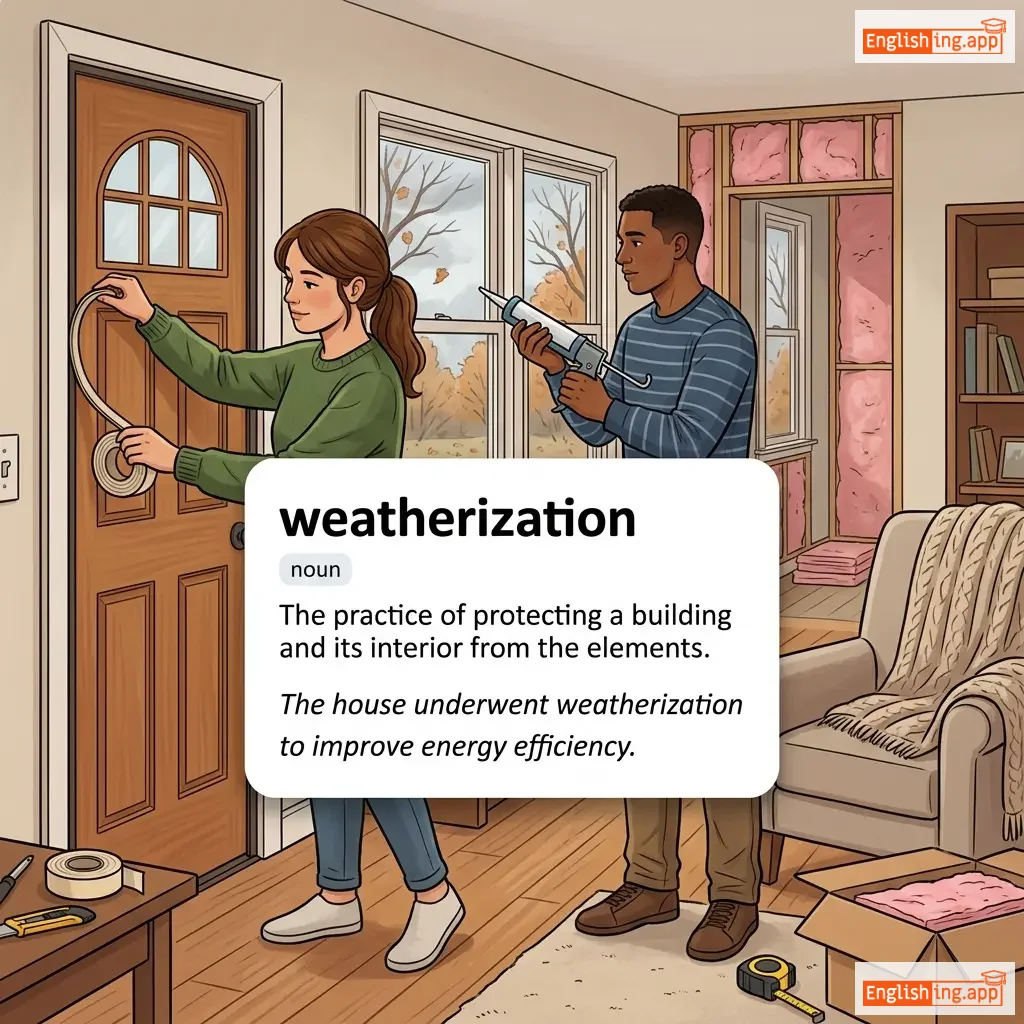
weatherization definition card — visual illustration of the meaning
noun
ˌwɛðəraɪˈzeɪʃən
मौसम के अनुसार अनुकूलन (mausam ke anusar anukoolan)

The practice of protecting a building and its interior from the elements.

"The house underwent weatherization to improve energy efficiency."

"घर की ऊर्जा दक्षता बढ़ाने के लिए मौसम के अनुसार अनुकूलन किया गया।" (Ghar ki urja dakshata badhane ke liye mausam ke anusar anukoolan kiya gaya.)