词汇表

英语词汇词典 | 单词含义、定义和示例

adjective
/ˌwɛlˈbrɛd/
有教养的 (yǒu jiàoyǎng de)

Having or showing good manners; properly raised.

"She is a well-bred young lady with excellent manners."

"她是一个有教养的年轻女士,举止优雅。" (Tā shì yīgè yǒu jiàoyǎng de niánqīng nǚshì, jǔzhǐ yōuyǎ.)
noun
/weɪl/
鲸鱼 (jingyu)

a very large marine mammal that lives in the ocean

"We saw a huge whale swimming near the boat."

"我们看到一只巨大的鲸鱼在船旁游泳。" (wǒmen kàn dào yī zhī jùdà de jīngyú zài chuán páng yóuyǒng.)
noun
/ˈwel.wɪʃ.ər/
祝愿者 (zhù yuàn zhě)

a person who desires happiness or success for another

"Many well-wishers came to congratulate her on her graduation."

"许多祝愿者来祝贺她毕业。" (Xǔduō zhùyuàn zhě lái zhùhè tā bìyè.)
noun
/ˈwɛlfɛr/
福利 (fúlì)

the health, happiness, and fortunes of a person or group

"The government provides welfare to low-income families."

"政府为低收入家庭提供福利。" (Zhèngfǔ wèi dī shōurù jiātíng tígōng fúlì.)
noun
/ˈwɒʃ.ɪŋ məˌʃiːn/
洗衣机 (wa shing ma sheen)

a machine for washing clothes and other textiles

"The washing machine broke down and needs repair."

"洗衣机坏了,需要修理。" (The washing machine broke down and needs repair.)
noun
/wiːt/
小麦 (xiaomai)

a cereal plant whose grain is used to make flour for bread and other foods

"Farmers harvested the wheat in early summer."

"农民在夏季初收割了小麦。" (nongmin zai xiaji chu shouge le xiaomai.)
noun
/ˈwɒrənti/
保修期 (baoxiūqī)

A written guarantee given by a manufacturer or seller promising to repair or replace a product if necessary within a specified period.

"The laptop comes with a two-year warranty."

"这台笔记本电脑附带两年的保修期。" (Zhè tái bǐjìběn diànnǎo fùdài liǎng nián de bǎoxiūqī.)
noun
/wiːl/
幸福 (xìngfú)

A raised mark on the skin left after a blow; or general well-being and prosperity.

"The charity worked for the common weal of the community."

"当她获得奖项时,她无法掩饰自己的幸福。" (Dāng tā huò dé jiǎngxiàng shí, tā wúfǎ yǎnshì zìjǐ de xìngfú.)
adjective
/ˈwɪərɪsəm/
令人疲倦的 (lìng rén píjuàn de)

Causing one to feel tired or bored.

"The long and wearisome lecture put the students to sleep."
"漫长且令人疲倦的讲座让学生们睡着了。" (Màncháng qiě lìng rén píjuàn de jiǎngzuò ràng xuéshēngmen shuìzhe le.)
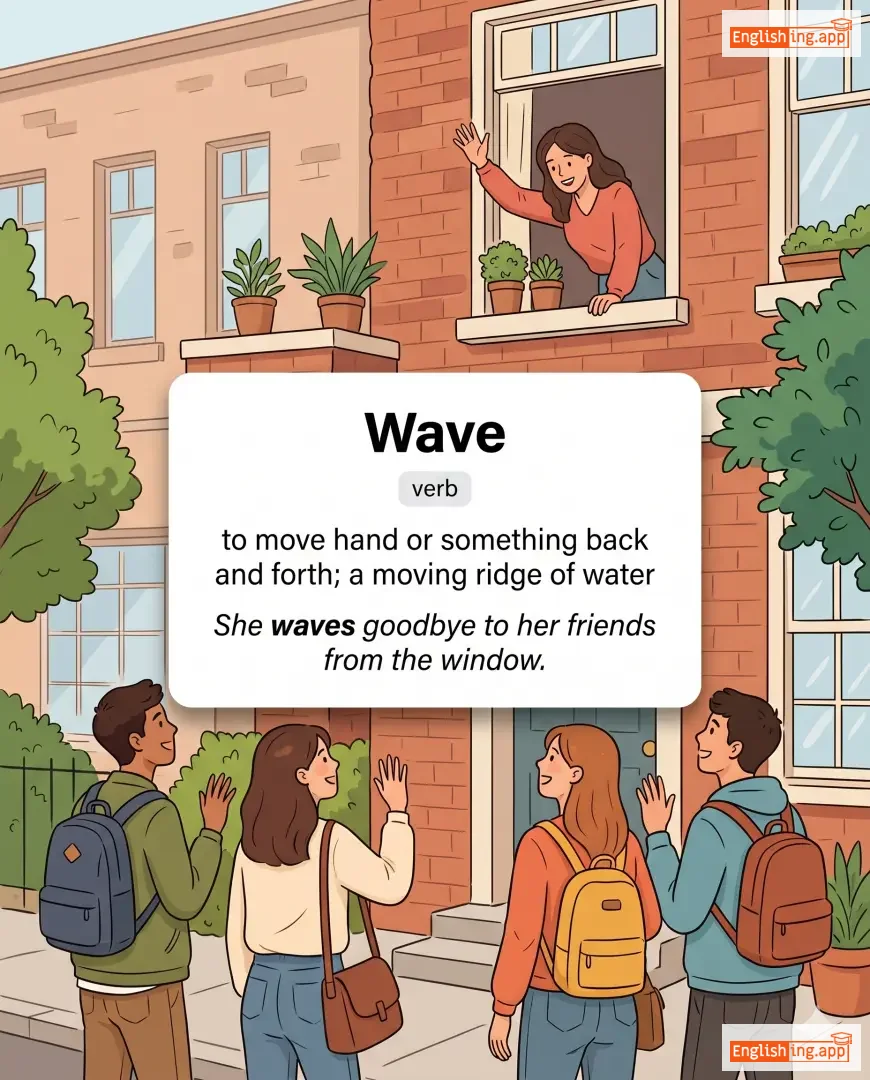
Wave definition card — visual illustration of the meaning
noun
/weɪv/
波浪 (bolang)

a long body of water curling into an arched form and breaking on the shore

"The waves crashed against the rocks during the storm."

"暴风雨中,波浪撞击岩石。" (Baofengyu zhong, bolang zhuangji yanshi.)
noun
/ˈwɛnzdeɪ/
星期三 (xingqisan)

the fourth day of the week, following Tuesday and preceding Thursday

"The meeting has been scheduled for Wednesday afternoon."
"会议安排在星期三下午。" (huiyi anpai zai xingqisan xiawu)
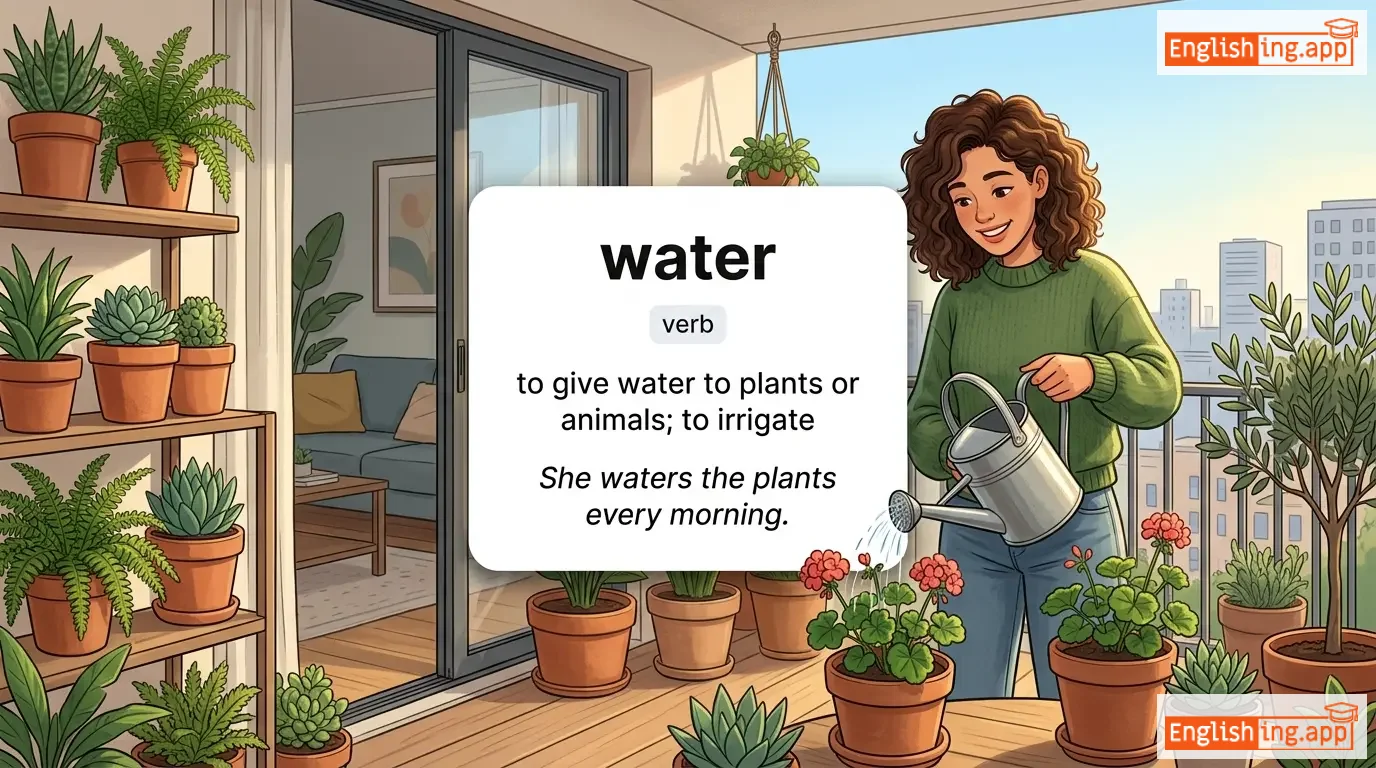
water definition card — visual illustration of the meaning
noun
/ˈwɔːtər/
(shui)

a clear, colorless, odorless, and tasteless liquid that is essential for life

"We need to drink water to stay hydrated."
"我们需要喝水以保持水分。" (Wǒmen xūyào hē shuǐ yǐ bǎochí shuǐfèn.)
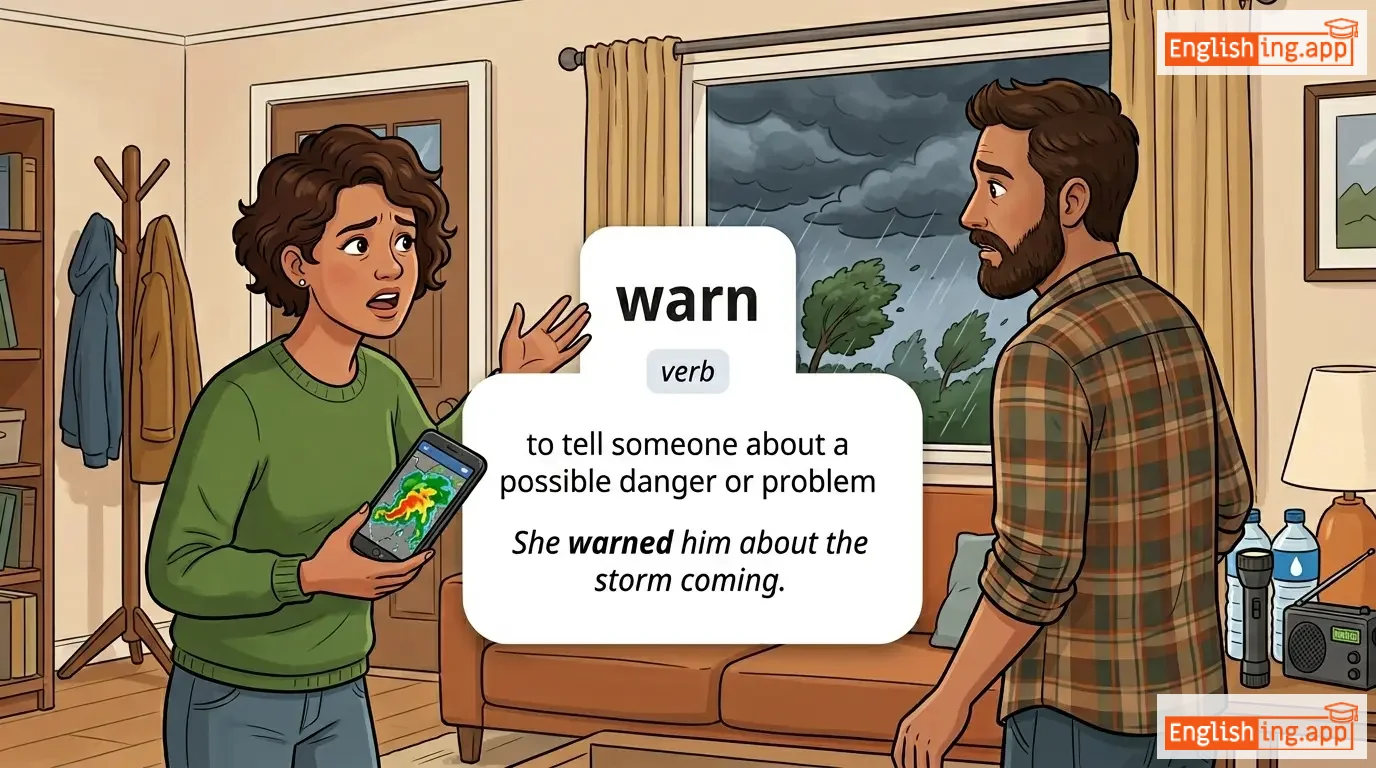
warn definition card — visual illustration of the meaning
verb
/wɔːrn/
警告 (jinggao)

to tell someone about a possible danger or problem

"She warned him about the storm coming."

"她警告他即将来临的暴风雨。" (Ta jinggao ta jijiang lailin de baofengyu.)
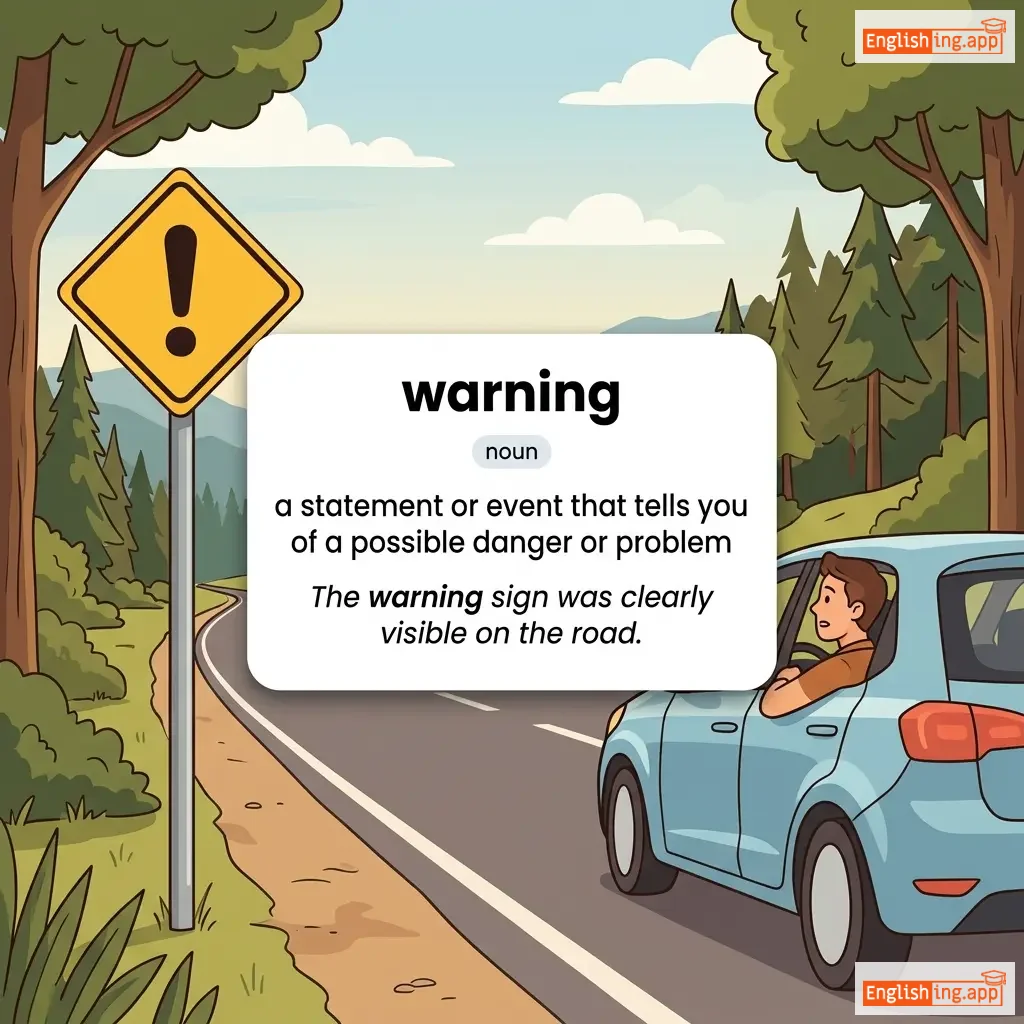
warning definition card — visual illustration of the meaning
noun
/ˈwɔːrnɪŋ/
警告 (jinggao)

a statement or event that tells you of a possible danger or problem

"The warning sign was clearly visible on the road."

"路上的警告标志清晰可见。" (Lùshàng de jǐnggào biāozhì qīngxī kějiàn.)
noun
/ˈwiː.vər bɜːd/
织布鸟 (zhibu niao)

a small bird that builds elaborate woven nests from grass and twigs

"The weaver bird skillfully constructs its intricate nest."
"织布鸟巧妙地建造它复杂的巢穴" (Zhibu niao qiǎomiào de jiànzào tā fùzá de cháoxué)
pronoun
/wi/
我们 (women)

used by a speaker to refer to himself or herself and one or more other people

"We are going to the park this afternoon."

"我们今天下午要去公园。" (Wǒmen jīntiān xiàwǔ yào qù gōngyuán.)
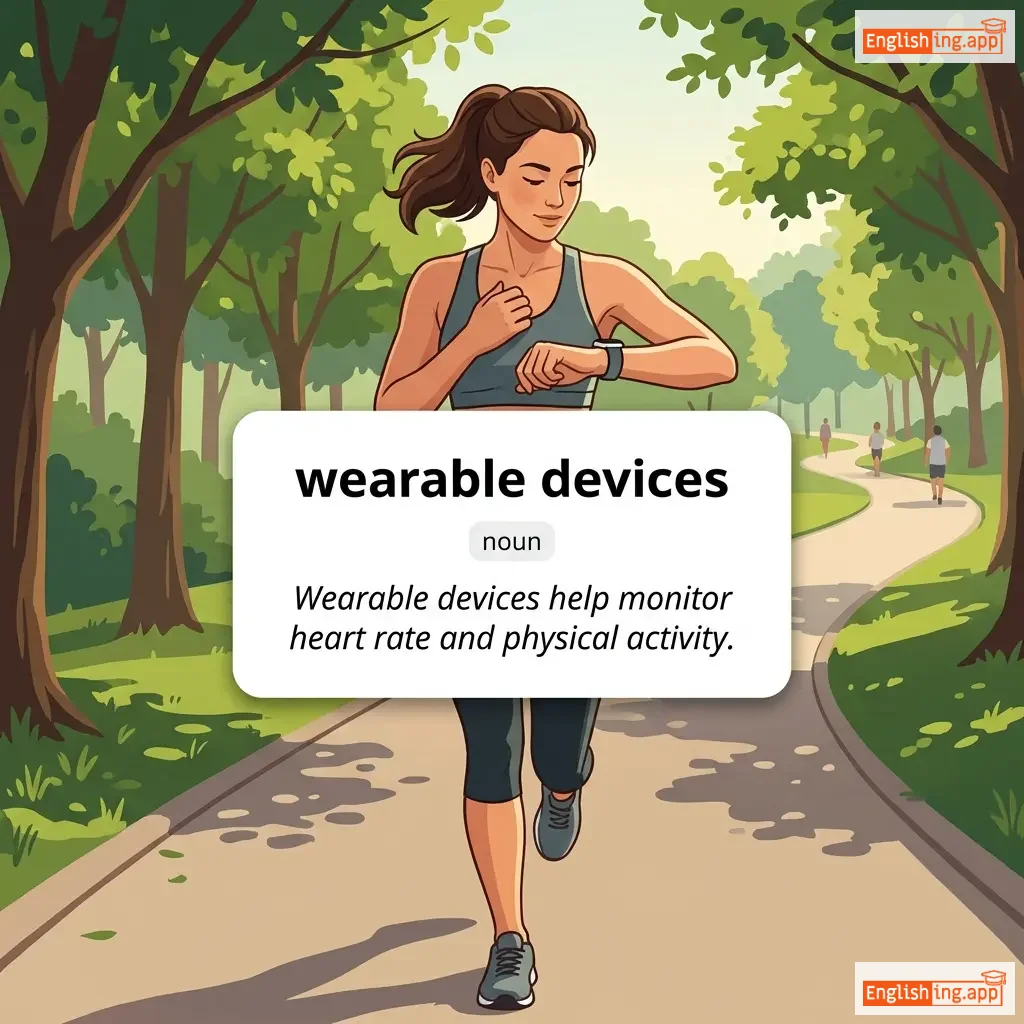
wearable devices definition card — visual illustration of the meaning
noun
ˈweə.rə.bəl dɪˈvaɪ.sɪz
可穿戴设备 (kě chuāndài shèbèi)

Electronic devices that can be worn on the body, typically incorporating smart technology for monitoring health or providing information.

"Wearable devices help monitor heart rate and physical activity."

"可穿戴设备帮助监测心率和身体活动。" (Kě chuāndài shèbèi bāngzhù jiāncè xīnlǜ hé shēntǐ huódòng.)
adjective
/ˈwɛlθi/
富有 (fùyǒu)

having a great deal of money, resources, or assets

"He became wealthy after investing in real estate."

"他在房地产投资后变得富有。" (Tā zài fángdìchǎn tóuzī hòu biàn dé fùyǒu.)
adjective
/ˈwiːkli/
每周的 (mei zhou de)

occurring or done every week

"We have a weekly meeting on Mondays."
"我们每周一有例会。" (Women mei zhou yi you lihui.)
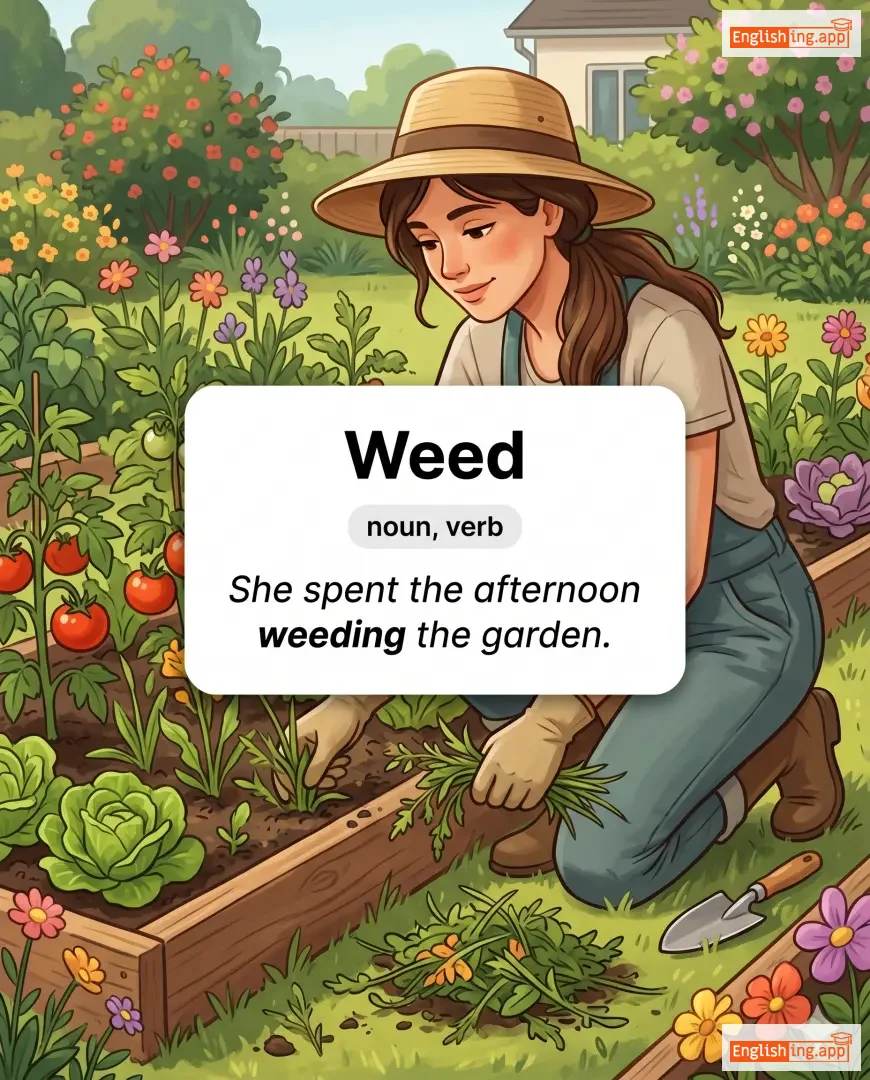
Weed definition card — visual illustration of the meaning
noun, verb
/wiːd/
杂草 (zácǎo)

a wild plant growing where it is not wanted, especially among crops; to remove such plants

"She spent the afternoon weeding the garden."

"她花了下午的时间除草。" (Tā huāle xiàwǔ de shíjiān chúcǎo.)
noun
/ˈweɪvlət/
小波 (xiao bo)

a small wave or ripple on the surface of water or another medium

"The pond was disturbed only by the tiny wavelets caused by the breeze."

"池塘只有微风引起的小波动才会扰动。" (Chítáng zhǐyǒu wēifēng yǐnqǐ de xiǎo bōdòng cái huì rǎodòng.)
noun
/wæks ˈkændəl/
蜡烛 (làzhú)

a cylinder of wax with a wick through it that burns to give light

"We lit a wax candle during the power outage."

"在停电期间我们点燃了一支蜡烛" (zài tíngdiàn qījiān wǒmen diǎn ránle yī zhī là zhú)
noun
/wæks ɡɔːrd/
蜡质葫芦 (làzhì húlu)

a large white or green gourd with waxy skin, commonly used in Asian cooking

"The wax gourd soup is very nutritious and helps with digestion."

"蜡质葫芦汤非常有营养,有助于消化。" (làzhì húlu tāng fēicháng yǒu yíngyǎng, yǒu zhù yú xiāohuà.)
noun
/ˈwɛdɪŋ/
婚礼 (hūn lǐ)

a marriage ceremony, especially considered as including the associated celebrations

"They are planning a wedding in the summer."

"他们正在计划一个夏季婚礼。" (Tāmen zhèngzài jìhuà yīgè xiàjì hūn lǐ.)
adjective
/ˈwɪəri/
疲倦 (pí juàn)

feeling or showing extreme tiredness, especially as a result of exertion or lack of sleep

"After the long journey, she felt weary and wanted to rest."

"长途旅行后,她感到疲惫,想休息。" (Chángtú lǚxíng hòu, tā gǎndào píbèi, xiǎng xiūxí.)
adjective
/ˈwiːk niːd/
胆小 (dan xiao)

Lacking determination or courage; easily frightened or yielding.

"The leader was criticized for being weak-kneed in the face of opposition."

"领导者因在面对反对时胆小而受到批评。" (Lingdaozhe yin zai miandui fandui shi danxiao er shoudao piping.)
noun
/ˈwɔːtəʃɛd/
分水岭, 转折点 (watershed)

An event or period marking a turning point in a situation; also refers to a ridge dividing two drainage areas.

"The independence movement was a watershed in the nation's history."

"独立运动是国家历史中的一个分水岭。" (Dúlì yùndòng shì guójiā lìshǐ zhōng de yīgè fēnshuǐ lǐng.)
noun
/ˈwɔː.tər hen/
水鸡 (shuǐ jī)

a waterbird with dark plumage that lives near ponds and wetlands

"The water hen swam gracefully across the pond."

"水鸡优雅地穿过池塘游泳。" (Shuǐ jī yōuyǎ dì chuānguò chítáng yóuyǒng.)
🛣️

Way (wēi)

noun
/weɪ/
道路 / 方法 (dàolù / fāngfǎ)

a path, direction, or method of doing something

"He found a new way to solve the problem."

"他找到了一个解决问题的新方法。" (Tā zhǎodào le yī gè jiějué wèntí de xīn fāngfǎ.)
adjective
/wɔːrm/
温暖 (wēn nuǎn)

having a moderate degree of heat

"The warm sunlight made the room feel cozy."

"温暖的阳光让房间变得舒适。" (Wēnnuǎn de yángguāng ràng fángjiān biàn dé shūshì.)
🌕

Wax

verb
/wæks/

to increase gradually in size, number, strength, or intensity

"The moon will wax until it becomes full."

noun
/ˈwiːknəs/
弱点 (ruòdiǎn)

a state of being weak; a flaw or shortcoming in character or structure

"His main weakness is his lack of patience."

"他最大的弱点是缺乏耐心。" (Tā zuìdà de ruòdiǎn shì quēfá nàixīn.)
noun
/ˈwɑː.ʃər mæn/
洗衣工 (xǐyī gōng)

a person whose job is to wash clothes and linens for others

"The washer man collected dirty clothes from every household in the village."

"洗衣工从村庄的每个家庭收集脏衣服。" (xǐ yī gōng cóng cūn zhuāng de měi gè jiā tíng shōu jí zāng yī fú)
adjective
/wiːk/
虚弱 (xuruo)

lacking physical strength or energy

"She felt weak after the long run."

"她在长跑后感到虚弱。" (Ta zai changpao hou gandu xuruo.)
noun
/weɪt/
重量 (zhòng liàng)

a measure of how heavy something is

"The weight of the package was 10 kilograms."

"包裹的重量是10公斤。" (Bāoguǒ de zhòng liàng shì 10 gōngjīn.)
noun
/wiːk/
星期 (xīngqī)

a period of seven days

"I will finish the project by the end of the week."

"我将在本周末之前完成项目。" (Wǒ jiāng zài běn zhōumò zhīqián wánchéng xiàngmù.)
noun
/ˈwɔː.tər ˈtʃes.nʌt/
水栗 (shuǐ lì)

aquatic plant with edible white crisp tubers

"Water chestnuts add a nice crunch to stir-fry dishes."

"水栗为炒菜增添了愉快的脆感。" (Shuǐ lì wèi chǎocài zēngtiānle yúkuài de cuì gǎn)
noun
/wɒsp/
黄蜂 (huangfeng)

a flying insect with a yellow and black striped body and a painful sting

"The wasp stung me when I disturbed its nest."

"当我打扰它的巢时,黄蜂刺伤了我。" (Dāng wǒ dǎrǎo tā de cháo shí, huángfēng cìshāng le wǒ.)
noun
/wɛst/
西 (xi)

the direction to the left of the north and to the right of the south, typically associated with the sunset

"The sun sets in the west."

"太阳在西方落下。" (Taiyang zai xifang luo xia.)
adverb
/wɒtˈsəʊɛvər/
根本不 (gēnběn bù)

used for emphasis after a negative statement to mean 'at all'

"She has no interest in the matter whatsoever."

"她对这个问题一点兴趣都没有。" (Tā duì zhège wèntí yīdiǎn xìngqù dōu méiyǒu.)
noun
/wɛlp/
小狗 (xiao gou)

a young offspring of a dog or other carnivorous mammal; sometimes used to mean an impudent young person

"The farmer found a wolf whelp hiding near the barn."
"农民在谷仓附近发现了一只藏起来的狼崽。" (Nongmin zai gucang fujin faxian le zhi cang qilai de lang zai.)
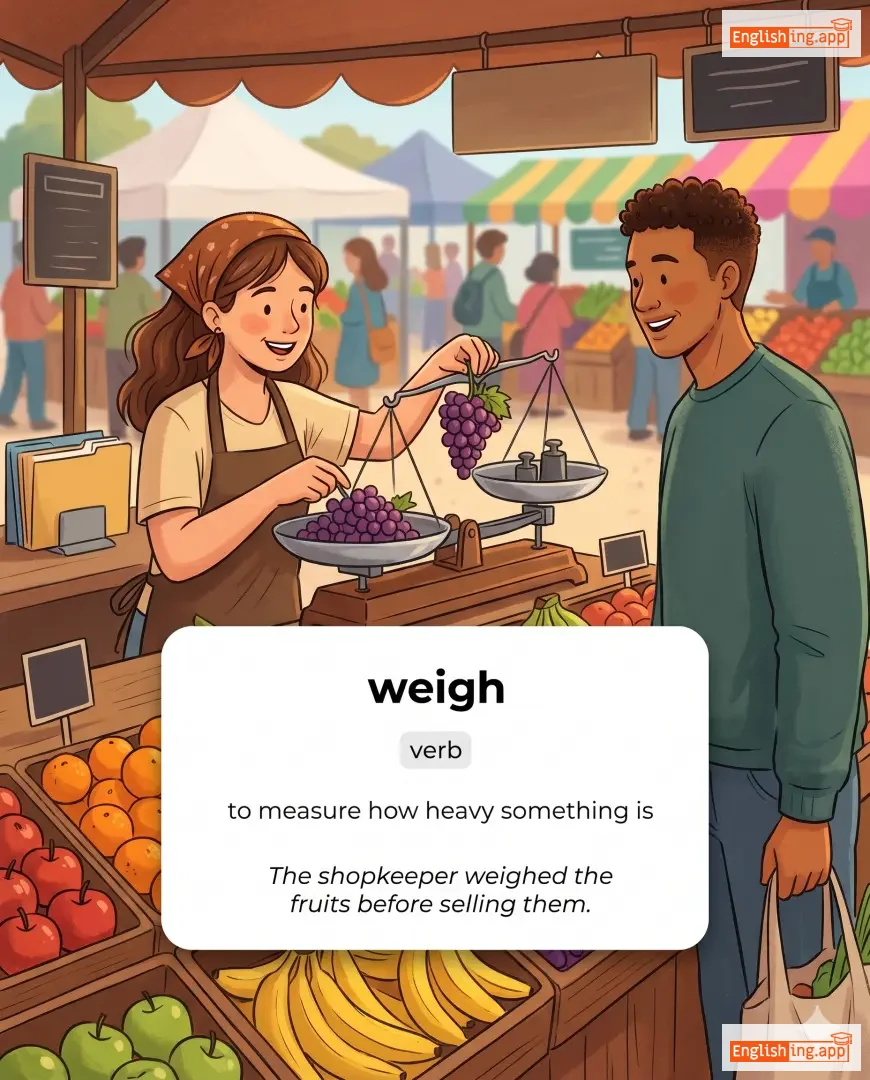
weigh definition card — visual illustration of the meaning
verb
/weɪ/
称重 (chēngzhòng)

to measure how heavy something is

"The shopkeeper weighed the fruits before selling them."

"店主在卖水果前称重。" (Diànzhǔ zài mài shuǐguǒ qián chēngzhòng.)
adjective
/ˌwel bɪˈheɪvd/
行为良好 (xíngwéi liánghǎo)

conducting oneself in a proper and polite manner; showing good manners

"The children were well-behaved during the ceremony."

"孩子们在仪式期间表现得很乖。" (Háizimen zài yíshì qījiān biǎoxiàn dé hěn guāi.)
Welcome definition card — visual illustration of the meaning
verb
/ˈwɛlkəm/
欢迎 (huānyíng)

to greet someone in a friendly way

"They welcomed us with open arms at the party."

"他们在派对上张开双臂欢迎我们。" (Tāmen zài pàiduì shàng zhāng kāi shuāng bì huānyíng wǒmen.)
noun
/ˈwɛlkɪn/
天空 (tiānkōng)

The sky, the heavens, or the upper air.

"The eagle soared high into the welkin."

"鹰飞得高进入了天空。" (Yīng fēi dé gāo jìnrùle tiānkōng.)
noun
/ˈweɪtˌlɪftɪŋ/
举重 (ju zhong)

the sport or activity of lifting heavy weights to build strength and muscle

"Weightlifting requires discipline, proper technique, and consistent training."

"举重需要自律和正确的技术。" (ju zhong xuyao zilu he zhengque de jishu)
pronoun
/wɒt/
什么 (shenme)

used to ask for information about something

"What is your name?"

"你叫什么名字?" (Nǐ jiào shénme míngzì?)
noun
/wɛlt/
肿块 (zhǒng kuài)

A raised mark on the skin, usually from a blow or allergic reaction.

"He had a red welt on his arm after the bee sting."

"他在蜜蜂蜇伤后,手臂上有一个红色的肿块。" (Tā zài mìfēng zhē shāng hòu, shǒubì shàng yǒu yīgè hóngsè de zhǒng kuài.)
adjective
/wɪrd/
奇怪 (qiguai)

suggesting something supernatural or very strange; unusual

"The movie had a weird ending that nobody expected."
"电影有一个奇怪的结局,没有人预料到。" (Dianying you yige qiguai de jieju, meiyou ren yuliao dao.)
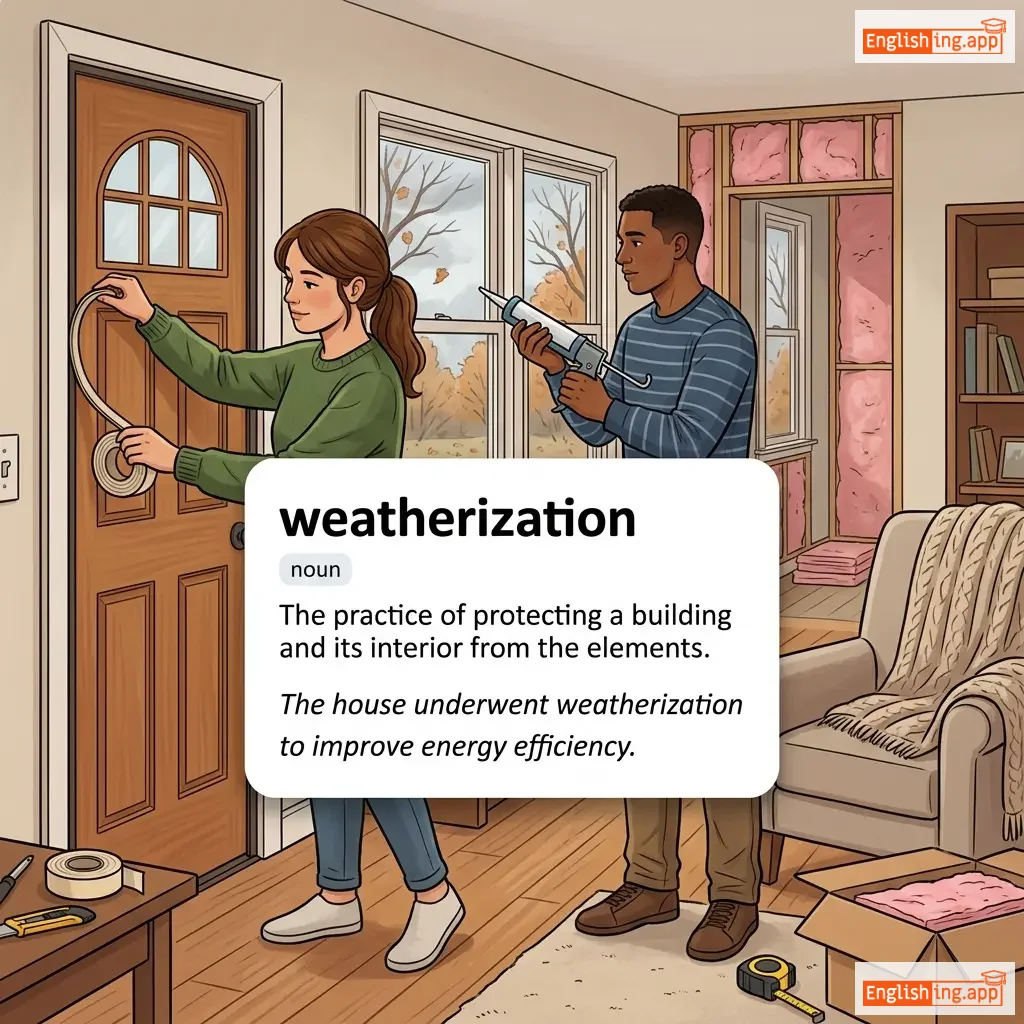
weatherization definition card — visual illustration of the meaning
noun
ˌwɛðəraɪˈzeɪʃən
气候化处理 (qìhòu huà chǔlǐ)

The practice of protecting a building and its interior from the elements.

"The house underwent weatherization to improve energy efficiency."

"这座房子进行了气候化处理以提高能源效率。" (Zhè zuò fángzi jìnxíngle qìhòu huà chǔlǐ yǐ tígāo néngyuán xiàolǜ.)