Словари

Словарь английского языка | Значения слов, определения и примеры

adjective
/ˌwɛlˈbrɛd/
хорошо воспитанный (khorosho vospitannyy)

Having or showing good manners; properly raised.

"She is a well-bred young lady with excellent manners."

"Она хорошо воспитанная молодая леди с отличными манерами." (Ona khorosho vospitannaya molodaya ledi s otlichnymi manerami.)
noun
/weɪl/
кит (kit)

a very large marine mammal that lives in the ocean

"We saw a huge whale swimming near the boat."

"Мы увидели огромного кита, плавающего рядом с лодкой." (My uvideli ogromnogo kita, plavayushchego ryadom s lodkoy.)
noun
/ˈwel.wɪʃ.ər/
добродетель (dobrodetel)

a person who desires happiness or success for another

"Many well-wishers came to congratulate her on her graduation."

"Многие добродетели пришли поздравить её с окончанием учёбы." (Mnogie dobrodeteli prishli pozdravit' yeё s okonchaniem uchyoby.)
noun
/ˈwɛlfɛr/
благосостояние (blagosostoyanie)

the health, happiness, and fortunes of a person or group

"The government provides welfare to low-income families."

"Правительство предоставляет благосостояние семьям с низким доходом." (Pravitel'stvo predostavlyayet blagososotoyaniye sem'yam s nizkim dokhodom.)
noun
/ˈwɒʃ.ɪŋ məˌʃiːn/

a machine for washing clothes and other textiles

"The washing machine broke down and needs repair."

noun
/wiːt/
пшеница (pshenitsa)

a cereal plant whose grain is used to make flour for bread and other foods

"Farmers harvested the wheat in early summer."

"Фермеры убрали пшеницу в начале лета." (Fermery ubrali pshenitsu v nachale leta.)
noun
/ˈwɒrənti/
гарантия (garantiya)

A written guarantee given by a manufacturer or seller promising to repair or replace a product if necessary within a specified period.

"The laptop comes with a two-year warranty."

"Ноутбук поставляется с двухлетней гарантией." (Noutbuk postavlyaetsya s dvukhletney garantiyei.)
noun
/wiːl/
счастье (schast'ye)

A raised mark on the skin left after a blow; or general well-being and prosperity.

"The charity worked for the common weal of the community."

"Она не могла скрыть своего счастья, когда получила награду." (Ona ne mogla skryt' svoego schast'ya, kogda poluchila nagradu.)
adjective
/ˈwɪərɪsəm/
утомительный (utomitel'nyy)

Causing one to feel tired or bored.

"The long and wearisome lecture put the students to sleep."
"Долгая и утомительная лекция заставила студентов уснуть." (Dolgaya i utomitel'naya lektsiya zastavila studentov usnut'.)
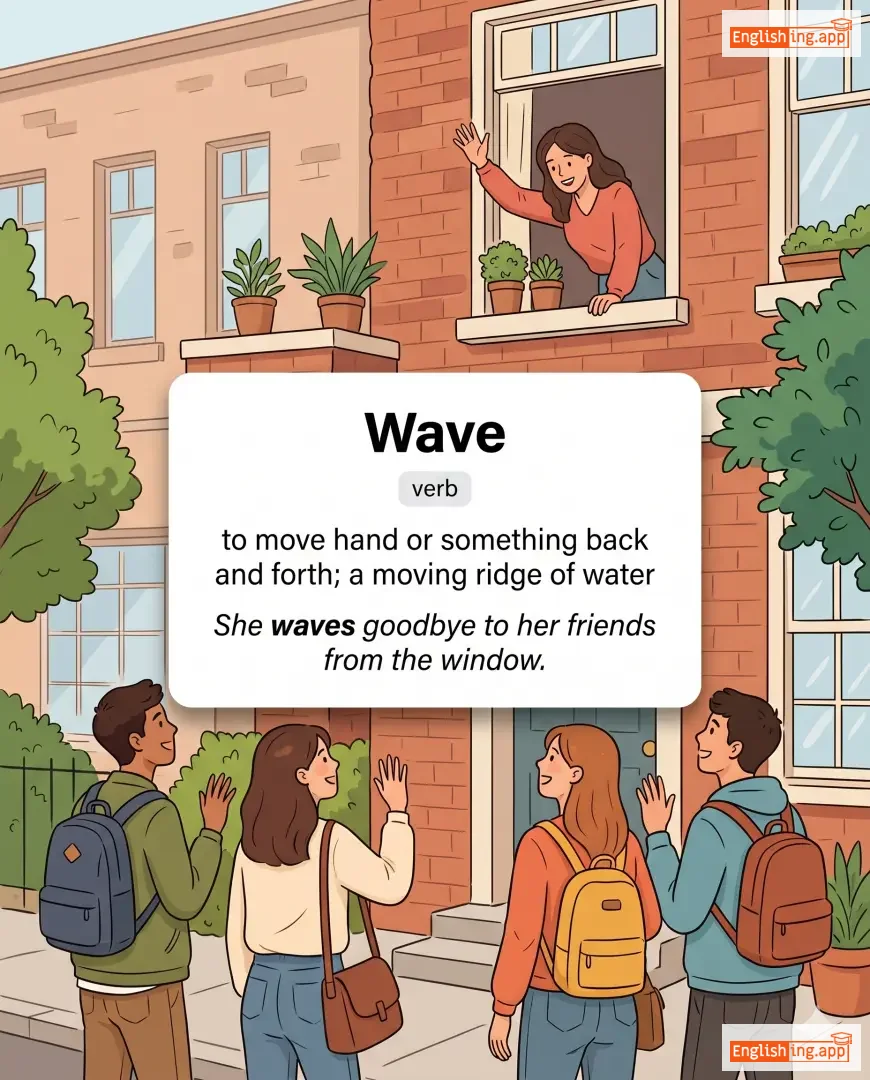
Wave definition card — visual illustration of the meaning
noun
/weɪv/
волна (volna)

a long body of water curling into an arched form and breaking on the shore

"The waves crashed against the rocks during the storm."

"Волны разбивались о камни во время бури." (Volny razbivalis' o kamni vo vremya buri.)
noun
/ˈwɛnzdeɪ/
среда (sreda)

the fourth day of the week, following Tuesday and preceding Thursday

"The meeting has been scheduled for Wednesday afternoon."
"Встреча назначена на среду днём." (vstrecha naznachena na sredu dnyom)
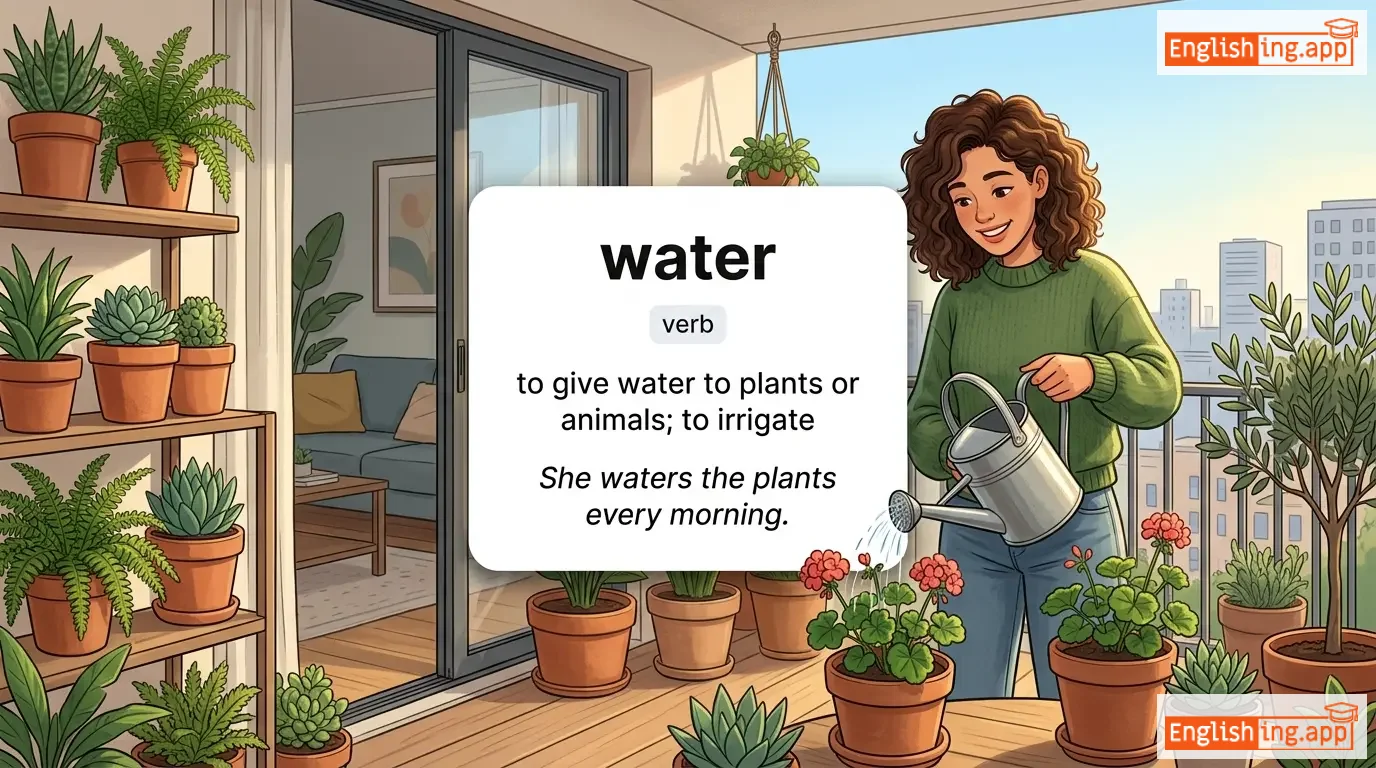
water definition card — visual illustration of the meaning
noun
/ˈwɔːtər/
вода (voda)

a clear, colorless, odorless, and tasteless liquid that is essential for life

"We need to drink water to stay hydrated."
"Нам нужно пить воду, чтобы оставаться гидратированными." (Nam nuzhno pit' vodu, chtoby ostavatsya gidratirovannymi.)
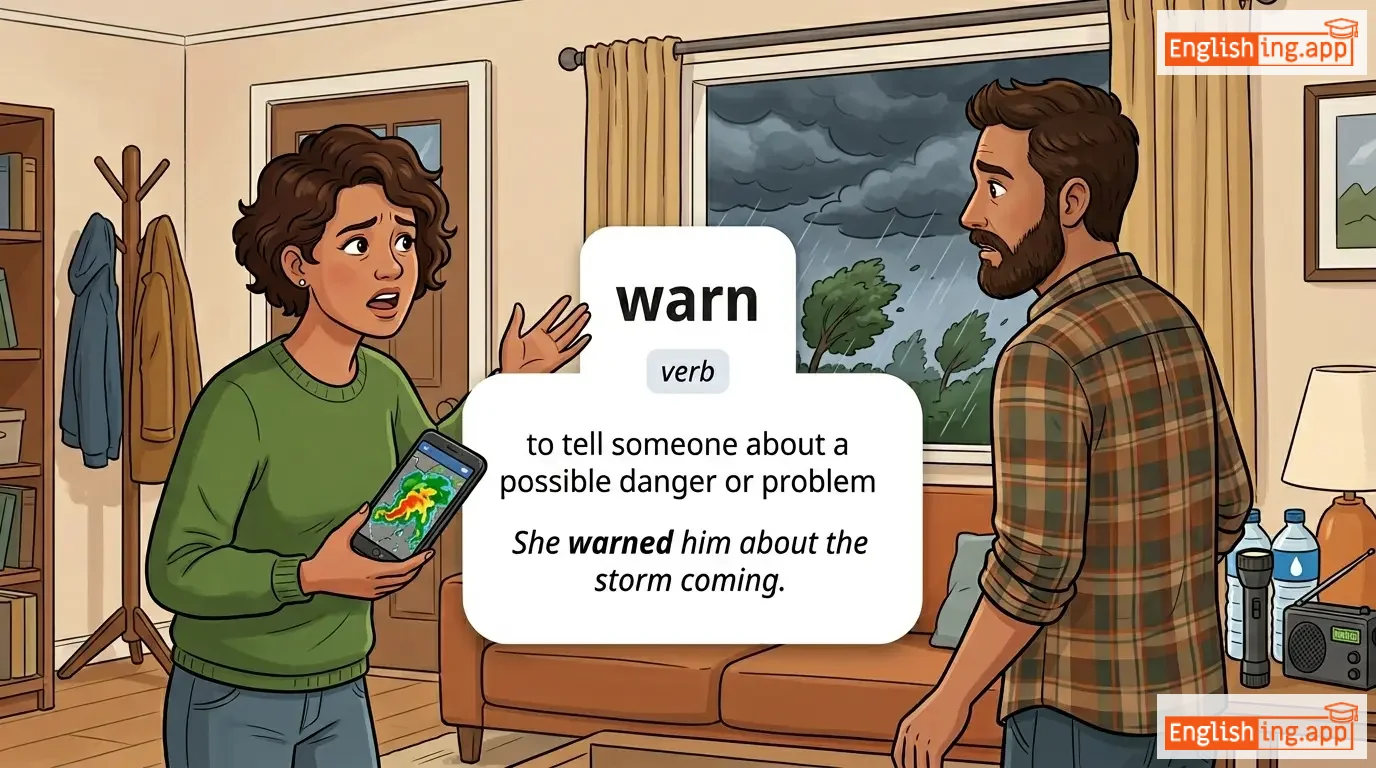
warn definition card — visual illustration of the meaning
verb
/wɔːrn/
предупредить (predupredit)

to tell someone about a possible danger or problem

"She warned him about the storm coming."
"Она предупредила его о приближающемся шторме." (Ona predupredila ego o priblizhayushchimsya shtorme.)
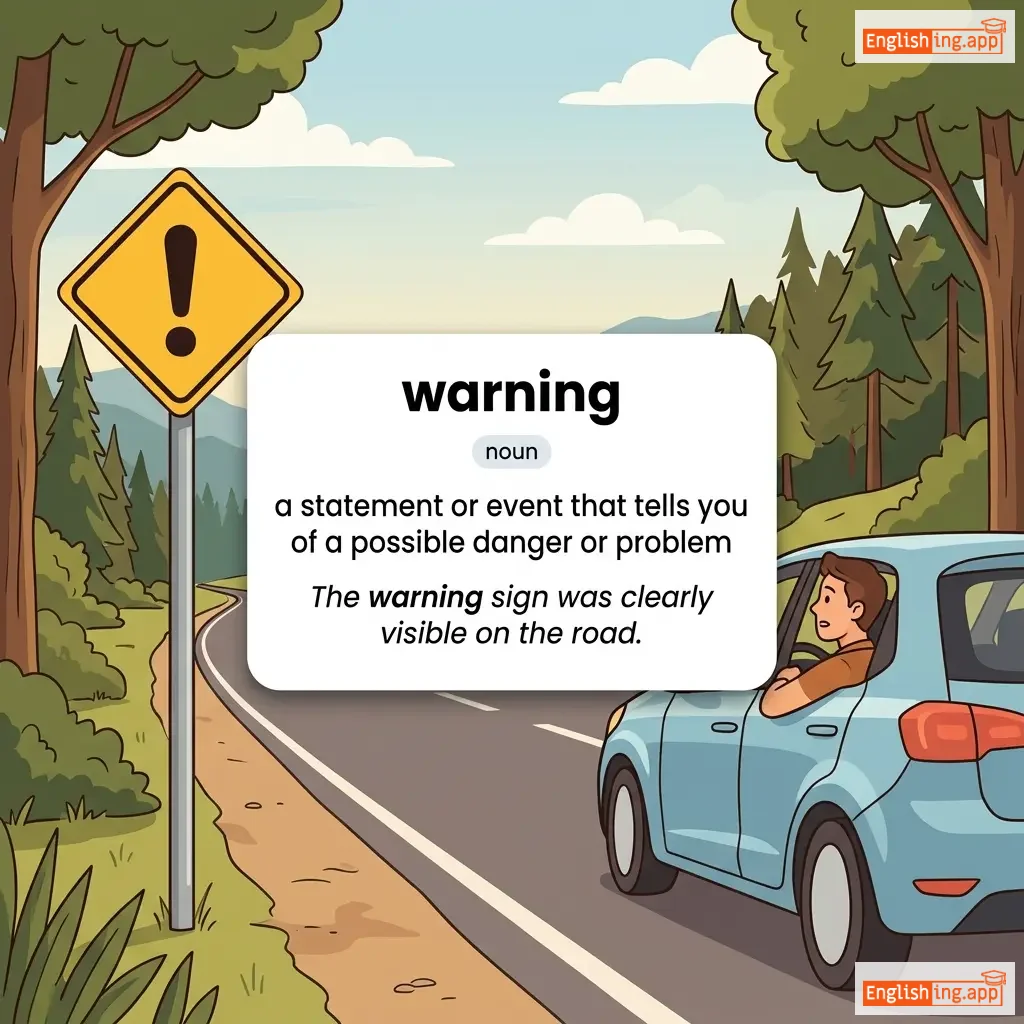
warning definition card — visual illustration of the meaning
noun
/ˈwɔːrnɪŋ/
предупреждение (preduprezhdenie)

a statement or event that tells you of a possible danger or problem

"The warning sign was clearly visible on the road."

"Знак предупреждения был четко виден на дороге." (Znak preduprezhdeniya byl chetko viden na doroge.)
noun
/ˈwiː.vər bɜːd/
ткач птица (tkach ptitsa)

a small bird that builds elaborate woven nests from grass and twigs

"The weaver bird skillfully constructs its intricate nest."

"Ткач птица умело строит свое сложное гнездо" (Tkach ptitsa umelo stroit svoe slozhnoe gnezdo)
pronoun
/wi/
мы (my)

used by a speaker to refer to himself or herself and one or more other people

"We are going to the park this afternoon."
"Мы идем в парк этим днем." (My idyom v park etim dnyom.)
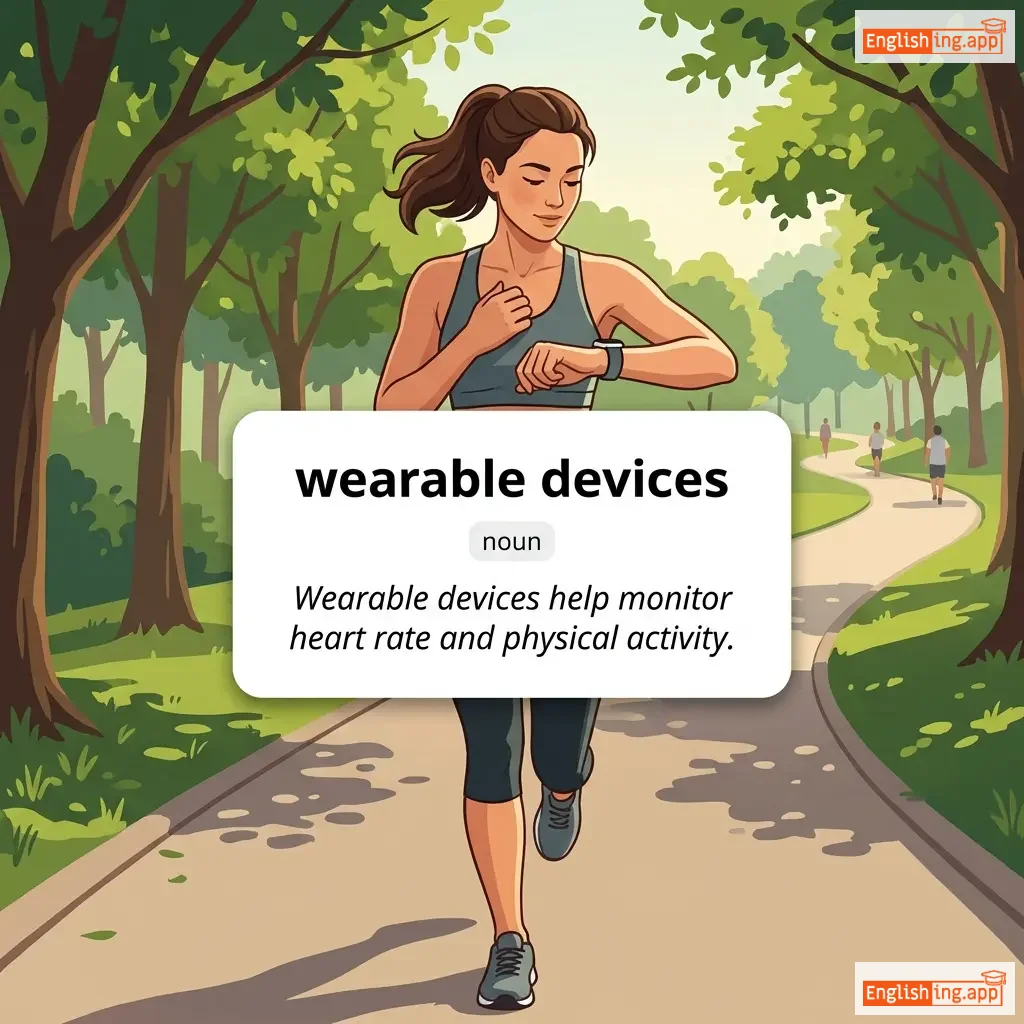
wearable devices definition card — visual illustration of the meaning
noun
ˈweə.rə.bəl dɪˈvaɪ.sɪz
носимые устройства (nosimyye ustroystva)

Electronic devices that can be worn on the body, typically incorporating smart technology for monitoring health or providing information.

"Wearable devices help monitor heart rate and physical activity."

"Носимые устройства помогают мониторить сердечный ритм и физическую активность." (Nosimyye ustroystva pomogayut monitoring serdechnyy ritm i fizicheskuyu aktivnost'.)
adjective
/ˈwɛlθi/
богатый (bogatyy)

having a great deal of money, resources, or assets

"He became wealthy after investing in real estate."

"Он стал богатым, инвестируя в недвижимость." (On stal bogatym, investiruya v nedvizhimost'.)
adjective
/ˈwiːkli/
еженедельный (yezhenedelnyy)

occurring or done every week

"We have a weekly meeting on Mondays."
"У нас еженедельное собрание по понедельникам." (U nas yezhenedelnoe sobranie po ponedelnikam.)
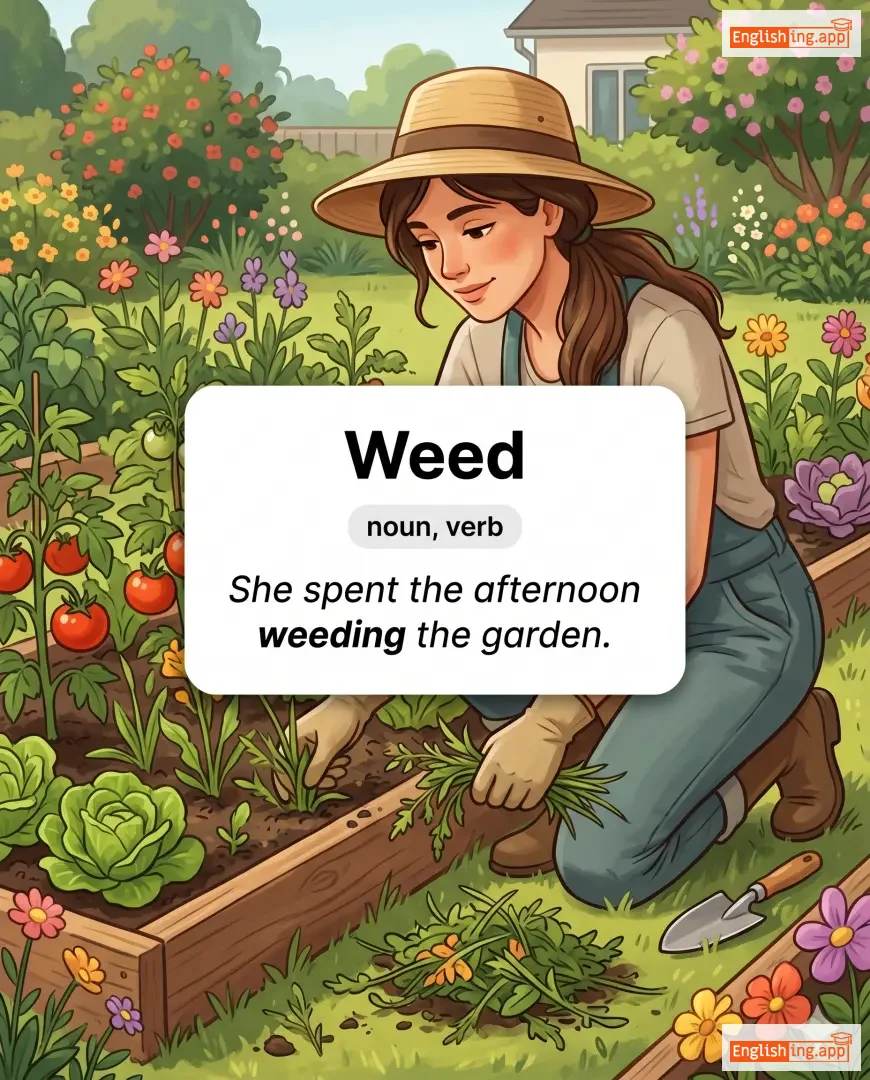
Weed definition card — visual illustration of the meaning
noun, verb
/wiːd/
сорняк (sornyak)

a wild plant growing where it is not wanted, especially among crops; to remove such plants

"She spent the afternoon weeding the garden."

"Она провела послеобеденное время, вырывая сорняки в саду." (Ona provela posleobednennoe vremya, vyrivaya sornyaki v sadu.)
noun
/ˈweɪvlət/
маленькая волна (malenkaya volna)

a small wave or ripple on the surface of water or another medium

"The pond was disturbed only by the tiny wavelets caused by the breeze."

"Пруд был потревожен только маленькими волнами, вызванными бризом." (Prud byl potrevozhenn tolkko malen'kimi volnami, vyzvannymi brizom.)
noun
/wæks ˈkændəl/
свеча (svecha)

a cylinder of wax with a wick through it that burns to give light

"We lit a wax candle during the power outage."

"Мы зажгли свечу во время отключения электричества" (My zazhgli svechu vo vremya otklyucheniya elektrichestva)
noun
/wæks ɡɔːrd/
восковая тыква (voskovaya tykva)

a large white or green gourd with waxy skin, commonly used in Asian cooking

"The wax gourd soup is very nutritious and helps with digestion."

"Суп из воскового горшка очень питателен и помогает с пищеварением." (Sup iz voskovogo gorshka ochen' pitatelen i pomogayet s pishchevareniem.)
noun
/ˈwɛdɪŋ/
свадьба (svad'ba)

a marriage ceremony, especially considered as including the associated celebrations

"They are planning a wedding in the summer."

"Они планируют свадьбу летом." (Oni planiruyut svad'bu letom.)
adjective
/ˈwɪəri/
усталый (ustaly)

feeling or showing extreme tiredness, especially as a result of exertion or lack of sleep

"After the long journey, she felt weary and wanted to rest."

"После долгого путешествия она почувствовала усталость и захотела отдохнуть." (Posle dolgogo puteshestviya ona pochuvstvovala ustalost' i zakhotela otdokhnut'.)
adjective
/ˈwiːk niːd/
трус (trus)

Lacking determination or courage; easily frightened or yielding.

"The leader was criticized for being weak-kneed in the face of opposition."

"Лидер был раскритикован за свою слабость перед оппозицией." (Lider byl raskritikovany za svoyu slabost pered oppozitsiey.)
noun
/ˈwɔːtəʃɛd/
водораздел, ключевой момент (watershed)

An event or period marking a turning point in a situation; also refers to a ridge dividing two drainage areas.

"The independence movement was a watershed in the nation's history."

"Движение за независимость было водоразделом в истории нации." (Dvizhenie za nezavisimost' bylo vodorazdelom v istorii natsii.)
noun
/ˈwɔː.tər hen/
водяная курица (vodyanaya kuritsa)

a waterbird with dark plumage that lives near ponds and wetlands

"The water hen swam gracefully across the pond."

"Водяная курица плавала грациозно по пруду." (Vodyanaya kuritsa plavala gratsiozno po prudu.)
🛣️

Way (vay)

noun
/weɪ/
путь / метод (put' / metod)

a path, direction, or method of doing something

"He found a new way to solve the problem."

"Он нашел новый способ решения проблемы." (On nashel novyi sposob resheniya problemy.)
adjective
/wɔːrm/
тёплый (tyoplyi)

having a moderate degree of heat

"The warm sunlight made the room feel cozy."

"Теплый свет сделал комнату уютной." (Tyoplyi svet sdelal komnatu uyutnoy.)
🌕

Wax

verb
/wæks/

to increase gradually in size, number, strength, or intensity

"The moon will wax until it becomes full."

noun
/ˈwiːknəs/
слабость (slabost)

a state of being weak; a flaw or shortcoming in character or structure

"His main weakness is his lack of patience."

"Его главная слабость — это отсутствие терпения." (Ego glavnaia slabost' — eto otsutstvie terpeniia.)
noun
/ˈwɑː.ʃər mæn/
прачечник (prachechnik)

a person whose job is to wash clothes and linens for others

"The washer man collected dirty clothes from every household in the village."

"Прачечник собирал грязную одежду из каждого дома в деревне." (Prachyechnik sobiral gryaznuyu odezhdu iz kazhdogo doma v derevne)
adjective
/wiːk/
слабый (slaby)

lacking physical strength or energy

"She felt weak after the long run."

"Она почувствовала себя слабой после долгого забега." (Ona pochuvstvovala sebya slaboy posle dolgogo zabega.)
noun
/weɪt/
вес (ves)

a measure of how heavy something is

"The weight of the package was 10 kilograms."

"Вес пакета был 10 килограммов." (Ves paketa byl 10 kilogrammov.)
noun
/wiːk/
неделя (nedelya)

a period of seven days

"I will finish the project by the end of the week."

"Я закончу проект к концу недели." (Ya zakonchu proyekt k kontsu nedeli.)
noun
/ˈwɔː.tər ˈtʃes.nʌt/
водяной орех (vodyanoy orekh)

aquatic plant with edible white crisp tubers

"Water chestnuts add a nice crunch to stir-fry dishes."

"Водяные орехи придают жареным блюдам приятный хруст." (Vodyanye orekhi pridayut zharenym blyudam priyatnyy khrust)
noun
/wɒsp/
оса (osa)

a flying insect with a yellow and black striped body and a painful sting

"The wasp stung me when I disturbed its nest."

"Оса ужалила меня, когда я потревожил её гнездо." (Osa uzhavila menya, kogda ya potrevozhil yeyo gnezdo.)
noun
/wɛst/
запад (zapad)

the direction to the left of the north and to the right of the south, typically associated with the sunset

"The sun sets in the west."

"Солнце заходит на западе." (Solntse zakhodit na zapade.)
adverb
/wɒtˈsəʊɛvər/
совсем не (sovsem ne)

used for emphasis after a negative statement to mean 'at all'

"She has no interest in the matter whatsoever."

"У нее нет никакого интереса к этому вопросу вообще." (U neyo net nikakogo interesa k etomu voprosu voobsche.)
noun
/wɛlp/
щенок (shchenok)

a young offspring of a dog or other carnivorous mammal; sometimes used to mean an impudent young person

"The farmer found a wolf whelp hiding near the barn."
"Фермер нашел волчонка, скрывающегося рядом с амбаром." (Fermyer nashel volshtonka, skryvayushchegosya ryadom s ambaryom.)
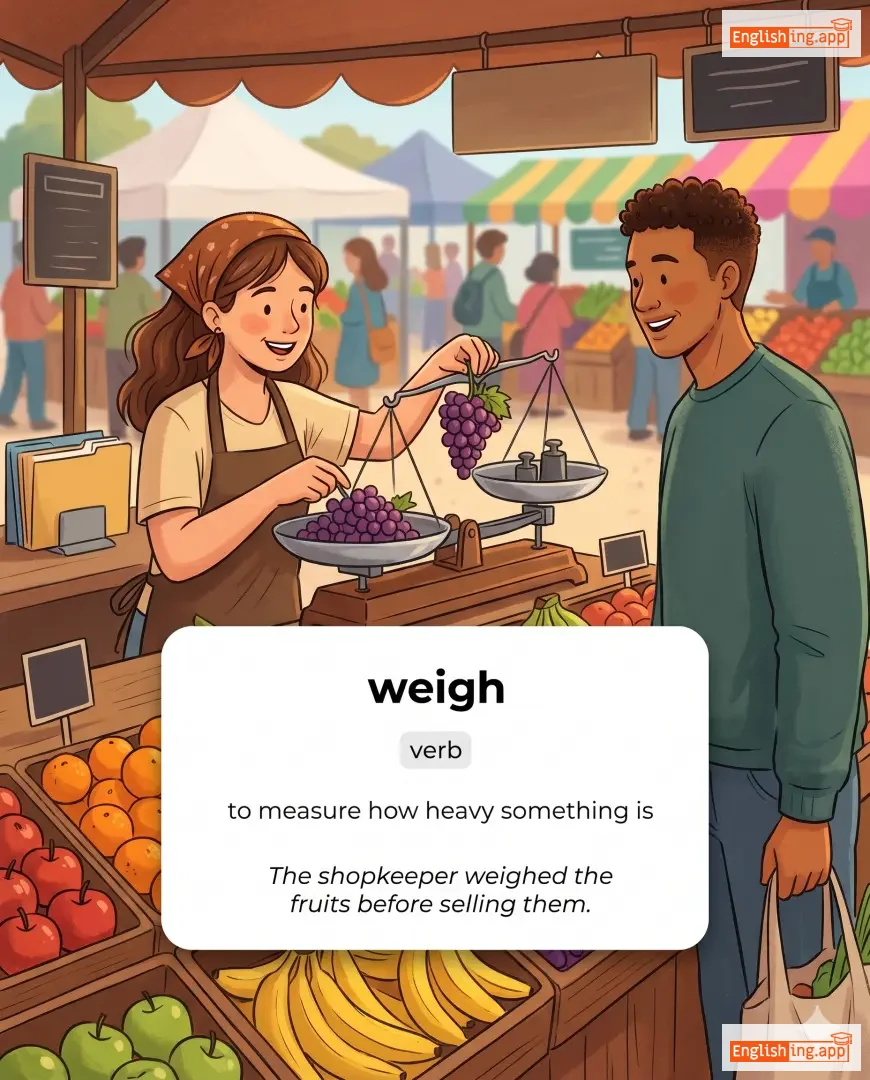
weigh definition card — visual illustration of the meaning
verb
/weɪ/
вешать (veshat)

to measure how heavy something is

"The shopkeeper weighed the fruits before selling them."

"Продавец взвесил фрукты перед тем, как их продать." (Prodavets vzvesil frukty pered tem, kak ikh prodat.)
adjective
/ˌwel bɪˈheɪvd/
хорошо воспитанный (khorosho vospitannyy)

conducting oneself in a proper and polite manner; showing good manners

"The children were well-behaved during the ceremony."

"Дети вели себя хорошо во время церемонии." (Deti vели sebya khorosho vo vremya tseremonii.)
Welcome definition card — visual illustration of the meaning
verb
/ˈwɛlkəm/
приветствие (privetstvie)

to greet someone in a friendly way

"They welcomed us with open arms at the party."

"Они встретили нас с открытыми объятиями на вечеринке." (Oni vstretili nas s otkrytymi ob'yaçiyami na vecherinke.)
noun
/ˈwɛlkɪn/
небо (nebo)

The sky, the heavens, or the upper air.

"The eagle soared high into the welkin."

"Орёл высоко взлетел в небо." (Oryol vysoko vzlyetel v nebo.)
noun
/ˈweɪtˌlɪftɪŋ/
тяжёлая атлетика (tyazhyolaya atletika)

the sport or activity of lifting heavy weights to build strength and muscle

"Weightlifting requires discipline, proper technique, and consistent training."

"Тяжёлая атлетика требует дисциплины и правильной техники." (Tyazhyolaya atletika trebuet distsipliny i pravilnoy tekhniki)
pronoun
/wɒt/
что (chto)

used to ask for information about something

"What is your name?"

"Как тебя зовут?" (Kak tebya zovut?)
noun
/wɛlt/
пухлость (puhlost)

A raised mark on the skin, usually from a blow or allergic reaction.

"He had a red welt on his arm after the bee sting."

"У него был красный след на руке после укуса пчелы." (U nego byl krasnyy sled na ruke posle ukusa pchely.)
adjective
/wɪrd/
странный (strannyy)

suggesting something supernatural or very strange; unusual

"The movie had a weird ending that nobody expected."
"Фильм имел странный конец, которого никто не ожидал." (Film imel stranny konets, kotorogo nikto ne ozhidal.)
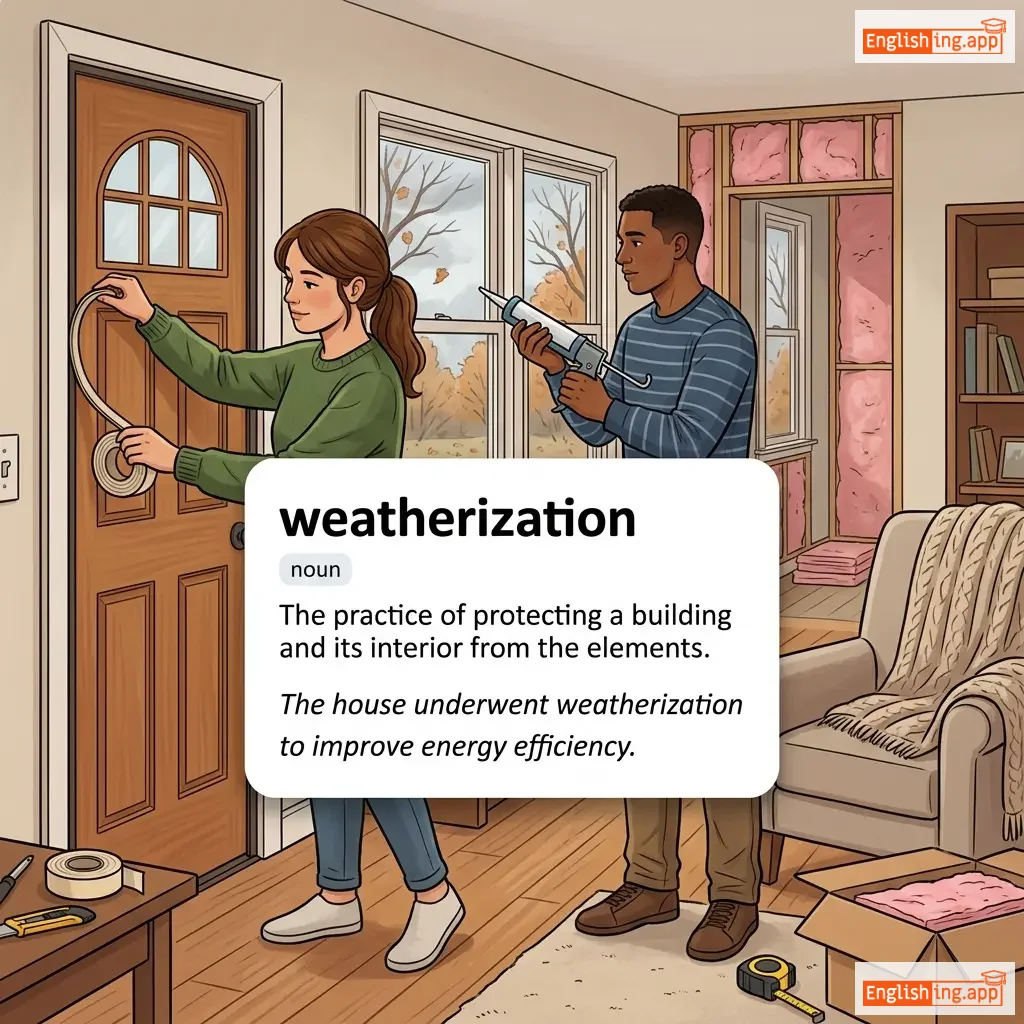
weatherization definition card — visual illustration of the meaning
noun
ˌwɛðəraɪˈzeɪʃən
метеоизоляция (meteoizolyatsiya)

The practice of protecting a building and its interior from the elements.

"The house underwent weatherization to improve energy efficiency."

"Дом прошел через процесс метеоизоляции для повышения энергоэффективности." (Dom proshel cherez protsess meteoizolyatsii dlya povysheniya energoeffektivnosti.)