वोकैबुलरीज

इंग्लिश वोकैबुलरी डिस्कवर, लर्न और मास्टर करें

noun
/ˈwɛlˌduːər/
अच्छे काम करने वाला (achhe kaam karne wala)

A person who does good deeds; a benefactor.

"The community praised the well-doer for his charity."

"समुदाय ने उसकी चैरिटी के लिए अच्छे काम करने वाले की सराहना की।" (Samudaay ne uski charity ke liye achhe kaam karne wale ki sarahna ki.)
adjective
/ˌwɛl tə ˈduː/
धनवान (dhanwan)

Prosperous, wealthy, or financially comfortable.

"They belong to a well-to-do family in the city."

"वे शहर में एक धनवान परिवार से हैं।" (Ve shehar mein ek dhanwan parivaar se hain.)
pronoun
/wɒt/
क्या (kya)

used to ask for information about something

"What is your name?"

"तुम्हारा नाम क्या है?" (Tumhara naam kya hai?)
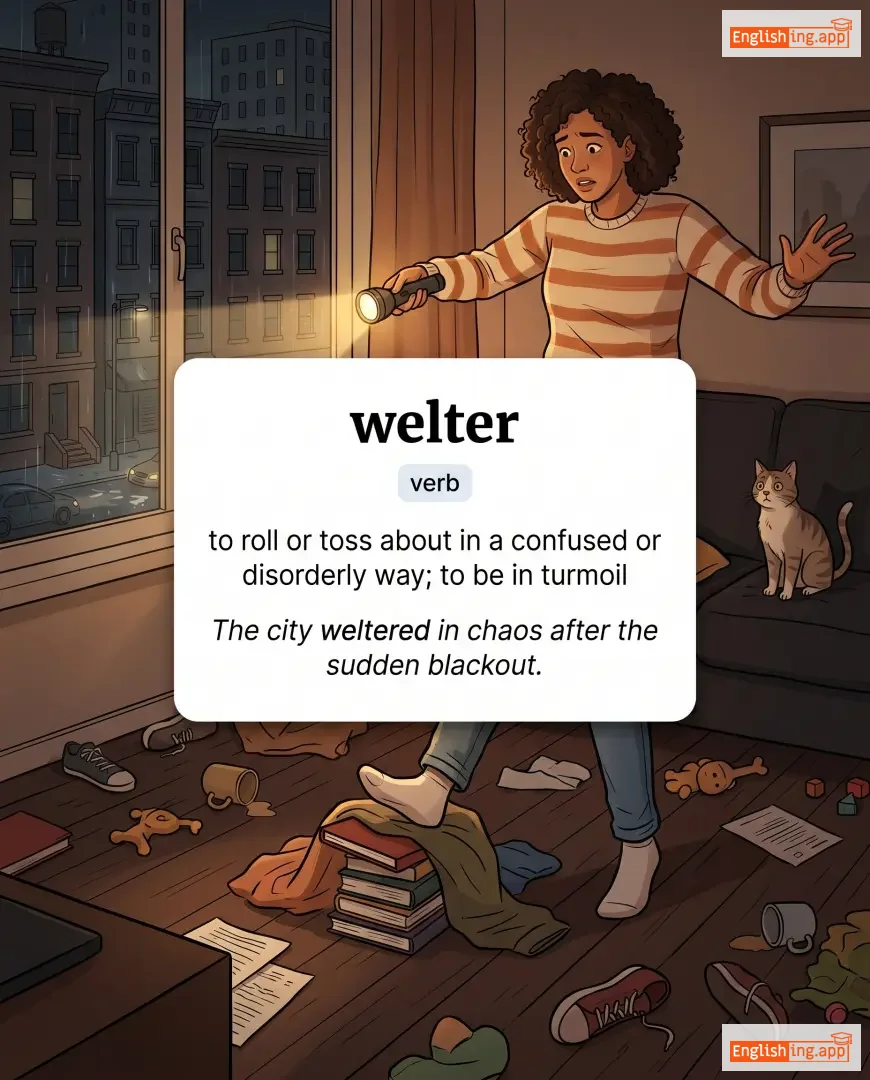
welter definition card — visual illustration of the meaning
verb
/ˈwɛltər/
अराजकता में लुड़कना (arajakta mein ludakna)

to roll or toss about in a confused or disorderly way; to be in turmoil

"The city weltered in chaos after the sudden blackout."

"शहर अचानक ब्लैकआउट के बाद अराजकता में डूब गया था।" (Shehar achanak blackout ke baad arajakta mein doob gaya tha.)
noun
/wɛst/
पश्चिम (pashchim)

the direction to the left of the north and to the right of the south, typically associated with the sunset

"The sun sets in the west."

"सूरज पश्चिम में अस्त होता है।" (Suraj pashchim mein ast hota hai.)
adjective
/ˌwel bɪˈheɪvd/
शिष्ट; सभ्य; (shisht; sabhya)

conducting oneself in a proper and polite manner; showing good manners

"The children were well-behaved during the ceremony."

"समारोह के दौरान बच्चे शिष्ट थे।" (samaroh ke dauran bachche shisht the.)
adjective
/wɛt/
गीला (geela)

covered with, or saturated with liquid (usually water)

"The ground is wet after the rain."

"बारिश के बाद ज़मीन गीली है।" (Baarish ke baad zameen geeli hai.)
verb
/ˈwiːdəl/
चापलूसी करके मनाना (chaplusi karke manana)

to persuade or coax someone by using flattery or smooth talk

"She managed to wheedle extra pocket money from her father."

"वह अपने पिता से अतिरिक्त जेब खर्च मनवाने में सफल हो गई।" (Vah apne pita se atirikt jeb kharch manwane mein safal ho gayi.)
adverb
/ˌwɛr.əˈpɒn/
तत्क्षण बाद (tatkshan baad)

Immediately after which; as a result of which.

"He confessed his mistake, whereupon she forgave him."

"उसने अपनी गलती कबूल की, तत्क्षण बाद उसने उसे माफ कर दिया।" (Usne apni galti kabool ki, tatkshan baad usne use maaf kar diya.)
noun
/ˈwɛrəˌbaʊts/
स्थान (sthan)

the place where someone or something is

"The police are trying to find out the suspect's whereabouts."

"पुलिस संदिग्ध के स्थान का पता लगाने की कोशिश कर रही है।" (Police sandigdh ke sthaan ka pata lagane ki koshish kar rahi hai.)
adjective
/ˈweɪwərd/
अवज्ञाकारी (avagyakari)

Difficult to control or predict because of unusual or perverse behavior.

"The teacher struggled to manage the wayward students."

"शिक्षक अवज्ञाकारी छात्रों को नियंत्रित करने में कठिनाई महसूस कर रहे थे।" (Shikshak avagyakari chatron ko niyantrit karne mein kathinai mehsoos kar rahe the.)
adverb
/ˈwɪmzɪkli/
चंचल ढंग से (vhimsikali)

In a playful, fanciful, or capricious manner; with sudden changes of mind

"She decorated her room whimsically with colorful balloons."

"उसने अपने कमरे को रंग-बिरंगे गुब्बारों के साथ चंचल ढंग से सजाया।" (Usne apne kamre ko rang-birange gubbaron ke saath chanchal dhang se sajaaya.)
conjunction
/ˈwɛðər/
क्या (kya)

used to express a doubt or choice between alternatives

"I don’t know whether I should go."

"मुझे नहीं पता कि मुझे जाना चाहिए या नहीं।" (Mujhe nahi pata ki mujhe jana chahiye ya nahi.)
noun
/wæks ɡɔːrd/
वैक्स लौकी (vaiks lauki)

a large white or green gourd with waxy skin, commonly used in Asian cooking

"The wax gourd soup is very nutritious and helps with digestion."

"वैक्स लौकी का सूप बहुत पौष्टिक होता है और पाचन में मदद करता है।" (vaiks lauki ka soup bahut poshtik hota hai aur pachan mein madad karta hai.)
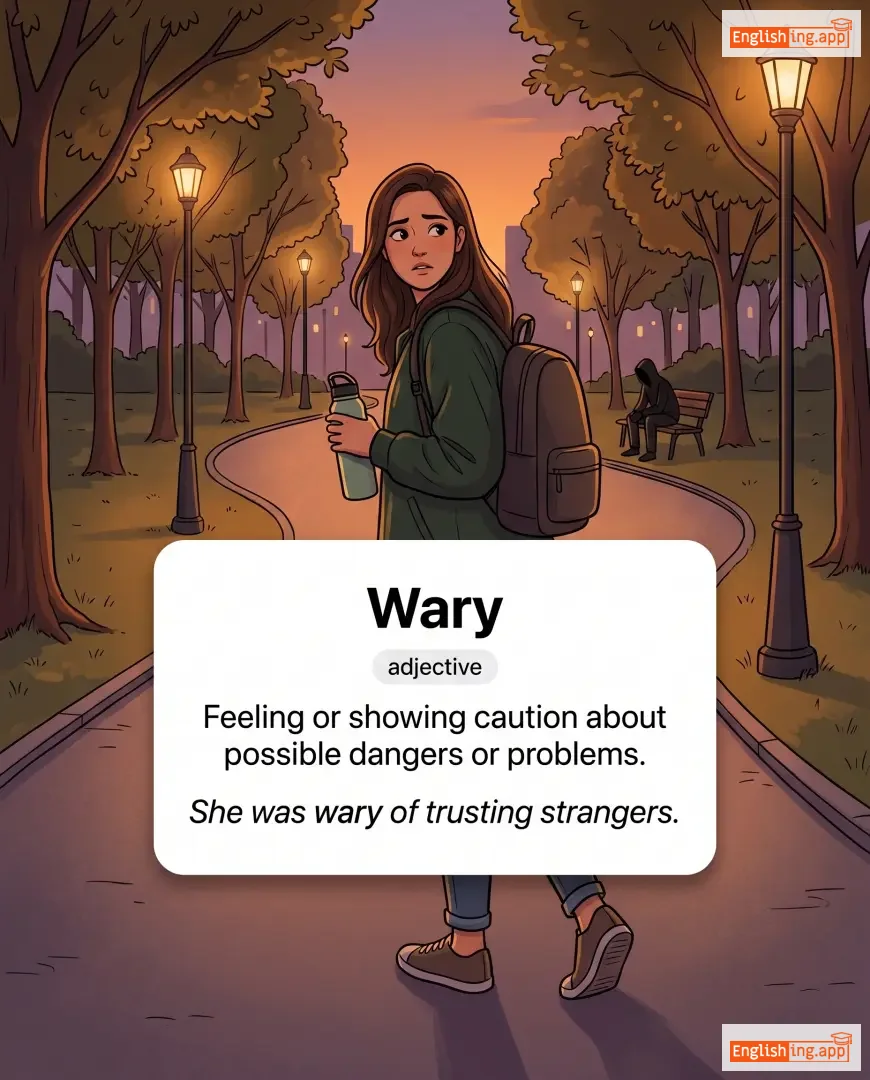
Wary definition card — visual illustration of the meaning
adjective
/ˈweəri/
सावधान (wary)

Feeling or showing caution about possible dangers or problems.

"She was wary of trusting strangers."

"वह अजनबियों पर विश्वास करने में सावधान थी।" (Woh anajabiyon par vishwas karne mein savdhan thi.)
noun
/wiːl/
सुख (sukh)

A raised mark on the skin left after a blow; or general well-being and prosperity.

"The charity worked for the common weal of the community."

"जब उसे पुरस्कार मिला, तो वह अपनी खुशी छिपा नहीं सकी।" (Jab use puraskar mila, to vah apni khushi chhupa nahi saki.)
verb
/ˌweɪˈleɪ/
अचानक किसी को रोकना / हमला करना (achanak kisi ko rokna / hamla karna)

to stop or interrupt someone unexpectedly, often to attack or detain them

"He was waylaid by reporters as he left the courthouse."

"वह क़ोर्टहाउस से बाहर निकलते समय रिपोर्टर्स द्वारा रोक लिया गया।" (Vah korthouse se bahar nikalte samay reporters dwara rok liya gaya.)
adjective
/ˈwɪərɪsəm/
थकाऊ (thakau)

Causing one to feel tired or bored.

"The long and wearisome lecture put the students to sleep."

"लंबी और थकाऊ लेक्चर ने छात्रों को सोने पर मजबूर कर दिया।" (Lambi aur thakau lecture ne chhatron ko sone par majboor kar diya.)
noun
/ˈwɒriər/
योद्धा (yoddha)

a person engaged or experienced in warfare; a brave or experienced fighter

"The ancient warrior fought fearlessly to protect his land."

"प्राचीन योद्धा ने अपनी भूमि की रक्षा के लिए निडरता से लड़ा।" (Prachin yoddha ne apni bhumi ki raksha ke liye nidarta se lada.)
noun
/ˈwɛpən/
हथियार (hathiyar)

a thing designed or used for inflicting harm or damage

"He carried a weapon for self-defense."

"उसने आत्मरक्षा के लिए एक हथियार लिया था।" (Usne ātmarakṣā ke liye ek hathiyār liyā thā.)
noun
/ˈwiː.vər bɜːd/
बुनकर पक्षी (bunkar pakshi)

a small bird that builds elaborate woven nests from grass and twigs

"The weaver bird skillfully constructs its intricate nest."

"वीवर बर्ड कुशलता से अपना जटिल घोंसला बनाता है" (weaver bird kushalta se apna jatil ghosla banata hai)
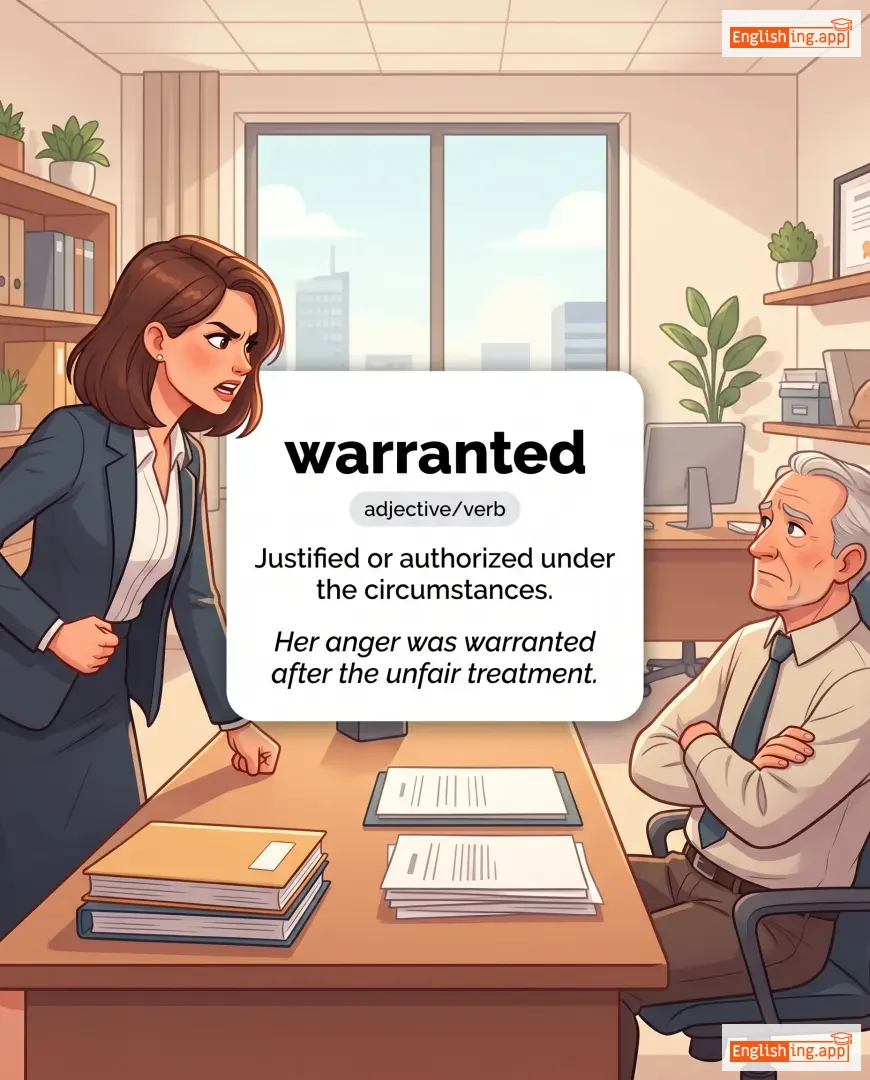
warranted definition card — visual illustration of the meaning
adjective/verb
/ˈwɒrəntɪd/
उचित (uchit)

Justified or authorized under the circumstances.

"Her anger was warranted after the unfair treatment."

"उसका गुस्सा उसके अनुचित व्यवहार के बाद उचित था।" (Uska gussa uske anuchit vyavhaar ke baad uchit tha.)
noun
/wɜːrl/
वृत्ताकार पैटर्न (vruttakaar pattern)

A pattern of spirals or concentric circles, often found in fingerprints, shells, or flowers.

"The fingerprint displayed a clear whorl pattern."

"अंगुली के निशान में एक स्पष्ट वृत्ताकार पैटर्न दिखा।" (Anguli ke nishan mein ek spashṭ vruttakaar pattern dikha.)
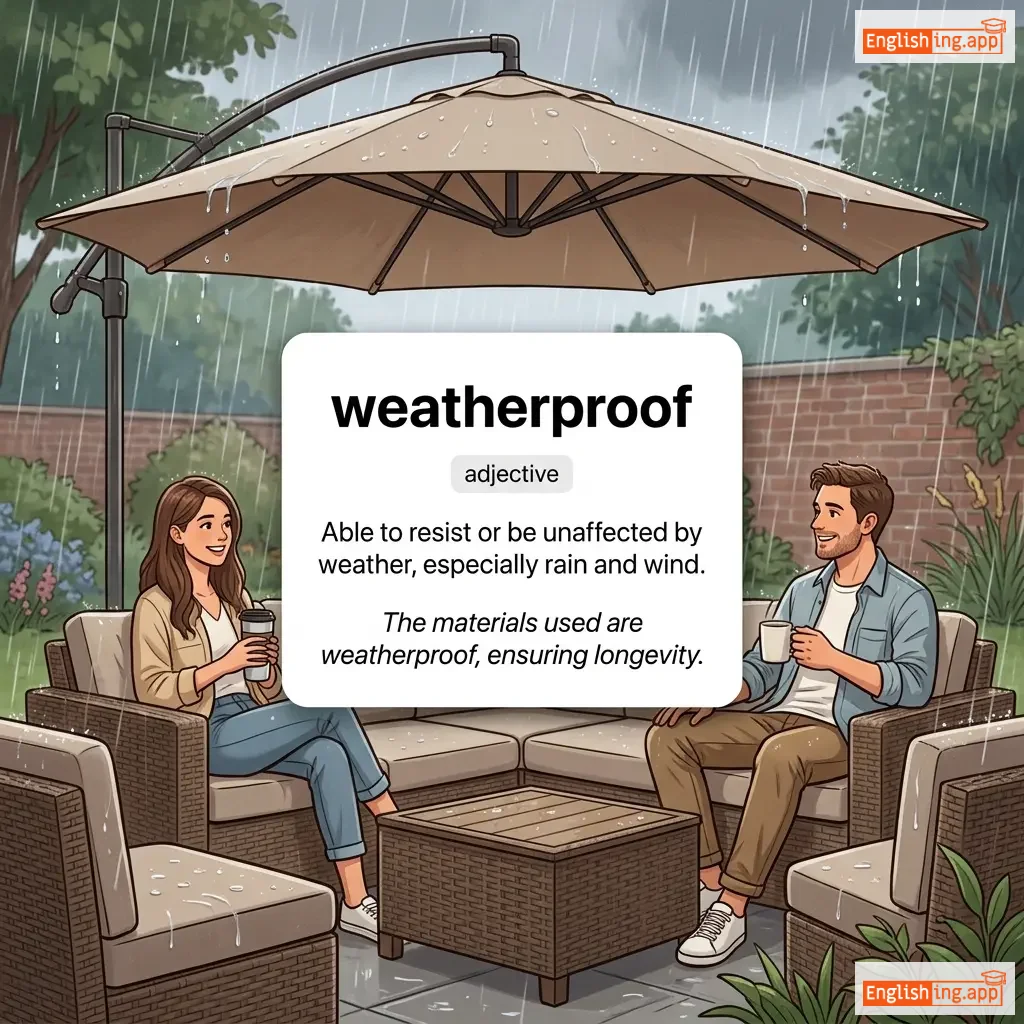
weatherproof definition card — visual illustration of the meaning
adjective
ˈwɛðərpruːf
मौसम प्रतिरोधी (mausam pratirodhī)

Able to resist or be unaffected by weather, especially rain and wind.

"The materials used are weatherproof, ensuring longevity."

"उपयोग किए गए सामग्री मौसम प्रतिरोधी हैं, जो दीर्घायु सुनिश्चित करते हैं।" (Upyog kiye gaye samagri mausam pratirodhī hain, jo dīrghāyū sunishchit karte hain.)
verb
/wɛt/
तेज़ करना/उत्तेजित करना (tez karna/uttejit karna)

To sharpen the blade of a tool or to stimulate interest or appetite.

"The smell of food whetted my appetite."

"खाने की खुशबू ने मेरी भूख बढ़ा दी।" (Khaane ki khushboo ne meri bhookh badha di.)
pronoun
/wɪtʃ/
कौन सा (kaun sa)

used to ask about one or more items from a defined set

"Which one do you prefer, the red or the blue?"

"आपको कौन सा पसंद है, लाल या नीला?" (Aapko kaun sa pasand hai, laal ya neela?)
pronoun
/wi/
हम (ham)

used by a speaker to refer to himself or herself and one or more other people

"We are going to the park this afternoon."

"हम इस दोपहर पार्क जा रहे हैं।" (Ham is dopehar park ja rahe hain.)
verb
/ˈwɪni/
घोड़े की आवाज़ (ghode ki awaaz)

to make the high-pitched sound a horse makes

"The horse whinnied when it saw its rider."

"घोड़ा अपनी सवारी को देख कर ह्विनिड।" (Ghoda apni savari ko dekh kar whinnied.)
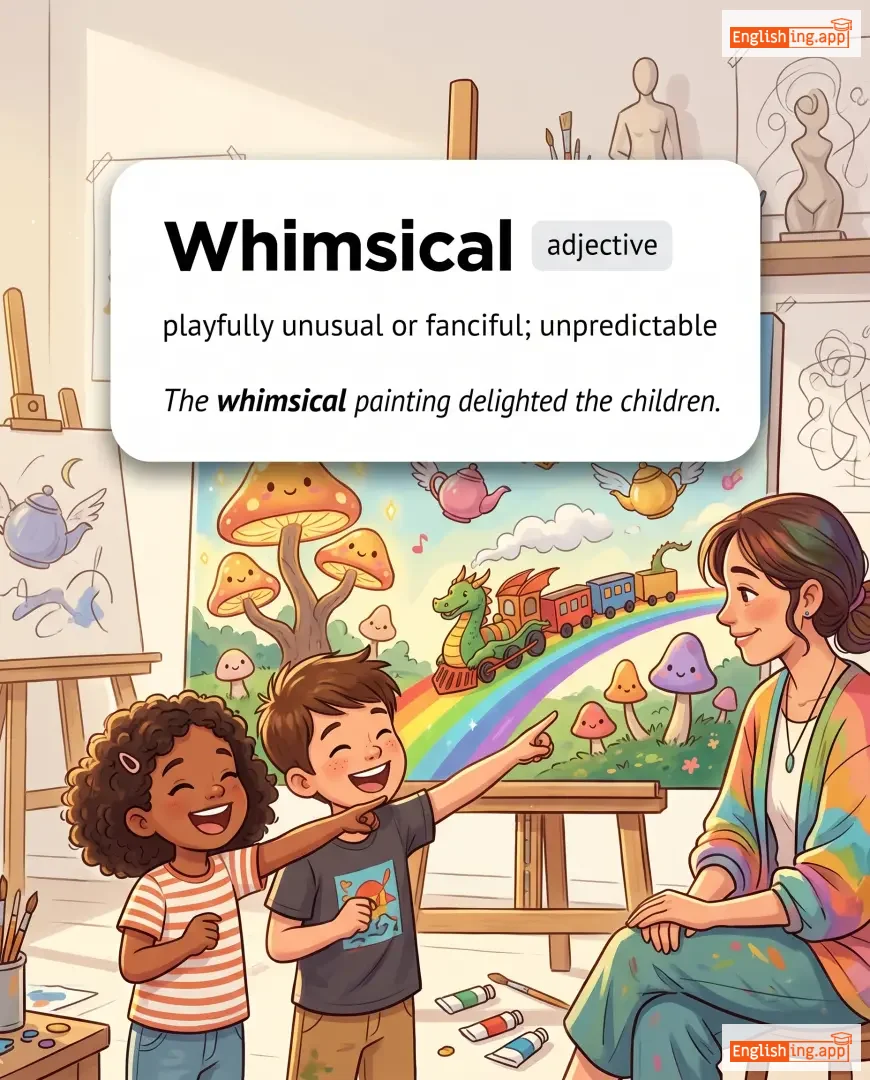
Whimsical definition card — visual illustration of the meaning
adjective
/ˈwɪmzɪkəl/
कल्पनाशील (kalpanasheel)

playfully unusual or fanciful; unpredictable

"The whimsical painting delighted the children."

"कल्पनाशील चित्र ने बच्चों को प्रसन्न कर दिया।" (Kalpanasheel chitra ne bachon ko prasann kar diya.)
🕸️

web

noun
/wɛb/

a network of fine threads spun by a spider or a complex interconnected system

"The spider spun a large web in the corner of the room."

noun
/ˈwɒʃ.ɪŋ məˌʃiːn/
वॉशिंग मशीन (voshin mashin)

a machine for washing clothes and other textiles

"The washing machine broke down and needs repair."

"वॉशिंग मशीन खराब हो गई है और मरम्मत की ज़रूरत है." (voshin mashin kharaab ho gayi hai aur marammat ki zaroorat hai)
noun
/ˈwɪdəʊ/
विधवा (vidhwa)

a woman whose husband has died and who has not married again

"She became a widow at a very young age."

"वह बहुत छोटी उम्र में विधवा हो गई।" (Woh bahut chhoti umr mein vidhwa ho gayi.)
noun
/wɪk/
मोमबत्ती का तंतु (mombatti ka tantu)

a cord or strand of cotton that burns to provide light in a candle or lamp

"The candle wick needs to be trimmed for better burning."

"मोमबत्ती के तंतु को बेहतर जलने के लिए काटने की आवश्यकता है।" (Mombatti ke tantu ko behtar jalne ke liye kaatne ki avashyakta hai।)
adjective
/ˈwɪkɪd/
दुष्ट (dusht)

morally bad or evil; also informally very good or impressive

"The villain in the story was truly wicked."

"कहानी में खलनायक वास्तव में दुष्ट था।" (Kahani mein khalaanyak vastav mein dusht tha.)
noun
/ˈweɪstrəl/
वक्त बर्बाद करने वाला, अपव्ययी (wastrel)

A person who wastes time, money, or resources; an idler or spendthrift.

"The young man was dismissed as a wastrel by his family."

"युवक को उसके परिवार ने एक बर्बाद करने वाले के रूप में खारिज कर दिया।" (Yuvak ko uske parivaar ne ek barbād karne wale ke roop mein khārij kar diyā.)
noun
/waɪt ænt/
सफेद चींटी (safed chinti)

a small social insect that lives in colonies and feeds on wood and plant matter

"White ants damaged the wooden furniture in our house."

"सफेद चींटियों ने हमारे घर के लकड़ी के फर्नीचर को नुकसान पहुँचाया।" (safed chintiyon ne hamare ghar ke lakdi ke furniture ko nuksan pahuchaya.)
noun
/ˈwɪd.oʊ.ər/
विधुर (vidhur)

a man whose wife has died and who has not married again

"The elderly widower lived alone but had regular visits from his children."

"वृद्ध विधुर अकेला रहता था लेकिन उसके बच्चों से नियमित रूप से मुलाकात होती थी।" (Vruddh vidhur akela rehta tha lekin uske bachon se niyamit roop se mulaqat hoti thi.)
noun
/ˈwɒrənti/
वारंटी (waranti)

A written guarantee given by a manufacturer or seller promising to repair or replace a product if necessary within a specified period.

"The laptop comes with a two-year warranty."

"लैपटॉप दो साल की वारंटी के साथ आता है।" (Laptop do saal ki waranti ke saath aata hai.)
verb
/ˈwɪtl/
काट-छाँट करना (kaat-chhaant karna)

to carve or shape something by cutting off small pieces; to gradually reduce

"He spent the afternoon whittling a piece of wood into a toy."

"उसने दोपहर का समय एक लकड़ी के टुकड़े को खिलौने में बदलने के लिए काट-छाँट करते हुए बिताया।" (Usne dopahar ka samay ek lakdi ke tukde ko khilone mein badalne ke liye kaat-chhaant karte hue bitaya.)
noun
/ˈwɔː.tər pɒt/
पानी का बर्तन (pani ka bartan)

a container used for storing or carrying water

"The water pot in the kitchen was filled with fresh drinking water."

"रसोई में पानी का बर्तन ताजे पीने के पानी से भरा हुआ था।" (rasoi mein pani ka bartan taje peene ke pani se bhara hua tha.)
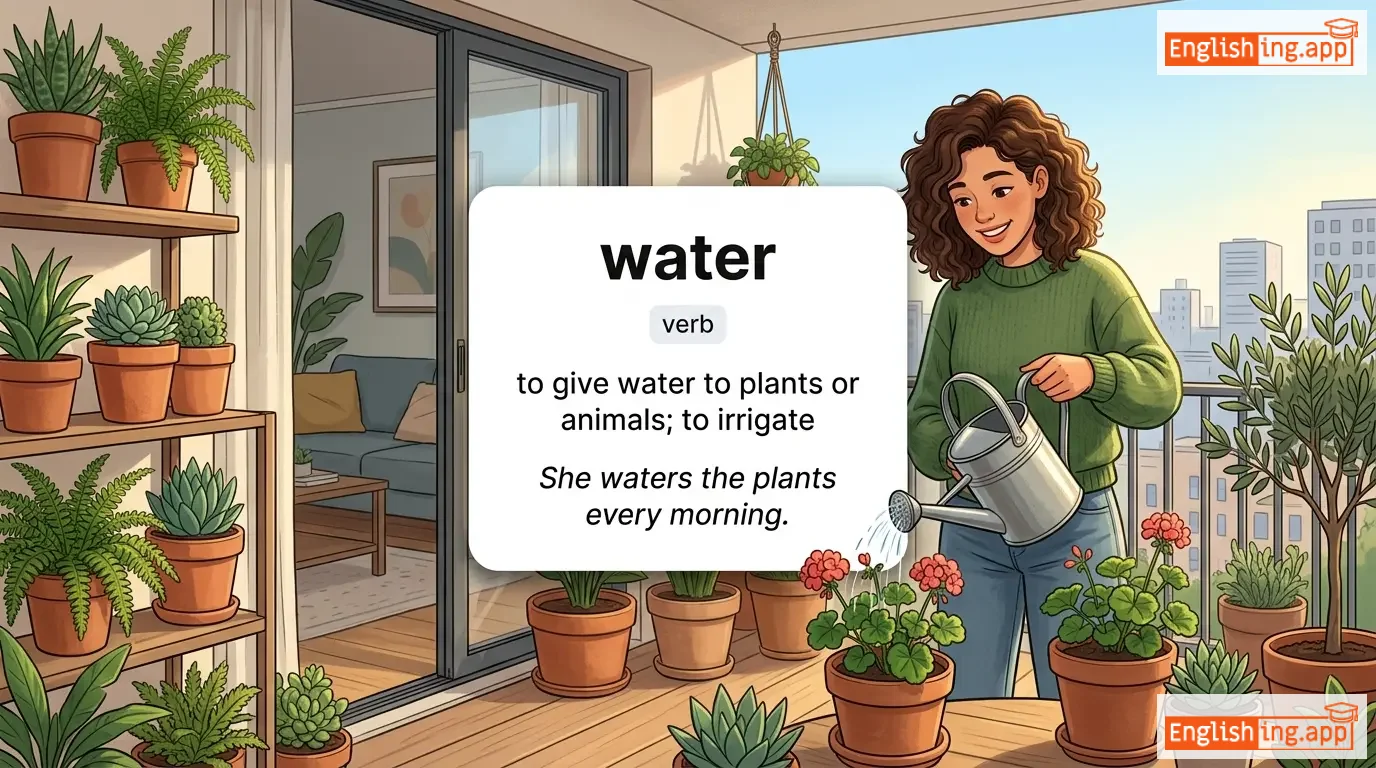
water definition card — visual illustration of the meaning
noun
/ˈwɔːtər/
पानी (pani)

a clear, colorless, odorless, and tasteless liquid that is essential for life

"We need to drink water to stay hydrated."

"हमें हाइड्रेटेड रहने के लिए पानी पीने की आवश्यकता है।" (Humein hydrated rahne ke liye pani peene ki avashyakta hai.)
noun
/ˈwɔː.tər ˌlɪl.i/
कमल (kamal)

a floating flower that grows on the surface of ponds and lakes

"The white water-lily floated gracefully on the pond."

"सफेद कमल तालाब पर सुंदरता से तैर रहा था।" (safed kamal talab par sundarta se tair raha tha)
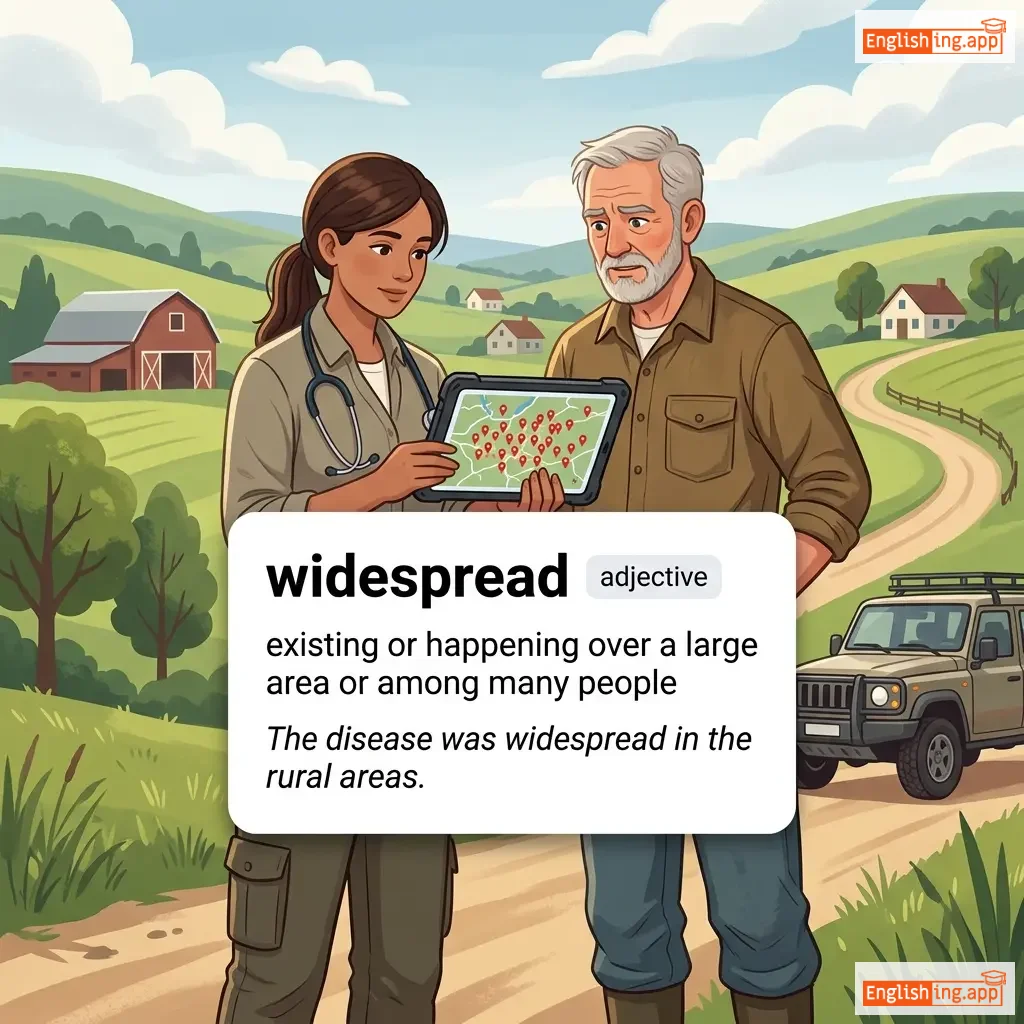
widespread definition card — visual illustration of the meaning
adjective
/ˈwaɪdˌsprɛd/
व्यापक (vyapak)

existing or happening over a large area or among many people

"The disease was widespread in the rural areas."

"रोग ग्रामीण क्षेत्रों में व्यापक था।" (rog gramin kshetron mein vyapak tha.)
adjective
/waɪd/
चौड़ा (chauda)

having a great extent from side to side; broad

"The river is wide enough to fit a boat."

"नदी इतनी चौड़ी है कि उसमें एक नाव समा सकती है।" (Nadi itni chowdi hai ki usmein ek naav sama sakti hai.)
noun
/ˈwiːltʃeər/
व्हीलचेयर (wheelchair)

a chair with wheels, used by people who cannot walk easily or at all

"The hospital provided a wheelchair for the injured patient."

"अस्पताल ने घायल रोगी के लिए एक व्हीलचेयर प्रदान की।" (aspataal ne ghaayal rogi ke liye ek wheelchair pradan ki.)
noun
/wɪm/
अचानक ख्याल (achanak khyaal)

a sudden or unpredictable idea, desire, or decision

"She bought the dress on a whim."

"उसने अचानक ख्याल में वह ड्रेस खरीदी।" (Usne achanak khyaal mein vah dress khareedi.)
adverb, noun
/ˈwɛə.wɪð/
साधन (saadhan)

With which; the means or resources needed for something.

"He lacked the money wherewith to buy a new house."

"उसके पास नया घर खरीदने के लिए पैसे नहीं थे।" (Uske paas naya ghar kharidne ke liye paise nahi the.)
adverb
/wɒtˈsəʊɛvər/
बिलकुल भी (bilkul bhi)

used for emphasis after a negative statement to mean 'at all'

"She has no interest in the matter whatsoever."

"उसको इस मामले में कोई रुचि नहीं है, बिल्कुल भी।" (Usko is maamle mein koi ruchi nahi hai, bilkul bhi.)
noun
/wiːl/
पहिया (pahiya)

a circular object that revolves on an axle and is used to move or carry things

"The wheel of the car broke down on the way."

"कार का पहिया रास्ते में टूट गया था।" (Car ka pahiya raste mein toot gaya tha.)
noun
/wiːt/
गेंहू (genhoo)

a cereal plant whose grain is used to make flour for bread and other foods

"Farmers harvested the wheat in early summer."

"किसानों ने गर्मी की शुरुआत में गेंहू की फसल काटी।" (Kisano ne garmi ki shuruat mein genhoo ki fasal kaati.)