語彙集

英単語辞書 | 単語の意味、定義、例文

noun
/ˈæl.kə.laɪ/
アルカリ性物質 (arukari-sei busshitsu)

a soluble base substance, typically with a pH greater than 7, that neutralizes acids

"Soap contains alkali which helps remove grease."
"石鹸にはアルカリ性物質が含まれており、油を取り除くのに役立ちます。" (Sekken ni wa arukari-sei busshitsu ga fukumarete ori, abura o torinozoku no ni yakudachimasu.)
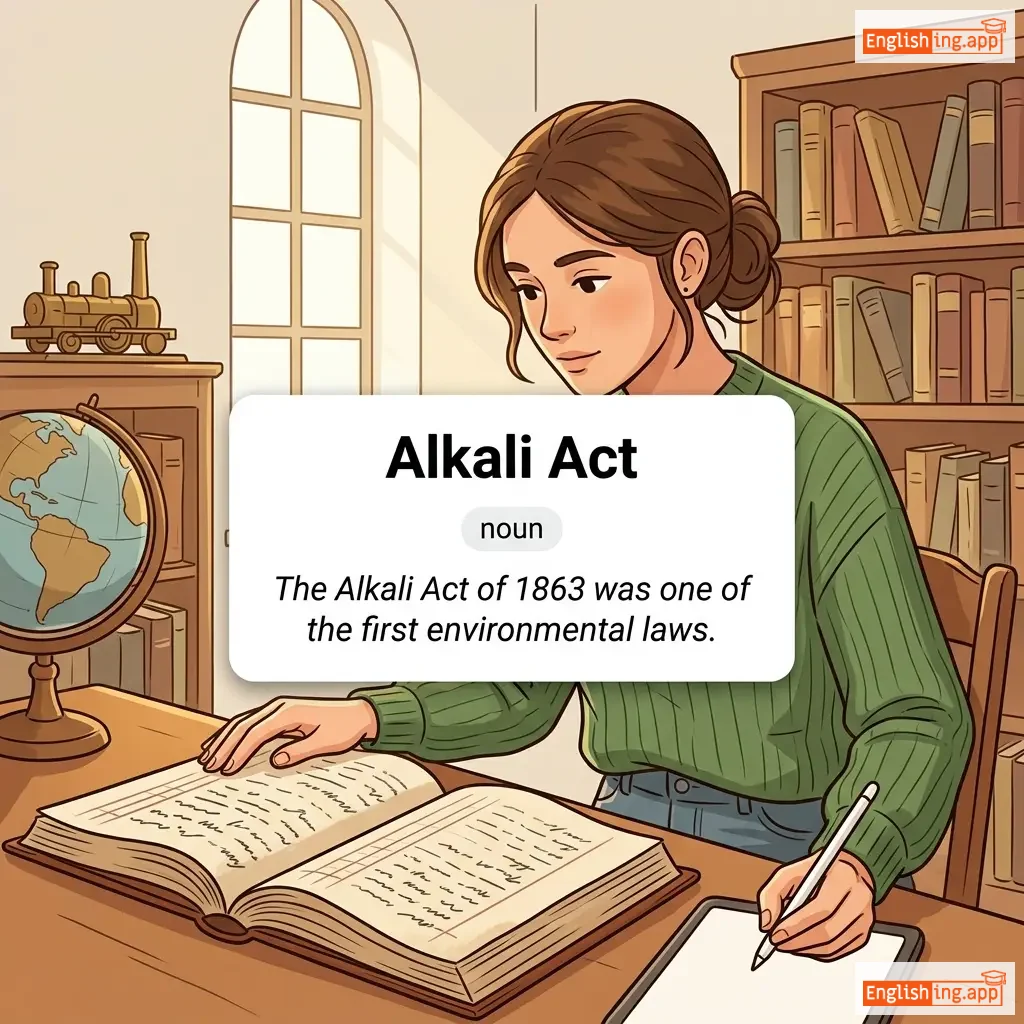
Alkali Act definition card — visual illustration of the meaning
noun
/ˈæl.kə.laɪ ækt/
アルカリ法案 (Arukari hōan)

A British law passed in 1863 to regulate the emission of hydrochloric acid gas from alkali works, representing one of the first pieces of environmental legislation.

"The Alkali Act of 1863 was one of the first environmental laws."
"1863年のアルカリ法案は最初の環境法の一つでした。" (1863 nen no arukari hōan wa saisho no kankyōhō no hitotsu deshita.)
determiner, pronoun, adverb
/ɔːl/
すべて (subete)

the whole quantity or extent of something; every one of something

"She spent all her money on books."

"彼女はすべてのお金を本に使いました。" (Kanojo wa subete no okane o hon ni tsukaimashita.)
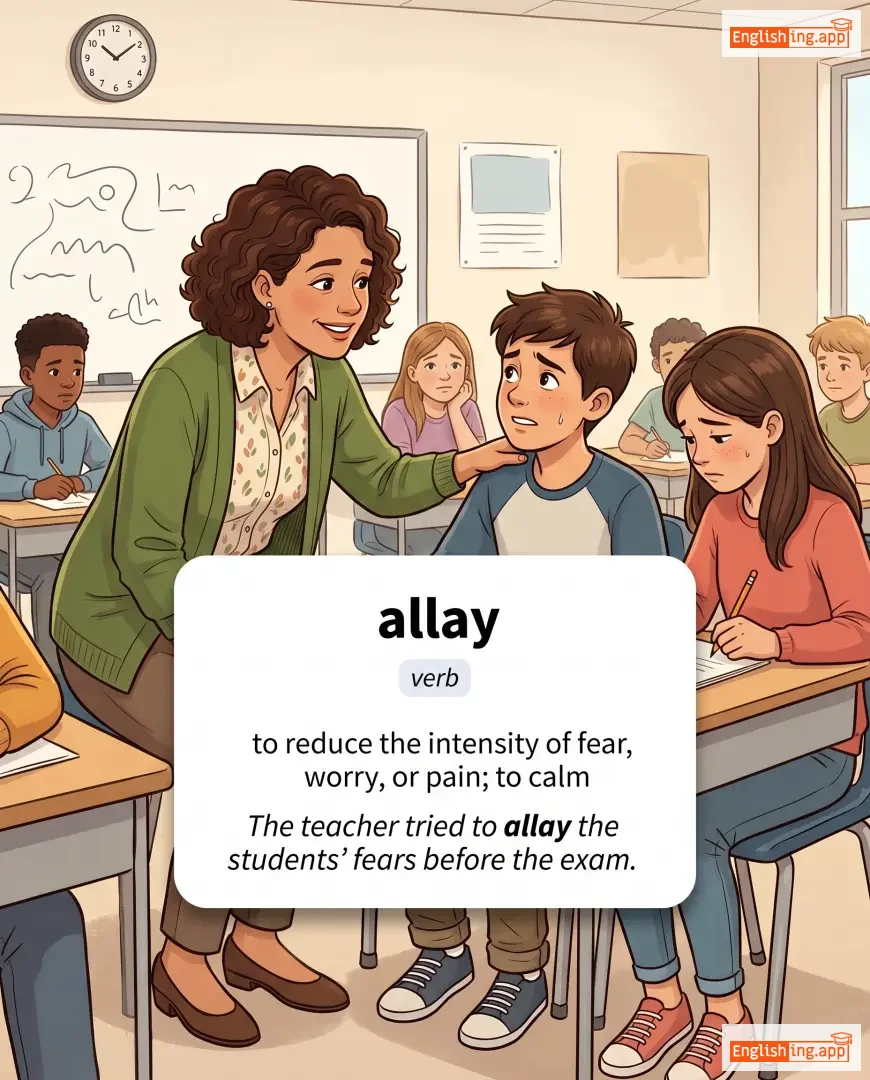
allay definition card — visual illustration of the meaning
verb
/əˈleɪ/
和らげる (yawararageru)

to reduce the intensity of fear, worry, or pain; to calm

"The teacher tried to allay the students’ fears before the exam."

"教師は試験前に生徒たちの恐怖を和らげようとしました。" (Kyōshi wa shiken mae ni seito-tachi no kyōfu o yawarageyō to shimashita.)
noun
/ˌælɪˈɡeɪʃən/
告発 (kokuhatsu)

a claim or assertion that someone has done something illegal or wrong, typically without proof

"The politician denied the allegation of corruption."

"政治家は汚職の告発を否定した。" (Seijika wa oshoku no kokuhatsu wo hitei shita.)
allegations definition card — visual illustration of the meaning
noun
ˌæl.ɪˈɡeɪ.ʃənz
告発 (kokuhatsu)

Claims or assertions that someone has done something illegal or wrong, typically without proof.

"The allegations were investigated by an international body."

"その告発は国際機関によって調査されました。" (Sono kokuhatsu wa kokusai kikan ni yotte chousa saremashita.)
verb
/əˈlɛdʒ/
主張する (shuchō suru)

to claim or assert something, typically without proof

"The witness alleged that the man was at the crime scene."

"証人はその男性が犯罪現場にいたと主張した。" (Shōnin wa sono dansei ga hanzai genba ni ita to shuchō shita.)
adjective
/əˈlɛdʒd/
疑われた (utagawareta)

said or thought to be true, but not proven

"The alleged thief was caught by the police."

"疑われた泥棒は警察に捕まった。" (Utagawareta dorobō wa keisatsu ni tsukamatta.)
adverb
/əˈlɛdʒɪdli/
伝えられたところによると (tsutaerareta tokoro ni yoru to)

used to say that something is claimed to be true, though not proven

"He was allegedly involved in the robbery."
"彼は伝えられたところによると強盗に関与していた。" (Kare wa tsutaerareta tokoro ni yoru to gōtō ni kan'yo shite ita.)
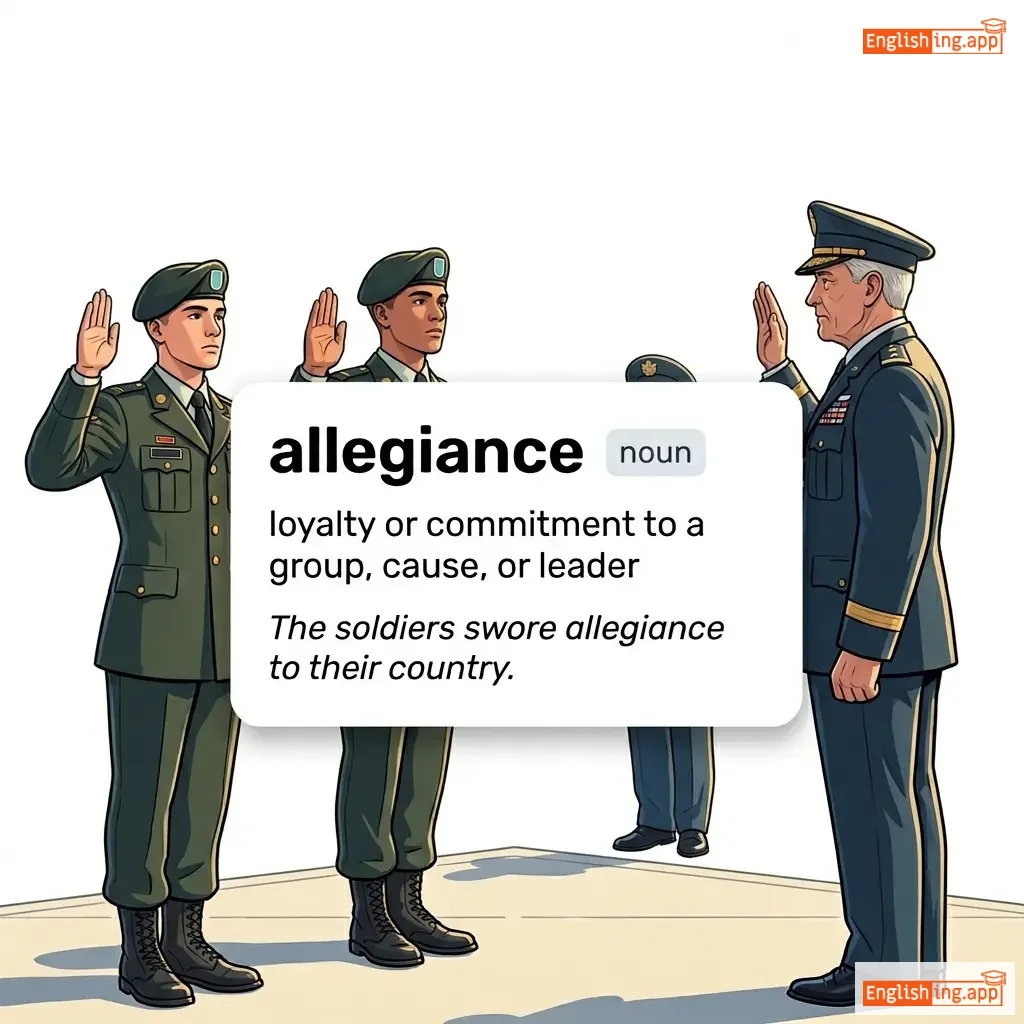
allegiance definition card — visual illustration of the meaning
🇺🇸

allegiance

noun
/əˈliːdʒəns/

loyalty or commitment to a group, cause, or leader

"The soldiers swore allegiance to their country."

noun
/ˈælɪɡəri/
寓話 (gūwa)

a story, poem, or picture that can be interpreted to reveal a hidden meaning, often moral or political

"The novel is an allegory of the struggle between good and evil."
"その小説は善と悪の闘争の寓話です。" (Sono shōsetsu wa zen to aku no tōsō no gūwa desu.)
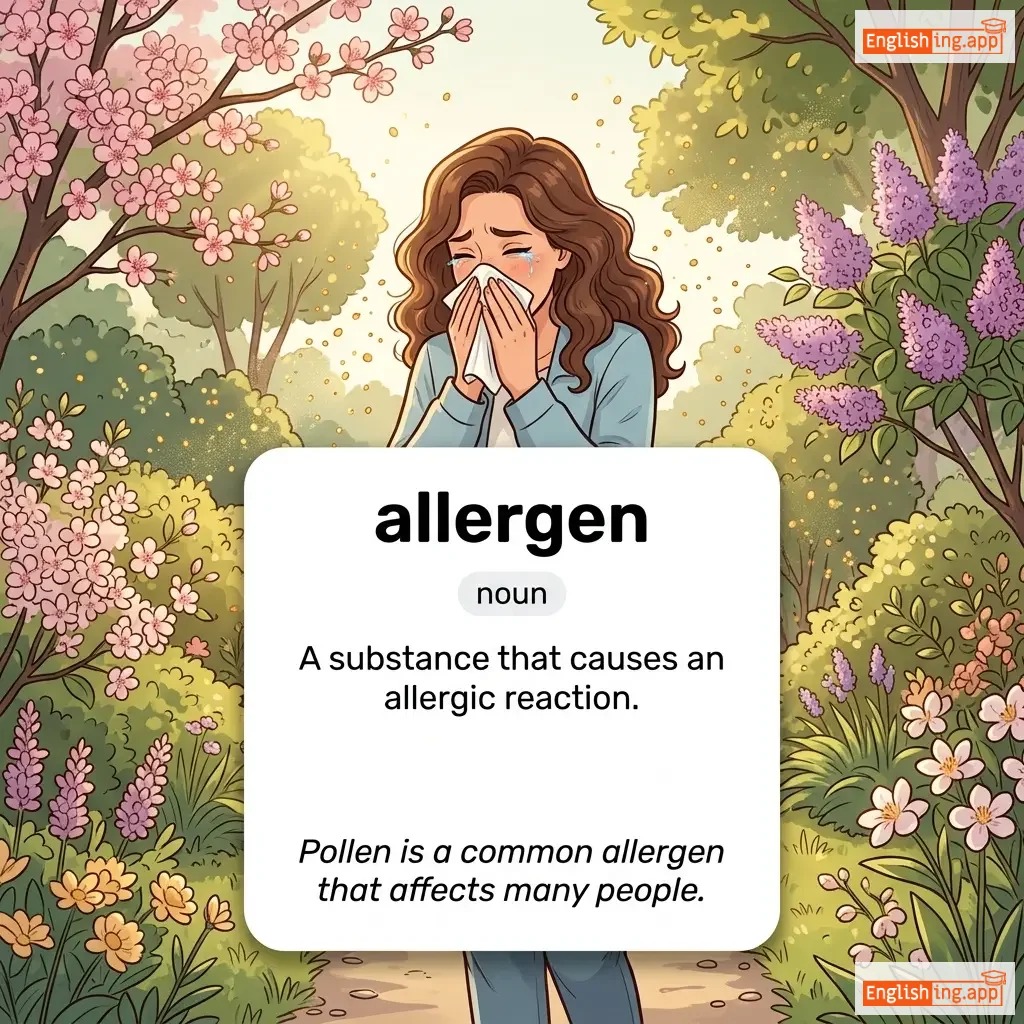
allergen definition card — visual illustration of the meaning
noun
ˈælərdʒən
アレルギー反応を引き起こす物質 (arerugī hannō o hikiokosu busshitsu)

A substance that causes an allergic reaction.

"Pollen is a common allergen that affects many people."
"花粉は多くの人々に影響を与える一般的なアレルゲンです。" (Kafun wa ōku no hitobito ni eikyō o ataeru ippan-teki na arerugen desu.)
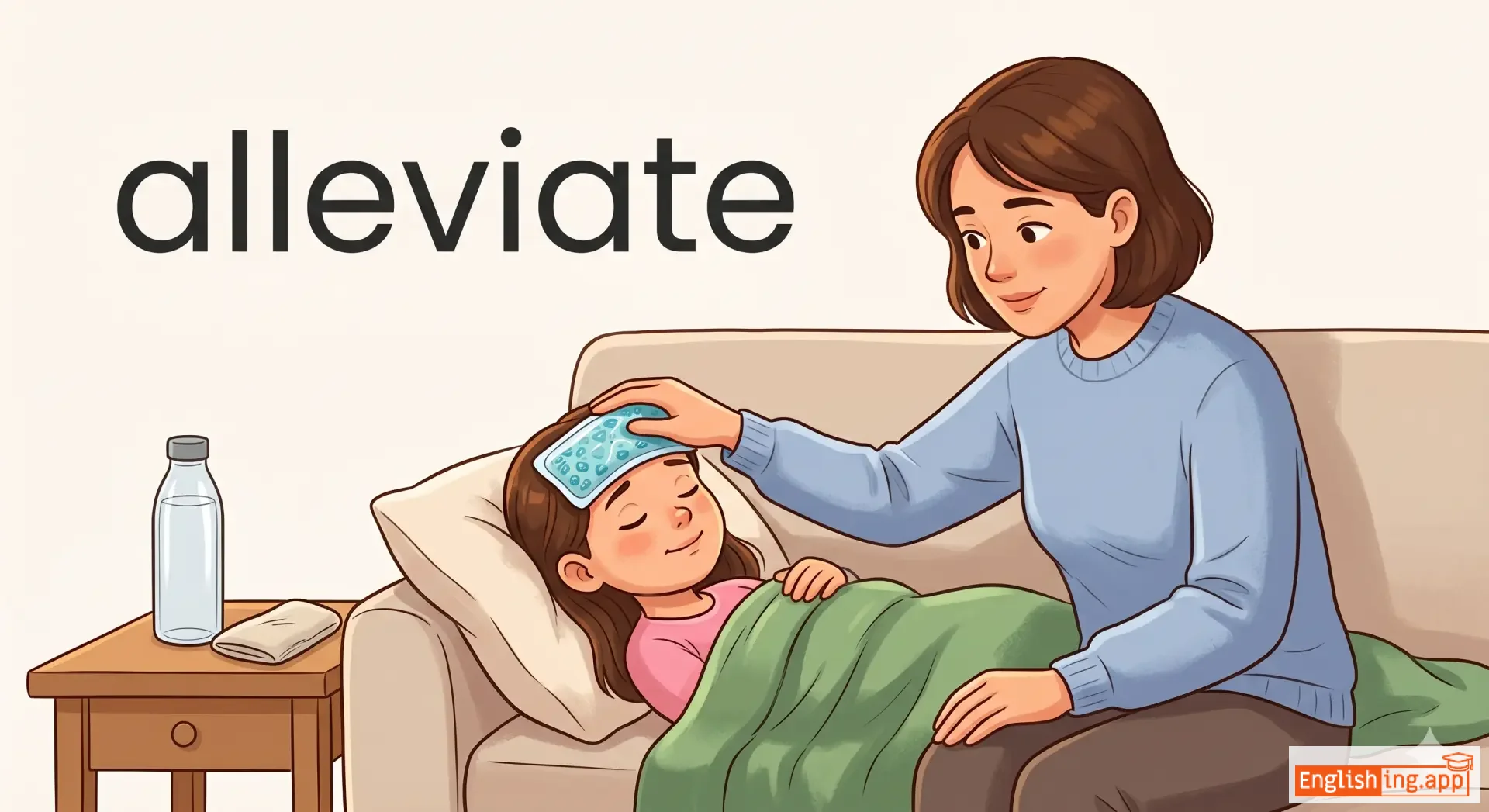
alleviate definition card — visual illustration of the meaning
verb
/əˈliːvieɪt/
和らげる (yawarageru)

to make suffering, pain, or a problem less severe

"The medicine helped alleviate her headache."

"その薬は頭痛を軽減するのに役立ちました。" (Sono kusuri wa zutsuu o keigen suru no ni yakudachimashita.)
noun
/ˈæli/
路地 (roji)

a narrow passageway between or behind buildings

"They walked through a dark alley to reach the main road."
"彼らは暗い路地を通って、メインの道路に到達した。" (Karera wa kurai roji o tōtte, mein no dōro ni tōtatsu shita.)
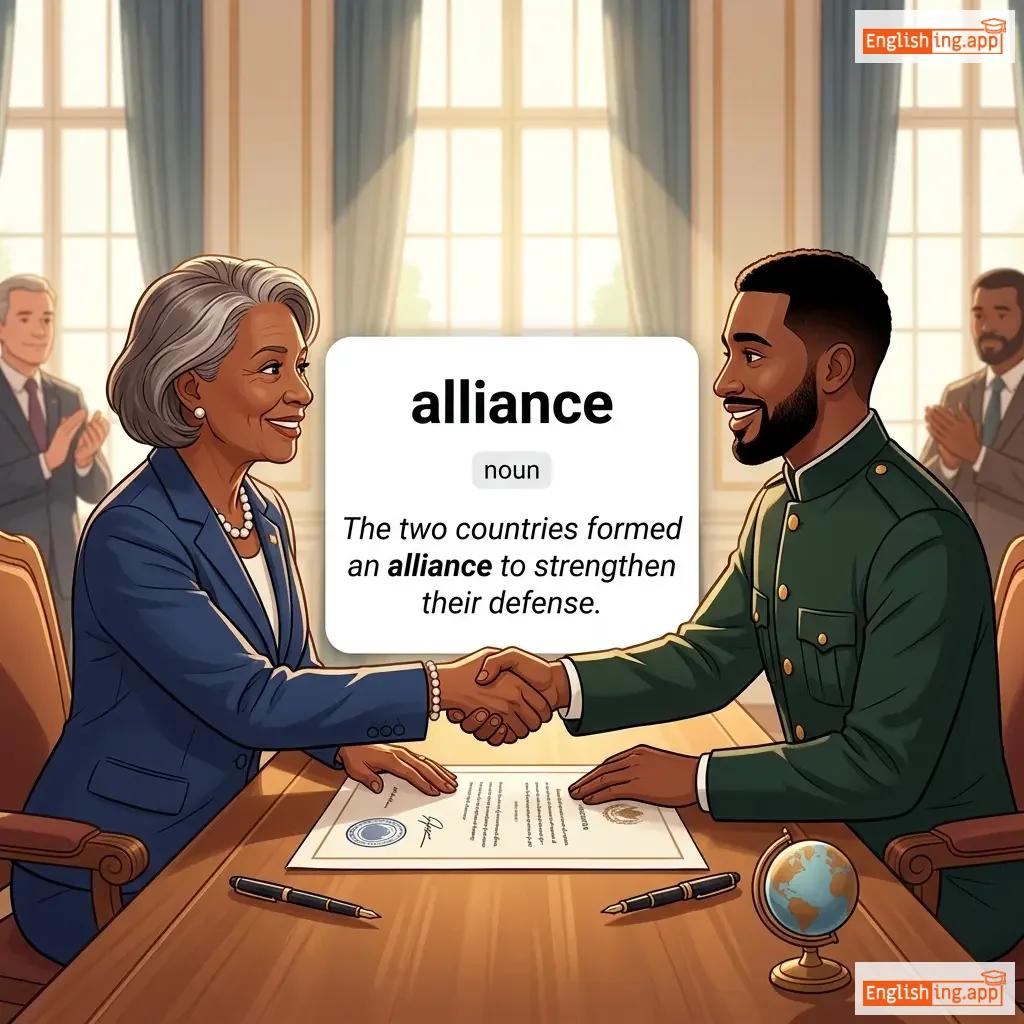
alliance definition card — visual illustration of the meaning
noun
/əˈlaɪəns/
同盟 (dōmei)

a formal agreement or union between groups, countries, or organizations for mutual benefit

"The two countries formed an alliance to strengthen their defense."

"二つの国は防衛を強化するために同盟を結んだ。" (Futatsu no kuni wa bōei o kyōka suru tame ni dōmei o musunda.)
adjective
/əˈlaɪd/
連合; 同盟; つながり (allied)

joined by agreement or treaty; associated; connected

"The allied forces worked together during the war."

"連合軍は戦争中に一緒に働いた。" (Rengōgun wa sensō-chū ni issho ni hataraita.)
noun
/ˈæl.ɪ.ɡeɪ.tər/
ワニ (wani)

a large reptile similar to a crocodile but with a shorter, wider head

"The alligator basked in the sun on the riverbank."

"ワニは川辺で日光浴をしていました。" (wani wa kawabe de nikkōyoku o shite imashita)
verb
/əˈlɪtəreɪt/
頭韻を踏む (touin o fumu)

to repeat the same consonant sound at the beginning of words in a phrase or sentence

"The poet often alliterates words to create rhythm."

"詩人はしばしばリズムを作り出すために言葉をアリテレートします。" (Shijin wa shibashiba rizumu o tsukuri dasu tame ni kotoba o aritereeto shimasu.)
noun
/əˌlɪtəˈreɪʃən/
頭韻 (touin)

the occurrence of the same consonant sound at the beginning of words in close succession

"She used alliteration in her poem to add musicality."

"彼女は詩の中で音楽性を加えるためにアリテレーションを使用しました。" (Kanojo wa shi no naka de ongakusei o kuwaeru tame ni aritēreshon o shiyou shimashita.)
verb
/ˈæləkeɪt/
割り当てる (wariauteru)

to distribute or assign resources, duties, or responsibilities for a specific purpose

"The manager allocated funds for the new project."
"マネージャーは新しいプロジェクトのために資金を割り当てました。" (Manējā wa atarashī purojekuto no tame ni shikin o wariatemashita.)
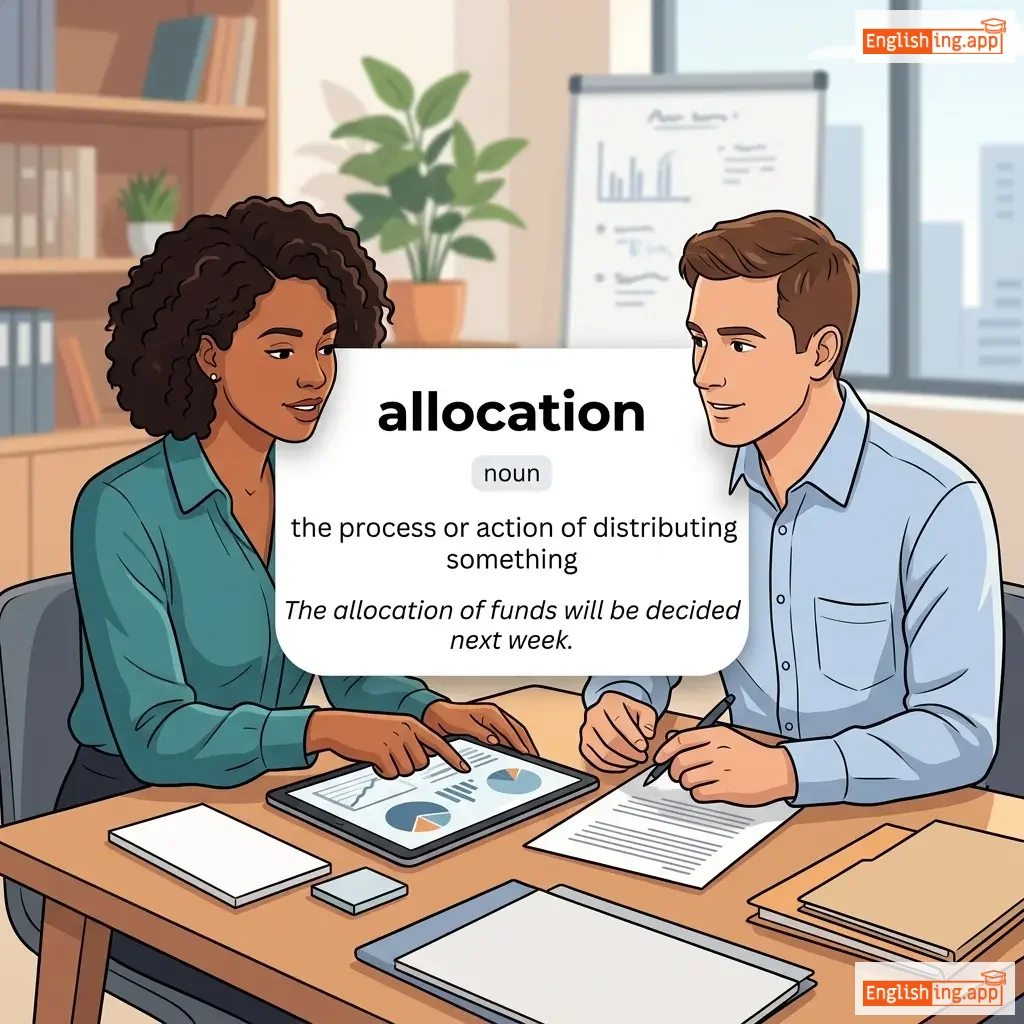
allocation definition card — visual illustration of the meaning
noun
/ˌæləˈkeɪʃən/
配分 (haibun)

the process or action of distributing something

"The allocation of funds will be decided next week."

"資金の配分は来週決定されます。" (Shikin no haibun wa raishuu kettei saremasu.)
verb
/əˈlɒt/
幸せ (shiawase)

to give or assign something, often a share or portion, to someone

"Each student was allotted ten minutes to present."
"彼女は賞を受け取ったとき、幸福を隠すことができませんでした。" (Kanojo wa shō o uketotta toki, kōfuku o kakusu koto ga dekimasen deshita.)
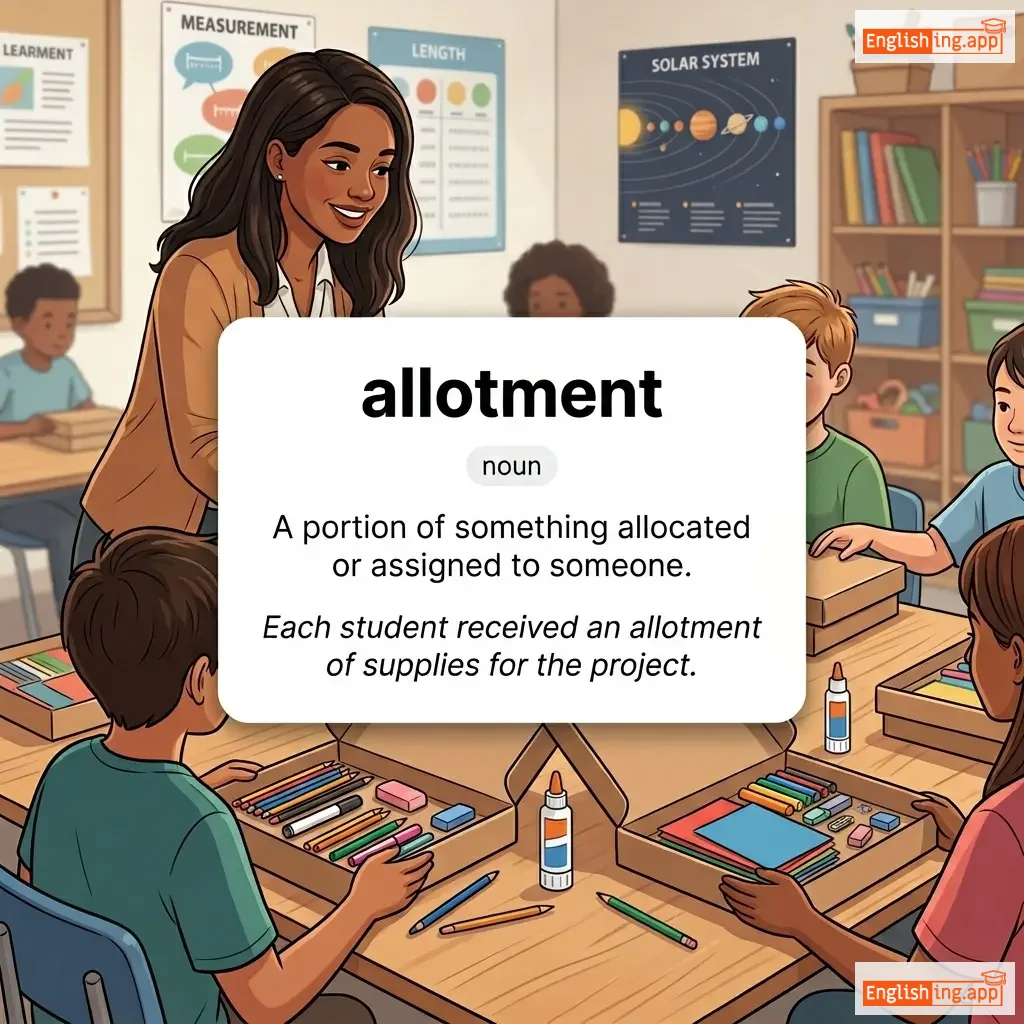
allotment definition card — visual illustration of the meaning
noun
/əˈlɒtmənt/
配分 (haibun)

A portion of something allocated or assigned to someone.

"Each student received an allotment of supplies for the project."

"各学生はプロジェクトのための供給物資の配分を受け取りました。" (Kaku gakusei wa purojekuto no tame no kyōkyū busshi no haibun o uketorimashita.)
verb
/əˈlaʊ/
許可する (kyoka suru)

to give permission for something to happen or someone to do something

"The teacher did not allow phones in class."

"先生はクラスで電話を許可しませんでした。" (Sensei wa kurasu de denwa o kyoka shimasen deshita.)
noun
/əˈlaʊəns/
手当 (teate)

a sum of money given regularly, typically for a specific purpose

"He gets a weekly allowance from his parents."
"彼は親から毎週お小遣いをもらっています。" (Kare wa oya kara maishū okodzukai o moratteimasu.)
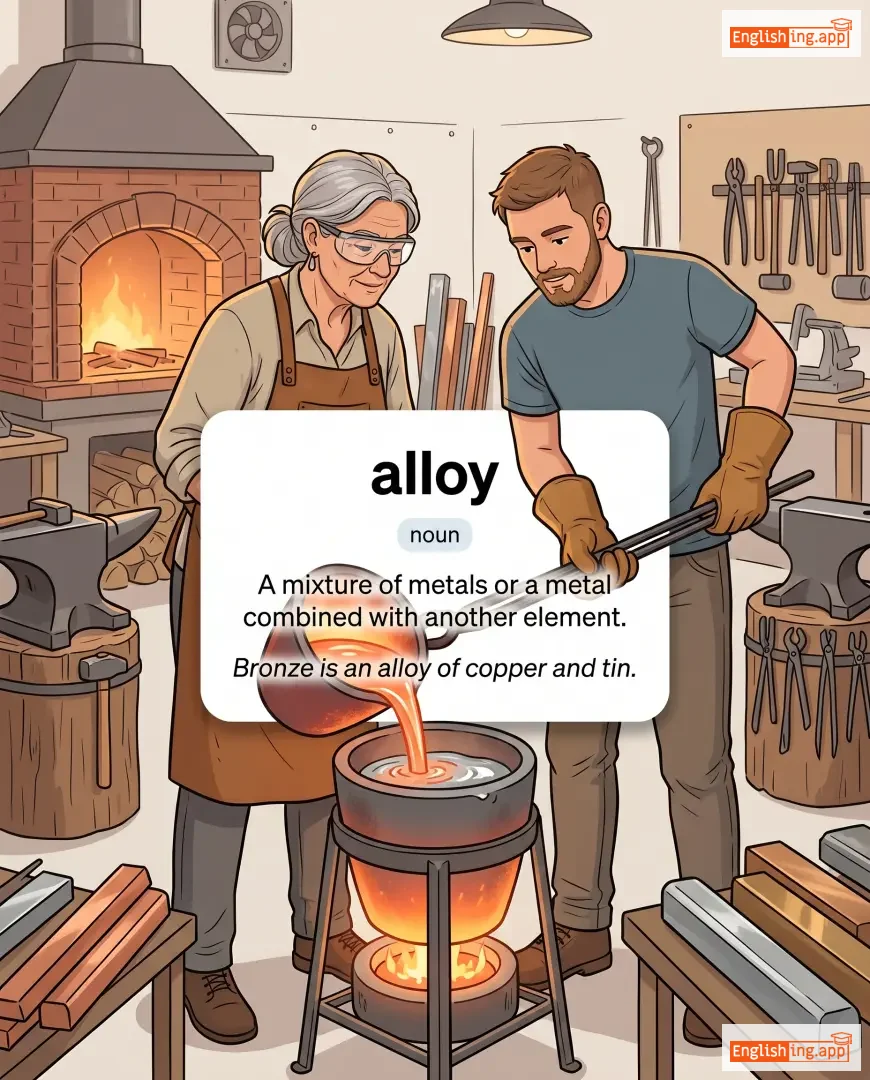
alloy definition card — visual illustration of the meaning
noun
/ˈælɔɪ/
合金 (gokin)

A mixture of metals or a metal combined with another element.

"Bronze is an alloy of copper and tin."

"ブロンズは銅とスズの合金です。" (Buronzu wa dō to suzu no gokin desu.)
verb
/əˈluːd/
ほのめかす (honomekasu)

To refer to something indirectly or casually.

"The professor alluded to Shakespeare during the lecture."
"教授は講義中にシェイクスピアに言及した。" (Kyōju wa kōgichū ni Sheikusupia ni genkyū shita.)
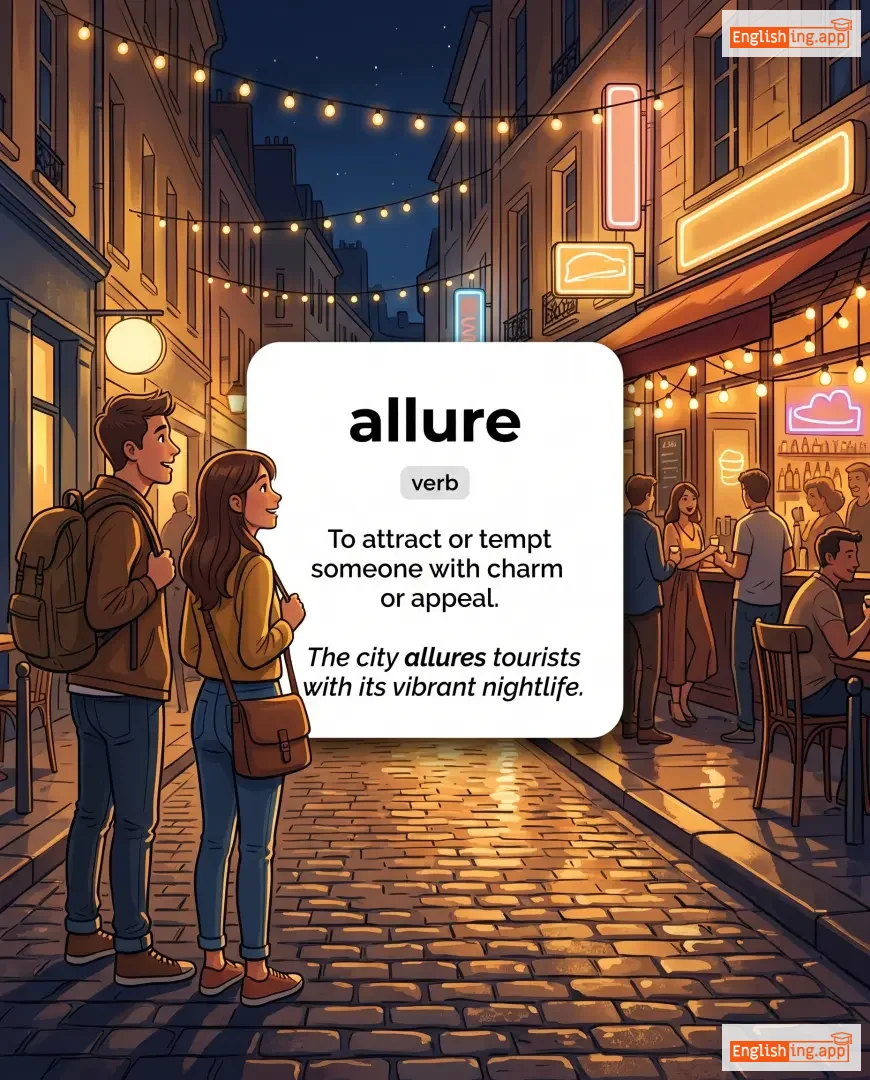
allure definition card — visual illustration of the meaning
verb
/əˈlʊr/
魅力 (miryoku)

To attract or tempt someone with charm or appeal.

"The city allures tourists with its vibrant nightlife."

"この都市はその活気に満ちた夜の生活で観光客を引き寄せる。" (Kono toshi wa sono kanki ni michita yoru no seikatsu de kankoukyaku wo hikiyoseru.)
adjective
/əˈlʊr.ɪŋ/
魅力的で誘惑的; 魅力的な (miryokuteki de yūwaku teki; miryokuteki na)

attractive and tempting; fascinating

"The alluring fragrance of roses filled the garden."

"バラの魅力的な香りが庭を満たしました。" (Bara no miryokuteki na kaori ga niwa o mitashimashita.)
noun
/əˈluːʒən/
暗示 (anshi)

An indirect reference to something without mentioning it explicitly.

"Her story contained an allusion to a famous myth."

"彼女の話には有名な神話への暗示が含まれていた。" (Kanojo no hanashi ni wa yūmei na shinwa e no anshi ga fukumarete ita.)
adjective
/əˈluːsɪv/
暗示的 (anshiteki)

Making indirect references or hints; suggestive without being explicit.

"The novel is full of allusive passages that point to classical literature."

"その小説は古典文学を指し示す暗示的な部分で満ちている。" (Sono shōsetsu wa koten bungaku o sashishimesu anshiteki na bubun de michite iru.)
adjective
/əˈluːviəl/
沖積の (chuseki no)

Relating to or derived from alluvium (loose soil or sediment deposited by rivers).

"The farmers cultivate crops on the fertile alluvial plains."

"農民たちは肥沃な沖積平原で作物を栽培します。" (nomin tachi wa hi yoku na chuseki heigen de sakumotsu o saibai shimasu)
noun
/əˈluːviən/
アリュビオン (aryubion)

The gradual increase of land by the deposit of soil from water; also, a flood or overflow of water.

"The river’s alluvion added new fertile land to the village fields."
"川のアリュビオンは村の畑に新しい肥沃な土地を加えました。" (Kawa no aryubion wa mura no hatake ni atarashī hiwaku na tochi o kuwaemashita.)
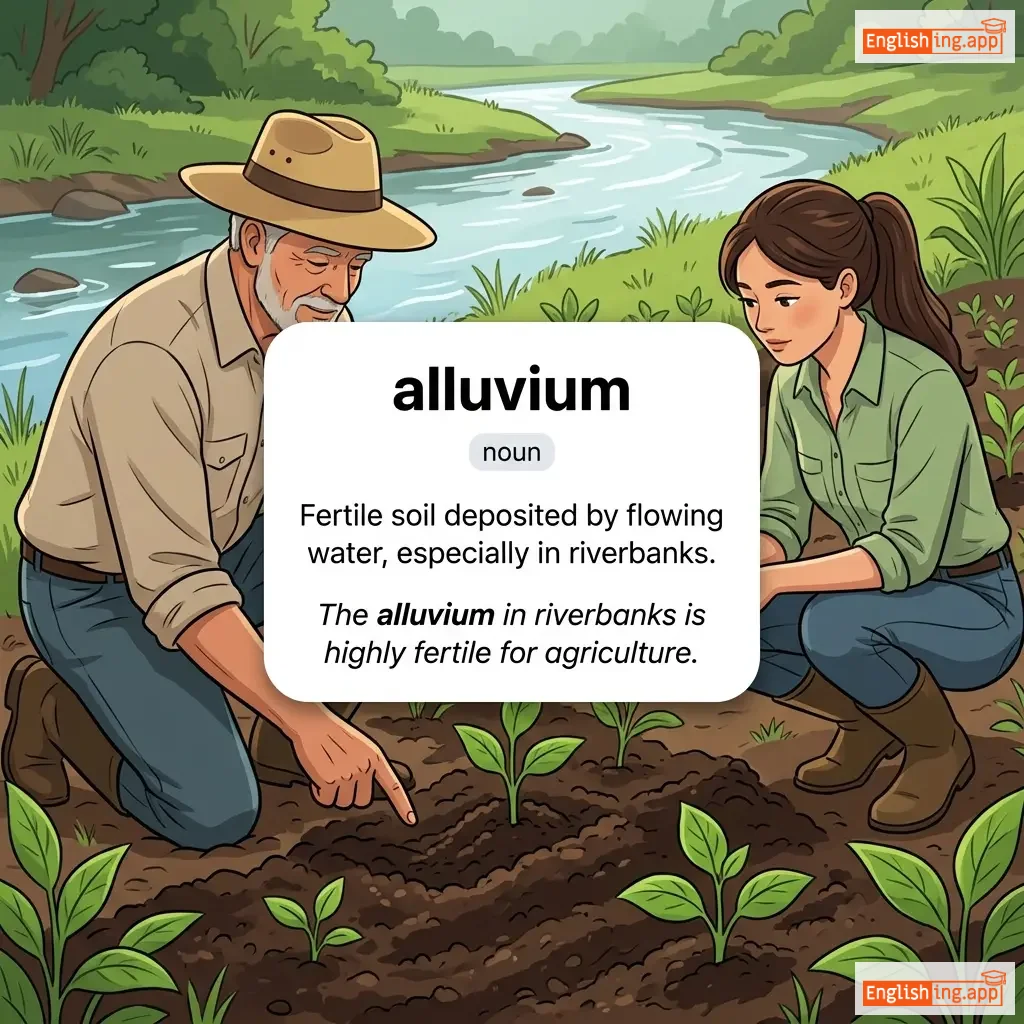
alluvium definition card — visual illustration of the meaning
noun
/əˈluː.vi.əm/
沖積土 (chousekido)

Fertile soil deposited by flowing water, especially in riverbanks.

"The alluvium in riverbanks is highly fertile for agriculture."

"川の岸辺にあるアリューヴィウムは農業に非常に肥沃です。" (Kawa no kishibe ni aru aryuviumu wa nougyou ni hijou ni hiwoku desu.)
verb
/ˈælaɪ/
味方 (mikata)

To unite or form a connection or partnership with another person, group, or nation.

"The two countries decided to ally against their common enemy."

"二国は共通の敵に対して連携することを決定した。" (Nikoku wa kyōtsū no teki ni taishite renkei suru koto o kettei shita.)
noun
/ˈɔːlmənæk/
年鑑 (nenkan)

An annual publication containing calendars, weather forecasts, astronomical data, and other useful information.

"He consulted the almanac to check the phases of the moon."

"彼は月の段階を確認するために年鑑を参照しました。" (Kare wa tsuki no dankai o kakunin suru tame ni nenkan o sanshō shimashita.)
adjective
/ɔːlˈmaɪ.ti/
全能 (zennou)

having unlimited power; omnipotent

"The almighty storm destroyed everything in its path."

"その全能な嵐はその進路上のすべてを破壊しました。" (Sono zennou na arashi wa sono shinrojou no subete o hakai shimashita.)
noun
/ˈæl.mɪ.rə/
クローゼット (kurōzetto)

a large cupboard or wardrobe used for storing clothes and other items

"I keep all my clothes in the wooden almirah."

"私はすべての衣服を木製のアルミラーに保管します。" (Watashi wa subete no ifuku o mokusei no arumirā ni hokan shimasu.)
noun
/ˈɑːmənd/
アーモンド (aamondo)

edible seed of the almond tree, rich in protein and healthy fats

"She eats almonds every morning for breakfast."

"彼女は毎朝、朝食にアーモンドを食べます。" (kanojo wa mai asa, choushoku ni aamondo wo tabemasu.)
adverb
/ˈɔːlmoʊst/
ほとんど (hotondo)

very nearly, but not exactly or completely

"He almost missed the train."

"彼はほとんど電車を逃した。" (Kare wa hotondo densha o nogashita.)
noun
/ɑːmz/
施し (hodokoshi)

Money, food, or goods given to the poor as charity.

"The monk distributed alms to the needy villagers."

"僧侶は貧しい村人たちに施しを分け与えた。" (Sōryo wa mazushī murabito-tachi ni hodokoshi o wakeataeta.)
noun
/ˈæl.oʊ ˈvɪər.ə/
アロエベラ (Aloe vera)

a succulent plant with thick fleshy leaves and medicinal properties; produces tubular flowers

"The aloe vera plant blooms with orange or yellow tubular flowers."

"アロエベラの植物はオレンジ色や黄色のチューブ状の花を咲かせます。" (Aloe vera no shokubutsu wa orenjiiro ya kiiro no chūbu-jō no hana o sakasemasu.)
adverb
/əˈlɒft/
高く (takaku)

Up in or into the air; overhead.

"The kite was flying aloft in the clear sky."

"凧は晴れた空に高く飛んでいた。" (Tako wa haretasora ni takaku tonde ita.)
adjective, adverb
/əˈloʊn/
一人 (hitori)

having no one else present; on one's own

"She prefers to live alone in her apartment."

"彼女はアパートで一人で暮らすのを好む。" (Kanojo wa apāto de hitori de kurasu no o konomu.)
preposition, adverb
/əˈlɔːŋ/
沿って (sotte)

moving in a constant direction on (a road, path, or surface)

"We walked along the river."

"私たちは川沿いに歩きました。" (Watashitachi wa kawa-zoi ni arukimashita.)
preposition
/əˈlɔːŋsaɪd/
隣で (tonari de)

next to or together with someone or something

"She worked alongside her brother in the family business."

"彼女は家族のビジネスで兄と隣で働きました。" (Kanojo wa kazoku no bijinesu de ani to tonari de hatarakimashita.)
adjective
/əˈluːf/
距離を置いた (kyori o oita)

Not friendly or forthcoming; cool and distant.

"He remained aloof during the entire discussion."

"彼は議論の間ずっと距離を置いていました。" (Kare wa giron no aida zutto kyori o oite imashita.)
adverb
/əˈlaʊd/
大声で (ōkoe de)

in a voice that can be heard; not silently

"Please read the instructions aloud so everyone can hear."

"指示を大声で読んで、皆が聞こえるようにしてください。" (Shiji o ōkoe de yonde, minna ga kikoeru yō ni shite kudasai.)
noun
/ˈæl.fə.bɛt/
アルファベット (arufabetto)

a set of letters or symbols in a fixed order used to represent the sounds of a language

"Children usually learn the alphabet before learning to read words."

"子どもたちはたいてい単語を読む前にアルファベットを学びます。" (kodomotachi wa taitei tango o yomu mae ni arufabetto o manabimasu)
adjective
/ˌælfəˈbɛtɪkəl/
アルファベット順 (arufabetto-jun)

Arranged in the order of the letters of the alphabet.

"The names were listed in alphabetical order."

"名前はアルファベット順にリストされていました。" (Namae wa arufabetto-jun ni risuto sarete imashita.)