वोकैबुलरीज

इंग्लिश वोकैबुलरी डिस्कवर, लर्न और मास्टर करें

noun
/ˈæl.kə.laɪ/
क्षार (kshar)

a soluble base substance, typically with a pH greater than 7, that neutralizes acids

"Soap contains alkali which helps remove grease."

"साबुन में क्षार होता है जो ग्रीस को हटाने में मदद करता है।" (Sabun mein kshar hota hai jo grease ko hatane mein madad karta hai.)
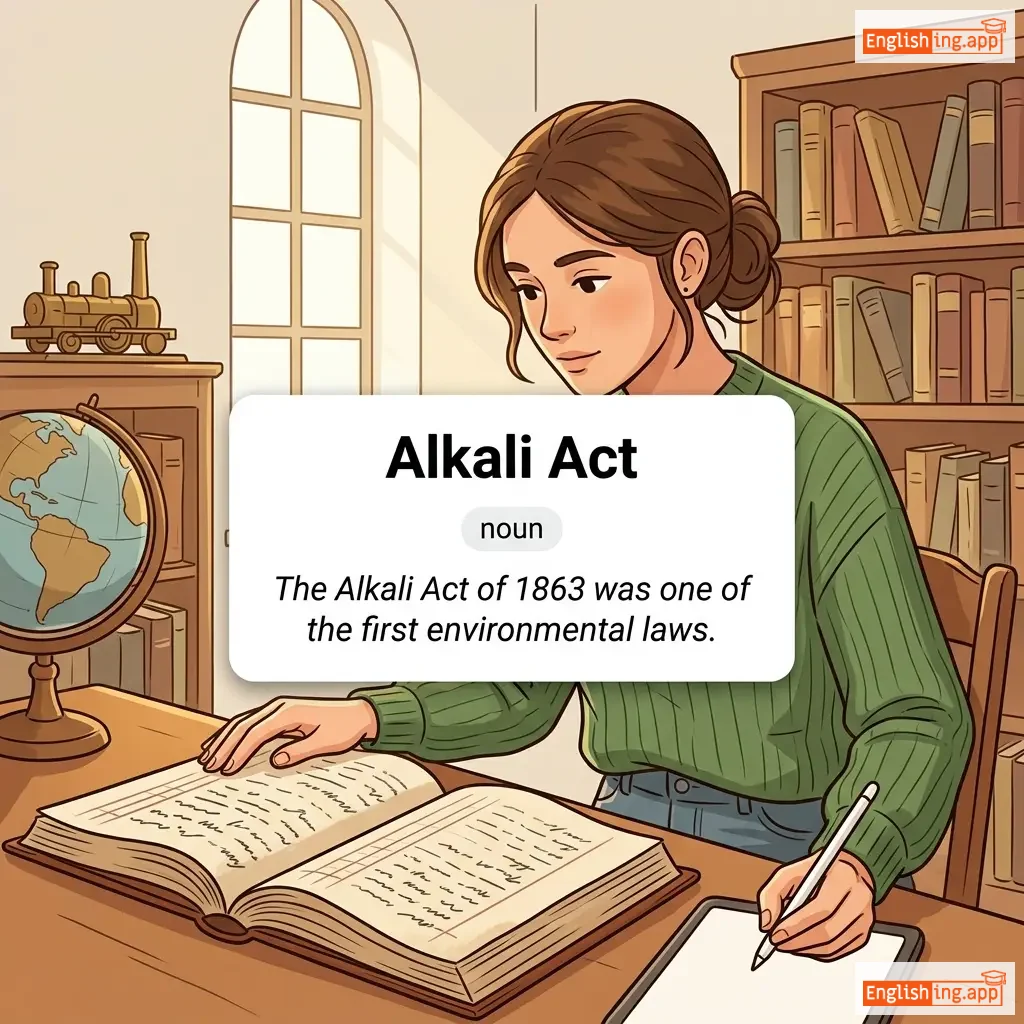
Alkali Act definition card — visual illustration of the meaning
noun
/ˈæl.kə.laɪ ækt/
अल्काली अधिनियम (alkali adhiniyam)

A British law passed in 1863 to regulate the emission of hydrochloric acid gas from alkali works, representing one of the first pieces of environmental legislation.

"The Alkali Act of 1863 was one of the first environmental laws."

"1863 का अल्काली अधिनियम पहले पर्यावरणीय कानूनों में से एक था।" (1863 ka alkali adhiniyam pehle paryavaranik kanoonon mein se ek tha.)
determiner, pronoun, adverb
/ɔːl/
सभी (sabhi)

the whole quantity or extent of something; every one of something

"She spent all her money on books."

"उसने अपनी सारी पैसे किताबों पर खर्च किए।" (Usne apni saari paise kitaabon par kharch kiye.)
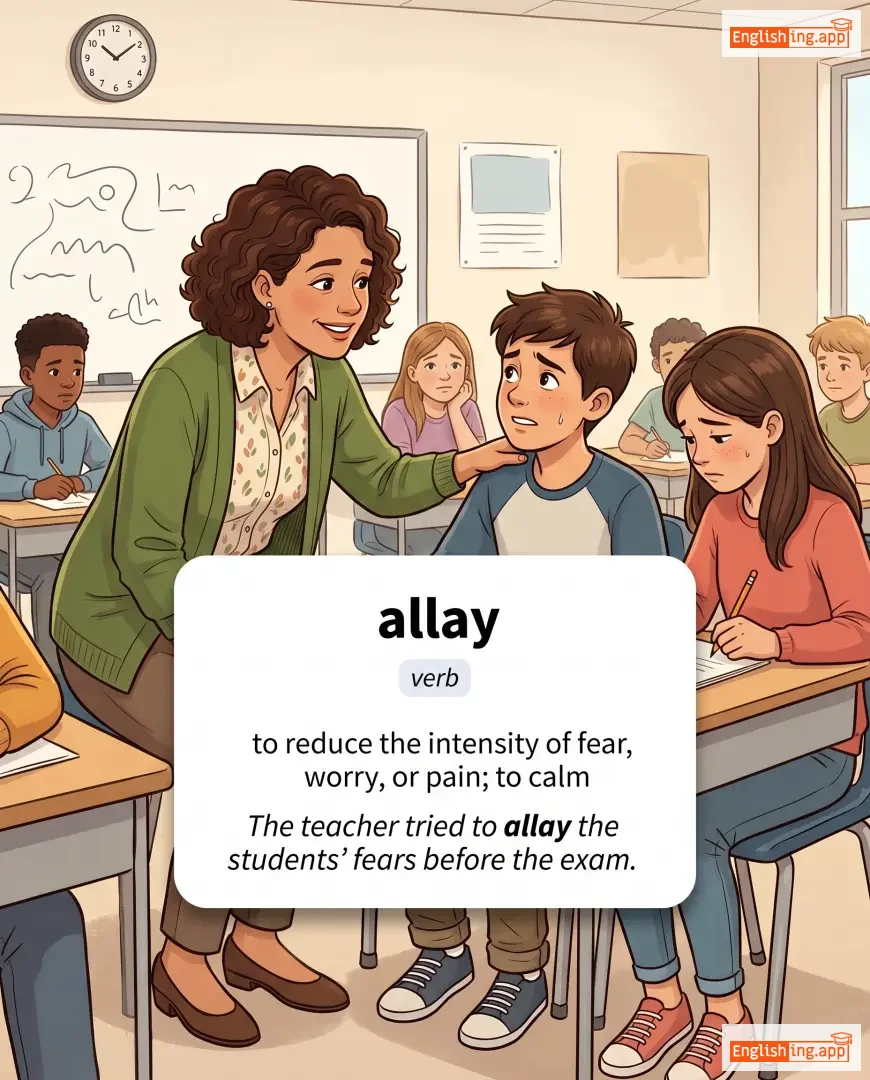
allay definition card — visual illustration of the meaning
verb
/əˈleɪ/
शांत करना (shant karna)

to reduce the intensity of fear, worry, or pain; to calm

"The teacher tried to allay the students’ fears before the exam."

"शिक्षक ने परीक्षा से पहले छात्रों के डर को शांत करने की कोशिश की।" (Shikshak ne pariksha se pehle chhatron ke dar ko shant karne ki koshish ki.)
noun
/ˌælɪˈɡeɪʃən/
आरोप (aarop)

a claim or assertion that someone has done something illegal or wrong, typically without proof

"The politician denied the allegation of corruption."

"राजनेता ने भ्रष्टाचार के आरोप को नकारा।" (Rajneta ne bhrashtachar ke aarop ko nakara.)
allegations definition card — visual illustration of the meaning
noun
ˌæl.ɪˈɡeɪ.ʃənz
आरोप (aarop)

Claims or assertions that someone has done something illegal or wrong, typically without proof.

"The allegations were investigated by an international body."

"आरोपों की जांच एक अंतरराष्ट्रीय संस्था द्वारा की गई थी।" (Aaropon ki jaanch ek antarraashtreey sanstha dwara ki gayi thi.)
verb
/əˈlɛdʒ/
आरोप लगाना (aarop lagana)

to claim or assert something, typically without proof

"The witness alleged that the man was at the crime scene."

"साक्षी ने आरोप लगाया कि आदमी अपराध स्थल पर था।" (Sakshi ne aarop lagaya ki aadmi aparadh sthal par tha.)
adjective
/əˈlɛdʒd/
अभियुक्त (abhiyukt)

said or thought to be true, but not proven

"The alleged thief was caught by the police."

"अभियुक्त चोर को पुलिस ने पकड़ लिया था।" (Abhiyukt chor ko police ne pakad liya tha.)
adverb
/əˈlɛdʒɪdli/
कथित रूप से (kathit roop se)

used to say that something is claimed to be true, though not proven

"He was allegedly involved in the robbery."

"उसे कथित रूप से डकैती में शामिल किया गया था।" (Use kathit roop se dakaitee mein shamil kiya gaya tha.)
allegiance definition card — visual illustration of the meaning
noun
/əˈliːdʒəns/
वफादारी (vafadaari)

loyalty or commitment to a group, cause, or leader

"The soldiers swore allegiance to their country."

"सैनिकों ने अपने देश के प्रति वफादारी की शपथ ली।" (sainikon ne apne desh ke prati vafadaari ki shapath li)
noun
/ˈælɪɡəri/
रूपक कथा (roopak katha)

a story, poem, or picture that can be interpreted to reveal a hidden meaning, often moral or political

"The novel is an allegory of the struggle between good and evil."

"उपन्यास अच्छाई और बुराई के बीच संघर्ष की एक रूपक कथा है।" (Upanyas achhai aur burai ke beech sangharsh ki ek roopak katha hai.)
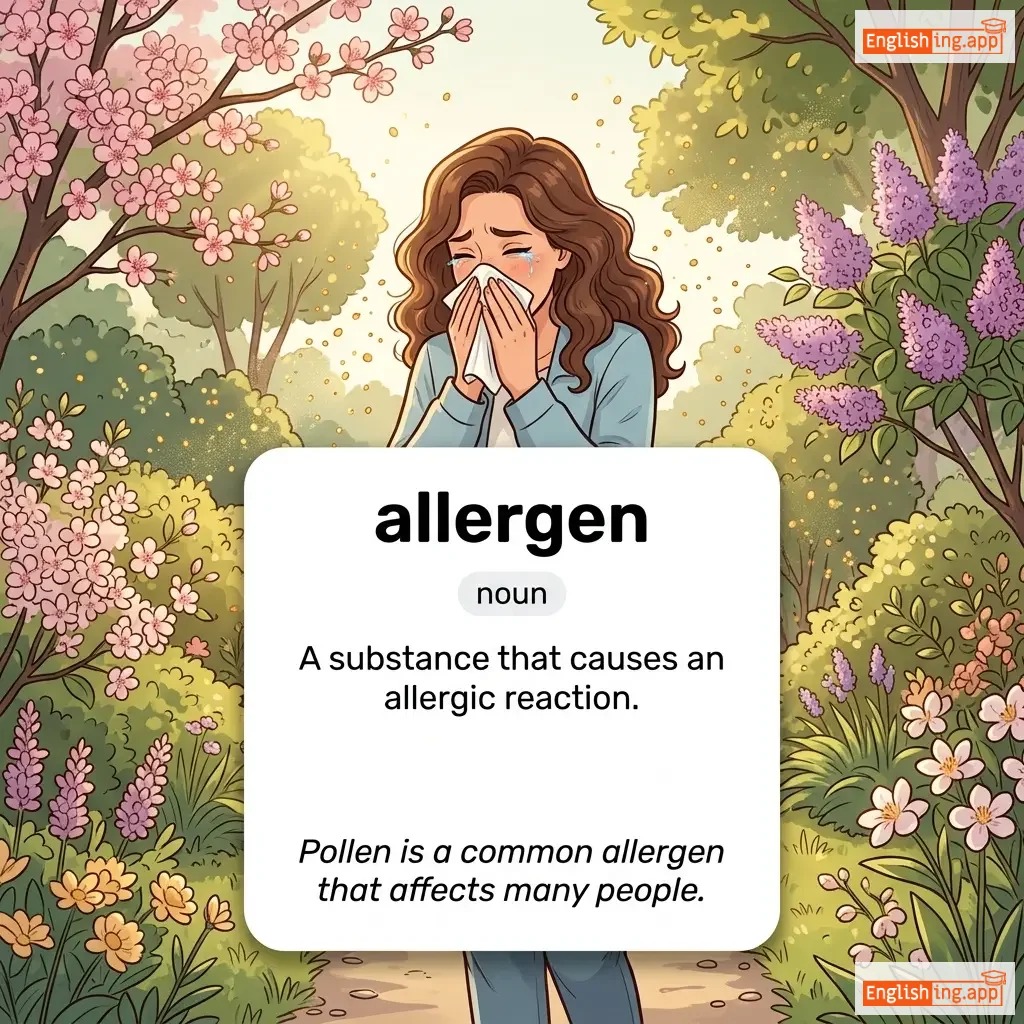
allergen definition card — visual illustration of the meaning
noun
ˈælərdʒən
एलर्जिक प्रतिक्रिया उत्पन्न करने वाला पदार्थ (allergic pratikriya utpann karne wala padarth)

A substance that causes an allergic reaction.

"Pollen is a common allergen that affects many people."

"पोलन एक सामान्य एलर्जेन है जो कई लोगों को प्रभावित करता है।" (Polan ek samanay allergen hai jo kai logon ko prabhavit karta hai.)
alleviate definition card — visual illustration of the meaning
verb
/əˈliːvieɪt/
कम करना (kam karna)

to make suffering, pain, or a problem less severe

"The medicine helped alleviate her headache."

"दवा ने उसके सिरदर्द को कम किया।" (Dawa ne uske sirdard ko kam kiya.)
noun
/ˈæli/
गली (gali)

a narrow passageway between or behind buildings

"They walked through a dark alley to reach the main road."

"वे मुख्य सड़क तक पहुंचने के लिए एक अंधेरे गली से गुज़रे।" (Ve mukhya sadak tak pahuchne ke liye ek andhere gali se guzre.)
alliance definition card — visual illustration of the meaning
noun
/əˈlaɪəns/
संधि (sandhi)

a formal agreement or union between groups, countries, or organizations for mutual benefit

"The two countries formed an alliance to strengthen their defense."

"दो देशों ने अपनी रक्षा को मजबूत करने के लिए एक संधि बनाई।" (Do deshon ne apni raksha ko majboot karne ke liye ek sandhi banayi.)
adjective
/əˈlaɪd/
संबद्ध; सहयोगी; जुड़ा हुआ (allied)

joined by agreement or treaty; associated; connected

"The allied forces worked together during the war."

"सहयोगी बलों ने युद्ध के दौरान एक साथ काम किया।" (sahyogi balon ne yudh ke dauran ek saath kaam kiya.)
noun
/ˈæl.ɪ.ɡeɪ.tər/
मगरमच्छ (magarmachh)

a large reptile similar to a crocodile but with a shorter, wider head

"The alligator basked in the sun on the riverbank."

"मगरमच्छ नदी के किनारे धूप में आराम कर रहा था।" (magarmachh nadi ke kinare dhoop mein aaraam kar raha tha)
verb
/əˈlɪtəreɪt/
समान व्यंजन ध्वनि का पुनरावृत्ति करना (samaan vyanjan dhvani ka punaraavrutti karna)

to repeat the same consonant sound at the beginning of words in a phrase or sentence

"The poet often alliterates words to create rhythm."

"कवि अक्सर शब्दों में लय बनाने के लिए ऐलिटरेट करता है।" (Kavi aksar shabdon mein lay banane ke liye eliterate karta hai.)
noun
/əˌlɪtəˈreɪʃən/
अनुप्रास (anupras)

the occurrence of the same consonant sound at the beginning of words in close succession

"She used alliteration in her poem to add musicality."

"उसने अपनी कविता में संगीतत्मकता जोड़ने के लिए अनुप्रास का इस्तेमाल किया।" (Usne apni kavita mein sangeetatmakta jodne ke liye anupras ka istemal kiya.)
verb
/ˈæləkeɪt/
आवंटित करना (avantit karna)

to distribute or assign resources, duties, or responsibilities for a specific purpose

"The manager allocated funds for the new project."

"मैनेजर ने नए प्रोजेक्ट के लिए फंड आवंटित किए।" (Manager ne naye project ke liye fund avantit kiye.)
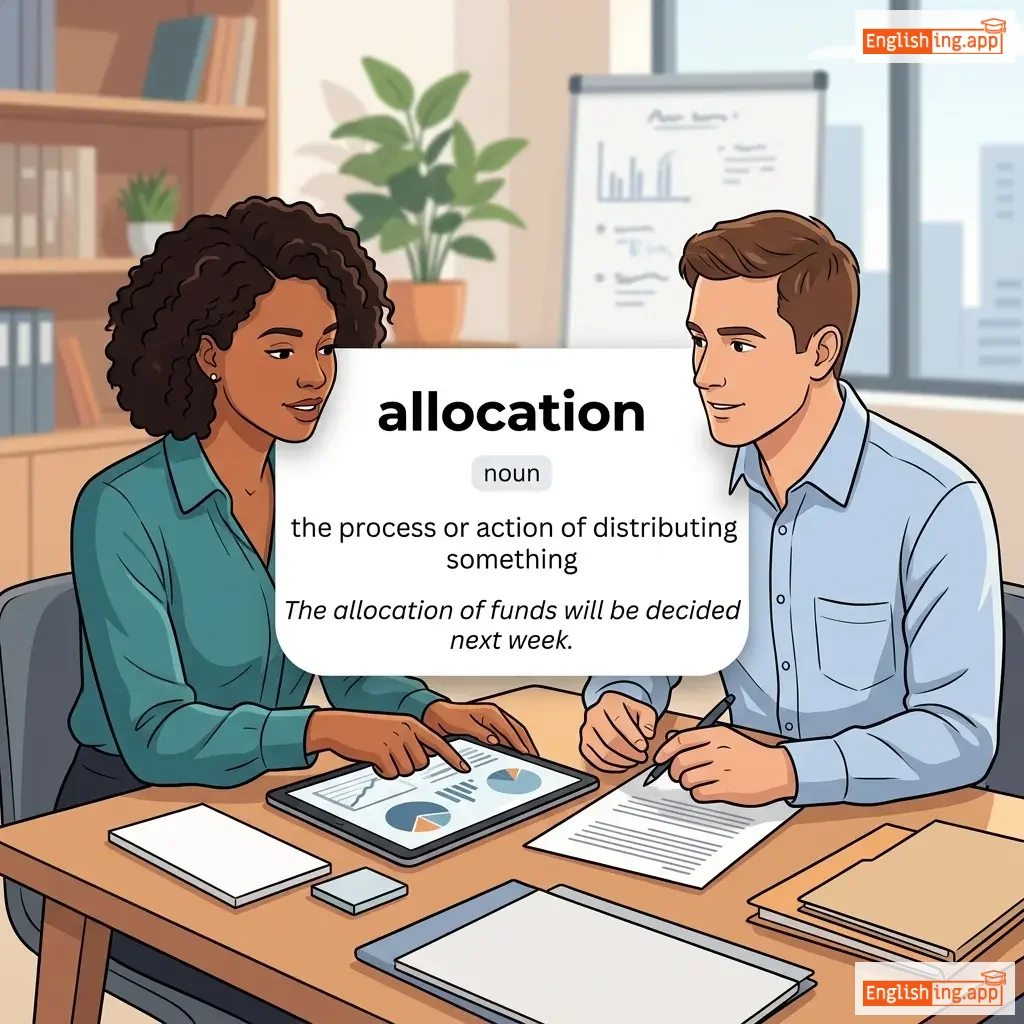
allocation definition card — visual illustration of the meaning
noun
/ˌæləˈkeɪʃən/
वितरण (vitaran)

the process or action of distributing something

"The allocation of funds will be decided next week."

"फंड्स का वितरण अगले सप्ताह तय किया जाएगा।" (fands ka vitran agle saptah tay kiya jayega.)
verb
/əˈlɒt/
खुशी (khushi)

to give or assign something, often a share or portion, to someone

"Each student was allotted ten minutes to present."

"वह पुरस्कार प्राप्त करने पर अपनी खुशी छिपा नहीं सकी।" (Vah puraskar prapt karne par apni khushi chhupa nahin saki.)
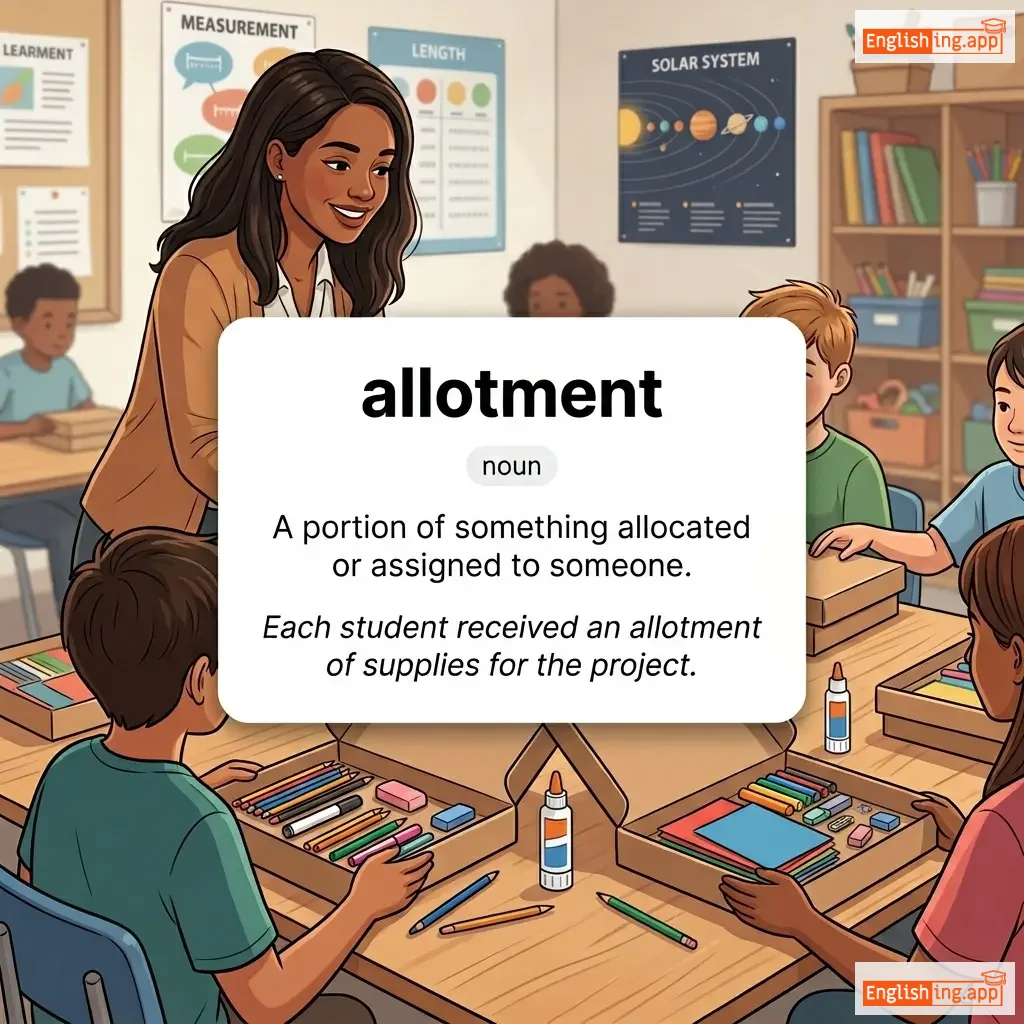
allotment definition card — visual illustration of the meaning
noun
/əˈlɒtmənt/
आवंटन (aavantan)

A portion of something allocated or assigned to someone.

"Each student received an allotment of supplies for the project."

"प्रत्येक छात्र को परियोजना के लिए आपूर्ति का एक आवंटन मिला।" (Pratyek chhatra ko pariyojna ke liye aapurti ka ek aavantan mila.)
verb
/əˈlaʊ/
अनुमति देना (anumati dena)

to give permission for something to happen or someone to do something

"The teacher did not allow phones in class."

"टीचर ने क्लास में फोन की अनुमति नहीं दी।" (Teacher ne class mein phone ki anumati nahi di.)
noun
/əˈlaʊəns/
भत्ता (bhatta)

a sum of money given regularly, typically for a specific purpose

"He gets a weekly allowance from his parents."

"वह अपने माता-पिता से साप्ताहिक भत्ता प्राप्त करता है।" (vah apne mata-pita se saptahik bhatta prapt karta hai.)
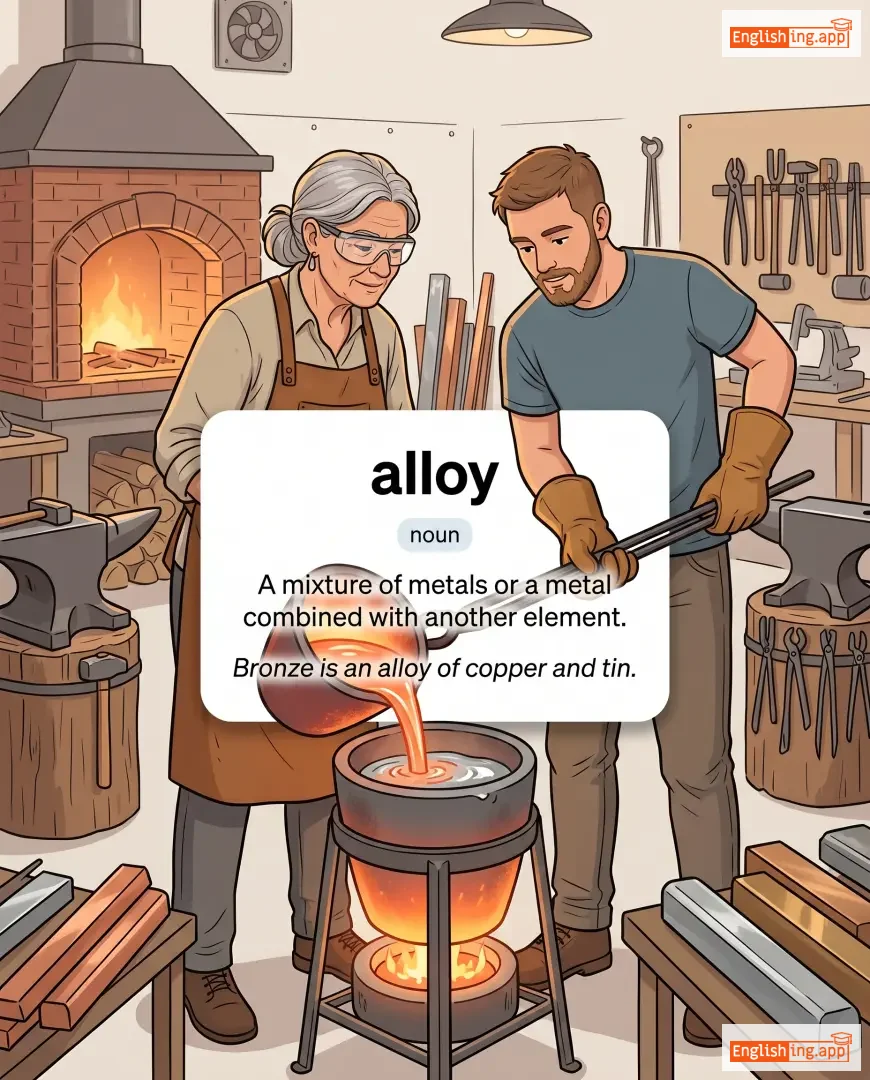
alloy definition card — visual illustration of the meaning
noun
/ˈælɔɪ/
धातु मिश्रण (dhatu mishran)

A mixture of metals or a metal combined with another element.

"Bronze is an alloy of copper and tin."

"तांबा और टिन का मिश्रण कांसा है।" (Tamba aur tin ka mishran kansa hai.)
verb
/əˈluːd/
इशारा करना (ishara karna)

To refer to something indirectly or casually.

"The professor alluded to Shakespeare during the lecture."

"प्रोफेसर ने लेक्चर के दौरान शेक्सपियर का इशारा किया।" (Professor ne lecture ke dauran Shakespeare ka ishara kiya.)
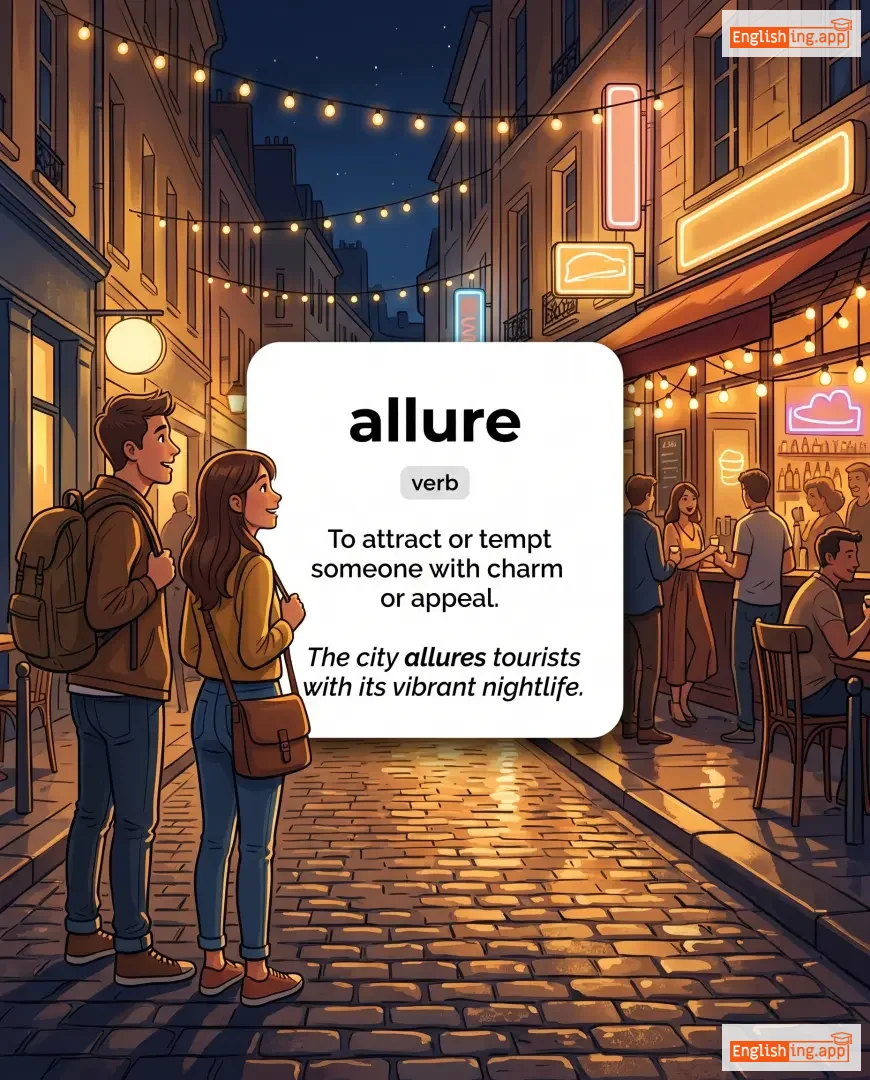
allure definition card — visual illustration of the meaning
verb
/əˈlʊr/
आकर्षण (akarshan)

To attract or tempt someone with charm or appeal.

"The city allures tourists with its vibrant nightlife."

"शहर अपनी रंगीन रात की जिंदगी से पर्यटकों को आकर्षित करता है।" (Shehar apni rangeen raat ki zindagi se paryatakoon ko akarshit karta hai.)
adjective
/əˈlʊr.ɪŋ/
आकर्षक और लुभावना; मोहित करने वाला (aakarshak aur lubhaavnaa; mohit karne waala)

attractive and tempting; fascinating

"The alluring fragrance of roses filled the garden."

"गुलाबों की आकर्षक खुशबू ने बगीचे को भर दिया।" (Gulaabon ki aakarshak khushboo ne bagiche ko bhar diya.)
noun
/əˈluːʒən/
संज्ञान (sanjgn)

An indirect reference to something without mentioning it explicitly.

"Her story contained an allusion to a famous myth."

"उसकी कहानी में एक प्रसिद्ध मिथक का संज्ञान था।" (Uski kahani mein ek prasiddh mithak ka sanjgn tha.)
adjective
/əˈluːsɪv/
संकेतात्मक (sanketatmak)

Making indirect references or hints; suggestive without being explicit.

"The novel is full of allusive passages that point to classical literature."

"उपन्यास संकेतात्मक अंशों से भरा हुआ है जो शास्त्रीय साहित्य की ओर इशारा करते हैं।" (Upanyas sanketatmak ansho se bhara hua hai jo shastriya sahitye ki or ishaara karte hain.)
adjective
/əˈluːviəl/
पल्लीमूलक (pallimoolak)

Relating to or derived from alluvium (loose soil or sediment deposited by rivers).

"The farmers cultivate crops on the fertile alluvial plains."

"किसान उपजाऊ पल्लीमूलक मैदानों पर फसलें उगाते हैं।" (kisan upjau pallimoolak maidanon par faslen ugate hain)
noun
/əˈluːviən/
आलुवियन (aaluviyan)

The gradual increase of land by the deposit of soil from water; also, a flood or overflow of water.

"The river’s alluvion added new fertile land to the village fields."

"नदी का आलुवियन गाँव के खेतों में नई उपजाऊ भूमि जोड़ता था।" (Nadi ka aalviyan gaon ke kheton mein nayi upjau bhoomi jodta tha.)
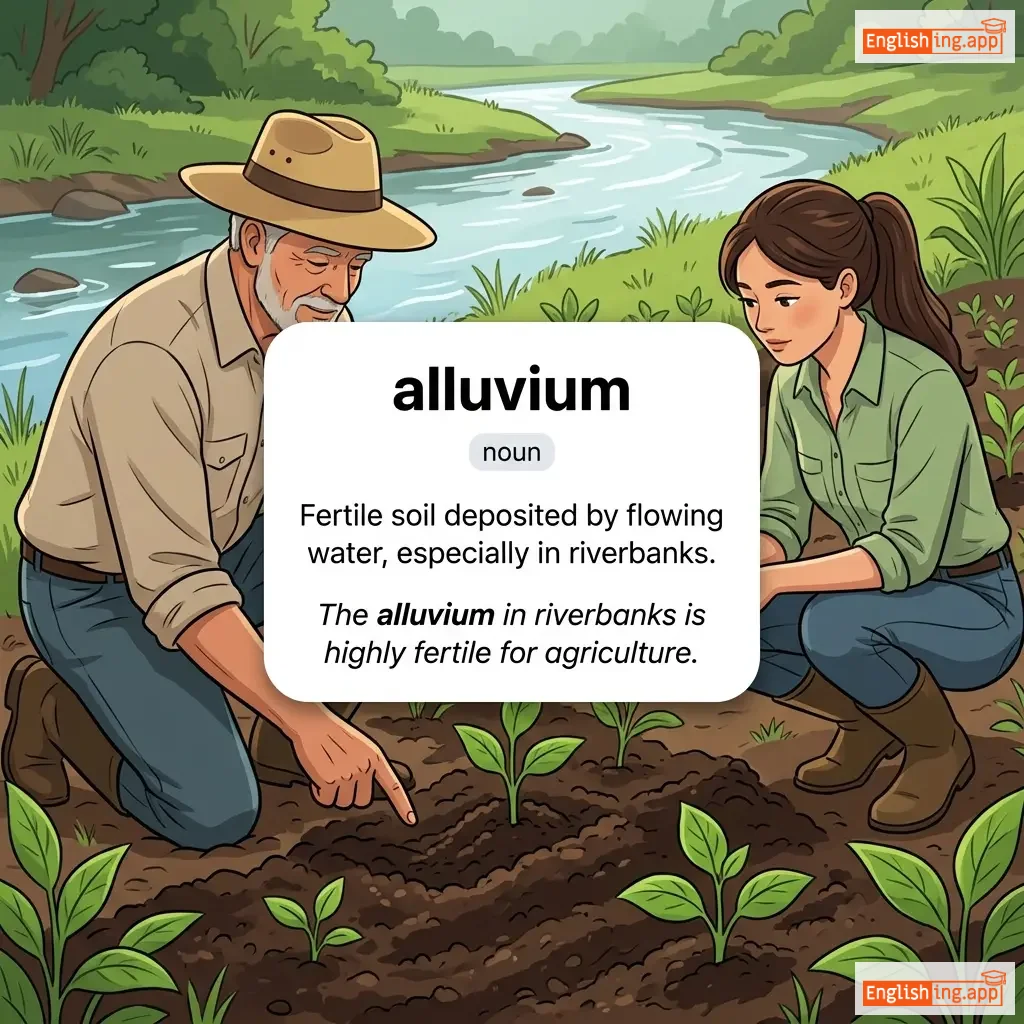
alluvium definition card — visual illustration of the meaning
noun
/əˈluː.vi.əm/
कृषि भूमि (krishi bhumi)

Fertile soil deposited by flowing water, especially in riverbanks.

"The alluvium in riverbanks is highly fertile for agriculture."

"नदी किनारों में अलुवियम कृषि के लिए अत्यधिक उपजाऊ होता है।" (Nadi kinaron mein aluvium krishi ke liye atyadhik upjaoo hota hai.)
verb
/ˈælaɪ/
साथी बनना (saathi banna)

To unite or form a connection or partnership with another person, group, or nation.

"The two countries decided to ally against their common enemy."

"दो देशों ने अपने सामान्य शत्रु के खिलाफ सहयोग करने का निर्णय लिया।" (Do deshon ne apne samaan shatru ke khilaaf sahyog karne ka nirnay liya.)
noun
/ˈɔːlmənæk/
कैलेंडर (kalender)

An annual publication containing calendars, weather forecasts, astronomical data, and other useful information.

"He consulted the almanac to check the phases of the moon."

"उसने चाँद के चरणों की जांच करने के लिए कैलेंडर को देखा।" (Usne chaand ke charano ki jaanch karne ke liye kalender ko dekha.)
adjective
/ɔːlˈmaɪ.ti/
सर्वशक्तिमान (sarvashaktimaan)

having unlimited power; omnipotent

"The almighty storm destroyed everything in its path."

"सर्वशक्तिमान तूफान ने अपनी राह में सब कुछ तबाह कर दिया।" (Sarvashaktimaan toofan ne apni raah mein sab kuch tabaah kar diya.)
noun
/ˈæl.mɪ.rə/
अलमारी (almari)

a large cupboard or wardrobe used for storing clothes and other items

"I keep all my clothes in the wooden almirah."

"मैं अपनी सारी कपड़े लकड़ी की आलमिरा में रखता हूँ।" (Main apni saari kapde lakdi ki almira mein rakhta hoon.)
noun
/ˈɑːmənd/
बादाम (badaam)

edible seed of the almond tree, rich in protein and healthy fats

"She eats almonds every morning for breakfast."

"वह हर सुबह नाश्ते में बादाम खाती है।" (vah har subah nashtay mein badaam khati hai.)
adverb
/ˈɔːlmoʊst/
लगभग (lagbhag)

very nearly, but not exactly or completely

"He almost missed the train."

"वह लगभग ट्रेन मिस कर गया।" (Wah lagbhag train miss kar gaya.)
noun
/ɑːmz/
दान (dan)

Money, food, or goods given to the poor as charity.

"The monk distributed alms to the needy villagers."

"संत ने गरीब ग्रामीणों को दान दिया।" (Sant ne gareeb graminon ko dan diya.)
noun
/ˈæl.oʊ ˈvɪər.ə/
एलो वेरा (Aloe vera)

a succulent plant with thick fleshy leaves and medicinal properties; produces tubular flowers

"The aloe vera plant blooms with orange or yellow tubular flowers."

"एलो वेरा पौधा नारंगी या पीले नलाकार फूलों के साथ खिलता है।" (Aloe vera paudha naarangi ya peele nalkaar phoolon ke saath khilta hai.)
adverb
/əˈlɒft/
ऊँचा (ooncha)

Up in or into the air; overhead.

"The kite was flying aloft in the clear sky."

"पतंग साफ आकाश में ऊँचा उड़ रही थी।" (Patang saaf aakash mein ooncha ud rahi thi.)
adjective, adverb
/əˈloʊn/
अकेला (akela)

having no one else present; on one's own

"She prefers to live alone in her apartment."

"वह अपने अपार्टमेंट में अकेले रहना पसंद करती है।" (Vah apne apartment mein akela rehna pasand karti hai.)
preposition, adverb
/əˈlɔːŋ/
साथ में, entlang (saath mein, entlang)

moving in a constant direction on (a road, path, or surface)

"We walked along the river."

"हम नदी के किनारे-किनारे चले।" (Ham nadi ke kinare-kinare chale.)
preposition
/əˈlɔːŋsaɪd/
साथ (saath)

next to or together with someone or something

"She worked alongside her brother in the family business."

"वह पारिवारिक व्यवसाय में अपने भाई के साथ काम कर रही थी।" (Vah parivarik vyavsay mein apne bhai ke saath kaam kar rahi thi.)
adjective
/əˈluːf/
अलग (alag)

Not friendly or forthcoming; cool and distant.

"He remained aloof during the entire discussion."

"वह पूरे चर्चा के दौरान अलग रहा।" (vah poore charcha ke dauran alag raha.)
adverb
/əˈlaʊd/
जोर से, खुलकर (jor se, khulkar)

in a voice that can be heard; not silently

"Please read the instructions aloud so everyone can hear."

"कृपया निर्देशों को जोर से पढ़ें ताकि सभी सुन सकें।" (kripya nirdeshon ko jor se padhen taki sabhi sun sakein.)
noun
/ˈæl.fə.bɛt/
वर्णमाला (varnamala)

a set of letters or symbols in a fixed order used to represent the sounds of a language

"Children usually learn the alphabet before learning to read words."

"बच्चे आमतौर पर शब्द पढ़ने से पहले वर्णमाला सीखते हैं।" (bacche aamtaur par shabd padhne se pehle varnamala seekhte hain)
adjective
/ˌælfəˈbɛtɪkəl/
वर्णानुक्रमिक (varnanukramik)

Arranged in the order of the letters of the alphabet.

"The names were listed in alphabetical order."

"नामों को वर्णानुक्रमिक क्रम में सूचीबद्ध किया गया था।" (Namon ko varnanukramik kram mein suchibaddh kiya gaya tha.)