词汇表

英语词汇词典 | 单词含义、定义和示例

noun
/ˈæl.kə.laɪ/
碱性物质 (jiǎn xìng wù zhì)

a soluble base substance, typically with a pH greater than 7, that neutralizes acids

"Soap contains alkali which helps remove grease."
"肥皂含有碱,能帮助去除油脂。" (Feizao hanyou jian, neng bangzhu quchu youzhi.)
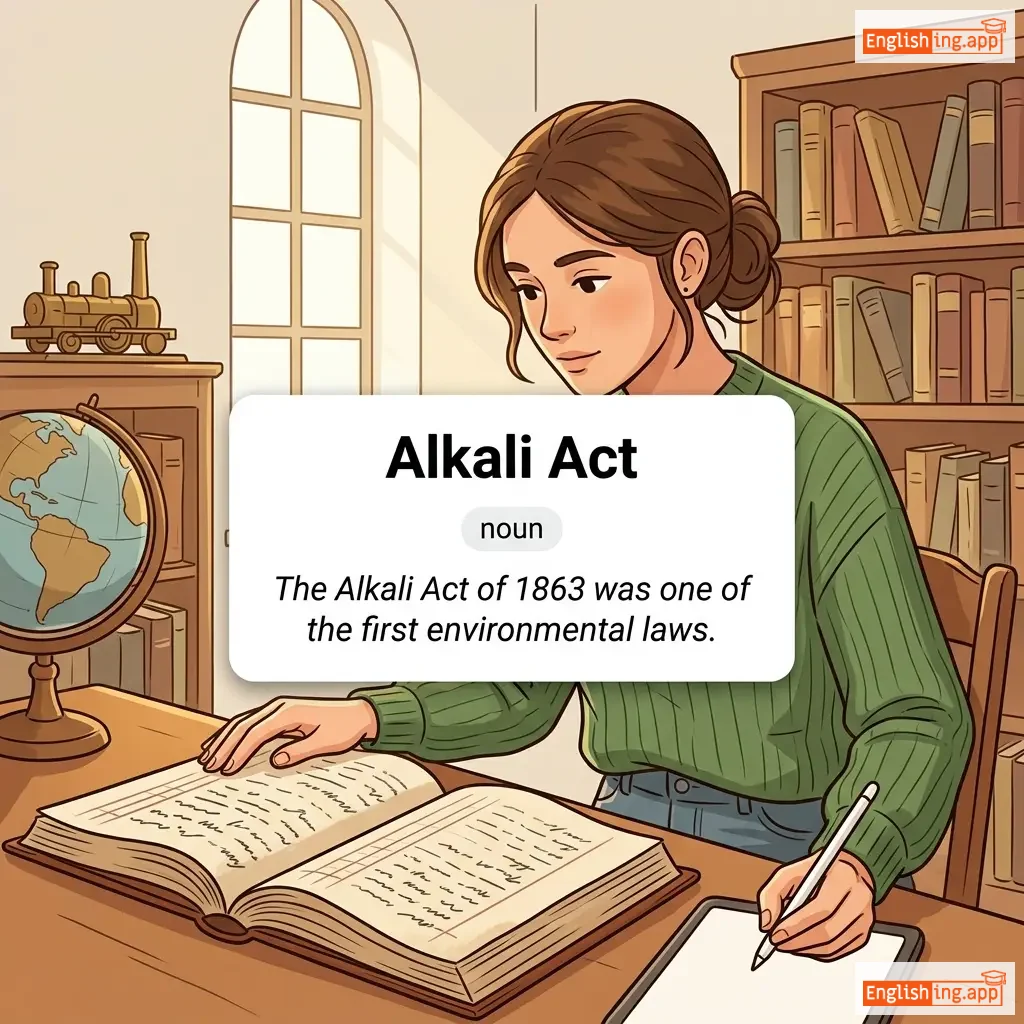
Alkali Act definition card — visual illustration of the meaning
noun
/ˈæl.kə.laɪ ækt/
碱性法案 (Jiǎn xìng fǎ àn)

A British law passed in 1863 to regulate the emission of hydrochloric acid gas from alkali works, representing one of the first pieces of environmental legislation.

"The Alkali Act of 1863 was one of the first environmental laws."
"1863年的碱性法案是最早的环境法律之一。" (1863 nián de jiǎn xìng fǎ àn shì zuì zǎo de huánjìng fǎ lǜ zhī yī.)
determiner, pronoun, adverb
/ɔːl/
所有 (suǒyǒu)

the whole quantity or extent of something; every one of something

"She spent all her money on books."

"她把所有的钱都花在书上。" (Tā bǎ suǒyǒu de qián dōu huā zài shū shàng.)
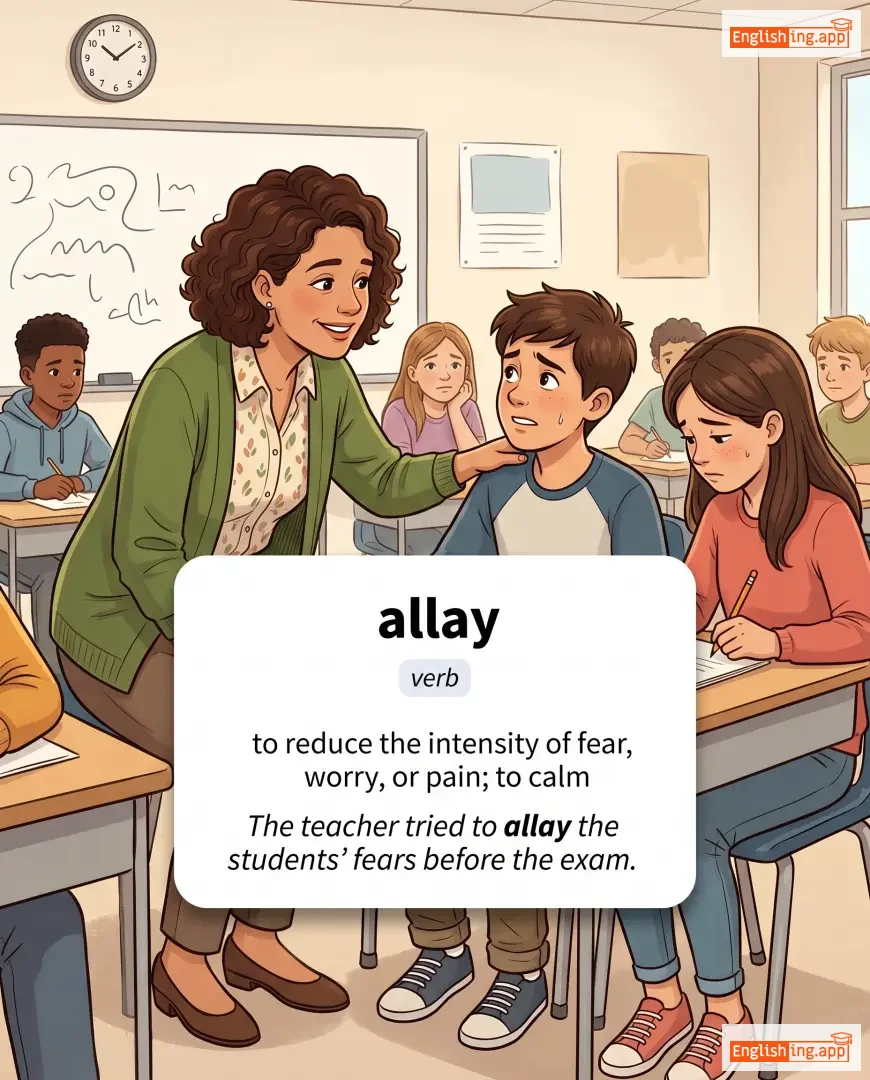
allay definition card — visual illustration of the meaning
verb
/əˈleɪ/
缓解 (huǎn jiě)

to reduce the intensity of fear, worry, or pain; to calm

"The teacher tried to allay the students’ fears before the exam."

"老师在考试前试图缓解学生们的恐惧。" (Lǎoshī zài kǎoshì qián shìtú huǎn jiě xuéshēngmen de kǒngjù.)
noun
/ˌælɪˈɡeɪʃən/
指控 (zhikong)

a claim or assertion that someone has done something illegal or wrong, typically without proof

"The politician denied the allegation of corruption."

"政治家否认了腐败的指控。" (Zhengzhijia founianle fubai de zhikong.)
allegations definition card — visual illustration of the meaning
noun
ˌæl.ɪˈɡeɪ.ʃənz
指控 (zhǐkòng)

Claims or assertions that someone has done something illegal or wrong, typically without proof.

"The allegations were investigated by an international body."

"这些指控已被一个国际组织调查。" (Zhèxiē zhǐkòng yǐ bèi yīgè guójì zǔzhī diàochá.)
verb
/əˈlɛdʒ/
声称 (shēngchēng)

to claim or assert something, typically without proof

"The witness alleged that the man was at the crime scene."

"证人声称该男子在犯罪现场。" (Zhèngrén shēngchēng gāi nánzǐ zài fànzuì xiànchǎng.)
adjective
/əˈlɛdʒd/
涉嫌的 (shèxián de)

said or thought to be true, but not proven

"The alleged thief was caught by the police."

"涉嫌的窃贼被警方抓获。" (Shèxián de qièzéi bèi jǐngfāng zhuā huò.)
adverb
/əˈlɛdʒɪdli/
据称 (jù chēng)

used to say that something is claimed to be true, though not proven

"He was allegedly involved in the robbery."
"他据称参与了抢劫。" (Tā jù chēng cānyùle qiǎngjié.)
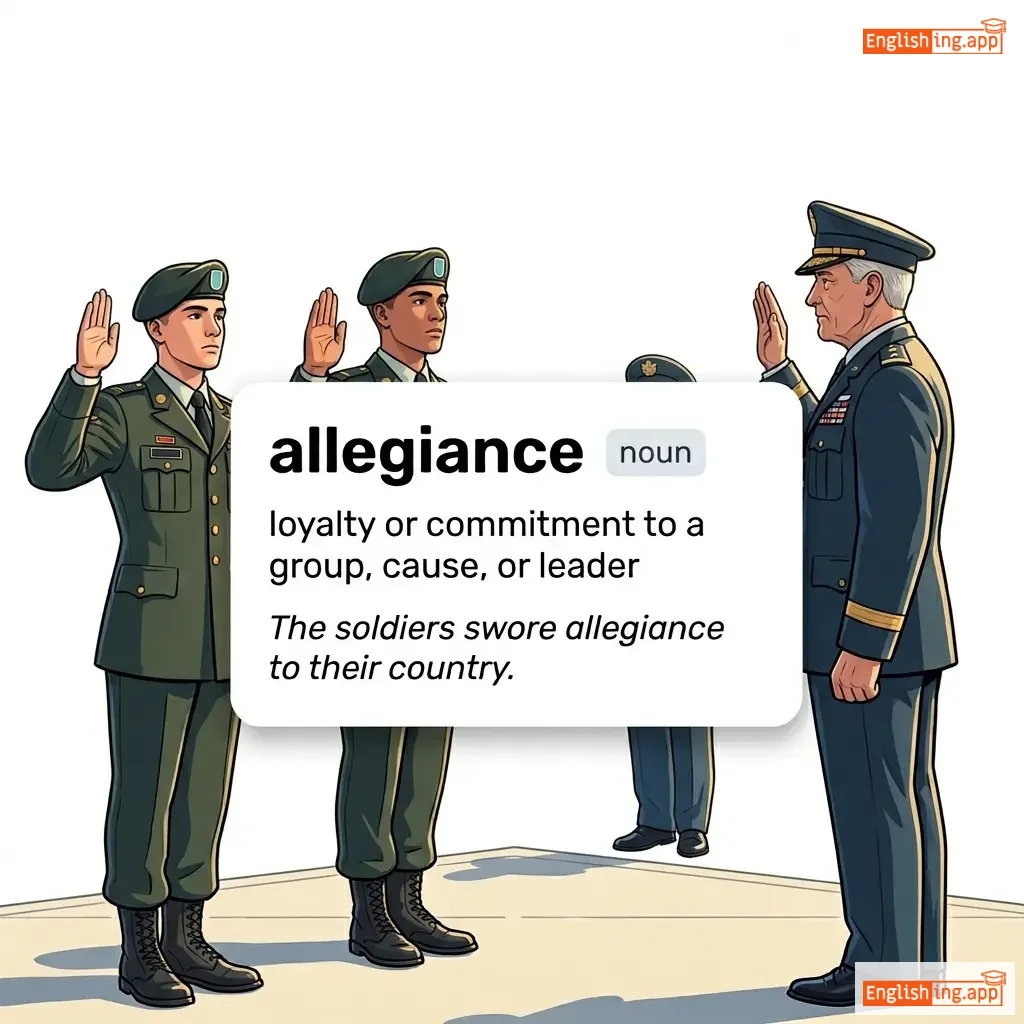
allegiance definition card — visual illustration of the meaning
🇺🇸

allegiance

noun
/əˈliːdʒəns/

loyalty or commitment to a group, cause, or leader

"The soldiers swore allegiance to their country."

noun
/ˈælɪɡəri/
寓言 (yùyán)

a story, poem, or picture that can be interpreted to reveal a hidden meaning, often moral or political

"The novel is an allegory of the struggle between good and evil."
"这本小说是善与恶斗争的寓言。" (Zhè běn xiǎoshuō shì shàn yǔ è dòuzhēng de yùyán.)
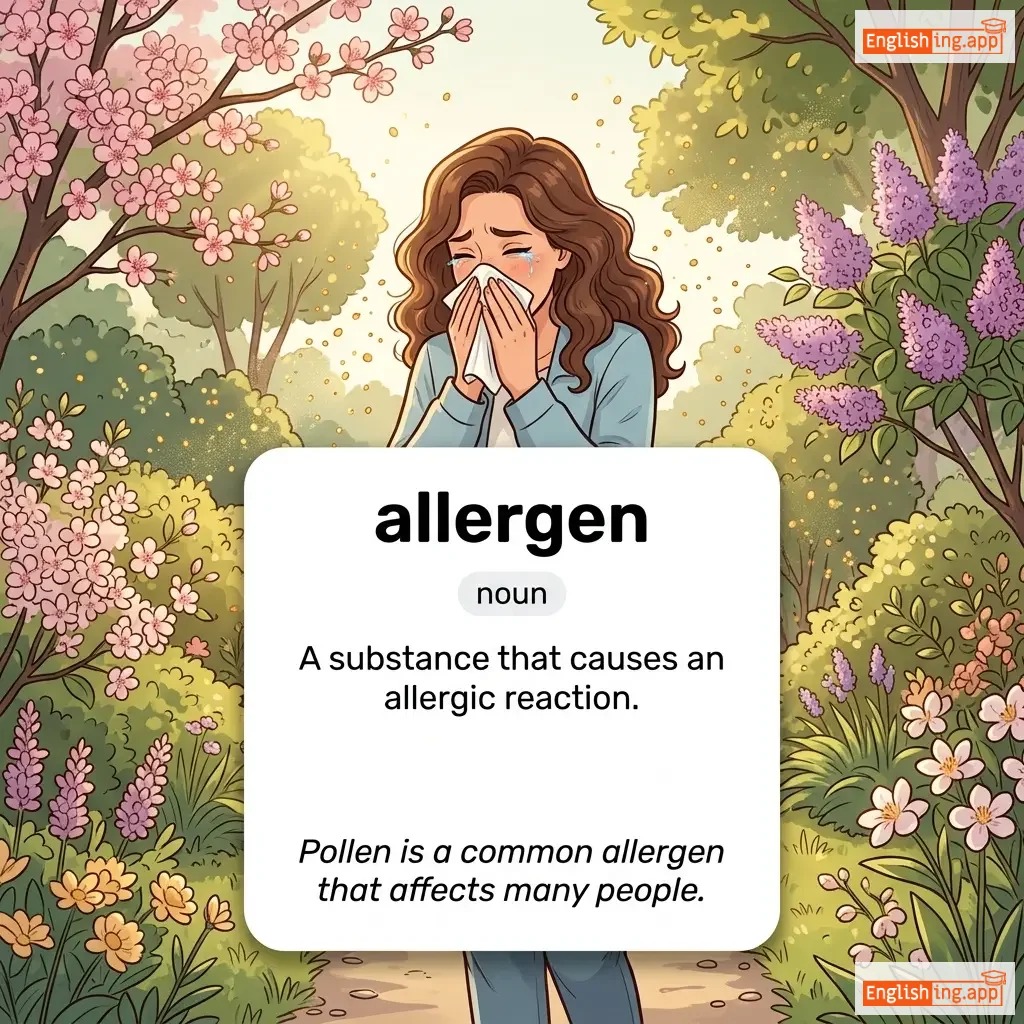
allergen definition card — visual illustration of the meaning
noun
ˈælərdʒən
引发过敏反应的物质 (yǐn fā guòmǐn fǎnyìng de wùzhì)

A substance that causes an allergic reaction.

"Pollen is a common allergen that affects many people."

"花粉是常见的过敏原,影响许多人。" (Huāfěn shì chángjiàn de guòmǐnyuán, yǐngxiǎng xǔduō rén.)
alleviate definition card — visual illustration of the meaning
verb
/əˈliːvieɪt/
缓解 (huanjie)

to make suffering, pain, or a problem less severe

"The medicine helped alleviate her headache."

"药物帮助缓解了她的头痛。" (Yaowu bangzhu huanjie le tade toutong.)
noun
/ˈæli/
小巷 (xiaoxiang)

a narrow passageway between or behind buildings

"They walked through a dark alley to reach the main road."

"他们走过一条黑暗的小巷,来到主干道。" (Tamen zouguo yi tiao heian de xiaoxiang, lai dao zhugan dao.)
alliance definition card — visual illustration of the meaning
noun
/əˈlaɪəns/
联盟 (liánméng)

a formal agreement or union between groups, countries, or organizations for mutual benefit

"The two countries formed an alliance to strengthen their defense."

"这两个国家组建了一个联盟,以加强他们的防御。" (Zhè liǎng gè guójiā zǔjiànle yīgè liánméng, yǐ jiāqiáng tāmen de fángyù.)
adjective
/əˈlaɪd/
盟友; 联合; 关联 (allied)

joined by agreement or treaty; associated; connected

"The allied forces worked together during the war."

"同盟军在战争期间一起工作。" (Tóngméng jūn zài zhànzhēng qījiān yīqǐ gōngzuò.)
noun
/ˈæl.ɪ.ɡeɪ.tər/
短吻鳄 (duǎn wěn è)

a large reptile similar to a crocodile but with a shorter, wider head

"The alligator basked in the sun on the riverbank."

"短吻鳄在河岸上晒太阳。" (duǎn wěn è zài hé'àn shàng shài tàiyáng)
verb
/əˈlɪtəreɪt/
使用押头韵 (shiyong yatiu yin)

to repeat the same consonant sound at the beginning of words in a phrase or sentence

"The poet often alliterates words to create rhythm."

"诗人经常押头韵来创造节奏。" (Shiren jingchang yatiu yin lai chuangzao jiezou.)
noun
/əˌlɪtəˈreɪʃən/
头韵 (tóuyùn)

the occurrence of the same consonant sound at the beginning of words in close succession

"She used alliteration in her poem to add musicality."

"她在诗中使用了头韵来增加音乐性。" (Tā zài shī zhōng shǐyòngle tóuyùn lái zēngjiā yīnyuèxìng.)
verb
/ˈæləkeɪt/
分配 (fēnpèi)

to distribute or assign resources, duties, or responsibilities for a specific purpose

"The manager allocated funds for the new project."
"经理已为新项目分配资金。" (Jīnglǐ yǐ wèi xīn xiàngmù fēnpèi zījīn.)
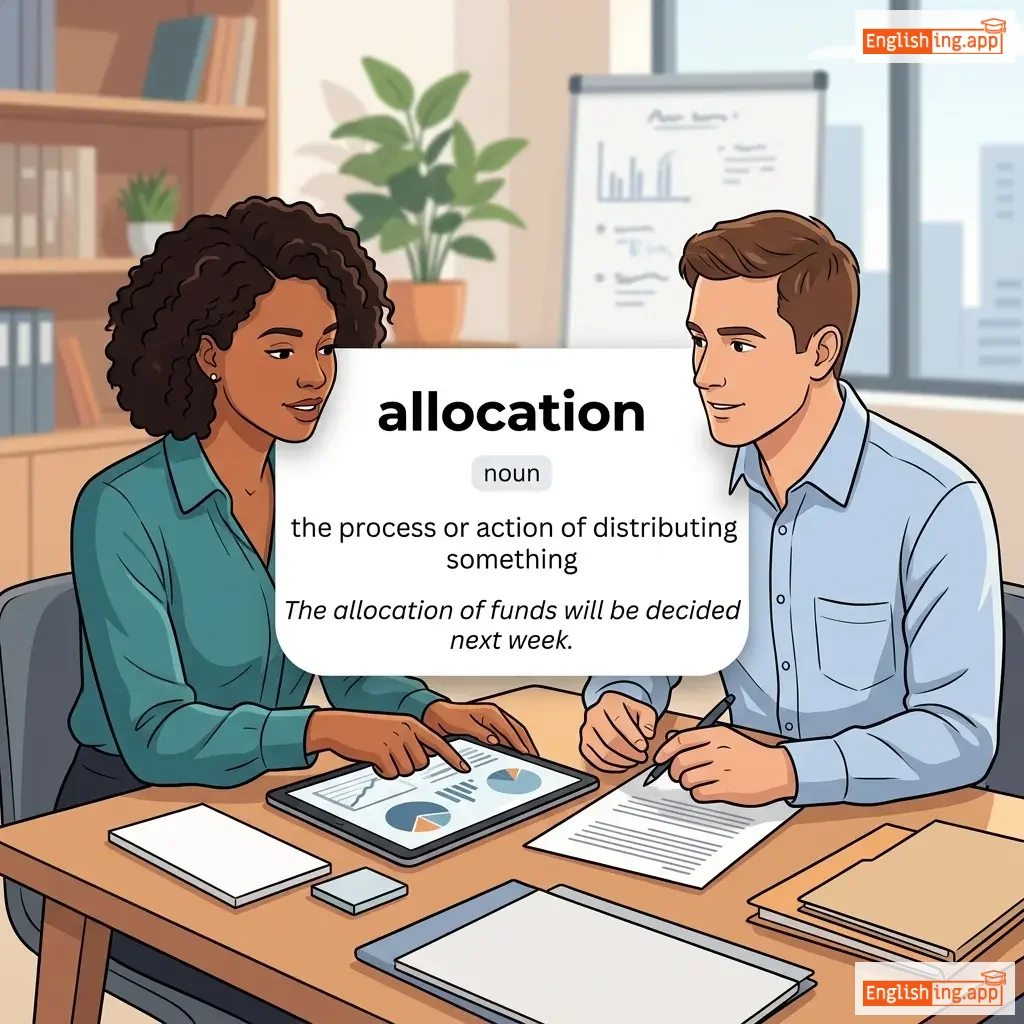
allocation definition card — visual illustration of the meaning
noun
/ˌæləˈkeɪʃən/
分配 (fenpei)

the process or action of distributing something

"The allocation of funds will be decided next week."

"资金的分配将在下周决定。" (zijin de fenpei jiang zai xia zhou jueding.)
verb
/əˈlɒt/
幸福 (xìngfú)

to give or assign something, often a share or portion, to someone

"Each student was allotted ten minutes to present."
"她在获得奖项时无法掩饰自己的幸福。" (Tā zài huòdé jiǎngxiàng shí wúfǎ yǎnshì zìjǐ de xìngfú.)
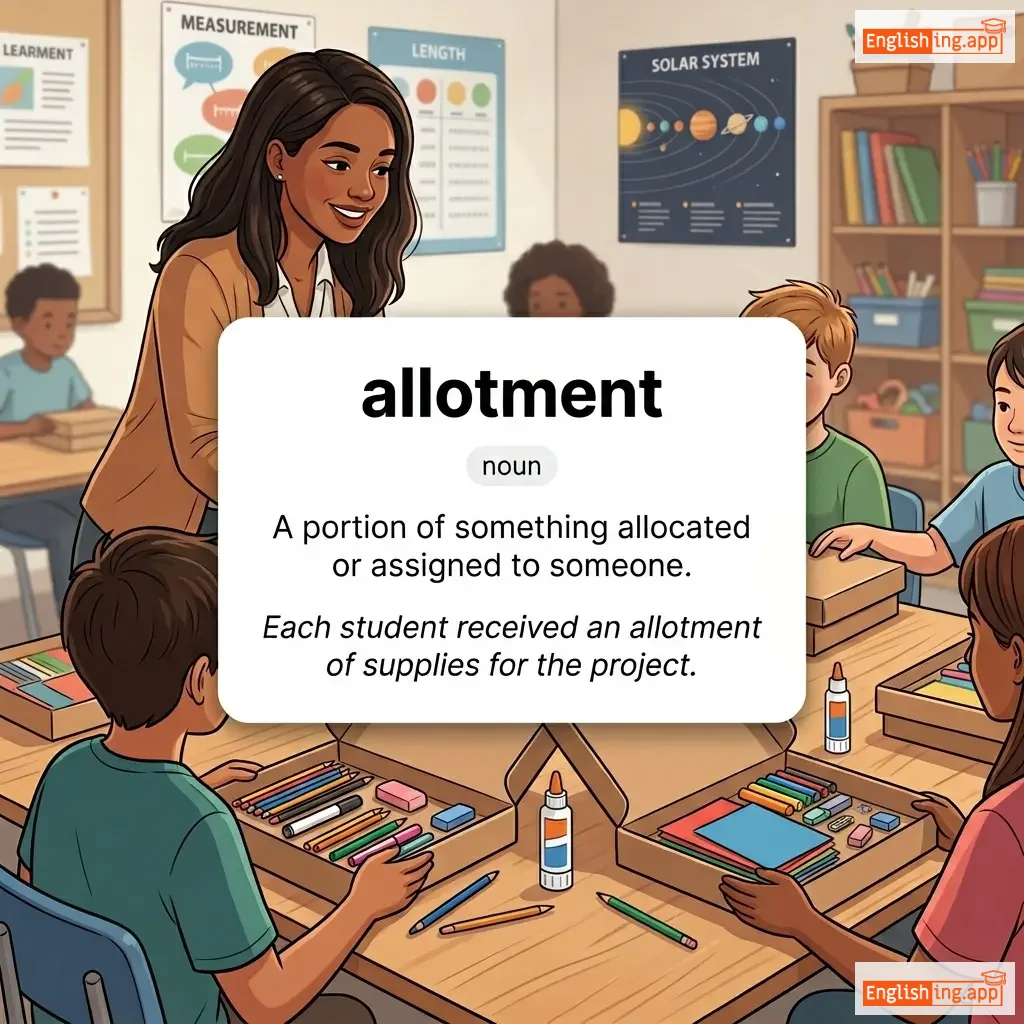
allotment definition card — visual illustration of the meaning
noun
/əˈlɒtmənt/
配给 (peiji)

A portion of something allocated or assigned to someone.

"Each student received an allotment of supplies for the project."

"每个学生都收到了项目所需的配给物资。" (Mei ge xuesheng dou shoudao le xiangmu suo xu de peiji wuzi.)
verb
/əˈlaʊ/
允许 (xǔn yǔ)

to give permission for something to happen or someone to do something

"The teacher did not allow phones in class."

"老师不允许课堂上使用手机。" (Lǎoshī bù yǔnxǔ kètáng shàng shǐyòng shǒujī.)
noun
/əˈlaʊəns/
津贴 (jintie)

a sum of money given regularly, typically for a specific purpose

"He gets a weekly allowance from his parents."
"他从父母那里每周领取津贴。" (Tā cóng fùmǔ nàlǐ měi zhōu lǐngqǔ jīntiē.)
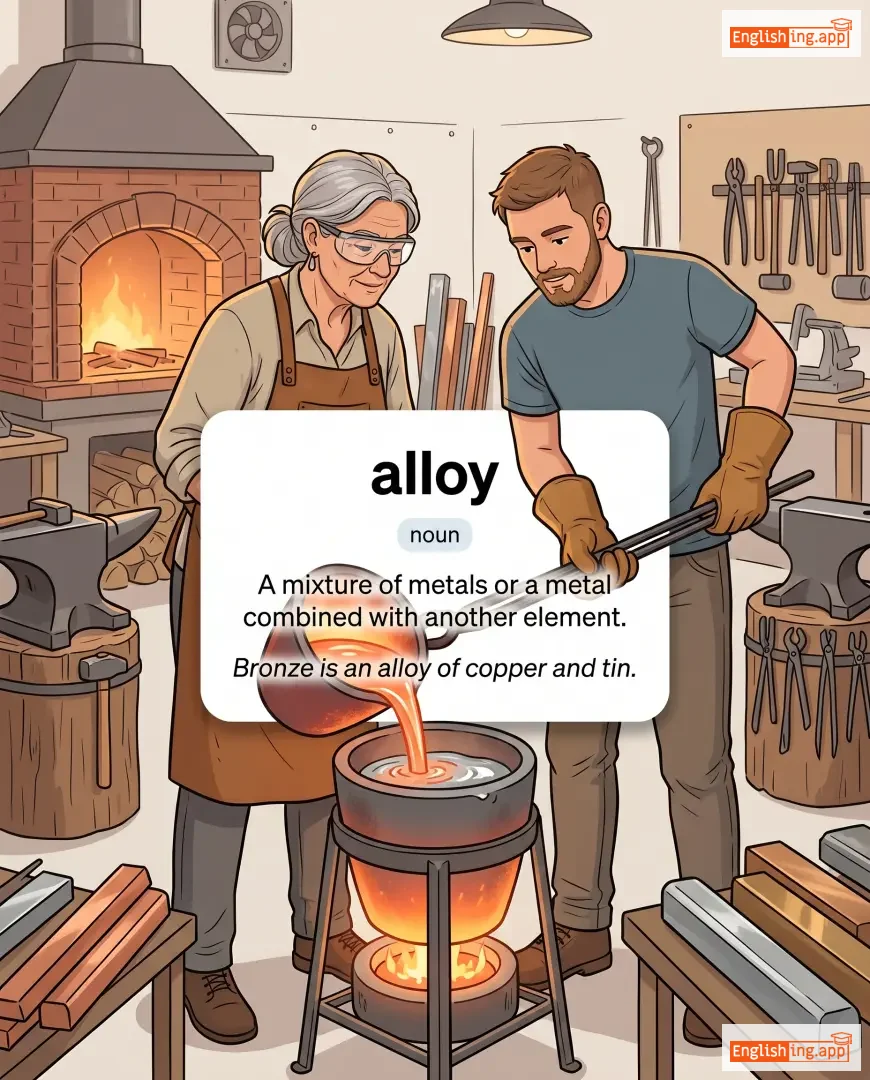
alloy definition card — visual illustration of the meaning
noun
/ˈælɔɪ/
合金 (he jin)

A mixture of metals or a metal combined with another element.

"Bronze is an alloy of copper and tin."

"青铜是铜和锡的合金。" (Qingtong shi tong he xi de hejin.)
verb
/əˈluːd/
暗示 (ànshì)

To refer to something indirectly or casually.

"The professor alluded to Shakespeare during the lecture."
"教授在讲座中提到了莎士比亚。" (Jiàoshòu zài jiǎngzuò zhōng tí dào le Shāshìbǐyà.)
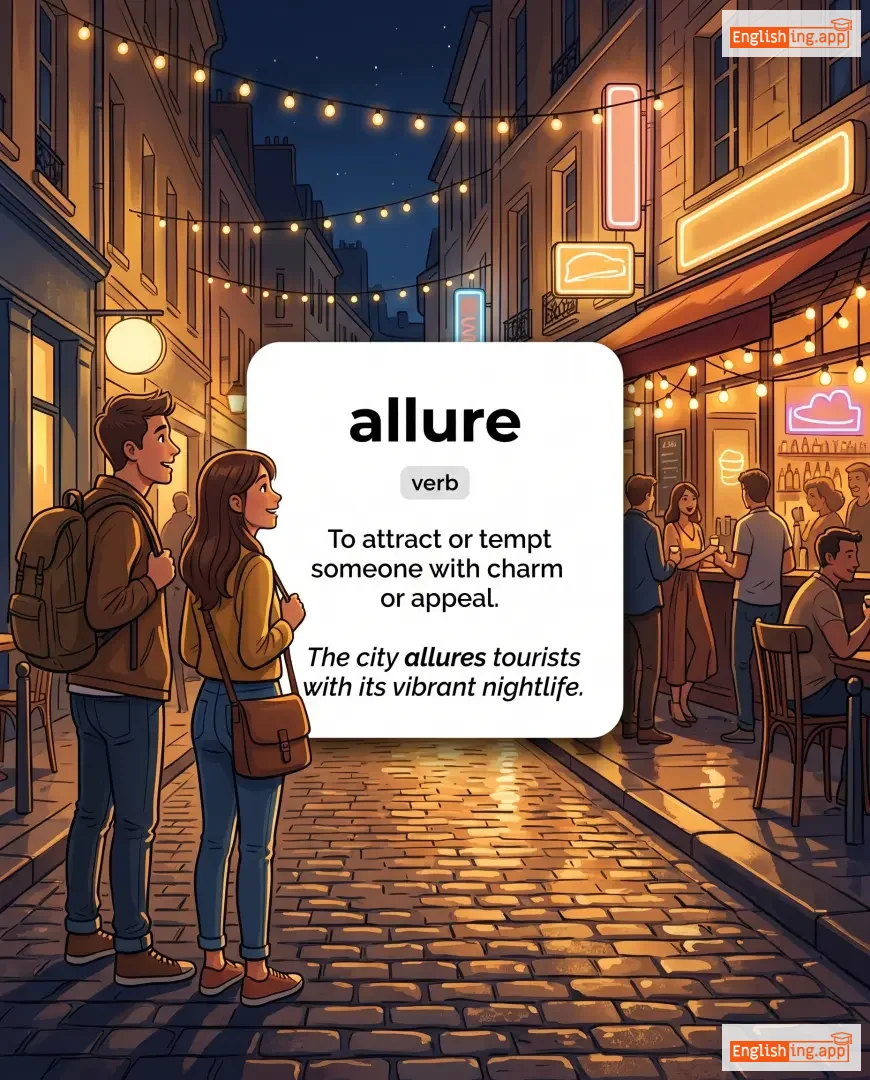
allure definition card — visual illustration of the meaning
verb
/əˈlʊr/
吸引力 (xīyǐnlì)

To attract or tempt someone with charm or appeal.

"The city allures tourists with its vibrant nightlife."

"这个城市通过其生动的夜生活吸引游客。" (Zhège chéngshì tōngguò qí shēngdòng de yè shēnghuó xīyǐn yóukè.)
adjective
/əˈlʊr.ɪŋ/
迷人且诱人; 迷人的 (mí rén qiě yòu rén; mí rén de)

attractive and tempting; fascinating

"The alluring fragrance of roses filled the garden."

"玫瑰的迷人香气弥漫在花园里。" (Méiguī de mí rén xiāngqì mímàn zài huāyuán lǐ.)
noun
/əˈluːʒən/
暗示 (ànshì)

An indirect reference to something without mentioning it explicitly.

"Her story contained an allusion to a famous myth."

"她的故事包含了对一个著名神话的暗示。" (Tā de gùshì bāohánle duì yīgè zhùmíng shénhuà de ànshì.)
adjective
/əˈluːsɪv/
含蓄的 (hánxù de)

Making indirect references or hints; suggestive without being explicit.

"The novel is full of allusive passages that point to classical literature."

"这本小说充满了含蓄的段落,指向经典文学。" (Zhè běn xiǎoshuō chōngmǎnle hánxù de duànluò, zhǐxiàng jīngdiǎn wénxué.)
adjective
/əˈluːviəl/
冲积的 (chong ji de)

Relating to or derived from alluvium (loose soil or sediment deposited by rivers).

"The farmers cultivate crops on the fertile alluvial plains."

"农民在肥沃的冲积平原上种植作物。" (nong min zai fei wo de chong ji ping yuan shang zhong zhi zuo wu)
noun
/əˈluːviən/
冲积 (chōng jī)

The gradual increase of land by the deposit of soil from water; also, a flood or overflow of water.

"The river’s alluvion added new fertile land to the village fields."
"河流的冲积为村庄的田地增添了新的肥沃土地。" (Héliú de chōngjī wèi cūnzhuāng de tiándì zēngtiānle xīn de féiwò tǔdì.)
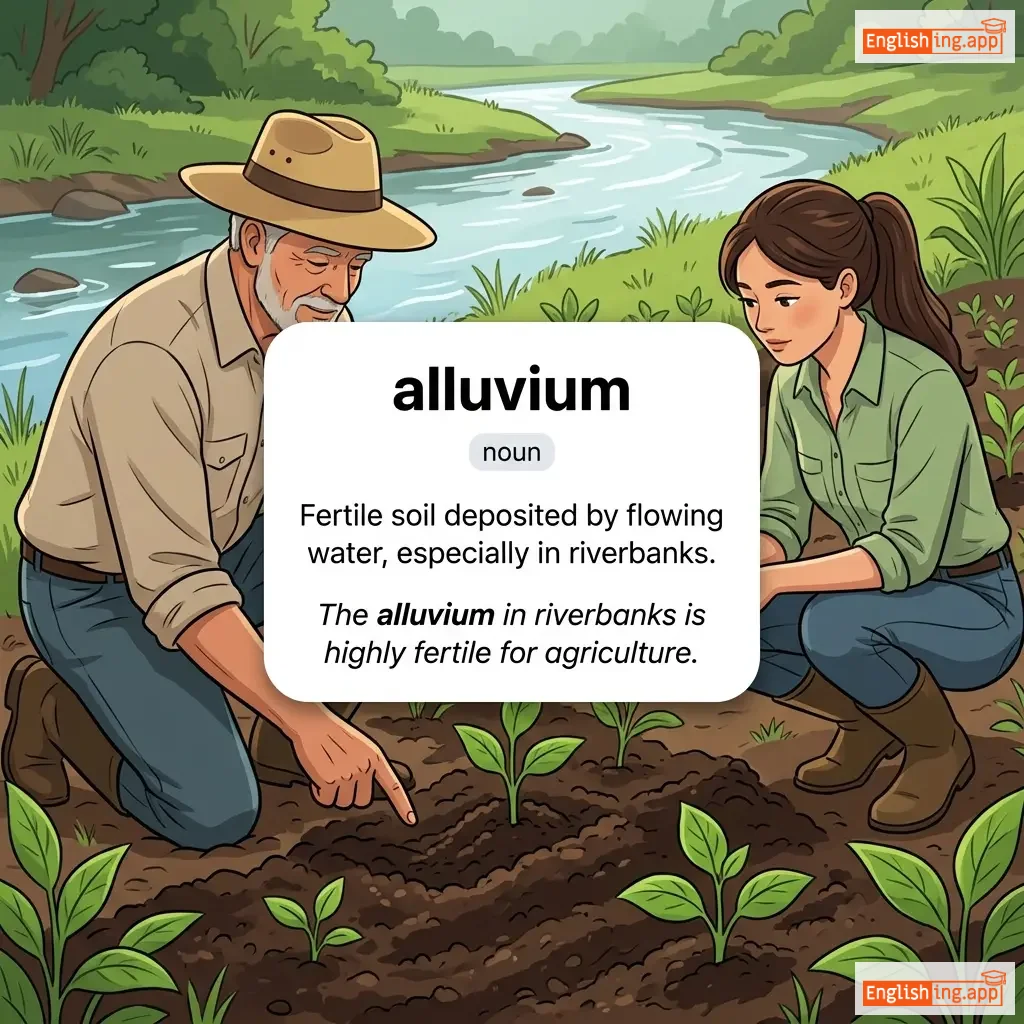
alluvium definition card — visual illustration of the meaning
noun
/əˈluː.vi.əm/
冲积土 (chongji tu)

Fertile soil deposited by flowing water, especially in riverbanks.

"The alluvium in riverbanks is highly fertile for agriculture."

"河岸上的冲积土对农业非常肥沃。" (He'an shang de chongji tu dui nongye feichang feiwo.)
verb
/ˈælaɪ/
盟友 (méng yǒu)

To unite or form a connection or partnership with another person, group, or nation.

"The two countries decided to ally against their common enemy."

"这两个国家决定联合对抗共同的敌人。" (Zhè liǎng gè guójiā juédìng liánhé duìkàng gòngtóng de dírén.)
noun
/ˈɔːlmənæk/
年鉴 (nianjian)

An annual publication containing calendars, weather forecasts, astronomical data, and other useful information.

"He consulted the almanac to check the phases of the moon."

"他查阅了年鉴,以查看月亮的各个阶段。" (Ta chaluo le nianjian, yi chakan yueliang de gege jieduan.)
adjective
/ɔːlˈmaɪ.ti/
全能 (quánnéng)

having unlimited power; omnipotent

"The almighty storm destroyed everything in its path."

"那场全能风暴摧毁了它路径上的一切。" (Nà chǎng quánnéng fēngbào cuīhuǐle tā lùjìng shàng de yīqiè.)
noun
/ˈæl.mɪ.rə/
衣柜 (yīguì)

a large cupboard or wardrobe used for storing clothes and other items

"I keep all my clothes in the wooden almirah."

"我把所有的衣服都放在木制衣橱里。" (Wǒ bǎ suǒyǒu de yīfú dōu fàng zài mù zhì yīguì lǐ.)
noun
/ˈɑːmənd/
杏仁 (xingren)

edible seed of the almond tree, rich in protein and healthy fats

"She eats almonds every morning for breakfast."

"她每天早晨吃杏仁做早餐。" (ta mei tian zao chen chi xing ren zuo zao can.)
adverb
/ˈɔːlmoʊst/
差不多 (chàbùduō)

very nearly, but not exactly or completely

"He almost missed the train."

"他差点错过了火车。" (Tā chàdiǎn cuòguòle huǒchē.)
noun
/ɑːmz/
施舍 (shishe)

Money, food, or goods given to the poor as charity.

"The monk distributed alms to the needy villagers."

"僧侣把施舍分发给贫穷的村民。" (Sēnglǚ bǎ shīshě fēn fā gěi pínqióng de cūnmín.)
noun
/ˈæl.oʊ ˈvɪər.ə/
芦荟 (lú huì)

a succulent plant with thick fleshy leaves and medicinal properties; produces tubular flowers

"The aloe vera plant blooms with orange or yellow tubular flowers."

"芦荟植物开着橙色或黄色的管状花。" (Lú huì zhí wù kāi zhe chéng sè huò huáng sè de guǎn zhuàng huā.)
adverb
/əˈlɒft/
高空 (gaokong)

Up in or into the air; overhead.

"The kite was flying aloft in the clear sky."

"风筝在晴空中高飞。" (Fengzheng zai qingkong zhong gaofei.)
adjective, adverb
/əˈloʊn/
孤单 (gudan)

having no one else present; on one's own

"She prefers to live alone in her apartment."

"她更喜欢独自一人在她的公寓里生活。" (Ta geng xihuan duzi yi ren zai ta de gongyu li shenghuo.)
preposition, adverb
/əˈlɔːŋ/
沿着 (yánzhe)

moving in a constant direction on (a road, path, or surface)

"We walked along the river."

"我们沿着河走。" (Wǒmen yánzhe hé zǒu.)
preposition
/əˈlɔːŋsaɪd/
在旁边 (zai pangbian)

next to or together with someone or something

"She worked alongside her brother in the family business."

"她与她的兄弟一起在家族生意中工作。" (Ta yu ta de xiongdi yiqi zai jiazu shengyi zhong gongzuo.)
adjective
/əˈluːf/
冷漠 (lěngmò)

Not friendly or forthcoming; cool and distant.

"He remained aloof during the entire discussion."

"他在整个讨论过程中都显得冷漠。" (Tā zài zhěnggè tǎolùn guòchéng zhōng dōu xiǎndé lěngmò.)
adverb
/əˈlaʊd/
大声 (dà shēng)

in a voice that can be heard; not silently

"Please read the instructions aloud so everyone can hear."

"请大声朗读指示,以便每个人都能听到。" (Qǐng dà shēng lǎngdú zhǐshì, yǐbiàn měi gè rén dōu néng tīngdào.)
noun
/ˈæl.fə.bɛt/
字母表 (zimu biao)

a set of letters or symbols in a fixed order used to represent the sounds of a language

"Children usually learn the alphabet before learning to read words."

"孩子们通常在学习阅读单词之前先学习字母表。" (haizimen tongchang zai xuexi yuedu danci zhiqian xian xuexi zimu biao)
adjective
/ˌælfəˈbɛtɪkəl/
字母顺序的 (zìmǔ shùnxù de)

Arranged in the order of the letters of the alphabet.

"The names were listed in alphabetical order."

"名字按字母顺序排列。" (Míngzì àn zìmǔ shùnxù páiliè.)