词汇表

英语词汇词典 | 单词含义、定义和示例

noun
/ˈeɪlmənt/
疾病 (jíbìng)

An illness, typically a minor one.

"He went to the doctor for a minor stomach ailment."

"他因小的胃病去看了医生。" (Tā yīn xiǎo de wèibìng qù kànle yīshēng.)
verb
/eɪm/
瞄准 (miáozhǔn)

to direct a weapon, object, or effort at a target; to intend or plan

"He aimed the ball at the goal."

"他瞄准了球朝着目标。" (Tā miáozhǔnle qiú cháo zhe mùbiāo.)
adjective
/ˈeɪmləs/
漫无目的; 无目标 (aimles)

without purpose or direction; lacking a goal

"He wandered around the city in an aimless manner."

"他在城市中漫无目的地游荡。" (Tā zài chéngshì zhōng màn wú mùdì de yóudàng.)
noun
/ɛər/
空气 (kongqi)

The invisible mixture of gases that surrounds the earth and is breathed in by people and animals.

"The air is fresh after the rain."

"雨后空气清新。" (Yǔ hòu kōngqì qīngxīn.)
noun
/ˈeər kənˈdɪʃ.ən.ər/
空调 (kongtiao)

a system that controls the temperature, humidity, and air quality in a building or room

"We turned on the air conditioner because it was too hot outside."

"我们打开了空调,因为外面太热了。" (Wǒmen dǎkāi le kōngtiáo, yīnwèi wàimiàn tài rè le)
noun
/ˈeər fɔːrs/
空军 (kongjun)

the military organization of a country that uses aircraft for fighting

"The air force conducted a training exercise over the mountains."
"空军在山脉上空进行了一次训练演习。" (Kongjun zai shanmai shangkong jinxing le yici xunlian yanxi.)
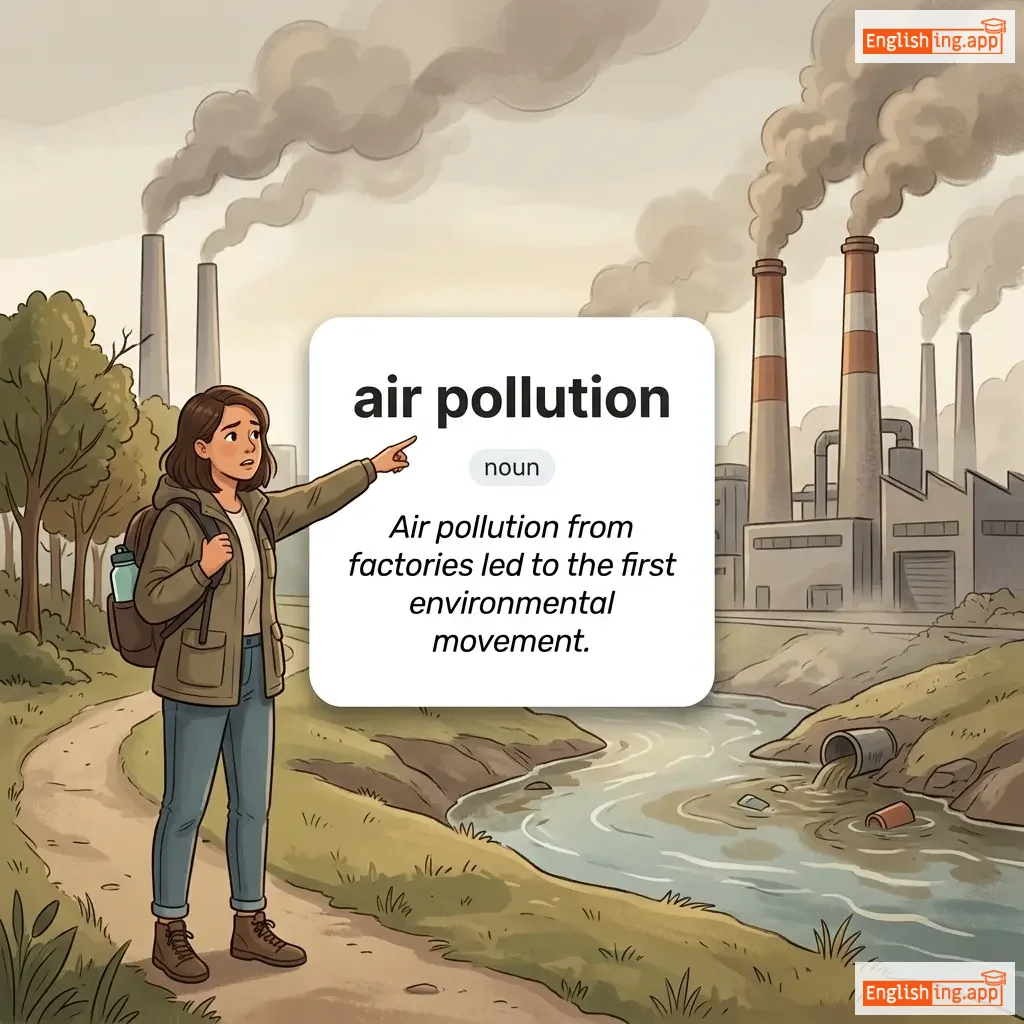
air pollution definition card — visual illustration of the meaning
noun
/ɛr pəˈluːʃən/
空气污染 (kongqi wuran)

The presence of harmful or poisonous substances in the air, typically caused by industrial processes, vehicle emissions, or other human activities.

"Air pollution from factories led to the first environmental movement."

"工厂的空气污染导致了第一个环境运动的出现。" (Gongchang de kongqi wuran daozhi le di yi ge huanjing yundong de chuxian.)
noun
/ˈɛər.kræft/
飞机 (feiji)

A vehicle, such as an airplane or helicopter, that can fly in the air.

"The military aircraft flew over the city."

"军用飞机飞越了城市。" (Junyong feiji feiyuele chengshi.)
noun
/ˈɛər.laɪn/
航空公司 (hangkong gongsi)

A company that provides regular flights for passengers and goods.

"The airline announced a discount on international tickets."

"航空公司宣布对国际机票提供折扣。" (Hángkōng gōngsī xuānbù duì guójì jīpiào tígōng zhékòu.)
noun
/ˈɛərpleɪn/
飞机 (feiji)

a powered flying vehicle with fixed wings and engines

"The airplane took off smoothly from the runway."

"飞机平稳地从跑道上起飞。" (Feiji pingwen de cong paodao shang qifei.)
noun
/ˈɛər.pɔːrt/
机场 (jīchǎng)

A place where airplanes take off and land, with buildings for passengers and cargo.

"We arrived at the airport two hours before the flight."

"我们在航班起飞前两小时到达了机场。" (Wǒmen zài hángbān qǐfēi qián liǎng xiǎoshí dàodále jīchǎng.)
adjective
/ˈɛərˌtaɪt/
密封的 (mifeng de)

Completely sealed so that no air can get in or out.

"Store the cookies in an airtight container to keep them fresh."

"将饼干存放在密封容器中,以保持其新鲜。" (Jiāng bǐnggān cúnfàng zài mìfēng róngqì zhōng, yǐ bǎochí qí xīnxiān.)
adjective
/ˈɛəri/
通风的 (tongfeng de)

Spacious and well-ventilated; light and breezy.

"The new apartment is bright and airy."

"这间新公寓明亮且通风。" (Zhè jiān xīn gōngyù míngliàng qiě tōngfēng.)
noun
/aɪl/
走道 (zǒudào)

a passage between rows of seats or shelves

"She walked down the aisle to find her seat."

"她走过走道找到了她的座位。" (Tā zǒu guò zǒudào zhǎodào le tā de zuòwèi.)
adjective
/əˈkɪn/
相似的 (xiangsi de)

Of similar character or related by blood.

"His reaction was akin to shock."

"他的反应与震惊相似。" (Tade fanying yu zhenjing xiangsi.)
noun/adjective
/ˈæl.əˌbæs.tər/
白色矿石(类似石膏的矿物) (bái sè kuàng shí (lèisì shí gāo de kuàng wù))

A fine-grained, usually white variety of gypsum, often used for carving; also describes something smooth and pale like alabaster.

"The statue was carved from pure alabaster."

"雕像是用纯净的阿拉巴斯特雕刻的。" (Diāo xiàng shì yòng chún jìng de ā lā bā sī tè diāo kè de.)
alacrity definition card — visual illustration of the meaning
noun
/əˈlæk.rə.ti/
敏捷 (alacrity)

Cheerful willingness, eagerness, or readiness to do something.

"She accepted the invitation with alacrity."
"她愉快地接受了邀请。" (Tā yúkuài de jiēshòu le yāoqǐng.)
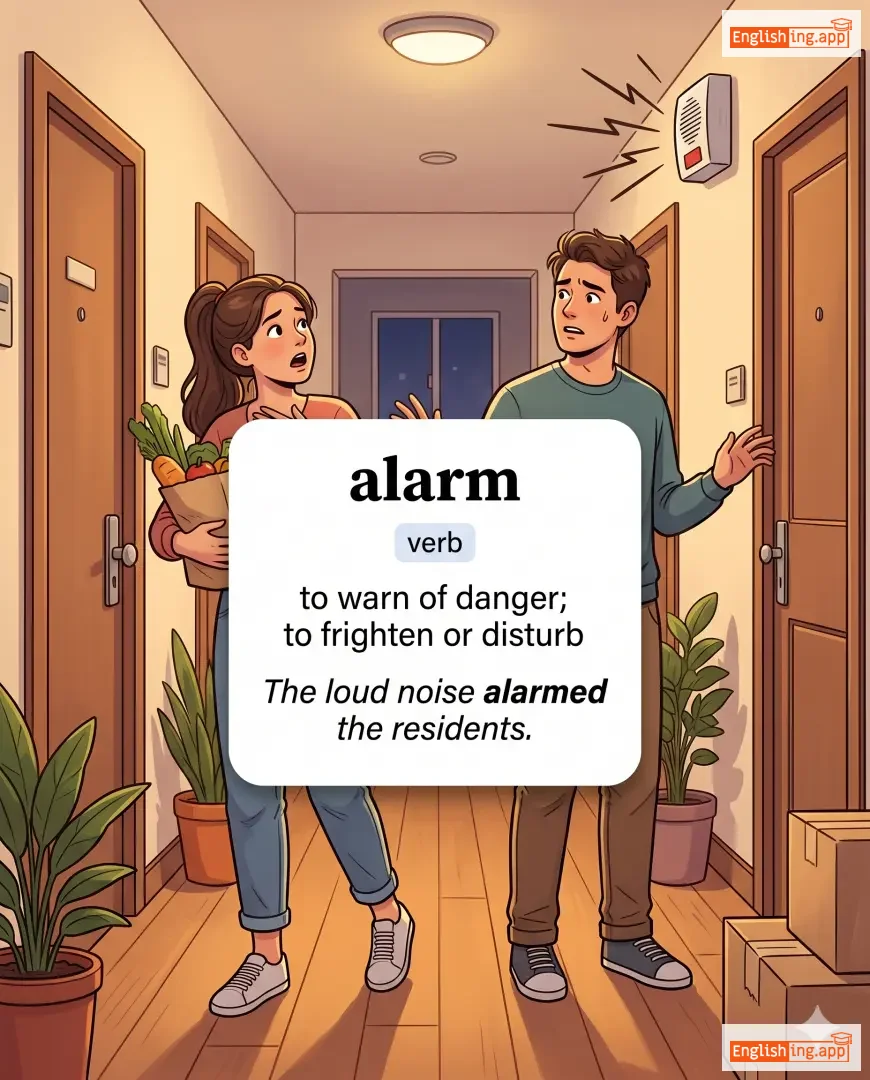
alarm definition card — visual illustration of the meaning
noun
/əˈlɑːrm/
警报信号 (jingbao xinhao)

a signal or sound that warns people of danger or alerts them to take action

"The fire alarm went off in the middle of the night."
"火灾警报在午夜响起。" (Huozai jingbao zai wuye xiangqi.)
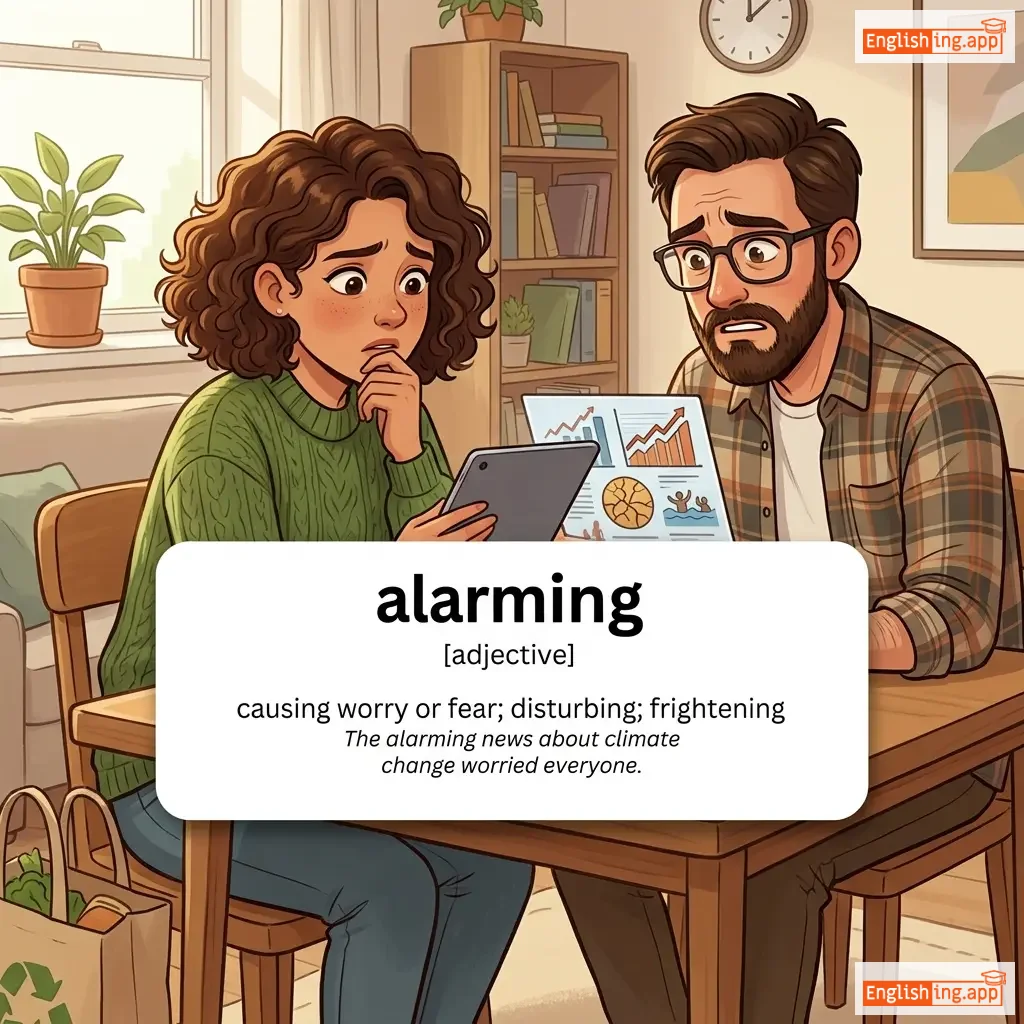
alarming definition card — visual illustration of the meaning
adjective
/əˈlɑrmɪŋ/
令人震惊的; 令人害怕的; 令人担忧的 (lìng rén zhènjīng de; lìng rén hàipà de; lìng rén dānyōu de)

causing worry or fear; disturbing; frightening

"The alarming news about climate change worried everyone."

"关于气候变化的令人震惊的消息让大家都感到不安。" (Guānyú qìhòu biànhuà de lìng rén zhènjīng de xiāoxī ràng dàjiā dōu gǎndào bù'ān.)
conjunction
/ˌɔːlˈbiː.ɪt/
尽管 (jǐnguǎn)

Although; even though.

"He finally agreed, albeit reluctantly."

"他最终同意了,尽管不情愿。" (Tā zuìzhōng tóngyìle, jǐnguǎn bù qíngyuàn.)
noun/adjective
/ælˈbaɪ.noʊ/
白化病 (缺乏色素的人/动物) (baihua bing)

A person, animal, or plant lacking normal pigmentation, resulting in pale skin, hair, and eyes.

"The albino rabbit had white fur and pink eyes."

"白化病兔子有着白色的毛发和粉红色的眼睛。" (Baihua bing tuzi youzhe baise de maofa he fenhongse de yanjing.)
noun
/ˈæl.baɪt/

A white or colorless mineral of the feldspar group, often found in igneous rocks.

"Geologists discovered albite crystals in the rock sample."

noun
/ˈælbəm/
相册 (xiangce)

A collection of songs or photographs compiled into a single book, record, or digital file.

"She showed me her travel album full of beautiful pictures."

"她给我看了她的旅行相册,里面有很多漂亮的照片。" (Ta gei wo kanle ta de luxing xiangce, limian you henduo piaoliang de zhaopian.)
alchemy definition card — visual illustration of the meaning
noun
/ˈælkəmi/
炼金术 (liànjīnshù)

A medieval practice combining elements of chemistry and philosophy, aimed at transforming matter, especially turning base metals into gold.

"Medieval scientists devoted their lives to alchemy."

"中世纪的科学家们将他们的生命献给了炼金术。" (Zhongshiji de kexuejiamen jiang tamen de shengming xiang gei le liànjīnshù.)
noun
/ˈælkəhɒl/

A colorless volatile liquid that is the intoxicating constituent of wine, beer, spirits, and other drinks.

"Too much alcohol can damage your liver."

noun
/ˈælkəhɒlɪzəm/
酗酒症 (xùjiǔ zhèng)

A chronic disease characterized by uncontrolled drinking and preoccupation with alcohol.

"His alcoholism affected both his health and his family life."

"他的酗酒症影响了他的健康和家庭生活。" (Tā de xùjiǔ zhèng yǐngxiǎngle tā de jiànkāng hé jiātíng shēnghuó.)
noun
/ˈælkoʊv/
壁龛 (bìkān)

A small recessed section of a room or a nook.

"She placed a reading chair in the alcove near the window."

"她在靠窗的壁龛里放了一把阅读椅。" (Tā zài kào chuāng de bìkān lǐ fàngle yī bǎ yuèdú yǐ.)
noun
/ˈɔːldər/
榆树 (Yú shù)

A type of tree from the birch family that typically grows in wet ground and has simple, serrated leaves.

"The alder trees grew thick along the riverbank."

"榆树在河岸旁茂密生长。" (Yú shù zài hé'àn páng màomì shēngzhǎng.)
noun
/ˈɔːldərmən/
市议会成员 (shì yì huì chéng yuán)

An elected member of a municipal council in certain cities and towns.

"The alderman proposed a new plan for community parks."

"市议员提出了一个新的社区公园计划。" (Shì yìyuán tíchūle yīgè xīn de shèqū gōngyuán jìhuà.)
noun
/ˈɔːldərmənʃɪp/
市议员职位 (shì yì yuán zhí wèi)

The office, position, or dignity of an alderman.

"He was honored with aldermanship after years of service."

"他在多年服务后,因市议员职位而获奖。" (Tā zài duō nián fúwù hòu, yīn shì yì yuán zhí wèi ér huò jiǎng.)
adjective
/əˈlɜːrt/
警觉 (jingjue)

quick to notice and respond to potential danger or issues; aware and attentive

"The alert dog barked at the stranger approaching the house."

"警觉的狗对接近房子的陌生人大声吠叫。" (Jingjue de gou dui jiejin fangzi de mosheng ren da sheng feijiao.)
adverb
/əˈlɜːrtli/
警觉地 (jingjue de)

in a watchful, attentive, and quick-to-notice manner

"She listened alertly to every sound in the dark forest."

"她在黑暗的森林里警觉地听着每一个声音。" (ta zai hei'an de senlin li jingjue de ting zhe mei yi ge shengyin)
noun
/əˈlɜːrtnəs/
警觉性 (jingjue xing)

the state of being mentally aware and quick to notice or respond; vigilance

"The driver maintained a high level of alertness during the long journey."
"司机在长途驾驶中保持了高度的警觉性。" (siji zai changtu jiashi zhong baochi le gaodu de jingjue xing)
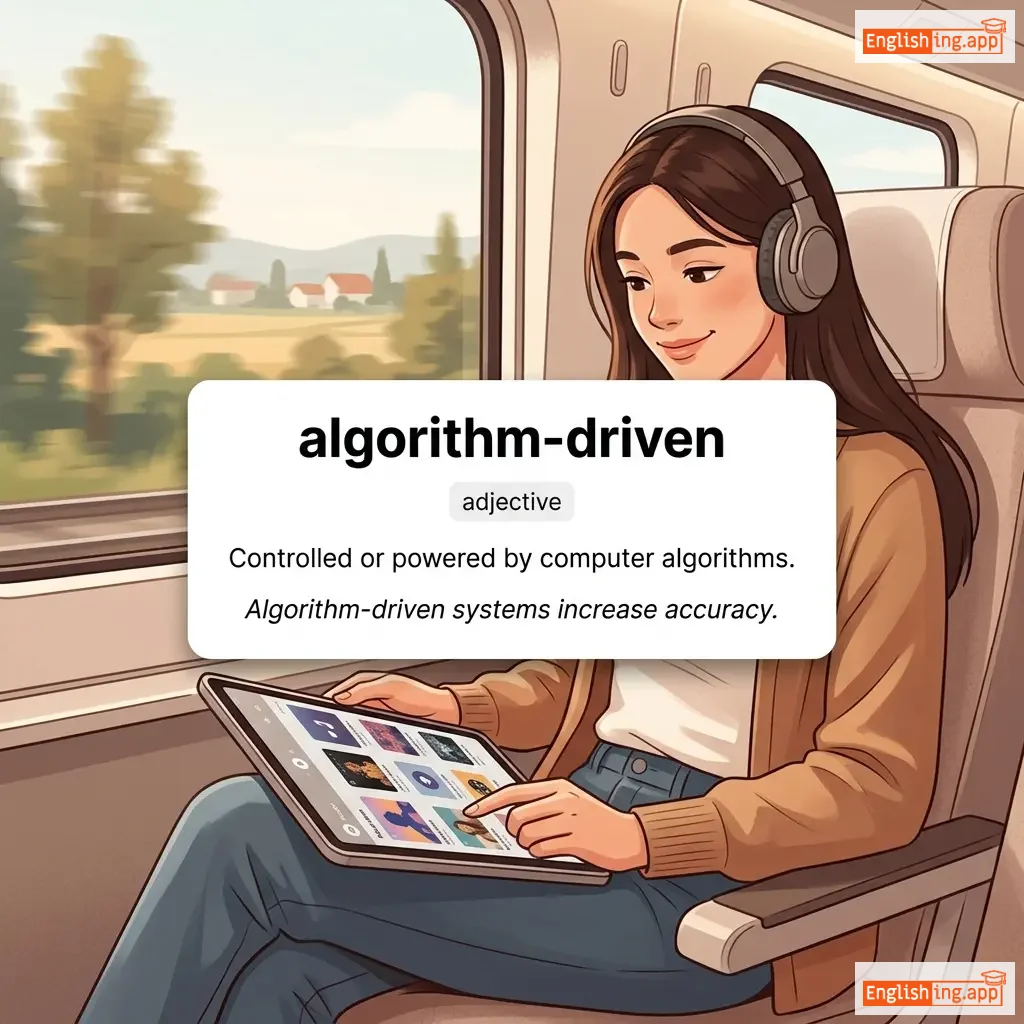
algorithm-driven definition card — visual illustration of the meaning
adjective
ˈæl.ɡə.rɪ.ðəm drɪv.ən
由算法驱动。 (you suanfa qudong.)

Controlled or powered by computer algorithms.

"Algorithm-driven systems increase accuracy."
"算法驱动的系统提高了准确性。" (Suanfa qudong de xitong tigao le zhunqueding.)
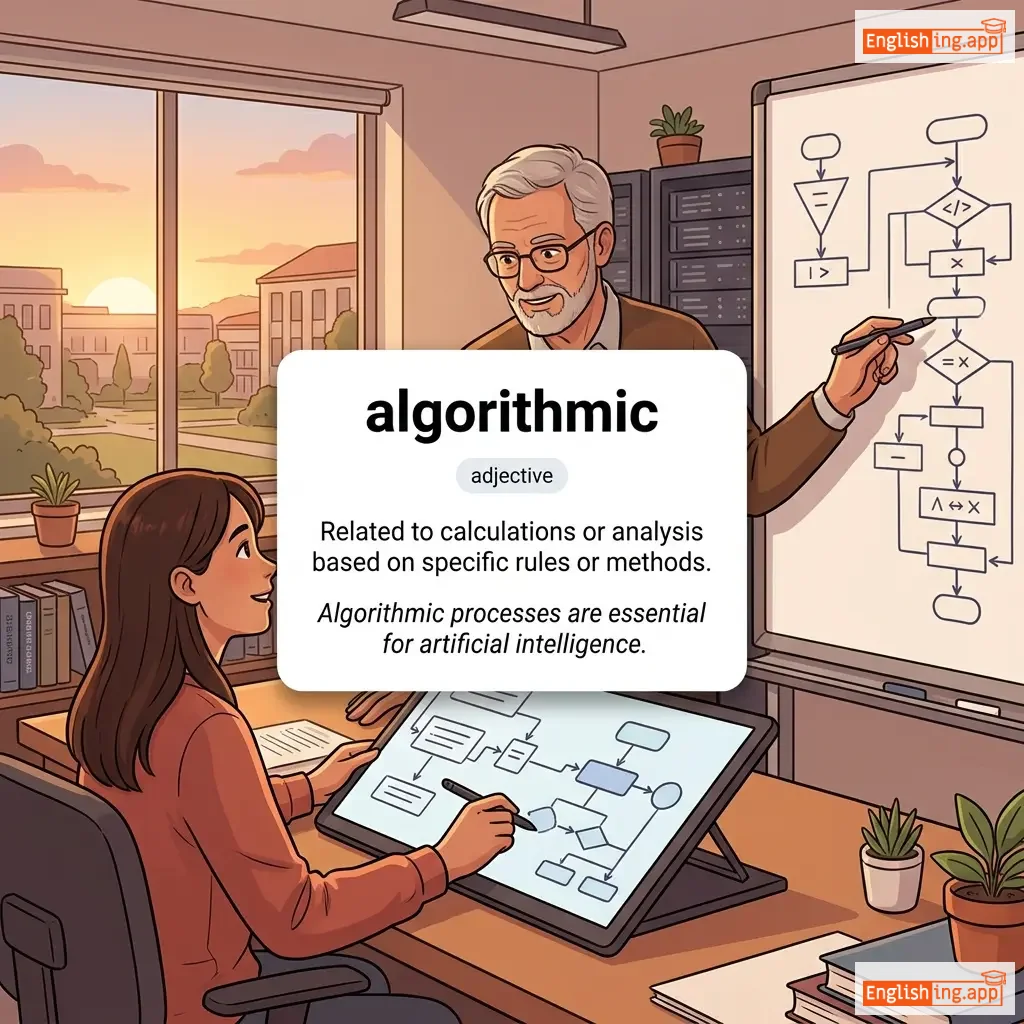
algorithmic definition card — visual illustration of the meaning
adjective
ˌæl.ɡəˈrɪð.mɪk
算法的 (suànfǎ de)

Related to calculations or analysis based on specific rules or methods.

"Algorithmic processes are essential for artificial intelligence."

"算法过程对于人工智能至关重要。" (Suànfǎ guòchéng duì yìrén gōngnéng zhìguān zhòngyào.)
noun, adverb
/ˈeɪliəs/
别名 (bieming)

A false or assumed identity; also used to mean 'otherwise called'.

"The criminal was known by the alias 'Shadow'."

"罪犯以'影子'为别名。" (Zuìfàn yǐ 'yǐngzi' wéi biémíng.)
noun
/ˈælɪbaɪ/
不在场证明 (bù zài chǎng zhèngmíng)

A claim or piece of evidence that one was elsewhere when an act, typically a crime, was committed.

"She had a strong alibi that proved she was at the cinema during the theft."
"她有一个强有力的辩解,证明她在偷窃发生时在电影院。" (Tā yǒu yī ge qiáng yǒulì de biànjiě, zhèngmíng tā zài tōuqiè fāshēng shí zài diànyǐngyuàn.)
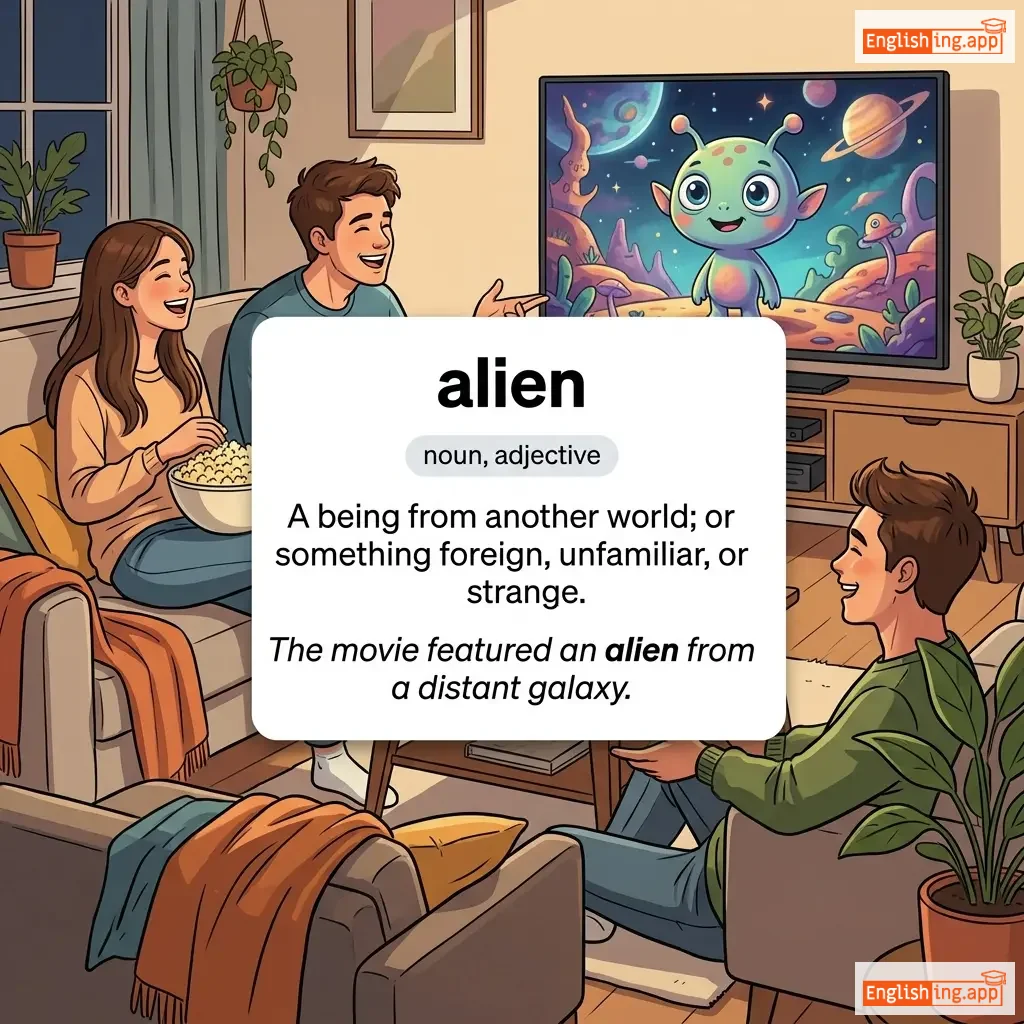
alien definition card — visual illustration of the meaning
noun, adjective
/ˈeɪ.li.ən/
外星人 (waixingren)

A being from another world; or something foreign, unfamiliar, or strange.

"The movie featured an alien from a distant galaxy."

"电影中出现了来自遥远星系的外星人。" (Dianying zhong chuxian le laizi yaoyuan xingxi de waixingren.)
adjective
/ˈeɪ.li.ə.nə.bəl/
可转让的 (ke zhuanrang de)

Able to be transferred or surrendered, usually referring to rights or property.

"Property rights are alienable and can be sold or transferred."

"财产权是可以转让的,可以出售或转让。" (Caichan quanli shi keyi zhuanrang de, keyi chushou huo zhuanrang.)
verb
/ˈeɪ.li.ə.neɪt/
疏远 (shūyuǎn)

To make someone feel isolated or estranged; to cause someone to become unfriendly.

"His rude behavior alienated many of his friends."
"他粗鲁的行为使许多朋友疏远了他。" (Tā cūlǔ de xíngwéi shǐ xǔduō péngyǒu shūyuǎnle tā.)
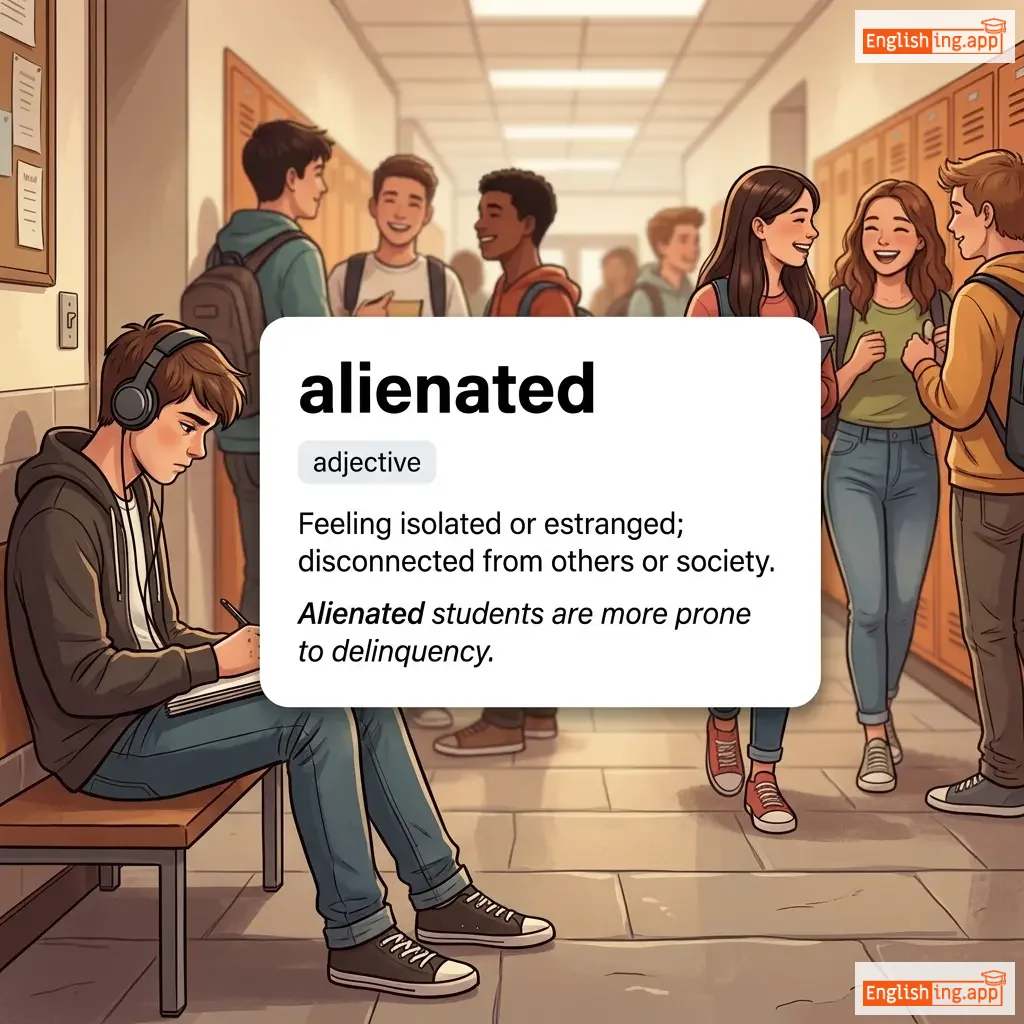
alienated definition card — visual illustration of the meaning
adjective
ˈeɪlɪəneɪtɪd
疏远 (shuyuan)

Feeling isolated or estranged; disconnected from others or society.

"Alienated students are more prone to delinquency."

"疏远的学生更容易陷入犯罪。" (Shūyuǎn de xuéshēng gèng róngyì xiànrù fànzuì.)
😶‍🌫️

alienation (异化)

noun
/ˌeɪ.li.əˈneɪ.ʃən/
异化 (yihua)

The state of being isolated or estranged from a group or activity.

"The new policies created a sense of alienation among employees."

"新政策在员工中产生了异化感。" (Xin zhengce zai yuangong zhong chanshengle yihuagan.)
verb
/əˈlaɪn/
对齐 / 排成直线 (duìqí / pái chéng zhíxiàn)

To arrange things in a straight line; to adjust or bring into proper relation or agreement.

"The manager asked the team to align their goals with the company's mission."

"经理要求团队将他们的目标与公司的使命对齐。" (Jīnglǐ yāoqiú tuánduì jiāng tāmen de mùbiāo yǔ gōngsī de shǐmìng duìqí.)
aligning definition card — visual illustration of the meaning
verb
əˈlaɪn.ɪŋ
对齐 (duìqí)

Placing or arranging things in a straight line or in correct relative positions.

"Aligning education with global standards is vital."

"将教育与全球标准对齐是至关重要的。" (Jiāng jiàoyù yǔ quánqiú biāozhǔn duìqí shì zhìguān zhòngyào de.)
noun
/əˈlaɪnmənt/
对齐 (duìqí)

arrangement in a straight line or in proper position

"The alignment of the planets was perfect for the celestial event."

"行星的对齐对天文事件来说是完美的。" (Xíngxīng de duìqí duì tiānwén shìjiàn lái shuō shì wánměi de.)
👯‍♀️

Alike (ā lǎi kè)

adjective
/əˈlaɪk/
相似 (xiangsi)

similar in appearance, nature, or character

"The two sisters look very alike."

"这两个姐妹看起来非常相似。" (Zhe liang ge jiemei kàn qǐlái fēicháng xiāngsì.)
noun
/ˈæl.ɪ.mənt/
食物 (shíwù)

food or nourishment that sustains life

"Fruits and vegetables are important aliments for a healthy body."

"水果和蔬菜是维持健康身体的重要食物。" (shuǐguǒ hé shūcài shì wéichí jiànkāng shēntǐ de zhòngyào shíwù.)
adjective
/ˌæl.ɪˈmen.tər.i/
与消化相关 (yu xiaohua xiangguan)

relating to nourishment or the organs of digestion

"The doctor explained the role of the alimentary canal in digestion."

"医生解释了消化道在消化过程中的作用。" (Yisheng jieshi le xiaohuadao zai xiaohua guocheng zhong de zuoyong.)
noun
/ˈæl.ɪ.moʊ.ni/
赡养费 (shànyǎng fèi)

financial support that a person is ordered by a court to give to their spouse after separation or divorce

"He was ordered by the court to pay monthly alimony to his ex-wife."

"法院命令他每月支付赡养费给他的前妻。" (Fǎyuàn mìnglìng tā měi yuè zhīfù shànyǎng fèi gěi tā de qiánqī.)
adjective
/əˈlaɪv/
活着 (huózhe)

Living, not dead.

"The rescue team found the missing child alive."

"救援队找到失踪的孩子时,他还活着。" (Jiùyuán duì zhǎodào shīzōng de háizi shí, tā hái huózhe.)