词汇表

英语词汇词典 | 单词含义、定义和示例

adverb
/ˌælfəˈbɛtɪkli/
按字母顺序 (an zim u shun xu)

in the order of the letters of the alphabet

"The names are listed alphabetically in the register."

"这些名字在登记册中按字母顺序排列。" (zhexie mingzi zai dengjice zhong an zimushunxu pailie)
adverb
/ɔːlˈrɛdi/
已经 (yijing)

before or by now; prior to a time in question

"I have already finished my homework."

"我已经完成了我的家庭作业。" (Wo yijing wanchengle wode jiatingzuoye.)
adjective, adverb, interjection
/ɔːlˈraɪt/
没问题 (mei wenti)

satisfactory or acceptable; safe or unharmed; used to express agreement or acknowledgment

"Everything is going to be alright."

"一切都会没问题的。" (yiqie dou hui mei wenti de)
adverb
/ˈɔːlsoʊ/
(ye)

in addition; too

"She sings beautifully and also plays the guitar."

"她唱得很美,还弹吉他。" (Tā chàng dé hěn měi, hái tán jí tā.)
noun
/ˈɔːltər/
祭坛 (jìtán)

A table or flat surface used in religious rituals or worship.

"The priest placed the offerings on the altar."

"牧师把供品放在祭坛上。" (Mùshī bǎ gòngpǐn fàng zài jìtán shàng.)
verb
/ˈɔːltər/
改变 (gǎibiàn)

to change or modify something slightly but significantly

"She decided to alter her dress to make it fit better."

"她决定改变她的裙子,让它更合身。" (Tā juédìng gǎibiàn tā de qúnzi, ràng tā gèng héshēn.)
noun
/ˌɔːltəˈreɪʃən/
改变 (gǎibiàn)

a change or modification made to something

"The tailor made an alteration to the suit."

"裁缝对西装做了改变。" (Cáifeng duì xīzhuāng zuòle gǎibiàn.)
verb
/ˈɔːltərˌkeɪt/
争论 (zhēnglùn)

to argue or dispute angrily or noisily

"The neighbors began to altercate over the boundary wall."

"邻居们开始争论边界墙。" (Línjū men kāishǐ zhēnglùn biānjiè qiáng.)
noun
/ˌɔːltərˈkeɪʃən/
争执, 争吵 (zhēngzhí, zhēngchǎo)

a noisy argument or quarrel

"There was a brief altercation between the two drivers."

"两位司机之间发生了简短的争执。" (Liǎng wèi sījī zhījiān fāshēngle jiǎnduǎn de zhēngzhí.)
verb, noun, adjective
/ˈɔːltərnət/ (adj, noun), /ˈɔːltərˌneɪt/ (verb)
交替,替代 (jiāotì, tìdài)

to occur in turn repeatedly; to take turns; also, a substitute or replacement

"The students alternate between online and offline classes."

"学生们在在线和离线课程之间轮流上课。" (xuéshēngmen zài zàixiàn hé líxiàn kèchéng zhījiān lúnliú shàngkè.)
alternative definition card — visual illustration of the meaning
noun, adjective
/ɔːlˈtɜːrnətɪv/
替代 (tìdài)

a choice between two or more possibilities; something that can be chosen instead of something else

"We need to find an alternative solution to this problem."

"我们需要找到这个问题的替代解决方案。" (Wo men xu yao zhao dao zhe ge wen ti de ti dai jie jue fang an.)
conjunction
/ɔːlˈðoʊ/
尽管 (jǐnguǎn)

in spite of the fact that; even though

"Although it was raining, they went for a walk."

"尽管下雨,他们还是去散步了。" (Jǐnguǎn xiàyǔ, tāmen háishì qù sànbù le.)
noun
/ˈæltɪtuːd/
高度 (gaodu)

the height of an object or point in relation to sea level or ground level

"The airplane is flying at an altitude of 30,000 feet."

"飞机以30,000英尺的高度飞行。" (Feiji yi 30,000 yingchi de gaodu feixing.)
noun
/ˈæltoʊ/
高音 (成人歌唱声部) (alto)

the second highest adult singing voice, between soprano and tenor

"She sang the alto part in the choir beautifully."

"她在合唱团中美妙地唱着高音部分。" (Ta zai hechangtuan zhong meihao de changzhe gaoyin bufen.)
adverb
/ˌɔːltəˈɡɛðər/
完全 (wánquán)

completely; in total; entirely

"The project was altogether successful despite the challenges."
"这个项目在挑战面前完全成功。" (Zhège xiàngmù zài tiǎozhàn miànqián wánquán chénggōng.)
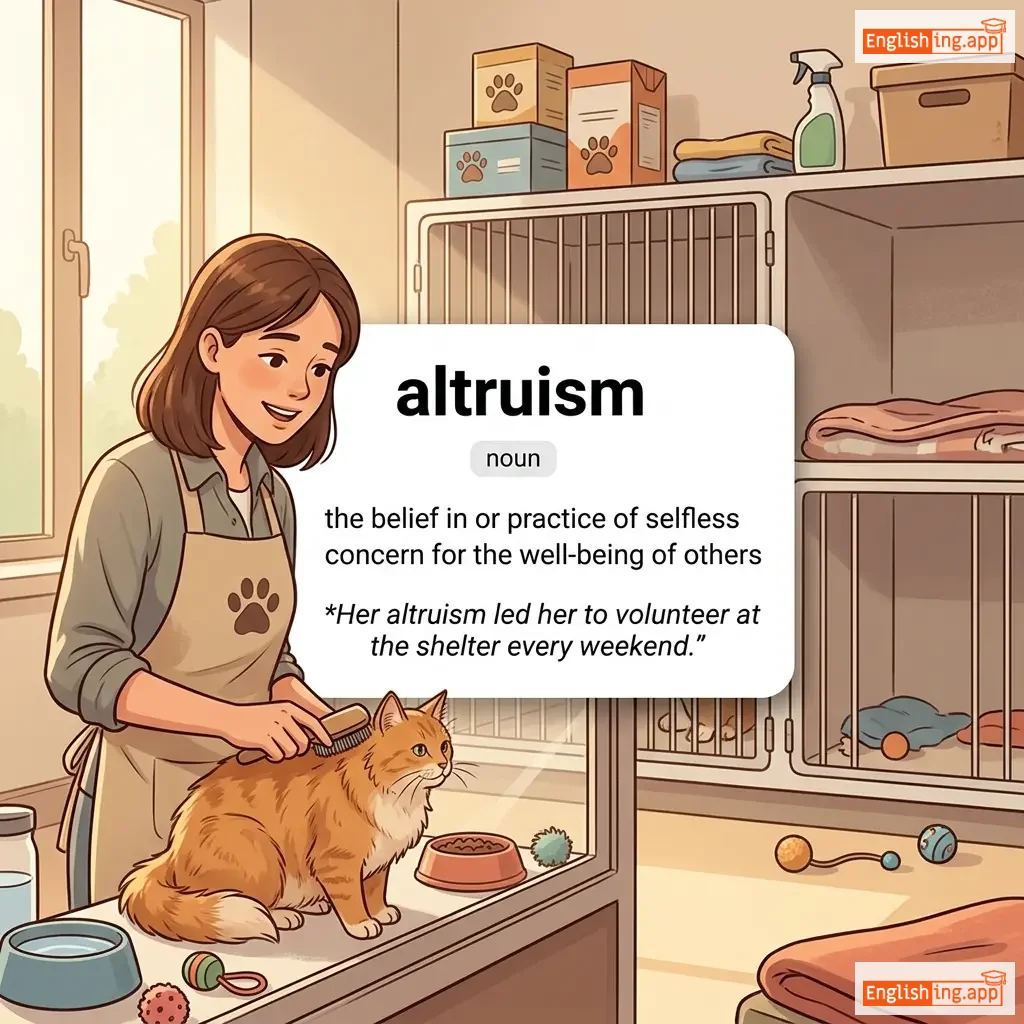
altruism definition card — visual illustration of the meaning
noun
/ˈæltruɪzəm/
利他主义 (lìtā zhǔyì)

the belief in or practice of selfless concern for the well-being of others

"Her altruism led her to volunteer at the shelter every weekend."

"她的利他主义让她每个周末都去庇护所做志愿者。" (Tā de lìtā zhǔyì ràng tā měi gè zhōumò dōu qù bìhù suǒ zuò zhìyuàn zhě.)
noun
/ˈæltruɪst/
利他主义者 (lìtā zhǔyì zhě)

a person who has an unselfish concern for the welfare of others

"He is an altruist who always puts others' needs before his own."

"他是一个总是把别人的需求放在自己之前的无私的人。" (Tā shì yīgè zǒng shì bǎ biérén de xūqiú fàng zài zìjǐ zhīqián de wúsī de rén)
altruistic definition card — visual illustration of the meaning
adjective
/ˌæl.truˈɪs.tɪk/
利他主义 (lìtā zhǔyì)

showing selfless concern for the well-being of others; unselfish

"Her altruistic nature made her volunteer at the shelter every weekend."

"她的利他主义本性使她每个周末都自愿在收容所工作。" (Tā de lìtā zhǔyì běnxìng shǐ tā měi gè zhōumò dōu zìyuàn zài shōuróngsuǒ gōngzuò.)
noun
/ˌæljuˈmɪniəm/
(lu)

a lightweight, silvery-white metal used widely in manufacturing and packaging

"Aluminium is commonly used to make cans and aircraft parts."

"铝常用于制造罐头和飞机部件。" (lu chang yong yu zhi zao guan tou he fei ji bu jian)
noun
/əˈluːmɪnəm/
(lü)

a lightweight silvery metal used for making cans, foils, and other items

"The airplane body is made of strong but light aluminum."

"飞机的机身是用强度高但重量轻的铝制成的。" (Feiji de jishen shi yong qiangdu gao dan zhongliang qing de lü zhicheng de.)
noun
/əˈlʌmnəs/
校友 (xiao you)

a former student or graduate of a school, college, or university

"He is an alumnus of Harvard University."

"他是哈佛大学的校友。" (Ta shi Harvard daxue de xiao you.)
adverb
/ˈɔːlweɪz/
总是 (zǒng shì)

at all times; on every occasion

"She always wakes up early in the morning."

"她总是早晨起床。" (Tā zǒng shì zǎochén qǐchuáng.)
verb (first person singular of 'be')
/æm/
(wo)

the first person singular present tense of 'be'

"I am happy today."

"今天我很高兴。" (Jintian wo hen gaoxing.)
noun
/əˈmæl.ɡəm/
混合物 (hunhewu)

a mixture or blend of different things

"The new policy is an amalgam of several previous laws."

"新政策是多个先前法律的混合物。" (Xin zhengce shi duoge xianqian falu de hunhewu.)
amalgamate definition card — visual illustration of the meaning
verb
/əˈmæl.ɡə.meɪt/
合并 (hé bìng)

to combine or unite to form one structure or organization

"The two companies decided to amalgamate to increase efficiency."
"这两家公司决定合并以提高效率。" (Zhè liǎng jiā gōngsī juédìng hébìng yǐ tígāo xiàolǜ.)
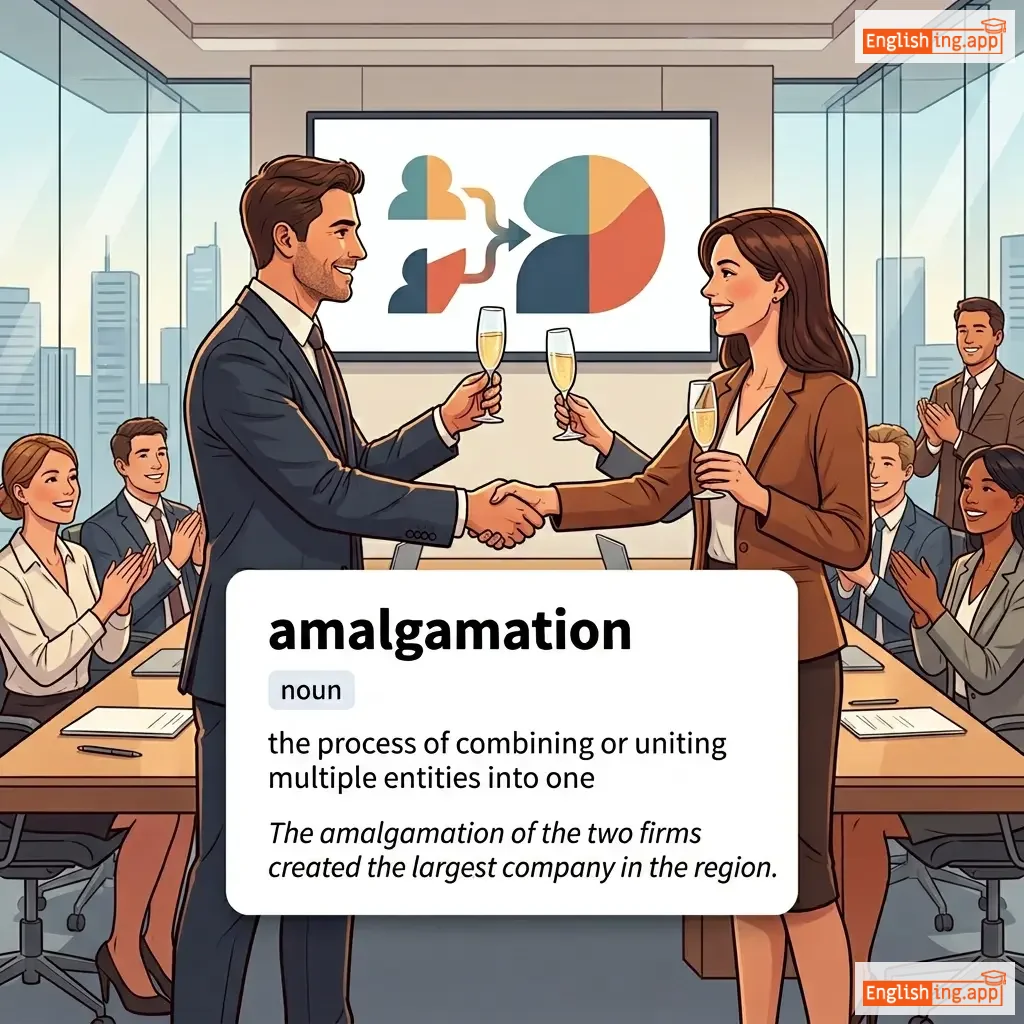
amalgamation definition card — visual illustration of the meaning
noun
/əˌmæl.ɡəˈmeɪ.ʃən/
合并 (hebing)

the process of combining or uniting multiple entities into one

"The amalgamation of the two firms created the largest company in the region."

"两家公司的合并创造了该地区最大的公司。" (Liang jia gongsi de hebing chuangzao le gai diqu zui da de gongsi.)
verb
/əˈmæs/
积累 (jīlěi)

to gather together or accumulate over a period of time

"He managed to amass a fortune through wise investments."

"他通过明智的投资成功地积累了财富。" (Tā tōngguò míngzhì de tóuzī chénggōng de jīlěile cáifù.)
noun
/ˈæmətər/
业余 (yè yú)

A person who engages in a pursuit, especially a sport or art, on an unpaid basis.

"The painting looked impressive, even though it was done by an amateur."

"这幅画看起来很震撼,尽管它是由一个业余爱好者完成的。" (Zhè fú huà kàn qǐ lái hěn zhèn hàn, jǐn guǎn tā shì yóu yī gè yè yú ài hǎo zhě wán chéng de.)
adjective
/ˈæməˌtɔːri/
与爱相关的 (yǔ ài xiāngguān de)

Relating to or expressing sexual love.

"The poet’s verses were filled with amatory themes."

"诗人的诗句充满了爱情主题。" (Shīrén de shījù chōngmǎnle àiqíng zhǔtí.)
verb
/əˈmeɪz/
使惊叹 (shi jingtan)

to fill someone with great surprise or wonder

"The magician’s final trick amazed the audience."

"魔术师的最后一个把戏使观众惊叹。" (moshushi de zuihou yige baxi shi guanzhong jingtan)
adjective
/əˈmeɪzɪŋ/
惊人 (jingren)

causing great surprise or wonder; astonishing

"The magician performed an amazing trick."

"魔术师表演了一个惊人的魔术。" (Móshù shī biǎoyǎnle yīgè jīngrén de móshù.)
noun
/ˈæməzɒn/
强大的女人 (qiáng dà de nǚ rén)

A tall, strong, or powerful woman.

"She fought like an amazon in the competition."

"她在比赛中像亚马逊女战士一样作战。" (Tā zài bǐsài zhōng xiàng yàmǎxùn nǚ zhànshì yīyàng zuòzhàn.)
noun
/æmˈbæsədər/
大使 (da shi)

a person who represents their country in another country

"The ambassador attended the international peace conference."
"大使出席了国际和平会议。" (da shi chu xi le guo ji he ping hui yi)
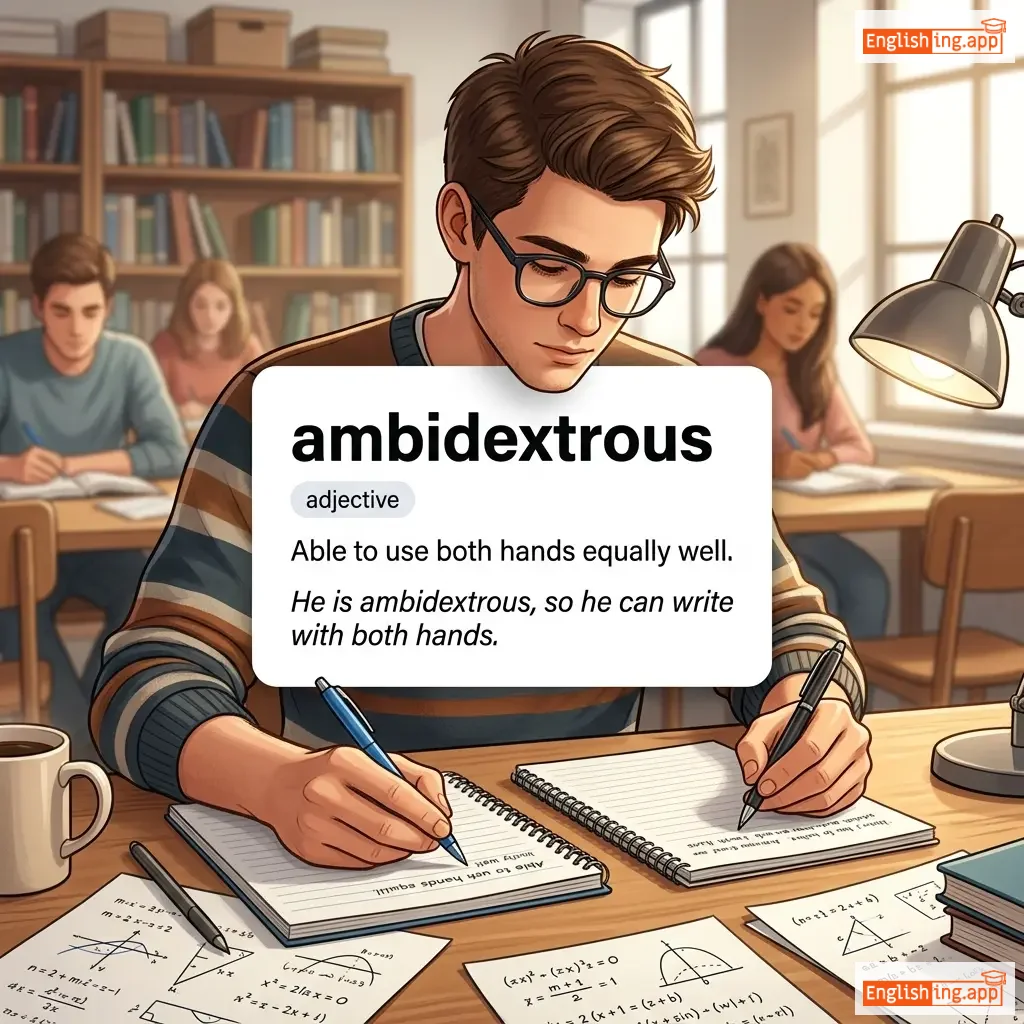
ambidextrous definition card — visual illustration of the meaning
adjective
/ˌæmbɪˈdɛkstrəs/
双手灵活 (shuang shou ling huo)

Able to use both hands equally well.

"He is ambidextrous, so he can write with both hands."

"他是双手灵活的,所以他可以用两只手写字。" (Ta shi shuang shou ling huo de, suoyi ta keyi yong liang zhi shou xie zi.)
ambience definition card — visual illustration of the meaning
noun
/ˈæmbiəns/
氛围 (fenwei)

The character and atmosphere of a place.

"The restaurant had a romantic ambience."
"餐厅有浪漫的氛围。" (Canting you langman de fenwei.)
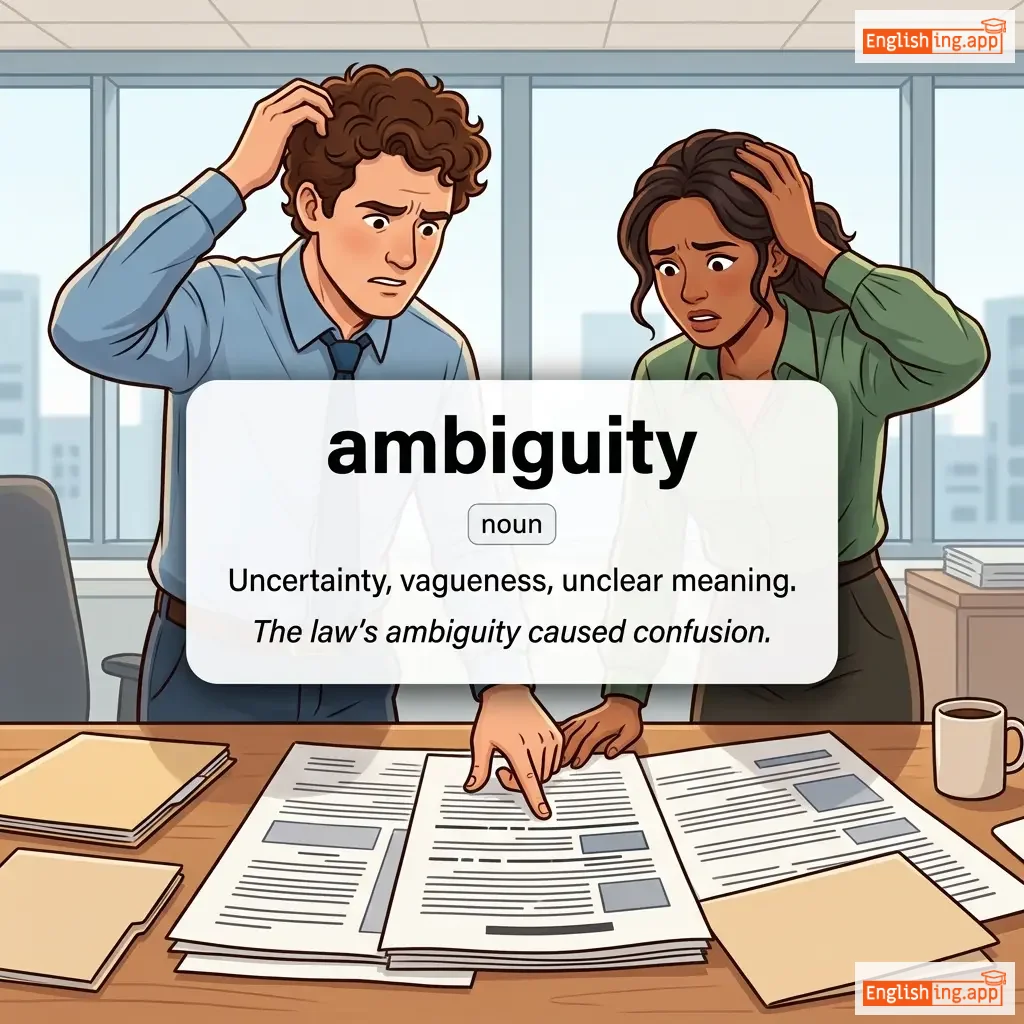
ambiguity definition card — visual illustration of the meaning
noun
ˌæm.bɪˈɡjuː.ə.ti
模棱两可, 不确定性, 含糊不清 (mó líng liǎng kě, bù què dìng xìng, hán hú bù qīng)

Uncertainty, vagueness, unclear meaning.

"The law's ambiguity caused confusion."

"法律的模棱两可造成了混乱。" (Fǎlǜ de mó líng liǎng kě zàochéng le hùn luàn.)
ambiguous definition card — visual illustration of the meaning
adjective
/æmˈbɪɡjuəs/
模糊的 (móhú de)

Open to more than one interpretation; unclear or uncertain.

"His answer was so ambiguous that no one understood his real opinion."

"他的回答非常模糊,以至于没有人理解他的真实意见。" (tā de huídá fēicháng móhú, yǐzhì méiyǒu rén lǐjiě tā de zhēnshí yìjiàn.)
ambition definition card — visual illustration of the meaning
noun
/æmˈbɪʃən/
雄心 (xióngxīn)

a strong desire to achieve something, typically requiring determination and hard work

"Her ambition is to become a successful entrepreneur."

"她的雄心是成为一名成功的企业家。" (Tā de xióngxīn shì chéngwéi yī míng chénggōng de qǐyèjiā.)
adjective
/æmˈbɪʃəs/
雄心勃勃 (xióngxīn bóbó)

Having a strong desire to succeed or achieve something.

"She is very ambitious and wants to become a doctor."

"她非常有雄心,想成为一名医生。" (Tā fēicháng yǒu xióngxīn, xiǎng chéngwéi yī míng yīshēng.)
ambitious endeavor definition card — visual illustration of the meaning
adjective + noun
æmˈbɪʃəs ɪnˈdevər
雄心壮志的努力 (xióngxīn zhuàngzhì de nǔlì)

A bold and determined attempt to achieve something challenging.

"Artemis is an ambitious endeavor in space exploration."

"阿尔忒弥斯是一次雄心勃勃的太空探索努力。" (Ā ěr tè mí sī shì yī cì xióngxīn bóbó de tàikōng tàn suǒ nǔlì.)
ambivalence definition card — visual illustration of the meaning
noun
/æmˈbɪvələns/
矛盾情绪 (máodùn qíngxù)

The state of having mixed feelings or contradictory ideas about something.

"He felt ambivalence about moving to a new city."

"他对搬到新城市感到矛盾。" (tā duì bān dào xīn chéngshì gǎndào máodùn.)
adjective
/æmˈbɪvələnt/
矛盾的 (máodùn de)

Having mixed or contradictory feelings about something or someone.

"She was ambivalent about accepting the new job offer."

"她对接受新工作的提议感到矛盾。" (Tā duì jiēshòu xīn gōngzuò de tíyì gǎndào máodùn.)
verb
/ˈæmbl/
慢慢走 (màn màn zǒu)

To walk at a slow, relaxed pace.

"They amble through the park on Sunday mornings."

"他们在星期天早上悠闲地走过公园。" (Tāmen zài xīngqītiān zǎoshang yōuxián de zǒguò gōngyuán.)
ambrosia definition card — visual illustration of the meaning
noun
/æmˈbroʊʒə/
神仙食物 (shénxiān shíwù)

The food of the gods in classical mythology; something extremely pleasing to taste or smell.

"The dessert was so delicious that it tasted like ambrosia."

"这个甜点太好吃了,味道像神仙食物一样。" (Zhège tiándiǎn tài hǎochīle, wèidào xiàng shénxiān shíwù yīyàng.)
adjective
/æmˈbroʊʒiəl/
神仙的 (shénxiān de)

Exceptionally pleasing to taste or smell; divine.

"The aroma of freshly baked bread was simply ambrosial."

"刚烤好的面包香气简直是神仙的。" (Gāng kǎo hǎo de miànbāo xiāngqì jiǎnzhí shì shénxiān de.)
noun
/ˈæmbjʊləns/
救护车 (jiùhùchē)

A specially equipped vehicle used to transport sick or injured people to the hospital.

"The ambulance rushed to the accident site within minutes."

"救护车在几分钟内赶到事故现场。" (Jiùhùchē zài jǐ fēnzhōng nèi gǎndào shìgù xiànchǎng.)
adjective
/ˈæmbjələˌtɔːri/
门诊病人 (ménzhěn bìngrén)

Relating to or able to walk; relating to outpatient medical care.

"The patient is ambulatory and does not require bed rest."

"病人是门诊患者,不需要卧床休息。" (Bìngrén shì ménzhěn bìngrén, bù xūyào wòchuáng xiūxí.)
verb
/ˈæmbʊʃ/
伏击 (fuji)

To attack suddenly and unexpectedly from a hidden position.

"The soldiers planned to ambush the enemy at dawn."
"士兵们计划在黎明时伏击敌人。" (shibingmen jihua zai liming shi fuji diren.)
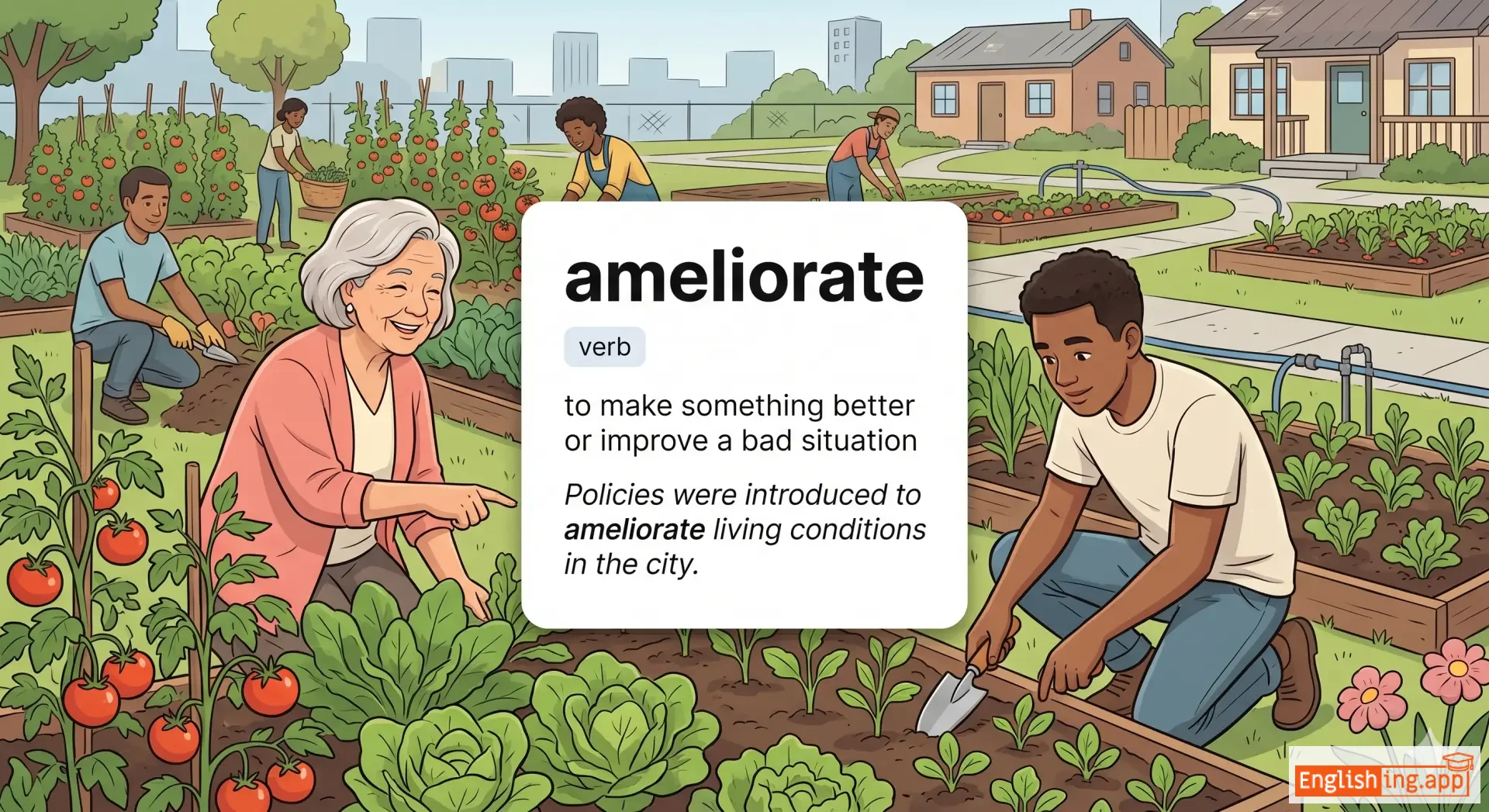
ameliorate definition card — visual illustration of the meaning
verb
/əˈmiːliəreɪt/
幸福 (xìngfú)

to make something better or improve a bad situation

"Policies were introduced to ameliorate living conditions in the city."
"已经出台了改善城市生活条件的政策。" (Yǐjīng chūtái le gǎishàn chéngshì shēnghuó tiáojiàn de zhèngcè.)
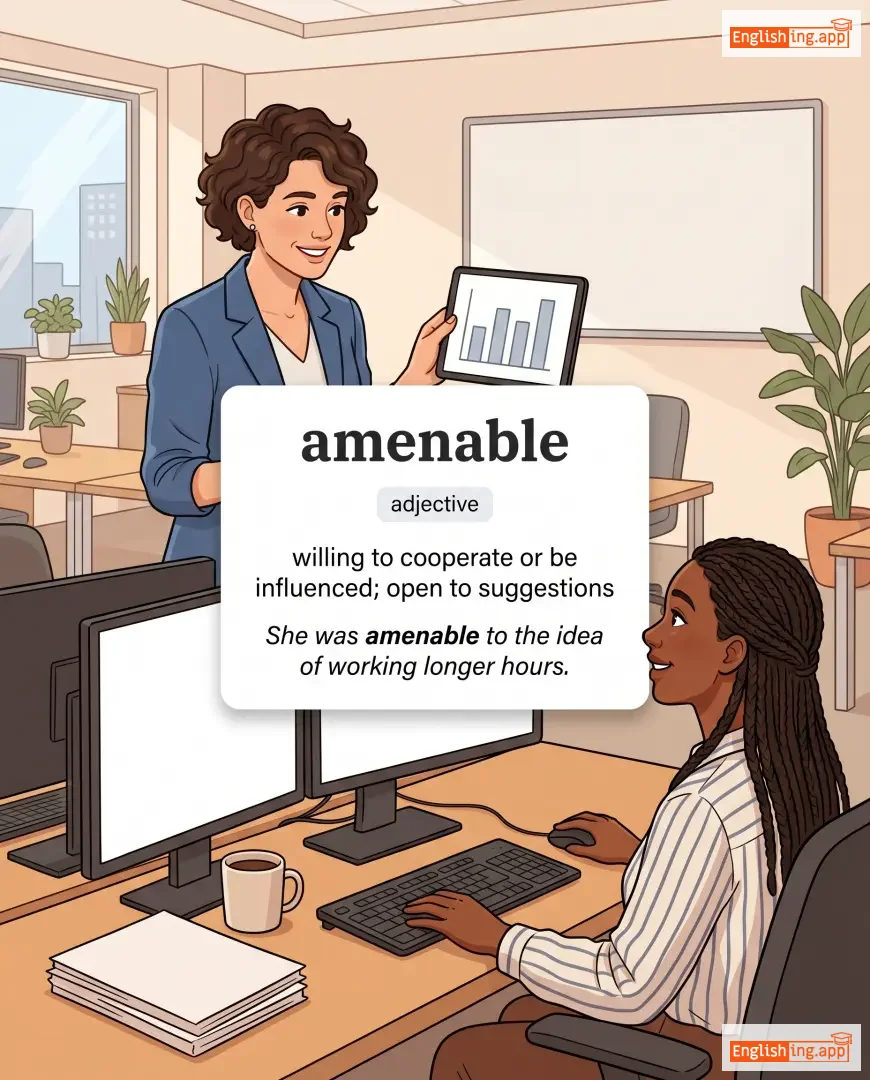
amenable definition card — visual illustration of the meaning
adjective
/əˈmiːnəbl/
顺从 (shùncóng)

willing to cooperate or be influenced; open to suggestions

"She was amenable to the idea of working longer hours."

"她愿意接受加班的想法。" (Tā yuànyì jiēshòu jiābān de xiǎngfǎ.)